Home Blog Page 297

Duterte 2028 bid won’t halt impeachment — lawmaker
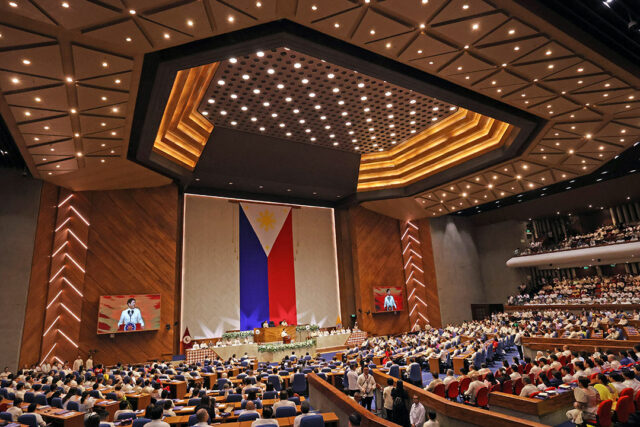
PHILIPPINE STAR /KJ ROSALES

By Kenneth Christiane L. Basilio, Reporter

PHILIPPINE Vice-President Sara Duterte-Carpio’s decision to run for President in 2028 is unlikely to derail impeachment proceedings at the House of Representatives, a congressman said on Wednesday.

“It’s a strategic decision to strengthen her following, especially because there are impeachment complaints against her,” Senior Deputy Majority Leader and Iloilo Rep. Lorenz R. Defensor told reporters.

He said the complaints would likely move forward procedurally but might struggle to secure the required one-third vote in plenary needed to send the articles of impeachment to the Senate.

“As of right now, I cannot see getting one-third of endorsements from the members of the House of Representatives,” he said. “But I can tell you it will reach the Committee on Justice.”

He added that the complaints would likely be referred to the committee for determination of sufficiency in form and substance. “It will not affect how the process will go on in terms of hearing it, in terms of deliberations in the Committee on Justice,” he added.

Political analysts said the House is expected to proceed cautiously to avoid repeating missteps that led the Supreme Court to void earlier impeachment proceedings against Ms. Duterte.

“The House has strong institutional incentives to demonstrate procedural rigor and constitutional fidelity,” Arjan P. Aguirre, an assistant political science professor at the Ateneo de Manila University, said in a Facebook Messenger chat before Ms. Duterte’s news briefing on Wednesday where she announced her presidential ambition.

A transparent process, he said, could help restore credibility after what some viewed as errors in the earlier impeachment attempt.

Ms. Duterte faces three impeachment complaints over the alleged misuse of P612.5 million in confidential and intelligence funds allocated to the Office of the Vice-President and the Department of Education when she served as secretary.

The complaints are expected to be referred to the House Justice Committee within the deadline set by the High Court after it nullified the previous proceedings. The tribunal ruled that the earlier impeachment did not comply with constitutional requirements, including the one-year bar rule.

“The defining factor in this impeachment is the Supreme Court decision,” Edmund S. Tayao, president and chief executive officer of Political Economic Elemental Researchers and Strategists, said via telephone. “It changes everything.”

Last year, more than one-third of lawmakers backed a fourth complaint that was sent directly to the Senate, effectively impeaching Ms. Duterte. Her trial was halted after the Supreme Court ruled the process unconstitutional.

Mr. Tayao said the ruling reshaped how impeachment is handled, stressing due process and clarifying how session days are counted. “The net effect of that decision is that impeachment is no longer mainly a political instrument,” he said. “It’s no longer just about numbers. They are now weighing the evidence.”

Batangas Rep. Gerville R. Luistro, who heads the Justice committee, earlier said the body would apply strict constitutional standards similar to those used in evaluating impeachment complaints against President Ferdinand R. Marcos, Jr., which were dismissed.

Mr. Aguirre said grounding the process in evidence and due process could reduce perceptions that impeachment is being used for partisan ends. He noted that documentary records tied to budget allocations could bolster the complaints against Ms. Duterte.

Ederson DT. Tapia, a political science professor at the University of Makati, said extended hearings could let lawmakers build a clearer factual record. “A long, drawn-out process allows for evidence-building, narrative framing and sustained public engagement,” he said via Messenger. “It creates space for institutional legitimacy rather than the perception of haste.”

He added that as political camps position themselves for 2028, impeachment carries electoral implications. “A process seen as vindictive could backfire. A process seen as transparent and evidence-driven could reinforce legitimacy.”

Ranjit Singh Rye, an OCTA Research fellow and assistant professor at the University of the Philippines, said prolonged scrutiny could affect Ms. Duterte’s standing as a presidential contender.

“Daily hearings, document disclosures, witness testimonies and sustained coverage can gradually affect how undecided voters view her viability,” he said in a Viber message.

“When a sitting Vice-President is not just viable but poll-leading, impeachment is no longer viewed purely as an accountability mechanism. It becomes a high-stakes political decision with presidential-cycle consequences,” he added.

Mr. Marcos is limited to a single six-year term and has yet to name a preferred successor, setting the stage for an extended contest as the next presidential cycle approaches.


OSG: Duterte surrender to ICC was lawful

FORMER PRESIDENT RODRIGO R. DUTERTE — PCOO

By Erika Mae P. Sinaking

THE Philippine government lawfully arrested and surrendered former President Rodrigo R. Duterte to the International Criminal Court (ICC) in compliance with both international and domestic laws, the Office of the Solicitor General (OSG) said.

In a statement dated Feb. 17, Solicitor General Darlene Marie B. Berberabe said the OSG told the Supreme Court of the Philippines that Mr. Duterte’s 2025 transfer to The Hague was a valid exercise of executive power.

“The OSG maintained that the government acted in accordance with both international law and Section 17 of Republic Act No. 9851,” Ms. Berberabe said, referring to the Philippine law on crimes against international humanitarian law, genocide and other crimes against humanity.

“It stressed that the legal requirements for surrender of the former President were met, namely: another court or international tribunal is conducting the investigation or prosecution; surrender is in the interest of justice; and surrender complies with applicable laws and treaties,” she added.

The OSG was responding to a 2025 petition filed by Mr. Duterte and Senator Ronald M. dela Rosa, along with habeas corpus petitions filed by the former president’s children after his arrest at the Ninoy Aquino International Airport.

In a supplemental memorandum in January, the OSG urged the court to dismiss the petitions, arguing that because Mr. Duterte is in the Netherlands, any Philippine court order would have no “extraterritorial effect.”

Separately, the OSG asked the high court to reject a plea by Mr. dela Rosa to block a potential ICC warrant against him.

“The OSG further noted that Senator dela Rosa failed to show the existence of any ICC arrest warrant against him, much less any imminent government action to enforce one,” the solicitor general said.

The OSG added that “absent a concrete governmental act” affecting the senator’s rights, there is no due process violation that would justify a temporary restraining order or injunction.

Mr. dela Rosa, recently identified as a “co-perpetrator” in an ICC charge sheet, has been absent from the Senate after Ombudsman Jesus Crispin C. Remulla spoke of a possible arrest warrant tied to his role in the Duterte administration’s anti-drug campaign.

The OSG’s affirmation comes days before the ICC’s Pre-Trial Chamber I is set to begin a confirmation of charges hearing on Feb. 23 to determine whether the crimes against humanity case will proceed to trial.

DepEd eyes trimesters by SY 2026-2027

Students answer test questions at a state high school in Manila. — REUTERS

By Almira Louise S. Martinez, Reporter

THE Department of Education (DepEd) aims to implement a proposed shift to a trimester system by school year (SY) 2026-2027, following consultations with education stakeholders.

“If ever this will be implemented by June, we need ample time for teacher training and orientation,” DepEd Assistant Secretary Jerome T. Buenviaje told BusinessWorld in an interview on Wednesday. He said consultations are expected to conclude before the end of the school year.

Under the proposal, the first trimester will run from June to September, the second from September to December, and the third from January to March. Each term will include an opening block, an instructional block and an enrichment block.

The opening block, or the first week of classes, will focus on orientation and assessments. Formal instruction will run for 55 days, from the second to the 11th week. A two-week enrichment block will follow, covering the department’s Academic Recovery and Accessible Learning program and in-service training for teachers.

Mr. Buenviaje said the trimester system allows about 60 instructional days per term, compared with 40 to 45 days under the quarterly setup. The added buffer is meant to address class disruptions and ensure lessons are completed.

Data from the Second Congressional Commission on Education (EDCOM II) showed that out of an average 191 class days per year, about 42 are lost to suspensions, alongside more than 150 legislated school activities.

Philippine Business for Education Chairman Ramon R. Del Rosario said the shorter gaps between terms could pose challenges for struggling students. “There’s no gap,” he said, noting that catch-up work would have to be integrated into the next term’s workload.

Alliance of Concerned Teachers Chairperson Ruby Bernardo raised concerns about teacher workload and readiness, citing possible adjustments in competencies, report cards and assessment systems.

DepEd said the proposed calendar could raise the number of school days to 201.

Separately, DepEd aims to address part of its 165,000 classroom backlog by building 106,000 classrooms through the Public-Private Partnership (PPP) School Infrastructure Project.

DepEd Undersecretary Ronald U. Mendoza said the agency seeks to narrow the deficit within five years. PPP classrooms can be completed in one to two years, compared with up to seven years under traditional procurement.

The new PPP school infrastructure phases, covering multiple regions nationwide, are scheduled for implementation from 2026 to 2031.

AFP backs US agreement to boost defense posture

BRP Diego Silang, USS Dewey, HMAS Towoomba and BRP Teresa Magbanua at this year’s first multilateral maritime cooperative activity in the South China Sea. — EDWARD BUNGUBUNG/ARMED FORCES OF THE PHILIPPINES

THE Armed Forces of the Philippines (AFP) on Wednesday expressed support for initiatives to enhance the country’s defense capabilities following a strategic dialogue with the US.

“The AFP supports initiatives that enhance our defense capability, interoperability and readiness in accordance with existing agreements and Philippine laws,” military spokeswoman Francel Margareth A. Padilla said in a Viber group chat.

The talks focused on strengthening Manila’s defense posture, including the deployment of advanced US missile and unmanned systems amid tensions in the South China Sea. Last year, Navy-Marine Expeditionary Ship Interdiction System missile platforms were deployed to the Philippines for joint Balikatan exercises and remain in an undisclosed location.

“Any deployment of allied systems is intended to strengthen training, improve domain awareness and support our collective defense posture,” Ms. Padilla said.

The agreement also includes expanding multilateral cooperation through maritime exercises, joint operations and enhanced security coordination.

Both countries aim to improve joint readiness, interoperability and response capacity for contingencies, including civilian-led disaster management. The dialogue also touched on bolstering the Philippines’ energy sector to support economic and defense priorities.

These developments occur amid rising tensions with Beijing over disputed features in the South China Sea. China claims almost the entire waterway under a U-shaped nine-dash line, overlapping with the Philippines’ exclusive economic zone. Manila rejects these claims, citing the 2016 Permanent Court of Arbitration ruling in its favor.

“These efforts contribute to our mission of protecting Philippine sovereignty, securing our national territory, and maintaining peace and stability in the region,” Ms. Padilla added. — Adrian H. Halili

Marcos still undecided about ICI

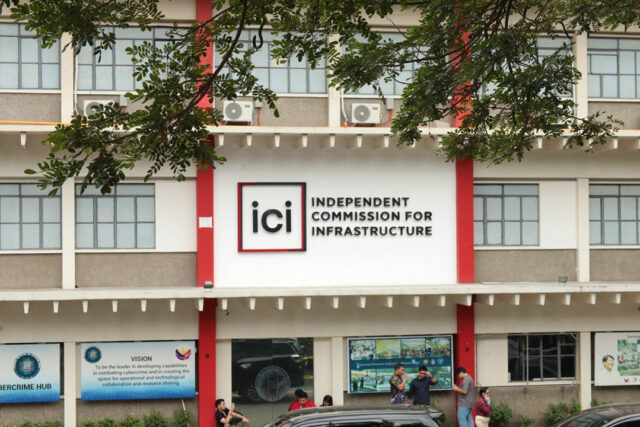
ICI office facade — BW FILE PHOTO

PRESIDENT Ferdinand R. Marcos, Jr. is still undecided on the fate of the Independent Commission for Infrastructure (ICI), the body he created to probe anomalous Public Works projects, the Palace said on Wednesday.

“We are still studying it — the report provided is quite thick,” Palace Press Officer Clarissa A. Castro told a news briefing in Filipino. “We will be able to provide an update on what will happen soon, and if ICI continues, we will also provide their status.”

The ICI first submitted the 125-day accomplishment report on Feb. 6. Its fate is in limbo as it awaits Mr. Marcos’ decision.

Created under Executive Order No. 94 on Sept. 11, 2025, the body was the President’s first concrete move after he unraveled a massive corruption within government officials and private contractors, specifically on flood control projects.

According to the report, the body filed nine referrals with the Ombudsman involving 65 people and coordinated referrals of 66 more individuals with the Department of Justice.

Mr. Marcos urged Congress to prioritize the passage of a bill establishing an Independent People’s Commission to probe, document and prosecute corruption in government infrastructure projects. — Chloe Mari A. Hufana

No info on ex-Rep. Co — Palace

SCREENSHOT of former Party-list Rep. Zaldy Co’s statement posted on his facebook account. — FACEBOOK.COM/REPZALDYCO

PHILIPPINE authorities have no new information on the whereabouts of former lawmaker Elizaldy S. Co, Malacañang said on Wednesday, amid a multi-agency effort to secure his arrest and return.

Palace Press Officer Clarissa A. Castro said there are no fresh updates on Mr. Co’s location, adding that the government would again seek information from the Department of the Interior and Local Government and the Presidential Anti-Organized Crime Commission on the status of the requested cooperation from the International Criminal Police Organization (Interpol).

Amid questions over which agency is leading the pursuit, the Department of Foreign Affairs (DFA) stressed that Mr. Co’s arrest and repatriation require a “whole-of-government approach.”

In a statement read by Ms. Castro, the DFA said the process involves “coordinated law enforcement and judicial processes, particularly Interpol coordination.”

The DFA reaffirmed its commitment to the rule of law and said it stands ready to provide diplomatic assistance within its mandate and established protocols.

It also urged the public to share any information on Mr. Co’s whereabouts to support ongoing efforts.

The former lawmaker was initially believed to be in Portugal, but recent court documents filed with the Philippine Supreme Court suggested he may be in Sweden. 

Mr. Co, who was formerly the House Appropriations chair, is wanted for his hand in anomalous flood control projects in the country.

Meanwhile, Acting Justice Secretary Fredderick A. Vida clarified on Wednesday that the Department of Justice no longer has the authority to unilaterally allow or deny travel for former Public Works Secretary Manuel M. Bonoan, following the issuance of a precautionary hold departure order.

Mr. Bonoan told reporters on Monday that he submitted a letter to the panel requesting permission to return to the US to accompany his wife for a medical procedure.

“We noted of his letter,” Mr. Vida told reporters in an ambush interview. “Those covered by a precautionary hold departure order must get permission from the court before traveling.”

Mr. Bonoan, along with four other respondents in a flood control plunder case, is under a Manila court-issued travel restriction while the investigations continue.

Justice spokesperson Raphael Niccolo L. Martinez said in a separate briefing that the panel of prosecutors approved Mr. Bonoan’s motion — not his travel request.

He said Mr. Bonoan had asked the panel to allow him to file his counter-affidavit earlier than the original schedule of Feb. 23, submitting it on Feb. 16. — Chloe Mari A. Hufana and Erika Mae P. Sinaking

House leaders back admin agenda

PHILSTAR FILE PHOTO

TOP LAWMAKERS of the House of Representatives on Wednesday declared full support for President Ferdinand R. Marcos, Jr.’s push to address basic needs, pledging passage of legislation that will improve housing, water and electricity for Filipinos.

The House leadership said it stands ready to institutionalize the Marcos administration’s “on-the-ground initiatives” to address basic needs and will push bills aimed at helping the Philippines industrialize and drive growth.

“Housing, water security and affordable electricity are nation-building priorities,” Deputy Speakers Ziaur-Rahman Alonto Adiong, Jefferson F. Khonghun and Francisco Paolo P. Ortega V said in a joint statement.

“The House will make sure our legislative output strengthens these programs and protects their long-term impact,” they added.

The push to improve basic services comes in the second-half of Mr. Marcos’ term.

The lawmakers are also pushing for the passage of House Bill No. 2700, the proposed Free Electricity for Low-Consumption Households Act.

“The approach ties together the administration’s programs on housing, irrigation and power: deliver services on the ground, then sustain and broaden them through legislation, with clear accountability for every peso spent,” they said.

It would institutionalize a direct government subsidy to cover the electricity bills of qualified households. The bill also exempts the subsidized portion from the 12% value-added tax.

The proposed measure also seeks to dismantle the existing cross-subsidy system and replace it with a direct government subsidy aimed at making power more affordable and more equitable nationwide. — Adrian H. Halili

P2-M cash bond for forwarders nears approval

THE Department of Finance is close to approving a proposal that would require freight forwarders to post a P2-million cash bond upon accreditation, the Bureau of Customs said on Wednesday.

Customs Commissioner Ariel F. Nepomuceno said the cash bond is intended to cover costs from delays caused by erring deconsolidators handling balikbayan boxes.

“We also need to establish procedures, with exact parameters, standards, and accountability, in case they still commit errors,” he said in an event on Wednesday.

“We already proposed it; our customs administrative order request is close to being approved by the Department of Finance,” he added.

In response to mounting complaints from overseas Filipino workers and their families over missing or undelivered packages, the bureau said it has taken the initiative to personally deliver balikbayan boxes door‑to‑door.

For the first wave last year, the bureau processed 68 containers holding 20,944 boxes, of which 14,305 have already been released and delivered.

The final wave covers 72 containers with an estimated 24,536 boxes, it said.

There are 14 containers that have been released from the Manila International Container Port, while 58 remain under processing pending clearances and waiver of port charges, the bureau said. — Aubrey Rose A. Inosante

Maharlika taps veteran bankers to beef up board

MAHARLIKA Investment Corp. (MIC) has appointed veteran bankers Rolando G. Peñaflor and Enrico S. Cruz to its board of directors, it said in a statement on Wednesday.

Mr. Peñaflor joins as a regular director and is set to serve a three-year term, while Mr. Cruz takes a seat as an independent director. Both were formally welcomed during the fund’s weekly assembly, the MIC said.

“Their depth of experience and independent perspective will be invaluable as we continue to build a disciplined, transparent, and globally credible sovereign investment institution,” MIC President and Chief Executive Officer Rafael D. Consing, Jr. said.

Mr. Consing said the appointments is aimed to bolster the “collective expertise as MIC transitions into a period of decisive capital deployment across priority sectors of the Philippine economy.”

Mr. Peñaflor previously served as Senior Vice-President in Corporate Banking at Bank of the Philippine Islands for 38 years, as well as President of Jadiniano Development Corp., Aspirea Development Corp. and Oro de Siete Productions.

Meanwhile, Mr. Cruz brings 40 years of experience having served on the board of five publicly listed companies and five private companies in a variety of industries such as finance, retail, real estate, and healthcare.

“Also assuming his role as alternative representative of Land Bank of the Philippines (LBP) is Atty. Roderick Sacro, Executive Vice-President of LBP,” the MIC said.

They joined Finance Undersecretary Ma. Angela E. Ignacio and Development Bank of the Philippines Executive Vice-President Carel D. Halog.

The MIC, which started in 2023 is the sole vehicle responsible for mobilizing and managing the Maharlika Investment Fund, the country’s first sovereign wealth fund. — Aubrey Rose A. Inosante

Farmers in Ilocos Norte eye premium beef wagyu production

PIDDIG, Ilocos Norte — Farmers in Ilocos Norte are eyeing premium wagyu beef production as a new growth driver, amid mounting concerns over declining soil fertility in longstanding rice areas.

The shift was highlighted during the 4th Wagyu, Sorghum and Soybean Forum held on Monday in Piddig town, where about 500 members of local irrigators’ associations gathered to explore high-value, climate-smart alternatives.

Administrator Eddie G. Guillen of the National Irrigation Administration (NIA), a Piddig native and former mayor, urged farmers to move beyond traditional rice cultivation and maximize irrigation for more profitable ventures such as wagyu cattle production. He was joined by NIA Region 1 Acting Regional Manager Geffrey B. Catulin, as local officials pressed for farm innovation and value-adding activities.

Former Agriculture Secretary Emmanuel Piñol, who spearheaded the forum, promoted integrated systems combining sorghum cultivation with cattle raising. He said past government livestock programs faltered largely due to the absence of a reliable local feed base, stressing that growing feed crops alongside cattle is key to making wagyu production viable even for smallholders.

Sorghum was presented as a drought-resistant alternative to corn for cattle feed, while soybeans were recommended as a complementary crop that can both supply protein requirements and provide farmers with an additional income stream.

Expanding local soybean output could also reduce dependence on imported soybean meals, linking crop diversification directly to livestock profitability.

However, soil tests from rice farms revealed very low nitrogen, phosphorus, and potassium levels after years of monocropping.

Experts advised restoring soil health through the addition of organic matter and the planting of legumes such as soybeans during fallow periods, emphasizing that rebuilding soil fertility is critical to Ilocos Norte’s ambition of becoming a hub for high-value, diversified agriculture. — Artemio A. Dumlao

Airlines back removal of travel tax

NINOY AQUINO INTERNATIONAL AIRPORT (NAIA) Terminal 3 — PHILIPPINE STAR/MIGUEL DE GUZMAN

AIRLINE OPERATORS expressed support for the removal of the travel tax, noting how discontinuing the tax would boost passenger demand and lower the cost of travel.

In a statement on Wednesday, the Air Carriers Association of the Philippines (ACAP) said proposals to remove the travel tax will make international air travel more affordable.

President Ferdinand R. Marcos, Jr. had urged Congress to abolish the travel tax by the time the legislators adjourn in June.

According to ACAP, abolishing travel tax will also enhance the Philippines’ connectivity and global competitiveness.

“ACAP member airlines are gearing up to expand their Philippine-based hub networks in a way that generates economic benefits across the tourism value chain,” it said.

ACAP is composed of flag carrier Philippine Airlines and its regional brand PAL Express, budget carrier Cebu Pacific and its regional brand Cebgo, and AirAsia Philippines.

The Department of Finance said last year that scrapping the travel tax could result in up to P5.1 billion in foregone revenue.

The travel tax was first imposed via Republic Act No. 1478 in 1956 and later amended through Presidential Decree No. 1183 in 1977.

Under the law, 50% of travel tax proceeds go to the Tourism Infrastructure and Enterprise Zone Authority, with 40% supporting the Commission on Higher Education’s tourism-related education programs. The remaining 10% funds the National Commission for Culture and the Arts.

The government collects a travel tax of P1,620 from economy air passengers and P2,700 from first-class ticket holders. Exempt from travel tax are overseas Filipino workers, Filipino permanent residents overseas who stayed less than a year in the Philippines, and children aged two years and below.

Earlier this month, a bill was filed in the House of Representatives to remove the travel tax. A counterpart bill was filed at the Senate last year. — Ashley Erika O. Jose

Tariff hike for sweeteners seen forcing shift to domestic sugar, blunting revenue impact

PHILSTAR FILE PHOTO

A GOVERNMENT proposal to raise tariffs on artificial sweeteners is expected to have only a short-term impact on Customs collections, with users eventually shifting to domestic sugar, officials and analysts said.

Customs Commissioner Ariel F. Nepomuceno said the plan to impose a tariff hike on sugar substitutes does not guarantee a boost in the agency’s collections because of the availability of domestically produced alternatives.

“Imposing higher tariffs on artificial sweeteners may not automatically boost customs collections if it becomes cheaper to source and use domestic sugar,” he told BusinessWorld via Viber.

Agriculture Secretary Francisco P. Tiu Laurel, Jr. last week said the government is considering raising the current 5% duty on sugar substitutes to curb surging imports and protect domestic producers.

Mr. Laurel said that he has begun discussions with Finance Secretary Frederick D. Go on the appropriate tariff level, adding that the Department of Finance will come up with a determination on the eventual rate.

The Bureau of Customs (BoC) aims to collect P1.003 trillion this year.

Mr. Go has expressed confidence that the BoC will hit the P1‑trillion mark in 2026, citing reforms and new leadership.

The BoC generated P934.4 billion in revenue last year, missing its P958.7-billion target, after the midyear freeze on rice imports dented its collections.

On the other hand, University of Asia and the Pacific Associate Professor George N. Manzano said beverage and food manufacturers may not be able to switch overnight to domestic sugar and opt instead to keep importing and absorb the higher costs.

”In the short term, government revenue likely goes up. Over the longer term, the effects on sugar and related industries will depend on how big the tariff is and how businesses respond,” he said via Viber.

If artificial sweeteners become costlier, some firms may revert to domestic sugar, bolstering the agriculture, Mr. Manzano said, or spur investors to consider manufacturing sweeteners domestically if tariffs remain high.

“On the other hand, if the tariff is too high, manufacturers might simply import finished products (like drinks or processed food) instead of producing them locally. That could hurt domestic food manufacturers instead of helping them,” he said.

Leonardo A. Lanzona, an economics professor at the Ateneo de Manila University, said consumers will ultimately bear the cost of import duties.

“The DA has often resorted to tariffs as the solution to many of their supply side problems. What they fail to consider apart from the raising government revenue is its impact on the consumer,” he said via Messenger chat.

He said the DA should instead invest in facilities and industrial support to help sugar producers compete globally.

The government has imposed a suspension of sugar imports until the end of the year, except for volumes shipped in exchange for exported sugar.

“More importantly, the domestic industry should work on their own to be more productive and not rely on government subsidies and other forms of trade protection,” he said.

Foundation for Economic Freedom President Calixto V. Chikiamco said the measure is unlikely to ease the sugar industry’s structural problems.

“Banning artificial sweeteners, which the market may demand, may reduce the demand for finished products or shift the demand toward imported finished products using artificial sweeteners,” he said via Viber.

The industry is also contending with a global shift away from sugar, increasingly viewed as unhealthy, Mr. Chikiamco said.

“Local sugar prices are already double the world market price, putting our downstream industries using sugar such as beverages, confectionaries, baked goods at competitive disadvantage,” he added. — Aubrey Rose A. Inosante