Home Blog Page 294

Unilab Foundation, ULAP join forces to accelerate local implementation of universal healthcare

Present during the signing of the MoU between Unilab Foundation and ULAP are (from left to right) ULAP Executive Director Aileen Leycano, Unilab Foundation Executive Director Atty. Jose Maria Ochave, ULAP National President and Quirino Governor Dakila Carlo “Dax” Cua, and UCHP Program Director Ruben John Basa.

The Unilab Foundation, through its research and policy arm Unilab Center for Health Policy (UCHP), has partnered with the Union of Local Authorities of the Philippines (ULAP) to jointly identify and address barriers to the effective and accelerated implementation of the Universal Health Care (UHC) Act at the local level.

Formalized with the recent signing of a memorandum of understanding (MoU), the partnership will tackle fragmented policies, processes, proficiencies, and systems hindering the ability of local government units (LGUs) to implement UHC reforms. This is aligned with the mandate to empower LGUs so that the devolution of the healthcare delivery function from the national government does not lead to the inconsistent implementation of health services across different localities.

UCHP and ULAP will also pilot programs in selected LGUs to demonstrate the practical implementation of UHC at the local level, with the intent of using lessons from the ground to inform national policy, and of replicating best practices in more areas.

“[This MoU] reflects our shared understanding that Universal Health Care is ultimately realized when governance meets execution which is at the local level, and that this cannot be done by government alone. We need the support of all stakeholders,” said ULAP National President and Quirino Governor Dakila Carlo “Dax” Cua.

ULAP National President and Quirino Governor Dakila Carlo “Dax” Cua says the government needs the support of all stakeholders to successfully implement universal healthcare.

“Many challenges we face today are structural and systemic. No single institution can address problems in isolation. This is why partnerships matter. We are hopeful that this partnership will continue to grow, expanding from policy and systems, strengthening toward deeper collaboration and service delivery models, innovation, and efforts that deliberately reach the unreached and underserved Filipino, particularly in communities where access to quality healthcare remains most fragile,” he added.

For his part, Unilab Foundation Executive Director Atty. Jose Maria Ochave said UCHP’s role is to partner with government leaders to help them achieve their vision for their constituents.

“Our role is to show that certain things can work and can be implemented. But the ones who can really move the needle is still government. The ones who can move the needle the most in the coming years will be the local government because that is where governance is felt the most by the people,” he said.

The UCHP is a program of the Unilab Foundation that empowers LGUs to become self-reliant and successful implementers of UHC by supporting policy development, enabling evidence-based decision-making, and providing holistic technical assistance that strengthens local execution.

Recently, the UCHP commissioned a study which found that a large portion of local health budgets goes to personnel salaries, leaving little funds for actual health programs and services. The study was lauded by the Department of Budget and Management as a valuable tool in its campaign to maximize local resources.

UCHP also recently partnered with the local government of Ormoc City to develop and implement a UHC-aligned primary care service delivery framework for geographically isolated and disadvantaged communities.

BNP sweeps Bangladesh election, Tarique Rahman set to become PM

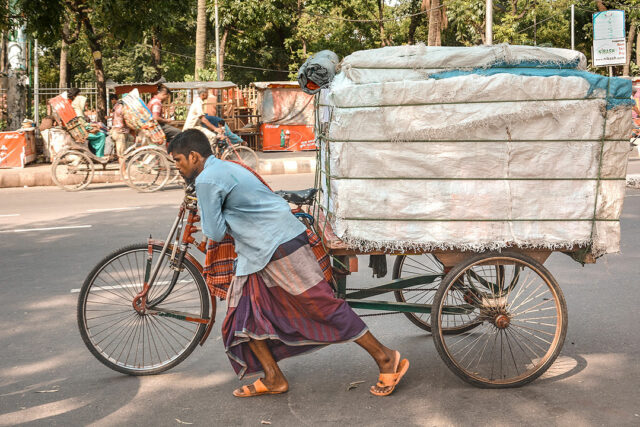
A MAN pushing a loaded trishaw in Dhaka, Bangladesh. — ADLI WAHID-UNSPLASH

DHAKA — Bangladesh’s opposition Bangladesh Nationalist Party (BNP) won a landslide parliamentary election on Friday, returning to power after nearly two decades and positioning party leader Tarique Rahman to become prime minister as the country emerges from months of unrest and economic disruption.

Mr. Rahman, the son of former premier Khaleda Zia who returned to Dhaka in December after nearly two decades abroad, faces immediate challenges in restoring political stability, reviving investor confidence and rebuilding key industries – including the garment sector – after prolonged turmoil that followed the collapse of former Prime Minister Sheikh Hasina’s government last year.

The latest counts in a vote viewed as the South Asian nation’s first truly competitive election in years gave the BNP and its allies at least 212 of the 299 seats up for grabs, local TV channels said. The opposition Jamaat-e-Islami and its allies won 70 seats in the Jatiya Sangsad, or House of the Nation.

The Election Commission put the BNP at 181 seats, the Jamaat-e-Islami at 61 and others at 7, with full official results expected in the next few hours.

Results in several seats are still being processed and the full result is expected within hours, the commission said, though the gazette notification will take a few more days, which could delay the swearing-in of the new government.

Under the constitution, the new government cannot be sworn in unless the gazette notification reporting the results is released.

The BNP thanked its supporters soon after election trends became clear and called for special prayers on Friday for the nation and its people.

“Despite winning … by a large margin of votes, no celebratory procession or rally shall be organized,” the party said in a statement.

The National Citizen Party (NCP), led by youth activists who played a key role in toppling Ms. Hasina, won just five of the 30 seats that it contested. The NCP was part of the Jamaat-led alliance.

A clear outcome had been viewed as key for stability in the Muslim-majority nation of 175 million after months of deadly anti-Hasina unrest disrupted everyday life and industries including garment manufacturing. Bangladesh is the No. 2 exporter of garments in the world.

“A strong majority gives the BNP the parliamentary strength to pass reforms efficiently and avoid legislative paralysis. That alone can create short-term political stability,” said Selim Raihan, an economics professor at the University of Dhaka.

In its manifesto, the BNP promised to prioritize job creation, protect low-income and marginal households and ensure fair prices to farmers.

“If the factories run regularly and we get our wages on time, that’s what matters to us. I just want the BNP government to bring back stability so more orders come to Bangladesh and we can survive,” Josna Begum, 28, a garment worker and mother of two, told Reuters.

Indian Prime Minister Narendra Modi, Pakistan Prime Minister Shehbaz Sharif and the US ambassador to Bangladesh, Brent T. Christensen, were among the first to congratulate Mr. Rahman on his party’s victory.

BNP SUPPORTERS CELEBRATE OVERNIGHT
The Islamist Jamaat-e-Islami conceded defeat late on Thursday night once trends became clear, but said in a statement on Friday that it was “not satisfied” with the process and asked its followers to remain patient.

The party won its highest-ever tally of 70 seats in Parliament, contesting for the first time since it was banned in 2013 after its registration was cancelled. A court in Bangladesh said the party’s constitution went against secularism. The ban was lifted after Ms. Hasina’s ouster.

Now in exile in New Delhi, Ms. Hasina long dominated Bangladesh politics along with Mr. Rahman’s mother, while his father was a leading independence figure who ruled from 1977 until 1981 before he was assassinated.

The BNP win with more than 200 seats is one of its biggest, surpassing its 2001 victory with 193, although Ms. Hasina’s Awami League, which ruled for 15 years and was barred from contesting this time, secured a bigger tally of 230 in 2008.

But elections of other years were boycotted by one of the main parties or were contentious.

Overnight, throngs of supporters cheered and shouted slogans at the BNP headquarters in Dhaka as the scale of the party’s landslide became clear.

Turnout exceeded the 42% of the last election in 2024, with media reports saying nearly 60% of registered voters participated in the election on Thursday.

More than 2,000 candidates, many independents among them, were on the ballot, which featured a record number of at least 50 parties. Voting in one constituency was postponed after a candidate died.

Broadcaster Jamuna TV said more than 2 million voters chose “Yes” while more than 850,000 said “No” in a referendum on constitutional reforms held alongside the election, but there was no official word on the outcome.

The changes include two-term limits for prime ministers and stronger judicial independence and women’s representation while providing for neutral interim governments during election periods and setting up a second house of the 300-seat parliament. — Reuters

In Karachi, sober raves offer Gen Z a new kind of nightlife

KARACHI — Under neon lights at an indoor sports club in Karachi, twenty-somethings drifted between glowing courts and a DJ booth, dancing with coffee cups and iced tea in hand.

No alcohol. No drugs. And the music ended promptly at 10 pm.

In Pakistan, a growing number of Gen Z are opting for “sober socializing”, joining a global trend as young people increasingly opt for healthier lifestyles.

Here, though, the shift carries an added appeal: Drinking alcohol is illegal for Muslims, who make up the vast majority of Pakistan’s population.

PARTYING WITHOUT THE POUR
They are increasingly turning their backs on the party scene of the past, which often involved underground venues because of the presence of alcohol and drugs, and the risk of running afoul of authorities.

“In Karachi, we don’t have many places to just exist socially,” said Zia Malik, a software entrepreneur attending the event. “This gives you that without having to hide.”

“I have visited some underground parties,” he added. “You cannot feel secure.”

At the sports club, crowd numbers were capped. Between breaks in dancing, revelers played padel, a cross between squash and tennis popular in Pakistan.

The event’s organizer, experiential platform 12xperience, had local government approval to host a public party without alcohol.

CREATING A SAFE SPACE
Cameras – both wall-mounted and on drones – monitored the crowd to enforce the no-alcohol policy and to deter fights or harassment, organizers said.

“Without guardrails, you’re just recreating the same risks people are trying to escape,” said Mohammed Usman, founder of 12xperience.

“This is about creating a space where people feel safe,” he said. “Without alcohol, without drugs, without chaos.”

Events like this are popping up across the city of nearly 19 million in growing numbers, mainly at sports facilities and coffee shops, but also at venues such as art galleries and co-working spaces.

Euromonitor data shows Pakistan’s soft drinks market grew more than 27% between 2020 and 2025, and hot drinks – a category that includes coffee – expanded by a similar margin.

While that mirrors a global trend in young people drinking less, Pakistan’s shift has outpaced mature markets such as the United States and Britain, where non-alcoholic beverage volumes have grown only modestly.

PARTYING WITHIN ISLAMIC BOUNDARIES
Sociologist Kausar Parveen said the change shows how young Pakistanis have put a modern spin on adapting to the country’s Islamic norms, rather than being a sign they are rejecting them.

“They are not going beyond religion, but reframing how social life happens,” said Mr. Parveen, an associate professor at the University of Karachi.

Women-only events are also increasing in popularity, in a country where gender mixing carries cultural stigmas.

“For a lot of women, nightlife comes with conditions of who’s there, how late it runs, how visible it is,” said comedian and influencer Amtul Bajwa, who was hosting the women-only desi music night at her cafe in Karachi, Third Culture Coffee.

“This was about creating a space where women could relax without negotiating those things.”

OPTIONS OPEN ONLY TO WOMEN
Pakistani and Indian music played as women danced without reservations to desi tracks, and the event ended at 9pm sharp.

“You don’t have to worry about who’s watching,” said Fatima, who did not share her last name because her parents did not know she was attending. “Ending early makes it easier to get home.”

Ms. Bajwa has also hosted a number of coffee raves for both genders, and recently held a silent disco at her cafe, but said there is particular demand for women-only events.

Price is something of an issue: tickets typically cost between 3,000 and 7,000 Pakistani rupees ($10.73 to $25.04) in a country where entry-level monthly salaries tend to be 30,000 to 40,000 rupees, making a single night out a significant expense.

Even so, sober raves have become a significant – and very visible – outlet for Pakistan’s youth.

At the sports club, well-dressed lifestyle bloggers and social media influencers posted photos and videos in real time, something unlikely at parties involving alcohol.

“It’s more available to the masses,” said Shah Zaib, a 27-year-old data analyst attending his third such event.

“I love the fact that it’s not underground anymore.” — Reuters

Malaysia forms special committee to probe anti-corruption chief, says communications minister

KUALA LUMPUR — Malaysia’s government will form a special committee to investigate allegations against the country’s anti-corruption chief, the communications minister said on Friday, following a media report alleging a breach of shareholding laws.

The task force will be led by the country’s Chief Secretary to the Government Shamsul Azri Abu Bakar, Communications Minister Fahmi Fadzil said during his weekly press conference.

Earlier this week, Bloomberg cited a corporate filing from last year as saying that Malaysia’s Anti-Corruption Commission (MACC) chief Azam Baki held 17.7 million shares in a financial services company that were currently worth about 800,000 ringgit ($205,000), well above the 100,000 ringgit limit allowed for public servants.

Bloomberg in a later report on Thursday said that MACC officials were also helping a group of businessmen to seize control over companies, citing internal documents and interviews with witnesses. Reuters has not independently verified the report.

“After the investigation is completed, it will be reported back to the Cabinet for any follow-up action. This is an effort to ensure the aspects of transparency and integrity of the investigation process,” Mr. Fahmi said.

Mr. Fahmi did not specify which allegations would be investigated.

Mr. Azam said earlier that he was willing to be investigated by a government committee amid calls for him to step down, adding that he had “nothing to hide” as all his financial and asset declarations have been made according to public service laws.

“I am confident that the truth will prevail through a fair and independent process,” he said in a statement.

The report prompted opposition lawmakers and civil society groups to renew demands for Mr. Azam’s resignation and call for major reforms to the anti-graft agency, including the removal of the prime minister’s power to appoint the MACC chief.

Mr. Azam’s trading activities faced similar scrutiny in 2022 over allegations that he owned millions of shares in two publicly listed companies in 2015 and 2016.

The securities regulator said at the time it was unable to determine whether he had broken the law. — Reuters

ALT Art 2026 highlights nine emerging artists and stunning art pieces

Photo by EDG ADRIAN A. EVA

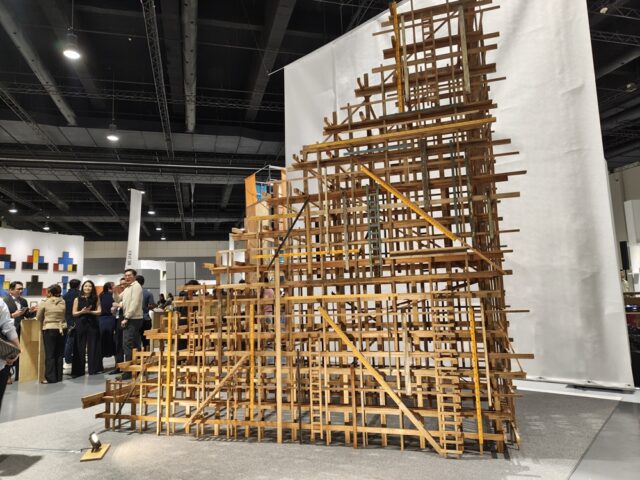
ALT Art 2026, running until February 15, is highlighting nine emerging artists for the first time in a dedicated gallery space.
Dubbed the “Discoveries Section,” the showcase features young and new artists selected from each gallery under the exhibition organizer, ALT Collectives, giving their works a platform to be seen.

“So each gallery chooses an artist to feature. They believe in the work these artists do, showcasing excellence in craft, technique, execution, subject matter—you name it,” Carlomar A. Daoana, art tour correspondent for ALT Art 2026, told BusinessWorld during the exhibition’s preview on Thursday.

Allyza Tresvalles, 26, one of the featured artists under Finale Art File gallery, shared that ALT Art 2026 marked her first solo performance and debut at an art fair.

“I think it’s very hard for local artists from the provinces to get this kind of spotlight, so I’m very grateful,” said the Lucban, Quezon native.

Her works blend traditional crafts such as weaving, pottery, and metalwork with Filipino spiritual and pre-colonial iconography.

One piece, Sungkaan, symbolizes the extractive and undervalued labor faced by weavers in her hometown, drawing a comparison to a traditional Filipino board game.

Other artists in the Discoveries Section include JC Mariategue, Jomari T’Leon, Joar Songcuya, Eric Bico, Gelo Cinco, Joanolasco, Rhaz Oriente, and Marco Ortiga, contributing to a total of over 300 artists featured at ALT Art 2026.

Among the other works capturing visitor attention is Lindsey James “Lindslee” Lee’s Weight of the Day, a lifelike sculpture placed along the gallery passage.

The piece depicts a familiar scene: “a father ending a tough workday with a bottle of beer,” while sitting on a monoblock chair, the artist noted.

Now in its fourth edition, ALT Art 2026 is presented in partnership with Banco de Oro (BDO) Private Banking and is held at the SMX Convention Center in Pasay City.

Tickets are available online, priced at ₱250 for students and ₱500 for regular visitors.— Edg Adrian A. Eva

January NCR building materials price growth accelerates

PHILSTAR FILE PHOTO

PRICE GROWTH of construction materials in Metro Manila quickened at retail and wholesale levels in January, the Philippine Statistics Authority (PSA) reported on Friday.

Based on preliminary data, the PSA showed that year-on-year growth of the construction materials wholesale price index (CMWPI) in the National Capital Region (NCR) rose 0.9% in January, a tad higher from the 0.8% growth in December.

It was also better than the 0.1% gain posted a year ago.

The latest reading was the fastest pace in almost two years or since the 1% growth in February 2024.

Contributing to January’s uptick were slower annual declines in structural steel (1.7% in January from 3% in December), reinforcing steel (0.7% from 1.5%), and metal products (0.6% from 0.7%).

Additionally, reversals were seen in commodities of hardware with 0.1% in January from its 0.1% drop in December, and fuels and lubricants with 0.4% growth from 1.9% decline a month earlier.

Meanwhile, PVC pipes posted faster annual growth to prices with 0.3% from 0.2% in December 2025.

Retail prices also grew
In a separate report by the PSA, the construction materials retail price index (CMRPI) inched up 1.2% in January from 1% in December. A year earlier, it had the same growth rate.

The January CMRPI outcome logged the quickest pace in a year or since the 1.5% in December 2024.

The PSA attributed the faster annual CMRPI growth to prices in tinsmithry materials which quickened by 2% in January from 1.7% in December, plumbing materials with 0.7% from 0.5%, and miscellaneous construction materials with 0.9% from 0.8%.

Meanwhile, carpentry materials posted a slower annual decline of 0.2% in January, compared with the 0.5% drop in December.

“What we’re seeing in January is a post‑holiday price reset combined with real cost pressures —higher import costs for cement and steel, elevated fuel and logistics expenses, and a pickup in construction activity as projects restart,” Jonathan L. Ravelas, senior adviser at Reyes Tacandong & Co., said in a Viber message.

He added that rising wholesale prices are being reflected in retail prices, suggesting that contractors have started transferring these costs down the supply chain.

“For February, prices should stay firm but stable, not spike. Over the rest of the year, expect a gradual upward trend — not a surge — as demand remains strong but supply chains are far more normalized,” he said.

The CMRPI is based on 2012 constant prices, while the CMWPI is based on 2018 constant prices. — Heather Caitlin P. Mañago

Global feasts and romantic escapes at Araneta City

February is a month made for celebrations — prosperity-filled gatherings for Chinese New Year and heart-fluttering moments for Valentine’s Day. At the heart of it all is Araneta City, serving up experiences that turn simple plans into memorable occasions. From indulgent global dining to luxurious movie dates, here are the ideal must-tries to make the most of the season.

Celebrate Chinese New Year with a Global Feast at World Kitchens

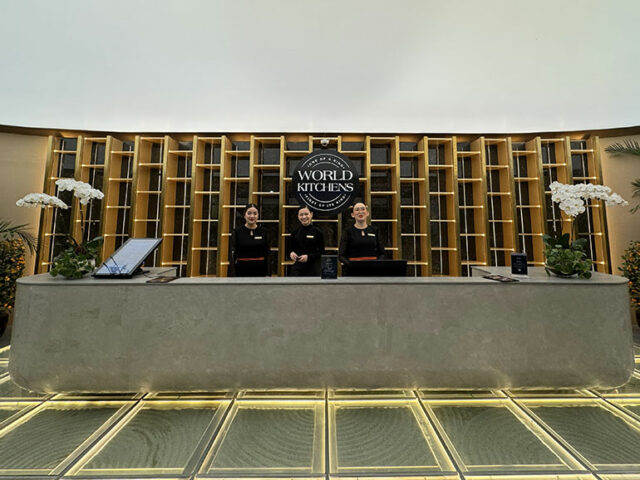
Ring in abundance and togetherness with a grand dining experience at World Kitchens, the latest food destination at Level 4 of Gateway Mall 2.

Inspired by the comfort food of the world, World Kitchens is a one-of-a-kind, 5-star dining concept created by Singapore’s food and beverage guru Andrew Tan Hock Lai. With 15 show kitchens led by international chefs, it brings a curated selection of global cuisines together in a single, full-table-service setting. Using AI technology for seamless ordering, guests can enjoy a truly modern dining experience — sampling dishes from different countries without ever leaving their seat. It’s global dining, elevated yet accessible, and perfect for Chinese New Year gatherings with family and friends.

A Taste of Tradition at 18 Jade

Adding to the excitement this year is 18 Jade, the newest show kitchen to open at World Kitchens. An upscale destination for classic Chinese cuisine, 18 Jade is led by Singapore-based Chef Peng and crafted for guests of distinction.

Its menu pays homage to tradition with standout specialties such as its signature crispy Peking duck and classic shark’s fin soup. The name itself carries meaning: 18, a symbol of prosperity; and jade, representing purity, rarity, and enduring value — qualities reflected in every dish. It’s an ideal spot to enjoy a meaningful Chinese New Year feast rooted in heritage and flavor.

Raise a Toast at World Cellar

Completing the experience is World Cellar, another newly opened concept within World Kitchens. This first-of-its-kind wine destination brings curated wines from world-renowned regions closer to everyday celebrations.

Offering quality wines by the glass or bottle at great value, World Cellar allows guests to pair their chosen vintages with dishes from any of the 15 show kitchens. By working directly with local merchants and storing each bottle under optimal conditions, it delivers a premium wine experience with pricing closer to retail — making every toast feel special, yet refreshingly approachable.

A Valentine’s Movie Date, Taken to the Next Level at Wolfgang’s Premiere Lounge

For Valentine’s Day, trade the usual dinner date for something more cinematic — and decidedly more indulgent — at Wolfgang’s Premiere Lounge, one of the most luxurious theaters inside Gateway Cineplex 18.

This premium cinema experience blends comfort, service, and fine dining into one unforgettable movie date. Each ticket includes access to plush La-Z-Boy recliners designed for maximum relaxation, with generous space and personalized service that lets you fully unwind as the lights dim. 

What truly sets the experience apart is its exclusive partnership with Wolfgang’s Steakhouse. Moviegoers are treated to gourmet combo meals — think perfectly grilled steaks, potato chips, and signature sides — served right at their seats. At P1,200 per ticket, the experience already includes premium seating and snacks, making it a seamless fusion of first-class cinema and fine dining.

It’s intimate, indulgent, and perfect for couples looking to turn Valentine’s night into something extra special.

One Destination, Endless February Moments 

Whether you’re welcoming prosperity over a lavish Chinese New Year feast or sharing kilig moments during a Valentine’s movie date, Araneta City brings all the season’s celebrations together in one vibrant destination. This February, every plan feels more festive, more romantic, and more memorable — exactly the way it should be.


Spotlight is BusinessWorld’s sponsored section that allows advertisers to amplify their brand and connect with BusinessWorld’s audience by publishing their stories on the BusinessWorld Web site. For more information, send an email to online@bworldonline.com.

Join us on Viber at https://bit.ly/3hv6bLA to get more updates and subscribe to BusinessWorld’s titles and get exclusive content through www.bworld-x.com.

BPI raises P50 billion from SIGLA bonds

BW FILE PHOTO

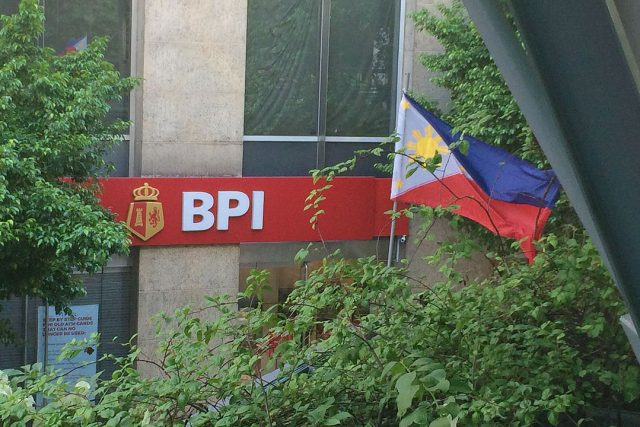
BANK of the Philippine Islands (BPI) raised P50 billion from its latest offering of social bonds, marking its largest peso debt issuance to date.

This was well above the bank’s initial P5-billion target for its two-year Supporting Individuals Grow, Lead, and Achieve (SIGLA) bonds.

“The final issue size of BPI SIGLA bonds was increased 10 times compared to its base issuance of P5 billion once again, reflecting strong investor demand. The positive market perception for these funds underscores the growing alignment between capital markets and sustainability objectives,” BPI Treasurer and Global Markets Head Dino R. Gasmen said in a speech at the listing ceremony for the bonds at the Philippine Dealing and Exchange Corp. (PDEx) held on Friday.

The SIGLA bonds were priced at 5.405% per annum, gross of applicable tax, to be paid quarterly.

This issuance marks the second drawdown from the bank’s P200-billion bond and commercial paper program approved in October 2024.

“Net proceeds will be exclusively allocated to finance or refinance eligible social projects in accordance with BPI’s Sustainable Funding Framework consistent with the ASEAN Social Bonds Standards,” BPI said in a statement.

BPI Capital Corp. and ING Bank N.V.-Manila Branch were the joint lead arrangers and selling agents for the issue.

FUNDRAISING PLANS
The bank will remain opportunistic about tapping the capital markets and wants to issue bonds more frequently, but likely in smaller tranches, Mr. Gasmen told reporters on the sidelines of the event.

“We’re exploring. But it may be smaller sizes. I think that’s going to create a yield curve for BPI issuances. Also, I think we’ll reach more customers. Not all customers probably have funds to invest just twice a year… Of course, we’re going to see how we can do it, because given the way bonds are issued at the moment, it’s not doable,” he said.

“Monthly is the eventual target. But I guess there are some processing issues that need to be worked on,” BPI President and Chief Executive Officer Teodoro K. Limcaoco added.

“So, we’re working at BPI to have more frequent issuances. Not necessarily as large, but more frequent so that there’s always availability for our customers. We build up a curve, and it gives people opportunities to invest in BPI. More products — whether it’s a bond, a deposit, or an investment fund,” he said.

The bank is working on a new fundraising strategy to give them flexibility on their issuance plans, he added.

“You do it opportunistically or you do it as a program. If you do it opportunistically, you try to get as big a size. If you do a program, you limit it because you know you’ll come out again,” Mr. Limcaoco said, noting that minimum amounts of P5 billion per issuance are enough for the bank’s funding requirements.

“I think bonds are good for the capital markets and actually good for the banking system. Actually, from a regulatory perspective, bonds are a more efficient way of financing. You raise money for particular needs — for example, sustainable, green, or environmental. It actually also promotes good lending and helps the community.”

Mr. Gasmen added that the bank’s next offering could again be environmental, social, and governance or ESG-themed as they have seen strong demand for these kinds of issuances, which are also subject to a lower reserve requirement.

BPI also has some assets falling within ESG categories that need financing and have not been covered by previous issuances, he said.

“We were thinking that if we actually need to issue another ESG bond, it’s possible because the volume of ESG-themed assets that the bank has generated over the past year exceeded our expectations.”

BPI last tapped the domestic market in May last year, raising P40 billion from its offering of 1.5-year sustainability papers marketed as Supporting Inclusion, Nature, and Growth or SINAG Bonds. This was above the initial P5-billion plan. The papers were priced at an interest rate of 5.85% per annum to be paid quarterly.

PDEx President Stephanie Marie A. Zulueta said at the same event that primary market listings reached P454 billion in 2025, up 25% from P362.23 billion in 2024, with 46% of these being ESG-themed issuances.

Secondary market trading volume also reached a record P15.91 trillion last year, rising by 61% from 2024’s P9.89 trillion, she added.

STEADY LENDING
Meanwhile, Mr. Limcaoco said lending activity to start the year has been similar to levels seen last quarter, which was affected by weak sentiment amid a corruption scandal that has also dragged economic growth.

“Our view is, while it might persist to be a little weak in the first months of the year, this sentiment can turn very quickly. I am beginning to hear some anecdotal evidence from some friends and clients who are more on the consumer side who see the direct link. They’re beginning to believe that there is some confidence.”

Bangko Sentral ng Pilipinas Governor Eli M. Remolona, Jr. said this week that they believe the Philippine economy can rebound this year as they have seen some recovery in business confidence.

Philippine gross domestic product grew by 4.4% in 2025, the slowest in five years and well below the official 5.5%-6.5% target, largely dragged by tighter public and private spending amid governance concerns due to corruption allegations linked to state flood-control and infrastructure projects.

BPI’s net income grew by 7.4% year on year to P66.62 billion in 2025 on sustained revenues despite higher expenses and provisions. — Aaron Michael C. Sy

US publishes interim tax credit rules meant to restrict China clean energy influence

US PRESIDENT Donald J. Trump shakes hands with Chinese President Xi Jinping as they hold a bilateral meeting at Gimhae International Airport on the sidelines of the Asia-Pacific Economic Cooperation (APEC) summit in Busan, South Korea, Oct. 30, 2025. — REUTERS/EVELYN HOCKSTEIN

THE US Treasury Department on Thursday unveiled interim rules for enforcing provisions in President Donald Trump’s new tax law that restrict companies from claiming federal clean energy subsidies if they are overly reliant on Chinese-made equipment.

The guidance, which applies to lucrative tax credits for clean energy manufacturing and electricity generation, has been eagerly awaited by solar and wind project developers and factory owners since passage of Mr. Trump’s One Big Beautiful Bill Act last July.

The law accelerated the expiration of many Biden-era clean energy tax credits and introduced complex requirements meant to reduce US reliance on supply chains controlled by what it called “prohibited foreign entities,” which include China, Russia, Iran, and North Korea.

Mr. Trump has used his second term to hinder the expansion of clean energy technologies, which he has criticized for being too reliant on Chinese supply chains.

Specifically, the Trump tax law prevents companies owned or influenced by Chinese firms from accessing the credits and restricts the use of components or labor sourced from Chinese companies.

Previously, the restrictions for foreign entities only applied to clean vehicle tax credits.

Though domestic manufacturing of solar and batteries has increased dramatically in recent years, producers still rely heavily on inputs and components made overseas, often by Chinese companies. China is by far the world’s largest producer of solar energy components.

“There’s been so many projects that have been in limbo, so having some clarification out there should certainly be more helpful than hurtful,” said Yogin Kothari, chief strategy officer for the Solar Energy Manufacturers for America Coalition.

In a public notice on its web site, Treasury’s Internal Revenue Service spelled out formulas and procedures for determining if a project or component received “material assistance” from a prohibited entity.

Taxpayers may use IRS-determined assigned cost percentages for components to determine whether a facility or component meets eligibility thresholds. They may also rely on supplier certifications that equipment or materials are eligible.

The Treasury’s Internal Revenue Service said the interim rules can be relied on until it proposes formal regulations. It is seeking public comments for 45 days for future guidance. — Reuters

ATF Travel Exchange 2026 concludes successful run in Cebu with over P1.4 billion in sales leads

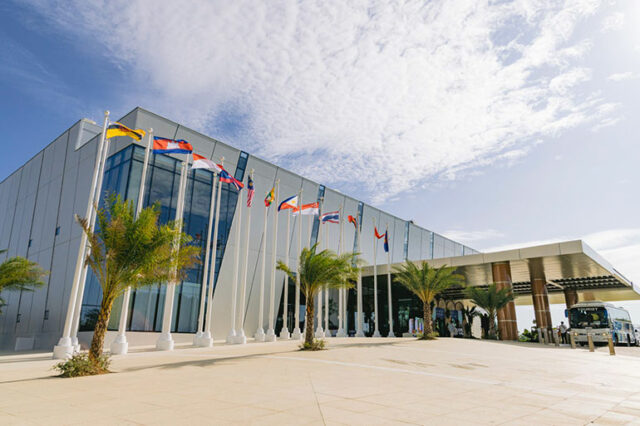
ASEAN Member-State flags stand at the Mactan Expo in Lapu-Lapu City, Cebu, the venue of the ASEAN Tourism Forum 2026.

The Philippines successfully concluded the ASEAN Tourism Forum (ATF) Travel Exchange (TRAVEX) 2026, held on Jan. 28 to 30 at the Mactan Expo in Lapu-Lapu City, Cebu. The three-day business-to-business event generated partial sales leads of P1.44 billion, underscoring strong buyer confidence and renewed momentum for Philippine and ASEAN tourism.

Marking the country’s return as host after a decade, TRAVEX 2026 reinforced the Philippines’ position as a capable MICE destination and an active driver of tourism trade and regional cooperation in Southeast Asia.

Organized by the Tourism Promotions Board (TPB) Philippines, TRAVEX 2026 brought together nearly 300 international buyers from over 50 key source markets across Asia, Europe, the Middle East, and North America, alongside 363 ASEAN exhibitors representing hotels and resorts, tour operators, destination management organizations, government agencies, airlines, and MICE venues.

Nearly 300 international buyers from 50 countries participated in ATF TRAVEX 2026.

Over three days, participants engaged in approximately 7,800 pre-scheduled business appointments, facilitating direct commercial discussions between ASEAN sellers and global buyers. This year’s exchange carried strong regional momentum into focused business discussions, connecting ASEAN tourism products with buyers shaping travel demand in their markets. Hosting TRAVEX in Cebu also demonstrated the Philippines’ readiness to deliver efficient, credible, and results-oriented trade events.

Beyond the trade floor, ATF 2026 featured ministerial meetings, tourism conferences, media briefings, and networking activities that supported dialogue on sustainability, innovation, and long-term competitiveness. A key milestone of the forum was the adoption of the ASEAN Tourism Sector Plan 2026-2030, which sets a shared road map for strengthening tourism enterprises, improving resilience, and promoting inclusive growth across the region.

Delegates took part in curated pre-show events in Cebu and Lapu-Lapu City, experiencing the Philippines as a destination that combines heritage, culture, modern infrastructure, and creativity. The tours featured cultural sites, leisure activities, island hopping, and visits to creative hubs, highlighting Cebu City’s recognition as a UNESCO Creative City of Design and its appeal for incentive travel and business events.

With ATF 2026 concluding on a strong note, the Philippines reaffirms its role as a regional tourism leader committed to advancing dialogue, trade, and partnerships that support long-term growth for destinations and communities across the country.


Spotlight is BusinessWorld’s sponsored section that allows advertisers to amplify their brand and connect with BusinessWorld’s audience by publishing their stories on the BusinessWorld Web site. For more information, send an email to online@bworldonline.com.

Join us on Viber at https://bit.ly/3hv6bLA to get more updates and subscribe to BusinessWorld’s titles and get exclusive content through www.bworld-x.com.

Resilient homes, resilient communities

Expanded 4PH and sustainable urban development

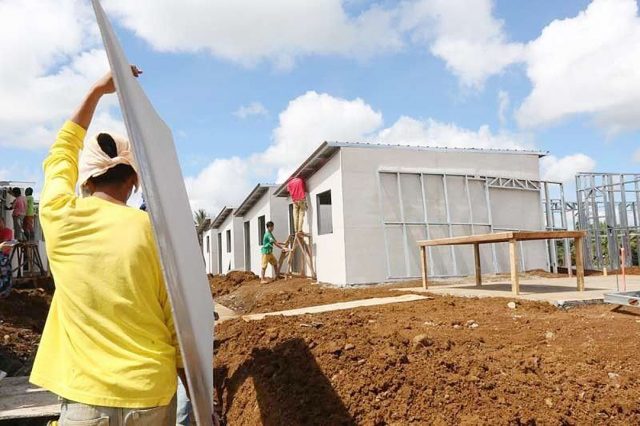
The Expanded 4PH Program integrates housing delivery with sustainability, resilience, and inclusive urban development. Under the Marcos administration, housing is designed not only to address shortages but also to foster safe and livable communities.

President Ferdinand R. Marcos, Jr. emphasized the enduring value of housing:

Mga kababayan, ang bahay ay hindi lamang istruktura. Sa tahanan unang nahuhubog ang pagkatao, umuusbong ang pag-ibig, at binubuo ang mga pangarap. Kaya’t hangga’t may mga Pilipinong nagnanais ng sariling tahanan, hindi po titigil ang pamahalaan sa aming pagkilos. Walang hihinto sa trabaho. Walang maiiwanan sa Bagong Pilipinas.”

Expanded in 2025, the program now includes high-density housing for urban areas, strengthened community mortgage programs, rental housing initiatives, and the accelerated disposition of lands under Presidential Proclamations.

Housing sites under Expanded 4PH are designed as livable communities, with significant portions allocated for open spaces such as parks and playgrounds. These design principles promote health, safety, and social interaction.

“Together, we are not just constructing buildings; we are building a nation of hope, resilience, and progress,” President Marcos said.

Through these integrated approaches, Expanded 4PH continues to contribute to a more resilient and inclusive Philippines.


Spotlight is BusinessWorld’s sponsored section that allows advertisers to amplify their brand and connect with BusinessWorld’s audience by publishing their stories on the BusinessWorld Web site. For more information, send an email to online@bworldonline.com.

Join us on Viber at https://bit.ly/3hv6bLA to get more updates and subscribe to BusinessWorld’s titles and get exclusive content through www.bworld-x.com.

Valentine’s Day likely rainy in some key cities, says PAGASA

The City of Manila has set up a themed public space for its celebration of Valentine's Day, Feb. 12, 2026.— PHILIPPINE STAR/RYAN BALDEMOR
Some key cities in the country are expected to experience occasional rain showers and thunderstorms on Saturday, Valentine’s Day, due to the effects of three weather systems, according to the state weather bureau on Thursday.

In a weekly weather outlook, the Philippine Atmospheric, Geophysical and Astronomical Services Administration (PAGASA) said that cities including Tagaytay, Lipa, Legazpi, Puerto Princesa, Bacolod, Iloilo, and Metro Cebu are expected to experience cloudy to at times cloudy skies with rain showers and thunderstorms on Saturday.

The same conditions are likewise expected in Cagayan de Oro, Valencia, Metro Davao, Zamboanga, and Tacloban, PAGASA added in its weekly outlook.

Meanwhile, Metro Manila is expected to experience partly cloudy to cloudy skies with occasional rain showers during the same period, PAGASA said in a 5:00 p.m. advisory. However, it noted that the chance of rainfall over the capital remains low, especially on Saturday.

The northeast monsoon, which has been bringing cooler winds and rainy weather to the northern and eastern parts of the country, is likely to weaken by March, or by April in rare scenarios.

No low-pressure area has been spotted within the Philippine Area of Responsibility as of the forecast period, the bureau said. — Edg Adrian A. Eva