Home Blog Page 258

SEC fines Myloan over unfair collection tactics

BW FILE PHOTO

THE SECURITIES and Exchange Commission (SEC) has fined Myloan Lending Investors, Inc. P50,000 for unfair and abusive debt collection practices, warning the company against further violations.

In a statement on Monday, the SEC said its Financing and Lending Companies Department found Myloan administratively liable for a second breach of Memorandum Circular No. 18, which sets standards for debt collection conduct.

The case stemmed from a borrower’s complaint alleging that the lender’s collection agents used shaming language, threatened to contact emergency contacts and employers, and repeatedly reached out to third parties over delayed payments.

Under SEC memo, lenders are barred from using or threatening violence, employing insulting or profane language or contacting people listed in a borrower’s contact directory, except guarantors or co-makers.

“These are not neutral reminders. They are coercive communications designed to pressure payment through humiliation and reputational exposure,” the SEC said in its order.

The regulator added that while delinquency may justify reasonable collection efforts, it “does not justify abuse,” rejecting the use of harassment or threats of third-party exposure as collection tools.

Alongside the fine, the SEC warned Myloan that further infractions could lead to heavier penalties, including the possible suspension or revocation of its certificate of authority.

The Financing and Lending Companies Department also ordered the borrower to settle outstanding obligations under the loan agreement, without prejudice to any restructuring or settlement both parties may reach.

Myloan Lending did not immediately reply to an e-mail seeking comment. — Alexandria Grace C. Magno

PNB’s 2025 net profit climbs 20%

PHILSTAR FILE PHOTO

PHILIPPINE NATIONAL Bank’s (PNB) net income jumped by 20% in 2025 as its consumer business posted strong growth.

The bank’s attributable net profit rose to P25.26 billion last year from P21.05 billion in 2024, it said in a disclosure to the stock exchange on Monday.

This translated to a return on equity of 11.09%, up from 10.39% a year prior, and a return on assets of 1.93%, higher than 1.72% in 2024.

“The sustained earnings growth was driven by the solid performance of its core businesses, strong balance sheet management, prudent cost management, and continued operational efficiency,” PNB said.

Net interest income rose by 6.51% to P52.55 billion last year from P49.34 billion in 2024.

This came as its interest income went up to P69.68 billion from P67.46 billion, while interest expense decreased to P17.13 billion last year from P18.12 billion in 2024.

As a result, net interest margin improved to 4.51% from 4.5%.

PNB’s net service fees and commission income increased by 5.81% to P5.83 billion from P5.51 billion.

Other operating income, which includes trading, investment, and foreign exchange gains, surged by 40.24% to P6.9 billion from P4.92 billion.

This brought the bank’s total operating income last year to P65.28 billion, up by 9.2% from P59.78 billion in 2024.

“Fee-generating businesses including deposits, loans, credit cards, trust operations, and bancassurance, and other non-interest earnings provided solid support to the bank’s performance for 2025, which is a reflection of the bank’s strengthened vigor towards expanding its revenue capabilities. Together, these gains underscore PNB’s expanding franchise and the growing confidence of our customers across all segments,” PNB Chief Financial Officer Francis B. Albalate said.

Meanwhile, the bank’s total operating expenses went up by 6.14% to P31.45 billion last year from P29.63 billion in 2024.

Its cost efficiency ratio improved to 48.17% from 49.57%.

PNB set aside loan loss provisions amounting to P1.66 billion last year, down from P3.87 billion in 2024.

Its nonperforming loan (NPL) coverage ratio edged down to 82.34% from 84.84%.

Meanwhile, the bank’s gross NPL ratio declined to 4.72% last year from 5.68%, showing improved asset quality.

“This reflects the effectiveness of the bank’s NPL stabilization strategy which includes tighter portfolio reviews, the use of dynamic risk-scoring and monitoring models. Active engagement with the bank’s corporate and commercial clients allowed for timely intervention and more effective account resolution,” it said.

Total loans and receivables were at P740.02 billion at end-2025, growing from P636.82 billion in 2024.

PNB said consumer loans posted the “biggest” increase at 27%, while its corporate and commercial portfolio grew by 13%.

“The sustained growth momentum in lending activities was supported by healthy asset yields and a low funding cost base,” it said.

Deposits grew to P1.06 trillion at end-2025 from P971.67 billion the year prior.

As a result, the bank’s net loan-to-deposit ratio rose to 68.58% from 64.43%.

PNB’s assets stood at P1.37 trillion last year, up by 9.32% from P1.26 trillion in 2024.

Total equity was at P240.28 billion, rising from P216.63 billion the year prior.

Capital adequacy ratio was at 20.12%, edging up from 20.1% in 2024, while common equity Tier 1 ratio rose to 19.31% from 19.21%.

“After completing the modernization of our core banking system and ATM (automated teller machine) switch, we significantly enhanced our customer acquisition efforts and expanded our ability to capitalize on market opportunities,” PNB President and Chief Executive Officer Edwin R. Bautista said.

“For digital banking, our digital app user base increased by 26%, a testament to the growing trust of the bank’s customers as we continue to enhance and upgrade our digital capabilities. During the year, the bank made significant investments to improve operational efficiency and elevate customer experience by upskilling more than 1,000 employees with competencies in digital-age banking, ethical AI (artificial intelligence) utilization, data protection, and agile methodologies — further strengthening organizational readiness for future growth.”

PNB’s shares rose by P1.55 or 2.44% to close at P64.95 apiece on Monday. — AMCS

A just and lasting peace in Ukraine is in the interest of all of us

UNSPLASH-INSTAGRAM.COM/ALBOVSKY

Today, Russia’s full-scale war of aggression against Ukraine is sadly entering its fifth year. The United Nations and its members have condemned Russia’s full-scale invasion of Ukraine, reinforcing the principles of international law and the UN Charter. Through resolutions in the General Assembly, an overwhelming majority of countries globally, including the Philippines, have denounced Russia’s actions, reaffirming Ukraine’s sovereignty and territorial integrity within its internationally recognized borders.

The consequences of this aggression are global and felt far beyond Europe, also in South East Asia. Economically, the war has disrupted food and energy supplies and contributed to higher inflation worldwide. It came on top of an already fragile global situation following the COVID-19 pandemic. Politically, the price is no lower. Russian aggression against Ukraine undermined the international order and eroded trust in international institutions. It has forced States to prioritize their security and has increased uncertainty within the international system. It turned attention and resources away from global public efforts such as cooperation on trade, development, and climate change. The sooner this war ends with a just and lasting peace, the sooner global attention and resources can be refocused. Predictability and stability in international relations are essential public goods, especially in a world facing multiple, overlapping crises.

The core principles enshrined in the UN Charter — sovereignty, territorial integrity, and the peaceful settlement of disputes — are universal commitments, not Western or European concepts. They are under strain in Ukraine and elsewhere, and respect for them is essential for the security of all states, large and small alike. How this war of aggression ends will further shape the future standing of these principles, already under immense tests elsewhere. If aggression is rewarded or normalized, sovereignty and territorial integrity risk becoming negotiable, weakening international stability far beyond Europe. If Russia can change borders by force, others will be tempted to try that, too.

A just and lasting peace in Ukraine is therefore critical to reaffirm the global value of these principles and to uphold the right of every sovereign nation to exist and make its own choices. Accountability for the suffering and destruction caused will also be essential, both for justice and to reinforce respect for international law.

2026 must be the year the aggression on Ukraine comes to an end. Russia has intensified its aggression lately, with indiscriminate attacks on critical infrastructure which causes tremendous suffering of civilian populations. However, Ukrainians continue to show incredible resilience while facing constant brutality. They certainly deserve peace.

The European Union will continue to support Ukraine for as long as necessary. The EU and its Member States are Ukraine’s leading supporters, providing extensive political, financial, and military assistance. A just and lasting peace in Ukraine can help restore predictability and international order in the modern world. This is why we urgently need it.


Signed by the Heads of Mission of the European Union, Belgium, Bulgaria, the Czech Republic, Denmark, Germany, Ireland, Greece, Spain, France, Croatia, Italy, Cyprus, Lithuania, Luxembourg, Netherlands, Austria, Poland, Romania, Slovenia, Slovakia, Finland, and Sweden.

One Battle After Another wins big at Britain’s BAFTA film awards

One Battle After Another (2025)

LONDON — Dark comedy One Battle After Another was the big winner at Britain’s top movie awards on Sunday, picking up six BAFTAs including best film and best director for Paul Thomas Anderson.

It beat home favorite, the tearjerker Hamnet, and vampire thriller Sinners, which has a record number of Oscar nominations, in the big two categories in the ceremony, where Prince William and Princess Kate were guests of honor.

“We have a line from Nina Simone that we stole in our film. She says ‘I know what freedom is, it’s no fear,’” Mr. Anderson said.

“So let’s keep making things without fear, it’s a good idea.”

Mr. Anderson also picked up the award for best adapted screenplay, while Sean Penn beat his co-star Benicio del Toro among others for best supporting actor.

The critical hit also won best cinematography and best editing to total six prizes.

Sinners, which has 16 Oscar nods, won best original screenplay for writer and director Ryan Coogler, best supporting actress for Wunmi Mosaku, and best original score.

SURPRISE IN BEST ACTOR CATEGORY
The biggest surprise was Robert Aramayo beating Timothée Chalamet, Leonardo DiCaprio, Michael B. Jordan, Ethan Hawke, and Jesse Plemons to win best actor for his acclaimed performance as Tourette syndrome campaigner John Davidson in I Swear.

He accepted the award — his second of the evening after picking up the rising star prize — in tears, saying “I absolutely can’t believe it.”

Asked before the ceremony what it would mean to him to win, Mr. Aramayo told Reuters: “I haven’t even engaged with that thought to be honest with you, I just feel really, really lucky to be on that list of names.”

Favorite Jessie Buckley won best actress for playing Agnes, the wife of William Shakespeare, in Hamnet, based on the novel by Maggie O’Farrell and directed by previous Oscar winner Chloé Zhao.

The film also won outstanding British film, but it lost out on the two major awards, including best film, where its home advantage had made it a favorite.

The awards, hosted by Alan Cumming, were the first joint engagement for William and Kate since William’s uncle Andrew Mountbatten-Windsor was arrested on Thursday.

William, president of the film academy, presented the BAFTA Fellowship to Donna Langley, studio head at NBCUniversal. — Reuters


And the 2026 BAFTA winners are…

LONDON — The 2026 BAFTA Film Awards, Britain’s top movie honors, were handed out at a ceremony in London on Sunday, with One Battle After Another winning the top prize of the night, best film.

Below is a list of winners in the key categories.

Best Film One Battle After Another

Outstanding British Film Hamnet

Director – Paul Thomas Anderson, One Battle After Another

Leading Actor – Robert Aramayo, I Swear

Leading Actress – Jessie Buckley, Hamnet

Supporting Actor – Sean Penn, One Battle After Another

Supporting Actress – Wunmi Mosaku, Sinners

Original Screenplay Sinners

Adapted ScreenplayOne Battle After Another

Film Not in English Language Sentimental Value

Animated Film Zootropolis 2 (titled Zootopia 2 in the US and some other countries)

DocumentaryMr. Nobody Against Putin

Original Score Sinners

EE Rising Star – Robert Aramayo

Triconti wins grid nod for P303-B wind projects

BUHAWIND.COM.PH

A CONSORTIUM led by Triconti ECC Renewables Corp. has secured approval to connect 1,650 megawatts (MW) of planned offshore wind capacity to the Philippine grid, clearing a key hurdle ahead of a government auction for renewable energy contracts.

In a statement on Monday, the group, which includes Liechtenstein-based Seawind Asia AG and Swiss firm Stream Invest Holdings AG, said it obtained grid connection agreements for three offshore wind projects with a combined investment value of about P303 billion.

The projects covered by the approvals are the 450-MW Frontera Bay offshore wind farm and the 600-MW Guimaras Strait and 600-MW Guimaras Strait II projects.

A grid connection agreement, issued by the National Grid Corp. of the Philippines, sets out the technical and commercial terms for linking a power facility to the transmission network. Securing the agreements signals the projects’ readiness for integration into the grid once completed.

The consortium is preparing to join the government’s fifth round of the Green Energy Auction (GEA-5), which is dedicated to offshore wind projects.

The auction lets developers compete to supply renewable power at the lowest price in exchange for long-term fixed-rate contracts.

Theo C. Sunico, Triconti’s director for regulatory and markets, said the grid approvals send “a strong signal to investors and project developers.”

“It shows the Philippine government’s commitment to support the offshore wind industry and highlights the real value that international partnerships can bring to the country’s green energy transition,” he said.

The Philippines has been stepping up efforts to attract offshore wind investments as it seeks to diversify its energy mix and reduce reliance on imported fossil fuels.

Offshore wind projects, however, require substantial capital and long development timelines, with grid access considered one of the critical milestones before financial close.

Triconti ECC Renewables is part of the Triconti Windkraft Group, a Filipino-Swiss joint venture with a development pipeline of more than 4 gigawatts of onshore and offshore wind projects nationwide.

Seawind focuses on offshore wind development and construction, while Stream Invest backs wind and solar ventures in growth markets.

The consortium said it would intensify development work to ensure successful participation in GEA-5 and advance the projects toward realization.

If awarded contracts under the auction, the projects would rank among the biggest offshore wind developments in the country, potentially reshaping the Philippines’ renewable energy landscape and bolstering its long-term energy security goals. — Sheldeen Joy Talavera

Peso surges to five-month high on tariff ruling

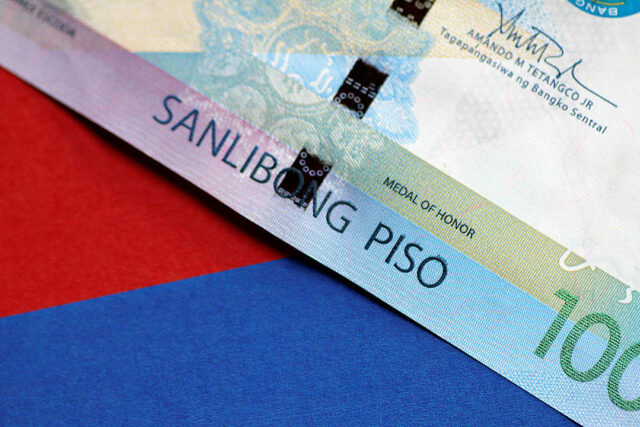
A Philippines peso note is seen in this picture illustration on June 2, 2017. — REUTERS

THE PESO surged to a five-month high against the dollar on Monday after the US Supreme Court ruled that the reciprocal tariffs imposed by President Donald J. Trump on their trading partners were unconstitutional.

The local unit jumped by 57.5 centavos to close at P57.575 versus the greenback from its P58.15 finish on Friday, data from the Bankers Association of the Philippines showed.

This was the peso’s strongest finish in five months or since it closed at P57.461 per dollar on Sept. 24, 2025.

The local currency opened Monday’s trading session stronger at P57.95 against the dollar. It surged to a high of P57.53, while its weakest showing was at just P57.999 against the greenback.

Dollars traded rose to $1.716 billion from $1.368 billion on Friday.

“The dollar-peso traded lower on broad dollar weakness following the Supreme Court’s ruling on Trump’s tariff and renewed worries on fiscal policy and tariff concerns,” a trader said in a phone interview.

The peso jumped as the decision led to gains in emerging-market stocks and currencies, Rizal Commercial Banking Corp. Chief Economist Michael L. Ricafort said in a Viber message.

For Tuesday, the trader said the peso could move between P57.30 and P57.70 per dollar, while Mr. Ricafort expects it to range from P57.45 to P57.70.

Emerging Asian currencies strengthened on Monday as uncertainty over US trade policy kept the dollar under pressure, while regional equities moved higher, spearheaded by gains in South Korea and Taiwan, Reuters reported.

MSCI’s emerging market currency index climbed 0.24%, hovering just below its record peak hit on Feb. 12.

The dollar index weakened after Mr. Trump unveiled a blanket 15% import levy in response to a US Supreme Court ruling against his sweeping tariffs.

A 15% global tariff rate would be a modest relief for India and ASEAN economies like Malaysia, Thailand, Indonesia, the Philippines and Vietnam, according to analysts at Barclays, though the levy would be higher for Singapore with a present rate of 10%.

The Singapore dollar edged up 0.2% and the South Korean won, Thai baht and Taiwanese dollar all gained over 0.3%.

The narrative in Asian emerging markets has shifted from tariff fears to competitiveness, with supply chains viewed as more diversified than in 2018 and economies tied to artificial intelligence (AI) hardware, capital goods and advanced manufacturing viewed as better positioned than pure export plays, said Billy Leung, investment strategist at Global X ETFs Australia.

Regional equities advanced, with Taiwan’s benchmark touching a record high of 34,212.38 points before closing 0.5% higher.

South Korea’s KOSPI index, another key beneficiary of advancements in AI, gained 0.7%. The benchmark rose 2.1% earlier in the day, to hit a record high.

Indonesian stocks rose 1.4% after the Indonesia Stock Exchange late on Friday unveiled a series of capital market reforms, following a January warning from MSCI that the country risked a downgrade to frontier status by as early as May.

Thailand equities rose as much as 1.5%, clocking their highest since mid-October 2024. Equities in the Philippines advanced 1% while Singapore and Malaysia stocks rose 0.2% and 0.3% respectively. — A.M.C. Sy with Reuters

A look at the ASEAN and our major partner economies

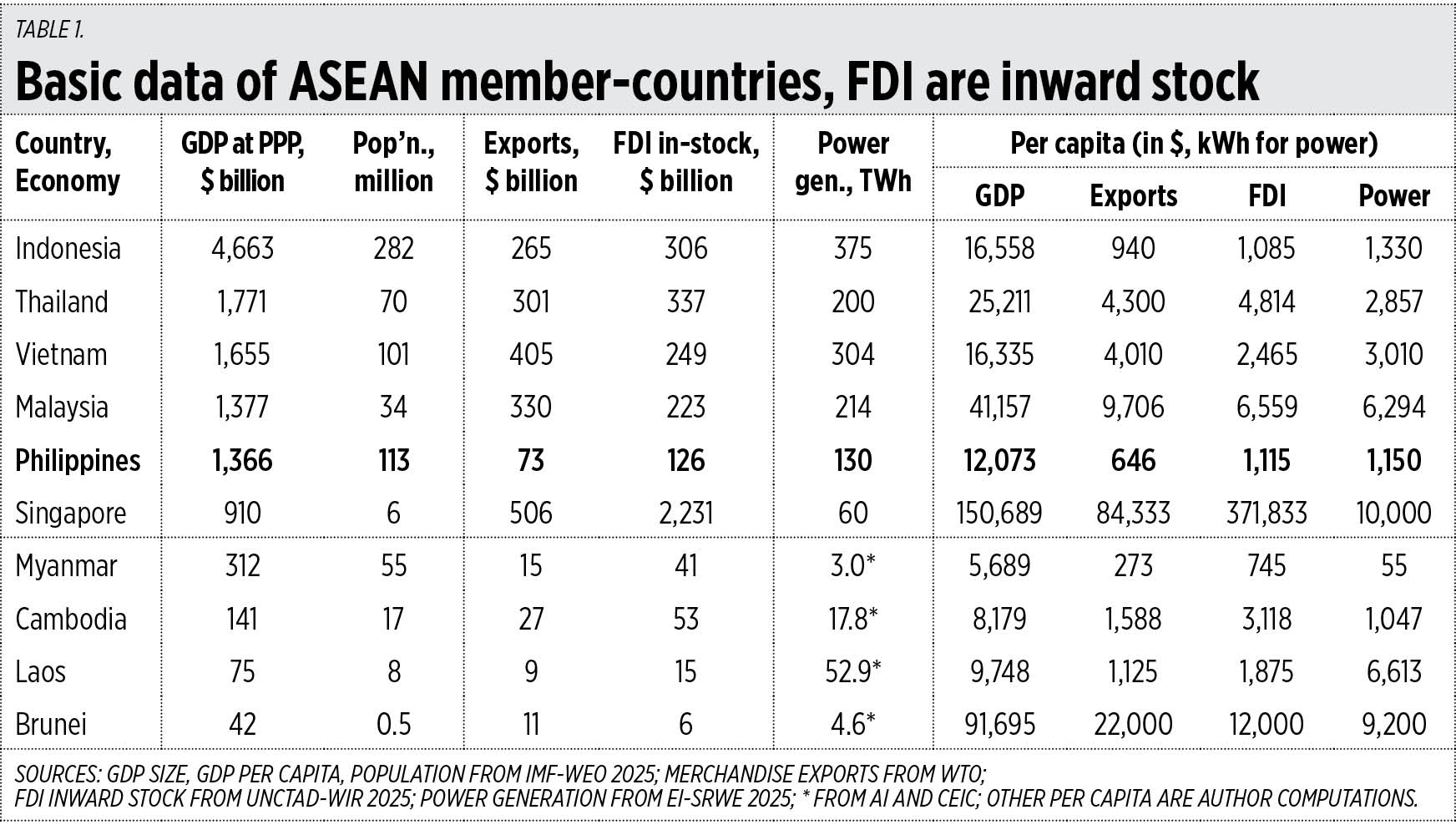
The Association of Southeast Asian Nations (ASEAN) is a big economic bloc with a combined population of 686 million in 2024, the third largest in the world after India and China. Its combined GDP size at purchasing power parity (PPP) values was $12.3 trillion, the fourth largest in the world after China, the US, and India.

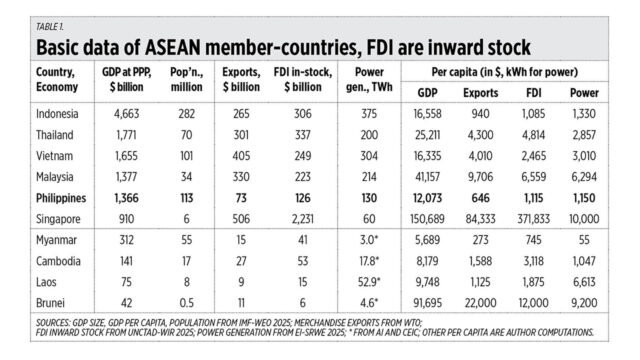
In merchandise trade, the ASEAN had a combined $1.94 trillion in exports in 2024, the third largest in the world after China and the US. In foreign direct investment (FDI) inward stock (inflows minus outflows through the years) the bloc had a combined $3.59 trillion (dominated by Singapore), and was the second largest after the US. And in power or electricity production, it had a combined output of 1,362 terawatt-hours (TWh) in 2024, the fourth largest after China, the US, and India (see Table 1).

Looking at the numbers, Laos is a surprise — it has a small population, a small GDP size and FDI stock, but it is huge when it comes to power generation and is considered as the “Power Battery of Southeast Asia.” Electricity — mainly from hydro — is Laos’ main export product with over 75% of its power generation in 2024 sold to neighbors like Cambodia, Myanmar, Thailand, Vietnam, Singapore, and China.

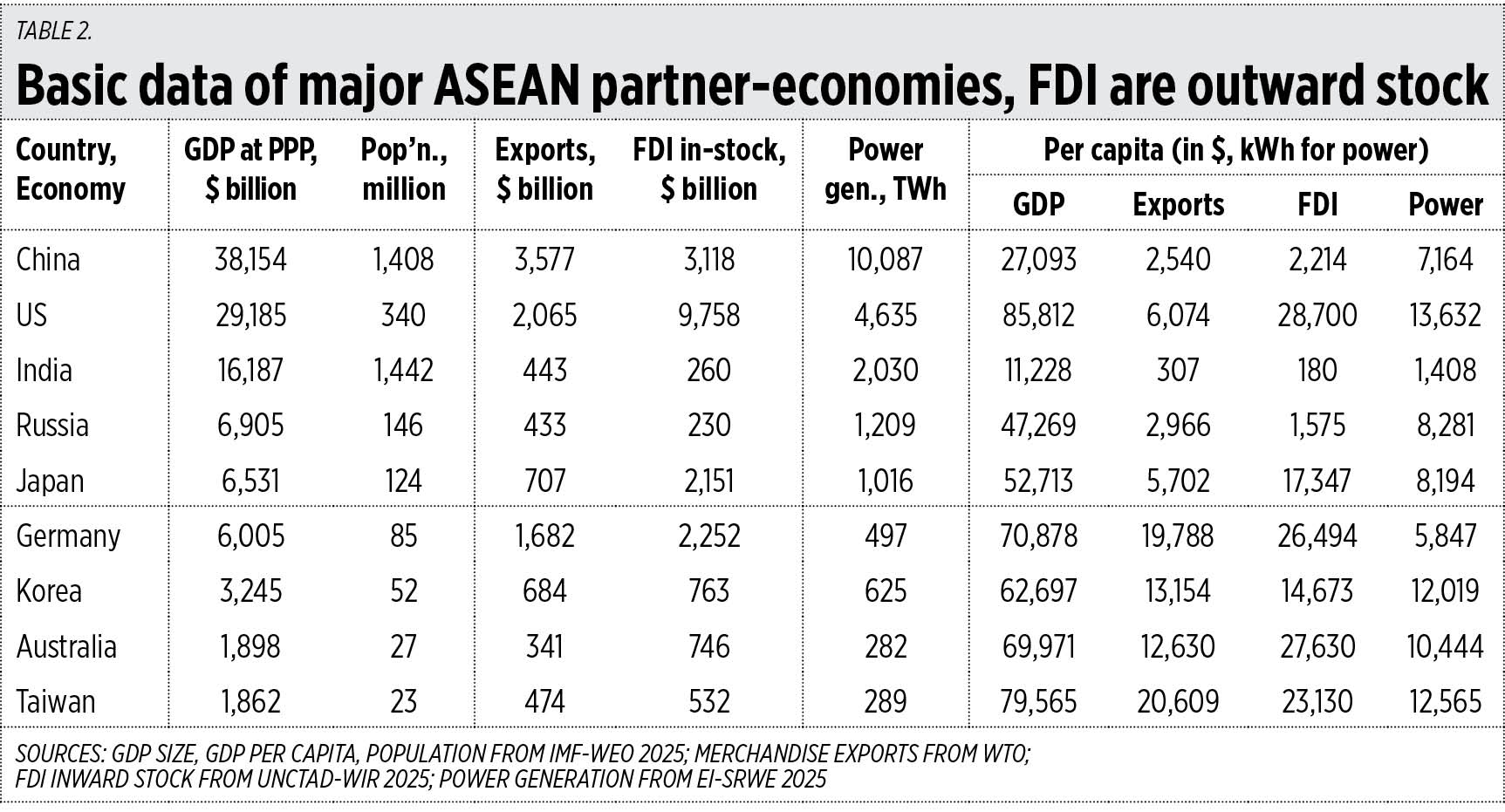
Of the ASEAN’s major partners, I included only Germany from among the EU countries for brevity’s sake. For the FDI data, I used outward stock, not inward stock, to see who were the large exporters of capital.

In GDP size in nominal or current values, the US is No. 1 in the world, but in PPP values, China is No. 1, followed by the US and India. This is consistent with data on power generation – China produced twice the power of the US, followed by India.

But in terms of per capita GDP, FDI outstock, and power generation, the US is the largest economy, followed by Taiwan, South Korea, and Australia. In per capita exports, Taiwan and Germany have the most (see Table 2).

Today there is an “ASEAN Editors and Economic Opinion Leaders Forum” in Makati, organized by the Committee on Business and Investment Promotion (CBIP) of the Department of Trade and Industry (DTI). The keynote speakers in the morning include Executive Secretary Ralph G. Recto, DTI Secretary Ma. Cristina Roque, and Tetsuya Watanabe, President of the Economic Research Institute for ASEAN and East Asia (ERIA). This should be an interesting forum.

On Facebook on Feb. 18, I saw photos of a delegation made up of officials of the Philippines-Japan Economic Cooperation Committee (PHILJEC) and the Japan-Philippines Economic Cooperation Committee (JPECC) visiting President Ferdinand R. Marcos, Jr. at Malacañang. Among those in the photo were Endo Kazuya, Japan’s Ambassador to the Philippines, Mr. Recto; Arsenio Balisacan, the Secretary of the Department of Economy, Planning, and Development; Dave Gomez, Secretary of the Presidential Communications Office, and other Philippine officials. PHILJEC and JPECC held their 42nd joint meeting in BGC the next day.

These are important and useful meetings to promote more economic cooperation between the two countries. We must encourage more trade and investments, more tourism and commerce, more infrastructure and human resource development, not more war mongering between or among countries.

The ASEAN member-countries should work on more economic cooperation with Japan, China, Korea, Taiwan, and Hong Kong. We are all neighbors in East Asia. We have more commonality in history, culture, and trade than far away countries that want to wedge themselves in disputes that are better resolved among ourselves.


Bienvenido S. Oplas, Jr. is the president of Bienvenido S. Oplas, Jr. Research Consultancy Services, and Minimal Government Thinkers. He is an internationa fellow of the Tholos Foundation.

minimalgovernment@gmail.com

Universal Records’ new girl group draws from Filipino mythology

BRONTË H. LACSAMANA

AFTER three years of intensive K-pop-style training, the new Filipina girl group, FINA, has been launched under CreaZion Studios Artists, GLXY Talent Management, and Universal Records Philippines, with the goal to “champion Filipina identity.”

The five-member group — composed of Anika, Nala, Chill, Cia, and Heaven — has released its debut single, “Paramdam,” a high energy song, with the message of following one’s heart to connect with others. The accompanying music video reveals that each member is themed and dressed according to a different Filipino mythological figure.

“We want to invite people to find their space, to know that there’s a community out there that’s going to love you if you just be who you are,” said FINA member Chill at the official launch on Feb. 19 in Quezon City. “We’re excited that ‘Paramdam’ is our debut song because it shows what the group stands for.”

The group shows diversity in both backgrounds and the characters they play. During the launch, Cavite-born Anika was dressed in red to channel the aswang (bloodsucking ghoul) that she represents. Nala who is Chinese by heritage was wearing furs referencing the lobo (wolf), while Chill from Cagayan de Oro channeled the engkanto (nature fairy). Cabanatuan-based Cia suggested a sirena (mermaid) and Quezon City girl Heaven veered toward the ethereal as a diwata (guardian fairy).

“We want to represent through our music our Filipino culture, traditions, values, and instruments, to show the international stage how beautiful Filipino culture is,” Heaven told the press.

FINA (derived from “Filipina” while also standing for the group’s motto, “fine as you are”) was formed after three years of intensive K-pop-style training, but they intend to set themselves apart from the groups that have come before them.

“P-pop is versatile. There’s not just one style of P-pop. You can be different,” explained Anika. “In the end, as Filipinos, we have different sides of ourselves, and that’s what we want to showcase in the international scene.”

Unlike other global pop and P-pop groups, the members do not have designated performance roles. Each member of FINA is meant to have equal footing in all skills, be it as vocalist, dancer, rapper, visual artist, or “center” (which are the usual roles in the K-pop system).

Chill added that this displays the sheer talent that P-pop has to offer. “Everybody is a strong vocalist, a strong dancer, a great performer, and we can be vulnerable but still very entertaining while we do it,” she said.

The public can expect more songs with a distinctly Filipino sound, lyrics, and aesthetics.

“We want to tell the stories of Filipinos through our songs,” said Nala, who pointed out the beauty in the lyrics of “Paramdam.” “We want to introduce our culture to international audiences.”

For Cia, their debut has meant getting one step closer to performing their music live on stage — which is a dream come true for all five of them. “We have a lot of energy and want to show our talents, skills, and individuality,” she said. — Brontë H. Lacsamana

PCC clears GCMC JV with Navegar II and Leapfrog

FACEBOOK.COM/GMCL.COM.PH

THE Philippine Competition Commission (PCC) has approved a joint venture (JV) between local hospital operator Global Care Medical Center Holdings, Inc. (GCMC) and Singapore-based private equity firms Navegar II (Singapore) Pte. Ltd. and Leapfrog Emerging Consumer Fund IV, LP, clearing the way for an expansion of healthcare services across the Philippines.

The antitrust regulator said it found no horizontal overlaps or vertical relationships among the parties that could raise competition concerns.

The phase one review, conducted by the PCC’s Mergers and Acquisitions Office, concluded that the transaction “does not affect market positions or competitive dynamics in any relevant market.”

GCMC operates five hospitals in Pangasinan, Batangas and Laguna, with about 300 licensed beds and 670 doctors covering more than 60 specialties.

Beyond hospital operations, the company provides nationwide diagnostic services and distributes pharmaceuticals and medical equipment.

Navegar II, a Singapore-based private equity firm, and Leapfrog, a global growth-focused fund specializing in healthcare and financial services, are investors in the joint venture but do not operate healthcare facilities in the Philippines. The PCC said Leapfrog’s involvement as an investment holding company poses no competitive risk.

The venture seeks to address gaps in healthcare access outside the country’s major urban centers.

“As healthcare demand rises across the Philippines, access outside major cities remains constrained,” Leapfrog said in a statement last week. “GCMC addresses this gap by locating modern, well-equipped hospitals in underserved provinces.”

Under Republic Act No. 10667 or the Philippine Competition Act, the PCC reviews mergers and acquisitions, including joint ventures, to ensure that deals do not harm competitive market conditions or create monopolistic advantages.

The approval reflects interest from international investors in Philippine healthcare, a sector that has seen growing demand for modern facilities and services in provincial markets.

The PCC’s clearance provides regulatory certainty for the JV, allowing GCMC to use Leapfrog and Navegar II’s capital to expand its footprint, while maintaining competition in hospital and medical service markets. — Beatriz Marie D. Cruz

Deutsche Bank sees last rate cut in June

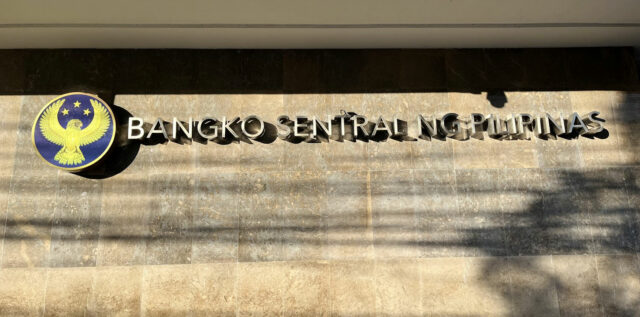
The main office of the Bangko Sentral ng Pilipinas in Manila. — BW FILE PHOTO

THE BANGKO SENTRAL ng Pilipinas (BSP) could stand pat at its next meeting before delivering its final rate cut for this easing cycle in June as economic growth is likely to stay sluggish this quarter, Deutsche Bank Research said.

“(The) Bangko Sentral ng Pilipinas lowered its policy rate by 25 bps (basis points) to 4.25%, in line with our forecast. We still expect another 25-bp rate cut by BSP’s June meeting, as first-quarter GDP growth data (to be released early May) is likely to remain weak,” it said in a report on Monday.

“Although BSP raised its inflation forecast to 3.6% in 2026, from 3.2% prior, it noted that it was ‘due mainly to supply-side pressures, which are likely to be temporary,’” Deutsche Bank Research said. “This supports our view for another rate cut as demand-pull pressures are likely to stay muted in line with subdued confidence and sentiment.”

For its part, Moody’s Analytics said the BSP may be approaching the end of its monetary easing cycle even as inflation remains subdued as the ongoing economic slowdown requires stronger reforms.

“Much of the recent softness reflects deteriorating business and consumer confidence amid a controversy over the misuse of government funds for flood control projects,” it said in a report dated Feb. 20.

“Rate cuts may contain the slowdown, but it will take greater transparency, stronger governance, and credible policy direction to restore confidence. For this reason, the easing cycle is likely nearing its limit.”

The Monetary Board’s next two policy meetings are scheduled for April 23 and June 18.

Last week, the BSP trimmed benchmark borrowing costs by 25 bps for a sixth straight meeting, bringing the policy rate to an over three-year low of 4.25% as it sought to support domestic demand, as governance concerns due to a corruption scandal involving flood control projects that unfolded last year have dented consumer and business confidence, causing economic growth to slow to a five-year low of 4.4% in 2025.

It has now cut rates by a total of 225 bps since it kicked off its current easing cycle in August 2024.

BSP Governor Eli M. Remolona, Jr. said future easing will largely hinge on how soon confidence will recover as weak sentiment has affected demand, making the output gap bigger.

“We’re now in a situation where it’s more conditional on what happens to confidence and growth,” he said at a briefing after Thursday’s meeting. “We support growth, and we do want growth. But at the same time, our main mandate is still inflation. So, to the extent we can support growth without causing inflation, we will support growth.”

He added that they are seeing “tentative” signs of improving confidence.

On Friday, the BSP chief said that with inflation under control, they have room to help stimulate domestic demand, although they face a “large element of uncertainty.”

“We are at the point where monetary policy cannot do much more, but things are very uncertain.”

The central bank raised its inflation forecasts for this year until 2027 to 3.6% and 3.2%, respectively, from 3.2% and 3% previously. Both are within its 2%-4% annual target.

Officials said they see upside risks coming from the supply side from electricity rate adjustments, higher oil prices, and the impact of the government’s flexible rice tariff scheme, although these are expected to be short-lived. — Katherine K. Chan

The new face of extremism among Asia’s youth

ONUR BINAY-UNSPLASH

By Karishma Vaswani

A DANGEROUS TREND is emerging in chatrooms and digital communities across Asia. Young people — mainly men and boys — are being exposed to a volatile mix of nationalist grievances, misogyny, and nihilistic violence. Governments are far from equipped to confront this rising threat; often they don’t even know what they’re looking for. Yet the longer this goes undetected, the greater the risk that it spills into real-world violence.

Online radicalization isn’t new. For years, groups like Islamic State have used social media platforms, slick digital propaganda magazines, and even artificial intelligence to recruit fighters and supporters. This globalized jihad had a clear aim: the establishment of a caliphate.

But today’s threat is different and more elusive. Singapore’s Internal Security Department has described it as “salad bar” extremism, a phenomenon where people cherry-pick from a range of hardline influences rather than subscribing to a single doctrine.

None of the recent cases point to a coordinated movement, nor do they supersede the threat of Islamist extremism, which remains the most prevalent organized menace in the region. Still, the emergence of this digital ecosystem is worrying because it is harder to detect and disrupt precisely because it lacks a formal structure.

These issues aren’t unique to Asia. This month’s mass shooting in Canada, which left several people dead and many more injured, previous school shootings in the US, and the Southport attack in the UK have also been potentially linked to nihilistic online movements. The pattern is global, but ignoring it locally would be a mistake.

Young men are particularly vulnerable. The reasons are complex and include social isolation, economic pessimism, and a perceived erosion of male status in rapidly modernizing societies. The incel subculture — involuntarily celibate men who resent their inability to find romantic or sexual partners — has become part of this troubling mix. These grievances are amplified online, spreading through digital forums, social media and even seeping into gaming communities.

Authorities are beginning to recognize this trend as an emerging concern, says Saddiq Basha, senior analyst at the Singapore-based S. Rajaratnam School of International Studies at Nanyang Technological University. “This is creating a fertile environment for a nihilistic worldview to take root,” he told me.

Singapore — a small but multiracial and multireligious society deeply conscious of the risk of terrorism and disharmony — has detained several youths over the past decade for plotting violence after being radicalized online. Among them were teens influenced by the ideology of Brenton Tarrant, the perpetrator of the 2019 Christchurch massacre who killed 51 people at two mosques. Singaporean officials say that some of those radicalized in recent years had consumed a mix of this extremist propaganda, racist conspiracy narratives, and violent manifestos.

Indonesia offers another warning. In November last year, the bombing of a high school in Jakarta was described by police as “memetic violence” — an attack shaped by the desire to imitate, rather than allegiance to an organization. The perpetrator also drew inspiration from Tarrant, as well as the 2017 Quebec City mosque attacker Alexandre Bissonnette and other school shooters, notes the Washington-based think tank Jamestown Foundation. Authorities also believe he was radicalized by the online “True Crime Community” forums that glorify mass killers, rather than following any specific ideology.

A related but distinct trend has emerged in South Korea. Online groups like New Men’s Solidarity have become a hub for anti-feminist rhetoric, attracting hundreds of thousands of views and subscribers on YouTube. Their messaging blames women’s progress for young men’s struggles, and describes feminism as a “social evil.” These platforms don’t necessarily advocate violence directly, but they normalize male victimhood and provide overly simple explanations for complex frustrations.

Prevention must start young. Given the nature of how these ideas are spread — online and through algorithm-driven feeds — governments may be tempted to follow Australia’s lead and impose nationwide curbs on social media for minors. This could reduce exposure at the margins.

But platform controls alone cannot address deeper drivers. Tackling this generation’s identity anxiety and social isolation requires a whole-of-society response — from governments and schools to families. Expanding digital literacy education from primary school, strengthening early intervention programs, and investing in youth mental health services are essential steps.

At the regional level, coordination must improve. Asian counterterror forces — such as Indonesia’s Densus-88 — have become adept at dismantling extremist networks. But this is a different kind of threat, so they need to adapt to track how these ideas spread and turn into digital ecosystems. 

The greatest challenge may lie closer to home. Conservative societies will need to confront narratives that frame female success as national decline. And where economic and educational gaps between men and women are widening, governments should address this directly by creating forums for open discussion while simultaneously regulating and monitoring sites where grievances can spread.

None of this will be easy. But failing to act now risks allowing a new generation to be shaped by insidious ideas, spreading quietly through feeds and forums — hiding in plain sight.

BLOOMBERG OPINION

FCC asks US networks to air ‘pro-America content’ to mark nation’s 250th birthday

WASHINGTON — The head of the Federal Communications Commission (FCC) urged US broadcasters on Friday to air “patriotic, pro-America content” to mark this year’s 250th anniversary of the United States’ founding.

FCC Chair Brendan Carr suggested broadcasters could voluntarily take part in the semiquincentennial celebrations by running nonpartisan public service announcements, short segments, or full specials promoting civic education and American history.

He said they could also choose to start each day’s broadcast with “The Star-Spangled Banner” or the Pledge of Allegiance, and could air music by major American composers.

The announcement comes as the Trump-led FCC has repeatedly clashed with broadcast networks.

NBC, Fox, CBS, and ABC did not immediately comment.

NO MORE NATIONAL ANTHEM
Until the 1980s, many local affiliates would play the national anthem when they signed off programming for the day, a practice made obsolete by round-the-clock broadcasting.

Mr. Carr, who was named FCC chair by President Donald J. Trump in January 2025, initiated a practice of saying the Pledge of Allegiance — a patriotic oath — before the FCC’s monthly meetings.

Mr. Carr said he hoped broadcasters would pledge to show civics programs to fulfill “their public interest mandate to serve the needs and interests of their local communities as America’s 250th birthday celebration marches on.”

COMPLAINTS AGAINST BROADCASTERS
Last week, Mr. Carr confirmed that the FCC is investigating ABC’s The View over whether it violated equal time rules when it aired an interview with Texas State Representative James Talarico, a Democrat running for the US Senate. CBS late-night talk show host Stephen Colbert said lawyers for CBS had barred him from airing an interview with Mr. Talarico.

The FCC said last month that daytime and late-night TV talk shows are no longer considered “bona fide” news programs that are exempt from requirements to give equal airtime to views of opposing candidates. For decades talk shows had been exempt from those rules.

Mr. Carr has repeatedly criticized the news media and suggested that broadcast networks need significant reforms.

In January, he reinstated complaints about a 60 Minutes interview with then-Vice-President Kamala Harris, how ABC News moderated the pre-election televised debate between then-President Joseph R. Biden and Donald J. Trump, and NBC for allowing Harris to appear on Saturday Night Live shortly before the election. — Reuters

ADVERTISEMENT
ADVERTISEMENT