Home Blog Page 2562

Rape suspect in Sultan Kudarat arrested

JÖRG HUSEMANN DA PIXABAY

COTABATO CITY — The police had finally clamped down an elusive suspect in statutory rape cases in an operation in Barangay Titulok in Bagumbayan, Sultan Kudarat on Tuesday.

Brig. Gen. James E. Gulmatico, director of the Police Regional Office-12, told reporters on Thursday that the suspect was cornered by combined personnel of the Bagumbayan Municipal Police Station and the Sultan Kudarat Provincial Police Office in a secluded area in Barangay Titulok with the help of local officials.

The suspect disappeared in Koronadal City after local courts had ordered his arrest for statutory rape cases last July.

Agents of different units under PRO-12 searched in different towns in South Cotabato and in interior areas in Koronadal City until residents of Bagumbayan, an interior town in Sultan Kudarat, reported his presence in Barangay Titulok, leading to his arrest.

Mr. Gulmatico said the court has not recommended bail for the suspect’s temporary release from detention. — John Felix M. Unson

PDEA-12 nabs drug dealer

LOREN BISER-UNSPLASH

COTABATO CITY — A drug peddler who had eluded five entrapment was nabbed in an operation led by the Philippine Drug Enforcement Agency-12 and the police in Barangay Perez in Kidapawan City on Wednesday.

Aileen T. Lovitos, director of PDEA-12, told reporters on Thursday that the suspect is now in their custody and will be prosecuted for the violation of the Comprehensive Dangerous Drugs Act of 2002.

Local executives, barangay officials, and personnel of different municipal police stations together tried but failed to entrap the 35-year-old five times in the past 27 months, according to local government officials in five different towns in Cotabato province.

Radio reports in Central Mindanao on Thursday stated that friends and relatives of the suspect aided the PDEA-12 and anti-narcotics operatives under Brig. Gen. James E. Gulmatico, director of the Police Regional Office-12, in plotting the operation that resulted in his arrest and confiscation from him of P6,800 worth of shabu. — John Felix M. Unson

Marcos touts potential of Philippine chemical industry

PRESIDENT Ferdinand R. Marcos, Jr. solicited potential investors in the Philippines’ chemical industry, particularly projects involving materials needed for the green transition. 

“One of the largest sub-sectors in our manufacturing industry is the chemicals industry,” he was quoted as saying at the ASEAN Business and Investment Summit in Laos, according to a transcript released by his office on Thursday.

“This is what we consider a pillar industry as it supports the agriculture, automotive, cement, creative, construction, energy, health, and pharmaceutical sectors.”

Mr. Marcos said the chemical industry is considered a “major contributor to economic growth and job generation in the foreseeable future.”

Gross value added generated from chemical and chemical products hit P461 billion in 2023, down from P465.1 billion a year earlier, according to Statista.

“Our manufacturing sector continues to flourish despite global challenges. Indicators such as the sustained growth in the Purchasing Managers’ Index proves that with a strong foundation, industries can flourish even in these uncertain times,” Mr. Marcos said.

Manufacturing registered growth of 3.6% in the second quarter, due in large part to production of coke and refined petroleum products, food products, chemical and chemical products, printing and reproduction of recorded media, and electrical equipment, according to the Philippine Statistics Authority. 

Mr. Marcos said the Philippines has stepped up its efforts to become “an ideal hub for smart, sustainable manufacturing,” citing the establishment of its first factory for the manufacturing of advanced lithium iron phosphate batteries.

“We are targeting industries like green metals, battery manufacturing, energy equipment, data centers, and agribusiness,” he said.

He was referring to Australian investor StB GigaFactory, Inc.’s newly built battery manufacturing plant at Filinvest Innovation Park at New Clark City in Tarlac, which is expected to create about 2,500 direct and indirect jobs in the engineering, technical, finance, and administrative fields by 2030.

The hub, with capacity of 6,000 electric vehicle batteries or 60,000 home battery systems each year, is expected to contribute over P5 billion annually to the economy.

Between July 2022 and April 2024, 13 renewable energy projects in solar, hydropower, and biomass have been completed and “more are in the pipeline,” Mr. Marcos said.

He also cited recent economic reforms, in addition to which Congress is expected to pass a bill soon to further cut the corporate income tax (CIT) to 20% from 25%.

A previous law signed in 2021 cut CIT to 25% from 30%.

Also in Laos, Mr. Marcos and other members of the Philippine delegation met with executives of foreign companies including Thailand’s SHERA Public Co. Ltd.

Executives including Chief Executive Officer (CEO) Ongek Taechamahaphant and Philippine Country Head Thunnop Jumpasri discussed the installation and operation of a fiber cement building materials plant inside TECO Industrial Park in Mabalacat City, Pampanga.

The P2.9-billion project is expected to begin operations by the first quarter of 2025, marking SHERA’s first overseas venture, Malacañang said in a statement.

SHERA is one of the world’s largest manufacturers of fiber cement boards, siding, roofing and concrete roof tiles. — Kyle Aristophere T. Atienza

PSEi dips on profit taking as peso hits 2-month low

REUTERS

By Sheldeen Joy Talavera, Reporter

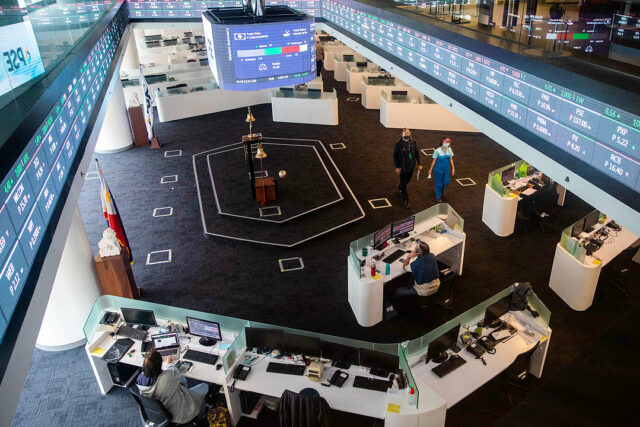
PHILIPPINE STOCKS continued to drop on Thursday as investors booked gains, and as markets grew more confident about a patient approach by the US Federal Reserve to further monetary easing.

The bellwether Philippine Stock Exchange index (PSEi) shed 0.17% or 13.05 points to close at 7,411.47. The broader all-share index gained 0.1% or 4.16 points to 4,037.52.

“Investors continued to take profits amid the peso’s sustained depreciation, now going further below the P57 mark,” Japhet Louis O. Tantiangco, senior research analyst at Philstocks Financial, Inc., said in a Viber message.

The peso dropped by 34 centavos to close at a two-month low of P57.36 against the dollar, according to Bankers Association of the Philippines data posted on its website.

Jayniel Carl S. Manuel, an equity trader at Seedbox Securities, Inc., said the index decline was “driven by a combination of factors, including profit taking, as investors locked in gains from the recent market rally.”

“The weaker Philippine peso, coupled with rising US Treasury yields, was also exerting a downward pressure on the index,” he said in an e-mail. “However, the overall market outlook remains bullish, largely driven by expectations of monetary easing by the Bangko Sentral ng Pilipinas.”

Jovis L. Vistan, vice-president at AB Securities, Inc., said the slight dip comes after “an impressive run, as it has been one of the top-performing markets in Asia, alongside China.”

“It’s only natural for the market to undergo some consolidation following its strong performance,” he said in a Viber message.

Sectoral indexes were split on Thursday. Services fell by 1.55% or 36.02 points to 2,282.36, while mining and oil lost 0.98% or 87.21 points to 8,736.51. The industrial index went down by 0.29% or 29.38 points to 9,935.63.

On the other hand, the property index gained 0.55% or 16.21% to 2,950.95, while holding companies added 0.28% or 17.68 points to 6,299.15. The financial index gained 0.18% or 4.43 points to 2,363.97.

Value turnover declined to P5.59 billion from P5.3 billion, even as the volume rose to 1.07 billion from 917.06 million stocks.

Losers beat winners 111 to 99, while 48 stocks were unchanged. Net foreign selling fell to P73.58 million on Thursday from P402.75 million on Wednesday.

E-TRACC exemption sought for exporters — Trade dep’t

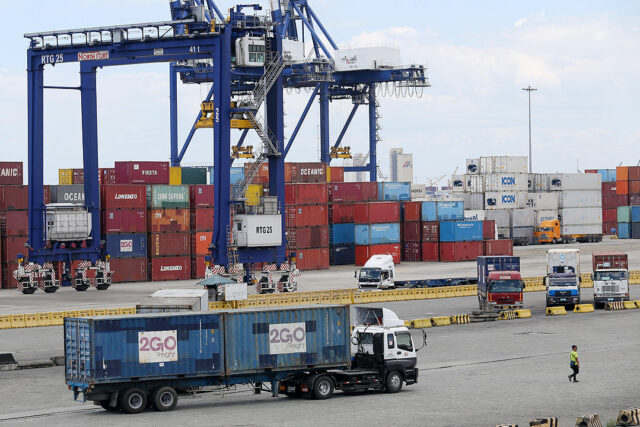
Trucks enter the port area in Manila. — PHILIPPINE STAR/EDD GUMBAN

EXPORTERS should be exempt from the Bureau of Customs’ (BoC) Electronic Tracking of Containerized Cargo (E-TRACC) system, the Department of Trade and Industry (DTI) said, noting that the industry already tracks its shipments.

Export Marketing Bureau Director Bianca Pearl R. Sykimte said that discussions on exempting exporters have been elevated to the Economic Development Group, which is co-chaired by the Secretaries of Finance and the National Economic and Development Authority (NEDA).

“We are still coordinating with BoC on identifying what data can (fulfill) the agency’s requirement for monitoring,” Ms. Sykimte said on the sidelines of the Philippines-Korea Business Forum on Monday.

“The discussion is about how we can integrate the monitoring requirements of BoC with the monitoring mechanisms in place,” she added.

Ms. Sykimte, who is also the executive director of the Export Development Council, said: “Most of what we export are really intermediate goods” whose local use is limited, she said.

“We also inquired from the BoC if there are deviations from the point of origin to the destination, and they said there were none,” she added.

She said there is a strong case to waive the requirement for exporters. 

“We think that it might be more restrictive than necessary to achieve the public policy objective,” she said.

However, she said that the DTI is open to a “risk-based assessment given that there were no deviations recorded by the BoC and that the shipments of our exporters are covered by their contractual obligations to their buyers.” 

Launched in 2020 via Customs Memorandum Order No. 04-2020, the E-TRACC system enables real-time monitoring of inland movements of containerized goods.

Using GPS-enabled tracking devices, the system ensures the secure transport of goods by deterring diversions and tampering.

In July 2022, the BoC ordered the full implementation of the E-TRACC system on all containers processed with no exception.

Earlier this year, the Semiconductor and Electronics Industries in the Philippines Foundation, Inc. (SEIPI) sought a waiver for electronics exporters.

According to SEIPI President Danilo C. Lachica, the system is redundant and will cost exporters P1 million to P2 million on top of rising logistics costs. — Justine Irish D. Tabile

Companies ‘frequently reminded’ of need for resilient supply chains

DHL.COM

By Justine Irish D. Tabile, Reporter

SINGAPORE — Supply chain managers need to continue working on logistics resiliency even after the pandemic, with disruptions from geopolitical events and product returns becoming bigger issues, business leaders said.

At Tech Week at the Marina Bay Sands, Ajith Gopinath, Mondelez International’s director for ingredient procurement in Asia, the Middle East, and Africa, said executives are now starting to notice how important resiliency is in their operations.

“It started with COVID; that was when the resilience concept started picking up … but even after COVID, we have been getting frequent reminders through geopolitical events,” he said.

“We have faced a lot of disruptions over these last three to four years, so it has never gone away,” he added.

He said that resilience covers physical or structural elements and the capacity to react.

Physical resilience is all about the redundancy built into a manufacturing network, involving practices like multi-sourcing and slack in inventory.

“These are structural and weigh down on financials,” he said.

“The other part is having the capability to react. When a disruption occurs, what matters is the speed of response. You want to respond to it as quickly as possible, and that is only possible when you have good processes and capabilities in your organization,” he added.

For the fast-moving consumer goods industry, he said that a focus must be on materials with a very high impact on revenue.

However, he said that businesses may have to pay a premium for tapping alternative sources.

“We focus on those materials, especially on ones that are coming from geopolitically sensitive zones. So we look at identifying alternatives: suppliers and sites,” he said.

“You may have to pay premiums. You have to invest in research and development, resources, testing and trials, and things like that. So it comes at a cost,” he added.

He said elements of resiliency involve are localization, diversification, and redundancy.

“It’s about creating a business model where resilience is a very strong part,” he said.

“When you design a business model, I think you will need to incorporate certain elements of resilience because it will work for your business, help you service your customers better, and grow your business faster,” he added.

Vicky Lee, Return Helper’s general manager for Southeast Asia and ANZ, said that at any point in time in e-commerce, especially for cross-border transactions, a return request initiated by a buyer is a disruption in itself.

“When you deliver to a buyer, you don’t want to or you don’t anticipate that they want a return. Whenever it happens, it’s a disruption to your supply chain,” Ms. Lee said.

“What happens to your product? Do you take it back? Do you ask them to keep it? Do you try to persuade them to keep it for a discount? It’s all a disruption in the entire chain,” she added.

To address this, businesses should have someone to receive the item on the company’s behalf, as it is impossible to ask consumers to send the product all the way back to its origin.

“When it comes to international shipping, we all don’t have the luxury of shipping (the items back) because it costs a lot,” she said.

Return Helper consolidates return items in bulk recall before sending it back to the company.

“That is where we help make the business a bit more resilient,” she added.

She said most of the product returns are in the fashion category, noting that some buyers return items that have been used for one occasion while keeping the tags on.

She said e-commerce have to be resilient as operating digitally presents new challenges.

“As an e-commerce seller, you are hit with different types of challenges everyday that you might not have imagined,” she said.

“COVID was a big one. But besides that, there are things like taxes when you are shipping overseas, customs from the other side, and marketplaces that have their own policies,” she added.


Sojitz-owned LDIC, BCDA in deal for digital infra feasibility study

BW FILE PHOTO

THE Bases Conversion and Development Authority (BCDA) said it entered into a partnership with a Japanese telecommunications tower operator to boost internet connectivity in four BCDA developments.

In a statement on Thursday, the BCDA said it signed a memorandum of understanding (MoU) with LBD Digital Infrastructure Corp. (LDIC) for a digital infrastructure project.

The project sites are New Clark City, Morong Discovery Park in Bataan, Camp John Hay in Baguio, and parts of Bonifacio Global City (BGC).

According to the BCDA, the MoU seeks to fast-track discussions with mobile network operators on the deployment and subleasing of common towers in the four BCDA sites.

“Our partnership with LDIC represents a significant step in our goal to ramp up internet connectivity in our developments,” BCDA President and Chief Executive Officer Joshua M. Bingcang said. 

“Through this initiative, we can build the right infrastructure that will advance and propel the digitalization of businesses and communities present in our developments,” he added.

LDIC is an independent tower operator majority owned by Japanese trading house Sojitz Corp. and Philippine partner New Founderco Holdings Corp.

LDIC is expected to determine the financial viability and feasibility of the digital infrastructure project and submit the pre-investment and business studies within one year.

The BCDA said that another tower operator, PhilTower Consortium, Inc., has also expressed interest in a partnership to improve digital connectivity in BGC, New Clark City, and Morong Discovery Park.

“To date, PhilTower currently has rooftop cell sites in New Clark City at the Government Building and the National Academy of Sports,” the BCDA said.

Meanwhile, the BCDA said that the commercialization of passive information and communications technology infrastructure in New Clark City is also in the works.

The project is expected to form the foundation for fiber infrastructure and retail internet services in the 9,450-hectare development. — Justine Irish D. Tabile

KADIWA rice price cut to P43 per kilo

PHILIPPINE STAR/EDD GUMBAN

THE Department of Agriculture (DA) said that it has lowered the selling price of well-milled rice at its KADIWA ng Pangulo stores to P43 per kilogram.

“We lowered the price because we have seen a decrease in the market price of rice,” Agriculture Assistant Secretary Arnel V. de Mesa told reporters at a briefing on Thursday.

The DA’s “Rice for All” program used to sell subsidized rice at P45 per kilo.

According to DA price monitors, Metro Manila outlets sold domestically grown well-milled rice for P45 to P55 per kilo. Imported well-milled rice also fetched P45 to P55 per kilo as of Oct. 9.

Mr. De Mesa added that the DA sells the rice in KADIWA ng Pangulo centers at a discount of at least P5 off the prevailing price.

“Rice sold under this program will be accessible to more consumers, thanks to our planned expansion of the KADIWA network,” Agriculture Secretary Francisco P. Tiu Laurel, Jr. said in a separate statement.

The DA said that it’s planning to open 20 new KADIWA stores within the week across Metro Manila and Laguna.

It is targeting a network of 169 KADIWA sites by the end of the year. The DA has an overall goal of 1,500 locations.

Additionally, the DA said it is also partnering with several farm and fisheries cooperatives to expand the network.

“We also want our farmers and fisherfolk to get more value for their products, securing for them more income that will incentivize them to produce more,” DA Agribusiness and Marketing Director Junibert E. de Sagun said.

Mr. De Sagun said that unlike existing KADIWA stores that operate only 2-3 days a week, the new outlets will be open throughout the week. — Adrian H. Halili

Property valuation data-sharing deal enlists local governments

GOVERNMENT agencies and local government units (LGUs) signed on Wednesday a data sharing agreement to streamline real property valuation data and improve tax compliance, the Department of Finance (DoF) said.

“A data-sharing agreement was signed on the sidelines of the (Bureau of Local Government Finance) anniversary celebration to develop the Real Property Information System and all other digitalization systems under the Local Governance Reform Project (LGRP),” the DoF said in a statement.

“The agreement enables more collaboration to build a robust and comprehensive database system, enhancing the ease of doing business and strengthening data-sharing with the Bureau of Internal Revenue to improve tax administration.”

The BLGF, which serves as the DoF’s oversight agency for fiscal transparency and revenue collection, is overseeing the LGRP.

This seeks to harmonize policies and digitalize local fiscal management, especially in real property valuation and appraisal.

This is in support of Republic Act No. 12001 or the Real Property Valuation and Assessment Reform Act, which seeks to establish uniformity in taxing real property.

During the event, the BLGF also launched key projects to improve its operations: LGRP Manuals; Electronic Official Receipts and e-Ledgers; the turnover of information technology equipment; and the enhanced academic curriculum in real estate management.

Locally generated revenue by LGUs outside the National Capital Region have nearly doubled from 2019, the DoF said.

In a speech, Finance Secretary Ralph G. Recto said the BLGF aims to speedily carry out projects to improve transparency, digitalization, and the enhancement of the capabilities of LGU treasurers and assessors. — Beatriz Marie D. Cruz

Pioneering fiber cement plant in Pampanga gets green lane status

SHERAEU.COM

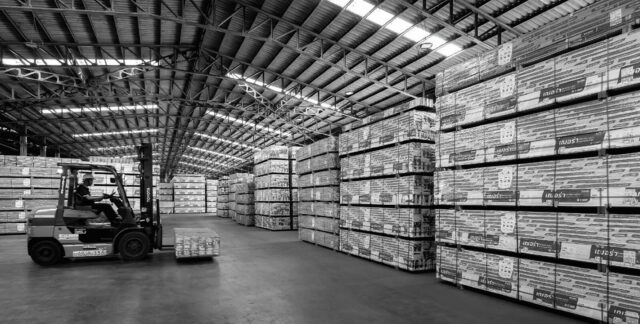
THE Department of Trade and Industry (DTI) said on Thursday that it granted a green lane certification to Thailand’s SHERA Public Co. Ltd.’s fiber cement plant in Mabalacat, Pampanga.

“The project was granted a green lane certificate during a meeting held on Oct. 9 (Wednesday), on the sidelines of the 44th and 45th Association of Southeast Asian Nations (ASEAN) Summits and Related Summits,” the DTI said.

The company, through its subsidiary SHERA Building Solution (Philippines) Corp., will install and operate a fiber cement building materials manufacturing plant inside the 250-hectare TECO Industrial Park.

“This manufacturing facility… is set to be the sole manufacturer of fiber cement boards in the country, substantially reducing the country’s dependence on imports,” the DTI said.

According to the DTI, the facility will house cutting-edge technologies, including systems powered by artificial intelligence and the internet of things to optimize the production processes, enhance efficiency, and minimize environmental impact.

“Their product selection includes fiber cement building materials that can be used in ceilings, wall cladding, wall partitions and decorative walling, decking, siding, and fencing for residential, commercial, and industrial buildings,” the DTI said.

In August, SHERA announced that the plant is 60% complete and is on track to start operations in the first quarter of 2025.

As part of its plan to expand outside Thailand, SHERA made a P2-billion investment in the Philippines, which included the construction of a 5-hectare facility in Mabalacat.

The plant, which has the capacity to produce 240,000 tons of fiber cement, is the company’s first production hub outside Thailand.

As of September, the Board of Investments said it endorsed P4.3 trillion worth of investments to the One Stop Action Center for Strategic Investments. The endorsements cover 158 projects. — Justine Irish D. Tabile

NFA to discontinue palay re-bagging; cost savings to boost procurement

PHILIPPINE STAR/KRIZ JOHN ROSALES

THE National Food Authority (NFA) said on Thursday that it will no longer re-bag palay (unmilled rice) starting from the wet-season harvest to save on costs.

“The NFA has signed an order where farmers selling palay use their own sacks,” acting Administrator Larry R. Lacson told reporters at a briefing.

He added that the NFA will conduct a pilot test during the wet season harvest, in which 20% of palay procured from domestic farmers will no longer be re-bagged in NFA-branded sacks. This is equivalent to about 1.3 million bags.

“The NFA will no longer spend money on transferring the palay to new sacks; At the same time it will reduce handling costs,” Mr. Lacson said.

The NFA had previously required farmers to re-bag their harvest when selling to the NFA. Farmers have said that delayed the turnover of palay.

The NFA is required to procure domestically grown rice and hold it in reserve in the event of shortages or calamities.

The NFA is expected to save about P27.4 million from the suspension of palay repacking from October to December.

He added that if the test is successful, the NFA will roll out the measure next year, which could save the about P215.5 million.

He said that the savings realized from re-bagging could also be used in procuring more palay.

“This is an amount the NFA could use to buy an additional 7,700 metric tons of palay at an average price of P28 a kilogram,” Mr. Lacson said.

The NFA has just adopted a new pricing scheme for palay, offering between P23 and P25 per kilo.

The NFA is targeting a palay inventory of 435,000 MT before the end of the year.

Meanwhile, the NFA said that it has partnered with the Philippine National Oil Co. on a rooftop solar panels project for the NFA central office.

Mr. Lacson said that the solar project will eventually be replicated at other NFA sites.

According to their Memorandum of Agreement, the NFA will lease a 100-kilowatt rooftop solar photovoltaic system. The entire NFA network will eventually host solar capacity of 5 megawatts.

“We will not only save on our power costs from this solar rooftop project, we are also contributing to the reduction of carbon emissions and in safeguarding the environment,” he said. — Adrian H. Halili

TNT, Gin Kings gunning for 2-nil edge in Governors’ Cup semis

BARANGAY GINEBRA GIN KINGS — PBA.PH

Games on Friday
(Smart Araneta Coliseum)
5 p.m. – TNT vs Rain or Shine  (Semifinals Game 2)*
7:30 p.m. – Ginebra vs San Miguel (Semifinals Game 2)*
*TNT and Ginebra lead best-of-seven series, 1-0

IF DRAWING first blood against a tough opponent was hard, making it two in a row is doubly tougher.

That’s why defending champion TNT and Barangay Ginebra aren’t resting easy as they head to Game 2 of their respective PBA Governors’ Cup semi final assignments on Friday at the Smart Araneta Coliseum.

The Tropang Giga seek a 2-nil edge after their opening 90-81 verdict and create more distance from Rain or Shine in the race-to-four affair at 5 p.m. while the Gin Kings shoot for a followup to their 122-105 Game 1 romp versus San Miguel Beer (SMB) at 7:30 p.m.

TNT import Rondae Hollis Jefferson (RHJ) said it’s imperative that the troops maintain the same mindset against Aaron Fuller and the ROS young guns that lifted them to success in Wednesday’s curtain raiser.

“Do it as a team, do it together, have your brothers’ back out there every play, every possession. I think we’ll be good,” said RHJ, who went an assist short of a triple double in leading this first strike by the Tropang Giga.

Coach Chot Reyes tasked the Tropang Giga to keep their defensive shape against ROS offensive weapons.

“For us to win, we have to limit their production. And as Rondae (Hollis Jeferson) said, just everyone pitching in” said Mr. Reyes. “It really starts with that defensive mentality.”

Elasto Painters counterpart Yeng Guiao isn’t in panic mode, though, as he feels his charges are ready for a long battle.

Gin Kings mentor Tim Cone admitted the biggest concern is how to keep Justin Brownlee and Co. driven after gaining payback on SMB for its 49-point beating back in the elims.

“Now the question is: Can we continue to motivate ourselves into Game 2 because we did it (revenge) and we got to feel good about ourselves. But can we turn around and follow it up because you know them (SMB), they’re going to come back and use all that talent and experience that they have to play a really good game on Game 2,” said Mr. Cone.

“It’s just the way the series is. It often times pingpongs back and forth because it’s hard to sustain that motivation game after game after game against a really good team like them,” he added. — Olmin Leyba

ADVERTISEMENT
ADVERTISEMENT