Home Blog Page 2410

BSP drafts rules for national payment system’s clearing switch operations
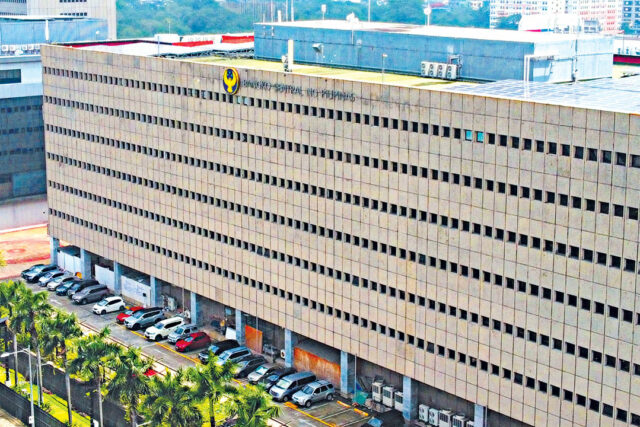
BW FILE PHOTO

THE BANGKO SENTRAL ng Pilipinas (BSP) is looking to create a framework for clearing switch operations within the national payment system to ensure quick and affordable transactions.

In a draft circular posted on its website, the central bank said the framework will work to “ensure efficiency of clearing switch operations within the national payment system, particularly the automated clearing houses (ACH) under the National Retail Payment System (NRPS).”

If approved, the framework will insert additional sections in the Manual of Regulations for Payment Systems (MORPS).

The proposed framework details principles on the efficiency of clearing switch operations, including the responsibilities of operators.

“Efficiency is characterized by the presence of quick and affordable payment means which are fit for the purpose of the transactions and the needs of the users and the participants,” the BSP said.

Clearing switch operators (CSOs) are required to “design and implement effective and sound governance, including management of significant risks, such as but not limited to fragmentation, liquidity, credit, operational, settlement, and general business risks.”

They must also provide reliable and consistent service availability with prompt issue resolution; enable fair and open access of participating institutions to the system; and facilitate and promote interoperability among participating institutions, among others.

Operators must also adopt “equitable and transparent” pricing for participating institutions. Pricing mechanisms will be made available for review and evaluation of the BSP, it added.

The rules require operators to observe guidelines on governance and risk management, interoperability, reliability, safety, transparency and accountability, access, pricing, and end-user protection.

For example, CSOs must notify the appropriate supervising department of the BSP, and the participating institutions on the occurrence of scheduled and unscheduled downtime.

Also, the guidelines detail the selection process and criteria for CSOs.

“Prior to the evaluation of a prospective CSO, the prospective CSO must submit its intent to provide clearing switch services to the ACH participant group,” it said.

“At least two ACH participants must formally signify their intent to engage the services of the CSO to the ACH participant group, including submission of any relevant factual information about the eligibility of the CSO.”

Under the draft rules, CSOs must also undergo an operational qualification stage (OQS) to “further substantiate the prospective CSO’s technical expertise and capability.”

This process will be supervised by the BSP. The OQS will have a testing, staging and production environment phase.

“This staged approach manages the potential impact of the OQS on live environments,” it added.

Operators must be able to demonstrate clearing switch and on-boarding price, system and service response time, availability and resiliency across all phases of the OQS.

They must also provide documentation on their overall timeline and budget; key performance indicators and testing performance metrics; testing methodologies; minimum safeguards and testing deliverables.

“Following the OQS, a thorough assessment of the prospective CSO’s technical expertise and capability will be conducted. The eligible CSO will then prepare a final report detailing the end-to-end results of the OQS and the proposed exit scenario.”

“Subject to prior approval of the Bangko Sentral, eligible CSOs whose clearing operations are assessed as successful through the OQS and whose clearing operations are deemed consistent with the key principles outlined in this Section shall be issued an authority to operate as a CSO of an ACH under the NRPS.”

Qualified CSOs may begin operations upon approval by the BSP and after they accomplish the necessary agreements with the ACH they seeks to provide with its services.

The BSP also outlined the process for observed inefficiencies in clearing switch operations.

“The Bangko Sentral, subject to Monetary Board approval, may authorize the entry of new CSOs to an ACH to address concerns on reliability and efficiency of clearing operations,” it added.

“With adequate safeguards to manage fragmentation and interoperability, the entry of a new CSO to an ACH is envisioned to promote healthy competition among the participating CSOs to achieve efficiency.”

For example, the central bank prohibits any arrangements restricting direct clearing participants to engage the services of only one CSO. It also requires new and existing CSOs to establish interconnections with each other, as applicable.

“The Monetary Board may limit the total number of CSOs that may be given authority, taking into account the total number of applications received and the assessment of the national payment system landscape. The appropriate supervising department of the Bangko Sentral will continuously monitor the payment system for any inefficiencies.”

“Upon determination by the Bangko Sentral that the observed inefficiencies on clearing switch operations were addressed, the Bangko Sentral, through the Monetary Board, may cease authorizing new CSOs.” — Luisa Maria Jacinta C. Jocson


TV chef Jamie Oliver withdraws book after ‘insensitive’ depiction of Indigenous Australians

AMAZON.COM

SYDNEY — Celebrity chef Jamie Oliver has withdrawn his latest children’s book from sale after criticism it stereotyped members of Australia’s Indigenous community.

Mr. Oliver’s Billy and the Epic Escape, released in May, contains a passage where an Indigenous Australian girl living in foster care is abducted by the story’s villain — a sensitive issue in a country where Indigenous children were for decades forcibly removed from their parents.

It also contained errors made by mixing different Indigenous languages.

The Guardian newspaper reported on Sunday Mr. Oliver apologized for the offense caused by the book.

“I am devastated to have caused offense and apologize wholeheartedly,” Mr. Oliver, who is currently in Australia promoting his latest cookbook, said in a statement.

“It was never my intention to misinterpret this deeply painful issue. Together with my publishers we have decided to withdraw the book from sale.”

Mr. Oliver’s publisher Penguin Random House did not immediately respond to a request for comment.

Sue-Anne Hunter, who sits on a government commission into injustices against Indigenous people in the state of Victoria, called the depictions in the book “insensitive.”

“The publication of Jamie Oliver’s children’s book represents a deeply concerning example of how Indigenous people continue to face misrepresentation and cultural appropriation in mainstream media,” she said in a social media post.

Among the world’s oldest cultures and together speaking hundreds of distinct languages, Australia’s Indigenous communities have suffered centuries of discrimination since the country was colonized by Britain in the late 18th century.

Thousands of Indigenous children were forcibly taken from their parents and placed in care or with white families as late as the 1970s, in a policy now known as the “Stolen Generation.” — Reuters

Trump won’t take the world by surprise a second time

RAWPIXEL.COM

DONALD TRUMP’s first term as president caused chaos and confusion across the world. Few nations knew how to deal with him. Even now, many fear he will prove friendlier to autocrats such as Vladimir Putin and Xi Jinping than he will to stalwart US allies.

For many countries, however, the prospect of Trump’s return is less disconcerting than one might imagine. From India to Turkey to Indonesia, they are confident they will manage just fine — and perhaps even benefit more from their relationship with the US than they did under President Joe Biden.

One could argue they are being naïve. Trump is nothing if not mercurial. As president, for instance, he frequently accused India of taking advantage of the US, repeatedly citing its high tariffs on Harley-Davidson motorcycles. (Harleys are, not coincidentally, assembled in the swing states of Wisconsin and Pennsylvania.) He recently blasted the country once again as a “very big abuser” of the international trade system.

But the details of such clashes are telling. At the time, Indian leaders were sparring with the US across a range of issues, from Iran sanctions to New Delhi’s planned purchase of the Russian S-400 missile defense system. Trump’s concerns were far narrower: India effectively placated him by cutting tariffs on the bikes in question.

By contrast, Biden, like most other US presidents, views partnerships with nations such as India as crucially dependent upon shared values. Fellow democracies have a duty to support and strengthen the rules-based international order. If one of them violates that trust, whether by skirting US sanctions or supposedly cheating on trade, it depresses the energy and enthusiasm driving the overall relationship.

When the goal is a future in which India and the US grow ever closer across a wide range of issues — as the US and Europe have — then any sign of the two nations drifting apart paralyzes the relationship. It isn’t surprising, therefore, that over Biden’s time in office multiple influential Americans have worried that the US pivot to India is a “bad bet.” The Indians, in turn, resent the expectation that they must align their values with America’s if they want to be seen as useful partners.

Moreover, the Biden administration can fairly be accused of hypocrisy. When he was elected, there was no shortage of rhetoric about partnering with like-minded democracies and revitalizing multilateral institutions. Then the White House proceeded to take new trade agreements off the table and ensured the World Trade Organization remained unable to handle disputes.

Under Trump, “America First” was a slogan, its implementation patchy and ineffective. Under Biden, a  foreign policy for the middle class” became rigid, protectionist dogma. US partners from Asia to Europe were left struggling to find ways into a new Fortress America.

At least under Trump, the thinking goes, there’s some chance of give-and-take. Officials in New Delhi will be confident that they can give the incoming president what he needs, whether politically or personally. Indian Prime Minister Narendra Modi has held joint campaign rallies with Trump; the latter’s business reportedly has more planned projects in India than in any other foreign country.

And India — sensitive, for good reason, to criticism of its weakening democratic institutions — will welcome a US president who cares little about such issues. So will others. Leaders such as Recep Tayyip Erdogan in Turkey cast themselves — like Trump — as defenders of traditional values against liberal encroachments and as promoters of the national interest in a messy international order. By putting more emphasis on horse-trading where interests align and less on lecturing countries about illiberalism, the incoming president might even expand the map of countries willing to work with Washington on discrete issues.

Of course, to adapt to this more transactional world, countries need to work out what their end of the transaction will be. India may have to make more concrete security commitments, for example, and sign up to buy more US weaponry. The Europeans will certainly have to carry more of the burden of their own defense and show more regulatory flexibility than is their wont. Unlike in 2016, though, few countries need panic just yet.

BLOOMBERG OPINION

First Gen Q3 income down 34.2% on lower revenues, higher costs

FIRSTGEN.COM.PH

LOPEZ-LED First Gen Corp. saw its attributable net income fall by 34.2% to $52.91 million for the third quarter (Q3) amid lower revenues and a slight increase in expenses.

Gross revenues went down by 5.9% to $568.48 million, the energy company said in a regulatory filing on Monday.

Gross expenses, on the other hand, slightly rose by 0.9% to $458.96 million.

For the nine months ending in September, the company’s attributable net income fell by 16.1% to $39.8 million due to lower contributions from its renewable energy business.

Gross revenues went down by 5.9% to $568.48 million while gross expenses increased by 3.5% to $1.46 billion.

First Gen and its subsidiaries are primarily engaged in the power generation business and operate power plants that run on geothermal, wind, solar, hydro, and natural gas.

Its subsidiary Energy Development Corp. contributed $122.4 million, down by 42.6%.

Meanwhile, First Gen said it is looking to expand its businesses that complement its power generation operations.

“In particular, the company intends to play a major role in the development of downstream natural gas transmission and distribution facilities with the completion and operation of its LNG (liquefied natural gas) terminal, and other projects using renewable sources of energy,” the company said.

First Gen, a subsidiary of listed conglomerate First Philippine Holdings Corp., has 3,697 megawatts of combined capacity from a fleet of 32 power plants. — Sheldeen Joy Talavera

Office space demand outside Metro Manila weakens — JLL

OFFICE SPACE requirements now average between 1,000 and 5,000 square meters (sq.m.), compared to the pre-pandemic average of 5,000 to 10,000 sq.m., according to JLL Philippines Head of Research and Strategic Consulting Jan-Loven C. de los Reyes. — PETR MAGERA-UNSPLASH

DEMAND for office space outside Metro Manila has been “less robust” as office occupiers now have smaller space requirements, real estate services firm JLL Philippines said.

“After the pandemic, I think the demand has weakened in general because for the key cities outside Metro Manila like Cebu and Iloilo, we’re still seeing a bit of takeup, but for the other peripheral areas, it’s not as robust anymore,” JLL Philippines Head of Research and Strategic Consulting Jan-Loven C. de los Reyes said at a briefing last week.

Many occupiers are optimizing their spaces or reassessing their office footprint, he said.

“For some of them, the challenge that they’re facing now is because they have smaller requirements in general,” Mr. De los Reyes said. “It’s difficult for them to find a landlord that will accommodate that space requirement.”

Office space requirements now average between 1,000 and 5,000 square meters (sq.m.), compared to the pre-pandemic average of 5,000 to 10,000 sq.m., Mr. De los Reyes told BusinessWorld.

According to JLL Philippines, office vacancy is expected to reach around 19.2% to 19.7% by yearend due to an additional 125 sq.m. of stock with low pre-commitment levels.

In the third quarter, the vacancy rate for Metro Manila offices dropped by 55.6 basis points (bps) to 19% from 19.5% in the same period a year ago.

It also declined by 37.5 bps from 19.4% in the second quarter.

Parañaque City had the highest vacancy rate at 38.2%, followed by Manila City (36.3%) and Pasay City (23.3%).

Leasing volumes in the office market jumped by 32.1% to 513,624 sq.m. in the third quarter from 388,952 sq.m. last year, driven by take-ups from business process outsourcing and government agencies, JLL Philippines said.

Meanwhile, real estate services and investment firm CBRE expects leasing activity to be tepid in 2025 amid the slow growth this year.

“When we did our planning this year, looking at 2025, we didn’t provision a very aggressive growth number,” CBRE Philippines Country Head Jie C. Espinosa said in a separate briefing late Tuesday.

“We essentially just provisioned minimal growth, primarily because we were expecting a much better year this year from the market, but as we look at the numbers, it looks like it’s not gonna even match last year’s number. So we’re trying to be conservative about it.”

CBRE noted that office vacancy rose to 19.9% in the third quarter from 18.8% in the same period last year.

For 2025, CBRE expects provincial office supply at 339,100 sq.m., 142,400 sq.m. in 2026, 97,400 sq.m. in 2027, and 77,700 sq.m. in 2028. — Beatriz Marie D. Cruz

Treasury bills fetch slightly higher rates

BW FILE PHOTO

THE GOVERNMENT made a full award of the Treasury bills (T-bills) it offered on Monday at slightly higher rates amid renewed inflation worries.

The Bureau of the Treasury (BTr) raised P20 billion as planned from the T-bills it auctioned off on Monday as total bids reached P59.425 billion, almost thrice as much as the amount on offer but lower than the P69.87 billion in tenders seen the previous week.

Broken down, the Treasury borrowed P6.5 billion as programmed from the 91-day T-bills as tenders for the tenor reached P23.165 billion. The three-month paper was quoted at an average rate of 5.605%, unchanged from last week, with accepted offers carrying yields ranging from 5.59% to 5.62%.

The government also made a full P6.5-billion award of the 182-day securities, with bids reaching P14.615 billion. The average rate of the six-month T-bill stood at 5.752%, up by 1.7 basis points (bps) from the 5.735% fetched last week, with accepted bid yields at 5.735% to 5.764%

Lastly, the Treasury raised P7 billion as planned via the 364-day debt papers as demand for the tenor totaled P21.645 billion. The average rate of the one-year debt inched up by 0.4 bp to 5.79% from the 5.786% quoted last week, with accepted rates ranging from 5.775% to 5.8%.

At the secondary market before the auction, the 91-, 182-, and 364-day T-bills were quoted at 5.5078%, 5.7651%, and 5.7367%, respectively, based on PHP Bloomberg Valuation Service Reference Rates data provided by the Treasury.

“The higher awarded T-bill rates today reflected domestic inflationary concerns from the recent typhoons and the peso depreciation,” a trader said in an e-mail on Monday.

Philippine headline inflation picked up to 2.3% in October from 1.9% in September, the government reported last week.

Still, the October consumer price index (CPI) was slower than the 4.9% print in the same month a year ago.

This was also within the Bangko Sentral ng Pilipinas’ (BSP) 2%-2.8% forecast for the month and was slightly below the 2.4% median estimate in a BusinessWorld poll of 11 analysts.

For the first 10 months, the CPI averaged 3.3%, within the BSP’s 2-4% target and slightly above its 3.1% forecast for the year.

A report by the National Disaster Risk Reduction and Management Council last week showed that Severe Tropical Storm Kristine and Typhoon Leon caused P5.9 billion worth of damage to agriculture.

Typhoon Marce hit parts North Luzon last week. Typhoon Nika made landfall on Monday, also affecting Northern Luzon.

The Philippine Atmospheric, Geophysical and Astronomical Services Administration is monitoring two more tropical cyclones outside the Philippine Area of Responsibility, with one expected to enter the country this week.

Meanwhile, the peso has been trading at the P58 level against the dollar since late October, hitting multi-month lows.

T-bill rates also rose amid expectations that the US Federal Reserve will be cautious in its easing cycle, Rizal Commercial Banking Corp. Chief Economist Michael L. Ricafort said in a Viber message.

“A Trump US presidency could lead to fewer Fed rate cuts due to possible protectionist policies that could lead to higher import tariffs due to trade wars especially with China and other countries, higher wage inflation on tighter immigration rules, all of which would lead to higher overall US inflation,” Mr. Ricafort said.

The Federal Reserve cut interest rates by a quarter of a percentage point on Thursday as its policy makers began taking stock of what could become a more complex economic landscape when President-elect Donald J. Trump takes office next year, Reuters reported.

Fed Chair Jerome H. Powell said the results of Tuesday’s presidential election, which paved the way for a US chief executive who has pledged widespread deportation of immigrants, broad-based tariffs, and tax cuts, would have no “near-term” impact on US monetary policy.

Mr. Powell said the Fed will continue assessing data to determine the “pace and destination” of interest rates as officials reset currently tight monetary policy to account for inflation that has slowed markedly in the past year and is nearing the US central bank’s 2% target.

But as the new administration’s proposals take shape, the Fed chief said the central bank would begin estimating the impact on its twin goals of stable inflation and maximum employment.

“It’s a process that takes some time,” said Mr. Powell, who spoke in a press conference following the Fed’s decision to reduce its benchmark overnight interest rate to the 4.5%-4.75% range. “It’s all of the policy changes that are happening. What’s the net effect? The overall effect on the economy at a given time? That’s a process… we go through all the time with every administration.”

Mr. Powell said for now the economic outlook was solid and the Fed hoped to keep it that way.

On Tuesday, the government will offer P15 billion in reissued 20-year Treasury bonds (T-bonds) with a remaining life of 19 years and six months.

The Treasury is looking to borrow P90 billion from the domestic market this month, or P60 billion via T-bills and P30 billion through T-bonds.

The government borrows from local and foreign sources to help fund its budget deficit, which is capped at P1.48 trillion or 5.6% of gross domestic product this year. — A.M.C. Sy with Reuters

Sean ‘Diddy’ Combs proposes $50-million bail, is denied gag order

Sean “Diddy” Combs on the talk show Late Night with Seth Myers. — IMDB

NEW YORK — Sean “Diddy” Combs on Friday proposed a new $50-million bail package backed by his Florida mansion that the music mogul hopes will win his release from the Brooklyn jail where he has been held for eight weeks on criminal sex trafficking charges.

Mr. Combs has been denied bail three times since his arrest, with multiple judges citing a risk that he might tamper with witnesses. The rapper and producer on Sept. 17 pleaded not guilty to charges that he used his business empire including his record label Bad Boy Entertainment to transport women and male sex workers across state lines, to take part in recorded sexual performances called “Freak Offs.”

In another development on Friday, US District Judge Arun Subramanian, who oversees the criminal case, denied Mr. Combs’ request for a gag order barring his accusers from speaking publicly about the matter. His lawyers had argued that the approximately 30 civil cases accusing Mr. Combs of misconduct or abuse were interfering with his right to a fair trial.

Mr. Combs, 55, has denied wrongdoing, and his lawyers have argued that the sexual activity described by prosecutors was consensual.

In a court filing on Friday, defense lawyer Alexandra Shapiro asked Mr. Subramanian to release Mr. Combs on the $50-million bond, which would be backed by his $48-million Miami home and co-signed by several of his family members.

Ms. Shapiro also proposed that Mr. Combs be monitored around the clock by security personnel, be subjected to home detention, and have no contact with alleged victims or witnesses. His trial is scheduled for May 5.

In seeking bail, Ms. Shapiro said new evidence undermined part of the prosecution’s justification for detaining Mr. Combs. She said the evidence shed new light on a 2016 hotel surveillance video of him physically assaulting former girlfriend Casandra Ventura, known as Cassie.

“The video is not evidence of a coerced ‘freak off,’ but rather a minutes-long glimpse into a complex but decade-long consensual relationship,” Ms. Shapiro wrote.

Ms. Shapiro also said it is impossible for Mr. Combs to prepare for trial from behind bars because of the “incredibly voluminous” amount of material to review, especially without a laptop computer. She also said his preparation has been stymied by conditions at the jail, including frequent lockdowns and even officers taking away the pens he uses to take notes.

Detention is stripping Mr. Combs of “any real opportunity” to be ready for trial, violating his rights under the US Constitution,  Ms. Shapiro said. — Reuters

Growth forecast and Trump’s trade policies

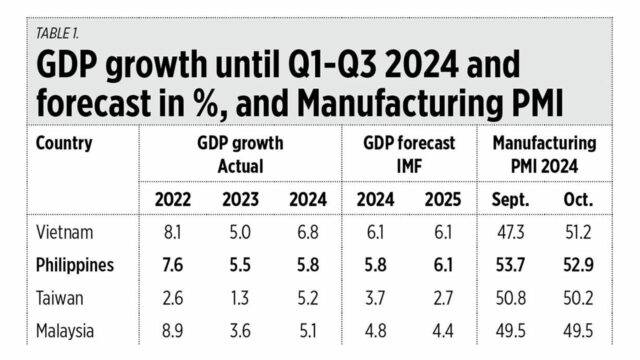
Last week the Philippine Statistics Authority (PSA) released the gross domestic product (GDP) data for the third quarter (Q3) of 2024. It showed that the GDP grew 5.2% from the level a year ago. This is low compared to the estimates made by economists in a BusinessWorld poll, with a median estimate of 5.7% for the July-to-September period. But this is still high compared to other Asian and European economies (except Vietnam) that reported their Q3 GDP too.

GROWTH IN 2024 AND PMI
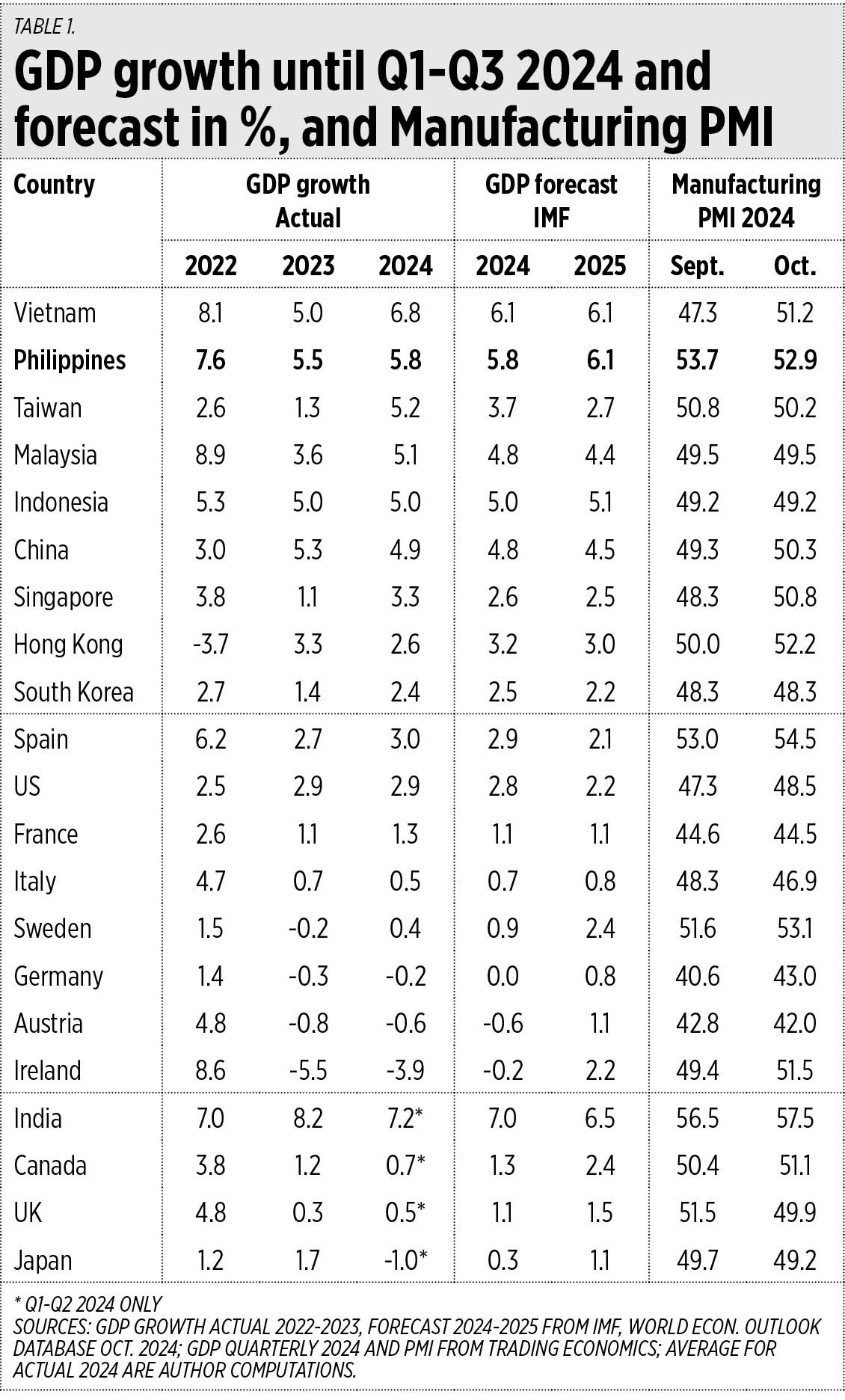
The Philippines’ average growth in the first three quarters (Q1-Q3) of 2024 is now 5.8%, second fastest to Vietnam’s 6.8%. Other East Asian countries have had modest growth of 2.4% to 5.2% while European nations have either been crawling, or contracting like Ireland’s -3.9%. Spain and Turkey are the exceptions to this European trend.

I also checked the Manufacturing Purchasing Managers’ Index (PMI), an indicator of companies’ optimism or pessimism towards the short-term business outlook. The Philippines’ PMI was the second highest in Asia at 52.9 last October, next to India’s 57.5. Most European countries’ PMIs were below 50 (see Table 1).

At Stratbase’s “Pilipinas Conference 2024” on Nov. 7, held at the Manila Polo Club in Makati, Finance Secretary Ralph G. Recto gave the keynote message and highlighted the expansion of the country’s GDP size. He said that “The Philippine economy has already doubled its size since 2013 in terms of nominal GDP. And by 2030, our projections show that we can grow by another two-fold.”

He also mentioned the country’s demographic dividend (a young, big population of producers and consumers, entrepreneurs and workers) as a “golden moment to strengthen our already dynamic labor force.”

Budget Secretary Amenah F. Pangandaman was also scheduled to speak at the event, but as she was in the Singapore Fintech Festival that day, she delivered a virtual but live speech. She highlighted the rapid push in digitally transforming the government’s bureaucracy, with P72.1 billion support for ICT-related programs and projects of government agencies. She also mentioned a new law — the New Government Procurement Act (NGPA), meant to make official procurement more transparent — that will help reduce waste and corruption.

FORECAST 2025
This is the theme of the BusinessWorld Economic Forum (BWEF) 2024, which will be held on Nov. 26 at the Grand Hyatt Manila. The annual BWEF has become an institution, a big national economic and business conference that features the ideas and outlooks of key leaders in government and corporations.

As shown in the accompanying table, the IMF forecast for the Philippines’ full year growth in 2024 is 5.8%, and 6.1% in 2025. The IMF sees the Philippines and Vietnam tied as the second fastest growing major economy in the world next year after India’s 6.5%.

TRUMP’S TAX AND TRADE POLICIES
US President-elect Donald Trump’s plans for one-two punches of low taxes and high tariffs in 2025 are creating mixed feelings in many countries around the world.

Trump’s main concern is the US’ perennially high trade deficit, so he plans two major policies. The first is to further reduce the US corporate income tax rate — which was 35% until 2016, then was brought down to 21% in 2017 during his first term — to around 15%. The second is to raise tariffs on products made by companies abroad that sell to the US, with a target tariff of 60% on goods from China, and 20% on those from other economies. This is meant to reward companies that locate and stay in the US and directly create jobs there and penalize companies that locate their facilities in other countries and sell their products to the US and thus do not directly create jobs there.

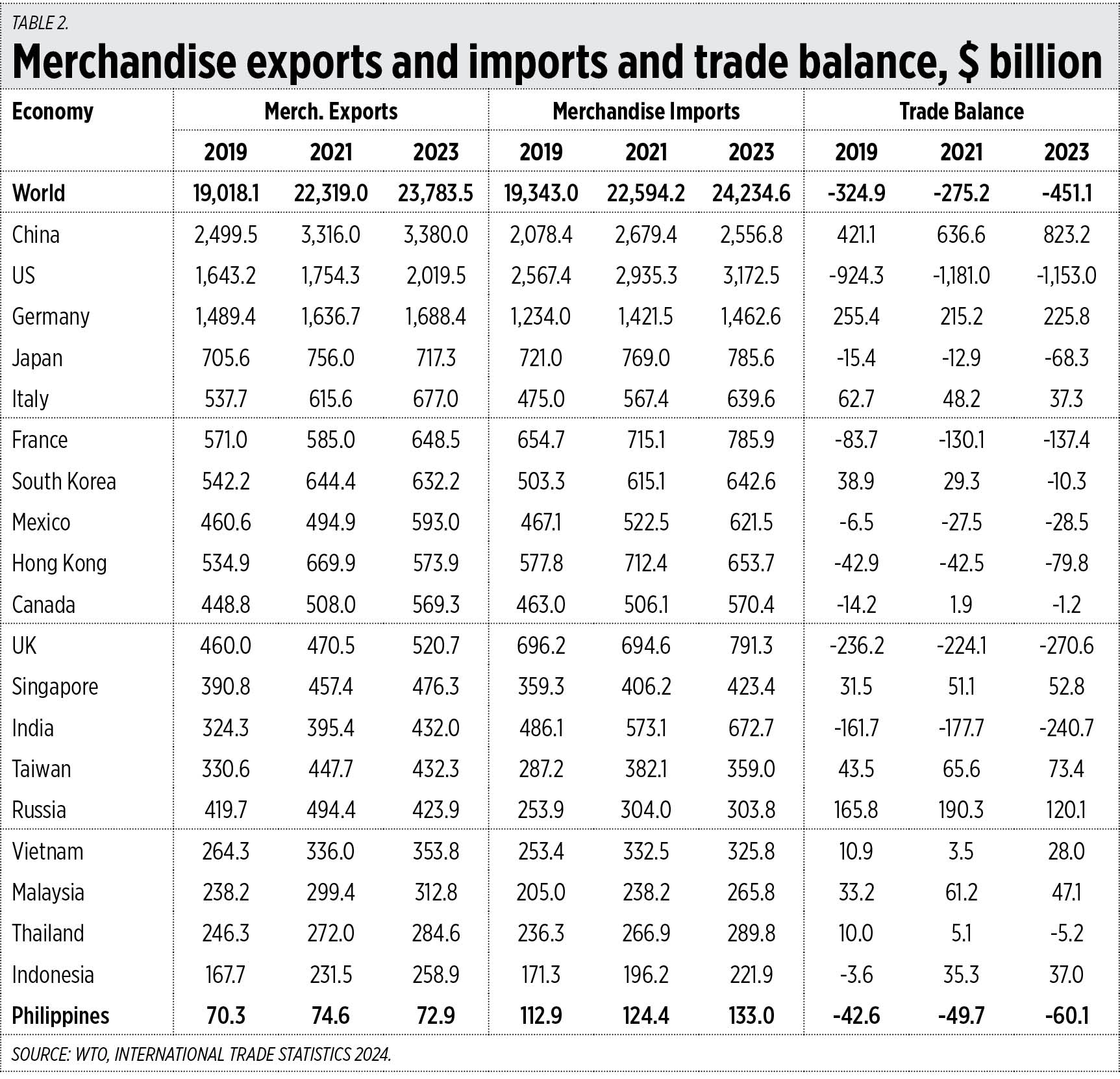
I checked just how big the US trade deficit that angers Trump is. For the purpose of brevity, I chose to highlight only three years. The US trade deficit in 2019 was $924 billion or $2.53 billion/day, in 2021 it was $1.181 trillion or $3.24 billion/day, and in 2023 it was $1.153 trillion or $3.16 billion/day. This is huge.

While the US has the highest trade deficit in the world, China has the highest trade surplus: $421 billion in 2019 and $823 billion in 2023. The country with the next highest trade surplus is Germany followed by Russia (see Table 2).

Instead of fearing Trump’s tax and trade policies, we should welcome them. Let us also cut the taxes on individual and corporate income, letting the people and companies keep more of the product of their hard work and savings, thus encouraging more businesses and job creation. When people have jobs — good paying jobs — they become more self-reliant and less dependent on state subsidies for their household’s education, healthcare, housing, food and other needs. Thus, the government’s high spending on subsidies, and the high borrowings needed to cover the budget deficit, can be controlled.


Bienvenido S. Oplas, Jr. is the president of Bienvenido S. Oplas, Jr. Research Consultancy Services, and Minimal Government Thinkers. He is an international fellow of the Tholos Foundation.

minimalgovernment@gmail.com

Pangilinan-led Kayana Solutions, Accenture to build digital factory for faster product dev’t

MANUEL V. PANGILINAN — BW FILE PHOTO

GLOBAL professional services company Accenture, Inc. has partnered with Pangilinan-led Kayana Solutions, Inc. to build a digital factory that will accelerate digital product development for the Metro Pacific group.

The digital factory is expected to address the digital requirements of other businesses within the Pangilinan group as well as other local enterprises building digital services.

Under the partnership, Accenture will oversee brand strategy, product research, and user interface/user experience design for Kayana through its Song creative group.

“The digital factory will bring together the skills and competencies that the group needs to deliver hyper-personalized experiences that meet the needs of Filipinos,” Kayana Chairman and Chief Executive Officer Manuel V. Pangilinan said during an event on Monday.

“Digital is charting the economic future of the Philippines as with most countries in the world, and we are committed to creating new ways in which Filipinos can realize its benefits. Establishing ‘Kayana’ is about delivering on this promise,” he added.

The digital factory will utilize Accenture’s expertise in creating data-and-artificial intelligence (AI)-led customer experiences and in cloud-based solutions.

“By tapping into Accenture Song’s expertise in design and digital products, marketing, commerce and service, we are combining creativity, innovation, and technology to push boundaries and help Kayana deliver on its commitment to customer-centric innovation,” Accenture Philippines Country Managing Director Ambe Tierro said.

Kayana is a company that harnesses the data assets of businesses led by Mr. Pangilinan to deliver a hyper-personalized customer experience. It is owned by PLDT Inc., Manila Electric Co., and Metro Pacific Investments Corp. (MPIC).

MPIC is one of the three key Philippine units of Hong Kong-based First Pacific Co. Ltd., the others being Philex Mining Corp. and PLDT Inc.

Hastings Holdings, Inc., a unit of PLDT Beneficial Trust Fund subsidiary MediaQuest Holdings, Inc., has a majority share in BusinessWorld through the Philippine Star Group, which it controls. — Revin Mikhael D. Ochave

Aboitiz InfraCapital to add mall, terminal, park in West Cebu Estate

ABOITIZ InfraCapital, Inc. plans to break ground next year on a new commercial complex within its 540-hectare mixed-use development West Cebu Estate (WCE) in Balamban, Cebu, the company said on Monday.

“In 2025, WCE will break ground on a new commercial complex featuring a neighborhood mall, transport terminal, communal park, and commercial lots,” Aboitiz InfraCapital said in an e-mailed statement.

“These amenities are designed to enhance the quality of life for the estate’s workforce and residents, fostering a supportive, well-rounded environment that will make WCE an even more attractive destination for businesses and employees alike,” it added.

West Cebu Estate is a Philippine Economic Zone Authority (PEZA)-registered economic estate hosting 14 locators and 14,000 employees.

WCE has embarked on a 39-hectare expansion, supported by an initial investment of P1.4 billion, according to the company. The expansion will accommodate light to medium manufacturing industries, including automotive, semiconductor, and electronics, further diversifying WCE’s locator base and generating an additional 14,000 jobs, it added.

WCE is also known as the shipbuilding capital of the Philippines, according to the company.

Established in 1992, the estate now hosts 12 key locators from medium to heavy industries, including globally recognized shipbuilders such as Tsuneishi Heavy Industries of Japan, Advanced Catamaran Composites of the United States, and Cebu Marine Industry, Inc. of Taiwan.

Aboitiz InfraCapital also said that WCE has directly generated over 14,000 jobs and attracted more than P32 billion in investments. In 2023 alone, the estate’s locators exported goods valued at over $545 million, the company noted.

It said that Austal Philippines, a global shipbuilder that has been operating in West Cebu Estate for 12 years, has secured a contract to construct a 32-meter catamaran for Rottnest Fast Ferries, which operates ferry services to Rottnest Island, a popular tourist destination off the coast of Western Australia.

“Austal Philippines’ growth within WCE highlights the estate’s robust industrial ecosystem, which provides a comprehensive suite of infrastructure,” Aboitiz InfraCapital said.

“WCE is home to a skilled local workforce. The estate’s dedicated seaport optimizes logistics, enabling efficient goods movement, while regulatory services — including a one-stop shop for PEZA and Bureau of Customs support — streamline processes for all locators,” the company added. — Beatriz Marie D. Cruz

BSP to investigate GCash glitch

INSTAGRAM.COM/GCASHOFFICIAL

THE BANGKO SENTRAL ng Pilipinas (BSP) has ordered electronic wallet (e-wallet) GCash to expedite the resolution of its system issues following user complaints about unauthorized transactions, adding that it will investigate the incident further.

The central bank has “instructed G-Xchange, Inc. (GXI), the operator of GCash e-wallet, to immediately resolve the reported unauthorized deductions on account balances of affected GCash users and swiftly complete the process of refunds that GXI has initiated,” it said in a statement on Monday.

“BSP will investigate the incident further to identify possible vulnerabilities and review compliance with regulations and policies.”

On Saturday, several GCash users reported that funds were deducted from their accounts without their knowledge.

GCash on Sunday said it “completed the necessary wallet adjustments to its affected users,” attributing the incident to their system reconciliation process.

“Based on the initial report of GXI to the BSP, the incident was attributed to a system error. GXI assured that all accounts of GCash users remain secure and that they are now in the process of refunding the deductions,” the regulator said.

“BSP has likewise required GXI to submit regular updates on its actions on the matter. BSP is closely coordinating with GXI to ensure a prompt resolution of this issue,” the central bank added.

The public may also escalate their concerns to the BSP if they are not satisfied with GXI’s handling of their complaints, it said. — Luisa Maria Jacinta C. Jocson
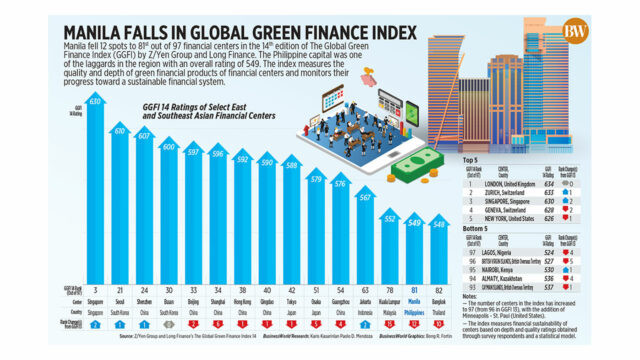
Manila falls in Global Green Finance Index

Manila fell 12 spots to 81st out of 97 financial centers in the 14th edition of The Global Green Finance Index (GGFI) by Z/Yen Group and Long Finance. The Philippine capital was one of the laggards in the region with an overall rating of 549. The index measures the quality and depth of green financial products of financial centers and monitors their progress toward a sustainable financial system.

Manila falls in Global Green Finance Index

ADVERTISEMENT
ADVERTISEMENT