Home Blog Page 2409

Disney’s most streamed movie has a sequel coming to theaters

A SCENE from Moana 2

WALT DISNEY CO.’S most streamed movie of all time has nothing to do with Star Wars, The Avengers or the singing sisters of Frozen. It’s Moana, an eight-year-old animated feature about a Pacific island girl trying to find her place in the world.

Since the Disney+ streaming service launched in late 2019, Moana has been among the four most-watched films on any streaming service every year, according to Nielsen data. Fans have watched nearly 80 billion minutes of Moana, the equivalent of seeing the picture 748 million times. It’s also been in the streaming top 10 almost all of this year.

All that bodes well for the next chapter in the franchise, Moana 2, which hits theaters on Nov. 27. Disney has historically released some of its biggest animated hits over the Thanksgiving holiday weekend, although some recent pictures, Strange World and Wish, disappointed.

Moana 2 should also help accelerate the comeback of Disney’s film studio, which has released a number of hits this year including Deadpool & Wolverine from Marvel Studios and Alien: Romulus. Disney is expected to post a $306 million quarterly profit in the division that includes those theatrical releases when it reports results on Nov. 14, according to the average of analyst estimates compiled by Bloomberg.

Fandango, the largest online movie ticketing service, said that Moana 2 has set the best first-day ticket presales of any animated film this year, including Inside Out 2 from Disney’s Pixar Animation Studios, which has grossed close to $1.7 billion at the box office since its release in June.

“Some people in the know are telling me that they think Moana 2 could eclipse and outshine even the success of Inside Out 2,” Adam Aron, the chief executive officer of AMC Entertainment Holdings Inc., the world’s largest cinema chain, said on a Nov. 6 call with investors.

Moana 2 is on track to generate as much as $135 million in US and Canada ticket sales in its five-day opening weekend, according to some estimates. That would put it ahead of the original film which took in $82 million over the long holiday weekend in 2016.

That picture went on to reap $643 million in global ticket sales, a big number, but not even enough to land it in the top 30 highest grossing animated films of all time. It was nominated for two Academy Awards: best animated feature and best original song, but didn’t win either.

What really gave Moana momentum was streaming, and specifically its online appearance at the start of the COVID-19 pandemic. The film, with its shots of the ocean and island life, proved to be escapist for parents and children coping with the shutdown, according to Andrea Coppola, a New Jersey resident whose preschool son Leo became a big Moana fan.

The original score by Hamilton creator Lin-Manuel Miranda, including power ballads such as “How Far I’ll Go,” also resonated. The album has sold 5.6 million copies, according to Luminate Data, more than Coco and Encanto, two other recent Disney musicals, combined.

“We know all the words,” Coppola said.

On Reddit threads, parents debated whether Moana was the best Disney movie ever, with one mom describing her toddler pecking Cheerios off the floor to imitate Heihei, Moana’s rooster sidekick.

The film relied on a “updated feminist formula” of a Disney princess embarking on an adventure, Kirsten Thompson, chair of the film and media department at Seattle University, said in an interview. The animation — including tattoos, tribal clothing, and bioluminescent water — added to the appeal.

“All of that makes for a stunning visual feast,” said Ms. Thompson, whose middle name coincidentally is Moana, which loosely translates to deep or shining waters.

Disney originally planned Moana 2 as a TV series for its Disney+ streaming service. When a movie slated for Thanksgiving release fell through, Chief Executive Officer Bob Iger asked film division chief Alan Bergman if he had any suggestions for what they could replace it with. Mr. Bergman suggested that the Moana series storyline could be cut down to the length of film and include more cinematic visuals to make it suitable for a theatrical release. Mr. Iger said he thought the result was terrific.

“I’ve seen it six times,” Mr. Iger said at a fundraiser for the Los Angeles County Museum of Art earlier this month.

Moana 2 will premiere in Hawaii before being distributed to the rest of the world’s theaters. (It will open in the Philippines on Nov. 27. — Ed.)

Unlike the first picture, it doesn’t feature new music from Mr. Miranda. It does have Auli’i Cravalho back as the title character, and Dwayne Johnson reprising his role as Maui, a shapeshifting demigod. The plot involves Moana and her unlikely crew going on a new sailing adventure.

Seattle University’s Ms. Thompson said that the sequel shouldn’t simply attempt to “repackage the magic of the first one — it’s going to have to have its own very good score and tell a new story of some kind, maybe with the character going to a different island or deeper underwater.”

Disney also has a live-action version planned for next year, suggesting parents will have plenty of Moana to stream for years to come. — Bloomberg

Metro Pacific Tollways invests P80B in Jakarta toll road

MPTC.COM.PH

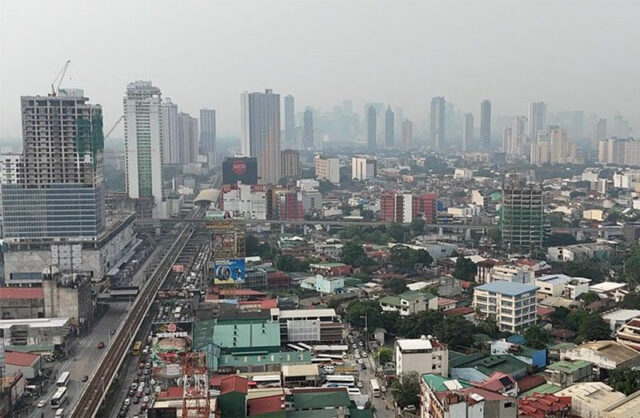
METRO PACIFIC Tollways Corp. (MPTC), through its unit PT Margautama Nusantara (MUN), is allocating P80 billion to construct a 21-kilometer elevated toll road in the Jakarta Outer Ring Road (JORR), the company’s top executive said.

“It is a ring road. We are building 21 kilometers. It is the most congested area,” PT Nusantara Chief Operating Officer Joko Santoso told reporters on Monday.

JORR is a 65-kilometer toll ring road in Jakarta, Indonesia divided into sections, Mr. Santoso said, adding that the full stretch of the ring road reaches 560,000 daily traffic.

This new project being developed by MPTC’s unit in Indonesia will be known as the JORR Elevated Toll Road and will extend from Jatiasih in East Jakarta to Ulujami in South Jakarta.

“If things run smoothly, we anticipate breaking ground by the second half of next year,” he said.

The infrastructure project is now at an early stage, with the construction expected to commence next year and will take three to four years to complete, Mr. Santoso said, adding that the company is finalizing the project’s technical preparation.

“Well, actually, we submitted the basic design and with that actually, we already have some indication of the number of the total contract and cost and investment,” he said.

The company said it is also cautiously crafting the project’s detailed engineering design to ensure minimal disruption to the traffic flow considering the area is highly congested.

“We are working on detailed engineering designs that minimize the impact on existing contractors and ensure traffic safety,” Mr. Santoso said.

The elevated tollway project is expected to provide relief to the current traffic situation within JORR, which is part of the Trans-Java toll road.

To recall, MPTC, together with its subsidiaries and Singapore’s GIC Pte. Ltd., a global institutional investor, have finalized their investment cooperation valued at $1 billion for the acquisition of a 35% stake in PT Jasamarga Transjawa Tol (JTT), a major toll road operator in Indonesia.

PT Nusantara Infrastructure owns infrastructure concessions in both the western and the eastern portions of Indonesia. It operates businesses in transportation, toll roads, communication, and distribution networks.

MPTC is the tollway unit of Metro Pacific Investments Corp., one of three key Philippine units of Hong Kong-based First Pacific Co. Ltd., the others being Philex Mining Corp. and PLDT, Inc.

Hastings Holdings, Inc., a unit of PLDT Beneficial Trust Fund subsidiary MediaQuest Holdings, Inc., has a majority stake in BusinessWorld through the Philippine Star Group, which it controls. Ashley Erika O. Jose

Succession

A SCENE from the 2024 film Conclave.

Movie Review
Conclave
Directed by Edward Berger

EDWARD BERGER’S Conclave is more fun than the process of choosing a world leader has any right to be.

Adapted from the novel by Robert Harris, it outlines the death of a pope, and the power struggles involved in electing the next one, and as one watches the proceedings and the skullduggery, several thoughts arise:

1.) This is the most blatant (and blatantly beautiful) advertisement of the pomp and pageantry of the Roman Catholic Church since well The Exorcist back in 1973. Oh we’ve had dramas about priests — mostly sexual abuse scandals and lurid exorcisms — and there’s Meirelles’ The Two Popes which is more earnest biographical drama than anything actually entertaining. But Berger manages to fashion a smooth ticking mechanism, the jeweled gears and precision movements of a handmade mystery thriller set against the splendor of the Sistine Chapel’s ceiling (expertly reproduced in the soundstages of Cinecitta), or along the hallways and stairways of the Domus Sanctae Marthae (designers admit to rejiggering the humdrum original into something more like an ultramodern penitentiary; perfect setting, I thought, for a Dario Argento giallo). In this severe environment the cardinals — often dressed in what looks like a collaboration between David Cronenberg and Margaret Atwood — sit and scribble names on their paper ballots, fold said paper, walk up to a silver urn, intone a solemn prayer declaring they are voting for whom God would want them to vote for (Testor Christum Dominum, qui me iudicaturus est, me eum eligere, quem secundum Deum iudico eligi debere), drop their votes in the hole.

When they dine they dine simply, but the food — soups, pastas, a three-tiered tower of superb looking fruit — is of high quality. Wine is served, an apparently inexhaustible amount; likely not expensive but knowing Italian wines (and knowing priests), also very good. Cigarettes – I’ve seen more smoking here than in any half-dozen recent films; even spotted the occasional cigar (Cuban?). Life sequestered in this conclave looks simple but comfortable, and you have the Vatican Guard posted outside to guarantee your peace and quiet. No wifi — a serious drawback — but you are allowed pen and paper (admittedly I have not written anything of length by this method in decades). All things considered I could get used to this kind of life.

2.) Most of the drama consists of old white men huddled and debating who to pick. I know I know, in an age where even MI6’s double-O section and The Avengers have been compelled to allow member of varying races and sexual orientations into their ranks, the Catholic Church remains stubbornly antediluvian — but you begin to see the point when you listen to these folks, their bickering and politicking and prejudices, and you think: maybe the problem isn’t the field of candidates to pick from, the problem is this college of corrupt wizened mandarins tasked to pick a candidate.

That all said, if we’re going to cast old white men for the leads we could do a lot worse than Ralph Fiennes, Stanley Tucci, John Lithgow, and Sergio Castellitto, plus Isabella Rossellini on standby in her best Bells of St. Mary habit, ready to chime in at the crucial moment. With Harris’ crackerjack plot to play with, with witty lines fashioned by Harris and screenwriter Peter Straughan, with Berger and his production team (including cinematographer Stephane Fontaine’s sombre Gothic color palette and Suzie Davies’ minimalist sets and Lisy Christi’s richly textured costumes) ready to raise up a hushed cloistered world around them, who could resist the offer to deliver a memorable performance?

3.) The plot is stuffed with unlikely coincidences and climaxes with an explosion as perfectly timed as a punchline (you can’t help but laugh in response); plus you could spot the finalist coming from literally miles away. Which matters less than you might think — Berger keeps the plot humming, and it’s engaging enough and plausible enough and deadpan funny enough that you’re entertained anyway.

Each of the primary candidates have their privileged moment, and I especially appreciate that of Lucian Msamati as Cardinal Adeyemi of Nigeria, who never looked more magnificent than when he is being humbled; Ralph Fiennes as Cardinal Lawrence plays ringmaster to these confessions and revelations like he’s both eyewitness and impresario (at one point when Lawrence is accused of the sin of ambition — an accusation made more than once — the priest blinks, as if not sure which persona should respond). Poor Castellitto may not have been as well served by his privileged moment, when after the bombing attack he stands up to declare the church must fight back; the xenophobic overtones are a tad too obvious and the response, though well-delivered in a soft-spoken manner, is almost just as blatant.

4.) I mentioned predictability but the twist near the end of the picture is genuinely startling, and perversely entertaining. Each candidate’s major flaw (they’re human, it’s part of the package) is picked apart and used against them; one flaw does manage to stand out as a reflection of both the candidate’s character and the church’s — what said flaw has to do with the candidate’s actual qualifications versus the church’s ideas of what those qualifications should be.

5.) The bomb serves to remind the cardinals — and us — of the world outside of the conclave, that everything the cardinals argue feverishly over — tradition vs reform, corruption, sexuality, loyalty, betrayal — all involve issues within a 2,000+ year old institution that is struggling to find its relevance in this digitally demented world. So, the church may (or may not) have chosen its new Holy Father, fine; what’s next? That’s when the real story begins.

Conclave opens in Philippine theaters on Nov. 20 with an MTRCB rating of PG.

Globe says 2025 capex may fall below $1 billion

FOR THE THIRD QUARTER, Globe’s attributable net income climbed by 21.1% to P6.02 billion from P4.97 billion in the same period a year ago, driven by higher revenues during the period. — BW FILE PHOTO

AYALA-LED Globe Telecom, Inc. may further reduce its capital expenditure (capex) next year, signaling a shift in its investment strategy.

This year’s capex stands at $1 billion, but the company may lower this figure to below $1 billion for the next fiscal year, Globe Chief Financial Officer, Treasurer, and Chief Risk Officer Juan Carlo C. Puno said during a virtual briefing on Monday.

“In terms of capex, we are still finalizing plans. We have gone to the market the past few quarters with the signal of dropping cash capex to below $1 billion,” he said.

He said next year’s capex budget will be mainly funded by internally generated funds and debt.

For this year, Globe cut its capex by 22%, bringing it down to P55 billion from P70.6 billion in 2023, as part of its strategy to achieve positive cash flow by 2025.

“One thing to consider is we still have P11 billion of proceeds from the tower sale that we have yet to collect. Assuming we are able to get that, it will complement the fundraising for 2025,” Mr. Puno said.

To recall, Globe said in July that it had generated P85.2 billion from its tower sales after fully transferring some of its tower assets to Frontier Tower Associates Philippines, Inc. (Frontier Towers).

Globe also has other ongoing tower sales. In October, the company completed the sale of 25 telecommunications towers to Unity Digital Infrastructure, Inc. for P300 million.

This development marks the latest transaction of Globe’s tower sales to Unity, representing 68.7%, or 307 of the 447 towers to be acquired by Unity for a total of P5.4 billion.

Further, Mr. Puno said the company is confident it will hit its revenue growth target of mid-single-digit growth by the end of the year.

For the third quarter, Globe’s attributable net income climbed by 21.1% to P6.02 billion from P4.97 billion in the same period a year ago, driven by higher revenues during the period.

The company’s August-to-September revenue rose to P45.12 billion, marking a 1.9% increase from last year’s P44.27 billion, its financial statement showed.

For the nine-month period, Globe’s attributable net income went up to P20.58 billion, higher by 6.7% from the P19.29 billion earnings in the comparable period last year.

Gross revenues for the January-to-September period were flat, increasing by 0.7% to P134.74 billion from P133.79 billion in the same period last year.

At the local bourse on Monday, shares in the company closed P46, or 2.11%, lower to end at P2,134 apiece. — Ashley Erika O. Jose

QCinema 2024 Pocket Reviews: What an international film festival offers to a Filipino market

By Brontë H. Lacsamana, Reporter

BOTH LOCAL and foreign films make up the weighty lineup of this year’s QCinema International Film Festival. In celebrating a coming-of-age in its 12th edition, the festival has expanded — initially catering to avid Pinoy cinephiles whose calendars (and wallets) are prepped for this time of year — to serving as an industry platform to connect Southeast Asian filmmakers and producers through the QCinema Project Market (QPM).

Modeling itself after the likes of Busan, Venice, and Toronto is no easy feat. Led by the city’s Film Commission, the QPM, running from Nov. 14 to 16, is awarding grants to 20 films across the region and holding forums to tackle topics on cultural intersections and financing strategies.

Welcoming Southeast Asian filmmakers to collaborate and screen their works is a healthy sign of a growing film market, and this manifests in the festival’s lineup as well. At QCinema, a solid 77 films offer a wide range of cinematic narratives and experiences that Filipinos and international guests can enjoy.

QCinema runs until Nov. 17 at the cinemas of Gateway Mall 2, Trinoma, Shangri-la Plaza, and the Power Plant Mall. Regular tickets cost P300.

Here are reviews of a few films that BusinessWorld was able to watch:

DIRECTORS’ FACTORY: PHILIPPINES
A local edition of Cannes Directors’ Fortnight, an initiative that pairs four filmmakers from the home country (in this case, the Philippines) and four from its regional neighbors, has resulted in an omnibus film of four striking short works. All filmed in Dapitan, they capture themes of exile and alienation while steeped in the natural mise-en-scène of the location.

Cold Cut by Don Eblahan of the Philippines and Tan Siyou of Singapore kicks it off with a moving dance performance, starring a 19-year-old girl at a talent show. A push and pull is seen between her and a butcher, whom she chases after amid auditions where girls like her line up in hopes of a better future.

Silig by Arvin Belarmino of the Philippines and Lomorpich Rithy of Cambodia is more accessible, tackling queer displacement with heart. It follows a dying woman (played by Sylvia Sanchez) returning to a hometown that shunned her for her identity and reconnecting with an old flame (played by Angel Aquino).

Nightbirds by Maria Estela Paiso of the Philippines and Ashok Vish of India, while not baked to its full potential, puts a fun, surreal spin on the local mythology of the Tigmamanukan, or bird god, through the story of a disillusioned woman (played by Pokwang) becoming a chosen one of sorts.

Finally, Walay Balay by Eve Baswel of the Philippines and Gogularaajan Rajendran of Malaysia depicts a mother and daughter (played by Ruby Ruiz and Shaina Magdayao) longing for their war-torn home of Marawi. It concludes the set powerfully by using sound to evoke memory and trauma.

MISTRESS DISPELLER
Directed by Elizabeth Lo

The logline of the documentary Mistress Dispeller reads like it would delve into family and relationship drama, with the central figure of Teacher Wang being a “mistress dispeller,” an emerging career in China where one is hired to break up extramarital affairs. It does, of course, have drama in it given the nature of the subject, but the way it was filmed allows for nuance.

Here, we see the progression of one of her cases, where a wife heartbreakingly relays how she discovered her loving husband’s secret affair and seeks to end it to save the marriage. The ensuing operation is fascinating, with Teacher Wang endearing herself to the couple through a tennis club, later to the husband as he opens up about his insecurities over dinner, and finally to the mistress whose perspective reflects her choices in life.

While it is easy to condemn both the husband and the mistress for their sins, the film is not interested in that. It views everything through the lens of romance becoming an industry in contemporary China, where people no longer organically let relationships start and run their course. In the same way a matchmaker orchestrates love, the titular subject initiates a strange form of therapy and manipulation, working to fix a marriage through conversations that coax out the truth from the involved parties.

For audiences, more details on the cultural ubiquity and relevance of the mistress-dispelling industry in China may be welcome, but the picture Ms. Lo paints is equally enthralling, told in a way that gets one to question just how necessary such services should be in contemporary society.

ALL WE IMAGINE AS LIGHT
Directed by Payal Kapadia

This film is a soulful look into the lives of women musing on the pitfalls of city life. It is clear why it won the Cannes Grand Prix this year — moving performances by the three leads anchor Mumbai as a place where people grapple with an endless pursuit of desires.

All We Imagine As Light has beautiful cinematography, with natural light, sounds, and colors informing the personal histories of the responsible nurse Prabha (played by Kani Kusruti), the naive and romantic nurse Anu (played by Divya Prabha), and the increasingly displaced yet headstrong elder nurse Parvaty (played by Chhaya Kadam). Their rich inner lives endear the characters to the audience, with tender direction peeling back the layers of dreams and insecurities born in the harsh setting they find themselves in.

Its sense of melodrama is not exactly new, especially in the world cinema landscape. It can even be described as the quintessential “international film festival darling,” but its heartfelt touch cannot be denied. All We Imagine As Light conveys a magic that makes naturalistic, humanist drama an arresting category, especially towards the end where it blends subtly into the mystical.

There are many gems to catch in this year’s Screen International section, and this film is undoubtedly one of them.

ROOM IN A CROWD
Directed by John Torres

The structure of Room in a Crowd is anything but straightforward. It is made of a barrage of images and sounds culled from behind-the-scenes of an upcoming science fiction film and the day-to-day conversations of the filmmaker (John Torres) over the course of shooting.

Inevitably, no straight description can do this experimental behemoth justice. Mr. Torres makes something out of everything, be it recordings of his daughter speaking in gibberish, a Zoom call with film students reading a script, or a phone conversation with a close friend expressing their anxieties under militaristic threat. The cinematic medium is pushed beyond its limits, the audience challenged to follow the wide net cast across life on the margins of the making of a film, and even beyond it.

Mr. Torres’ live spoken word performance, backed by the entrancing electronic score by Itos Ledesma, concludes the film in an extended epilogue that feels less like a regular final act and more like a spiritual rave in the church of cinema. It’s a rare experience that Filipino art, music, and film lovers should catch, especially in the optimally communal movie theater.

Of all the special screenings in QCinema, Room in a Crowd is the one to watch for those who want to see just how much more the boundaries of film can be pushed.

Brontë H. Lacsamana is one of the six emerging critics participating in the QCinema Critics Lab this year.

Manila down 12 spots in Global Green Finance Index

PHILIPPINE STAR/MICHAEL VARCAS

MANILA fell 12 spots and continued to lag behind its Asian neighbors in the latest ranking of financial centers based on their green finance performance, London-based think tank Z/Yen Group said in its latest report.

In the 14th edition of the Global Green Finance Index (GGFI), Manila fell to 81st out of 97 financial centers, down from 69th in the previous edition, with its rating dropping from 573 to 549.

The index measures the quality and depth of green financial products of financial centers and monitors their progress toward a sustainable financial system.

“There appears to be a slight drop in confidence in the development of green finance in financial centers,” the report said, noting that the average rating is down 1.96% compared to the previous edition, with only six centers improving their ratings.

In the Asia-Pacific region, the Philippines lagged behind its neighbors and ranked 19th out of 21 countries overall. Singapore was the top performer, followed by Seoul, Shenzhen, Sydney, Busan, Beijing, and Shanghai.

“The majority of centers in the region fell in the rankings, with only Singapore, Seoul, Shenzhen, Jakarta, Gift City-Gujarat, and New Delhi improving,” it said.

The average decrease in the ratings in the region was 2.66%.

Among select East and Southeast Asian territories, the Philippines ranked 14th out of 15 financial centers.

Overall, London retained the top spot in the index, followed by Geneva, Zurich, New York, Singapore, Luxembourg, Washington, D.C., Los Angeles, Stockholm, and Montreal. Lagos took the 97th and last place in the ranking, after the British Virgin Islands, Nairobi, Almaty, and the Cayman Islands.

Energy-efficient investment, disinvestment from fossil fuels, and green loans are rated as the areas of green finance with the most impact, according to the respondents.

Meanwhile, energy-efficient investment, renewable energy investment, and ESG analytics were cited as the areas of most interest.

Bangko Sentral ng Pilipinas’ (BSP) latest sustainability report said it is looking to provide more regulatory incentives to encourage green and sustainability financing among banks.

The central bank approved a temporary 15% increase in banks’ single borrower limits last year to enable them to extend loans for eligible green or sustainable projects, including transitional activities. BSP approved a gradual reduction of the reserve requirement rate for sustainable bonds issued by banks.

The report showed that in the first half of 2024, banks’ peso-denominated sustainable bond issuances stood at P236.5 billion. As of the end of March, the total reserves generated from sustainable bonds issued by banks were recorded at P1 billion. — Aubrey Rose A. Inosante

Taylor Swift, Tyla triumph at MTV Europe Music Awards

TAYLOR SWIFT

POP MEGASTAR Taylor Swift was the big winner at the MTV Europe Music Awards on Sunday, picking up four trophies at the Manchester ceremony in England, which included a tribute to late singer Liam Payne.

Ms. Swift, who had led nominations with seven nods, won best artist, best video for her collaboration with Post Malone “Fortnight,” best live, and best US act. Currently in North America for her Eras tour, she thanked fans via a video message.

“The fact that you have honored the tour, everything that’s happened with the album this year, the video, it’s just unbelievable,” said Ms. Swift, who released her latest album The Tortured Poets Department in April.

South African singer Tyla followed with three prizes — best Afrobeats, best R&B, and best African act.

The awards resumed after last year’s Paris event was canceled shortly after the outbreak of the Gaza war, in which Israel’s military is fighting Hamas militants.

Held in a different city each year, Sunday’s show took place at Manchester’s new Co-Op Live venue.

Singer and third time MTV EMAs show host Rita Ora led a tribute to late One Direction member Liam Payne, who died last month after falling from a third-floor hotel room balcony in Buenos Aires. He was 31.

“He was a big part of the MTV world and my world and I think a lot of yours at home and everybody in here tonight,” a visibly emotional Ms. Ora, who collaborated with Mr. Payne for 2018 song “For You,” said.

“He brought so much joy to every room he walked into and he left such a mark on this world.”

Other winners on Sunday night included Sabrina Carpenter, whose hit “Espresso” won best song, Ariana Grande who took the best pop award and Eminem who triumphed in the best hip-hop category.

Best K-pop went to Jimin, Mexican singer Peso Pluma won best Latin while Manchester native Liam Gallagher took best rock. US singer Benson Boone won best new category.

Other honorees included US rapper Busta Rhymes, who performed a medley of his hits and received the global icon award and pop pioneer award recipients British electro-pop duo Pet Shop Boys, who closed the show. — Reuters

SM Prime Q3 profit hits P11.8B, expects Q4 boost from new mall

SM City J Mall in Mandaue City — BW FILE PHOTO

SY-LED SM Prime Holdings, Inc. reported an 11% rise in its third-quarter (Q3) net income to P11.8 billion, with its president expecting further growth in the fourth quarter (Q4), boosted by a new mall in Cebu and the holiday season.

Third-quarter consolidated revenue rose by 7% to P35.1 billion from P32.7 billion in 2023, SM Prime said in a statement to the stock exchange on Monday.

Operating income improved by 6.4% to P16.6 billion from P15.6 billion last year.

For the first nine months, SM Prime grew its consolidated net income by 12% to P33.9 billion from P30.1 billion last year.

SM Prime President Jeffrey C. Lim said the company is on track to have another “banner year” as indicated by its financial results as of the end of September.

“For the remainder of the year, we anticipate continued growth due to the recent opening of SM City J Mall and the upcoming holiday season,” Mr. Lim said.

SM Prime generated P40 billion in net income last year, marking the company’s highest annual figure in its history.

Nine-month revenue increased by 8% to P99.8 billion from P92.6 billion a year ago.

Operating income also rose by 7% to P47.7 billion versus P44.5 billion the prior year.

Among segments, the mall business grew its revenue by 8% to P56.5 billion. It accounted for 57% of total revenue.

Mall rental income increased by 8% to P48.5 billion, while cinemas, event ticket sales, and other revenues rose by 4% to P8 billion.

Revenue of the primary residential business saw a 9% jump to P31.2 billion. SM Development Corp. posted P47 billion in reservation sales, down by 47% from P89.3 billion a year ago.

SM Prime’s offices, hotels, and convention centers segment recorded an 11% increase in revenue to P11 billion from P9.9 billion last year.

On Monday, SM Prime shares fell by 2.45% or 70 centavos to P27.90 per share. — Revin Mikhael D. Ochave

UnionBank, ATRAM to merge trust subsidiaries

PHILIPPINE STAR/KRIZ JOHN ROSALES

UNION BANK of the Philippines, Inc. (UnionBank) has entered an investment agreement with the ATR Asset Management Group (ATRAM Group) for the merger of their trust units, the listed lender announced on Monday.

Under the deal approved by its board of directors on Nov. 7 and finalized on Nov. 8, UnionBank will acquire a 27.5% stake in the ATRAM Group’s ATR Asset Management, Inc. (AAMI) and will sell 100% of its shares in its stand-alone trust subsidiary UnionBank Investment Management and Trust Corp. (UBIMTC) to AAMI, it said in a disclosure to the stock exchange. The ATRAM Group will retain its 72.5% majority stake in AAMI.

The transaction will result in the merger of UBIMTC with ATRAM Trust Corp. (ATC), with the latter as the surviving entity.

“This merger aims to leverage the strengths of both organizations, creating a robust platform for growth and innovation in the asset and wealth management sector,” UnionBank and ATRAM Group said in a joint statement.

“The merger will create a leading player in the trust industry with combined assets under management of over P485 billion based on the latest data, significantly increasing scale and capabilities. By integrating UnionBank’s digital expertise with ATRAM’s innovative asset management solutions, the partnership aims to provide clients with a diverse range of high-quality financial products,” they added.

Under the agreement, UnionBank will buy 82,972,356 in AAMI common shares at P3.61 each or P300 million in total. Broken down, it will pay P67.5 million to ATR KimEng AMG Holdings, Inc. for 25,000,000 common shares in AAMI and P232.5 million to AAMI for the remaining 57,972,356 shares.

Meanwhile, the bank will sell 300,000,000 UBIMTC common shares to AAMI for P1 apiece or P300 million.

The transaction is subject to regulatory approvals. AlphaPrimus Advisors acted as financial advisor to the ATRAM Group, while Exchange Equity Partners served as financial advisor to UnionBank.

“This partnership allows us to strengthen our offerings and provide even more tailored services to our customers, especially our larger Wealth client base as a result of the acquisition of Citibank Philippines’ consumer banking business. We are committed to ensuring they have access to the best financial solutions available while also creating broader career opportunities for our employees in a larger and very dynamic organization,” UnionBank President and Chief Executive Officer Edwin R. Bautista said.

“This merger represents a milestone for ATRAM as we align with UnionBank, a leader in digital innovation. Together, we will change the game and redefine the asset management landscape in the Philippines. Our clients will benefit from an expanded suite of investment solutions, enhancing the value and service we deliver,” ATRAM CEO Michael V. Ferrer said.

The ATRAM Group last month signed a deal to purchase the 70% stake of Metrobank Group’s investment banking arm First Metro Investment Corp. in First Metro Asset Management, Inc.

UnionBank’s net income rose by 76% year on year to P3.5 billion in the third quarter, bringing its nine-month net profit to P8.56 billion.

Its shares closed unchanged at P37.45 each on Monday. — A.M.C. Sy

New Star Wars film trilogy in the works at Disney

FLICKR.COM/EDWICKS_TOYBOX

LOS ANGELES — A new Star Wars film trilogy written by X-Men producer Simon Kinberg is in the early stages of development at Walt Disney., a source familiar with the matter said on Thursday.

Kinberg, who co-created animated series Star Wars Rebels, also will produce the movies alongside Lucasfilm President Kathleen Kennedy.

Disney has not released a Star Wars film in theaters since 2019’s The Rise of Skywalker.

The new trilogy will begin with a fresh story and is not related to the Skywalker saga, the source said. No other details on the plot or the timeline were provided.

Star Wars, created by George Lucas, is one of the most successful film franchises of all time. The movies have collected more than $5 billion in global ticket sales since the release of the first installment in 1977.

Disney has several Star Wars projects in the works. The Mandalorian and Grogu, based on the Disney+ series about a helmeted warrior and his companion, is scheduled to reach theaters in May 2026. — Reuters

Trust and Choice: Reflections from the EON Philippine Trust Study 2024

CIRCUS FLORA

With the 2024 US elections concluded and Donald Trump reclaiming the presidency, the outcome serves as a compelling case study in the complex dynamics of trust. Despite a historic campaign led by Vice-President Kamala Harris — with countless A-list endorsements, extensive media exposure, and relentless grassroots outreach — the gap between her and Trump proved insurmountable. This outcome is a stark reminder that while trust is crucial, it isn’t always the deciding factor in choosing leaders. If anything, this scenario underscores a profound truth: trust alone may open doors, but it does not seal the deal. Other variables are always at play, from societal dynamics to economic pressures and personal motivations. In the Philippines, where daily realities and survival instinct guide many of our choices, this nuanced view of trust is especially relevant.

Since 2011, the EON Group’s Philippine Trust Study (PTS) has been our barometer, showing us the evolving pulse of Filipino trust in our institutions. Our 9th edition, crafted in collaboration with Ateneo de Manila University’s Development Studies Program, holds up a mirror to today’s trust dynamics. The 2024 theme, “The Accountability Revolution: Why Filipinos Demand Proof Before Trust,” resonates strongly with a society increasingly cautious and discerning in extending trust. Filipinos evaluate trust through a lens shaped by survival mode, conditional on whether institutions meet their standards of the known, the good, and the consistent.

LOCAL GOVERNMENT: Trust grounded in familiarity

In the government sphere, local government units (LGUs) hold a higher degree of trust from Filipinos compared to national entities. This trust is not necessarily due to a preference for LGUs but is rooted in the known, good, consistent framework. LGUs fulfill a unique role — their presence and actions are highly visible, directly impacting the daily lives of their constituents. According to the PTS data, Filipinos trust institutions that exhibit competence (36.9%) and good intentions (38.4%), and that demonstrate consistency in their actions. LGUs achieve this through their close proximity to the public, making them more accessible and allowing people to see firsthand the outcomes of their work. Unlike abstract national policies, the initiatives and services of LGUs are felt on the ground, shaping public perception of their reliability.

BUSINESS: Patronage does not always mean trust

In the corporate world, trust in business is largely driven by product or service quality, proximity, and the company’s reputation as a responsible employer. These findings indicate that trust in business is not given lightly; it must be earned through tangible actions. The PTS reveals that product quality is the foremost driver of trust, reflecting the need for consistent and reliable offerings. Familiarity with a brand and its presence in communities also play a significant role. Moreover, sustainability has emerged as an increasingly important factor, highlighting the growing expectation for businesses to contribute positively to society.

However, it’s essential to note that patronage does not always mean trust. Often, limited choices drive consumer behavior more than genuine loyalty, encapsulated by the sentiment, “We trust because we don’t have a choice.”

MEDIA: Upholding trust through balanced reporting and speaking truth to power

Despite the omnipresence of social media, traditional media remains a trusted source for Filipinos. According to the PTS, legacy media holds trust by adhering to balanced reporting and a commitment to fairness, especially toward underdogs. Filipinos look to the media to speak truth to power, a role that becomes even more critical as we approach the 2025 election season. This expectation places a significant responsibility on media organizations to maintain transparency, deliver unbiased news, and address issues affecting underrepresented voices. In a landscape saturated with information, legacy media’s role as a reliable source has never been more vital in shaping informed public opinion.

ACADEME AND THE PUBLIC SCHOOL TRUST MYSTERY: An open question for future inquiry

While educational institutions in the Philippines generally enjoy high levels of trust, a curious exception lies within public elementary and high schools, which exhibit noticeably lower trust levels than their private and collegiate counterparts. This disparity suggests potential concerns about the quality and reliability of public basic education — an issue that warrants deeper exploration and perhaps a two-part article series to unpack fully.

Trust in the academe is largely driven by perceptions of competence, good intentions, and adherence to ethical standards — qualities that Filipinos view as essential in shaping young minds responsibly. The gap in trust at the foundational level points to a crucial need for improvements in early education, especially if these institutions are to uphold the standards expected by Filipino families.

RELIGIOUS INSTITUTIONS: A pillar of enduring trust

Trust in religious institutions remains high, with specific faith traditions showing particularly strong internal trust dynamics.

For instance, PTS data indicates that members of Iglesia ni Cristo (INC) and Islam exhibit stronger confidence that their religious institutions will act in their best interests. This pattern underscores a unique aspect of trust within religious groups, where shared values and in-group solidarity reinforce a sense of support and alignment.

For many Filipinos, religious organizations are not just places of worship but are trusted pillars of community and support. They embody a level of commitment that resonates deeply, especially in times of uncertainty.

NGOs: The trust challenge of identity and purpose

Non-Governmental Organizations (NGOs) face a unique trust challenge. The PTS reveals that many Filipinos struggle to name specific NGOs or articulate what they do. While there is a general understanding that NGOs exist to help others, this vague recognition limits their trustworthiness. For NGOs, this signals an urgent need for clarity and visibility. Without a clear and relatable identity, NGOs risk becoming perceived as distant or ineffective. To regain trust, they must communicate their impact in ways that resonate with the public’s expectations and demonstrate their tangible contributions to society. Only by bridging this recognition gap can NGOs fulfill their mission in the eyes of the Filipino people.

A COMPASS FOR 2025 AND BEYOND

As the 2025 elections approach, the PTS offers timely insights for both voters and candidates alike. Trust will undoubtedly play a central role in campaigns, acting as an initial gateway that opens doors and invites engagement. Yet, as our study shows, trust alone is rarely enough.

For Filipinos, trust is conditional — anchored in practical considerations that reflect the realities of daily life. It’s earned through tangible, consistent actions that resonate with people’s experiences of economic pressures, limited choices, and hopes for a better future.

For business leaders, diplomats, and those in public service, this understanding of conditional trust is a powerful tool. Businesses, for instance, are called to go beyond mere brand recognition and ensure that their offerings consistently deliver quality and reliability. Localizing initiatives, supporting communities, and committing to sustainability will be critical as Filipinos increasingly look to companies that contribute positively to society. Similarly, diplomacy and international relations require a reputation built on ethical consistency and genuine partnership — traits that resonate in our trust metrics and foster goodwill both at home and abroad.

In the realm of country branding, this study is a guide for leaders seeking to strengthen the Philippines’ reputation on the global stage. As we strive to position our country as resilient, forward-looking, and collaborative, leaders must embody the values that foster trust: competence, good intentions, and consistent ethical standards. For those championing the Filipino brand, this calls for nurturing relationships rooted in authenticity, where the Philippines is seen not only as a destination or partner but as a country that stands firm on its promises. This is the foundation upon which both national pride and international trust can be built.      In the months ahead, as campaign promises begin to fill the air, may Filipinos be discerning — listening not only to words but watching for actions that reflect genuine commitment. Our hope is that trust, when paired with an informed, vigilant citizenry, will guide our choices toward leaders who can truly uplift the Filipino spirit. Trust is the first step, but it must be accompanied by a vision of growth, resilience, and shared responsibility that resonates with the Filipino identity and our aspirations for the future.


Junie S. Del Mundo is chair of the Management Association of the Philippines’ International Relations Committee, and chair and CEO of The EON Group.

map@map.org.ph

junie.delmundo@eon.com.ph

DoubleDragon banks on investor demand as offer period for P10-B retail issuance starts

BW FILE PHOTO

LISTED DoubleDragon Corp. (DD) has started the offer period for its P10-billion retail bond issuance, running until Nov. 20, banking on high investor demand to support its fundraising plans.

The bond issuance is priced at 8% per annum and has a tenor of 5.5 years, DD said in a statement to the stock exchange on Monday.

The offer has a base amount of P5 billion and an oversubscription option of up to P5 billion.

The issuance will be listed on the Philippine Dealing & Exchange Corp. on Nov. 27.

“We believe that the pricing of this DD retail bond offering at 8% will enable a wide range of people to avail of the good coupon rate for a Triple A rated retail bond and given the minimum investment size of only P50,000 pesos. On top of that, number 8 is also believed by many to be auspicious or ‘buenas,’ hence otso-buenas,” DoubleDragon Chairman Edgar “Injap” J. Sia II said.

The P10-billion bond offer is the first tranche of the property developer’s P30-billion multi-year retail bond issuance.

It secured the highest “PRS Aaa” rating with a stable outlook from the Philippine Rating Services Corp., which is given to issuances with marginal credit risk and likely to remain unchanged in the next twelve months.

DD’s planned bond issuances for 2025 and 2026 are expected to be priced at around 7% per annum and 6% per annum, respectively.

“We are glad to tap the peso retail bond market again to capture an even wider stakeholder base into DD’s ecosystem,” Mr. Sia said.

“I personally believe that 2024 could be the very last year in my entrepreneurial journey that the retail public can participate with a retail bond priced at 8% coupon rate given that DD is not only nearing the blue chip level of balance sheet but also because the global high interest cycle has already started to shift to a downward interest rate cycle,” he added.

The issuance recently secured approval from the Securities and Exchange Commission.

DD tapped Land Bank of the Philippines, RCBC Capital Corp. and Unicapital, Inc. as the joint issue managers, joint lead underwriters, and bookrunners for the issuance.

On Monday, DD shares rose by 0.4% or four centavos to P9.99 per share. — Revin Mikhael D. Ochave

ADVERTISEMENT
ADVERTISEMENT