A UNIFORMED personnel walks by a Philippine flag. — PHILIPPINE STAR/RYAN BALDEMOR
By Aubrey Rose A. Inosante, Reporter
THE GOVERNMENT is now crafting an improved version of the bill seeking to reform the pension system for military and uniformed personnel (MUP), Department of Budget and Management (DBM) Secretary Amenah F. Pangandaman said.
“MUP is not dead,” she said during the Fiscal Policy Conference on Friday last week.
“It’s a different version from what Secretary Ben [Diokno] has intended from the very beginning. Hopefully we’ll be able to come up with a nice version that will still be a bit better version than what was expected.”
Ms. Pangandaman made the statement after former Finance chief Benjamin E. Diokno said he does not think the current version of MUP reform is likely to make a difference.
“I think the military pension bill is dead… The measure that they’re coming up with is not what we wanted. It won’t make any much difference. In fact, it might worsen the situation,” Mr. Diokno said.
The Department of Finance (DoF) under Mr. Diokno had earlier pushed for a version of the bill that required contributions from all active personnel and new entrants and removed the full indexation of pensions.
Mr. Diokno had previously insisted that there is a need to overhaul the MUP pension system, noting that there is a risk of “fiscal collapse.”
Last year, the House of Representatives approved a version of the MUP reform bill, which does not require mandatory contributions from active personnel. The House version also provides for the automatic indexation of MUP pensions at 100% of the increase in the base pay of active personnel.
“Discussions are still ongoing, there will be updating. There is still no discussion but it will be dependent on the end of the 19th Congress and beginning of the 20th Congress,” Budget Undersecretary and Principal Economist Joselito R. Basilio told BusinessWorld on the sidelines of a forum.
In an interview with BusinessWorld, Finance Secretary Ralph G. Recto said “there is no update” on the MUP bill.
“Chances are there will be no bill on the MUP,” he said on the sidelines of a Senate budget hearing on Nov. 6.
Mr. Recto pushed for the changes in the pension scheme of the MUP but only for new entrants.
The Senate version of the MUP reform bill has been awaiting second reading approval since November 2023.
Senate Bill No. 2501 seeks to set monthly retirement pay at 50% of the base pay for the last position held by retired MUPs. It also requires new MUPs to contribute to the new pension fund system.
Under the Senate bill, members of the military would be required to contribute 7% of their base monthly salary, with the National Government contributing 14%.
The House version, on the other hand, sets a member contribution rate of 9% of monthly salary for new entrants and a 12% top-up form the government.
“The ideal is, or the standard is GSIS (Government Service Insurance System) — 9% and 11%. (The standard should be) 21-24% to make it sustainable and to have a good actuarial life,” Mr. Basilio said.
“That’s the idea. So, things would play around that. The contribution can be 5-4%.”
The MUP covers eight agencies such as the Armed Forces of the Philippines, the Philippine National Police, Philippine Coast Guard, Bureau of Fire Protection, Bureau of Jail Management and Penology, Bureau of Corrections, the National Mapping and Resource Information Authority and Philippine Veterans Affairs Office.
CAR ENTHUSIASTS attend the opening day of the Manila International Auto Show in Pasay City, April 4, 2024. — PHILIPPINE STAR/RYAN BALDEMOR
By Justine Irish D. Tabile, Reporter
AUTOMOTIVE SALES may hit 500,000 units next year as lower interest rates and upcoming elections spur economic activity, according to the Federation of Automotive Industries of the Philippines, Inc.
“We can hit that (target) in 2025, and the growth factors will be the election, interest rates that are starting to go down, plus the economy is again most likely to grow by another 5-6%,” Vicente T. Mills, the federation’s president, told reporters last week.
“But the demand for vehicles is still there because the fleet is still old, so there’s fleet replacement, and then, of course, fleet growth because gross domestic product will go up,” he added.
The Bangko Sentral ng Pilipinas (BSP) started its easing cycle last August, cutting rates by 50 basis points to 6%. More cuts are expected in 2025 as inflation is expected to stay within the 2-4% target range.
Economic managers are targeting 6.5-7.5% gross domestic product growth for 2025, and 6.5-8% from 2026 to 2028.
Mr. Mills said that compared with Thailand and Indonesia, the local vehicle density is still lower per population, which explains the still huge local demand.
“So, it will really go up; it is just that our countrymen do not have enough buying power… but now that the central bank is bringing down the interest rates, it will be more affordable,” he said.
“And as business improves, they will start to buy. And naturally, as the economy improves, vehicle population improves because that’s how it is. It goes together,” he added.
Mr. Mills said sales growth next year will also be driven by commercial vehicles, which comprised 73.77% of the total industry sales as of October.
A joint report by the Chamber of Automotive Manufacturers of the Philippines, Inc. and the Truck Manufacturers Association showed that total industry sales reached 384,310 in the first 10 months, up 8.9% from 352,971 in the same period last year.
Broken down, sales of commercial vehicles reached 283,501 units as of October, up 7.8% from the 262,875 units sold in the same period last year, while the industry sold 100,809 units of passenger cars, which represented an 11.9% increase from 90,096 last year.
Regina Capital Development Corp. Head of Sales Luis A. Limlingan said the auto industry could reach its sales target if the BSP continues to cut policy rates.
“Lower inflation and interest rates could help reach the target… as this would effectively lower the cost for borrowing across the board,” said Mr. Limlingan in a Viber message.
Toby Allan C. Arce, head of sales trading at Globalinks Securities and Stocks, Inc. said that the launch of new models could drive sales growth.
“Fresh and diverse vehicle offerings, including EVs (electric vehicles), hybrids, and fuel-efficient models, could attract a broader customer base and stimulate demand,” Mr. Arce said in a Viber message.
“Favorable government policies or tax incentives for EVs and other eco-friendly vehicles may catalyze market growth, especially as environmental sustainability becomes a focus,” he added.
Despite the positive outlook for the automotive sector, Mr. Mills said road traffic remains an issue.
“That is another problem. Infrastructure and mass transit must improve. But still, in all countries, vehicles for individuals and for commercial vehicles are still going up,” he said.
According to Mr. Arce, the improvement of road networks will help to increase the demand for new vehicles.
“Ongoing infrastructure projects improving road networks could encourage consumers to invest in private vehicles for convenience,” said Mr. Arce.
“As urban areas expand, the need for personal transportation could rise, bolstering sales in the automotive sector,” he added.
US PRESIDENT Donald J. Trump speaks at an event in Kenosha, Wisconsin, US, April 18, 2017. — REUTERS
By Luisa Maria Jacinta C. Jocson, Reporter
CREDIT RATING AGENCIES are warning of the potential spillovers of US President-elect Donald J. Trump’s economic policies on the Philippines, which could hurt growth and potentially its credit rating outlook.
“There are a few overlapping channels through which the incoming US administration’s potential policies might affect the Philippines. Trade protectionism could affect Philippines’ exports directly, and via lower global growth,” Krisjanis Krustins, director at Fitch Ratings’ Asia-Pacific Sovereigns team, said in an e-mail.
When Fitch Ratings affirmed the country’s rating in June, it noted a few factors that could lead to a negative rating action, he said.
These include reduced confidence in strong, stable medium-term economic growth, failure to maintain a stable government debt-to-gross domestic product ratio and significant deterioration in foreign currency reserves.
“Although external developments, such as in the US, affect these factors, they also depend on the policies and policy responses of the Philippine authorities,” Mr. Krustins said.
“A stable outlook generally indicates that we do not anticipate a rating change within one to two years, although we constantly reassess developments,” he added.
Fitch Ratings in a separate report said that the re-election of Mr. Trump will have “ramifications for many sovereign credit profiles, but the scale of any effects on ratings will ultimately depend on the policies pursued by his administration.”
“The policy responses of affected sovereigns and their rating headroom will also be relevant for the overall effect on their credit profiles,” the debt watcher added.
Markets are pricing in the impact of Mr. Trump’s proposed policies that include a hike in import tariffs on Asian economies, as well as stricter immigration measures.
“Trump’s re-election will bring substantial changes with significant implications for the US and the Asia-Pacific region,” Moody’s Analytics said in a commentary, citing “reduced business confidence, and financial market upheaval.”
“The most significant economic policy change under a Trump presidency will be the adoption of higher broader-based tariffs on imports to the US,” Moody’s Analytics economist Sarah Tan said in an e-mail.
Mr. Trump, who assumes the presidency in late January, has vowed to impose tariffs of 60% on Chinese imports into the US and duties of 10%-20% on goods from elsewhere.
Mr. Trump also wants to extend expiring 2017 tax cuts and enact new tax breaks, which budget forecasters say could add new debt of $7.5 trillion over 10 years.
“This will weaken demand for Philippine exports, hurting the economy as the US is its largest export destination. Electronic goods including office machine parts and integrated circuits are the main products exported to the US,” Ms. Tan added.
Latest data from the Philippine Statistics Authority showed the United States was the top destination of Philippine-made goods in September, accounting for 17.3% of the total.
On the other hand, Ms. Tan said that higher tariffs on China could benefit the Philippines as Chinese manufacturers may want to diversify production.
“Given its proximity, the Philippines is likely a logical choice for those manufacturers. This could also increase foreign investment into the Philippines, supporting its economy in the long run.”
“However, geopolitical tensions between the Philippines and China over their territorial claim of the West Philippine Sea, or the South China Sea, could put a lid on those benefits,” she added.
Mr. Trump’s immigration policies may also dampen remittance flows, a key driver of economic activity in the Philippines.
“Besides exports, another channel of impact on the Philippines is its sizeable overseas Filipino workers,” Ms. Tan said.
“President-elect Trump is likely to impose a much more restrictive immigration policy and aggressively pursue deportations. This will not only impact the Philippines’ labor market but also remittance inflow.”
Nearly half of the Philippines’ overall remittances typically comes from the United States. Latest data from the central bank showed remittances from the US accounted for 41.3% of the total as of end-September.
“Tighter immigration policies could affect remittance flows from the US. Protectionism, immigration controls and fiscal expansion could all put pressure on US inflation and policy rates, which could put pressure on emerging market currencies, including the Philippine peso,” Mr. Krustins added.
Mr. Trump has made stricter border control measures a key part of his platform, vowing to conduct mass deportation of illegal immigrants.
Meanwhile, local currencies in emerging markets such as the Philippines are seen to weaken against the dollar following the election results.
“This reflects market concerns about a potentially less dovish Fed, the heightened risk of new US import tariffs, and, in some cases, geopolitical tensions,” S&P Global Ratings said in a recent report.
The peso closed at P58.87 a dollar on Friday, strengthening by 13 centavos from its record-low P59 finish on Thursday.
The Bangko Sentral ng Pilipinas said in a statement on Friday the recent depreciation of the currency is due to a “strong US dollar story due to the rising geopolitical tensions.”
“The peso traded in line with the regional currencies we benchmark against,” it added.
Asia-Pacific currencies are under fresh depreciation pressures, Moody’s Analytics said in a separate commentary.
“If this pressure is sustained, central banks in the region may need to keep rates higher for longer or hike.”
“In the medium term, however, the direction of travel is less clear — Trump’s long-standing preference is for low interest rates, and he views US dollar strength as a problem,” it added.
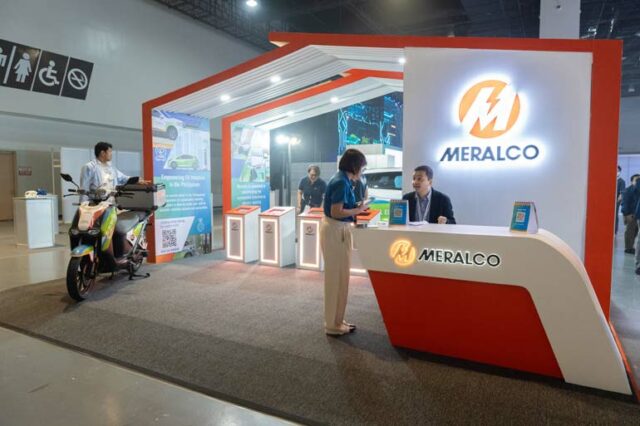
Accelerating EV adoption. Manila Electric Company (Meralco) showcased its initiatives and advocacies that support the Philippines’ transition to e-mobility during the 12th Philippine Electric Vehicle Summit held from Oct. 24 to 26, 2024 at the SMX Convention Center Manila in Pasay City.
Advancing the adoption of EVs in PH
The adoption of electric mobility (e-mobility) in the Philippines has gained momentum following the enactment of the Electric Vehicle Industry Development Act (EVIDA). With critical government support and private sector initiatives continuing two years later, the country’s transition to cleaner and more sustainable transportation system is expected to accelerate further.
Latest data from the Chamber of Automotive Manufacturers of the Philippines, Inc. (CAMPI) and the Truck Manufacturers Association (TMA) showed that in January to August of this year alone, 11,186 electric vehicles (EVs) were sold — surpassing the 2023 full-year sales of 10,602 units.
This will add to the 15,300 EVs plying Philippine roads as of end-2023, based on data from the Electric Vehicle Association of the Philippines (EVAP).
While these numbers are still a far cry from the short-term deployment target of the Department of Energy (DoE) of 2.45 million EV units by 2028, industry groups are optimistic that this goal will be achieved through the inflow investments, declining prices of batteries and incentives from the government.
In full support of the country’s transition to e-mobility is Manuel V. Pangilinan-led Manila Electric Company (Meralco).
Aligned with its efforts to promote a greener future, Meralco has been at the forefront of pushing the adoption of alternative and sustainable transportation solutions.
During the recent 12th Philippine Electric Vehicle Summit (PEVS), Meralco reaffirmed its commitment to enable the shift to EVs through initiatives that support the Philippines’ transition to e-mobility.
“This year’s theme, ‘Spark Change, Drive Electric,’ is more than a call to action. It reflects our shared belief that the time for sustainable mobility is now. Together, we have the chance to shape a future where electric vehicles aren’t just an option but a vital part of efficient everyday living,” Meralco Executive Vice-President and Chief Operating Officer Ronnie L. Aperocho said.
Meralco’s booth at the summit displayed its EV Chargers and the One Meralco EV Adoption Program pillars — Enabler, End-user, and Player.
Stack the Building Blocks: Meralco as EV Charging Enabler
The One Meralco EV Adoption Program streamlines the power distributor’s efforts, cementing its position as a catalyst of EV adoption by spurring confidence of customers to shift to EVs and to build charging stations. Under this, Meralco aims to be an Enabler by setting up the EV ecosystem through reliable grid and customer-centric programs.
“As an enabler, we have streamlined our application process for EV Charging Stations, to allow for quicker expansion of EV Charging Infrastructure within and beyond Metro Manila — may it be for own-use or commercial charging station,” Meralco Head of Commercial Strategy Management and Energy Solutions Ralph M. Menchavez said.
With Meralco’s energy solutions geared towards sustainability, customers eyeing to setup their own charging stations can also take advantage of and apply to other customer programs, such as Peak/Off-Peak and Net Metering.
Under the Peak/Off-Peak program, customers can enjoy lower generation rates when they charge their EVs at night, helping balance demand on the grid during peak hours.
With Net Metering, they can charge their EVs with power from other energy sources before exporting excess electricity to the grid.
Further ensuring that customer experience takes a higher priority, Meralco also launched its EV Solutions Site where customers can learn more about EVs while new and existing EV users and players can seek assistance from Meralco.
Walk the talk: Meralco as an EV End-User
Under the End-user pillar, Meralco demonstrates that it is “walking the talk” through the conversion of its fleet to EV through its Green Mobility program.
Launched in 2020, the program aims to reduce Meralco’s greenhouse gas (GHG) emissions by gradually replacing the internal combustion engine (ICE) vehicles in its fleet with EVs. The company aims to electrify at least 25% of its fleet by 2030.
With this target, expanding EV fleets and infrastructure will take a big chunk of Meralco’s landmark investment of over P100 billion through 2030 to accelerate the implementation of its sustainability agenda.
So far, 154 EVs are already operating across Meralco business centers and sector offices. The power distributor has also strategically installed 15 DC fast-charging stations and more than 50 Level 2 chargers to support its EVs across its franchise area.
Next year, it is looking to add 69 more EVs in its fleet and install at least 12 more charging stations in its business centers.
Fully Charge: Meralco as an EV Player
Meanwhile, Meralco aims to induce the EV market take-up under the Player pillar through charging station programs.
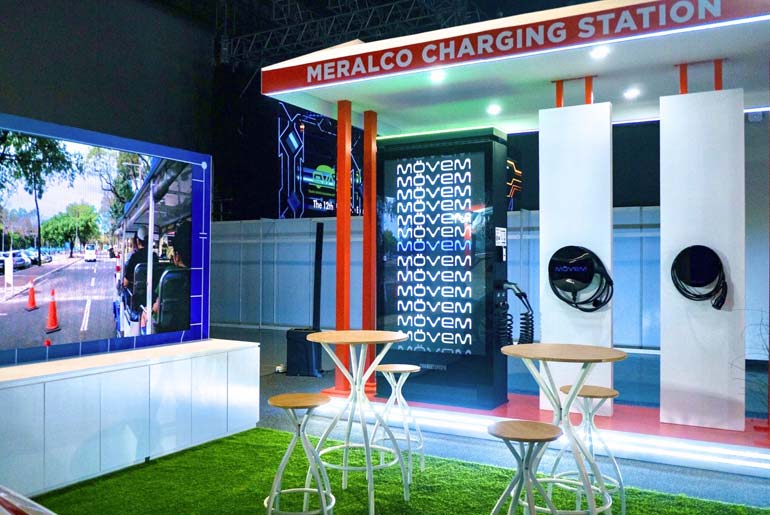
CHARGING AHEAD FOR E-MOBILITY. Movem Electric, Inc. has signed an exclusive partnership with ChargeEuropa to deploy critical electric vehicle (EV) charging infrastructure to support the growth of e-mobility.
For this, the power distributor incorporated Movem Electric, Inc. — its wholly owned integrated electric mobility solutions provider — to further help in driving solutions to achieve cleaner and greener transportation.
Movem partners with various businesses and institutions to build and support a network of private and commercial 2-wheel and 4-wheel charging stations.
Recently, Movem teamed up with Polish infrastructure provider ChargeEuropa to exclusively deploy the latter’s EV charging technology across the country.
“Meralco, through Movem, has long since looked into the EV industry and aided in the transition together with the regulators and advocates with the industry like the Electric Vehicle Association of the Philippines. We’re planting the seeds. It’s about time that we really grow together with partners,” Meralco Senior Vice-President and Chief Revenue Officer and Movem Chairman Ferdinand O. Geluz said.
While this exclusive partnership will help Meralco intensify its support to the EVIDA by accelerating the provision of end-to-end EV and charging infrastructure solutions, this also allows ChargeEuropa to expand its presence in Asia with the Philippines as the first point of entry in the region.
“We chose this market because we strongly believe in the potential of the Philippine EV industry and market. We see that EV charging is becoming a growing and very significant part of mobility in the country,” ChargeEuropa CEO Matt Tymowski said.
Founded in 2011, ChargeEuropa has deployed ad-display chargers which combines EV charging and ad space through an integrated LED screen — in Poland, Czech Republic, Romania and other parts of Europe.
Through this partnership, Movem President Raymond B. Ravelo said the company will be the prime mover in deploying ChargeEuropa charging stations across Metro Manila and the rest of the country.
“Our vision in Movem to drive a highly electrified, emissions-free Philippine transport sector is brought to life through partnerships with like-minded institutions such as ChargeEuropa. Ultimately, our thrust and goal is to bring world-class EV solutions not only to our clients but also to the wider public,” he said.
But even prior this milestone partnership, Movem has been active in rolling out charging station infrastructure to promote the use of EVs.
In partnership with Robinsons Land Corporation, Movem has equipped several Robinsons Malls with EV charging stations.
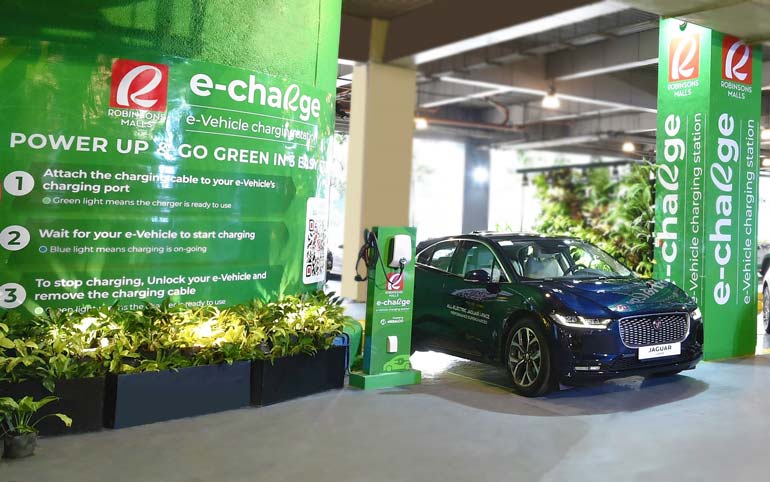
SPARKING CHANGE THROUGH CHARGING POINTS. Movem Electric Inc. installed electric vehicle charging stations at Robinsons Malls to jointly help Robinsons Land Corporation in protecting the environment and reduce carbon emissions. (Photo from Robinsons Land Corporation website)
The charging stations at the Robinsons Malls feature charging pods for 4-wheeled EV such as Battery Electric Vehicles (BEV) and Plug-in Hybrid Electric Vehicles (PHEV), and pods that can accommodate 2-wheeled and 3-wheeled EV such as e-bikes, e-scooters, and e-trikes.
“Our strategic collaboration with Robinsons Land Corporation to build EV charging stations in Robinsons Malls underscores [Movem’s] continuing commitment to promote the country’s important transition to electrified transport. It also highlights and heightens our pledge to provide our clients with top-notch, reliable, and fit-for-purpose electric mobility solutions, from EV to charging infrastructure solutions. This is all geared towards enabling our clients to enhance their operations while advancing their sustainability agenda,” Ravelo said.
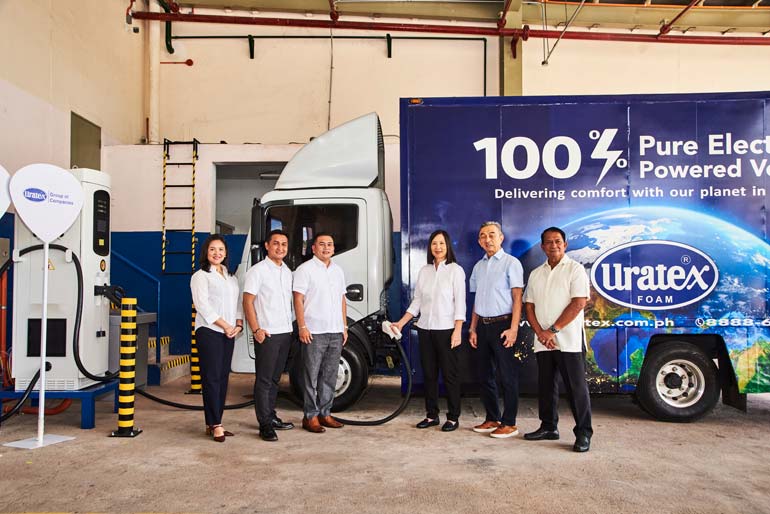
Movem also deployed an electric light delivery truck and installed a 60-kW DC Fast Charger at foam and mattress maker Uratex Group of Companies’ manufacturing plant in Plaridel, Bulacan.
STEPPING UP SUSTAINABLE OPERATIONS THROUGH EVs. Movem Electric, Inc. has supported Uratex Group of Companies’ conversion of its internal fleet to electric with the deployment of an electric light delivery truck and a 60-kW DC Fast Charger in its Plaridel manufacturing plant.
According to Uratex, this partnership supports its plan to further step up its adoption of EVs as it has been gradually converting its internal fleet to achieve its zero emissions goal.
“Movem assisted us from our initial inquiry, choosing the right model fit for our purpose, delivery, installation, and trained our drivers and maintenance personnel. Movem gave us confidence, that for all the uncertainties of this young technology, Movem will be behind us. With this kind of support, we know that this EV will be the first of many more to come,” Uratex Managing Director Peachy C. Medina said.
The company also installed a 22-kilowatt (kW) AC Type EV charging station at the Pacific Star Building, a high-rise structure in Makati City managed by Century Properties Management, Inc. (CPMI), a subsidiary of Century Properties Group. The charger supports various brands of four-wheeled EVs.
By actively supporting businesses and consumers in their transition to EVs, Meralco not only champions a cleaner transportation future but also demonstrates how strategic collaboration can drive e-mobility adoption.
As more Filipinos embrace EVs, the collective shift can significantly reduce emissions and dependency on fossil fuels.
Meralco’s initiatives serve as a powerful testament to how companies can lead the transition into a cleaner, greener era of mobility towards a more sustainable future.
Spotlight is BusinessWorld’s sponsored section that allows advertisers to amplify their brand and connect with BusinessWorld’s audience by publishing their stories on the BusinessWorld Web site. For more information, send an email to online@bworldonline.com.
Join us on Viber at https://bit.ly/3hv6bLA to get more updates and subscribe to BusinessWorld’s titles and get exclusive content through www.bworld-x.com.
Conventionally known as K-Beauty, Korean skincare has transformed beauty routines around the world, and it shows no signs of slowing down. The demand for said products is strong in the Philippines thanks to two big factors: the global hallyu wave, and a focus on natural ingredients and scientific breakthroughs to achieve healthy, hydrated, and glowing skin.
Fueled by a personal love for K-Beauty brands and the desire to make them more accessible to Filipinos, Rianne Tan started My Beauty Story — an online store offering premium Korean skincare at affordable prices. Her entrepreneurial journey began back in 2016 when she started reselling K-Beauty items online. After three years of selling on her university’s community Facebook group, she opened My Beauty Story on an e-commerce platform which has since become a K-Beauty go-to on the app with one of the largest product selections available for purchase.
Rianne of My Beauty Story
Building a K-Beauty Powerhouse
While Rianne delights in the success she now enjoys, getting My Beauty Story off the ground didn’t come easy. Limited capital and logistical hurdles were problems she had to face during the early days of her business. Rianne also had to balance managing the store with her corporate job — resulting in sleepless nights spent juggling both responsibilities.
To overcome those obstacles, Rianne set out to maximize efficiency with her time. After transitioning from social media selling to signing up on Lazada, Rianne streamlined her operations with automated shipping processes, allowing her to focus on growing her business and making it easier to expand My Beauty Story on the platform.
Rianne also took the opportunity to explore various platform tools and join different programs curated for growing sellers like her. Since then, Rianne continued to join campaigns, steadily boosting her store’s presence on the platform where she hit the Top 1 spot in the Beauty category during an 11.11 sale. This achievement gave Rianne the confidence she needed to become a full-time entrepreneur.
Connecting with Customers, Continuing the Story
Rianne at the K Beauty Expo 2024 to bring more quality beauty trends and products to the Philippines
Not one to rest on her laurels, Rianne hired new team members and introduced new processes to keep the business running smoothly. She keeps watch of beauty trends and sources products directly from trusted brands and distributors — allowing her to shave costs without compromising quality. To complement curating and offering a diverse range of products, the store remains focused on fast, reliable shipping and excellent customer service.
For Rianne, being a Preferred Seller on Lazada enhances My Beauty Story’s credibility as a trusted destination for authentic skincare products where customers can confidently shop knowing they are getting genuine items. Through Rianne’s passion for scaling her business and commitment to maintaining a high level of quality and service, she now has a loyal customer base who spreads the word about My Beauty Story, helping her reach even more potential buyers.
Rianne at the K Beauty Expo 2024 to bring more quality beauty trends and products to the Philippines
Recognizing that skincare stories vary from person to person, Rianne and her team also create guides, recommendations, and other content tailored to different skin types and concerns. These resources empower customers to make more informed decisions and create a personalized shopping experience that goes beyond sales — positioning My Beauty Story not only as a retailer, but also as a trusted skincare partner.
Looking ahead, Rianne says her team’s goal is to expand and offer a wider selection of K-Beauty products while keeping them within reach of Filipino consumers. One day, she hopes to open a physical store to continue growing relationships with K-Beauty lovers across the country.
Asked whether she had any tips for anyone hoping to start their own online businesses, Rianne says, “My advice for them is to focus on a specific niche and understand their target audience. Prioritize excellent customer service and stay adaptable to market changes and feedback. Building trust is crucial — loyal customers will choose to return to you even if your prices aren’t the lowest.”
Level up your skincare routine with LazBeauty! Grab exclusive P99 deals every Monday and enjoy P100 off daily with your LazBeauty Member vouchers.
Spotlight is BusinessWorld’s sponsored section that allows advertisers to amplify their brand and connect with BusinessWorld’s audience by publishing their stories on the BusinessWorld Web site. For more information, send an email to online@bworldonline.com.
Join us on Viber at https://bit.ly/3hv6bLA to get more updates and subscribe to BusinessWorld’s titles and get exclusive content through www.bworld-x.com.
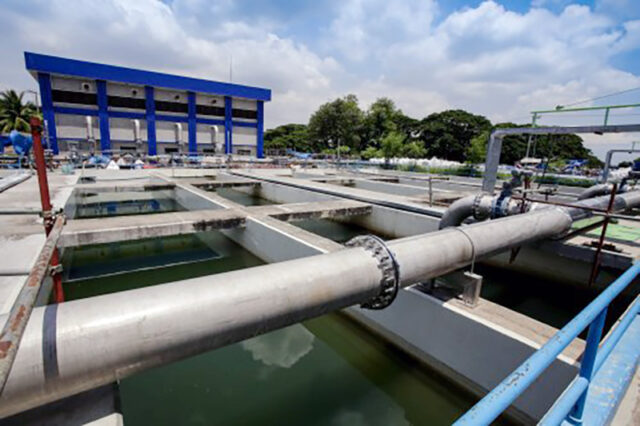
MAYNILAD OPERATES eight water treatment plants — two in Lamesa Compound, Quezon City; two in Putatan and one in Poblacion in Muntinlupa City; NEW WATER treatment plants in Parañaque and Valenzuela; and the Anabu modular treatment plant in Cavite — that has a total production capacity of 2,777 MLD. — MAYNILAD
By Sheldeen Joy Talavera, Reporter
MAYNILAD Water Services, Inc. is allocating an estimated P30 billion in capital expenditure (capex) to build a water treatment plant in Teresa, Rizal to accommodate the additional supply coming from the Kaliwa Dam once completed, its chief operating officer (COO) said.
“The plant is estimated in the business plan at P10 billion, and then the conveyance from Teresa down to our service area is maybe P20 billion,” Maynilad COO Randolph T. Estrellado said in an interview with BusinessWorld last week.
Mr. Estrellado said the company will build a water treatment plant in Teresa, Rizal, designed to produce a capacity of 300 million liters per day (MLD) of potable water.
The Metropolitan Waterworks and Sewerage System is constructing the P12.2-billion Kaliwa Dam, a bulk water supply project that is designed to supply an initial capacity of 600 MLD of potable water upon its completion by 2027.
It is expected to ease the demand on the Angat Dam, from which Metro Manila sources approximately 90% of its water supply.
“Because of climate change, it’s difficult to be relying on a single source where every year your fingers are crossed that the dam gets filled before summer, and then when you have to rely on that dam, it’s really critical,” Mr. Estrellado said.
“We can’t use it if we don’t build the facilities that will treat the water that will come from Kaliwa Dam,” he added.
The planned investment for the Teresa water treatment plant forms part of Maynilad’s P171-billion capex commitment spanning its 2023-2027 rate-rebasing period.
“It’s a huge, huge project that we’re doing not just next year but in the coming years to ensure that it’s ready to pick up the water coming from Kaliwa Dam when it gets completed,” Mr. Estrellado said.
Maynilad operates eight water treatment plants — two in Lamesa Compound, Quezon City; two in Putatan and one in Poblacion in Muntinlupa City; NEW WATER treatment plants in Parañaque and Valenzuela; and the Anabu modular treatment plant in Cavite — that has a total production capacity of 2,777 MLD.
The company serves Manila, except portions of San Andres and Sta. Ana. It also operates in Quezon City, Makati, Caloocan, Pasay, Parañaque, Las Piñas, Muntinlupa, Valenzuela, Navotas, and Malabon.
It also supplies the cities of Cavite, Bacoor, and Imus, and the towns of Kawit, Noveleta, and Rosario, all in Cavite province.
Metro Pacific Investments Corp., which has a majority stake in Maynilad, is one of three Philippine units of Hong Kong-based First Pacific Co. Ltd., the others being Philex Mining Corp. and PLDT Inc.
Hastings Holdings, Inc., a unit of PLDT Beneficial Trust Fund subsidiary MediaQuest Holdings, Inc., has an interest in BusinessWorld through the Philippine Star Group, which it controls.
LISTED airline companies are expected to deliver mixed results for 2024, primarily due to the anticipated recovery in the sector, which may be counterbalanced by the volatility of the airline industry, according to analysts.
“Lots of factors influenced profitability, such as fuel costs, passengers, and competition. The third quarter is traditionally the weakest because of the typhoons and off-peak season. Hopefully, the fourth quarter sees a turnaround,” Luis A. Limlingan, head of sales at Regina Capital Development Corp., said in a Viber message on Sunday.
For the third quarter, both listed airlines saw their third-quarter attributable net income decline. Cebu Air, Inc., the operator of Cebu Pacific, incurred an attributable net loss of P173.19 million from an attributable net income of P1.28 billion in the same period last year as higher expenses put pressure on the company’s profit for the period.
PAL Holdings, Inc. saw its third-quarter attributable net income plunge to P789.79 million, more than fivefold lower than last year’s P4.28 billion due to lower passenger revenue during the period.
“The first nine months for both airlines showed a mixed picture. Both experienced fluctuations in their quarterly revenues,” First Grade Finance, Inc. Managing Director Astro C. del Castillo said in a Viber message.
The outlook remains cautiously optimistic for airline companies as the industry continues to face rising operating costs, increased competition, and fragile economic conditions, Mr. Del Castillo said.
“The overall profitability of PAL and CEB will depend on how effectively they can manage these dynamics as they navigate through the final months of the year,” he said.
For the flag carrier, PAL President and Chief Operating Officer Stanley K. Ng said the company is expecting to end the year with lower profit than last year.
“Definitely lower than last year,” he told reporters on the sidelines of an event last week.
For December, air passengers may see steady airfares after the Civil Aeronautics Board kept the fuel surcharge for December unchanged at Level 4, marking the third time this year the fuel surcharge was set at this level.
Air passenger volume at the Ninoy Aquino International Airport continues to increase for the first nine months of the year after surpassing pre-pandemic levels, driven by growth in domestic travel, according to the Manila International Airport Authority (MIAA).
Data from MIAA showed that air passenger volume totaled 37.38 million for the nine months ending September, 10.7% higher than the 33.75 million in the comparable period last year and 4.2% higher than the 35.87 million in the January-to-September period in 2019.
For Globalinks Securities and Stocks, Inc. Head of Sales Trading Toby Allan C. Arce, the profitability of airlines will be influenced by many factors.
He said the potential drivers for growth will be the holiday and peak travel seasons and the expected recovery in tourism.
“Any rebound in local and international travel demand can contribute significantly to earnings. Effective fuel-hedging strategies and operational efficiency improvements could offset revenue dips,” he said.
Cebu Pacific, the budget carrier, is optimistic about its growth prospects for next year. The company anticipates that its recent route launches will begin to contribute positively, driven by its ongoing expansion plans.
“We are quite positive for next year. We think the height of the leverage, the early investments in the aircraft are already done. It has made our capex (capital expenditure) heavy this year, but this is it, by next year, we will feel the contributions of these as the revenue grows,” Cebu Pacific Vice-President for Controllership and Investor Relations Trina E. Asuncion said in a virtual briefing last week.
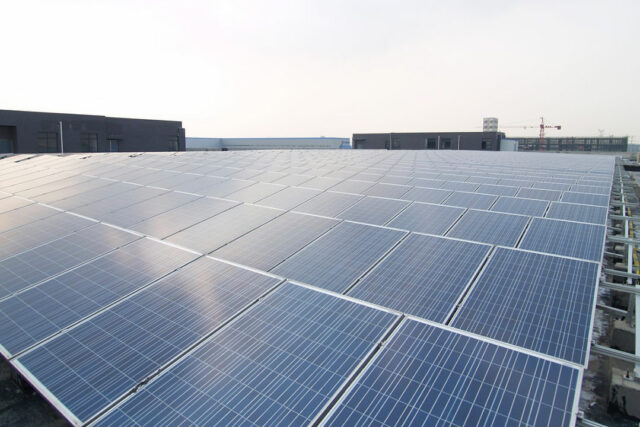
SOLAR POWER provider Buskowitz Energy, Inc. (BEI) is targeting to expand its portfolio by building solar rooftop projects with a capacity of 30 megawatts (MW).
“We’re doing 30 MW of projects simultaneously. There are 12 different sites for 12 different customers,” BEI Founder and Chief Executive Officer James Buskowitz told reporters last week.
BEI recently sealed an investment agreement with global real asset investment manager PATRIZIA MBK Fund Management Pty Ltd. (PMBK) worth up to $100 million.
“It’s a perfect synergy between having someone who can provide the financial capital and for us to focus on execution and delivering as many megawatts to the Philippine market as possible,” Mr. Buskowitz said.
The company is targeting to have solar projects with up to nine MW of capacity partially commissioned by the end of the year and an additional 20 MW two months later.
“Overall, our goal is sustainability and developing renewable energy. Solar has been the path of least resistance as the solar rooftop segment alone is a huge market that is already underserved,” Mr. Buskowitz said.
BEI is involved in rooftop solar development, engineering, procurement, construction, and financing in the Philippines. It has installed and commissioned over 300 projects for residential, commercial, and industrial facilities.
Meanwhile, PMBK is a joint venture between Germany’s PATRIZIA SE and Japan’s Mitsui & Co., Ltd.
“I think the reality is that there’s so much potential in the solar market… as the business grows, we’re looking at additional land,” said Saji Anantakrishnan, head of Australia and Asia Infrastructure at PATRIZIA. — Sheldeen Joy Talavera
LISTED Italpinas Development Corp. (IDC) has secured a new investor via a private placement deal worth P187.93 million.
On Friday, IDC signed an agreement with businessman Benjamin Tan Co, who purchased 15% of the company’s primary shares at P1.99 each, totaling P187.93 million, through a private placement.
In 2022, IDC secured stakeholders’ approval for a transaction to issue up to 20% of primary new shares to an incoming investor, which will be used for the acquisition of properties for future projects.
“It has taken us over two years to find the ideal strategic investor. A key decision such as this demands that we decide carefully and deliberately. With his years of experience, and his prominence and reputation in the business community, Mr. Co will be a great partner to IDC as it continues to grow,” IDC Chairman and Chief Executive Officer Romolo V. Nati said in a statement over the weekend.
According to IDC, Mr. Co has interests in various businesses such as petrochemicals, polyvinyl chloride resins and products, and steel manufacturing.
Mr. Co and his family and associates control land holdings in Palawan, Cavite, Boracay, Pampanga, Quezon Province, and Quezon City.
In June, IDC and Mr. Co signed a co-development joint venture for a property in Puerto Princesa, Palawan.
“I believe that this synergy between the two groups will allow IDC to unlock its full potential in becoming the leading developer of sustainable properties in the country,” IDC President Jose D. Leviste III said.
IDC is a developer of sustainable properties. The company has real estate projects in the provinces of Misamis Oriental, Batangas, Bukidnon, and Bataan. It has plans to expand into multiple locations nationwide.
Some of IDC’s projects include Primavera Residences, Miramonti Green Residences, Verona Green Residences, and Firenze Residences.
The company also plans to develop assets in the tourism and hospitality market, following through on a partnership signed with the Ascott group last year.
“The Philippine economy has a bright and dynamic future, and this includes real estate, especially in areas outside Metro Manila that are still relatively underserved,” Mr. Co said.
“With a track record of 15 years in the industry, its proven capabilities, outstanding Italian green architecture, and full commitment to sustainable development, IDC is a perfect strategic partner for me to join and develop my property portfolio,” he added.
For the first nine months, IDC saw a 64.5% drop in net income to P4.37 million as net sales fell by 40.5% to P180.72 million.
IDC shares were last traded on Nov. 22 at P1.39 per share. — Revin Mikhael D. Ochave
As US President-elect Donald Trump prepares to impose a 20% tariff on imports (and 60% across the board on China), the Philippines should demand zero tariffs in exchange for hosting nine US military bases. This deal would offer the Philippines a minimum economic benefit of $12 billion annually and, even more crucially, jump-start the country’s laggard manufacturing sector and eventually strengthen its economy and defense capabilities. A strong Philippines economy is in the interest of the US.
The art of the deal is asking what the US is willing to pay to keep their bases in the Philippines. For instance, the US and its Japanese and South Korean allies spent $34 billion from 2016-2019 according to official figures. The US has also committed over $175 billion in military and humanitarian aid to Ukraine. These sums illustrate the extent to which the US values its strategic alliances and the lengths to which it is willing to go to support them financially. For all its trouble, the Philippines is getting peanuts. The strategic value of Enhanced Defense Cooperation Agreement (EDCA) for the US is certainly worth far more than the zero tariff the Philippines should demand.
Since the Philippines is stuck with the Mutual Defense Treaty and EDCA, it should leverage them for tangible economic gains, not empty and petty promises. This approach isn’t new: in the 1970s, President Ferdinand Marcos, Sr. negotiated substantial US funding for the Philippines’ national electrification program as compensation for hosting American military installations. With the US now focused on countering China’s influence in the Asia-Pacific region, the Philippines is in a strong position to insist on returns that strengthen its industries — especially since these lag behind ASEAN neighbors.
In fact, the Philippines has significant ground to cover compared to its peers. Its electronics exports, for example, reached $39 billion in 2023, while Vietnam’s electronics exports exceeded $100 billion, powered by massive US investments. In automotive parts, the Philippines exported about $1.5 billion, while Thailand exported $14 billion. The textile and apparel sector tell a similar story: Philippine textile exports to the US are around $1 billion, while Vietnam ships over $18 billion. By securing a zero tariff on exports to the US, the Philippines could close these gaps, attract investment, and scale up its production capacities. Combined with recent tax reforms, a tariff-free status would make these industries competitive on a global level.
The sectors positioned to benefit the most from zero-tariff access to the US market begin with electronics and semiconductors, which currently make up more than half of the Philippines’ exports. By securing zero tariff, Philippine electronics manufacturers could see a 25% increase in exports to the US, adding around $9.9 billion annually. This growth would not only drive revenue but also attract new investments in advanced manufacturing and create skilled jobs.
The textile and apparel industry, while smaller than electronics, could also gain considerably. Currently exporting around $1 billion to the US, Philippine textile manufacturers could see a 40% increase in demand with zero tariffs, bringing an additional $400 million. As higher tariffs push US retailers to reconsider suppliers in China and other ASEAN countries, the Philippines could position itself as a cost-effective alternative, generating employment and invigorating the garment sector.
The automotive parts and assembly industry, too, stands to benefit. While still modest, the sector has been expanding and could capture approximately $450 million in new revenue as companies look for alternatives to China and ASEAN neighbors facing tariffs. A zero tariff would position the Philippines as an attractive automotive manufacturing hub in Southeast Asia, creating jobs and expanding the industrial base.
The agriculture and agri-food processing sectors, vital to the Philippine economy, would also gain. The US already imports a range of agricultural products from the Philippines, including tropical fruits, coconut products, and seafood. Zero tariffs would likely increase demand for these exports by 25%, adding around $500 million to the Philippine economy, supporting rural employment, and enhancing food security.
Exports of machinery and equipment, currently valued at $2.5 billion, could see a 25% boost from zero tariffs, yielding an additional $625 million. As global manufacturing supply chains shift, the Philippines could emerge as a competitive producer in this sector, attracting investments, and further integrating into global markets.
The pharmaceuticals and medical devices industry, though still emerging, has the potential for rapid growth. With zero tariffs, Philippine manufacturers could capture a larger share of the US market, generating an estimated $250 million in additional revenue and help bring down exorbitant drug prices in the country. This expansion would support health infrastructure development and create high-skill employment within the country.
As a key ally in Southeast Asia and host of US military facilities, the Philippines deserves tangible economic benefits — not empty, petty, and symbolic promises — in exchange for the access it grants to American forces. A permanent zero-tariff status on Philippine exports to the US is not only justified, it is overdue. This deal would strengthen the Philippines economically, enhance its industries, and better position it as a leading trade partner to the US.
This is a moment for the Philippines to negotiate assertively, securing a deal that truly reflects the value of its alliance with the US. Such an arrangement would not only support the mutual security interests of both countries but would also restart the Philippines manufacturing sector and eventually strengthen its economy. A strong Philippines economy is in the national security interest of the US.
President Trump would understand this deal.
Eduardo Araral, PhD, is an associate professor at the Lee Kuan Yew School of Public Policy, National University of Singapore. This piece is written in his personal capacity.
TREASURY bill (T-bill) rates may decline amid the worsening Russia-Ukraine conflict and as markets await further policy signals from the US Federal Reserve.
“The government securities market was just quiet today as most just stayed on the sidelines amid the Ukraine-Russia geopolitical tension and while awaiting developments for a clearer policy path,” a trader said in an e-mail on Friday.
Russia fired a hypersonic intermediate-range ballistic missile at the Ukrainian city of Dnipro on Thursday in response to the US and UK’s allowing Kyiv to strike Russian territory with advanced Western weapons, in a further escalation of the 33-month-old war, Reuters reported.
The Bureau of the Treasury (BTr) will auction P15 billion in T-bills on Monday — P5 billion each in 91-, 182- and 364-day debt.
On Tuesday, the BTr will also sell P15 billion in reissued five-year Treasury bonds (T-bonds) with a remaining life of four years and five months.
The average T-bill yields could fall amid uncertainty about President-elect Donald J. Trump’s economic policies, Michael L. Ricafort, chief economist at Rizal Commercial Banking Corp., said in a Viber message.
“The markets priced in possible protectionist policies by Trump that could lead to some increase in US inflation,” he said in a Viber message.
At the secondary market, the 91-, 182- and 364-day T-bills fell across the board, based on PHP Bloomberg Valuation Service Reference Rates data as of Nov. 22 posted on the Philippine Dealing System website.
Last week, the BTr raised P22.6 billion in T-bills as bids reached P51.665 billion, more than twice the amount on offer but lower than the P59.425 billion in tenders a week earlier.
It borrowed P9.1 billion as planned in 91-day T-bills, higher than the programmed P6.5 billion, as tenders reached P20.095 billion. For the 182-day debt, the government fully awarded P6.5 billion, as bids reached P12.76 billion.
The Treasury also raised P7 billion from 364-day bills as demand hit P18.81 billion.
Economists have warned that Mr. Trump’s proposed policies could stoke inflation and lead to fewer Fed rate cuts.
The US Federal Reserve would trim interest rates next month but make shallower cuts in 2025 than expected just a month ago due to the risk of higher inflation from Mr. Trump’s proposed policies, according to most economists in a Reuters poll.
Prospects for a price resurgence based on his planned policies, including higher tariffs and tax reductions, led markets to nearly halve rate cut pricing to about 75 basis points by end-2025 over the past few weeks.
Relentless economic strength, stubborn inflation and stock markets flirting with record highs have become barriers against hasty rate cuts.
Fed Chairman Jerome H. Powell last week said “the economy is not sending any signals that we need to be in a hurry to lower rates.”
The government seeks to raise P90 billion from the domestic market in December — P60 billion in T-bills and P30 billion in T-bonds.
The government borrows from local and foreign sources to help fund its budget deficit, which is capped at P1.48 trillion or 5.6% of gross domestic product this year.
Her latest collection features a plethora of local fabrics in her signature style
FILIPINOS have certain associations when it comes to Filipiniana clothing: that it is stiff, strictly for formals, quite old. In a fashion show on Nov. 16, Happy Andrada subverted all these with a thoroughly wearable Filipiniana collection that was Pinoy without all the kitsch.
The show started quite early (when she said 6 p.m. on the invite, she was not kidding), Ms. Andrada’s show was one segment at the Pinoy Playlist Music Festival 2024, held at the BGC Art Center in Taguig. This being part of a music festival, Ms. Andrada’s clothing presentation was accompanied onstage by Dyandi Percussion Djembe Ph and Anima Tierra.
Not 15 seconds after we were seated, actress Glaiza de Castro flounced onto the stage in a puffy Filipiniana look.
The show also showed amazingly youthful looking menswear pieces such as a bomber barong with pinilian (an indigenous fabric resembling a cotton brocade) stretch pants. Other menswear looks we saw included a hybrid barong-guayabera (a Latin American shirt), worn with a stylish salakot (gourd or woven hat), a pinilian jacket for men, binakol pants (a fabric whose pattern has an op-art effect) with an embroidered piña (pineapple fabric) jacket embroidered with Filipino symbols like palms and Jose Rizal’s silhouette.
A baro (a woman’s blouse) was shown on the runway, its sleeves flouncy and soft, worn with a very now woven visor. Another look was a cream jacket with extra-wide lapels worn over a barong (a traditional embroidered shirt, usually formal)topped with a luxurious straw hat, and then a barong with a largebow. A baro’t saya (a traditional blouse-skirt combo) was made with several layers of cloth, creating an effect like book pages. A find we envy was a chore jacket-barong hybrid, paired with a glittery dress.
Beauty queen Nicole Cordoves closed the show with a pageant-ready blue gown dyed to look like waves.
While using fabrics like t’nalak, piña silk, knotted piña, inaul,abel Iloco, Yakan, jusi, and piña calado, Ms. Andrada’s imprimatur is still evident. Think a preppy girlish cleanliness with just a hint of editorial excess, reflected in sheen and iridescence. In an interview backstage, Ms. Andrada said, “It was so much fun just collecting the fabrics.”
Make no mistake, however: Ms. Andrada is no softie, and despite the girlishness of her clothes, there’s some steel there. The finale dress is named “West Philippine Sea,” alluding to the Philippine territory that China is claiming as its own. The dress was featured in the Fashion Art Biennale in Seoul last September. “I was the only representative of the Philippines,” she said.
“I got inspired by our country, and I think we should be proud (to be) Filipino.