Home Blog Page 2357

Philippine central bank eyes expanded pawnshop services

BW FILE PHOTO

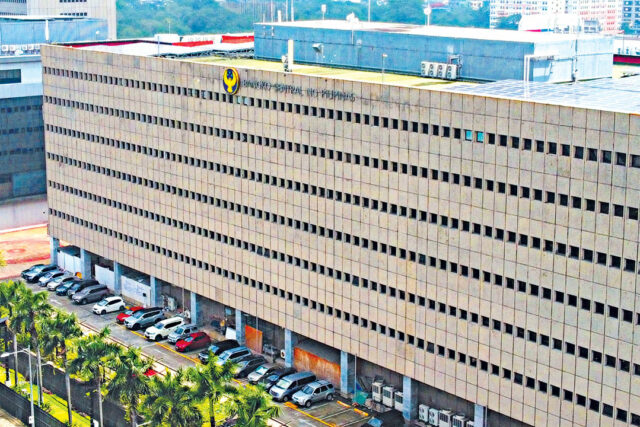
THE BANGKO SENTRAL ng Pilipinas (BSP) is looking to amend its rules on pawnshops, which will allow them to offer more services such as money changing and gold trading.

In a draft circular posted on its website, the central bank said it is seeking to revise sections of the Manual of Regulations for Nonbank Financial Institutions related to pawnshops.

These amendments aim to “define the scope of pawning business and the allowable corollary business activities of pawnshops to support their dynamic industry landscape and importance in the delivery of financial services.”

Pawnshops lend money on personal property that is surrendered to the pawnshop operator as loan collateral. They can also buy goods that are accepted as collateral in a pawning transaction on condition that the goods are redeemed or repurchased by the seller within a fixed period.

The BSP said pawnshops can engage in corollary businesses provided they keep records and start internal control measures that will distinguish these from the main pawnshop operation and to protect consumers.

Allowable corollary business activities include operating as a remittance agent, money changer, foreign exchange dealer, operator of a payment system or gold trader, subject to registration and accreditation by the BSP.

It said pawnshops may buy gold from registered small-scale miners and eventually sell it to the central bank.

“Pawnshops may also act as financial access touchpoints for the delivery of financial services,” the BSP added.

These include acting as a remittance sub-agent, serving as cash agents of banks, bill payment or top-up partners of utility and other companies, cash collection services and corporate payout partner.

The BSP said pawnshops are barred from facilitating or encouraging any activity related to gambling. If the draft rules are approved, pawnshops have one year from the effectivity of the circular to comply with the amended guidelines.

Stakeholders have until Dec. 6 to give their feedback on the proposed circular. — Luisa Maria Jacinta C. Jocson

Dispensing — and enabling — dreams

Carlos Yulo poses with Toyota Motor Philippines (TMP) President Masando Hashimoto during the Start Your Impossible Gymnastics Camp at the Gymnastics Association of the Philippines (GAP) MVPSF Gym in Manila. — PHOTO FROM TOYOTA MOTOR PHILIPPINES

Two-time Olympic gold medalist Carlos Yulo is in giving-back mode

WHAT A YEAR it has been for Carlos “Caloy” Yulo. He did the incredible and carry an entire country’s hopes on his shoulders — on the way to notching an unprecedented two golds in the Paris Olympics — and reap a resulting well-deserved windfall.

But even before he shot to greater prominence through his Olympic feat, Mr. Yulo was already a proud Global Team Toyota Athlete (GTTA) — under the mobility brand’s Start Your Impossible (SYI) program. This is Toyota’s first-ever global corporate initiative — inspired by Olympic and Paralympic athletes “who are constantly challenging their impossible.” SYI supports some 250 athletes from 49 markets worldwide. Caloy is one of two Filipino GTTAs, with champion para swimmer Ernie Gawilan being the other. Incidentally, in Asia, Toyota calls its GTTAs “dual heroes” because they are not only sports heroes but champions for doing social good as well.

When we were in Paris to catch the tail end of the Paralympics, we got to talk to both Caloy and Ernie. Even then, Mr. Yulo expressed how he envisioned giving budding athletes much-needed coaching, motivation, and support. Recently, he collaborated with Toyota Motor Philippines (TMP) for the Start Your Impossible Gymnastics Camp held over the course of two days at the Gymnastics Association of the Philippines (GAP) MVPSF Gym in Manila. The camp is part of the embodiment of this commitment to give back to the community, “aiming to inspire and empower young gymnasts by providing opportunities to help them become better athletes.”

Caloy enlisted the help of his own team, led by coach Aldrin Castañeda of GAP, not only to vet the participants but also to manage the warmup exercises and subsequent training of the 30 youngsters aged seven to 16 from Metro Manila, Davao, and Cebu. Caloy also sought the assistance of his own sports nutritionist Jeanette Aro to advise the kids and their parents on what constitutes a proper diet for these gymnasts.

So what’s next? I asked Caloy at a subsequent question-and-answer session. “We’re looking for those with potential, and we plan for them to continue training here more intensively,” he said in Filipino. “This clinic won’t mean anything without a next step for them. Even if I don’t get to train them myself, I look forward to training with them — to at least give them a program of training.”

Clothes for grown-ups

WHILE the Criselda brand in Rustan’s is associated with a certain kind of woman (a society matron, full stop), the label’s current 2024 Cruise-Holiday collection has big shoes to fill.

After all, the two women behind the brand have since passed. Founder Criselda Lontok died in 2021, while the brand’s top patron, Ms. Lontok’s friend and boss, Rustan’s head Zenaida “Nedy” Tantoco, died earlier this year. The brand is currently headed by designer Inno Sotto as creative director.

“The team has been working with Ms. Lontok for say, 30 years,” said Reah Castro, merchandise manager for womenswear at Rustan’s. “They know already the designs and staples of Ms. Lontok. With the help of Inno, they already elevated the current styles of Criselda Lontok.”

The collection was shown through an intimate salon show at Rustan’s Makati on Nov. 19. The audience was mixed: the society matrons who knew Criselda as a young woman, and the younger women who probably called her “tita” (aunt).

Trumpets from a recording of a French song opened the show, with an orange tunic color-blocked with pink, then a rich plum shift with a LARGE (capitals mine) pussybow. There was a floral dress the color of orchids, its petals outlined in gold, with trumpet sleeves.

The collection got younger with black coordinates splashed with silver sequins, its pattern resembling snakeskin.

There were robes in black lace and white, perfect for a yacht; then a yellow coatdress with another LARGE (almost covering the torso) bow, followed by a cropped silk jacket with flared collar. This had huge buttons where buttons shouldn’t be, followed by a white silk coat with large buttons (where they should be), and a yellow pantsuit with the same huge buttons — the playfulness in the placement seems like a game.

A gray silk tunic had buttons on the shoulder, followed by a rich iridescent grayish silver shirtdress. This was opened as a seaside robe, the exact color of a black pearl.

Other younger options are silver coordinates, a sequined set (the scattered glitter forming the spots of a cheetah), a black sack dress with pockets cleverly cut along the skirt’s waistline (think early Balenciaga).

We also liked a translucent cream coat with puffed sleeves and flared at the lapel, a white coat with golden flowers on the lapel, concealing an overall golden floral motif in the shift dress underneath it.

The show ended with a black dress with bell sleeves. But the black and white gazar multi-panel long patch gown (looking like Yves Saint Laurent’s Mondrian dresses, devoid of color, like wearable works by Arturo Luz) that came before it was even more stunning.

“Right now, we’ve already shifted a little,” Ms. Castro said, noting the middle-aged look of some of the pieces (as opposed to powerful senior). “Still, the heart, the design, is still Criselda Lontok.”

“Right now, the customers of Criselda are like, (in their) 70s to 80s. We want to capture Gen X and (older) Millennials,” she said. “These Millennials also grow old. Their bodies will change. They (would) like to dress their age.”

“We can still continue with the brand… with everything of Criselda Lontok — intact, but improved.”

Criselda is available at Rustan’s. — Joseph L. Garcia

DigiPlus says no plans yet to develop Boracay property

DIGIPLUS.COM.PH

LISTED DigiPlus Interactive Corp. said it has no plans yet to develop a property on Boracay Island as the company focuses on its digital initiatives.

“At the moment, we have no imminent plans to develop the 24-hectare property in Boracay into an integrated resort because we still remain focused on executing our digital transformation strategies, which give us a higher margin,” DigiPlus President Andy Tsui said in a virtual briefing last week.

In March 2018, DigiPlus and Macau-based casino operator Galaxy Entertainment Group bagged a provisional gaming license from the Philippine Amusement and Gaming Corp. to establish an integrated resort in Boracay worth at least $500 million.

However, the project was interrupted by a three-year moratorium imposed by the Duterte administration on new casinos, which was lifted in August 2021.

Mr. Tsui said that DigiPlus has 40 million registered users on its platform, adding that the company has seen higher user counts compared to last year.

“At the end of the third quarter, the monthly active user count was somewhere around 4.5 million. We’re growing compared to the end of 2023 when we had about two million active users,” he said.

Meanwhile, Mr. Tsui said DigiPlus is integrating its online platform with the company’s 140 physical sites to improve the player experience.

“The main purpose of these sites is for branding and customer service. With the stronger footprint, we can better serve our players and engage our customer service team for faster and more efficient handling of transactions,” he said.

DigiPlus grew its nine-month net income by 314% to P8.75 billion from P2.1 billion in 2023, led by its retail games, new product offerings, and cost efficiencies.

Revenue surged by 223% to P51.56 billion from P15.98 billion in 2023.

The company operates platforms such as BingoPlus, ArenaPlus, PeryaGame, Tongits+, GameZone, Pinoy Drop Ball, and Super Ace Jackpot.

DigiPlus shares were last traded on Nov. 22 at P20.15 per share. — Revin Mikhael D. Ochave

Creating the economy

FREEPIK

“What just happened? It was the economy, stupid!” CNN news anchor David Goldman declared when Donald Trump (Republican) won as president of the United States of America for 2025-2029 at the Nov. 5 national elections (CNN, Nov. 6).

The American people want a change. Goldman said, “a significant number of voters blame President Joe Biden and Trump’s opponent, Vice-President Kamala Harris, for failing to make enough improvements to Americans’ financial situations over the past four years. Poll after poll suggested that Americans hold largely negative views about the US economy” (Ibid.).  They jealously want a return to “the American dream” of prosperity and indulgence.

“Americans are living in the moment, optimistic that Trump can ease the pain of high inflation over the past four years. Election polls consistently showed the economy and inflation were top of mind. In the last Forbes/HarrisX national poll released the Monday before Election Day, 36% of respondents said prices/inflation were their top concern, followed by immigration and the economy at 32% and 31%, respectively,” post-election news analyses said (USA Today, Nov. 7).     

The Center for American Progress Action Fund (CapAction), an independent, nonpartisan (US) policy institute and advocacy organization, volunteered an analysis of Trump’s economic plan based on what he had focused on in his first term (2017-2021) as president. “The most significant piece of legislation former President Donald Trump signed during his first term had a dramatic cut in the corporate tax rate from 35% to 21% as its centerpiece. (This was supposed to create more jobs, bring down prices, stimulate the economy.) That corporate tax cut did not trickle down to ordinary workers but cost $1.3 trillion and helped fuel a record $1 trillion in stock buybacks the year after it passed (americanprogressaction.org, June 12).        

“We know that ‘privately, Trump has told allies that he is keenly interested in cutting corporate tax rates again,’ according to The Washington Post, even as corporate profits hit near record highs in 2023… The Post also reported that Trump’s advisers… have discussed proposals to make deeper cuts to the overall corporate tax rate, potentially to as low as 15%. As antitax advocate Grover Norquist told The Post, ‘I would be very surprised’ if he abandoned the push for lower corporate taxes… ‘All the people advising him before for sure think the 15% is where we need to go’.” (Ibid.).

Why the contretemps of Trump taking over the reins of the world’s leading economy, at this time of struggling out of the global recession caused by the four-year COVID pandemic and the disruption of world peace. The world economy will be affected by the US economy.        

Noam Chomsky, American professor emeritus (MIT)  and a “public intellectual” known for his work in linguistics, political activism and social criticism, wrote a book, Requiem for the American Dream: The 10 Principles of Concentration of Wealth & Power (2017) in which he asks “why America seemed to reach the zenith of its economic and civic vibrancy in the 1950s and ’60s and then go into a decline that has left few except the top tenth of a percent of Americans truly fulfilled or satisfied.” Reviewer Godfrey Cheshire subtly connects Chomsky’s thesis of the change in American culture and thought to the socio-politics of Trump’s first term as President (coinciding with the launch of Chomsky’s book and the partner-documentary in 2017).

“Chomsky aptly calls the process (the change) he describes a ‘vicious cycle’ — the more money that goes into politics with the intent of influencing it, the more our politics is ruled by money rather than any other definition of national welfare.” Is it suggested that Trump, being unchangeably a businessman, aka, a capitalist, will be guided by his affinity with the wealthy (as he was reportedly supported in the elections by “big business”) in guiding the economics of his country?

Note that bringing down the US corporate income tax rate from the present 21% to 15% (the centerpiece of Trump’s economic plan) will give the largest 100 US companies (the Fortune 100) a total estimated annual tax cut of $48 billion. These corporations collectively reported $1.1 trillion in profits in their last annual reports (americanprogressaction.org, op cit.).       

Cutting the corporate tax rate to 15% would cost roughly $1 trillion over 10 years based on Joint Committee on Taxation (JCT) and US Treasury estimates. Yet the shortfall in government revenues will be suffered by the people, as the tax cuts (from 35% to 21%) in Trump’s first term did not trickle down to boost productivity, employment, and lower-level household income.

The (US) Center on Budget and Policy Priorities judged that “the 2017 Trump Tax Law was skewed to the rich, expensive, and failed to deliver on its promises.” Close to the elections, the Center warned that “A high-stakes tax policy debate will accelerate this year through 2025 over the pending expiration of the individual income and estate tax provisions of the 2017 Trump tax law. Policymakers should use this opportunity to work toward a tax code that raises more revenues, is more progressive and equitable, and supports investments that make the economy work for everyone” (cbpp.org, June 13).

America is told by its own sages to “make haste slowly” and to weigh and vet its strategies for economic development. Priority is to watch and avert the social degradation and undemocratic exclusion of the less privileged from opportunities for a better quality of life. The rich already have all they need and all they want.        

Some less-developed countries like the Philippines might still subconsciously look up to America for how to think or act in national situations or issues — perhaps a vestige of the “relief” from 300 years of Spanish colonization. (No Filipino bashing here, for wanting to be “Westernized,” as the whole world is now actually still led by America.) Is it surprising that our socio-politics and economics are pretty much like those of the US?        

President Ferdinand “Bongbong” Marcos, Jr. signed on Nov. 11 a new tax law called CREATE MORE, or the Corporate Recovery and Tax Incentives for Enterprises to Maximize Opportunities for Reinvigorating the Economy Act. It will amend Republic Act 11534 or the original CREATE Act that was crafted to help enterprises recover from the impact of the pandemic by lowering the corporate income tax rates and making the country more appealing to businesses by rationalizing fiscal incentives (manilatimes.net, Nov. 11). Its centerpiece policy is the reduction of the corporate income tax to 20% from the current 25%. There will be additional tax deductions and absolutely no taxes for specific registered business enterprises and incentives for foreign direct investors. Its implementing rules and regulations (IRR) will be released soon.

Economist JC Punongbayan comments that official projections from Malacañang say the CREATE MORE will admittedly lower tax revenues by P5.9 billion. (Understated?) “That’s not a terribly large amount. In fact, such forgone revenues would be just 2% of the government’s revenues in September 2024. But still, it represents an erosion of much-needed revenues, at this time when the budget deficit and public debt remain too high compared to our nation’s income. If you check the latest debt statistics, you’ll see that the debt-to-GDP ratio has inched up to 61.3% in September 2024. That’s higher than the 2023 level of 60.1%.” (Rappler, Nov. 15)        

Deloitte analyst Senen Quizon points out that CREATE MORE allows the president to grant incentives without the recommendation of the Fiscal Incentives Review Board (FIRB), the government body with the authority to grant tax incentives to Registered Business Enterprises (RBEs). At present, the President has residual power to grant incentive packages based on the FIRB’s criteria and recommendations (deloitte.com/ph, Nov. 4).        

Oops! Hope the RBE/ Foreign Direct Investors will not have to worry about the “unexpected costs” of doing business in the Philippines.


Amelia H. C. Ylagan is a doctor of Business Administration from the University of the Philippines.

ahcylagan@yahoo.com

Cashew nutshell marine biofuel causing problems for some ships — testing agency

TAWATCHAI07-FREEPIK

SINGAPORE — Several ships in Singapore and Rotterdam reported operational problems in recent months after using marine fuel blended with cashew nutshell liquid biofuel, fuel testing agency CTI-Maritec said in an advisory.

Singapore-based CTI-Maritec said it tested samples from the affected ships and found the marine fuel was blended with cashew nutshell liquid that came from undeclared source materials or production processes.

The ships had reported operational problems including fuel sludging, injector failure, filter clogging, system deposits and corrosion of turbocharger nozzle rings, the agency said.

CTI-Maritec did not name the vessels or shipping lines involved, and it was not immediately clear how many ships were affected.

The Maritime and Port Authority of Singapore and the Port of Rotterdam did not immediately respond to a request for comment.

CTI-Maritec advised ship-owners not to use 100% cashew nut liquid as a marine fuel or as a blending component, or unestablished bio-products in marine diesel engines.

It said their use would contravene guidance from the International Maritime Organization on the supply of fuel oil to ships.

Cashew nut liquid is a non-FAME (fatty acid methyl ester) biofuel, which is a byproduct of the cashew nut industry. While it has been touted as an alternative renewable fuel, it also has high acid values and is corrosive.

Ship-owners have been exploring various marine biofuel blends as an alternative to dirtier bunker fuels in order to cut emissions.

The latest version of the ISO 8217 marine fuel specification specifies the use of accepted biofuels including FAME-based biofuels and hydrotreated vegetable oil.

There is no marine fuel specification available for cashew nut liquid from any authorized body, CTI-Maritec said. — Reuters

Salmon to launch prepaid card for revolving credit line

SALMON Group Ltd. is looking to launch a physical card in the Philippines for its revolving credit line before the end of the year.

“It is not a credit card. This is effectively a prepaid card that is attached to our revolving credit line,” Salmon co-founder and Rural Bank of Sta. Rosa (Laguna) Chairman Raffy Montemayor told a news briefing on Friday.

Salmon Credit, the fintech group’s revolving credit line service, uses QR Ph as a payment method.

“But sometimes, you need something more physical, like when you’re talking to the merchant, they’re not familiar with QR Ph, they want a card,” he said. “This gives them more options.”

The card will run on the MasterCard network, which will connect it to about 400,000 merchants in the country.

Salmon Credit was launched in September last year. The revolving credit line has zero annual fees and a credit limit of up to P50,000.

“We’re really excited about the potential of this and it’s our way of furthering access to credit to many more underserved, underbanked Filipinos,” Mr. Montemayor said.

The card will be launched in a few weeks in a limited number of offline locations.

“We’re doing a small pilot first,” he said. “We’ll start with a few hundred. We’ll announce it in a couple of weeks’ time once we’ve really finalized all the plans.”

Mr. Montemayor said they would scale up the issuance depending on the results of the pilot. “We want to be conservative. We want to make sure the process goes very smoothly.”

The initiative is a partnership between Sunprime Finance, Inc., Asia United Bank Corp. and MatchMove, a Singapore fintech enabler. — Luisa Maria Jacinta C. Jocson

Q&A: ‘We’re thinking of switching exclusively to Jetour’

Jetour Auto Philippines ambassadors Camille Pratts-Yambao and husband VJ pose in front of Jetour T1 units parked just outside the Fuzhou Strait International Convention and Exhibition Center. — PHOTO BY KAP MACEDA AGUILA

A brand experiential trip to China wows celebrity couple Camille Prats and VJ Yambao

Interview by Joyce Reyes-Aguila

LESS THAN two months after signing on as endorsers of automaker Jetour, Camille Prats-Yambao and husband VJ Yambao recently took a deeper dive into the brand. The couple, who are proud owners of a Jetour Dashing (Lightning i-DM), joined the Jetour Global Travel + Conference 2024 in Fuzhou, China. The itinerary included a tour of Jetour’s production facility and test drives of the T2 (including its i-DM or PHEV version which is still not yet in the country), and the smaller T1 (also not yet here). Toward the end of the trip, “Velocity” had an exclusive chat with the couple — fresh from a test of the T1 and T2 on Pintang Island. Camille and VJ talked about how they discovered Jetour, and later fell in love with the brand.

Here are excerpts from our interview.

VELOCITY: How did you discover Jetour?

Camille: We were really looking for an (electrified) vehicle. Actually, I was stalking Jetour’s (social media) account. I reached out to them and said we’re very interested to check out their cars. ‘If you’re looking for someone to collaborate with, (we’re here),’ I said. They replied and it all started from there.

What drew you to the brand?

VJ: I really like the aesthetics of their cars, and the Dashing Lightning i-DM (a plug-in hybrid electric vehicle [PHEV]) was even more interesting. The design is really nice, and when I checked the car’s performance, I felt that the quality is premium.

Camille: We would spend some nights just watching YouTube videos, car reviews of different Jetour cars. We were actually choosing between the T2 and the Dashing (Lightning i-DM).

What made you decide on the Jetour Dashing Lightning i-DM?

VJ: We were looking for a car that Camille can drive. She found the T2 too big, so we chose the Dashing Lightning i-DM.

Camille: We struggled to choose, but the Dashing i-DM is a really good choice. It’s very comfortable. We really wanted a hybrid electric vehicle.

What do the kids think about your vehicle?

VJ: They are crazy about it! They no longer want to ride our other vehicles, to be honest. They like the “Hello, Jetour” voice command control, and like saying “Hello, Jetour, can you open the sunshade?” or “Can you open the windows?” They like the ambient lighting as well. Nala, our only daughter, would press the buttons to change the colors!

Camille: They also know how to operate the massage function. They would ask me to recline, and they would press the massage controls and ask me if it’s good. We like to take them around the village with the sunroof open. VJ sent me a video of the kids laughing, enjoying the breeze from the open sunroof. They really had so much fun!

One time, we were going out and I was the designated driver. I told them we’d be using the other car because it had been a while since we last drove it around. They complained! “We don’t like! We want to get on the Jetour!” they said. We ended up using the Dashing. They really love it.

After attending the Jetour Global Travel + Conference, is there anything new that you learned about the brand? Anything that surprised you?

Camille: I had already been in love with our Jetour. I’m very impressed with it and I have compared the Dashing with other vehicles. But the things I learned here — from seeing the assembly line and all — strengthened my belief in just how strong the brand is. The experience of seeing how they make the cars — how small parts are put together to make an actual vehicle — amazed me. It’s a different experience to witness how the car you drive comes to life.

VJ: I saw how rigid the manufacturing process is. I really saw Jetour’s thrust. It made me feel that they make reliable cars. I really look for durability and reliability in a vehicle. And when I saw how they make cars, it really affirmed my belief that it is a good brand.

Camille: We’ve come to a point that VJ wants to sell all our cars and replace them with Jetour vehicles. We’re literally considering that, and I kind of agree with him.

VJ: We’re really considering it. Let’s stick with Jetour. Their future plans excite me, including what we saw during this trip, and things that I cannot say more about right now.

Camille: What they have coming up will be very good for our country. We struggle with the impact of weather systems and the impact of these that are beyond our control. Jetour is planning to create a car that is made for adverse conditions. We’re very excited for that.

If there’s one car that you want to bring home from your recent trip with Jetour, what would it be and why?

Camille: The T5. I feel it’s a leveling-up of the T2.

VJ: The T7. I cannot wait to be able to get my hands on it. It’s the ultimate car by far that was ever built. And it’s built by Jetour. I cannot wait to have it in my garage!

Camille: I feel that (the T7) is something that we just imagined before, and now it’s going to come true. It was right there in front of us!

Uniqlo keeps the holidays warm for those in need

UNIQLO announces the launch of The Heart of LifeWear, a new initiative to donate one million new items of HeatTech thermal clothing to people in need around the world this winter. This global initiative originated with Uniqlo considering the question “What makes life better?” and asking how, in its 40th anniversary year, the brand could take further concrete action to contribute to society through LifeWear.

Speaking about the announcement of the initiative, Koji Yanai, Senior Group Executive Officer at Fast Retailing Co. Ltd, the parent company of Uniqlo, said, “All over the world, every day there are people whose situation suddenly changes regardless of their intentions or will — due to conflict, persecution, or natural disasters. No one wants to become a refugee, or to find themselves suddenly living in precarious circumstances.”

“Through our new global initiative from this winter, The Heart of LifeWear, Uniqlo seeks to make a positive impact on the lives of as many people as we can who are living in such situations, aiming to help make life better and more comfortable — even just a little — for people in need around the world,” he said.

Currently, there are more than 120 million refugees and internally-displaced people globally, as well as many others who are forced to live in difficult circumstances, both in markets where Uniqlo operates and in nearby regions. Through the initiative, Uniqlo will provide support to help make life a little more comfortable for people forced to flee, children in need, victims of natural disasters, and other vulnerable people around the world. Along with HeatTech thermal items, Uniqlo will also donate breathable, lightweight AIRism clothing, depending on the climate of the recipient region.

Uniqlo will be assisted by its global brand ambassadors Roger Federer, Kei Nishikori, Shingo Kunieda, Gordon Reid, Ayumu Hirano, and Adam Scott; as well as Toray Group, the leading Japanese materials manufacturer and long-term Uniqlo partner who jointly developed HeatTech.

Uniqlo also presented a list of beneficiaries for the program: 500,000 items will be donated through the UNHCR, the UN Refugee Agency. 100,000 pieces will be given to the victims of the Noto Peninsula earthquake and torrential rains, and to child and family services facilities in Japan. 120,000 pieces will be donated to elderly people, children, and PWDs in Greater China. Elderly people living alone and in poverty in South Korea will receive 50,000 pieces, while refugees, internally displaced people, victims of natural disasters, and adults and children living in poverty around Southeast Asia, India, and Australia will receive 120,000 pieces. Refugees and adults and children living in poverty will receive 100,000 pieces in Europe, while refugees and the homeless in North America will receive 80,000 items. These planned figures were announced in Nov. 13, though distribution dates, locations, and recipients in each region will be announced at a later date.

Meralco shares climb on P200-billion solar farm

MERALCO.COM.PH

MANILA Electric Co. (Meralco) shares rose last week following the groundbreaking ceremony for the P200-billion Terra Solar project.

The power distributor ranked 13th in value turnover, with P479.31 million worth of 987,650 shares traded from Nov. 18 to 22, according to data from the Philippine Stock Exchange.

Meralco shares closed at P486 on Friday, up by 0.2% from P485 on Nov. 15. Year to date, the stock had increased by 21.8%.

Germaine O. Guinto, power and utilities analyst at Maybank Securities, Inc., said that Meralco became one of the most actively traded stocks last week due to the groundbreaking of its Terra Solar project.

“Perhaps the stock has been topical this week because of the recent groundbreaking of the Terra Solar Project, boosting confidence in Meralco undertaking a large-scale solar initiative,” Ms. Guinto said in an e-mail.

“The Terra Solar groundbreaking attracted significant investor attention, emphasizing Meralco’s renewable energy initiatives. Seasonal demand growth and its defensive nature further supported high trading activity,” Arielle Anne D. Santos, equity analyst at Regina Capital Development Corp., said in a Viber message.

Last week, President Ferdinand R. Marcos, Jr. and Meralco Chairman and Chief Executive Officer Manuel V. Pangilinan led the groundbreaking ceremony for the Meralco Terra Solar Project, alongside leaders from the power distributor, SP New Energy Corp., and Actis.

The 3,500-hectare project, covering five municipalities between Nueva Ecija and Bulacan provinces, which is the world’s largest solar and battery storage facility, will be the power generation source for Meralco. 

It also has a 3,500-megawatt (MW) solar power plant capacity and a 4,500-MW battery storage capacity.

Moreover, the Meralco Terra Solar project is expected to benefit around 2.4 million households, create up to 10,000 jobs, and reduce carbon emissions by more than 4.3 million metric tons — which is equivalent to removing three million gasoline-powered cars from roads — once it is fully operational by 2027, according to Mr. Marcos.

Mr. Marcos said that it is also designed to address the surging demand for electricity and the need to shift to sustainable energy.

Ms. Guinto also said that the process of the renewal of Meralco’s franchise also affects the movement of its stock.

“Every step closer to Meralco franchise renewal is a catalyst for Meralco. Earlier this month, the House of Representatives passed a bill extending Meralco’s franchise for another 25 years,” Ms. Guinto said.

On Nov. 12, Senator Juan Miguel F. Zubiri filed Senate Bill No. 2876 to allow Meralco to continue to construct, operate, and maintain its electric distribution systems in Metro Manila, Bulacan, Cavite, Laguna, Batangas, and Rizal for another 25 years.

This came after the House of Representatives approved on final reading a bill that seeks the franchise renewal of the power distributor, which includes a provision that will allow its franchise to be effective four years ahead of its initial expiry.

For the third quarter, Meralco’s attributable net income reached P11.31 billion, a 7.3% year-on-year increase from P10.55 billion. Meanwhile, its consolidated revenue inched up by 6.8% to P117.95 billion from P110.41 billion.

From the January-to-September period, Meralco had an attributable net income of P33.76 billion, higher by 18.9% from last year’s P28.4 billion, while consolidated revenue for the period also increased by 6% to P355.42 billion from P335.23 billion.

“We forecast Meralco’s full-year net income to be upwards of P43 billion, reflecting a 14% increase year on year, with the fourth quarter contributing around P9.5 billion,” Ms. Guinto said.

“Likely to see at least mid-to-high single-digit bottom-line growth driven by holiday demand and operational efficiencies,” Ms. Santos said.

Ms. Santos also pegged the initial support at P484 per share, while resistance at P492 per share.

Meralco’s controlling stakeholder, Beacon Electric Asset Holdings, Inc., is partly owned by PLDT Inc. Hastings Holdings, Inc., a unit of PLDT Beneficial Trust Fund subsidiary MediaQuest Holdings, Inc., has an interest in BusinessWorld through the Philippine Star Group, which it controls. — Charles Worren E. Laureta


Integrity in healthcare

UNSPLASH

The research-based biopharmaceutical sector in the country reiterates our firm commitment to uphold high ethical and professional conduct in all our interactions. 

During the 60th anniversary of the Philippine Press Institute, the Pharmaceutical and Healthcare Association of the Philippines (PHAP) launched our “I Stand for Integrity” campaign to demonstrate our firm resolve to uphold professionalism in our conduct. Senate Committee on Health and Demography Vice-Chairman Senator JV Ejercito and PPI Chairperson Rolando Estabillo joined PHAP in the ceremony where we amplified our campaign for ethics and professionalism in the pharmaceutical industry.

“In the healthcare community, unethical behavior hurts not just reputations. It also harms patients and deprives them of the quality healthcare they deserve. Ethical interactions, on the other hand, help ensure that medical decisions are made in the best interests of patients,” said PHAP President Dr. Diana Edralin during the event.

In a historic event this year, all the 87 Department of Health (DoH)-retained hospitals signed the Philippine Consensus Framework for Ethical Collaborations, as endorsed by Health Secretary Teodoro J. Herbosa, during the National Health Sector Meeting in Legazpi City, Albay.

It was at the height of the pandemic in 2020 when we ratified our own Philippine Consensus Framework with the support of an initial 20 signatories from various healthcare organizations, including PHAP, the Philippine Alliance of Patient Organizations, the Philippine Medical Association, the Philippine Pharmacists Association, and the Philippine Nurses Association, along with a number of DoH-retained hospitals. The Consensus Framework aims to put patients at the center of all efforts through the advancement of ethical principles.

The Consensus Framework’s principles are: Put Patients First; Support Basic and Ethical Research and Innovation; Ensure Independence and Ethical Conduct; Promote Transparency and Accountability; Establish Trust and Solidarity; Prioritize Quality Care and Innovation; and Foster Respect for All.

Signatories to the Consensus Framework in the Philippines have adopted the principles of the “Consensus Framework for Ethical Collaboration Between Patients, Organizations, Healthcare Professionals, and the Pharmaceutical Industry” which was first developed in 2014 by several global umbrella organizations, namely the International Alliance of Patient Organizations, the World Medical Association, the International Council of Nurses, the International Federation of Pharmaceutical Manufacturers and Associations (IFPMA), and the International Pharmaceutical Federation.

The Philippine Consensus Framework for Ethical Collaboration is an initiative being pushed forward by country counterparts of the abovementioned reputable global healthcare organizations. PHAP is the country counterpart of the IFPMA.

Meanwhile, the ethical promotion of prescription medicines is vital to the pharmaceutical industry’s mission of helping patients through research and development of new and innovative medicines. Ethical promotion helps to ensure that healthcare professionals (HCPs) have access to the right information they need and that patients have access to the right medicines at the right time.

With this, PHAP developed our own Code of Practice fully aligned with global and regional codes as well as national laws. Established in 1993, the Code seeks to preserve the independence of the decisions taken by HCPs in prescribing medicines to patients. It also emphasizes that industry relationships with HCPs must support, and be consistent with, their professional responsibilities for their patients.

The PHAP Code mandates all our 41 member companies to maintain high ethical standards in the conduct of promotional activities to HCPs, Patient Groups, and Patient Organizations and comply with applicable legal, regulatory, professional requirements and international guidelines on face-to-face and virtual interactions. Compliance with the Code of Practice is a pre-requisite to membership, and is governed by an independent ethics committee which is composed of the country’s health and academic luminaries.

Aside from developing the PHAP Code, we also supported the development of and fully adopted the DoH’s implementing guidelines on the promotion and marketing of prescription products and medical devices. The guidelines aim to ensure that ethical interactions between industry and other stakeholders shall be guided by the principles embodied in the 2011 Mexico City and Kuala Lumpur Business Codes of Ethics as endorsed by heads of states of APEC Member economies, including the Philippines.

PHAP members diligently comply with the Philippine Food and Drug Administration (FDA) guidelines on the disclosure of financial relationships with HCPs. Our members regularly submit financial reports to the FDA.

PHAP likewise developed the Integrity and Proficiency Program for the Pharmaceutical Sector, a pioneering training tool designed to help ensure that pharmaceutical companies’ interactions with HCPs, medical institutions. and patient organizations, are at all times ethical, appropriate, and professional.

We strongly believe that the promotion of ethics requires a whole-of-society approach. As such, we urge government agencies, patients, and patient organizations, healthcare professionals and providers, the private sector, business entities, not-for-profit groups, and everyone who has interactions around healthcare delivery in the country to join us and be a signatory of the Philippine Consensus Framework.

We at PHAP stand for integrity. Our first obligation is to health, our first loyalty belongs to Filipino patients, and our essence is integrity.


Teodoro B. Padilla is the executive director of Pharmaceutical and Healthcare Association of the Philippines, which represents the biopharmaceutical medicines and vaccines industry in the country. Its members are in the forefront of research and development efforts for COVID-19 and other diseases that affect Filipinos.

India turns to satellite images of scorched earth in bid to better measure farm fires

REUTERS

NEW DELHI — India’s government plans to clamp down on polluting farm fires by measuring the areas burnt instead of live blazes, after reports that farmers were burning paddy waste or stubble at times when satellites were not passing overhead.

India currently uses data from the National Aeronautics and Space Administration (NASA) satellites that pass twice a day over the northern states of Punjab and Haryana to monitor farm fires, which are a major contributor to the smog that envelopes the national capital region (NCR) each winter.

The Commission for Air Quality Management, a government body responsible for air quality in the NCR, said on Friday that India’s space agency had been asked in January to develop a system to study burnt areas to count farm fires.

“That protocol has actually been developed and is currently being tested,” Additional Solicitor General Aishwarya Bhati told the Supreme Court after an adviser to the court said on Monday that the current system counted fires over a limited time.

Some experts suspect that farmers have, over time, become aware of the surveillance period and shifted the time of burning their crop waste to evade the NASA satellites, because of which while counts were lower this year, pollution levels were not.

The government said on Friday that data from stationary satellites was “sub optimal” and not “actionable,” dismissing an earlier direction from the court to use them instead.

Delhi has been battling hazardous air this month, with the air quality index (AQI) touching a peak of 494 on a scale of 500 on Monday, when farm fires also recorded a high of 2,893, prompting the government to restrict vehicle movement and construction and shift schools to online teaching.

India considers an AQI of 0-50 ‘good’, and above 400 ‘severe’, which poses a risk to healthy people and “seriously impacts” those with existing diseases.

Delhi recorded a “very poor” AQI of 374 on Friday, authorities said, and the Ministry of Earth Sciences forecast it would remain in the same category (300-400) through this week.

Other countries in South Asia also battle toxic air every year as cold air traps dust, smoke, and emissions, and some studies say rising air pollution can cut a person’s life expectancy in the region by more than five years. — Reuters

ADVERTISEMENT
ADVERTISEMENT