Home Blog Page 23

Bamboo pellets seen as alternative fuel amid series of price hikes — DOST

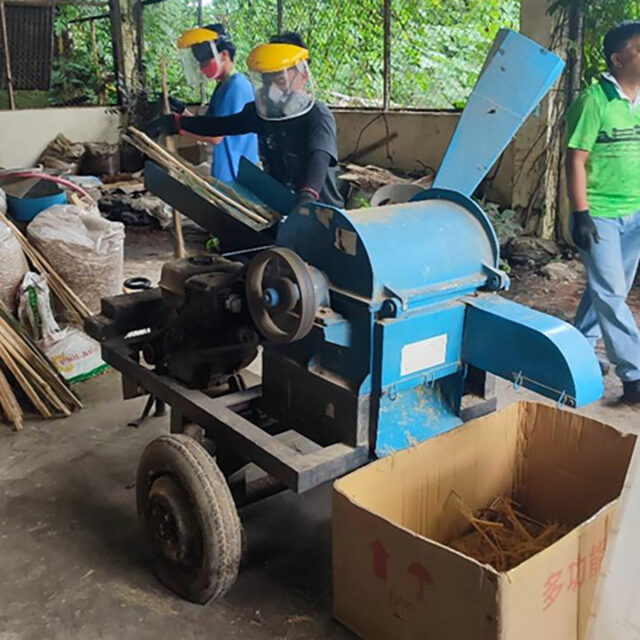
Workers processing bamboo slats to make bamboo pellets. — DOST

Amid volatile gas prices caused by the escalating war in the Middle East, the country can explore an alternative source of combustible fuel made from bamboo to sustainably meet its energy demands, according to the Department of Science and Technology (DOST).

The bamboo pellets, a densified form of bamboo developed by the DOST-Forest Products Research and Development Institute (DOST-FPRDI), are designed for optimum combustion and have various uses.

“In coal-fired power plants, bamboo pellets can be used as a co-firing fuel. For biomass-based industries, they can serve as a supplementary fuel source to conventional materials such as bagasse and rice hull,” Rico J. Cabangon, DOST-FPRDI director, said in a statement.

Bamboo pellets can also be used as an alternative to charcoal for household cooking, which Mr. Cabangon noted is denser and results in a higher heating value compared with conventional charcoal.

By using bamboo, FPRDI said the country is assured of a sustainable and locally sourced fuel supply, as the plant is abundant in the country and fast-growing.

Bamboo pellets are also more energy-efficient than other biomass materials like wood chips. They can generate as much as 12.15 gigajoules or 277 kilowatt-hours for every cubic meter of pellets.

FPRDI also said co-fired bamboo pellets significantly reduced greenhouse gas emissions based on a study, aligning with the country’s climate change mitigation efforts.

They are also lightweight and easy to transport, with a diameter of about 8 to 12 millimeters and a length of 20 to 30 millimeters.

“By turning a fast-growing local resource like bamboo into a fuel alternative, we are helping build a future that is less dependent on finite resources and more grounded in sustainable materials,” Mr. Cabangon said.

Bamboo pellets are made by splitting fresh bamboo into slats and shredding it into chips. It is then sun-dried, ground into fine powder, and compressed into pellets using a pelletizer.

The agency has also developed charcoal briquettes, another alternative combustible fuel, which are made by combining a mix of charcoal fines and binder, then molding them under pressure.

They also burn slowly to provide more intense heat per unit volume while producing no smoke, FPRDI said.

Aside from being a sustainable alternative fuel source, these technologies can be adopted by small businesses and rural communities to engage in biomass fuel production.

“With the right support, communities can establish small-scale pelletizing or briquetting operations to generate income as they participate directly in building a more resilient and localized energy system,” Mr. Cabangon said.

As DOST-FPRDI continues to carry out its mandate, it hopes these technologies can contribute to a more sustainable, affordable, and secure energy future for the country. — Edg Adrian A. Eva

BYD campaign demonstrates electric travel across Philippine archipelago

What makes a nationwide electric road trip possible in the Philippines is not just the vehicle—it’s the system behind it.

At the center of this shift is the ACMoblity Philippine EV Spine Network, a quietly expanding but critical infrastructure layer that now links key destinations from Luzon to Mindanao. Designed as an end-to-end charging corridor, it reframes what mobility means in an archipelagic country: not limitation, but continuity.

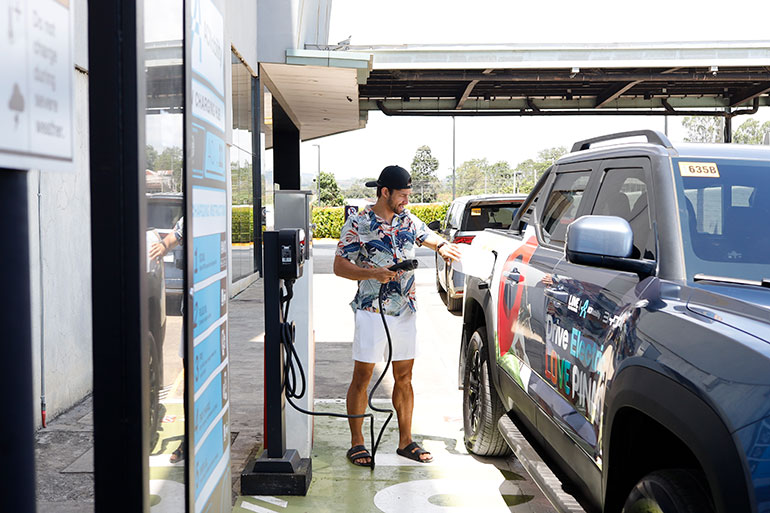
With charging points embedded across strategic stops, including tourist rest areas, the EV Spine effectively dissolves range anxiety and replaces it with a new kind of confidence—one rooted in planning, presence, and possibility.

It is within this framework that BYD’s “Drive Electric. Love Pinas.” campaign unfolds, in partnership with ACMobility and the Department of Tourism. More than a road trip spanning over 3,500 kilometers and more than a hundred cities and municipalities, the campaign is a proof-of-concept that sustainable travel in the Philippines is no longer speculative but already operational.

Led by travel creator Wil Dasovich, the journey traced a full north-to-south trajectory that remaps the country’s roads through electric mobility.

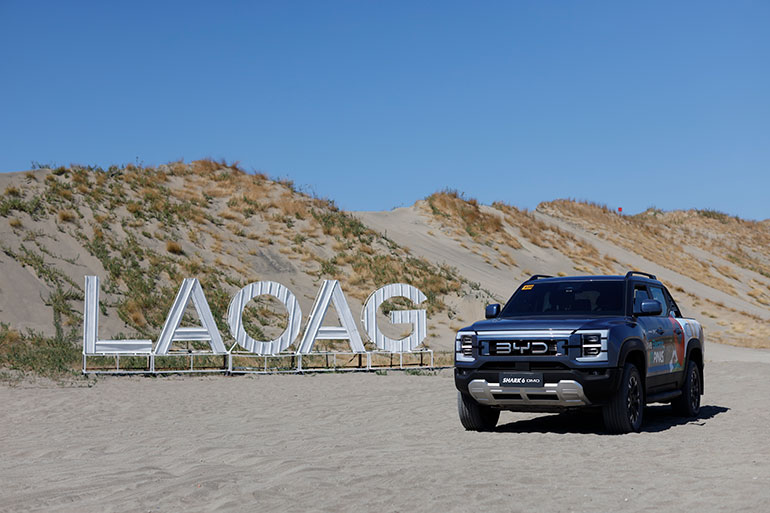
The journey began in Ilocos Norte, where the convoy cut across the La Paz sand dunes. From there, the route pushed through Pagudpud and climbs into Baguio, where steep gradients test both machine and infrastructure. Yet, the point is not endurance alone; it is reliability. The vehicles move not as isolated units, but as nodes within a larger network: charging, recalibrating, continuing.

As the convoy descended into Central Luzon and the metro, the narrative shifted subtly. Stops become more than logistical pauses; they become cultural intersections.

In Pampanga, the team engaged with local culinary spaces; while in Makati, high capacity charging stations (some reaching up to 480 kilowatts) demonstrate how urban centers are evolving alongside the technology.

Crossing into Southern Luzon and Bicol regions, the journey slows into something more deliberate. Destinations like Tiaong’s artisan spaces foreground a different kind of travel, one that is less extractive and more immersive.

The movement is no longer just about reaching the next point, but about inhabiting the spaces in between.

The transition into the Visayas marks a logistical and symbolic threshold. Island-hopping, long considered a constraint for EV adoption, becomes a part of the demonstration.

In Cebu, the campaign blended mobility with culture—local cuisine, heritage sites, even moments of stillness like freediving in Moalboal. Technology receded slightly into the background, allowing experience to take precedence while still quietly enabling it.

By the time the convoy reached Mindanao, it expanded beyond mobility into community. Stops in Cagayan de Oro and Bukidnon introduced elements of adventure; but it is in Davao where the campaign took on a more grounded dimension, engaging with local institutions and cultural spaces. It became less about traversal and more about connection.

All throughout the journey, what remains constant is the infrastructure beneath it all. The EV Spine is not foregrounded in every moment, but it’s always present—ensuring continuity, enabling spontaneity, and ultimately redefining “long-distance” means in the Philippine context.

Travel is no longer tethered to fuel dependency or infrastructural gaps. Instead, it becomes a coordinated system—vehicles, networks, and destinations moving in sync.


Spotlight is BusinessWorld’s sponsored section that allows advertisers to amplify their brand and connect with BusinessWorld’s audience by publishing their stories on the BusinessWorld Web site. For more information, send an email to online@bworldonline.com.

Join us on Viber at https://bit.ly/3hv6bLA to get more updates and subscribe to BusinessWorld’s titles and get exclusive content through www.bworld-x.com.

China’s export engine stutters as Iran war chills global demand

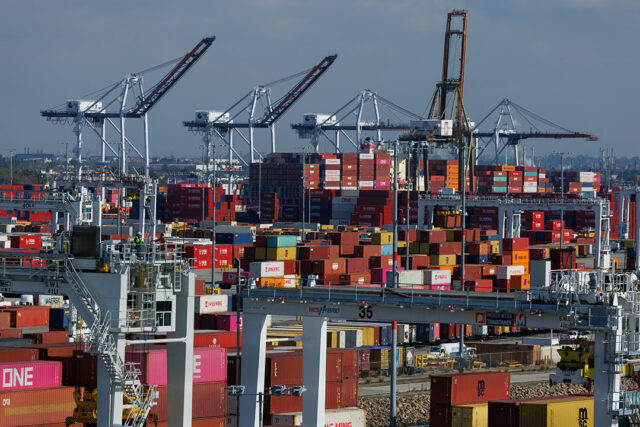
A drone view shows shipping containers from China at the Port of Los Angeles in Wilmington, California, Feb. 4, 2025. — REUTERS

BEIJING — China’s export engine slowed sharply in March as war in the Middle East triggered shocks to energy and transportation costs, hurting global demand and exposing the risks in Beijing’s strategy of leaning on manufacturing to sustain growth.

The world’s second-largest economy surged into 2026 on red-hot AI-fueled electronics demand, raising expectations it could eclipse last year’s $1.2 trillion record trade surplus. But the conflict has disrupted global growth, leaving China especially vulnerable as it has relied on foreign demand to offset a prolonged inability to revive consumption at home.

Outbound shipments grew by just 2.5% in March, customs data showed on Tuesday, a five-month low, and far below the 21.8% surge seen over the January-February period. Economists had forecast growth of 8.3% in a Reuters poll.

“Export growth to major destinations slowed across the board,” said Zhiwei Zhang, chief economist at Pinpoint Asset Management, attributing the drop to global uncertainty over the Iran war.

“I think China’s trade surplus will shrink this year, as China cannot pass through the higher energy prices completely to foreign consumers,” he added.

The signs are already evident: China’s March trade surplus came in at just $51.13 billion, far below expectations of $108 billion.

A sharp 27.8% surge in imports – the strongest since November 2021 – weighed on the balance. That compared with a 19.8% increase in January-February and forecasts for 11.2% growth.

China’s status as the world’s largest manufacturer and energy importer leaves it acutely exposed to a global energy shock. Diversified supplies and large oil reserves offer some protection, but uncertainty over the conflict’s duration risks undermining artificial intelligence-fueled demand for chips and servers, blurring the growth picture.

Even China, long criticized by trading partners for subsidy-backed, cut-price manufacturing, is not insulated from the hit to buyers’ purchasing power as fuel and transport costs rise.

Separate GDP data due on Thursday is expected to show the $19 trillion economy regaining some momentum in the first quarter, but full-year growth is set to slow to 4.6% from last year’s 5.0%, broadly in line with the official target of 4.5%–5.0%.

CHINESE GOODS MORE COMPETITIVE?
Chinese goods will be “even more competitive” as the energy shock “pushes up the price in most of the countries” more than in China, said Chen Bo, senior research fellow at the National University of Singapore’s East Asian Institute.

Chen expects global demand for Chinese-made electric vehicles to increase.

Fred Neumann, HSBC’s chief Asia economist, said China could stand to benefit from taking the decision in the early 2000s to stockpile commodities as it could help blunt the impact of raw-material shocks on factory gate prices.

China’s exports of refined oil products rose 20.5% month-on-month, totaling 4.6 million metric tons.

Disruptions to global energy supply lines will be felt in China, even if it’s not yet showing up in the data.

Natural gas imports for March dropped an annual 10.7%, the lowest level since October 2022, with Chinese ships diverting between eight to 10 cargoes over the course of the month to sell where prices are higher, according to ICIS, Kpler and Vortexa data.

Crude oil imports also fell 2.8% year-on-year, but this was predominantly due to a high base effect with March arrivals having been loaded onto ships before the war began.

The figures were further muddied by the seasonal effects of a late Lunar New Year national holiday, said Xu Tianchen, senior economist at the Economist Intelligence Unit, during which factories shut as workers down tools to celebrate.

“This explains the decline across the low-value-added sectors, textiles, garments, bags, toys, furniture, as they are reliant on migrant workers,”Mr. Xu said.

A high base is also a drag, after Chinese factories rushed shipments a year earlier to beat US President Donald Trump’s April 2 “Liberation Day” tariff deadline.

March factory activity data out of China showed goods exports continued to support growth, but the war in Iran weighed on sentiment as commodity prices rose sharply, lifting input costs.

Some analysts expect sustained tech demand to underpin Chinese exports.

“For Q1 as a whole, export growth rose to its highest level in four years,” said Zichun Huang, China economist at Capital Economics.

“Despite the energy price shock, exports should stay solid in the coming quarters, thanks to strong demand for semiconductors and green technologies.” — Reuters

Roblox rolls out age-based feature, PHL ban remains possible

Roblox now has three types of age-based accounts. — ROBLOX.COM

Roblox Corporation launched a new age-based accounts feature on Tuesday to filter content among young users on Roblox, following safety concerns that prompted calls for a ban in the Philippines.

“With the launch of Roblox Kids and Roblox Select, we are fundamentally shifting how games are discovered on our platform,” Matt Kaufman, chief safety officer at Roblox, said in a news release.

“Safety isn’t a static feature – it’s a journey that evolves as a child grows,” he added.

Roblox Kids for users ages five to eight, and Roblox Select for users ages nine to 15, align content access, communication settings, and parental controls with a user’s age to foster trust and reassurance among parents.

In both modalities, access is limited to a minimal or mild content maturity label to ensure there are no sensitive issues, social hangouts, or free-form drawing games. Distinct background colors are also applied in “kids’ mode” to indicate the account type.

For Roblox Kids, communications are unavailable by default. Meanwhile, Roblox Select remains under “default settings”, restricting conversations to only in-game text chats with other users aged 13 years old and below. The platform monitors all chats to detect child exploitation.

“Roblox is helping set a higher standard for how platforms can better protect younger users while preserving positive online experiences,” ConnectSafely Chief Executive Officer Larry Magid said in the same news release.

The online gaming platform also expanded its parental controls, allowing parents to manage content ratings, communications settings, screen time, and spending limits until the child turns 16.

Other features include parents’ access to which users their child spends the most time with, managing direct chat settings, and blocking and approving specific games not included in a child’s default account type.

“While no system is perfect, these age-adaptive accounts are designed to help remove the guesswork for parents and help align users’ experiences with their age,” Mr. Kaufman said.

The Cybercrime Investigation and Coordinating Council (CICC) said the agency is urging other social media platforms, specifically messaging platforms, to create similar measures to demonstrate their responsibility in protecting Filipino youth.

“That’s what we all want, that platforms like these and especially Roblox will have the primary responsibility to police their platform because after all, it’s the platform that tests the means,” CICC Director Alvin M. Navarro told BusinessWorld in an interview.

“Make some adjustments to the algorithm, institute measures to protect, especially those that are vulnerable,” he added.

CICC Executive Director Renato “Aboy” Paraiso also warned that Roblox could still be banned in the Philippines if it fails to uphold its commitment to safeguard children’s rights and safety.

“Ultimately, the power to limit them or to exclude them from the PH sphere is an option that is available to us,” he told the Senate on Tuesday.

“There can be warnings first, then there could be measurable KPIs (key performance indicators) that they are failing their commitments,” he added.

Roblox previously faced a possible ban in the country after reports involving some minors using the platform to plot acts of violence.

Philippine National Police Anti-Cybercrime Group (PNP-ACG) officials reported in a Senate hearing earlier that seven minors in Laguna and 12 others in Marikina, Las Piñas, and Negros Occidental were allegedly influenced, through the platform, to plan violent acts.

Police Colonel Romeo Desiderio said groomers coerced the victims into harmful activities, including self-harm, extortion, and violent crimes such as murder, kidnapping, and mass violence. — Almira Louise S. Martinez

South Korea’s Lee warns Iran war to keep oil price high, orders quick aid rollout

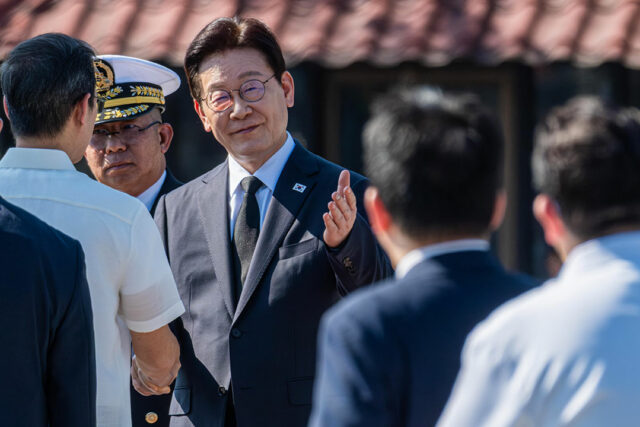
Republic of Korea President Lee Jae Myung at the Rizal Monument during a two-day state visit to the Philippines, Mar. 3, 2026. — PHILIPPINE STAR/RYAN BALDEMOR

SEOUL —  South Korean President Lee Jae Myung said rising tensions around the Strait of Hormuz made it hard to be optimistic about the fallout from the Iran war, warning that high oil prices and supply-chain strains were likely to persist for some time.

Mr. Lee told a cabinet meeting on Tuesday the government should treat prolonged disruption in global energy and raw materials markets as a given and reinforce its emergency response system.

“For the time being, difficulties in global energy and raw materials supply chains and high oil prices will continue,” Mr. Lee said.

“I ask that we pursue the development of alternative supply chains, medium- to long-term industrial restructuring, and the transition to a post-plastic economy as top-priority national strategic projects.”

Mr. Lee also urged ministries to move quickly to deploy a supplementary budget passed in response to the war.

At the meeting, ministers outlined steps to contain the economic shock from the conflict, including support for crude imports, controls against hoarding of petrochemical feedstocks and medical supplies, and expanded financial assistance for affected companies.

SECURING NEW ENERGY SUPPLIES
Industry Minister Kim Jung-kwan said disruptions to shipping through the Strait of Hormuz were still affecting supplies and that even if the passage normalizes, it could take around 20 days for Middle Eastern cargoes to reach South Korea.

The government is prioritizing support for the passage of seven South Korea-bound oil tankers stuck in the Gulf area, a document shown during the cabinet meeting said.

Foreign Minister Cho Hyun told the meeting that the ministry had sent officials to the Congo, Algeria, and Libya in a bid to secure energy supplies, in addition to presidential Chief of Staff Kang Hoon-sik travelling to countries such as Kazakhstan since last week.

“I also urge the parties to this war to take courageous steps toward the peace the world so desperately wants, based on the principles of protecting universal human rights and the lessons of history,” Mr. Lee said.

South Korea’s energy ministry said on Tuesday it would begin rolling out a revised seasonal and time-of-use electricity pricing system to shift power demand away from evening peak hours toward midday, when solar generation is higher. The new rates take effect for large industrial users from April 16 while weekend discounts for electric-vehicle charging will begin on April 18.

Meanwhile, Middle Eastern oil producers are in contact with South Korea about using the country’s petroleum storage facilities as disruptions at the Strait of Hormuz continue, a South Korean industry ministry official said on Tuesday, signaling growing interest in offshore crude storage hubs.

Yang Ki-wook, a senior official at the industry ministry, told a briefing that Middle Eastern countries were showing increased interest in storing oil outside the strait because a prolonged disruption in logistics would hit their economies and pre-positioning crude could reduce export risks.

Mr. Yang said that in addition to Abu Dhabi National Oil Company (ADNOC), which already has a joint stockpiling agreement with South Korea, other Middle Eastern producers were also in contact, though he did not identify them. — Reuters

In India, $1 housekeepers spark a consumer, worker frenzy despite safety risks

OFFICIALGAZETTE.GOV.PH

MUMBAI — At Indian startup Pronto’s training hub, women hone their chopping and mopping skills while learning how to send SOS signals if they feel unsafe inside customers’ homes. They are set to join India’s newest consumer craze: house help for $1 an hour.

Indu Jaiswar, 35, hopes doing household chores in her first job can help fund her son’s dream of becoming a doctor. “This is what we’ve been doing in our own homes for years. Might as well get paid for it,” said the mother of two.

In a country with an entrenched culture of outsourcing household work, Indian startups Pronto and Snabbit and listed rival Urban Company are training thousands of domestic helpers. Urban Company estimates India’s rapidly growing cleaning services market is worth an estimated $9 billion and spread across 53 million households.

Like Uber drivers, the helpers receive bookings on their apps, directing them to apartments in assigned neighborhoods within minutes and press a countdown timer in their apps before starting work. The potential annual earnings from working eight hours a day can be as high as $5,000 – a figure that far surpasses India’s per capita income of around $3,000.

The companies are betting big, burning millions of dollars to lure busy professionals in cities like New Delhi and Mumbai with under 99 rupee ($1) offerings that have no global parallel. Similar services can cost around $30 an hour in the United States, and around $7 in China.

However, the craze among consumers and workers is tempered by concerns about women’s safety in a country with high rates of sexual harassment. Unlike e-commerce couriers who spend just brief moments at doorsteps, housekeepers may spend hours inside private homes, exposing them to greater risks.

Soumya Chauhan, a principal at Dutch e-commerce investor Prosus, which has a stake in Urban Company, said she views worker safety as the fundamental operational challenge to solve.

“The platforms that successfully crack the safety protocols will earn the deepest consumer loyalty and the most sustainable market returns,” she said.

SAFETY RISKS
Cognizant of the challenges for a business that mainly employs women, Snabbit and Pronto said they have an in-app SOS button that alerts area supervisors in case of distress, while Pronto also offers self-defense training.

“In the offline world, the rate of abuse for a lot of these domestic workers is super high,” said Pronto’s 23-year-old CEO Anjali Sardana, adding that her company is trying to comfort its workers by assuring legal and medical support when needed.

Urban Company, which also offers services like plumbing, declined to comment for this story. It has previously said it offers a women-only safety helpline and an SOS app feature.

Shabnam Hashmi, a women’s rights activist, said the companies run extensive background checks on workers before onboarding them but should also check customer credentials. Currently users can simply log in on apps to book home help.

“How is it ever possible for these jobs to be safe for women – even with an SOS button? Unless they carry cameras, which is of course impossible, there is no way to know what happens behind that door,” she said.

Pronto worker Jaiswar has found her own workaround: she always calls a customer before visiting a home and goes “only if there’s a woman present”.

RAPID EXPANSION
The companies meanwhile are getting record orders.

Urban Company recorded its highest daily home services bookings of 50,000 in February. Snabbit’s have grown to 35,000 orders a day.

Bain Capital-backed Pronto logged a record 22,000 daily bookings in March, up from 2,500 daily orders in October, and raised $25 million in new funding.

Pronto CEO Sardana said she started the business last year after spotting an opportunity to serve three sides: strong demand from customers for reliable maids, workers’ need for more stable and safer jobs, and a gap in the market for a scalable service.

“It’s possible to build a win-win-win business,” she told Reuters.

Fuelling the trend is also India’s lack of a do-it-yourself culture, and Indians’ love for getting things done cheap.

In Bengaluru, 30-year-old Dhruv, who uses only a first name, said he spent 100 rupees ($1) per hour for Urban Company’s service to help unpack his utensils and hang curtains after moving house.

That helped him “save quite a bit of time and effort,” but the price does matter: “I wouldn’t pay 400 or 500 rupees for it.”

Snabbit founder Aayush Agarwal said his service was becoming popular among young couples and singles who want to schedule housekeepers and not hire monthly domestic helpers who are infamous for skipping work.

Pronto is offering some visits for 25 rupees in Facebook ads with taglines like “Maid on Leave? Don’t grieve”, while an Urban Company three-visit pack costs 66 rupees an hour.

Snabbit ads said a customer booked a helper “just to peel 20 potatoes”, while another had lined up a worker to “separate LEGO blocks by color.”

THE CASH BURN
Like many startups in their growth phase, the companies are paying their workers out-of-pocket to make the jobs attractive, but also doling out hefty discounts to reel in customers.

In October to December, Urban Company disclosures show it received 1.61 million home-help orders with each incurring a loss of 381 rupees ($4). The company says its “discounts are moderating” but its order values need to almost double to break even.

“Over a period of time, it is safe to say that it will become an earn-as-you-go model,” said Rahul Taneja, partner at Lightspeed, which has backed Snabbit.

At the Pronto center, where workers get a uniform and are trained to wear polished shoes, posters revealed potential payouts: home helpers can earn $1.60 per hour for 12 hours of work daily in a month, 48% more than what a new customer pays.

At more than $500 a month, that’s a big allure for Nisha Chandaliya, 22, who needs to support her ailing mother and has quit a call-center job that stretched long hours and paid only $180 a month.

“It’s exhausting to clean six-seven homes, but I need the stability. I can’t afford to go back,” she said. ($1 = 93.3010 Indian rupees) — Reuters

Philippines, US military drills underscore Washington’s defense commitment, US official says  

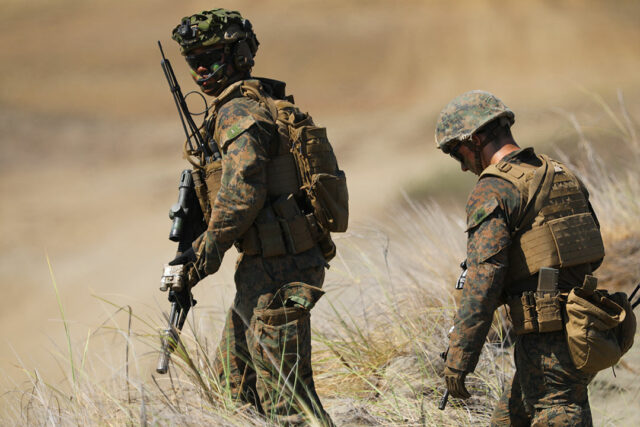
FILIPINO and American soldiers participate in war games at a recent Balikatan (shoulder to shoulder) military exercise. — PHILIPPINE STAR/WALTER BOLLOZOS

MANILA — The latest round of military drills involving the Philippines, the United States and several partner nations will underscore Washington’s “ironclad” commitment to its treaty ally and to the region, even as global attention remains fixed on the Middle East, a US military official said on Tuesday.

Running from April 20 to May 8 across multiple locations in the Philippine archipelago, the annual “Balikatan” or “shoulder-to-shoulder” drills will see more than 17,000 troops participate in one of the largest and most complex training programs yet, expanding beyond bilateral exercises into a broader multinational effort.

“Balikatan represents an opportunity to showcase our ironclad alliance with the Philippines and demonstrate our commitment to a free and open Indo-Pacific,” Colonel Robert Bunn, US spokesperson for the exercises, said at a press conference in Manila.

Japan’s participation in the program is set to expand this year, with members of its Self-Defense Force taking part in live-fire drills for the first time, using its Type 88 surface-to-ship missile to help sink a decommissioned vessel during a maritime strike exercise.

Tokyo has been strengthening its defense engagement with Manila after they signed a reciprocal access agreement in 2024, allowing them to deploy their militaries in each other’s territory.

The exercises are also set to highlight the Philippines’ widening network of security partnerships with Canada, France, New Zealand, and Australia, with the countries contributing naval vessels, aircraft and troops.

Mr. Bunn said the scale and scope of this year’s Balikatan demonstrate the country’s sustained commitment to the Indo-Pacific, despite competing global demands.

Thousands of US personnel are deploying to the Philippines for the drills, reinforcing alliance readiness, regional stability, and the shared goal of maintaining a free and open region, US and Philippine military officials said.

The expanded drills come amid rising tensions between the Philippines and China in the South China Sea, where Manila has accused Beijing of increasingly aggressive actions, an accusation China rejects.

Activities will span air, land, sea, and cyber domains, including maritime operations, integrated air and missile defense, counter-landing live-fire exercises, and humanitarian missions.

Colonel Dennis Hernandez, Philippine spokesperson for the exercises, said the country has the right to bolster its defense capabilities, adding that the drills were not directed at any country. — Reuters

Puregold spotlights sari-sari stores as neighborhood lifeline at ‘Tindahan ni Aling Puring’ Convention 2026

As Filipinos confront rising prices of basic goods, the friendly neighborhood sari-sari store is once again proving to be a reliable lifeline for Filipino families and communities.

Leading supermarket chain Puregold Price Club is putting the spotlight on the sari-sari store’s invaluable role in Filipino neighborhoods as it holds this year’s Tindahan ni Aling Puring (TNAP) Sari-Sari Store Convention.

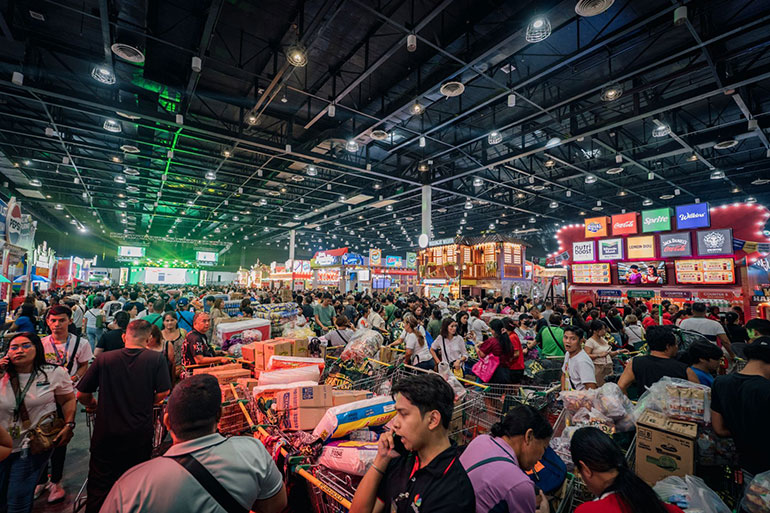
Happening on May 14 to 16, 2026 at the World Trade Center in Pasay City with the theme “Panalong Lakbay Tungo sa Tagumpay,” the 2026 Tindahan ni Aling Puring Sari-Sari Store Convention is set to honor neighborhood store owners with a three-day event filled with exclusive discounts and treats from brand partners, free master-class sessions, performances from a star-studded lineup, and a grand raffle.

Day 1 is exclusive to Aling Puring members, while Puregold PERKS members can also join on May 15. They just need to bring their membership cards to enter for free. The third and last day is open to the public.

“At this year’s Aling Puring Convention, we salute our sari-sari stores as an indispensable pillar of Filipino society. At a time when we bear the impact of price hikes, sari-sari stores shine as an extension of Puregold, a reliable ally of Filipino families who need to stretch their budget. That’s why we have made it our core mission to support these micro-entrepreneurs,” said Vincent Co, Puregold President.

This year, the Puregold Sari-Sari Store Convention is extra special as Puregold marks a milestone of surpassing the 1-million membership mark for Tindahan ni Aling Puring. The loyalty program currently has 1.061 million members across the country, with Southern Luzon, Visayas, and Mindanao seeing the fastest growth.

“We have prepared a relevant lineup of activities where our Ka-Asensos will not only enjoy but also learn from industry experts. Through the convention, we aim to help our sari-sari store partners face the challenges of today while strengthening them for future disruptions,” said Mr. Co.

Reflecting its commitment to sari-sari store owners, Puregold has also launched new interventions to address the rising costs of doing business for sari-sari store owners.

For one, Puregold has significantly increased its specialized “Case Deals” and “Dealskarte Bundles,” designed to help sari-sari store owners maximize their profit margins despite inflation.

Puregold also expanded its fleet of Aling Puring Account Representatives (APARs), with nearly 1,000 dedicated door-to-door salespersons deployed across the country, bringing Puregold’s competitive pricing straight to the barangay level. This initiative allows store owners to restock without the added burden of transportation costs.

“For Puregold, sari-sari store owners are not just customers, they are partners in economic growth. Through the Aling Puring program, we equip them to thrive so that they are able to serve their own families, as well as their critical role in communities: a lifeline during the most challenging times,” said Mr. Co.


Spotlight is BusinessWorld’s sponsored section that allows advertisers to amplify their brand and connect with BusinessWorld’s audience by publishing their stories on the BusinessWorld Web site. For more information, send an email to online@bworldonline.com.

Join us on Viber at https://bit.ly/3hv6bLA to get more updates and subscribe to BusinessWorld’s titles and get exclusive content through www.bworld-x.com.

[B-SIDE Podcast] Where the Digital World Converges: Conversations on Cloud | Ep 2 | Digital Infrastructure as Backbone of Digital Economy

Follow us on Spotify BusinessWorld B-Side

Digital infrastructure powers everything in today’s economy: connecting people, businesses, and services through networks of fiber-optic cables, satellites, data centers, and cloud platforms. For the Philippines, building this infrastructure has become a national priority.

In this episode of “Where the Digital World Converges: Conversations on Cloud,” a collaboration between BusinessWorld B-Side and Converge Global Business, Converge ICT Solutions Inc. Vice-President and Head of Data Center Infrastructure Noriel Ong and Department of Information and Communications Technology Assistant Secretary Christian Guingcangco shared their insights on building resilient networks and unlocking the economic potential through digitalization.

Interview by Beatriz Cruz
Audio editing by Jayson John Marinas

Follow us on Spotify BusinessWorld B-Side

Philippines seeks extension from US on waiver to buy Russian oil

Department of Energy Secretary Sharon S. Garin (center) with President Ferdinand R. Marcos Jr. and Finance Secretary Frederick D. Go during the turnover of the 797-megawatt Caliraya–Botocan–Kalayaan (CBK) Hydroelectric Power Plants in Kalayaan, Laguna on February 9, 2026. — PHILIPPINE STAR/NOEL B. PABALATE

MANILA — The Philippines’ Energy Secretary Sharon S. Garin said on Tuesday that the country is asking the United States for an extension on a waiver to purchase Russian oil and petroleum products.

“We are awaiting their response, but we are very positive on getting this other window,” Ms. Garin said at a news briefing, adding that the waiver had already expired on April 11.

Ms. Garin said the government is optimistic about securing the extension but is also preparing alternative supply arrangements in case the request is not approved.

She said the Philippines is pursuing diversification of its energy sources and supply options are not limited to Russia, with the government also eyeing producers in South America, including Colombia and Argentina, as well as Canada and even the United States.

“We wanted to open the Russian window because we want more options. We need diversification,” she said.

Philippine ambassador to the United States, Jose Manuel Romualdez, said last month that Manila was working with Washington to secure waivers and exemptions that will allow it to obtain oil from US-sanctioned countries. — Reuters

US begins Iran port blockade, oil prices ease on hopes for dialogue

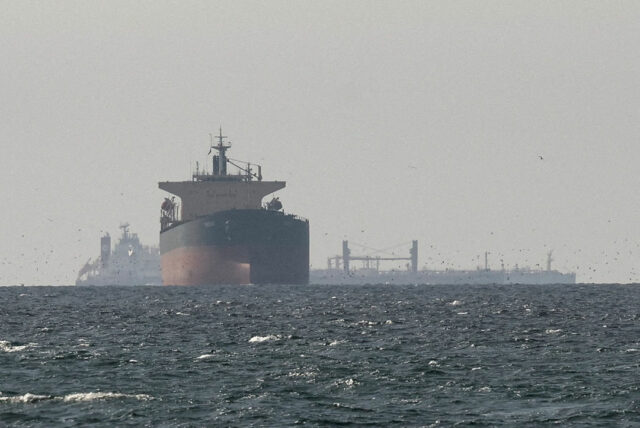
Tankers sail in the Gulf, near the Strait of Hormuz, as seen from northern Ras al-Khaimah, near the border with Oman’s Musandam governance, amid the US-Israeli conflict with Iran, in United Arab Emirates, March 11, 2026. — REUTERS

WASHINGTON/DUBAI — The US military began a blockade of Iran’s ports, angering Tehran and adding uncertainty around the crucial waterway, although hopes for dialogue to end the war provided some relief to oil markets where benchmark prices fell below $100 on Tuesday.

After a breakdown of weekend talks in Islamabad between the two adversaries, a US official said there was continued engagement and forward motion on trying to get to an agreement. Pakistani Prime Minister Shehbaz Sharif also said efforts were still under way to resolve the conflict.

US President Donald Trump said Iran had been in touch on Monday and wanted to make a deal but that he would not sanction any agreement allowing Tehran to have a nuclear weapon.

Since the United States and Israel began the war on February 28, Iran effectively shut the Strait of Hormuz to all vessels except its own, saying passage would be permitted only under Iranian control and subject to a fee. The fallout has been widespread, since nearly a fifth of the world’s oil and gas supplies flowed through the narrow waterway before the start of the conflict.

Mr. Trump has said Washington would block Iranian vessels and any ships that paid such tolls and that any Iranian “fast-attack” ships that went near the blockade would be eliminated. Tehran has threatened to hit naval ships going through the strait and to retaliate against its Gulf neighbors’ ports.

Shipping data on LSEG showed Chinese-owned oil-and-chemicals tanker Rich Starry passed through the strait on Tuesday – the first since the US blockade began at 10 a.m. EDT (1400 GMT) on Monday. The vessel, which departed Sharjah anchorage off the coast of Dubai on Monday heading for China, had earlier turned back minutes after approaching the strait.

The US’s blockade has further clouded the outlook for global energy security and the supply of a vast array of goods that relies on petroleum, and has little, if any, international backing.

NATO allies including Britain and France said they would not be drawn into the conflict by taking part in the blockade, stressing instead the need to reopen the waterway.

Despite the breakdown of talks between the US and Iran on Sunday, Vice President JD Vance, who led the US delegation, told Fox News on Monday the US “made a lot of progress” by communicating to Tehran where the US “could make some accommodation” and where it would remain inflexible.

He said Mr. Trump was adamant that any enriched nuclear material must be removed from Iran and a mechanism must be established to verify that Iran is not developing nuclear weapons.

Tehran “moved in our direction, which is why I think we would say that we had some good signs, but they didn’t move far enough,” Mr. Vance said, without disclosing details.

CEASEFIRE UNDER STRAIN
The ceasefire that halted six weeks of US-Israeli airstrikes and retaliatory fire from Iran across the Gulf looked in jeopardy, with only a week left to run.

The US military’s Central Command said the blockade would be “enforced impartially against vessels of all nations” entering or leaving Iranian ports in the Gulf and Gulf of Oman. It would not impede neutral transit passage through the Strait of Hormuz to or from non-Iranian destinations, it said in a note to seafarers seen by Reuters.

An Iranian military spokesperson called any US restrictions on international shipping “piracy,” warning that if Iranian ports were threatened, no port in the Gulf or Gulf of Oman would be secure. Any military vessels approaching the strait would violate the ceasefire, Iran’s Revolutionary Guards said.

Mr. Trump said Iran’s navy had been “completely obliterated” during the war, adding that only a small number of “fast-attack ships” remained.

“Warning: If any of these ships come anywhere close to our BLOCKADE, they will be immediately ELIMINATED, using the same system of kill that we use against the drug dealers on boats at Sea. It is quick and brutal,” Mr. Trump said on social media.

He was apparently referring to the US strikes carried out against suspected drug boats in the Caribbean and Pacific. The strikes, which began in September, killed more than 160 people. The US military has not provided evidence that the vessels were ferrying drugs.

LEBANON FACES ATTACKS
With the war unpopular at home and rising energy prices causing political blowback, Mr. Trump paused the US-Israeli bombing campaign last week after threatening to destroy Iran’s “whole civilization” unless it reopened the strait.

In a letter to the United Nations, Iran’s UN delegation on Monday asked for reparations from Saudi Arabia, the UAE, Bahrain, Qatar and Jordan, alleging they have allowed their territory to be used in the US-Israeli war against Iran.

Israel has continued to bombard Lebanon and on Monday troops launched an attack it said was intended to seize a key south Lebanon town from Iran-backed Hezbollah. Israeli military said on Tuesday that an Israeli soldier was killed and three reservists were wounded during combat in southern Lebanon.

Israel and ‌the US have ⁠said the campaign against Hezbollah was not part of the ceasefire, while Iran has insisted it is. — Reuters

Relief from diesel, gasoline excise tax suspension to be limited, economic managers say

PHILIPPINE STAR/MIGUEL DE GUZMAN

By Justine Irish DP. Tabile, Senior Reporter

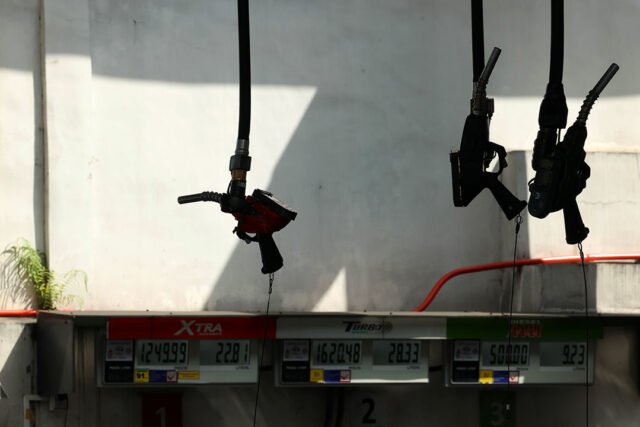
SUSPENDING excise taxes on diesel and gasoline would only provide limited relief compared to lifting levies on liquefied petroleum gas (LPG) and kerosene as the resulting decline in pump prices would be small, the Department of Finance said.

“The Development Budget Coordination Committee (DBCC) has determined that suspending excise taxes on diesel and gasoline would not likely provide meaningful relief, as any reduction in retail pump prices would be marginal and largely offset by prevailing market dynamics,” Finance Secretary Frederick D. Go said in a statement on Tuesday.

In contrast, suspending the excise taxes on kerosene and LPG would directly ease the burden on Filipino families and small businesses by helping them meet basic energy needs, he said.

On Monday, President Ferdinand R. Marcos, Jr. approved the suspension of excise taxes on LPG and kerosene while keeping levies on gasoline and diesel unchanged.

“This relief is focused on the most vulnerable,” said Mr. Go, citing savings of around P36.96 per 11-kg cylinder for LPG and P5.56 per liter of kerosene due to the suspension.

The Philippine Statistics Authority’s 2023 Family Income and Expenditure Survey showed that 48% of total kerosene consumption is attributed to the bottom 30% of households, while 55.7% of LPG users come from the bottom 70%.

“This means the benefits extend beyond the poorest households to also support middle-income families. For these families, every peso saved on fuel costs means more resources for food, education, and healthcare,” he added.

Meanwhile, the government will continue to provide additional targeted and managed subsidies for the most vulnerable sectors, including public transit operators and drivers, commuters, and farmers and fisherfolk, the Finance chief said.

“This measured and targeted response is designed to deliver immediate relief, ensuring that support reaches those who need it most, while preserving fiscal space to sustain essential public services and respond to an unpredictable global environment,” he said.

“The DBCC will continue to closely monitor global oil market developments and stands ready to adjust its policy response as needed.”

The Philippines is under a one-year state of national energy emergency, giving the government expanded powers to secure fuel supplies and shield the economy from rising oil prices amid the war in the Middle East.

ADVERTISEMENT
ADVERTISEMENT