Bamboo pellets seen as alternative fuel amid series of price hikes — DOST
Amid volatile gas prices caused by the escalating war in the Middle East, the country can explore an alternative source of combustible fuel made from bamboo to sustainably meet its energy demands, according to the Department of Science and Technology (DOST).
The bamboo pellets, a densified form of bamboo developed by the DOST-Forest Products Research and Development Institute (DOST-FPRDI), are designed for optimum combustion and have various uses.
“In coal-fired power plants, bamboo pellets can be used as a co-firing fuel. For biomass-based industries, they can serve as a supplementary fuel source to conventional materials such as bagasse and rice hull,” Rico J. Cabangon, DOST-FPRDI director, said in a statement.
Bamboo pellets can also be used as an alternative to charcoal for household cooking, which Mr. Cabangon noted is denser and results in a higher heating value compared with conventional charcoal.
By using bamboo, FPRDI said the country is assured of a sustainable and locally sourced fuel supply, as the plant is abundant in the country and fast-growing.
Bamboo pellets are also more energy-efficient than other biomass materials like wood chips. They can generate as much as 12.15 gigajoules or 277 kilowatt-hours for every cubic meter of pellets.
FPRDI also said co-fired bamboo pellets significantly reduced greenhouse gas emissions based on a study, aligning with the country’s climate change mitigation efforts.
They are also lightweight and easy to transport, with a diameter of about 8 to 12 millimeters and a length of 20 to 30 millimeters.
“By turning a fast-growing local resource like bamboo into a fuel alternative, we are helping build a future that is less dependent on finite resources and more grounded in sustainable materials,” Mr. Cabangon said.
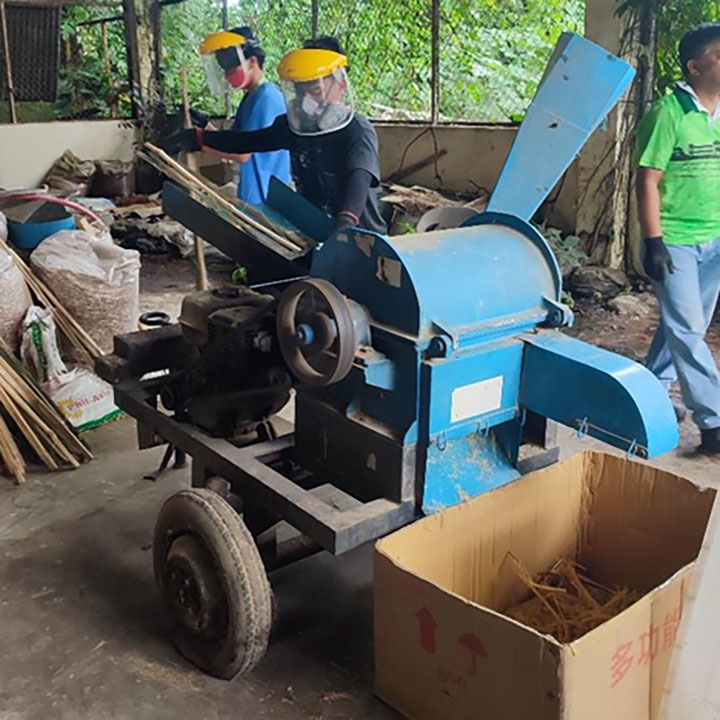
Bamboo pellets are made by splitting fresh bamboo into slats and shredding it into chips. It is then sun-dried, ground into fine powder, and compressed into pellets using a pelletizer.
The agency has also developed charcoal briquettes, another alternative combustible fuel, which are made by combining a mix of charcoal fines and binder, then molding them under pressure.
They also burn slowly to provide more intense heat per unit volume while producing no smoke, FPRDI said.
Aside from being a sustainable alternative fuel source, these technologies can be adopted by small businesses and rural communities to engage in biomass fuel production.
“With the right support, communities can establish small-scale pelletizing or briquetting operations to generate income as they participate directly in building a more resilient and localized energy system,” Mr. Cabangon said.
As DOST-FPRDI continues to carry out its mandate, it hopes these technologies can contribute to a more sustainable, affordable, and secure energy future for the country. — Edg Adrian A. Eva