Home Blog Page 2163

SSS urged to collect firms’ debt
BW FILE PHOTO

A PHILIPPINE senator on Wednesday called on the Social Security System (SSS) to double its efforts to collect the more than P90-billion debt from firms before it raises contribution rates.

“We also need to look at their shortcomings and what management is not doing, like collecting debts,” Senator Sherwin T. Gatchalian told a news briefing.

“The idea is that when you contribute to a pension, the money is invested, and the investment returns pay for the benefits, making it self-sustaining.”

The senator said he plans on filing a resolution that seeks to look into the agency’s management practices and debt collection efforts.

The SSS on Tuesday said it does not see the need for further increases in its contribution rate as the last tranche of hikes would double the fund life to 28 years.

Robert Joseph M. de Claro, SSS president and chief executive officer (CEO), said the SSS fund is projected to last until 2053 with the scheduled 1% increase in the contribution rate to 15%, which takes effect this month.

The SSS also raised the monthly salary credits to P5,000 from P4,000, and the maximum credits to P35,000 from the previous P30,000.

Under Republic Act (RA) No. 11199 or the Social Security Act of 2018, the SSS implemented incremental contribution rate hikes of one percentage point every two years starting in 2019 from the original contribution rate of 11%.

Of the 15% contribution rate, employers will shoulder 10% of the contribution, while employees will pay the rest. 

“I don’t want to jump the gun, but definitely, the P93 billion in debt is a sign that there is a management problem, and the P93 billion must be collected,” Mr. Gatchalian said in mixed English and Filipino.

Meanwhile, a resolution seeking to defer the SSS contribution rate hike was filed at the House of Representatives on Wednesday, with lawmakers calling for the pension fund to make its collections “more efficient.”

In a statement, Baguio Rep. Mark O. Go said he filed House Resolution No. 2157 to ease the economic burden faced by Filipinos by suspending the scheduled SSS rate hike this year.

“There is a wide clamor from all sectors to defer the implementation of the scheduled increase in the rate of contribution for SSS for year 2025 in consideration of the current economic situation that affects our low income earners,” the resolution stated.

In a separate statement, Rizal Rep. Juan Fidel Felipe F. Nograles urged President Ferdinand R. Marcos, Jr. to suspend the pension fund’s rate hike and mandate SSS to make its collections efficient first.

“The SSS should address systemic bottlenecks and gaps first to ensure that our collection efforts are maximized,” he said. — John Victor D. Ordoñez with Kenneth Christiane L. Basilio

BI sets reimbursement guidelines

PHILSTAR FILE PHOTO

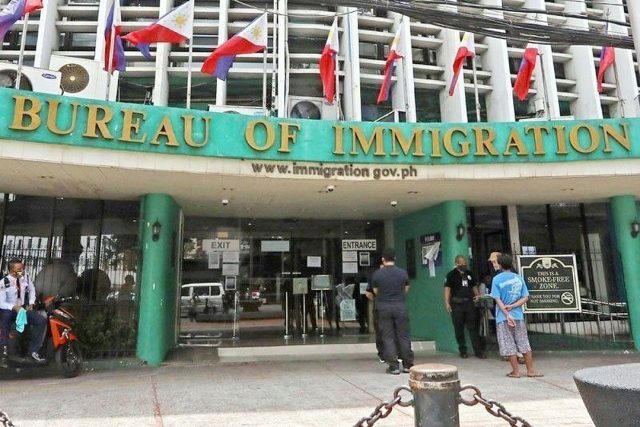
THE Bureau of Immigration (BI) has issued guidelines for reimbursing the travel expenses of offloaded passengers.

The agency’s joint memorandum circular outlines the criteria and procedures for reimbursing all international-bound Filipino passengers who were deferred by the Immigration department from Jan. 1 to Dec. 31, 2024.

Signed by the bureau, the departments of Budget and Management, and Justice, the memorandum circular will be effective 15 days after its publication in the newspaper of general circulation.

According to the joint memorandum circular, passengers shall personally file a claim with the international port of entry and exit management office.

It said that the BI will not receive and process claims without complete documents.

BI noted that passengers eligible for claims are only entitled to one reimbursement claim per year, regardless of the number of deferred departures.

“Only travel expenses that a passenger or a declared sponsor personally paid for will be considered for reimbursement,” it said,

Further, funding for the reimbursement will be sourced from the special trust fund collected for the year, the Immigration department said. — Ashley Erika O. Jose

BoC seizes P84.36-B smuggled goods

BUREAU OF CUSTOMS

THE BUREAU of Customs (BoC) seized a total of 1,572 smuggled goods last year, amounting to P84.36 billion.

“Turning to our enforcement efforts, the Bureau of Customs intensified its campaign against smuggling. So from January to November 2024, we conducted 1,572 seizure operations resulting in the confiscation of smuggled goods valued at P84.356 billion,” BoC Assistant Commissioner Vincent Philip C. Maronilla said in a speech on Wednesday.

In terms of volume, the BoC conducted the most collections at 977 of agricultural products worth P856.79 million.

“This focus reflects our dedication to protecting local industries and ensuring food security by preventing the unlawful entry of contraband agriculture,” Mr. Maronilla said.

In terms of value, counterfeit goods were worth the most at P34.698 billion with only 16 collections.

Meanwhile, the BoC revoked the Customs Accreditation of 48 exporters and customs brokers.

It also filed 39 criminal cases with the Department of Justice for violation of customs regulations.

Under its fuel marking program, the BoC also marked 18.23 billion liters of fuel, generating P220.77 billion in taxes.

“Additionally, the Bureau seized 209,634 liters of on-market fuel, further preventing the leakage and ensuring proper taxation,” Mr. Maronilla said. — Aaron Michael C. Sy

SC adopts rule on family mediation

FREEPIK

THE Supreme Court (SC) has adopted the Rule on Family Mediation (Rule) to address the growing demand for domestic and international family mediation, improve family courts’ efficiency, alleviate court backlogs and prioritize children’s welfare, it reported on Wednesday.

It also introduces new approaches to handling family-related cases.

“Family mediation, a non-adversarial process, should include children and give them a chance to share their thoughts on issues that impact them,” the top court said in a statement on Wednesday.

“The process must focus on what is best for the child and the family.”

The court en banc adopted the Rule through a resolution dated Nov. 5, 2024, but was only publicized on Jan. 8.

It applies exclusively to disputes involving spouses, parents and children, other ascendants and descendants, siblings, relatives within the fourth civil degree of consanguinity (by blood) or affinity (by marriage), and individuals in common-law, dating, or sexual relationships, past or present.

The mediation period of 30 days must be strictly observed, with a court-approved extension of up to 30 days allowed.

The Rule also addresses family mediation aspects such as suspension, termination, mediator withdrawal, refusal to mediate, and sanctions.

It further outlines qualifications, training, accreditation, and ethical standards for family mediators. — Chloe Mari A. Hufana

P7.7B earmarked for airports upgrade

STOCK PHOTO | Image by Stela Di from Pixabay

THE Philippine government has allotted P7.7 billion for infrastructure upgrades to 15 airports nationwide, which could help bolster tourism and improve the country’s aging and outdated air facilities, a congressman said on Wednesday.

The 15 airports were provided the funding under the Aviation Infrastructure Program line-item in the 2025 General Appropriations Act, according to Makati City Rep. Luis N. Campos, Jr., who is a vice-chairperson of the House of Representatives appropriations committee.

Funds allocated for aviation infrastructure upgrades would be used to improve the airports’ runways, taxiways, ramps, control towers, passenger terminals, and navigational systems.

“We are counting on these upgrades to enhance the overall air travel experience for passengers, attract more tourists, support the growth of small businesses, and create new jobs,” Mr. Campos said in a statement.

President Ferdinand R. Marcos, Jr. has set his eyes on upgrading the country’s airports and piers before his government ends in 2028, he said during his 2024 State of the Nation Address.

The Tacloban City Airport is set to receive the lion’s share of the fund at P2.3 billion.

The Pag-asa Island Airport on Thitu Island (Pag-asa Island), located 172 kilometers away from the contested Spratly Island, will be given P1.65 billion to develop its infrastructure amid lingering tensions with Beijing.

Mr. Marcos had also said in July 2024 that his government is developing an airport on the remote island to bolster Philippine presence within the contested South China Sea by improving access.

The Basuanga Airport in Coron, Palawan and Laoag International Airport will receive P1 billion and P750 million, respectively.

The Bacon Airport of Sorsogon Province was allotted P360 million, while Virac Airport in the province of Catanduanes was given P280 million. The Candon Airport located in Ilocos Sur province will have P250 million for infrastructure development.

New Dumaguete Airport in Negros Oriental province, Bulacan province’s New Manila International Airport and the Camotes Airport of Cebu province will all receive P200 million from the government.

The Camiguin province’s airport will get P180 million, while the New Zamboanga International Airport in Zamboanga City will have P130 million.

The Central Mindanao Airport in Cotabato province is given P100 million, with the New Bohol International Airport on Panglao Island, Bohol province receiving P52.1 million.

Topping off the list is Bukidnon province’s airport, which is set to get P50 million for developments. — Kenneth Christiane L. Basilio

Group wants impeachment cases vs VP fast-tracked

A POLITICAL GROUP on Wednesday urged the Philippine House of Representatives to hasten deliberations on Vice-President Sara Z. Duterte-Carpio’s ouster raps so the Senate could hold its trial by February.

“We want this (impeachment complaint) to reach the Senate by February 7 so they can start the trial,” Teodoro A. Casiño, chairman of political group Bayan Muna, said in a media briefing in Filipino.

His group would hold rallies to show support for the three ouster complaints against Ms. Duterte, aiming to motivate the Philippine Congress to expedite its hearings and trial on the impeachment cases. They are hoping to unseat Ms. Duterte from public office before year-end.

The embattled vice-president has been the subject of impeachment moves due to her alleged misuse of P612.5 million worth of confidential and intelligence funds in 2022 and 2023, which she has refuted.

The Office of the Vice President did not immediately respond to an e-mail seeking comment.

Any Filipino can file impeachment complaints at the House of Representatives, but it requires at least a third of the chamber to approve it for it to be heard by the Senate, which decides on them.

Moves to impeach Ms. Duterte comes ahead of the Philippines’ upcoming midterm elections.

Mr. Casiño said they are not worried about the impeachment coinciding with the midterm election as it would be the opportune time to unseat Ms. Duterte. “This is, in fact, the perfect timing.”

“Our objective is for it (impeachment complaint) to take a ‘front seat’ during the election,” he said. “The impeachment will be a key issue… and we will have to shift the campaign to ensure the victory of pro-impeachment senators.”

Meanwhile, a Social Weather Station (SWS) survey found that four in 10 Filipinos are supportive of efforts to remove Ms. Duterte from office.

In a statement, the pollster said 41% of Filipinos back the ouster moves against the vice-president, with the highest level of support in Luzon at 50%. In the capital region, 45% of Filipinos are in favor of it.

The survey also revealed that 35% of Filipinos are against removing Ms. Duterte, while 19% are undecided.

“The call for Duterte’s impeachment resonates most strongly in Balance Luzon, where 50% of Filipinos advocate for her removal,” the pollster said.

“This [is a] stark contrast to Mindanao, Ms. Duterte’s traditional bailiwick, where 56% oppose the impeachment, underscores the growing cracks in her support base,” it added.

The SWS interviewed 2,160 respondents from December 12 to 18 for the poll, which had an error margin of ±2.

“The Visayas region stands out as the most undecided regarding Ms. Duterte’s impeachment,” it said, as 24% of Visayans stood undecided while 18% of those living in Luzon and Mindanao are also unsure.

The poll results also showed that 41% of Filipinos living in urban and rural communities are supportive of impeachment efforts, with 37% of urban residents and 33% of rural residents opposing it.

“Among socio-economic classes, support for impeachment is strongest in Classes ABC, where 50% agree with the impeachment complaint,” the pollster said. — Kenneth Christiane L. Basilio

P600K worth of smuggled cigarettes confiscated in Dipolog City 

STOCK PHOTO | Image by Shaun Meintjes from Unsplash

COTABATO CITY — Plainclothes policemen arrested a smuggler keeping P600,000 worth of imported cigarettes in an entrapment operation in Barangay Minaog in Dipolog City on Tuesday afternoon.

Brig. Gen. Bowenn Joey M. Masauding, director of the Police Regional Office-9, told reporters on Wednesday that they have taken the suspect into custody.

Mr. Masauding said combined personnel of the Dipolog City Police Office and the Zamboanga del Norte Provincial Police Office immediately frisked and cuffed the suspect after selling them several reams of cigarettes in a tradeoff laid with the support of local executives.

Mr. Masauding said the P600,000 worth of imported cigarettes seized from the suspect shall be turned over to the Bureau of Customs for its disposition. — John Felix M. Unson

Barangay road projects in Cotabato completed

COTABATO CITY — Local executives launched on Tuesday four newly accomplished barangay road projects in Kabacan town in Cotabato, implemented in support of the socio-economic agenda of the Mindanao peace process.

Kabacan Mayor Evangeline P. Guzman told reporters on Wednesday that they are grateful to the office of Cotabato Gov. Emmylou T. Mendoza for the farm-to-market roads in Upper Paatan, Lower Paatan, Bannawag and Magatos that connect Moro and non-Moro farmers to the markets in their town center where they sell their farm products.

In the same event, Ms. Mendoza launched her administration’s newly accomplished multi-purpose building in Barangay Malanduage, also home to mixed Moro and non-Moro villagers.

Ms. Guzman said the facility can be used as a venue for Muslim-Christian peace dialogues and for meetings of barangay leaders together implementing their local government unit’s socio-economic projects in the area.

The office of Mendoza spent P47 million on the projects, Ms. Guzman and other barangay officials said.

Ms. Mendoza said the projects are meant to boost the mobility of farmers in the beneficiary-barangays, which are covered by the separate peace overtures of Malacañang with the Moro National Liberation Front and the Moro Islamic Liberation Front. — John Felix M. Unson

Peso sinks as US rate bets boost dollar

BW FILE PHOTO

THE PESO fell to an over two-week low against the dollar on Wednesday after strong US data renewed inflation concerns and rate cut concerns in the world’s largest economy.

The local unit closed at P58.395 per dollar on Wednesday, weakening by 21 centavos from its P58.185 finish on Tuesday, Bankers Association of the Philippines data showed.

This was the peso’s weakest close in over two weeks or since it finished at P58.45 a dollar on Dec. 23.

The peso opened Wednesday’s session slightly weaker at P58.20 against the dollar, which was already its intraday best. Its worst showing was at P58.40 versus the greenback.

Dollars exchanged went down to $1.74 billion on Wednesday from $1.87 billion on Tuesday.

The dollar was stronger on Wednesday after better-than-expected US job openings report that pointed to a strong economy, which could affect the path of future Federal Reserve rate cuts, Rizal Commercial Banking Corp. Chief Economist Michael L. Ricafort said in a Viber message.

”The peso tracked the dollar’s strength overnight amid hawkish shift in the Fed due to strong ISM (Institute for Supply Management) and Job Openings and Labor Turnover Survey (JOLTS) data,” a trader said in a phone interview.

The trader added that safe-haven demand for the dollar will likely persist amid jitters stemming from US President-elect Donald J. Trump’s proposed policies.

For Thursday, the trader sees the peso moving between P58.20 and P58.50 per dollar, while Mr. Ricafort expects it to range from P58.25 to P58.45.

The dollar stood tall on Wednesday and the yen sagged close to levels that drew intervention last year after strong US data drove a spike in yields and pared some bets on Federal Reserve rate cuts, Reuters reported.

Traders are jittery ahead of US labor data due on Friday and also inauguration day on Jan. 20, when Mr. Trump is expected to begin his second US presidency with a flurry of policy announcements and executive orders.

Tuesday data showed US job openings unexpectedly rose in November, layoffs were low, while services sector activity accelerated in December and a measure of prices paid for inputs hit a two-year high — a possible inflation warning.

Bond markets reacted by sending 10-year yields up more than 8 basis points (bps) to touch an eight-month high of 4.699%, while the 30-year yield rose 7.4 bps and is less than 9 bps from breaching 5%. — A.M.C. Sy with Reuters

PHL stocks track Wall Street’s drop on Fed cut bets

BW FILE PHOTO

PHILIPPINE STOCKS fell for the second consecutive session on Wednesday to track Wall Street’s decline as new US data raised inflation concerns, which could affect the Federal Reserve’s rate-cut cycle.

The Philippine Stock Exchange index went down by 0.74% or 48.66 points to close at 6,496.72 on Wednesday, while the broader all shares index slipped by 0.02% or 0.84 point to 3,749.85.

“The local market extended its decline this Wednesday amid the negative spillovers from Wall Street as US Treasury yields rose,” Philstocks Financial, Inc. Senior Research Analyst Japhet Louis O. Tantiangco said in a Viber message.

“Philippine shares continued to slide following the sentiment in the overseas equities market… US stocks fell on Tuesday as strong economic data raised doubts about potential Federal Reserve rate cuts, driving Treasury yields higher and dragging tech stocks lower,” Regina Capital Development Corp. Head of Sales Luis A. Limlingan said in a Viber message.

US stocks tumbled on Tuesday after a batch of upbeat economic data raised concerns that an inflation rebound could slow down the Federal Reserve’s pace of monetary policy easing, Reuters reported.

The Dow Jones Industrial Average fell 178.20 points or 0.42% to 42,528.36; the S&P 500  lost 66.35 points or 1.11% to 5,909.03; and the Nasdaq Composite lost 375.30 points or 1.89% to 19,489.68.

Stocks gave up early gains after a Labor Department report showed job openings unexpectedly increased in November, while a separate report said services sector activity accelerated in December with a measure tracking input prices surging to a near two-year high.

Signs of continued resilience in the economy have pushed back expectations on when the central bank can deliver its first interest rate reduction this year. Traders now see the next cut more likely in June and the Fed staying on hold for the rest of 2025, according to the CME Group’s FedWatch tool.

“Investors also dealt with the further rise of our National Government’s outstanding debt,” Mr. Tantiangco added. The Philippine government’s outstanding debt rose by 0.4% or P70.7 billion to a record P16.09 trillion as of end-November from P16.02 trillion as of end-October, Bureau of the Treasury data showed. Debt climbed by 10.9% year on year.

Almost all sectoral indices ended lower on Wednesday. Holding firms dropped by 1.31% or 73.85 points to 5,546.25; property went down by 0.77% or 18.35 points to 2,341.65; services retreated by 0.57% or 12.30 points to 2,110.89; industrials decreased by 0.46% or 42.76 points to 9,212.40; and financials declined by 0.36% or 8 points to 2,200.71. Meanwhile, mining and oil rose by 1.53% or 118.97 points to 7,850.38.

Value turnover went up to P4.69 billion on Wednesday with 921.83 million issues traded from P4.51 billion with 1.51 billion shares exchanged on Tuesday.

Advancers narrowly beat decliners, 110 versus 106, while 44 names were unchanged.

Net foreign selling dropped to P501.53 million on Wednesday from P894.32 million on Tuesday. — Revin Mikhael D. Ochave with Reuters

Rice price ceiling could be expanded to other produce

PHILIPPINE STAR/MIGUEL DE GUZMAN

By Justine Irish D. Tabile, Reporter

THE Department of Agriculture (DA) said on Wednesday that it is planning to set a maximum suggested retail price (MSRP) for other imported food commodities, expanding on the MSRP scheme for imported rice, which is expected to launch by the end of the month.

Agriculture Secretary Francisco P. Tiu Laurel, Jr. said: “Imported rice is just the beginning. We plan to cast the price net wider to include other imported food commodities like vegetables and meat.”

In a statement, the DA said it is working with the Department of Trade and Industry (DTI) to explore ways to alleviate the financial burden on consumers.

Trade Secretary Ma. Cristina A. Roque said she will soon convene the National Price Coordinating Council to review strategies for stabilizing food prices.

“We aim to strike a balance between business sustainability and consumer protection … We want the public to know that we are leaving no stone unturned in our efforts to ease the burden on consumers,” Ms. Roque said.

According to the DA, it and the DTI are in the process of determining an MSRP for rice with the goal of allowing rice importers and retailers to operate profitably without subjecting consumers to excessively high prices.

Meanwhile, the DA said that it is also considering the declaration of a national food security emergency, which would grant the Secretary the authority to release rice stocks held in reserve by the National Food Authority, helping to increase supply and bring down retail prices.

On DTI’s part, it said that it will review the prevailing regulations governing the sale and labeling of manufactured goods and adapt them to agricultural commodities. 

The Secretaries have agreed to draft and sign a memorandum of understanding to expedite efforts to address the persistently high price of rice and, eventually, other essential commodities, the DA said. 

“By tackling both supply and pricing issues, the government aims to stabilize the rice market and make it more affordable for consumers nationwide,” it added.

In a separate statement, the Philippine Competition Commission (PCC) said it is exploring possible collaboration with the DA to address anti-competitive practices in agricultural.

“The discussion focused on tackling issues such as price fixing, abuses of dominant market position, and the smuggling of agricultural products, which undermine competition and can lead to higher prices,” the PCC said.

“The dialogue marked an important step in enhancing collaboration between the two agencies as they work towards safeguarding the interests of farmers, fisherfolk, and consumers,” it added.

“Through this collaborative approach, the PCC and DA aim to foster a competitive market environment that benefits all stakeholders in the agricultural sector,” the PCC said.

In a briefing on Wednesday, Agriculture Assistant Secretary and Spokesperson Arnel V. de Mesa said that rice imports amounted to 4.68 million metric tons (MMT) in 2024, up from 3.8 MMT a year earlier.

“Since the tariffs are now lower along with our efforts to combat smuggling, we have reduced the incentive to smuggle,” he added.

He said the import levels could reflect the limited supply of smuggled rice.

For 2025, he said imports will depend on how domestic producers perform.

“We are hoping and we are still expecting that the rice sub-sector can recover this year because there’s no El Niño and the rain that we’re experiencing in the first part of the year because of La Niña is beneficial for our dams and for the areas that need water,” he said.

“We are still hoping that our production will be good, and if it is good, and that will correspondingly reduce the volume of imports later on. But it is still early to tell,” he added.

For 2025, the DA projects domestic rice production to return to the 20 million metric-ton level.

Projected P6.79-T 2026 budget could be adjusted after Q1 revenue review

BUDGET SECRETARY AMENAH F. PANGANDAMAN — COURTESY OF DEPARTMENT OF BUDGET AND MANAGEMENT FACEBOOK PAGE

THE Department of Budget and Management (DBM) said an initial assessment in the first quarter of the government’s revenue prospects will determine any adjustments to the 2026 budget estimate of over P6.79 trillion.

“The budget really increases because of increasing revenue collections. That’s why we have to review the targets in the first quarter to determine the level of the budget in 2026,” Budget Assistant Secretary Rolando U. Toledo told reporters on the sidelines of a briefing on Wednesday. He was responding to a query on the size of the 2026 budget and whether the projection contained in the Budget of Expenditures and Sources of Financing (BESF) remains valid.

According to the National Government’s fiscal program, the expenditure program for 2026 is P6.793 trillion.

“If you look at the medium-term fiscal framework (MTFF), there is an amount already, but we will still review this in the first quarter. It’s still up for review because I know Finance Secretary (Ralph G. Recto) is lining up new revenue measures,” Budget Secretary Amenah F. Pangandaman said at the same briefing.

Mr. Toledo said the Development Budget Coordination Committee (DBCC) will still review the 2026 expenditure program to consider macroeconomic factors such as economic growth, inflation, the exchange rate, and fuel prices.

Meanwhile, Ms. Pangandaman assured that the 2025 budget was constitutional and will not be used for electioneering.

“It is not an election budget. It is the budget of the people. We can use the budget to make sure that it contributes to the overall macroeconomic targets of the National Government,” she said when asked whether 2025 budget will play a role in election campaigning.

The government’s expenditure plan for 2025 was fixed at P6.326 trillion, up 10.1% from 2023.

She added the budget will help the Philippines achieve upper-middle income status this year, as well as reduce poverty and earn the country an “A” credit rating.

She added that the Ayuda sa Kapos ang Kita Program (AKAP), a social-assistance program for low income persons, will also help the government hit its economic growth and expenditure targets. AKAP faced calls to remove the program from the 2025 budget, amid allegations that the program could be used for electioneering.

“There is a provision in the draft that politicians are prohibited from putting tarpaulins, faces on stickers, and T-shirts if they give cash assistance or social protection programs… Social Welfare Secretary Rexlon T. Gatchalian (will) also ensure that it will not be used by those running in the coming election. I support his pronouncement,” Ms. Pangandaman said.

She added that the departments of Labor and Employment, Social Welfare and Development, and National Economic and Development Authority (NEDA) are drafting guidelines for the conditional implementation of the program to ensure proper targeting of beneficiaries.

Ms. Pangandaman also noted NEDA Secretary Arsenio M. Balisacan’s proposal to use the national ID to ensure no duplication in AKAP disbursements. 

“One of the provisions that they added is to make sure that the client is indeed affected by the effects of inflation. At the same time, they will apply a ceiling on the number of household members that can avail of AKAP to minimize instances of duplication. I think that is around P5,000 for every family,” she said.

“According to the COMELEC (Commission on Elections) chair, AKAP can be implemented as long as there is no politicizing,” Mr. Toledo added. — Aaron Michael C. Sy

ADVERTISEMENT
ADVERTISEMENT