Home Blog Page 2095

South Korea’s economy barely grows in Q4 amid political chaos

NIGHT VIEW of Yeouido, Seoul, South Korea — TIRACHARDZ-FREEPIK

 – South Korea’s economy barely grew in the fourth quarter of 2024, missing market expectations, as domestic demand was hurt in part by the country’s worst political crisis in decades, raising bets for more fiscal and monetary support to revive growth.

Gross domestic product (GDP) expanded 0.1% from a quarter earlier on a seasonally adjusted basis, advanced central bank estimates showed on Thursday, compared with increases of 0.1% in the third quarter and 0.2% forecast in a Reuters survey.

In December, consumer and business sentiment dampened amid political chaos, after President Yoon Suk Yeol was impeached and suspended from duties over his short-lived bid to impose martial law, followed by the impeachment of Prime Minister Han Duck-soo.

For the quarter, consumer spending rose 0.2% and corporate investment grew 1.6%, weaker than the previous quarter’s gains of 0.5% and 6.5%, respectively, while construction investment fell 3.2%.

Exports rose 0.3%, recovering from their fall of 0.2% a quarter earlier, led by sales of semiconductors on robust demand for artificial intelligence.

South Korea’s central bank is expected to lower interest rates next month by 25 basis points, and twice more this year to 2.25%, after its unexpected rate-hold decision this month to prevent the won – which weakened the most among Asian currencies last year – from falling further.

“Korea’s economy continued to struggle in Q4 and we suspect that the weakness in activity could persist in the near term due to the ongoing political crisis and the bleak outlook for the construction sector,” said Shivaan Tandon, Markets Economist at Capital Economics.

There are growing calls from economists and opposition lawmakers for the government to draft a supplementary budget to support frail domestic demand, with no less a figure than Bank of Korea Governor Rhee Chang-yong arguing the case last week.

Finance Minister Choi Sang-mok, serving as acting president, said earlier this week the government was willing to discuss it with parliament.

In the October-December quarter, GDP grew 1.2% on an annual basis, weaker than gains of 1.5% the quarter before and 1.4% expected by economists, and marked the slowest pace since the second quarter of 2023.

In 2024, Asia’s fourth-largest economy grew 2.0%, after rising 1.4% in 2023, but its growth is projected to slow again in 2025 to 1.6% or 1.7%, below the estimated potential of around 2%, according to the Bank of Korea. – Reuters

Samsung unveils AI smartphones with Qualcomm chips, teases slimmer Galaxy phones

Source: https://www.samsung.com/ph/smartphones/galaxy-s25-ultra/

 – Samsung Electronics on Wednesday unveiled its newest Galaxy S25 smartphones, powered by Qualcomm’s chips and Google’s artificial-intelligence model, hoping its upgraded AI features can reinvigorate sales and fend off Apple and Chinese rivals.

Samsung also previewed a thinner version of the flagship models at the end of an event in California, aiming to launch the Galaxy S25 Edge in the first half of this year ahead of Apple’s anticipated rollout of its slimmer iPhone.

Samsung was faster than Apple in launching an AI-powered smartphone but failed to regain its crown in the global smartphone market last year, squeezed by competition with the U.S. rival in the premium market and with Chinese firms in the lower-end segment.

“We are one step ahead of the industry in terms of offering AI features. I believe we are going in the right direction,” Park Ji-sun, the executive vice president who leads Samsung’s Language AI team, told Reuters.

Samsung kept the prices of its Galaxy S25 series unchanged at between $799 and $1,299.

Source: https://www.samsung.com/ph/smartphones/galaxy-s25/

The new Galaxy S25 uses Gemini offered by Alphabet’s Google as its default AI engine, and features Samsung’s upgraded in-house voice assistant, Bixby, Park said.

The two tools complement each other, and Bixby plays a key role at Samsung, whose products span mobile phones to TVs and home appliances, he said.

Thomas Husson, an analyst at Forrester, said that differentiating Bixby would be a challenge for Samsung.

“I don’t think there is really a killer application today that you know would convince them (consumers), ‘OK, I’m going to buy this one because it’s an AI smartphone,'” he said.

Mr. Husson added, however, that AI features could create a halo effect around the Samsung brand.

The Galaxy S25 will offer a more personalized AI experience. For example, its “Now Brief” service – which makes recommendations to users based on personalized data that is stored and processed on the phone for privacy reasons – will display a suite of customized items such as calendars, news and bedroom air temperature and carbon dioxide levels, Park said.

The phone will be able to carry out multiple tasks with a single command, such as finding upcoming sporting events and then adding them to users’ calendars.

Samsung shares were down 1.1%, lagging the wider market’s .KS11 0.4% loss.

Samsung used Qualcomm’s Snapdragon 8 Elite Mobile Platform for the entire Galaxy S25 lineup, ditching its own mobile chip Exynos, a major change of strategy for a company that previously used both to have more bargaining power with suppliers.

Using a Qualcomm chip is a setback to the South Korean firm’s chip business, which counts its mobile division as one of its major customers.

Samsung did not say why it decided not to use its own chips in the new model.

A person familiar with the matter said Samsung is looking to use the Exynos chip in its foldable phones to be launched later this year.

“The Galaxy S25 series’ sale is important at a time when Samsung’s foldable phone sales have been stagnating in the face of challenges from Chinese companies,” Lim Su-jeong, associate director at research firm Counterpoint, said.

Samsung’s preliminary fourth-quarter profit, released earlier this month, missed estimates by a large margin due to chip development costs and rising competition in the smartphone market. – Reuters

UK tackles infrastructure ‘blockers’ by cutting legal challenge options

BRITAIN’S PRIME MINISTER KEIR STARMER — POOL VIA REUTERS

 – Britain will make it easier for major infrastructure projects to go ahead by limiting the number of legal challenges that opposition groups can bring, the government said on Thursday.

Since coming to office in July, Prime Minister Keir Starmer has identified planning delays as a major impediment to economic growth. That growth underpins all his government’s plans for the next five years, but has so far proved difficult to generate.

Projects such as nuclear plants, railway lines and wind farms can face years-long delays in Britain, where even legal challenges deemed to have little chance of success can be brought back to the courts three separate times.

Mr. Starmer said new rules would ensure that in the weakest cases only one such challenge can be made, as he pledged to take on NIMBY, or “Not In My Back Yard”, pressure groups.

“For too long, blockers have had the upper hand in legal challenges – using our court processes to frustrate growth,” Mr. Starmer said in a statement.

“We’re putting an end to this challenge culture by taking on the NIMBYs and a broken system that has slowed down our progress as a nation.”

The government said it wanted to strike a balance between ensuring protection for genuine cases while pushing back against a “challenge culture” where small groups use the courts to block decisions taken by elected officials.

It cited a number of examples including the Sizewell C nuclear power plant, which was delayed by two years despite the High Court describing aspects of a legal challenge to it as “utterly hopeless”.

The government will scrap the first legal challenge, known as the paper permission stage. It will also change the law so that in cases where a High Court judge has deemed a challenge “Totally Without Merit”, it will not be possible to ask the Court of Appeal to reconsider. – Reuters

New Zealand will relax rules to woo foreign investment, PM says

STOCK PHOTO | Image by Kerin Gedge from Unsplash

New Zealand will relax rules to lure foreign investment, Prime Minister Christopher Luxon said on Thursday, as his centre-right government tries to spur economic growth and boost jobs.

New Zealand’s economy sank into recession in the third quarter as activity dived far more sharply than expected, leaving the door open for further rate cuts by the central bank.

In his annual state of the nation address, Mr. Luxon said he would set up Invest New Zealand, part of the government’s international economic development agency, as a one-stop-shop for overseas investment.

“Modelled off the success of Ireland and Singapore, Invest New Zealand will roll out the welcome mat – streamlining the investment process and providing tailored support to foreign investors,” Mr. Luxon said.

It will help increase capital investment across banking, fintech, transport, energy and manufacturing, he said.

“I want a country with more start-ups, more IPOs, more investment, higher incomes, and whole ecosystems of growth and innovation. I want the best ideas and the best investments from offshore making a difference here at home,” Mr. Luxon said.

New Zealand’s central bank has cut the official cash rate by 125 basis points since August as inflation eased but economic activity also contracted. The central bank said in November it expected to cut by a further 50 basis points when it meets next month. – Reuters

Philippine laundering risks still seen despite online casino ban

STOCK PHOTO | Image from Rawpixel

By Ditas Lopez and Cliff Venzon, Bloomberg

The Philippines’ ban on online casinos hasn’t eliminated money laundering risks, and any failure to stamp out illegal entities could undercut efforts to permanently exit a global watchlist, according to a Moody’s analyst.

“There are still inherent risks, and it’s not just the underground online gaming,” Choon Hong Chua, head of the financial crime practice group for Asia Pacific and the Middle East at Moody’s, said in an interview. “We’ve seen examples in the past when some of the scam centers were masquerading as call centers and data centers.”

Philippine President Ferdinand Marcos Jr. last year outlawed online casinos catering to foreign bettors, saying they were involved in money laundering, scamming and human trafficking. Still, illegal operators have remained even after the ban took effect at the end of 2024, with authorities this month raiding at least two alleged scam centers and an illegal online gaming facility, according to the Bureau of Immigration’s website.

While eradicating organized crimes that are very profitable is often “challenging,” the Philippines should build on gains in legislation and enforcement as criminal activities evolve, Mr. Chua said.

The Paris-based Financial Action Task Force in October said the Philippines has substantially addressed the issues that had kept the country on a gray list since June 2021. Manila’s reforms include mitigating risks associated with casino junkets, sanctions on unregistered and illegal remittance operators and increased investigations and prosecutions of money-laundering and terrorist-financing cases.

The Philippines could exit the FATF watchlist this year, a move that would lead to faster and cheaper remittances for overseas Filipinos who repatriate billions of dollars, which help fuel consumer spending.

“Across the region and in fact across the world, traditionally the corporate organizations are not as regulated as the financial institutions,” Mr. Chua said. “A lot of these organizations are the ones serving some of the high-risk clients.”

While the Philippines’ anti-money laundering enforcement profile has improved, Chua said consistency and persistence are key. “We’ve seen examples in the past of other countries where they go in and out of the gray list,” he said.

The Philippines’ Anti-Money Laundering Council secretariat did not immediately respond to a request for comment. — Bloomberg

Rise of text hijacking cases in the Philippines

According to the Department of Information and Communications Technology (DICT), text hijacking cases in the Philippines are alarmingly increasing.

“As of late, there’s a rise in the reports of the data in text hijacking,” DICT Assistant Secretary for Legal Affairs Renato A. Paraiso told BusinessWorld in an interview.

Mr. Paraiso reminded the public that practicing good cybersecurity hygiene and being cautious with links can help people avoid becoming victims of such cybercrimes.

Interview by Almira Louise Martinez
Edited by Jayson John Mariñas

Related article: Location tracking manipulation spurs rising text hijacking cases – BusinessWorld Online

Samsung to launch Galaxy S25 series phones in the Philippines on Feb. 14

THE LOGO of Samsung Electronics is seen at its office building in Seoul, South Korea, March 23, 2018. — REUTERS

SAMSUNG Electronics Co. has unveiled its Galaxy S25 series smartphones, headlined by its flagship handset Galaxy S25 Ultra, which leverage artificial intelligence (AI) technologies for user personalization.

Officially launched at Samsung’s Galaxy Unpacked event on Jan. 22, the Galaxy S25 series smartphones — namely the flagship S25 Ultra, the S25+ and the S25 — will be available in the Philippines starting Feb. 14. The pre-order period will run from Jan. 23 to Feb. 13.

“Galaxy S25 is intelligently engineered to understand your needs and your routine, enabling groundbreaking mobile AI experiences,” Isabelle Kim, product marketing manager for flagship at Samsung Philippines, said at a press preview event last week.

“It interprets context, usage patterns and user preferences to provide intuitive experiences unlike ever before.”

The S25 Ultra comes in four colors: Titanium Silverblue, Titanium Whitesilver, Titanium Gray, and Titanium Black, as well as three other online exclusives. Its price starts at P84,990 for the 256GB model, while the 512GB variant is priced at P93,990 and the 1TB model costs P110,990.

Meanwhile, the S25+ and S25 are available in the colors Navy, Icyblue, Mint, and Silver Shadow, and three online exclusives.

Pricing for the S25+ starts at P67,990 for the 256GB variant, with the 512GB model costing P76,990. For the S25, retail prices are at P51,990 (256GB) and P60,990 (512GB).

Samsung’s latest device line will feature new Galaxy AI features, led by AI Select, which makes actionable suggestions to users.

Meanwhile, the improved Circle to Search feature now has enhanced recognition of text, images and even sounds in videos.

The phones’ “human-like” AI agents allow for a conversational search experience using natural language as well as easier device settings configuration via a Personal Concierge.

The integrated AI platform also lets users complete multi-step tasks with a single click and without needing to switch between apps via Cross App Action, which can be used across Samsung and Google apps, as well as other third-party apps like Spotify and WhatsApp.

Among the phones’ personalized AI features is Now Brief, which provides users personalized insights based on their needs and their routines, including reminders, most used apps, and actions.

The Galaxy S25 series devices also come with Post-Quantum Enhanced Data Security to ensure cloud and on-device protection while using AI.

As for hardware, the S25 series devices are powered by a Snapdragon 8 Elite for Galaxy chipset, which Samsung said will boost users’ AI experience and assures power efficiency and enhanced visuals. They run on One UI 7.

The phones feature improved heat dissipation through enlarged vapor chambers for thermal efficiency.

The flagship Galaxy S25 Ultra has an updated rear camera setup, as it features a new 50-megapixel (MP) ultra-wide camera, an upgrade from the 12-MP ultra-wide lens in its predecessor, the Galaxy S24 Ultra.

The new sensor’s increased resolution and brightness range will let users take more detailed macro shots, Samsung said.

The new smartphone also has a 200MP main camera and a 50MP telephoto lens.

The S25 Ultra’s cameras are likewise powered by Galaxy AI, with its improved Next Generation Provisual AI engine allowing for less noise when taking videos at night or in low-light conditions. The phone also has fine-tuning features for video, including 10-bit HDR and an Audio Eraser to eliminate or tone down noise.

For photos, the phone comes with Visual Aperture and Galaxy Log features powered by AI, as well as AI editing tools.

Samsung said the Galaxy S25 Ultra is the thinnest ever S series device, with a slimmer and thinner bezel compared to its predecessor flagship.

The phone has an improved titanium build and comes with a Corning Gorilla Armor 2 glass display with drop protection and scratch resistance. — Beatriz Marie D. Cruz

Incentives eyed for semiconductor firms

Latest data showed the Philippines’ semiconductor exports fell by an annual 33.1% to $1.91 billion in November, amid soft global demand. — REUTERS

By Kyle Aristophere T. Atienza, Reporter

PRESIDENT Ferdinand R. Marcos, Jr. is pushing for more incentives for the semiconductor industry, following a meeting with the Private Sector Advisory Council (PSAC) on Tuesday.

At the meeting with the PSAC-Education and Jobs Sector Group (PSAC-EJSG), Mr. Marcos emphasized the importance of the semiconductor industry, as semiconductors account for a significant portion of Philippine exports.

“Actually, we really need to push on the semiconductor industry. It’s because, again, it’s not something that we had in mind but the situation — considering how much money we make as the income we get from exports already,” he was quoted in a statement as saying during the meeting.

The Palace said the PSAC-EJSG recommended a “review” of the implementing rules and regulations (IRR) of the Corporate Recovery and Tax Incentives for Enterprises to Maximize Opportunities for Reinvigorating the Economy (CREATE MORE) Act to include a specific provision on incentives for the semiconductor industry.

Mr. Marcos signed the CREATE MORE Act into law in December. The interim IRR was also released last month.

“We’ll do it through the IRR, perhaps. Because it took us such a while to get the CREATE MORE in the first place,” Mr. Marcos said. “So maybe it’s just another incentive scheme.”

The President said there is no specific provision on incentives for the semiconductor companies under the CREATE MORE law, which provides incentives for other industries such as car manufacturing.

The PSAC-EJSG presented a “roadmap” for the semiconductor and electronics industry during Tuesday’s meeting. It also recommended the creation of a National Education and Workforce Development Plan, although there were no details provided.

Electronics is the single-biggest export industry in the Philippines, accounting for nearly 60% of total Philippine merchandise exports. The bulk of these exports are finished semiconductor products that are incorporated into electronic devices.

Latest data showed semiconductor exports fell by an annual 33.1% to $1.91 billion in November, amid soft global demand.

“The push for incentives for semiconductor locators aligns with the Philippines’ goal of strengthening its position in the global semiconductor value chain, which is critical for economic growth, technological advancement, and job creation,” John Paolo R. Rivera, a senior research fellow at the Philippine Institute for Development Studies, said.

“Positioning the Philippines as a hub for semiconductor production or assembly can yield long-term economic benefits,” he said in a Facebook Messenger chat.

He said neighboring countries like Vietnam, Malaysia, and Thailand offer competitive incentive packages for semiconductor locators, “creating pressure for the Philippines to follow suit.”

“The CREATE Act is designed to offer rationalized tax incentives to attract and retain investors. However, it may not explicitly address the unique needs of semiconductor locators, such as the capital-intensive nature of the industry,” said Mr. Rivera.

“That is, semiconductor firms require significant upfront investments in technology and facilities.”

He noted that semiconductor projects often take years before getting returns, “necessitating longer or more flexible incentive structures.”

“Adding specific provisions to the IRR for semiconductor locators would signal that the Philippines recognizes these needs and is committed to becoming a global player in this space,” he said.

Think thank InfraWatch convenor Terry L. Ridon said incentives are insufficient to ensure the semiconductor sector’s expansion “for as long as other binding constraints remain unresolved, such as corruption, high energy prices and red tape.”

Mr. Ridon noted high energy prices remain the biggest threat to the Philippines’ semiconductor sector.

Mr. Marcos signaled incentives for semiconductor locators after US President Donald J. Trump took office on Jan. 20.

The US and the Philippines under then President Joseph R. Biden have committed to boosting their semiconductor partnerships, particularly under the US CHIPS Act.

The Department of Trade and Industry has said it is eyeing to produce 128,000 engineers for the local semiconductor industry with support from the US under the CHIPS Act.

The Philippine Economic Zone Authority’s (PEZA) economic zones are home to 482 electronics manufacturing services and semiconductor manufacturing services (EMS-SMS) companies that provide critical back-end support to their principal clients in the US.

“Most of these are longstanding American RBEs (registered business enterprises) that have made the Philippines their manufacturing hub in the region,” PEZA Director-General Tereso O. Panga said.

He noted that many of these companies have received support from the CHIPS Act’s International Technology Security and Innovation Fund to “enhance the host country’s electronics’ manufacturing capability and supply-chain resilience.”

The Semiconductor and Electronics Industries in the Philippines Foundation, Inc.  in December said exports of semiconductor and electronic products are likely to be flat in 2025 amid a “tough business environment and low demand.”

“The semiconductor industry has been our bread and butter as far as exports go. And yet, this has remained a low value-added product with very high costs since a large part of the imports are being imported,” Ateneo de Manila University economics professor Leonardo A. Lanzona said via Messenger chat.

He said further incentives for semiconductor players “will only increase the opportunity costs of this product since we will forego the production of alternative products that may also deserve such incentives.”

“Worse, changing the law simply for semiconductor locators indicates that this product is no longer competitive with its survival simply dependent on government support,” he added. “This is the opposite of trade efficiency or market discipline.”


Gov’t set to allow unsolicited bids for state assets — DoF

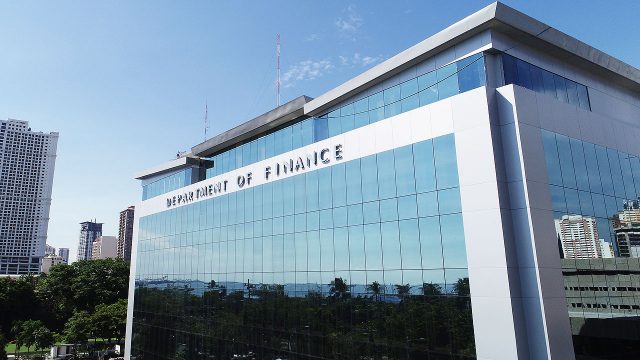
DOF.GOV.PH

THE Department of Finance’s (DoF) Privatization and Management Office (PMO) will release next month new guidelines allowing for the submission of unsolicited bids for state assets. 

“We are looking to publish the privatization guidelines. It has been approved. Only the actual publication is left. Our publication in the Official Gazette has been moved by another month,” Finance Undersecretary Catherine L. Fong told reporters at a briefing on Jan. 16.

The Privatization Council (PrC) approved the Guidelines on the Privatization and Disposition of Government Assets on Sept. 6 last year. The rules, which seek to institutionalize the PrC’s policies and decisions over the years, will be published in newspapers by next month.

Ms. Fong said among the key revisions is allowing unsolicited offers for assets in the PMO’s database. She noted 28,000 titles in the PMO database are small assets of about 200 square meters, which can be accessible to “ordinary Filipinos.” 

“This is an innovation — the first time allowing unsolicited proposals,” Finance Secretary Ralph G. Recto said.

Aside from unsolicited proposals, the new guidelines will also allow negotiated sales and direct purchases by present occupants of the residential properties, and the accreditation of real estate brokers to assist in the sale of properties.

This will help the government meet its P101.01-billion privatization revenue goal for this year, which is more than double the P42.12-billion target in 2024.

PMO is the marketing arm of the government concerning transferred assets, government corporations, and other properties assigned to it by the PrC.

Ms. Fong said unsolicited proposals will be published and can be subject to a challenge, similar to public-private partnership (PPP) projects.

Most of the assets are located in the province. She said the PMO is exploring options that would allow more Filipinos to purchase their own homes.

“The Land Bank of the Philippines is also interested in joining. They want to have a fire sale with their repossessed assets. There are a lot of government assets that are too small,” Ms. Fong said.

Meanwhile, the government also hopes to dispose of idle assets that require high maintenance costs and face legal challenges.

According to DoF data, P4.4 billion was collected from the PMO disposition efforts in 2024, “with proceeds coming from the litigated assets, income from leases and dividend income.” This was significantly higher than P1.94 billion in 2023.

Among the assets to be sold are the Caliraya-Botocan-Kalayaan (CBK) hydroelectric power plant complex, which has a minimum valuation of $300 million.

It will be auctioned off in April by the Power Sector Assets and Liabilities Management Corp. (PSALM). CBK has a 25-year build-rehabilitate-operate-transfer contract with state-owned National Power Corp. that will expire in 2026.

Mr. Recto said this could reach $1 billion if it becomes a part of the green energy auction. The DoF is working with the Department of Energy to increase the value of the assets.

The DoF is also planning to sell the property where the amusement park Star City is located in Pasay City.

“We want to sell Star City, but it is tied to Sukuk bonds. We have to balance the Treasury’s need for assets for Sukuk bonds, which is not easy to replace because it requires leasing, not just any property,” Ms. Fong said.

Star City is owned by Star Parks Corp., a subsidiary of Elizalde Holdings Corp. It is under a lease agreement with Philippine International Corp., which will expire in 2026.

If replacement is an option, Ms. Fong said the PMO will choose an asset without a lease, but it has to match the P15-billion zonal value of the Star City property.

Filomeno S. Sta. Ana III, cofounder and coordinator of Action for Economic Reforms said the government’s reliance on privatization is “a lazy way of raising revenues.”

It is a “one-off source of revenues and thus unsustainable,” he said.

Instead, the DoF should raise more “efficient” taxes.

“A good example of an efficient tax is the excise tax on harmful products like tobacco, vape/e-cigarette, alcohol, soda and ultra processed foods.” he said. 

Mr. Sta. Ana said that the overall revenue collection is getting a boost from nontax revenue, including the fund transfers by the Philippine Health Insurance Corp., Philippine Deposit Insurance Corp. and other state-run agencies. These fund transfers are now being challenged in the Supreme Court.

Meanwhile, the DoF said around P23.94 billion in private capital through PPP projects is expected to be mobilized in 2025.

It noted that 97 PPP projects were added to the pipeline after the PPP Code was signed into law in December 2023. The implementing rules and regulations took effect on April 6, 2024.

These PPP projects include the Cavite Bus Rapid Transit System, School Infrastructure Project Phase III, and the Department of Education-Senate Teacher’s City. — Aubrey Rose A. Inosante

DBS sees below-target PHL growth until 2026

Decorations for the Lunar New Year are seen at a mall in Quezon City. — PHILIPPINE STAR/NOEL B. PABALATE

PHILIPPINE gross domestic product (GDP) growth may fall below the government’s target for this year and next, DBS Bank said, even as easing inflation and lower interest rates are expected to boost consumption.

In its ASEAN-6 2025 Outlook, DBS said Philippine GDP is expected to grow by 5.8% this year and by 5.6% in 2026, missing the government’s 6-8% target for both years.

Philippine GDP likely expanded by 6% in 2024, at the low-end of the 6-6.5% goal.

“Growth momentum is expected to get a hand from easing inflation into 2025, which will provide relief to household purchasing power and a cut in rice tariffs which lowers the staple’s prices,” DBS said.

DBS forecasts headline inflation to average 2.6% in 2025 and 2.4% in 2026.

These projections are much lower than the Bangko Sentral ng Pilipinas’ (BSP) forecasts of 3.3% and 3.5% for this year and the next, respectively.

Headline inflation averaged 3.2% in 2024, well within the 2-4% central bank target.

“Lower borrowing costs will also be a positive for the private sector’s financing needs, including working capital requirements,” DBS said.

“Having raised benchmark rates by the most in the region in the last two years, the BSP cut rates by 75 bps in the second half 2024, notwithstanding pressure on the currency.”

The BSP, which cut ahead of the US Federal Reserve in August, delivered a total of 75 basis points (bps) worth of cuts last year, bringing the benchmark rate to 5.75% by end-2024.

“The BSP had projected a one- to two-year lag period before monetary policy easing impacts the economy, suggesting that rates will maintain a dovish bias into 2025.”

DBS expects the central bank to slash rates by 50 bps this year to bring the key rate to 5.25% by end-2025 and deliver another 50 bps of cuts in 2026 to 4.75%.

“Easing inflation has pushed real rates to strong positive territory, signaling that the regional central banks have room to make policy settings ‘less restrictive,’” it added.

The Monetary Board is set to meet on Feb. 13 for its first policy-setting meeting of the year.

BSP Governor Eli M. Remolona, Jr. has signaled further easing this year as the current policy rate is still in “restrictive territory.”

DBS also noted that the peso volatility last year “did not deter the BSP from cutting rates.”

The bank expects the peso to potentially breach the record low and end at P60.2 per dollar by end-2025.

It sees the local unit strengthening to P59 against the greenback at end-2026.

Meanwhile, Manulife Investment Management (Manulife IM) said Philippine economic growth may range from 5.5% to 6% this year.

“We do expect inflation to remain within the target range of 2-4% for 2025 and we do expect the growth environment with benign inflation should be in the range of 5.5 to 6% for 2025,” Manulife IM Asia (ex-Japan) Fixed Income Chief Investment Officer Murray Collis said in an online briefing on Wednesday.

Mr. Collis said further easing by the Fed and the BSP could support the Philippine economy.

“We do think that the Fed as well as the BSP are intending to cut rates this year, which will be supportive for the Philippine markets. For us, when we’re investing onshore in the Philippines, we do think that that backup in the last few months really creates some value and we think that that could potentially be an interesting buying opportunity for investors over the course of this year,” he said.

TRADE PROSPECTS
Meanwhile, DBS said the Philippines is among the least-affected economies in the region by US President Donald J. Trump’s restrictive trade policies.

“ASEAN-6 will be wary of increased protectionism under the new US administration led by President Donald Trump.”

The impact on these economies would depend on the pace of when these policies will be rolled out, it added.

“Trade reliant economies like Vietnam, Thailand, Malaysia, and Singapore are likely to feel the heat from any escalation in tensions between US and China.”

“More domestic-oriented economies like Indonesia and Philippines are likely to experience a shallower impact, although we are mindful of material spillover effects on any direct tariff action,” it added.

Mr. Trump, who was sworn in as US President for a second time on Monday, has vowed to impose tariffs of up to 60% on imports of Chinese goods and 25% for Canadian and Mexican imports, as well as a 10% universal tariff.

However, DBS is expecting a positive trade outlook early this year in the region due to a “frontloading of orders before US-China or US-region tariffs are imposed.” — Luisa Maria Jacinta C. Jocson with inputs from A.M.C. Sy

InstaPay, PESONet transactions surge in ’24

STOCK PHOTO | Image by Pikisuperstar from Freepik

THE VALUE of transactions done via InstaPay and PESONet jumped to P17.42 trillion in 2024, data from the Bangko Sentral ng Pilipinas (BSP) showed.

Central bank data showed transactions coursed through the two automated clearing houses surged by 35.4% last year from P12.86 trillion recorded in 2023.

The rise in transactions was also much faster than the 29.4% annual growth recorded in 2023 versus 2022.

Meanwhile, the combined volume of transactions done via InstaPay and PESONet also soared by 62.2% to 1.5 billion in 2024 from 929.6 million a year prior.

Broken down, the value of PESONet transactions rose by 28.5% year on year to P10.08 trillion from P7.84 trillion.

The volume of transactions that went through the payment gateway also increased by 10.7% to 100.9 million in 2024 from 91.1 million in 2023.

Meanwhile, the total value of transactions done through InstaPay climbed by 46.3% to P7.35 trillion as of December from P5.02 trillion in the previous year.

The volume of InstaPay transactions stood at 1.4 billion last year, surging by 67.8% from 838.6 million in 2023.

PESONet and InstaPay are automated clearing houses that were launched in December 2015 under the central bank’s National Retail Payment System framework.

PESONet caters to high-value transactions and may be considered as an electronic alternative to paper-based checks.

On the other hand, InstaPay is a real-time, low-value electronic fund transfer facility for transactions up to P50,000 and is mostly used for remittances and e-commerce.

Latest BSP data showed digital payments made up 52.8% of the volume of retail transactions in 2023, higher than the 42.1% share in 2022.

In terms of value, 55.3% of retail transactions last year were done online, higher than the 40.1% the year prior.

The BSP wanted at least 50% of the volume and value of retail transactions done online by end-2023 under its Digital Payments Transformation Roadmap.

The increase in digital payments was driven by wider use of online transaction channels among individuals and businesses, the central bank said, with the coronavirus pandemic accelerating this shift.

“The continued double-digit growth in InstaPay and PESONet transactions largely reflects increased online or e-commerce transactions,” Rizal Commercial Banking Corp. Chief Economist Michael L. Ricafort said.

He also cited consumers’ increasing usage of e-wallets and online banking apps, instead of over-the-counter transactions.

The rise in digital payments can also expedite financial inclusion, especially in rural areas, he said.

“Increased financial literacy also enabled and empowered more Filipinos to be part of the banked population, use digital banking facilities and solutions such as InstaPay and PESONet,” Mr. Ricafort said.

The share of Filipinos with bank accounts reached 65% of the adult population in 2022, the BSP earlier said.

“These are also safer without the need for carrying a lot of physical cash notes, provided that safeguards are observed versus cybercrime,” Mr. Ricafort added.

The central bank wants online payments to make up 60-70% of the country’s total retail transaction volume by 2028. — Luisa Maria Jacinta C. Jocson

Cebu Landmasters allots P12B for Luzon entry

CEBULANDMASTERS.COM

VISMIN property developer Cebu Landmasters, Inc. (CLI) is earmarking P12 billion for the initial phases of its two maiden projects in Luzon as the company expands its market presence nationwide.

CLI Chairman and Chief Executive Officer Jose R. Soberano III said the company’s first two Luzon projects consist of a horizontal project and a condominium development.

“We are allotting a total of P12 billion for two towers of the first phase of the condo and phase one of the horizontal project,” Mr. Soberano told reporters during the launch event of the company’s Makati City office on Wednesday.

“Talking of land acquisition alone, that should be in the range of about P5 billion for these two projects. For development, around P2 billion for the first phase. In the verticals, we start with two towers, that’s P5 billion,” he added.

Mr. Soberano said that CLI is likely to launch its first Luzon project by 2026.

CLI is looking at the southern areas of Manila, such as Batangas and Cavite, for its planned horizontal project, Mr. Soberano said.

“The obvious choice would be the southern portion of Manila, such as Batangas and Cavite. These are the usual suspects. We do have standing offers there,” he said.

“If we are positioning on a property, we have to be absolutely certain that by the time we launch it, we have a good percentage of the take-up. Without that certainty, we’d rather not take that,” he added.

Mr. Soberano estimated that the horizontal project could occupy 50 to 100 hectares, offering 5,000 to 10,000 homes.

On the vertical project, Mr. Soberano said that it is expected to be in Metro Manila.

“I think it is a very strategic move to position on one horizontal project and one vertical project. These are not small projects either,” he said.

“Once that kicks off and we feel our confidence, things can move fast as well. We’re not going to hold our punches if we really feel the opportunity is there,” he added.

CLI also opened its first Luzon office, located on the 3rd floor of the new CWC Design Center in Makati City.

CLI’s new Makati office will house its Luzon sales office, investor relations office, and other support departments. It will also have training and conference rooms to facilitate business activities.

“The opening of our Luzon office marks an important milestone for CLI. With this new hub, we are poised to bring our expertise and proven track record in real estate development to the Mega Manila market,” Mr. Soberano said.

“This new office symbolizes our readiness to bring the CLI brand to Luzon, leveraging our experience and expertise to serve a broader market,” he added.

Mr. Soberano said there is a possibility of opening more offices in Luzon as CLI launches more projects on the island.

The company has launched close to 130 projects across 17 cities since being established in 2003. Its portfolio consists of residential developments, offices, hotels and resorts, co-living and co-working spaces, mixed-use projects, and large-scale townships.

CLI shares were unchanged at P2.67 apiece on Wednesday. — Revin Mikhael D. Ochave