Home Blog Page 2096

Topline cuts IPO size to P900M, eyes Q2 listing

BW FILE PHOTO

By Revin Mikhael D. Ochave, Reporter

CEBU-BASED fuel retailer Top Line Business Development Corp. (Topline) has lowered the size of its planned initial public offering (IPO) to around P900 million from the previous P3.16 billion after talks with potential institutional investors.

Amid adjustments to the IPO, Topline is aiming to be listed on the local bourse by the second quarter of this year, the company said in an e-mailed statement on Wednesday.

The company initially scheduled the IPO’s offer period from Nov. 27 to Dec. 3 last year, with a tentative listing date of Dec. 12. However, it opted to move the offer period to the first quarter of this year to accommodate institutional investors.

Topline said its IPO now consists of up to 2.15 billion primary common shares with an overallotment option of up to 214.84 million secondary shares. Its public float will be around 22% assuming the full exercise of the overallotment option.

The company slashed the indicative offer price to up to 38 centavos apiece from the previous up to 78 centavos per share, subject to a bookbuilding process.

Topline’s revised IPO offering is lower than the previous 3.68 billion primary shares with an overallotment option of up to 368.31 million secondary shares, corresponding to about 30% of total issued and outstanding common shares.

“We appreciate the interest shown by potential investors in supporting our expansion and growth. As such, we’ve adjusted our offer structure to reflect our adjusted capital requirements, and at the same time maintain regulatory compliance,” Top Line Chairman, President, and Chief Executive Officer Eugene Erik C. Lim said.

“We are excited to be the maiden IPO this year and the first company from Metro Cebu to go public in almost a decade,” he added.

Topline said its underwriters “expressed confidence in the offering’s structure, believing that the revised offer structure will position Top Line for strong momentum in the public markets.”

The company tapped Investment & Capital Corp. of the Philippines (ICCP) and PNB Capital and Investment Corp. as the joint lead underwriters and joint bookrunners for the offer.

“We believe that the revised offer structure makes this IPO an attractive investment opportunity for investors seeking strong value and growth given the company’s compounded annual revenue growth rate of more than 49% from 2021 to 2023 — outpacing the growth of constituent companies of the Philippine Stock Exchange Index (PSEi),” ICCP said.

“Topline’s ability to attract interest from institutional investors also speaks of their confidence in the company’s fundamentals and its promising trajectory. We are of the view that Top Line could be a growth catalyst for the capital markets in 2025,” PNB Capital said.

Sought for comment, AP Securities, Inc. Research Head Alfred Benjamin R. Garcia said in a Viber message that the move by Topline was expected amid market conditions.

“We actually expected Topline to trim both the size and pricing of its IPO given the changes in market conditions since they initiated the process of going public,” he said.

“The previous valuation was quite high, and the market’s current appetite for risk likely won’t support those valuation levels. The current level of trade activity in the market also can’t support the IPO’s original size,” he added.

The PSEi dropped to 6,265.52 on Jan. 16, its lowest close in nearly seven months or since it ended at 6,158.48 on June 21, 2024, but has since recovered slightly.

On Wednesday, the PSEi improved by 0.12% or 8.13 points to 6,348.34.

“They’re a promising company, but it’s a very tough IPO market, so I’m not surprised that they cut the deal size and price to make the offering more attractive,” China Bank Capital Corp. Managing Director Juan Paolo E. Colet said in a Viber message.

“With the stock market trading near the low end of its 52-week range, and given the uncertainties around Trump 2.0 and our midterm elections, it’s generally challenging for companies to do an IPO.

Investors need to see not just a compelling story but a good bargain,” he added.

Topline is engaged in commercial fuel trading, depot operations, and retail fuel in the Visayas region.

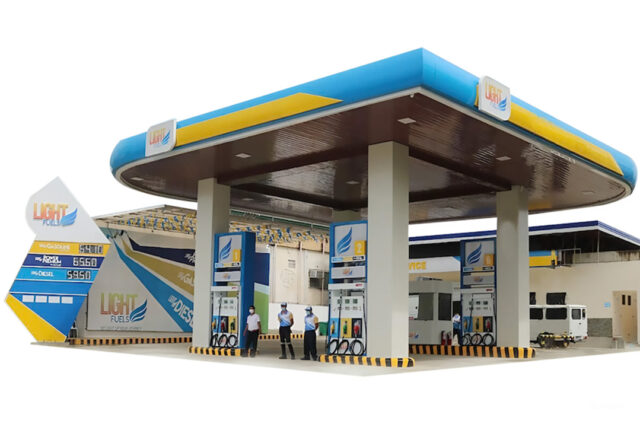
The company has two subsidiaries, namely Topline Logistics and Development Corp., envisioned to engage in the importation, trading, distribution, and marketing of petroleum-based products, and Light Fuels Corp., involved in the fuel retail business.

The PSE aims to have six IPOs this year, with Topline among the expected companies to go public.

SM Retail taps Meralco’s MPower for RE supply

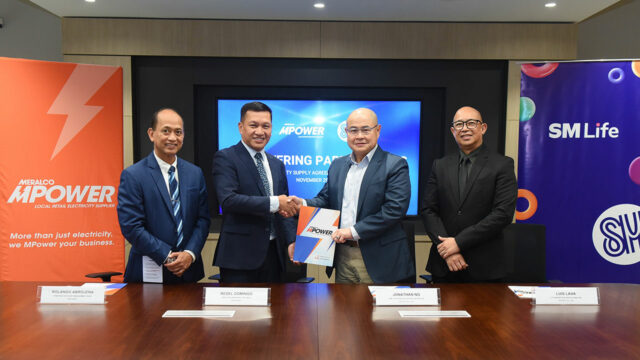
PRESENT DURING the ceremonial signing (L-R) were MPower Strategic Account Management Head Rolando Abrojena, Meralco First Vice-President and MPower Head Redel Domingo, SM Retail Executive Vice-President for Controllership and Financial Planning Jonathan Ng, and SM Retail Vice-President for Workplace and Administration Luis Lava, Jr.

SM RETAIL, Inc. has tapped MPower, the local retail electricity supply arm of Manila Electric Co. (Meralco), to supply 100% renewable energy (RE) to its largest establishments in Metro Manila.

MPower will supply renewable energy to SM Retail properties, including the group’s primary headquarters in Pasay City, the company said in a media release on Wednesday.

“SM Retail now stands among our valued customers to benefit from MPower’s competitively priced renewable energy portfolio. As a reflection of our commitment to sustainability, we will continue our efforts to meet the growing demand for renewable energy supply in the contestable market,” said Redel M. Domingo, Meralco’s first vice-president and head of MPower.

Under the Competitive Retail Electricity Market (CREM), qualified power customers consuming at least 500 kilowatts are allowed to choose their energy supplier based on their specific requirements.

“As a key player in the retail industry, SM remains vigilant of its environmental impact and social responsibility. With this partnership with MPower, we are on track with our goal of powering our facilities with renewable energy under CREM,” said Luis Lava, SM Retail’s vice-president for workplace and administration.

Last week, MPower said it has renewed its retail supply agreement with ABS-CBN Corp. to support the power needs of the media company’s operations.

MPower serves contestable customers, including top corporations within Meralco’s franchise area. The company has more than a 25% share of the CREM within Meralco’s franchise area.

Meralco’s controlling stakeholder, Beacon Electric Asset Holdings, Inc., is partly owned by PLDT Inc.

Hastings Holdings, Inc., a unit of PLDT Beneficial Trust Fund subsidiary MediaQuest Holdings, Inc., has an interest in BusinessWorld through the Philippine Star Group, which it controls. — Sheldeen Joy Talavera

RCBC raises $350M from sustainability bonds

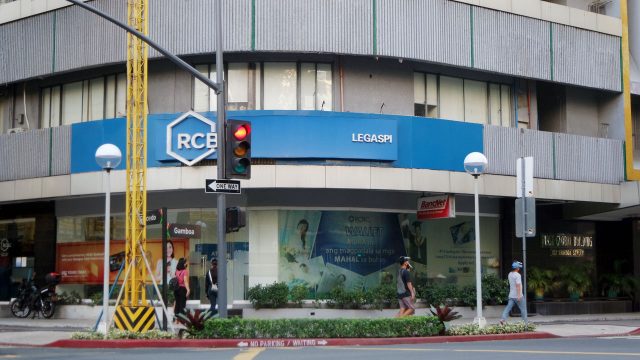
RIZAL COMMERCIAL Banking Corp. (RCBC) has raised $350 million from its offering of five-year sustainability bonds, marking its return to the dollar debt markets after a year.

The five-year senior unsecured fixed-rate sustainability notes were priced at a coupon of 5.375% per annum, RCBC said in a disclosure to the stock exchange on Wednesday.

They will be issued on Jan. 28 and will be listed on the Singapore Exchange Securities Trading Ltd., similar to RCBC’s other two outstanding dollar bond issuances.

“The transaction saw strong interest from a wide range of high-quality Asian and European investors, which allowed the bank to tighten final price guidance to 115 basis points (bps) over the five-year Treasury yield,” the Yuchengco-led bank said.

This was tighter than the initial price guidance of 145 bps over the five-year Treasury yield, it noted.

“This is the tightest pricing spread achieved among RCBC’s US dollar senior unsecured issuances.”

The offer saw a final orderbook of over $1 billion, almost three times the initial offer amount of $500 million, RCBC said.

“The notes saw orders from more than 77 accounts — clearly reflecting global investors’ continued confidence in RCBC and its credit. The orderbook was well diversified with 57% allocated to asset managers, 38% to banks, and 5% to insurance companies and private banks,” it added.

The bank’s latest issuance will mature on Jan. 29, 2030 and was rated Baa3 by Moody’s Ratings.

They will be issued out of RCBC’s $4-billion medium-term note program and under its Sustainable Finance Framework.

“The net proceeds from the issue of the notes will be applied by RCBC to support and finance and/or refinance RCBC’s loans to customers or its own operating activities in eligible green and social categories as defined in RCBC’s Sustainable Finance Framework,” the bank said.

RCBC appointed ING Bank N.V.-Singapore Branch, Morgan Stanley & Co. International plc and SMBC Nikko Securities (Hong Kong) Ltd. as the joint lead managers and joint bookrunners for the offering.

Allen Overy Shearman Sterling LLP was appointed as international legal counsel, while Romulo Mabanta Buenaventura Sayoc & de los Angeles is the domestic legal counsel. P&A Grant Thornton was also tapped as the auditor for the offer.

The mandate for a potential dollar sustainability bond transaction was announced on Monday, with RCBC holding a series of investor calls that day for market feedback. Terms for the offer and initial pricing were announced on Tuesday.

RCBC Chief Executive Officer Eugene S. Acevedo earlier said the bank is looking to tap both offshore and domestic debt markets on a regular basis as part of their new funding strategy to maintain a steady presence in the capital markets. 

The listed bank’s net income decreased by 37.01% to P1.77 billion in the third quarter of 2024. This brought its net profit for the first nine months of 2024 to P6.22 billion, 31.12% lower year on year.

RCBC shares were last traded on Tuesday, closing at P24.05 apiece. — Aaron Michael C. Sy

SteelAsia says P30-B Candelaria plant to produce over 1M tons of steel

STEELASIA MANUFACTURING CORP FACEBOOK

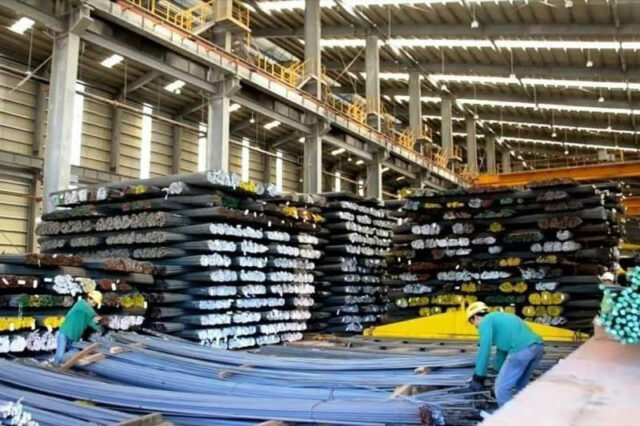
STEELASIA Manufacturing Corp. said it has awarded the engineering, procurement, and construction management (EPCM) contract for its P30-billion plant in Candelaria, Quezon, which is expected to produce over one million tons of structural steel.

SteelAsia awarded the contract to engineering company MCC Huatian Engineering & Technology Co. earlier this week, the company said in a statement on Wednesday.

SteelAsia’s plant in Candelaria is expected to commence commercial operations by 2027 and is projected to create $1.2 billion in annual savings for the country as it will produce heavy structural steel products that are currently 100% imported, it added.

“We will create around 7,000 jobs instead of giving jobs to China, Vietnam, Thailand, Korea, and Japan, our major suppliers,” said SteelAsia Chairman and Chief Executive Officer Benjamin O. Yao.

“Our carbon footprint will also be 90% lower than the traditional steelmaking process because we use recycled scrap metal and employ electric arc furnace technology,” he added.

Once operational, the Candelaria plant is expected to improve delivery lead times to projects to 1-2 weeks from the previous 3-4 months.

“This is a game changer initially for the construction and infrastructure sector since this means quicker project completion and lower costs,” Mr. Yao said.

The Candelaria plant is part of the P82-billion investment the company announced in July last year, along with its plants in Lemery, Batangas, Davao City, and Concepcion, Tarlac.

The company’s investment aims to reduce the country’s reliance on imports, create jobs, and contribute to the country’s economic growth.

SteelAsia has six manufacturing facilities that produce 3 million metric tons of finished steel a year, the company’s website showed. — Justine Irish D. Tabile

Yields on central bank’s term deposits go down as inflation fears ease

BW FILE PHOTO

YIELDS on the Bangko Sentral ng Pilipinas’ (BSP) term deposits went down on Wednesday amid easing inflation concerns following the implementation of government measures to tame rice prices.

The BSP’s term deposit facility (TDF) attracted bids amounting to P276.657 billion on Wednesday, below the P280 billion on the auction block as well as the P319.353 billion seen a week ago for a P240-billion offer.

Broken down, tenders for the eight-day papers reached P132.385 billion, lower than the P160 billion auctioned off by the central bank and the P189.095 billion in bids for the P140-billion offer of seven-day deposits seen the previous week. The BSP awarded P129.285 billion in one-week papers.

Accepted yields ranged from 5.735% to 5.825%, a tad narrower than the 5.725% to 5.825% band seen a week ago. This caused the average rate of the one-week deposits to inch down by 0.9 basis point (bp) to 5.7893% from 5.7983% previously.

The one-week tenor was adjusted from the usual seven-day maturity in view of the Chinese New Year holiday on Jan. 29.

Meanwhile, bids for the 14-day term deposits amounted to P144.272 billion, above the P120-billion offering and the P130.258 billion in tenders for the P100-billion offer a week ago. The central bank made a full P120-billion award.

Accepted rates were from 5.7888% to 5.8675%, narrower than the 5.75% to 5.91% margin recorded a week ago. With this, the average rate for the two-week deposits declined by 3.28 bps to 5.8347% from the 5.8675% logged in the prior auction.

The central bank has not auctioned off 28-day term deposits for more than four years to give way to its weekly offerings of securities with the same tenor.

The term deposits and the BSP bills are used by the central bank to mop up excess liquidity in the financial system and to better guide market rates.

TDF yields went down on Wednesday after the implementation of the maximum suggested retail price (SRP) on imported rice to help reduce local prices, which allayed inflation concerns, Rizal Commercial Banking Corp. Chief Economist Michael L. Ricafort said in a Viber message.

This week, the maximum suggested retail price on imported rice was implemented in Metro Manila. It imposes a maximum SRP of P58 per kilogram on imported rice with a 5% broken grain content.

The Agriculture department also recently announced plans to declare a food security emergency for rice amid still-elevated retail prices.

This would allow the release of buffer stocks of local rice from the National Food Authority to be sold at subsidized prices.

Benign inflation would support further BSP rate cuts, with markets expecting another reduction as early as the Monetary Board’s first policy meeting on Feb. 13, Mr. Ricafort said.

The review was rescheduled from Feb. 20 previously as BSP Governor Eli M. Remolona, Jr. is set to attend the Financial Action Task Force plenary and meetings in France on Feb. 17-20.

The has slashed benchmark borrowing costs by a total of 75 bps since it began its easing cycle in August, bringing its policy rate to 5.75%.

BSP Governor Eli M. Remolona, Jr. this month said the central bank still has room to continue cutting interest rates as inflation is well within its annual goal, adding that current benchmark borrowing costs remain “restrictive.”

He previously said 100 bps worth of cuts this year may be “too much” amid inflation concerns. — Luisa Maria Jacinta C. Jocson

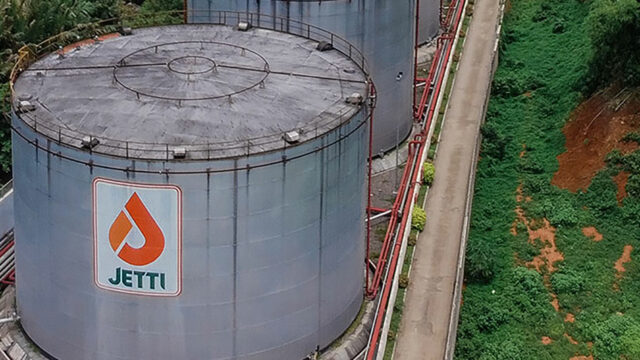
Jetti plans P1.2-B expansion

JETTI.COM.PH

INDEPENDENT OIL company Jetti Petroleum, Inc. expects to spend around P1.2 billion to establish 80 more stations to achieve its target of 300 stations by 2026, its president said.

“We are embarking on completing or having available 300 stations and, initially, we’re targeting by early 2026; but, of course, we based this on our business review,” Jetti President Leo P. Bellas told reporters during the inauguration of the company’s business center on Monday.

The funding will be mostly financed by banks, with a portion from internally generated funds.

For context, building a four-pump, two-island station would require about P15 million, Mr. Bellas said.

“For this year, we are confident that we can complete and operate an additional 40 stations. So that would bring the number to 260 by December 31, 2025,” Mr. Bellas said.

At present, the company has 220 stations spread nationwide, with a concentration in Luzon and Mindanao.

Its portfolio includes the Jetti Macapagal Building, a six-story business center located at the corner of Diosdado Macapagal Boulevard and Coral Way in Pasay City.

The company resumed operations of its flagship retail station in Pasay City in 2023 after temporarily closing it for renovation for almost four years.

“The reason why we also did this inauguration is because finally the whole ground floor is occupied and they’re operating,” Mr. Bellas said.

The Jetti Macapagal Building features retail outlets and premium office spaces for lease.

“The Jetti Macapagal Building stands as a testament to Jetti Petroleum, Inc.’s dedication to progress, community engagement, and service excellence. It reflects the company’s commitment to not only fueling vehicles but also supporting the aspirations of the people and businesses it serves,” the company said.

Jetti started operations of its first retail service station in 1999 and opened the Macapagal flagship station in 2004. The company began the conversion and renovation works of the property to make it a complex with a gas station in 2019. — Sheldeen Joy Talavera

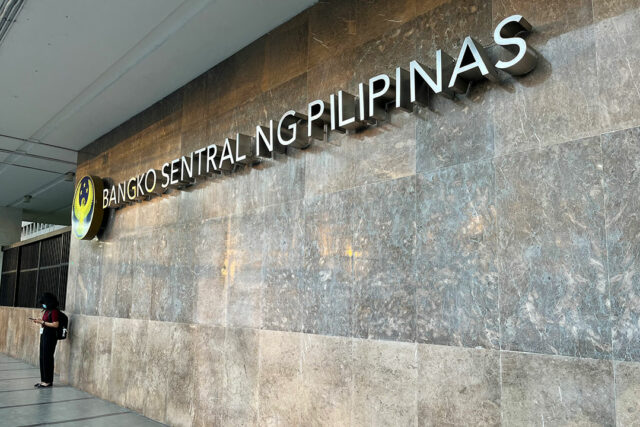
BSP outlines reporting standards for pawnshops

Bangko Sentral ng Pilipinas main office in Manila — BW FILE PHOTO

THE BANGKO SENTRAL ng Pilipinas (BSP) has amended its regulations on pawnshops’ reporting standards to improve its supervision over the sector.

“The amendments set forth the Bangko Sentral’s expectations on pawnshops to establish an effective reporting system with adequate governance process that enables the generation and timely submission of reports in accordance with the Bangko Sentral’s reporting standards,” it said in a circular.

Sections of the Manual of Regulations for Non-Bank Financial Institutions will be revised to reflect these amendments, it added.

The amendments include a revised section on the reporting governance framework for pawnshops.

“It is the thrust of the Bangko Sentral to exercise effective supervision over pawnshops. To facilitate such effective supervision, the Bangko Sentral adopts this reporting governance framework for pawnshops.”

The central bank said pawnshops must ensure complete, accurate, consistent, reliable and timely submissions of required information concerning their operation and management, financial condition and results of operations.

“It is incumbent upon the pawnshop proprietor/partner/board of directors and senior management or officers to implement an effective reporting system,” the BSP said.

“Pawnshops are expected to capitalize on available information technology in establishing an effective reporting system that is appropriate for their size and complexity of operations,” it added. 

The circular details the reporting standards that pawnshops must comply with. For example, the reporting system must compile all material data across various business services, activities and entities relevant to regulatory reporting and produce regular, on-demand and ad hoc reports required by the BSP, among others.

“An effective reporting system shall include a management information system commensurate to the nature and operational complexity of the pawnshop’s business activities,” it said.

“Pawnshops shall have a true and accurate account, record or statement of their daily transactions,” the BSP added.

These records may include audio, photographic, and video evidence of events, acts or transactions of the pawnshop. These should also include records of communication, be it through oral or written means.

“The making of any false entry or the willful omission of entries relevant to a transaction is a ground for the imposition of administrative sanctions,” it added.

The circular also includes rules on the adoption of the manual of accounts prescribed by the BSP for recording daily transactions, including reportorial and publication requirements.

“The accounting records of pawnshops shall consist of records of original entry and books of final entry. The records of original entry shall consist of pawn tickets, official receipts, vouchers and other supporting documents,” it said. “The books of final entry shall consist of the general ledger, subsidiary ledgers and registers of loans extended and loans paid.”

The central bank also outlined rules for pawnshops’ submission of audited financial statements.

“The Bangko Sentral recognizes that external auditors play a vital role in contributing to the conduct of effective supervision and sustaining the confidence of the public in the financial system. In this light, the regulations on financial audit aim to enhance the quality of information channeled to the supervisory process and ultimately promote fairness, transparency and accuracy in financial reporting.”

Pawnshop operators are also required to report on crimes, whether consummated or attempted, as well as incidents involving material loss, destruction or damage to the pawnshop property, among others, according to the circular.

The circular outlined the sanctions for noncompliance with reporting standards, including erroneous, delayed and unsubmitted reports. The revised guidelines prescribe the monetary penalties for violations, ranging from P60 to P500 per day or per occurrence.

The central bank will likewise assess the quality of a pawnshop’s reporting system to determine the integrity of reports being submitted and the root cause of persistent submission problems, it added. — Luisa Maria Jacinta C. Jocson

Missing link

PHILIPPINE STAR/ERNIE PENAREDONDO

Every January many international and local organizations issue their outlooks for the year, including on perceived risks. I personally look out for them, since these reports give a good idea of what issues national and business leaders will be watching out for.

The World Economic Forum, for one, published on Jan. 17 its Global Risks Report 2025 (its 20th such report) and its complementary Executive Opinion Survey (EOS) on national risk perceptions, among other studies, ahead of its Jan. 20-24 annual meeting in Davos, Switzerland. The Global Risks Report enumerated the top 10 “current” global risks as, in descending order: state-based armed conflict, extreme weather events, geoeconomic confrontation, misinformation and disinformation, societal polarization, economic downturn, critical change to Earth systems, lack of economic opportunity or unemployment, erosion of human rights and/or economic freedoms, and inequality.

‘URGENT’ AND ‘ALARMING’
The latest report noted that, among these concerns, environmental risks have transformed “from long-term concern to urgent reality” for many of its respondents, consisting of “over 900 global leaders across academia, business, government, international organizations and civil society.”

“The impacts of environmental risks have worsened in intensity and frequency since the Global Risks Report was launched in 2006,” the report read. “Environmental risks have dramatically increased in ranking over the 10-year time horizon since the introduction of the Global Risks Report in 2006.

“Moreover, the outlook for environmental risks over the next decade is alarming. While all 33 risks in the GRPS (the Global Risks Perception Survey that provides the basis for this report) are expected to worsen in severity from the two-year to the 10-year time horizon, environmental risks present the most significant deterioration,” it added.

“Extreme weather events are anticipated to become even more of a concern than they already are, with this risk being ranked in the 10-year risk list for the second year running,” while “[b]iodiversity loss and ecosystem collapse ranks No. 2 over the 10-year horizon, with a significant deterioration, compared to its two-year ranking.”

This concern accounts for the top three perceived risks in Southeast Asia (critical change to Earth systems, extreme weather events, as well as biodiversity loss and ecosystem collapse) over the next 10 years, followed in the region by “adverse outcomes of AI technologies” and “misinformation and disinformation” on the list of top five risks.

While the EOS, which surveyed over 1,100 business leaders in 121 economies, listed economic downturn, poverty and inequality, inflation, food supply shortage, as well as unemployment or lack of economic opportunity as the top five concerns of Philippine-based businessmen, a separate survey which the Management Association of the Philippines (MAP) conducted among its over a thousand members showed their top concerns for 2025 were, in descending order: corruption, education, economy, ease of doing business, climate change, cybersecurity and dealing with local governments.

TAPPING ORDINARY CITIZENS
Reading all these reports brought me back to a conversation that I had with my kids just last month, as I took the Christmas holidays as an opportunity to engage them in more in-depth chats, including on issues that interest them.

On the issue of the perceived worsening climate, we noted that government responses range from text alerts of the National Disaster Risk Reduction and Management Council (NDRRMC) in the event of floods, quakes, and volcanic activity, to occasional drills and established evacuation routes at the local level (not many though).

But ask any ordinary citizen on the street if he/she knows what to do in case a disaster hits his/her community, chances are that no one will have a ready answer.

So, there lies the gap.

Hardly the state of general preparedness which one would otherwise logically expect in a country that has been deemed as being among the most at risk from climate crises.

I recently watched an Al Jazeera feature on what some Taiwanese youth have been doing on their own in order to prepare for a potential invasion by China — from taking advanced first aid training to basic firearms handling and shooting via airsoft (with police supervision), since Taiwan prohibits civilians from owning guns. That’s for a state (yes, it has all the requisites for an independent state, whatever else Beijing says) that already maintains a one-year military conscription system for men.

We are nowhere near the state of siege that Taiwan or South Korea are in, but we face storms and floods almost like clockwork every year (not to mention volcanic eruptions and earthquakes).

And with the Philippines’ median age at 25.7 years as of last year, it’s clear that any program to “climate-proof” the population needs to focus on the youth.

OVERHAUL NEEDED
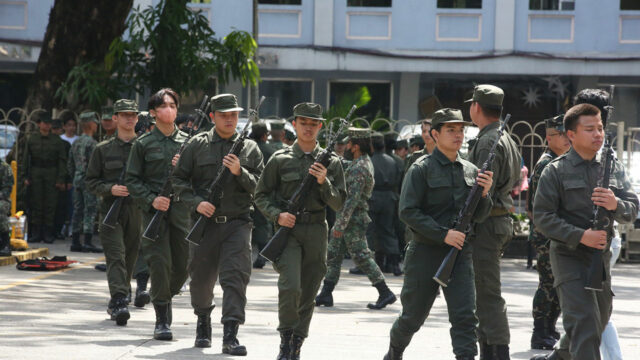
There is an existing mechanism that may be suitable for this purpose, namely: the National Service Training Program (NSTP) established under Republic Act No. 9163. That law requires tertiary-level students to undergo the NSTP, for which they have three options, namely: Civic Welfare Training Service (CWTS), Literacy Training Service (LTS), and the Reserve Officers’ Training Corps (ROTC).

An official primer said that NSTP was established “to promote civic consciousness among the youth and inculcate in them the spirit of nationalism and advance their involvement in public and civic affairs” and “to develop the youth’s physical, moral, spiritual, intellectual, and social well-being and promote defense preparedness and ethics of service while undergoing training in any of its three program components. Its various components are specially designed to enhance the youth’s active contribution to the general welfare.”

What did my kids and their peers do under NSTP’s CWTS component in their universities? One’s class donated an amount to a rural community (well, it was at the height of the pandemic, after all), while another spent three nights with a fishing village.

Did they improve the lot of those target beneficiaries even just a bit? Based on their anecdotes, I doubt it. Did they learn anything? NOTHING.

This reminds me of my basic ROTC days, which consisted of marching plus just a few classes (I cannot remember the topics, so they couldn’t have been useful) for two hours every Saturday for two years.

Did I or any of my peers learn anything (besides how to march in unison with others, that is, without developing teamwork skills)? ZILCH. NADA.

I learned patriotism and civic consciousness (not to mention discipline, leadership skills, and even how to safely handle firearms) elsewhere, and so considered all those hours of marching — under a program that gets an annual budget, mind you — a colossal waste of time (and people’s money) that could have been better spent on productive, impactful pursuits.

PROPOSED IMPROVEMENTS
Now we find out that a bill to revive mandatory ROTC has been included (as a “second priority,” but still) among priority measures listed by the Legislative Executive Development Advisory Council (LEDAC) as of Jan. 16 (for the full list go here: https://ledac.neda.gov.ph/resources-2/19th-congress/).

To its credit, Senate Bill No. 2034 adds to the ROTC curriculum “practical and applicable knowledge and skills that are necessary, essential and ideal for survival, and providing service in times of emergencies and disasters, including disaster response operations, skills for search, rescue and relief operations, and early recovery activities.”

The House of Representatives approved on final reading a related bill in December 2022, although it did not revive mandatory ROTC. House Bill No. 6687 (which is not a LEDAC priority measure and is now dead in the water) seeks to put in place a two-year National Citizens Service Training (NCST) program for youth in undergraduate degree as well as two-year technical vocational programs, which replaces the current, existing NSTP — complete with its CWTS, LTS, and ROTC options — and focuses training on practical skills for emergency and disaster response and, in the case of the ROTC, for officership in the military.

Both bills provide incentives for all those that will undergo training, as well as safeguards against hazing, corruption, and other abuses in the ROTC program.

HB 6687 will also form a civilian National Service Reserve Corps, consisting of all those who have completed the envisioned NCST program, under the control and supervision of the NDRRMC through the Office of Civil Defense (OCD), while ROTC graduates will be under the supervision of the military.

The SB 2034 will group all those that complete the ROTC program in “school-based ready reserve units,” while HB 6687 will organize NCST grads in school-, community-, sector-, and skill-based units for easy mobilization in times of natural or man-made calamities.

HB 6687 also provides that students who have completed the NCST Program will have complied with the mandatory military registration and training under Republic Act No. 7077, or the Citizen Armed Forces of the Philippines Reservist Act.

WHICH FRAMEWORK?
While indicating that one was a corps commander may lend just a bit of pizzazz to a resume right after graduation, I have not met anyone who has said that he learned anything useful under basic ROTC, even as a Pulse Asia survey commissioned by a senator last year reportedly showed that 69% of respondents were in favor of making this program mandatory again.

The main standard role of the military has been to fight armed aggression, so I do not know if putting part of disaster response, i.e. a ready reserve, automatically under the military is appropriate. Personally, I have always found it a bit off — even if necessary, given our circumstances — whenever our government through the decades had to call in army trucks for contingencies like public transport augmentation during nationwide protests (meaning officials could have managed civilian issues better). Gosh, even our firefighters are militarized, with military ranks and authorized to carry guns.

It would be better to be clear on such roles — the way that civilian and military roles are clearly demarcated in more advanced countries. So, if one were to undergo military training, then by all means let it professionally impart appropriate skills like marksmanship. Sure, the conscription programs of South Korea and Taiwan are unpopular, but they are needed in the face of real armed threat.

Our needs are different (yes, even in the face of China’s aggression in the West Philippine Sea and espionage in our territory).

What competencies are needed by a country at the forefront of climate risks? You have a wide variety of survival skills like water purification, putting up makeshift shelters, telling the time without gadgets, orienteering, advanced first aid, self-defense, as well as preparing emergency food and medical stocks that are best entrusted to training under the OCD. Add to that, other skills ranging from mastering basic knots for various purposes, to rappelling, to problem solving, to effective interpersonal communication, to disaster relief supply management, as well as to community organization, coordination, and leadership.

Skills training can also vary according to specific risks of localities, e.g. proximity to an active volcano, a river, the coast, or to the Valley Fault System.

Hence, this effort can tap third parties like the Philippine Red Cross, accredited volunteer firefighters, and the Philippine Eskrima Kali Arnis Federation that offer specialized skill sets. A semester with the Red Cross, volunteer firefighters, or accredited emergency medical assistance teams could provide practical exposure.

Meaning: if we were to spend time, effort, and public funds to train our youth to credibly take on real-life challenges that could be posed by natural and man-made disasters, then we might as well do so competently.


Wilfredo G. Reyes was editor-in-chief of BusinessWorld from 2020 through 2023.

DMCI Mining projects higher ore output in 2025

PHILSTAR FILE PHOTO

DMCI MINING Corp. expects its ore production to reach three million wet metric tons (WMT) this year, driven by the commencement of operations at two new mine sites, the company’s president said.

“We’re targeting a combined annual production capacity of three million WMT from our three mines, including Zambales Diversified Metals Corp. (ZDMC), subject to the approval of necessary permits for Long Point,” DMCI Mining President Tulsi Das C. Reyes said in a statement on Wednesday.

The company operates mines in Palawan and Zambales through its subsidiaries Berong Nickel Corp., Zambales Chromite Mining Company (ZCMC), and ZDMC. It extracts nickel ore, chromite, and iron laterite.

Nickel is among the transition minerals used for the manufacture of electric vehicle batteries and stainless steel.

In a separate interview on Monday, Mr. Reyes said that mine production last year was “low,” as there was only one operational mine shipping out ore.

“We had poor performance last year because Zambales was shipping out the only grade that we had available,” he said.

“We’ve been working on our expansion and so whatever was produced we had to sell, so we couldn’t play with the market. We’re totally inflexible,” he added.

The company has allocated about P400 million to fund additional expansion of its mining operations.

“You don’t need much to start up a nickel mine… A lot of that capex last year was really for Long Point, because it was starting from scratch and then a lot of that for this year will be for drilling,” Mr. Reyes said.

The company had previously earmarked P634 million for capital expenditures last year, which was mainly used for its expansion plans.

Mr. Reyes added that DMCI Mining anticipates better performance than last year amid the operation of its two new mine sites.

“We’re calling this year a bawi (recovery) year. But we should have all the grades available so we can go carbon steel or we go (mixed hydroxide precipitate), and we have the volume so we can be selective to the market,” he added.

The company’s mine in Santa Cruz, Zambales, operated under ZCMC, is expected to begin full operations during the first quarter.

ZCMC operates under an environmental compliance certificate, permitting an annual production limit of 1 million WMT.

Berong Nickel is also expected to restart production at its mine site in Long Point, Palawan. The company said that it is in the final stages of securing its mineral production sharing agreement.

“Our two new mines, ZCMC and BNC’s Long Point, mark a long-anticipated step forward for DMCI Mining. With increased production capacity and the Long Point port nearing completion, we are confident in delivering improved operational and financial performance this year,” Mr. Reyes said.

For the third quarter, DMCI Mining saw a net income of P48 million, a turnaround from its net loss amounting to P154 million a year ago.

Revenues surged to P565 million from P158 million in the same period last year, due to better shipments, higher selling prices, and improved nickel grade sold.

DMCI Mining is a subsidiary of the listed holding firm DMCI Holdings, Inc. — Adrian H. Halili

BCDA taps Philtower MIDC for telco infra development

BASES CONVERSION and Development Authority (BCDA) President and CEO Engr. Joshua M. Bingcang (third from right) led the ceremonial signing of the memorandum of understanding (MoU) with PhilTower MIDC. Also present at the event was PhilTower MIDC President and Chief Executive Officer Devid Gubiani (fourth from right), Chief for External Affairs and Government Relations Kalvin Laurence Antonio B. Parpan (first from left) Chief Financial and Risk Officer Maida B. Bruce (second from left), BCDA Vice-President Business Development Mary Grace C. Perez (second from right), and Vice-President for Investment Promotions and Marketing Department Erwin Kenneth R. Peralta (first from right).

THE Bases Conversion and Development Authority (BCDA) has partnered with PhilTower MIDC to advance digital connectivity across the state-owned corporation’s properties.

In a statement on Wednesday, BCDA said that it signed a memorandum of understanding (MoU) with PhilTower MIDC on Tuesday.

“PhilTower MIDC, with its comprehensive portfolio and deep industry knowledge, is uniquely positioned to support BCDA’s ambition to drive innovation, efficiency, and sustainability within the country’s digital infrastructure,” said BCDA President and Chief Executive Officer Joshua M. Bingcang.

“This collaboration will create impactful solutions that enhance connectivity in high-priority areas, positioning the Philippines at the forefront of the digital revolution in Southeast Asia,” he added.

A joint venture between Miescor Infrastructure Development Corp. and Phil-Tower Consortium, Inc., PhilTower MIDC is a provider of shared telecommunications (telco) infrastructure.

Under the partnership, PhilTower MIDC committed to installing common towers across BCDA sites, including Bonifacio Global City, New Clark City, and Morong Discovery Park.

The MoU enables PhilTower MIDC to conduct pre-investment studies on the project, which are expected to take one year.

According to BCDA, PhilTower already has a presence in New Clark City through its rooftop infrastructure at the Government Building and the National Academy of Sports.

These are utilized by telecommunications providers such as Globe and Smart to enhance their digital capabilities in the area.

“It is a privilege to collaborate with BCDA, an organization that shares our vision of harnessing digital technology as a transformative force,” said PhilTower MIDC President and Chief Executive Officer Devid Gubiani.

“Through this partnership, we aim not only to enhance connectivity but also to drive socio-economic growth in vital hubs such as Bonifacio Global City and New Clark City,” he added. — Justine Irish D. Tabile

Recycling farm waste

FREEPIK

From what I can recall, plastic packaging started becoming widely popular in the Philippines sometime in the 1970s. Before that, cans, bottles, and cartons were the primary materials used for food packaging. Fresh meat and produce were wrapped in paper, while milk and beverages came in glass bottles. Preserved food was sold in tin cans.

That was over 50 years ago. Since then, plastic packaging — especially for food and medicine (which used to come in glass bottles or small cardboard boxes) — has taken over. Even household food storage containers, beverage bottles, and utensils have largely transitioned from metal, glass, and ceramics to plastic.

Plastic is cheap, convenient, durable, lightweight, easy to transport, and disposable. Unfortunately, these same attributes have also turned it into a global pollutant. In recent years, the environmental cost of plastic has become more apparent. Thus, researchers have turned to alternative materials, including the conversion of agro-industrial waste into sustainable, functional packaging.

With the economy growing, the demand for goods — and consequently, for packaging materials — continues to rise. Several policies in the last few years have sought to reduce reliance on plastics, encouraging the development of eco-friendly alternatives. But to make this shift truly successful, government support is essential.

I recently came across a study titled “Renovation of Agro-Waste for Sustainable Food Packaging: A Review,” published in 2023 by researchers from Kasetsart University in Bangkok, Thailand. The researchers were from the university’s Department of Packaging and Materials Technology and its Center for Advanced Studies for Agriculture and Food.

The study highlighted that materials derived from agro-waste — such as cellulose, chitin, lignin, starch, and proteins — could be converted into food packaging. These materials were not only said to be non-toxic and biodegradable, but were also widely available and compatible with other materials.

The study emphasized that crop residues, process waste, and animal by-products could serve as raw materials for packaging. Parts of crops like leaves, stems, seed pods, and straw have high potential for development into eco-friendly packaging. For instance, cereal processing residues, sugarcane by-products, and dairy waste could be repurposed into substrates for biodegradable films and coatings.

In many parts of Asia including the Philippines, the traditional use of banana leaves for serving, eating, and packaging food reflects the cultural, religious, and socioeconomic potential of such natural alternatives to plastic. Bamboo and coconut are likewise widely used as source materials for food containers and servers. Bamboo is also used to make plates, utensils, and chopsticks.

Similarly, agricultural residues from harvest like wheat, rice, and barley stubbles, which are often left in fields or burned (leading to air pollution), could instead be transformed into fibrous biomass for paper and bioplastics. Stubbles left in fields take time to degrade into fertilizer, and in the interim become fodder for field pests.

One innovative approach mentioned in the study involves using fungi, particularly mycelium, which contains chitin, glucan, protein, and lipids. Mycelium can degrade lignocellulose in agricultural waste, making it a valuable component for bioplastic production. This not only addresses waste disposal issues but also reduces dependence on petroleum-based polymers, offering a cost-effective way to produce biodegradable plastics.

Given these possibilities, I firmly support government initiatives to promote research and investment in agro-industrial waste as raw materials for food packaging. This is not to say that plastic should be entirely banned. A complete ban on plastic packaging is impractical, given its current role in food preservation, transportation, and affordability.

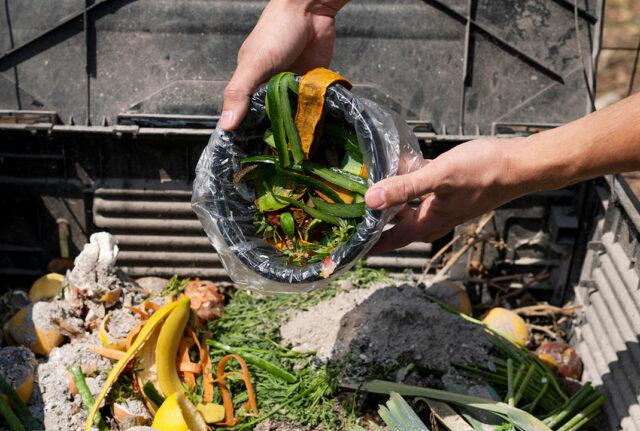
However, recycling farm waste into packaging material could significantly improve solid waste management. Instead of being left to rot, burned, or disposed of in landfills, post-harvest residues could be converted into useful products. In addition, farm waste that could not be recycled could instead be used as fuel in waste-to-energy facilities, creating a circular economy.

Policies and programs to encourage the recycling of farm waste for packaging should also align with broader initiatives that incentivize waste-to-energy projects. This combination allows for scaling up investments, maximizing returns, and addressing multiple environmental concerns simultaneously.

The benefits of recycling agro-waste into packaging go beyond reducing plastic use. It creates opportunities for farmers, scientists, and industries to collaborate. Farmers, for instance, can gain an additional revenue stream by selling agricultural residues that would otherwise go to waste. Researchers can develop more efficient methods for converting agro-waste into packaging materials. Businesses, on the other hand, can invest in green technologies and position themselves as leaders in sustainability.

In the long run, this approach may even help the country achieve its climate goals. Less plastic pollution means cleaner oceans and reduced greenhouse gas emissions. The adoption of biodegradable packaging could also enhance the Philippines’ image in the global market, particularly among eco-conscious consumers.

Of course, there are challenges. The technology for converting agro-waste into packaging materials needs further refinement to make it cost-competitive with plastic. Scaling up production also requires significant investment in infrastructure and training. Additionally, consumer awareness is crucial — without demand for these eco-friendly alternatives, businesses may hesitate to make the switch.

This is where government intervention becomes critical. Tax incentives for companies investing in green technologies, subsidies for research and development, and public education campaigns can all play a role in accelerating the transition. Partnerships between the public and private sectors, as well as collaborations with international organizations, can also provide the necessary resources and expertise.


Marvin Tort is a former managing editor of BusinessWorld, and a former chairman of the Philippine Press Council

matort@yahoo.com

Crypto firm Coinbase exploring PHL expansion

FACEBOOK.COM/DOFPH

CRYPTOCURRENCY EXCHANGE platform Coinbase Global, Inc. is interested in entering the Philippine market, according to the Department of Finance (DoF).

Finance Secretary Ralph G. Recto met with Coinbase Co-Founder and Chief Executive Officer Brian Armstrong on the sidelines of the ongoing World Economic Forum (WEF) in Davos-Klosters, Switzerland “to explore the company’s potential entry into the Philippines,” the DoF said in social media post on Wednesday.

Mr. Recto was named as Special Envoy of President Ferdinand R. Marcos, Jr. and head of the Philippine delegation to WEF.

“Coinbase, one of the leading cryptocurrency companies in the United States, initiated the meeting to convey its strong interest in expanding its footprint to the Philippines. It recognized the country’s growing digital economy and the increasing adoption of blockchain technology,” the Finance department said.

“Secretary Recto welcomed Coinbase’s interest, emphasizing the Philippine government’s commitment to fostering innovation in the financial sector. He expressed the government’s willingness to provide a robust regulatory framework that supports cryptocurrency adoption while safeguarding consumer protection and financial stability,” he added. — Aubrey Rose A. Inosante