Home Blog Page 2039

Transmission rates decrease in October — NGCP

BW FILE PHOTO

ELECTRICITY CONSUMERS may see a reduction in their bills for October due to a decline in overall transmission charges, according to the National Grid Corporation of the Philippines (NGCP).

“There is a downward trend in the transmission rates, from P1.22 per kilowatt-hour (kWh) to P1.19 per kWh,” Julian Ryan Datingaling, NGCP’s head of revenue management department, said during a briefing on Thursday.

Mr. Datingaling said that ancillary services (AS) rates for the September supply period went down by 7.3% to P0.5680 per kWh.

Ancillary services are deployed by grid operators to support the transmission of power from generators to consumers to maintain reliable operations. These are pass-through charges billed by the grid operator and remitted directly to generation companies.

The transmission wheeling rate, or what NGCP charges for its primary services of delivering power, climbed by 3.68% to P0.4936 per kWh, attributed to the decrease in electricity consumption in September.

“With a fixed revenue and a decrease in consumption, the tendency is an increase in the rates,” Mr. Datingaling said.

For Luzon, transmission charges went down by an estimated P0.09 per kWh. Rates in the Visayas increased by P0.29 per kWh, while rates in Mindanao declined by P0.02 per kWh.

“For this month, more than 50% of our billing is for ancillary services, and that proportion is largely driven by market prices in the reserve market,” NGCP Spokesperson Cynthia P. Alabanza said.

The NGCP clarified that it does not earn from AS and did not benefit from the increase in prices as it is a pass-through cost and is collected for generation companies.

“Of the overall transmission charge, only 49 centavos is charged by NGCP for the delivery of its services to power consumers. This month’s transmission charge is comprised mainly of AS charges remitted directly to power generators providing ancillary services to the grid,” the grid operator said.

Transmission charges usually account for 3% of a monthly electricity bill.

Meanwhile, Ms. Alabanza said that the company is looking forward to the release of the decision from the Energy Regulatory Commission (ERC) regarding its rate reset process.

“NGCP is more than capable of pursuing all its transmission projects, but we do need to have our reset issued and our applications acted on,” Ms. Alabanza said.

“It is very critical for us to have a fair recovery mechanism and completion of the reset process to ensure what level of capex (capital expenditure) we can spend,” she added.

The rate reset process is usually a “forward-looking” exercise that requires the regulated entity to submit forecast expenditures and proposed projects over a five-year regulatory period.

NGCP’s rate reset process accounts for the fourth regulatory period, which covers the years 2016 to 2020 and includes the lapsed period of two years.

ERC Commissioner Catherine P. Maceda told a Senate budget hearing on Wednesday that the commission was preparing to publish the final draft determination within the month. — Sheldeen Joy Talavera

MMFF, Mowelfund  to hold more fundraising events for their 50th year

NOW that the Metro Manila Film Festival (MMFF) has reached its golden year, its organizer, the Metro Manila Development Authority (MMDA), is determined to set the tone for “what is expected to be a groundbreaking year for the Philippine entertainment industry.”

A gala night and a celebrity golf tournament will add to the festival’s proceeds that go to the Movie Workers Welfare Foundation (Mowelfund) each year. A masterclass for filmmakers will also be held in order to further support the local film industry.

A ceremonial contract signing between the MMFF, its international arm the Manila International Film Fest, and Mowelfund, held on Oct. 8 at the City of Dreams Manila in Parañaque City, formalized the agreement.

“These activities aim to promote the Philippine film industry. We have a lot more in store that we plan to do,” said MMDA chairman Romando S. Artes at the contract signing, in a mix of English and Filipino.

The main activities for the 50th MMFF are the Golden Gala on Nov. 11 at City of Dreams Manila, a celebrity golf tournament, and a masterclass featuring Filipino-American creatives who will teach international standards of filmmaking to local filmmakers.

“This will help us make films that we can champion at prestigious international film festivals,” Mr. Artes added.

Since the 49th MMFF was the highest-grossing edition of all time, earning over a billion pesos in the short span of two weeks, Mowelfund hopes that this year the film festival will do even better.

“If we surpass the record last year, that means there will be more funds for everyone. More people will benefit,” Mowelfund board member Gina Alajar told the press.

Boots Anson Roa-Rodrigo, Mowelfund’s chairman, added that it is also their organization’s golden year alongside the MMFF. “We really want to do all of this for our movie workers, who are all contractual workers,” Ms. Anson Roa-Rodrigo said.

“It’s a big challenge to compete with streaming, but if we support local filmmaking through festivals like MMFF, Cinemalaya, and the like, the appreciation for the theaters that this fosters will help a lot.” — Brontë H. Lacsamana

Sugar Hiccup stages 30th anniversary concert tour

SUGAR HICCUP at their 2017 album launch performance

POP BAND Sugar Hiccup will return to the concert stage with Sugar Hiccup 30: Reunion Tour, which will go to four cities — Manila, Singapore, Baguio, and Cebu — this October.

Though it has been over 30 years since the award-winning quartet was formed, quite a few young Filipinos are familiar with Sugar Hiccup’s legacy as a pioneering dream-pop outfit from the 1990s. Fans can look forward to seeing live the musical talents of the current lineup, made up of Melody del Mundo (vocals, lead guitars), Czandro Pollack (rhythm guitars), Iman Leonardo (bass), and Mervin Panganiban (drums).

Popular songs from Sugar Hiccup’s hit albums Oracle (1996) and Womb (1998) will be played by the band.

“What I’m thankful for are the parents who knew about us and who introduced the band to their kids. There are girls messaging me and saying they’ve been listening to me since they were five years old. That’s amazing to me!” Ms. Del Mundo said at a virtual press conference on Oct. 9.

“For some reason or the other, there are also some young ones who bump into our music and think that it’s cool, which I also love,” she added.

The Manila show, set for Oct. 19, is produced by Gabi Na Naman Entertainment Productions and The Flying Lugaw. It will feature long sets by the four-piece band, supported by guest acts Aunt Robert, The Purest Blue, Taken By Cars, and Barbie Almalbis.

A milestone that will be made during this tour is that this will be Sugar Hiccup’s first time to perform in Singapore. The concert will be on Oct. 20 and produced with TAF Productions. Meanwhile, Not Very Noise and John Bottles Events will be bringing the show to Baguio on Oct. 25 and Cebu on Oct. 26, respectively.

For Ms. Del Mundo, the varying audiences in each city led them to devise setlists tailored for each stop.

“We know that there are specific audience tastes, so what we have prepared for our performances are setlists with commonalities but variations depending on each city,” she said.

Cebu, for example, is a “tricky or tough crowd,” which makes the band appreciate their support even more, while Baguio is known to be “a really cool audience.” For Singapore, they hope the reception will be positive.

Of her songwriting collaborations with longtime member and rhythm guitarist Czandro Pollack, the frontwoman admitted that they focus mainly on their creative expression.

“When I write music, I don’t really think of an audience. Being selfish as a songwriter, I just write what I’m feeling that day, what’s on my mind, what inspires me. Czandro will probably agree that we write for Sugar Hiccup, to create something that we think will be a good representation of the band,” Ms. Del Mundo explained.

Since they are a flag bearer of the 1990s’ alternative rock boom, fans can expect their signature ethereal sound, driven by shoegaze influences, dynamic drums, and high-pitched vocal stylings at the concert.

Many songs on their setlist will come from their debut album, Oracle, which sold over 20,000 copies and won Best Alternative Recording at the Awit Awards in 1996.

“Its hit single, ‘Five Years,’ is the toughest to sing and, because of that, there’s a lot of pressure to deliver a great performance since it’s so beloved by fans,” said Ms. Del Mundo.

However, what the band hopes for most of all is for audiences to have fun.

“I want them to go home thinking that they had the time of their life, that they’re glad they didn’t miss out on the tour,” she said.

Sugar Hiccup 30: Reunion Tour will have performances at 123 Block, Mandala Park, Mandaluyong City on Oct. 19; Cuba Libre, Clark Quay, Singapore on Oct. 20; Canto Bogchi Joint, Baguio City on Oct. 25; and Unity Coffee & Vinyl, Cebu City on Oct. 26. — Brontë H. Lacsamana

SPNEC boosts capital in subsidiaries with P8.9-B investment

NUEVA ECIJA SOLAR FARM — SPNEC.PH

SP NEW ENERGY Corp. (SPNEC) has invested P8.93 billion by subscribing to additional shares in its subsidiaries Terra Solar Philippines, Inc. and Terra Nueva, Inc.

The board of directors approved SPNEC’s investment of P6.03 billion in Terra Solar and P2.9 billion in Terra Nueva, the company said in a regulatory filing on Thursday.

The project site for Terra Solar’s project, consisting of a 3,500-megawatt-peak solar farm and a 4,500-megawatt-hour battery energy storage system, will be owned by Terra Nueva, SPNEC said.

“TSPI (Terra Solar) and TNI (Terra Nueva) will enter into a lease agreement covering the same,” the company said.

SPNEC President and Chief Executive Officer Emmanuel V. Rubio said that the company’s additional subscription to Terra Solar is to support its application with the Securities and Exchange Commission.

This is “in preparation for the incoming investor and the future funding needed for the Terra Solar project, which includes payments for engineering, procurement, and construction (EPC) contractors.”

SPNEC and its parent company Meralco PowerGen Corp. (MGen) said that British investment group Actis has agreed to invest in a 40% equity stake in Terra Solar amounting to $600 million. MGen is a wholly owned subsidiary of Manila Electric Co. (Meralco).

Terra Solar also recently signed a contract with Meralco Industrial Engineering Services Corp., the engineering, procurement, construction, and operations arm of Meralco, to link the P200-billion Terra Solar project to the Luzon grid.

The first phase of the project is scheduled to be delivered by 2026, while Phase 2 is targeted for 2027.

Meanwhile, SPNEC’s capital infusion in Terra Nueva is set aside for land and right-of-way acquisition, land conversion costs, among others, Mr. Rubio said.

Incorporated in 2022, Terra Nueva is primarily to invest in, purchase, or otherwise acquire, own, and hold assets purely for investment purposes.

SPNEC is now controlled by the Pangilinan group through MGen Renewable Energy, Inc., the renewable energy development arm of MGen.

Meralco’s controlling stakeholder, Beacon Electric Asset Holdings, Inc., is partly owned by PLDT Inc.

Hastings Holdings, Inc., a unit of PLDT Beneficial Trust Fund subsidiary MediaQuest Holdings, Inc., has an interest in BusinessWorld through the Philippine Star Group, which it controls. — Sheldeen Joy Talavera

Stuff to Do (10/11/24)


PELÍCULA>PELIKULA Spanish Film Festival enters closing weekend

MOVIEGOERS can catch the remaining films of the ongoing Spanish film festival, PELÍCULA>PELIKULA, until Oct. 13, at the Red Carpet Cinemas, Shangri-La Plaza. Screening on Oct. 11 is the Argentinian comedy Puan by María Alché and Benjamín Naishtat. On Oct. 12, audiences can catch the last screening of the animated film Robot Dreams by Pablo Berger, as well as Casa en llamas, a dark comedy directed by Dani de la Orden. There will also be Rioja, tierra de los mil vinos (Rioja, A Land of Thousand Wines), a documentary exploring Spain’s renowned wine region. The last day, Oct. 13, will feature the En Corto short film series, which includes Filipino films Transients by Kyla Romero and Primetime Mother by Sonny Calvento and Spanish films Aunque es de noche by Guillermo García López and La Sixtina by Juan Camilo Fonnegra. The festival will conclude with the screening of La Estrella Azul and the announcement and screening of the Audience Choice winning film. All screenings are free of charge, with English subtitles.


Tahanan holds pottery exhibit

TAHANAN Pottery Shop & Studio will mark its anniversary on Oct. 12 with the Tahanan Pottery October Fiesta. It will be held at the grounds of the Tahanan Pottery Shop and Studio, 27 Sct. Tobias St., Brgy. Laging Handa, Quezon City. The main activity of the event is the opening of Sining Tahanan 2024, which is an exhibition that features the works of Tahanan’s resident artists, husband and wife team Vicente and Rita Gudiño, Tahanan teachers, and Tahanan homegrown artists. The event also features “Pottery Meets Appetite” where fiesta-goers can buy any of the ceramic tableware from the exhibition or at the Tahanan Pottery Shop and receive complimentary food and drinks from partner pop-up cafes such as Alejo Restaurant and Bar, Jacob’s Well, Boochamama Craft Kombucha, and Wild Thyme Plant-Based Food. With this event, Tahanan Pottery Shop and Studio will also give back to the underprivileged communities of Barangays Paligsahan and Laging Handa. It shall host and facilitate art workshops for the children in these communities on Dec. 7.


Concert honors composer Fr. Hontiveros

ON OCT. 12 at the Ateneo de Manila’s Henry Lee Irwin Theatre, the concert Luwalhati sa Diyos: The Legacy of Fr. Honti will be held to pay tribute to Jesuit composer and musician Fr. Eduardo Hontiveros, SJ. There will be two shows: a matinee at 3 p.m. and a gala at 7 p.m. Fondly called Fr. Honti, the composer is behind many songs sung during Catholic masses, such as “Papuri sa Diyos “(the Filipino version of the Gloria), “Ang Puso Ko’y Nagpupuri” (the Filipino version of the Magnificat), “Pananagutan,” and many more. The performers include the Bukas Palad Music Ministry, Hangad, Koro Ilustrado, the Pansol Choir, Tinig Barangka, the Young Voices of the Philippines, Musica Chiesa, Musician Friends of the Jesuits, Mike Shimamoto, and Fr. Manoling Francisco, SJ. The concert’s musical director is Mark Anthony Carpio of the University of the Philippines. For ticket reservations, contact the Jesuit Communications office at 8426-5971 to 72. Tickets are also available at the JesCom Store inside the Ateneo de Manila campus or via the JesCom website.


Whitney Houston tribute concert at Newport

THIS OCTOBER, Newport World Resorts will host a tribute concert for Whitney Houston, Queen of the Night: Remembering Whitney. The concert stars singer Trina Johnson Finn. It will be held on Oct. 12 at the Newport Performing Arts Theater, Pasay City. Tickets are available via TicketWorld.


Barbie Almalbis releases a single on mental health

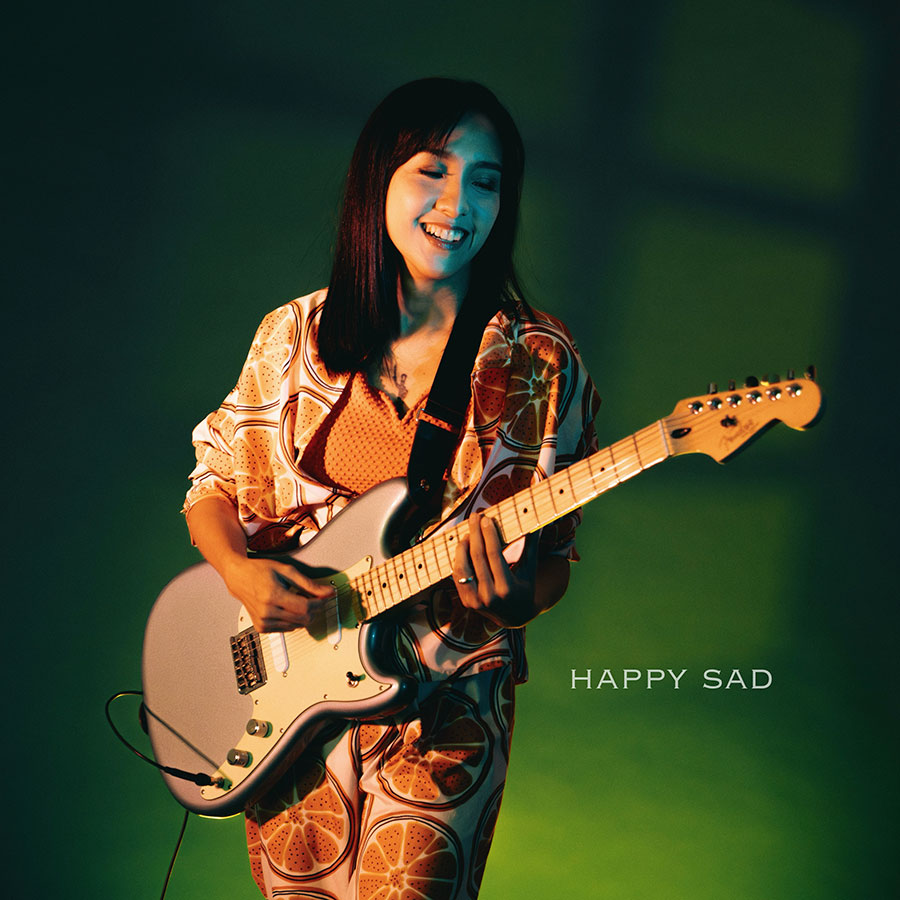
BARBIE ALMALBIS continues to confront her inner struggles in the form of another song that openly addresses them. “Happy Sad” reflects on her own mental health and the stigma behind it, while helping process her feelings through writing songs. Nick Lazaro, who also assisted in arranging the instrumental parts, produced the track. Eclectic Kiss artists such as Pikoy, Marika Laciste, Faye Yu, and Marj Rojas also contributed to the background vocals. “Happy Sad” is out now on all digital music streaming platforms.

DoubleDragon: Hotel101-Cebu fully sold, opening in 2025

TOPPING OFF CEREMONY of the 548-room Hotel101-Cebu Mactan Airport on Oct. 10. — DOUBLEDRAGON

THE 548-room Hotel101-Cebu Mactan Airport has been fully sold out before completion, DoubleDragon Corp. said on Thursday.

The listed property developer has completed the building structure and topmost floor of the Hotel101-Cebu Mactan Airport project, the listed property developer said in a statement, adding that the project will be opened within the first half of 2025.

The project, which sits on a 5,493-square-meter (sq.m.) commercial lot along Cebu Mactan Airport Terminal Road, is said to be the biggest airport hotel in Visayas.

With the addition of Hotel101–Cebu Mactan Airport to its portfolio of revenue-generating hotels, Hotel101 aims to gain additional strategic capital to achieve its goal of becoming a leading branded hotel chain both in the Philippines and internationally.

Hotel101 is the flagship property of Hotel of Asia, Inc., the hospitality arm of DoubleDragon.

The Hotel101-Cebu Mactan Airport project is also part of the company’s goal to reach one million operating Hotel101 rooms by 2050. Out of its one million targets, 50,000 are slated in the Philippines.

According to the company, the anticipated opening of the hotel in 2025 will be followed by the launch of the 519-room Hotel101-Davao.

“More Hotel101’s are currently in simultaneous development in various parts of the Philippines and overseas. Hotel101 adopts dynamic pricing on its room rates similar to airline tickets where its room price moves up and down depending on the real-time supply and demand on the chosen date of booking,” it said.

On Wednesday, DoubleDragon’s board of directors approved the issuance of P30-billion bond offerings.

At the local bourse on Thursday, shares in the company closed 34 centavos, or 3.36% higher, to end at P10.46 apiece. — Ashley Erika O. Jose

Peso weakens to 2-month low after Fed minutes

BW FILE PHOTO

By Aaron Michael C. Sy, Reporter

THE PHILIPPINE peso fell to a two-month low against the dollar on Thursday after markets grew more confident about a patient approach by the US Federal Reserve to further monetary easing, based on the minutes of the Federal Open Market Committee’s (FOMC) September policy meeting.

It closed at P57.36 a dollar, weakening by 34 centavos from its P57.02 close on Wednesday, according to Bankers Association of the Philippines data posted on its website.

This was the peso’s weakest close since P57.515 on Aug. 7.

The peso opened at P57.15 against the dollar, appreciated to as much as P57.11 and weakened to as much as P57.36 against the greenback. Dollars exchanged inched down to $1.57 billion from $1.58 billion a day earlier.

“The dollar-peso closed higher on dovish bets on the US Federal Reserve after the release of the FOMC minutes,” a trader said by phone.

Michael L. Ricafort, chief economist at Rizal Commercial Banking Corp., in a Viber message also attributed the stronger dollar to the minutes of the US central bank’s meeting last month.

The US dollar rose to a 10-week peak against the yen on Thursday as markets grew more confident about a patient approach by the Fed to further monetary easing, even as a key inflation report loomed later in the day, Reuters reported.

The dollar index, which measures the currency against six key rivals including the yen, stuck close to an almost two-month high touched overnight, as traders further pared bets for US rate cuts this year after last week’s unexpectedly strong payroll data.

Minutes from the Fed’s latest meeting, released overnight, confirmed the central bank’s focus on keeping the labor market healthy.

Traders lay 85% odds on the Fed cutting rates by 25 basis points at its policy meeting on Nov. 7, and a 15% probability of no change, the CME Group’s FedWatch Tool showed.

A week earlier, the probability of a quarter-point cut stood at 65%, with 35% odds for a half-point reduction.

A “substantial majority” of US Federal Reserve officials last month supported a half-point rate cut to start the turn toward easier monetary policy, but there appeared more universal agreement that the initial move would not commit the Fed to any particular pace of rate reductions in the future, minutes of the two-day policy meeting showed on Wednesday.

The minutes provided further details on the breadth of opinion within the Fed as policy makers approved a rate cut of a size usually reserved for moments when the central bank is worried the economy is slowing fast and needs the support of looser financial conditions.

Supporters of the half-point cut “observed that such a recalibration of the stance of monetary policy would begin to bring it into better alignment with recent indicators of inflation and the labor market,” according to the minutes of the Sept. 17-18 session, at which the Fed lowered the benchmark policy rate to 4.75% to 5% from 5.25% to 5.5% it had maintained since July 2023.

The trader expects the peso to trade at P57 to P57.50 a dollar, while Mr. Ricafort sees it at P57.25 to P57.35.

Can’t have more labor and more capital forever

PHILIPPINE STAR/JOHN RYAN BALDEMOR

At last, I was inducted into the membership of the Management Association of the Philippines (MAP) two days ago, many times postponed because of conflicting schedules. But glad I was because then the keynote speech was delivered by Dr. Robert Klitgaard, professor and former president of Claremont Graduate University who talked about, of all burning issues of the day in the Philippines, “Actionable Recommendations in Reducing Corruption in the Philippines.”

No, I am not about to assess his excellent points, supported by the reactor who was no less than a champion of clean government himself, former Department of Public Works and Highways Secretary Rogelio “Babes” Singson. Once upon a time, he purged the department of corrupt public servants. We need more time and space to give justice to Dr. Klitgaard’s inspiring message that if the Philippines was able to deal with corruption in at least two instances in the past, we can do it again!

But if corruption should persist, and I don’t even attempt to make any judgment on the kind of political candidates who filed their certificates of candidacy (CoCs) from Oct. 1-8, the efforts to address the issue of stagnant growth could be weakened. The reason is the so-called productivity drag which can be minimized if there’s timely and sufficient policy interventions or appropriate breakthroughs in technology. With corruption, the likelihood of both could be remote.

Higher productivity can squeeze more GDP from some given labor and capital, so the economy does not have to be fully dependent on more and more flows of both. Higher growth could lead to higher living standards, higher growth means higher public revenues, stronger soft and hard infrastructure. It’s no longer arguable that if the economy enjoys good public finance, funds are available to bring in new technology and transition to the digital platform. We can even afford to adapt to the imperatives of climate change and renewable energy.

As we wrote in another broadsheet, it is imperative for the Philippines to continue improving on the Government’s maximum target of 8% until 2028. We need to expand the economy much beyond that because of the huge handicap left by the pandemic in 2020, and the large deficit in our efforts to reduce poverty and income inequality. While official targets put us ahead of many countries in the world, we need no less than an economic transformation to allow us to catch up with the other ASEAN 5 countries and break out of the low-middle income group. We have been muddling through this category since 1987.

An interesting article by the IMF’s Nan Li and Diaa Noureldin published in the September Finance and Development and based on April’s World Economic Outlook observed that as of today, productivity growth “has markedly decelerated, accounting for more than half of the decline in global growth.”

In numbers, annual productivity growth in advanced economies declined from 1.4% in 1995-2000 to only 0.4% after the pandemic. Emerging markets, and they include the Philippines, saw their productivity drop from 2.5% to 0.8%. As the two economists described, “the situation is even grimmer for low-income countries, where productivity growth nose-dived from 2% in 2001-2007 to nearly zero after the pandemic.”

So, what drives productivity?

For Li and Noureldin, two main factors drive productivity growth: within-firm improvements and economy-wide allocative efficiency. The first is achieved when better technology is harnessed, management practices are enhanced, and innovative processes are adopted. It’s technology, management, and innovation.

We have seen that the rapid migration of top engineers and data scientists from and to the Googles, Apples, Microsofts, and Huaweis of this world is in itself a race for talent and productivity. Tech literature is replete with stories that document the importance of tapping research and technology. Corporates are enabled to create new products and services, or reinvent existing ones, allowing them greater market share and improving their global competitiveness.

What is sad about the Philippines is that we badly need cheap and reliable energy which could drive both technology and industrial growth. ICT services are not only slow, but they are also uneven. The penetration rate of internet services continues to be low which compromised the learning process of our young pupils during the pandemic. With scarce internet coverage, the cost of access is not exactly affordable. Based on the GSM Association (GSMA) Connectivity Index, the Philippines has shown constant improvement since 2014 on the key areas of infrastructure, affordability, consumer readiness, and content and services. Yet, the rate of improvement is so glacial that for seven years, the country has remained a “transitioner” and one of the lower-scoring in the region.

And here’s the catch: the IMF economists raised the issue of returns on investment in research and development (R&D). Yes, it’s surprising to know that the returns are diminishing. They cited the case of the semiconductor industry where more researchers were reported to be needed to double the density of chips. This seems to be true for the other sectors including ICT where the rapid gains in profitability flattened since the early 2000s.

The second driver therefore is indispensable, and this is allocative efficiency. This is all about allocating scarce resources across business for their most productive use. As Lin and Noureldin argued “this process ensures that the best businesses thrive, while less efficient ones exit the market.” Sounds heartless but in the long run, that is how to create public goods.

The situation in the Philippines in this respect is very challenging. The economy is not well diversified — whether in terms of regional growth and sources of national growth. Economic activities are highly concentrated in Luzon out of the three main islands, and in Luzon, mainly in the National Capital Region. There has been slow labor transition from agriculture, the pace and depth of manufacturing growth can be increased many times over. Instead of manufacturing, wholesale trade, real estate and financial services are preponderant.

And what is the catch for this second driver of productivity?

Believe it or not, despite the new technology and proliferation of various economic and business laws — or perhaps because of these — misallocation of capital and labor has actually increased! It is claimed that such misallocation has dragged down productivity growth by an annual average of 0.6 of a percentage point. Productivity losses because of resource misallocation are due to economic frictions such as regulatory barriers, rigid labor markets, access to finance, and illiberal trade. These are mainly structural issues that could be mitigated by targeted policy interventions.

Without them, and in the flattening of returns on investment in technology, the IMF economists proposed that global growth could be stagnant at 2.8% by the end of this decade, or one percentage point from pre-pandemic level.

Specifically, how does one address the issue of resource misallocation?

Lin and Noureldin suggested a few pathways. Reduction of barriers to market entry and promoting competition is one. What the Philippines started in the early 1990s in industry deregulation and liberalization of foreign trade are steps in the right direction, but more needs to be done. Financial markets can be liberalized, as has been pursued by the Bangko Sentral ng Pilipinas in the last 20 years. Access to funding at market cost should be as wide as possible to encourage business innovation and expansion. Reducing labor market rigidities is another indispensable policy action. Facilitating labor mobility across economic sectors will likely result in a better match between labor supply and demand. Overall productivity is likely to increase.

Finally — and this is where we shall pick up next week — institutional barriers have to be strongly dealt with in order to achieve long-term growth. “Issues such as corruption and weak property rights must be tackled through effective governance and institutional reforms.” We need even-handed regulations and best market practices to create a conducive environment for attaining higher and higher levels of productivity. Encouraging an ecosystem for technological innovation and adoption should lead to more efficient and competitive operations.

The IMF economists concluded their interesting paper by proposing a thought experiment. This would involve every country in the world closing their gaps with the best economic performers in terms of labor market flexibility, financial market liberalization, and regulation of certain product markets. They project that if this were to be done by at least 15%, something that seems achievable given the past performance of many economies, they wrote “the drag on annual productivity growth from allocative efficiency could be eliminated, reversing the decline in productivity and boosting growth.”

For obvious reasons, we cannot always have more labor and more capital at any instance. Paraphrasing that famous quote about working capital, labor and capital are like your diet; if you do not manage them, then they can kill you.


Diwa C. Guinigundo is the former deputy governor for the Monetary and Economics Sector, the Bangko Sentral ng Pilipinas (BSP). He served the BSP for 41 years. In 2001-2003, he was alternate executive director at the International Monetary Fund in Washington, DC. He is the senior pastor of the Fullness of Christ International Ministries in Mandaluyong.


Macron: Emily in Paris must return to… Paris

LUCIEN LAVISCOUNT and Lily Collins in a scene from Emily in Paris. — IMDB

PARIS — French President Emmanuel Macron said he would fight to ensure Emily — the heroine of Netflix’s hit series Emily in Paris — returns to the French capital from her sojourn in Rome.

“We will fight hard. And we will ask them to remain in Paris! Emily in Paris in Rome doesn’t make sense,” Mr. Macron told Variety magazine, in an interview published on Wednesday.

The fourth season of the series saw American expatriate Emily — played by actress Lily Collins — move from Paris to Rome for work.

The success of the series, which took off after debuting during the COVID lockdowns of 2020, has been such that Mr. Macron’s wife Brigitte had a cameo appearance in the last season.

“I was super proud, and she was very happy to do it. It’s just a few minutes, but I think it was a very good moment for her,” said Mr. Macron, regarding his wife’s cameo.

“I think it’s good for the image of France. Emily in Paris is super positive in terms of attractiveness for the country,” he added.

The program has won fans with its idealized and romanticized version of life in Paris, but has also been criticized for often bearing little resemblance to the reality of life in the capital, and for avoiding Paris’ poorer areas. — Reuters

Aboitiz, House of Investments partner for Tarlac Economic Estate

In an agreement signed on Oct. 9, in Makati City, the Yuchengco Group’s nonbank holding company House of Investments, Inc. (HI) and Aboitiz InfraCapital, Inc., the infrastructure arm of the Aboitiz Group, will be incorporating HI’s 184-hectare property as part of AIC’s expanded TARI Estate in Tarlac, adding mixed-use components that will complement TARI Estate’s industrial and business offerings. Leading the signing were Lorenzo V. Tan, HI president and chief executive officer and Cosette V. Canilao, AIC president and chief executive officer.

ABOITIZ InfraCapital, Inc. has partnered with Yuchengco-led House of Investments, Inc. (HI) to develop and expand its Tarlac Economic Estate.

“This partnership builds on the strong momentum we’ve already achieved, further enhancing investor interest and confidence in TARI Estate,” Aboitiz InfraCapital Head of Economic Estates Rafael P. Fernandez de Mesa said in a statement released on Thursday by parent firm Aboitiz Equity Ventures, Inc.

In separate stock exchange disclosures, the companies said the partnership will be through a joint venture under House of Investments’ Tarlac Terra Ventures Inc.

The tie-up, which is still awaiting corporate and regulatory approvals and the finalization of a definitive agreement, aims to expand Aboitiz InfraCapital’s TARI Estate.

The infrastructure arm of the Aboitiz group said the collaboration for the joint development of its Tarlac Economic Estate through Tarlac Terra Ventures will incorporate House of Investments’ 184-hectare property adjacent to its estate’s ongoing development.

Tarlac Terra Ventures, the owner of the 184-hectare property, is owned by House of Investments. Under its newly formed agreement, House of Investments will retain a 51% stake, while Aboitiz InfraCapital will hold the remaining 49%.

Aboitiz InfraCapital said the development will also utilize mixed-use components to complement its industrial and business offerings.

“Together, the two companies plan to develop and market the land for various mixed-use purposes, enhancing the overall ecosystem within the expanded TARI Estate. The project is aligned with Aboitiz InfraCapital’s long-term vision of creating a smart and sustainable community hub in Central Luzon,” it said.

Aboitiz InfraCapital also said the collaboration aims to boost the regional economy by generating more jobs and attracting both local and foreign investors.

“This joint venture will be an expansion of HI’s business interests into land development, diversifying our property portfolio. We aim to provide long-term value through flexible, sustainable, and forward-thinking real estate solutions,” House of Investments President and Chief Executive Officer Lorenzo V. Tan said.

Aboitiz InfraCapital’s TARI Estate has an initial 200-hectare development, the company said, adding that the integration of House of Investments’ mixed-use property will transform the property into a “range of opportunities for industrial, commercial, and business activities within the estate.”

At the stock exchange on Thursday, shares in Aboitiz Equity Ventures closed five centavos, or 0.13% higher, at P37.25 apiece, while shares in House of Investments closed unchanged at P3.50 per share. — Ashley Erika O. Jose

Central bank approves BPI sale of stake in GoTyme Bank

THE BANGKO SENTRAL ng Pilipinas (BSP) has approved Bank of the Philippine Islands’ (BPI) sale of its shares in GoTyme Bank, which it gained from its merger with Robinsons Bank Corp. (RBC).

“Please be advised that in its Resolution No. 1145 dated Oct. 3, the (BSP) approved the sale of BPI’s shareholdings in GoTyme Bank Corp. in favor of GoTyme Financial Pte. Ltd. and Giga Investment Holdings Pte. Ltd.,” the Ayala-led lender said in a stock exchange filing.

BPI’s board of directors approved the sale on March 20. The bank’s representatives on April 1 then signed the deeds for absolute sale.

Gokongwei-led JG Summit Capital Services Corp. and Tyme Group earlier said their board of directors had also approved plans to buy out BPI’s minority stake in the digital lender.

BPI earlier said it sold its stake in GoTyme Bank “to address any potential conflict of interest created by the significant overlap in and similarity of product offerings of GoTyme Bank and BPI.”

Under the transaction, BPI sold 752.06 million common shares in GoTyme Bank at P1.20 per share, or P902.47 million in cash.

It said 744.1 million common shares in GoTyme were sold to Gokongwei-led GoTyme Financial, while 7.96 million common shares went to Giga Investment.

The shares sold by BPI accounted for 15% of the outstanding capital stock of GoTyme Bank.

The merger between BPI and Robinsons Bank took effect on Jan. 1, with BPI as the surviving entity.

GoTyme Bank is a partnership between the Gokongwei and Tyme groups. It is one of the six digital banks licensed by the BSP to operate in the country.

The online lender began commercial operations in October 2022 and is targeting 5 million customers by yearend from about 3 million now. It also expects to turn a profit within the next three years.

BPI’s net income grew by 17.5% to P15.3 billion in the second quarter on faster revenue growth. This brought its first-half earnings to P30.56 billion, up by 21.51% year on year.

Its shares closed at P141 on Thursday, down by a peso from the previous day’s finish. — Aaron Michael C. Sy

DoLE estimates POGO job losses at 30,000

PHILSTAR FILE PHOTO

THE Department of Labor and Employment (DoLE) said about 30,000 workers in the Philippine Offshore Gaming Operator (POGO) industry are expected to lose their jobs once their employers shut down.

POGOs, which are now officially known as Internet Gaming Licensees (IGLs), were ordered shut down by the end of the year after the president announced a ban in July.

Earlier this week, at he Labor Inspection Summit in Pasay City, Labor Secretary Bienvenido E. Laguesma told BusinessWorld that IGLs based in Metro Manila have finished profiling the workers set to lose their jobs.

A total of 51 companies in the National Capital Region (NCR), including IGLs, accredited providers, and a special class of business process outsourcing (BPO) firms have finished profiling workers, he said.

Region 4-A (Cavite, Laguna, Batangas, Rizal, Quezon) will finish profiling this month.

“What we are seeing in Region 4, for example, is around 6,000 to 7,000 (are still yet to be profiled). So, the total could reach more or less 30,000 plus,” Mr. Laguesma said.

“We are still looking into those who will be indirectly affected because even though the program is currently focused on those directly affected or the employees of IGLs, we cannot overlook that there will be those indirectly affected by the closure,” he added.

President Ferdinand R. Marcos, Jr., in his State of the Nation Address in July, ordered IGLs banned, citing the criminal activity connected with the industry.

“In Region 4A, which also has four or five IGLs, we are waiting for the completion of their profiling, and according to our regional director, they will also be done within this month,” Mr. Laguesma said.

“We need to finish this early so we can prepare for the interventions DoLE plans to undertake. It’s not just about employment facilitation through job fairs, but we can also help through livelihood projects,” he added.

“Likewise, we can assist in the upskilling or reskilling of workers, as many of them have knowledge of IT and BPO. We are somewhat optimistic that we can help. If not all, then a large portion of the workers. But the President’s directive is to help all those affected,” he added.

Job fairs for IGL workers kicked off Thursday in two Ayala Malls in Metro Manila, Mr. Laguesma said.

Last month, the Philippine Amusement and Gaming Corp. (PAGCOR), the industry’s regulator, said as many as 42,000 Filipino workers would be affected by the ban.

Catalino B. Alano, Jr., PAGCOR’s external communications and corporate communications assistant vice-president, earlier told BusinessWorld the number is composed of IGL workers, service providers, and special BPOs.

He added that as of July 1, only 41 registered IGLs remain, in the NCR, Laguna, and Cavite. Special BPOs number 14 and accredited providers 20. — Chloe Mari A. Hufana