Home Blog Page 1992

Kamala Harris labels current federal minimum wage as ‘poverty’ pay

KAMALA HARRIS — GAGE SKIDMORE/WIKIMEDIA.ORG

 – Vice President and Democratic presidential candidate Kamala Harris said on Monday the U.S. must raise its federal minimum wage, and she labeled the current minimum wage of $7.25 an hour as “poverty wages.”


WHY IT’S IMPORTANT

Ms. Harris tried to draw a contrast with Republican presidential candidate and former President Donald Trump on this issue. Trump and Harris face each other in what polls show to be a tight race for the Nov. 5 U.S. elections.

On Sunday, Mr. Trump conducted a campaign stop in a closed McDonald’s restaurant in suburban Philadelphia, where he did not answer directly when asked if he would support an increase in the minimum wage that would benefit fast-food workers.


KEY QUOTES

“The current federal minimum wage is $7.25 an hour, which means that the person who is working a full day and full weeks will make $15,000 a year, which is essentially poverty wages,” Harris told reporters during a campaign stop in Royal Oak, Michigan.

“I absolutely believe that we must raise minimum wage,” she added. Ms. Harris did not mention the exact amount to which she wanted the minimum wage raised in her remarks on Monday.


CONTEXT

Both Mr. Trump and Ms. Harris have in recent weeks made economic pledges to woo voters. Harris has said she will aim to pass a middle class tax cut, while Mr. Trump has advocated cutting taxes on overtime pay. Both candidates have supported eliminating taxes on tips.

Lawsuits against Sean ‘Diddy’ Combs pile up as his lawyers seek gag order

Sean “Diddy” Combs on the talk show Late Night with Seth Myers. — IMDB

 – Sean “Diddy” Combs has been hit with seven new sexual abuse lawsuits, as his lawyers asked the judge overseeing the music mogul’s criminal sex trafficking case for a gag order against Combs’ accusers and their lawyers.

The civil lawsuits were made public on Sunday and Monday by four men and three women over alleged misconduct in New York, Los Angeles and Las Vegas dating to 2000 but mainly in 2022, the accusers’ lawyer Tony Buzbee said on Facebook.

Some lawsuits said unidentified celebrities also assaulted Combs’ accusers.

Mr. Combs, 54, faces at least two dozen civil lawsuits accusing him of sexual misconduct, including 13 from Mr. Buzbee’s firm.

He has denied wrongdoing. The Bad Boy record label founder has also pleaded not guilty in the criminal case, and is appealing his now five-week detention in a Brooklyn jail known for poor living conditions after being denied bail twice.

The new lawsuits compound the legal problems for Mr. Combs, who according to prosecutors coerced victims into participating in sex acts against their will, bribing and intimidating them into keeping quiet, and employing his staff to hide it all.

All seven plaintiffs used the pseudonyms John Doe or Jane Doe. Five sued in federal court and two sued in a New York state court, all in Manhattan.


‘READY TO PARTY’

In one new lawsuit, the plaintiff said she was 13 when Mr. Combs drugged and assaulted her at an afterparty for the 2000 MTV Video Music Awards in New York.

She said Mr. Combs and an unnamed male celebrity vaginally raped her while an unnamed female celebrity looked on, after Mr. Combs proclaimed “You are ready to party!”

Another accuser said he was a 17-year-old aspiring artist making small talk with Mr. Combs at a 2022 party in a Manhattan hotel penthouse, with Mr. Combs assuring him that “he could make him a star.”

Mr. Doe said Mr. Combs drugged him with a drink and later assaulted him, including by grabbing his genitals, in a room where others engaged in group sex.

In response to the lawsuits, Mr. Combs’ lawyers referred to a statement addressing Buzbee’s earlier lawsuits.

“Mr. Combs and his legal team have full confidence in the facts, their legal defenses, and the integrity of the judicial process,” the lawyers said. “In court, the truth will prevail: that Mr. Combs has never sexually assaulted anyone – adult or minor, man or woman.”

Mr. Buzbee’s firm said it represents more than 150 of Mr. Combs’ accusers.


CHARACTER ASSASSINATION

Mr. Combs faces a May 5, 2025 criminal trial on three felony counts of racketeering conspiracy, sex trafficking and transportation to engage in prostitution.

The gag order request from Marc Agnifilo, Mr. Combs’ primary lawyer, seeks to block potential government witnesses and their lawyers from making statements that substantially interfere with Combs’ right to a fair trial.

Mr. Agnifilo objected to numerous statements “aimed at assassinating Mr. Combs’ character in the press,” including false allegations of sexual abuse of children.

He asked the judge to order prosecutors to reveal whether they authorized such statements, and to order the witnesses and lawyers to take down online statements under their control.

U.S. District Judge Arun Subramanian, who oversees the criminal case, ordered prosecutors to respond by Oct. 30.

A spokesperson for U.S. Attorney Damian Williams in Manhattan, whose office is prosecuting Combs, declined to comment.

The five new federal civil lawsuits were assigned to five different judges. Two ordered the plaintiffs to justify in writing why they should remain anonymous. – Reuters

Sangley airport dev’t still uncertain

STOCK PHOTO | Image by Rudy Dong from Unsplash

By Ashley Erika O. Jose, Reporter

THE Transportation department said the development of Sangley Point International Airport (SPIA) remains uncertain as the joint-venture company still has to secure other approvals before the project moves forward.

This comes after the Philippine Competition Commission (PCC) announced on Monday that it has approved the proposed joint venture between the Cavite provincial government and the SPIA consortium that includes Virata-led Cavitex Holdings, Inc. and Yuchengcos’ House of Investments, Inc.

“Generally speaking, this project is still at the early stage,” Transportation Undersecretary for Aviation and Airports Roberto C.O. Lim said in a phone interview on Monday.

Following the PCC approval, the consortium must submit their proposal which includes the detailed engineering design, Mr. Lim said.

“The Department is waiting for the proponents to submit the plans. We are still waiting for their submission so that the DoTr (Department of Transportation) can look at it and evaluate it,” he said.

Mr. Lim said the consortium also needs to secure an environmental compliance certificate (ECC) to start the project.

“The ECC compliance is another thing that they have to secure because it is in the water and that is an issue. I think the Philippine Reclamation Authority approval is another agency that needs to give its clearance,” he said.

For now, Mr. Lim said it is hard to say if the group can accomplish all the necessary approvals within the year.

Separately, the Transportation department and Civil Aviation Authority of the Philippines (CAAP) said it will expedite its evaluation of the project as soon as possible.

“The joint venture needs to submit to DoTr and CAAP the relevant project documents indicating the scope, design, financials, technical and aeronautical studies, timelines, plans, for evaluation. DoTr and CAAP shall expedite the evaluation of the documents as soon as they are received from the joint venture,” DoTr said in a statement.

In July, House of Investments told the stock exchange that the PCC approved the joint-venture company for the SPIA project.

On Monday, the PCC issued a statement, saying it concluded that the transaction, involving a public-private partnership (PPP) project through a joint-venture agreement, will not result in a “substantial lessening, restriction, or prevention of competition in the relevant market.”

PCC said that its decision was based on three main points — the competition in the construction services market, the link between the companies as major market players, and the potential possibility of overlapping business.

“The Commission found that competition between construction companies was robust due to the presence of numerous qualified contractors in the construction services market,” PCC said.

According to the PCC, it found that the relationship between House of Investments and EEI Corp., where it owns a majority stake, will not block other construction companies from finding customers.

“The Commission found that the companies working together on this project do not have overlapping businesses, and that the presence of numerous companies in the market helps in sustaining competition,” PCC said.

NOT FEASIBLE?
Rene S. Santiago, former president of the Transportation Science Society of the Philippines, said the Sangley Point Airport in not expected to be feasible with the current operations of Ninoy Aquino International Airport (NAIA), Clark International Airport and the development of the New Manila International Airport (NMIA) in Bulacan.

“For the Philippines, Sangley Airport is one too many airports. Airports are agglomerative, contrary to the adage of the more the merrier. Sangley is unlikely to be viable without two conditions: closure of NAIA and an expressway link to Manila,” Mr. Santiago said in a Viber message on Monday.

For Nigel Paul C. Villarete, senior adviser on PPP at the technical advisory group Libra Konsult, Inc., the Sangley Point Airport remains important and still has the potential to be economically sound.

“We still need to build the road connection to Metro Manila. It may have its advantages; many world capitals have multiple airports. The determinant conditions are economic viability which will be dependent on passenger volume,” Mr. Villarete said in a Viber message.

DoTr’s Mr. Lim said that the current plan right now is to enhance the existing facilities as a general aviation airport.

“Sangley is now operating on a limited basis. There are limited operations through general aviation aircraft,” he said.

Mr. Lim also added that the next important infrastructure that needs to be built is a dedicated road to Cavite City.

“So that airlines will be attracted to relocate their operations to Sangley, because the customers would always be sensitive about that. Right now, that is a missing piece,” Mr. Lim said, although he declined to further give details about this plan.

The Cavite Provincial government awarded the $11-billion project to the consortium in 2022.

The consortium is targeting to develop the airport into an international hub that will meet future demand.

The National Government currently operates Cavite City’s Sangley Point as a supplemental runway to the Ninoy Aquino International Airport.

In February 2023, the SPIA consortium and the Cavite provincial government signed the joint-venture and development agreement for the project’s implementation.

House of Investments, along with other Philippine members of the consortium, including MacroAsia Corp., signed the development agreement with the Cavite provincial government.

Samsung C&T Corp., Munich Airport International GmbH, and Ove Arup & Partners Hong Kong Ltd. are also involved in the project.

High household debt raises bank asset risks in Southeast Asia

A credit card is used on a payment terminal in this illustration picture. — REUTERS

THE BANKING SECTOR in Southeast Asia, including the Philippines, may face asset quality risks amid rising household debt, Moody’s Ratings said.

“High household debt amid elevated interest rates have increased asset risks to several Association of Southeast Asian Nations (ASEAN) banking systems and weakened their credit profiles,” it said in a report.

“Most ASEAN economies saw a sizable increase in household debt over the past decade, supported by strong consumption spending and improving financial inclusion.”

In its report, Moody’s Ratings looked at six ASEAN economies including the Philippines and assessed the overall risk of the household sector to each country’s banking systems. It studied risk factors such as interest rate environment, retail lending growth, and capital and loan loss buffers, among others.

Using this assessment, the Philippines faces a “moderate” risk, same as Malaysia and Indonesia. Thailand and Vietnam had a “high” overall risk, while Singapore obtained a “low” assessment.

“In Indonesia and the Philippines, banks face a moderate level of risk given that households are not highly leveraged and the stable operating environment of these banking systems will support overall asset quality,” Moody’s Ratings said.

“Household debt has risen steadily over the past decade, with banks as the primary lender to the household sector across ASEAN.”

Moody’s said that the increase in household lending was driven by strong private consumption in the past decade. It noted household debt was expanding faster than economic growth in several countries.

“This is inextricably linked to the region’s robust economic growth, which is among the highest globally, and in Indonesia, the Philippines and Vietnam, growth is in tandem with efforts to improve financial access,” it said.

Bank lending rose by 10.7% year on year to P12.25 trillion in August, its fastest growth rate in nearly two years, the latest data from the Bangko Sentral ng Pilipinas (BSP) showed.

However, the growth in consumer loans to residents eased to 23.7% in August from 24.3% a month prior. Slower loan growth was recorded in credit cards (27.4% in August from 28.2% in July), motor vehicles (19.3% from 19.9%), and salary-based general purpose consumption loans (16.4% from 16.5%).

“While household debt in Indonesia, the Philippines and Vietnam has grown at a faster pace, this is from a low base and overall household leverage remains below regional peers,” it said.

“We expect household debt growth will continue to outpace gross domestic product (GDP) growth over the medium term across most ASEAN economies, as credit demand improves in tandem with the normalization of interest rates and stronger economic growth across the region,” it added.

Moody’s Ratings attributed the rise in household debt to improving financial inclusion, particularly in the Philippines, Indonesia and Vietnam, citing the continued digitalization of banking services.

“As financial access improves over time, we expect the most populous economies will be the main driver of growth in household debt in the region.”

The share of Filipinos with bank accounts reached 65% of the adult population in 2022. The BSP wants at least 70% of adult Filipinos to be part of the formal financial system.

Moody’s Ratings also noted that household finances in the region have been “under strain” amid elevated inflation and high borrowing costs.

It noted that monetary tightening was the “steepest” in the Philippines. The Philippine central bank raised borrowing costs by a cumulative 450 basis points (bps) from May 2022 to October 2023 to tame inflation, bringing the policy rate to a 17-year high of 6.5%.

“Looking ahead, we expect the debt repayment capacity of retail borrowers to remain under strain over the medium term from the region’s high interest rate environment and modest income growth,” it said.

“While declining interest rates and stable economic conditions will alleviate asset quality pressures, the overall risk to each banking system will vary based on risk factors such as the extent of household indebtedness and buffers maintained by banks.”

The pandemic also weakened households’ financial buffers against future shocks, which would then increase the asset risks of ASEAN banks, Moody’s Ratings said.

“Consequently, the regional average of NPLs in the retail segment, as a percentage of gross loans, has increased from 1.9% to 2.3% from 2019 to 2023 with most of the deterioration in Vietnam and the Philippines,” it added.

The latest BSP data showed that the Philippine banking industry’s gross nonperforming loan (NPL) ratio rose to 3.59% in August, hitting a fresh two-year high.

Moody’s Ratings also noted that underperforming loans in the retail segment have also increased in Thailand, the Philippines and Vietnam.

“Overall loans at risk… are higher in the Philippines, Thailand and Malaysia, economies which have either higher levels of household leverage or below average household income,” it said.

If NPLs continue to remain elevated, this could weigh on the asset quality of banks in the region, Moody’s Ratings said.

“Banks in Vietnam and the Philippines have shifted their growth focus towards retail loans, to optimize profits and capture growing credit demand in the segment.”

“In these economies, asset risks from the rapid growth in retail loans will increase as the nominal income of individual borrowers is not keeping pace with increases in their debt burdens, while high inflation has eroded real income,” it added.

The report also cited the risk of a higher proportion of unsecured retail lending of banks in the Philippines and Thailand.

“According to the Bank of Thailand, personal loans and credit cards accounted for around 20%-30% of total household debt in 2023 while in the Philippines, credit cards alone formed around 28% of total retail loans.”

“As a result, banks in these economies will need to maintain more capital given the higher risk weights for these products relative to mortgages. They would also need to create more provisions for delinquencies given the exposures to these portfolios are typically not collateralized.” — Luisa Maria Jacinta C. Jocson


Some oil firms considering hike in bioethanol blend

Oil firms announced a rollback in the price of gasoline by P0.50 per liter, diesel by P0.70 per liter, and kerosene by P0.85 per liter, which will take effect on Tuesday (Oct. 22). — PHILIPPINE STAR/MIGUEL DE GUZMAN

By Sheldeen Joy Talavera, Reporter

SEVERAL OIL FIRMS have committed to complying with the government’s mandate of higher coco biodiesel blend while considering voluntarily increasing bioethanol blend as well.

SEAOIL Philippines, Inc. said it is fully compliant with the B3 biodiesel mandate in all of its stations nationwide.

“We have formally expressed our intent to the Department of Energy (DoE) to participate in the implementation of the E20 ethanol blend in gasoline,” SEAOIL said in a statement sent to BusinessWorld.

Biofuel blends are numbered by the share of the non-petroleum material in the fuel, with the B3 blend indicating 3% coconut content and E20 referring to 20% ethanol content.

Republic Act. No. 9367, otherwise known as the Biofuels Act of 2006, mandates that all liquid fuels for motors and engines contain locally sourced biofuel components.

Since February 2009, oil firms had been required to implement a 2% biodiesel blend by volume in all diesel fuel sold and distributed in the country.

Starting Oct. 1, all diesel fuel sold in the country should contain a 3% coco methyl ester (CME) blend, as directed by the Energy department. The CME blend will further increase to 4% by Oct. 1, 2025 and to 5% a year after.

Oil companies can also offer gasoline fuel containing 20% bioethanol blend on a voluntary basis, increasing from the mandated 10% blend.

Cebu-based fuel retailer Top Line Business Development Corp. is also compliant with the government’s mandate of higher biodiesel blend, according to its President and Chief Executive Officer Eugene Erik C. Lim.

“As to bioethanol, we are still using the current blend,” Mr. Lim said in a Viber message. “We might (increase bioethanol blend) but just need to check the timeline for this.”

Leo P. Bellas, president of Jetti Petroleum, Inc., said that the oil firm started distributing diesel with 3% CME at its stations starting this month. The diesel sold to commercial and bulk customers is also B3.

Mr. Bellas said that the company has no plans of distributing diesel with 20% bioethanol blend in its existing stations but is considering making the gasoline grade available in its four new stations that are currently under construction.

“For the E20, it’s a decision to support the initiatives of the DoE,” Mr. Bellas said.

Pablo Luis S. Azcona, administrator of the Sugar Regulatory Administration (SRA), said that the Philippines only produces about one-third of the bioethanol demand, or 250 million liters. The rest are being imported.

“So far the increase in ethanol blend will bring an increase in molasses demand, which is good for our Filipino farmers,” Mr. Azcona said in a Viber message.

The SRA chief said that they have noticed an increase in price for molasses, a by-product of sugarcane products that can be used as a raw material in bioethanol production.

“The move to 20% (bioethanol blend) will lower the overall cost of ethanol as more imported will be added,” Mr. Azcona said.

He said that oil companies are allowed to import after they have fully consumed local supply.

For the biodiesel mandate, a major issue raised by oil firms was the “sustainability in supply of CME,” according to a report dated Oct. 14 from the United States Department of Agriculture (USDA), citing the DoE’s public information, education, and communication campaign in Manila.

“The coconut oil produced is mainly for export which commands a higher price. To comply with the mandated blend, oil companies want to be assured of CME supply given that domestic coconut production has been declining in the country,” the USDA said.

USDA has projected coconut oil production to decline by 15% to 1.6 million metric tons during the 2024 to 2025 market year due to the reduction in coconut supply.

The agency also said that oil companies are concerned over the price of CME, which climbed to P90-P95 per liter in 2024 from P57 per liter in 2021.

However, consumers are expected to benefit with the increase in mileage or the number of miles a vehicle can travel.

“The higher biodiesel blend could translate to better mileage for vehicles, as well as lower harmful emissions. As of now, oil companies have yet to reflect the cost of the increased biodiesel blend in the price of diesel since we are still in the transition phase,” Mr. Bellas said.

Meanwhile, oil firms announced on Monday a rollback in the price of gasoline by P0.50 per liter, diesel by P0.70 per liter, and kerosene by P0.85 per liter. The price reduction will take effect on Tuesday (Oct. 22).

Since January, the total adjustment of gasoline and diesel stands at a net increase of P8.55 per liter and P6.05 per liter, respectively. Kerosene has decreased by P3.60 per liter since the start of the year.

Philippines’ top entrepreneurs to be honored at awards gala

The EY Entrepreneur Of The Year 2024 Philippines has concluded its search for the country’s most visionary leaders shaping opportunities and transforming industries. It is a program of the SGV Foundation, Inc., with co-presenters: the Asian Institute of Management, the Department of Trade and Industry, the Philippine Business for Social Progress, and the Philippine Stock Exchange.

THE SEARCH for the EY Entrepreneur Of The Year 2024 Philippines is set to conclude with a much-awaited awards gala at the Makati Shangri-La on Wednesday (Oct. 23).

This year’s search has identified 11 outstanding entrepreneurs from diverse industries who are shaping opportunities and leading enterprises that help transform communities and uplift the nation.

George T. Barcelon is a pioneer of the information technology industry in the Philippines. His foresight enabled him to found Integrated Computer Systems, Inc. in 1978. Today, the company has evolved into a systems integrator and managed service provider, offering a wide range of technology solutions and holding strong partnerships with global technology brands.

Despite his early life struggles, Antonio L. Co saved up enough to establish Carrascal Nickel Corp. As a founder of the Philippine Nickel Industry Association, he has been instrumental in positioning the country as a top exporter of nickel ore and is committed to sustainability, environmental stewardship and social responsibility.

Elenita C. Dela Rosa, after spending years working abroad in the fintech industry, came home to start ECo Global Consulting, Inc., an IT solutions and services provider for core banking systems. Championing local economic development, the company built ECOSLAi, a first-of-its-kind full core banking and lending platform for the digitalization of rural banks and microfinance institutions.

Macario S. Fojas tapped into the potential of Java when he founded Seven Seven Global Services, Inc., propelling it to the forefront of the Philippine Information Technology-Business Process Management sector. His leadership helped the company place thousands of Filipinos in lucrative roles in application development, quality assurance, infrastructure support, technical helpdesk and back-office services across the IT and business process outsourcing sector.

Anna Losanta Marie R. Lagon owns and operates homegrown fashion brand Bayo, acquiring it in 2013. Beyond growing the brand, she has transformed Bayo Manila, Inc. into a sustainable enterprise that celebrates Filipino heritage and practices community engagement, raising consumer awareness and promoting Earth-friendly fashion practices as well as partnering with grassroots associations who practice traditional crafts.

Jacinto Ng, Jr. established Raemulan Lands, Inc. to address the backlog of socialized housing for the low-income market. In addition to developing over 30,000 homes in eight years, the company has implemented values and skills development programs for residents and installed rooftop solar energy panels in their houses, helping to build more sustainable communities.

Ruth Yu-Owen founded Upgrade Energy Philippines, Inc. as a joint venture focused on rooftop solar projects and offering a broad range of services for commercial and industrial solar solutions. Strategic partnerships propelled the company’s growth, with a target of 500-MW renewable energy and 200-MW rooftop solar by 2028.

Rosemarie P. Rafael established Airspeed with just a handful of people and a single van. Now the company has grown into a global logistics powerhouse, AIC Group of Companies Holding Corp., operating in over 90 countries. Always seeking to make an impact, she advocates for women’s leadership and implements initiatives that support small- and medium-sized enterprises that depend on their services.

Czarina J. Sevilla pivoted from a promising career in hospitality to establish Avocadoria.ph, which offers a diverse line of healthy avocado-based treats, such as ice cream, cakes, and shakes. Starting from a single stall then rapidly expanding to more than 200 outlets through franchising, Avocadoria has grown to encompass an advocacy that supports avocado farmers and a new line of avocado-based skincare and oil products.

Barbara G. Tan took over leadership of A.D. Gothong Manufacturing Corp., a major player in the Philippine fats and oils industry, from her late father. She brought a renewed sense of direction to the company, modernizing systems and processes and instilling a culture of professionalism, which have enabled it to thrive for nearly half a century.

Ambassador Leehiong T. Wee was born into poverty, but his relentless pursuit of betterment earned him an education and drove him to start the W Group, which is today an industry leader in the trading and export of seaweed and carrageenan products. Beyond growing the enterprise, his investments in seaweed farming in Mindanao have brought tremendous socioeconomic and ecological benefits in conflict-ridden areas.

From among these 11 finalists, winners will be recognized for each of these categories: Master Entrepreneur, Technology Entrepreneur, Woman Entrepreneur, Small Business Entrepreneur, and Young Entrepreneur.

One of these winners will be named the EY Entrepreneur Of The Year 2024 Philippines and will represent the country at the EY World Entrepreneur Of The Year awards in Monte Carlo, Monaco in June 2025. The EY Entrepreneur Of The Year program is produced globally by Ernst & Young (EY).

Media sponsors are BusinessWorld and the ABS-CBN News Channel. Gold Sponsors are SteelAsia Manufacturing Corp., Uratex, and Converge ICT Solutions, Inc. Silver sponsor is International Container Terminal Services, Inc. Bronze sponsor is Lausgroup Holdings, Inc. Banquet sponsors are Robert Blancaflor & Groups, Inc., Bounty Fresh Group Holdings, Inc., Vista Land & Lifescapes, Inc., and Hotel 101.

PHINMA group to build P12-B township in Bacolod

SALUDAD IS A 21-hectare master-planned mixed-use development forged through the partnership of PHINMA Properties and JEPP Corp., with design expertise from Royal Pineda+ Architecture·Design. — PHINMA Property Holdings Corp.

THE PROPERTY UNIT of PHINMA Corp. launched a P12-billion mixed-use township in Bacolod City on Oct. 19, expanding its portfolio and nationwide presence.

PHINMA Property Holdings Corp. (PHINMA Properties) introduced the 21-hectare Saludad township, which will feature a business district as well as various services from the PHINMA group, such as education from PHINMA Education Holdings, Inc. and hotel and event spaces from PHINMA Hospitality, the conglomerate said in a statement to the stock exchange on Monday.

The property developer partnered with JEPP Real Estate Co. for the mixed-use development, with design led by Royal Pineda+ Architecture • Design.

“This township will provide Bacolodnons and other locals more opportunities to improve their lives while finding their own community in Saludad,” PHINMA Corp. Chairman and Chief Executive Officer (CEO)Ramon R. del Rosario, Jr. said.

“This certainly inspires the group to harness our businesses’ strengths and ramp up investments to boost development in our regions and impact more lives,” he added.

The township will also have a town center with various dining, shopping, and entertainment selections, as well as residential spaces that will feature residential lots and medium-rise condominiums.

“We’re integrating the best of [Bacolod] in this township, embracing both heritage and modernity,” PHINMA Properties President and CEO Raphael B. Felix said.

Meanwhile, PHINMA Properties also launched the Likha Estates residential community inside Saludad.

The project will consist of modern living spaces, upscale amenities, and green spaces.

“Its various amenities enable a well-rounded lifestyle tailored to whatever their needs and desires are,” PHINMA Properties Vice-President and Chief Township Officer Paolo V. Reyes said.

On Monday, PHINMA Corp. shares fell by 2.16% or 45 centavos to P20.35 per share. — Revin Mikhael D. Ochave

How MGen’s RE focus could lead to MGreen IPO

MERALCO POWERGEN CORP. President and Chief Executive Officer Emmanuel V. Rubio

By Ashley Erika O. Jose, Reporter

MERALCO PowerGen Corp. (MGen) President and Chief Executive Officer (CEO) Emmanuel V. Rubio is bullish on the company’s future, banking on its renewable energy (RE) projects to establish MGen as a powerhouse in the Philippines.

“The optimized market that’s running at the moment is enticing for investments,” Mr. Rubio said in an interview with BusinessWorld.

With nearly two decades of experience in the energy sector, Mr. Rubio has a strong background in the energy space, having served as former CEO of Aboitiz Power Corp.

“I have, of course, been exposed to the industry and been part of a number of associations within the industry. Hopefully, we will be able to contribute to some of the policies that are in place at the moment, being involved in the discussion to share insights on policies with the DoE (Department of Energy) and ERC (Energy Regulatory Commission),” Mr. Rubio said.

Incorporated in 2010, MGen is the power generation arm of Meralco, the listed power utility giant of the Pangilinan group.

MGen, through MGen Renewable Energy, Inc. (MGreen), controls SP New Energy Corp. (SPNEC), which Mr. Rubio said will put the company at the forefront of the renewable energy space.

SPNEC’s Terra Solar Philippines, Inc. is said to be the biggest renewable energy company, with projects consisting of a 3,500-megawatt solar power plant and a 4,000-megawatt-hour energy storage system. It is expected to generate more than five billion kilowatt-hours of electricity per year.

“Terra Solar is big. Right away, it is going to put us at the forefront of renewable energy. We will be the largest renewable energy company by the time it gets commissioned, with its first phase by 2026 and second phase by 2027,” he said.

IPO PROSPECTS
MGen is also seeing a growing market appetite for green companies, Mr. Rubio said, noting that MGen might potentially list its unit MGreen on the local bourse.

“There is nothing holding us back from considering listing MGreen. The matter is when and if we really need to. We are evaluating our options,” he said.

He said an initial public offering (IPO) for MGreen could happen sooner than five years.

To fully unlock energy security for the Philippines, Mr. Rubio said there is no one-size-fits-all solution and that energy companies should not be “technology agnostic” and must be open to emerging technologies.

“The reason why there is a portfolio is that each technology has a role to play, but one thing is clear, we really need to transition to clean technologies,” Mr. Rubio said.

MGen is interested in setting up energy storage systems to ensure the reliability of variable renewable energy projects, Mr. Rubio said, adding that it is also studying and evaluating energy technologies that are in the infancy stage in the country, like offshore wind projects.

“We are also looking at other opportunities, people that are offering partnerships with us in solar, and even offshore wind… We are really watching closely the development of energy storage. We are also looking at standalone batteries,” he said.

Manila Electric Co.’s (Meralco) majority owner, Beacon Electric Asset Holdings, Inc., is partly owned by PLDT Inc. Hastings Holdings, Inc., a unit of PLDT Beneficial Trust Fund subsidiary MediaQuest Holdings, Inc., has an interest in BusinessWorld through the Philippine Star Group, which it controls.

ABS-CBN’s financial recovery unlikely this year — analysts

PHILIPPINE STAR/BOY SANTOS

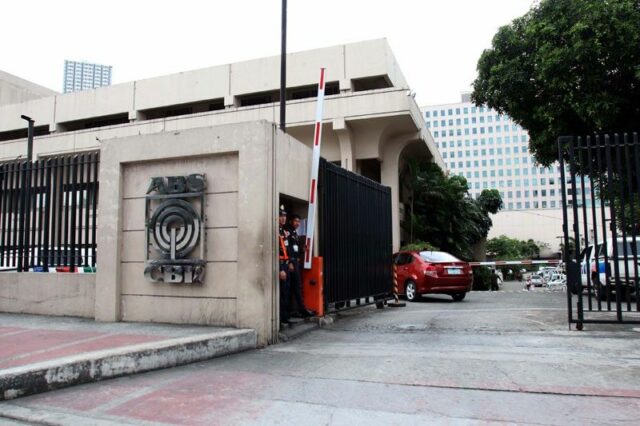
ABS-CBN Corp. may not achieve financial recovery this year due to declining advertising revenues and low investor confidence, according to analysts.

“Given the drop in consolidated revenues and the ongoing strain from lower advertising income, ABS-CBN is unlikely to see a significant financial boost this year,” Globalinks Securities and Stocks, Inc. Head of Sales Trading Toby Allan C. Arce said in a Viber message.

Last week, the company announced it would retrench 100 employees, or 3% of its total workforce, due to the ongoing decline in advertising revenues.

“The TV industry as a whole has been hurt by lower consumer spending, which translated into lower advertising spends. The company is also being affected by the global decline in the pay TV business,” it said.

Despite this, the company reported significant improvements in its television ratings and music business.

First Grade Finance, Inc. Managing Director Astro C. del Castillo said the company’s decision would likely spur mixed reactions from investors, while many would view the layoff announcement negatively as it is likely a sign of deeper financial troubles.

“This sentiment could lead to a decline in stock prices as investors sell off shares to mitigate potential losses,” Mr. Del Castillo said.

On the other hand, some investors might see the retrenchment as the company’s cost-cutting move and streamlining options to help improve its overall financial health, he added.

“While there are promising developments in digital platforms and content production, the overall outlook for ABS-CBN continues to be challenging,” Mr. Del Castillo noted.

During former President Rodrigo R. Duterte’s administration, lawmakers aligned with him denied ABS-CBN’s franchise renewal application. The House of Representatives committee on legislative franchises deemed the broadcast network critical of Mr. Duterte and “undeserving” of the privilege.

ABS-CBN’s attributable net loss widened to P1.18 billion for the second quarter from a loss of P965.28 million in the same period last year, according to its financial statement.

This is attributed to lower revenues for the period, which fell to P3.71 billion, lower by 18.1% from P4.53 billion a year ago.

“The broader industry decline and persistent losses suggest that ABS-CBN’s financial burdens may continue in the near term rather than showing signs of a full recovery,” Globalinks Securities’ Mr. Arce said. — Ashley Erika O. Jose

Arthaland P3-B follow-on offering gets PSE approval

ARTHALAND CENTURY PACIFIC TOWER — ARTHALAND.COM

THE PHILIPPINE STOCK Exchange (PSE) has approved the P3-billion planned follow-on offering (FOO) of listed property developer Arthaland Corp. to repay loans and fund a planned residential condominium project.

The FOO has a base offer consisting of up to four million cumulative, nonvoting, nonparticipating, nonconvertible, and redeemable peso-denominated Series F preferred shares and an oversubscription option of two million Series F preferred shares, both at P500 per share, the PSE said in a listing notice on Monday.

The FOO’s expected offer period is from Oct. 28 to Nov. 4, while the target listing date on the PSE is Nov. 14.

The company expects to generate P2.96 billion in net proceeds if the oversubscription option is fully exercised, of which P1 billion will be for the repayment of a short-term facility used to fund the redemption of the company’s Series C preferred shares fully drawn in June.

Another P1.14 billion will be used to partially fund an investment in a project company that will acquire and develop the property for a two-tower residential condo project called Project Teal, which has an estimated cost of P5.87 billion.

Arthaland is acquiring a 3,700-square meter residential property within the vicinity of major universities in northern Metro Manila for the project.

The project will be undertaken by Arthaland’s unit, Sotern Land Corp.

The first tower of Project Teal is scheduled for launch by the second quarter of 2025, with completion expected by 2029.

The second tower is set to be finished by 2031.

The company will also use part of the net proceeds for other loan payments as well as general corporate purposes.

Arthaland is also actively evaluating acquisition targets in the business districts of Makati, Bonifacio Global City, and other emerging cities.

BDO Capital & Investment Corp. was tapped as the sole issue manager, lead underwriter, and lead bookrunner for the planned offer.

Arthaland is a boutique real estate developer engaged in the development of residential, commercial, and leisure properties. Some of its projects include the Arya Residences, Arthaland Century Pacific Tower, Cebu Exchange, Savya Financial Center, Sevina Park, and Lucima.

On Monday, Arthaland shares fell by 1.2% or P0.005 to 41 centavos per share. — Revin Mikhael D. Ochave

Cebu Pacific to add 3 routes from Iloilo in Dec.

JGSUMMIT.COM.PH

CEBU PACIFIC is further boosting its Iloilo hub with the launch of three domestic routes in December, the budget carrier said on Monday.

In a statement, Cebu Pacific, operated by Cebu Air, Inc., said it will mount three new routes from Iloilo in December to increase inter-island connectivity within the region.

Starting Dec. 1, Cebu Pacific will offer daily flights between Iloilo and Tagbilaran, followed by flights between Iloilo and Daraga on Dec. 2, thrice weekly.

It will also operate Iloilo-Dumaguete flights, three times a week, beginning Dec. 3.

With the addition of three new routes, Cebu Pacific will now serve a total of 14 destinations from Iloilo, including two international routes to Hong Kong and Singapore, it said.

“We are excited to introduce three new domestic routes from Iloilo, which comes just in time for the holiday season when many Filipinos go the extra mile to visit loved ones in different provinces,” said Cebu Pacific President and Chief Commercial Officer Alexander G. Lao.

He said the company will continue exploring fresh routes and new opportunities to make travel more convenient and affordable.

Currently, the budget carrier operates flights to 35 domestic destinations and 26 international destinations across Asia, Australia, and the Middle East.

At the local bourse on Monday, shares in Cebu Air closed 30 centavos, or 0.86% lower, at P34.70 apiece. — Ashley Erika O. Jose

No change in airline fuel surcharge for Nov.

PHILIPPINE STAR/WALTER BOLLOZOS

THE CIVIL Aeronautics Board (CAB) is keeping the passenger fuel surcharge unchanged for November.

In an advisory on Monday, CAB retained the passenger surcharge at Level 4 for next month, the second time the fuel surcharge was set at this level for the year.

At Level 4, the passenger fuel surcharge is between P117 and P342 for domestic flights and P385.70 and P2,867.82 for international flights originating from the Philippines.

A fuel surcharge may be collected by airlines based on the movement of jet fuel prices, using a benchmark known as MOPS (Mean of Platts Singapore).

All airlines seeking to impose the November fuel surcharge must submit an application on or before the effectivity period, CAB Executive Director Carmelo L. Arcilla said.

For fuel surcharges that will be collected in foreign currency, the applicable conversion rate for airlines will be P56.09 to a dollar.

The global average jet fuel price rose 5.2% week on week as of Oct. 11 to $93.02 per barrel.

Year on year, the global average of jet fuel dropped by 17.2%, according to fuel price monitoring reports by the International Air Transport Association. — Ashley Erika O. Jose