Home Blog Page 174

US intelligence says Iran government is not at risk of collapse, say sources

Iran’s new supreme leader, Mojtaba Khamenei, the second son of late Iran's Supreme Leader Ayatollah Ali Khamenei, attends a rally in Tehran, Iran, May 31, 2019. — via REUTERS/HAMID FOROOTAN

NEW YORK/WASHINGTON — US intelligence indicates that Iran’s leadership is still largely intact and is not at risk of collapse any time soon after nearly two weeks of relentless US and Israeli bombardment, according to three sources familiar with the matter.

A “multitude” of intelligence reports provide “consistent analysis that the regime is not in danger” of collapse and “retains control of the Iranian public,” said one of the sources, all of whom were granted anonymity to discuss US intelligence findings.

The latest report was completed within the last few days, the source said.

With political pressure building over soaring oil costs, President Donald Trump has suggested he will end the biggest US military operation since 2003 “soon.” But finding an acceptable end to the war could be difficult if Iran’s hardline leaders remain firmly entrenched.

The intelligence reporting underscores the cohesion of Iran’s clerical leadership despite the killing of Supreme Leader Ayatollah Ali Khamenei on February 28, the first day of the US and Israeli strikes.

Israeli officials in closed discussions also have acknowledged there is no certainty the war will lead to the clerical government’s collapse, a senior Israeli official told Reuters.

The sources stressed that the situation on the ground is fluid and that the dynamics inside Iran could change.

The Office of the Director of National Intelligence and the Central Intelligence Agency declined to comment.

The White House did not immediately respond to a request for comment.

SHIFTING OBJECTIVES

Since launching their war, the US and Israel have struck a range of Iranian targets, including air defenses, nuclear sites, and members of the senior leadership.

The Trump administration has given varying reasons for the war. In announcing the beginning of the US operation, Mr. Trump urged Iranians to “take over your government,” but top aides have since denied that the objective was to oust Iran’s leadership.

In addition to Mr. Khamenei, the strikes have killed dozens of senior officials and some of the highest-ranking commanders in the Islamic Revolutionary Guard Corps (IRGC), an elite paramilitary force that controls large parts of the economy.

Still, the US intelligence reports indicate that the IRGC and the interim leaders who assumed power after Mr. Khamenei’s death retain control of the country.

The Assembly of Experts, a group of senior Shiite clerics, earlier this week declared Mr. Khamenei’s son, Mojtaba, the new supreme leader.

Israel has no intention of allowing any remnants of the former government to stay intact, said a fourth source familiar with the matter.

It is unclear how the current US-Israeli military campaign would topple the government.

It would likely require a ground offensive that would allow people inside Iran to safely protest in the streets, said the source.

The Trump administration has not ruled out sending US troops into Iran.

INTELLIGENCE SUGGESTS KURDS LACK FIREPOWER TO FIGHT IRAN

Reuters reported last week that Iranian Kurdish militias based in neighboring Iraq consulted with the US about how and whether to attack Iran’s security forces in the western part of the country.

Such an incursion could put pressure on Iranian security services there, allowing Iranians to rise up against the government.

Abdullah Mohtadi, the head of the Komala Party of Iranian Kurdistan, part of a six-party coalition of Iranian Kurdish parties, said in an interview on Wednesday that the parties are highly organized inside Iran and that “tens of thousands of young people are ready to take up arms” against the government if they receive US support.

Mr. Mohtadi said he has received reports from inside Iranian Kurdistan that IRGC units and other security forces have abandoned bases and barracks out of fear of US and Israeli strikes.

“We have been witnessing tangible signs of weakness in Kurdish areas,” he said.

But recent US intelligence reports have cast doubt on the ability of the Iranian Kurdish groups to sustain a fight against Iranian security services, according to two sources familiar with those assessments.

The intelligence indicates that the groups lack the firepower and numbers, they said.

The Kurdish Regional Government, which governs the autonomous region of Iraqi Kurdistan where the Iranian Kurdish groups are based, did not immediately respond to a request for comment.

The Iranian Kurdish groups have in recent days asked senior officials in Washington and US lawmakers for the US to provide them with weapons and armored vehicles, another person familiar with the matter said.

But Mr. Trump said on Saturday that he had ruled out having the Iranian Kurdish groups go into Iran. — Reuters

FDI net inflows slump to five-year low in 2025

US DOLLAR and euro banknotes are seen in this illustration taken on July 17, 2022. — REUTERS/DADO RUVIC/ILLUSTRATION

By Katherine K. Chan, Reporter

NET INFLOWS of foreign direct investments (FDIs) into the Philippines plummeted to $7.791 billion in 2025, its lowest level in five years, preliminary Bangko Sentral ng Pilipinas (BSP) data showed.

This was the lowest yearly FDI level since 2020 or when net inflows slumped to $6.822 billion. Excluding the pandemic period, this was the lowest since the $5.639-billion FDI net inflows in 2015.

The end-2025 tally was also 17.1% lower than the $9.398 billion in 2024 but exceeded the BSP’s $7-billion estimate for the year.

“For the full year of 2025, equity capital placements were sourced primarily from Japan, the United States, Singapore, and South Korea, and were channeled largely into the manufacturing, wholesale and retail trade, and financial and insurance industries,” the central bank said in a statement released late on Tuesday. 

The full-year level was dragged down by the 27% year-on-year decline in net investments in debt instruments to $5.269 billion from $7.221 billion in 2024.

These include mainly intercompany borrowing or lending between foreign direct investors and their subsidiaries or affiliates in the Philippines, according to the BSP. The rest are investments made by nonresident subsidiaries or associates in their resident direct investors or known as reverse investment.

Meanwhile, investments in equity and investment fund shares jumped by 15.9% to $2.523 billion in 2025 from $2.177 billion in the prior year.

Nonresidents’ net investments in equity capital, other than the reinvestment of earnings, rose by 31.4% to $1.324 billion in 2025 from $1.008 billion a year earlier.

This came even as equity placements slid by 23.1% to $1.984 billion last year from $2.58 billion in 2024. On the other hand, withdrawals plunged by 58% annually to $660 million from $1.572 billion.

On the other hand, reinvestment of earnings inched up by 2.5% to $1.198 billion in 2025 from $1.17 billion in the previous year.

John Paolo R. Rivera, a senior research fellow at the Philippine Institute for Development Studies, said local and global uncertainties as well as tighter competition in the Association of Southeast Asian Nations (ASEAN) region may have softened FDI net inflows last year.

“FDI fell due to tighter global financial conditions, geopolitical uncertainty, and domestic constraints such as slower growth, infrastructure delays, and investment climate concerns, alongside stronger competition from other ASEAN economies,” Mr. Rivera said via Viber.

THREE-MONTH LOW IN DECEMBER
In December, FDI net inflows stood at a three-month low of $560 million but was up 31.2% from the $427-million inflows seen in the same month in 2024.

This was the lowest monthly tally since $316 million in September.

Month on month, inflows fell by 37.4% from $894 million in November.

“Japan was the leading source of FDIs, with most inflows directed to the financial and insurance activities during the month,” the BSP said.

Year-end seasonality and postponed investment decisions likely led to the three-month low level in December, SM Investments Corp. Group Economist Robert Dan J. Roces said.

Meanwhile, Mr. Rivera said investors’ cautious stance amid global shocks may have dampened flows toward the end of the year.

“December’s dip likely reflects year-end timing effects, profit repatriation, and cautious investor sentiment amid peso volatility and global uncertainty,” he said.

BSP data showed that investments in equity and investment fund shares more than doubled (165.3%) to $260 million from $98 million a year earlier.

Net investments in equity capital other than the reinvestment of earnings also soared by over ninefold (802.8%) to $180 million in December from $20 million in the previous year.

Broken down, equity placements jumped by 29.3% to $243 million in December from $188 million a year ago, while withdrawals slumped by 61.9% to $64 million from $168 million.

Meanwhile, reinvestment of earnings reached $80 million, rising by 2.7% from $78 million in the same month in 2024.

However, net investments in debt instruments were only $300 million in December, falling by 8.7% from $329 million in the comparable year-ago period.

For 2026, FDI net inflows may still rebound despite potential drags from the ongoing Middle East crisis, Mr. Roces said.

“While the Iran conflict adds uncertainty through higher oil prices and market volatility, we still expect FDI to gradually recover in 2026, particularly in manufacturing, renewable energy, and logistics, as global financial conditions ease and supply-chain diversification continues,” he said.

For 2026, the central bank sees FDI net inflows reaching $7.5 billion by yearend.

FDIs account for foreign investors’ investments in local businesses where they hold at least a 10% equity capital, as well as investments by a nonresident subsidiary or associate in its resident direct investor. It can be in the form of equity capital, reinvestment of earnings or borrowings.

The BSP’s FDI data cover actual investment flows, compared to the Philippine Statistics Authority’s foreign investments data which include investment commitments that may not be fully realized in a given period.

House OKs bill allowing Marcos to tweak excise tax on fuel on 2nd reading

AN ATTENDANT fills up the tank of a vehicle at a gas station in Manila. — PHILIPPINE STAR/RYAN BALDEMOR

By Kenneth Christiane L. Basilio, Reporter

THE HOUSE of Representatives on Wednesday passed on second reading a bill authorizing President Ferdinand R. Marcos, Jr. to suspend or cut excise taxes on fuel and other petroleum products.

This comes a day after the House Committee on Ways and Means first took it up as lawmakers aim to equip the government with tools to rein in surging oil prices.

In a voice vote, lawmakers approved House Bill (HB) No. 8418, which sought to provide the President with the power to suspend or reduce excise taxes on petroleum products during national and global emergencies for no more than six months.

The measure would allow the government “to respond promptly to extraordinary fuel price volatility and stabilize domestic fuel prices during the period of severe economic disruptions.”

The bill’s approval comes as the Iran war stretched into its 12th day, with the conflict driving oil prices higher after Tehran choked off energy shipments from the Middle East sailing through the Strait of Hormuz, a vital waterway where a fifth of global oil and gas supplies pass.

As a net importer of oil, the Philippines is highly sensitive to sharp fluctuations in global oil prices.

Under the bill, the President may suspend or reduce the collection of excise taxes on petrol if the average Dubai crude oil price based on Mean of Platts Singapore benchmark reaches or exceeds $80 per barrel for a month preceding the issuance of the suspension or reduction order. The Development Budget Coordination Committee will have to give the recommendation to the President.

Any order suspending or reducing excise taxes due to emergencies or calamities must be certified by the Energy secretary, confirming that pump prices have surged “extraordinarily” as a result of the calamity, the bill read.

“The suspension may be applied to specific petroleum products and may be implemented either as a full suspension or partial reduction,” the measure said.

The Philippines imposes an excise tax of P10 per liter on gasoline, P6 per liter on diesel and P5 per liter on kerosene under the 2017 Tax Reform for Acceleration and Inclusion law. It previously allowed the government to suspend the collection of excise tax on petrol when world oil prices reach $80 per barrel for three straight months, but that provision lapsed six years ago.

Any suspension or cut in the fuel excise tax rate could be extended beyond six months through a joint congressional resolution, according to HB No. 8418. Any extension cannot last longer than a year, it added.

The bill also requires the President to submit to Congress within 15 days of issuing such an order a “factual basis” for halting or cutting the excise tax of petrol, including estimates of foregone revenue and the impact on inflation, fuel prices and economic activity, with monthly reports to follow.

The President may only suspend or reduce excise tax collections on fuel products until Dec. 31, 2028, it added.

During the plenary, Marikina Rep. Romero “Miro” S. Quimbo, who heads the House Committee on Ways and Means, said lawmakers opted to give the President power to suspend fuel excise taxes until 2028 so they would have standby authority to quickly mitigate oil crises.

“We do not know how long wars in the Middle East will last,” he said in Filipino.

Projections from the Finance department showed suspending excise tax collections could result in P136 billion in foregone revenue, which may further widen the government’s budget deficit and raise the country’s debt.

Department of Economy, Planning, and Development Secretary Arsenio M. Balisacan had said revenue losses from the suspension of excise taxes on petrol could reach P43.3 billion if the suspension lasts three months, and P106 billion if extended until September.

“The loss of government revenue, even if painful, will not immediately bring down our economy,” Mr. Quimbo said. “This is for the well-being of the people.”

Funding for government programs, particularly aid for groups vulnerable to the Middle East conflict, will take an initial hit under the proposal, with the impact on state finances expected to deepen the longer the war drags on, said Leonardo A. Lanzona, an economics professor at the Ateneo de Manila University.

“The key is how long this crisis will be,” he said in a Facebook Messenger chat. “If this is short, the excise suspension can provide some temporary but mainly marginal relief.”

“But if the crisis becomes longer, the negative effects of reducing or suspending the excise tax will be significant,” he added.

John Paolo R. Rivera, a senior research fellow at the Philippine Institute for Development Studies, said the government should pursue targeted tax relief instead of sweeping measures, warning broad tax cuts could widen the budget deficit.

“The best response is to limit the tax relief to periods of extreme oil shocks, pair it with spending reprioritization, and strengthen collection efficiency in other areas such as value-added tax, customs and digital taxation,” he said in a Viber message. “It would also help to focus support on the most affected sectors such as public transport and agriculture rather than subsidizing all fuel users.”

Philippine semiconductor exports may reach $50B this year

PHILSTAR FILE PHOTO

By Beatriz Marie D. Cruz, Reporter

PHILIPPINE EXPORT RECEIPTS of semiconductor and electronic products are expected to rise to a record $50 billion this year despite global trade uncertainties and an ongoing conflict in the Middle East, the Semiconductor and Electronics Industries in the Philippines Foundation, Inc. (SEIPI) said.

“At least we would breach $50 billion,” SEIPI President Danilo C. Lachica told reporters on the sidelines of the ASEAN Business Environment Forum on Wednesday.

For 2026, SEIPI projects semiconductor and electronics exports to grow by a 5% this year.

SEIPI data showed that electronics exports rose by 16.11% to $49.64 billion in 2025 from $42.75 billion in 2024.

“Last year was close to a record. It’s $20 million short of our 2022 record,” Mr. Lachica said.

“Of course, there are geopolitical concerns, such as the Iran war and the US tariffs,” he noted.

Mr. Lachica said the Iran war will unlikely have a significant effect on the industry’s export growth, noting that the Middle East is not a key market for the Philippines’ electronics and semiconductor products.

“So far, we don’t see it affecting demand, but then again, we’re at the edge of our seats,” he said.

Outside North America and Asia, the country’s top destinations for electronics exports include Germany and the Netherlands, he noted.

Despite this, Mr. Lachica said that ongoing tensions in the Middle East may drive up operating costs for the industry.

“The cost of fuel, transportation, and energy will have eventually an impact,” he added.

“Right now, only the cost of operations will increase, but it’s still not disrupting the supply chain,” Mr. Lachica said in mixed English and Filipino.

Global fuel shipments are currently disrupted amid the closure of the Strait of Hormuz, where about 20% of the world’s oil and liquefied natural gas pass through, amid the ongoing conflict involving the United States, Israel, and Iran.

Mr. Lachica said the uncertainty surrounding US tariff policies still poses a risk to the industry this year.

US President Donald J. Trump in February announced that he will be imposing a new 15% duty on US imports. This came after the US Supreme Court earlier ruled that he had exceeded his authority when he imposed the reciprocal tariffs.

Finance Secretary Frederick D. Go earlier said that the majority of the country’s exports — including semiconductors and key agricultural products — were already exempted before the US Supreme Court’s ruling.

Mr. Lachica said the industry is still shielded from the United States’ 25% tariff on the exports of artificial intelligence (AI) chips.

“The good news is we don’t produce AI chips itself. What we produce are peripherals like power devices and controllers supporting the AI infrastructure,” he said.

Mr. Trump in January slapped a 25% tariff on certain semiconductors, particularly on advanced computing chips, citing national security and economic risks.

Mr. Lachica also said that recent electronic and semiconductor investors in the Philippines are focusing on expansion, and less on new investments.

He noted that demand mainly centered on automotives, components, and AI peripherals.

Data from the Philippine Statistics Authority showed that exports of electronic products grew by 17% to $46 billion in 2025, while semiconductor exports rose by 18.7% to $34.62 billion.

MPIC core profit climbs 15% to P27B on power, water, toll contributions

MERALCOPOWERGEN.COM.PH

METRO PACIFIC Investments Corp. (MPIC) recorded a 15% increase in consolidated core net income to P27.1 billion for 2025, as its power, water, toll road, and healthcare businesses delivered higher contributions.

Contributions from operations reached P32.1 billion, an increase of 13%, the infrastructure conglomerate said in a statement on Wednesday.

Manila Electric Co.’s (Meralco) higher power generation, Maynilad Water Services, Inc.’s higher water tariffs, increased traffic and toll rates, and patient volumes across the Metro Pacific Hospitals network drove the growth.

Power remained the group’s largest contributor, accounting for P22.1 billion or 69% of total net operating income (NOI).

Meralco core net income rose 12% to P50.6 billion. Revenue increased 6% following retail electricity sales and power generation availability.

The water segment, led by Maynilad, recorded a 19% increase in core net income to P15.2 billion. Revenue reached P36.6 billion, an increase of 9%, following an 8% tariff increase in January 2025. Non-revenue water reached 34.9%, compared to 39.9% in 2024.

Metro Pacific Tollways Corp. (MPTC) toll revenues reached P36.9 billion, an increase of 17%. Core net income for the segment increased 8%. Reported net income was P6.2 billion, a decrease of 4%, following a 2024 reversal of contingent considerations related to an acquisition.

While core net income rose 15%, reported net income increased at a slower pace of 5%.

Management said the 2024 results included a “one-time gain from a subsidiary,” which created a higher base for comparison despite the “strong underlying performance” in 2025. At the parent level, MPIC reduced its net debt to P52.5 billion from P61.5 billion at the end of 2024, while maintaining P7.9 billion in cash and cash equivalents.

MPIC Chairman, President, and Chief Executive Officer Manuel V. Pangilinan said the group’s results reflect steady demand for essential infrastructure services.

“Our results in 2025 reflect the steady demand for reliable infrastructure and the consistent work of our teams across the group. Power, water, mobility and healthcare are essential services, and our focus has always been on improving how we deliver them to the communities we serve.”

He also cited external pressures affecting global markets.

“The global environment remains uncertain… In times like this, our approach is to stay disciplined — manage our balance sheet carefully, focus on operational efficiency, and continue investing where the country needs infrastructure the most. Looking ahead, our task remains straightforward: to grow responsibly while maintaining financial discipline. If we stay focused on execution and on serving the needs of the communities that depend on us, we believe the Group will remain resilient. At the end of the day, our businesses exist to serve the country.”

MPIC is one of the three key Philippine units of Hong Kong-based First Pacific Co. Ltd., alongside Philex Mining Corp. and PLDT Inc.

Hastings Holdings, Inc., a unit of PLDT Beneficial Trust Fund subsidiary MediaQuest Holdings, Inc., holds a majority stake in BusinessWorld through the Philippine Star Group, which it controls. — Ashley Erika O. Jose

RLC, GenSan sign P2.33-billion PPP for public market redevelopment

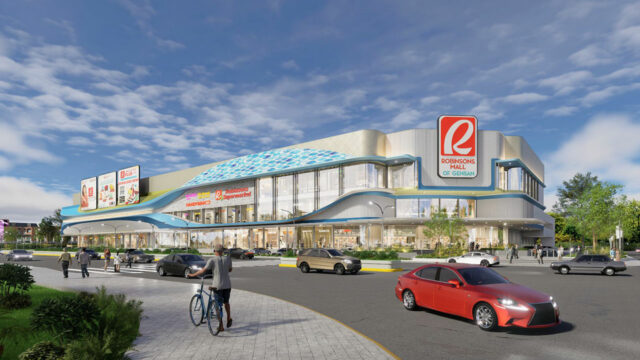
THE FUTURE THREE‑LEVEL, solar‑powered public market that will rise along P. Acharon Boulevard, General Santos City. — ROBINSONS LAND CORP.

ROBINSONS LAND CORP. (RLC) and the General Santos (GenSan) City government signed a public-private partnership (PPP) contract for the P2.33-billion redevelopment of the city’s central public market.

Under the partnership, Robinsons Land will build Palengke Heneral, General Santos City’s first modern marketplace, on a 23,126-square-meter (sq.m.) site with more than 14,800 sq.m. of floor area in an established commercial district, the company said in a statement on Wednesday.

The three-story development will feature separate wet and dry zones, enhanced sanitation, improved ventilation, and security measures such as closed-circuit television (CCTV) coverage, it said.

Palengke Heneral will also integrate solar panels to support more efficient operations and reduce environmental impact, in line with Robinsons Land’s sustainability initiatives, including its solar-powered mall in General Santos City.

“Premiumization does not always mean higher prices or exclusivity,” RLC President and Chief Executive Officer Mybelle V. Aragon GoBio said.

Market stakeholders in General Santos City, including the Vendors’ Association and the Chamber of Commerce and Industry, welcomed the planned upgrades, citing improvements in layout, management, customer service, productivity, and opportunities for local businesses, according to RLC.

A three-level mall will also rise nearby, with an al fresco dining area overlooking Sarangani Bay and adding lifestyle components to the redevelopment.

Robinsons Land said the project expands its presence in Mindanao, where it continues to grow its portfolio of malls, hotels, and residential developments in key regional hubs.

Under the agreement, Robinsons Land will turn over the upgraded facility to the General Santos City government after the 25-year lease period.

“The arrangement reflects responsible PPP execution, with clear roles, long-term stewardship, and safeguards that protect the public interest while delivering professional management and private-sector efficiency,” the company noted.

RLC shares increased by 1.49% to P17.76 each on Wednesday. — Alexandria Grace C. Magno

SMC unit proposes 300-MW solar project in Davao Occidental

FREEPIK

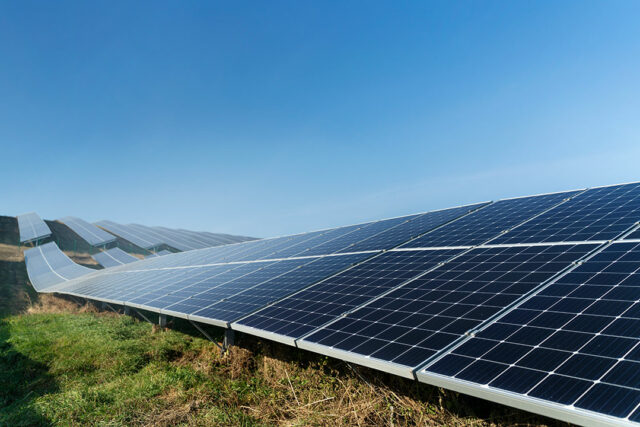
SMC GLOBAL LIGHT and Power Corp. (SGLPC), part of the San Miguel group, is seeking to expand its proposed solar farm in Malita, Davao Occidental, aiming to deliver up to 300 megawatts (MW) to the local grid.

In a filing with the Department of Environment and Natural Resources (DENR), the company proposed amending its environmental compliance certificate to increase the project’s capacity to 300 MW from the originally planned 95 MW.

The P11.5-billion solar farm will cover 506.2255 hectares and will use 447,772 solar panels and 76 central inverters.

The company plans to develop the project in phases. Construction of the first phase is scheduled to begin by the third quarter of 2026, with full commercial operations targeted by the fourth quarter of 2028.

The project secured capacity under the fourth round of the Department of Energy’s Green Energy Auction Program, a government initiative that auctions renewable energy capacity from sources such as ground-mounted solar.

“Renewable energy remains a key pillar of the Philippine government’s low-emission development strategy, aimed at addressing climate change, ensuring energy security, and expanding access to clean energy,” the company said.

The company said the project supports the country’s renewable energy transition and may help strengthen energy supply as electricity demand rises.

The solar project is scheduled for public scoping on March 17. The activity is an early stage of the environmental impact assessment process, during which the project proponent will present an overview of the development and gather feedback from stakeholders.

SGLPC is a subsidiary of San Miguel Global Power Holdings Corp. (SMGP), the power generation arm of San Miguel Corp. (SMC) led by Ramon S. Ang.

SMGP is among the country’s largest power producers, with a diversified portfolio that includes natural gas, coal, hydroelectric power, and battery energy storage systems.

As part of its renewable energy program, the company aims to roll out the first phase of solar projects with a combined capacity of about 2,450 MW across Davao, Bulacan, and Isabela, with completion targeted by 2029. — Sheldeen Joy Talavera

Rockwell, JDN top off Power Plant Mall in Angeles City

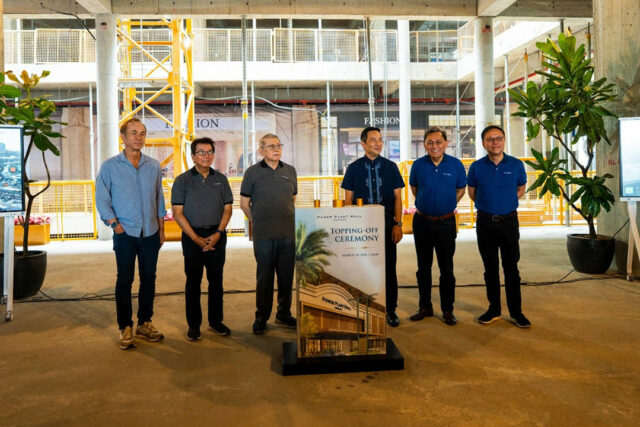
POWER PLANT MALL Angeles topping-off ceremony was attended by (L-R) Eugenio L. Lopez III; JDN Realty Chairman Arsenio N. Valdes; JDN Realty Chairman Emeritus Peter G. Nepomuceno; Angeles City Mayor Carmelo G. Lazatin II; Rockwell Land Chairman and CEO Nestor J. Padilla; and Rockwell Land Treasurer and Senior Vice-President for Office Development Miguel Ernesto L. Lopez. — ROCKWELL LAND CORP.

ROCKWELL LAND Corp. and Juan D. Nepomuceno (JDN) Realty held a topping-off ceremony for Power Plant Mall Angeles, marking the completion of the mall’s structural construction.

The mall, part of the Rockwell at Nepo Center development, is scheduled to open in the third quarter of 2027.

“We are thrilled to bring the Power Plant Mall experience to Angeles,” Rockwell Land Vice-President for Retail Development Tin Coqueiro said in a statement on Wednesday.

“Our goal is to blend our signature curated retail mix with local flavors, ensuring a destination that resonates deeply with the Kapampangan community,” she added.

Power Plant Mall Angeles will have 32,000 square meters (sq.m.) of leasable area and will mark Rockwell’s first retail expansion outside Metro Manila.

The mall will offer international and local brands, daily essentials, and al fresco dining areas modeled after the company’s Makati flagship.

During the topping-off ceremony, prospective tenants, partners, consultants, and contractors viewed the completed structure of Power Plant Mall Angeles and previewed mock-ups of its store facades, finishes, and Makati-style layout.

Power Plant Mall Angeles broke ground on Oct. 12, 2023 as a key anchor of Rockwell and JDN Realty’s 4.6-hectare mixed-use development, Rockwell at Nepo Center, in central Angeles City, Pampanga.

The project launched its first residential building, The Manansala, in June 2021, followed by The BenCab in September 2022 and The Aurelio in October 2025.

The Manansala has been fully sold out and began unit turnovers in January 2026. The BenCab is 87% sold, with turnover scheduled for December 2026, while The Aurelio was launched recently.

Rockwell Land said the joint venture’s progress has encouraged plans to expand the development.

“Because of the positive response to our residential and retail offerings, we are expanding Rockwell at Nepo Center with an additional 9,000 square meters of land,” Rockwell Land President and Chief Executive Officer Nestor J. Padilla said.

“We are already planning on expanding the mall and adding other components that will make the development even more exciting,” he added.

At the local bourse on Wednesday, shares in Rockwell Land rose by 5.68% to close at P1.86 each. — Alexandria Grace C. Magno

Higher pass-through charges trigger increase in March power rates

The Manila Electric Company (Meralco) announced today an upward adjustment of P0.6427 per kWh in electricity rates this March, bringing the overall rate for a typical household to P13.8161 per kWh this month from P13.1734 per kWh in February. For residential customers with a typical consumption of 200 kWh, this adjustment translates to an increase of around P129 in their total electricity bill.

Higher transmission, generation charges push up overall rates

Driving the overall rate increase this month was the P0.2880-per-kWh increase in transmission charge for residential customers.

The higher transmission charge was due to a 70% increase in ancillary service charges incurred by the National Grid Corporation of the Philippines (NGCP) from the Reserve Market. Costs from the Reserve Market accounted for almost half of the total transmission charge this billing month.

Meanwhile, the generation charge went up by P0.2209 per kWh to P7.8607 per kWh.

Fixed charges from the second extension of the Power Purchase Agreement (PPA) with First Gas-Sta. Rita added around P0.38 per kWh to this month’s generation charge. These offset a P1.0952 per kWh reduction in charges from Wholesale Electricity Spot Market (WESM), as supply conditions in the Luzon grid improved.

This month’s generation charge already included the P0.2817 per kWh contract price adjustment of ACEN Corporation, Panay Energy Development Corp., South Premiere Power Corp. (SPPC) and Sual Power Inc. (SPI) approved by the Energy Regulatory Commission (ERC). This is equivalent to about P789 million in generation costs for this billing month, the impact of which was more than offset by the completion of the recovery of the previous contract price adjustment of SPPC and SPI, totaling P858 million or around P0.30 per kWh.

Meanwhile, other charges that include taxes registered a net increase of P0.1338 per kWh.

This month’s rate also reflected the implementation of the new uniform national lifeline subsidy rate of P0.01 per kWh in accordance with a recent ERC directive.

Pass-through charges for generation and transmission are paid to the power suppliers and the grid operator, respectively; while taxes, universal charges, and renewable energy subsidies are all remitted to the government.

Meralco’s distribution charge, on the other hand, has not moved since the P0.0360 per kWh reduction for a typical residential customer in August 2022.

Meralco backs government call for energy efficiency amid Middle East conflict and approaching dry season

Aligned with the government’s directive on energy-saving measures amid the ongoing Middle East conflict, Meralco is urging customers to continue practicing energy efficiency to better manage consumption as the country also braces for the dry season, when demand traditionally peaks.

The reminder echoes President Ferdinand R. Marcos, Jr.’s call for government offices to implement conservation measures and his appeal for the public to adopt energy-saving practices, as global fuel market volatility persists due to the geopolitical uncertainties.

The situation coincides with the approaching dry season, when electricity demand historically increases by 20% to 33% due to increased usage of cooling appliances such as air conditioners. With higher temperatures forecast to drive increased consumption, households and businesses alike are encouraged to take proactive steps in managing their energy use.

“We are entering a period when demand for electricity traditionally peaks, and external factors are adding pressure to energy costs,” Meralco Vice-President and Head of Corporate Communications Joe R. Zaldarriaga said. “By embracing energy efficiency, consumers can have better control on their electricity bills and at the same time, contribute to mitigating the impact of external factors on electricity costs.”

Some energy efficiency tips that customers can observe include unplugging appliances when not in use; utilizing natural light when and where possible; and ironing large batches of clothing at one time. They are also advised to set the air conditioners to 25°C and ensure proper maintenance and refrain from overloading the refrigerator to allow for proper air circulation of the cool air inside.

Customers can report their electricity service concerns through the My Meralco app or through Meralco’s official social media accounts on Facebook (www.facebook.com/meralco) and X formerly Twitter (@meralco). They may also text their concerns to 0920-9716211 or 0917-5516211 or contact the Meralco Hotline at 16211.


Spotlight is BusinessWorld’s sponsored section that allows advertisers to amplify their brand and connect with BusinessWorld’s audience by publishing their stories on the BusinessWorld Web site. For more information, send an email to online@bworldonline.com.

Join us on Viber at https://bit.ly/3hv6bLA to get more updates and subscribe to BusinessWorld’s titles and get exclusive content through www.bworld-x.com.

SM Offices fully leases Laguna warehouse complex

Silangan Warehouse complex in Laguna — SMCPG.COM

SM OFFICES, the commercial property arm of SM Prime Holdings, Inc., has fully leased its Silangan Warehouse complex in Laguna as demand grows from e-commerce expansion, manufacturing activity, and changes in government land-lease rules.

The Silangan site has two warehouses with a combined gross leasable area of more than 130,000 square meters (sq.m.). Of this, about 86,000 sq.m. was recently leased under a multi-year agreement.

“The size and location of our warehouse facilities make them well-suited to logistics operators that require scale, accessibility and operational efficiency,” Vice-President and Head of SM Offices Alexis L. Ortiga said in a statement on Wednesday.

The warehouse complex is located less than five minutes from the Silangan Exit of the South Luzon Expressway and is under an hour from Makati, providing access to Metro Manila and growth areas in southern Luzon.

The facility is designed to handle high-volume logistics operations, with wide spaces for heavy vehicles and a cross-docking setup to support faster turnaround times.

Following the full lease of the Silangan complex, SM Offices listed ready-to-move-in warehouse sites in Pasig and Taguig and continues to offer build-to-suit developments nationwide.

The Pasig facility along C-5 Road spans four hectares and has more than 20,000 sq.m. of warehouse floor area, including mezzanine levels, multiple loading bays, and dedicated truck maneuvering areas.

The SM Prime business unit also offers build-to-suit industrial sites in Parañaque, Laguna, Cavite, Tarlac, Iloilo, and Davao. These sites are located near major expressways, ports, and airports and can support distribution, manufacturing support, and cold storage operations.

“Our facilities and locations can support uses ranging from dry and cold storage to data centers and distribution hubs. These are asset types that benefit from long-term planning and operating certainty,” Mr. Ortiga said.

At the local bourse on Wednesday, shares in SM Prime were unchanged at P19.60 each. — Alexandria Grace C. Magno

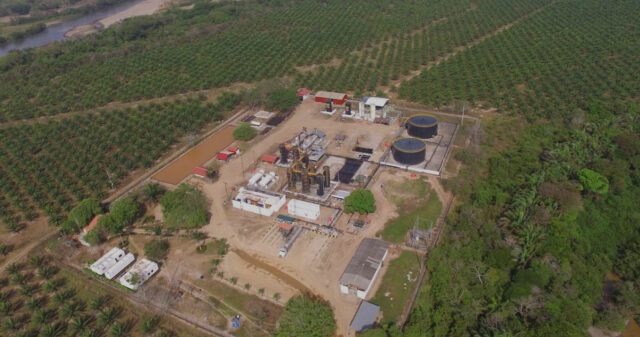
Carlyle to sell Colombian oil firm SierraCol to Razon-led Prime Infra

SIERRACOLENERGY.COM

PRIVATE equity group Carlyle has agreed to sell its Colombian oil producer SierraCol to Prime Infrastructure Capital, Inc., (Prime Infra) the infrastructure unit of Filipino businessman Enrique K. Razon, Jr., for an undisclosed sum, the US company said on Wednesday.

Carlyle, which set up SierraCol in 2020 after buying assets from Occidental Petroleum Corp., had sought around $1.5 billion for the Colombian firm, sources had told Reuters in 2025.

Elsewhere in the oil and gas sector, Carlyle in January reached a non-binding, initial agreement to buy most international assets from sanctioned Russian firm Lukoil and merge its European refining vehicle Moeve with Portuguese energy firm Galp’s downstream business.

“This is where our track record is strong and I expect to continue that. We have a clear playbook for executing complex carve-outs and strengthening these businesses,” said Bob Maguire, co-head of Carlyle International Energy Partners (CIEP).

He said CIEP had no fixed views on how much investment to allocate to downstream or upstream acquisitions.

CIEP Managing Director Parminder Singh told Reuters that it has been tough to extract assets from the bigger players in the current market as majors are keen to boost their own oil and gas reserves while retrenching on low-carbon projects.

Carlyle said it has invested around $1 billion in SierraCol since 2020, mainly spending on the firm’s existing assets to stabilize its net production at around 45,000 barrels of oil equivalent per day and reduce operational emissions.

SierraCol’s gross output of 77,000 barrels of oil equivalent per day makes up around 10% of Colombia’s overall production.

SierraCol had $205 million in free cashflow for the 12 months to October 2025 and net debt of $618 million, according to its website.

Prime Infrastructure runs energy, waste and water infrastructure. — Reuters

Semirara profit falls 33% on weaker coal, power prices

SEMIRARAMINING.COM

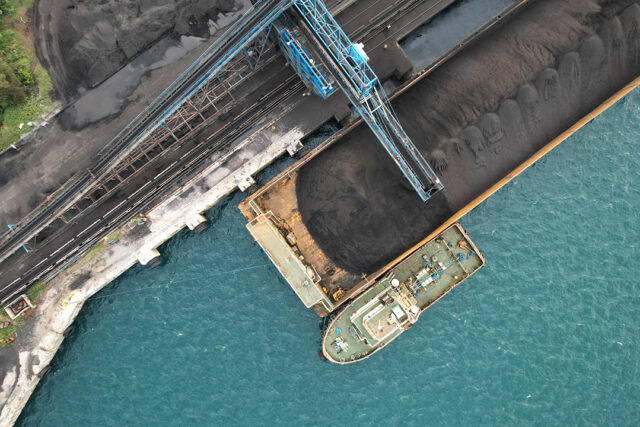
EARNINGS of Consunji-led Semirara Mining and Power Corp. (SMPC) fell 33% to P13.1 billion, mainly due to weaker coal and electricity prices, lower shipments, and higher production costs.

For the fourth quarter alone, the company reported consolidated net income of P3.2 billion, down 19% from the same period a year earlier.

“Prices were softer this year, but our operations still delivered record coal production and electricity sales,” SMPC President and Chief Operating Officer Maria Cristina C. Gotianun said in a statement on Wednesday.

In 2025, coal output reached a record-high 19.9 million metric tons (MMT), driven by improved access to coal seams at the Narra mine and government approval to increase annual production capacity to 20 MMT.

The company shipped 15.4 MMT, up 7% from the previous year, mainly due to the timing of export shipments and softer demand for some lower-calorific coal during the period.

The average selling price of Semirara coal fell 19% year on year to P2,302 per metric ton, reflecting lower global coal benchmarks and a higher share of lower-calorific shipments.

The decline mirrored the 22% drop in the average Newcastle Index to $105.60, as well as the 15% decrease in the Indonesian Coal Index 4 to $46.10.

“We’re also working to broaden our markets while keeping our mines and power plants running well,” Ms. Gotianun said.

Meanwhile, energy sales reached a record-high 5,296 gigawatt-hours, up 7% and supported by improved plant reliability.

However, the average electricity selling price dropped 8% to P4.38 per kilowatt-hour (kWh), reflecting wider supply margins in the Wholesale Electricity Spot Market (WESM).

According to SMPC, average WESM prices fell 27% to P3.73 per kWh as supply improved.

As of end-2025, 42% of the company’s 860-megawatt (MW) dependable capacity was contracted, with 422.3 MW available for spot market sales after accounting for station service requirements.

SMPC is the largest coal producer in the Philippines, accounting for 97% of domestic production.

However, operations at its main revenue-generating asset on Semirara Island in Antique province face uncertainty as its coal operating contract is scheduled for auction this year.

Semirara Island, located in Antique province, covers an area of about 55 square kilometers and can produce at least 16 MMT of coal annually.

SMPC has held the coal operating contract for the area for nearly 50 years, allowing it to explore, develop, and mine coal.

The contract is set to expire in July 2027, but the government has opted to bid it out this year along with other confirmed mineable reserves.

In preparation, SMPC said it is finalizing its mine plan while aiming to fulfill the remaining term of its current contract.

At the local bourse on Wednesday, shares in the company closed unchanged at P28.40 each. — Sheldeen Joy Talavera

ADVERTISEMENT
ADVERTISEMENT