Home Blog Page 1566

Aboitiz Construction sees 93% of Labor Day applicants as hireable

ABOITIZCONSTRUCTIONINC.COM

ABOITIZ Construction, Inc., the construction arm of the Aboitiz Group, said about 93% of the job applicants at its Labor Day recruitment activity are currently being evaluated for potential placement in its projects nationwide. 

The recruitment drive was conducted in 13 key locations, the company said in a statement.

It received about 844 individual applications for various roles, including scaffolders, masons, mechanical technicians, civil engineers, and safety inspectors.

“We affirm our commitment to building a highly capable workforce that supports both our projects and the communities where we operate,” according to Raizza L. Manuel, senior assistant vice-president for people and corporate shared services at Aboitiz Construction.

The company held recruitment activities in Tarlac City, Bonifacio Global City, Taguig City, Mariveles, Bataan; and San Jose and Rosario, Batangas;

Tiwi, Albay; Iloilo City; Cebu City; Robinsons in Butuan City; Cagayan de Oro City; Iligan City; and Davao City. — Beatriz Marie D. Cruz

Navigating an AI-enabled business landscape

IN BRIEF:

• Boards can establish trust in AI by creating guiding principles, ensuring regulatory compliance, and staying updated on new regulations.

• Encouraging innovation, ensuring data quality, and rethinking business models can help boards drive value creation through AI.

Boards can enhance their effectiveness by developing AI expertise and increasing diversity within the boardroom.

Artificial intelligence (AI) presents both opportunities and challenges for organizations. While there is pressure to adopt AI quickly to stay competitive, risks and capability gaps can hinder swift action.

This article explores how boards can confidently guide their organizations through the AI landscape, focusing on building confidence, creating value, and augmenting human potential.

THE AI DILEMMA
AI’s breakthrough capabilities have generated significant excitement and investment. According to the EY CEO Imperative Survey, driven by concerns of falling behind, 99% of CEOs are investing in generative AI through initiatives such as establishing an AI task force with a direct line to the C-Suite, determining which data will create a competitive advantage through AI, and investing in capabilities to augment third-party AI with proprietary data. Meanwhile, 70% believe immediate action is necessary to prevent competitors from gaining a strategic edge. Despite this urgency, organizations face challenges such as legal and cybersecurity risks as well as difficulties in sourcing top tech talent.

Boards play a crucial role in navigating these challenges, balancing legal and regulatory compliance with strategic and technological innovation. This dual responsibility can create conflicting priorities, making it essential for boards to find a way to manage both effectively.

On the other hand, many investors remain motivated by the desire to deliver short-term returns. Some investors may not push for change if they believe they are sufficiently diversified at a portfolio level. This leads to a focus on maximizing value through current business models rather than transitioning to new, sustainable ones.

ESTABLISHING TRUST IN AI
Confidence in AI is essential for its adoption and risk mitigation. Boards can achieve this by developing a principles-based approach to AI governance, developing guidelines for the organization based on ethical principles, focusing on key values such as fairness, transparency, and human-centeredness, ensuring compliance with existing regulations, and proactively preparing for emerging regulations.

For example, a South Korean electronics company implemented an actionable guide to practice the AI Ethics Principles of fairness, transparency, and accountability, and established an AI Ethics Council to operate its own inspection process.

Boards should ask management whether the organization has a transparent and well-communicated responsible AI framework, how it was developed, and what principles it prioritizes. They should also ensure that the framework is integrated into the firm’s risk management program and assess its effectiveness across the organization. Guardrails should be in place to identify when the framework is not applied as intended. It is therefore also crucial that companies provide clear guidelines on responsible AI use.

DRIVING VALUE THROUGH AI
Creating value with AI requires a culture of innovation and learning. Organizations must empower innovators to experiment and employees to use AI safely with appropriate boundaries. Data readiness is critical, as clean and well-governed data improves the accuracy and reliability of AI models.

Boards should encourage management to develop and deploy AI across the enterprise and within the wider ecosystem of partners. They should identify metrics to pinpoint the biggest value creation opportunities with AI and understand how AI might impact organizational culture and employee work. Additionally, boards should ensure that data is prepared for AI use and address barriers to AI adoption. This can be supported by sustained training in actual AI usage and how it can directly impact day-to-day work.

For example, employees from a bank in Singapore used data analytics and AI to enhance the bank’s value to customers and increase its competitive edge, with cross-functional teams comprising data scientists, AI experts, technologists, and business leads working together to provide services such as personalized recommendations and nudges to customers, suggesting investment products, predictive analytics for financial forecasting, and managing credit risks for SMEs. An Australian telecom company also uses AI and machine learning to understand its customers’ needs better by processing a broad range of information such as usage patterns, network performance and demographics data.

AI has the potential to transform business processes and models fundamentally. While initial use cases may focus on improving efficiency, the bigger opportunity lies in rethinking processes and models from the ground up in an AI-first way, such as by using AI as an ideation partner to help promote critical thinking. This transformation can lead to significant value creation by reshaping talent and work across the organization.

ENHANCING BOARDROOM CAPABILITIES WITH AI
AI’s potential to augment human potential within the boardroom is an area that requires more exploration. Boards need to understand and develop expertise in AI to oversee and use it effectively, such as using AI to provide both insights and forecasts on key performance indicators they prioritize for their organizations. Deep dives into AI topics can help board members get up to speed.

A growth mindset is essential for board members to embrace AI. They have to continuously seek personal growth, education, and development. Boards should also assess their composition to ensure they have the necessary diverse skill sets to oversee AI. Locally, corporate governance topics typically now include AI, which is a positive indication of its significance gaining traction for the board.

Moreover, AI can be used to enhance board decision-making processes. For example, AI could help analyze risks and provide insights on their progress towards meeting annual strategic goals based on the metrics they manage such as revenue or sustainability targets, becoming part of the board’s decision-making toolkit. By embracing AI, boards can drive diversity in thinking and improve their oversight capabilities.

C-LEVEL CONSIDERATIONS
Boards should focus on how AI can fundamentally disrupt their business model and imagine designing their business from the ground up in an AI-first way. They should ensure the board is equipped to provide guidance on responsible AI use principles, such as fairness, accuracy, reliability, explainability, and transparency. This may include embedding AI within their governance processes in IT to ensure the AI tools are regularly monitored for appropriate outputs and recalibrated based on new data.

Engaging management in aligning AI opportunities across the organization and ensuring the organizational culture supports AI integration is crucial. Integration can be more apparent by being deliberate in articulating how AI forms part of its annual strategic objectives. Boards should also recognize if employees are as AI-ready as the organization’s data.

LEADING WITH CONFIDENCE
AI will be a critical growth driver in the years ahead, reshaping talent within organizations and disrupting business and operating models. Operating models can adopt an AI-first strategy, where they use these technologies to proactively offer products and services, improve safety through autonomous vehicles, or predict machine or health problems in the manufacturing and health industries respectively. Achieving this potential will require organizations to mitigate AI’s risks and build confidence in its use. Boards play a vital role in guiding organizations through these transitions by expanding their competencies and boosting diversity.

By focusing on resilience, consumer outcomes, and timely remediation of weaknesses, organizations can navigate the regulatory landscape effectively and build a foundation for long-term success. Ultimately, boards that balance innovation with risk management will help their organizations navigate the AI landscape confidently and effectively.

This article is for general information only and is not a substitute for professional advice where the facts and circumstances warrant. The views and opinions expressed above are those of the author and do not necessarily represent the views of SGV & Co.


Lee Carlo B. Abadia is a technology consulting principal of SGV & Co.

Blueprint for success developed by NU, a model for Philippine men’s volleyball

NATIONAL UNIVERSITY BULLDOGS — FACEBOOK.COM/WEARETHEUAAP

THERE’S more to it than just building a kingdom for the National University (NU) Bulldogs in the Philippine collegiate scene.

NU has won five straight and seven overall titles in the past 10 seasons but for coach Dante Alinsunurin, the ultimate goal lies outside the UAAP as the Bulldogs look to expand the success blueprint over to the entire Philippine men’s volleyball landscape.

“Its not only for NU, its for  Philippines also,” said Mr. Alinsunurin as NU became the first team to complete a five-peat in the UAAP Final Four era with a 2-1 series win over Far Eastern University (FEU) in Season 87.

The Bulldogs’ rise to the throne wasn’t handed to them on a silver platter — this season alone and since their humble roots.

NU went unbeaten in the finals for its four straight championships before folding to the top-ranked FEU in Game 1 then winning the last two games capped by a 25-16, 28-26, 25-23 sweep in the decider.

But even before that, the Bulldogs started as a nobody in the UAAP, winning no titles in the first 74 seasons — until Mr. Alinsunurin, a product of Adamson University, turned the program around in Season 75 (2013) for their first-ever title, ironically against then — champion FEU.

The rest was history as NU lorded over the UAAP volleyball across all divisions with its women’s team also ushering in a dynasty under the watch of his fellow Adamson standout Sherwin Meneses and led by the three-time MVP and greatest Lady Bulldog ever in Bella Belen.

From there, Mr. Alinsunurin architected the NU dynasty that produced a bevy of national team and overseas players including Alas Pilipinas captain Bryan Bagunas, who both led the country to a historic silver-medal finish in the 2019 Southeast Asian Games at home.

Season 87 Finals MVP Leo Aringo Jr., as revealed by Mr. Alinsunurin, is also bound overseas albeit with a year left in his eligibility for a larger goal than helping NU extend its dynasty in the UAAP that only proved the school’s commitment to the entire Philippine volleyball more than its own sake.

For the seasoned mentor, that’s the ultimate culmination of the NU dream and he’s hoping that the UAAP Season 87 witnessed by 14,517 fans in Game 3 for the largest crowd in men’s volleyball history is just the beginning. — John Bryan Ulanday

LPU edges EAC in five sets

Games on Tuesday
(Filoil EcoOil Arena)
8 a.m. -— San Beda vs JRU (M)
11 a.m. — San Beda vs JRU (W)
2:30 p.m. — Mapua vs SSC-R (W)
5 p.m. — Mapua vs SSC-R (M)

LYCEUM of the Philippines University (LPU) came alive in the last three sets as it edged Emilio Aguinaldo College (EAC), 15-25, 21-25, 25-22, 25-22, 15-13, on Sunday to rekindle its dimming Final Four hope in NCAA Season 100 women’s volleyball at the EAC Gym.

Johna Dolorita did almost everything as she fired a team-high 17 points including 14 on spikes while presiding over the defense with 15 receptions and 12 digs as the Lady Pirates injected some life into their diminishing semifinal campaign with a 7-8 record.

But for LPU to gatecrash into the semis, it would need to get its stars aligned and sweep its remaining three elimination round outings against San Sebastian College-Recoletos on Friday, Arellano University May 28 and reigning three-peat champion College of St. Benilde.

And this win was a great start.

“We just try to point out where we will score best in the last three sets,” said LPU assistant coach Ciarnelle Wanta, who handled the reins in the absence of head coach Cromwell Garcia.

Ashley Muchillas and Joan Doguna likewise came through and chipped in 13 and 12 hits, respectively, while pint-sized but big-hearted skipper Venice Puzon facilitated the team’s attack with 19 excellent sets.

The Lady Generals sputtered to a 4-11 card. — Joey Villar

Nuggets aim to stun OKC in Game 7

THE Denver Nuggets are already at a depth disadvantage against the Oklahoma City Thunder (OKC).

The Nuggets also could be without one of their biggest pieces on Sunday when the teams square off in Game 7 of their Western Conference semifinal series in Oklahoma City.

Aaron Gordon, who hit the game-winner in Game 1, is a “game-time decision” with a left hamstring strain.

Gordon suffered the injury late in Thursday’s 119-107 Denver win at home to force Game 7. Nuggets interim coach David Adelman said Gordon fully participated in Saturday’s walkthrough. — Reuters

Tamayo, Changwon LG Sakers rule Korean Basketball League

CARL TAMAYO weaved his Midas hands once again.

Proving a natural-born winner since high school, the Filipino import added another feather in his cap as the Changwon LG Sakers ruled the 2025 Korean Basketball League (KBL) with a 4-3 series win over the Seoul SK Knights over the weekend at the Jamsil Students’ Gymnasium in Seoul.

Mr. Tamayo registered a double-double of 12 points and 10 rebounds laced by two assists and two steals in Changwon’s thrilling 62-58 win over the top-ranked Seoul in Game 7.

Changwon, a second seed in the eliminations, nearly wasted a mammoth 3-0 lead by losing the last three games only to steady the ship when it mattered the most behind the efforts of Finals MVP Kim Jae-hyeon.

Mr. Hyeon had 12 points and three steals in Game 7, including four game-sealing free throws in the clutch. Heo Il-young and Yang Jun-seok contributed 14 and 11 points, respectively, while Egyptian import Assem Marei collared five points, 14 rebounds, eight assists, two steals and a block.

But the bigger feat belonged to the Gilas Pilipinas stalwart, who has also won titles in the UAAP juniors with National U-Nazareth School and UAAP men’s with the University of the Philippines before turning pro in Japan then Korea.

Mr. Tamayo also won the Japan B. League in 2023 with the Ryukyu Golden Kings and now in the KBL, making him the first Filipino champion in two different overseas countries.

A Cebu hotshot, Mr. Tamayo was also part of the 2025 KBL Mythical Team with teammate Marei alongside Seoul’s Jameel Warney, Kim Sun-hyung and An Young-jun for a double milestone this season.

He tallied 15.1 points on 31%clip from downtown, 5.8 rebounds and 2.3 assists as Changwon finished 34-20 slate for the No. 2 seed.

His fellow Maroon Juan Gomez De Liaño was part of their finals rival Seoul but hardly played in the best-of-seven titular showdown. — John Bryan Ulanday

Fever, Sky wrangle

Yesterday marked the season debuts of the Fever and Sky, and WNBA fans most certainly took notice. It wasn’t just because the set-to featured two sophomore stars with significant crossover pull, or that they courted controversy — together and apart — dating back to their college days. To be sure, any event featuring Caitlin Clark would be a sellout. That Angel Reese was likewise at the Gainbridge Fieldhouse served to keep backsides in seats (even those of the conference finals-bound Pacers) until the final buzzer.

The good news is that the match mostly lived up to billing. Never mind that it was a cakewalk for the hosts, who claimed every quarter in dominant fashion. When the final buzzer sounded, the Fever showed all and sundry why the deserve to be counted among the league’s legitimate contenders. Their 35-point margin of victory is the second-largest in franchise history, signifying their vast potential even as they figure to keep improving while assimilating new acquisitions.

Under the circumstances, it was probably only fitting that the encounter ended with Clark notching her third triple-double in the W, and that heralded addition DeWanna Bonner claimed the third spot in the career scoring list. Significantly, the latter did so via two free throws; the twist of fate enabled the six-time All-Star to take in the standing ovation from diehard followers of the red, blue, and gold. And, for good measure, things did get chippy between the Fever and Sky; the 2024 Rookie of the Year awardee was assessed a flagrant foul after hacking Reese under the basket, while favored pick-and-roll mate Aliyah Boston received a technical in the ensuing fracas.

As has been typical in the league, the game featured a handful of questionable calls. Boston, for instance, was merely trying to stop an angry Reese from charging Clark after the so-called flagrant contact. Because she was playing peacemaker, she didn’t even know she subsequently got a T; to note that she was shocked when informed of the development in the aftermath would be an understatement. Granted, the level of competition in the league is at an all-time high, making the task of arbiters difficult at best. In any case, the women’s advancement in the pro ranks cannot be stunted.; they are here to stay, and for good.


Anthony L. Cuaycong has been writing Courtside since BusinessWorld introduced a Sports section in 1994. He is a consultant on strategic planning, operations and human resources management, corporate communications, and business development.

PHL urged to file separate sovereign rights, environmental cases vs China

SCREENGRAB FROM PHILIPPINE COAST GUARD FB PAGE

By Kenneth Christiane L. Basilio, Reporter

MANILA should consider building a separate sovereign rights case against Beijing from its planned environmental suit amid China’s continued harassment of Philippine vessels within its exclusive economic zone (EEZ), a security analyst said at the weekend.

Bundling sovereign rights violation and coral reef damage into a single lawsuit could weaken arguments on the alleged breaches, said Rocio Salle Gatdula, a defense economist currently taking up security studies at Georgetown University.

“Aside from environmental degradation, the Philippines could pursue violations of sovereign rights, especially with China’s obstruction of Philippine resupply missions to Second Thomas Shoal last year and harassment of fishing vessels within the Philippines’ exclusive economic zone,” she said in a Facebook Messenger chat.

The Chinese Embassy in Manila did not immediately reply to a Viber message seeking comment.

The Philippines is weighing legal action against China over alleged environmental damage to maritime features within its EEZ, as Beijing maintains its presence despite a 2016 ruling by a United Nations-backed court rejecting its expansive claims.

China lays sovereignty to nearly the entire South China Sea based on a 1940s nine-dash line map that overlaps with the Philippines’ EEZ, deploying coast guard, maritime militia, and fishing fleets in disputed waters where confrontations between Chinese and Philippine vessels have repeatedly occurred.

“Filing a new arbitration case could yield benefits for the Philippines, reinforcing the 2016 tribunal ruling and strengthening Manila’s position under international law,” said Ms. Rocio. “This could then perhaps encourage a coalition of Southeast Asian countries or United Nations Convention on the Law of the Sea signatories to join the case.”

The Philippine government could file its cases at the Permanent Court of Arbitration or the International Tribunal for the Law of the Sea, possibly alongside other regional neighbors, she added.

China’s South China Sea claims have also put it at odds with other Southeast Asian claimant states, Brunei, Indonesia, Malaysia, and Vietnam, as disputes over the strategic waterway continue to fuel regional tensions.

Manila should clearly define its objectives in pursuing another arbitration case against China to bolster international pressure on Beijing over its maritime claims, Raymond M. Powell, a fellow at the Stanford University’s Gordian Knot Center for National Security Innovation, said in a Facebook message.

“Manila’s case is already extremely strong, in that Beijing has openly refused to acknowledge or abide by any of the rulings of the previous arbitral case,” he said.

The Philippines should continue enforcing its claim in the South China Sea based on the 2016 arbitral ruling due to China’s “disruptive and illegal actions” within the country’s EEZ, Chester B. Cabalza, founding president of Manila-based think tank International Development and Security Cooperation, said via Facebook chat.

Meanwhile, the Philippine government should reinforce its defense alliances with other nations and shield its economy from Beijing’s economic pressures, Julio S. Amador III, chief executive officer at Manila-based geopolitical risk firm Amador Research Services, said in a Viber message.

“There should be expected retaliation from China through potential escalation of harassment or economic sanctions,” said Ms. Gatdula.

The Philippines is seeking to deepen security ties with its allies amid tensions with China over the contested waterbody. Already bound by military agreements with the US, Japan, and Australia, Manila is also closing in on a visiting forces agreement with France and Canada.

The Southeast Asian nation also recently signed a defense cooperation agreement with Germany and a visiting forces agreement with New Zealand.

New senators to play key role in PHL agri, trade and nat’l defense, analysts say

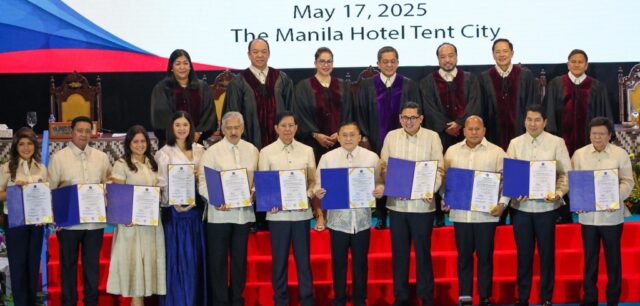
The Commission on Elections (COMELEC) officially proclaimed the 12 winning senators of the 2025 Philippine midterm elections at the Manila Hotel Tent City in Manila.

By Chloe Mari A. Hufana and Adrian H. Halili, Reporters

NEWLY ELECTED SENATORS in the Philippines are expected to play key roles in the country’s agriculture policy, trade, and national defense among others, analysts said separately.

Returning Senator Francis Pancratius “Kiko” N. Pangilinan is seen as a likely advocate for agriculture-centered diplomacy, leveraging his long-standing commitment to boosting the sector’s competitiveness, according to Josue Raphael J. Cortez, a diplomacy lecturer at the De La Salle-College of St. Benilde.

His legislative focus is expected to include efforts to strengthen agri-trade partnerships and integrate technological advancements to modernize farming, a sector critical to rural livelihoods but still lagging regional counterparts, he added.

The elections were widely seen as a referendum on the administration’s performance, particularly its economic and foreign policy direction. The results indicated a partial shift in voter sentiment, with a mixed slate of administration allies and opposition figures winning Senate seats.

The Commission on Elections (Comelec) on Saturday proclaimed the twelve new lawmakers, with Mr. Pangilinan placing fifth in the tight race, with over 15.34 million votes.

“The Magna Carta for Farmers, which Pangilinan first floated during his vice presidential bid in 2022, is something that he will certainly be adamant about, as it will also encompass his goal of ensuring that the rights and welfare of farmers are protected and promoted,” he said in a Facebook Messenger chat.

His role in the Rice Tariffication Law (RTL) debates “will certainly be significant,” Mr. Cortez said, as he would now be considered a “primary actor” in the agricultural sector within the Senate.

However, the academic noted it may be a tricky role as the law is still undergoing some amendments.

“In line with the Marcos administration’s aspiration to make the law more beneficial to the end of farmers and consumers alike, Senator Pangilinan can be among the ‘pressuring agents’ to ensure that the goals of the administration in its revamping of the policy will come to fruition,” Mr. Cortez said.

One of President Ferdinand R. Marcos, Jr.’s most high-profile campaign promises during the 2022 national elections was to bring down the retail price of rice to P20 per kilo, a pledge aimed at addressing food insecurity and the rising cost of living for Filipino consumers.

The Marcos administration introduced initiatives to boost local rice production, including expanded fertilizer support, mechanization, and improved irrigation. It also pursued strategic imports to stabilize supply and collaborated with local retailers to offer subsidized rice in targeted Kadiwa rolling stores and outlets.

Ateneo de Manila University, Political Science Lecturer Hansley A. Juliano said the new lawmakers could draft policies protecting farmland from takeover or gentrification.

Farmers are often forced to sell their land to developers due to unfavorable farming conditions or minimal support from the government. This has placed a strain on local production.

“We need a new law that protects land from further takeovers and uses change for gentrification,” he added in a Facebook Messenger chat.

Farmer organizations have lobbied for the insertion of anti-land conversion provisions in a proposed Land Use Act, which was approved by the House of Representatives in 2023. The bill remains pending in the Senate.

INTERNATIONAL TRADE
Moreover, Senator Paolo Benigno A. Aquino IV and former Senate President Vicente C. Sotto III, who were second and eighth, respectively, in the May polls, will likely have a hand in international trade policies.

“[Mr. Aquino] has a social entrepreneurship background, and the fact that he became the Senate Chair on the Committee on Trade, Commerce, and Entrepreneurship, it can be easily argued that he has a solid grasp already of the matter,” Mr. Cortez noted.

While Mr. Sotto has been campaigning since 2021 to include a one-liner adage, “as may be provided by law,” in the Constitution to allow Congress to provide for laws on foreign ownership, global trade, and other economic initiatives should the need arise.

“Therefore, we can also say that concerning international trade, his expertise will undoubtedly be helpful,” he added.

The broader context of international trade has also been shaped by major global developments in recent months, such as the imposition of tariffs under US President Donald J. Trump.

Mr. Cortez said the new composition of the Congress would not “totally change” in terms of international trade.

While openness to foreign capital and ownership will continue, Mr. Cortez said lawmakers will still push for policies that balance between openness and protectionism, particularly in the agriculture sector.

Lawmakers would not want to put the sector in further peril, he said.

DEFENSE AND FOREIGN POLICY
Meanwhile, returning Senator Panfilo M. Lacson, Sr., who placed seventh in the last polls, with over 15.10 million votes, is seen to influence defense policy.

“[Mr. Lacson] has been vocal in recognizing the integral role alliances may play in our quest to exercise our sole rights over the disputed territories,” Mr. Cortez added. “If one may remember, in 2021, he encouraged the country to take a more proactive stance given the aggressiveness of China towards our troops deployed in the West Philippine Sea.”

The former police chief has previously called for a more assertive approach in the disputed area, Mr. Cortez noted.

At the House of Representatives, former Senator and Representative-elect Leila M. De Lima will most likely have a hand in shaping foreign policy, especially in relation to former President Rodrigo R. Duterte’s trial before the International Criminal Court.

Her party-list, Mamamayang Liberal (ML), was the force behind probes into Mr. Duterte’s bloody war on drugs and extrajudicial killings.

“ML will be the key player in bills geared towards the issue. We can speculate, as early as now, that being part of the impeachment trial process is already a step towards this role that the Party-list will play in the Lower House,” Mr. Cortez said.

Ms. De Lima, who initiated investigations into the bloody drug war, was sent behind bars during Mr. Duterte’s presidency.

Overall, the second half of the Marcos administration may face greater pressure from the new set of lawmakers vis-à-vis its approach to China. Mr. Cortez said this pressure will mainly come from the opposition.

“However, given that the way the current regime manages matters relating to the issue seems to be a total pivot from how the former administration handled it — hence even the opposition bloc in a way also shares the same sentiments as his — then we can expect that this ‘toughened pressure’ will only be exerted by stakeholders when the strategies employed seem to not work.”

Meanwhile, University of Asia and the Pacific Institute of Law Dean Jemy Gatdula said that legislators must update and strengthen laws protecting the country’s national security.

“There should be an updating on the laws of espionage and particularly on the laws of treason so that we would have greater tools with which we could protect our national security,” Mr. Gatdula said in a Facebook chat.

This comes after reports of alleged spying activity being conducted by Beijing, to reportedly disrupt the 2025 midterm elections.

Earlier, the National Security Council said that there were “indications” that China was trying to sway the midterm national and local elections in favor of its bets. The Chinese Embassy in Manila has since denied these claims.

Local authorities had also arrested an alleged Chinese spy who had accessed data containing the identity of about 5,000 mobile phone subscribers using an international mobile subscriber identity device (IMSI) device.

HEALTHCARE AND EDUCATION
Further, Mr. Juliano said that 2025 midterm results suggested that people seek continued policies on health care, free education and general education reform.

“These things are clearly fundamental now to the survival and protection of our economic growth and addressing inequality. So there’s a whole host of policies to address in this vein,” Mr. Juliano said.

On the Healthcare sector, Mr. Juliano said that newly elected legislators should review the Universal Health Care (UHC) Act.

“The existence of Malasakit Centers will not contribute any further to addressing our healthcare issues unless we strengthen other foundational institutions and make our system, especially PhilHealth, stable and more financially capable,” he added.

Malasakit (care) Centers are government funded one-stop-shop centers that provides medical and financial assistance to indigent and financially incapacitated Filipinos.

“Increasing caps and coverage must continue and privatization should be halted sooner than later,” he said.

LABOR
Additionally, Mr. Juliano said that policies protecting the Filipino worker’s security of tenure should also be prioritized by newly elected Senators.

“There was an attempt to pass this under Duterte as Senate Bill No. 1826, but it clearly didn’t push through. We better do this now with an emerging mandate,” he said.

Similarly, Federation of Free Workers President Jose G. Matula called on the 20th congress to ban contractualization both in the private and public sectors, ensuring workers have regular and permanent employment status.

“Workers in government also deserve security of tenure, just like those in the private sector. Labor-only contracting, contracts of service, job orders, and agency work should no longer be the norm,” he said via Viber message.

In contractual schemes, employment is terminated before six months, the period which by law triggers regular employee status.


Mongolian foreign minister to visit Manila this week

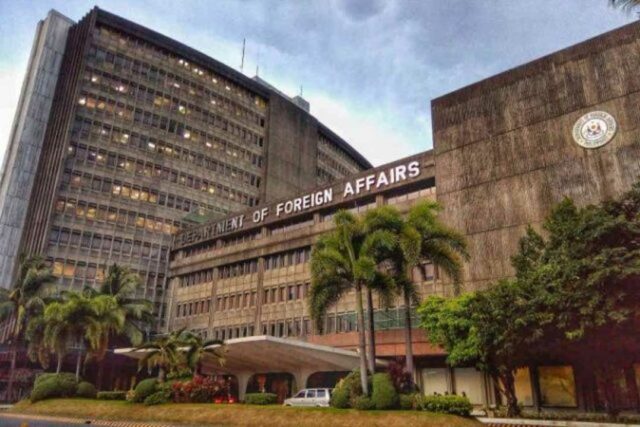
DEPARTMENT OF FOREIGN AFFAIRS FACEBOOK PAGE

THE FOREIGN Minister of Mongolia will be in the Philippines this week for an official visit, with plans to deepen relations between the Manila and Ulaanbaatar, the Department of Foreign Affairs (DFA) said.

In a statement on Sunday, the DFA said that Foreign Affairs Secretary Enrique A. Manalo is set to meet with Mongolian Foreign Minister Battsetseg Batmunkh on May 19 to 20.

The two envoys “will hold a bilateral meeting to review the state of Philippines-Mongolia relations to chart ways forward to further enhance the two countries’ diplomatic relations, which have entered their sixth decade.”

The agency added that the two officials are also set to “discuss strategic issues of mutual concern.”

She is also scheduled to conduct a courtesy meeting with Philippine President Ferdinand R. Marcos, Jr. and Senate President Francis “Chiz” G. Escudero during her visit.

In a separate statement, Mongolia’s Ministry of Foreign Affairs said that it seeks to expand and develop relations and cooperation with the Philippines, which it described as “an influential member of ASEAN (Association of Southeast Asian Nations).”

The meeting is expected to “stimulate political dialogue, expand cooperation between the Ministries of Foreign Affairs, and exchange views on issues of mutual interest in international and regional cooperation.”

Ms. Battsetseg’s visit to the Philippines marks the first official visit by a Mongolian foreign minister to the country since 1984.

“It reciprocates Secretary Manalo’s trip to Ulaanbaatar on August 4 to 5, 2024, which marked the first official visit by a Philippine Foreign Secretary to Mongolia,” the DFA added.

In October, last year, Mongolia’s Deputy Prime Minister Sainbuyan Amarsaikhan, where he represented his country during the Asia-Pacific Ministerial Conference on Disaster Risk Reduction

The Philippines and Mongolia marked the 50-year anniversary of the establishment of their bilateral relations in 2023. — Adrian H. Halili

Romualdez pledges funding for P20-per-kilo rice program in 2026

PHILIPPINE STAR/WALTER BOLLOZOS

THE House of Representatives will ensure ample funding for the Marcos administration’s subsidized P20-per-kilo rice program in the 2026 national budget to ensure its sustainability, Speaker Ferdinand Martin G. Romualdez said on Sunday.

The chamber is also looking at ways to merge existing social welfare and financial aid programs into a unified rice assistance fund, aiming for an efficient and transparent rollout of subsidized rice while preventing corruption and misuse, he added.

“We will allocate the necessary funds to scale this program nationwide through the 2026 General Appropriations Act,” Mr. Romualdez said in a statement.

He said that they are also considering the use of other “targeted subsidy programs as complementary channels to reach the near-poor and vulnerable.”

The government last week started selling P20-per-kilo rice in some state-subsidized mini-markets, which would run until December this year, according to a Presidential Communications Office statement.

Only low-income families, senior citizens, solo parents and persons with disabilities could avail the subsidized rice for now.

President Ferdinand R. Marcos, Jr. campaigned in 2022 on a pledge to lower rice prices to P20-per-kilo, but the early years of his administration have been marked by a surge in the cost of rice.

The timing to push the P20-per-kilo of rice policy is “a bit suspect,” said Arjan P. Aguirre, who teaches political science at the Ateneo de Manila University.

“We cannot blame people to question the motivation here since we are expecting Mr. Marcos to be a lame duck President for the next half of his term,” he said in a Facebook Messenger chat.

Lawmakers should pursue structural reforms to address longstanding issues in the country’s agriculture sector, including the underdeveloped rice production industry and monopolies that constrain competition, he added.

“We need a more serious set of responses or strategies to address the longstanding problem of the weak agricultural sector in the Philippines.”

PRICE MONITORING
Meanwhile, more than 1,300 local government units (LGUs) across the Philippines reactivated their Local Price Coordinating Councils (LPCCs) in a nationwide effort to monitor commodity prices and curb inflationary pressure on rice, the Department of the Interior and Local Government (DILG) said on Sunday.

In total, 1,350 LGUs have revived their LPCCs, with 1,269 conducting regular market inspections, the agency said in a statement.

Additionally, 230 LGUs have tapped village officials and civil society groups to help track price fluctuations, while 1,201 have coordinated with national agencies to clamp down on hoarding and unjustified price increases.

The reactivation followed DILG Memorandum Circular 2025-044, which urged compliance with recommendations from the National Price Coordinating Council and supports the Department of Agriculture’s (DA) Bantay Presyo price monitoring program.

The LPCC, chaired by local mayors and governors, includes representatives from national agencies, consumer groups, and private sector stakeholders.

Councils are tasked with market surveillance and data-driven analysis of price movements to support interventions at the local level.

DILG said it is closely monitoring compliance nationwide to help stabilize food prices and ensure consumer protection.

Despite inflation rate slowing to 1.4% as of April 2025, from 1.8% in March, Filipinos still find essential goods, like the staple grain, expensive.

The councils are empowered to conduct market inspections, gather data on price trends, and recommend appropriate interventions in coordination with national agencies such as the DA, Department of Trade and Industry, and the Philippine National Police. — Kenneth Christiane L. Basilio and Chloe Mari A. Hufana

Dizon set for June CA appearance

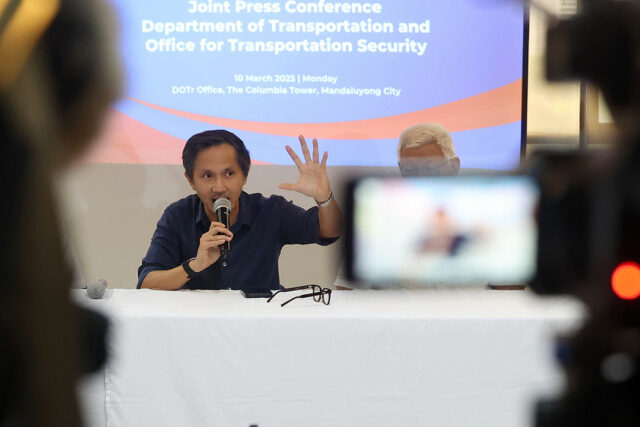
TRANSPORTATION Secretary Vivencio B. Dizon on Monday asked the public to be vigilant as the agency investigates a bullet-planting scheme at the Ninoy Aquino International Airport. — PHILIPPINE STAR/MIGUEL DE GUZMAN

THE Commission on Appointments (CA) would deliberate the nominations of the Transportation secretary and top officials of the country’s constitutional bodies when Congress resumes in June, a congressman said on Sunday.

Transportation Secretary Vivencio B. Dizon would face the CA on June 3, while four ad interim commissioners from the Commission on Elections (Comelec), Civil Service Commission (CSC) and Commission on Audit (CoA) would appear before the body on June 4, Surigao del Sur Rep. Johnny T. Pimentel, an assistant minority leader of the body, said.

“The public is encouraged to submit to the CA secretariat any information, written reports, or sworn or notarized complaints regarding the appointees,” he said in a statement.

The CA is composed of 12 members each from the House of Representatives and the Senate, and has the authority to approve or reject presidential appointments.

The 19th Congress will reconvene on June 2 after a four-month break before adjourning again on June 14.

Mr. Dizon, 50, assumed his post as head of the Transportation department on Feb. 21 after his predecessor Jaime J. Bautista resigned due to health reasons. He served as presidential adviser on flagship programs and projects, as well as deputy chief implementer of the National Action Plan against COVID-19 during the Duterte administration.

In his nearly three months as Transportation secretary, he halted the rollout of a fully cashless toll collection system and again allowed jeepney drivers and operators to apply for consolidation under the government’s transport modernization program.

Meanwhile, the vetting body would also take up the appointments of Noli R. Pipo and Maria Norina S. Tangaro-Casingal as Comelec commissioners alongside Luis Meinrado C. Pañgulayan’s assignment as CSC commissioner and Douglas Michael N. Mallillin’s CoA commissioner posting. — Kenneth Christiane L. Basilio

ADVERTISEMENT
ADVERTISEMENT