Home Blog Page 1425

Alleged fake CIF recipients may prove VP’s corruption

VICE-PRESIDENT Sara Duterte-Carpio, in this Aug. 27, 2024 photo, attended the deliberations on the proposed 2025 budget for the Office of the Vice-President at the House of Representatives in Quezon City. — PHILIPPINE STAR FILE PHOTO/MIGUEL DE GUZMAN

ALLEGATIONS of fictitious names listed as beneficiaries of confidential and intelligence funds (CIF) under Vice-President Sara Z. Duterte-Carpio’s agencies could serve as “direct evidence” of potential misconduct by the Philippines’ second-highest official, a congressman said on Sunday.

Ms. Duterte’s inability to provide evidence verifying the alleged dubious recipients of her agencies’ secret funds could strengthen the case for her removal from office, said House Deputy Majority Leader and La Union Rep. Francisco Paolo P. Ortega V.

“Vice-President Sara can no longer simply remain silent on this matter,” he said in a statement.

The Office of the Vice-President did not immediately respond to an e-mail seeking comment.

Mr. Ortega on Sunday revealed a slew of secret fund recipients with names resembling actors, adding to the list of beneficiaries with unusual names under Ms. Duterte’s secret fund. Previous disclosures included names linked to food products and fruits.

The House of Representatives impeached the Vice-President on Feb. 5, alleging secret fund misuse, unexplained wealth, acts of destabilization and plotting the assassination of President Ferdinand R. Marcos, Jr. and his family. Ms. Duterte has denied any wrongdoing.

The impeachment complaint was filed and signed by more than 200 congressmen, more than the one-third legal requirement before it could be sent to the Senate.

Meanwhile, a lawmaker warned that Ms. Duterte’s failure to attend her impeachment trial could suggest that she may be looking to skirt accountability.

“That’s a big deal if you don’t show up, especially in an impeachment trial. It means you’re either avoiding something or hiding something,” Iloilo Rep. Lorenz R. Defensor, a member of the House of Representatives prosecution panel, told a Super Radyo dzBB interview in Filipino, according to a separate statement. — Kenneth Christiane L. Basilio

Romualdez backs use of locally made jeeps for transport modernization

CONGRESS.GOV.PH

BUYING locally made jeepneys as part of the government’s transport modernization plan would be more economically sustainable and cheaper, House of Representatives Speaker Ferdinand Martin G. Romualdez said on Sunday.

The government could support local jeepney makers by allowing tax-free importation of parts and equipment and removing value-added taxes on locally bought materials, he added.

“Supporting local businesses is key to building a strong economy. When we invest in Filipino-made products, we invest in our people,” Mr. Romualdez said in a statement.

“I will urge my fellow congressmen to support locally made modern jeepneys and electric-powered utility vehicles,” he added.

Jeepney modernization began in 2017 to enhance public safety and curb air pollution by replacing it with newer and environmentally friendly alternatives.

But jeepney operators have criticized the modernization program, citing expensive modern units worth more than P2 million.

About 250,000 units of new modern jeepneys would be needed to replace the aging fleet of the country’s main transport, Francisco Motors owner Elmer Francisco said, according to the statement. Filipino jeepneys were originally repurposed from surplus US military vehicles after World War II. — Kenneth Christiane L. Basilio

Senate bets to push for higher public school funding

Students walk inside the campus of a high school in Quezon City, April 18, 2024. — REUTERS

SENATORIAL CANDIDATES on Sunday vowed to support the country’s education system by boosting funding to government schools and teachers.

In separate statements, former Senators Panfilo M. Lacson, Sr. and Paolo Benigno “Bam” Aquino IV said that increasing the educational budget would help address the country’s school system woes.

The Philippine education system faces a deepening crisis as nine in ten children struggle to read and comprehend age-appropriate texts by the age of 10, according to a World Bank report.

“[I] will move to augment the appropriations for programs like school nutrition as well as teachers’ allowances in the national budget,” Mr. Lacson said.

“Infrastructure challenges, such as classrooms and internet access, must also be addressed, along with the implementation of a curriculum suited to modern times and current needs,” said Mr. Aquino.

“Above all, adequate support for teachers is essential, including higher salaries and additional benefits,” he added. — Kenneth Christiane L. Basilio

PHL-US combat drills in Maguindanao del Norte in full swing

COTABATO CITY — Military and police snipers practiced long-range nighttime target shooting at an Army training school in Datu Odin Sinsuat town on Friday, as part of the joint Marine Exercise 2025.

The Marine Exercise 2025 was launched last week in Camp Iranun in Barira, Maguindanao del Norte by representatives from the United States Marine Corps and officials of the Philippine Navy’s 1st Marine Brigade, which is based in the area.

Officials of the 1st Marine Brigade and the Army’s 6th Infantry Division (ID) told reporters on Sunday that Filipino marines, army, and police personnel and members of the Philippine Coast Guard participated in the live-fire marksmanship training on Friday at 6th ID’s training school in Barangay Semba in Datu Odin Sinsuat, Maguindanao del Norte.

Local executives in Maguindanao del Norte’s Parang, Barira, Buldon, Datu Odin Sinsuat, and Datu Blah Sinsuat towns are supporting the Marine Exercise 2025.

The local government unit in the seaside Datu Blah Sinsuat is now preparing to host the April 9 Philippine-US Marine joint amphibious assault exercise in its municipal capital, Barangay Pura.

“Our municipality will benefit much from this exercise economy-wise. There are other towns in our province that have coastal areas but this will be held in Datu Blah Sinsuat. It will boost the image of our municipality as a good investment destination,” said Mayor Marshal I. Sinsuat, chairperson of their multi-sector Municipal Peace and Order Council.

The April 9 amphibious combat drill in Datu Blah Sinsuat shall mark the culmination of the Marine Exercise 2025. — John Felix M. Unson

Anti-Trump protesters gather in Washington, other US cities

A DEMONSTRATOR holds a sign during a ‘Hands Off!’ protest against US President Donald Trump and his adviser Elon Musk on the Washington Monument grounds in Washington, DC, US, April 5, 2025. — REUTERS

THOUSANDS of protesters gathered in Washington, DC, and across the US on Saturday, part of some 1,200 demonstrations that were expected to form the largest single day of protest against President Donald Trump and his billionaire ally Elon Musk since they launched a rapid-fire effort to overhaul government and expand presidential authority.

People streamed onto the expanse of grass surrounding the Washington Monument under gloomy skies and light rain. Organizers told Reuters that more than 20,000 people were expected to attend a rally at the National Mall. 

Some 150 activist groups had signed up to participate, according to the event’s website. Protests were planned in all 50 states plus Canada and Mexico.

Terry Klein, a retired biomedical scientist from Princeton, New Jersey, was among those who gathered by the stage beneath the Washington Monument.

She said she drove down to attend the rally to protest Mr. Trump’s policies on “everything from immigration to the DOGE stuff to the tariffs this week, to education. I mean, our whole country is under attack, all of our institutions, all the things that make America what it is.”

The crowd around the memorial continued to build throughout the day. Some carried Ukrainian flags and others wore Palestinian keffiyeh scarves and carried “Free Palestine” signs, while Democrats from the US House of Representatives blasted Mr. Trump’s policies on stage. 

Wayne Hoffman, 73, a retired money manager from West Cape May, New Jersey, said he was concerned about Mr. Trump’s economic policies, including his widespread use of tariffs.

“It’s going to cost the farmers in the red states. It’s going to cost people their jobs — certainly their 401Ks. People have lost tens of thousands of dollars,” Mr. Hoffman said.

Kyle, a 20-year-old intern from Ohio, was a lone Trump supporter, sporting a “Make America Great Again” hat and walking the fringe of the Washington, DC, rally while engaging protesters in debate.

“Most people aren’t too hostile. A few people cuss,” said Kyle, who declined to give his last name.

Mr. Trump, who shook financial markets and upset nations around the world with a raft of trade tariffs this week, spent the day in Florida, playing a round of golf at his club in Jupiter before returning to his Mar-a-Lago compound in the afternoon.

Some four miles (6 km) from Mar-a-Lago in West Palm Beach, more than 400 demonstrators gathered on a sunny day in protest. Drivers honked their horns in support of the pastel-and khaki-clad demonstrators as they passed by. 

“Markets tank, Trump golfs,” read one sign.

DOGE UNDER FIRE
With Mr. Trump’s blessing, Mr. Musk’s Department of Government Efficiency team has scythed through the US government, eliminating more than 200,000 jobs from the 2.3 million federal workforce. At times, the effort has been haphazard and forced the recall of needed specialists. 

On Friday, the Internal Revenue Service began laying off more than 20,000 workers, as much as 25% of its ranks.

Several hundred people gathered outside the headquarters of the Social Security Administration, a top DOGE target, near Baltimore to protest against cuts to the agency which delivers benefits to the elderly and disabled.

Linda Falcao, who turns 65 in two months, told the crowd she had been paying into the Social Security fund since the age of 16.

“I’m terrified, I’m angry, I’m pissed, I’m bewildered this could happen to the United States,” she said. “I do love America and I’m heartbroken. I need my money. I want my money. I want my benefits!” The crowd chanted, “It’s our money!”

White House assistant press secretary Liz Huston disputed the protesters’ charge that Mr. Trump aimed to cut Social Security and Medicaid.

“President Trump’s position is clear: he will always protect Social Security, Medicare, and Medicaid for eligible beneficiaries. Meanwhile, the Democrats’ stance is giving Social Security, Medicaid, and Medicare benefits to illegal aliens, which will bankrupt these programs and crush American seniors,” Ms. Huston said in an e-mail.

Much of Mr. Trump’s agenda has been restrained by lawsuits contending he has overstepped his authority with attempts to fire civil servants, deport immigrants and reverse transgender rights.

Mr. Trump returned to office on Jan. 20 with a stream of executive orders and other measures critics say are aligned with an agenda outlined by Project 2025, a deeply conservative political initiative to reshape government and consolidate presidential authority. His supporters have applauded Mr. Trump’s audacity as necessary to disrupt entrenched liberal interests.

Hours before the protests were due to kick off in the United States, hundreds of anti-Trump Americans living in Europe gathered in Berlin, Frankfurt, Paris and London to voice opposition to Mr. Trump’s sweeping makeover of US foreign and domestic policies. — Reuters


Vietnam GDP growth slowed in first quarter ahead of Trump’s tariffs

AN EMPLOYEE works at a shoe factory for export in Hanoi, Vietnam on Dec. 29, 2020. — REUTERS

HANOI — Vietnam’s economic growth slowed in the first quarter of the year, data showed on Sunday, ahead of challenges the export-reliant economy will face in coming months from hefty US trade tariffs.

The Southeast Asian country’s gross domestic product (GDP) rose 6.93% in the first three months from the same period last year, slowing from 7.55% in the quarter ending in December, the National Statistics Office said in a report.

Exports and foreign investment in manufacturing are key drivers of Vietnam’s economy, but that model may come under pressure after President Donald Trump announced a 46% tariff on Vietnam’s exports to the US.

Prime Minister Pham Minh Chinh said Mr. Trump’s tariffs did not change the government’s target of at least 8% growth this year.

To hit the target, growth for the remaining quarters will need to rise by between 8.2% and 8.4%, but if Mr. Trump’s tariff on Vietnamese goods causes a 10% drop in the country’s shipments to the US, that could cut GDP growth by 0.84 percentage points, the statistics office estimated.

Hardest hit would be the garment, footwear, electronics and smartphone sectors, it said.

“Export to the US is one of Vietnam’s main drivers, the tariff may lower foreign investments into Vietnam, especially from American, South Korean and Chinese partners, which may lead to a decrease in jobs and income,” said Nguyen Thi Mai Hanh, a senior official at the statistics office.

The US remained Vietnam’s largest importer in the first quarter, and Vietnam’s trade surplus with the US rose 22.1% from a year earlier to $27.3 billion.

‘SIGNIFICANTLY DAMAGE GROWTH MODEL’
Industrial production increased 7.8% in the first quarter year-on-year, slowing from 11.5% in the December quarter. The agency warned that industrial production in the second quarter may face challenges due to the tariffs and global uncertainty.

Exports rose an annual 10.6% in the March quarter, accelerating from 7.9% in the final quarter of 2024.

In a note published on Thursday, research firm BMI said the US tariff rate on Vietnam was harsher than expected, and could see GDP growth miss its forecast for this year of 7.4% by up to 3 percentage points.

“This will significantly damage Vietnam’s current (foreign direct investment)/export-based growth model, which heavily relies on exports to the US,” BMI said.

Economic activity in Vietnam usually slows in the first quarter of the year because of disruption from week-long celebrations for the Lunar New Year.

Investment consultants have said growth may have been impacted this year as companies delayed investment decisions ahead of the tariff announcement.

A survey of US manufacturers in Vietnam in February showed that most expected layoffs and disruption to their local operations in the event of tariffs.

Vietnam’s consumer prices rose 3.13% in March from a year earlier, the statistics office said. — Reuters

US revokes all South Sudan visas over failure to repatriate citizens

STOCK PHOTO | Image from Pixabay

WASHINGTON — The US said on Saturday it would revoke all visas held by South Sudanese passport holders over South Sudan’s failure to accept the return of its repatriated citizens, at a time when many in Africa fear that country could return to civil war.

US President Donald Trump’s administration has taken aggressive measures to ramp up immigration enforcement, including the repatriation of people deemed to be in the US illegally.

The administration has warned that countries that do not swiftly take back their citizens will face consequences, including visa sanctions or tariffs.

South Sudan had failed to respect the principle that  every country must accept the return of its citizens in a timely manner when another country, including the US, seeks to remove them, US Secretary of State Marco Rubio said in a statement.

“Effective immediately, the United States Department of State is taking actions to revoke all visas held by South Sudanese passport holders and prevent further issuance to prevent entry into the United States by South Sudanese passport holders,” Mr. Rubio said.

“We will be prepared to review these actions when South Sudan is in full cooperation,” Mr. Rubio said.

It is time for South Sudan’s transitional government to “stop taking advantage of the United States,” he said.

South Sudan’s embassy in Washington did not respond immediately to a request for comment.

African Union mediators arrived in South Sudan’s capital Juba this week for talks aimed at averting a new civil war in the country after its First Vice-President Riek Machar was placed under house arrest last week.

South Sudan President Salva Kiir’s government has accused Mr. Machar, a longtime rival who led rebel forces during a 2013-18 war that killed hundreds of thousands, of trying to stir up a new rebellion.

Mr. Machar’s detention followed weeks of fighting in the northern Upper Nile state between the military and the White Army militia. Mr. Machar’s forces were allied with the White Army during the civil war but deny any current links.

The 2013-18 war was contested largely along ethnic lines, with fighters from the Dinka, the country’s largest group, lining up behind Kiir, and those from the Nuer, the second-largest group, supporting Mr. Machar. — Reuters

Rains add to challenge for Myanmar quake relief, toll at 3,471

Commuters drive past a building that collapsed, in the aftermath of a strong earthquake, in Mandalay, Myanmar, March 30, 2025. — REUTERS

BANGKOK — Rains fell on parts of earthquake-hit Myanmar over the weekend, which aid agencies said could complicate relief efforts and raise the risk of disease as the United Nations (UN) aid chief said more tents were needed to shelter those left homeless.

The death toll from the powerful quake that hit on March 28 rose to 3,471, state media reported, with 4,671 people injured and another 214 still missing.

Aid agencies have warned the combination of the unseasonable rains and extreme heat could cause outbreaks of disease, including cholera, among quake survivors who are camping in the open.

“Families sleeping outside the ruins of their homes while bodies of loved ones are pulled from rubble. Real fear of more quakes,” visiting UN aid chief Tom Fletcher said in a post on X.

“We need to get tents and hope to survivors as they rebuild their shattered lives,” he said, adding strong, coordinated action was the key to saving as many lives as possible.

Myanmar’s neighbors, such as China, India and Southeast Asian nations, are among those that dispatched relief supplies and rescuers over the past week to aid the recovery effort in quake-hit areas that are home to about 28 million people.

The United States, which was until recently the world’s top humanitarian donor, has pledged at least $9 million to Myanmar to support earthquake-affected communities but current and former US officials say the dismantling of its foreign aid program has affected its response.

Three US Agency for International Development (USAID) workers who had traveled to Myanmar after the quake were told they were being let go, Marcia Wong, a former senior USAID official, told Reuters.

“This team is working incredibly hard, focused on getting humanitarian aid to those in need. To get news of your imminent termination — how can that not be demoralizing?” Ms. Wong said.

In neighboring Thailand, authorities said that country’s death toll from the quake had risen to 24. Of those, 17 died at the site of a skyscraper in the capital, Bangkok, that collapsed while under construction. A further 77 were still missing there.

CEASEFIRE BREACHES
Myanmar’s military has struggled to run the country since overthrowing the government of Nobel laureate Aung San Suu Kyi in 2021, leaving the economy and basic services, including healthcare, in tatters, a situation exacerbated by the quake.

The civil war that followed has displaced more than 3 million people, with widespread food insecurity and more than a third of the population in need of humanitarian assistance, the UN says.

While a ceasefire was declared on Wednesday, the UN Office of the High Commissioner for Human Rights said on Friday the junta was restricting aid in areas that did not back its rule. It also said it was investigating reported attacks by the junta against opponents, including after the ceasefire.

A junta spokesperson did not respond to calls seeking comment.

Free Burma Rangers, a relief group, told Reuters on Saturday that the military had dropped bombs in Karenni and Shan states on Thursday and Friday despite the ceasefire announcement, killing at least five people.

The victims included civilians, according to the group’s founder, David Eubank, who said there had been at least seven such military attacks since the ceasefire. — Reuters

Remote sitio farmer-turned-fishpond owner empowered by LANDBANK, DA

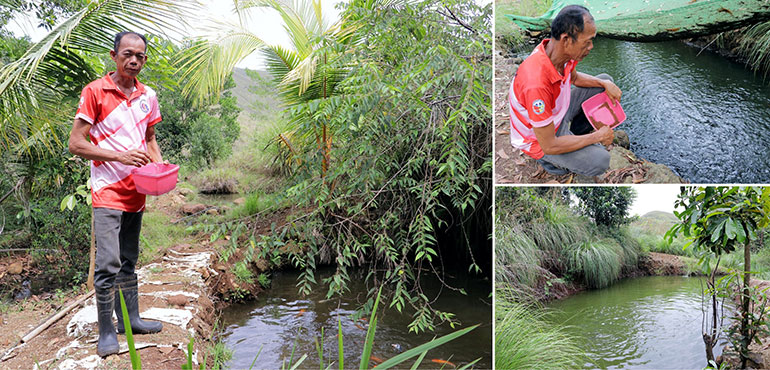
Farmer Eric A. Janolino from the Municipality of Opol in Misamis Oriental ventured into tilapia farming and expanded his income with the financial assistance extended by LANDBANK and the Department of Agriculture under the Agricultural Competitiveness Enhancement Fund (ACEF) Lending Program.

For over 30 years, Eric A. Janolino has dedicated his life to farming palay, corn, and various vegetables in the remote sitio of Tingkulan in Barangay Bagocboc. As someone without formal education, farming was the only way Eric knew to support his growing family. Yet, despite decades of hard work, life was a constant uphill battle.

To fund each planting season, Eric used to rely on informal lenders who charged exorbitant and crippling interest rates, often leaving him with little to no profit after the harvest. This made it nearly impossible to improve his farming methods or invest in the necessary resources to grow his livelihood.

Adding to his struggles, Eric lived in an isolated community with limited access to government services. The barangay is accessible only by motorcycle, requiring a 30-minute ride along rugged, unpaved roads and crossing several rivers from the town proper. This makes transporting crops to the market both difficult and costly, eating further into his already limited earnings.

In search of better income, Eric tried his luck in Manila, taking on jobs as an electrician and security guard. But he felt out of place in the bustling city, and his heart pulled him back to the fields he had always called home. Returning to farming, however, presented the same persistent struggles — high-interest loans and limited resources left him with little to provide for his wife and three children.

A new beginning

Hope came in 2023 when Eric learned about the financial assistance available for small farmers like him, facilitated by LANDBANK in partnership with the Department of Agriculture (DA). Under the Agricultural Competitiveness Enhancement Fund (ACEF) Lending Program, he secured a P100,000 loan with a low annual interest rate of 2%, or only about P2,000 for the entire year.

Eric was guided by LANDBANK and DA through every step of securing the loan — something he never thought possible due to his limited reading and writing skills.

“Dati, kanya-kanyang diskarte ang mga tao dito para magkaroon ng puhunan sa pagsasaka. Pero noong dumating ang LANDBANK, ipinaliwanag nila kung paano kami makakapag-avail ng murang pautang sa ilalim ng ACEF program. Hindi na kami nahirapan sa pagbabayad ng malalaking interes sa 5-6,” Eric shared.

Eric used the loan from LANDBANK to construct three fishponds and purchase fingerlings to start tilapia farming, which provided him with a stable source of income to support his family.

With LANDBANK’s financial support, Eric ventured into tilapia farming and invested in building three fishponds, under the guidance of the Bureau of Fisheries and Aquatic Resources (BFAR) Region 10. To ensure success, he completed a BFAR training on tilapia production, equipping him with the knowledge and skills to maximize his new venture.

A ripple effect of growth

The impact of tilapia farming on Eric’s life was profound. His once meager earnings for his family grew into a steady and reliable income. He invested his profits to buy a carabao and a horse to help transport goods to market, raised pigs for extra income, and even renovated their home. Most significantly, Eric was able to send his children to school — something he once thought was out of reach.

“Malaki ang pasasalamat ko sa LANDBANK dahil hindi sila nag-atubiling tumulong sa katulad naming mga mahihirap. Ngayon, meron na kaming mga hayop na pangkargada sa aming mga produkto at pang-araro ng bukid, kaya malaki talaga ang naitulong ng LANDBANK sa aking pamilya. Anuman ang iyong kalagayan at pangangailangan, nandiyan sila para magbigay ng tulong at suporta,” Eric said.

Motivated by the opportunities provided by LANDBANK and the DA, Eric inspired his fellow farmers to achieve the same success. Fourteen other farmers from his barangay availed themselves of the affordable credit facilities under the ACEF Lending Program and embraced tilapia farming. Like Eric, they soon began to see their livelihoods — and their incomes — flourish, enabling their families to better meet their needs and secure a brighter future.

Empowering small farmers and fishers nationwide

LANDBANK serves as the conduit bank of the DA in implementing the ACEF Lending Program, which aims to boost the productivity of marginalized agricultural players through the extension of accessible credit assistance, among other support initiatives.

Under the Program, farmers and fishers can borrow up to P1 million, while cooperatives, associations, and micro, small, and medium enterprises (MSEs) may access loans up to P5 million for the purchase of farm inputs and equipment, as well as the acquisition or establishment of agri-based production and processing machinery, equipment, and facilities.

As of December 2024, LANDBANK has released a total of P14 billion in loans under the ACEF Lending Program benefitting 95,301 borrowers nationwide, 98% of which are small farmers and fishers.


Spotlight is BusinessWorld’s sponsored section that allows advertisers to amplify their brand and connect with BusinessWorld’s audience by publishing their stories on the BusinessWorld Web site. For more information, send an email to online@bworldonline.com.

Join us on Viber at https://bit.ly/3hv6bLA to get more updates and subscribe to BusinessWorld’s titles and get exclusive content through www.bworld-x.com.

What pulls your credit score down

A credit score is a number that estimates how likely someone repays loans. Khriztina T. Lim, COO and co-founder of personal finance app Lista, talks about the factors that bring it down.

Interview by Aaron Michael Sy
Video editing by Arjale Queral

JuanHand emerges as a top trusted and hassle-free choice for Filipino borrowers

A recent study by Agile Data Solutions, Inc., a market research firm specializing in consumer behavior analytics, recognizes JuanHand as one of the most trusted and hassle-free online lending apps in the country, reinforcing its reputation as a go-to choice for borrowers seeking seamless and secure financial solutions.

The study, which surveyed 3,544 respondents through the Hustle PH mini app, revealed that JuanHand is among the top brands with the most significant increases in awareness, trial, and brand preference among online lending platforms (OLPs).

In a landscape where trust is a critical factor due to concerns over unethical and illegal digital lenders, JuanHand sets itself apart by prioritizing security, transparency, and customer-first services. This commitment resonates with users, as 56% of respondents rated JuanHand as trustworthy and reliable, while 53% recognized it as a safe and secure lending option. Additionally, 46% of respondents who currently use a different primary lending app agreed that JuanHand provides a more user-friendly experience than their current provider, highlighting its dedication to making digital lending more accessible and convenient for Filipinos.

Filipinos’ Evolving Borrowing Behavior

The study also found a shift in consumer borrowing habits: Filipinos now primarily use online loans for daily expenses and bill payments rather than debt consolidation. This evolution signals the growing role of lending apps in supporting financial flexibility and short-term cash flow management.

Six years ago, over 85% of JuanHand users borrowed for financial assistance, commonly known as “Pantawid hanggang sweldo.” Now, over 30% of borrowers use loans for business-related purposes, such as e-commerce and online selling. This trend illustrates how Filipinos are leveraging lending as a tool for financial growth — using borrowed funds to generate income rather than merely covering immediate expenses. JuanHand continues to adapt to these evolving needs by offering tailored solutions that empower Filipinos to take control of their finances.

Shaping the Future of Digital Lending

Social media continues to be a powerful driver in financial education and consumer engagement. Facebook remains the most widely used platform among OLP users, while TikTok has emerged as a crucial tool in increasing app downloads and strengthening brand trust. By leveraging these digital platforms strategically, JuanHand enhances financial literacy and raises customer awareness, helping Filipinos make smarter financial choices.

“At JuanHand, we believe that responsible lending goes hand in hand with financial education. By engaging with Filipinos on platforms they trust and use daily, we empower them to make smarter financial choices and build a more secure future,” said Francisco ‘Coco’ Mauricio, CEO and President of JuanHand.

As the demand for reliable and consumer-friendly lending solutions continues to grow, JuanHand remains committed to offering Filipinos a credible and safe borrowing experience. With loans of up to P50,000, affordable rates, and minimal requirements, JuanHand makes borrowing easy — users can apply with just one valid ID and receive approval in as fast as five minutes.

With digital engagement, financial literacy, and competitive loan offerings at the core of its services, JuanHand is set to remain a leading player in the evolving online lending landscape.

Visit www.juanhand.com or follow JuanHand on Facebook and TikTok to stay informed and financially empowered.


Spotlight is BusinessWorld’s sponsored section that allows advertisers to amplify their brand and connect with BusinessWorld’s audience by publishing their stories on the BusinessWorld Web site. For more information, send an email to online@bworldonline.com.

Join us on Viber at https://bit.ly/3hv6bLA to get more updates and subscribe to BusinessWorld’s titles and get exclusive content through www.bworld-x.com.

9 in 10 Filipinos are literate — PSA

The basic literacy rate among those five years old and older Filipinos was estimated at 90%, the Philippine Statistics Authority (PSA) reported, citing data from latest survey results.

According to the PSA’s 2024 Functional Literacy, Education, and Mass Media Survey (FLEMMS), about 93.1 million Filipinos out of 103.5 million of the total population are considered to be literate on a basic level.

Levels of Literacy in the PhilippinesThe PSA defines “basic literacy” as the ability of a person to read and write a simple message in any language or dialect with understanding, and to compute or perform basic mathematical operations.

On the other hand, functional literacy is classified as the ability of a person to read, write, compute and comprehend and includes higher level of comprehension skills, such as integrating two or more pieces of information and making inferences based on the given information.

Functional literacy rate was at 70.8% or about 60.2 million Filipinos out of 85 million aged 10 to 64, the PSA said.

Females recorded a basic literacy rate of 90.9% while males posted a basic literacy rate of 89%.

Those in the 20-24 age group were the most literate at the basic level with a 96.1% rate, while those aged 60 and over were the least at 76.2%.

Seven out of 18 regions posted higher basic literacy rates than the national average.

Central Luzon led with a basic literacy rate of 92.8%. It was followed by Cordillera Administrative Region (CAR, 92.7%), Calabarzon (92.6%), Central Visayas (92.1%), National Capital Region (NCR, 92%), Northern Mindanao (90.8%), and Davao Region (90.2%).

Meanwhile, four regions surpassed the functional literacy rates at the national level. These were CAR (81.2%), NCR (79.9%), Calabarzon (77.3%), and Central Luzon (73%).

The FLEMMS is conducted every five years, and the latest edition is the seventh in the series of literacy surveys that started in 1989. The 2024 survey was conducted between September to October 2024. — Matthew Miguel L. Castillo