Home Blog Page 1357

Senators-elect to take oath as impeachment judges under new Senate president

VICE-PRESIDENT SARA DUTERTE-CARPIO — FACEBOOK.COM/MAYORINDAYSARADUTERTEOFFICIAL

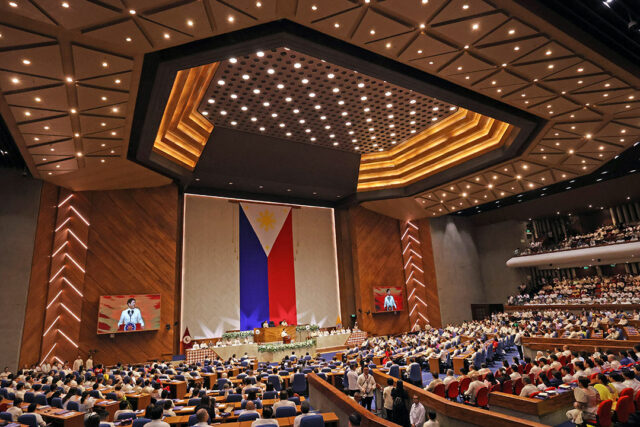
INCOMING senators can only take their oath as judges of the impeachment court that will try Vice-President Sara Duterte-Carpio once the Senate president, who will preside over the trial, is elected, according to the court spokesman.

“The call for swearing in of senator-judges will need to depend on the existence of a presiding officer or Senate president because the senator-judges will have to take their oath before the presiding officer,” Senate impeachment court spokesman Reginald A. Tongol told a news briefing on Wednesday.

On Monday, Senator Ana Theresia Hontiveros-Baraquel said Senate President Francis G. Escudero should swear in the 12 senators-elect as judges since the impeachment court remains in session.

Under the 1987 Constitution, the Senate president presides over the impeachment trial of impeachable officials like the Vice-President. If the President is under trial, the Chief Justice becomes the presiding officer.

“If one Congress adjourns and another begins, the Senate President is going to be elected or re-elected,” Mr. Tongol said. “So, we need to wait to see who will be elected.”

Mr. Tongol said the impeachment court would wait for the election or re-election of the Senate president before swearing in senators as judges.

“The presiding officer, as a matter of prudence and diligence, wants to do that only when the Senate president of the 20th Congress has been elected,” he added.

The 12 incoming senators are expected to take their oath when sessions resume on July 28.

The House of Representatives impeached the Vice-President on Feb. 5, alleging secret fund misuse, unexplained wealth, acts of destabilization and plotting the assassination of President Ferdinand R. Marcos, Jr., his family, and the Speaker of the House. Ms. Duterte has denied any wrongdoing.

The impeachment complaint was filed and signed by more than 200 congressmen, more than the one-third vote required by law before it could be sent to the Senate for trial.

Last month, senator-judges voted against dismissing the trial, but moved to return the articles of impeachment to the House to certify that it followed the law in impeaching Ms. Duterte.

Senators have also voted to ask the House whether the 20th Congress is willing to pursue the Vice-President’s impeachment.

Mr. Tongol said the certifications are meant to guarantee “procedural legitimacy and to uphold constitutional standards.”

The certifications are meant to “prevent any legal impediment or challenges or technicalities that could undermine the impeachment process once it starts rolling, and to uphold the proceedings’ integrity,” he added.

Partylist Rep. Jose Manuel “Chel” I. Diokno earlier said the court order for the House to certify its willingness to pursue the impeachment of Ms. Duterte in the 20th Congress could impede the trial.

“The disrespect for or attempts to undermine the impeachment court processes threaten the independence and credibility of the court and jeopardize public trust in the process itself,” Mr. Tongol said.

Some business groups including the Makati Business Club have raised concerns about the delay in the impeachment trial, saying it sends a bad signal to foreign investors. — AHH


LGUs must boost health infra spending to bridge access gap — CPBRD

A CHAPEL was converted into an intensive care unit for coronavirus disease 2019 (COVID-19) patients as hospitals struggled with a surge in infections in August 2021. — PHILIPPINE STAR/ MICHAEL VARCAS

THE PHILIPPINE government should push local government units (LGU) to increase spending on health infrastructure in the face of barriers to healthcare access, according to a congressional think-tank.

In a July report, the Congressional Policy and Budget Research Department (CPBRD) said almost half of Filipinos need to travel more than 30 minutes to access hospitals despite the Health department’s implementation of the almost two-decade-old Health Facilities Enhancement Program (HFEP).

“Despite the decentralization of the health sector, the National Government remains to be the main contributor of capital investments, while LGUs spend only about 4.4% of their total capital spending on health expenditures,” it said.

“The government may leverage HFEP funding to motivate LGUs to increase capital investments in health through strategic mechanisms,” it added, recommending counterpart funding for wealthier areas and increased grants for poor regions.

Launched in 2007, the HFEP is the government’s flagship initiative to improve access to medical services across the Philippines, providing funding for building new healthcare facilities, renovating outdated ones and providing health equipment.

“Despite the expansion of health infrastructure under the HFEP, substantial access gaps persist nationwide,” the CPBRD said, noting that municipalities in central Mindanao and southern Luzon face the most severe shortfall in healthcare facilities.

Only 38% of villages nationwide have a local healthcare station despite a Local Government Code mandate for at least one in every locality, the think tank said.

“Given the budget constraints, funding for HFEP projects must prioritize those in… unserved and underserved communities before funding high-income provinces,” the CPBRD said.

The government allotted P34.7 billion for the healthcare infrastructure program this year.

The think-tank said the country needs 3,570 rural health stations and 16,119 village health facilities this year alone to meet the basic healthcare requirements of Filipinos.

The Department of Health (DoH) should explore public-private partnerships to streamline procurement and achieve economies of scale in getting construction materials and medical equipment, potentially accelerating infrastructure rollout and reducing costs, it said.

“It could also adopt a commissioned contracting approach where a group of projects is pooled together and contracted out as a lot or tranche to allow contractors to economize on planning and design, bulk procurement of inputs, construction monitoring and equipping,” it added.

The Health department should tighten oversight of HFEP by using performance indicators, such as outpatient visits and immunization coverage to assess whether facilities are strategically located and allow for responsive interventions to improve healthcare service.

“The review and the vetting process of the DoH may need to be strengthened to ensure that HFEP projects are aligned,” the CPBRD said. “Funding allocations should go to LGUs with the greatest needs and wthe least capacities.” — Kenneth Christiane L. Basilio

Gov’t expands subsidized rice program to Cavite

PRESIDENT Ferdinand R. Marcos, Jr. distributed bags of rice during the launch of the 20-per-kilo rice program “Benteng Bigas, Meron Na!” at the Zapote-Bacoor Public Market in Bacoor City, Cavite province on Wednesday. — NOEL B. PABALATE/PPA POOL

PRESIDENT Ferdinand R. Marcos, Jr. on Wednesday expanded his government’s subsidized P20-per-kilogram rice program to public markets in Cavite province, the presidential palace said.

“Now, the rice rollout will begin in public markets so that more of our countrymen can benefit from it,” Palace Press Officer Clarissa A. Castro told a news briefing.

The President attended the launch of the program’s 94th outlet at the Zapote-Bacoor Public Market in Bacoor, Cavite.

About 500 sacks of rice were initially allocated for the Cavite rollout, according to the Department of Agriculture (DA). This will allow 2,500 residents to purchase 10 kilograms each.

Mr. Marcos campaigned in 2022 on a pledge to lower rice prices to P20 per kilo. The early years of his administration were, however, marked by a surge in the cost of rice.

“The P20 rice program also strengthens support for partner farmers because they can now sell directly to the market, eliminating the need for middlemen and reducing post-harvest losses,” Ms. Castro added.

The President has also assured farmers that their incomes will not decrease as the government has allocated budget for the rice program, she added.

“The Department of Agriculture will also continue to coordinate with local government units so the more markets can sell affordable rice,” she added.

Ms. Castro said that the Department of Social Welfare and Development will provide a list of areas where more people could benefit from the program.

“The DILG will also ensure that LGUs submit accomplishment reports on the implementation of the program,” she added.

The subsidized rice program, launched in May, aims to benefit senior citizens, solo parents, persons with disabilities, and Pantawid Pamilyang Pilipino Program beneficiaries.

Under the program, the DA’s Food Terminal, Inc. buys rice from the National Food Authority and, which is sold through the government mini markets, or Kadiwa centers.

BROADER CROP INSURANCE
Meanwhile, a lawmaker filed a bill seeking to expand crop insurance beyond rice and corn at the House of Representatives as part of broader reforms to the country’s agriculture sector.

Filed on Monday, House Bill No. 14 seeks to expand the coverage of crops under the Philippine Crop Insurance Corp. to include livestock, farm machinery and post-harvest infrastructure. It will also allow private insurance firms greater participation in agricultural insurance.

“With better insurance, we’re not just protecting crops — we’re protecting lives, dreams, and the future of our food supply,” Leyte Rep. Ferdinand Martin G. Romualdez, the bill’s author, said in a statement.

President Marcos on Monday said his government will expand the coverage of crop insurance to help farmers recover from natural disasters.

The Philippines, an agricultural country, has ranked as the world’s most disaster-prone country for 16 consecutive years according to the World Risk Index, facing an average of 20 typhoons annually and recurring droughts during its dry season.

“His call to expand crop insurance is not just timely — it is necessary,” said Mr. Romualdez. “Our job in Congress is to make sure the support system is strong, fair, and responsive.”

The reform to the country’s agricultural insurance system would help encourage farmers who skip out on insuring their crops due to bureaucratic red tape and low payouts, he said.

“The bill also aims to lower barriers to agricultural lending, support the modernization of the agriculture sector, and build a more sustainable and risk-resilient rural economy,” the bill’s explanatory note said, based on a copy sent to reporters.

About 2.4 million rice farmers in the Philippines are vulnerable to natural disasters but lack access to insurance, the Consortium of International Agricultural Research Centers said in a 2023 report. — Adrian H. Halili and Kenneth Christiane L. Basilio

Resolution eyed to open budget talks

PHILIPPINE STAR /KJ ROSALES

THE SWIFTEST path to opening the 2026 national budget’s bicameral conference proceedings to the public is through a House resolution, a congressman said on Wednesday.

Passing a House resolution to allow public access to the budget bill’s bicameral conference meetings would be quicker than amending the chamber’s rulebook, Party-list Rep. Jude A. Acidre said in a media briefing.

“In my opinion, the fastest way to go about this is really to pass a resolution,” he said in Filipino. “Normally, House rules don’t get amended right away.”

“For this to move quickly, we’re… and seriously considering filing a resolution that would propose and institutionalize open deliberations at the bicameral conference level,” he added.

Most bicameral conference committee meetings, where senators and congressmen reconcile conflicting provisions of their bills, are held behind closed doors.

Budget proceedings last year were criticized after the bicameral panel increased unprogrammed funds fourfold to more than P500 billion. The bicameral committee for the 2024 national budget also inserted a provision allowing the National Government to raid the reserve funds of state-owned corporations, with standby funds more than doubling to P731.45 billion.

The Development Budget Coordination Committee has proposed a P6.793-trillion national budget for 2026, equivalent to 22% of economic output and 7.4% higher than this year’s budget.

The budget process for next year’s spending plan is expected to kick off in August after the Executive branch submits the budget proposal to the House, according to a Budget department briefer. — Kenneth Christiane L. Basilio

Acting OCD chief appointed

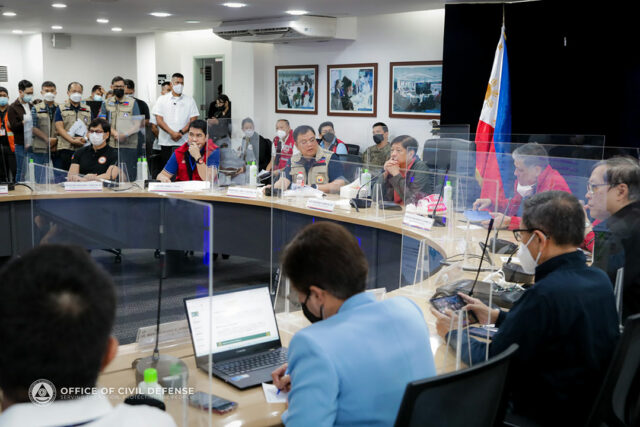
PRESIDENT Ferdinand R. Marcos, Jr. presides over a situation briefing at the National Disaster Risk Reduction and Management Council when Super Typhoon Noru (local name: Karding) hit the Philippines in 2022. — OCD.GOV.PH FILE PHOTO

THE Presidential Communications Office on Wednesday announced the appointment of an officer-in-charge (OIC) for the Office of Civil Defense (OCD).

“There is already a designated OIC, he is Assistant Secretary Rafaelito Alejandro IV. He will be the Office of the Civil Defense’s OIC,” Palace Press Officer Clarissa A. Castro told a news briefing.

Mr. Alejandro will serve as the OCD’s temporary head before the official appointment is made by the President. He currently serves as the OCD’s deputy administrator for administration.

This comes after President Ferdinand R. Marcos, Jr. tapped former OCD Administrator Ariel F. Nepomuceno to lead the Bureau of Customs. He took his oath last Monday.

The OCD manages and administers the Philippines’ national civil defense and disaster risk reduction and management program. It works in coordination with the National Disaster Risk Reduction and Management Council. — Adrian H. Halili

Address education crisis, gov’t told

PHILSTAR FILE PHOTO

THE STUDENT Council Alliance of the Philippines (SCAP) on Tuesday called on President Ferdinand R. Marcos, Jr. and the 20th Congress to implement concrete reforms to the country’s education system.

SCAP introduced a “10-point agenda,” outlining plans for underfunded schools and unresponsive policies on issues such as red-tagging, tuition hikes, mental health, and the digital divide.

“We are raising a unified voice before the President’s SONA (State of the Nation Address): students need rights, resources, and representation,” SCAP National Chairperson Angela Diamartin said in a statement.

“The education crisis is real — and so is our resolve to fight for meaningful change,” she added.

SCAP also urged the President to prioritize educational reforms “not through vague promises, but through clear commitments, budget prioritization, and urging Congress for concrete legislative action.”

Other points raised on the agenda included policies for safe and gender-affirming spaces in schools, better compensation for teachers, curriculum for diverse learners, and comprehensive health services and welfare systems.

SCAP also called on the Department of Education, the Commission on Higher Education, and the Technical Education and Skills Development Authority to work closely with students in resolving these issues.

It noted it is working with lawmakers, including Senator Risa Hontiveros-Baraquel, Senator Paolo Benigno “Bam” A. Aquino, IV, Senator Francis Pancratius “Kiko” N. Pangilinan, and Party-list Reps. Jose Manuel “Chel” I. Diokno, and Leila M. de Lima, to push their agenda.

“Students aren’t just stakeholders — we are nation-builders. But how can we build a nation if education is underfunded, unsafe, and out of reach for many?” said Phillip Talaba, president of the Xavier University Central Student Government. — Katherine K. Chan

Nepomuceno assumes BoC post

MEMBERS of the Bureau of Customs-Customs Intelligence Investigation Service inspect various counterfeit shirts, perfumes and other luxury goods at a warehouse in Las Piñas City. — PHILIPPINE STAR/MIGUEL DE GUZMAN

THE NEWLY appointed Bureau of Customs (BoC) Commissioner Ariel F. Nepomuceno has started his campaign to achieve the 1.06-trillion collection goal and combat smuggling.

In a statement on Wednesday, the BoC said Mr. Nepomuceno formally assumed office on July 1, a day before the Malacañang announced the Customs shakeup.

“Commissioner Nepomuceno reaffirmed his full commitment to President Ferdinand R. Marcos, Jr.’s directives, focusing on the agency’s core mandates: boosting revenue collection, facilitating legitimate trade, combating smuggling, and fostering a professional and integrity-driven workforce,” the BoC said.

Mr. Nepomuceno served as the Deputy Commissioner of the Enforcement Group from 2013 to 2017 and as Assistant Commissioner from 2017 to 2018.

He was also the executive director of the National Disaster Risk Reduction and Management Council.

Along with outgoing Commissioner Bienvenido Y. Rubio, a total of six Customs officials were relieved from their positions such as collectors, deputy commissioners, and directors.

Finance Assistant Secretary Karlo Fermin S. Adriano last week said the revenue of BoC will be downgraded amid lower tariff on rice and lower expected import growth in 2025 and the following years.

“The BC collection is dependent on imports, and we have a slower global economy and declining international trade,” he said.

In the first five months, Customs revenue collection was up 0.22% to P381.7 billion, the Bureau of the Treasury said. — Aubrey Rose A. Inosante

DoTr eyes ‘restructuring’ of Cebu Bus Rapid Transit

PHILSTAR FILE PHOTO

THE Department of Transportation (DoTr) is looking to coordinate with the new set of government officials in Cebu City to restructure the Cebu Bus Rapid Transit (BRT) Project, as it is nearing closing date, the World Bank said.

In an implementation status and research report, the World Bank said the Cebu BRT Project’s “pace of project implementation has slowed down considerably, notably the major civil works packages are yet to be launched.”

“Considering the age of the project, it may be more appropriate to restructure the project to address the activities that can be completed within the closing date,” it said.

This came as the BRT project will not be able to complete a substantial amount of balance activities within the current closing date, scheduled on Sept. 30, 2026.

“As the new leadership of Cebu Provincial and City Government will take office on July 1, 2025, DoTr plans to consult them as soon as possible and communicate a decision to the Bank on the way forward,” it said.

The BRT seeks to improve urban passenger transport system in the Project Corridor in Cebu City in terms of the quality and level of service, safety, and environmental efficiency. — Aubrey Rose A. Inosante

PPA awards P221-M Amandayehan port upgrade project

A CEBU-BASED construction company has secured the P221.03-million contract to upgrade Amandayehan port in Basey, Samar, the Philippine Ports Authority (PPA) said.

In a notice of award signed by PPA General Manager Jay Daniel R. Santiago dated June 30, PPA has awarded the port improvement project to BNR Construction and Development Corp.

The same company had also secured three more port projects from the PPA. These contracts, which were awarded separately from 2024 to 2025, include the P533.31-million Dumaguete port expansion project; P606.53-million Port of Tapal expansion; and the P632.29-million Tagbilaran port expansion project.

Overall, PPA said last month that it is allocating P410 million to upgrade Amandayehan in Basey, Samar to establish alternate transport routes between Samar and Leyte.

This move stemmed from the implementation of a three-ton weight limit on the San Juanico Bridge which had disrupted land-based transportation and logistics in the region.

The port of Amandayehan has been identified as a strategic alternative route due to its proximity to Tacloban port, the regulator said.

The allocation budget for the port project will cover the installation of about 14 navigational buoys valued at P100 million to support the navigational reliability of the Amandayehan Port, while another P100 million was allocated for the dredging works, and P200 million for the port’s physical expansion to handle more vessels and cargo volume.

Earlier, the PPA said it is also preparing for the takeover of the Amandayehan port from the local government unit. — Ashley Erika O. Jose

Sinner remains ice cool as Pegula, Gauff, Zverev join bonfire of seeds

LONDON — World number one Jannik Sinner stayed ice cool to move serenely into the Wimbledon second round but it was a second successive day of upsets at a sizzling All England Club as a succession of seeded players crashed and burned on Tuesday.

American second seed Coco Gauff, chasing a French Open-Wimbledon double after her Paris triumph, was the day’s most surprising casualty, losing 7-6(3), 6-1 to Ukraine’s Dayana Yastremska as the sun set on a sultry day.

Gauff’s compatriot Taylor Fritz, the world number five, survived a five-set firefight by the skin of his teeth against big-serving Frenchman Giovanni Mpetshi Perricard.

But the same could not be said of 13 of the men’s seeds who fell at the first hurdle — a Wimbledon record since 32 seeds were introduced in 2001.

Nine seeds also perished in the women’s first round while the eight top-10 seeds to go out across both singles draws amounted to the highest at a Grand Slam in the professional era.

Germany’s Alexander Zverev was the most notable men’s casualty, the third seed losing 7-6(3), 6-7(8), 6-3, 6-7(5), 6-4 to France’s Arthur Rinderknech in a marathon duel that began on Monday and was locked at one set apiece overnight.

“I’m not sure he’s ever played a match like that in his life,” said Zverev, who is still chasing a first Grand Slam title after 38 attempts.

Italian Lorenzo Musetti, seeded seventh, was bundled out on Court Two by Nikoloz Basilashvili — the same court where earlier American women’s third seed Jessica Pegula was sent packing 6-2, 6-3 by Italian Elisabetta Cocciaretto.

A red-hot Sinner never looked like joining the exodus as he beat fellow Italian and close friend Luca Nardi 6-4, 6-3, 6-0 in a victorious return to the Grand Slam stage after his epic French Open final defeat by Carlos Alcaraz last month.

“I tried to put the friendship away for a couple of hours,” Sinner, who conceded only four points when he landed his first serve, told reporters.

Novak Djokovic closed out the day’s action on the main showcourt by getting past Frenchman Alexandre Muller 6-1, 6-7(7), 6-2, 6-2 despite being hampered by a stomach bug midway through his match. He will face Briton Dan Evans next.

After seven British players won singles matches on Monday — a professional era record at Wimbledon — home fans had more to cheer on Tuesday as fourth seed Jack Draper, his nation’s big hope, avoided any dramas by easing past Argentina’s Sebastian Baez who retired hurt trailing 6-2, 6-2, 2-1.

In total, 10 British players have reached round two.

Five-times Grand Slam champion Iga Swiatek, seeded eight, has yet to conquer Wimbledon but showed positive signs when she beat Polina Kudermetova 7-5, 6-1 while Russian teenager Mirra Andreeva advanced after a 6-3, 6-3 victory over Mayar Sherif.

Both might have expected Gauff to be a major obstacle but the world number two subsided against Yastremska.

“I feel like mentally I was a little bit overwhelmed with everything that came afterwards,” Gauff said about the spell following her Paris triumph last month.

“I didn’t feel I had enough time to celebrate and also get back into it.”

The women’s draw is now without three of its top five seeds after number five Zheng Qinwen of China, the Olympic champion, suffered a third successive Wimbledon first-round defeat, beaten 7-5, 4-6, 6-1 by Czech doubles specialist Katerina Siniakova.

“I believe if I get through the first match, I will start to play better and better (on grass),” Zheng said. “The problem is the first match for me is complicated.”

Many will lament the exit of Wimbledon dark horse Alexander Bublik, seeded 28th. The Kazakh showman is guaranteed entertainment with his array of trick shots but he was unable to avoid the exit door, as he was dragged into battle by Spaniard Jaume Munar and beaten 6-4, 3-6, 4-6, 7-6(5), 6-2.

Late in the day yet another seed fell when Frenchman Ugo Umbert was beaten by veteran countryman Gael Monfils, again defying his 38 years to edge a five-setter.

American Fritz survived, though, letting out a huge roar as he beat Perricard 6-7(6), 6-7(8), 6-4, 7-6(6), 6-4 in a match carried forward from Monday. Perricard’s consolation for losing the cliffhanger was a 153 mph serve — a Wimbledon record.

Tommy Paul took out Briton Johannus Monday with little fuss, the 13th seed cruising through 6-4, 6-4, 6-2, but it was the end of the road for fellow American and 30th seed Alex Michelsen who fell 6-2, 3-6, 6-3, 3-6, 7-6(6) to Serbia’s Miomir Kecmanovic.

Zeynep Sonmez became the first Turkish woman to reach the second round at the grasscourt Grand Slam when she battled past Romania’s Jaqueline Cristian 7-6(3), 6-3.

Victoria Mboko found out a few hours before she faced Magdalena Frech that she had entered the main draw as a Lucky Loser due to Anastasia Potapova’s withdrawal and the Canadian teenager rode her luck to stun the 25th seed 6-3, 6-2.

Fourteen years after first adding her name to the Wimbledon honours board, twice champion Petra Kvitova performed her last dance on the lawns, the Czech losing 6-3, 6-1 to American 10th seed Emma Navarro. — Reuters

Krejcikova pays tribute to Eala after arduous duel

ALEX EALA wearing a Sampaguita hair tie from Nike. — INSTAGRAM.COM/ALEX.EALA

LIKE a Sampaguita, Alexandra “Alex” Eala will bloom to the fullest soon.

That is the assurance made by no less than reigning Wimbledon champion Barbora Krejcikova on the 20-year-old Filipina sensation after their hard-fought Round 1 duel in London the other day.

“Wow, it’s the next generation coming. She’s going to come up and she’s going to be really good in a couple of years,” said Ms. Krejcikova, who hacked out a gutsy 3-6, 6-2, 6-1 win over Ms. Eala to dodge and upset en route to the next round.

Ms. Eala, an unseeded first-timer in Wimbledon and at centercourt against the champion at that, wore a Sampaguita hair tie from Nike in the said match in honor of the country’s national flower.

And she came so close to fulfilling a tribute for the ages after snatching the first set from world No. 16 and six-time Grand Slam champion Ms. Krejcikova.

“I would like to start by giving credit to Alex (Eala). What the hell she played in the first set. She was smashing the ball and she was cleaning the lines and all that.  Big, big credit to her,” added the 29-year-old Czech.

Ms. Eala, WTA No. 56, delved down deeper on the tribute during the WTA post-match interview after becoming the first Filipina in history to have ever played in the Wimbledon main draw. She also made the feat in the French Open.

“This was so special for me. First of all, just to have something that reminds me where I come from, of my country and my culture out there on court. That’s what makes me special. It’s where I come from which is obviously everything in how I play and fight,” smiled the unbowed Ms. Eala, as she looks forward to the next Grand Slam stints.

“The flower in the hair was an idea of Nike and the whole idea behind it is you reap what you sow — what sown will be reaped. The whole message was to have a piece of home in such an iconic court.”

Nike gifted the hair tie to Ms. Eala following her first-ever WTA finals appearance — also the first for the Philippines — in the Lexus Eastbourne Open last week and ahead of her historic Wimbledon stint.

“The sampaguita: delicate, radiant, resilient, is more than the Philippines’ national flower. It’s strength. It’s a belief. It’s home. And today, you carry it with you. Every dream begins as a seed. ‘Kung may tinanim, may aanihin.’ (And what you plant, you’ll one day reap),” stated the renowned sneaker brand.

“Over the last decade, you’ve planted it all — the hours, the grind, the quiet resolve. And now, here you are, a Filipina on the grass courts of history. Not just playing for herself, but carrying a nation in full bloom. All yours.”

Ms. Eala will have a chance to do it in the Wimbledon doubles slated today by partnering with WTA No. 61 Eva Lys of Germany against the duo of Olga Danilovic (WTA No. 37) of Serbia and Anastasia Potapova (WTA No. 44) of Russia. — John Bryan Ulanday

Gilas faces tough Macau Bears in tuneup game ahead of Asia Cup

BEFORE embarking on its mission in the FIBA Asia Cup, Gilas Pilipinas will face a tough test against the Macau Bears in a tuneup game on July 28 at the Smart Araneta Coliseum.

The Bears feature three imports joining forces with locals from Macau and heritage players and should give the Nationals a good workout before they leave for Jeddah for the Continental meet.

The Macau club, which competes in the East Asia Super League and The Asian Tournament, previously showcased its quality by outplaying China, 83-78, in a similar friendly last July.

“They beat the Chinese national team. They are really strong. They’ve got good imports. It could be a very interesting friendly for us,” said Gilas coach Tim Cone of their opponent.

Samahang Basketbol ng Pilipinas (SBP)President Al Panlilio said this game will not only help Gilas’ build-up but also give fans a chance to see the team in action prior to the big showdowns with New Zealand, Chinese Taipei and Iraq in the Aug. 5 to 17 Asia Cup.

“While the team gets good competition, it’s also an opportunity for our Gilas fans to band together and send their team off before they fly out to Saudi Arabia,” said Mr. Panlilio in announcing the match on Wednesday.

“It’s a short preparation window as many of our players saw action in the semifinals of the PBA Philippine Cup, which was another reason why the SBP wanted Gilas to have a tuneup game here,” he added.

The SBP said with the exception of Kai Sotto, who is still recovering from ACL surgery, it will be all hands on deck for Gilas for the duel with the Bears.

Tickets for the game are now available via https://www.ticketnet.com.ph/. — Olmin Leyba

ADVERTISEMENT
ADVERTISEMENT