Home Blog Page 1337

Rice inventory falls to 2.24 MMT in early June

PHILIPPINE STAR/MIGUEL DE GUZMAN

THE rice inventory fell 2.9% month on month to 2.24 million metric tons (MMT) as of June 1, according to government data.

Year on year, inventory rose 3.5% from 2.16 MMT previously.

As of June 1, 44.7% of the rice was held by households, 36.4% by commercial entities, and 18.9% by the National Food Authority (NFA).

Month on month, rice held by the NFA and the commercial sector rose 22.3% and 1.4%, respectively. Rice held by households fell by 13.5%.

Stocks held by NFA warehouses and households rose 206.4% and 43.8%, respectively, year on year, it added. Commercial rice holdings grew 38.7%.

The NFA recently said it is considering a limit of 100 bags on the amount of palay (unmilled rice) that it can buy from individual farmers every season to increase farmer access to its higher buying price.

The Department of Agriculture said in a statement that it is still expecting the palay harvest this year to hit a record 20.46 MMT. — Kyle Aristophere T. Atienza

Over 70,000 businesses register in June, down 2.7% year on year

BUSINESS NAME registrations and renewals topped 70,000 last month, bringing first-half registrations to nearly 630,000, the Department of Trade and Industry (DTI) reported.

The DTI said business name registrations totaled 71,561 in June, down 2.7% from a year earlier.

Of the total, 62,630 were new registrations, and 8,931 represented renewals.

First-half registrations totaled 629,015, down 7.4% from a year earlier.

Over the six-month period, 537,417 were new registrations while 91,598 were renewals.

In the year to date as of July 6, registrations hit 644,397, comprising 550,721 new registrations and 93,676 renewals.

Some 84.66% of the registrations were filed online, while 14.01% were performed via a combination of walk-in and online transactions.

Women-led businesses dominated the filings, accounting for 60.79% or 391,701 of the total .

Late last month, the DTI launched a P1-billion program for women-owned micro, small, and medium enterprises through its financing arm, the Small Business Corp. (SB Corp.).

Women-owned businesses can avail of between P30,000 and P20 million in SB Corp. loans under the program.

Region IV-A accounted for 118,302 of the registrations, followed by Region III and the National Capital Region with 84,240 and 84,197  respectively.

Some 320,006 of the registrations involved the retail trade, excluding motor vehicles and motorcycles.

Also among the top registrants were food and beverage service activities, real estate, other personal activities, wholesale and retail trade and the repair of motor vehicles. — Justine Irish D. Tabile

Cost competitiveness vs landfills hindering waste-to-energy — MBC

DAVAOCITY.GOV.PH

COMPETITIVENESS relative to landfills continue to weigh on the waste-to-energy (WTE) industry despite growing demand, according to the Makati Business Club (MBC).

In a recent roundtable organized by the MBC, government agencies and companies concluded that WTE projects face issues like the preference for dumping waste in landfills, as well as possible  feedstock shortages.

In a policy note, the MBC said: “For many LGUs (local government units), sending waste to a landfill is still the cheaper option. One reason is that the fees paid to dump waste often do not reflect the full cost over time.”

“These fees usually cover only the immediate expense and not the added costs of hauling waste long distances, managing landfill sites, or dealing with environmental effects later on,” it added.

An understanding of true costs over the full life cycle of the solid waste facility was deemed necessary to help decision-making towards WTE facilities, it said.

The Department of Energy (DoE) describes WTE as “the process of converting WTE feedstock with various technologies, usually the conversion of non-recyclable waste materials into usable heat, electricity, or fuel through a variety of processes.”

While WTE requires technology or pricing solutions, the policy note stressed on the need for “strong leadership, clear institutional roles, and better alignment across agencies and LGUs.”

“A system-wide view of procurement, infrastructure, and governance can help reduce risks and improve project outcomes,” according to the note.

The MBC also cited concerns about feedstock, with most local governments not generating enough waste to support WTE projects on their own.

“Encouraging LGUs to cluster or coordinate can help pool waste supply and improve project scale. National agencies are reviewing regional data to identify where this model could work,” it said.

The DoE is hoping to include WTE and biomass in its green energy auction this year to ensure more WTE projects can enter into long-term power contracts.

“Recognizing WTE as part of the country’s energy infrastructure, and not only as a waste disposal method, is key to improving project feasibility,” the MBC said. — Sheldeen Joy Talavera

From tax thrillers to compliance cliffhangers

If tax reform had a streaming platform, the BIR’s 2025 lineup would definitely be trending! With full-fledged issuances serving as teasers, cliffhangers on the horizon and additional “episodes” hinted at in the pipeline, it has been a season worth following — especially for businesses and taxpayers trying to stay ahead of the plot.

Just as the third season of Squid Game made its highly anticipated return on Netflix, capturing the attention of viewers worldwide, a similar anticipation brews in the world of taxation — with the BIR rolling out some of its anticipated “episodes” through key issuances and other reforms. From the early implementation of VAT on digital services to updated guidelines on administrative compliance, these releases have set the tone for a more streamlined and transparent tax environment.

So, whether you are glued to your screen for drama or tax updates, 2025 is definitely keeping us all on the edge of our seats with the release of significant issuances this year.

IMPLEMENTATION OF THE CREATE MORE ACT
This year marked the full implementation of the CREATE MORE Act, with the following key provisions being highlighted:

• Adjustment of the corporate income tax rates for domestic and resident foreign corporations classified as registered business enterprises (RBE) under the enhanced deduction regime.

• New allowable deduction of input tax paid on local purchases attributable to VAT-exempt sales from gross income.

• Revised tax treatment for VAT zero-rated transactions; VAT incentives and longer incentive periods for the exporters and RBEs.

Broadened VAT zero-rating coverage now includes services that are “directly attributable” to the registered project or activity of the RBE. This includes expenses for janitorial, security, financial, consultancy services, and more.

• Administrative measures have been established to ensure compliance with the invoicing and reporting standards that were introduced alongside new alphanumeric tax codes.

The full implementation provided clearer rules, lower rates, and enhanced tax incentives, which create a more favorable business environment, stimulate economic growth, and attract foreign investment. Some taxpayer effort is expected in terms of reporting and compliance.

IMPLEMENTATION OF VAT ON DIGITAL SERVICES
With the full implementation of the VAT on digital services effective June 2, foreign digital services providers (DSPs) now carry extra compliance and reporting duties even without being physically present in the Philippines. They do not need a local representative but may appoint one for administrative purposes, in which the registration has been extended to July 1, pursuant to RMC 58-2025. On another note, consumers face price increases, as most foreign DSPs like Netflix, Spotify and Google Play are now passing on the 12% VAT to end-users, which could influence their spending habits.

CMEPA
The Capital Markets Efficiency Promotions Act (CMEPA), officially known as Republic Act No. 12214, took effect on July 1. This transformative legislation aims to enhance the competitiveness of the capital markets by simplifying the taxation of passive income and reinforcing fiscal stability with the following key takeaways:

• Stock Transaction Tax (STT) reduced from 0.6% to 0.1% to encourage more trading activity.

• Standardized Final Withholding Tax (FWT) at a flat rate of 20% tax on all interest income from peso and foreign currency bank deposits, trust funds and similar instruments, eliminating multiple rates and exemptions.

• Harmonized Capital Gains Tax at a flat rate of 15% tax on capital gains from the sale of shares in foreign corporations not traded on the local exchange.

• Reduced Documentary Stamp Tax (DST) rates from 1% to 0.75% on the original issuance of shares.

• Enhanced PERA incentives for employers matching PERA contributions of employees can claim an additional 50% deduction.

This act is expected to significantly impact investors, financial institutions, and corporations by promoting fairness in taxing passive income that boosts market participation and promotes capital market growth.

E-INVOICING AND DIGITALIZATION
The BIR has introduced significant changes with the implementation of e-invoicing and e-sales reporting systems for required taxpayers, with additional deductions provided to offset the cost of setting up the electronic systems pursuant to RR 11-2025. This initiative is part of BIR’s digital transformation strategy to enhance tax compliance and modernize record-keeping for faster refunds and fewer audit disputes.

IMPROVING AUDIT EFFICIENCY AND RISK PROFILING
Pursuant to audit reforms brought by RMO 7-2025’s revised audit selection thresholds, more businesses may fall under scrutiny depending on their gross sales. Also, the BIR has improved its risk targeting audits, focusing on high-yield or high-risk accounts instead of random selection.

ESTATE TAX AMNESTY
The estate tax amnesty applies to estates of decedents who died on or before May 31, 2022, with unpaid estate taxes as of that date. The amnesty aims to simplify the process of settling estate taxes, making it easier for heirs and beneficiaries to comply.

Pursuant to RA 11569 as implemented by RR 10-2023, the availment of the estate tax amnesty was extended until June 14, allowing taxpayers to settle and pay their estate tax obligations without incurring penalties. To provide taxpayers with additional time to comply with the submission of documentary requirements, the BIR issued RR  16-2025 extending the deadline for submission of complete documentary requirements to June 30, 2025.

Though we are halfway through 2025, just like any good series, there’s more to come. With several high-impact regulations still in the pipeline, we are to expect the release of the IRRs for CMEPA, enforcement of VAT on digital services, phase 2 of the e-Invoicing System (EIS) drive, additional CREATE MORE Act-related issuances if any and other issuances and regulations the BIR has in store for taxpayers.

We can say that the BIR is at the onset of its “Kaizen” journey — committed to continuous improvement and innovation. This commitment has yielded favorable developments, particularly in streamlining processes to make them more convenient for taxpayers. By simplifying complex procedures, the BIR promotes voluntary compliance, fosters a more conducive investment environment and contributes to long-term revenue stability.

The stage is set — now all eyes are on what’s next in the BIR’s reform rollout.

Let’s Talk Tax is a weekly newspaper column of P&A Grant Thornton that aims to keep the public informed of various developments in taxation. This article is not intended to be a substitute for competent professional advice.


Neymhel Marie I. Obedencio is a senior in charge of the Tax Advisory & Compliance Practice Area of P&A Grant Thornton, the Philippine member firm of Grant Thornton International Ltd.

business.development@ph.gt.com

Marcos admin rolls out phases 2 and 3 of National Fiber Backbone project

PRESIDENT Ferdinand R. Marcos, Jr. led the launch of phases 2 and 3 of the National Fiber Backbone project in Palo, Leyte on Monday. — PHILIPPINE STAR/NOEL PABALATE

THE PHILIPPINE government on Monday launched the second and third phases of its National Fiber Backbone project, aiming to provide high-speed internet to underserved and remote areas across the country.

President Ferdinand R. Marcos, Jr., who led the project’s inauguration in Leyte, emphasized that access to fast and reliable internet is no longer a privilege but a necessity, noting its role in education, business, work, and maintaining ties with loved ones.

He acknowledged the stark inequality in internet access nationwide, forcing some Filipinos to travel long distances just to find a signal.

The latest phases will add almost 1,800 kilometers to the country’s fiber network, expanding to Regions II (Cagayan Valley), IV-A (Calabarzon), V (Bicol), VIII (Eastern Visayas), X (Northern Mindanao), and XI (Davao).

“We are connecting the Philippines through these fiber backbones so that all Filipinos, even those from far away, those on the islands who cannot connect, will still have the internet to help them with their work, to help them with their lives,” Mr. Marcos said in Filipino, according to a transcript from his office.

This builds on the 1,245-kilometer covered under Phase 1 from the province of Ilocos Norte to Quezon City, which was completed in April last year. It has an initial 600 gigabits per second optical spectrum capacity that could serve the government and at least 14 provinces, and two National Government data centers, according to the Department of Information and Communications Technology (DICT).

The project expanded network coverage nationwide, providing broadband access to over 600 government offices and public areas and benefiting around 17 million Filipinos, including 1.39 million unique users, Mr. Marcos’ office said in a separate statement.

“The project’s completion is also likely to spur growth in rural areas, with internet penetration seen to increase to 65% from the current 33%,” it added. “It aims to lower the price of the internet to as much as US$5 per Mbps (megabit per second).”

The President described this effort as a collective action to ensure no Filipino is left behind in the digital era.

He added that wider internet connectivity would help small businesses find online buyers and enable families to access online tutorials for cooking, sewing, or farming.

Mr. Marcos, in his third State of the Nation Address, committed to continuing upgrading to nationwide connectivity.

The DICT has obtained a $287.24-million loan from the World Bank to accelerate phases 4 and 5 of the project. The completion of the project is expected to spur growth in rural areas, especially in the Visayas and Mindanao.

Meanwhile, he also called on government agencies to speed up work on critical infrastructure such as the retrofitting of the San Juanico Bridge, which connects Leyte and Samar islands.

Recent restrictions on the bridge have caused long delays, with trucks carrying essential goods forced to wait for hours.

The Department of Public Works and Highways aims to restore the bridge’s load capacity to 12 tons by year’s end, enabling buses, vans, and private vehicles to cross.

Currently, a budget of over half a billion pesos has been allocated for the repairs, with plans to eventually increase its capacity to 33 metric tons. — Chloe Mari A. Hufana

PHL seeks deeper defense ties with New Zealand

ARMED FORCES of the Philippines Deputy Chief of Staff Rommel P. Roldan (right) welcomed Major General Robert Krushka, Commander of Joint Force New Zealand, during a courtesy visit at Camp Aguinaldo on July 7. — ARMED FORCES OF THE PHILIPPINES OFFICIAL FACEBOOK PAGE

MANILA said that it is seeking closer military cooperation with Auckland, aiming to maintain regional security and improve disaster response preparedness, the Armed Forces of the Philippines (AFP) said.

In a statement, the AFP said that Deputy Chief of Staff Rommel P. Roldan met with Commander of Joint Forces New Zealand Robert Krushka during a courtesy visit on Monday.

“The AFP and New Zealand defense forces have a history of cooperation through multilateral frameworks, with shared goals of maintaining regional security and disaster response readiness,” it added.

In April, the Philippines and New Zealand signed a visiting forces agreement (VFA) that would improve military cooperation and allow their armed forces to hold joint exercises in each other’s shores.

The Philippine army said that their meeting focused on strengthening bilateral military cooperations between Manila and Auckland.

They also explored ways for further joint military training and humanitarian assistance efforts.

Also on Monday, the Philippine Air Force (PAF) and the US Pacific Air Forces (PACAF) has started the second Cope Thunder Philippines 2025 joint fighter training exercises.

In a separate statement, the PAF said that the joint training is scheduled to run until July 18 and will be conducted across multiple training locations in Northern Luzon.

The Cope Thunder exercises seek to enable bilateral fighter training with the Philippines and enhance the readiness and interoperability of both forces.

More than 2,000 PAF personnel will be deployed, including FA-50PH fighter jets, A-29B Super Tucanos, AW109 helicopters, S-76A, and S-70i Black Hawk helicopters.

The US’ air forces will also deploy 225 personnel and F-35 fighter aircraft during the exercise.

They will also take part in subject matter expert exchanges and field training exercises within designated Intensive Military Training Areas through the Northern Luzon Area.

“These engagements focus on enhancing operational tactics, interoperability, and joint mission capabilities across multiple domains,” the PAF said.

The Philippine government has been seeking more foreign defense deals with countries like the US, Japan, Australia and Canada amid its ongoing sea dispute with China.

Philippine forces have repeatedly sparred with Chinese ships and aircraft in the South China Sea due to competing claims over the disputed sea, where more than $3 trillion worth of trade passes through each year.

A United Nations-backed tribunal based in The Hague in 2016 voided China’s claim to more than 80% of the South China Sea, for being illegal.

The AFP in April also said it has started planning for action in the event of an invasion of Taiwan, which could inadvertently involve the Philippines. The country’s northernmost island lies just 140 kilometers southeast of the southern tip of Taiwan, which China views as a breakaway province. — Adrian H. Halili

Severe Tropical Storm Danas, southwest monsoon hit 27,400 families

PHILIPPINE STAR/WALTER BOLLOZOS

MORE than 27,400 families, or 82,500 individuals, across 14 villages in Luzon were affected by Severe Tropical Storm Danas, locally named Bising, and the southwest monsoon, the National Disaster Risk Reduction and Management Council (NDRRMC) reported on Monday.

According to its 8 a.m. situational report, Central Luzon recorded the highest number of affected families, with more than 26,700 across 11 villages. This was followed by the Ilocos Region, with around 600 affected families from two villages, and Cordillera Administrative Region (CAR), with 73 families from one village.

Of the total, two families were served inside two evacuation centers in Central Luzon, while 1,017 families received help outside evacuation sites in Central Luzon and CAR.

No deaths, missing persons or injuries have been reported, as of writing.

Flooding was reported in 38 areas in Central Luzon, with two already subsiding, the NDRRMC said.

Fallen debris in two areas, and rain-induced landslide in one were also reported in the region.

Severe Tropical Storm Danas exited the Philippine Area of Responsibility on Monday morning, the state weather bureau said.

In its 11 a.m. bulletin, the Philippine Atmospheric, Geophysical, and Astronomical Services Administration (PAGASA) said Danas will “continue to weaken over the East China Sea due to unfavorable conditions.”

“It is forecast to weaken into a remnant low by Wednesday as it moves over the landmass of Eastern China.”

It was last spotted 605 kilometers north of Itbayat, Batanes, with maximum sustained winds of 100 kilometers per hour (kph) near the center, gustiness of up to 125 kph, moving north at 35 kph.

Meanwhile, the southwest monsoon is expected to drench most of the country, bringing occasional moderate to, at times, heavy rains over the Ilocos Region, Zambales, and Bataan, according to a separate weather bulletin from PAGASA.

Metro Manila, Cagayan Valley, CAR, CALABARZON, MIMAROPA, Western Visayas, Negros Island Region, Zamboanga Peninsula, Bangsamoro Autonomous Region in Muslim Mindanao, and the rest of Central Luzon could experience cloudy skies with scattered rains and thunderstorms.

The rest of the country may see partly cloudy to cloudy skies with isolated rain showers or thunderstorms.

Several local government units in Metro Manila and the Ilocos Region suspended classes on July 7 due to heavy rainfall caused by the southwest monsoon.

The state weather bureau also warned of possible flash floods or landslides following heavy rain or severe thunderstorms.

“Considering these developments, the public and disaster risk reduction and management offices concerned are advised to take all necessary measures to protect life and property,” PAGASA said.

“Persons living in areas identified to be highly or very highly susceptible to these hazards are advised to follow evacuation and other instructions from local officials,” it added. — Katherine K. Chan

Strengthen LGUs and school leaders to bridge education gaps, gov’t told

PHILIPPINE STAR/ EDD GUMBAN

THE PHILIPPINES must strengthen the regulatory powers of local government units and school leaders and decentralize the school sector to address educational gaps, the non-profit group Philippine Business for Education (PBEd) said.

“To solve deeply rooted education problems, we must empower those closest to the ground. National policy can set the directions, but delivery must be localized,” PBEd Deputy Executive Director Hanibal E. Camua told a news briefing on Monday.

A January 2025 report by the Second Congressional Commission on Education (EDCOM 2) warned about the dire state of basic literacy in Philippine public schools, with students falling four to five years behind the expected reading proficiency for their grade levels.

EDCOM 2 recommended a “teach-at-the-right-level” approach, tailoring instruction to students’ actual learning needs rather than their age or grade. It also sought stronger support from the Department of Education in enforcing remedial and foundational programs.

Mr. Camua added that decentralizing the education sector would allow local governments and community leaders to implement policies within their respective areas.

“Solutions must come from those who understand the context best, our school leaders, our local government units. That’s why decentralization is not just an option, it is a necessity,” he added.

PBEd is also calling for the proper implementation of local school boards and special education funds (SEF), that would enable localized improvements in education.

“Yet in many areas, the local school boards remain underutilized, and the SEF is often spent on infrastructure alone,” Mr. Camua added.

He said that the government must strengthen school boards to become active decision makers in planning, budgeting, and monitoring education policy.

He added that the SEF should also be more flexible and spent on interventions that improve access, equity, and learning outcomes, notable in underserved areas.

Mr. Camua said that the government should also scale up remediation programs, “to make sure that every learner, can read, write and do math at the right level.”

Moreover, PBEd called for the realignment of technical vocation and other higher education curricula with industries’ demand.

He said that this would enable graduates to be “ready for or real jobs and real employment.”

He also raised a need to keep investing in the support of teachers, school leadership, and better classroom-to-learner ratios.

Amid a persistent learning crisis, the government fell short of its target to add 20,000 teachers for the school year, managing to recruit only 16,000.

It is also seeking 10,000 additional administrative assistants to support public schools as they handle accounting, paperwork, documentation, and other matters. — Adrian H. Halili

BI uncovers new trafficking route

PHILSTAR FILE PHOTO

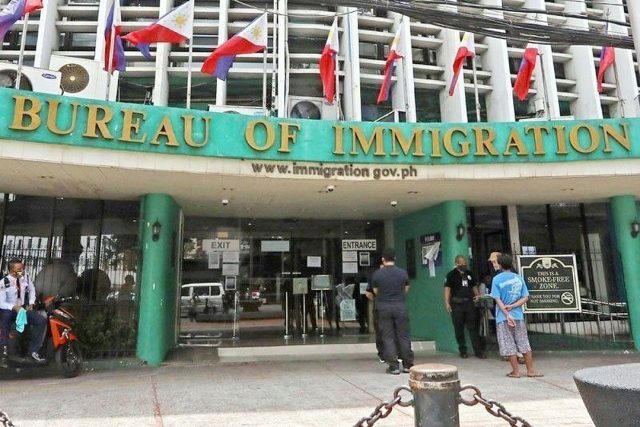
THE Bureau of Immigration (BI) on Monday said it uncovered a new human trafficking route funneling Filipinos to Pakistan for illegal work, describing the scheme as part of trafficking patterns similar to those used by syndicates linked to Philippine offshore gaming operator (POGO).

Four Filipinos — a man and three women in their late 30s to early 40s — were nabbed at Manila’s Ninoy Aquino International Airport on July 6 while attempting to board a Cebu Pacific flight to Hong Kong, the BI said in a statement on Monday.

They were later found to be en route to Pakistan for jobs arranged by a Chinese national recruiter.

“This is a deeply disturbing trend. We are now seeing victims being funneled to Pakistan for illegal online work — clearly a new scheme from the same criminal playbook tied to illegal POGOs,” Immigration Commissioner Joel Anthony M. Viado said in a statement.

The passengers initially claimed they were vacationing in Hong Kong but later admitted under secondary inspection that they had been recruited to work as cleaners and a cook at an online gaming hub in Pakistan, with promised monthly salaries ranging from P35,000 to P45,000.

They said their travel funds were provided by their recruiter, who also instructed them to pose as tourists until further arrangements were made.

President Ferdinand R. Marcos, Jr., earlier directed agencies to strengthen anti-trafficking efforts and tighten border controls following reports of Filipinos being exploited in scam and cybercrime hubs across Southeast Asia.

The BI said it has coordinated with the Inter-Agency Council Against Trafficking to investigate recruiters and facilitators behind the new trafficking route.

“Be cautious of anyone offering too-good-to-be-true opportunities abroad, especially if you’re instructed to lie or pose as a tourist,” Mr. Viado said. “These victims were scammed and almost trafficked out of the country under false promises.” — Chloe Mari A. Hufana

NCAP violators to get text, e-mail

PHILIPPINE STAR/MIGUEL DE GUZMAN

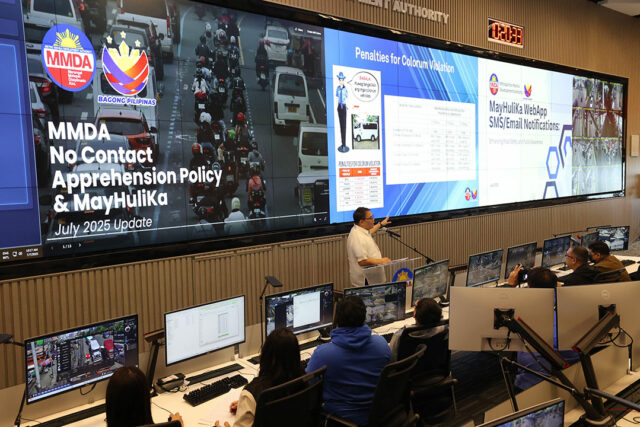
THE Metropolitan Manila Development Authority (MMDA) on Monday said that it would now utilize short message service (SMS) notification and e-mails to notify violators of its no-contact apprehension program (NCAP).

“A key feature of this initiative is that vehicle owners will receive notification via SMS even without an internet connection so that immediate action may be taken as soon as they are notified and for their convenience,” MMDA Chairman Romando S. Artes said in statement.

Motorists will receive a text or e-mail from the agency once a traffic violation has been verified and validated.

Mr. Artes also urged the public to be cautious of any suspicious messages containing payment links, as the official MMDA text and e-mail notification do not include it.

The agency will send a text via “MMDA_NCAP” and e-mails through “no-reply@mmda.gov.ph.”

He added that motorists should update their records with the Land Transportation Office to ensure they receive notifications.

“Also, vehicle ownership should be up to date; transfer of ownership should also be processed immediately,” he said.

The MMDA began re-implementing the NCAP on Metro Manila’s major highways after the Supreme Court partially lifted a temporary restraining order issued in 2022.

The NCAP covers Epifanio de los Santos Avenue (EDSA), C5, Buendia, Roxas Boulevard, Marcos Highway, Katipunan, Commonwealth Avenue, Quezon Avenue and West Avenue. — Adrian H. Halili

Ban of abusive money lenders eyed

PHILSTAR FILE PHOTO

A BILL seeking to prohibit online loan firms from conducting abusive collecting practices to their debtors has been filed in the Senate.

“Collecting money through intimidation and abuse is inhumane, especially for our poor countrymen who are forced to take on debt,” Senator Sherwin T. Gatchalian said in a statement on Monday.

The Fair Debt Collection Practices Bill, filed on Monday, proposed to ban debt collectors from engaging in any conduct that harasses, oppresses, or abuses debtors during collection.

It also specifically bans the use of threats of violence, obscene or profane language, and the public disclosure of borrowers’ names, among other practices.

The bill will impose fines between P30,000 to P60,000 for violation of the proposed measure.

The proposed measure, however, allows lending companies to use “all reasonable and legally permissible means to collect amounts,” without using abusive, unfair, and untoward conduct to the debtor.

The bill also seeks to impose allowable debt collection practices and sets out guidelines to ensure confidentiality of information and transparency in transactions. — Adrian H. Halili

Earthquakes jolt highland region

BAGUIO CITY — Multiple earthquakes jolted various locations in the highland region on Sunday and early Monday, the state-owned seismology agency reported.

A magnitude 4.0 earthquake hit Kalinga province at 6:58 p.m. on Sunday, whose epicenter was pinpointed by the Philippine Institute of Volcanology and Seismology (Phivolcs) in Tabuk City, the provincial capital of Kalinga.

Phivolcs also reported a magnitude 3.8 quake felt by residents in Baguio City and Benguet province at 12:48 a.m.

Its epicenter is located 14 kilometers South 14° East of Itogon, Benguet, at a depth of 10 kilometers.

Another earthquake with 2.1 magnitude followed at 3:35 a.m., which occurred in Abra province. Its epicenter was located 13 km North 18° West of Tineg, with a depth of 7 kilometers.

No significant damage caused by the jolts since Sunday has been reported yet by authorities.

Meanwhile, the social welfare department recorded 73 families (168 individuals) affected by the July 4 landslide in Barangay Virac in the mining district of Itogon, Benguet.

The Itogon local government unit suspended classes at Acupan Elementary School, which was transformed into an evacuation center for landslide-displaced families. — Artemio A. Dumlao

ADVERTISEMENT
ADVERTISEMENT