Home Blog Page 1148

California Coastal Commission opposes SpaceX launch expansion on West Coast, again

Starlink mission. SpaceX/Flickr

 – The California Coastal Commission voted on Thursday against a plan by Elon Musk’s SpaceX to nearly double the number of Falcon 9 rocket launches the company is permitted to conduct each year from Vandenberg Space Force Base, from 50 to 95.

But as was the case when the commission voted last October to oppose a previous SpaceX launch expansion from 36 to 50 at the installation, the U.S. government can merely override the objections of California regulators and approve the latest plan.

The U.S. Department of the Air Force, parent agency of the Space Force, has taken the position that the proposed launch expansion at Vandenberg, about 60 miles (97 km) northwest of Santa Barbara on the central California coast, is a federal activity exempt from further state oversight.

A commission staff report countered that of 51 rockets launched last year from Vandenberg, SpaceX Falcon 9s accounted for 46 of them.

While SpaceX flies some missions for the Defense Department and NASA, the enlarged launch operations SpaceX envisions are primarily for carrying payloads for the company’s own Starlink satellite network, the report said.

SpaceX also has sought to expand its launch facilities at NASA’s Kennedy Space Center in Cape Canaveral, Florida.

Air Force officials did not attend Thursday’s commission meeting in Calabasas, north of Los Angeles, where the panel voted 11-0 against SpaceX.

Neither representatives for SpaceX nor the Air Force could immediately be reached for comment. SpaceX has sued the California Coastal Commission over its previous objections, accusing the agency of singling out Musk’s company for greater regulation in retaliation for his political views.

In addition to allowing as many as 95 launches a year by the company’s workhorse Falcon 9, the new plan would permit up to five Falcon Heavy rocket launches annually, and up to 24 landings by the company’s reusable rocket boosters, twice as many as previously approved. Two new landing zones at the base would also be built. At-sea landings would also be increased.

In recommending disapproval, commission staff cited what it called insufficient information about the plan and concerns over noise pollution and wildlife disturbance from more frequent, louder sonic booms as SpaceX launch activity escalates.

The staff report also cited the need for more frequent closures of public beaches and campgrounds that lie within the launch hazard zones around the base. – Reuters

PHL financial system resources hit P35.17 trillion as of June

BW FILE PHOTO

THE RESOURCES of the Philippine financial system climbed to P35.17 trillion as of end-June, preliminary data from the Bangko Sentral ng Pilipinas (BSP) showed.

The combined resources of banks and nonbank financial institutions grew by 7.45% year on year from the P32.73 trillion logged as of June 2024.

These resources include funds and assets such as deposits, capital, and bonds or debt securities.

Preliminary central bank data showed that banks’ resources stood at P29.18 trillion as of June, increasing by 7.95% from P27.03 trillion a year prior.

Total resources of universal and commercial banks rose by 7.15% year on year to P27.13 trillion at end-June from P25.32 trillion.

Thrift banks’ resources reached P1.37 trillion, increasing by 22.32% from P1.12 trillion in the same period in 2024.

Resources held by digital banks also jumped by 28.48% to P142.1 billion as of June from P110.6 billion a year prior.

Lastly, rural and cooperative banks’ resources amounted to P543.2 billion as of March, 13.43% higher than the P478.9 billion recorded at end-June 2024.

Meanwhile, nonbank financial institutions’ resources went up by 5.01% to P5.99 trillion as of end-March from P5.704 trillion as of June 2024.

Nonbanks include BSP-supervised investment houses, finance companies, security dealers, pawnshops and lending companies. Nonstock savings and loan associations, credit card companies, private insurance firms, the Social Security System and the Government Service Insurance System are also nonbank financial institutions.

Strong loan growth, particularly in the consumer sector, drove the continued expansion of the Philippine financial system’s resources, Rizal Commercial Banking Corp. Chief Economist Michael L. Ricafort said in a Viber message.

The BSP’s ongoing easing cycled helped drive increased demand for credit, he added, with cuts to banks’ reserve ratios also boosting their loanable funds.

“Continued profitability of banks, among the most profitable industries in the country for many years, added to banks’ capitalization and total resources. Continued growth in banks’ deposits, similar to gross domestic product growth, also fundamentally supported faster loan growth and also contributed to greater earnings, interest income, and net interest margins,” Mr. Ricafort said.

“For the coming months, relatively faster loan growth could be bolstered further by possible Federal reserve and BSP rate cuts for the coming months or years, [which] could support further growth in banks’ earnings, capital, and assets or resources.”

BSP Governor Eli M. Remolona, Jr. has said that they could deliver two more rate cuts before yearend, with the next reduction likely to happen as early as the Monetary Board’s Aug. 28 meeting.

After this month’s review, the Monetary Board’s remaining meetings for this year are scheduled for Oct. 9 and Dec. 11.

The BSP has lowered benchmark borrowing costs by a total of 50 basis points (bp) this year via two consecutive 25-bp cuts in April and June, with the policy rate now at 5.25%. This brought cumulative reductions since August 2024 to 125 bps.

Meanwhile, the Fed has kept its target rate at the 4.25%-4.5% range since December last year, with officials citing the need to assess the inflationary and economic impact of the Trump administration’s tariff policies. However, Fed policy makers said in their July meeting that they continue to see two rate cuts this year.

Recent data have bolstered bets of a September easing move by the US central bank. — Katherine K. Chan

Taiwan Expo 2025 in the Philippines: Special press event previews September’s showcase of Taiwan’s soft & hard power

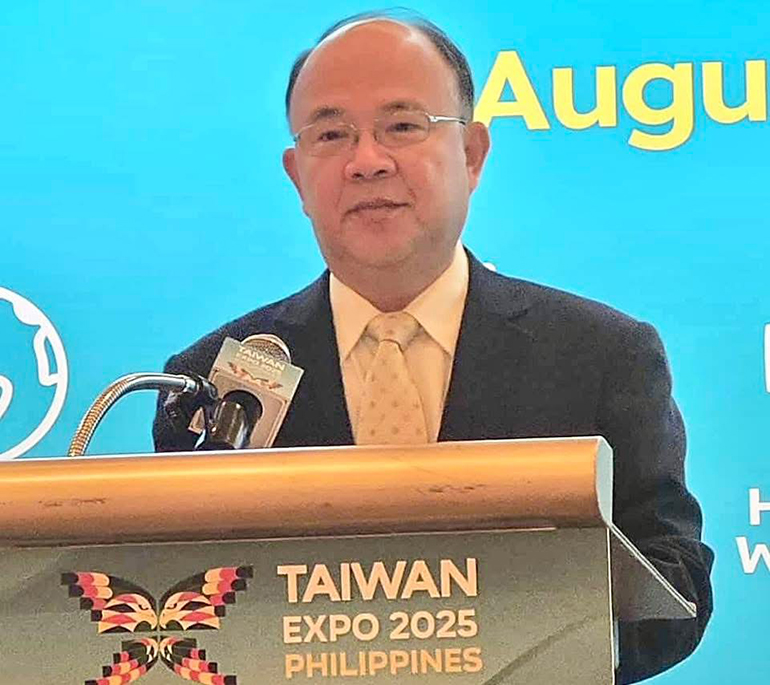
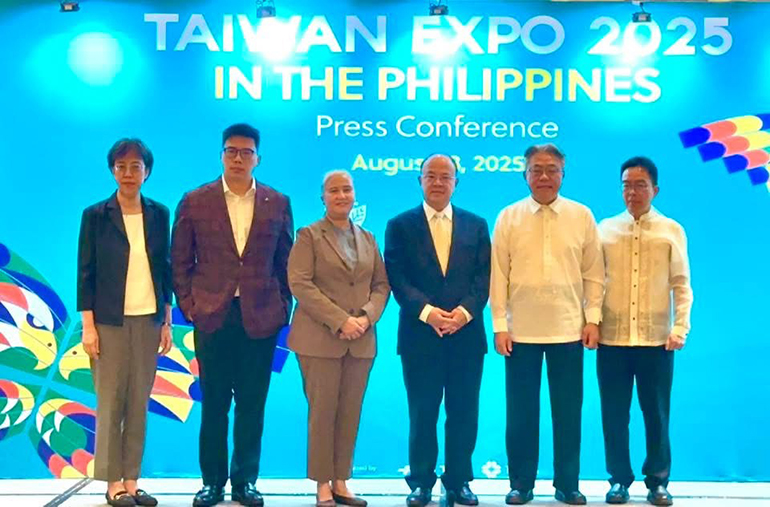
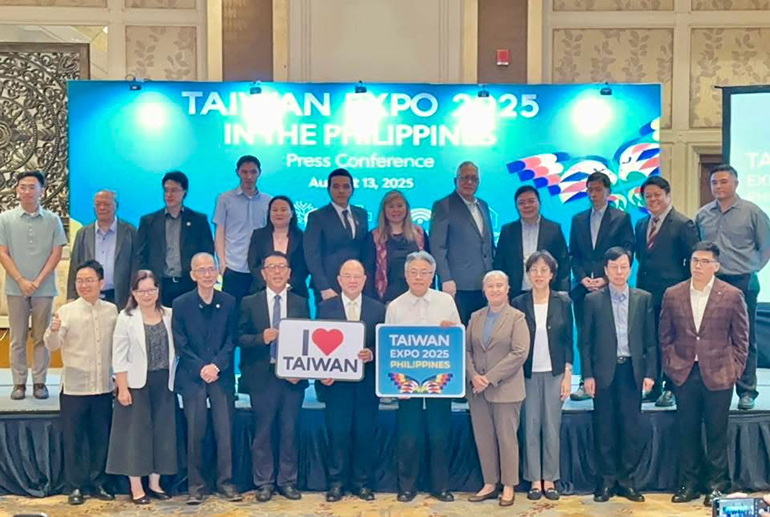
Organized by the Taiwan International Trade Administration (TITA) and the Taiwan External Trade Development Council (TAITRA), the highly anticipated Taiwan Expo 2025 in the Philippines will make its grand return from Sept. 17 to 19 at the SMX Convention Center in Manila after a six-year hiatus. On Aug. 13, a special Press Conference was held to provide the Philippine mainstream media and industry associations leaders with an exclusive preview of the innovative products and integrated solutions that will be showcased at the Expo, generating excitement ahead of the Taiwan Expo.

Woody Wang, deputy executive eirector of TAITRA, emphasized that this year’s Taiwan Expo 2025 in the Philippines marks a major milestone for Taiwan’s post-pandemic reengagement with the Philippine market. In line with the Philippine government’s policies, evolving market demands, and emerging consumer trends, the exhibition has been thoughtfully designed around five key themes: Green & Sustainability, Agritech & Aquatech, Health & Wellness, Smart Technologies, and Intelligent Lifestyle. Featuring five themed pavilions and industry zones, the Expo will showcase over 140 leading Taiwanese companies, vividly illustrating Taiwan’s wide-ranging industrial competitiveness and innovative prowess.

Dustin Teng-Shi Yang, minister of the Taipei Economic and Cultural Office in the Philippines (TECO), highlighted that Taiwan’s advanced technology and well-established manufacturing capabilities perfectly complement the Philippines’ rapidly expanding market and youthful demographic dividend, unlocking vast potential for collaboration.

Atty. Evangeline Q. de Leon, corporate secretary of the Manila Economic and Cultural Office (MECO), emphasized that the Taiwan Expo serves as a crucial platform for bilateral business exchanges and market expansion by introducing innovative solutions to the Philippine market.

Bryan Ang, vice-president for Trade of the Philippine Chamber of Commerce and Industry (PCCI), remarked that Taiwan’s strong reputation for technological innovation and business agility will further enhance bilateral industrial competitiveness and foster long-lasting cooperation.

The product highlights at the Press Conference covered all five key themes. Under Agritech & Aquatech, MIC Meter Industrial Co., Ltd. showcased its Bluetooth Soil nutrition 9 in one meter and AIoT Pig Counter Board, emphasizing real-time monitoring and precision livestock management. Meanwhile, JNC Technology Co., Ltd. presented its Multi-channel Gas Detector and Water Sensor, offering efficient solutions tailored for smart agriculture and aquaculture.

In Smart Technologies, AIRA Corp. introduced its airaTrack-Intelligent Person Tracking Solution, which integrates seamlessly with existing surveillance infrastructures. Zyxel Networks demonstrated its cloud technology embedded with advanced cybersecurity features, addressing the Philippines’ pressing need for secure, non-red supply chain products.

In Health & Wellness, ASUS led the way with ICT-based smart medical applications, while V5med, Inc. showcased its AI-assisted software, V5med Lung AI, setting new standards in precision medicine.

Under Green & Sustainability, hiPower Hydrogen Technology Co., Ltd. demonstrated cutting-edge renewable hydrogen energy solutions, and Super Battery Co., Ltd. featured innovative lithium battery applications — both responding proactively to the global energy transition.

Within Intelligent Lifestyle, SHAAN HONQ INT’L COSMETICS CORP. introduced a premium hair care line that masterfully blends technology with aesthetics, while Morita Biotech Co., Ltd. highlighted popular Taiwanese skincare products, underscoring the strength and appeal of Taiwan’s beauty industry.

These innovations not only exemplify technological advancement but also address the diverse needs of the Philippine market, including energy stability, food safety, accessible healthcare, cybersecurity, and lifestyle enhancements.

The Press Conference drew participation from numerous industry associations, major chambers of commerce, and Taiwanese community organizations, showcasing strong interest and support from the Taiwan-Philippines business community. Stakeholders across various sectors eagerly anticipate the Taiwan Expo in the Philippines this September, which is expected to serve as a robust platform for bilateral business exchanges, foster greater commercial opportunities, and deepen cooperation in technology innovation, sustainable development, and the health industry — paving the way for a new era of Taiwan-Philippines economic collaboration.


Spotlight is BusinessWorld’s sponsored section that allows advertisers to amplify their brand and connect with BusinessWorld’s audience by publishing their stories on the BusinessWorld Web site. For more information, send an email to online@bworldonline.com.

Join us on Viber at https://bit.ly/3hv6bLA to get more updates and subscribe to BusinessWorld’s titles and get exclusive content through www.bworld-x.com.

SM MOA Arena to host 2025 FIVB Men’s Volleyball World Championship

SM Mall of Asia Arena marks a historic achievement as the home of this year’s FIVB Men’s Volleyball Championship.

The Philippines’ premier indoor arena, renowned for hosting world-class events, gears up to welcome the globe’s best volleyball teams for an unforgettable championship showdown.

The energy was electric at the SM Mall of Asia Music Hall as volleyball fans, athletes, and special guests gathered for the highly anticipated 30-day countdown to the FIVB Men’s Volleyball World Championship. This is a first in Philippine sports history and a milestone for SM Supermalls as a proud major sponsor. 

The grand launch brought the excitement closer to home with the unveiling of the event’s official soundtrack, the introduction of its lovable mascot, and a rare sneak peek of the championship’s elusive trophy, which will be making a nationwide tour across select SM Supermalls in Luzon, Visayas, and Mindanao. 

With the world watching, the SM Mall of Asia Arena will take center stage as it welcomes the tournament’s pool and finals phase. The Arena is one of the largest indoor venues in Asia, with a seating capacity of up to 20,000, and is designed to meet international standards for major sporting and entertainment events. Its cutting-edge acoustics, advanced lighting systems, spacious concourses, and premium seating areas make it a world-class venue that has hosted some of the most prestigious global events.

This historic tournament follows the phenomenal success of the 2023 FIBA Basketball World Cup, further solidifying the Philippines’ reputation as a premier destination for international sports.

“We are honored to host the FIVB Men’s Volleyball World Championship for the first time. This is not just a game, it is history in the making,” said Arnel C. Gonzales, Vice-President and General Manager of the SM Mall of Asia Arena.

On opening day, fans are in for an explosive treat as K-pop sensation BOYNEXTDOOR takes the stage before the highly anticipated first match between Alas Pilipinas and Tunisia.

K-Pop group BOYNEXTDOOR is set to open the 2025 FIVB Men’s Volleyball Championship. Photo Source: FIVB / fivb.com

As the countdown begins, SM Supermalls invites everyone to be part of this monumental event. With its convenient locations, ample parking, diverse dining and retail options, staycation choices, and direct access to public transport, SM ensures every match day is as exciting and comfortable as it is unforgettable.

For the first time ever, the FIVB Men’s Volleyball Championship takes center stage at the SM Mall of Asia Arena.

Tickets are selling fast. Secure your seats now and witness volleyball history at the SM Mall of Asia Arena.

Get your tickets now at https://smtickets.com/events/view/14244.


Spotlight is BusinessWorld’s sponsored section that allows advertisers to amplify their brand and connect with BusinessWorld’s audience by publishing their stories on the BusinessWorld Web site. For more information, send an email to online@bworldonline.com.

Join us on Viber at https://bit.ly/3hv6bLA to get more updates and subscribe to BusinessWorld’s titles and get exclusive content through www.bworld-x.com.

Philippines’ cash remittances up 3.7% in June

Dollar and pound banknotes are seen in this picture illustration taken April 28, 2017. — REUTERS/DADO RUVIC/ILLUSTRATION

MANILA — Cash remittances rose 3.7% in June from a year ago to $3 billion, the Philippine central bank said on Friday.

In the first six months of the year, cumulative cash remittances through banks increased 3.1% to $16.75 billion. — Reuters

Global Dominion champions young marketers at 33rd Agora Youth Awards

AGORA judges with organizers and Global Dominion alumni now leading its affiliated companies as presidents.

In every industry and institution, the future is in the hands of its young and promising visionaries. For the world of marketing and finance, it is all the more important for young and aspiring practitioners to be given a platform to hone their skills and showcase bold ideas and strategies they can use in response to the ever-changing trends and consumer patterns.

Established in 1992, the Agora Youth Awards (AYA) has become a platform for outstanding students and campus organizations to first experience marketing practices in the Philippines. Organized by the Philippine Marketing Association (PMA), the AYA also recognizes the skills, leadership, and passion of tomorrow’s marketing professionals, making sure that academic excellence translates to real-world business challenges.

For the award’s 33rd edition, the PMA began its search for the next wave of Gen-Z marketing disruptors and young visionaries who dare challenge the norms and reshape the future of the industry, which aligns with PMA’s 71st anniversary theme “AI-Nabled Pinoy Marketer.”

PUP Junior Marketing Executives from Polytechnic University of the Philippines – Manila strike a fun pose after presenting to the panel.

This year’s awards’ Junior Marketing Association (JMA) Category National Finals was hosted by Global Dominion Financing, Inc., an institution that helps Filipinos achieve their goals through easy and affordable loan products and services, coupled with innovative and adaptive loan facilities. Global Dominion also served as the case sponsor for the said category.

Held last Aug. 5, Global Dominion gathered the top JMA members from universities and colleges across the Philippines to present their pitches before a panel of judges, showcasing their creativity, strategic thinking, and grasp of real-world marketing challenges.

Among the universities and colleges with JMA representatives are Batangas State University – The National Engineering University (Pablo Borbon Campus), Central Luzon State University, Bulacan State University, Xavier University – Ateneo de Cagayan, University of Santo Tomas, De La Salle University, San Beda University, Polytechnic University of the Philippines, Silliman University, and the University of Makati.

The opening of the judging day was graced by Ms. Leah Marie Ayeng, Director for Youth and Academe of the Philippine Marketing Association and CEO of Prestige Products, who encouraged the finalists to embrace their roles beyond traditional marketing.

PMA’s Ms. Leah Marie Ayeng speaks at the 33rd Agora Youth Awards – JMA Judging Day, encouraging finalists to lead with purpose.

“Showcase the way you think, the way you empathize, the way you understand markets and communities; and more importantly, the way you stand for something beyond the brand,” she told the students. “To all of you, you are not just a student; you are a storyteller, a strategist, and a future social architect. Today is more than a competition; it is a celebration of how far you have come and a preview of the future you are about to stage. So, present with pride, speak with purpose, and live with integrity.”

Meanwhile, the esteemed group of judges includes C-suite executives from respected companies in the Philippines, such as Global Dominion President and CEO Patricia Poco-Palacios; Certified Professional Marketer (CPM) Asia Vice-President of Sales, Strategy, and Marketing Sy Bryan Lato; CPM Asia Executive Program Director Enrique Pablo Caeg; UNAHCO Inc. Vice-President of Marketing and Corporate Affairs Edwin Mapanao; Go Negosyo Program Development Manager Paul Anthony De Guzman; and Airspeed CMO Therese Castrojas-Galang.

Global Dominion President and CEO Patricia Poco-Palacios

In the event’s opening remarks, Ms. Palacios, a 2004 Agora Youth Awardee herself, shared her experiences as a marketer and advocated for financial inclusion in the industry.

“As someone who stood there where you are as an Agora awardee myself, it fills me with pride to now be leading Global Dominion Financing , Inc., a strong and multi-awarded financial institution that continues to grow with purpose,” she said.

Her remarks underscored the power of marketing not just as a business tool, but as a means to create meaningful change in people’s lives. Drawing from Global Dominion’s mission, she emphasized how strategic marketing can bridge the gap between financial institutions and the communities they serve.

“When we’re dealing with a marketing institution such as ourselves, marketing is key because we really need to broaden the awareness and really connect to those who have been underserved, those who have been intimidated by financial institutions. But, it’s a key driver, because it’s one of the ways that we can really move our country forward,” she added.

As the presentations unfolded, Global Dominion CEO Patricia Poco-Palacios took her place among the distinguished panel of judges.

The JMA finalists were then tasked to present their pitches centered on growing Global Dominion’s women borrowers, challenging them to craft campaigns that emphasized financial literacy, inclusivity, and community engagement. Each university was encouraged to explore creative ways to reach women from diverse backgrounds, address barriers to accessing financial services, and highlight the impact of empowering female borrowers.

Students who had completed their respective pitches were treated to a meet-and-greet with company presidents who once came from their ranks, ice breaker activities headed by Global Dominion staff, an office tour of the Global Dominion headquarters in Ortigas, as well as a recruitment briefing led by Global Dominion Chief People Officer Godofred Matias.

Recognizing these efforts, Ma. Cristina Oreta, CPM., 2025 PMA President, expressed her appreciation to Global Dominion for its role in nurturing the next generation of marketing leaders.

“I would like to do a special shoutout sa Global Dominion, napakagaling po. Thank you very much, Pat (Global Dominion President & CEO) for loving the career, the industry, and the field. Thank you for giving back and guiding our next generation of marketing disruptors. Superb! Thank you again!”

Global Dominion’s  activities tested the marketing expertise of the finalists while giving them opportunities to connect, collaborate, and learn from industry leaders and their fellow competitors. For most of the students, the experience was a rare chance to grow both professionally and personally.

“Immersing ourselves in this kind of environment, I would say it is a privilege to even be here in the first place. It’s a really good experience, especially for our particular team, working together for countless hours, interacting and networking with others, and also having the chance to learn ideas and implementable solutions from them,” Martin Pantelleon, a student from San Beda University, told BusinessWorld in an interview.

A festive burst caps off the University of Makati Junior Marketing Association’s moment after their panel presentation.

The passion and teamwork displayed during the competition resonated not only with the judges but also with the mentors who guided these young marketers throughout their journey. Coaches present in the competitions mentioned that seeing their students grow in skill, confidence, and camaraderie was as rewarding as any trophy.

“I am super proud of them. I’ve seen them grow. Initially, there were actually only three of us who started this association. So, we had a mini competition wherein we gathered students and had them audition to become new members of the team. From that, we are here. So, when it comes to being proud, I think they are champions in my heart already,” Xavier University – Ateneo de Cagayan coach Angelo Nikito Borres said.

The winners of the event, announced on Aug. 8 during the Agora Youth Awards Night, were led by the University of Santo Tomas Junior Marketing Association, recognized for their outstanding pursuit of innovation and automation. In second place was Batangas State University–Pablo Borbon Campus, lauded for their purposeful approach in promoting innovation, automation, and sustainability. Rounding out the top three was Silliman University, whose team skillfully integrated these same principles in their journey toward success.


Spotlight is BusinessWorld’s sponsored section that allows advertisers to amplify their brand and connect with BusinessWorld’s audience by publishing their stories on the BusinessWorld Web site. For more information, send an email to online@bworldonline.com.

Join us on Viber at https://bit.ly/3hv6bLA to get more updates and subscribe to BusinessWorld’s titles and get exclusive content through www.bworld-x.com.

JuanHand partners with ECPAY for seamless payment accessibility

In photo (from left): WeFund Lending Corp. President and CEO Francisco “Coco” Mauricio and of ECPay President and CEO Ma. Patricia D. Pascual

JuanHand has partnered with Electronic Commerce Payments (EC PAY) Inc., or ECPAY, a leading payment solutions provider, to enhance its services and offer customers faster, more convenient transactions. JuanHand now has access to ECPAY’s extensive payment network, enabling effortless transactions for users.

A key feature of this collaboration is the integration of JuanHand as a direct biller within the GCash app, allowing customers to pay for JuanHand services directly through GCash. Starting this August, JuanHand users can just open their GCash wallet, click on the ‘Bills’ icon, search or type in JuanHand, and they can already pay right away.  It’s that easy.  Transactions are processed in real time, ensuring instant posting and a hassle-free experience.

This partnership not only simplifies transactions for JuanHand users but also expands its reach to millions of GCash subscribers. By leveraging ECPAY’s robust payment infrastructure, JuanHand continues to innovate, providing efficient and reliable financial solutions for its growing customer base.

Streamlined Customer Experience is at the core of JuanHand’s operations.  With the ECPay partnership, JuanHand reinforces its commitment to providing safe, convenient, and accessible digital payments.

JuanHand is operated by WeFund Lending Corp., which has already disbursed over P55 billion in loans and currently has over 15 million registered users. It’s easy to use a loan app with just one valid ID, and a five-minute loan approval process provides quick financial assistance to Filipinos nationwide. The partnership between JuanHand and ECPay demonstrates a strong commitment to financial accessibility, with both companies continue to pave the way for a more financially inclusive future.


Spotlight is BusinessWorld’s sponsored section that allows advertisers to amplify their brand and connect with BusinessWorld’s audience by publishing their stories on the BusinessWorld Web site. For more information, send an email to online@bworldonline.com.

Join us on Viber at https://bit.ly/3hv6bLA to get more updates and subscribe to BusinessWorld’s titles and get exclusive content through www.bworld-x.com.

E-wallets told to drop gambling links

A man uses an e-wallet application on his mobile phone for an online gaming transaction. — PHILIPPINE STAR/JOHN RYAN BALDEMOR

By Adrian H. Halili, Reporter

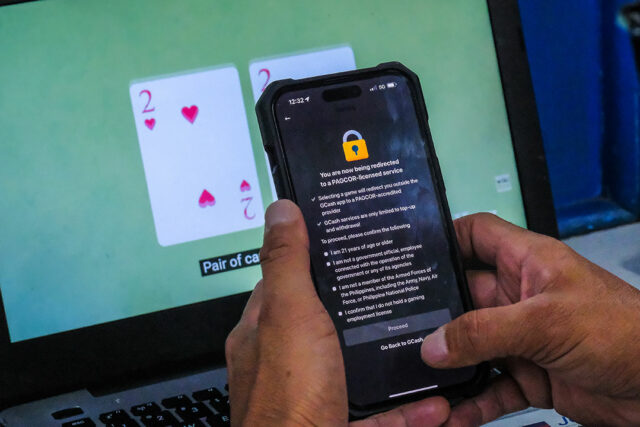
THE BANGKO SENTRAL ng Pilipinas (BSP) on Thursday ordered all electronic wallets (e-wallets), banks and other supervised institutions to remove in-app gambling assets, including any links that direct users to gaming or gambling websites.

“The BSP directive is issued in light of the surge in online gambling transactions and its impact on the financial health of consumers and their families, and considering the broader social cost,” the central bank said in a statement late Thursday.

The BSP said the suspension will remain in place until its guidelines for online gambling payment services are finalized.

BSP Deputy Governor Mamerto E. Tangonan said these financial firms were given 48 hours to remove the links that redirect users to gambling websites.

“The Monetary Board of the BSP has approved our policy ordering BSP-supervised institutions to take down and remove all icons and links redirecting to online gambling sites,” he said during a Senate committee hearing on online gambling.

In separate statements, GCash and Maya said they will comply with the BSP’s directive immediately.

E-wallets such as GCash and Maya have integrated gambling-related services in their apps, making it easy for users to access online casinos. This has helped fuel the popularity of online gambling in recent years.

However, concerns over rising gambling addiction and mounting debt have prompted lawmakers and regulators to consider measures to ban or restrict online gambling in the country.

Senator Alan Peter S. Cayetano questioned why it would take 48 hours to remove the links to online gaming sites when it could be done immediately.

“Why do they need 48 hours? Isn’t that instant? So if someone dies in 48 hours because they are addicted (to online gambling), is that okay?” said Mr. Cayetano, who heads the Senate Committee on Banks and Financial Institutions.

Mr. Tangonan said the 48 hours would be enough time for e-wallet operators to remove all links to online gambling sites.

“The other reason is so that we would give time for the customers to withdraw their funds from the online gaming account, once they learn that we are already removing the links from the mobile payment applications and websites,” he added.

Mr. Tangonan said that the removal of links to online gaming sites is an “immediate measure” as the BSP is still finalizing new rules to mitigate gambling-related harm by strengthening financial safeguards across banks, e-wallets, and payment platforms.

“The suspension of the in-house links from the mobile apps is an immediate measure, while we are finalizing regulations (on online gaming sites),” he said.

Mr. Tangonan said the use of credit cards to pay for online bets will also be prohibited by the BSP.

The BSP also proposed measures such as biometric ID checks, daily transaction limits, time-based payment restrictions, and user tools for spending caps, voluntary breaks, and self-exclusion.

The central bank said these safeguards aim to curb addiction, fraud, and financial harm while encouraging responsible use of digital finance.

E-WALLETS TO UPDATE APPS
GCash said they will immediately enforce the changes on its app once it receives the official directive from the BSP.

“We share the BSP’s commitment to ensuring that digital financial services are used responsibly and in ways that protect the welfare of Filipinos,” GCash said.

Maya said the app will be updated in line with the BSP’s guidance.

“We assure customers that their accounts and transactions remain secure and fully operational. We remain focused on serving our customers while fully complying with regulatory requirements,” Maya said.

Senator Erwin T. Tulfo, who chairs the Games and Amusements Committee, warned that he would cite the BSP official in contempt if e-wallets still have links to gaming sites once the 48-hour deadline ends.

“Don’t mess with this committee. We have a problem, we have a crisis. When you say that the deadline is on Saturday, I’ll give you until Sunday. If there are still (gaming links) on e-wallets on Sunday morning, we’ll cite you in contempt,” Mr. Tulfo said.

Sought for comment, Ronald B. Gustilo, national campaigner for Digital Pinoys group, said that the central bank should ensure that all e-wallet platforms comply with its order to remove links to gaming websites.

“Noncompliance should be met with harsh penalties such as suspension or even revocation of license,” Mr. Gustilo said in a Viber message.

“Ultimately, the protection and well-being of each Filipino should be the paramount agenda of any policy or regulation implemented by the government,” he added.

Filomeno S. Sta. Ana III, coordinator of Action for Economic Reforms, said that the BSP should utilize advanced technologies and artificial intelligence (AI) to monitor fraudulent activities linked to online gambling.

“Advanced technologies that monitor activities in real time are available. AI too is a good tool to monitor patterns of fraudulent activities,” Mr. Sta Ana said in a Viber message.

Mr. Tulfo also called on the BSP, the Philippine Amusement and Gaming Corp. (PAGCOR), and other government agencies to create “concise solutions” against online gambling.

“We want a clear and concise solution. We are talking now because majority of us wants total ban on online gambling while you are asking for regulation due to foregone revenues. From the Senate’s end, we are inclined to ban it because social ills outweigh the income benefits,” he added.

President Ferdinand R. Marcos, Jr. has earlier said that a ban may drive people toward illegal gambling platforms. He called for a broad consultation involving various stakeholders before making a decision.

For its part, PAGCOR said that it was still studying if it would impose higher collection rates for licensed gaming operators.

“The PAGCOR is talking to (the Department of Finance) and we are studying the possibility,” PAGCOR Chairman and Chief Executive Officer Alejandro H. Tengco told reporters.

Mr. Tengco, however, warned that imposing higher collection fees could encourage some to operate illegally instead.

“Let’s see if we should raise it a little bit so that it will be more tight, or maybe it will backfire and the illegal (operators) will be more profitable,” he added.

PAGCOR collects a 30% rate from e-gaming platforms. This was earlier slashed from 35% to encourage more illegal gambling operators to register.

According to PAGCOR, the gaming industry’s gross gaming revenues (GGR) jumped by 26% to P214.75 billion in the first half of 2025. This was driven by the electronic games sector which saw a 53.47% increase in gross revenues to P114.83 billion.

PAGCOR expects GGR to surpass P480 billion in 2025.

Q2 foreign investment pledges slide by 64% amid tariff uncertainty

PHILSTAR FILE PHOTO

By Matthew Miguel L. Castillo, Researcher

FOREIGN INVESTMENT pledges plunged by 64.4% in the second quarter as investor sentiment turned cautious amid heightened global uncertainty driven by flip-flopping US tariff policies.

Preliminary data from the Philippine Statistics Authority (PSA) showed the value of foreign commitments approved by investment promotion agencies (IPAs) reached P67.38 billion in the April-to-June period, down from the revised P189.5 billion in same period in 2024.

Total Approved Foreign Investment PledgesHowever, this was the highest amount since the P143.74 billion seen in the third quarter of 2024. It was also more than double the revised P27.99 billion in the first three months of 2025.

During the second quarter, Singapore accounted for the bulk or 79.4% of total approved investment pledges at P53.48 billion. This was followed by the United States with P3.96 billion (5.9%) and the Netherlands with P1.91 billion (2.8%).

Cid L. Terosa, a senior economist at the University of Asia and the Pacific, said the decline in foreign investment approvals reflected drastic changes in external trade and investment environments.

“The uncertainty and instability created by Trump’s trade-related pronouncements was the overwhelming factor that pulled back business and investment plans of investors, not just in the Philippines but in many countries around the world,” he said in an e-mail.

However, the quarter-on-quarter increase was mainly due to the surge of investments in renewable energy from Singapore, Mr. Terosa said.

US President Donald J. Trump first announced the “Liberation Day” tariffs in early April, imposing a 10% baseline tariff on goods from all its trading partners. He also threatened higher “reciprocal” tariffs on most countries but this was postponed until July.

The Philippines initially faced a 17% tariff, but this was hiked to 20% in early July. Mr. Trump eventually set a 19% tariff on Philippine goods, which took effect on Aug. 7.

PSA data showed the investment pledges were approved by seven IPAs — the Authority of the Freeport Area of Bataan (AFAB), the Board of Investments (BoI), the Bangsamoro Board of Investments (BBoI), the Clark Development Corp. (CDC), the Clark International Airport Corp. (CIAC), the Philippine Economic Zone Authority (PEZA), and the Subic Bay Metropolitan Authority (SBMA).

The BoI contributed the biggest chunk or about 84.1% of foreign investment pledges with P56.65 billion in the second quarter.

Which regions cornered the most foreign investment pledges in Q2 2025?

Meanwhile, PEZA approved P6.92 billion worth of commitments (10.3% share) followed by CDC with P1.1 billion (1.6% share).

During the period, Bases Conversion and Development Authority, Cagayan Economic Zone Authority, John Hay Management Corp., Poro Point Management Corp., Tourism Infrastructure and Enterprise Zone Authority, and Zamboanga City Special Economic Zone Authority did not approve any investment pledges.

About 81.2% or P54.75 billion of the approved foreign investments will be poured into the energy industry, while 6.8% or P4.61 billion will be invested in the administrative and support service activities industry.

The manufacturing sector cornered P4.46 billion, about 6.6% of the total pledges.

By region, Bicol received the highest share of total pledged investments, with 47.8% or P32.21 billion. Calabarzon followed with P21.39 billion (31.7% share) and Central Luzon with P4.05 billion (6% share).

Meanwhile, PSA data showed investment pledges from Filipinos plunged by 56.3% to P231.69 billion in the second quarter from the P530.6 billion a year earlier.

This brought total approved investments to P299.08 billion, down 58.5% year on year.

Should these pledges materialize, around 38,234 jobs are expected to be created.

For the third quarter, Mr. Terosa said year-on-year growth in investment pledges will likely be “weaker.”

“(This is) partly because of base effects and the ‘wait-and-see’ attitude of foreign investors due to the turbulent global trade environment,” he said.

“It is possible, however, that the quarter-on-quarter growth of foreign investments will continue to be strong because of the economic resilience shown by the Philippines as reflected in economic indicators.”

In the second quarter, the Philippine economy grew by 5.5%, a tad faster than the 5.4% in the first quarter.

For the first half, gross domestic product (GDP) growth averaged 5.4%, slower than the 6.2% a year ago. The government is targeting 5.5%-6.5% GDP growth this year.

The PSA data on foreign investment commitments, which may materialize shortly, differ from actual foreign direct investments tracked by the BSP. The central bank’s monitoring goes beyond the projects and includes other items such as reinvested earnings and lending to Philippine units via their debt instruments.

Vehicle sales slip in July as rains dampen demand

Car enthusiasts check out the Manila International Auto Show at the World Trade Center, Pasay City, April 4, 2024. — PHILIPPINE STAR/JOHN RYAN BALDEMOR

By Justine Irish D. Tabile, Reporter

NEW VEHICLE SALES declined in July, as bad weather disrupted retail operations, a joint report by the Chamber of Automotive Manufacturers of the Philippines, Inc. (CAMPI) and Truck Manufacturers Association (TMA) showed.

The CAMPI-TMA report showed new vehicle sales fell by 2.6% to 38,295 units in July from 39,331 units in the same month a year ago.

Auto Sales (July 2025)Month on month, car sales also slipped by 5.4% from 40,483 units sold in June.

CAMPI President Rommel R. Gutierrez attributed the decline in sales to weather-related disruptions, which affected retail operations.

In July, passenger car sales slumped by 25.7% to 8,120 from 10,923 units sold in the same month a year ago.

Month on month, sales jumped by 17.31% from 6,922 units sold in June.

On the other hand, sales of commercial vehicles, which accounted for 78.8% of July sales, increased by 6.2% to 30,175 from 28,408 units a year ago. Month on month, sales declined by 10.1% from 33,561 units in June.

Broken down, sales of light commercial vehicle sales grew by 8% year on year to 22,523 units in July, while sales of Asian utility vehicles (AUV) inched up by 0.7% to 6,664.

Month on month, sales of light commercial vehicles and AUVs dropped  11.7% and 7.4%, respectively.

Sales of light-duty trucks and buses went up by 5.6% year on year to 607 units in July, while sales of medium and large trucks increased by 1% and 21.5% to 302 and 79 units, respectively.

Month on month, sales of light, medium, and heavy trucks increased by 14.1%, 11.4%, and 36.2%, respectively.

CAMPI and TMA expressed confidence the industry will hit its 500,000 full-year sales target, driven by new model launches, promotional campaigns, and improving consumer sentiment.

“The industry’s continued growth, particularly in commercial segments, reflects strong market fundamentals and the agility of our members in navigating short-term challenges,” Mr. Gutierrez said.

“We are optimistic that the momentum will carry forward into the second half of the year,” he added.

Mr. Gutierrez said that the sales momentum is being supported by “strong commercial vehicle demand and signs of recovery in the passenger car segment.”

For the January-to-July period, new vehicle sales increased by 1.4% to 269,207 units from 265,610 units a year ago.

Commercial vehicle sales grew by 10.6% to 215,440 units from 194,812 units in the same period a year ago.

This offset the 24.1% decline in passenger car sales to 53,767 in the first seven months from 70,798 in the same period last year.

Philippine Institute for Development Studies Senior Research Fellow John Paolo R. Rivera said that the increase in commercial vehicle sales reflect the demand shift among customers.

“Businesses and transport operators continue to invest, while consumer purchases are being postponed amid economic uncertainty,” he said in a Viber message.

Mr. Rivera said that the industry’s full-year sales target of 500,000 is achievable, assuming there is continued infrastructure spending and new model launches.

“However, sustained passenger car recovery will require improving affordability, credit terms, and consumer confidence,” he added.

Regina Capital Development Corp. Head of Sales Luis A. Limlingan said that July car sales show that automobiles are no longer at the forefront of consumers’ discretionary spending despite stronger consumption trends.

“While the 500,000-unit target is still within reach, but we still consider various factors, including the potential impact of holiday spending,” he said in a Viber message.

“Notably, despite the uptick in overall consumption compared to last year paired with election spending, vehicle sales have shown a quite muted response,” he added.

Rizal Commercial Banking Corp.  Chief Economist Michael L. Ricafort said that the latest sales report reflected buyers’ preference for sport utility vehicles and vehicles with higher elevation or clearance in view of the rainy season.

He also said that the July data may have reflected “some frontloading of purchases for pickup trucks before higher tax rates take effect.”

Pickup trucks were previously given special tax treatment under the Tax Reform for Acceleration and Inclusion law.

President Ferdinand R. Marcos, Jr. earlier this year signed into law the Capital Markets Efficiency Promotion Act, which in part reimposes the excise tax on pickup trucks.

Meanwhile, Mr. Ricafort said that electrified vehicles (EVs), including hybrid vehicles, have become an additional source of demand.

“These become more responsive to customer ever-changing requirements and preferences… with better terms and prices,” he added.

According to the report, the industry sold 2,707 EV units in July, down by 11.4% from the 3,057 units sold in June.

For the first seven months, EV sales stood at 16,195 units, accounting for 6.02% of the industry’s total sales.

Toyota Motor Philippines Corp. remained the market leader, with sales of 129,334 units in the January-to-July period, up 5.4% from 122,730 units a year ago. It accounted for 48.04% of the market share.

Mitsubishi Motors Philippines Corp. ranked second with a market share of 19.01% after posting a 1.1% increase in sales to 51,167 units in the first seven months from 50,599 units a year ago.

In third spot was Nissan Philippines, Inc., even as sales dropped by 13.8% to 13,629. It had a market share of 5.06%.

Rounding out the top five were Ford Motor Co. Phils., Inc. which saw a 20.8% drop in sales to 13,323, and Suzuki Phils., Inc., which saw a 9.8% increase in sales to 12,622 units.


DBM chief wants to limit unprogrammed appropriations

Department of Budget and Management (DBM) Secretary Amenah F. Pangandaman — PHILIPPINE STAR/JOHN RYAN BALDEMOR

BUDGET SECRETARY Amenah F. Pangandaman wants to limit unprogrammed appropriations to not more than 5% of the national budget.

Speaking at the Kapihan sa Manila Bay briefing on Thursday, Ms. Pangandaman said she wants to cap the standby funds at 5% of the budget, guided by international standards.

“When I went to the International Monetary Fund (IMF) three years ago, we were concerned about the rising trend in unprogrammed appropriations after the NEP (National Expenditure Program) was passed. I asked them what the best practice was, and they told me at least 5%,” she said.

The DBM on Wednesday submitted to Congress the proposed P6.793-trillion national budget for 2026.

Unprogrammed appropriations were allotted P249.9 billion, equivalent to 3.68% of the proposed 2026 NEP.

This was 68.79% lower than the P363.42-billion allocation this year, which accounted for 5.7% share of this year’s budget.

According to the DBM, unprogrammed appropriations refer to standby funds that can only be used for certain projects only when revenue collection exceeds targets or when additional grants or foreign funds are secured.

Broken down, these include support for foreign-assisted projects (P97.31 billion), strengthening Assistance for Government Infrastructure and Social Programs (P80.86 billion), and Revised Armed Forces of the Philippines Modernization Program (P50 billion).

Other items include support to government-owned  and/or -controlled corporations (P6.9 billion), the public health emergency benefits and allowances for healthcare and non-healthcare workers (P6.77 billion), and the program on risk management (P3.6 billion).

Both Marawi Siege Victims Compensation Program and Comprehensive and Adequate Insurance Protection of Strategically Important Government Assets and Interest have a proposed allotment of P2 billion.

The Fiscal Support Arrearages for Comprehensive Automotive Resurgence Strategy Program will receive P333.5 million.

The government earmarked P210.58 million for the refund of the service development fee for the right to develop the Nampeidai Property in Tokyo, Japan.

Ms. Pangandaman said a bill setting a limit for unprogrammed appropriations should be passed by Congress.

Budget Assistant Secretary Mary Anne Z. Dela Vega said last year, the bicameral conference committee transferred certain agency line items to the unprogrammed appropriations.

The DBM allotted P158.665 billion for standby funds for this year, but lawmakers increased it to P363.42 this year.

At the same briefing, Ms. Pangandaman said the government will launch this month a new program “Budget ng Bayan Monitor” that would review the performance of each department or agency.

This will include the budget and amount they spent, as the DBM aims to monitor the status of various government projects.

The DBM is also set to launch the Project Digital Information for Monitoring and Evaluation on Aug. 20. It will tap satellite imaging and geo-tagging systems to monitor priority infrastructure projects and other large-scale programs. — A.R.A.Inosante

New games push DigiPlus Q2 profit 30% higher to P4.2B

DIGIPLUS.COM.PH

TANCO-LED digital entertainment provider DigiPlus Interactive Corp. posted a 30% rise in its second-quarter (Q2) net income to P4.2 billion from P3.23 billion a year earlier, driven by growth in its retail games segment.

April-to-June revenue surged by 31% to P24.71 billion, while earnings before interest, taxes, depreciation, and amortization (EBITDA) rose by 32% to P4.5 billion, DigiPlus said in a regulatory filing on Thursday.

“These figures were driven by new game offerings across DigiPlus’ platforms,” the company said.

DigiPlus runs the BingoPlus, ArenaPlus, and GameZone platforms. According to its website, the company has expanded since 2022 to offer more than 1,000 games, such as bingo, e-casino titles, and traditional perya games.

DigiPlus said its first-half net income surged by 61% to P8.4 billion from P5.23 billion in the previous year.

Revenue grew by 47% to P47.78 billion on the back of increased business activity and the rollout of new games and licenses. EBITDA climbed by 65% to P9.09 billion.

“The company’s performance reflects continued growth in its retail games segment, as well as contributions from new product offerings and operational efficiencies,” DigiPlus said.

In July, DigiPlus announced it is expanding into South Africa, following the planned launch of its Brazil operations next month, as part of its continuing international expansion.

DigiPlus was listed in the Fortune 500 Southeast Asia for the second straight year in the second quarter.

It also received the Digital Operator of the Year award at the 2025 Global Gaming Awards Asia-Pacific.

On Aug. 7, DigiPlus joined the Interim Council of the PlaySafe Alliance of the Philippines, which was formally signed into agreement by 19 founding organizations.

“This alliance is not about competition—it’s about collaboration,” DigiPlus Chairman and alliance founding member Eusebio H. Tanco said.

“By working as one, we can ensure that online gambling in the Philippines becomes more secure, transparent, and beneficial to both players and the nation,” he added.

DigiPlus remitted P18.4 billion in government taxes and regulatory fees during the first half.

On Thursday, DigiPlus shares fell by 19.83% or P5.95 to P24.05 apiece. — Revin Mikhael D. Ochave

ADVERTISEMENT
ADVERTISEMENT