Home Blog Page 1057

Higher pay for dentists sought
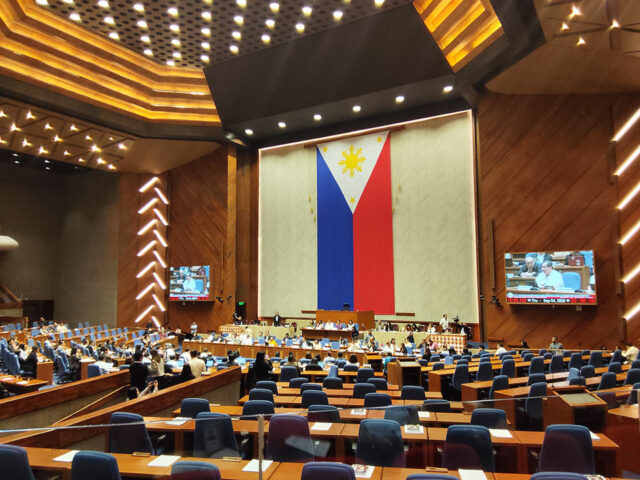
Health Secretary Teodoro J. Herbosa addressed questions of lawmakers during the brifing on the Department of Health’s 2026 budget, Sept. 4.

A PHILIPPINE lawmaker on Wednesday urged higher entry-level salaries for public dentists, citing a shortage that leaves only one dentist serving every 48,130 Filipinos.

During the Department of Health’s budget hearing before the House Committee on Appropriations on Thursday, Assistant Minority Leader Rep. Jose Manuel T. “Chel” Diokno raised the issue of public dentists’ relatively lower salaries to Health Secretary Teodoro J. Herbosa.

Mr. Diokno noted that while a Nurse I receives Salary Grade 15, equivalent to a starting monthly salary of P36,619, government dentists start at Salary Grade 13, equivalent to P31,320, despite having longer years of study.

“Why are dentists at entry-level earning less?” Mr. Diokno said in Filipino.

The Health chief responded that the lower salary of dentists compared to Nurse I is based on the Salary Standardization Law of 2019 and as mandated by the Philippine Nursing Act of 2002.

Mr. Herbosa also noted that uncompetitive salaries are not limited to dentists but affect other government health workers as well.   

“If you compare nurses’ salaries with those of other allied health professionals like medical technologists and radiologic technologists, the difference is significant,” Mr. Herbosa said.    

“This salary grade I only discovered now, so I guess that is to be corrected as well.”   

To address these issues, Mr. Herbosa is seeking additional funding from the Department of Budget and Management for dentists and other allied health professionals.

He has also assigned an undersecretary to oversee the country’s dentistry program and the proposal to revive the dental program amid the ongoing shortage of public dentists.

In August, Rep. Roman T. Romulo filed the Public Dentist Salary Modification Act, which seeks to increase the salary grades of public dentists.   

Under House Bill 4051, entry-level Dentist I positions would be upgraded to Salary Grade 17, equivalent to a starting monthly salary of P43,030 based on the 2023 salary schedule.

Senator Francis G. Escudero also filed the Senate counterpart bill in June, which seeks to increase the current number of 2,369 public dentists. — Edg Adrian A. Eva


DoST finds way to predict dengue outbreak

STOCK PHOTO | Image from Freepik

AS THE Philippines continues to grapple with dengue, a local scientist is developing a computer-based model that can forecast potential outbreaks and help strengthen the country’s dengue prevention efforts.

Developed by the Department of Science and Technology (DoST) Balik Scientist and Institute of Biological Control Director Dr. Thaddeus M. Carvajal, the computer-based model combines environmental data, mosquito activity, and dengue case records to allow the prediction of dengue outbreaks.

“His work aims to give communities and health authorities the tools to act faster, smarter, and more effectively against one of the country’s most persistent public health threats,” DoST said in a statement.

From January to June 2025, the Department of Health has already recorded more than 123,000 dengue cases and 437 related deaths nationwide, underscoring the urgent need for stronger prevention measures, especially during the rainy season when spikes in cases often occur.

“Fighting dengue is more than a health concern — it is a national priority,” DoST Secretary Renato U. Solidum, Jr. said in a statement.   

“Through R&D projects led by our Balik Scientists, we are developing innovations that stay ahead of dengue,” he added.   

Mr. Carvajal has been studying the hidden patterns of mosquito-borne diseases in the Philippines over the years, particularly focusing on Aedes aegypti, the main culprit behind dengue outbreaks.

He found that mosquitoes in busy areas like ports are genetically similar, suggesting they spread through human travel, a finding that could help track and prevent dengue outbreaks before they worsen.

Mr. Carvajal’s model was presented at the John Gokongwei Innovation Center at De La Salle University (DLSU)-Laguna and is currently being developed for future adoption. — Edg Adrian A. Eva

Magalong: ‘HOR, not Senate, is where battle is’

BAGUIO CITY — Baguio City Mayor Benjamin B. Magalong said he is ready to “spill the beans” at the House of Representatives (HOR).

Although he revealed that he had already received informal invitations to attend a Senate inquiry, the Baguio City mayor prefers to appear before the lower house instead, emphasizing the importance of dealing with the issue at hand.

“If you talk about my preference, I would rather appear in the lower house,” Mr. Magalong said, noting that the House was where the real battle would take place.

“That’s where the battle is,” he said.

Mr. Magalong’s exposé of corruption in government projects has gained traction amid growing public concern over the alleged misuse of funds intended for flood control projects.

The mayor has been vocal about his commitment to transparency, noting that he is more than willing to provide evidence and testify before lawmakers.

Despite these public assertions, however, Mr. Magalong has yet to receive an official invitation from the House of Representatives.

Party-list rep. Terry L. Ridon earlier assured Mr. Magalong would be invited but after the committee’s discussions on the findings of President Ferdinand R. Marcos, Jr’s inspections of flood control projects. — Artemio A. Dumlao

Konektadong Pinoy expected to unlock digital infra investment

PHILSTAR FILE PHOTO

PHILIPPINE DIGITAL infrastructure will come in for a wave of upgrades because of increased investment facilitated by the Konektadong Pinoy Act, according to Fitch Solutions unit BMI.

“The new law should encourage more investment in critical digital infrastructure shortfalls, which are hampering the country’s ambitions to become a key regional digital hub,” BMI said in a report.

The Konektadong Pinoy Act, or the Open Access in Data Transmission Act, streamlines the licensing process for new entrants, boosting competition in data transmission.

“The passage of the Konektadong Pinoy Law means the possibility of real competition — where service providers are compelled to improve reliability, expand coverage to underserved areas, and make connectivity more affordable,” Ronald B. Gustilo, a national campaigner for the Digital Pinoys organization, said via Viber on Thursday.

The measure, which lapsed into law on Aug. 24, relaxes regulation to favor more entrants in the data transmission industry.

BMI said incumbent telecommunications firms like PLDT Inc. and Globe Telecommunications, Inc. face rising competition as a result.

BMI said the law raises the prospect of “standalone digital infrastructure and services businesses that can tap a wider pool of business opportunities.”

Samuel V. Jacoba, founding president of the National Association of Data Protection Officers, said infrastructure upgrades, improved services, and competitive pricing will be the main results of the new law.

Mr. Jacoba said education and healthcare, as well as micro, small, and medium enterprises (MSMEs) will be the first to benefit from the law.

“Public schools in urban centers will have more stable connections that will deliver blended learning and access to digital resources,” he said.

The Department of Information and Communications Technology (DICT) is aiming to finalize the Konektadong Pinoy Act’s implementing rules and regulations (IRR) within 90 days.

Under the law, new data transmission entrants are no longer required to obtain legislative franchises or a certificate of public convenience and necessity.

Globe, PLDT and Converge ICT Solutions, Inc. have expressed their willingness to provide their input in drafting the IRR.

BMI said the telecommunication companies’ main concern is that the new entrants would “cannibalize their existing retail service businesses, but they might be required to pay relatively low access fees that would not reflect the true value of the incumbent’s infrastructure.”

BMI said opening the market to a wider range of solutions providers will also allow businesses to pursue their digitalization

“Increased choice should also stimulate increased demand from businesses that have, so far, been reluctant to undertake digital transformation of their workflows and business practices, which would benefit the wider digital economy and allow the Philippines to begin to catch up with neighboring markets,” BMI said. — Ashley Erika O. Jose

US tariff impact expected to start showing up in August export data

PHOTO COURTESY OF ICTSI

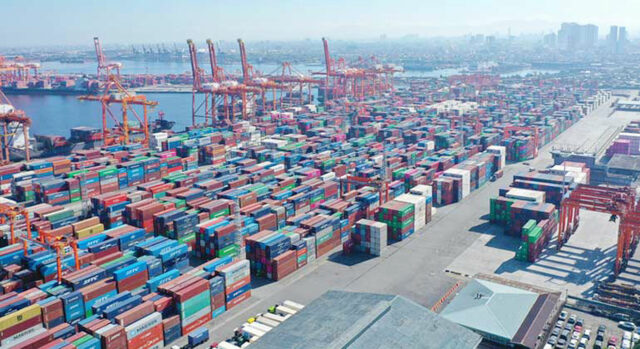
THE Department of Trade and Industry (DTI) said it is bracing for the full impact of the US tariffs to show up in the August export figures, and is stepping up its support for exporters who may be affected.

The support includes help in finding new markets and facilitating trade paperwork, it said.

“The surge in US-bound shipments in recent months was largely driven by frontloading activities and accelerated shipments ahead of the implementation of the 19% reciprocal tariff by the US, which took effect in August,” Trade Secretary Ma. Cristina A. Roque said.

“This strategic move by exporters was aimed at mitigating the immediate impact of the tariff hike. As such, we anticipate that the full effect of the tariff will begin to reflect in the August export data onwards,” she added.

Citing the Philippine Statistics Authority, the DTI said merchandise exports sustained their upward trend in July at $7.34 billion, up 17.3% from a year earlier.

“Driven mainly by the robust performance of the electronics sector, this marks the seventh consecutive month of growth,” the DTI said.

In the first seven months, exports rose 13.9% to $48.62 billion.

“The electronics sector remained the primary engine of export growth, rising 24.5% to $3.92 billion in July,” the DTI said.

“This was driven by semiconductors, reflecting strong global demand for these components and integrated circuits, which are critical to global supply chains for consumer electronics, vehicles, and other digital devices,” it added.

Exports of mineral products, including copper, nickel, and gold, also rose in July, with shipments increasing 7.1% to $522.39 million.

“Copper and nickel are key inputs for clean energy and battery technologies; exports of other manufactured goods also advanced 5.6% to $395.77 million,” DTI said.

According to Ms. Roque, the rise in exports reflects the resiliency of exporters despite a challenging global trading environment.

“As Philippine exporters brace for the impact of the new 19% tariff imposed by the US, the DTI is intensifying its support programs to help businesses stay competitive and find new markets,” she said.

In particular, she said that the department is helping the exporters connect with buyers and assisting them with export documents and customs procedures.

The DTI is also conducting nationwide sessions on improving packaging, marketing, and meeting international standards, and helping small companies obtain certifications and other export requirements.

Export Marketing Bureau Director Bianca Pearl R. Sykimte said the DTI is encouraging exporters to diversify Europe, ASEAN, and the Middle East.

“With targeted trade promotions, business-matching programs, and platforms like PHX Source and the FTA Integrated Portal, we are helping Filipino exporters seize opportunities in new markets,” she added.

In July, the US remained the top export market, accounting for 15.8%, or $1.16 billion, of Philippine exports.

The other top markets were Hong Kong at 15.2% ($1.12 billion), Japan at 13.6% ($996.44 million), China at 11.3% ($832.57 million), and the Netherlands at 4.3% ($317.25 million).

Ms. Roque said the DTI is pushing participation in international fairs and missions across Asia, the Middle East, and Europe, and supporting online selling through platforms like Shopee Malaysia.

“The DTI is also pushing for policy changes abroad to make it easier for Philippine products to enter foreign markets,” she said.

“To future-proof exporters, the DTI is investing in digital tools that provide real-time market insights and helping businesses improve their online presence and e-commerce capabilities,” she added. — Justine Irish D. Tabile

Proposed DA-DAR merger seen aiding ARB integration into DA dev’t efforts

FACEBOOK.COM/DARGOVPH

By Andre Christopher H. Alampay

A PROPOSAL to merge the departments of Agriculture (DA) and Agrarian Reform (DAR) will serve to better integrate agrarian reform beneficiaries (ARBs) into DA programs, analysts said, though the sugar industry expressed its opposition to the idea.

“I agree that there is no need for two different agencies in charge of agricultural development. I would suggest that the DA include as part of its functions the provision of agri-support services for agrarian beneficiaries, including farmers,” according to Roehlano M. Briones, senior research fellow at the Philippine Institute for Development Studies, speaking to BusinessWorld by phone.

Fisherfolk advocate Norberto O. Chingcuanco added that a merger would increase inclusivity for fishing communities.

“Merge agrarian reform beneficiaries (ARB) with the DA’s list of farmers and the Bureau of Fisheries and Aquatic Resource’s (BFAR) list of fisherfolk to better manage support. DAR can continue with land distribution matters while the DA handles livelihood by overseeing domestic production,” Mr. Chingcuanco told BusinessWorld via Messenger chat.

Senator Francis Pancratius N. Pangilinan floated the merger idea again at a budget hearing this week, after having initially made such proposals in 2020 and in 2022.

The main opposition is emerging from the sugar industry, which needs large tracts of land to ensure scale in sugar production.

United Sugar Producers Federation of the Philippines President Manuel R. Lamata said: “The DAR was created to appease the left; it was a political decision. The DA should be left apolitical; it should serve everybody including DAR beneficiaries,” he said via text message.

Mr. Pangilinan had also proposed making agricultural extension services a National Government function. Mr. Briones warned that the nationalization of such programs should have clearly defined objectives.

“There should be a clear rationale for such programs, including poverty reduction,” he said.

Mr. Lamata said in the interest of efficiency, scale, and self-sufficiency ARB holdings should be consolidated into block farms.

“The DA should finance and give all the help they can to them so that they become productive again and so that we can stop importing,” Mr. Lamata said.

The proposal to merge the DA and the DAR also included separating the BFAR from the DA to create a new department on Fisheries and Aquatic Agriculture.

Mr. Chingcuanco said the idea of a dedicated department of fisheries better addresses the situation on the ground because fishing is the only viable livelihood in many remote areas.

“Aquaculture can be done in remote coastal areas, even if there are no roads or electricity. It always engages the community, which needs to protect and nurture the environment to continue having clean water,” Mr. Chingcuanco said.

Mr. Briones cautioned against combining in one department oversight over industries that are extractive in nature, on the one hand, and focused on managing resources, on the other.

“The function of capture fishery development and aquaculture development can still stay with the DA but the function of resource management with marine and inland resources can be assigned to the Department of Environment and Natural Resources (DENR),” Mr. Briones clarified.

He said all the resource and development management functions — not just those related to fisheries — could be consolidated into the DA.

Mr. Pangilinan has yet to file a bill merging the two departments.

Whether the merger happens or not, Mr. Briones said the DA needs to be overhauled.

“I would recommend the DA reorganize itself on function lines rather than commodity lines. Budget allocations currently are through commodity programs. So rather than create a new bureaucracy and program management offices, there would instead be line agencies performing different functions,” Mr. Briones said.

Mr. Briones also proposed transferring the responsibility for agrarian justice to the Department of Justice (DoJ).

“In terms of tenure-related reform, I don’t think the DA has any competency or mandate to do that. I think this may have to be spun off to a different department such as the DoJ. Not a committee but a dedicated office,” Mr. Briones said.

Tulfo threatens to block DoLE budget over Camanava wage underpayment

BW FILE PHOTO

SENATOR Rafael T. Tulfo said he would block the Department of Labor and Employment’s (DoLE) budget if it does not address alleged negligence by its field inspectors.

At a Senate hearing, Mr. Tulfo called for inspectors to be fired, citing complaints he has received about employers in northern Metro Manila who are underpaying their workers.

“I promise you, I will defer your budget if no negligent field inspector is fired. Workers will also not complain to me if they are not oppressed by their employers,” Mr. Tulfo said.

He said he has received complaints about manufacturing companies in Caloocan, Malabon, Navotas, and Valenzuela that are allegedly underpaying their workers, some receiving as little as P280 per day.

He added that field inspectors failed to consult workers on their visits, limiting their interactions to “closed-door meetings” with companies’ human resources representatives.

“If the DoLE people were doing their job, they would have caught the companies that are not paying wages properly,” he added.

The DoLE has been allocated a budget of P55.2 billion under the 2026 National Expenditure Plan.

Labor Secretary Bienvenido E. Laguesma said DoLE will address problems with its field inspectors.

“(We) commit to resolve and address these concerns… we will respond and resolve the concerns relayed,” he told senators.

Mr. Tulfo has also requested a list of all field inspectors in the industrial northern districts of Metro Manila, known as Camanava (Caloocan, Malabon, Navotas, and Valenzuela), the companies they visited, and their inspection reports. — Adrian H. Halili

PPP pipeline cut to 229 projects worth P2.77T

PPP.GOV.PH

THE public-private partnership (PPP) project pipeline now consists of 229 projects valued at P2.77 trillion, following the removal of several digitalization and waste management initiatives.

In a document released to reporters, the PPP Center said three national projects were delisted while two new ones were added as of Sept. 3.

In the previous listing issued on July 28, the PPP tallied 230 projects worth P2.86 trillion.

The delisted projects were the P29.39-billion 3,000-tons-per-day Manila Waste-to-Energy Facility Project and the P320-million digitalization project of the Philippine Retirement Authority.

The PPP Center said the unsolicited proposals was dropped following the “failure of negotiations.”

Also delisted was the solicited proposal of the Bases Conversion and Development Authority (BCDA) for a sanitary landfill and waste-to-energy project in New Clark City, which was removed due to “changes in the mode of implementation.”

Two new national projects joined the pipeline — the P29.62-billion Waste-to-Energy Project of the Metropolitan Manila Development Authority, and Phase 4 of the School Infrastructure Project of the Department of Education.

The PPP Center website indicates the Department of Transportation (DoTr) as the top implementing agency, with projects amounting to P2.83 trillion. 

The Philippine National Railways (PNR) follows with P1.04 trillion in upcoming projects.

Other top major agencies include the Toll Regulatory Board with P616.33 billion, Cavite province with P480.52 billion, and the Philippine National Construction Corp. with P477.55 billion. — Aubrey Rose A. Inosante

Developers urged to grow industrial segment to attract foreign expansion

WORKERS are seen at a manufacturing facility in Santa Rosa, Laguna. — PHILIPPINE STAR KRIZ JOHN ROSALES

PROPERTY DEVELOPERS must consider expanding their presence in the industrial segment to attract foreign companies diversifying their supply chains, property consultancy Colliers Philippines said.

In its first half Metro Manila Industrial Report, Colliers said China and Taiwan companies that have shown interest in expanding here.

“The Philippines needs an efficient supply chain system to capture investments amid Trump’s new tariff impositions,” Colliers said.

“This is also crucial in future-proofing the industrial sector, enabling the Philippines to attract foreign direct investment amid challenges posed by elevated tariffs.”

US President Donald J. Trump in July imposed a 19% tariff on exports from the Philippines, Cambodia, Malaysia, Thailand and Indonesia.

According to Colliers, property firms must consider developing industrial parks and facilities to cater to more locators. It also cited opportunities to expand in Central Luzon, which hosts high-value manufacturers in industries like pharmaceuticals, fiber cement products, tire, and semiconductor segments. 

In Central Luzon, Colliers projects 900 hectares of new industrial space to be delivered between 2025 through 2028.

“The development of new industrial parks and facilities in central and southern Luzon should provide potential locators with more options and opportunities to haggle for more attractive land leasehold and warehouse lease rates,” Colliers said.

For the second half of the year, semiconductors, consumer goods, cosmetics, and automotive firms are expected to drive demand in the industrial segment.

“Industrial space absorption should partly be supported by Chinese and Taiwanese firms expanding in the Philippines. Colliers sees the Philippines likely benefiting from the China+1 strategy,” according to the report.

The China+1 strategy refers to China-based companies diversifying their production operations to add more sites.

Colliers also cited the potential of ‘sunrise industries’ such as electric vehicles (EVs), as it expects more interest from EV firms looking for an industrial base in the region.

“Over the near to medium term, the Philippine government should entice other thriving sectors such as pharmaceutical firms and encourage them to manufacture in the Philippines,” it said. — Beatriz Marie D. Cruz

UP mining dep’t tapped for copper value-chain studies

STOCK PHOTO | Image by Alexa from Pixabay

THE Board of Investments (BoI) said it tied up with the University of the Philippines (UP) to study gaps in the copper value chain and support the development of downstream industries.

In a statement on Thursday, the BoI said its memorandum of understanding with the UP Department of Mining, Metallurgical and Materials Engineering (DMMME) to develop a copper rod research project and conduct technical and economic feasibility studies for a copper rod casting facility.

This UP DMMME will pursue the projects with a grant from the Department of Science and Technology’s Philippine Council for Industry, Energy and Emerging Technology Research and Development (PCIEERD).

“Other projects undertaken by the DMMME under the grant are focused on copper anodes and copper cathodes,” it said.

The BoI “will also provide endorsements to industry partners. DMMME also sought the BoI’s expertise in obtaining industry input as the implementing agency of the Copper Industry Roadmap,” the BoI said.

“The BoI remains committed to enhancing the critical minerals sector, which aligns with the government’s goal to create a virtuous cycle of sustained economic growth that fundamentally transforms the Philippine economy,” the BoI said. — Justine Irish D. Tabile

PEMC sees grid reliability improving following ‘success’ of reserve market    

THE Philippine Electricity Market Corp. (PEMC), the governance arm of the Wholesale Electricity Spot Market (WESM), is expecting the reserve market to continue to deliver strong grid reliability after the “success” of the market’s first year.

“With sustained fulfillment of reserve requirements and stronger adherence to the RCS (Reserve Conformance Standards) as well as the ROCC (Reserve Offered Capacity Compliance), the power grid is positioned for continued reliability improvements,” the PEMC said in a statement on Thursday.

“The success of the Reserve Market’s first year demonstrates its effectiveness as a cornerstone of the Philippines’ power system security framework.”

The system operator buys power reserves from the WESM, the trading floor for electricity, to support growing energy demand while maintaining system stability. The reserve market started full commercial operation in January 2024.

Citing its Enforcement and Compliance Office, the PEMC noted that the Philippines’ power grid experienced “remarkable” stability improvements with ancillary services (AS) providers boosting the availability of reserve power.

“The Reserve Market has proven to be a critical mechanism for ensuring nationwide reliability by facilitating the procurement of essential ancillary services across the Luzon, Visayas, and Mindanao grids,” the agency said.

It said that the participation in the reserve market increased across all major regions, with registered reserve capacity growing significantly.

“The growth reflects the successful implementation of the Department of Energy policy to promote generator facility certification for ancillary services and encourage Reserve Market participation,” PEMC said.

It said the reserve market has enabled flexible procurement of AS through spot transactions, which averaged 32.23% of scheduled reserves in Luzon, 61.46% in the Visayas, and 11.47% in Mindanao.

It also observed a “maturing compliance culture” among AS providers with a market reduction in non-compliance under RCS and ROCC.

The RCS assess accuracy, timeliness, and sustainability of ancillary services delivered by scheduled reserve facilities. The ROCC, on the other hand, monitors the compliance with the submission of reserve offers regardless of the existing AS procurement agreements. — Sheldeen Joy Talavera

BCDA taps Indian company to boost digital transformation

THE Bases Conversion and Development Authority (BCDA) said it is partnering with Indian telecommunications technology firm iSON Tower Ltd., Inc. to advance digital transformation in its properties.

“We are confident that this partnership will deliver transformative development in our ecozones, with iSON bringing its global expertise in building robust and secure digital networks,” BCDA President and Chief Executive Officer Joshua M. Bingcang said.

“This will pave the way to faster, more reliable digital services within the BCDA’s properties, helping locators thrive and improving residents’ everyday convenience and quality of life,” he added.

The BCDA’s memorandum of understanding with iSON Tower involves collaborating on project preparation studies for passive telecommunication infrastructure and related projects in BCDA economic zones.

The partnership is a product of President Ferdinand R. Marcos, Jr.’s state visit to India last month.

It is expected to set the stage for the development of common telecommunication towers in New Clark City in Tarlac, Camp John Hay in Baguio City, Poro Point Freeport Zone in La Union, Morong Discovery Park in Bataan, and Bonifacio Global City in Taguig.

“I’m so glad to have this opportunity to sign this MoU to make sure that every Filipino has digital connectivity,” iSON Tower Founder and Chairman Vivek Gupta said.

“Whether it’s an institution, a development area, or a common man on the street, everybody is entitled to 4G and 5G connectivity and moving forward,” he added.

iSON Tower is a subsidiary of India’s iSON Group, which is accredited by the Philippine government to build common towers. — Justine Irish D. Tabile

ADVERTISEMENT
ADVERTISEMENT