Home Blog Page 1050

US tariff impact expected to start showing up in August export data
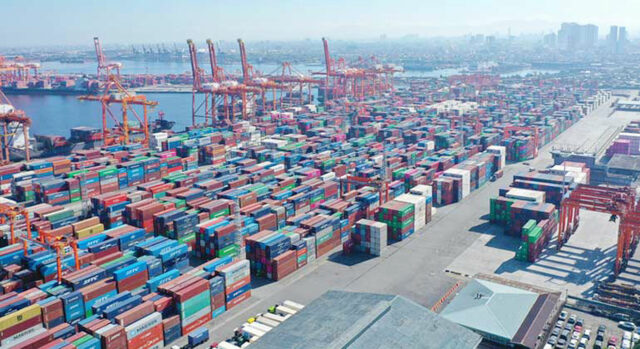
PHOTO COURTESY OF ICTSI

THE Department of Trade and Industry (DTI) said it is bracing for the full impact of the US tariffs to show up in the August export figures, and is stepping up its support for exporters who may be affected.

The support includes help in finding new markets and facilitating trade paperwork, it said.

“The surge in US-bound shipments in recent months was largely driven by frontloading activities and accelerated shipments ahead of the implementation of the 19% reciprocal tariff by the US, which took effect in August,” Trade Secretary Ma. Cristina A. Roque said.

“This strategic move by exporters was aimed at mitigating the immediate impact of the tariff hike. As such, we anticipate that the full effect of the tariff will begin to reflect in the August export data onwards,” she added.

Citing the Philippine Statistics Authority, the DTI said merchandise exports sustained their upward trend in July at $7.34 billion, up 17.3% from a year earlier.

“Driven mainly by the robust performance of the electronics sector, this marks the seventh consecutive month of growth,” the DTI said.

In the first seven months, exports rose 13.9% to $48.62 billion.

“The electronics sector remained the primary engine of export growth, rising 24.5% to $3.92 billion in July,” the DTI said.

“This was driven by semiconductors, reflecting strong global demand for these components and integrated circuits, which are critical to global supply chains for consumer electronics, vehicles, and other digital devices,” it added.

Exports of mineral products, including copper, nickel, and gold, also rose in July, with shipments increasing 7.1% to $522.39 million.

“Copper and nickel are key inputs for clean energy and battery technologies; exports of other manufactured goods also advanced 5.6% to $395.77 million,” DTI said.

According to Ms. Roque, the rise in exports reflects the resiliency of exporters despite a challenging global trading environment.

“As Philippine exporters brace for the impact of the new 19% tariff imposed by the US, the DTI is intensifying its support programs to help businesses stay competitive and find new markets,” she said.

In particular, she said that the department is helping the exporters connect with buyers and assisting them with export documents and customs procedures.

The DTI is also conducting nationwide sessions on improving packaging, marketing, and meeting international standards, and helping small companies obtain certifications and other export requirements.

Export Marketing Bureau Director Bianca Pearl R. Sykimte said the DTI is encouraging exporters to diversify Europe, ASEAN, and the Middle East.

“With targeted trade promotions, business-matching programs, and platforms like PHX Source and the FTA Integrated Portal, we are helping Filipino exporters seize opportunities in new markets,” she added.

In July, the US remained the top export market, accounting for 15.8%, or $1.16 billion, of Philippine exports.

The other top markets were Hong Kong at 15.2% ($1.12 billion), Japan at 13.6% ($996.44 million), China at 11.3% ($832.57 million), and the Netherlands at 4.3% ($317.25 million).

Ms. Roque said the DTI is pushing participation in international fairs and missions across Asia, the Middle East, and Europe, and supporting online selling through platforms like Shopee Malaysia.

“The DTI is also pushing for policy changes abroad to make it easier for Philippine products to enter foreign markets,” she said.

“To future-proof exporters, the DTI is investing in digital tools that provide real-time market insights and helping businesses improve their online presence and e-commerce capabilities,” she added. — Justine Irish D. Tabile
Proposed DA-DAR merger seen aiding ARB integration into DA dev’t efforts

FACEBOOK.COM/DARGOVPH

By Andre Christopher H. Alampay

A PROPOSAL to merge the departments of Agriculture (DA) and Agrarian Reform (DAR) will serve to better integrate agrarian reform beneficiaries (ARBs) into DA programs, analysts said, though the sugar industry expressed its opposition to the idea.

“I agree that there is no need for two different agencies in charge of agricultural development. I would suggest that the DA include as part of its functions the provision of agri-support services for agrarian beneficiaries, including farmers,” according to Roehlano M. Briones, senior research fellow at the Philippine Institute for Development Studies, speaking to BusinessWorld by phone.

Fisherfolk advocate Norberto O. Chingcuanco added that a merger would increase inclusivity for fishing communities.

“Merge agrarian reform beneficiaries (ARB) with the DA’s list of farmers and the Bureau of Fisheries and Aquatic Resource’s (BFAR) list of fisherfolk to better manage support. DAR can continue with land distribution matters while the DA handles livelihood by overseeing domestic production,” Mr. Chingcuanco told BusinessWorld via Messenger chat.

Senator Francis Pancratius N. Pangilinan floated the merger idea again at a budget hearing this week, after having initially made such proposals in 2020 and in 2022.

The main opposition is emerging from the sugar industry, which needs large tracts of land to ensure scale in sugar production.

United Sugar Producers Federation of the Philippines President Manuel R. Lamata said: “The DAR was created to appease the left; it was a political decision. The DA should be left apolitical; it should serve everybody including DAR beneficiaries,” he said via text message.

Mr. Pangilinan had also proposed making agricultural extension services a National Government function. Mr. Briones warned that the nationalization of such programs should have clearly defined objectives.

“There should be a clear rationale for such programs, including poverty reduction,” he said.

Mr. Lamata said in the interest of efficiency, scale, and self-sufficiency ARB holdings should be consolidated into block farms.

“The DA should finance and give all the help they can to them so that they become productive again and so that we can stop importing,” Mr. Lamata said.

The proposal to merge the DA and the DAR also included separating the BFAR from the DA to create a new department on Fisheries and Aquatic Agriculture.

Mr. Chingcuanco said the idea of a dedicated department of fisheries better addresses the situation on the ground because fishing is the only viable livelihood in many remote areas.

“Aquaculture can be done in remote coastal areas, even if there are no roads or electricity. It always engages the community, which needs to protect and nurture the environment to continue having clean water,” Mr. Chingcuanco said.

Mr. Briones cautioned against combining in one department oversight over industries that are extractive in nature, on the one hand, and focused on managing resources, on the other.

“The function of capture fishery development and aquaculture development can still stay with the DA but the function of resource management with marine and inland resources can be assigned to the Department of Environment and Natural Resources (DENR),” Mr. Briones clarified.

He said all the resource and development management functions — not just those related to fisheries — could be consolidated into the DA.

Mr. Pangilinan has yet to file a bill merging the two departments.

Whether the merger happens or not, Mr. Briones said the DA needs to be overhauled.

“I would recommend the DA reorganize itself on function lines rather than commodity lines. Budget allocations currently are through commodity programs. So rather than create a new bureaucracy and program management offices, there would instead be line agencies performing different functions,” Mr. Briones said.

Mr. Briones also proposed transferring the responsibility for agrarian justice to the Department of Justice (DoJ).

“In terms of tenure-related reform, I don’t think the DA has any competency or mandate to do that. I think this may have to be spun off to a different department such as the DoJ. Not a committee but a dedicated office,” Mr. Briones said.

Tulfo threatens to block DoLE budget over Camanava wage underpayment

BW FILE PHOTO

SENATOR Rafael T. Tulfo said he would block the Department of Labor and Employment’s (DoLE) budget if it does not address alleged negligence by its field inspectors.

At a Senate hearing, Mr. Tulfo called for inspectors to be fired, citing complaints he has received about employers in northern Metro Manila who are underpaying their workers.

“I promise you, I will defer your budget if no negligent field inspector is fired. Workers will also not complain to me if they are not oppressed by their employers,” Mr. Tulfo said.

He said he has received complaints about manufacturing companies in Caloocan, Malabon, Navotas, and Valenzuela that are allegedly underpaying their workers, some receiving as little as P280 per day.

He added that field inspectors failed to consult workers on their visits, limiting their interactions to “closed-door meetings” with companies’ human resources representatives.

“If the DoLE people were doing their job, they would have caught the companies that are not paying wages properly,” he added.

The DoLE has been allocated a budget of P55.2 billion under the 2026 National Expenditure Plan.

Labor Secretary Bienvenido E. Laguesma said DoLE will address problems with its field inspectors.

“(We) commit to resolve and address these concerns… we will respond and resolve the concerns relayed,” he told senators.

Mr. Tulfo has also requested a list of all field inspectors in the industrial northern districts of Metro Manila, known as Camanava (Caloocan, Malabon, Navotas, and Valenzuela), the companies they visited, and their inspection reports. — Adrian H. Halili

PPP pipeline cut to 229 projects worth P2.77T

PPP.GOV.PH

THE public-private partnership (PPP) project pipeline now consists of 229 projects valued at P2.77 trillion, following the removal of several digitalization and waste management initiatives.

In a document released to reporters, the PPP Center said three national projects were delisted while two new ones were added as of Sept. 3.

In the previous listing issued on July 28, the PPP tallied 230 projects worth P2.86 trillion.

The delisted projects were the P29.39-billion 3,000-tons-per-day Manila Waste-to-Energy Facility Project and the P320-million digitalization project of the Philippine Retirement Authority.

The PPP Center said the unsolicited proposals was dropped following the “failure of negotiations.”

Also delisted was the solicited proposal of the Bases Conversion and Development Authority (BCDA) for a sanitary landfill and waste-to-energy project in New Clark City, which was removed due to “changes in the mode of implementation.”

Two new national projects joined the pipeline — the P29.62-billion Waste-to-Energy Project of the Metropolitan Manila Development Authority, and Phase 4 of the School Infrastructure Project of the Department of Education.

The PPP Center website indicates the Department of Transportation (DoTr) as the top implementing agency, with projects amounting to P2.83 trillion. 

The Philippine National Railways (PNR) follows with P1.04 trillion in upcoming projects.

Other top major agencies include the Toll Regulatory Board with P616.33 billion, Cavite province with P480.52 billion, and the Philippine National Construction Corp. with P477.55 billion. — Aubrey Rose A. Inosante

Developers urged to grow industrial segment to attract foreign expansion

WORKERS are seen at a manufacturing facility in Santa Rosa, Laguna. — PHILIPPINE STAR KRIZ JOHN ROSALES

PROPERTY DEVELOPERS must consider expanding their presence in the industrial segment to attract foreign companies diversifying their supply chains, property consultancy Colliers Philippines said.

In its first half Metro Manila Industrial Report, Colliers said China and Taiwan companies that have shown interest in expanding here.

“The Philippines needs an efficient supply chain system to capture investments amid Trump’s new tariff impositions,” Colliers said.

“This is also crucial in future-proofing the industrial sector, enabling the Philippines to attract foreign direct investment amid challenges posed by elevated tariffs.”

US President Donald J. Trump in July imposed a 19% tariff on exports from the Philippines, Cambodia, Malaysia, Thailand and Indonesia.

According to Colliers, property firms must consider developing industrial parks and facilities to cater to more locators. It also cited opportunities to expand in Central Luzon, which hosts high-value manufacturers in industries like pharmaceuticals, fiber cement products, tire, and semiconductor segments. 

In Central Luzon, Colliers projects 900 hectares of new industrial space to be delivered between 2025 through 2028.

“The development of new industrial parks and facilities in central and southern Luzon should provide potential locators with more options and opportunities to haggle for more attractive land leasehold and warehouse lease rates,” Colliers said.

For the second half of the year, semiconductors, consumer goods, cosmetics, and automotive firms are expected to drive demand in the industrial segment.

“Industrial space absorption should partly be supported by Chinese and Taiwanese firms expanding in the Philippines. Colliers sees the Philippines likely benefiting from the China+1 strategy,” according to the report.

The China+1 strategy refers to China-based companies diversifying their production operations to add more sites.

Colliers also cited the potential of ‘sunrise industries’ such as electric vehicles (EVs), as it expects more interest from EV firms looking for an industrial base in the region.

“Over the near to medium term, the Philippine government should entice other thriving sectors such as pharmaceutical firms and encourage them to manufacture in the Philippines,” it said. — Beatriz Marie D. Cruz

UP mining dep’t tapped for copper value-chain studies

STOCK PHOTO | Image by Alexa from Pixabay

THE Board of Investments (BoI) said it tied up with the University of the Philippines (UP) to study gaps in the copper value chain and support the development of downstream industries.

In a statement on Thursday, the BoI said its memorandum of understanding with the UP Department of Mining, Metallurgical and Materials Engineering (DMMME) to develop a copper rod research project and conduct technical and economic feasibility studies for a copper rod casting facility.

This UP DMMME will pursue the projects with a grant from the Department of Science and Technology’s Philippine Council for Industry, Energy and Emerging Technology Research and Development (PCIEERD).

“Other projects undertaken by the DMMME under the grant are focused on copper anodes and copper cathodes,” it said.

The BoI “will also provide endorsements to industry partners. DMMME also sought the BoI’s expertise in obtaining industry input as the implementing agency of the Copper Industry Roadmap,” the BoI said.

“The BoI remains committed to enhancing the critical minerals sector, which aligns with the government’s goal to create a virtuous cycle of sustained economic growth that fundamentally transforms the Philippine economy,” the BoI said. — Justine Irish D. Tabile

PEMC sees grid reliability improving following ‘success’ of reserve market    

THE Philippine Electricity Market Corp. (PEMC), the governance arm of the Wholesale Electricity Spot Market (WESM), is expecting the reserve market to continue to deliver strong grid reliability after the “success” of the market’s first year.

“With sustained fulfillment of reserve requirements and stronger adherence to the RCS (Reserve Conformance Standards) as well as the ROCC (Reserve Offered Capacity Compliance), the power grid is positioned for continued reliability improvements,” the PEMC said in a statement on Thursday.

“The success of the Reserve Market’s first year demonstrates its effectiveness as a cornerstone of the Philippines’ power system security framework.”

The system operator buys power reserves from the WESM, the trading floor for electricity, to support growing energy demand while maintaining system stability. The reserve market started full commercial operation in January 2024.

Citing its Enforcement and Compliance Office, the PEMC noted that the Philippines’ power grid experienced “remarkable” stability improvements with ancillary services (AS) providers boosting the availability of reserve power.

“The Reserve Market has proven to be a critical mechanism for ensuring nationwide reliability by facilitating the procurement of essential ancillary services across the Luzon, Visayas, and Mindanao grids,” the agency said.

It said that the participation in the reserve market increased across all major regions, with registered reserve capacity growing significantly.

“The growth reflects the successful implementation of the Department of Energy policy to promote generator facility certification for ancillary services and encourage Reserve Market participation,” PEMC said.

It said the reserve market has enabled flexible procurement of AS through spot transactions, which averaged 32.23% of scheduled reserves in Luzon, 61.46% in the Visayas, and 11.47% in Mindanao.

It also observed a “maturing compliance culture” among AS providers with a market reduction in non-compliance under RCS and ROCC.

The RCS assess accuracy, timeliness, and sustainability of ancillary services delivered by scheduled reserve facilities. The ROCC, on the other hand, monitors the compliance with the submission of reserve offers regardless of the existing AS procurement agreements. — Sheldeen Joy Talavera

BCDA taps Indian company to boost digital transformation

THE Bases Conversion and Development Authority (BCDA) said it is partnering with Indian telecommunications technology firm iSON Tower Ltd., Inc. to advance digital transformation in its properties.

“We are confident that this partnership will deliver transformative development in our ecozones, with iSON bringing its global expertise in building robust and secure digital networks,” BCDA President and Chief Executive Officer Joshua M. Bingcang said.

“This will pave the way to faster, more reliable digital services within the BCDA’s properties, helping locators thrive and improving residents’ everyday convenience and quality of life,” he added.

The BCDA’s memorandum of understanding with iSON Tower involves collaborating on project preparation studies for passive telecommunication infrastructure and related projects in BCDA economic zones.

The partnership is a product of President Ferdinand R. Marcos, Jr.’s state visit to India last month.

It is expected to set the stage for the development of common telecommunication towers in New Clark City in Tarlac, Camp John Hay in Baguio City, Poro Point Freeport Zone in La Union, Morong Discovery Park in Bataan, and Bonifacio Global City in Taguig.

“I’m so glad to have this opportunity to sign this MoU to make sure that every Filipino has digital connectivity,” iSON Tower Founder and Chairman Vivek Gupta said.

“Whether it’s an institution, a development area, or a common man on the street, everybody is entitled to 4G and 5G connectivity and moving forward,” he added.

iSON Tower is a subsidiary of India’s iSON Group, which is accredited by the Philippine government to build common towers. — Justine Irish D. Tabile

EY Global Delivery Services raising PHL staffing to 10,000 over 3-5 years

EY GLOBAL Delivery Services (EY GDS) Philippines said it expects to raise its headcount to 10,000 in the next three to five years, citing growing demand for global services.

“We’re really happy with our growth to close to 6,000 today, but we’re also looking forward to our future growth from where we are to about 10,000 in three to five years,” Denchu Jose Decino, EY GDS Philippines location leader and EY GDS enablement services talent services leader, said at a briefing on Thursday.

“There’s a lot of disruption; we want to be there to advise our clients,” he added.

EY GDS provides Ernst & Young (EY) member firms with services like consulting, tax practice, assurance. The group also includes strategy consulting firm EY-Parthenon.

EY GDS works across finance, business development, technology, talent, procurement, and risk management functions.

“The overall push is to really double our impact across all of our service lines… and being a technology powerhouse within the EY network, leverage technology and AI (artificial intelligence),” Mr. Decino said.

The company is also looking to further integrate sustainability practices in its operations, as well in advising its clients on sustainability-driven initiatives, he added.

The growth of EY GDS is driven by the skilled Philippine talent pool, EY GDS Philippines Consulting Leader Raymond Garret Go said.

“Our talent is world class, performing the same work as counterparts from high-cost countries,” he said. “Over the years, we’ve proven that we can take on really complex work.”

The company is also upskilling its employees to become AI natives, Mr. Go said.

“AI is a big part of what we do. We use AI to transform how we deliver our work to our clients, but we also run and deliver AI-related engagement and transformation programs for our clients as well,” he noted.

In 2023, EY GDS invested $1.4 billion globally on its EY.ai agentic platform, which helps companies with their digital transformation.

The World Economic Forum reported that 68% of Filipino workers would need to upskill by 2030 to meet evolving skills demand.

EY GDS is also looking to increase its employee headcount in Cebu with an upcoming office due to open by May, Mr. Decino said.

“We just closed the contract for our permanent space in Cebu… Part of this growth is a dual-city approach. We will continue to grow in Manila, but we will also be growing in Cebu.” — Beatriz Marie D. Cruz

SEC joins push to boost transparency of beneficial ownership in extractive industries

BW FILE PHOTO

THE Securities and Exchange Commission (SEC) said it and the Philippine Extractive Industries Transparency Initiative (PH-EITI) signed a data-sharing agreement to improve access to beneficial ownership information in the extractive industries.

According to a document circulated during the ceremonial signing at the Department of Finance (DoF) on Sept. 3, the agreement will allow PH-EITI to access corporate filings and ownership records held by the SEC through on-site, online, and off-site channels.

The initiative is expected to improve the investment climate, reduce reputational and financial risk in business relations and deter corruption and illicit financial flows.

The release of sensitive ownership details will remain subject to individual waivers, in compliance with the Data Privacy Act, the SEC said.

Among the signatories were Finance Undersecretary Bayani H. Agabin and SEC Commissioner Rogelio V. Quevedo.

Finance Secretary Ralph G. Recto serves as the chairman of the PH-EITI.

The Philippines joined EITI in 2013, joining over 50 implementing country members. — Aubrey Rose A. Inosante

Wholesale price growth accelerates in July

PHILIPPINE STAR/ MICHAEL VARCAS

PRICE GROWTH at the wholesale level rose to 3.1% in July, the strongest reading in two months, the Philippine Statistics Authority (PSA) reported on Thursday, due to higher price growth in beverages and tobacco.

Citing preliminary data, the PSA said the general wholesale price index (GWPI) picked up the pace from 3% growth in June. A year earlier, the rate had been 2.4%.

The recent high had been 3.5% reported in May.

In the first seven months, the national GWPI averaged 3.3%, against 2.7% a year earlier.

“The uptrend in the annual growth rate of the GWPI was mainly caused by the higher annual growth rate in the index of beverages and tobacco at 3.6% in July 2025 from 2.6% in the previous month,” the PSA said in a report.

Cid L. Terosa, an economist at University of Asia and the Pacific, said sin taxes pushed tobacco prices upward.

“The government is still focused on implementing more taxes on tobacco and other sin products,” Mr. Terosa said via e-mail.

In July, the Bureau of Internal Revenue increased floor prices for cigarettes, heated tobacco products, and vapor products.

Excise tax collections from tobacco products totaled P58.97 billion in the first half, up 34.16%. Collections generated by vapor products rose 738.09% to P1.50 billion.

“Higher smoking prevalence, particularly of e-cigarettes and other vapor products, is pushing cigarette prices up due to greater demand. Meanwhile, the emergence of alcoholic beverage varieties has stimulated greater demand,” Mr. Terosa added.

Reinielle Matt M. Erece, an economist at Oikonomia Advisory and Research, Inc., said the uptick in July drove higher prices, as firms worldwide built up inventory before tariffs took effect.

He added that some key imported items and raw materials may have driven the index higher.

Price growth accelerated in crude materials, inedible except fuels (90.7% in July from 88.7% in June), chemicals including animal and vegetable oils and fats (12.8% from 12.7%), manufactured goods classified chiefly by materials (0.9% from 0.8%), and miscellaneous manufactured articles (0.4% from 0.3%).

The PSA added that a slowdown was seen in the heavily weighted food segment, where price growth decelerated to 1.6% in July from 1.9% in June.

Wholesale price growth was steady for mineral fuels, lubricants and related materials, and machinery and transport equipment, at minus 2.6% and 1.1%, respectively.

Wholesale price growth in Luzon eased to 3.1% in July from 3.2% in June. A year earlier it had been 2.3%.

Price growth in the Visayas accelerated to 3.1% in July from 2.5% in June. This was the highest growth rate since the 3.3% posted in July 2024.

Mindanao wholesale price growth accelerated to 1.6% in July from 1.1% in June. This was the strongest growth since the 2.4% recorded in August 2024.

Mr. Erece said that GWPI may continue to climb as the effects of typhoons disrupt supply chains and lead to higher prices.

“The onset of the holiday season may increase demand for manufactured goods and other products, further pressuring prices higher,” he said via e-mail.

“Luzon’s moderating wholesale prices can be traced to weaker demand due to monsoon rains and typhoons last July,” Mr. Terosa said.

“Local developments that might influence wholesale prices include supply disruptions due to La Niña, greater seasonal production and demand due to the onset of the ‘ber’ months, and changes in sin taxes.”

Mr. Terosa added that US tariffs, geopolitical tensions, and supply chain disruptions could affect wholesale prices for the rest of 2025.

A 19% US tariff on Philippine goods took effect last Aug. 7. — Pierce Oel A. Montalvo

Anisimova shocks second seed Swiatek to make US Open last 4

AMANDA ANISIMOVA — USOPEN.ORG/SIMON BRUTY/USTA

NEW YORK — Amanda Anisimova flipped the script on Wednesday by ousting second seed Iga Swiatek 6-4, 6-3 to reach her first US Open semifinal, exacting revenge for one of the most brutal defeats in Grand Slam history.

Less than two months after suffering a devastating 6-0, 6-0 loss to the world number two in the Wimbledon final, the American eighth seed completed the turnaround in 96 minutes on Arthur Ashe Stadium.

“Playing here is so freaking special,” Anisimova said in her on-court interview. “I’ve been having the run of my life here… Today proved everything for me. I can do it.”

The 24-year-old’s journey from tears in July to triumph on Wednesday epitomizes the sport’s capacity for redemption.

After watching back the painful Wimbledon footage on Tuesday night, Anisimova admitted she was “slow as hell” in that final but approached the rematch with renewed purpose.

“Today is definitely the most meaningful victory I’ve had in my life,” she told reporters. “I really came out there with, like, not an ounce of fear… I was constantly moving and trying to get myself going.”

Anisimova next faces Naomi Osaka in the semifinals after the Japanese 23rd seed beat Karolina Muchova 6-4, 7-6(3).

Swiatek acknowledged that her opponent’s aggressive return game proved decisive.

“I couldn’t win today’s match playing like that, serving like that, and with Amanda being so aggressive on the returns,” the six-time Grand Slam champion told reporters.

The American dominated on return, converting four of nine break opportunities while Swiatek managed two breaks from just four chances, ending her bid for a seventh Grand Slam title and second US Open crown in the quarterfinals.

SERVING STRUGGLES
In the men’s quarters, 25th seed Felix Auger-Aliassime edged eighth seed Alex de Minaur 4-6, 7-6(7), 7-5, 7-6(4), smashing down 22 aces to wrap up the win in just over four hours.

“It was my toughest match… in this tournament so far,” the Canadian said.

It is about to get even tougher.

Up next is world number one Jannik Sinner, who hammered 10th seed Lorenzo Musetti 6–1, 6–4, 6–2 in the first all-Italian men’s Grand Slam quarterfinal.

“I feel like everything can happen. From my point of view, I always try to look at myself, and I’m very happy to be in the semifinals of a Grand Slam again,” Sinner said.

“He has improved a lot. Even in one week, you can make big adjustments, and I feel like he did that. Yes, it’s going to be a very difficult match for both of us.”

For De Minaur, it was another painful near-miss that extended his Grand Slam quarterfinal losing streak to 0-6.

“My serve’s been letting me down in big matches,” lamented De Minaur, who was aiming to become the first Australian man to reach a US Open semifinal since Lleyton Hewitt in 2005.

“It’s pretty tough to win a high-quality match serving the way I did today.”

Both players struggled on serve, combining for 22 double faults. Auger-Aliassime saved break points in key moments and showed the mental toughness that has defined his resurgent season.

The victory marked his first Grand Slam semifinal since his breakthrough run at the 2021 US Open, when he became the first Canadian man to reach that stage in the tournament’s history.

But the Canadian’s extended stay in New York may come at a cost. The semifinal run is interfering with his wedding plans.

“Obviously we’re probably going to have to postpone it. It’s a quick turnaround,” said Auger-Aliassime. — Reuters