PHL‑China pact to omit sensitive operations
THE Department of Foreign Affairs (DFA) said the proposed memorandum of understanding (MoU) between the Philippine Coast Guard (PCG) and China Coast Guard would be limited in scope and exclude sensitive operations.
“The proposed amendments are limited in scope,” DFA Maritime Affairs spokesman Rogelio E. Villanueva, Jr. said in a statement late on Monday. “They are focused on reestablishing the Joint Coast Guard Committee, which is intended to serve as a formalized channel of communication between the two coast guards.”
Mr. Villanueva stressed that the agreement would not involve sensitive operational areas such as joint patrols between Philippine and Chinese vessels.
The DFA earlier disclosed plans to draft an MoU between the PCG and the China Coast Guard aimed at addressing operational concerns and preventing further incidents in the South China Sea, where encounters between vessels of the two countries have intensified in recent years.
Manila and Beijing signed a memorandum in 2016 to establish a Joint Coast Guard Committee on Maritime Cooperation, which was designed to provide a mechanism for communication and coordination between the two sides.
“Since 2024, both parties have been engaged in discussions to amend and update that agreement,” Mr. Villanueva said.
Earlier, Chinese Ambassador to the Philippines Jing Quan said the MoU was almost complete and would be finalized soon.
His remarks were later contradicted by Philippine Coast Guard spokesman Jay Tristan Tarriela, who said the PCG commandant was not involved in the negotiations.
Mr. Villanueva, however, said discussions had been conducted through proper diplomatic channels and were not confined to meetings under the Bilateral Consultation Mechanism.
“They have been duly reported to and are known by all relevant principals including the national security adviser, the secretary of Foreign Affairs and the PCG commandant,” he said.
The mechanism was established in 2017 as a diplomatic platform for the Philippines and China to discuss issues of mutual concern and explore areas of cooperation, particularly in oil and gas development. The two countries last held a meeting in January 2025.
DFA officials said the discussions are in line with President Ferdinand R. Marcos, Jr.’s order to maintain open lines of communication and engagement with China despite persistent tensions in the South China Sea.
Relations between Manila and Beijing have deteriorated amid repeated confrontations at sea, as China continues to assert and expand its presence in disputed waters.
This is despite a 2016 ruling by a United Nations‑backed arbitral tribunal that voided its expansive maritime claims — a decision Beijing has continued to reject.
“The department reaffirms that engagement and vigilance are complementary, not contradictory,” Mr. Villanueva said, adding that the Philippine government would continue to pursue practical maritime cooperation while upholding national interests.
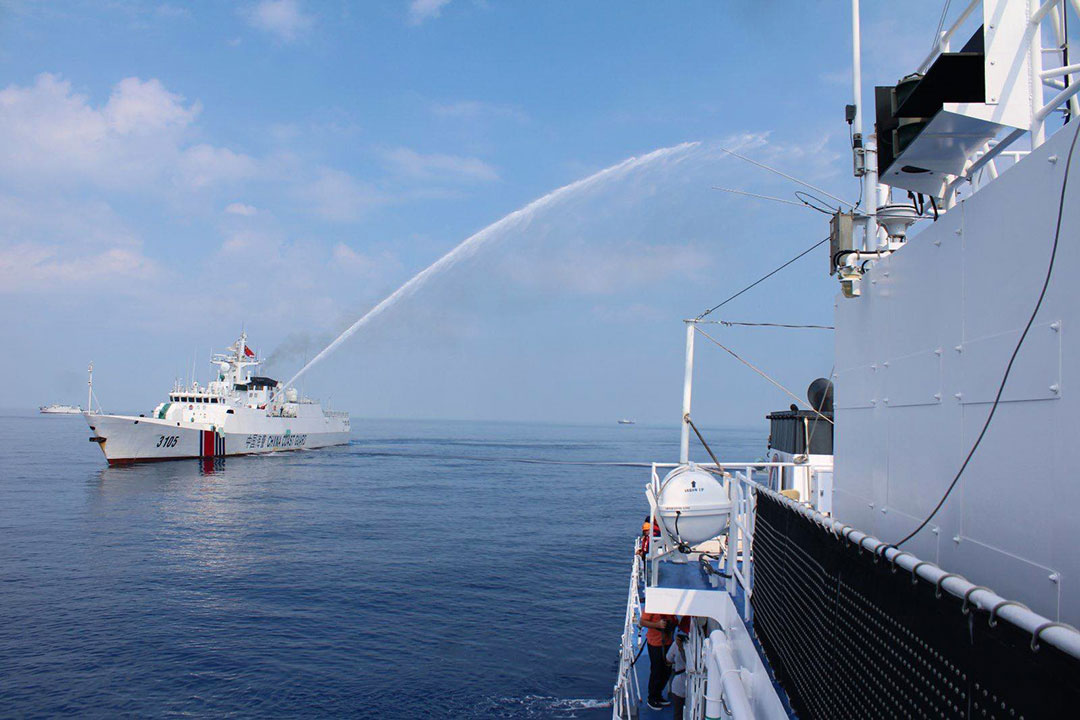
Philippine authorities have reported multiple incidents involving Chinese coast guard and maritime militia vessels, including harassment through water cannon use, dangerous maneuvers and swarming near maritime features that Manila considers part of its exclusive economic zone. — Adrian H. Halili