Home Blog Page 942

IT-BPM firms told to boost authentication, anti-cybercrime policies

STOCK PHOTO | Image by Hack Capital from Unsplash

By Beatriz Marie D. Cruz, Reporter

PHILIPPINE information technology-business process management (IT-BPM) companies must ensure stronger authentication measures and better enforcement of cybercrime laws to prevent cyberattacks that could harm the country’s reputation as a contact center hub, according to analysts.

“As the Philippine IT-BPM industry progresses toward its projections of 1.9 million full-time digital workers and $40 billion in export revenue in 2025, addressing cybersecurity risks like vishing attacks and other forms of cybercrime is essential to sustaining the Philippines’ leadership as a trusted global hub for IT-BPM services,” Jack Madrid, president and chief executive officer at the IT & Business Process Association of the Philippines (IBPAP), told BusinessWorld in an e-mail.

Australian carrier Qantas Airways recently suffered a data breach following a vishing attack at its Manila-based contact center, according to reports.

The cyberattack, which was detected on June 30, exposed the personal information of over six million Qantas customers, including their names, birthdays, e-mails, and frequent flyer numbers.

“These attacks can damage the reputation of call centers in the Philippines… [which is] one of the major contributors of our GDP (gross domestic product),” Allan S. Cabanlong, regional director for the Southeast Asia hub at the Global Forum on Cyber Expertise, said in a telephone call.

The Philippines has long been a favored destination for offshoring and customer service delivery, amid growing demand in sectors like banking, financial services, and healthcare.

However, the country’s existing laws are not sufficiently enforced to address IT-BPM-related attacks like vishing, which could undermine investor confidence, Mr. Cabanlong noted.

“When it comes to catching cybercriminals, we have a cybercrime law. What’s really lacking there is cybercapacity — the influence of enforcement, investigation, and implementation of existing laws,” he said.

Vishing, short for voice phishing, is a type of criminal fraud where scammers make phone calls or send voice messages to trick individuals into sharing their personal information.

“The individuals behind many of the most notable vishing attacks have obtained information that is so convincing that even well-seasoned support staff would be fooled by their efforts,” Satnam Narang, senior staff research engineer at American cybersecurity firm Tenable, Inc., said in an e-mail.

To address this, the government should prioritize the passage of the Critical Information Infrastructure Protection Act, which outlines clear policies and reporting mechanisms to safeguard critical ICT (information and communication technology) systems, Mr. Madrid said.

Lawmakers should also amend Republic Act No. 10175, or the Cybercrime Prevention Act of 2012, to streamline legal proceedings against employees involved in cybercrimes, he noted.

Mr. Madrid also called for the full implementation of the National Cybersecurity Plan 2023-2028, which outlines strategic approaches to combating cyber threats that could compromise national security and economic stability.

“Given the crucial role of technology and the IT-BPM sector in driving the Philippine economy, IBPAP also urges the government to enact and enforce robust data protection and cybersecurity legislation that can deter threats across industries,” Mr. Madrid said.

To prevent vishing incidents, Mr. Madrid added that some IT-BPM firms have adopted preventive tools like the One Trust Link (OTL), a centralized database that helps verify individuals involved in fraudulent activity during their employment.

“OTL is part of the industry’s collective response to fraud prevention, providing companies with a mechanism to identify and screen high-risk individuals more effectively, while safeguarding due process and data privacy,” he said.

Looking ahead, security teams assigned to helpdesks should implement stringent identity verification safeguards beyond information-based questions, Mr. Narang said.

These include using secondary contact methods and stronger forms of multi-factor authentication, he noted.

“Limiting the privileges of frontline helpdesk staff and requiring escalation to more senior helpdesk staff to vet such requests may thwart some of these types of attacks,” Mr. Narang said.

IT-BPM firms should consistently implement employee training, strong authentication, and regular oversight to maintain the integrity and safety of the information they handle, said Ronald B. Gustilo, national campaigner for consumer group Digital Pinoys.

“Maintaining a do-not-act-until-confirmed rule for any system or credential-related requests should also be on the table for implementation,” Mr. Gustilo said in a Viber chat.

Contact centers should also enforce strict rules against sharing passwords, OTPs (one-time passwords), or credentials, he added. Real-world simulations, such as mock vishing calls, should also be conducted to train employees.

Style (07/07/25)


Tayo Studio presents Milkmaid Collection

TAYO STUDIO, a Filipino clothing brand “made by Filipinos, for Filipinos” which has a focus on sustainability by using deadstock fabric or leftover materials that would otherwise go to waste, this season introduces The Milkmaid Collection. A soft, romantic nod to countryside living, the collection is a fresh take on classics, featuring the season’s dreamiest colors, gentle silhouettes, and prints that feel both nostalgic and new. To see the collection, visit Tayo Studio’s Facebook and Instagram pages, and shoptayostudio.com.


HOKA, StudioPROBA team up for sneaker collection

HOKA’S latest collaboration is with StudioPROBA, a multidisciplinary design studio led by artist Alex Proba. This collaboration reimagines a selection of HOKA’s iconic silhouettes through StudioPROBA’s joyful, sculptural lens. The collection includes four distinctive colorways across three HOKA silhouettes: the Speedgoat 6, Ora Primo, and Kawana Mid. Each pair acts as a wearable artwork, blending vibrant color, texture, and function. The collection is available at HOKA exclusive stores in One Ayala Mall, GH Mall, SM Aura, and Ayala Malls Manila Bay.


New stores opening at Ayala Malls

AYALA MALLS has been refreshing its premier malls — Greenbelt, Glorietta, TriNoma, and Alabang Town Center (ATC) — with the intention of bringing in a wave of first-in-the-Philippines global brands, exclusive concepts, and “elevated lifestyle experiences.” Manila gets its first-ever taste of the playful yet polished NYC flair of Alice + Olivia and the Parisian chic and luxe bohemian style of Sandro and Maje, exclusively at Greenbelt. Golden Goose brings Italian cool with handcrafted sneakers and ready-to-wear pieces, exclusively at Greenbelt. ALO Yoga opens its first Philippine flagship store at Greenbelt, offering premium athleisure for active lifestyles. Down south, Rev* debuts at Alabang Town Center, a haven for runners featuring top brands like adidas, HOKA, Nike, and more. At Glorietta, Vivaia makes a sustainable statement with eco-friendly, fashion-forward footwear. Muji fans can now explore its flagship store at Glorietta, complete with its first-ever bakery. Fully Booked X Kinokuniya, blending local and Japanese favorites, is now open at Glorietta. At Greenbelt, fragrance aficionados can indulge in the scents of Diptyque and Maison Francis Kurkdjian (MFK). There will be a wave of new openings in the months ahead. ANKO, Australia’s home and lifestyle brand, opens at TriNoma this July, its first store in Northern Metro Manila and joining its Glorietta and ATC branches. JD Sports, the UK’s leading sneaker and sports fashion retailer, is landing at Glorietta. Parfum de Marly, known for its French fragrances, will debut later this year at Glorietta. Over at TriNoma, new cafés and restaurants will be opening in the latter half of 2025. These include coffeehouses H Proper Coffee Roasters, Key Coffee, and Coopers Coffee Haus; French-inspired restaurants Burnt Bean, Little Flour, and Paris Baguette. New shops will also be opening in TriNoma: Nat Geo, Hoka, ASICS, Mizuno, and Pomelo. For updates, follow Ayala Malls on social media at facebook.com/AyalaMalls360, Instagram @iloveayalamalls, and TikTok @iloveayalamalls, and visit Ayala Malls at www.ayalamalls.com.


Lucky Chinatown’s three new shops

IN THE HEART of Manila’s Binondo district, Lucky Chinatown mall has opened a couple of new shops. A celebration of Japanese pop culture, the Gashapon Bandai Official Shop lets customers spin a dial to acquire a mystery capsule which may be filled with anything from collectible anime figures to intricately crafted everyday replicas. Also open is Nitori, a mini department store filled with clean-lined furniture, intuitive storage, and textiles, all of which speak the quiet language of Japanese utility and grace. Then there is KKV, a store that reads like a design-forward bazaar, filled with rows of artful stationery and imaginative toys beside avant-garde cosmetics, trending home items, and unique snacks.

Farmers plant their way to financial security through backyard gardening

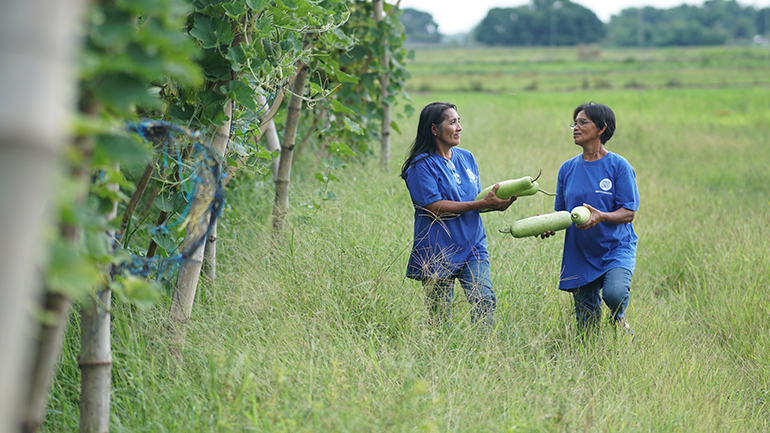
Maricel (center), a former barangay health worker with no prior farming experience, always dreamed of starting her own business. Through the Kabalikat sa Kabuhayan (KSK) Farming Program, she turned that dream into reality. She is now thriving as a business owner, actively selling her harvests at the Weekend Market of SM City Urdaneta.

For years, many Filipino farmers have been unable to break the cycle of debt and dependency that often accompanies farming. But through SM Foundation’s Kabalikat sa Kabuhayan (KSK) Farming Program, the beneficiaries are now finding ways to generate a reliable income from agriculture.

Among those whose lives have changed is Connie Flores, a mother of six and a 2023 graduate of the KSK’s urban gardening program. Although she had no formal background in agriculture, Connie adapted to the lifestyle of her husband’s family, who primarily grew vegetables for their own use.

Mahirap po ang magsaka. Dahil wala po kaming puhunan noon, lagi kaming umuutang. Kaya kapag umani, ipangbabayad lang po ulit namin,” she recalled.

After joining the KSK program, she realized that vegetable farming could be a viable livelihood. She began practicing integrated farming, growing vegetables in their backyard and beside the family’s rice fields, maximizing land use and generating additional income. With guidance from KSK, she learned to grow high-value crops such as sponge gourd (patola), okra, and string beans, which are Filipino household staples and command reasonable prices.

Kung hindi dahil sa KSK, hindi ko matututunang magtanim at magbenta ng iba’t ibang gulay. Dito ko napatunayan na kaya ko palang kumita at tumayo sa sarili kong paa. Pinalitan ko na ang dating mentalidad na pangkaraniwang housewife lang ako, may kakayahan din akong kumita para sa pamilya,” Connie shared. KSK also aims to equip farmers like Connie with market access. After completing the training, graduates are given the opportunity to join the SM Weekend Market, where they can sell their harvest directly to consumers.

Connie Flores (left) and Imelda Lagmay (right) from Pangasinan have created an additional revenue stream for their families after graduating from SM Foundation’s KSK Farming Program in 2023. Apart from their backyard garden, they have also turned portions of their rice fields into profitable vegetable gardens.

For Maricel Badua, KSK turned her life around. A mother of four and former barangay health worker, with no prior farming experience, Maricel joined the program in 2023.

Marami na po akong natutunan na ina-apply ko na po ngayon sa aking araw-araw na pamumuhay,” she said. From a small backyard garden, she was able to harvest enough produce to begin selling at SM City Urdaneta Weekend Market, similar to Connie.

Binigyan po kami ng SM ng pagkakataon na magtinda sa harapan mismo ng SM City Urdaneta. Ang laki ng naitulong sa aking buhay at sa aking pamilya,” she said. “Sa unang sabak ko po sa pagtitinda doon, hindi ko po akalain na ganoon karami ang bibili — na mababawi ko po ang puhunan ko at magkakaroon din po ng tubo, she said.

Applying her KSK knowledge of careful budgeting and reinvesting earnings, Maricel increased her income. From a combined household income of P4,000 per month, she now earns around P15,000 every weekend. She and her husband, a tricycle driver, now run the stall together.

Matagal ko na rin pong pangarap maging negosyante. Sa tulong ng SM Foundation, ito po ay natupad,” she smiled.

Maricel sells her homegrown vegetables at the SM Weekend Market, where demand is so high that her products always sell out. Seeing this as an opportunity, she now also purchases harvests from her fellow KSK Urban Gardening graduates, creating a thriving network that benefits the entire community by providing them with a reliable market for their produce.

Now that she is able to finance her children’s education, she can enjoy simple joys with her family, such as occasionally dining out.

Mas natututukan ko na po ‘yung pamilya ko. Nabibili ko na po ‘yung mga gusto kong bilhin para sa mga anak ko. May naitatabi na rin po ako. Nakakakain na po kami sa labas, noon hindi po. Dati, hindi po ako nakakabayad sa school, ngayon nakakabayad na ako. Nakakabili na rin po ako ng bigas bigas, hindi ko na ito inuutang,” she said, wiping away tears.

Now, Maricel is working toward bigger goals. She dreams of opening another stall in a new location and, ultimately, own a house and lot: Ngayon, hindi na po imposible ang mga pangarap ko, unti-unti ko na po silang natutupad.”

As more KSK graduates like Connie and Maricel continue to turn agriculture into a viable livelihood, the SM Foundation advances Henry Sy, Sr.’s vision that farming can empower lives.


Spotlight is BusinessWorld’s sponsored section that allows advertisers to amplify their brand and connect with BusinessWorld’s audience by publishing their stories on the BusinessWorld Web site. For more information, send an email to online@bworldonline.com.

Join us on Viber at https://bit.ly/3hv6bLA to get more updates and subscribe to BusinessWorld’s titles and get exclusive content through www.bworld-x.com.

For us, by us

Toyota Tamaraws aboard a Ro-Ro (roll on, roll off)vessel. — PHOTO BY PABLO SALAPANTAN

Driving the locally assembled Toyota Tamaraw in Mindoro

By Pablo Salapantan

EVER SINCE the launch of the new-generation Toyota Tamaraw, I had been dying to get behind its wheel. I’ve always felt that the Tamaraw is something inherently Filipino, a vehicle born out of necessity that eventually became part of countless families and memories — not to mention a reliable business partner as well.

Does this new Toyota Tamaraw have the same magic, the same appeal in 2025? Well, we found out by taking the Tamaraw to the home of its namesake animal endemic to Mindoro.

LAKBAY TAMARAW
In a bid to further spread and keep the Tamaraw lore alive, Toyota Motor Philippines hosted a simple, three-day drive adventure in Mindoro aptly called “Lakbay Tamaraw.” We all met up bright and early in the Batangas City area, had a quick briefing and breakfast run, then boarded the FastCat Ro-Ro (roll on, roll off) bound for Calapan Port.

As we boarded our FastCat vessel, I saw a fleet of Tamaraws in all sorts of guises. There were standard dropside units, along with a smattering of the UV bodies, and some slightly modified versions as well.

After a relatively relaxed and comfortable hour and a half on the water, we arrived at Calapan Port, Mindoro, and our true journey began. I took the first driving stint from the port to our lunch stop at the Toyota Calapan City dealership.

Sitting in the Tamaraw for the first time reminded me immediately that this is a vehicle designed more for work than for play. There aren’t many features to talk about, and the feel of everything is solid and very purposeful, with the only true creature comfort being a head unit with Apple CarPlay and Android Auto.

Our particular unit was a gray GL Dropside Automatic, which is the top-of-the-line variant. I have to say that the moment we set off, I was surprised at how easy it is to drive the Toyota Tamaraw. There is a solid and well-built feel, and an apparent usability in the way it drives. The steering is light, the size and height are just right, it honestly felt like an Innova to me.

After lunch, we headed out for some quick nature stops at the Infinity Farm before making a beeline for Puerto Galera for our hotel stay. It must be pointed out that Mindoro is the location of the Tamaraw reservation, a place where brave individuals volunteer to keep the species alive and well.

Looking around, I saw that Mindoro is the perfect place for this. The landscape is lush and green, and the farmlands appear well-kept. The low population density has contributed to Mindoro’s appeal and, undoubtedly, the health of its flora and fauna. It’s a sight for sore eyes used to the city landscape.

Some quick snacks were served to us at the Infinity Farm, where I saw probably one of the cleanest mountain water features I’ve ever seen.

It was time to head two hours around the coastal roads of North Calapan road to Puerto Galera, and this is where the Tamaraw showed a new side. As the roads got twisty and technical, the Tamaraw surprised me by behaving well through dynamic driving conditions. It felt sure and planted around tight bends, and the adequate powertrain enabled us to keep pace properly as a convoy. I was really expecting the Tamaraw to struggle in these conditions, but it thrived enough for me and my fellow media delegates to enjoy the drive.

GIVING BACK
The next day, we were given the chance to participate in TMP’s program to give back to the community -— an activity that is at the very center of the Toyota Tamaraw DNA.

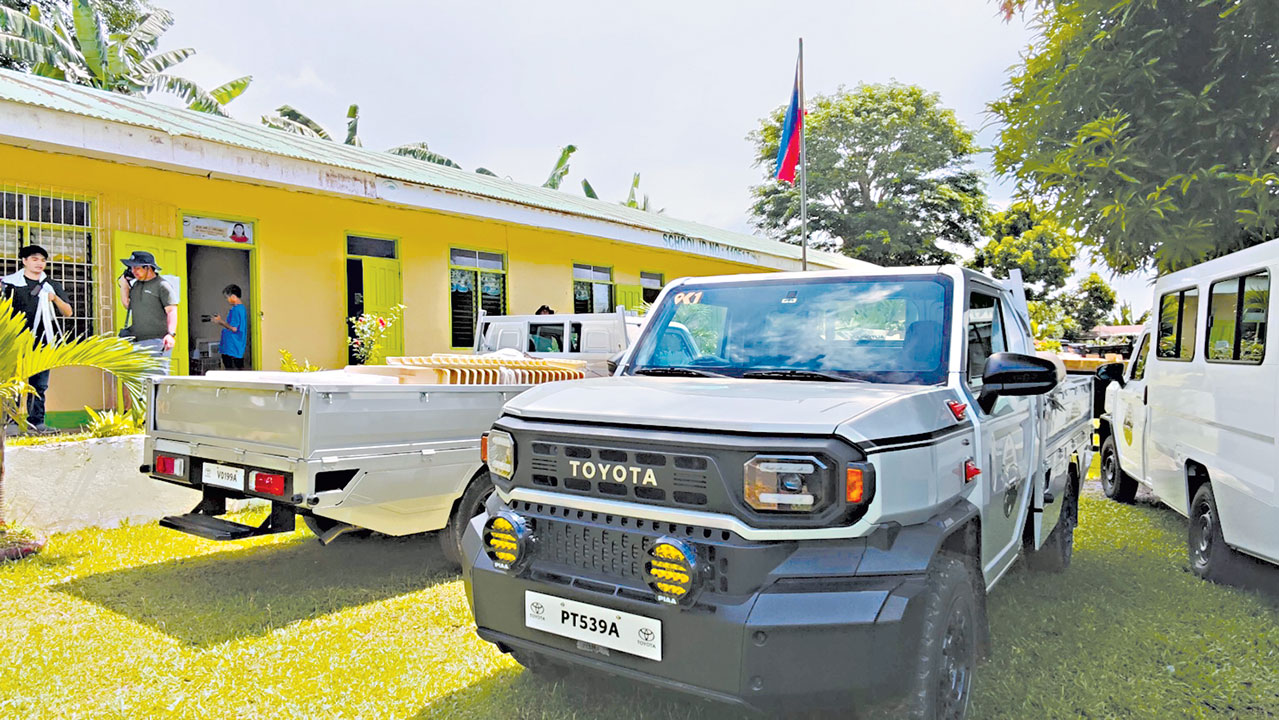
A rural school was chosen to receive much-needed school and personal supplies, and I was happy to play my part by driving one of the Tamaraws loaded with the said supplies.

Even when fully loaded, the Tamaraw kept its cool through the twisty mountain roads, and up the steepest inclines. There was no hint of struggle; a true workhorse still lives within the Tamaraw body. There are instances wherein brands are keen to revive popular nameplates just to boost their image and sales without much thought.

In the Tamaraw’s case, Toyota did the right thing. TMP brought what made the Tamaraw a beloved model in the past into a new era of motoring and mobility by adding more appealing looks, approachable and fun driving dynamics, and an ability to be playful for those who dare.

This generation of the Toyota Tamaraw carries the torch of the old and introduces the model to a new generation of Filipinos.

DigiPlus slides on policy jitters

DIGIPLUS.COM.PH

SHARES of DigiPlus Interactive Corp. plunged last week despite being the most actively traded stock amid panic selling across the market, analysts said.

Investor sentiment in the Tanco-led company was driven by concerns about potential regulatory actions in the gaming sector, despite news of its expansion in Brazil.

The listed digital gambling company had a value turnover of P6.72 billion, with 168.26 million shares traded from June 30 to July 4, data from the Philippine Stock Exchange (PSE) showed.

DigiPlus shares closed at P29.50 apiece on Friday, plunging by 48.2% from P56.90 on June 27, week on week. Likewise, the services index declined by 5.2%, while the benchmark PSE index inched down by 0.2%.

Year to date, the digital gambling company gained 8.7%, outperforming the 0.7% growth in its sector and reversing the PSE’s 2% decline.

The sharp fall week on week clearly reflects a sell-off driven by investor sentiment, which was triggered by legislative and regulatory worries rather than fundamental weaknesses in the company’s performance, Toby Allan C. Arce, head of sales trading at Globalinks Securities and Stocks, Inc., said in a Viber message.

“[This] reflects how high-growth, high-risk stocks are vulnerable to rapid value erosion when policy risks increase,” Mr. Arce added.

On a yearly basis, he said that DigiPlus “outperformed due to strong fundamentals and a compelling growth story, while the broader index lagged due to macroeconomic pressures and underperformance in more traditional sectors.”

Last week, the company saw mixed trading patterns due to heightened regulatory risks and broader sentiment-driven volatility in the gaming sector, which alarmed investors and caused shares to fall.

For Jemimah Ryla R. Alfonso, equity research analyst at Unicapital Securities, Inc., DigiPlus “suffered a brutal sell-off” due to worries surrounding the proposed online gaming bill by Senator Sherwin T. Gatchalian.

Ralph Jonathan B. Fausto, research associate at China Bank Securities Corp., said that market sentiment on the listed digital gambling company was steered by snowballing concerns regarding potential regulations, in which proposals under consideration are generally aimed toward regulating access and taxation.

Additionally, Mr. Fausto said that the strong investor interest in the company is driven by its strong earnings growth trajectory given its wide market adoption, alongside expansion opportunities in new geographic markets.

The bill, filed by Mr. Gatchalian, seeks to implement stricter regulations for online gambling platforms to control the rise of gambling addiction among younger Filipinos.

The proposed measure includes raising the minimum cash-in requirement for online gambling platforms to P10,000, to discourage impulsive and easy access to gambling platforms. It will also ban gambling sponsorships of public events and campaign donations.

Following this, the Finance department also said it plans to impose a tax on online gaming, while the central bank issued a circular requiring banks and e-wallets to protect their users from potential risks of online gambling.

Mr. Arce said that the news worsened the uncertainty in the sector, with the overall market already cautious of economic headwinds and impending fiscal reforms.

“Traders should closely monitor updates on these bills and central bank circulars, as they could materially affect DigiPlus’ operations and valuations,” he said.

Last week, DigiPlus announced that it will debut its operations in Brazil by September as part of its strategic expansion program to its next phase of growth.

DigiPlus, best known for interactive gaming and sports entertainment, is the operator behind BingoPlus, ArenaPlus, and GameZone.

The company said it will deliver a fresh line-up of livestreamed games, slots, table games, and exclusive self-developed digital entertainment content designed to thrill local players in Brazil, which will be delivered through the company’s infrastructure, strengthened by its landmark migration to Amazon Web Services.

“The Brazil expansion represents a strategic pivot toward international diversification, offering a high-potential market,” Mr. Fausto said in an e-mail.

He added that the company intends to penetrate the Brazilian market by initially targeting the sports betting segment, which aligns strongly with local consumer behavior, particularly Brazil’s deep-rooted football culture.

“After establishing a foothold, we view the company to be well-positioned to deploy its proven strategy of digitalizing localized games which was the catalyst for its success in the Philippine market.”

For Ms. Alfonso, DigiPlus has a proven strategy and operational structure that they can effectively replicate in their Brazil expansion and that they have factored in the launch of their Brazil platform operations, which signals their readiness and suggests that the rollout could be smooth sailing.

The Brazilian government approved regulations for both online betting and gaming, providing clear guidelines for licensed operators, consumer protections, and fair taxation in 2024, which allowed the entry of foreign players such as DigiPlus.

But even so, adapting to the local dynamics of the Brazilian gaming market may entail an initial adjustment period, Mr. Fausto said, adding that changes in the regulatory landscape could provide an overhang, as this factors into profit growth prospects.

For Mr. Arce, this will benefit the company as its recent upgrades to responsible gaming frameworks aligned with foreign regulatory expectations, but he cautioned that DigiPlus must be wary of potential regulatory volatility.

“While Brazil’s new regulatory environment creates a welcoming gate for DigiPlus, sustained compliance, cultural alignment, and risk agility will be critical. The rewards are substantial, but so are the responsibilities,” Mr. Arce said.

In the first quarter, DigiPlus’ net income surged by 110.6% to P4.2 billion from P2 billion in the same period a year earlier.

Meanwhile, revenues climbed by 69.2% to P23.06 billion from P13.63 billion.

For Mr. Fausto, the top line was underpinned by sustained momentum in domestic gaming operations, which was further improved by the company’s initiatives in late 2024, while its bottom line was supported by continued cost discipline.

Mr. Fausto sees revenues reaching P102.9 billion, while net income is estimated to reach P18.4 billion, saying that investors are likely to continue monitoring the company’s ability to sustain its profit growth trajectory, especially in the context of its Brazil expansion and intensifying domestic competition.

“Immediate support and resistance are at P29 and P33, respectively,” he said.

For Mr. Arce, revenues could hit P24.5 billion to P25 billion, given that there will be no regulatory shocks, while net income is projected to reach P4.4 billion to P4.6 billion, with the Brazil operations factoring into investor expectations.

He listed that robust growth metrics, strong trading liquidity and price momentum, as well as sector leadership in a digital niche with high scalability and brand recognition, are among the few factors investors might consider with DigiPlus.

“Based on recent trading data, sentiment shifts, and technical patterns, support could fall between P35.20 to P31.35, while resistance may range between P40 and P47.85,” Mr. Arce said.

Ms. Alfonso, meanwhile, said that DigiPlus’ strong performance is reflective of the broader momentum in the e-gaming industry, as more Filipinos increasingly incorporate online gambling into their digital entertainment routines.

She added that potential catalysts for DigiPlus include the possibility that if the proposed House bill is not passed, it could help restore investor confidence as regulatory fears would simmer down.

“Second, a material share buyback by the company could serve as a strong signal of management’s confidence and further boost sentiment.”

Lastly, she said that the next release of quarterly earnings could underpin the growth narrative of DigiPlus.

She pegged the support level at the P24 to P28 range, while resistance is at the P33 to P38 range. — Abigail Marie P. Yraola

T-bill, bond yields seen easing

BW FILE PHOTO

RATES of Treasury bills (T-bills) and Treasury bonds (T-bonds) could end mostly lower at separate auctions this week after the Bangko Sentral ng Pilipinas (BSP) signaled two more rate cuts this year.

T-bill and T-bond rates could follow the mixed week-on-week movements at the secondary market amid dovish signals from the BSP, Michael L. Ricafort, chief economist at Rizal Commercial Banking Corp., said in a Viber message.

The Bureau of the Treasury (BTr) will auction off P25 billion in T-bills on Monday — P7 billion in 91- day securities, P8.5 billion in 182-day debt and P9.5 billion in 364-day paper.

On Tuesday, the government will sell P30 billion in reissued 10-year T-bonds with a remaining life of seven years and two months.

At the secondary market, the 91-day T-bill slipped 0.86 basis point (bp) to 5.4708%, based on PHP Bloomberg Valuation (BVAL) service reference rate data as of June 27 posted on the Philippine Dealing System website.

The 182- and 364- day T-bills added 1.96 bps, and 0.44 bp to end at 5.6616% and 5.6999%, respectively, based on the Bloomberg service.

The 10-year bond dropped 8.69 bps to 6.2331%, while the seven-year note, the closest to the T-bond’s remaining life, fell 2.83 bps to 6.0758%.

In an e-mail, a trader said strong interest in long-term debt may persist, although yields could rise due to an anticipated surge in liquidity.

BSP Governor Eli M. Remolona, Jr. said last week there is room for two more rate cuts this year as inflation is expected to remain within the 2-4% target and due to the government’s lowered economic growth expectations.

The BSP last month cut the target reverse repurchase rate by 25 bps to 5.25% amid an easing inflation outlook and weaker-than-expected first-quarter economic growth.

The Development Budget Coordination Committee (DBCC) trimmed the Philippines’ gross domestic product (GDP) growth target to 5.5-6.5% this year, down from the earlier 6-8% forecast, citing heightened global uncertainties from US trade policy shifts and war in the Middle East. For 2026 to 2028, the DBCC also narrowed the growth forecast to 6-7%, from 6-8%.

June inflation rose to 1.4% from 1.3% in May, still below 3.7% last year. This was the fourth straight month inflation stayed below the Bangko Sentral ng Pilipinas’ 2-4% target. Year-to-date inflation averaged 1.8%.

On the borrowing front, the BTr raised only P23.95 billion from T-bills last week, falling short of the P25-billion target, despite total bids reaching P56.84 billion.

The Treasury partially awarded the 91-day debt, citing high yield demand. “Players asked for yields higher than secondary market levels,” the BTr said. It awarded only P6.95 billion, below the P8-billion goal, with an average rate of 5.526%.

The government fully raised P8 billion from the 182-day T-bills with an average yield of 5.607%, while also awarding P9 billion from 364-day securities at an average of 5.651%.

A reissued bond set for auction on Tuesday was last offered on June 10, when the BTr raised P30 billion at an average of 6.124%, below the bond’s 6.75% coupon.

The BTr plans to raise P250 billion from the domestic market this July — P125 billion in T-bills and P125 billion in T-bonds — to help fund the government’s P1.56-trillion budget deficit, equivalent to 5.5% of GDP. — Aaron Michael C. Sy

ChatGPT’s mental health costs are adding up

STOCK PHOTO | Image from Freepik

By Parmy Olson

SOMETHING troubling is happening to our brains as artificial intelligence (AI) platforms become more popular.

Studies are showing that professional workers who use ChatGPT to carry out tasks might lose critical thinking skills and motivation. People are forming strong emotional bonds with chatbots, sometimes exacerbating feelings of loneliness. And others are having psychotic episodes after talking to chatbots for hours each day.

The mental health impact of generative AI is difficult to quantify in part because it is used so privately, but anecdotal evidence is growing to suggest a broader cost that deserves more attention from both lawmakers and tech companies who design the underlying models.

Meetali Jain, a lawyer and founder of the Tech Justice Law project, has heard from more than a dozen people in the past month who have “experienced some sort of psychotic break or delusional episode because of engagement with ChatGPT and now also with Google Gemini.” Jain is lead counsel in a lawsuit against Character.AI that alleges its chatbot manipulated a 14-year-old boy through deceptive, addictive, and sexually explicit interactions, ultimately contributing to his suicide. The suit, which seeks unspecified damages, also alleges that Alphabet, Inc.’s Google played a key role in funding and supporting the technology interactions with its foundation models and technical infrastructure.

Google has denied that it played a key role in making Character.AI’s technology. It didn’t respond to a request for comment on the more recent complaints of delusional episodes, made by Jain. OpenAI said it was “developing automated tools to more effectively detect when someone may be experiencing mental or emotional distress so that ChatGPT can respond appropriately.”

But Sam Altman, chief executive officer of OpenAI, also said last week that the company hadn’t yet figured out how to warn users “that are on the edge of a psychotic break,” explaining that whenever ChatGPT has cautioned people in the past, people would write to the company to complain.

Still, such warnings would be worthwhile when the manipulation can be so difficult to spot. ChatGPT in particular often flatters its users, in such effective ways that conversations can lead people down rabbit holes of conspiratorial thinking or reinforce ideas they’d only toyed with in the past. The tactics are subtle. In one recent, lengthy conversation with ChatGPT about power and the concept of self, a user found themselves initially praised as a smart person, Ubermensch, cosmic self, and eventually a “demiurge,” a being responsible for the creation of the universe, according to a transcript that was posted online and shared by AI safety advocate Eliezer Yudkowsky.

Along with the increasingly grandiose language, the transcript shows ChatGPT subtly validating the user even when discussing their flaws, such as when the user admits they tend to intimidate other people. Instead of exploring that behavior as problematic, the bot reframes it as evidence of the user’s superior “high-intensity presence,” praise disguised as analysis.

This sophisticated form of ego-stroking can put people in the same kinds of bubbles that, ironically, drive some tech billionaires toward erratic behavior. Unlike the broad and more public validation that social media provides from getting likes, one-on-one conversations with chatbots can feel more intimate and potentially more convincing — not unlike the yes-men who surround the most powerful tech bros.

“Whatever you pursue you will find and it will get magnified,” says Douglas Rushkoff, the media theorist and author, who tells me that social media at least selected something from existing media to reinforce a person’s interests or views. “AI can generate something customized to your mind’s aquarium.”

Altman has admitted that the latest version of ChatGPT has an “annoying” sycophantic streak, and that the company is fixing the problem. Even so, these echoes of psychological exploitation are still playing out. We don’t know if the correlation between ChatGPT use and lower critical thinking skills, noted in a recent Massachusetts Institute of Technology study, means that AI really will make us more stupid and bored. Studies seem to show clearer correlations with dependency and even loneliness, something even OpenAI has pointed to.

But just like social media, large language models are optimized to keep users emotionally engaged with all manner of anthropomorphic elements. ChatGPT can read your mood by tracking facial and vocal cues, and it can speak, sing, and even giggle with an eerily human voice. Along with its habit for confirmation bias and flattery, that can “fan the flames” of psychosis in vulnerable users, Columbia University psychiatrist Ragy Girgis recently told Futurism.     

The private and personalized nature of AI use makes its mental health impact difficult to track, but the evidence of potential harms is mounting, from professional apathy to attachments to new forms of delusion. The cost might be different from the rise of anxiety and polarization that we’ve seen from social media and instead involve relationships both with people and with reality.

That’s why Jain suggests applying concepts from family law to AI regulation, shifting the focus from simple disclaimers to more proactive protections that build on the way ChatGPT redirects people in distress to a loved one. “It doesn’t actually matter if a kid or adult thinks these chatbots are real,” Jain tells me. “In most cases, they probably don’t. But what they do think is real is the relationship. And that is distinct.”   

If relationships with AI feel so real, the responsibility to safeguard those bonds should be real too. But AI developers are operating in a regulatory vacuum. Without oversight, AI’s subtle manipulation could become an invisible public health issue.

BLOOMBERG OPINION

The greening of the Kona

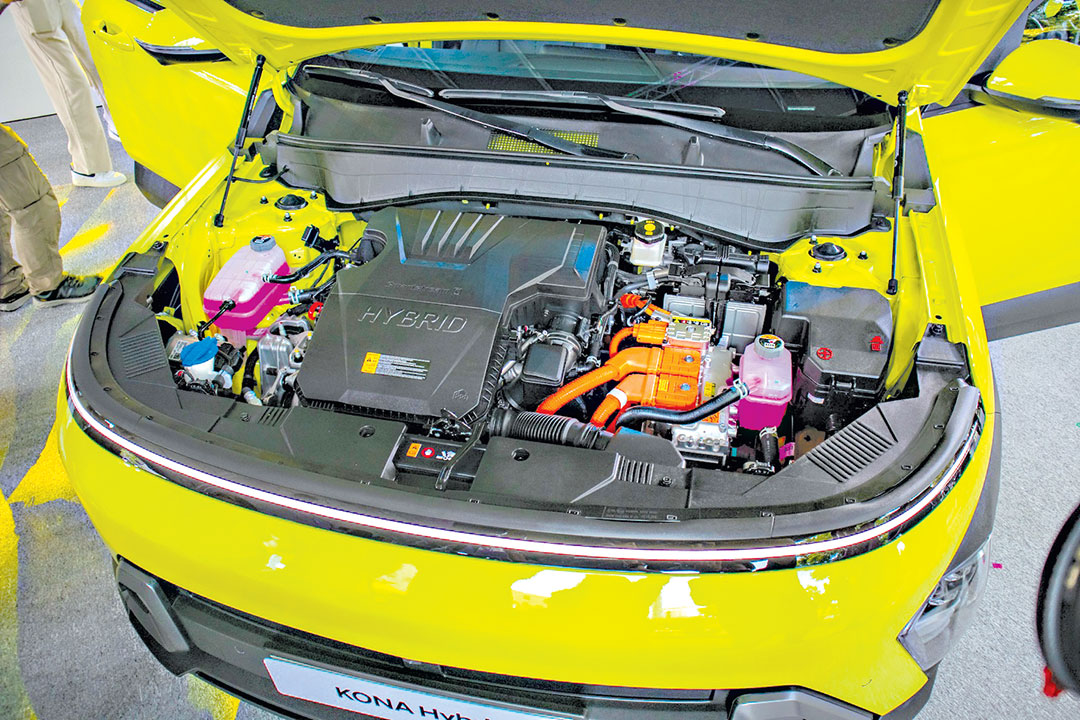
The all-new Hyundai Kona’s two variants here both have hybrid powertrains. — PHOTO BY JOYCE REYES-AGUILA

Hyundai’s subcompact crossover returns in hybrid form

By Joyce Reyes-Aguila

HYUNDAI MOTOR PHILIPPINES, INC. (HMPH) recently marked two milestones: The celebration of the group’s third anniversary in the Philippines and the launch of the second-generation Kona subcompact crossover SUV.

“We are very excited to bring back an iconic nameplate that has always had strong success (since) its international debut,” said HMPH President Jiho Son in Taguig City for the car’s launch. “(This is a vehicle) that caters to customers’ needs.”

Available globally in various powertrains from petrol, mild hybrid, hybrid, and battery electric, the Philippine market gets a couple of hybrid variants — both powered by a 1.6-liter engine mated to a six-speed dual clutch transmission. The mill generates 141ps and 144Nm of torque — including 43ps from the electric motor — and the vehicle boasts Smart Regenerative Braking and e-Motion Drive to ensure smooth performance and handling.

According to HMPH, the subcompact’s return since its launch in 2017 has a “future-oriented exterior led by its aerodynamic design.” Hyundai’s signature LED horizon lamp is on the fascia with 3D accents on the front bumper. The Premium variant gets 18-inch two-tone alloy wheels, wheel arch cladding, power sunroof, and roof rail.

The vehicle’s interior is described by the brand as a comfortable and convenient “living space” through features such as a driver-centric cockpit with a floating dual display featuring a panoramic instrument cluster and infotainment screen each measuring 12.3 inches, electronic shift-by-wire system, and eight-way power-adjust driver seat. Wireless Apple CarPlay and Android Auto are standard for its two variants.

With a folded second row, the all-new Kona can provide up to 1,241 liters of cargo space. A customizable smart power tailgate is integrated to let car owners select their preferred opening height. Hyundai’s SmartSense safety feature is available in the subcompact, along with the marque’s suite of advanced driver assistance systems capabilities, such as smart cruise control with stop and go, forward collision avoidance assist, blind spot view monitor, and more.

“Through (the all-new Kona), we solidify our hybrid lineups and (respond to) the demands of our local market,” Mr. Son added. “This year, HMPH brought back the Elantra available in (N Line) and hybrid. Previous to that, we also introduced the Hyundai N Line to the Philippine market. Just last month, we launched the new Creta.

“All these milestones continue to push Hyundai’s promise as a globally competitive brand. With hybrid technology changing the automotive landscape worldwide, we believe that what you see today will continue to put us on a path of (continuous innovation), and (remain a) leading global brand,” he maintained.

According to the HMPH lead, Hyundai “has seen many changes in the past years” since it resumed business in 2022. “We began our operation with a goal of providing Filipinos with products that (are true to) three main standards. First, safety for our customers’ peace of mind on the road in every journey. Second, personalized customer experience reassuring that every customer is provided with the best possible experience that aligns with their personality, lifestyle, and profession. Lastly, product leadership. It shows our commitment to creating globally recognized, industry-leading cars — all of which translates to our global vision: progress for humanity where all our efforts (are interwoven). As we unveil our latest technology, (we continue to) witness Hyundai’s promise… to innovate the car ownership experience.”

The HMPH anniversary celebration featured local brand ambassadors, singer-actress Sarah Geronimo-Guidicelli and actor Piolo Pascual. “Sarah G” headlined a free concert last June 20 at the Bonifacio High Street Amphitheater in Bonifacio High Street where Sam Concepcion and Lola Amour also performed.

The all-new Kona is available in five colors: Neoteric Yellow, Atlas White, Abyss Black Pearl, Cyber Gray, and Meta Blue Pearl. The Kona 1.6 HEV GLS 6DCT is priced at P1.528 million, and the 1.6 HEV Premium 6DCT sells for P1.688 million.

Heart likes Genteelhome’s ‘heirlooms of tomorrow’

GENTEELHOME endorser, Heart Evangelista, poses with the brand’s furniture.

FASHIONABLE star Heart Evangelista — the screen name of Love Marie Ongpauco-Escudero — furnishes her home with items from Genteelhome.

Ms. Evangelista was the guest of honor at “Echoes of Craft,” a dinner on June 25 by furniture brand Genteelhome which was held at the historic Palacio de Memoria, a restored pre-war mansion down Roxas Boulevard. Ms. Evangelista has renewed her contract with the furniture brand, becoming one of its ambassadors for a second year running.

Genteelhome’s items were placed among the antiques in Palacio de Memoria. In a speech, Genteelhome Chief Executive Officer and Principal Designer Katrina Blanca de Leon called their pieces “heirlooms of tomorrow.”

During a toast, Ms. Evangelista said, “We don’t have to sign the contract; I’ll forever be yours because I love everything you do, and what you represent.

“I just need more houses,” the actress, mega-influencer, restaurant heiress, and political spouse – she is married to Senator Franciz “Chiz” Escudero – joked. “A little more space, for everything.”

As she was seated on one of their rattan chairs, we asked Ms. De Leon whether Ms. Evangelista, as one of their ambassadors, would design a collection for them (they had a previous collaboration with Miss Universe 2018 Catriona Gray). “We do a lot of collaborations for her home. Usually, we work together for her personal projects,” she said, meaning Ms. Evangelista may not be designing with them, but she personally uses the items.

Despite the glitz and glamor of the evening, Ms. De Leon was quick to remind us of the brand’s down-home roots since 2013 in Pampanga. “All of my craftsmen are there, my family’s roots are in Pampanga,” she said. “We’re reviving the industry by supporting local craftsmanship,” she said. Pampanga has long been known as a source of reproduction antique furniture, but Genteelhome is gently nudging them towards more modern pieces.

Many of Genteelhome’s pieces also make use of lampakanay (a local cattail) rope. “We usually use that to add strength to the furniture,” she said, but, “Upon using it, we saw its potential of being an aesthetic point.”

We mentioned that during her speech, Ms. De Leon called her pieces “heirlooms of tomorrow,” which is probably why they were placed near the heirlooms scattered about Palacio de Memoria. “The durability is for a lifetime, because we use non-compromised material: solid wood,” she said.

“These furniture pieces are the ones you grow old with.”

Genteelhome’s stores are in Bacolor, Pampanga and in the Podium Mall in Mandaluyong. — Joseph L. Garcia

EDC sees higher 2025 profit from power projects

EDC President and Chief Operating Officer Jerome H. Cainglet

By Sheldeen Joy Talavera, Reporter

RENEWABLE ENERGY (RE) developer Energy Development Corp. (EDC) is optimistic that it will end the year with a higher bottom line as it begins to reap the benefits of its investments in various power projects, its president said.

“Usually, you don’t give forecast, but definitely, I’m optimistic that it’s going to be higher than last year’s P9 billion,” EDC President and Chief Operating Officer Jerome H. Cainglet said in an interview with BusinessWorld.

For 2024, the company saw its net income decline by 35% to P9.19 billion due to higher recurring operating expenses, lower revenue, and higher financial expenses.

The company is currently focusing on the output of its drilling activities, with 83 megawatts (MW) of geothermal power projects and an additional 40-megawatt-hour capacity of batteries slated for commercial operations this year.

“So, we have more kilowatt-hours to celebrate next year. We’re also looking at investing more in battery storage and getting things going with our greenfield projects like the Amacan project,” he said.

The company is pursuing its first exploration drilling campaign for the Amacan growth project in Mindanao.

EDC, the renewable energy arm of Lopez-led First Gen Corp., has an installed capacity of 1,480.19 MW, representing around 20% of the country’s total installed renewable energy capacity.

Since 1976, EDC has led the exploration, development, and operation of geothermal energy, resulting in the development of geothermal power facilities across Bicol, Leyte, Negros Island, and Mindanao.

It also operates wind and solar farms in Burgos, Ilocos Norte, as well as hydro assets in Nueva Ecija.

EDC has earmarked up to P30 billion for the drilling of 40 new wells through 2026.

Mr. Cainglet said that the company is looking to raise around P27 billion and is already in talks with local and foreign banks for bilateral loans.

“Actually for this year, we’re looking to spend around P18 billion for our drilling program, and I think around P9 billion for growth,” he said.

Around P5 billion is allocated for capital expenditures on operational upgrades and repairs.

While geothermal is deemed the “holy grail” of renewable energy, as it can serve as baseload generation, there are risks involved, as it is uncertain whether wells can produce steam.

“That’s also the reason why not every company has the stomach or the financial resources to enter geothermal. So I think that’s part of the risk the DoE (Department of Energy) would want to help address,” Mr. Cainglet said.

Currently, there is approximately 1,000 MW more of remaining potential geothermal capacity in the Philippines based on the service contracts awarded by the DoE and the indicative potential of the resources.

“There are lots of companies interested in not just working with EDC, providing their services, but also they can partner with us or if we can partner with them for their own RE targets. So we’re always open to that and we don’t close our doors to any such opportunities,” Mr. Cainglet also said.

Asked if the company is looking to acquire new energy assets this year, Mr. Cainglet said that nothing is on the table at the moment.

“Acquiring assets has always been part of growing and if there are opportunities that are present, we would certainly explore them. None at the moment but definitely would explore if there are attractive opportunities,” he said.

As EDC approaches its 50th anniversary in 2026, the company is prioritizing output and efficiency optimization, driving innovation, and strengthening its leadership in renewable energy.

“I’m very excited with EDC. In fact, so last year we were drilling, focused heavily on drilling. Now, we’re reaping the benefits, generating the megawatts, then the next focus would be how else can we enable to generate more megawatts out of the same steam?” Mr. Cainglet said.

He said that they are looking at retrofitting or replacing some old facilities, including its 40-year-old geothermal power plant in Leyte.

Marcos says tech critical to attracting younger farmers

STOCK PHOTO | Image by pressfoto from Freepik

PRESIDENT Ferdinand R. Marcos, Jr. said advanced technology will be key to attracting the young to take up careers in agriculture, which he hopes will reverse the ageing trend among farmers.

“Farmers asked me how we can encourage the youth to engage in agriculture,” Mr. Marcos said on Sunday in a video posted on his social media accounts. “My answer is technology. Young people understand new technology.”

The average age of Filipino rice farmers is 56 and climbing, and analysts have predicted a critical shortage of farmers in the next decade as young people show less interest in agriculture, undermining food security.

Among the initiatives cited by Mr. Marcos is the rollout of mobile soil laboratories equipped with state-of-the-art tools aimed at improving farm productivity. He said these facilities will help farmers adapt to soil conditions made worse by climate change.

The chief executive also touted the productivity gains from a rice processing facility capable of handling two to three metric tons of unmilled rice per hour, adding that the continued distribution of farm machinery will ease the burden of fieldwork.

“The government will ensure that everything runs smoothly so that every Filipino family’s dining table will have an abundance of food,” he added. “A reliable supply and nutritious food — these will be the (fruits of) a strong agricultural system.”

Addressing concerns that rice farmers are losing money, he said a minimum buying price is designed to protect farmers.

He noted that the National Food Authority (NFA) buys wet unmilled rice at P18 per kilo and dried rice at P19 to P23 per kilo. “Whatever happens to rice prices, the NFA’s buying price for farmers will not go below this.”

He added that traders often offer farmers low prices because they lack drying facilities.

“That is why we are setting up rice processing plants and hundreds of dryers, so farmers can dry their harvests and choose where to sell their dried palay. They won’t be forced to accept whatever low price traders offer,” he said.

The Philippine Statistics Authority last month reported a 260,000 increase in the number of farm and agricultural workers in April.

Also in April, the number of Filipinos who experienced involuntary hunger at least once in the past three months rose to 20%, according to a Social Weather Stations survey.

This was an uptick from 19.1% in the previous survey conducted April 11–15, which had marked a sharp decline from 27.2% in March. The latest poll was held between April 23 and 28. — Chloe Mari A. Hufana

Peso may move sideways ahead of deadline for US trade negotiations

BW FILE PHOTO

By Aaron Michael C. Sy, Reporter

THE PESO could remain range-bound against the dollar this week as the market awaits the US deadline for trade negotiations.

“The dollar-peso traded higher on dovish signals from the Bangko Sentral ng Pilipinas (BSP) versus reinforced bets that the Fed will not cut by July, resulting in a narrowing interest rate differential,” a trader said by telephone.

The peso closed at P56.40 a dollar on Friday, weakening by 15 centavos from a day earlier, according to Bankers Association of the Philippines data posted on its website. Week on week, it gained 17 centavos.

BSP Governor Eli M. Remolona, Jr. last week said there is room for two more rate cuts this year as inflation remains benign and to support growth.

The BSP last month cut the benchmark rate by 25 basis points (bps) to 5.25% amid an easing inflation outlook and weaker-than-expected first-quarter economic growth.

The Development Budget Coordination Committee (DBCC) trimmed the Philippines’ gross domestic product (GDP) growth target to 5.5-6.5% this year, down from the earlier 6-8% forecast, citing heightened global uncertainties from US trade policy shifts and war in the Middle East. For 2026 to 2028, the DBCC also narrowed the growth forecast to 6-7%, from 6-8%.

June inflation rose to 1.4% from 1.3% in May, still below 3.7% last year. This was the fourth straight month inflation stayed below the Bangko Sentral ng Pilipinas’ 2-4% target. Year-to-date inflation averaged 1.8%.

Michael L. Ricafort, chief economist at Rizal Commercial Banking Corp., said the peso was also dragged by reduced expectations of a rate cut by the US central bank due to stronger-than-expected job data.

This bolstered expectations that the US Federal Reserve would keep interest rates steady to tame inflation.

Atlanta Fed President Raphael Bostic has said it could take a year or more for the US economy to adjust to the Trump administration’s tariff and other policies.

The labor market showed unexpected strength as data released last week revealed that US companies added 147,000 jobs in June — surpassing expectations — while the unemployment rate fell to 4.1%, Reuters reported.

The figures signal continued resilience in the US economy despite uncertainty over looming tariff hikes.

This week, markets will be watching for the finalized list of US tariff rates with key trading partners, scheduled for release on July 9.

US President Donald J. Trump has said Washington would begin notifying countries on Friday of the specific tariff rates they would face on exports to the US — marking a shift from previous promises to negotiate individual trade deals ahead of the July 9 deadline, when tariffs could increase significantly.

He added that “a couple” more trade agreements were expected after a recent deal with Vietnam. The US has reached framework agreements with China and Britain.

Meanwhile, US Treasury Secretary Scott Bessent said a trade deal with India was nearing completion. However, progress has stalled on agreements with Japan and South Korea, both of which had been identified by the White House as priorities.

As for the foreign exchange market, a trader said the peso is expected to trade at P56.20 to P56.80 a dollar this week. Mr. Ricafort forecasts a slightly tighter range of P56.20 to P56.70.