Home Blog Page 941

Japan, S. Korea face 25% tariffs as Trump ramps up trade war
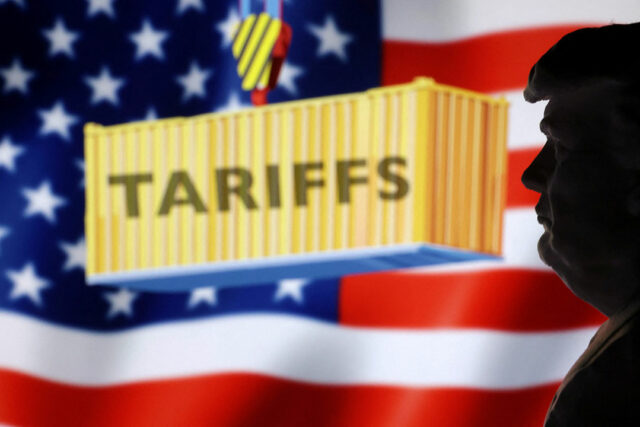
REUTERS

WASHINGTON/BRUSSELS — US President Donald J. Trump on Monday ramped up his trade war telling 14 nations, from powerhouse suppliers such as Japan and South Korea to minor trade players, that they now face sharply high-er tariffs from a new deadline of Aug. 1.

The imposition of a levy of 25% on US importers of all goods rattled Wall Street, with the S&P 500 Index knocked back sharply, though markets in Asia were taking the news in their stride.

In letters so far to 14 countries, Mr. Trump hinted at opportunities for additional negotiations, even while warning that reprisals would draw a like-for-like response.

“If, for any reason, you decide to raise your tariffs, then, whatever the number you choose to raise them by, will be added on to the 25% that we charge,” Mr. Trump told Japan and South Korea in letters released on his Truth Social platform.

The higher tariffs take effect from Aug. 1, and notably will not combine with previously announced sectoral tariffs, such as those on automobiles and steel and aluminum.

Countries have been under pressure to conclude deals with the US after Mr. Trump unleashed a global trade war in April that roiled financial markets and sent policymakers scrambling to protect their economies.

Mr. Trump’s executive order on Monday extends to Aug. 1 the Wednesday deadline for negotiations.

Asked if the deadline was firm, Mr. Trump replied, “I would say firm, but not 100% firm. If they call up and they say we’d like to do something a different way, we’re going to be open to that.”

It was unfortunate that Mr. Trump was hiking tariffs on imports from Japan and South Korea, two of the closest US allies, but there was still time for a breakthrough in negotiations, said former US trade negotiator Wendy Cutler.

“While the news is disappointing, it does not mean the game is over,” added Ms. Cutler, the vice-president of the Asia Society Policy Institute.

Mr. Trump said the United States would impose tariffs of 25% on goods from Tunisia, Malaysia and Kazakhstan, with levies of 30% on South Africa, Bosnia and Herzegovina, climbing to 32% on Indonesia, 35% on Serbia and Bangladesh, 36% on Cambodia and Thailand and 40% on Laos and Myanmar. A deal with India was close, Mr. Trump added.

Japanese Prime Minister Shigeru Ishiba said some progress had been made on avoiding higher tariffs of up to 35% that Mr. Trump had suggested recently.

“We have received a proposal from the United States to swiftly proceed with negotiations towards the newly set August 1 deadline, and that depending on Japan’s response, the content of the letter could be revised,” Mr. Ishiba told a cabi-net meeting on Tuesday.

South Korea said it planned to step up trade talks with the United States, and that exemptions or reductions in auto and steel tariffs must be included in any trade deal.

Thailand said it was confident it can get a competitive tariff similar to those on other countries.

In neighboring Malaysia, the trade ministry said it acknowledged US concerns on trade imbalances and market access, while believing that constructive engagement and dialogue remained the best path forward.

In Indonesia, Southeast Asia’s largest economy, an official said Jakarta still had room to negotiate on tariffs, and its top negotiator would meet US trade representatives in Washington.

A Bangladesh team in Washington was scheduled to have further trade talks on Wednesday, an official said.

The US is the main export market for Bangladesh’s readymade garments industry, which accounts for more than 80% of its export earnings and employs 4 million people.

“This is absolutely shocking news for us,” Mahmud Hasan Khan, president of Bangladesh Garment Manufacturers and Exporters Association, told Reuters on Tuesday. “We were really hoping the tariffs would be somewhere between 10-20%. This will hurt our industry badly.”

South African President Cyril Ramaphosa said the 30% US tariff rate was unjustified, since 77% of US goods face no tariffs in his country. Mr. Ramaphosa’s spokesperson said his government would continue to engage with the United States.

MARKET DROP
US stocks fell in response to Monday’s news, with the S&P closing down about 0.8%, although Asian share markets were mostly resilient, with Japan’s Nikkei recouping early losses and South Korean stocks jumping 1.8%.

“There’s going to be a lot of volatility as the headlines start to emerge, as more of these letters come out, and as the negotiations really come to the fore ahead of that August 1 deadline,” said Tapas Strickland, head of market economics at National Australia Bank.

Earlier on Monday, US Treasury Secretary Scott Bessent said he expected several trade announcements in the next 48 hours.

Only two deals have been struck so far, with Britain and Vietnam.

China has until Aug. 12 to reach a deal with the White House to prevent Mr. Trump from reinstating additional import curbs after Washington and Beijing agreed in June on a tariff framework. On Tuesday, China warned the United States against reinstating tariffs on its goods, and said it could retaliate against countries striking deals with the US to cut China out of supply chains.

Vietnam and China agreed to boost trade and investment ties between the two countries during a meeting on the sidelines of the BRICS summit in Brazil, Vietnam’s government said on Tuesday.

TRADING BLOCS
The European Union (EU) will not be receiving a letter setting out higher tariffs, EU sources familiar with the matter told Reuters on Monday.

The EU still aims to reach a trade deal by Wednesday after European Commission President Ursula von der Leyen and Mr. Trump had a “good exchange,” a commission spokesperson said.

The EU has been torn over whether to push for a quick and light trade deal or leverage its economic clout for a better outcome.

Mr. Trump also threatened leaders of developing nations in the BRICS grouping meeting in Brazil, with an additional 10% tariff if they adopt “anti-American” policies.

The bloc includes Brazil, Russia, India and China among others. — Reuters

Alien planet lashed by huge flares from its ‘angry beast’ star

The International Space Station. Image via nasa.gov

WASHINGTON — Scientists are tracking a large gas planet experiencing quite a quandary as it orbits extremely close to a young star — a predicament never previously observed.

This exoplanet, as planets beyond our solar system are called, orbits its star so tightly that it appears to trigger flares from the stellar surface — larger than any observed from the sun — reaching several million miles (kilometers) into space that over time may strip much of this unlucky world’s atmosphere.

The phenomenon appears to be caused by the planet’s interaction with the star’s magnetic field, according to the researchers. And this star is a kind known to flare, especially when young.

“A young star of this type is an angry beast, especially if you’re sitting as close up as this planet does,” said Netherlands Institute for Radio Astronomy astrophysicist Ekaterina Ilin, lead author of the study published in the journal Nature.

The star, called HIP 67522, is slightly more massive than the sun and is located about 407 light-years from Earth in the constellation Centaurus. A light-year is the distance light travels in a year, 5.9 trillion miles (9.5 trillion kilo-meters).

This star and planet, as well as a second smaller gas planet also detected in this planetary system, are practically newborns. Whereas the sun and our solar system’s planets are roughly 4.5 billion years old, this star is about 17 million years old, with its planets slightly younger.

The planet, named HIP 67522 b, has a diameter almost the size of Jupiter, our solar system’s largest planet, but with only 5% of Jupiter’s mass. That makes it one of the puffiest exoplanets known, with a consistency reminiscent of cotton candy (candy floss).

It orbits five times closer to its star than our solar system’s innermost planet Mercury orbits the sun, needing only seven days to complete an orbit.

A flare is an intense eruption of electromagnetic radiation emanating from the outermost part of a star’s atmosphere, called the corona. So how does HIP 67522 b elicit huge flares from the star? As it orbits, it apparently interacts with the star’s magnetic field — either through its own magnetic field or perhaps through the presence of conducting material such as iron in the planet’s composition.

“We don’t know for sure what the mechanism is. We think it is plausible that the planet moves within the star’s magnetic field and whips up a wave that travels along magnetic field lines to the star. When the wave reaches the stellar co-rona, it triggers flares in large magnetic field loops that store energy, which is released by the wave,” Ms. Ilin said.

“As it moves through the field like a boat on a lake, it creates waves in its wake,” Ms. Ilin added. “The flares these waves trigger when they crash into the star are a new phenomenon. This is important because it had never been observed before, especially at the intensity detected.”

The researchers believe it is a specific type of wave called an Alfvén wave, named for 20th century Swedish physicist and Nobel Prize laureate Hannes Alfvén, that propagates due to the interaction of magnetic fields.

The flares may heat up and inflate the planet’s atmosphere, which is dominated by hydrogen and helium. Being lashed by these flares could blast away lighter elements from the atmosphere and reduce the planet’s mass over perhaps hundreds of millions of years.

“At that time, it will have lost most if not all the light elements, and become what’s called a sub-Neptune — a gas planet smaller than Neptune,” Ms. Ilin said, referring to the smallest of our solar system’s gas planets.

The researchers used observations by two space telescopes: NASA’s TESS, short for Transiting Exoplanet Survey Satellite, and the European Space Agency’s CHEOPS, short for CHaracterising ExOPlanet Satellite.

The plight of HIP 67522 b illustrates the many circumstances under which exoplanets exist.

“It is certainly no sheltered youth for this planet. But I am not sad about it. I enjoy diversity in all things nature, and what this planet will eventually become — perhaps a sub-Neptune rich in heavy elements that did not evapo-rate — is no less fascinating than what we observe today.” — Reuters

US measles cases hit 6-year high at 1,277 cases, Johns Hopkins data show

MEASLES CASES in the United States have already reached a six-year high this year, data from Johns Hopkins University’s outbreak response center showed, as a drop in vaccination rates causes a surge in the disease once elimi-nated from the country.

The US had 1,277 cases of measles, the data showed on Friday, surpassing the last record of 1,274 cases from 2019.

Measles was declared eliminated from the country in 2000, meaning there were no cases spreading within the country that year. But the Centers for Disease Control and Prevention (CDC) continued identifying individual cases tied to international travel, and outbreaks have occurred every year since elimination.

This year’s surge, one of the worst outbreaks in the US, has primarily been driven by a drop in vaccination rates, particularly among children in states such as Texas and New Mexico, where coverage has fallen well below the 95% threshold required for herd immunity.

Johns Hopkins’ data showed 790 confirmed cases in Texas — the epicenter of the current measles outbreak — while 95 cases were reported in New Mexico.

Data from the CDC does not yet reflect the record as it is updated weekly on Wednesdays. As of July 1, a total of 1,267 confirmed measles cases and three deaths were reported by 38 jurisdictions, according to the CDC.

Last week’s CDC data showed there has been a slowdown in spread of the infection, but it has spread to surrounding states.

There have been 27 outbreaks reported in 2025, and 88% of confirmed cases are outbreak-associated, according to CDC’s data.

Experts have urged public health officials to provide urgent endorsement for highly effective vaccines. The measles vaccine is 97% effective after two doses, according to the CDC. — Reuters

Hopes fade for missing Texas flood victims as death toll hovers around 100

KERRVILLE, Texas — Search teams plodded through muddy riverbanks and flew aircraft over flood-ravaged central Texas on Monday as hopes dimmed of finding survivors among dozens still missing from a disaster that has claimed at least 96 lives, many of them children.

Three days after a torrential predawn downpour transformed the Guadalupe River into a raging, killer torrent, a Christian girls’ summer camp devastated by the flash flood confirmed that 27 campers and counselors were among those who had perished.

Ten girls and a camp counselor were still unaccounted for, officials said on Monday, as search-and-rescue personnel faced the potential of more heavy rains and thunderstorms while clawing through tons of muck-laden debris.

The bulk of the death toll from Friday’s calamity was concentrated in and around the riverfront town of Kerrville and the grounds of Camp Mystic, situated in a swath of Texas Hill Country known as “flash flood alley.”

By Monday afternoon, the bodies of 84 flood victims — 56 adults and 28 children — were recovered in Kerr County, most of them in the county seat of Kerrville, according to the local sheriff.

As of midday Sunday, state and local officials said 12 other flood-related fatalities had been confirmed across five neighboring south-central Texas counties, and that 41 other people were still listed as missing outside Kerr Coun-ty.

The New York Times, one of numerous news media outlets publishing varying death tolls, reported that at least 104 people had been killed across the entire flood zone.

Debate also intensified over questions about how state and local officials reacted to weather alerts forecasting the possibility of a flash flood and the lack of an early warning siren system that might have mitigated the disaster.

On Monday, Lieutenant Governor Dan Patrick vowed that the state would “step up” to pay for installing a flash-flood warning system in Kerrville by next summer if local governments “can’t afford it.”

“There should have been sirens,” Mr. Patrick said in a Fox News interview. “Had we had sirens here along this area… it’s possible that we would have saved some lives.”

‘ROUGH WEEK’ AHEAD
While authorities continued to hold out hope that some of the missing would turn up alive, the likelihood of finding more survivors diminished as time passed.

“This will be a rough week,” Kerrville Mayor Joe Herring, Jr. said at a briefing on Monday morning.

Camp Mystic, a nearly century-old Christian girls’ retreat on the banks of the Guadalupe was at the epicenter of the disaster.

“Our hearts are broken alongside our families that are enduring this unimaginable tragedy,” the camp said in a statement on Monday.

Richard “Dick” Eastland, 70, Mystic’s co-owner and director, died trying to save children at his camp from the flood, local news media reported. He and his wife, Tweety Eastland, have owned the camp since 1974, according to its website.

“If he wasn’t going to die of natural causes, this was the only other way, saving the girls that he so loved and cared for,” Eastland’s grandson, George Eastland, wrote on Instagram.

MISHAP IN THE SKY
Authorities lost one of their aviation assets on Monday when a privately operated drone collided in restricted airspace over the Kerr County flood zone with a search helicopter, forcing the chopper to make an emergency landing. No injuries were reported, but the aircraft was put out of commission, according to the Kerr County Sheriff’s Office.

National Weather Service forecasts on Monday predicted that up to 4 more inches of rain could douse Texas Hill Country, with isolated areas possibly receiving as much as 10 inches (25 cm).

Officials said the region remained especially vulnerable to renewed flooding due to the saturated condition of the soil and mounds of debris already strewn around the river channel.

State emergency management officials had warned on Thursday, ahead of the July 4 holiday, that parts of central Texas faced the possibility of flash floods based on National Weather Service forecasts.

But twice as much rain as was predicted ended up falling over two branches of the Guadalupe just upstream of the fork where they converge, sending all of that water racing into the single river channel where it slices through Kerrville, City Manager Dalton Rice said.

Mr. Rice said the outcome was unforeseen and unfolded in a matter of two hours, leaving too little time to conduct a precautionary mass evacuation without the risk of placing more people in harm’s way.

Authorities in flood-prone areas like the Guadalupe River basin also must balance the odds of misjudging a catastrophe against not wanting to “cry wolf,” he said.

Still, a team of European scientists said climate change has helped fuel warmer, wetter weather patterns that make extreme rain and flood events more likely.

“Events of this kind are no longer exceptional in a warming world,” said Davide Faranda, of the French National Centre for Scientific Research (CNRS). “Climate change loads the dice toward more frequent and more intense floods.”

The Houston Chronicle and New York Times reported that Kerr County officials had considered installing a flood-warning system about eight years ago but dropped the effort as too costly after failing to secure a $1 million grant to fund the project. — Reuters

UK plans to ban employers from using NDAs to silence workers subject to abuse

REUTERS

LONDON — Britain plans to ban non-disclosure agreements (NDAs) that are used by employers to silence those who are subject to harassment or discrimination, as part of a broader bill to protect workers’ rights, the government said on Monday.

The government is due to table amendments to its employment rights bill, which is passing through parliament, to void NDAs which are used by employers against employees who have been subjected to harassment, including sexual harassment or discrimination in the workplace, it said in a statement.

If passed, any confidentiality clauses in settlement agreements or other agreements that seek to prevent a worker speaking about an allegation of harassment or discrimination would be null and void, allowing victims to speak freely about their experiences.

“We have heard the calls from victims of harassment and discrimination to end the misuse of NDAs. It is time we stamped this practice out… The Employment Rights Bill will ban any NDA used for this purpose, so that no one is forced to suffer in silence,” Deputy Prime Minister Angela Rayner said in the statement.

The government has called the planned legislation, which was set out in October, the biggest upgrade to workers’ rights in a generation. — Reuters

Netanyahu meets Trump at White House as Israel, Hamas discuss ceasefire

Supporters of bereaved family members and the families of hostages who were kidnapped during the deadly Oct. 7 attack by Palestinian Islamist group Hamas, protest on a Day of Disruption by anti-government protest groups outside the Knesset, Israel’s Parliament in Jerusalem, May 20, 2024. — REUTERS

WASHINGTON/TEL AVIV — US President Donald J. Trump, hosting Israeli Prime Minister Benjamin Netanyahu at the White House on Monday, said the United States had scheduled talks with Iran and indicated progress on a con-troversial effort to relocate Palestinians out of Gaza.

Speaking to reporters at the beginning of a dinner between US and Israeli officials, Mr. Netanyahu said the United States and Israel were working with other countries who would give Palestinians a “better future,” suggesting that the residents of Gaza could move to neighboring nations.

“If people want to stay, they can stay, but if they want to leave, they should be able to leave,” Mr. Netanyahu said.

“We’re working with the United States very closely about finding countries that will seek to realize what they always say, that they wanted to give the Palestinians a better future. I think we’re getting close to finding several countries.”

Mr. Trump, who initially demurred to Mr. Netanyahu when asked about the relocating of Palestinians, said the countries around Israel were helping out. “We’ve had great cooperation from… surrounding countries, great coop-eration from every single one of them. So something good will happen,” Mr. Trump said.

The president earlier this year floated relocating Palestinians and taking over the Gaza Strip to turn it into the “Riviera of the Middle East.” Gazans criticized the proposal and vowed never to leave their homes in the coastal en-clave. Human rights groups condemned the plan as ethnic cleansing.

Mr. Trump and Mr. Netanyahu met for several hours in Washington while Israeli officials continued indirect negotiations with Hamas aimed at securing a US-brokered Gaza ceasefire and hostage-release deal. Mr. Netanyahu re-turned to the Blair House guest house late on Monday, where he is due to meet Vice-President JD Vance at 9:30 EDT on Tuesday.

Mr. Netanyahu’s visit follows Mr. Trump’s prediction, on the eve of their meeting, that such a deal could be reached this week. Before heading to Washington, the right-wing Israeli leader said his discussions with Mr. Trump could help advance negotiations under way in Qatar between Israel and the Palestinian militant group.

It was Mr. Trump’s third face-to-face encounter with Mr. Netanyahu since returning to office in January, and came just over two weeks after the president ordered the bombing of Iranian nuclear sites in support of Israeli air strikes. Mr. Trump then helped arrange a ceasefire in the 12-day Israel-Iran war.

Mr. Trump said his administration would be meeting with Iran. “We have scheduled Iran talks, and they… want to talk. They took a big drubbing,” he said.

Mr. Trump’s Middle East envoy Steve Witkoff said the meeting would take place in the next week or so.

Mr. Trump said he would like to lift sanctions on Iran at some point. “I would love to be able to, at the right time, take those sanctions off,” he said.

Iranian President Masoud Pezeshkian said in an interview released on Monday that he believed Iran could resolve its differences with the United States through dialogue.

Mr. Trump and his aides appeared to be trying to seize on any momentum created by the weakening of Iran, which backs Hamas, to push both sides for a breakthrough in the 21-month Gaza war.

The two leaders, with their top advisers, held a private dinner in the White House Blue Room, instead of more traditional talks in the Oval Office, where the president usually greets visiting dignitaries.

Outside, hundreds of protesters, many wearing Palestinian keffiyeh scarves and waving Palestinian flags, gathered near the White House, waving banners that read “Stop Arming Israel” and “Say No to Genocide.” They also called for Mr. Netanyahu’s arrest, referring to the International Criminal Court’s arrest warrant against the Israeli leader over alleged war crimes in Gaza.

Mr. Netanyahu met earlier on Monday with Mr. Witkoff and Secretary of State Marco Rubio. He planned to visit the US Capitol on Tuesday to see congressional leaders.

During their meeting, Mr. Netanyahu gave Mr. Trump a letter that he said he had used to nominate the US president for the Nobel Peace Prize. Mr. Trump, appearing pleased by the gesture, thanked him.

Ahead of their visit, Mr. Netanyahu told reporters Israeli negotiators were driving for a deal on Gaza in Doha, Qatar’s capital.

Israeli officials also hope the outcome of the conflict with Iran will pave the way for normalization of relations with more of its neighbors such as Lebanon, Syria and Saudi Arabia.

SECOND DAY OF QATAR TALKS
Mr. Witkoff, who played a major role in crafting the 60-day ceasefire proposal at the center of the Qatar negotiations, will travel to Doha this week to join discussions there, White House press secretary Karoline Leavitt told report-ers earlier on Monday.

In a sign of continued gaps between the two sides, Palestinian sources said Israel’s refusal to allow the free and safe entry of humanitarian aid into Gaza remains the main obstacle to progress in the indirect talks. Israel insists it is taking steps to get food into Gaza but seeks to prevent militants from diverting supplies.

On the second day of negotiations, mediators hosted one round and talks were expected to resume in the evening, the Palestinian sources told Reuters.

The US-backed proposal envisages a phased release of hostages, Israeli troop withdrawals from parts of Gaza and discussions on ending the war entirely.

Hamas has long demanded a final end to the war before it would free remaining hostages; Israel has insisted it would not agree to halt fighting until all hostages are released and Hamas dismantled.

Mr. Trump told reporters last week that he would be “very firm” with Mr. Netanyahu on the need for a speedy Gaza deal and that the Israeli leader also wanted to end the war.

Some of Mr. Netanyahu’s hardline coalition partners oppose halting military operations but, with Israelis having become increasingly weary of the Gaza war, his government is expected to back a ceasefire if he can secure ac-ceptable terms.

A ceasefire at the start of this year collapsed in March, and talks to revive it have so far been fruitless. Meanwhile, Israel has intensified its military campaign in Gaza and sharply restricted food distribution.

Gazans were watching closely for any sign of a breakthrough. “I ask God almighty that the negotiating delegation or the mediators pressure with all their strength to solve this issue, because it has totally became unbearable,” said Abu Suleiman Qadoum, a displaced resident of Gaza city.

The Gaza war erupted when Hamas attacked southern Israel in October 2023, killing around 1,200 people and taking 251 hostages. Some 50 hostages remain in Gaza, with 20 believed to be alive.

Israel’s retaliatory war in Gaza has killed over 57,000 Palestinians, according to the enclave’s health ministry. Most of Gaza’s population has been displaced by the war and nearly half a million people are facing famine within months, according to United Nations estimates.

Mr. Trump has been strongly supportive of Mr. Netanyahu, even wading into domestic Israeli politics last month by criticizing prosecutors over a corruption trial against the Israeli leader on bribery, fraud and breach-of-trust charges that Mr. Netanyahu denies. — Reuters

Powering classrooms with an AI digital board

“Teachmint, an India-based classroom technology company, is helping students focus and stay more engaged in class through its AI-powered Digital Board.

Country head of Teachmint Philippines, Masako Tawara Arevalo, told BusinessWorld that the company’s AI-powered digital board called Teachmint X is the first of its kind in the world, designed to improve interaction between teachers and students.

“”Most of our learners nowadays, when they sit in the classroom, their attention isn’t really on the instructor… Most of their time is spent copying what’s on the board, which divides the students’ attention,” Ms. Masako said in a mix of English and Filipino.

“”So that’s the gap we want to fill — to help our learners focus more on the instructor.””

Interview by Edg Adrian Eva
Video editing by Jayson Mariñas

From high-rises to home grounds: SMDC begins a new chapter with Symphony Homes

For over two decades, SM Development Corporation (SMDC) has been known as the real estate developer that brought vertical living to the heart of business districts, changing the way Filipinos experienced condominium life. Today, the company adds a new dimension to its growing portfolio — Symphony Homes, its first horizontal residential segment.

Symphony Homes reflects SMDC’s continued commitment to build for the many ways Filipinos aspire to live today — with more room to move, more space to grow, and a deeper sense of home. It’s a natural next step: from life made easier, to life made fuller.

“We’ve developed communities that brought everyday living closer to work, play, and progress,” said Grace Sta. Ana, Executive Vice-President of SMDC, during the brand’s launch event in Pampanga. “Now we want to build homes that bring people back to the ground — to community, to nature, to a life that feels deeply lived.”

A New Kind of Growth

A warm welcome to a community designed for growth and grace.

The first project under this segment, Symphony Homes Mabalacat, spans 28 hectares of thoughtfully planned land. But more than its size, what defines it is its purpose — shaped around how real families live, move, and connect.

Everything in Symphony Homes is designed with intention: wide front yards, walkable streets, space for gardens, and flexible layouts that evolve with you. It’s a neighborhood that doesn’t just shelter — it supports the lives lived within it.

“This is growth in a different direction,” shared Jessica Sy, Vice-President and Head of Design, Innovation, and Strategy. “We’ve learned from years of vertical development that space, when designed right, shapes behavior. So we asked ourselves — what happens when we give people more room, more green, more moments to breathe?”

The Promise of a Life Well-Placed

Moments of calm, spaces that bloom — nature and leisure in harmony.

Located in Brgy. Atlu-Bola, Mabalacat — just minutes from Clark and major expressways — Symphony Homes offers the kind of location families often hope for but rarely find: close to progress, yet quietly nestled in a neighborhood of its own.

This site wasn’t chosen for what it could become, but for what it already is — open, breathable, and well-connected. From early morning commutes to weekend drives, it gives families the gift of time and ease. At a time when most homebuyers are made to choose between peace and accessibility, Symphony Homes offers both — a place that feels tucked away, without being out of the way.

And while many residential projects focus on aspiration, Symphony Homes is grounded in real-life goals — with pricing designed for hardworking families ready to build their future.

Designing for Real Days

What sets Symphony Homes apart isn’t just the houses — it’s the everyday moments the community is built to nurture. A clubhouse that also functions as a co-working hub. A sports area that brings neighbors together. A paw park for four-legged family members. Gardens that aren’t just ornamental, but part of daily life.

Here, life doesn’t have to be fast to feel full. It’s in the quiet mornings. The shared spaces. The in-between moments that make a house a home.

A Meaningful Milestone for SMDC

The launch of Symphony Homes marks a new chapter in SMDC’s journey — one that recognizes the changing needs of Filipino families and responds with communities made for real life.

As the meaning of “home” expands, so does SMDC’s vision: from skyline to streetscape. From vertical towers to grounded homes. From the rush of city living to the calm of true community.

Symphony Homes is where new beginnings take root — built with care, designed for belonging.

This is Symphony Homes.


Spotlight is BusinessWorld’s sponsored section that allows advertisers to amplify their brand and connect with BusinessWorld’s audience by publishing their stories on the BusinessWorld Web site. For more information, send an email to online@bworldonline.com.

Join us on Viber at https://bit.ly/3hv6bLA to get more updates and subscribe to BusinessWorld’s titles and get exclusive content through www.bworld-x.com.

Japan, South Korea face 25% tariffs as Trump ramps up trade war in letters to leaders

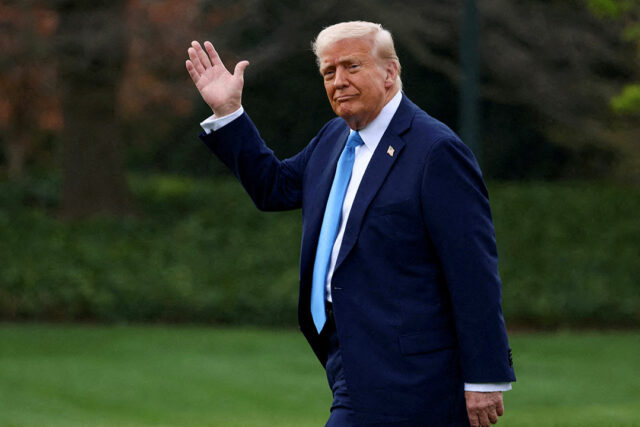
US President Donald Trump — REUTERS

 – U.S. President Donald Trump on Monday began telling trade partners – from powerhouse suppliers like Japan and South Korea to minor players – that sharply higher U.S. tariffs will start August 1, marking a new phase in the trade war he launched earlier this year.

The imposition of the 25% levy on U.S. importers of all goods from key allies Japan and South Korea rattled Wall Street, with the S&P 500 Index knocked back sharply, though markets in Asia were taking the latest news in stride.

The 14 countries sent letters so far, which included smaller U.S. exporters like Serbia, Thailand and Tunisia, hinted at opportunities for additional negotiations while at the same time warning that any reprisal steps would be met with a like-for-like response.

“If for any reason you decide to raise your Tariffs, then, whatever the number you choose to raise them by, will be added onto the 25% that we charge,” Mr. Trump said in letters, released on his Truth Social platform, to Japan and South Korea.

The higher tariffs take effect August 1, and notably will not combine with previously announced sector tariffs such as those on automobiles and steel and aluminum.

That means, for instance, that Japanese vehicle tariffs will remain at 25%, rather than the existing 25% auto sector tariff climbing to 50% with the new reciprocal rate as has occurred with some of Trump’s tariffs.

The clock has been ticking for countries to conclude deals with the U.S. after Mr. Trump unleashed a global trade war in April that has roiled financial markets and sent policymakers scrambling to protect their economies.

Trading partners got another reprieve as Mr. Trump signed an executive order on Monday extending the Wednesday deadline for negotiations to August 1.

Asked if the deadline was firm, Mr. Trump said: “I would say firm, but not 100% firm. If they call up and they say we’d like to do something a different way, we’re going to be open to that.”

Mr. Trump has kept much of the world guessing on the outcome of months of talks with countries hoping to avoid the hefty tariff hikes he has threatened.

The rate for South Korea is the same as Mr. Trump initially announced, while the rate for Japan is 1 point higher than the one announced on April 2. A week later, he capped all of the so-called reciprocal tariffs at 10% until Wednesday. Only two agreements have so far been reached, with Britain and Vietnam, while Washington and Beijing in June agreed on a framework covering tariff rates.

Wendy Cutler, vice president of the Asia Society Policy Institute, said it was unfortunate that Trump was hiking tariffs on imports from two of the closest U.S. allies, but there was still time for a breakthrough in negotiations.

“While the news is disappointing, it does not mean the game is over,” Ms. Cutler said.

Mr. Trump said that the United States would impose 25% tariffs on goods from Tunisia, Malaysia and Kazakhstan; 30% on South Africa, Bosnia and Herzegovina; 32% on Indonesia; 35% on Serbia and Bangladesh; 36% on Cambodia and Thailand and 40% on Laos and Myanmar.

Japanese Prime Minister Shigeru Ishiba said on Tuesday that some progress had been made on avoiding higher tariffs of up to 35% that Trump had suggested recently.

“We have received a proposal from the United States to swiftly proceed with negotiations towards the newly set August 1 deadline, and that depending on Japan’s response, the content of the letter could be revised,” Mr. Ishiba told a meeting with cabinet ministers to discuss Japan’s strategy on the tariffs.

South Korea said it planned to intensify U.S. trade talks and considers Mr. Trump’s latest plan as effectively extending a grace period on implementing reciprocal tariffs.

“We will step up negotiations during the remaining period to reach a mutually beneficial result to quickly resolve the uncertainties from tariffs,” the country’s Industry Ministry said.

South African President Cyril Ramaphosa said the 30% U.S. tariff rate was unjustified given that 77% of U.S. goods enter South Africa with no tariffs. Mr. Ramaphosa’s spokesperson said his government would continue to engage with the U.S.


MARKET DROP

U.S. stocks fell in response, the latest market turmoil as Mr. Trump’s trade moves have whipsawed financial markets and sent policymakers scrambling to protect their economies.

U.S. stocks were driven to near bear-market territory by his cascade of tariff announcements through the early spring but quickly rebounded to record highs after he put the stiffest levies on hold on April 9.

The S&P 500 closed down about 0.8%. U.S.-listed shares of Japanese automotive companies fell, with Toyota Motor closing down 4% and Honda Motor off by 3.9%. The dollar surged against both the Japanese yen and the South Korean won.

“Tariff talk has sucked the wind out of the sails of the market,” said Brian Jacobsen, chief economist at Annex Wealth Management. Most of the announced tariff rates have been rounded down, he added, and the letters come across as “take it or leave it” offers.

U.S. Treasury Secretary Scott Bessent said earlier on Monday he expected several trade announcements in the next 48 hours, adding that his inbox was full of countries’ last-ditch offers.


TRADING BLOCS

The European Union will not be receiving a letter setting out higher tariffs, EU sources familiar with the matter told Reuters on Monday.

The EU still aims to reach a trade deal by Wednesday after European Commission President Ursula von der Leyen and Trump had a “good exchange,” a commission spokesperson said.

The EU has been torn over whether to push for a quick and light trade deal or leverage its economic clout to negotiate a better outcome. It had already given up hopes for a comprehensive trade agreement before the July deadline.

The president also threatened leaders of developing nations in the BRICS group, who are meeting in Brazil, with an additional 10% tariff if they adopt “anti-American” policies.

The group includes Brazil, Russia, India and China among others. – Reuters

Australia’s Albanese confirms China visit as Beijing eyes trade deal review

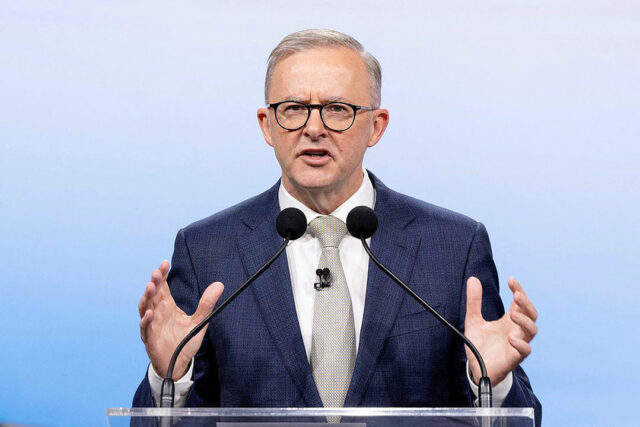
REUTERS

 – Australian Prime Minister Anthony Albanese said on Tuesday that he would visit China from this weekend as Beijing looks to build on partnerships on AI, green energy and the digital economy.

“I look forward to going to Shanghai, Beijing and Chengdu, which I will visit from Saturday,” Mr. Albanese told reporters in Hobart. He did not give more details about his trip.

This would be Mr. Albanese’s second visit to China as prime minister, after his re-election in May.

Mr. Albanese’s first visit to Beijing as Prime Minister in 2023 broke a seven-year freeze in diplomatic ties, and he emphasized the need for communication with China, despite differences between the two trading partners.

Mr. Albanese’s trip comes as China, its largest trading partner, suggested a review of the 10-year-old free trade agreement between the two countries to boost ties in agriculture and mining, and explore growth areas in new technologies.

“We are willing to review the agreement with a more open attitude and higher standard,” Xiao Qian, the Chinese ambassador to Australia, wrote in The Australian Financial Review on Monday.

When asked if Australia would look to expand the free trade deal with China to include AI, Mr. Albanese said: “We will determine our policy.” – Reuters

Netanyahu says any future Palestinian state would be a platform to destroy Israel

Image via Wikipedia

 – Israeli Prime Minister Benjamin Netanyahu said on Monday he wanted peace with Palestinians but described any future independent state as a platform to destroy Israel and for that reason sovereign power of security must remain with Israel.

Speaking at the White House, where he met U.S. President Donald Trump, Mr. Netanyahu described the October 7, 2023, Hamas attack on Israel from the Gaza Strip, where Hamas was in control, as evidence of what Palestinians would do with a state.

Mr. Trump said, “I don’t know” when he was asked by reporters if a two-state solution was possible and referred the question to Mr. Netanyahu.

Mr. Netanyahu said: “After October 7th, people said the Palestinians have a state, a Hamas state in Gaza and look what they did with it. They didn’t build it up. They built down into bunkers, into terror tunnels after which they massacred our people, raped our women, beheaded our men, invaded our cities and our towns, our kibbutzim and did horrendous massacres, the kind of which we didn’t see since World War Two and the Nazis, the Holocaust. So people aren’t likely to say, ‘Let’s just give them another state.’ It’ll be a platform to destroy Israel.

“We will work out a peace with our Palestinian neighbors, those who don’t want to destroy us and we will work out a peace in which our security, the sovereign power of security, always remains in our hands,” Mr. Netanyahu said.

“Now people will say, ‘It’s not a complete state, it’s not a state, it’s not that.’ We don’t care. We vowed never again. Never again is now. It’s not going to happen again.”

Palestinians have long sought to create an independent state in the occupied West Bank, Gaza and East Jerusalem through a U.S.-mediated peace process. Many accuse Israel of having destroyed Palestinian statehood prospects through increased settlement building in the West Bank and by levelling much of Gaza during the current war. Israel rejects this.

Cabinet ministers in Mr. Netanyahu’s Likud party called last week for Israel to annex the Israeli-occupied West Bank before the Knesset recesses at the end of July. Israel’s pro-settler politicians have been emboldened by the return to the White House of Mr. Trump, who has proposed Palestinians leave Gaza, a suggestion widely condemned across the Middle East and beyond.

The Gaza war erupted when Hamas attacked southern Israel in October 2023, killing around 1,200 people and taking 251 hostages, according to Israeli tallies. Some 50 hostages remain in Gaza, with 20 believed to be alive.

Israel’s subsequent assault on the Palestinian enclave has killed over 57,000 Palestinians, according to the Gaza health ministry. Most of Gaza’s population has been displaced by the war.

Mr. Trump hosted Mr. Netanyahu at a White House dinner on Monday, while Israeli officials held indirect negotiations with Hamas in Qatar aimed at securing a U.S.-brokered Gaza ceasefire and hostage-release deal. – Reuters

South Korea to step up US trade talks before tariffs kick in on August 1

 – South Korea said it planned to intensify trade talks with the United States and considered U.S. President Donald Trump’s plan for a 25% tariff from August 1 as effectively extending a grace period on implementing reciprocal tariffs.

U.S. Secretary of State Marco Rubio said the new deadline as set out by Trump in a letter addressed to South Korean President Lee Jae Myung meant there was still time for the countries to work out an agreement, Lee’s office said later.

Mr. Trump said on Monday he would impose the tariff on goods from South Korea starting on August 1, posting the letter to Mr. Lee on his social media platform along with one to Japan’s leader.

South Korea’s Industry Ministry said in a statement that the letter effectively extended a grace period on the implementation of reciprocal tariffs by the United States.

“We will step up negotiations during the remaining period to reach a mutually beneficial result to quickly resolve the uncertainties from tariffs,” it said.

“We also plan to use it as an opportunity to improve domestic systems and regulations to resolve the trade deficit that is a major interest of the United States and advance key industries through a manufacturing renaissance partnership between the two countries,” it said.

South Korea earned a record surplus of $55.6 billion from trade with the U.S. in 2024, up 25% from 2023, led by rising car exports, according to Korea Customs Service data.

Mr. Trump said in the letter to Lee that “our relationship has been, unfortunately, far from reciprocal,” inviting South Korea to present a proposal to open “your heretofore closed trading markets” and eliminate tariff and non-tariff barriers.

South Korea’s effective tariff rates stand at near-zero under a free trade agreement first signed in 2007 then revised in 2018 under Trump’s first term, according to economists.

South Korea’s top trade envoy and the country’s presidential security adviser have travelled to the United States in recent days for trade and defense talks as Asia’s fourth-largest economy raced to seek an exemption from Mr. Trump’s threatened tariffs.

National Security Advisor Wi Sung-lac met Rubio in Washington on Monday to discuss the countries’ alliance and ongoing trade negotiations and agreed that a summit meeting between Lee and Trump would help advance cooperation, Mr. Lee’s office said.

“Tariff letters to major trading partners including South Korea were sent out today but there is still time until tariffs are implemented on August 1 so he hopes the two countries can communicate closely to reach an agreement before that,” Mr. Lee’s office cited Mr. Rubio as saying.

Mr. Trump also appeared to indicate that he was open to negotiation.

Asked if the deadline was firm, Mr. Trump said: “I would say firm, but not 100% firm. If they call up and they say we’d like to do something a different way, we’re going to be open to that.”

South Korea was slow to negotiate for an exemption from Mr. Trump’s tariffs, first agreeing to work out a package deal but holding “technical discussions” before moving to high-level negotiations after Mr. Lee took office in June 4.

Mr. Lee won a snap election after his predecessor’s December martial law declaration, which he said had greatly impaired the country’s response to U.S. trade policy and new tariffs.

The Industry Ministry in the statement conceded it did not have enough time after the start of a new administration in South Korea to reach an agreement with the United States on all issues despite intense negotiations. – Reuters