Home Blog Page 938

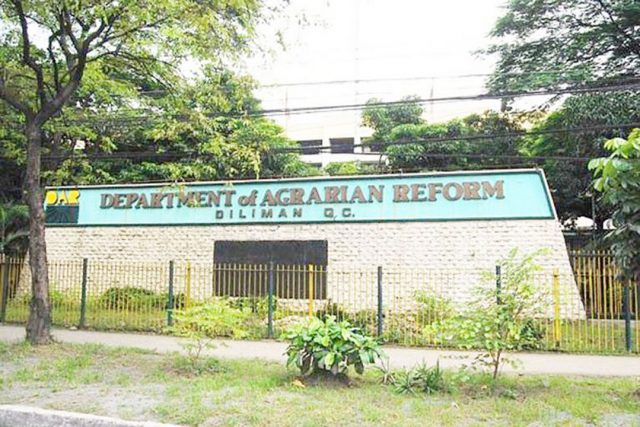
DAR Farm Business School expands to Zamboanga del Norte

FACEBOOK.COM/DARGOVPH

THE Department of Agrarian Reform (DAR) said its Farm Business School program has been expanded to serve farmers in Zamboanga del Norte.

The program hopes to provide farmers with the skills to turn their farms profitable by improving productivity.

Training under the program includes basic courses in business management, financial analysis, and marketing.

The program has been rolled out in Albay, Isabela, Marinduque, and General Santos City. — Andre Christopher H. Alampay

Infin8 Success not authorized to solicit investments — SEC

SEC.GOV.PH

THE Securities and Exchange Commission (SEC) has issued an advisory against Infin8 Success Global and Infin8success-Global Health and Beauty Products Trading, which it said have been soliciting investments without the required registration or license.

In an Aug. 28 advisory, the regulator said Infin8 Success Global has been inviting people to invest money through what appears to be a binary-style marketing system or recruitment-based model, with promises of high returns.

“Per SEC records, INFIN8 SUCCESS GLOBAL/INFIN8SUCCESS-GLOBAL Health and Beauty Products Trading is not registered as a corporation and has no secondary license or authority to solicit investments from the public,” the commission said.

The SEC said Infin8 Success Global operates a physical office, a website, and other digital platforms.

Upon checking, the company’s website displayed limited information and did not specify the nature of its business.

“We bring several years of experience in different fields of excellence — in both worlds of multi-level marketing and distribution. We offer our expertise in developing excellent and effective products,” Infin8 Success Global said on its “About Us” page.

“We take care of each distributor, identify their needs and help them succeed. Our excellent programs and training directions will help them achieve their goals and help others do the same.”

The regulator said that company registration alone does not grant authority to solicit investments from the public.

Republic Act No. 8799, or the Securities Regulation Code, requires entities engaged in the business of buying or selling securities — including investment contracts — to first secure a secondary license from the SEC.

In its advisory, the SEC reminded the public to exercise caution when dealing with entities that offer or promise earnings that appear “too good to be true.”

It also advised the public not to invest, or to immediately discontinue investing, in such schemes, as unauthorized solicitation may result in administrative, civil, and criminal charges.

Infin8 Success Global has yet to respond to BusinessWorld’s request for comment sent through its publicly available contact information. — Alexandria Grace C. Magno

Armani’s fashion legacy celebrated at Milan retrospective

GIORGIO ARMANI. Milano per amore, Pinacoteca di Brera — AGNESE BEDINI, MELANIA DALLE GRAVE/DSL STUDIO/PINACOTECABRERA.ORG

MILAN — A retrospective celebrating half a century of Giorgio Armani’s work opened at a Milan museum on Wednesday, showcasing more than 100 creations including rare dresses and suits that defined the legendary Italian designer’s understated elegance.

Mr. Armani, known in the fashion world as “King Giorgio,”  died earlier this month at the age of 91 in Milan, a city with which he had a deep personal and professional connection.

The exhibition, which started during Milan Fashion Week and runs through January, was curated with Mr. Armani’s direct input and coincides with the label’s 50th anniversary.

It set the tone for a week that blended mourning with celebration, culminating in a runway show of Armani’s spring collection on Sunday evening at the Brera art museum, where the exhibition is also being held.

Garments including striking blue and red dresses are set among Italian art masterpieces from the Middle Ages to the 19th century.

“Armani’s aesthetic rigor is also an ethical rigor, like that of the greats of the past,” museum director Angelo Crespi said.

The retrospective marks the end of an era — and the beginning of a new chapter for the iconic brand.

Mr. Armani remained fiercely independent throughout his career, resisting takeover approaches and a stock market listing. In his will, however, he instructed heirs to sell the company in two phases, naming French luxury conglomerate LVMH, beauty giant L’Oréal, and eyewear heavyweight EssilorLuxottica as possible buyers.

Until then, the business remains in the hands of Mr. Armani’s closest family members and confidants, including longtime collaborator Pantaleo Dell’Orco, who will oversee the transition alongside a foundation created by the designer. — Reuters

Tax breaks for the tobacco industry will be a blow to public health and revenue

STOCK PHOTO | Image by Atlascompany from Freepik

In July, the new House Ways and Means Committee chair of the 20th Congress, Representative Miro Quimbo of the second district of Marikina, filed House Bill (HB) 1316, a bill “strengthening the administration of excise taxes on tobacco and vape products.”

HB 1316 is almost identical to the Anti-Illicit Tobacco Trade Bill of the 19th Congress, supported by health advocates and co-authored by Rep. Miro’s wife, then-Rep. Stella Quimbo, former Ways and Means Chair Rep. Joey Salceda, and Anakalusugan Party-list Rep. Ray Florence Reyes, numbered HB 11286 and passed on third reading earlier this year.

HB 11286 strengthens enforcement to mitigate illicit tobacco trade by establishing a comprehensive track and trace system, raising penalties on illicit tobacco trade, requiring registration of equipment and manufacturing-related items for tobacco and vape products, and creating an inter-agency body for strengthened enforcement. The bill was supported by health advocates, recognizing that illicit cigarettes and vape products are priced dangerously low and therefore much more accessible to the youth. More importantly, health advocates recognized that rather than simply increasing the penalties for illicit trade, HB 11286 increases the likelihood of apprehension by strengthening enforcement.

However, advocates are concerned over Section 7 of Rep. Miro Quimbo’s new bill, which was not present in HB 11286: a proposal to insert a section in the National Internal Revenue Code (NIRC) to allow tobacco/vape/HTP manufacturers, importers or sellers to claim losses directly attributable to illicit trade as deductible expenses under Section 34(D) of the NIRC.

This is an incredibly misguided proposal that will erode government revenues and will only benefit the tobacco industry.

Section 34(D) of the Tax Code provides the allowable conditions under which businesses can claim losses, including losses arising from fires or other casualties or robbery. It also requires that businesses present proof of these losses. Allowing tobacco companies to prove that losses are directly attributable to illicit trade is extremely difficult to carry out, as there is no objective method to determine a company’s losses due to illicit trade. The gap in prices between illicit tobacco and licit tobacco is so huge that one cannot prove that even consumers of a counterfeit or illicit brand would have otherwise bought a specific brand of more expensive, licit cigarettes.

Further, if we’re talking about fairness, granting tax deductions to the tobacco industry to compensate for losses from illicit trade means that all other industries, big and small, that suffer losses arising from illicit trade, should be given the same tax deductions as well. Implementing this provision would be extremely complicated and easy to game on behalf of businesses seeking tax breaks.

This proposal may also lead to the perverse incentive of the tobacco industry overestimating illicit trade to generate more profits. In fact, as shown in the past, registered tobacco companies themselves are also engaged in illicit trade. Global evidence and our own experience with the Mighty tax evasion case in 2017 show that the tobacco industry itself is often complicit in illicit trade. The industry cannot be trusted with their narrative on illicit trade, and we cannot give them the leeway to possibly manipulate the figures on illicit trade for their own benefit.

Rather than being given tax breaks, the tobacco industry should be made to shoulder the immense costs that smoking causes our economy. In 2023, there were a total of 89,000 tobacco-related deaths in the Philippines, according to the Philippine Statistics Authority. This translates to one Filipino dying of a tobacco-related illness every six minutes. According to Dr. Antonio Dans, the Philippines loses at least P380 billion per year due to smoking. Tobacco tax revenues have not even recouped half of the amount lost due to all those who get sick, are unable to work, and pass away due to tobacco-related diseases.

Lastly, the proposal to give tax breaks to the tobacco industry is most irresponsible in any situation. Smoking cigarettes, licit or illicit, is bad for health. And tax breaks, especially to an industry that manufactures harmful products, will mean significant revenue losses that will worsen an already serious fiscal problem.

The public should not be made to pay for this.

The Miro Quimbo bill that will allow tax deduction to the tobacco industry will not solve illicit tobacco trade. It will make the situation worse: abetting illicit tobacco trade and fattening the profits of the registered tobacco companies.


Pia Rodrigo is strategic communications officer at Action for Economic Reforms.

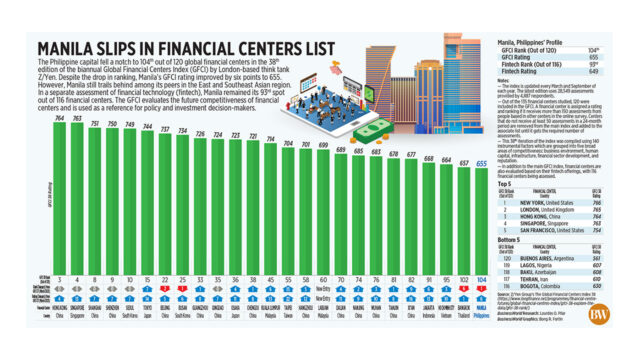
Manila Slips in Financial Centers List

The Philippine capital fell a notch to 104th out of 120 global financial centers in the 38th edition of the biannual Global Financial Centers Index (GFCI) by London-based think tank Z/Yen. Despite the drop in ranking, Manila’s GFCI rating improved by six points to 655. However, Manila still trails behind among its peers in the East and Southeast Asian region. In a separate assessment of financial technology (fintech), Manila remained its 93rd spot out of 116 financial centers. The GFCI evaluates the future competitiveness of financial centers and is used as a reference for policy and investment decision-makers.

Manila Slips in Financial Centers List

BSP bills’ rates rise on weak demand

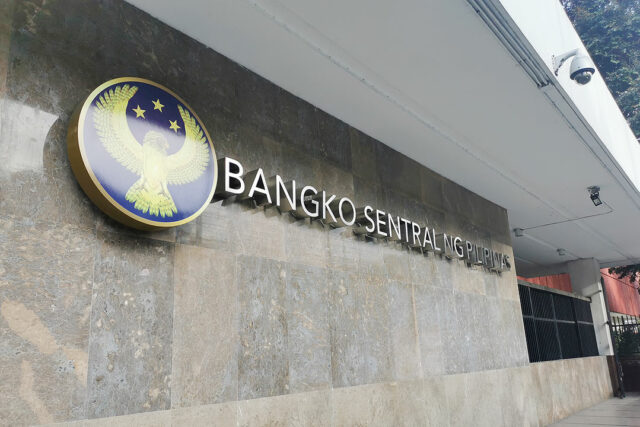
Bangko Sentral ng Pilipinas main office in Manila. — BW FILE PHOTO

YIELDS on the Bangko Sentral ng Pilipinas’ (BSP) short-term securities inched higher on Friday as both tenors went undersubscribed after the offer volume was increased.

The BSP bills attracted only P86.339 billion in total bids, below the P100 billion auctioned off but slightly above the P86.003 billion in tenders for the P80-billion offer a week prior. The central bank accepted all the submitted bids for a partial award.

Broken down, tenders for the 28-day BSP bills reached P35.042 billion, lower than the P40 billion placed on the auction block but higher than the P30.119 billion in demand for the P30-billion offer the prior week.

Accepted yields were from 5.25% to 5.4%, a tad wider than the 5.255% to 5.4% margin seen a week prior. This caused the average rate of the one-month securities to go up by 1.01 basis points (bps) to 5.3555% from 5.3454% previously.

Meanwhile, bids for the 56-day bills totaled P51.297 billion, below the P60-billion offer and the P55.884 billion in tenders for the P50 billion auctioned the previous week.

Banks asked for rates from 5.265% to 5.34%, wider than the 5.29% to 5.34% band last week. With this, the weighted average accepted yield of the two-month papers edged up by 0.08 bp to 5.3114% from 5.3106%.

The central bank uses the BSP securities and its term deposit facility to mop up excess liquidity in the financial system and to better guide short-term market rates towards its policy rate.

The BSP bills also contribute to improved price discovery for debt instruments while supporting monetary policy transmission, the central bank said.

The short-term securities were calibrated to not overlap with the Treasury bill and term deposit tenors also being offered weekly.

The BSP bills are considered high-quality liquid assets for the computation of banks’ liquidity coverage ratio, net stable funding ratio, and minimum liquidity ratio. They can also be traded on the secondary market.

Data from the central bank showed that around 50% of its market operations are done through its short-term securities.

BSP Governor Eli M. Remolona, Jr. earlier said that they are gradually shifting away from the issuance of short-term papers in their liquidity management operations as they want to boost activity in the money market. — Katherine K. Chan

The Subaru Forester goes hybrid

The all-new Subaru Forester still gets the brand’s vaunted symmetrical all-wheel-drive system.

Electrified SUV is priced from P2.498 million

MOTOR IMAGE PILIPINAS, INC. (MIP) recently launched the sixth-generation Subaru Forester, said to boast a “strong hybrid system delivering over 1,000 kilometers of range and uncompromised capability.”

In a release, the distributor added that the Forester blends advanced, eco-conscious performance “with Subaru’s legendary Symmetrical All-Wheel Drive (SAWD),” new-generation safety technologies, and an array of premium comfort features.

The e-Boxer strong hybrid powertrain yields benefits in efficiency and performance while delivering quiet operation and highlighting the “unique driving feel of a Subaru.” The intelligent, self-charging system requires no plugging in. “The system intelligently draws power from either engine, motor or both — ensuring optimal power and efficiency in all conditions,” said MIP.

At low to mid speeds, the vehicle operates on EV Drive mode — electric-only power giving silent, zero-emission urban driving — and switches to the internal combustion engine during highway driving. The electric motor assists during acceleration and hill climbing for a responsive “e-Turbo” feel and “an overall smooth, linear driving experience.”

The powertrain is comprised of a 2.5-liter horizontally opposed, four-cylinder, DOHC 16-valve Subaru Boxer engine with a “powerful electric motor” integrated into the transmission. With the Forester’s 63-liter fuel tank, the setup is expected to deliver a maximum range surpassing the aforementioned 1,000 kilometers per full tank of gas.

An updated Lineartronic transmission integrates the drive motor, power-generation motor, front differential, and electronically controlled coupling into a single compact unit. This efficient design maintains Subaru’s balanced weight distribution while maximizing energy utilization for powerful acceleration and enhanced quietness. A new electric compressor ensures that the air-conditioning system remains running even when the engine is off at idle, maintaining cabin comfort in situations such as stop-and-go traffic.

Chassis rigidity has been improved by 10% versus the outgoing version through a full inner frame construction and the wider use of structural adhesives. “This minimizes vibrations and reduces sudden body movements, providing a unified feel of steering and vehicle stability on any road. A specially designed suspension further improves ride comfort and handling,” added MIP.

The Forester retains its famous symmetrical all-wheel-drive (SAWD) system even as it is paired with the new hybrid system. Ground clearance measuring 220 millimeters is complemented by dual-function X-Mode, which “offers reliable support on rough terrain and makes it easier to free the vehicle from mud. Hill descent control is also included to help maintain a constant speed on slippery downhills.”

Inside is an 11.6-inch full-HD infotainment display which serves as the vehicle’s “intuitive command center.” Content can be enjoyed through an 11-speaker (including a subwoofer) Harman/Kardon audio system with an eight-channel amplifier. The system features wireless Apple CarPlay and Android Auto connectivity. A Qi wireless charging pad accepts compatible devices. Front Type A and Type C ports are available, as well as rear USB power ports.

The latest generation of Subaru’s driver assist technology, EyeSight 4.0, now uses a wide-angle monocular camera, significantly expanding the detection range for pedestrians and bicycles. Nine preventive safety functions are on tap: Lane Centering Function, Lane Departure Prevention, Lane Departure Warning, Lane Sway Warning, Autonomous Emergency Steering, Pre-Collision Throttle Management, and Lead Vehicle Start Alert, as well as Pre-Collision Braking and Adaptive Cruise Control, which have been improved for better performance.

The all-new Subaru Forester is available as the Forester 2.5i-S EyeSight e-Boxer Hybrid, with indicative pricing beginning at P2.498 million. For final pricing and model specifications, customers may contact the nearest authorized Subaru retailer. MIP also announced a renewed commitment to its customers with significant improvements to its after-sales services. “This enhancement promises a seamless journey for every customer, ensuring that every Subaru owner receives exceptional support and peace of mind long after their purchase,” concluded the release.

Brazil coffee exports to US seen declining further if tariffs stay

REUTERS

VITORIA, Brazil — Brazil coffee exports to the US will fall further if US tariffs remain in place, Marcio Ferreira, the head of exporter group Cecafe said, adding the industry was pleased by warming relations between the leaders of the two countries.

US President Donald J. Trump imposed a 50% tariff on Brazilian coffee and other goods, which came into effect in early August, amid tensions between his administration and the government of Brazilian President Luiz Inacio Lula da Silva.

As a result, Cecafe reported that the US was no longer Brazil’s biggest market as coffee sales there fell 46% in August, compared with the year before, when Brazil saw record exports. Through Sept. 19, exports to the US were down a further 20% versus their level in August, Mr. Ferreira told Reuters.

If tariffs continue, exports “will keep falling,” said Mr. Ferreira, who also works as the superintendent of Tristao Trading, a leading exporter of Brazilian coffee.

Only a shift in policy could revive sales, he said, adding that the industry was encouraged by the positive exchange between Mr. Trump and Mr. Lula at the United Nations this week.

US tariffs on goods from Brazil, the world’s largest coffee producer and exporter, have upended the global coffee market, pushing prices upwards.

In the short to medium term, the tariff restrictions may be good for producers, who have benefited from higher prices, Mr. Ferreira said, but added that exporters, roasters, and consumers are suffering.

Some producers are holding on to their stock, betting prices will return towards recent records, said Valdecir Schmidt, warehouse manager for Cooabriel, Brazil’s biggest cooperative of Conilon, a type of coffee related to robusta.

“We have a very high stock level for this time of year,” he said. “Last year, we didn’t even have half of what we’re seeing now, in the month of September.”

As US purchases shrink, exports to other countries are growing. According to Cecafe, total coffee exports to Colombia soared 578% in August.

Cooabriel’s Conilon exports to Colombia — itself a major arabica coffee producer — increased 300%, said Jose Carlos Azevedo, the cooperative’s sales manager, adding that places like Italy and Britain had also increased demand.

Still, the US market is too big for other countries to replace, Mr. Ferreira said. If tariffs remain in place for too long, Americans could grow used to other types of coffee, making it harder for Brazilian companies to recover their position in the US market in the future, he added.

“It’s time to get the kids out of the room and get the adults in to negotiate,” he said. — Reuters

Green Equity tag seen to boost visibility of ESG-focused companies

ACENRENEWABLES.COM

By Alexandria Grace C. Magno

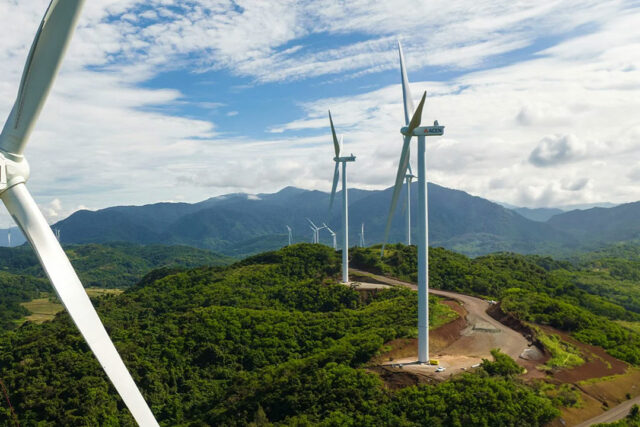
THE Securities and Exchange Commission’s (SEC) issuance of Green Equity label guidelines is expected to boost the visibility of environmentally focused companies and attract investors seeking opportunities aligned with environmental, social, and governance (ESG) standards, analysts said.

“The Green Equity label could give more visibility to green companies, especially for ESG investors,” AP Securities, Inc. Research Head Alfred Benjamin R. Garcia said in a Viber message on Friday.

“Typically, companies with accreditations like this can command a premium valuation, so this could benefit a few listed companies, notably Acen Corp. (ACEN) and SP New Energy Corporation (SPNEC) to name a few,” he added.

Rizal Commercial Banking Corp. Chief Economist Michael L. Ricafort said the move aligns with the global trend toward ESG standards and encourages businesses to follow sustainable practices, which may increase their value.

“The initiative is consistent with the greater shift to ESG standards. Global regulators encourage investors to patronize businesses, entities, and countries that adhere to ESG standards,” he added.

Under Memorandum Circular No. 13, series of 2025, companies listed or preparing to list on the Philippine Stock Exchange may apply for the Philippine Green Equity label.

To qualify, over half of their revenues and capital and operating expenditures must come from or be directed toward green activities, as defined by the Philippine Sustainable Finance Taxonomy Guidelines or the ASEAN Taxonomy for Sustainable Finance. Revenues from fossil fuel-related operations must remain below 5%.

To ensure transparency, the SEC requires applicants to submit an external review assessment report that will be publicly accessible.

The Philippine Stock Exchange will also conduct annual evaluations of label holders to verify ongoing compliance with the standards.

SEC Chairperson Francisco Ed. Lim said the Green Equity guidelines are a game-changing initiative that will help develop the capital market, boost liquidity, and support the country’s climate goals.

“Since compliance with ESG standards signals good business, more companies and governments around the world commit to reducing carbon footprints and implementing sustainability measures,” Mr. Ricafort said.

The Green Equity label guidelines are part of the SEC’s sustainable finance framework, offering an equity-based option alongside the P1.02-trillion sustainable finance fixed-income market for green investments.

Regina Capital Development Corp. Head of Sales Luis A. Limlingan said: “[Having a Green Equity label] may help [attract investors], but I still think more initial public offerings (IPOs), a stable global geopolitical landscape, and better earnings clarity would equally or better attract investors.”

Gucci: All in the family

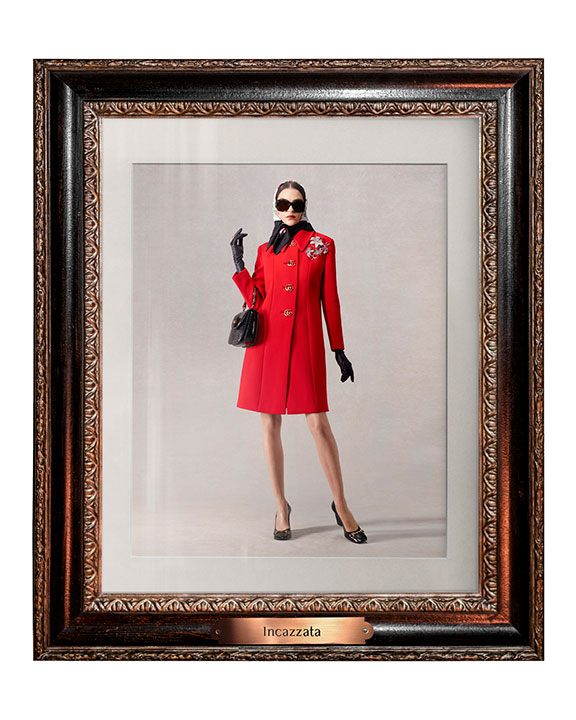
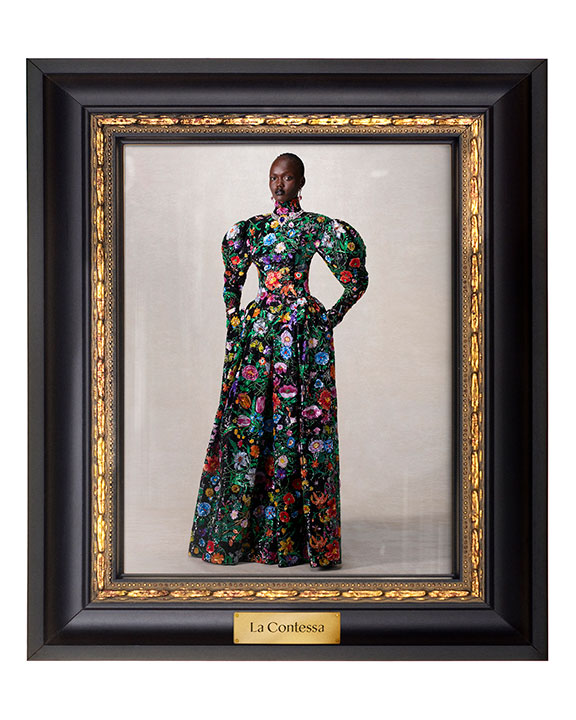
GUCCI’S new collection, called “La Famiglia” (The Family in Italian) “is a study of the ‘Gucciness’ of Gucci, an expression of the brand as a mindset and a shared aesthetic language,” said a statement. La Famiglia marks Gucci’s return to storytelling, going back to the future by way of the past, defining the aesthetic base upon which designer Demna’s Gucci vision will be built leading up to his first show in February.

It reinterprets the House’s codes through framed portraits of an extended Gucci family, captured by Catherine Opie, made up of singular personalities and distinctive aesthetic attitudes: the different facets of Gucci’s personas.

The lookbook opens with L’Archetipo, a monogrammed travel trunk that highlights the House’s origins as a valigeria (leather goods store or factory), followed by the Incazzata (a rough translation has to do with being incensed with anger) in a 1960s-style little red coat that reflects her fiery demeanor. La Bomba’s (the bombshell) volatile feline sass is mirrored by her stripes, and La Cattiva (the naughty girl) embodies the severe elegance of a femme fatale. Miss Aperitivo is simply preoccupied with having the time of her life, while L’Influencer embodies the social media fashion enthusiast. La Mecenate, La Contessa, Sciura, and Primadonna exude refined Italian elegance, while Principino and La Principessa capture two sides of the same coin: the center of attention — these are all mostly Italian archetypes found in literature, media, or even in the home.

The collection includes slingback kitten heels and soft leather mules; while heritage signatures are revisited and revived. The Gucci Bamboo 1947 bag, a 78-year-old signature, is re-proportioned, alongside the Horsebit loafer, a House icon since 1953. The Flora motif appears as is or reimagined in a nocturnal incarnation. The GG Monogram, Guccio Gucci’s initials, appears throughout, worn with head-to-toe abandon, from lens to loafer.

Silhouettes span extremes, from the maximalist grandeur of a feathered opera coat and high jewelry to the neo-minimal sensuality of seamless hosiery garments. Dressing for pleasure is emphasized, and glamour is carried over into menswear. The elegance of eveningwear is applied to transparent bodycon sets and sophisticated black-tie swimwear. — JLG

Meta’s chatbot scandal is really a culture problem

FREEPIK

By Gautam Mukunda

“MOVE FAST and break things.” If there’s a single corporate motto you can identify off the top of your head, that’s probably the one. At this point, Meta Platforms, Inc. Chief Executive Mark Zuckerberg probably regrets its existence, but there’s plenty of evidence that he — and the company — are still okay with the idea of doing some damage on their way to success.

One of the most recent examples is a Reuters investigation, which found that Meta allowed its AI chatbots to, among other things, “engage a child in conversations that are romantic or sensual.” That reporting was a topic at a Senate hearing last week on the safety risks such bots pose to kids — and underlines just how dangerous it is when AI and toxic company cultures mix.

Meta’s chatbot scandal demonstrates a culture that is willing to sacrifice the safety and well-being of users, even children, if it helps fuel its push into AI. The technology’s proponents, including Zuckerberg, believe it has limitless potential. But they also agree that it will, as the Meta CEO has said, “raise novel safety concerns.” One reason the risks from AI systems are so hard to manage is that they are inherently probabilistic. That means even small changes to their inputs can produce large changes in their outputs. This makes it wildly difficult to predict and control their behavior.

Here’s where the importance of a “safety culture” comes in. At companies that have one, safety is always the first priority. Everyone in the organization has the unquestioned right to raise concerns about safety, no matter how junior they are or how inconvenient or expensive resolving the problems they raise might be.

If you know exactly what a system will do, you can push it close to the edge. But with a technology as unpredictable as AI, companies must be more cautious, steering away from gray areas. And that level of caution is a product of culture, not formal rules.

Boeing used to have a culture like that. When it was building the 707, for example, chief test pilot “Tex” Johnston recommended a very costly redesign of the plane’s tail and rudder to correct an instability that could occur if a pilot exceeded the maximum bank angle Boeing recommended in the manual. The chief engineer’s response? “We’ll fix it.” And Boeing assumed the entire cost of the change, rather than push it off onto its customers. Decades later, Boeing management’s obsessive focus on cost-cutting eroded that focus on safety so much that critical safety flaws in the 737 Max-8 were ignored until two planes crashed and 346 people died.

The Reuters report provides a window into what a safety culture is not. It includes content from a Meta document titled “GenAI: Content Risk Standards,” which explicitly states that an AI chatbot may “describe a child in terms that evidence their attractiveness” or tell someone with Stage 4 colon cancer that it “is typically treated by poking the stomach with healing quartz crystals.” Meta revised the document after Reuters asked about it, but that’s not the point. Documents don’t create culture. They are a product of culture. And one so comfortable with harming its users in the pursuit of growth or profits makes a dangerous outcome inevitable.

Meta’s chatbots will only be safe if the company commits to reforming its culture. What would that effort look like? One model could be the transformation Anglo American CEO Cynthia Carroll made at the South African mining giant from 2007-2013. When Carroll took over, the company was averaging 44 fatalities every year. By the time she stepped down that number had dropped by 75%. Her change effort is such a gold standard that it is taught at business schools around the world.

Carroll began by shutting down the company’s Rustenberg platinum mine and retraining everyone who worked there. It was the world’s biggest platinum mine and had five fatal accidents in her first months as CEO. The shutdown cost Anglo American $8 million per day; real money, even for a company of its size.

This was an unambiguous signal to the whole company. Talk, after all, is cheap. Any CEO could say “safety is our number one priority” and be ignored by workers who had heard it before. But putting $8 million per day on the table was a costly — and therefore credible — signal. Carroll backed it up by keeping up the pressure for six more years, putting safety at the center of everything from reformulating promotion and compensation standards to relations with unions and the government.

Zuckerberg could do something similar. He should start by freezing the rollout of Meta’s AI chatbots until it is possible to guarantee that any child could use one in total safety. (Most people would agree, I think, that keeping kids from being propositioned by AI is the bare minimum.) And he could put real force behind that by lobbying for strict government regulations on AI chatbots, and steep penalties for violating them. Meta could reorient pay and promotion so that AI safety, not usage or profitability, is the key factor in determining employee rewards.

If you’re struggling to imagine the Meta CEO doing any of this, that’s probably because it would absolutely have near-term costs. In the long run, however, I’d argue Meta would benefit. Think, for example, of the famous case where Johnson & Johnson pulled Tylenol off the shelves when some of the bottles were poisoned. In the short term, it cost the company millions. In the long run, it secured its reputation as a trusted, and even loved, company — a commodity money can’t buy. It’s also worth remembering that companies can’t survive without a social license to operate; in other words, without the public’s acceptance. It’s hard to think of a better way to lose that than a rogue AI that endangers kids.

Then there’s the vicious fight for AI talent. As a top artificial intelligence scientist, wouldn’t you be more likely to choose an employer that will encourage you to prioritize ethics and safety in your work? At this moment when every major AI company is facing scrutiny, taking the lead on safety could actually be Meta’s best path to taking the lead on AI.

BLOOMBERG OPINION

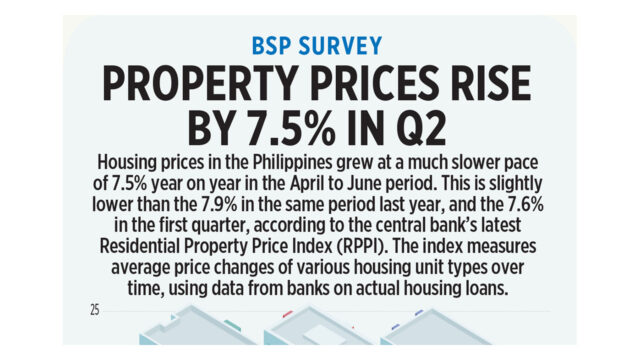
BSP Survey: Property Prices Rise by 7.5% in Q2

Philippine housing prices increased in the second quarter as consumers were less pessimistic about purchasing residential properties, the Bangko Sentral ng Pilipinas (BSP) reported. Read the full story.

BSP Survey: Property Prices Rise by 7.5% in Q2

ADVERTISEMENT
ADVERTISEMENT