Home Blog Page 880

Philippines at higher risk of AI-driven cyberattacks, says expert

FLATART-FREEPIK

The Philippines’ high internet and social media penetration, coupled with its large business process outsourcing (BPO) sector, puts the country at greater risk of artificial intelligence (AI)-driven cyberattacks, according to an expert.

The country’s nearly nine hours of average daily internet use, among the highest in the world, and its 97.5 million internet users make Filipinos highly vulnerable to AI-driven data breaches, said Ram Vaidyanathan, chief information technology security evangelist at ManageEngine, an India-based IT management company, citing the 2025 Meltwater report.

He added that all sectors are at risk of data breaches, as cyberattacks have become more convincing with the use of AI.

“This risk factor is heightened because, now with AI coming to the fore, you have more and more cases of deepfakes going around, even for professionals,” Mr. Vaidyanathan said in an interview via Zoom.

He also noted that the country’s large Business Process Outsourcing (BPO) sector is among the most vulnerable to AI-driven data breaches, as the industry handles sensitive information that is highly attractive to the perpetrators of these cyberattacks.

Globally, nearly nine out of ten (86%) business leaders responsible for cybersecurity have experienced at least one AI-related attack in the past 12 months, Mr. Vaidyanathan said, citing the 2025 Cisco Cybersecurity Readiness Index.

Most AI-driven breaches involve data poisoning, where attackers manipulate training datasets, deepfake videos, and phishing attacks delivered through email and SMS.

“Now gone are the days when you could just look at an email and you would see these grammatical mistakes or spelling mistakes,” Mr. Vaidyanathan said.

“Nowadays, what is happening is that AI is being used to research the targets before a cybercriminal campaign is launched. So these emails tend to be very compelling and very convincing,” he added.

To strengthen organizations against AI-driven cyber threats, Mr. Vaidyanathan recommends adopting a zero-trust framework, educating employees about these AI-driven threats, and using counterpart AI tools for early threat detection and response.

He also emphasized the integration of proactive measures, especially for sectors handling sensitive data like the BPO industry.

On the policy side, he said the Department of Information and Communications Technology (DICT) should enforce stronger and deeper collaboration between the government and the private sector, Mr. Vaidyanathan said. — Edg Adrian A. Eva

Magnitude 4.8 quake hits La Union, felt in parts of Luzon

PHIVOLCS

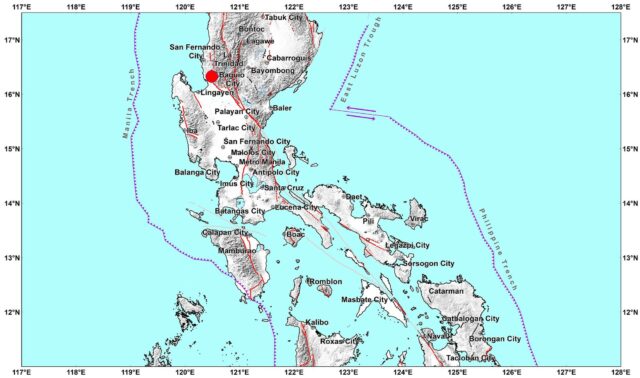
A magnitude 4.8 earthquake struck La Union on Thursday morning and was felt in the province and nearby areas, according to the Philippine Institute of Volcanology and Seismology (PHIVOLCS).

The tremor’s epicenter was located about two kilometers north-northeast of Pugo town, La Union, and occurred at 10:30 a.m. at a depth of 10 kilometers.

PHIVOLCS said the earthquake was felt in several areas in Luzon, with Intensity V reported in Baguio City; Intensity III in Aringay, La Union; Bontoc, Mountain Province; and Sison, Pangasinan.

Meanwhile, Intensity II was registered in San Fernando, La Union; Nampicuan, Nueva Ecija; and Dagupan City. Intensity I was noted in Lingayen and Urdeneta, Pangasinan.

The state seismology agency said that damage may be expected following the earthquake, but no aftershocks are anticipated. — Edg Adrian A. Eva

DPWH flags 421 ‘ghost’ projects in nationwide audit

PHILIPPINE STAR/RYAN BALDEMOR

The government has found 421 “ghost” infrastructure projects across the Philippines after validating about 8,000 public works, the Department of Public Works and Highways said on Thursday, marking one of the biggest corruption red flags uncovered under the Marcos administration.

“Out of the 8,000 projects validated nationwide, 421 were confirmed as ghost projects,” Public Works Secretary Vincencio B. Dizon told a livestreamed news briefing. The projects were validated by the Armed Forces of the Philippines (AFP), Department of National Defense (DND) and Department of Economy, Planning and Development.

The findings are part of an expanding probe into irregularities in flood-control projects, which have drawn scrutiny from the Independent Commission for Infrastructure (ICI). The DPWH is working with the ICI, military and police to trace possible fund diversions and determine accountability.

ICI Executive Director Brian Keith F. Hosaka said the commission is reviewing procurement thresholds to curb public fund misuse.

“At present, the district level has a P150-million limit for civil works procurement, while the regional level holds a P400-million threshold,” he told the same briefing. “The ICI’s suggestion is to split these limits in half so we can better control DPWH civil works procurement.”

The audit and review come as the Marcos administration intensifies its anti-graft campaign following public outrage over fake infrastructure projects allegedly funded through congressional insertions.

Mr. Dizon said both agencies would tighten validation systems to prevent ghost projects from being approved or paid in future budgets. — Erika Mae P. Sinaking

Fed last month saw rising risks to job market, but remained wary on inflation

View of the facade as construction continues on the Federal Reserve Board Building in Washington, DC, Sept. 17, 2025. — REUTERS/KEN CEDENO

WASHINGTON – Federal Reserve officials agreed at their recent policy meeting that risks to the US job market had increased enough to warrant an interest rate cut, but remained wary of high inflation amid a debate about how much borrowing costs were weighing on the economy, minutes of the September 16-17 session showed on Wednesday.

“Most participants observed that it was appropriate to move the target range for the federal funds rate toward a more neutral setting because they judged that downside risks to employment had increased,” said the minutes, which captured the emerging discussion between Fed officials most concerned about protecting the labor market and relatively unconcerned now about inflation, including new Governor Stephen Miran, and those who see signs of inflation remaining persistently above the US central bank’s 2% target.

Yet at the same time “a majority of participants emphasized upside risks to their outlooks for inflation, pointing to inflation readings moving further from 2%, continued uncertainty about the effects of tariffs,” and other factors, the minutes said.

The result was that while “most judged that it likely would be appropriate to ease policy further over the remainder of this year,” the timing and pace of further moves remained in question within the Fed’s divided policy-setting committee.

“Some participants noted that, by several measures … monetary policy may not be particularly restrictive, which they judged as warranting a cautious approach” toward further rate cuts, the minutes said.

“A few participants” said there was “merit” in keeping the policy rate steady, while at the other end of the spectrum “one” of them advocated a larger half-percentage-point cut.

Miran, who is on leave from his job as a top White House economic adviser, dissented in favor of a larger half-percentage-point cut, with more to follow at upcoming meetings.

“There’s a lot of squawking and squabbling at the Fed. Where they stand depends on whether they fear the risk they know, a slowing labor market, or the risk they don’t know, the possibility of inflation expectations moving higher,” said Brian Jacobsen, chief economist at Annex Wealth Management. “The risks to growth are growing while the risks to inflation are the same as they were or falling. If September’s cut was a risk-management cut, it would be hard to argue they shouldn’t cut again in October.”

NEARLY EVEN SPLIT AMONG FED POLICYMAKERS
The Fed cut its benchmark policy rate by a quarter of a percentage point to the 4.00%-4.25% range at its meeting last month.Updated projections showed the median policymaker expected two more such cuts through the Fed’s two remaining meetings this year.

The projections, however, showed a nearly even split among the 19 participants at the meeting, with nine of them anticipating two cuts and Miran seeing several more, and the remaining nine seeing only one or no further cuts.

Investors have set their expectations for two cuts, but the minutes showed a textured debate over the risks facing the US economy and over just how much restraint current policy is actually having on investment and spending.

Speaking to reporters after the end of last month’s meeting, Fed Chair Jerome Powell said monetary policy remained at a “clearly restrictive level,” though he remained noncommittal about further reductions in rates.

The Fed’s next policy meeting is slated for October 28-29, with another quarter-percentage-point rate cut anticipated by financial markets. The analysis and commentary since last month’s meeting, however, have been complicated by a federal government shutdown that has delayed release of the September jobs report and could postpone publication of the next round of consumer price data scheduled for next week. — Reuters

IMF chief says global economy doing ‘better than feared,’ downside risks dominate

Shipping containers in the port of Barcelona are seen behind a cross in Barcelona, Spain, April 3, 2025. — REUTERS/NACHO DOCE

WASHINGTON – The world economy has proven more resilient than expected despite acute strains from multiple shocks, the head of the International Monetary Fund said on Wednesday, forecasting only a slight slowing of global growth this year and in 2026.

IMF Managing Director Kristalina Georgieva said recent economic data showed a softening in the US economy, but it had dodged a recession feared by many experts just six months ago.

The US economy and many others had held up, given better policies, a more adaptable private sector, less severe import tariffs than feared – at least for now – and supportive financial conditions, she told an event hosted by the Milken Institute in Washington.

“We see global growth slowing only slightly this year and next. All signs point to a world economy that has generally withstood acute strains from multiple shocks,” Georgieva said in a preview of the IMF’s upcoming World Economic Outlook to be released next Tuesday during the annual meetings of the IMF and the World Bank.

In July, the IMF raised its global growth forecast by 0.2 percentage point to 3.0% for 2025 and by 0.1 percentage point to 3.1% for 2026.

Georgieva told Reuters in an interview the fresh outlook would reflect a small downward revision from the 3.2% growth forecast last October, but gave no exact numbers.

“What we are seeing is demonstrable resilience in the world,” she said. “But we are also saying it is a time of exceptional uncertainty and downside risks are still dominating the forecast. So watch it, don’t get too comfortable.”

Next week’s gathering takes place at a time when President Donald Trump has upended global trade with steep tariffs and cracked down on immigration, and artificial intelligence is rapidly transforming technology and the outlook for labor.

The world economy is doing “better than feared, but worse than needed,” Georgieva said in her speech, noting the IMF was forecasting global growth of roughly 3% over the medium-term, well below the 3.7% forecast before the COVID-19 pandemic.

She cited deep undercurrents of marginalization, discontent and hardship around the world, and said the global economy faced an array of risks, including a potential market bubble around artificial intelligence.

Uncertainty is at exceptionally high levels and continuing to climb, while demand for gold – a traditional safe-haven asset – is surging, Georgieva said.

Gold hit another record high on Wednesday, surging past $4,000 an ounce for the first time, as a US government shutdown persisted and expectations for a Fed rate cut this month boosted demand. She said the IMF saw scope for further monetary easing this year.

Georgieva said the US tariff shock has been less severe than initially announced in April, with the US trade-weighted tariff rate now around 17.5%, down from 23% in April, and countries largely skipping retaliatory tariffs.

But US tariff rates keep changing and US inflation could rise if companies started to pass through more of the cost of tariffs, or if a flood of goods previously headed for the US triggered a second round of tariff hikes elsewhere, she said.

Financial market valuations are also heading toward levels last seen during the internet-related bullishness 25 years ago, she said. An abrupt shift in sentiment – such as what happened during the dot.com crash of March 2000 – could drag down world growth, making life especially tough for developing countries.

“Buckle up,” Georgieva said, adding, “Uncertainty is the new normal and it is here to stay.”

GEORGIEVA WARNS ON DEBT LEVELS
The IMF head urged countries to durably lift growth by boosting private-sector productivity, consolidating spending, reducing debt and tackling excessive current account imbalances, which would help rebuild their buffers for the next crisis.

“As we have seen, these imbalances can trigger a protectionist backlash and – being mirrored by net capital flows – can fuel financial stability risks,” she said. “We at the IMF are working hard to refine our external sector assessments and will keep pushing key players for policy correctives.”

Global public debt is expected to exceed 100% of GDP by 2029, Georgieva said.

Competition is key, along with free-market-friendly property rights, rule of law, strong financial sector oversights and accountable institutions.

In Asia, countries need to deepen trade and carry out reforms to strengthen the service sector, Georgieva said. A push to lower non-tariff barriers and boost regional integration could lift gross domestic product by 1.8% in the long run.

In Sub-Saharan Africa, business-friendly reforms could boost the real GDP per capita of the median African country by more than 10%. Europe should finish building a single market, which could help it catch up with the dynamism of the US private sector, she said, offering what she called “tough love” advice.

The US, on track to see its debt-to-GDP ratio exceed record levels after World War Two, should take “sustained action” to lower its federal debt, Georgieva said. It should also work to boost household saving, such as through favorable treatment of retirement savings.

China also had work to do, including boosting fiscal spending on social safety nets and property sector clean-up, while cutting spending on industrial policy initiatives, which accounts for 4.4% of annual GDP, she said. — Reuters

Hexcore Labs PH officially launches with inaugural university tournament

International cybersecurity education platform Hexcore Labs has officially started its operations in the Philippines with a university tournament, last Oct. 6, 2025. This event brought together students from across the country to showcase their skills.

Held at the Asian Institute of Management (AIM) in Makati, the tournament marked the official introduction of Hexcore Labs Philippines to the local cybersecurity and AI education scene.

Hexcore Labs is leading the way in cybersecurity and AI education, using accessible, collaborative, and gamified methods to develop the next generation of cyber professionals.

The launch ceremony began with remarks from Hexcore Labs PH and key messages from government and industry leaders, including Department of Information and Communications Technology (DICT) Director Bernadine Louise C. Tan. They highlighted the need to strengthen the Philippines’ cybersecurity capabilities.

The tournament comprised two main competitions: Capture the Flag (CTF) and the AI Hackathon. CTF teams utilized virtualization, system exploitation, web vulnerabilities, and others on simulated cybersecurity scenarios; while the AI teams were expected to create and deploy intelligent agents to solve difficult problems.

In line with the DICT’s mission to strengthen the country’s cybersecurity posture and build a skilled digital workforce, Hexcore Labs aims to support universities in developing future-ready talent through immersive, skills-based learning; while also supporting its ultimate goal in helping shape the future of cybersecurity and AI education in the country.


Spotlight is BusinessWorld’s sponsored section that allows advertisers to amplify their brand and connect with BusinessWorld’s audience by publishing their stories on the BusinessWorld Web site. For more information, send an email to online@bworldonline.com.

Join us on Viber at https://bit.ly/3hv6bLA to get more updates and subscribe to BusinessWorld’s titles and get exclusive content through www.bworld-x.com.

Globe Business powers Angel Garden Resort with seamless connectivity, transforming guest experience and operational efficiency

In the pristine, remote beauty of Busuanga, Palawan, Angel Garden Resort offers guests an idyllic tropical escape. Today’s travelers want it all: a chance to disconnect in nature while also staying connected to share their experiences or work remotely. This is especially true in a province like Palawan, where only 37.7% of households had internet access as of 2020, according to the Philippine Statistics Authority. Recognizing the immense opportunity to bridge the digital divide, Angel Garden Resort took a significant step to meet the modern traveler’s expectations.

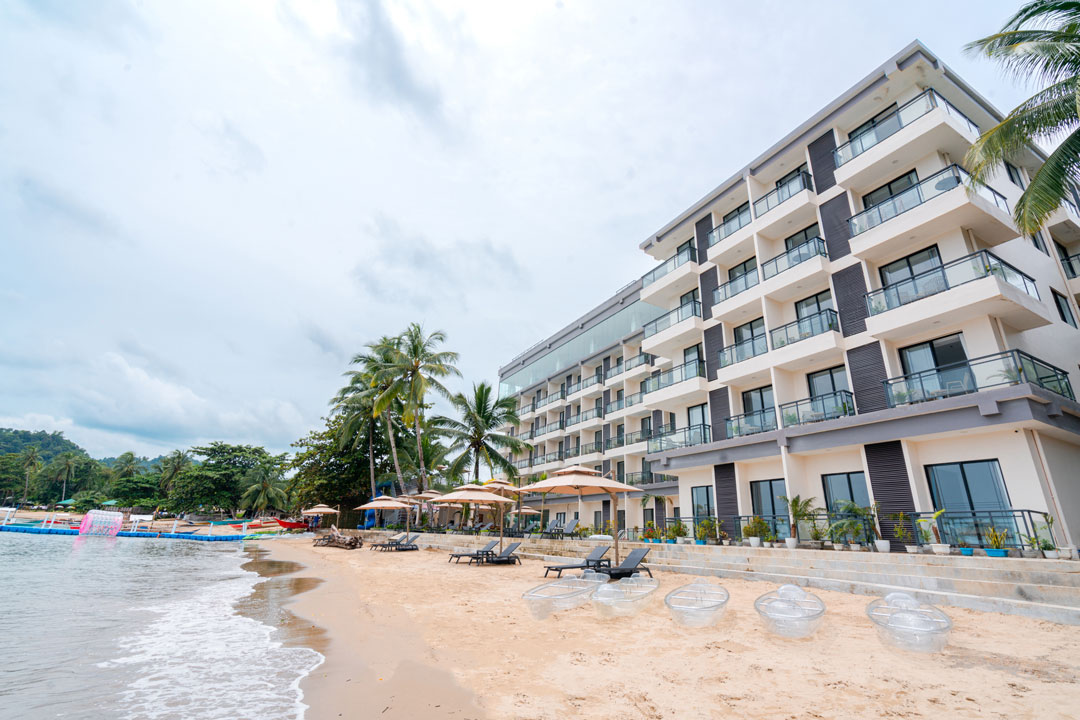
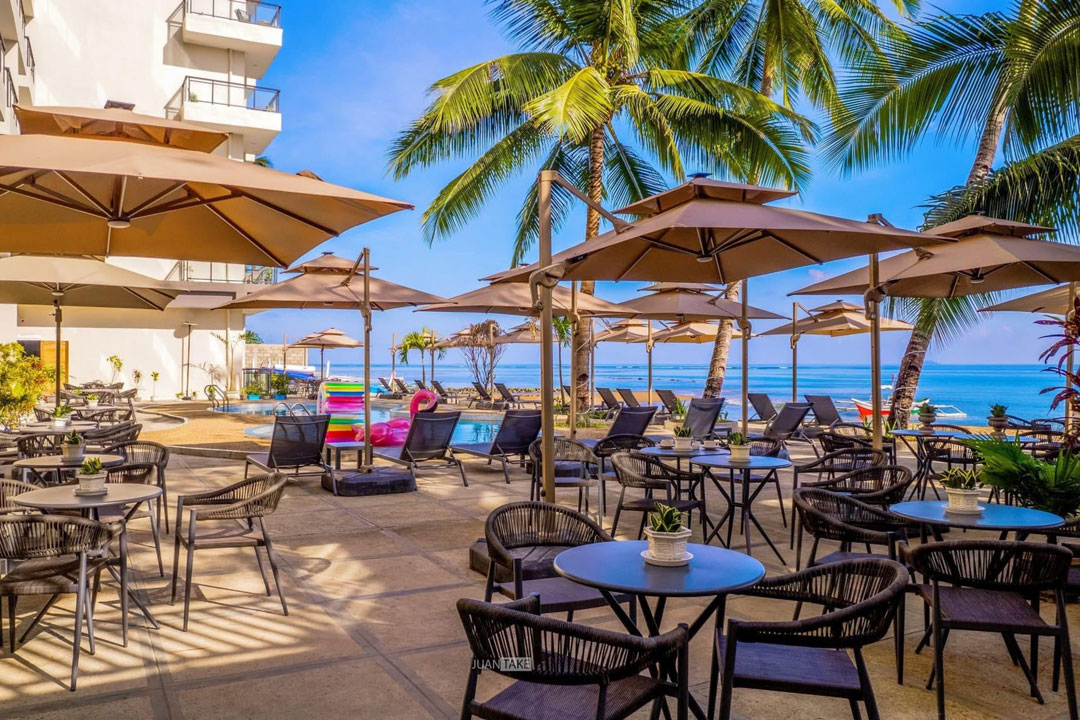
Set along the Busuanga shoreline, Angel Garden Resort offers guests direct access to the beach and breathtaking coastal views.

To address this, Globe Business partnered with the resort to install a dedicated 100 MBPS point-to-point radio link, delivering uninterrupted Wi-Fi across its 8-hectare property. This gives guests the freedom to be both relaxed and productive. They can upload high-resolution photos and travel vlogs in real-time to stay connected with friends and family, and unwind by streaming movies or playing online games while lounging on the beach. When it’s time to get down to business, they can also conduct stable video conferences and participate in webinars without interruption. Beyond the guest experience, this stable connectivity is also transforming operations for staff. The resort’s local employees, whose livelihoods depend on tourism, now have access to faster digital reservations, smoother guest communication to act on real-time feedback, and coordinate with tour partners more quickly and reliably. This not only empowers their digital marketing to attract more customers and reach a wider audience but also allows them to provide a higher level of service.

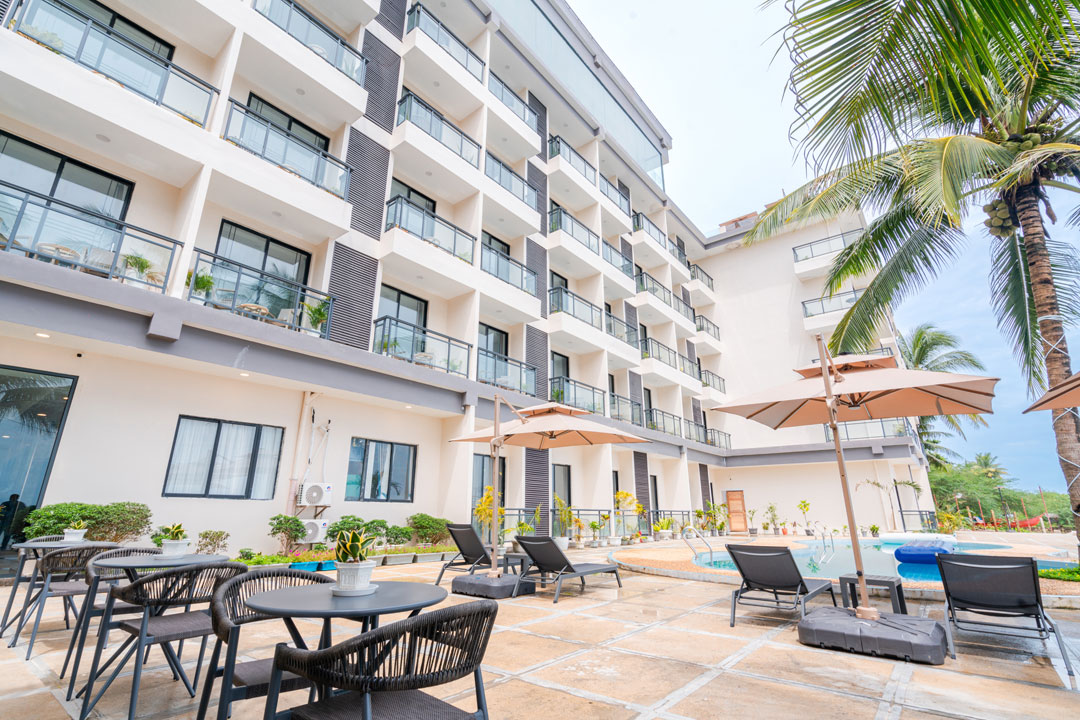
Guests can enjoy the sweeping views of the resort’s pool deck and elegant guest balconies spanning six floors.

“The high-speed connectivity from Globe Business has transformed how we serve our guests and manage our daily operations,” said Louise Paez, Operations Manager of Angel Garden Resort. “Tasks that once took hours are now completed in minutes. This partnership allows us to invest in the future of our people and show that Busuanga is ready to welcome travelers who expect both natural beauty and digital convenience.”

The resort’s restaurant is made of floor-to-ceiling glass walls that bring the ocean into view, creating a bright, relaxed dining atmosphere.

Connectivity as a Growth Driver for Tourism

A study by the Asian Development Bank (ADB) and World Travel and Tourism Council (WTTC) confirms that investing in digital infrastructure is integral to tourism growth. Angel Garden Resort, by working with Globe Business, has not only improved its operations and guest experience but has also set an example for how remote destinations can adapt to global travelers’ shifting demands.

Digital tools such as booking platforms, mobile apps, and digital travel certificates are reshaping traveler expectations. In response, Globe Business partners with hospitality enterprises to deliver connectivity that powers smoother operations and strengthens communities, most especially in areas where tourism is the lifeblood of local livelihoods.

The open-air dining area at Angel Garden Resort offers a laid-back poolside setting framed by palms and sea views.

“The tourism industry today is powered by digital access. Travelers expect to stay connected whether they’re sharing experiences on social media, reaching loved ones, or working remotely,” said KD Dizon, Vice President and Head of Globe Business. “What we’re seeing in Busuanga is proof that technology is not just for urban centers; it’s for every Filipino community that depends on tourism for growth. Our ‘malasakit’ philosophy drives us to deliver practical solutions so both small resorts and large hotels can thrive, ensuring that connectivity benefits not just travelers but also the workers, suppliers, and families who rely on tourism.”

By enabling partners to create meaningful guest experiences, Globe Business strengthens communities and contributes to the sector’s long-term growth.

For more information on how Globe Business is shaping the future of Philippine tourism, visit www.globe.com.ph/business/


Spotlight is BusinessWorld’s sponsored section that allows advertisers to amplify their brand and connect with BusinessWorld’s audience by publishing their stories on the BusinessWorld Web site. For more information, send an email to online@bworldonline.com.

Join us on Viber at https://bit.ly/3hv6bLA to get more updates and subscribe to BusinessWorld’s titles and get exclusive content through www.bworld-x.com.

Trump: Israel and Hamas agree to first phase of Gaza ceasefire

STOCK IMAGE | Image by freepik

WASHINGTON/CAIRO – US President Donald Trump said on Wednesday that Israel and Hamas had reached a long-sought deal for a Gaza ceasefire and hostage release under his plan for ending the two-year-old war in the Palestinian enclave.

Just a day after the second anniversary of Hamas’ attack on Israel that triggered Israel’s devastating assault on Gaza, indirect talks in Egypt yielded an agreement on the initial stage of Trump’s 20-point framework.

The deal, if implemented, would bring the two sides closer than any previous effort to halt a war that had evolved into a regional conflict, drawing in countries such as Iran, Yemen and Lebanon, and reshaping the Middle East.

“I am very proud to announce that Israel and Hamas have both signed off on the first Phase of our Peace Plan,” Trump said on Truth Social.

“This means that ALL of the Hostages will be released very soon, and Israel will withdraw their Troops to an agreed upon line as the first steps toward a Strong, Durable, and Everlasting Peace,” Trump added.

Israeli Prime Minister Benjamin Netanyahu said in a written statement, referring to the hostages held by Hamas: “With God’s help we will bring them all home.” He said he would convene his government on Thursday to approve the agreement.

Hamas confirmed it had reached an agreement to end the war, saying the deal includes an Israeli withdrawal from the enclave and a hostage-prisoner exchange. But the group called on Trump and guarantor states to ensure Israel fully implements the ceasefire, it added in a statement.

Trump said earlier that a deal was almost done and that he may travel to Egypt this weekend, possibly leaving as soon as Saturday.

“All Parties will be treated fairly!” he said on Truth Social. “This is a GREAT Day for the Arab and Muslim World, Israel, all surrounding Nations, and the United States of America, and we thank the mediators from Qatar, Egypt, and Turkey, who worked with us to make this Historic and Unprecedented Event happen.

Successful completion of the deal would mark the biggest foreign policy achievement so far for a president who took office in January promising to quickly end the wars in Gaza and Ukraine, only to be confronted with obstacles and complexities he had apparently not foreseen.

Senior envoys from the US, Qatar and Turkey had joined the talks, apparently adding momentum to discussions launched on Monday in the Egyptian resort town of Sharm el-Sheikh.

Trump sent his son-in-law Jared Kushner and special envoy Steve Witkoff, and Israel was represented by Israeli Strategic Affairs Minister Ron Dermer, a close confidant of Netanyahu.

Despite the hopes raised for ending the war, crucial details are yet to be spelled out, including the timing, a post-war administration for the Gaza Strip and the fate of the Palestinian militant group Hamas.

Gaza authorities say more than 67,000 people have been killed and much of the enclave has been flattened since Israel began its military response to the Hamas cross-border attack on Oct. 7, 2023. Around 1,200 people were killed and 251 were taken hostage back to Gaza, according to Israeli officials, with 20 of the 48 hostages still held believed to be alive.

HOSTAGE RELEASE EXPECTED IN DAYS
A Hamas source said the living hostages would be handed over
within 72 hours of the Israeli government approving the deal. An Israeli government spokesperson said the hostage release was expected to begin on Saturday.

Netanyahu and Trump spoke by phone and congratulated each other on the agreement, and the Israeli prime minister invited the U.S president to address Israel’s parliament, according to Netanyahu’s office.

Hamas said earlier on Wednesday it had handed over its lists of the hostages it held and the Palestinian prisoners held by Israel that it wanted to be exchanged.

The list of Palestinians Hamas wants freed was expected to include some of the most prominent prisoners ever jailed by Israel, whose release had been off limits in previous ceasefires.

According to a Palestinian source close to the talks, the list includes Marwan al-Barghouti, a leader of the Fatah movement, and Ahmed Saadat, head of the Popular Front for the Liberation of Palestine. Both are serving multiple life sentences for involvement in attacks that killed Israelis.

Hamas has so far refused to discuss Israel’s demand that Hamas give up its arms, which the Palestinian source said Hamas would reject as long as Israeli troops occupy Palestinian land.

Two sources familiar with the talks confirmed that sticking points included the mechanism for the Israeli withdrawal, with Hamas seeking a clear timeline linked to the release of hostages and guarantees of a complete pullout by Israeli forces.

Within Gaza, Israel has dialled down its military campaign at Trump’s behest, but it has not halted strikes altogether. The Israeli military said its forces had killed several militants in Gaza City, Gaza’s main urban hub, who it said were on their way to attack Israeli soldiers.

Gaza medical authorities reported eight people killed in Israeli strikes in the last 24 hours, the lowest toll for weeks. Daily death tolls had been around 10 times as high over the past month as Israeli forces advance on Gaza City.

ARAB COUNTRIES SAY PLAN MUST LEAD TO PALESTINIAN STATE
The next phase of Trump’s plan calls for an international body led by Trump and including former British Prime Minister Tony Blair to play a role in Gaza’s post-war administration. Arab countries which back the plan say it must lead to eventual independence for a Palestinian state, which Netanyahu says will never happen.

There is no clear indication who will rule Gaza when the war ends. Netanyahu, Trump, Western and Arab states have ruled out a role for Hamas, which has run Gaza since driving out Palestinian rivals in 2007.

Hamas has said it would relinquish Gaza governance only to a Palestinian technocrat government supervised by the Palestinian Authority and backed by Arab and Muslim countries. It rejects any role for Blair or foreign rule of Gaza.

Global outrage has mounted against Israel’s assault. Multiple rights experts, scholars and a UN inquiry say it amounts to genocide. Israel calls its actions self-defense after the 2023 Hamas attack. — Reuters

New York City sues social media companies for allegedly addicting children

Social media logos are seen in this illustration taken on May 25, 2021. — REUTERS/DADO RUVIC/ILLUSTRATION

NEW YORK – New York City filed a new lawsuit accusing Facebook, Google, Snapchat, TikTok and other online platforms of fueling a mental health crisis among children by addicting them to social media.

Wednesday’s 327-page complaint in Manhattan federal court seeks damages from Facebook and Instagram owner Meta Platforms, Google and YouTube owner Alphabet, Snapchat owner Snap and TikTok owner ByteDance. It accuses the defendants of gross negligence and causing a public nuisance.

The city joined other governments, school districts and individuals pursuing approximately 2,050 similar lawsuits, in nationwide litigation in the Oakland, California, federal court.

New York City is among the largest plaintiffs, with a population of 8.48 million, including about 1.8 million under age 18. Its school and healthcare systems are also plaintiffs.

Google spokesperson Jose Castaneda said allegations concerning YouTube are “simply not true,” in part because it is a streaming service and not a social network where people catch up with friends.

The other defendants did not immediately respond to requests for comment.

A spokesperson for New York City’s law department said the city withdrew from litigation announced by Mayor Eric Adams in February 2024 and pending in California state courts so it could join the federal litigation.

DEFENDANTS BLAMED FOR COMPULSIVE USE, SUBWAY SURFING
According to Wednesday’s complaint, the defendants designed their platforms to “exploit the psychology and neurophysiology of youth,” and drive compulsive use in pursuit of profit.

The complaint said 77.3% of New York City high school students, and 82.1% of girls, admitted to spending three or more hours a day on “screen time” including TV, computers and smartphones, contributing to lost sleep and chronic school absences.

New York City’s health commissioner declared social media a public health hazard in January 2024, and the city including its schools has had to spend more taxpayer dollars to address the resulting youth mental health crisis, the complaint said.

The city also blamed social media for an increase in “subway surfing,” or riding atop or off the sides of moving trains. At least 16 subway surfers have died since 2023, including two girls aged 12 and 13 this month, police data show.

“Defendants should be held to account for the harms their conduct has inflicted,” the city said. “As it stands now, (the) plaintiffs are left to abate the nuisance and foot the bill.” — Reuters

Jobless rate eases to 3.9% in August

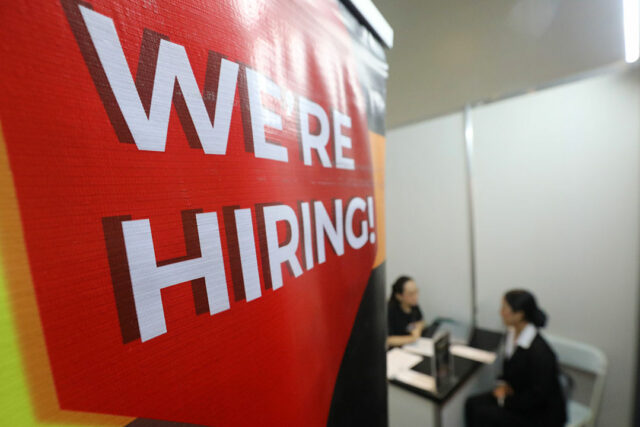
People attend a job fair in Pasay City. — PHILIPPINE STAR/EDD GUMBAN

By Chloe Mari A. Hufana, Reporter

THE PHILIPPINES’ unemployment rate dropped to 3.9% in August, driven by renewed hiring in the agriculture and construction sectors, the Philippine Statistics Authority (PSA) reported on Wednesday.

The August jobless rate is an improvement from the three-year high of 5.3% in July, and 4% in August 2024, preliminary Labor Force Survey data showed.

The number of jobless Filipinos slid to 2.03 million in August from 2.59 million in July and 2.07 million a year earlier.

Philippine Labor Force Situation

PSA Undersecretary and National Statistician Claire Dennis S. Mapa attributed improvement in the labor market in August to the recovery in some industries that were affected by typhoons in July.

“What we observed was that the biggest decline in July was in agriculture, retail trade, and construction — but they’ve now bounced back,” he told a news briefing in Filipino.

“So, in a way, the job losses in July turned out to be temporary, and those who were displaced have returned. Basically, these are the industries that recovered,” he added.

For the first eight months, the jobless rate stood at 4.1%, a tad higher than the 4% rate a year ago.

In August, the agriculture and forestry sector gained 1.35 million jobs from July, a month that was battered by bad weather. This brought the total number of workers in the sector to 8.73 million, up from 7.38 million a month prior. Year on year, the sector gained 300,000 workers in August.

The Philippines is struck by more tropical cyclones annually than any other region, with an average of 20 storms each year. According to the national weather bureau, typhoon activity peaks between July and October, accounting for nearly 70% of all cyclone formations during this period.

Labor Secretary Bienvenido E. Laguesma welcomed the improved jobs data, saying the government is committed to “future-proofing” and “weather-proofing” jobs.

“We hope and look forward to sustaining these favorable employment statistics through stronger collaboration and partnerships with business organizations and the private sector, as well as government agencies and departments,” he said via Viber.

251009Gainers_Industry

UNDEREMPLOYMENT FALLS
Meanwhile, underemployment eased to 10.7% in August from 11.2% a year prior and 14.8% a month before.

This was equivalent to 5.38 million Filipino workers that wanted more working hours or an additional job in August.

Of the underemployed workers in August, 62.4% worked less than 40 hours a week, while 37.6% worked 40 hours or more a week.

For the January-to-August period, the underemployment rate rose to 12.7% from 12.1% a year ago.

Also, the employment rate improved to 96.1% in August from 94.7% in July, with the total employed persons rising to 50.1 million.

This brought the eight-month average employment rate to 95.9%, down from 96% a year ago.

Wage and salary workers accounted for 64.4% of employed persons, followed by self-employed without any paid employees (27%), unpaid family workers (7%) and employers in own family-operated farm or business (1.6%).

Among wage and salary workers, those employed by private establishments accounted for 78%, followed by those employed in government or government-controlled corporations (14.1%).

The labor force participation rate climbed to 65.1% in August from 60.7% in July, equivalent to 52.13 million Filipinos aged 15 and older either working or seeking work.

PSA data showed the service sector remained the country’s biggest employer in August, accounting for 61.5% of total jobs, followed by agriculture at 20.4% and industry at 18.1%.

Wholesale and retail trade, agriculture and forestry, and construction were the top sub-sectors.

On an annual basis, construction gained 540,000 workers, followed by fishing and aquaculture (448,000), administrative and support service activities (307,000), agriculture and forestry (300,000), and other service activities (239,000).

In contrast, wholesale and retail trade; repair of motor vehicles and motorcycles posted the largest annual decline in workers at 788,000, followed by public administration and defense, compulsory social security (-220,000); education (-151,000); human health and social work activities (-134,000); and real estate activities (-75,000).

Youth employment also improved, with the employment rate among those aged 15 to 24 rising to 88.3% from 81.9% in July, the local statistics agency said.

On average, employees worked 41 hours a week, up from 40.7 hours in August last year.

251009Gainers_Industry

THREAT OF BAD WEATHER
Department of Economy, Planning, and Development Secretary Arsenio M. Balisacan called for continued investment in workforce development, infrastructure and digitalization — especially for micro, small, and medium enterprises — to build resilience in vulnerable sectors. 

“We aim to enhance resilience in sectors vulnerable to disruptions, such as retail trade and agriculture, by prioritizing improvements in logistics, infrastructure, digitalization, and workforce development,” he noted.

“The government is also ramping up investments in climate-resilient infrastructure and proactive measures, alongside timely emergency employment programs to support workers affected by disruptions.”

In a note, Chinabank Research said the threat of bad weather conditions persists and continues to pose a risk to job opportunities, especially in agriculture and fisheries, retail trade and construction.

“On a more positive note, seasonal demand due to the upcoming holidays should provide some support to the labor market this quarter,” it added.

University of the Philippines School of Labor and Industrial Relations Benjamin B. Velasco said historical data show an uptick in employment as the holiday season approaches.

“It can still be dampened by the impact of climate events on vulnerable sectors like agriculture,” he said via Facebook Messenger.

Mr. Velasco said the drop in unemployment and rise in labor force participation are positive developments as more people who were out of work or discouraged from working are now employed.

“Hopefully, more of them are in full-time work and good jobs, as shown in [a] slight decrease in the underemployed.”

PSA’s Mr. Mapa said the labor market in September may have been affected by the series of typhoons and the recent 6.9-magnitude earthquake that hit southern Philippines.


Scrapping VAT may trigger crisis — analysts

A woman shops for canned goods at a supermarket in Mandaluyong, Aug. 10, 2023. — PHILIPPINE STAR/MIGUEL DE GUZMAN

By Aubrey Rose A. Inosante, Reporter

ECONOMISTS and tax experts warned that scrapping the value-added tax (VAT) may trigger a fiscal or even an economic crisis, as the Bureau of Internal Revenue (BIR) collected P487 billion in the first eight months of 2025.

“Abolishing VAT will put the country in fiscal crisis, drive up inflation, constrain government spending for social welfare and other vital programs, and cause a ratings downgrade,” Foundation for Economic Freedom President Calixto V. Chikiamco told BusinessWorld in a Viber message.

“Feasible but insane.”

VAT is a 12% tax slapped on sales, leases, barters, and imports of goods and services in the Philippines. VAT collections account for around a fifth of the BIR’s total revenues.

Cavite Rep. Francisco A. Barzaga filed a bill on Monday seeking to remove the 12% VAT on goods and services, citing its disproportionate impact on low- and middle-income households amid elevated inflation and rising cost of living.

Mr. Barzaga had suggested that any revenue shortfalls could be offset by imposing “wealth taxes” and increasing excise duties on “nonessential and luxury goods,” including cigarettes, alcoholic drinks, vehicles and gambling activities.

Filomeno S. Sta. Ana III, coordinator of Action for Economic Reforms, said Mr. Barzaga’s “incredulous” proposal will result in an economic collapse.

“Removing VAT will not just result in a fiscal crisis. It would lead to an economic crisis,” he said in a Viber message.

Raymond “Mon” Abrea, chairman and chief executive officer of the Asian Consulting Group called the lawmaker’s proposal “reckless and populist.”

“The real issue is not the tax, but the billions lost to leakages and fake exemptions, including an estimated P88 billion abuses of PWD (persons with disability) perks in 2023,” he said in social media post on Tuesday.

Mr. Abrea said the “more prudent approach” would be trimming the VAT rate to 10% while eliminating unnecessary exemptions such as broadening the tax base, curbing abuse, and safeguarding fiscal stability without placing additional burden on consumers.

He earlier estimated that a 2% VAT reduction could cost the government around P200 billion annually, while saving households roughly P7,000 per year.

Mr. Abrea’s proposal to cut the VAT rate to 10% aligns with the bill filed by Batangas Rep. Leandro Antonio L. Leviste, who argued that the current tax system is “regressive.”

However, Mr. Chikiamco said lowering VAT will still have the “same bad effects although to a lesser degree.”

Eleanor L. Roque, a tax principal of P&A Grant Thornton, said abolishing VAT altogether is not feasible as the government relies on the VAT as a major source of tax collection.

“Congress can look at lowering the VAT rate and compare it with our peers in the ASEAN (Association of Southeast Asian Nations) region if they are looking for ways to help the taxpayers,” she said in a Viber message.

The Philippines’ 12% VAT rate is relatively higher compared with Southeast Asian countries. For instance, Indonesia’s VAT is at 12%, while Cambodia, Malaysia, Vietnam and Laos are at 10%; Singapore at 9% and Thailand at 7%.

Jose Enrique “Sonny” A. Africa, executive director at think tank IBON Foundation, said scrapping VAT would “ease the disproportionate tax burden on ordinary Filipinos.”

“Abolishing it and compensating with stronger billionaire wealth, corporate and wealthy family income taxes will make the tax system much fairer and more equitable,” he said in a Viber message.

Mr. Africa said that implementing a “billionaire wealth tax” could yield P500 billion to P600 billion in government revenues annually, and would be enough to supplement the funding shortfalls from the removal of VAT.

However, proposals to abolish VAT or amend the VAT law are unlikely to get the support of Finance Secretary Ralph G. Recto, who authored the legislation that raised the VAT rate to 12% in 2005.

Meanwhile, the BIR said it collected P487.12 billion in VAT as of end-August period, up 8.87% from P447.42 billion a year ago. However, this was 1.64% short of the BIR’s P495.26-billion VAT collection goal for the January-to-August period.

VAT collection accounted for 22.77% of the agency’s total revenues of P2.14 trillion during the eight-month period.

In an e-mailed document to BusinessWorld, the BIR said VAT collection from “government investments in healthcare, infrastructure and agriculture” helped drive overall revenue collection so far this year.

The BIR is expected to collect P796.87 billion from net of VAT refunds this year, climbing to P1.3 trillion by 2028, the latest Budget of Expenditures and Sources of Financing said.

Meanwhile, the Bureau of Customs is projected to generate P589.5 billion from VAT on imports in 2025, with collections reaching P695.77 billion by 2028.

Earlier, the World Bank said that the Philippines can boost its revenue collections by expanding its VAT base and improving tax administration.

World Bank Country Director for the Philippines, Malaysia, and Brunei Zafer Mustafaoğlu said the country has “substantial space to increase VAT revenues by improving compliance and reducing exemptions and special rates.” — with Kenneth Christiane L. Basilio

Marcos inks new energy deals, hopes to reduce PHL dependence on oil imports

President Ferdinand R. Marcos, Jr. awarded a petroleum service contract to a consortium of Triangle Energy Limited, Sunda Energy Plc, and Philippine-based firms PXP Energy Corp. and The Philodrill Corp. at Malacañan Palace, Oct. 8. In photo from left: PXP Energy President Daniel Stephen P. Carlos, PXP Energy Chairman Manuel V. Pangilinan, Environment Secretary Raphael P.M. Lotilla, Energy Secretary Sharon S. Garin, Mr. Marcos, Triangle Energy Managing Director Conrad Todd, and other company officials. — PPA POOL/NOEL B. PABALATE

By Sheldeen Joy Talavera, Reporter

PRESIDENT Ferdinand R. Marcos, Jr. on Wednesday signed eight new petroleum service contracts (PSCs), representing a potential investment of around $207 million (around P12 billion) over a seven-year exploration period.

The Department of Energy (DoE) said the awarding of these service contracts (SC) means that exploration for potential petroleum and hydrogen sources in key areas across the Sulu Sea, Cagayan, Cebu, Northwest Palawan, East Palawan, and Central Luzon can now begin.

“Unlocking over $200 million in investments, these service contracts represent our continued efforts to attain greater energy security, and therefore, economic stability, and self-reliance,” Mr. Marcos said in his speech during the official presentation of the signed agreements at Malacañan Palace.

The Philippines is a major importer of petroleum products, which are primarily sourced from the Middle East.

Mr. Marcos said the country imported over 340,600 barrels of liquid fuel last year, equivalent to approximately 99.68% of the Philippines’ entire petroleum supply.

To reduce dependence on imported oil and increase the utilization of indigenous resources, the Philippines also explores the potential of hydrogen as an alternative fuel.

“These service contracts signify not only our determination to secure new energy sources, but also our readiness to embrace innovation and sustainability while reducing import dependence,” said Energy Secretary Sharon S. Garin.

“From conventional petroleum to native hydrogen, we are expanding the frontiers of Philippine energy exploration,” she added.

Asked about the potential interference by China in the contracted areas, specifically those located in west of Palawan, the Energy chief said that all projects are well coordinated with the Department of National Defense “whether near the disputed areas or not.”

The DoE said that all the awarded contracts have undergone a transparent and competitive selection process under the Philippine Conventional Energy Contracting Program.

PSC Nos. 80 and 81 located in the southern Sulu Sea were awarded to a consortium comprising of Australia’s Triangle Energy (Global) Limited, United Kingdom’s Sunda Energy Plc., Pangilinan-led PXP Energy Corp. and The Philodrill Corp.

PSC 80 spans about 780,000 hectares, while PSC 81 covers 532,000 hectares. These contracts will be co-managed by the DoE and the Ministry of Environment, Natural Resources, and Energy of the Bangsamoro Autonomous Region in Muslim Mindanao.

Separately, PSC No. 82 was awarded to Triangle Energy, allowing it to proceed with petroleum exploration across 480,000 hectares in Cagayan basin.

For native hydrogen exploration in Central Luzon, the government awarded PSC Nos. 83 and 84 to US-based Koloma, Inc. SC 83 covers 126,645 hectares while SC 84 covers 85,082 hectares.

Gas 2 Grid Pte. Ltd. secured PSC No. 85 to explore 127,475 hectares in onshore Cebu.

A consortium of Filipino companies composed of Philodrill, Anglo Philippine Holdings Corp., PXP Energy, and Forum Energy Philippines Corp. received PSC No. 86, which covers 132,000 hectares in the Northwest Palawan Basin.

Situated in the East Palawan Basin, PSC No. 87 was awarded to Israel’s Ratio Petroleum Ltd.

With contracts in place, the companies can commence their respective work programs, which include geological and geophysical studies, seismic surveys, and drilling activities, as appropriate, to assess the potential of the contract areas.

Aside from exploration, service contractors will fund and undertake educational scholarships, capacity-building, and community development programs.

Edgar Benedict C. Cutiongco, president of the Philippine Petroleum Association, said that the PSCs unlock the potential of indigenous hydrocarbon resources to offer “a cost-effective and competitive energy supply” for consumers.

He said that reducing reliance on imported fuels “directly contributes to price stability and economic resilience.”

“The timely execution of these PSCs is expected to catalyze exploration and discovery activities, ensuring a reliable and secure energy supply for the future,” Mr. Cutiongco told BusinessWorld.

“The success of these initiatives will depend on the industry’s collective commitment to responsible and efficient resource development.”

Former Energy Undersecretary Jose M. Layug, Jr. said that the signing of eight PSCs is “a good signal for revival of oil and gas exploration in the Philippines.”

The President has urged investors to leverage their investments to drive meaningful progress for the Philippines.

“In return, I encourage our investors to turn your investments into engines of progress. Operate with accountability, with respect for the environment, and fairness towards the communities that host your operations,” Mr. Marcos said.

“Let us prove that responsible enterprise and national development can go hand-in-hand — that growth built on transparency and responsibility is growth that will last,” he added.

ADVERTISEMENT
ADVERTISEMENT