Home Blog Page 879

Why should you enroll in micro-credential programs?

“Rather than pursuing a traditional four-year bachelor’s degree, people opt for micro-credential programs to enhance their skills, improve employability, and increase earning potential in a competitive labor market.

Noel Jeffrey M. Torregoza, head of academics at MAPUA Malayan Digital College, told BusinessWorld that combining micro-credential certificates with relevant work experience can help people be on par with college degree holders.

Interview by Almira Martinez
Video Editing by Jayson Mariñas

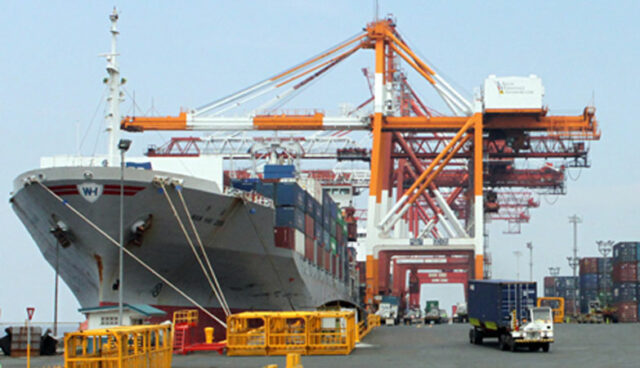
PHL’s trade gap reaches three-month low in May

ASIANTERMINALS.COM.PH

By Matthew Miguel L. Castillo

The Philippines’ trade deficit in goods further slimmed to a three-month low in May as exports grew while imports continued to fall, the Philippine Statistics Authority (PSA) reported on Friday.

Preliminary data from the PSA showed the country’s balance of trade in goods — the difference between the values of exports and imports — reached a deficit of $3.29 billion in May from the $4.73-billion gap in the same month last year.

It also slowed down from the revised $3.97-billion deficit in April.

Philippine Merchandise Trade Performance (May 2025)

The trade deficit in May was the narrowest in three months or since the $2.97-billion gap recorded in February.

The country’s monthly trade balance has been in the deficit for 10 years or since the $64.95-million surplus recorded in May 2015.

May’s figure brought the trade-in-goods deficit to $19.68 billion in the five months to May, narrower than the $20.72-billion gap in the same period last year.

“Exports managed to grow solidly, helped along by robust demand for electronics as well as a healthy gain for agro-based exports,” Metropolitan Bank & Trust Co. Chief Economist Nicholas Antonio T. Mapa said in an e-mail.

He added that imports shrank in May due to lower value of oil imports, while raw materials inbound shipments fell.

“Crude oil prices are down on a year-on-year basis, even after the recent uptick in crude oil. Raw materials were lower but we did see a bright spot for consumer imports which was positive, reflecting a still upbeat outlook for household spending this year,” Mr. Mapa said.

Outbound shipments of Philippine-made goods expanded by 15.1% year on year to $7.29 billion in May.

This was export’s fifth straight month of expansion this year and the highest since 28.2% climb recorded in April last year.

By value, May’s export haul was the highest level in 31 months or since the $7.75 billion logged in October 2022.

The country’s export of electronic products, which include semiconductors, amounted to $3.85 billion in May, up by 8% from $3.56 billion a year ago.

This segment remained the country’s top export commodity after accounting for more than half of total exports in May.

Outbound sales of other manufactured goods climbed 70.6% to $583.06 million, while other mineral products inched up by 0.9% to $308.16 million.

The United States cornered most of Philippine-made goods in May with $1.104 billion (15.3% share). It was closely followed by Hong Kong ($1.108 billion or 15.2% share) and Japan ($1.04 billion or 14.3% share).

Meanwhile, the country’s merchandise imports continued to decline for the second straight month in May after contracting by 4.4% annually to $10.58 billion.

It was the sharpest fall in 11 months or since the 7.2% drop recorded in June 2024.

May’s import value was the lowest in three months or since the $9.76 billion in February.

Imports of electronic products went up by 8% to $2.35 billion in May. This accounted for more than a fifth of the total import bill in May.

Mineral fuels, lubricants and related materials, meanwhile, shrank by 39.6% to $1.17 billion in May, while imports of transport equipment rose by 17.1% to $1.05 billion.

China was the country’s top source of imports with $3.15 billion (29.7% share) that month. Indonesia trailed with $904.27 million (8.5% share) and Japan ($807.89 million or 7.6% share).

Exports climbed by 10.8% to $34.20 billion in the five months to May, while imports increased by 4.4% to $53.87 billion. These year-to-date expansions were above the government’s downwardly revised targets of a 2% drop in exports and a 3.5% growth in imports this year.

“Year to date export numbers have been encouraging; however, we remain cognizant of looming risks in the form of the US imposed global tariffs, which could slow demand for exports from the Philippines or exports from other countries that make use of Philippine made components,” Mr. Mapa said.

“We are also keeping our eye on import trends, as weak import growth is largely tagged to year-on-year lower oil prices and modest gains in capital imports,” he added.

On the other hand, Philippine Exporters Confederation, Inc. President Sergio Ortiz-Luis, Jr., said that the Philippines is well-positioned amid trade tensions and should look to “maintain its posture” for optimal growth rates in imports and exports for the rest of the year.

US President Donald J. Trump declared increased reciprocal tariffs on the majority of the country’s trading partners in April. Philippine exports are subject to the second-lowest rate in Association of Southeast Asian Nations at 17%.

However, the implementation of these tariffs has been suspended for 90 days, lasting until July, while a standard 10% tariff continues to apply.

Mr. Ortiz-Luis added that the conflict between Israel and Iran will have minimal effects on the country’s trade performance because of the truce struck by the two countries.

“The only problem is fuel,” he told BusinessWorld in a phone interview. “If [prices] are going to go down next week, hopefully the situation can be [stabilized].”

A war broke out in the oil-rich Middle East after Israel attacked Iran’s nuclear sites last June 13. US’ Mr. Trump announced a ceasefire last week, easing concerns over potential disruptions to the critical Strait of Hormuz shipping corridor, Reuters reported.

QC’s first rainbow pride film festival runs until Friday

STOCK PHOTO | Image by Chandlervid85 from Freepik

Quezon City is screening its first-ever RainbowQC Pride Film Festival from June 25 to 27, showcasing a lineup of local and international queer films in celebration of Pride Month. 

“It is a stand-alone event dedicated to queer cinema, showcasing international and local films that reflect the diversity and complexity of LGBTQIA+ (lesbian, gay, bisexual, transgender, queer or questioning, intersex, asexual, and others) experiences,” Maria Eleanor R. Juan, Quezon City District 6 councilor and gender rights advocate, said during the first Pride Month celebration of Fisher Mall in Quezon City.” 

In a separate video released by the local government, Quezon City Mayor Maria Josefina G. “Joy” Belmonte said the film festival is currently screening five full-length feature films and four short films.  

“(These are) well-curated films representing different countries all over the world, showcasing the queer experiences of all our LGBTQIA+ community members. There is something for everyone,” Ms. Belmonte said.  

The RainbowQC Pride Film Festival, curated by QCinema Artistic Director Ed Lejano, offers a thorough selection of local and international films, including The Wedding Banquet (USA), Some Nights I Feel Like Walking (Italy, Philippines, Singapore), Cocoon (Germany), and Consequences (Slovenia). 

Since Wednesday, the film festival has been rolling at Cinema 12 and Cineplex 18 in Gateway Mall 2, Cubao, Quezon City.  

It is set to wrap up on Friday with a special free screening of short films, featuring works such as Abutan Man Tayo ng House Lights by Apa Agbayani, A Catholic Schoolgirl by Myra Angeline Soriaso, the river that never ends by JT Trinidad, Microplastics by Lino Balmes, and Water Sports by Whammy Alcazaren.  

“We encourage everyone to come here and join us, whether you are a member of the community or an ally. You’ll learn so much from these films, and of course, ipagpapatuloy natin ang laban sa pagkakapantay-pantay (we will continue the fight for equality),” Ms. Belmonte said.  

Though the final credits are about to roll on the film festival this Friday, the Quezon City government is gearing up for an even grander celebration — the 2025 edition of Lov3Laban: Pride PH Festival, the country’s biggest and perhaps most highly anticipated annual Pride Month event, set to take place this Saturday at the University of the Philippines Diliman. 

Last year’s Love Laban 2 Everyone Pride PH Festival in Quezon City drew an estimated 228,000 attendees to the Quezon Memorial Circle.Edg Adrian A. Eva

Gross savings climb by 16.7% in 2024 – PSA

PHILIPPINE STAR/ MICHAEL VARCAS

The country’s total gross savings in 2024 climbed by 16.7% from a year earlier, the Philippine Statistics Authority reported on Thursday.

At current prices, gross national savings, the difference between gross national disposable income and the combined household and government spending, totaled P7.70 trillion, up from the P6.60 trillion in 2023.

This accounts for 26% of gross national income in 2024, higher than the 24% recorded a year earlier.

Overall economic output grew last year, with the gross domestic product (GDP) showing a revised growth rate at 5.7% and gross national income (GNI) at 7.7% in real terms, respectively.

At current prices, GDP and GNI also expanded by 8.8% and 10.8% in 2024, respectively.

During the period, household spending rose year on year by 8.2% to P20.14 trillion. Government spending likewise saw an increase of 11% to P3.84 trillion.

In 2024, the Philippines’ gross national disposable income rose by 10.5% to P31.68 trillion from P28.66 trillion in the previous year. The figure was obtained by subtracting the GNI from the net difference between current transfers to and from the rest of the world.

GNI per capita at current prices stood at P264,804. This was higher than P241,065 in 2023 and P210,228 in 2022.

Broken down by institutions, nonfinancial corporations accounted for more than half of the gross savings last year with P4.96 trillion, followed by financial corporations (25.7% share with P1.98 trillion), households including nonprofit institutions serving households (NPISHs) (5.1% share with P393.31 billion), and general government saving (4.7% share with P364.98 billion).

Oikonomia Advisories and Research, Inc. Economist, Reinielle Matt M. Erece said in an email that the uptick in saving last year was primarily driven by higher interest rates which led households and businesses to “reduce spending and hold their money in banks to take advantage of the interest rate.”

Before the Bangko Sentral ng Pilipinas (BSP) began its easing cycle in August of last year, benchmark interest rates remained steady at 6.5%.

Since then, the BSP has trimmed key rates for three straight meetings last year but paused at its February meeting. The central bank slashed policy rates by 25 basis points each in April and June meetings bringing down the key rate to 5.25%.

“Inflation rate is low and continues a downward trend. This creates an expectation among households to postpone current consumption and save more since prices in the future are expected to further decline,” Tereso S. Tullao, Jr., director at De La Salle University-Angelo King Institute for Economic and Business Studies, said in a separate email.

Mr. Tullao added that better economic performance and low unemployment rates may also be attributable to higher saving as it moves in line with income.

The country’s unemployment rate dropped to 3.8% in 2024, the lowest figure since the 7.8% in 2005.

“It is possible that households increased their consumption marginally, but they may be putting their remittances in financial instruments, thus increasing their savings,” Mr. Tullao said.

He said that a stable economy driven by low inflation and unemployment rates are the key to sustained national savings.

Mr. Erece said that the trend in increased spending may be continued if price levels are managed and more investments to bolster income growth are made.

For this year, Mr. Erece said that growth in savings may not match the level seen in 2024.

“Rate cuts may encourage more loans to be taken and reduce money that is kept in financial institutions as savings,” he said.

The Consolidated Accounts present a summary of transactions and relationships among the various flows of the economy, while the Income and Outlay Accounts are compiled for the four institutional sectors, namely, financial and nonfinancial corporations, general government, and households including nonprofit institutions serving households. — Matthew Miguel L. Castillo

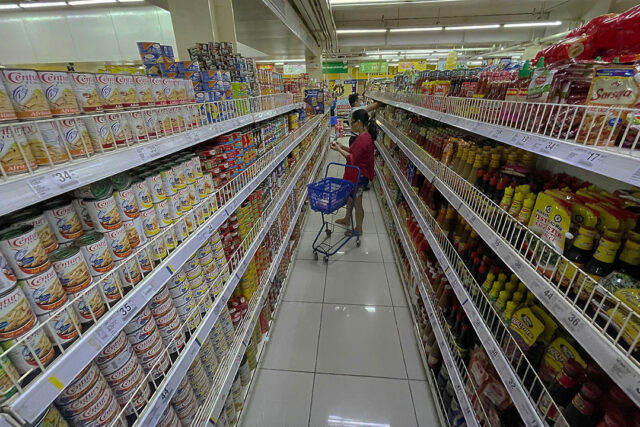
NCR retail price growth eases in May

PHILIPPINE STAR/MIGUEL DE GUZMAN

Retail price growth of general goods in the National Capital Region (NCR) eased further in May, the Philippine Statistics Authority (PSA) said on Friday.

Citing preliminary data, the PSA said price growth in Metro Manila, as measured by the general retail price index (GRPI), edged up by 0.8%, easing down from 0.9% in April and the 2% growth posted a year earlier.

In the first five months, the GRPI averaged 1.1%, slowing down from the 2.1% posted in the same period last year.

“The downtrend was primarily driven by the slower annual increase observed in the index of food at 1% in May from 1.2% in April,” the PSA said.

Slower annual increases were noted in the indices of the following commodity groups during the month: chemicals, including animal and vegetable oils and fats (1.8% from 1.9%), manufactured goods classified chiefly by materials (0.7% from 0.8%), machinery and transport equipment (0.1% from 0.2%), and miscellaneous manufactured articles (0.8% from 0.9%).

Meanwhile, price growth in May was steady in beverages and tobacco (3.3%) and mineral fuels, lubricants and related materials (-4.7%).

The only commodity that picked up in May was crude materials, inedible except fuels to 0.8% from 0.6%.

The GRPI is based on 2012 constant prices.

The PSA uses the GRPI as a deflator in the National Accounts, particularly in the retail trade sector, and serves as a basis for forecasting. — Lourdes O. Pilar

Brand USA partners with America250 to promote nation’s semiquincentennial globally

As the United States prepares to mark its 250th anniversary in 2026, Brand USA, the nation’s official destination marketing organization, and America250 announced a strategic partnership to inspire international audiences to explore the nation’s rich history, heritage, and culture throughout the anniversary year.

“Brand USA is proud to partner with America250 to showcase the significance of this historic celebration to the world,” said Fred Dixon, president and CEO of Brand USA. “With our expertise in international marketing and storytelling, Brand USA is uniquely positioned to highlight the spirit and significance of America250 globally. Through this partnership, we’ll inspire travelers to connect with the places, people, and moments that define our nation — and invite them to be part of this historic milestone.”

As an official America250 Supporting Partner, Brand USA will work to amplify anniversary programming and broaden the reach and impact of the celebration.

“As we look ahead to America’s 250th anniversary, we’re thrilled to partner with Brand USA to invite the world to experience this momentous milestone,” said Ari Abergel, Executive Director of America250. “This collaboration reflects our shared commitment to honoring our past, celebrating our present, and inspiring a future grounded in the American Spirit. Together, we’re bringing America’s story to life for global audiences in unforgettable ways.”

The announcement follows the recent launch of Brand USA’s new global tourism campaign, America the Beautiful, which invites the world to discover the breathtaking landscapes and authentic experiences found across the country. As part of this effort, Brand USA will spotlight the anniversary celebration through curated travel itineraries and compelling storytelling that connect visitors to the people and places that embody the American spirit.

Brand USA offers a range of resources to help international travelers explore the stories, places, and experiences that will define America’s 250th anniversary.

Learn more at AmericaTheBeautiful.com/America-250.


Spotlight is BusinessWorld’s sponsored section that allows advertisers to amplify their brand and connect with BusinessWorld’s audience by publishing their stories on the BusinessWorld Web site. For more information, send an email to online@bworldonline.com.

Join us on Viber at https://bit.ly/3hv6bLA to get more updates and subscribe to BusinessWorld’s titles and get exclusive content through www.bworld-x.com.

SoftBank aims to become leading ‘artificial super intelligence’ platform provider

REUTERS

 – SoftBank Group CEO Masayoshi Son on Friday said he wants the Japanese technology investment group to become the biggest platform provider for “artificial super intelligence” within the next 10 years.

“We want to become the organizer of the industry in the artificial super intelligence era,” Son told shareholders at the group’s annual shareholder meeting.

Son likened his aim to the position of dominant technology platform providers such as Microsoft, Amazon and Alphabet’s Google, which benefit from a “winner takes all” dynamic.

At previous public appearances Mr. Son has described artificial super intelligence as AI technology that is able to exceed human capabilities by a factor of 10,000.

SoftBank has returned to making the aggressive investments that made Son’s name, such as an early bet on Alibaba, but that at times spectacularly backfired, like its massive investment in failed shared office provider WeWork.

Its AI-related deals this year include acquiring U.S. semiconductor designer Ampere for $6.5 billion and the underwriting of up to $40 billion of new investment in ChatGPT maker OpenAI.

Mr. Son said SoftBank’s total agreed investment in OpenAI now stood at $32 billion since first investing in Autumn 2024 and that he regretted not investing earlier. He also said he expected OpenAI to eventually list publicly.

“I’m all in on OpenAI,” Mr. Son said.

SoftBank had owned around 5% of Nvidia until it sold the stake in 2019, before ChatGPT generated a surge in AI interest at the end of 2022. Nvidia now dominates AI chipmaking and has become one of the world’s most valuable companies.

Son’s latest spending spree follows years of retrenchment after the high-growth tech startups into which SoftBank had invested billions of dollars through its Vision Fund investment vehicles crashed in value from 2022.

Fortunes changed again when SoftBank raised some $5 billion listing chip designer Arm in September 2023. The rise in the British firm’s share price since has boosted the group’s assets, against which SoftBank can take out debt to fund new investment.

Son said SoftBank was committed to prudent investment and that, throughout the peaks and troughs, SoftBank has maintained the financial resources and user base such that it can take risks at times.

Earlier in June it raised $4.8 billion from the sale of some shares in T-Mobile. – Reuters

Nike plans to reduce reliance on China production for US market to soften tariff blow

WU YI-UNSPLASH

Nike said it would cut its reliance on production in China for the U.S. market to mitigate the impact from U.S. tariffs on imports, and forecast a smaller-than-expected drop in first-quarter revenue, sending its shares up 11% in extended trading.

U.S. President Donald Trump’s sweeping tariffs on imports from key trading partners could add around $1 billion to Nike’s costs, company executives said on a post-earnings call after the sportswear giant topped estimates for fourth-quarter results.

China, subject to the biggest tariff increases imposed by Trump, accounts for about 16% of the shoes Nike imports into the United States, Chief Financial Officer Matthew Friend said.

But the company aims to cut the figure to a “high single-digit percentage range” by the end of May 2026 as it reallocates China production to other countries.

Consumer goods is one of the most affected areas by the tariff dispute between the world’s two largest economies, but Nike’s executives said they were focused on cutting the financial pain.

Nike will “evaluate” corporate cost reductions to deal with the tariff impact, Friend said. The company has already announced price increases for some products in the U.S.

“The tariff impact is significant. However, I expect others in the sportswear industry will also raise prices, so Nike may not lose much share in the U.S.,” said David Swartz, analyst at Morningstar Research.


RUNNING FINDS ITS FOOTING

CEO Elliott Hill’s strategy to focus product innovation and marketing around sports is beginning to show some fruit with the running category returning to growth in the fourth quarter after several quarters of weakness.

Having lost share in the fast-growing running market, Nike has invested heavily in running shoes such as Pegasus and Vomero, while scaling back production of sneakers such as the Air Force 1.

“Running has performed especially strongly for Nike,” said Citi analyst Monique Pollard, adding that new running shoes and sportswear products are expected to offset the declines in Nike’s classic sneaker franchises at wholesale partner stores.

Marketing spending was up 15% year-on-year in the quarter. On Thursday, Nike hosted an event in which its sponsored athlete Faith Kipyegon attempted to run a mile in under four minutes.

Paced by other star athletes in the glitzy and live-streamed from a Paris stadium, Kipyegon fell short of the goal but set a new unofficial record.

Nike forecast first-quarter revenue to fall in the mid-single digits, slightly better than analysts’ expectations of a 7.3% drop, according to data compiled by LSEG.

Its fourth-quarter sales fell 12% to $11.10 billion, but still beat estimates of a 14.9% drop to $10.72 billion.

China continued to be a pain point, with executives saying a turnaround in the country will take time as Nike contends with tougher economic conditions and competition.

The company’s inventory was flat year-over-year at $7.5 billion as of May 31. – Reuters

Apple changes App Store rules in EU to comply with antitrust order

UNSPLASH

 – Apple on Thursday changed rules and fees in its App Store in the European Union after the bloc’s antitrust regulators ordered it to remove commercial barriers to sending customers outside the store.

Apple said developers will pay a 20% processing fee for purchases made via the App Store, though the fees could go as low as 13% for Apple’s small-business program.

Developers who send customers outside the App Store for payment will pay a minimum fee of 5% and at most 15%. Developers will also be able to use as many links as they wish to send users to outside forms of payment.

The changes are aimed at trying to help Apple avoid paying daily fines of 5% of its average daily worldwide revenue, or about 50 million euros ($58 million) per day after being given 60 days to show it was in compliance with the bloc’s Digital Markets Act. Apple has already paid 500 million euro ($580 million) fine levied by EU antitrust regulators in April.

“The European Commission is requiring Apple to make a series of additional changes to the App Store. We disagree with this outcome and plan to appeal,” Apple said in a statement.

In a statement, the European Commission said it will now review Apple’s changes for compliance with the Digital Markets Act.

“As part of this assessment the Commission considers it particularly important to obtain the views of market operators and interested third parties before deciding on next steps,” the Commission said in a statement.

In a statement posted on social media site X, Tim Sweeney, CEO of Epic Games, which fought a protracted antitrust lawsuit with Apple, called Apple’s changes “a mockery of fair competition in digital markets. Apps with competing payments are not only taxed but commercially crippled in the App Store.”

Apple did not immediately respond to a request for comment on Mr. Sweeney’s remarks. – Reuters

EU leaders discuss new US trade proposal as deal clock ticks down

REUTERS

 – European Union leaders discussed new proposals from the United States on a trade deal at a summit in Brussels on Thursday, with Commission President Ursula von der Leyen not ruling out tariff talks could fail and saying “all options remain on the table”.

Time is running out for the bloc to find a common position before a respite on higher tariffs threatened by U.S. President Donald Trump expires on July 9, which could hammer exporters from cars to pharmaceuticals.

European leaders were meeting to decide whether they want to push for a quick trade agreement or keep fighting for a better deal, with the EU’s two biggest economies apparently at odds.

German Chancellor Friedrich Merz urged the EU to do a “quick and simple” trade deal rather than a “slow and complicated” one.

But in a separate briefing, French President Emmanuel Macron, while also wanting a quick and pragmatic trade deal, said his country would not accept terms that were not balanced.

All tools must be used to ensure a fair deal and if the U.S. baseline rate of 10% remained in place, then Europe’s response would have to have an equivalent impact, he said.

“Our goodwill should not be seen as a weakness,” Mr. Macron added.

French officials have argued that the Commission should take a firmer stance including by targeting U.S. services.

Similarly, Mr. Merz said European leaders were “basically united” on concluding the Mercosur trade deal with the South American trade bloc, but Macron said he could not support the deal in its current form.

Ms. Von der Leyen said the EU had received the latest U.S. document on Thursday for further negotiations and the bloc was still assessing it.

“We are ready for a deal. At the same time, we are preparing for the possibility that no satisfactory agreement is reached,” she told reporters. “In short, all options remain on the table.”

No specifics were immediately available on the document, which one EU diplomat described as a “two-pager, principle agreement”, adding the United States did not want to get into specific industrial sectors.

The bloc is already subject to U.S. import tariffs of 50% on its steel and aluminum, 25% for cars and car parts along with the 10% tariff on most other EU goods that Trump has threatened could rise to 50% without an agreement.

The European Union has agreed, but not imposed, tariffs on 21 billion euros ($24.55 billion) of U.S. goods and is debating a further package of tariffs on up to 95 billion euros of U.S. imports.

Among the EU rebalancing options is a tax on digital advertising, which would hit U.S. giants like Alphabet Inc’s Google, Meta, Apple, X and Microsoft and eat into the trade surplus in services the U.S. has with the EU.

The EU leaders also discussed ideas to carve out a new form of trade cooperation with Asia-Pacific countries that would be a way of reforming what they see as an ineffective World Trade Organization.

Merz said the idea was in its early stages but could include mechanisms to resolve disputes, as the WTO was meant to do.

“You all know that the WTO doesn’t work any more,” he said.


OTHER ISSUES

The EU summit pivots from a NATO meeting this week that agreed to drastically raise defense spending in the military alliance but left some European countries finding it difficult to pay, and Spain explicitly demanding an opt-out.

Aside from tariffs, the EU bloc also has to tackle a raft of other issues, including its support for Ukraine and the prospect of EU membership for a country still at war against nuclear-armed Russia. Hungary is firmly opposed.

Ukrainian President Volodymyr Zelenskiy had urged the EU to pass a new sanctions package on Russia targeting its oil trade and banks, as well as to give a clear signal on his country’s EU accession.

“What’s needed now is a clear political message – that Ukraine is firmly on the European path, and that Europe stands by its promises,” he told EU leaders. “Any delay by Europe at this point could create a global precedent – a reason to doubt Europe’s words and commitments.”

On the sidelines of the summit, EU leaders also sought to allay the concerns of Slovakia and Hungary over ending their access to Russian gas as foreseen by the EU’s plan to phase out all Russian gas imports by the end of 2027.

Before the start of the summit however, Slovakia’s Prime Minister Robert Fico said he would block a vote on the EU’s 18th package of sanctions against Russia until Slovak concerns on gas were addressed. – Reuters

Automakers want US to move faster on self-driving car rules

STOCK PHOTO | Pixabay

 – Major automakers want Congress and the Trump administration to move faster to make it easier to deploy autonomous vehicles without human controls as new robotaxi tests expand.

Congress has been divided for years about whether to pass legislation to address deployment hurdles, while the National Highway Traffic Safety Administration has not moved quickly to rewrite safety rules or allow exemptions for up to 2,500 vehicles without human controls annually and ease other hurdles.

“The auto industry wants, it needs a functioning and effective auto safety regulator. We don’t have that today,” said Alliance for Automotive Innovation CEO John Bozzella at a U.S. House of Representatives hearing on Thursday. “The agency isn’t nimble. Rulemakings take too long if they come at all.”

Autonomous Vehicle Industry Association Director Jeff Farrah urged Congress to pass long-stalled nationwide legislation to allow the United States to globally lead on AVs as China moves aggressively in the field.

“Right now we are fighting with one hand tied behind our back,” Farrah said. Companies have pushed for more action for years.

U.S. Transportation Secretary Sean Duffy said in April that a new department framework to boost autonomous vehicles would help U.S. automakers compete with Chinese rivals.

Earlier this month, NHTSA said it would speed reviews of requests from automakers to deploy self-driving vehicles without required human controls like steering wheels, brake pedals or mirrors.

Representative Frank Pallone of New Jersey, a Democrat, cited reports showing NHTSA has lost as much as 35% of its expert staff this year through layoffs and other exits, which puts the ability of the agency to function at risk.

NHTSA said “significantly fewer people have left” than Pallone suggested and that it remains “staffed to continue to conduct all safety- and mission-critical work” and is boosting its Office of Autonomous Safety.

Meanwhile, U.S. traffic deaths remain sharply above pre-COVID levels. Despite falling 3.8% in 2024 to 39,345, they are still significantly higher than the 36,355 killed in 2019 and double the average rate of other high-income countries.

“NHTSA is failing to meet the moment,” Insurance Institute for Highway Safety President David Harkey told lawmakers.

“In recent years, it has approached its job with a lack of urgency, using flawed methodologies that underestimate the safety benefits of obviously beneficial interventions,” he said.

NHTSA routinely fails to write regulations even when directed by Congress and has often gone years without a Senate-confirmed leader. – Reuters

No known intelligence that Iran moved uranium, US defense chief says

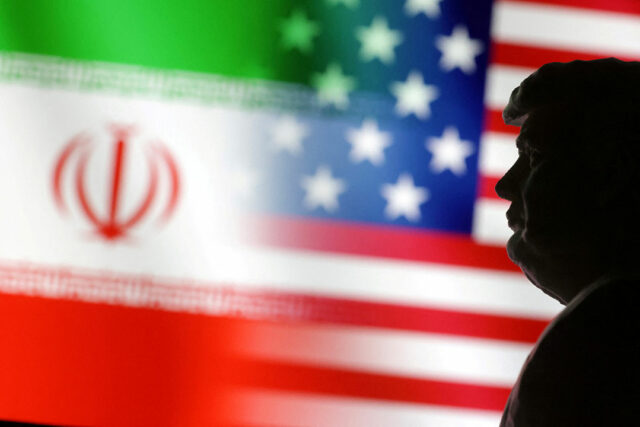
A 3D-printed miniature model of Donald Trump and the US and Iran flags are seen in this illustration taken Jan. 15, 2025. — REUTERS/DADO RUVIC/ILLUSTRATION/FILE PHOTO

 – U.S. Defense Secretary Pete Hegseth on Thursday said he was unaware of any intelligence suggesting Iran had moved any of its highly enriched uranium to shield it from U.S. strikes, amid continuing questions about the state of Iran’s nuclear program.

U.S. military bombers carried out strikes against three Iranian nuclear facilities early Sunday local time using more than a dozen 30,000-pound bunker-buster bombs.

The results of the strikes are being closely watched to see how far they may have set back Iran’s nuclear program, after President Donald Trump said it had been obliterated.

“I’m not aware of any intelligence that I’ve reviewed that says things were not where they were supposed to be, moved or otherwise,” Mr. Hegseth told an often fiery news conference.

Mr. Trump, who watched Mr. Hegseth’s exchange with reporters, echoed his defense secretary, saying it would have taken too long to remove anything.

“The cars and small trucks at the site were those of concrete workers trying to cover up the top of the shafts. Nothing was taken out of (the) facility,” Trump wrote on his social media platform, without providing evidence.

Several experts have cautioned that Iran likely moved a stockpile of near weapons-grade highly enriched uranium out of the deeply buried Fordow site before the strikes, and could be hiding it in unknown locations.

They noted satellite imagery from Maxar Technologies showing “unusual activity” at Fordow on Thursday and Friday, with a long line of vehicles waiting outside an entrance to the facility. A senior Iranian source told Reuters on Sunday most of the 60% highly enriched uranium had been moved to an undisclosed location before the attack.


WHEREABOUTS OF URANIUM

The Financial Times, citing European intelligence assessments, reported that Iran’s highly enriched uranium stockpile remains largely intact since it was not concentrated at Fordow.

Mr. Hegseth’s comments denying such claims came at the news briefing where he also accused journalists of downplaying the success of the strikes following a leaked preliminary assessment from the Defense Intelligence Agency suggesting they may have only set back Iran by months.

He said the assessment was low confidence, and, citing comments from CIA Director John Ratcliffe, had been overtaken by intelligence showing Iran’s nuclear program was severely damaged and would take years to rebuild.

U.S. senators briefed later on Thursday by Mr. Ratcliffe, Mr. Hegseth, Secretary of State Marco Rubio and General Dan Caine, chairman of the Joint Chiefs of Staff, said it was clear the strikes had damaged Iran’s nuclear facilities, though it would take time to assess by how much.

“I will say it was not part of the mission to destroy all their enriched uranium or to seize it or anything else,” Republican Intelligence Committee Chairman Tom Cotton of Arkansas told reporters after the classified briefing, adding that he was confident the mission was “extraordinary.”

Senator Mark Warner of Virginia, the top Intelligence Committee Democrat, said the only way to be certain about Iran’s nuclear capabilities was to have inspectors on the ground.

“It was clear, and again, this is long before this brief, that some of the enriched uranium was never going to be taken out by a bunker-buster bomb, so some of that obviously remains,” Mr. Warner said.

Tulsi Gabbard, who normally would conduct such briefings as director of national intelligence, did not participate. Mr. Trump said last week that she was wrong in suggesting there was no evidence Iran was building a nuclear weapon.

The four officials were due to brief the House of Representatives on Friday.

Senators are expected to vote this week on a resolution that would require congressional approval for strikes against Iran, which is not expected to be enacted.

At the Pentagon news conference, Mr. Hegseth described the strikes as “historically successful.” His comments came after Iranian Supreme Leader Ayatollah Ali Khamenei said Iran would respond to any future U.S. attack by striking American military bases in the Middle East.

Khamenei claimed victory after 12 days of war, and promised Iran would not surrender despite Mr. Trump’s calls.


MEDIA ‘HATRED’

During the news conference, Mr. Hegseth criticized the media, without evidence, for having an anti-Trump bias.

“It’s in your DNA and in your blood to cheer against Trump because you want him not to be successful so bad,” Mr. Hegseth said.

“There are so many aspects of what our brave men and women did that … because of the hatred of this press corps, are undermined,” he said.

Mr. Trump praised Mr. Hegseth’s news conference as: “One of the greatest, most professional, and most ‘confirming’ News Conferences I have ever seen!”

On X, Mr. Hegseth thanked Mr. Trump for his praise.

During the press conference, Caine, the top U.S. general, largely stuck to technical details, showing a video testing the bombs on a bunker like the ones struck on Sunday.

Mr. Caine declined to provide his own assessment of the strike, deferring to the intelligence community. He denied being under pressure to present a more optimistic view of the U.S. strikes and said he would not change his assessment due to politics.

Uniformed military officials are supposed to remain apolitical.

“I’ve never been pressured by the president or the secretary to do anything other than tell them exactly what I’m thinking, and that’s exactly what I’ve done,” Mr. Caine said. – Reuters