Home Blog Page 83

Easter Dining In/Out



The Grand Hyatt Manila

THE Grand Hyatt Manila invites guests to celebrate the joy of Easter with a line-up of dining experiences, festive treats, and family-friendly activities. Up until April 5, Florentine is where one can get handcrafted chocolate eggs filled with prizes at P1,800 called the Grand Easter Egg Hunt Surprise. Guests can also enjoy Easter-themed cakes — whole at P2,500, mini at P550, and pralines in boxes of nine or 25 at P1,450 and P2,850, respectively. Special highlights include whimsical chocolate figures such as the Rabbit Astronaut, Rocket Chocolate, Teddy Bear, and Peacock Easter Egg, alongside seasonal pastries like Pistachio Crescent Croissants and Hot Cross Buns. On April 5, The Grand Kitchen hosts its Easter Sunday Lunch Buffet at P3,588 per person. Guests can savor live stations featuring Beef Salpicao, Ravioli ala Tartufa, Crepes, and Hot Cross Buns, alongside trolley service of Seafood Paella and Whole Poached Tasmanian Salmon. The buffet includes free-flowing wine, house lager, and cocktails, plus there will be a Kids Corner Activity for younger guests. From April 1 to 30, The Cellar presents Easter specials such as Grilled Red Snapper at P2,500 and Basque Seafood Stew with prawns, squid, barramundi, clams, and mussels. Guests may also indulge in Lobster Paella for P7,000 and the signature Braised Black Cod. Celebrate spring with the Sakura Afternoon Tea Set at P3,300 for two, inclusive of rosé wine or mocktails, available Monday to Thursday, March 23 to April 26. From March 30 to April 5, No. 8 China House highlights its signature Claypot Grouper Cooked on Trolley for P7,888 and good for six to eight persons, alongside its regular menu. Between April 1 to 5, Pool House offers family-style Easter Seafood Specials, including grouper, prawns, and squid prepared Filipino-style such as inihaw, prito, sinigang, adobo, and ginataan (barbecue, fried, in sour soup, braised with vinegar, and cooked in coconut milk) Guests can also enjoy Soft Shell Crab Salad with Mango Dressing and Soft Shell Crab Tacos Lime Cilantro for P990+ each, plus new pizzas starting at P695+. From April 1 to 31, The Peak Grill presents its Easter specials: Seafood Platter for P8,500 featuring oysters, hamachi, scallop ceviche, tuna tartare, prawn cocktail, and Nomad caviar; Roasted Dover Sole at P4,900; and Tasmanian Salmon Coulibiac priced at P5,850+ and good for two to three persons. Guests may also pair their meals with premium wines and champagnes, including Moët & Chandon Brut Rosé. Guests can order Easter items via Dine at Home. They can also call 8838-1234 or 7918-1234. Follow Grand Hyatt Manila on Instagram www.instagram.com/grandhyattmanilaph/ and on Facebook www.facebook.com/GrandHyattManilaPh.


Solaire Resort North

SOLAIRE RESORT North has an exclusive Easter family getaway with special offers this season. For family fun, book a room or suite at Solaire Resort North until April 5, and get a breakfast at Fresh for two adults and two children, starting at P9,500+++ per night. At Fresh, for P3,588++ per person, enjoy an Easter-themed buffet showcasing a carving station featuring roasted lamb and glazed ham, and special servings of mini burgers, fries, pasta, and Easter treats at an exclusive Children’s Corner Buffet section. This buffet transforms into an experience for the whole family with interactive activities such as an egg hunt and egg and face painting opportunities. At Red Lantern, indulge in an eat-all-you-can dimsum menu starting at P1,888++ per head. Lucky Noodles serves premium grilled seafood from tiger prawns to scallops, meant for sharing, for P2,099++ each. For more intimate gatherings, find authentic family-style Italian flavors with Finestra’s multi-course set menu for Easter lunch. From P4,000++ per person, feast on dishes from welcome platters all the way to a dessert station. A Japanese family-style buffet also awaits at Yakumi for a perfect Easter Sunday brunch, from P3,588++ each. There will also be a Pinoy Easter Family Fest at the Grand Ballroom done in partnership with JPI Entertainment. Spend the day with interactive shows and performances, and treat children to an Easter egg hunt alongside Filipino food and drinks with tickets for kids at P3,500 and for adults at P2,000 per head. For inquiries, visit sn.solaireresort.com/offers/rooms-suites/easter-sunny-escape, call 8888-8888, or e-mail sn.reservations@solaireresort.com.


Richmonde Hotel Ortigas

AT Richmonde Hotel Ortigas, try the Easter Break Escape room package, available from March 29 to April 6. It may be booked at rates starting at P3,500 net for room-only stays (except on April 4) and P5,100 net if with breakfast buffet for two. Guests staying on April 4 get a special treat with an extended Easter Sunday Breakfast Buffet served from 6 to 11 a.m. at Richmonde Cafe. The Easter Sunday Breakfast Buffet is also open for walk-in guests at P1,180 net for adults and P590 net for children ages six to 12 years old. Children five and below eat for free. Families can spend afternoons at the hotel’s Kitchen Lab, a series of hands-on activities where kids and kids-at-heart can create their own pizzas, decorate donuts, and design cookies for P350 net per person per activity, complete with themed snacks and drinks. For inquiries, call 8638-7777, 0917-859-7914 (Room Reservations) or e-mail stay@richmondeortigas.com, or log on to www.richmondehotelortigas.com.ph.


Eastwood Richmonde Hotel

AT the Eastwood Richmonde Hotel, the Eastwood Café+Bar’s Favorite Filipino Eats has a Lenten Merienda Buffet on April 2 and 3 at P600 net per person, and an Easter Sunday Lunch Buffet on April 5 at P1,200 net per adult and P600 net for children, with little ones five and below dining for free. They offer popular Pinoy dishes like pancit, puto bumbong, bibingka, and halo-halo for snacks and freshly grilled meats and seafood plus more local items. Meanwhile, Easter Room packages from March 29 to April 5 start at P4,000 net (room only) and P5,600 net (with breakfast for two). For those planning a full Easter weekend, packages on April 4 and 5 are available from P6,500 net (room only) and P8,100 net (with breakfast), inclusive of two tickets to the Enchanted Garden Easter Party. Happening on April 5, 1 to 6 p.m., at the ballroom which transforms into a whimsical garden. Kids can embark on an Easter egg hunt, get creative with bracelet making, and enjoy colorful face painting and sticker tattoos, while the whole family can look forward to performances, a snack buffet, and special giveaways. Tickets to the Enchanted Garden Easter Party are priced at P1,888 net per person. For inquiries, call 8570-7777, 0917-531-6867 (Room Reservations), or 0917-821-0333 (Food & Beverage), or e-mail stay@eastwoodrichmonde.com, or log on to www.eastoodrichmondehotel.com.ph.


Richmonde Hotel Iloilo

FROM March 29 to April 5, the Richmonde Hotel Iloilo holds the Eggsclusive Easter Getaway package for both locals of Western Visayas and domestic and international travelers. Rates start at P4,200 net (room only) and P4,800 net (with breakfast for two), accommodating up to two adults and two children. On Easter Sunday, families can gather at The Granary from 11:30 a.m. to 4 p.m. for the Eggstraordinary Easter Lunch Buffet, priced at P1,500 net per adult and P750 net for children, with kids five and below dining for free. A festive spread and special raffle draw add to the celebration. For inquiries and reservations, call +633-328-7888, 0917-580-9642 (Room Reservations), 0917-563-3558 (Food & Beverage), or stay@richmondeiloilo.com, or log on to www.richmondehoteliloilo.com.ph.


The oil market is moving into demand destruction mode

NURAGHIES/FREEPIK

By Javier Blas

FIVE WEEKS into the Third Gulf War, the math of oil-barrel counting is intractable: The world is short of the black stuff. Measures ranging from pipelines that bypass the Strait of Hormuz to tapping strategic reserves have offered a cushion. But unless the US and Israel’s Iran conflict ends very soon, oil consumption needs to adjust to lower supply — perhaps much lower. Enter demand destruction.

Until now the market has absorbed the shortage of crude fairly well. Despite alarmist headlines, benchmark prices are hovering around $100 a barrel, well below previous crises when they surged to $130-$150.1

This relatively muted reaction isn’t a sign that the market is underreacting to the closure of the strait, the waterway for a fifth of the world’s oil provision. Instead, it’s an indication that the layers of supply defenses have worked as a stopgap in a disruption that has lasted just a month so far. Previous crises went on for months, even years.

The gap between supply and demand is so wide that sooner or later these defenses will run out. The last time the market was so out of sync was in 2020 when the pandemic forced billions of people into lockdown. But then the problem was too much supply, this time it’s the opposite.2

In the first days of this war, the strait’s closure meant the immediate loss of 20 million daily barrels of crude and refined products. The industry went to work, activating a first layer of defense: using up stocks. The second layer came soon after as Saudi Arabia and the United Arab Emirates rerouted some exports using bypass pipelines to Red Sea and Gulf of Oman ports.

The third defense came from politicians. The richest nations tapped their strategic reserves, injecting millions of barrels into the market. US President Donald Trump also made constant — and effective — verbal interventions. His jawboning about the chance of an end to the fighting helped tame panic buying.

Measuring the contribution from these various efforts is difficult. Some, like the pipelines, are permanent. Others, such as using up inventories, are temporary. Back of the envelop math suggests that, using generous assumptions, combined they’ve probably absorbed as much as 60% of the supply loss — or about 12 million barrels a day.

This still leaves a huge shortfall, which will get bigger if the war continues and reserves are drained. And there’s only one way to address it in the absence of fresh supplies, something I see as the market’s fourth, most drastic, defense: demand destruction. This is where policymakers use emergency tools to curb energy use (the less bad version), or where sky-high prices force consumers to stop buying (worse because of the blow to the economy).

You can see why this may be becoming unavoidable. As Paola Rodriguez-Masiu, chief oil analyst at consultancy Rystad Energy, puts it: “The system has shifted from buffered to fragile.”

How fragile? Very much, I’m afraid. If my math is right, the market needs to “destroy” demand by at least 8 million barrels a day or so. That’s more than the combined consumption of Germany, France, the UK, Italy, and Spain.

The better way to do this is through politicians forcing some reduction in oil use that, while painful, does less harm to business activity. Examples include lower speed limits on highways, and less use of heating and air conditioning. Mandatory work-from-home, thereby curbing energy-hungry commuting, is another option, though politically and economically more fraught.

The International Energy Agency has already recommended such measures, although no front-rank member has implemented them, fearful of the public backlash. In the developing world, however, countries including Pakistan, the Philippines, Vietnam, and Thailand are already going down this route. I expect many others will follow unless the war ends soon.

Unfortunately, there’s a limit to how far policy makers can manage demand destruction in an energy crisis with no end in view yet. Ultimately, soaring prices will play a significant part, and the impact of this will fall unequally. In Africa and parts of southwest and southeast Asia, refined petroleum products are already expensive enough to limit purchases, reducing economic activity. Chemical and fertilizer factories are closing down there.

Poorer nations will be priced out by richer ones or peers with the means to subsidize fuel prices and impose export bans.

Look at the distribution of the oil market: The US, Canada, Europe, Japan, and China account for nearly 55% of consumption. That means six out of 10 barrels of global use is in places that usually have the wherewithal to pay up. Most of the initial demand destruction is going to happen elsewhere in places that simply can’t afford the prices. The burden will be firmly concentrated in Africa, Latin America and much of Asia. Over the next few weeks, if the war continues, fuel pumps will run dry and factories will close.

If the war lasts months, rather than weeks, this will no longer be enough. The crunch will need to move where oil is truly consumed: the industrialized nations of the world. An energy crisis is the product of two factors: the scale of the supply disruption and its length. So far, the size is immense, but the timespan is short. For the sake of people’s lives in the warzones, and for both developing and developed economies, let’s hope the conflict is close to an end.

BLOOMBERG OPINION

1 In real terms, adjusted by the cumulative impact of inflation, oil prices would need to rise even further to match previous crises. The nearly $150 a barrel all-time high set in 2008 is equal to about $220 a barrel in 2026 money, for example.

2 Global oil demand in 2020 fell to an annual average of just over 91 million barrels a day, about 8 million barrels a day lower than the preceding year.

Philippines’ air quality deteriorates in 2025, fifth worst in Southeast Asia

The Philippines placed 41st out of 143 countries and territories in the 2025 edition of the World Air Quality Report by the Swiss air quality technology company IQAir. Air quality in the country, as measured by annual average concentration of PM2.5, reached 19 micrograms per cubic meter (μg /m³), worse than the 14.8 µg/m³ in 2024 and the 5 μg/m³ annual average prescribed by the World Health Organization (WHO).

Wilcon Depot net income falls 3.24% on higher costs

WILCON DEPOT

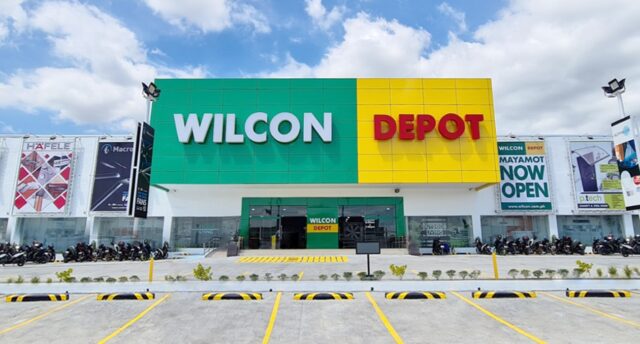
LISTED construction supplies retailer Wilcon Depot, Inc. said its net income fell by 3.24% to P2.45 billion in 2025 from P2.53 billion a year earlier, as higher operating expenses and lower other income offset sales growth.

Net sales rose 3.7%, or P1.27 billion, to P35.44 billion, the company said in a disclosure to the stock exchange on Monday.

The company said full-year growth was driven mainly by store expansions, while comparable sales were flat at negative 0.3%.

Depot net sales, which accounted for 96.3% of total net sales, reached P34.136 billion, up 4% from 2024.

Do-It-Wilcon (DIW) stores contributed P1.123 billion, or 3.2% of total net sales, growing 12.8% mainly on the back of 6.8% same-store sales growth (SSSG) and the addition of a new outlet. Project sales declined 46.8% to P185 million.

“We are happy to announce that we were able to maintain positive same store sales growth in the fourth quarter, which resulted in a second half net income increase of 26%,” Wilcon Depot President and Chief Executive Officer Lorraine Belo-Cincochan said.

“We recalibrated some functional strategies, such as in-store organizational structure and processes, product marketing plans, store layouts, among others, which were aimed at reversing performance downturns,” she added.

In 2025, the company opened six new depots, closed two smaller-format DIW stores, and reopened one depot that had burned down in 2024, bringing the total number of operating stores to 104 by yearend.

Gross profit rose 2.5% to P13.68 billion, as higher-margin in-house and exclusive brands accounted for 52.4% of net sales, offsetting weaker margins from in-house and non-exclusive lines.

Operating expenses, which include lease-related interest, increased by 3.7% to P10.854 billion in 2025, driven mainly by higher depreciation and amortization, manpower costs, and repairs and maintenance. These were partially offset by lower trucking, supplies, taxes, and licenses.

Net other income declined by 12.3% to P424 million due to weaker supplier support and fees, although this was partly cushioned by lower calamity losses net of insurance claims and higher delivery fees.

For 2026, Wilcon Depot said it plans to accelerate its nationwide expansion with eight new stores, three of which have already opened early this year.

At the local bourse on Monday, shares in Wilcon Depot fell by 2.44% to close at P6 apiece. — Alexandria Grace C. Magno

IC sets deadlines for MBAs’ adoption of new frameworks on reserve valuation, capital

BW FILE PHOTO

THE Insurance Commission (IC) said mutual benefit associations (MBA) must adopt new regulatory frameworks on reporting, reserve valuation, and risk-based capital in their financial statements starting next year.

According to a circular dated March 25, MBAs must apply the new regulatory frameworks for their financial reporting framework (FRF), valuation of policy reserves, and risk-based capital in preparing their financial reports and annual statements beginning Jan. 1, 2027.

The IC said that prior to this mandatory application date, MBAs must use its current required regulatory frameworks.

“[The] Commission recognizes the need to provide clarity on the application date of the new regulatory frameworks to address industry concerns regarding the implementation date and the applicable framework after the transition period,” it said.

The IC also extended the transition period for MBAs, with the deadlines for parallel run requirements covering the period ending June 30 this year set on Dec. 29 and those for the period ending Dec. 31 this year scheduled for June 30, 2027.

“[The] cumulative prior-year impact of the changes arising from the adoption of the new FRF, including the shift in valuation basis from Net Premium Valuation (NPV) to Gross Premium Valuation (GPV), as well as any changes in assumptions under GPV computed based on the new valuation standards, shall be recorded in the Fund Assigned for Transition Adjustment account. This account shall be recognized only for the transition year 2027…,” it added.

The MBA industry recorded a 2.5% increase in contributions or premiums to P16.95 billion in 2025, while benefit payments and expenses rose by 6.26% to P8.23 billion. — A.M.C. Sy

D.M. Wenceslao’s Gallio Events Hall holds rates, explores expansion

GALLIOEVENTSHALL.COM

GALLIO EVENTS HALL, operated by D.M. Wenceslao & Associates, Inc., said it will keep its rates unchanged until the end of 2026 despite inflation and rising fuel costs.

“Steady rates until the end of 2026, then the next raise will be in 2027,” Gallio Events Hall Senior Operations Manager Sheila Bernardo told reporters last week.

“We don’t charge additional for this and that just because there’s inflation. Whatever prices we have throughout the year are applicable for the entire year, regardless if there’s war in Iran or America or other factors,” she added.

The company said price adjustments are typically implemented every two years.

Gallio Events Hall said it is also in talks about a possible expansion after reporting strong business growth over the past two and a half years.

“[The performance] has been great. We grew exponentially over the years. If you would consider, it’s just past 2.5 years but we are able to host other types of events, not just the typical weddings to a typical corporate event,” Ms. Bernardo said.

“Yes, there are [expansion plans], but we might take it slow. But we are in talks with the owners, and they are very happy with the performance we’ve made over the past two and a half years,” she added.

Gallio Events Hall is an event venue that incorporates Filipino architectural and design elements.

Located in Aseana City, the venue offers space for corporate events, exhibitions, and social gatherings.

The venue held its launch event last Friday, featuring a modern-contemporary Filipino-themed program.

The company said demand for modern and flexible venues is rising, as the Philippines’ MICE (meetings, incentives, conferences, and exhibitions) sector is projected to grow by about 8.5% annually through 2028.

It said Gallio Events Hall aims to cater to this demand. — Alexandria Grace C. Magno

US sends subpoenas in Warner-Paramount antitrust review as probe picks up steam

THE US Department of Justice (DoJ) has sent subpoenas in its investigation of Paramount Skydance’s acquisition of Warner Bros. Discovery, three sources familiar with the matter told Reuters.

The inquiries show the DoJ moving ahead with its probe into the $110-billion acquisition that would combine the two major studios, along with the companies’ streaming services and news operations. Hollywood and Wall Street are intensely interested in the high-stakes deal, which would bring together some of the entertainment industry’s most enduring franchises but deal a blow to film and television jobs.

The DoJ is seeking information on how the deal would affect studio output, content rights, and competition among streaming services, the sources said. The DoJ is also asking how the acquisition could affect movie theaters, two of the sources said.

Acting Assistant Attorney General Omeed Assefi told Reuters in an interview last week that Paramount will “absolutely not” have a fast track to approval because of political factors.

Paramount has been expecting authorities in many places to review the deal, Chief Legal Officer Makan Delrahim said at an antitrust conference in Washington on Wednesday.

Representatives of the DoJ, Paramount, and Warner Bros. did not immediately respond to requests for comment.

The European Commission is actively engaging with third parties on the deal, two sources said. Canada has also reached out to at least one company about the deal, one of the sources said. The California Attorney General’s office has also been eager to speak with third parties, the other two sources said.

Paramount fought aggressively to wrest the deal from Netflix and has bet on closing the deal quickly, promising to pay Warner Bros. shareholders a 25-cent-per-share quarterly “ticking fee” starting in October if the deal has not closed.

LABOR, THEATER CONCERNS IN THE US
One concern in the US is whether the merger would limit the number of buyers for films and shows.

Paramount sees $6 billion in cost “synergies” in the deal, which is often code for massive layoffs. Paramount has said it expects the majority of those savings to come from streamlining technology and real estate, and other “corporate-wide efficiencies.”

The DoJ has reached out to independent production companies asking about the proposed deal’s impact on competition, according to one industry veteran who requested anonymity because of the sensitivity of the issue.

The Teamsters union has expressed concern that the proposed merger “poses a direct threat” to employment, and urged the DoJ to block the deal unless enforceable safeguards are put in place to protect jobs and output.

Such safeguards have been negotiated before. After its unsuccessful attempt to block the merger between T-Mobile and Sprint, California secured an agreement that the merged company would maintain its California headcount for three years.

The organization representing theater owners also issued a statement in late February, noting that studio consolidation has historically led to the production of fewer movies.

“At this juncture, there is no reason to believe the outcome here will be any different,” said Cinema United President Michael O’Leary. “We continue to urge regulators to heed the lessons of the past.” — Reuters

Trump’s war and energy damage

We are now on the fifth week of US President Donald Trump’s war against Iran and things are still bad.

I have seen some good and bad news in BusinessWorld recently. The good news: “Marcos says Philippine oil supply secure beyond 45 days” (March 26), “ASEAN summit to go ahead in May, but shortened to ‘bare bones’ program due to Middle East conflict” (March 27), and, “Manila, Beijing resume talks on South China Sea, energy security” (March 29). The bad news: “PHL growth forecast cut to 4.5% — ING” (March 29), and, “Oil-shock vulnerability blamed on deregulation” (March 29).

Country leaders, especially those from East Asia, must meet in person and craft various options to sustain growth as all of them are more badly affected by the Trump war compared to Europe, or North and South America, or Africa. They can get their oil and gas from their respective continents, but East Asia is highly dependent on Middle East oil and gas.

The Philippines should prioritize energy cooperation with China, Vietnam, and Malaysia, not bickering with China. This should include wider exploration and development of offshore oil and gas resources in the South China Sea, and sharing of these resources, technology, and investments which will produce more common benefits.

And it is simply wrong to blame oil deregulation for the current oil price shocks. We would do better to blame the climate alarmism that demonizes further development of oil, gas, and coal production, which are all very useful.

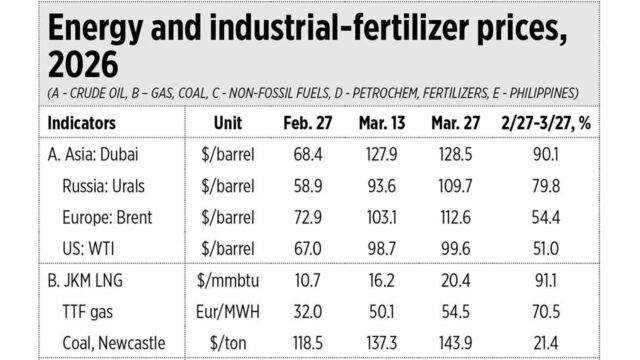
The prices of all fossil fuel products have risen. People will hate the higher prices, but they cannot honestly say, “Leave fossil fuels, save the planet.” They will prefer to save their economies, jobs, and businesses — and oil, gas, and coal produce many of the industrial by-products they use, like petrochemicals, fertilizers, and coal ash for cement production.

Non-fossil fuel sources of power — solar, wind, and nuclear — have experienced contractions in prices. Meaning investors and businesses are not rushing to go there, as they are not substitutes for fossil fuels.

Among the industrial and petrochemical products are bitumen used for asphalt and road construction, methanol for adhesives and foams, naptha for producing plastics and chemicals, sulfur and urea for fertilizers, styrene and butadiene monomers to produce synthetic rubber tires for our cars, trucks, tractors and even bicycles.

These are some of the byproducts that crude oil and gas can produce. Wind, solar, and biomass cannot produce these. Hence, investors are not rushing to wind-solar amidst the current oil and gas price and supply shocks.

Executive Secretary Ralph G. Recto announced last Sunday that the government has secured a firm order of 1.04 million barrels of diesel; the first batch will arrive this week. He added that the country will receive a steady supply of coal from Indonesia. This is good. We should see more energy diplomacy, more assurances of oil, gas, and coal supply via trade, not more war mongering.

Finally, some quick comments on three issues.

1. Some big solar plants are already in place, so we should use them. Yesterday Meralco PowerGen Corp. (MGEN) announced that its affiliate, Terra Solar Philippines, Inc. (MTerra Solar), has successfully energized the first 250 megawatts (MW) of its solar capacity. So it is now starting as an electricity producer and contributing to the country’s power needs.

MTerra Solar also energized the first of its battery energy storage system (BESS). It can deliver up to 450 megawatt-hours (MWh) of energy to the grid at night. This is largest operating BESS in the Philippines.

MGEN President and CEO Manny Rubio optimistically and correctly stated that “MTerra Solar plays an important role in supporting the country’s near-term energy requirements. The project’s phased energization enables earlier delivery of capacity to the grid, helping efforts to maintain stable electricity prices amid evolving global conditions.”

2. The real purpose of the suspension of market transactions of the Wholesale Electricity Spot Market (WESM) is not clear because market suspension is normally done during calamities like strong typhoons and earthquakes, when power plants and transmission or distribution lines are knocked out resulting in power shortages. Any available power plant anywhere then must dispatch power, and these running plants can dictate pricing, so “administered pricing” by the Energy Regulatory Commission (ERC) is done. Administered price is computed by averaging the last four weeks of similar days at similar intervals in prices.

But currently all generation companies (gencos) are available except those with scheduled maintenance. An increase in their prices is due to the rise in marginal costs, the fuel costs, and not to “market abuse” because competition is still working. If the government wants to conserve fuel and shut down certain power plants like those using diesel and bunker fuel, the easiest thing to do is for the Energy department to tell them to shut down, and not suspend market operations.

3. Earth Hour 2026, which was held last Saturday, was another failure in asking the public to “celebrate darkness for one hour.” I checked the website of the Independent Electricity Market Operator of the Philippines last Saturday night and saw that there was no decline, not even a blip, in electricity demand from 8:30-9:30 p.m. that day. People want brightness, not darkness. They want energy abundance, not energy poverty.


Bienvenido S. Oplas, Jr. is the president of Bienvenido S. Oplas, Jr. Research Consultancy Services, and Minimal Government Thinkers. He is an internationa fellow of the Tholos Foundation.

minimalgovernment@gmail.com

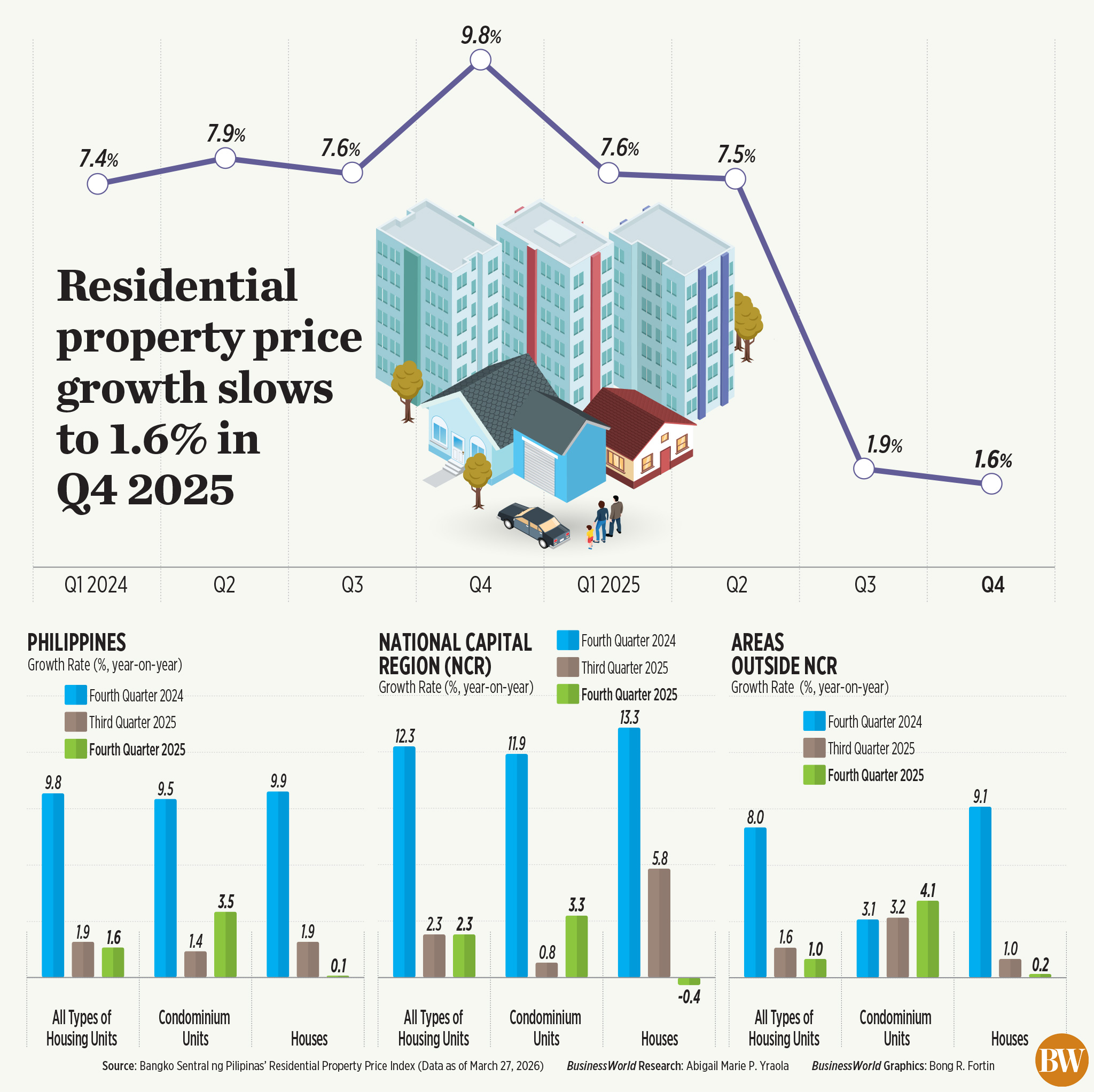
Residential property price growth slows to 1.6% in Q4 2025

Citicore Renewable income rises 14% on higher revenue, lower costs

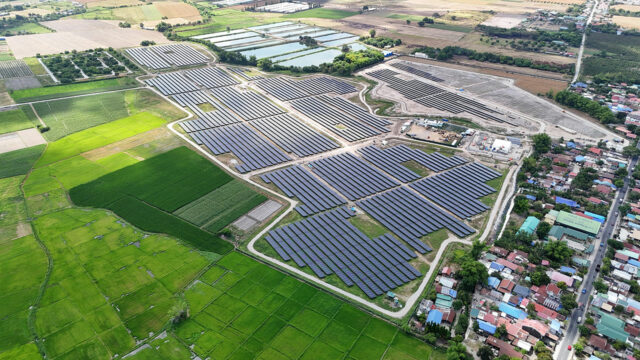
CITICORE SOLAR Pampanga 1, Arayat, Pampanga — CREC.COM.PH

SAAVEDRA-LED Citicore Renewable Energy Corp. (CREC) said its net income rose by 14% to P1.15 billion in 2025, driven by higher revenue and lower costs.

Consolidated revenues grew by 3% to P5.32 billion, supported by stronger electricity sales, the company said in a statement on Monday.

Earnings before interest, taxes, depreciation, and amortization (EBITDA) increased by 3% to P1.81 billion.

CREC said earnings growth was supported by a 34% increase in service fees to P325 million and a 19% decline in finance costs following refinancing initiatives.

Last year, the company energized three solar plants in Batangas and Pampanga with a combined capacity of 239 megawatts (MW), which are expected to contribute fully to its financial performance this year.

In September 2025, CREC switched on what it described as the country’s “first baseload solar power plant” through a 197-MW solar farm in Batangas, equipped with a 320-megawatt-hour battery energy storage system.

“This milestone demonstrates how innovation in renewable energy can redefine the country’s power landscape. We now have definitive proof that solar, when paired with energy storage systems, can provide a truly reliable source of energy that supports national growth,” CREC President and Chief Executive Officer Oliver Tan said.

The company said it plans to activate six more solar plants in Batangas, Negros Occidental, and Pangasinan next month, with a combined capacity of 484 MW.

CREC has earmarked about $2 billion in capital expenditures this year to fund the rollout of more than one gigawatt of solar power projects.

CREC, directly and through its subsidiaries and joint ventures, manages a portfolio spanning renewable energy generation, power project development, and retail electricity supply.

The company currently has a combined gross installed capacity of more than 500 MW from its solar facilities in the Philippines. — Sheldeen Joy Talavera

OceanaGold extends Didipio mine life to 2037

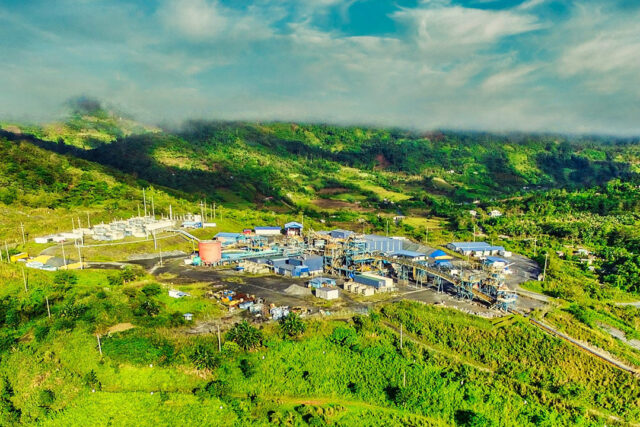
OCEANAGOLD (Philippines), Inc. operates the Didipio gold and copper mine located in the northern Luzon region of the Philippines. — DIDIPIOMINE.COM.PH

OCEANAGOLD (Philippines), Inc. said the operational life of the Didipio gold and copper mine in Northern Luzon has been extended to 2037 following an updated mine plan based on recent exploration results.

In a disclosure on Monday, the listed miner said updated mineral resource estimates indicate that Didipio’s open-pit stockpiles will be exhausted by 2032, with a smaller portion of residual ore expected to support operations until 2037.

The company had previously projected the mine’s operations to end in 2035, based on its 2023 technical report.

The Didipio mine operates under a Financial or Technical Assistance Agreement with the government, under which the state receives 60% of net revenue while the company receives 40%.

OceanaGold said the Didipio mine has a combined measured and indicated ore volume of 45.2 million metric tons (MT) as of Dec. 31, including 32 MT from underground operations and 13.2 MT from open-pit stockpiles.

Measured and indicated gold resources totaled 1.34 million ounces (Moz), consisting of 1.21 Moz from underground operations and 0.12 Moz from open-pit stockpiles.

Silver resources were estimated at 2.4 Moz, while copper resources were placed at 0.16 MT.

Proved and probable reserves for the combined underground and open-pit stockpiles include 1.13 Moz of gold, 2.2 Moz of silver, and 0.13 MT of copper.

The company said the updated resource estimates provide a basis for medium- to long-term mine planning.

“While ongoing monthly, quarterly and annual reconciliation fluctuations are expected, the Mineral Resource estimates are believed to provide an acceptable basis for medium to long-term mine planning purposes,” it said.

OceanaGold said it plans to increase processing throughput to 4.3 MT per annum, the current permitted limit, by 2027.

To support the extended mine life and higher underground production, the company said it is upgrading its mining infrastructure.

“Upgrades are underway to existing infrastructure to support increased underground mining rates, including primary ventilation upgrades to support mining at depth and increased fleet requirements,” the company said.

OceanaGold said it is also improving its surface paste plant and underground reticulation network, and investing in dewatering and electrical infrastructure upgrades. — Vonn Andrei E. Villamiel

Japan steps up yen intervention threats, signals rate-hike chance

Banknotes of Japanese yen and US dollar are seen in this illustration picture taken on Sept. 23, 2022. — REUTERS

TOKYO — Japan stepped up yen intervention threats and signaled that further falls in the currency could justify a near-term interest rate hike, as policymakers grow increasingly concerned about inflationary pressures from the Middle East war.

In the strongest warning yet of yen-buying intervention, Japan’s top currency diplomat Atsushi Mimura said on Monday authorities may need to take “decisive” steps if speculative moves persist in the currency market.

“We are hearing that speculative moves are increasing in the currency market, in addition to the crude futures market. If this situation continues, it may be time to take decisive measures,” Mr. Mimura told reporters.

The remark marked an escalation from past verbal warnings as it was the first time Mr. Mimura, who oversees Japan’s currency policy, used the term “decisive” — language traders typically read as a signal of authorities’ readiness to intervene.

Markets have been rattled this month after the Iran war effectively shut the Strait of Hormuz, a chokepoint for about a fifth of global oil and gas flows, ​driving up crude oil prices and demand for the safe-haven dollar.

The yen bore the brunt and slid past the psychologically important ¥160-per-dollar level to its weakest since July 2024, when Japan last intervened to prop up the currency.

Soaring oil prices from the Middle East conflict add to inflationary pressures from the weak yen, which has been a political headache for policymakers by pushing up import costs.

STAGFLATION RISK LOOMS
Separately, Bank of Japan (BoJ) Governor Kazuo Ueda said the central bank would closely watch yen moves as they affect the economy and prices, suggesting inflationary pressures from ​a weak currency could justify raising interest rates in the coming months.

“Currency market moves are obviously among factors that hugely affect economic and price developments,” Mr. Ueda told Parliament on Monday.

“We will guide policy appropriately by scrutinizing how currency moves could affect the likelihood of achieving our growth and price forecasts, as well as risks,” he said, keeping alive the chance of a rate hike as soon as next month.

Mr. Ueda’s remarks highlight growing concern within the BoJ over the chance it could fall behind the curve in addressing the risk of too-high inflation, as high fuel costs hit an economy already experiencing years of steady price and wage increases.

While the BoJ kept rates steady in March, its policymakers debated further rate hikes with some flagging the chance of steady or faster-than-expected increases, the meeting’s summary showed on Monday.

Broadening cost pressures from rising oil prices could tip Japan into stagflation ​where the economy slumps and prices increase ​simultaneously, one member was quoted as saying, adding the BoJ may need to tighten policy if yen declines intensify.

Mr. Ueda said the BoJ must raise its short-term policy rate at an “appropriate pace” to avoid bond yields from overshooting, signaling its resolve to continue with steady rate hikes.

The BoJ ended a decade-long, massive stimulus in 2024 and raised rates including in December, when it hiked its short-term policy rate to a 30-year high of 0.75%, on the view Japan was making progress in durably achieving its 2% inflation target.

The central bank released last week several indices that help justify further rate hikes, including a new inflation gauge and revised output gap showing Japan running above capacity for a 15th straight quarter.

The summary of the BoJ’s March meeting, as well as last week’s release of a hawkish inflation, output gap and neutral rate estimates, suggests the bank is teeing up for its next rate rise, said Benjamin Shatil, an economist at JPMorgan Securities. “While the global risk environment remains fragile, and could affect the timing of the BoJ’s next move, we continue to pencil in a hike at the April meeting,” he said. — Reuters