Home Blog Page 8013

Corporate Banking Circa 2030: 7 hypotheses
Second of two parts

Previously, we discussed how banks can leverage ecosystems to organize integrated networks and how they can expand services beyond banking to help clients focus on their core activities. These are among the seven hypotheses on how banks will transform to build the next generation of businesses. The second part of our two-part article continues by discussing how banks can provide leadership on critical societal issues to strengthen trust with the next generation of clients.

PROVIDING LEADERSHIP ON SUSTAINABILITY AND COVID-19 RECOVERY
Reduced trust in financial services poses a serious threat, pushing some banks to prioritize making a credible and high-profile commitment to helping businesses address their challenges and risks. This may be achieved through establishing and executing a clear social purpose and creating measurable non-financial value. These efforts extend beyond expanding environmental, social and governance (ESG) investments and enable the growth and development of profitable operations, benefiting stakeholders beyond a bank’s bottom line. This way, sustainability becomes more than a public relations or branding exercise — it becomes a cultural mindset.

The mindset shift will require substance and depth in the banks’ sustainability agenda, which may currently revolve around the prioritization of ESG-minded business practices to ensure operational resilience, the development of forward-looking multi-year roadmaps with interim targets and intergenerational narratives, and the implementation of responsible banking targets, categorized mainly into climate action and provision of social equity. These roadmaps should include solutions for societal challenges, particularly to help restore socio-economic growth in the aftermath of the COVID-19 pandemic. On the climate action agenda, banks can prioritize investments in, and extend credit to, sustainable companies so that those ventures can scale. Banks can help provide direct incentives for clients that commit to and meet sustainability targets, and in the process offer robust and intuitive solutions for businesses to track and report on carbon consumption and other metrics while developing exchanges and marketplaces for the trading of carbon credits. Mark Carney, former head of Bank of England and now a UN Special Envoy, has suggested that “the transition to net zero is creating the greatest commercial opportunity of our age.”

It is estimated by the International Energy Agency that $3.5 trillion of annual global investments would be needed to build the infrastructure of a green economy, requiring the coordinated management of finance and investments during the transition phase of climate change mitigation and sustainable development. During this phase where forests are replenished, oceans and supply chains cleaned up, clean technologies replacing dirty power plants, banks will have to face the financial risk and capital implications of stranded assets in their portfolios, particularly to clients exposed to fossil fuel reserves becoming stranded resources. The regulatory stress testing exercises and the launch this year of a sustainability standards board by the International Financial Reporting Standards Foundation are twin developments that are expected to accelerate the surfacing of these issues.

Depth is a characteristic that banks will need to embrace on the other agenda of sustainability, which is the provision of social equity. While this can be a highly ideological issue, stakeholders often find common ground on jobs generation, a concrete manifestation of participation by individuals and communities in socio-economic growth and recovery post-COVID. Banks need not go far — they can look at the supply chain for instance, where banks can play a role in deepening the supply chains notably for the following sectors that face varying levels of distress or flourish — construction and real estate, industrials and manufacturing, semiconductor, energy and utilities, agriculture and technology. In these supply chains, there is often a high proportion of underserved suppliers with poor or opaque creditworthiness. At the current state, and as reconfigurations take place, supply chain participants have greater financing needs to enhance resilience, fund reshoring and diversification, and in the process, generate jobs. 

Banks have for some time been strategizing along supply chains, with capital allocation being driven into SMEs through direct credit enhancements of anchor buyers while employing advanced analytics to identify early warning (and conversely, recovery) indicators. Some of these involve spatial, sentiment and mobility indicators to supplant lagging financial indicators. The increasing visibility on movement of cash between and across tiers of companies in the supply chain correlate with an increase in penetration of underserved SME segments, with FinTechs upping the ante on competition with their adoption of emerging technologies across the value chain. The blurring of the line between the physical supply chain (e.g., sourcing, production, shipping and tracking) and financial supply chain (e.g., ordering, contracting, payment and settlement) is being accelerated especially with the rise of networks and platform solutions like the electronic invoicing utility. One can easily be swamped by these developments, and this is where the banks should discern their purpose, assessing which sectors and value chains to focus on and correspondingly, finance based on size, fit and feasibility, while distilling the value proposition and business case and contributing to whole-system transformation — whether in manufacturing, services or even housing.   

Banks are critical in the development of inclusive capitalism, and they can create clear market differentiation by expressing and maintaining a clear social purpose. The rising generation of small business owners and entrepreneurs, as well as consumers, prefer to do business with companies that share their values on sustainability, and banks can exert clear leadership by revisiting their social contract and acting upon societal issues, particularly climate action and reduced inequalities, to foster client loyalty.

FUTUREPROOFING FOR WHAT’S NEXT
The way forward in a transformation journey, though unique for every bank, starts with a clear and client-focused strategy, strong vision and purpose, sophisticated technology, and a strong and flexible operating model. In many cases, this will require uprooting structures and processes built around a model largely unchanged for a century. While business case development and strategic planning are necessary, banks should not delay action. Securing future market leadership will require addressing the difficult questions in managing transformation; defining clear, long-term business strategies and innovative, client-centered solutions; and sustained execution. By recognizing the opportunities in the present and taking bold action, banks can better capitalize upon what the future holds for the banking industry and thrive in it.

Much has been said about banking functions remaining necessary, but as to whether they will continue to be performed by banks is another story. Banking — notably corporate banking — will inevitably have to undergo transformation that goes beyond the technology dimensions. These functions will become not only commoditized — they are becoming complex, networked and distributed, to mirror the continuing need for relevance and utility to bank clientele. Banks may want to take a leaf from the etymology of corporation — corpuratus, to form into a body — why were these groups or bodies formed? They are bound by common aims and aspirations that resulted in a sense of being and action. Corporate banks who find a way to rediscover their purpose will find a wellspring of transformation from within and provide the energy to sustain their transformation journey.

This article is for general information only and is not a substitute for professional advice where the facts and circumstances warrant. The views and opinions expressed above are those of the author and do not necessarily represent the views of SGV & Co.


Christian G. Lauron is a Financial Services Partner of SGV & Co. He also leads the Firm’s Government & Public Sector.

DoH reports 7,058 more infections to 1.22M

By Vann Marlo M. Villegas, Reporter

THE DEPARTMENT of Health (DoH) reported 7,058 coronavirus infections on Sunday, bringing the total to 1.22 million.

The death toll rose by 139 to 20,860, while recoveries increased by 6,852 to 1.15 million, it said in a bulletin.

There were 53,757 active cases, 1.4% of which were critical, 93.2% were mild, 2.3% did not show symptoms, 1.8% were severe and 1.28% were moderate.

It said 13 duplicates had been removed from the tally, eight of which were tagged as recoveries and one as death. Eighty recoveries were reclassified as deaths. Four laboratories failed to submit data on May 28, DoH said.

About 12.5 million Filipinos have been tested for the coronavirus as of May 28, according to DoH’s tracker website.

The coronavirus has sickened about 170.6 million and killed 3.5 million people worldwide, according to the Worldometers website, citing various sources including data from the World Health Organization.

About 152.6 million people have recovered, it said.

The Health agency on Saturday reported one more person infected with a more contagious variant from India, bringing the total to 13. The person was a returning migrant Filipino from the United Arab Emirates with an address in the Cordillera Administrative Region. The patient completed a 10-day isolation upon arrival and was discharged upon recovery.

DoH said 104 more people had been infected with a variant from the United Kingdom, 89 of which were local cases and 14 were still being verified, bringing the total to 1,071. Of the 104, five were active cases, three died and 96 recovered.

The Health department also said 137 more people had been infected with a variant from South Africa, 127 of which were local cases, one is a returning migrant, and the rest were still being verified.

This brought the total to 1,246. Of the 137, nine were still infected, five died and 123 recovered.

Four more people also got infected with a variant from the Philippines. Three were local cases and the other one was still being verified. They all have recovered. This brought the total to 162.

The agency said the variant first found in the Philippines is still a variant under investigation.

5.12M VACCINES
Meanwhile, the Philippines has given out more than five million coronavirus vaccine doses since starting its vaccination drive in March, according to the country’s vaccine czar.

Carlito Galvez, Jr. told the ABS-CBN News Teleradyo 5.12 million people had been inoculated against the coronavirus, 1.19 million of whom received two complete doses.

He said 93% of the country’s health workers or 1.4 million have been given the vaccine, adding that 664,000 got fully inoculated.

Me. Galvez said 1.37 million of the country’s nine million senior citizens and 1.15 million seriously ill people had also been vaccinated against the coronavirus.

The government has to give out half-a-million vaccine doses daily in Metro Manila, Metro Davao, Metro Cebu and six other urban areas to achieve herd immunity by Nov. 27, Mr. Galvez said.

At least 51.8 million vaccine doses are needed to vaccinate 70% of the population in these areas, or about 25.9 million adults, the OCTA Research Group said last week.

It would take 17 months to achieve herd immunity if 100,000 doses were given daily, eight months for 200,000 doses daily, and almost six months for 300,000 doses daily, OCTA research fellow Nicanor Pier Giorgio Austriaco told an online news briefing.

The government seeks to achieve herd immunity — when a majority of the population becomes immune from an infectious disease, either through vaccination or a previous infection, indirectly protecting those without immunization — by Nov. 27.

Also part of the priority areas aside from the capital region are Metro Cebu, Metro Davao and the provinces of Bulacan, Batangas, Cavite, Laguna, Pampanga and Rizal.

OCTA said prioritizing these areas for vaccination would “optimize the scarce vaccines to give the maximum impact.”

The Health department on Wednesday said it supports President Rodrigo R. Duterte’s order to prioritize Metro Manila and the eight other areas.

It said 67% of the vaccine supply is given out in Metro Manila, the Calabarzon region, Central Luzon, Central Visayas and the Davao region.

Congressman urges Meralco to extend ‘no disconnection’ period

BW FILE PHOTO

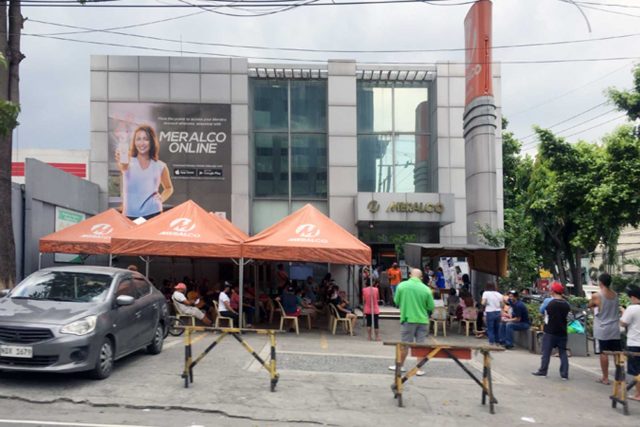
A CONGRESSMAN has urged Manila Electric Co. (Meralco) to extend the period within which it does not charge fees and disconnect past due accounts by six more months amid a coronavirus pandemic.

“The six-month extension of the no disconnection period would be enough time for electricity consumers to be in a better position to pay their bills considering that many lost their jobs and are finding it hard to just put a meal on the table,” Party-list Rep. Carlos Isagani T. Zarate said in a statement on Sunday.

“Adding a convenience fee would just make it harder for electricity consumers to pay their bills,” he added.

The lawmaker said people use more electricity during the summer, and many of them might go out more often to save power to fight the heat. This could further spread the coronavirus, he added.

Meralco stopped disconnecting the power of those who have failed to pay their bills in March, when Metro Manila and nearby provinces were placed under a strict lockdown amid a fresh surge in infections.

It extended the favor until May 14 from the original April 30 deadline “to take into consideration the challenges our customers are facing amid these difficult times.” 

The company on Thursday said it would start charging a P15 convenience fee again for online bill payments starting June 1, lower than its original fee of P47.

The company has said it could not do away with the fee that is charged through its Meralco app by PayMaya, a third-party online payment channel. Payments made through online banking may not be charged convenience fees.

Meralco’s controling stakeholder, Beacon Electric Asset Holdings, Inc., is partly owned by PLDT, Inc.

Hastings Holdings, Inc., a unit of PLDT Beneficial Trust Fund subsidiary MediaQuest Holdings, Inc. has an interest in BusinessWorld through the Philippine Star Group, which it controls. — Bianca Angelica D. Añago

Senate measure on vaccine buildout, manufacturing filed

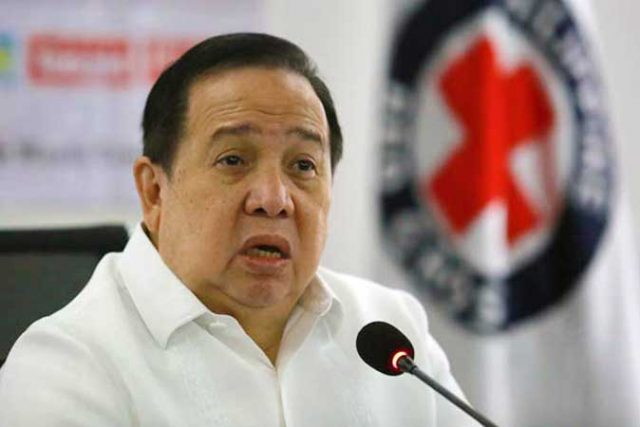
SENATOR RICHARD J. GORDON — PHILSTAR/MICHAEL VARCAS

A SENATOR has filed a bill that seeks to create an agency that will oversee vaccine development and manufacturing in the Philippines.

“Importation of vaccines may be cheaper and a relatively easier route in protecting public health,” Senator Richard J. Gordon said in the explanatory note of Senate Bill 2238.

“However, the long-term and more efficient policy framework, especially in cases when there is a pandemic, is to revitalize the country’s local vaccine capability,” he added.

Mr. Gordon said 80% of coronavirus vaccines have gone to rich countries, with only 2% going to poor ones under a global initiative for equal access. This left low to middle income countries such as the Philippines “at the tail end of the supply chain.”

He said the right way forward to protect and promote people’s right to health is by using science — investing in research and development and technology, and increasing the country’s expert pool and boosting local vaccine capability.

Mr. Gordon said the country’s vaccine manufacturing capability declined in the absence of training on updated vaccine production, outdated facilities and lack of government support.

The Philippines’ first vaccine laboratory was set up in the 19th century and initially produced smallpox vaccines, he said.

In 1950’s, the government produced with the help of the United Nations Children’s Emergency Fund vaccines against tetanus, rabies and tuberculosis, he added.

Under the bill, a Philippine Vaccine Authority will create a long-term vaccine development plan. It will also formulate a research agenda for vaccines and other substances from a biological source. 

The agency will also develop and prescribe policies for vaccines and substance research and manufacturing, and facilitate transfer from technology owners and research institutions to local institutions and manufacturers.

It will also execute contracts and agreements, among other functions.

The agency will be chaired by the Health secretary. It will have the secretaries of Science and Technology, Trade and Defense departments as members.

The agency will provide human resource development for various fields, provide funds for scholarships, study grants, training programs and short courses, support annual conventions and conferences and professionals and engage with returning Filipino scientists and foreign experts.

It will also support Filipino vaccine manufacturers by giving them a tax holiday for the first five years covering income, import duties on equipment and modular units and export sales of locally made vaccines.

The Health department and local government units will also buy vaccines from Filipino manufacturers first for their immunizations programs.

The measure initially allots P2 billion as a vaccine development fund under the national budget. — Vann Marlo M. Villegas

Senator seeks probe on illegal online lending operators

SENATE.GOV.PH

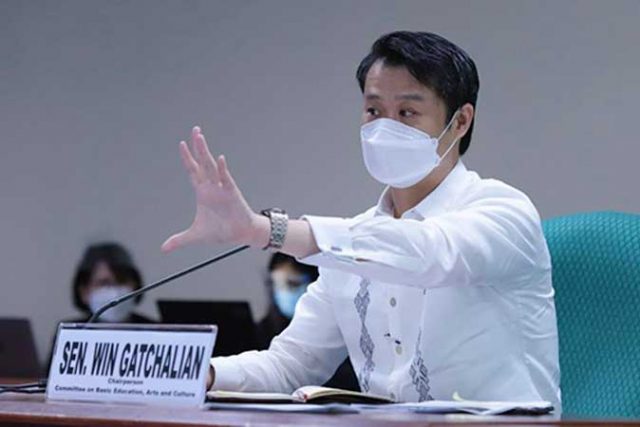
A SENATOR on Sunday said he will file a resolution that will call for an inquiry into the proliferation of online lending operators that are not registered with regulatory agencies such as the Bangko Sentral ng Pilipinas (BSP) and the Securities and Exchange Commission (SEC).

In a statement, Senator Sherwin T. Gatchalian said the probe aims to address possible gaps in government policies “following the emergence of online cash loan services of unlicensed lenders.”

Mr., Gatchalian, vice chair of the committee on banks, Financial Institutions and Currencies, said his office continues to receive complaints from victims of online lending companies and applications.

Majority of these claim to have experienced grave threats, intimidations and public shaming from collectors.

Mr. Gatchalian said there were even victims who reportedly committed suicide while others received death threats.

“Magsilbing aral din sana ito sa mga naghahanap ng mapag-uutangan nang mabilis. Dapat marunong silang kumilatis kung kaduda-duda ang pamamaraan ng pagpapautang ng isang kumpanya (This should also serve as a lesson to those looking to get a quick loan. They should check if the company’s lending process is suspicious),” he said.

The senator also reiterated his push for the enactment of his Senate Bill No. 1366 or the Fair Debt Collection Practices Act. 

The senator noted that the SEC in December revoked the certificate of authority of an online lending firm found to have engaged in unfair debt collection practices. The National Privacy Commission also recommended the prosecution of an online lending app operator for harassing and publicly shaming borrowers who failed to pay and for violating the data privacy law. — Vann Marlo M. Villegas

SC speeds up action on cross-border support for minors and spouses

OFFICIALGAZETTE.GOV.PH

THE SUPREME Court (SC) has approved the rules fast-tracking decisions on the provision of support for minors and spouses by foreigners.   

The Rules on Action for Support and Petition for Recognition and Enforcement of Foreign Decisions or Judgments on Support, signed on May 23, shorten certain periods for compliance.

This includes the period to file an answer at 15 calendar days from the service of summons, set the pre-trial within 30 calendar days from the filing of the last responsive pleading, present evidence within 30 calendar days each for the plaintiff and the defendant, and render judgment within 30 calendar days upon admission of evidence.

Moreover, the court will not review the merits of foreign judicial or administrative decisions and will not entertain motions for reconsideration of the judgment or for a new trial except in special circumstances.

Decisions will also be immediately executory despite appeals, unless a court issues a restraining order.   

The new rules, which take effect on May 31, 2021, are aligned with the international Hague Convention on Child Support.

Under the old rules, decisions were provisional or treated such appeals for child or spouse support by foreigners as ordinary civil cases.   

The new guidelines apply to children below 18 years old even of unmarried parents, or older children unable to fully support themselves due to physical or mental disability.

Further, the term “support” is defined in the rules as “everything indispensable for sustenance, dwelling, clothing, medical attendance, education, and transportation.” — Bianca Angelica D. Añago

Former health chiefs, medical sector groups denounce tobacco industry’s ‘tactics’ to ease government control

BW FILE PHOTO

FORMER health secretaries, medical sector groups and health advocates have slammed the tobacco industry for strategies that allegedly aim to ease tobacco control policies in the country.

In a statement on Sunday, they affirmed their support to Joint Memorandum Circular (JMC) 2010-01 signed by the Department of Health and the Civil Service Commission under the World Health Organization Framework Convention on Tobacco Control.

Several lawmakers recently called for a repeal of the circular after it was used as basis to block tobacco companies from purchasing vaccines against the coronavirus for the industry’s workers. The guidelines on vaccine purchase have since been altered to allow all private firms to buy doses.

The circular provides a code of conduct to avoid “tobacco industry interference” in policy-making.

“Let us be clear: in safeguarding Filipinos’ health, tobacco companies are neither allies nor friends,” the groups said in their joint statement.

“There is no doubt: the move to repeal the JMC is in the interest of the tobacco industry. Removing this important wall between the Philippine bureaucracy and tobacco influence is serving Filipinos’ health on a silver platter to the tobacco industry and its profit-driven interests,” they said.

Among the signatories were former health secretaries Jaime Galvez-Tan, Carmencita N. Reodica, Manual M. Dayrit and Paulyn Jean Rosell-Ubial.

They were joined by former health undersecretary Alexander A. Padilla, former health assistant secretary Agnette P. Peralta, former National Anti-Poverty Commission undersecretary Florencia C. Dorotan, and UP Manila Department of Health Policy and Administration chair Carmelita C. Canila.

Other signatories were law group ImagineLaw, Philippine Medical Association, Private Hospitals Association of the Philippines, Inc. and Southeast Asia Tobacco Control Alliance, and 40 other health advocate groups.

Tobacco industry representatives could not be immediately reached for comment on Sunday. — Vann Marlo M. Villegas

PHL’s 4th typhoon of the year not likely to make landfall

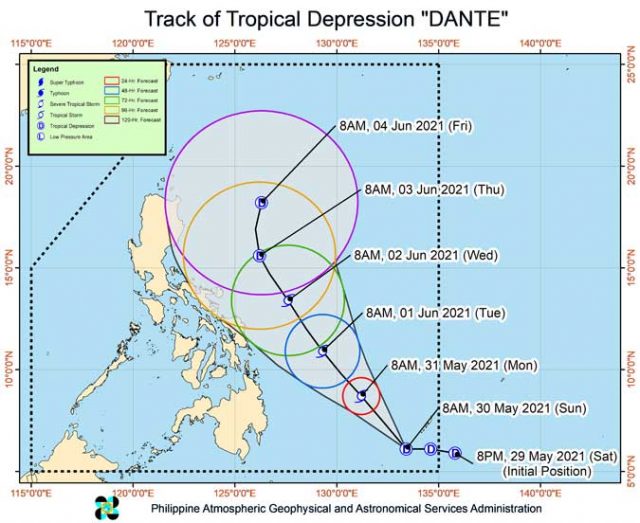
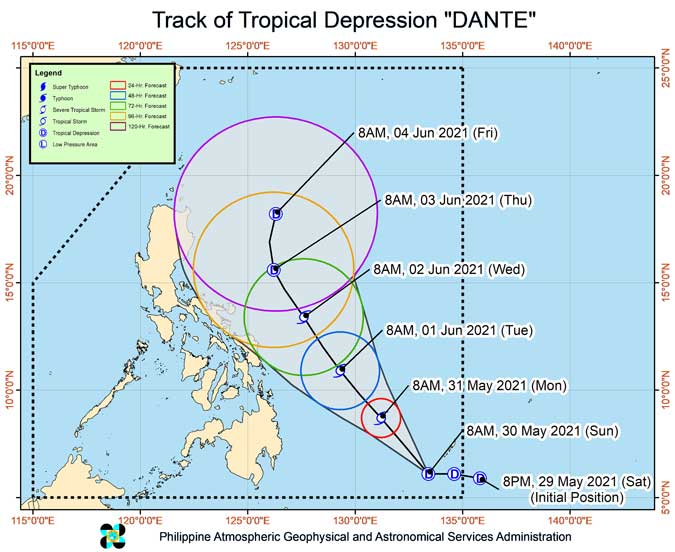
THE FOURTH typhoon to enter the country this year, named Dante, is not likely to hit land but is expected to intensify into a tropical storm category by Monday morning, according to weather bureau PAGASA.

As of Sunday 3 p.m., the tropical depression was located 835 kilometers east of Mindanao in the southern Philippines. It was moving westward over the Philippine Sea with maximum sustained winds of 55 kilometers per hour (km/h) near the center and gustiness of up to 70 km/h.

No typhoon alert level was raised as of Sunday early afternoon, but rains were expected in the Mindanao regions of Northern Mindanao, Davao, Soccsksargen, and Caraga, according to PAGASA Senior Weather Specialist Chris Perez.

“The present track forecast shows that the hoisting of Tropical Cyclone Wind Signal (TCWS) over any land area in the country remains less likely,” PAGASA said.

“However, given the uncertainty in its track forecast, any further westward shift in the track forecast may lead to the hoisting of TCWS over the eastern portion of the country,” the agency said.

Dante is forecasted to be closest to land by Wednesday, June 2, at 365 km east of Virac, Catanduanes in the central-eastern part of the country. — MSJ

Business chamber, New Zealand gov’t partner for program on Davao City’s IP women 

DAVAO CIO

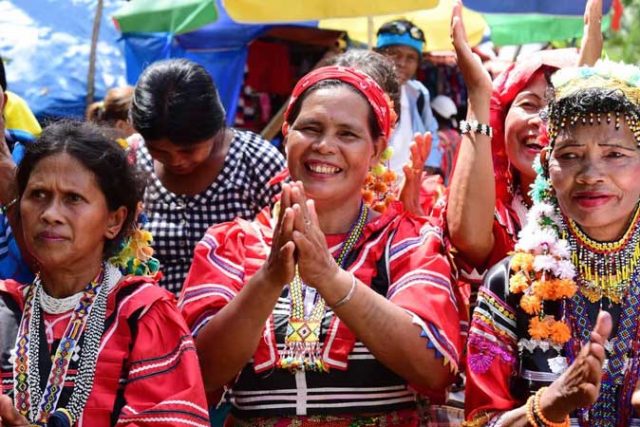
THE NEW Zealand Embassy and Davao City’s business chamber, together with several government agencies, have launched a livelihood program to help women in the city’s indigenous people (IP) communities.

Malou G. Monteverde, president of the Davao City Chamber of Commerce and Industry, Inc., said one component of the program is engaging young women IPs in technology for e-commerce.

Reporting during the chamber’s 5th general membership meeting on May 28, Ms. Monteverde said several meetings have been held to discuss the training design and implementation, community partners and beneficiaries, and budget.

The one-year project, titled “Uplifting IP Women of Davao,” is funded by the New Zealand government and will be in collaboration with the city government, Philippine Center for Entrepreneurship-Go Negosyo, Zeald’a GEM Academy, and the regional offices of the Department of Trade and Industry, and the National Commission on Indigenous Peoples.

Davao City is home to 11 IP groups. — Maya M. Padillo

Red tide warning lifted in 4 areas 

THE BUREAU of Fisheries and Aquatic Resources (BFAR) lifted the red tide warning issued in four areas after testing free from paralytic shellfish poison.   

In its 16th shellfish bulletin, BFAR said shellfish harvested in Puerto Princesa Bay, Palawan; Leyte town; Biliran Islands; and Hinatuan, Surigao del Sur are now safe for human consumption after being declared free from red tide.   

However, BFAR said areas that remain positive for red tide contamination include Dauis and Tagbilaran City, Bohol; Tambobo Bay, Negros Oriental; and Daram Island, Zumarraga, Cambatutay Bay. Irong-Irong Bay, San Pedro Bay, Maqueda Bay, and Villareal Bay, all in Western Samar.   

Other red tide positive areas are Calubian, Carigara Bay, Ormoc Bay, and Cancabato Bay, Leyte; Balite Bay, Davao Oriental; Murcielagos Bay, Zamboanga del Norte; and Lianga Bay and Bislig Bay, Surigao del Sur.   

All types of shellfish and Acetes sp. or alamang harvested in red tide areas are unsafe for human consumption. However, other marine species from the contaminated waters can still be eaten with proper handling.

The occurrence of red tide is due to high concentrations of algae in the water. Human consumption of contaminated shellfish may result in paralytic shellfish poisoning, which affects the nervous system.

Usual symptoms of paralytic shellfish poisoning include headaches, dizziness, and nausea. Severe cases may consist of muscular paralysis and respiratory issues. — Revin Mikhael D. Ochave   

Learning from Vietnam’s COVID-19 response (or, how must we face a formidable foreign invader?)

KATHERINE-MCCORMACK-HX3LO5LCQNY-UNSPLASH

Fifteen months after the first COVID-19 incursions into Philippine territory, we are still groping for the proper balance between confining ourselves to the relative safety of our homes and daring to venture out to earn a living. How much longer before we can get out of this dilemma?

Notwithstanding government’s claim of having “excellent” performance in managing this unprecedented threat, the larger consensus is that government has failed miserably. First, it has not given due importance to “the science.” It did not promptly undertake mass testing, contact tracing, border controls, and quarantines.

Moreover, medical experts have not been given the lead role in the campaign. The lead role instead has been given to ex-generals, rendering the entire campaign militaristic, with excessive reliance on disciplinary and regulatory measures to control the population. This inevitably has resulted in abuses of authority by military and police forces.

While one may agree in general with this assessment, some qualifications are in order.

First, science does not offer quick fixes. It is neither a handbook of complete and infallible knowledge nor a magic wand one can wield to resolve any emergency or crisis. Science asks more questions than it answers, and the answers are always tentative, if relative. Its value and power derive from its tenet: There is no such thing as absolute truth.

The experience of Sweden is a tragic illustration of a scientific concept — herd immunity — used as the basis for its national strategy in taming the pandemic. Health protocols such as wearing face masks, social distancing, contact tracing, travel restrictions and border controls, and quarantines were deliberately set aside. Sweden reeled from successive waves of widespread infections.

Further, to ask a provocative question: Is it absolutely wrong to have a military response to an extraordinary crisis? Nobody complains when police and armed forces are deployed for disaster rescue and relief. Why not in a pandemic?

Take Vietnam, which has controlled the epidemic with exemplary success, registering lower death and infection rates compared to its Southeast Asian neighbors and most other countries worldwide. This, despite sharing a 1,290-km border with China, the COVID-19 source.

International media and health institutions, including the World Health Organization (WHO), have not projected the Vietnam response as a model to emulate. Based on the few but reliable accounts available, this may be because the Vietnam COVID-19 response has, well, military features. But being so partly explains its efficacy in controlling and minimizing the spread of the virus.

Learning lessons from the devastating 2003 SARS (severe acute respiratory syndrome) epidemic, the Vietnamese government promptly undertook measures to avert a repeat. The Vietnamese prepared in advance for the possibility of another and even more lethal epidemic, not knowing what it could be and when it might strike. They spent heavily and worked double-time on upgrading and expanding their entire public health system, building more hospitals and quarantine centers nationwide and allotting personnel, facilities and structures for an emergency. (In contrast, other developing countries including ours had cut budget allocations for health and other social services, bowing to international creditor pressures or willfully siphoning these off to national defense and other “priority” items.)

Vietnam’s rare prescience may arguably be attributed to a military mindset: win or lose, armies always prepare in earnest for the most recent war they had fought. But this attribute of military single-mindedness is anchored on the people’s mobilization.

As soon as the epidemic broke out in China, and before it could cross over the border, the Vietnamese government and people went on high alert. Military and police, along with health services personnel, were mobilized at the frontlines. What Vietnam has done is a success story to this day. (See Phan Anh, “How Vietnam fought a pandemic and won,” https://e.vnexpress.net/.)

But it is a tough act to follow. To begin with, the Vietnamese people have carved out over the centuries a glorious history and tradition of victorious, if heroic, struggles against foreign transgressors. Their most recent foe, expelled from their shores nearly half a century ago, just happens to be the most powerful armed force the world has seen.

The Vietnamese government, army, and civilian population know that above anything else, the key to victory rests on social unity and cohesion. The war against the COVID-19 virus could be nothing less than a people’s war. The state bureaucracy, security forces, and civilian population fully trusted and relied on each other, performing their tasks as allies, not protagonists, willingly bearing sacrifices to defeat the common enemy.

Prime Minister Nguyen Xuan Phuc unequivocally attributed the Vietnamese people’s social cohesion in confronting COVID-19 to this glorious tradition, describing their campaign as the “spring general offensive of 2020” (German Press Agency, “With no death reported, Vietnam’s response to coronavirus pandemic earns praise,” April 13, 2020), referring to the 1975 Great Spring Offensive that culminated in the fall of Saigon and the expulsion of US forces from Vietnam. Similarly, the elderly remarked that “they had not seen such degree of compliance, discipline and solidarity since the war.” (Ibid.)

Most armies recognize the need for the local population’s support in any war. The US counter-insurgency (COIN) doctrine stresses “winning the hearts and minds” of the people. Insurgents are likened to fish and the people, the water. Take away the water and the fish will die. Thus, US COIN manuals deal heavily on Population Control Operations — hamlets, checkpoints, curfew, census, food rationing, etc. These invariably hurt the civilians more than they do the mobile guerrillas. In Vietnam and elsewhere, civilians were eventually tagged as potential if not suspected sympathizers of the enemy. Reprisals and coercion, rather than persuasion, education and cooperation became the rule. “Grab them by their balls and the hearts and minds will follow,” better described US counter-insurgency policy and practice.

Eventually, US strategists crafted the “whole-of-government” and “whole-of-nation” approach to address problems encountered in US military presence in Sudan, Iraq, and Afghanistan. The 2009 US Counter-Insurgency manual prescribes “people-centered” programs as primary, relegating the military role to being mere “enablers.” Studies show, however, these “paradigm shifts” failed in Iraq, Afghanistan, and elsewhere (Brett Doyle, “The Whole-of-Nation Approach and Whole-of-Government Approach in Action,” Inter-Agency Journal, Oct. 1, 2019., pp. 105-122).

Perhaps we can learn a thing or two from our Vietnamese neighbors on how to deal with formidable foreign transgressors, including COVID-19.


Rey Casambre, is the Executive Director of the Philippine Peace Center. He had actively participated in the peace negotiations since 1992 as consultant to the National Democratic Front and had helped convene various civil society peace advocacy formations. He was arrested on charges of murder and illegal possession of firearms and explosives and was recently designated a terrorist by the Anti-Terrorism Council based on the 2020 Anti-Terrorism Act.

Our continuing collective action problem

PHILIPPINE STAR/ MICHAEL VARCAS

I can’t help but admire the way the Biden administration has taken over and governed in its first 100 days. It has unleashed in rapid fire fashion a series of plans and programs that are meant to address both the US short-term and long-term problems. Disagree you may with US President Joe Biden’s expansive view of government, but you can’t deny that he has submitted to the US Congress detailed plans, from dealing with the pandemic to rebuilding the US’s physical and human infrastructure. In other words, no learning on the job for President Biden. He had a running start.

I wonder, however, how the next Philippine administration will govern in its first 100 days. Whoever the next President will be — Davao Mayor Sarah Duterte, Senator Manny Pacquiao, Sonny Trillanes, VP Leni Robredo, Manila Mayor Isko Moreno, Bongbong Marcos, or Senator Grace Poe — will he/she be off to a running start? Will he/she have the detailed plans and programs, including the specific legislation, that would enable the country to heal quickly from the effects of the pandemic and deal with the structural problems of Philippine society? Or, in the absence of a clear program, will the next administration instead go about exacting retribution on its political enemies and their business supporters, as had happened in the past?

I’m afraid that even though the country has lost two — maybe three — years to the pandemic, it will take the next President that much time to learn on the job and propose solutions. By that time, however, the next elections would be coming along and politics, rather than what the country needs to do to heal and bounce back, will drive the agenda.

A source of this problem is that the country doesn’t have a genuine political party system. The winning candidate usually forges an unlikely coalition from among opportunistic politicians, personal and family dynastic supporters, and all sorts of vested interests. The result is a fragmented, incoherent vision without detailed plans. Absent a political party system, the winning Presidential candidate also rely on either relatives (Kamaganak, Kaklase, Kaibigan during former President Aquino’s time) or in the case of President Duterte, classmates (San Beda Law School), frat mates (Lex Taliones), Davao cronies, and ex-police and ex-military to staff the new government. Alas, no best and the brightest here.

Also, without a deep analysis of what ails Philippine society and government, the incoming President usually zigs and zags. Look at President Duterte. He started out by appointing leftists in his government, such as Rafael Mariano in the Department of Agrarian Reform and Judy Taguiwalo in the Department of Social Welfare and Development, but he has ended up red-tagging organizations and embarking on a hard anti-communist crackdown.

I shudder to think what would happen if the next President tries to learn on the job while dealing with the lingering effects of the pandemic, a huge unemployment and hunger problem, a massive fiscal deficit, rising food prices and food insecurity, and businesses still reeling from pandemic-caused losses. If he or she also gets advisers with different economic and political philosophies without a clear action plan, we will have mayhem, conflict, and continuing uncertainty.

Let’s face it. We have a continuing collective action problem. This is very evident in the way we have dealt with the pandemic. For all the paeans to the whole-of-society approach, response has been haphazard, fragmented, and, well, incompetent. Just look at the procurement and distribution of vaccines. In other countries, you have the government solely procuring the vaccines and distributing them for free. Here, you have the National Government, the local governments, elements from the private sector, buccaneers, and even smugglers, getting in on the action. Sometimes, the vaccines are free. Sometimes you have to pay for them. Sometimes you even have to pay double the price, with half supposedly given to more needy patients.

Even the government contact tracing is incoherent and inefficient. There are as many contract tracing apps as there are LGUs.

Our continuing collective action problem is symptomatic of a weak state. I’m wondering if somehow a protectionist, inward-looking economy is the cause of our continuing collective action problem and our weak state.

It’s true, however, that states which have been forged and tested in war, such as Israel and Vietnam, have fared very well in managing the pandemic.

However, is there another common denominator? India and the Latin American states, which have both an economic history of protectionism and statism, as the Philippines has, have fared very badly against the pandemic. States characterized by rent-seeking tend to be weaker because it’s in the interest of the ruling groups for their respective states to be weak so as to generate rents and concessions.

In contrast, the outward-looking economies tend to have stronger states — Japan, South Korea, Taiwan, Singapore, Vietnam, and China. Outward-looking economies are those which are export-oriented. Rent-seeking is moderated by the need to compete in the global marketplace. A strong and efficient state is therefore needed for their respective export champions to win in the global marketplace. Bad roads, for example, will increase the cost of a country’s exports and make it less competitive. Therefore, these countries with an outward-looking orientation have a need for stronger states and have fared relatively better in managing the pandemic. Here, where the oligarchy is in regulated domestic services, such as power, telecoms, shipping and ports, there is little or no incentive to demand an efficient state.

I, therefore, don’t subscribe to the “damaged culture” thesis because I believe economic incentives foster and reinforce the “culture,” rather than the other way around. You can substitute “outward-looking” to East Asian culture and you can get a similar result.

The absence of a strong state to solve our collective action problem is the reason why community pantries have sprung up, or why the big private sector conglomerates have gotten involved in the vaccination program. However, this isn’t the optimal solution. The country’s pandemic response remains disjointed and incoherent. Bara-bara, in the vernacular. Even the private sector is feuding with government agencies on the use of the Nayong Pilipino site as a mega-vaccination center. The strong, vigorous state that will solve a public health problem is nowhere to be seen. There’s no Hobbesian Leviathan, just Philippine askal (street dog).

In addition, the quality of the pandemic response can’t be correlated with whether the country is authoritarian or democratic. Russia, which touted its Sputnik vaccine as the first vaccine against COVID-19 in the world, is struggling to vaccinate its population. It has administered 26 million doses so far, or just about 9% of its population, assuming two doses per person.

The United States, in contrast, has vaccinated about 61% of its population with one dose while 39.6% are fully vaccinated. COVID-19 infection rates and deaths are falling rapidly. US President Joe Biden is targeting to get 70% of the population vaccinated with at least one dose by July 4.

With its vaccination program on track and a $1.9-trillion American Rescue Plan being rolled out, the US economy is bouncing back vigorously. Economists expect the US economy to be back to pre-pandemic levels by the third quarter and to grow 7% annually, its highest growth rate in decades. One business magazine has called the US the next tiger economy.

We in the Philippines can only look in envy. We are still far from controlling the pandemic. To add insult to injury, President Duterte feeds the public red-tagging and tries to divide, rather than unite, the nation. The economy looks very shaky and may take years to recover. There seems to be no detailed plan, as US President Joe Biden has, to get the economy to bounce back strongly and for society to heal its wounds.

Sadly, there will be no deus ex machina for the Philippines, even after the May 2022 elections. No Superman can save the Philippines. What’s lacking is effective collective action. Sadly, so far, we have no medicine for our continuing collective action failure.


Calixto V. Chikiamco is a board director of the Institute for Development and Econometric Analysis.

idea.introspectiv@gmail.com

www.idea.org.ph

ADVERTISEMENT
ADVERTISEMENT