Home Blog Page 797

Maynilad sets final IPO price at P15 per share after investor feedback
MAYNILADWATER.COM.PH

By Alexandria Grace C. Magno

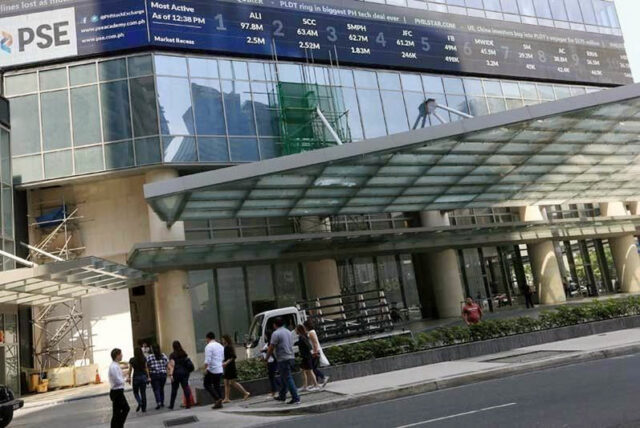
MAYNILAD WATER SERVICES, INC. has set the final offer price for its initial public offering (IPO) at P15 per share, matching the upper end of its revised price range, according to a notice from the Philippine Stock Exchange (PSE).

The final price was reduced from the earlier maximum of P20 per share after feedback from cornerstone investors including the United Kingdom’s Mobilist, the International Finance Corp. (IFC) and the Asian Development Bank (ADB).

The offer, expected to be the biggest listing in the Philippines this year, has drawn strong demand from institutional investors.

The IFC and ADB are considering investments of $100 million and $145 million, respectively. Other investors expressing interest include Robeco Switzerland Ltd. with up to $20 million, as well as Abrdn Malaysia Sdn. Bhd., Maven Investment Partners Ltd. – Hong Kong Branch, Maybank Asset Management Singapore Pte. Ltd. and QRT Master Fund – Torus Fund SP.

Maynilad will offer as many as 1.66 billion common shares to the public, including 24.9 million primary shares allocated for First Pacific Co. Ltd. It will also have an overallotment option of as many as 249.05 million shares and an upsize option of 354.7 million secondary shares, which could bring the total offer to 2.29 billion shares.

At P15 per share, the IPO could raise as much as P34.3 billion in gross proceeds, which will be used for capital expenditures and general corporate purposes, according to its preliminary prospectus.

Analysts said the final price provides a reasonable entry point for investors given Maynilad’s strong fundamentals and steady performance in the water utility sector.

“At this price, it provides a fair entry point for investors, especially considering the company’s steady position as a key player in the water utility sector,” Luis A. Limlingan head of sales at Regina Capital Development Corp., said in a Viber message. “The cautious approach could support the firm even if market sentiment fluctuates.”

The valuation appears attractive, Philstocks Financial, Inc. Research Manager Japhet Louis O. Tantiangco said in a Viber message, citing the west zone concessionaire’s strong growth track record and expansion plans.

“The company has exhibited good financial performance in recent years with revenue growing an average of 21% in 2023 and 2024, and net income growing at an average of 47.6% in 2023 and 2024,” he said. “Prospects are also good given the company’s noncyclical business nature and coverage expansion plans so at P15, Maynilad’s IPO is deemed attractive.”

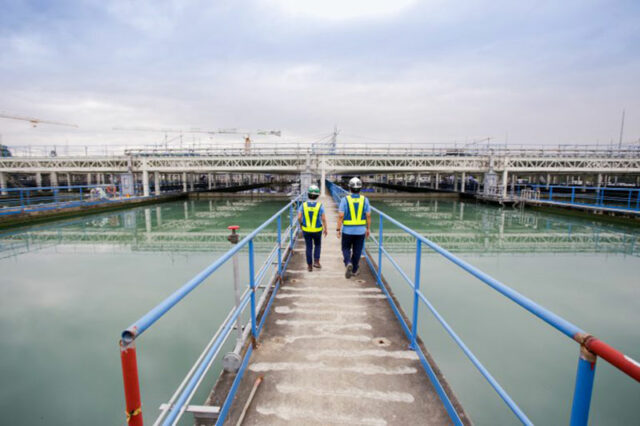
Maynilad provides sustainable water and wastewater services across 11 cities in Metro Manila — three of which are partially covered — and parts of Cavite province.

Alfred Benjamin R. Garcia, research head at AP Securities, Inc., described Maynilad as a “stable defensive stock” that offers reliable dividends and high earnings visibility.

“We believe that the offer is prudently priced and offers modest upside to garner investor interest,” he said via Viber. “The offer size and post-IPO market capitalization also make it a prime candidate for future Philippine Stock Exchange index inclusion.”

Independent investment house Unicapital, Inc. said listing is “just the beginning” of a company’s growth journey.

“An IPO isn’t just a financial decision; it’s a transformation of your business,” Unicapital Senior Vice-President for Investment Banking Pamela Victoriano said in a statement. “By focusing on internal readiness and laying strategic groundwork during market slowdowns, companies can position themselves to seize the moment and maximize valuations as opportunities arise.”

The offer period will run from Oct. 23 to 29, with trading set to begin on Nov. 7 under the ticker MYNLD.

The IPO was initially scheduled for July but was postponed to October to give cornerstone investors more time to participate and allow potential investors to better understand the company’s operations.

Under its 25-year concession agreement, Maynilad must list its shares by January 2027.

Metro Pacific Investments Corp., which holds a majority stake in Maynilad, is one of three Philippine subsidiaries of First Pacific Co. Ltd., alongside Philex Mining Corp. and PLDT Inc.

Hastings Holdings, Inc., a unit of PLDT Beneficial Trust Fund subsidiary MediaQuest Holdings, Inc., holds an interest in BusinessWorld through the Philippine Star Group, which it controls.
Philippines should forge more trade pacts to cushion US tariff impact, says HSBC

PHILSTAR FILE PHOTO

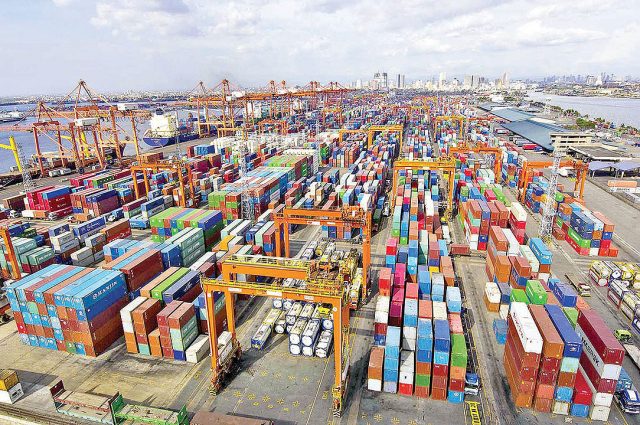
THE PHILIPPINES should pursue more free trade agreements (FTAs) to shield its exports from the fallout of the US’ widening trade war, HSBC Global Investment Research said in a report.

“The Philippines will need to reach out to more and larger countries to potentially decouple itself from the US and make its exports more resilient,” HSBC economists said.

The call followed the latest round of tariffs imposed by US President Donald J. Trump on several global trade partners, including a 19% levy on Philippine goods — the same rate applied to Indonesia, Cambodia, Malaysia and Thailand.

While the Philippines’ average tariff rate remains lower than some of its peers, HSBC warned that the situation could deteriorate once Washington finalizes additional sectoral tariffs.

“Malaysia and the Philippines are not out of the woods,” the bank said. “With sectoral tariffs on electronics potentially soon, Malaysia and the Philippines will likely follow suit and see their effective tariff rate rise. We believe it’s just a matter of when.”

Electronics and semiconductors make up more than half of the Philippines’ total exports. Manila has been lobbying Washington to exclude these products from its tariff list, but talks have yet to yield results.

A United Nations Development Programme report last month estimated that US tariffs could reduce Philippine exports to the US by 13.1%. The US remains the Philippines’ biggest export destination.

“But US demand, as lucrative as it may be, is not as dependable as it was before,” HSBC said. “The past few months have shown us that trade policy can change in an instant.”

The report also noted that the Association of Southeast Asian Nations’ (ASEAN) tariff differential with China has widened since Mr. Trump’s “Liberation Day” trade policies took effect on Aug. 7.

The Philippines’ effective tariff rate gap with China rose to 27.5% from 14.1% in April.

HSBC said expanding trade pacts could help the Philippines and other ASEAN members tap new export markets and reduce their dependence on the US.

The Philippines has free trade deals with ASEAN, South Korea, Australia, New Zealand, Hong Kong, Japan and the European Free Trade Association, which includes Switzerland, Norway, Liechtenstein and Iceland. It is also in talks for deals with the European Union, the United Arab Emirates, Canada and Chile.

Among ASEAN members, Singapore leads with 49 FTAs, followed by Vietnam with 37. The Philippines ranks near the bottom with only seven.

“Admittedly, however, there is no one bilateral FTA that can completely substitute the vast potential of capturing US demand,” HSBC said. “The US market is just too large, and too important to be replaced. But a lot of FTAs can do the job.”

HSBC added that ASEAN could seize opportunities from China’s shrinking share of the US market as global trade patterns shift.

“After going through the hoops, tumbling in the mud and rolling through weeds, we can conclude that the second tariff typhoon offers ASEAN both challenges and opportunities,” it said.

“While global trade will likely slow, ASEAN is in a good position to take away some of China’s market share in the US, soothing some of the sting of US tariffs,” it added. — Katherine K. Chan

Power firms get more time to comply with public offering requirement

EVENING_TAO-FREEPIK

THE Energy Regulatory Commission (ERC) has revised its rules on the public offering requirement (POR) to give power firms more time to comply, by starting the five-year compliance period only after they meet the prerequisites for a public offering instead of from the issuance of their operating license.

Under Section 43 of Republic Act No. 9136, or the Electric Power Industry Reform Act of 2001 (EPIRA), unlisted generation companies and distribution utilities are required to offer and sell to the public at least 15% of their common shares.

Previously, the five-year compliance period was counted from the date the ERC issued a certificate of compliance (CoC), which authorizes a company to operate a power plant or related facility.

The amendment retains the five-year window but adjusts the start of the countdown to give companies sufficient time to complete the prerequisites for a share offering.

ERC Chairperson and Chief Executive Officer Francis Saturnino C. Juan said the revision addresses concerns raised by smaller generation firms that found it difficult to meet the requirement within the previous timeframe.

“Counting the compliance period only after a company is ready to conduct a public offering levels the playing field for smaller players,” he said during a briefing on Monday.

He said that larger power companies can easily comply by listing their shares on the Philippine Stock Exchange (PSE), while smaller generators often need additional time to prepare the necessary financial and operational requirements.

The ERC said the amendment also aligns its rules with current PSE listing standards to ensure that energy companies follow a consistent regulatory framework when they decide to go public.

Data from the commission show that only 40 of 264 generation companies have complied with the POR, while 131 remain non-compliant.

The rest are exempt from the requirement. Non-compliant firms represent nearly 14,000 megawatts of generation capacity.

Mr. Juan said the update is intended to promote broader ownership and greater transparency in the power sector by encouraging energy companies to open their shares to the investing public.

“When energy companies offer shares to the public, it allows Filipinos to invest directly in the industry that powers our nation,” he said. — Sheldeen Joy Talavera

Lawmaker says P1-billion, 20% rule hinders subsidiaries’ preferred share listings

PHILIPPINE STAR/EDD GUMBAN

ALBAY Rep. Raymond Adrian E. Salceda said the Philippine Stock Exchange’s (PSE) rule requiring companies to offer at least P1 billion or 20% of their market capitalization when listing preferred shares has made it difficult for subsidiaries of listed companies to tap the stock market.

“The current rule allows any SEC-registered company to do an IPO (initial public offering) of preferred shares, but with very specific conditions: P1-billion offering or 20% of the market cap,” Mr. Salceda said.

“There are a few construction companies and some small energy companies that are interested in doing this route. But it involves all the rules of an IPO.”

Under the rules introduced by the PSE in 2022, companies may list preferred shares without listing common shares, provided they offer at least P1 billion or 20% of market capitalization and have at least 1,000 stockholders.

“Also, the rule is specifically 20% of market cap or P1 billion, whichever is higher,” Mr. Salceda said. “The 20% rule is too high for a lot of subsidiaries of already-listed companies.”

“In practice, the workaround has been for the listed mother company to just list prefs on their own and distribute proceeds to subsidiaries,” he said.

“The workaround has limits though because most of the time, the needs of just one subsidiary are also too small for sprawling conglomerates to bother listing prefs for them.”

“There is a big listed company with a foreign partner in one of its subsidiaries that explored prefs to finance its dams and wind projects, but that idea was shelved,” he added.

Mr. Salceda said the resolution he filed aims to make such listings easier.

“I wrote this resolution because I felt that this clarification is an extremely low-hanging fruit, with very little risk to both the system and small investors,” he said.

“Because the subsidiary is ‘chaperoned’ by the listed parent company, then the rules should also indicate that it is the parent that is answerable to the small investors,” he added.

“Just as the subsidiary’s disclosures will also be made through the parent.”

The resolution, initially assigned to the Committee on Trade and Industry, has been pending with the Committee on Banks and Financial Intermediaries since Oct. 8.

It also calls for safeguards such as consolidated group reporting and transparent disclosures of related-party transactions. — Alexandria Grace C. Magno

EDC studies repurposing of 129-MW Leyte geothermal plant

ENERGY DEVELOPMENT CORP.

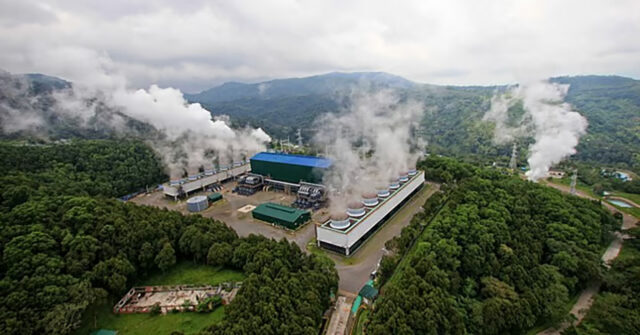
GEOTHERMAL ENERGY producer Energy Development Corp. (EDC) is exploring options to repurpose its 129-megawatt (MW) Upper Mahiao Power Plant in Kananga, Leyte, after it reached the end of its operational lifespan.

“We will be conducting site feasibility studies and look at various options including the potential repurposing or redevelopment of the area,” EDC Vice-President Ryan Z. Velasco told reporters on Tuesday.

EDC said it plans to decommission the plant in phases, with the initial stage targeted by 2026 and full decommissioning by 2029.

The plant, which EDC took over in 2006, began commercial operations in 1996 and was the first geothermal project in the Philippines built under the build-operate-transfer scheme.

The Upper Mahiao facility is part of EDC’s Unified Leyte geothermal complex, which also includes the 232-MW Malitbog, 180-MW Mahanagdong, and 51-MW Optimization plants.

EDC, the renewable energy arm of Lopez-led First Gen Corp., has a total installed capacity of 1,388.8 MW, or roughly 20% of the country’s total renewable energy capacity. Since 1976, the company has developed geothermal power facilities across Bicol, Leyte, Negros Island, and Mindanao.

The company has earmarked up to P30 billion for the drilling of 40 new wells through 2026, supporting its expansion in the geothermal sector. — Sheldeen Joy Talavera

Gov’t fully awards dual-tenor bond offering at mixed yields

BW FILE PHOTO

THE GOVERNMENT made a full award of the dual-tranche Treasury bonds (T-bonds) it auctioned off on Tuesday at mixed rates amid market preference for papers at the belly of the curve on expectations of further monetary easing by the Bangko Sentral ng Pilipinas (BSP) and the US Federal Reserve.

The Bureau of the Treasury (BTr) raised P35 billion as planned via its dual-tenor T-bond offer as total bids reached P77.776 billion, or more than double the amount placed on the auction block.

Broken down, the Treasury borrowed the programmed P20 billion via the reissued 10-year bonds that have a remaining life of six years and 10 months, with total bids reaching P55.519 billion or almost three times the amount on offer.

This brought the total outstanding volume for the bond series to P505.6 billion, the BTr said in a statement, adding that the average yield fetched was lower than both the rate quoted at the previous auction and for the seven-year benchmark at the secondary market.

The bonds were awarded at an average rate of 5.798%, and accepted yields ranged from 5.75% to 5.805%. This was 14.1 basis points (bps) lower than the 5.939% fetched for the series’ last award on Sept. 2 and was also 95.2 bps below the 6.75% coupon for the issue.

The average yield was also 1.3 bps lower than the 5.811% quoted for the seven-year bond — the benchmark tenor closest to the remaining life of the papers on offer — but 0.7 bp above the 5.791% fetched for the same bond series at the secondary market before Tuesday’s auction, based on PHP Bloomberg Valuation Service (BVAL) Reference Rates data provided by the BTr.

Meanwhile, the government also raised P15 billion as planned from its offering of reissued 25-year T-bonds that have a remaining life of 24 years and three months, with total bids reaching P18.62 billion.

This brought the total outstanding volume for the bond series to P105.1 billion, the BTr said.

The bonds were awarded at an average rate of 6.51%, with accepted yields from 6.4% to 6.6%. This was 13.6 bps higher than the 6.374% fetched for the series’ last award on Aug. 27 and was 13.5 bps above the 6.375% coupon for the issue.

The average rate was also 8.9 bps above the 6.421% seen for the same bond series and 11 bps higher than the 6.4% quoted for the 25-year bond at the secondary market before Tuesday’s auction, PHP BVAL Reference Rates data showed.

The Treasury fully awarded the bonds as both tenors fetched ample demand, a trader said in a text message.

“Demand for the 10-year bond was more prevalent than the 25-year bond, likely due to the current preference in tenors on the belly of the curve. Furthermore, the lack of activity in the market beforehand may have also contributed to the middling demand for 25-year bond,” the trader said.

The reissued 10-year bond’s average yield went down as it was met with strong appetite on expectations of more rate cuts from both the BSP and the Fed in the coming months, while the 25-year paper fetched a higher rate amid weak demand as investors remain hesitant to lock in their funds in longer tenors amid lingering uncertainty about the global economy amid changing trade policies, Rizal Commercial Parking Corp. Chief Economist Michael L. Ricafort said in a Viber message.

This month, the BSP cut benchmark borrowing costs by 25 bps for a fourth straight meeting, bringing the target repurchase rate to 4.75%. It has now cut rates by a total of 175 bps since it began its easing cycle in August 2024.

BSP Governor Eli M. Remolona, Jr. has signaled further easing, possibly until next year, as they want to help support the economy due to a softer growth outlook as governance issues related to state infrastructure projects have weighed on investor confidence.

Meanwhile, the Fed last month reduced its target rate by 25 bps points to bring it to the 4%-4.25% range. Fed Chair Jerome H. Powell last week hinted at more cuts as they seek to balance the US job market’s weakness with above-target inflation.

The BTr is looking to raise P180 billion from the domestic market this month, or P110 billion via Treasury bills and P70 billion through T-bonds.

The government borrows from local and foreign sources to help fund its budget deficit, which is capped at P1.56 trillion or 5.5% of gross domestic product this year. — A.M.C. Sy

Converge eyes southern Philippines for next data center site

STOCK PHOTO | Image by Wirestock from Freepik

LISTED fiber broadband provider Converge ICT Solutions, Inc. is planning to expand its data center footprint outside Luzon, with possible sites in the Visayas or Mindanao, its top executive said.

“For future expansion, we are looking at some sites already,” Converge Chief Executive Officer Dennis Anthony H. Uy told reporters on the sidelines of a forum on Monday.

“(The next site) will be in the south, Visayas or Mindanao, because you need to bring it closer to the consumer,” he added.

Mr. Uy said the company’s next facility could have an initial capacity of 20 megawatts (MW), scalable up to 100 MW.

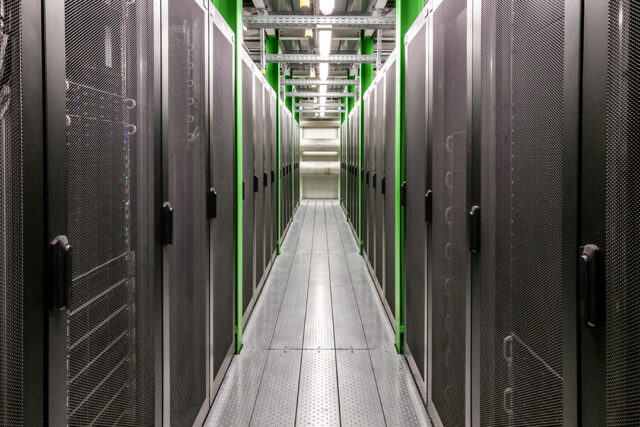
Converge’s Pampanga data center currently has a 10-MW capacity and houses about 1,200 racks, while its Caloocan data center, which recently secured a Tier 3 design certification, has 3 MW and 290 racks.

The company earlier set a P25-billion capital expenditure budget for 2025, mainly for subsea cable payments and data center expansion.

Converge has trimmed its full-year revenue growth target to 10-12%, from as much as 16% previously, citing manpower constraints and slower rollout of new enterprise solutions.

For the second quarter, its attributable net income rose 6.9% to P2.93 billion, as revenues climbed 10% to P10.98 billion.

On Tuesday, Converge shares gained 1.76% or 22 centavos to close at P12.72 apiece at the local bourse. — Ashley Erika O. Jose

BSP exempts PERA-UITFs from access restrictions for central bank debt

BW FILE PHOTO

PERSONAL EQUITY and Retirement Account unit investment trust funds (PERA-UITFs) are now exempted from a foreign ownership rule that limited their access to central bank securities, widening overseas Filipinos’ investment options.

Circular No. 1220 issued by the Bangko Sentral ng Pilipinas (BSP) on Oct. 17 said the Monetary Board has amended its rules covering monetary operations to exclude PERA-UITFs from the limit imposed on UITFs with nonresident participants that are investing in central bank securities in the secondary market.

“UITFs were previously allowed to invest in these securities provided nonresidents didn’t own more than 10% of the fund. The amendments in the regulations exempt UITFs accredited by the BSP as PERA-UITFs from that limit,” the central bank said.

“This recognizes that PERA-UITF participants may include overseas Filipinos who may be considered as non-residents under existing rules. The amendments are intended to align with the distinct features and policy objectives of the PERA program,” the BSP added.

The BSP said nine out of 13 PERA-UITFs currently exceed the 10% nonresident ownership limit, which prevented them from investing in debt instruments issued by the central bank.

“The change would allow them to diversify their portfolio,” it said.

“The move reflects the BSP’s continued effort to promote financial health. It helps Filipinos, both at home or abroad, build secure and sustainable retirement savings. It also helps develop the country’s private pension system and strengthens domestic capital markets.”

The central bank said trust entities must submit reports on the funds.

Earlier, the BSP clarified that UITFs issued in the Philippines with placements in foreign securities or funds can be accredited as PERA investment products to give contributors more investment options.

UITFs are composed of funds pooled from retail investors that are managed by a trust company or a bank’s trust department that are invested in instruments like securities, debt, and stocks.

Meanwhile, PERA is a voluntary fund scheme meant to supplement retirement benefits from the Government Service Insurance System or the Social Security System and private employers.

Only Filipinos aged 18 and above with a tax identification number are allowed to open a PERA account. Self-employed and locally employed contributors may contribute P200,000 annually, while overseas Filipinos may invest up to P400,000.

The PERA Law also offers various incentives to contributors, such as tax exemptions on earnings from PERA investments, a 5% income tax credit on contributions that can be used for paying income tax liabilities, and a tax-free distribution on qualified withdrawal of PERA investments.

PERA contributions jumped by 24% year on year to P491.4 million at end-2024 from P396.3 million as of 2023, BSP data showed. The number of PERA contributors likewise rose by 6.4% to 5,912 at 2024’s close from 5,555 a year prior.

The bulk (69.5%) of the accumulated PERA contributions came from employee contributions, equivalent to P341.7 million at end-2024 across 4,211 contributors. This was followed by overseas Filipinos’ contributions at P82.2 million with 789 contributors and 912 self-employed contributors with P67.4 million in contributions. — K.K. Chan

SPC unit taps Chinese firms for Iloilo, Bohol energy storage projects

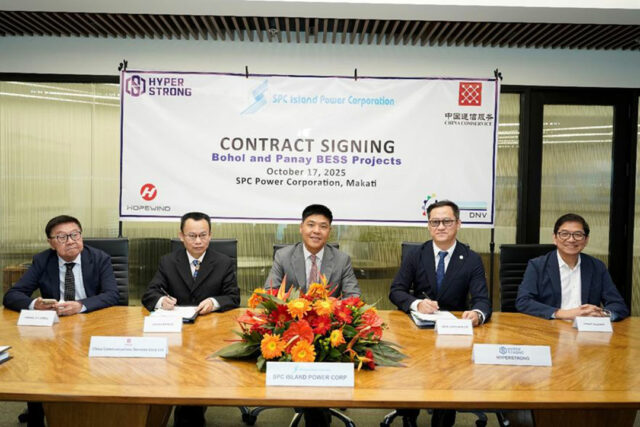
CONTRACT SIGNING for Bohol and Panay BESS projects of SPC Island Power Corp. (SIPC). From left to right: Dennis T. Villareal, SIPC president and CEO; Zhong WenHui, vice-president of China Communications Services Philippines Corp.; James Roy N. Villareal, executive vice-president of SIPC; Changbin Qiu, senior vice-president of Hyperstrong; Cesar O. Villegas, senior vice-president for business development and commercial operations, SIPC.

SPC ISLAND Power Corp. (SIPC), a subsidiary of listed firm SPC Power Corp., has partnered with two Chinese companies to develop battery energy storage system (BESS) projects in Iloilo and Bohol with a combined capacity of 160 megawatt-hours (MWh).

In a disclosure on Tuesday, SPC Power said SIPC signed a supply agreement with Beijing Hyperstrong Technology Co. Ltd. for the provision of battery systems and a separate engineering, design, and construction contract with China Communications Services Philippines Corp.

The Iloilo project, with a capacity of 100 MWh, will be located in Dingle, while the 60-MWh facility will be built in Tagbilaran City, Bohol. Both are targeted to begin commercial operations by mid-2026.

SIPC Executive Vice-President James N. Villareal said the projects form part of the company’s efforts to expand into energy storage and support renewable energy development in the Visayas grid.

“These projects underscore our commitment to support the country’s renewable energy development with sufficient energy storage capacity for grid stability,” Mr. Villareal said.

Battery energy storage systems are used to store electricity from the grid and release it when needed, helping balance supply and demand and improve grid reliability.

Hyperstrong, founded in 2011, is a China-based energy storage systems integrator with more than 300 projects and 40 gigawatt-hours of deployments globally.

China Communications Services, a subsidiary of China Telecom, has been operating in the Philippines since 2019 and provides engineering and infrastructure support services.

SIPC currently operates the 146.5-megawatt (MW) Panay Diesel Power Plant in Dingle, the 22-MW Bohol Diesel Power Plant, and the Olango Diesel Power Plant in Lapu-Lapu City.

Its parent firm, SPC Power, has said it plans to acquire and develop new projects to deliver 500 MW of additional capacity by 2029.

The company is primarily engaged in the development, operation, and rehabilitation of power generation plants and related facilities.

On Tuesday, shares of SPC Power fell by 2.44% or 19 centavos to close at P7.60 each on the stock exchange. — Sheldeen Joy Talavera

Peso extends slide as Japan elects new PM

BW FILE PHOTO

THE PESO slid further against the dollar on Tuesday along with other Asian currencies as Japan elected a new prime minister (PM) viewed as conservative.

The local unit closed at P58.225 versus the greenback, weakening by 5.5 centavos from its P58.17 finish on Monday, Bankers Association of the Philippines data showed. This was its worst close in over a week.

The peso opened Tuesday’s session a tad stronger at P58.15 versus the dollar. It climbed to as high as P58.08, while its intraday low P58.26 against the greenback.

Dollars traded rose to $1.43 billion on Tuesday from $1.13 billion on Monday.

“The dollar-peso closed higher as the market was still in consolidation awaiting major catalysts,” a trader said in a phone interview.

The peso dropped as the dollar rose as Japan’s new prime minister was elected, Rizal Commercial Banking Corp. Chief Economist Michael L. Ricafort said in a Viber message.

“The incoming prime minister is expected to be pro-growth, thereby reducing the odds of further rate hikes by the Bank of Japan, and a weaker yen could support the export-driven Japanese economy,” he said.

For Wednesday, the trader said the peso could move between P58 and P58.30 per dollar as players await US consumer inflation data. Mr. Ricafort expects it to trade from P58.10 to P58.35.

The yen eased to a six-day low after hardline conservative Sanae Takaichi was elected as Japan’s first female prime minister, with traders betting her government could bring about a muddied rate outlook and greater fiscal largesse, Reuters reported.

Ms. Takaichi, leader of Japan’s ruling Liberal Democratic Party, won the lower house vote to choose the next prime minister on Tuesday. The Japanese currency was last down 0.25% at 151.35 per dollar after touching 151.61, its lowest level against the dollar since Oct. 15. The yen also struggled against the euro and sterling.

In the broader market, currencies were mostly rangebound despite an overall upbeat market mood after US President Donald J. Trump said on Monday he expects to reach a trade deal with Chinese President Xi Jinping.

The dollar index, measuring the currency against six peers, drew support from a weaker yen and rose to a six-day high. It was last up 0.2% to 98.787. — Aaron Michael C. Sy with Reuters

EEI transfers P164-M Tanza training facility to subsidiary

EEI.COM.PH

EEI CORP. has approved the transfer of its P164-million training facility in Tanza, Cavite, to its subsidiary EEI Training Academy Corp. through a tax-free property-for-share swap, a move aimed at consolidating the company’s training operations.

“The asset transfer is expected to enhance operational efficiency and reduce friction costs across the organization,” the construction firm said in a disclosure to the exchange on Tuesday.

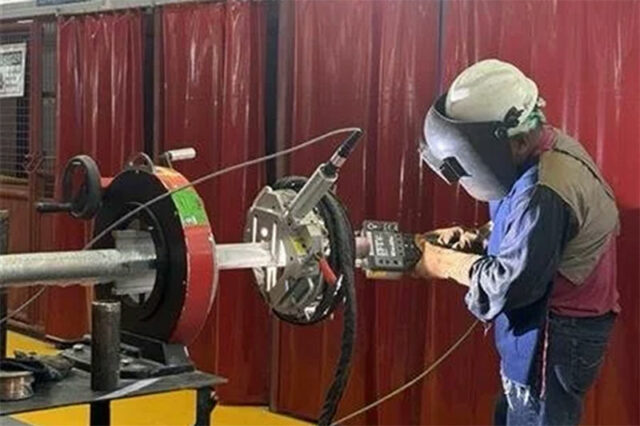
The two-storey facility, completed in December 2024, supports both classroom learning and hands-on construction training. It offers courses in welding, electro-mechanical work, infrastructure, and managerial development.

EEI said the transaction, completed on Monday, will allow the academy to streamline its processes and strengthen its capacity to upskill workers for domestic and overseas projects.

In 2023, EEI announced plans to build the Tanza center to train engineers and staff in supervisory development, project management, and technical courses to support its growing project pipeline.

On Tuesday, shares of EEI fell by 4.76% or 15 centavos to close at P3 apiece on the stock exchange. — Alexandria Grace C. Magno

Industrial policy for the Philippines

STOCK PHOTO | Image by Vectorjuice from Freepik

(Part 1)

Industrial policy formulation or industrial strategy is very much the rage all over the global economy today. It has gone much beyond its earliest form in the middle of the last century when the governments of what countries that eventually rose as the “tiger economies” — such as Singapore, Hong Kong, Taiwan, and South Korea — adopted specific economic policies that favored the growth of certain sectors that were considered “most likely to succeed” because of perceived competitive advantages. Examples of such government policies were tariff protection, subsidized interest rates, undervalued currencies, or depressed wages.

Today, the ones most aggressive in adopting industrial policies are no longer the developing countries but the more developed countries like the United States and the United Kingdom. The very high tariff rates being imposed by the Trump Government on imports from China, India, and other countries are examples of modern-day industrial policy. Such protectionist moves are clearly meant to bring back to US soil the many manufacturing sectors such as automotive, electronics, and pharmaceuticals that migrated to Asia and other regions with lower wage costs. In the UK today, the centerpiece of industrial policy is a set of strategies for the eight industrial sectors which, on various metrics, offered the greatest growth potential, such as advanced manufacturing, life sciences, the creative industries, and financial services.

China has been the target of many of the US efforts to “bring jobs home.” Most recently, however, China has been fighting back, especially in sectors belonging to the so-called Industrial Revolution 4.0 (e.g., artificial intelligence, robotization, Internet of Things, data analytics, etc.). For example, China’s internet regulator has banned the country’s biggest technology companies from buying the artificial intelligence chips produced by US company Nvidia. The Cyberspace Administration of China recently told Chinese companies such as ByteDance and Alibaba to end their testing and orders of the RTX Pro 6000D, Nvidia’s tailor-made product for the country.

Meanwhile, in the US, Nvidia has agreed to invest $15 billion in its struggling rival Intel as part of a plan to develop chips for PCs and data centers, the latest reordering of the tech industry spurred by artificial intelligence. The deal comes a month after the US government agreed to take a 10% stake in Intel, as Donald Trump’s administration tries to secure the future of American manufacturing.

These examples show that industrial policy is getting more sophisticated. What guidelines can we suggest to our government in formulating our own industrial policies in the coming years? In the remaining three years of the administration of President Ferdinand Marcos, Jr., it is important that business, civil society, and the academe get together with the government to agree on the economic sectors that should be favored with specific financial, policy, and infrastructure support because they are perceived to contribute most to poverty reduction and employment generation as well as maximum GDP growth.

A LITTLE BIT OF HISTORY
But for a historical perspective, let us dwell on a brief history of industrial policy that began with the first industrial revolution in the late 18th century in England and later in the rest of Western Europe.

The first country to industrialize, Britain, followed a relatively laissez-faire approach to industrialization, with minimal state interference. The role of the State was through the enclosure acts (allowing private ownership of large tracts of land that used to be subject to fragmentation during the period of feudalism). This enclosure movement freed labor for the manufacturing sector which resulted from the mechanization of textile production (the spinning jenny), the use of steam power, and the mining of coal and iron. We must remember here that the word “industry” encompasses not only manufacturing but also mining, public utilities, and construction (especially infrastructure). The State also facilitated through the protection of property rights, navigation laws (mercantilist trade rules), and the protection of colonial markets from other colonizing countries like Spain and Portugal. The first examples of public-private partnerships (PPP) were infrastructure investments in canals and railways.

Then came the Second Industrial Revolution (mid-19th century to early 20th century in Europe and North America). The technologies that were invented were in the steel, chemicals, electricity, and internal combustion sectors. Industrial policy was refined, especially by Germany and the US, that pursued active promotion of specific sectors by protecting so-called “infant industries” with tariffs (following the ideas of Friedrich List). In Germany there was active support for research institutes (e.g., German technical universities, industrial laboratories, etc.). This was the period of massive infrastructure expansion (e.g., railroads, telegraphs) financed partly by government. In Japan, during the Meiji Restoration (1868 to 1912), there was strong state-led industrialization through a very active importation of technology, especially from Western Europe, and the creation of the so-called Zaibatsus (industrial conglomerates) which were the origins of today’s Japanese international conglomerates like Marubeni, Mitsubishi, Mitsui, and Sumitomo.

During the period between the First and Second World wars (1918 to 1945), industrial policy turned more interventionist. The Soviet Union introduced Central Planning with Five-Year Plans prioritizing heavy industry. In Fascist Italy and Nazi German, the focus was on state-directed rearmament industries. In the US as an aftermath of the Great Depression, the government introduced the New Deal program for industrial recovery through massive public works projects, especially those undertaken by the Tennessee Valley Authority (TVA).

After the Second World War, there was the “Golden Age” (1945 to 1970s) of industrialization. In Europe, reconstruction was actively pursued by both the victors and the defeated through the so-called Marshall Plan. In Japan, the Ministry of International Trade and Industry (MITI) led the industrialization efforts through directed credit, technology imports, and export promotion. France pioneered in what was called “indicative planning” through the Commissariat General du Plan. In the US, a more free-enterprise approach was followed in industrial strategy, but the government played the leading role in investing in defense-related R&D (the military-industrial complex).

In the present millennium, we can discern the resurgence of state activism as a result of globalization, recurring economic crises, and the advent of new technologies. Examples of these are massive state subsidies for high-tech sectors under the “Made in China 2025” strategy. In the US, even before the very aggressive tariffication move under the second Trump Administration, there were industrial policies like the CHIPS and Science Act (2022) and the Inflation Reduction Act (2022) to promote high-value semiconductors and green industries. In Europe, there were parallel moves in the forms of the Green Deal and industrial strategies for digital and renewable energy sectors. In both high-income and middle-income economies, there is a clear focus on climate transition, digitalization, artificial intelligence, and supply chain.

To summarize, industrial policy was pursued in different countries and different historical stages under, on the one hand, free-enterprise or market-based conditions or, on the other hand, under active state intervention depending on historical needs. Britain’s early industrialization was market-led but later successes (Germany, the US, Japan, East Asia, China) show strong state guidance was crucial at various stages of the industrialization process.

Before we try to learn some lessons from this historical review of industrial policy, let us go into greater detail on how industrial policy partly explain the well-known success of the “tiger economies” of East Asia in the second half of the last century to transition from low-income to high-income economies in record time. And, more importantly, let us try to understand why the Philippines failed to join the band wagon!

(To be continued.)


Bernardo M. Villegas has a Ph.D. in Economics from Harvard, is professor emeritus at the University of Asia and the Pacific, and a visiting professor at the IESE Business School in Barcelona, Spain. He was a member of the 1986 Constitutional Commission.

bernardo.villegas@uap.asia