Home Blog Page 790

Unified 911 system launched in Cebu

The government, along with the NGA 911 and PLDT Inc., set up the unified 911 system’s second regional hub at the PLDT Smart Experience Hub at Osmeña Boulevard, Cebu, Oct. 25.

THE Department of the Interior and Local Government (DILG), along with the NGA 911, and telecommunications company PLDT Inc., launched the unified 911 system’s second regional hub in Cebu.

DILG Secretary Juanito Victor C. Remulla, Jr. unveiled the new hub last Oct. 25 at the PLDT Smart Experience Hub at Osmeña Boulevard, which will serve as its temporary site. Its permanent site will be built at the Bureau of Fire Protection (BFP) Headquarters in Lapu-Lapu City.

“With the BFP leading the implementation, supported by the DILG, PLDT, and NGA, we are building a future where no Filipino is left without help when it matters most,” Mr. Remulla said.

The hub is powered by technology from NGA 911 and supported by the telecommunications infrastructure of PLDT and ePLDT.

The command center, which will be open 24/7, will connect the public to just one emergency response system when they dial 911. The system can also handle calls in various local languages and dialects, including Tagalog, Cebuano, and Ilocano among others.

The Cebu hub will also be equipped with advanced communication platforms, live video streaming, and centralized data reporting.

It also comes with GPS-based tracking for callers and responders, geofencing, and real-time CCTV integration.

After Cebu, the government will set up six more regional hubs and satellite centers to complete the system.

Hastings Holdings, Inc., a unit of the PLDT Beneficial Trust Fund subsidiary MediaQuest Holdings, Inc., holds a majority stake in BusinessWorld through the Philippine Star Group. — CAT

Justice zone to open in Eastern Visayas

STOCK IMAGE | Image by Gerd Altmann from Pixabay

THE Justice Sector Coordinating Council (JSCC) will launch a tri-city specialty justice zone in Eastern Visayas next month to intensify the government’s response against online sexual abuse and exploitation of children (OSAEC) and the circulation of child sexual abuse or exploitation materials (CSAEM), crimes that have increasingly targeted minors in the region.

The initiative will cover the cities of Tacloban, Ormoc, and Calbayog, which were identified as priority areas for improving justice sector coordination in handling OSAEC cases. The JSCC said the project seeks to enhance inter-agency collaboration among local courts, prosecutors, law enforcement, and social welfare offices to ensure a faster and more victim-centered approach to case management.

The formal launch is scheduled for Nov. 5, with simultaneous events to be held at the Summit Hotel in Tacloban City, Sabin Resort Hotel in Ormoc City, and the Calbayog City Sports Center in Calbayog City.

This will be the country’s seventh Specialty Justice Zone, following those established in Cagayan de Oro, Iligan, and Ozamiz in 2024.

Each zone serves as a platform for localized coordination within the justice sector to address specific challenges and streamline case processes.

The JSCC’s Technical Working Group on Processes and Capacity Building said the three Eastern Visayas cities met the required 40 interagency reforms spanning the justice process — from case initiation and prosecution to adjudication and post-judgment implementation. — Erika Mae P. Sinaking

Bill filed to protect Nueva Vizcaya watersheds

BAYOMBONG, NUEVA VIZCAYA — Nueva Vizcaya Rep. Timothy Joseph E. Cayton has filed House Bill No. 4502, the Comprehensive and Expanded Protection of the Watersheds of Nueva Vizcaya Act, seeking stronger conservation and management of the province’s vital watersheds.

The measure identifies Nueva Vizcaya watersheds as among Watershed Protection Zones, banning destructive activities like logging and mining.

It also creates a Watershed Protection Monitoring Council to oversee rehabilitation, enforcement, and coordination with national agencies.

Mr. Cayton urged Congress to pass the bill swiftly, calling it a “necessary safeguard” for the headwaters supplying irrigation, homes, and hydropower to Cagayan Valley.

Meanwhile, the Dupax del Norte town council urged the Department of Environment and Natural Resources (DENR) to file charges against a mining firm for alleged illegal tree cutting during a road project in Sitio Keon, Barangay Bitnong.

In Resolution No. 163, S-2025, the council cited violations of Presidential Decree No. 705 (Revised Forestry Code) after the local environment office found 16 trees damaged or cut without permits, including two felled by chainsaw while a cutting application was still pending.

Vice Mayor Ric Ronelson D. Asuncion said the move shows the town’s commitment to protect its forests. “We must protect our natural resources for future generations,” he said, urging DENR to act swiftly on the case. — Artemio A. Dumlao

P11.5-M cigarettes seized in Sultan Kudarat, Lanao del Sur

COTABATO CITY — Policemen seized P11.5 million worth of smuggled cigarettes in separate operations in Sultan Kudarat and Lanao del Sur last week, laid with the help of members of two Moro fronts.

Brig. Gen. Arnold P. Ardiente, director of the Police Regional Office-12, said on Monday, that it was due to the tips of Moro National Liberation Front members that policemen located a house in Barangay Kraan in Palimbang, Sultan Kudarat where they found large boxes containing P7.8 million worth of cigarettes from Indonesia.

Municipal officials in Palimbang, a seaside town, said the Indonesian-made cigarettes were ready for delivery to buyers in different towns in Sultan Kudarat, one of the four provinces in region 12.

The confiscated cigarettes in sealed boxes will be turned over to the Bureau of Customs for their proper disposition.

This followed the seizure of P3.7 million worth of Indonesian-made cigarettes, aboard a light truck that was intercepted in Barangay Ilian in Picong, Lanao del Sur.

The small truck was bound for Lanao del Sur’s adjoining Malabang and Kapatagan towns, according to local executives and members of the Moro Islamic Liberation Front who supported the anti-smuggling operation that led to the confiscation of its illegal cargo. — John Felix M. Unson

House resolution calls for GSIS probe

GSIS FACEBOOK PAGE

LEGISLATORS filed a resolution on Monday seeking a congressional investigation into the Government Service Insurance System’s (GSIS) investments, citing the risk of undermining the pension fund’s long-term stability.

The House was called on to examine the soundness of investments made by the government employees’ pension fund under President and General Manager Jose Arnulfo A. Veloso, according to House Resolution No. 415.

“We are calling for an investigation because the main job of GSIS is to protect and grow the pension fund,” Deputy Minority Leader and Party-list Rep. Antonio L. Tinio told reporters after the resolution filing, alongside his co-author, Party-list Rep. Sarah Jane Elago.

Some members of the GSIS Board of Trustees in mid-October called for the resignation of Mr. Veloso over what they described as “risky transactions” that allegedly resulted in losses amounting to P8.8 billion. The investments were made in food, mining, and gaming companies.

President Ferdinand R. Marcos, Jr. is currently reviewing the claims of alleged mismanagement before making a decision, the Palace Communications Undersecretary, Claire A. Castro, said last week.

Mr. Veloso did not immediately respond to a request for comment via Viber. He said in a GSIS statement that the pension fund remains “financially sound and well-managed.”

“As of August 2025, GSIS total assets have reached P1.92 trillion, with a net income of P100 billion,” he said. “These figures clearly show that the fund continues to grow and remains secure.”

He called the reported P8.8 billion loss “baseless” and inconsistent with GSIS’ official audited financial statements.

The GSIS also operates within legal bounds, Mr. Veloso added, with investments described as “prudent, lawful and transparent,” aimed at growing the fund.

Ms. Elago said pension contributions to GSIS should not be gambled on questionable investments, urging the fund to invest in companies with “proven track records.” — Kenneth Christiane L. Basilio

Food EOs seen boosting farmer incomes, creating guaranteed markets for produce

BW FILE PHOTO

THE Department of Agriculture (DA) said it expects the two executive orders (EOs) issued by President Ferdinand R. Marcos, Jr. to result in price stability and guaranteed markets for farmers and fisherfolk.

Agriculture Secretary Francisco P. Tiu Laurel, Jr. was quoted as saying in a DA statement: “These EOs should bridge that gap in product pricing and marketing that have kept our food producers, especially those at the margins, from fully enjoying the fruits of their hard work.”

EO 100 directs officials to set regional floor prices for palay (unmilled rice), while EO 101 calls for the full implementation of the Sagip Saka Act to encourage enterprise development among farm and fishing cooperatives and associations.

EO 100 orders the DA and a yet-to-be-formed panel to set and adjust the palay floor price per region.

Pricing will consider production costs, market trends, and fair margins, while also factoring in emergencies, the supply of imports, and global rice prices, the DA said.

Farmers have been receiving offers from private traders for their palay that are below the cost of production. The National Food Authority buys palay at higher prices at the farmgate level, but cannot buy the entire harvest because of storage and budget constraints.

EO 100 allows national and local governments to temporarily use public facilities — such as covered courts or gymnasiums to store palay they purchase.

The floor price scheme is modeled on the system for purchasing tobacco, to ensure that farmers continue to plant tobacco, the DA said.

EO 101, meanwhile, directs all government agencies, state universities, and local governments to procure food directly from accredited farm and fisherfolk cooperatives and enterprises.

These purchases will be exempt from standard bidding procedures set out in the Government Procurement Act, the DA said.

The directive also requires the creation of Sagip Saka Desks at DA regional offices to assist producers with registration, enterprise development, and market linkages.

Sari-sari stores’ e-wallet acceptance up 75% at end-Aug.

BW FILE PHOTO

THE availability of e-wallet payments at small mom-and-pop stores grew 75% year on year at the end of August, tech startup Packworks said.

In a report, Packworks also found that 20% of such stores, known in the Philippines as sari-sari store registered a doubling in e-wallet use by their customers, while 20% showed a 50% increase, while 10% recorded a 10% rise.

Packworks Co-founder Chief Platform Officer Hubert T. Yap noted that store owners have been adopting digital tools to diversify their services.

“They are now diversifying their product range, offering high-margin, value-added financial services and integrating digital tools such as our app to fundamentally improve their operations and function as near-frictionless nano-banks for the neighborhoods they serve,” Mr. Yap said.

Digital wallet use allows store owners to keep up with their customer preferences in terms of goods purchases, funds access, and bill settlement, Packworks said.

Packworks, which offers a digital store-management application to the sari-sari industry, found that 66% of owners generated 20% of their revenue from e-wallets, while 21% said their e-wallet transactions account for 10% of revenue.

The study found that up to five e-wallet accounts were in use among store owners, led by GCash, which was present in 85% of stores, followed by Maya with 15%.

Mr. Yap cited the need to support the industry with fintech tools to digitize operations.

“There’s an urgent need to support these micro-entrepreneurs with the right fintech to ensure they can fully capitalize opportunities,” he said.

The Bangko Sentral ng Pilipinas (BSP) estimates that online payments account for 57.4% of retail payments by transaction volume.

The BSP has set a target of bringing digital payments to about 60-70% of retail volume by transaction payments by 2028. — Beatriz Marie D. Cruz

German firms cite policy uncertainty, skills shortage as issues

LUFTHANSA TECHNIK FACEBOOK PAGE

GERMAN companies said they perceive the main risks in their Philippine operations to be uncertainty in economic policy and worker skills shortages.

The German-Philippine Chamber of Commerce and Industry (GPCCI), citing the results of its global survey, the Fall 2025 AHK World Business Outlook Survey, said 47% of German firms  in the country are optimistic about their business situation, while 49% expect their businesses to be stable over the next 12 months.

“German businesses continue to express confidence in the Philippines as a leading destination for investment and growth,” GPCCI President Marie Antoniette Mariano said.

“To turn this confidence into lasting economic gains, the government must accelerate reforms that reinforce transparency, ensure policy coherence, and enhance administrative efficiency to improve the ease of doing business,” she noted.

German businesses also noted that US trade policies have had little to no impact on their operations in the Philippines, though they noted heightened competition, rising shipping and customs costs, and pressure from the diversion of trade from protectionist markets.

Philippine-based German firms also raised concerns regarding tax administration, red tape, climate threats, inflation, insurance constraints, and delays in public projects.

Marian Majer, GPCCI policy and advocacy chairperson, said the business environment is nuanced, with growth offset by structural and policy-related challenges.

“This sentiment underscores the importance of fostering a more predictable policy environment, enhancing regulatory excellence, and ensuring consistent, efficient implementation,” he said.

He cited the need to prioritize education and workforce development to sustain investor confidence and inclusive growth. — Beatriz Marie D. Cruz

Clark airport, FTI sign deal to build P3.6-B food hub

FACEBOOK.COM/FTIGOVPH

THE Clark International Airport Corp. (CIAC) said it signed an agreement with state-run Food Terminal, Inc. (FTI) to develop a P3.6-billion food hub.

The project, known as the Bagsakan ng Bayan Mega Food Hub (BBM Food Hub), will rise on a 46-hectare site in Clark with FTI leasing the Clark property for 25 years, CIAC said in a statement on Monday.

The partnership also covers the development, operation, and maintenance of a wholesale food hub, it said

The FTI will begin developing the first 10 hectares of the hub by early next year, it said.

It added that a 40-hectare site will be constructed in Bukidnon to serve Mindanao, while another hub of 30 hectares will rise in Quezon province to support the Southern Tagalog region and Bicol.

CIAC President and Chief Executive Officer Joseph P. Alcazar said the project represents a commitment to strengthening the agriculture logistics value chain.

The hub will serve the Clark Freeport Zone, New Clark City, Metro Manila, as well as the northern and central Luzon, with the potential to access global markets.

The Clark hub is being positioned to offer services like distribution, storage, and the processing of high-value produce for domestic and overseas markets.

The government earmarked P2.1 billion for the project next year. — Beatriz Marie D. Cruz

PHL cold storage market deemed ‘attractive’

REUTERS

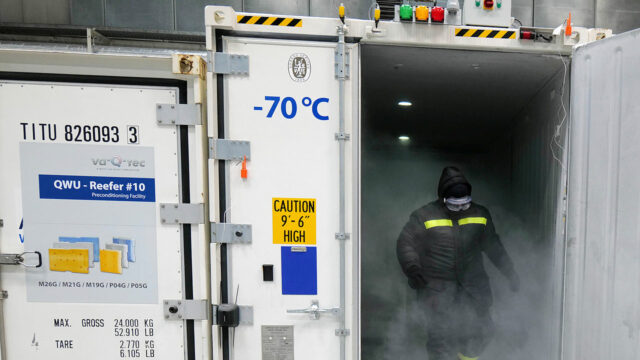
INCREASING DEMAND for perishable goods makes the Philippines an attractive market for the cold storage industry, according to a global infrastructure investor.

“The Philippines is an emerging and attractive market for the cold storage industry due to the rising demand for perishable goods,” I Squared Capital told BusinessWorld.

According to the company, the demand is driven by rapid urbanization and growing population.

“With over half the roughly 120 million population living in urban areas, there is a large and concentrated consumer base for fresh and frozen products that continues to grow,” it added.

Meanwhile, increasing purchasing power, growth in the food processing sector and the expansion of e-commerce were also among the drivers.

In the next few years, the company expects demand to be driven by quick-service restaurants and the protein-based food sector, “as consumer preferences continue to evolve with rising income.”

“(This is expected to fuel) the import and consumption of more meat, seafood, and other products requiring cold storage,” it said.

Further, it said that as agricultural continues to evolve and modernize, especially for quality-focused export markets, demand for more cold storage for fruit, vegetables, and grains will grow.

The company also expects demand to come from the expansion of online grocery shopping and food delivery services, the expansion of high-value non-food products such as vaccines and pharmaceuticals, as well as stricter food safety regulations.

Last week, I Squared Capital broke ground for the expansion of Royale Cold Storage’s facility in Plaridel, Bulacan, which will add 1.5 hectares to the current five-hectare site.

Royale Cold Storage is among the portfolio companies of I Squared Capital.

In the Philippines, the company has committed to invest $2 billion across energy, digital, logistics, and food sectors. — Justine Irish D. Tabile

PSEi sinks to seven-month low on selling pressure

BW FILE PHOTO

PHILIPPINE STOCKS closed lower on Monday due to selling pressure and as the peso weakened further against the dollar.

The benchmark Philippine Stock Exchange index (PSEi) fell by 0.9% or 54.26 points to close at 5,933.76, while the broader all shares index dropped by 0.73% or 26.38 points to 3,581.73.

This was the PSEi’s worst finish in nearly seven months or since it closed at 5,822.85 on April 7.

“The market continued to track lower following last week’s breach below the key resistance at 6,000,” AP Securities, Inc. said in a market note on Monday.

“The Philippine market declined by nearly 1% as selling pressure persisted throughout the trading session. The depreciation of the Philippine peso against the US dollar continued to make investors trade cautiously,” Regina Capital Development Corp. Head of Sales Luis A. Limlingan said in a Viber message.

On Monday, the peso plunged by 27.50 centavos to close at P58.90 against the dollar from P58.625 on Friday, data from the Bankers Association of the Philippines’ website showed, extending its losing run to an eighth consecutive session.

This was an over 10-month low for the peso as this marked its weakest showing since it finished at P59 on Dec. 19, 2024, which was also its record low.

“Moreover, the release of some companies’ earnings also influenced today’s market performance,” Mr. Limlingan added.

Listed companies that released their financial results on Monday included lenders BDO Unibank, Inc., Union Bank of the Philippines, Inc., and Philippine National Bank.

All sectoral indices closed in the red. Mining and oil sank by 2.87% or 378.24 points to 12,796.37; services dropped by 1.25% or 28.80 points to 2,272.66; financials fell by 1.08% or 21.3 points to 1,948.20; industrials went down by 0.78% or 69.86 points to 8,796.55; property retreated by 0.76% or 16.87 points to 2,198.93; and holding firms decreased by 0.53% or 26.06 points to 4,804.82.

Market breadth was negative as decliners overwhelmed advancers, 131 to 55, while 59 issues were unchanged.

Value turnover went down to P18.77 billion on Monday with 11.82 billion shares changing hands from Friday’s P26.28 billion with 2.89 billion issues traded.

Net foreign selling decreased to P313.66 million on Monday from P648.37 million on Friday.

Meanwhile, global stocks bounced on Monday as signs of cooling trade tensions between China and the US encouraged investors, Reuters reported. Top Chinese and US economic officials on Sunday hashed out the framework of a trade deal for US President Donald J. Trump and his Chinese counterpart Xi Jinping to decide on later this week at a meeting in South Korea.

That sent stocks sharply higher in Asia, with indexes in South Korea, Taiwan and Japan hitting record highs. The upbeat mood spread to Europe, where shares rose modestly across the board, leaving the STOXX 600 up 0.1% around record highs. — A.G.C. Magno with Reuters

Drawing the line between intra-group transactions

Multinational enterprise (MNE) groups almost always require a broad range of services to support their operations — covering administrative, technical, financial, and commercial needs. These services often involve management, coordination, and control activities that cut across borders and business units. And just as an independent enterprise can choose to perform a service in-house or outsource it to a specialist, an MNE member may acquire services externally or from capable associated enterprises within the group.

This decision, whether to source services internally or externally, raises deeper questions beyond cost and convenience. Are these services truly adding value within related-party arrangements, and does an actual intra-group transaction exist in the first place? Or are charges being made for services that offer no benefit at all? Answering these questions requires more than operational considerations; it calls for strict compliance with transfer pricing principles to ensure that intercompany transactions are carried on at arm’s length.

Fortunately, the Bureau of Internal Revenue (BIR), through Revenue Audit Memorandum Order (RAMO) No. 1-2019, and the Organization for Economic Cooperation and Development (OECD), via its Transfer Pricing Guidelines, offer a framework to help businesses draw the line on what constitutes a valid intra-group transaction.

In this edition of Let’s Talk TP, we discuss how to determine whether an intra-group service is chargeable, what activities fall outside the scope of chargeable services, and why the “Benefits Test” and proper documentation are critical to aligning business practices with regulatory expectations.

WHAT ARE INTRA-GROUP SERVICES?
Under Philippine transfer pricing regulations outlined in RAMO No. 1-2019, intra-group services are defined as activities supplied by one party within a business group that provide benefits for one or more other members in the business group. These services may take the form of management services, administration services, technical services, support services, purchasing services, marketing services, distribution services, and other commercial services provided in connection with the nature of the group’s business.

Similarly, the OECD Guidelines state that pursuant to the arm’s length principle, the question of whether an intra-group service has been rendered should depend on whether the activity provides a respective group member with economic or commercial value to enhance or maintain its business position.

WHAT IS THE ‘BENEFITS TEST’?
The “Benefits Test” is a key principle under transfer pricing guidelines for determining whether an intra-group service should be charged. It considers whether the service rendered provides economic benefit or commercial value that improves the commercial position of the company receiving it, such as increasing profit or enhancing efficiency by reducing operating costs. The process and results of the provision of the services must be supported with documentation and evidence.

Another simple but critical question is — Would an independent enterprise, under comparable circumstances, be willing to pay for the service if it was performed by an unrelated party?

If the answer is yes, the service likely provides economic or commercial value and qualifies as an intra-group service. If the answer is no, the activity may be considered non-chargeable.

Applying this test in practice requires more than a theoretical question; it demands a careful look at the nature of the service, the economic benefit it provides, and whether the recipient would realistically seek it from an external provider. For example, imagine a parent company that develops a sophisticated cybersecurity system and deploys it across all subsidiaries. This service strengthens operational resilience, mitigates risks, and ensures compliance with data protection laws — services that independent service providers are capable of and benefits that an independent enterprise would almost certainly pay for.

While the Benefits Test sounds simple, applying it in practice can be challenging. It requires not only asking whether an independent enterprise would pay for the service but also demonstrating that the benefit is real, measurable, and documented.

ACTIVITIES NOT CONSIDERED INTRA-GROUP SERVICES
RAMO No. 1-2019 also defined activities which are not considered intra-group services; hence, no service fees may be charged:

a. Shareholder activity

This pertains to activities which are performed by a member of an MNE group (usually the parent company or a regional holding company) solely because of its ownership interest in other group members. These activities are undertaken to fulfil the parents’ own obligations and do not provide a direct benefit to subsidiaries.

Examples of these include the preparation of consolidated financial statements and costs relating to the compliance of the parent company with the relevant tax laws. The costs associated with this type of activity should be borne by the shareholder and should not be recharged to subsidiaries who do not directly benefit from such.

b. Duplicative services

Duplicative services occur when a member of an MNE group performs activities that replicate functions already carried out by the taxpayer or by a third party.

An example of this is if a subsidiary has its own Human Resources (HR) team managing payroll and recruitment, but its parent still charges it for similar services. Since the subsidiary already performs this function internally, the additional charge represents duplication and fails the arm’s length test.

c. Incidental benefits

These refer to activities performed by one member of an MNE group primarily to meet the needs of a specific group entity, which incidentally benefits other members. These incidental benefits arise without deliberate intention or direct provision of services to the other entities. Under transfer pricing rules, costs associated with such incidental benefits cannot be charged to the benefiting entity because, at arm’s length, an independent enterprise would not agree to pay for a service it did not specifically request or require.

Consider a group with a centralized IT function. Company A installs a new computerized system to handle orders for Company B, an affiliate that sells products to third parties and to Company C (another affiliate). The new system improves Company B’s efficiency, which indirectly enables Company C to reduce overhead costs by downsizing its purchasing department. Although Company C benefits from the improved system, the service was intended for Company B. Therefore, Company C should not bear any portion of the cost for implementing the system, as the benefit was incidental and not the result of a service directed to it.

d. Passive association

This refers to situations where a taxpayer benefits from its affiliation with the group, such as enjoying a stronger reputation or higher credit rating but does not receive any specific service from the parent or related entity.

Take a well-known multinational group with a strong global reputation and financial standing. A subsidiary benefits from this by obtaining a higher credit rating and easier access to financing than it would on its own. While this advantage is real, it is incidental to group affiliation and not the result of a service rendered. Therefore, no service fee should be charged.

e. On-call services

On-call services are arrangements where a member of the group, often the parent company, keeps certain resources or personnel available for other entities at any time, regardless of whether the service is actually used. Unless an independent party would pay a premium for guaranteed availability, these standby costs should not be allocated to group members.

An example of this is if the parent company maintains a legal team on standby for all subsidiaries but does not provide any legal advice during the year. Charging subsidiaries for this availability is inappropriate because no actual service was rendered, and the cost would not be borne under arm’s length conditions.

KEY TAKEAWAYS
The BIR has the power to redistribute or reallocate income and expenses among related parties (whether local or foreign) if it determines that such adjustments are necessary to reflect the true income of a business. This underscores the importance of identifying potential intra-group transactions and ensuring they are priced at arm’s length.

Accordingly, while intra-group services are common in multinational setups, they shouldn’t be charged without careful consideration. Think of it this way: in real life, you wouldn’t pay for a service you didn’t ask for or benefit from, right? Conversely, you wouldn’t do work for free or without just compensation either, especially if it takes time, effort, and resources. The same logic holds true in transfer pricing.

Tax authorities expect companies to demonstrate that intercompany services provide genuine value and are priced fairly. But even a sound analysis isn’t enough without proper supporting records. Hence, it is prudent for taxpayers to prepare detailed transfer pricing documentation that delineates the nature of intercompany transactions, substantiates the value provided, and supports the pricing methodology applied. This not only serves as a compliance tool but also acts as a safeguard in the event of tax audits or disputes, helping affirm the integrity of the company’s transfer pricing practices.

So, the next time your company provides intra-group services, pause and reflect: Is there real value being delivered? Would anyone outside the group pay for this? Because in transfer pricing, it’s not just about doing the work, it’s about proving the worth. To charge or not to charge? That is the question.

Let’s Talk TP is an offshoot of Let’s Talk Tax, a weekly newspaper column of P&A Grant Thornton that aims to keep the public informed of various developments in taxation. This article is not intended to be a substitute for competent professional advice.


Patrick Manuel R. Olarte is a manager from the Tax Advisory & Compliance division of P&A Grant Thornton, the Philippine member firm of Grant Thornton International Ltd.

pagrantthornton@ph.gt.com

ADVERTISEMENT
ADVERTISEMENT