Home Blog Page 780

Trump says India trade agreement is close, Europe deal possible

REUTERS

 – The United States is very close to a trade deal with India, while an agreement could possibly be reached with Europe as well, but it is too soon to say whether a deal can be agreed with Canada, President Donald Trump said in an interview aired on Real America’s Voice on Wednesday.

To press for what Mr. Trump views as better terms with trading partners and ways to shrink a huge U.S. trade deficit, his administration has been negotiating trade deals ahead of an August 1 deadline, when duties on most U.S. imports are due to rise again.

“We’re very close to India, and … we could possibly make a deal with (the) EU,” Trump said, when asked which trade deals were on the horizon.

Mr. Trump’s comments come as EU trade chief Maros Sefcovic was headed to Washington on Wednesday for tariff discussions, while an Indian trade delegation arrived in Washington on Monday for fresh talks.

“(The) European Union has been brutal, and now they’re being very nice. They want to make a deal, and it’ll be a lot different than the deal that we’ve had for years,” he added.

Asked about the prospects of a deal with Canada, which like the EU, is readying countermeasures if talks with the U.S. fail to produce a deal, Trump said: “Too soon to say.”

His comment was in line with the assessment of Canadian Prime Minister Mark Carney, who said earlier on Wednesday that a deal that works for Canadian workers was not yet on the table.

Mr. Trump also said he would probably put a blanket 10% or 15% tariff on smaller countries. – Reuters

Recto sees below 6% growth this year

Economic managers are targeting 6-7% gross domestic product (GDP) growth this year. — PHILIPPINE STAR/MIGUEL DE GUZMAN

By Aubrey Rose A. Inosante, Reporter

PHILIPPINE economic growth may have picked up in the second quarter, but full-year expansion is likely to be below 6% amid uncertainty over US tariffs, Finance Secretary Ralph G. Recto said.

“I think the second quarter, for sure, will be better than the first,” Mr. Recto told reporters in an informal press chat on Wednesday.

Mr. Recto said this second-quarter forecast depends on government spending and household consumption, which accounts for over 70% of the economy. 

In the first quarter, gross domestic product (GDP) grew by 5.4%, weaker than expected and slower than the 5.9% expansion in the same quarter last year.

For the full year, Mr. Recto said GDP may grow by around 5.7% to 5.8%.

“Realistically, probably 5.7%, 5.8% for the year. But there’s still a possibility, (but) it depends because there’s a lot of uncertainty — uncertainty with trade policy. There’s no final [tariff rate] yet,” Mr. Recto said.

Economic managers last month lowered the full-year growth target to 5.5%-6.5% from 6%-8% previously, “reflecting a more measured and resilient outlook amid global headwinds.”

Last week, US President Donald J. Trump announced a 20% tariff on most Philippine goods sent to the US, higher than the 17% previously announced in April.

Philippine trade negotiators are in Washington this week to secure a deal with the US.

President Ferdinand R. Marcos, Jr. will meet with Mr. Trump during his official visit to Washington from July 20 to 22.

In a Viber message to BusinessWorld, Budget Secretary Amenah F. Pangandaman said she remains confident in meeting the GDP growth target this year on the back of strong domestic demand.

“Our growth momentum is expected to be driven primarily by strong domestic demand, specifically, robust household spending and accelerated government investments in social services and critical infrastructure,” said Ms. Pangandaman, who also serves as the Development Budget Coordination Committee chairperson.

She also noted the resilient labor market and easing inflation will support growth momentum.

Inflation averaged 1.8% in the first six months of the year.

“In addition, lower inflation creates room for the Bangko Sentral ng Pilipinas (BSP) to ease monetary policy, which would help sustain consumption and domestic activity, reinforcing our growth trajectory,” Ms. Pangandaman said.

The BSP delivered a second straight 25-basis-point (bp) cut at its June 19 meeting, bringing its policy rate to 5.25%.

BSP Governor Eli M. Remolona, Jr. also signaled they could deliver two more cuts this year.

At the same time, Finance Undersecretary and Chief Economist Domini S. Velasquez said it may be difficult for GDP to grow more than 6% this year amid an expected global slowdown due to US tariffs.

She said the US tariffs have slowed international trade and “dragged down all the growth prospects of all the countries, including the Philippines.”

“We do think that the potential of the Philippines is at the minimum 6% growth. But of course, it’s quite difficult, especially now with some of the challenges that we’re seeing,” she told reporters late Tuesday.

Union Bank of the Philippines, Inc. Chief Economist Ruben Carlo O. Asuncion said it is becoming increasingly challenging for the government to reach 6% growth this year.

“Hitting the 6% midpoint will depend on how strongly domestic demand can offset external risks,” he said in a Viber message.

“Domestic demand is expected to remain resilient but cautious in the near term… Growth will be driven by everyday retail channels, but broader consumption recovery may hinge on stronger job creation and improved purchasing power,” he added.

REMITTANCES
Meanwhile, Ms. Velasquez said the US tax on remittances would likely impact 12.8% of the Philippines’ total annual remittances.

“In our estimate, when we used the survey of overseas Filipinos, 12.8% say they’re receiving remittances from North and South America,” she told reporters on Tuesday.

US President Donald J. Trump on July 4 signed into law the “One Big Beautiful Bill,” which overhauls tax rates and spending. It imposes a 1% excise tax on cash-based remittances from the US to recipients abroad. The tax will be implemented starting Jan. 1, 2026.

Ms. Velasquez said the tax would impact around $1.9 billion in remittances from the US in 2026.

“For example, we estimate $36.5 billion in remittances by 2026, and $1.9 billion will be affected and will be taxed 1%,” she said.

In the first five months of the year, cash remittances grew by 3% to $13.77 billion from $13.37 billion in the comparable year-ago period.

The United States was the top source of remittances in the five-month period, accounting for 40.2% of the total. — with Aaron Michael C. Sy

BSP could cut by another 50 bps this year — Nomura

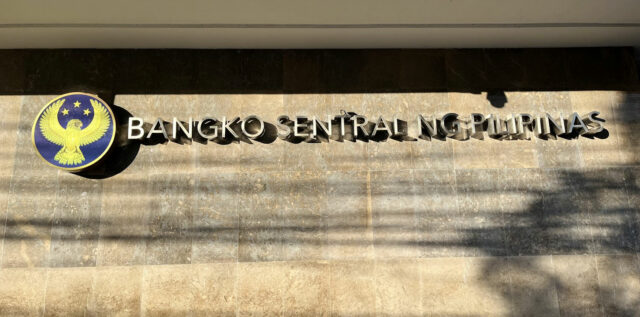
The main office of the Bangko Sentral ng Pilipinas in Manila. — BW FILE PHOTO

THE BANGKO SENTRAL ng Pilipinas (BSP) could cut by another 50 basis points (bps) this year, which would bring the benchmark to below 5% by yearend, Nomura Global Markets Research said.

“We continue to believe BSP has scope to steadily shift to an accommodative stance, as inflation expectations remain well-anchored and domestic demand is still subdued,” it said in its latest Global Economic Outlook.

“We reiterate our call for the BSP to deliver an additional 50 basis points of rate cuts this year, taking the policy rate to a below neutral 4.75%,” it added.

The central bank delivered a second straight rate cut in June, reducing borrowing costs by 25 bps to bring the key rate to 5.25%.

The Monetary Board has now lowered interest rates by a total of 125 bps since it began its easing cycle in August last year.

BSP Governor Eli M. Remolona, Jr. earlier this month said there is room for two more rate cuts this year amid benign inflation.

Nomura expects headline inflation to average 1.8% this year, higher than the central bank’s 1.6% projection.

“Our forecast pencils in CPI (consumer price index) inflation staying benign at 1.4% in the third quarter, before edging up to 2.1% by the fourth quarter, partly on base effects.”

Headline inflation picked up to 1.4% in June from 1.3% in May, but slowed from 3.7% a year ago. This brought the six-month average inflation to 1.8%.

“Our forecast is underpinned by various factors, such as a negative output gap, low crude oil prices and the government maintaining supply-side measures (to keep rice prices low, in particular),” Nomura said.

Meanwhile, Nomura said it is maintaining its Philippine gross domestic product (GDP) growth forecast at 5.3% this year. This falls short of the government’s 5.5-6.5% growth target for the year.

It noted the “disappointing” first-quarter outturn which reflected “soft private investment spending growth.” In the first quarter, the economy grew by a weaker-than-expected 5.4%.

“This, in turn, suggests businesses have already become cautious amid surging global trade uncertainty,” Nomura said.

“The output gap has turned negative, by our estimates, and we expect still-subdued investment spending and slowing export growth due to the impact of US tariffs, including via indirect effects.”

Nomura expects GDP growth to accelerate to 5.6% next year, primarily driven by infrastructure spending. The government is targeting 6-7% growth from 2026 to 2028.

It cited downside risks to growth such as rising global trade and geopolitical tensions while upside risks include a faster rollout of infrastructure projects and lower oil prices.

FISCAL POLICY
Meanwhile, Nomura noted the Development Budget Coordination Committee’s (DBCC) latest revisions to its medium-term fiscal framework.

“This matches our forecast and supports our long-held view that DBCC’s targets are challenging due to the government’s prioritization of large infrastructure spending, while revenues will likely underperform, in part because fiscal reforms are now more difficult to enact following the midterm elections.”

At its meeting in June, the DBCC raised its budget deficit ceiling to 5.5% of GDP this year from 5.3% previously and raised its 2026 forecast to 5.3% of GDP from 4.7%.

It also now expects the deficit-to-GDP ratio to reach 4.3% by 2028 from its previous target of 3.7%.

“The government is materially slowing the pace of fiscal consolidation, likely in response to a weakening growth outlook due to external headwinds,” Nomura said.

Meanwhile, Nomura’s current account deficit projection was maintained at 4.1% of GDP this year and 4.4% in 2026.

The BSP expects the current account deficit ratio to hit 3.3% this year and 2.5% in 2026.

This is amid “higher capital goods imports from infrastructure implementation and weaker exports,” it added.

The current account deficit ballooned to $4.25 billion in the first quarter. This brought the deficit-to-GDP ratio to 3.7%, larger than 1.9% a year earlier. — Luisa Maria Jacinta C. Jocson

Gen Zers, Millennials fuel PHL co-working space boom

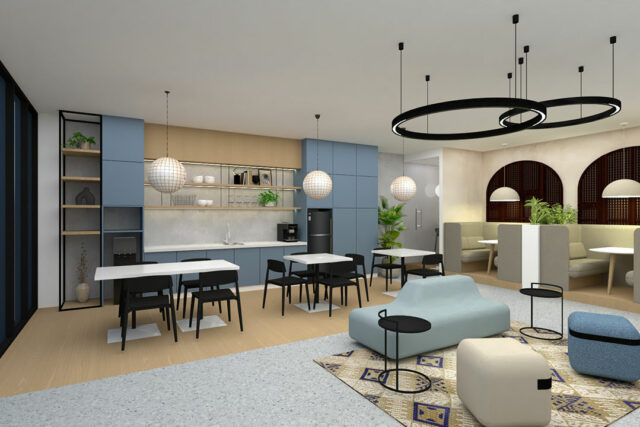
Gen Z and Millennial workers are increasingly using co-working spaces. International Workplace Group Plc (IWG) plans to operate a total of 50 flexible workspaces across the Philippines by end-2025. — COURTESY OF IWG

By Aubrey Rose A. Inosante, Reporter

OLIVER RYAN C. ORETA, 37, starts most of his workdays not in his construction company’s office, but in a rented seat at a co-working space in Ortigas.

Despite having a dedicated office in his company, he makes the daily trip from his home in Parañaque City to the Hangout Coworking Space in Tycoon Center. For him, the quiet environment offered by co-working spaces is a necessity for the kind of focus his sales and marketing role requires.

“In the office, because it is a construction firm, it’s noisy,” Mr. Oreta told BusinessWorld in an interview. “I need some space for me to think clearly… some space that’s very quiet.”

He first started renting a seat in a co-working facility in 2023, initially availing himself of day passes before eventually subscribing to a monthly membership.

He shuns working from home, citing the distractions that come with remote work. “The proximity of the working table to the bed and kitchen can be an easy distraction.”

Like many other professionals navigating a hybrid work setup, Mr. Oreta doesn’t mind spending more in exchange for comforting silence, high-speed internet and late operating hours — all fueling the growing demand for co-working spaces in the Philippines.

Janlo C. De Los Reyes, head of research and strategic consulting at JLL Philippines, said the co-working or flexible office segment is poised for growth despite increasing return-to-office mandates.

“We expect demand for the sector to be fueled by companies that continue to employ hybrid work arrangements, multinational corporations and business process outsourcing firms requiring temporary spaces for employees, and small businesses and startups that are looking for an office or address within the central business districts,” he said in a Viber message.

He noted that the appeal of co-working spaces lies in their flexibility, letting companies easily scale up or down without the long-term commitments of traditional office leases.

Data from JLL Philippines showed a healthy occupancy rate of 89.6% for co-working spaces in Makati and Bonifacio Global City in Taguig, two of Metro Manila’s key business districts.

Colliers Philippines has also observed strong demand driven by hybrid work setups, noting that many firms have yet to return to pre-pandemic leasing patterns.

“More companies have also been implementing 100% return to office, and this is a signal that landlords need to be more proactive in offering flexible lease terms,” Colliers said in an April 2 report.

The overall flexible workspace vacancy in Metro Manila rose to 17.5% at the end of last year from 16.7% a year earlier. However, Colliers noted that this was still a major improvement from the record 41% vacancy rate in the first quarter of 2021.

Fort Bonifacio led with the highest number of occupied co-working seats at 12,000; followed by Makati with 10,000; Quezon City with 7,000; Ortigas with 4,000; Mandaluyong with 2,000; Alabang, Muntinlupa with 1,000; and the Bay Area in Pasay City with 437, according to Colliers.

International Workplace Group Plc (IWG), a multinational office solution provider, is bullish on the Philippines’ flexible workspace market.

“The co-working space is the fastest-growing segment within commercial real estate,” IWG Philippines Country Manager Lars Wittig said in a video interview with BusinessWorld. He added that the departure of Philippine offshore gaming operators (POGO), which used to be major office lessees, has accelerated demand for flexible workspaces.

“The exit of POGOs is accelerating our network development because now, the partners feel an even greater urge to come to us to seek our partnership to be able to fulfill the demand for flexible workspace,” Mr. Wittig said.

President Ferdinand R. Marcos, Jr. last year ordered a total ban on POGOs due to their reported links to organized crime including human trafficking.

IWG expects to open its 50th location in the Philippines this year and signed its 61st center, which will be in Makati, in March.

“With the golden era for the country, the many more good jobs being created, what you do see is that the companies continue to be rightsizing — meaning downsizing their conventional leases — which again means that the demand is gravitating over to flexible workspaces,” Mr. Wittig said.

He also said hybrid work setups have become a tool to attract talent. “Employers are now offering hybrid working to attract and retain young talent who prefers this setup instead of going to the office.”

‘CHILL MOOD’
Mr. Oreta, for his part, agrees that the younger workforce is challenging the norms of traditional office work.

“Millennials want a chill-mood kind of work,” he said. “They want to be at the beach, at the party, or wherever they want to be. They just want to do their work and chill.”

He noted that workers like him are not bound by the traditional 9-to-5 schedule. He usually stays until 2 a.m. to finish his work.

“It is nice that the conventional type of work is broken now,” he said. “Because we’re not talking about ‘this is the proper place, this is the proper thing to do.’ We are talking more of productivity.”

“We have the freedom to choose wherever we want to work, as long as your productivity is standard,” he added.

Mr. De Los Reyes said flexible workspaces are cost-effective for startups and smaller businesses, which don’t need a large office space.

Smaller players in the co-working space sector are also seeing a surge in interest, particularly from freelancers and students.

“While independent professionals still make up a big portion of our clients, we’ve also noticed a surge in small businesses and even corporate teams opting for flexible workspaces instead of traditional office leases,” Alcariza R. Peregrino, managing partner at The Hangout: Coworking Space, said in an e-mailed reply to questions.

“The demand is shifting towards spaces that are cost-efficient, collaborative and hassle-free, and that’s exactly what we offer,” she added.

The Hangout offers rates of P250 for four hours, P500 for eight hours, and P10,500 for a full month. Students can avail themselves of hourly rates as low as P70. Monthly membership for hot desks starts at P7,500 and P10,000 for fixed desks.

The facility also offers virtual office services — letting users list a business address without renting a physical desk — starting at P3,000 a month. These include mail handling, receptionist support and day passes.

During a visit by BusinessWorld to The Hangout, professionals from diverse backgrounds were seen using the space, including an English teacher conducting lessons over Zoom and corporate workers in casual attire focused on their laptops.

Amenities include fast internet, unlimited coffee, lounges, books, board games and flexible workspace areas designed to balance work and relaxation.

“We’re proud of what we’ve built here, but we’re also looking ahead,” Ms. Peregrino said. “Our vision is to expand into more key areas like Quezon City, Manila and Makati, where demand for flexible workspaces is high.”

Monthly rental rates for flexible workspaces vary depending on the district, according to Colliers. Seats cost P8,000 to P20,000 in Ortigas; P7,000 to P18,000 in Quezon City; P7,000 to P19,000 in Alabang; P8,000 to P25,000 in Mandaluyong; P8,000 to P38,000 in Makati; P13,000 to P25,000 in Fort Bonifacio; and P15,000 to P20,000 in the Bay Area.

The rise in online jobs and remote work has also fueled demand for co-working spaces outside Metro Manila.

In Cavite, The Quiet Corner has emerged as the first co-working facility in Indang, Cavite. The Quiet Corner is the only co-working space in the town, making it a top choice for students, professionals and remote workers in the area, according to the firm.

“The demand has been strong due to the lack of similar workspaces nearby, and we continue to see consistent occupancy throughout the week,” it added.


Trade wars threaten Asia-Pacific sovereign ratings

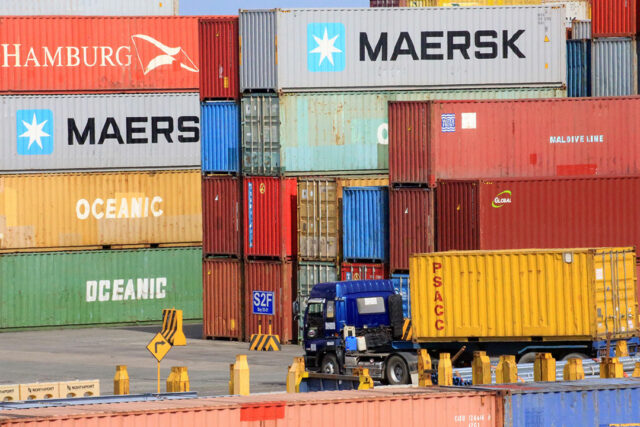
Container vans are seen at the North Port in Manila. — PHILIPPINE STAR/EDD GUMBAN

By Luisa Maria Jacinta C. Jocson, Senior Reporter

TRADE WARS and geopolitical risks could threaten Asian economies’ credit rating, including the Philippines, S&P Global Ratings said.

“Tariffs and wars pose increased risks to Asia-Pacific sovereign ratings,” it said in a report.

“International trade frictions and military conflicts grow as threats to Asia-Pacific sovereign creditworthiness in 2025.”

Asia-Pacific sovereigns had been seeing a “positive momentum” but now face considerable risks, it said.

“These risks affect sovereign credit metrics most directly through the external and fiscal channels.”

“Economies that report current account deficits or where surpluses are small — including India, Indonesia, and the Philippines — may experience slipping external support for their sovereign ratings.”

S&P said that most of the sovereign ratings in the region are investment grade and range between “BBB” and “BBB+.”

Currently, three out of 21 sovereign outlooks remain positive, namely, the Philippines, India and Mongolia.

In November, the debt watcher affirmed its “BBB+” long-term credit rating for the Philippines, which is a notch below the “A” level grade targeted by the government. It also kept its “A-2” short-term rating for the country.

S&P Global had raised its rating outlook to “positive” from “stable.” A positive outlook means the Philippines’ credit rating could be raised over the next two years if improvements are sustained.

The credit rater said that restrictive tariff policies continue to weigh on economies in the region.

“It is uncertain whether the Trump administration could conclude trade negotiations with many countries by the end of July,” it said.

The Philippines was slapped with a 20% reciprocal tariff by the United States, higher than the 17% previously proposed. The government has said it is seeking to negotiate better terms with the US.

“S&P Global Ratings believes there is a high degree of unpredictability around policy implementation by the US administration and possible responses — specifically with regard to tariffs — and the potential effect on economies, supply chains, and credit conditions around the world.”

It also cited the persistence of geopolitical conflict as a key risk, citing the South China Sea, Taiwan Straits, and North Korea.

“However, recent events show that an increase in tension can happen. And, if not carefully handled, errors in judgment could lead to escalations that no party intended.”

These escalating geopolitical tensions could affect prices, as Asia-Pacific economies may have to pay more for energy and related imports, it said.

The Asia-Pacific region could also face further fiscal deteriorations if these risks materialize, S&P said.

“Government finances will weaken as economic performances falter. Government revenue will be dragged down, especially where exporters are important taxpayers, such as in Korea, Taiwan, and Japan.”

Analysts likewise said that these global uncertainties could be a hindrance to the Philippines’ goal of securing an “A” rating.

“These global and regional risks could hinder the Philippines’ march toward an ‘A’ rating, especially if they amplify external or fiscal weaknesses,” Leonardo A. Lanzona, an economics professor at the Ateneo de Manila University, said in an e-mail.

The government is targeting to reach “A”rating status by 2028. The Philippines holds an “A” rating with Japan-based Rating and Investment Information, Inc. (R&I) and Japan Credit Rating Agency (JCR).

However, it has yet to secure a top investment rating from the big three debt watchers. Aside from its “BBB+” rating from S&P Global Ratings, it also holds a “BBB” rating from Fitch Ratings and “Baa2” from Moody’s Ratings.

“In particular, the Philippines traditionally runs current account deficits, meaning it imports more than it exports, and relies on remittances, BPO (business process outsourcing) revenues, and foreign capital to finance that gap,” Mr. Lanzona said, but noted these inflows may become volatile amid global uncertainty.

However, Mr. Lanzona said that if the government can manage inflation, exercise fiscal discipline and deepen capital markets, meeting the “A” rating goal remains within reach.

First Gen’s P50-B gas deal with Prime Infra nears completion

FIRST GEN CORP.

LOPEZ-LED First Gen Corp. is moving forward with the sale of its gas assets to Razon-led Prime Infrastructure Capital, Inc. (Prime Infra) following the signing of a share purchase agreement.

Under the deal, Prime Infra will acquire a 60% stake in First Gen’s subsidiaries that hold its gas-fired power assets. The agreement formalizes a strategic partnership between the two companies and follows a term sheet signed on May 30.

Prime Infra will pay P50 billion for the 60% stake upon closing of the transaction, according to earlier disclosures. The final amount is subject to adjustments and conditions agreed by both parties.

Once completed, the transaction will give Prime Infra a controlling interest in First Gen’s gas-fired power plants in Batangas: the 1,000-megawatt (MW) Santa Rita, 500-MW San Lorenzo, 450-MW San Gabriel, and 97-MW Avion plants.

These plants are all currently supplied by the Malampaya gas field, which is operated by Prime Energy Resources Development B.V., a unit of the Razon group.

The acquisition also includes the proposed 1,200-MW Santa Maria power plant and an interim offshore liquefied natural gas (LNG) terminal.

First Gen will retain a 40% stake in the gas plants to ensure “proper continuity and stability of its gas operating plants.”

For the LNG terminal, First Gen and Japan’s Tokyo Gas will each hold a 20% stake, while Prime Infra will own the remaining 60%.

The company said it is entitled to receive additional earnout payments if certain conditions are met.

The transaction is subject to the approval of the Philippine Competition Commission and other closing conditions. Both companies said they aim to complete the deal “soon.”

Following the acquisition, First Gen is expected to have more financial capacity to expand its renewable energy portfolio.

“We have always believed that natural gas is the most practical fuel to transition ourselves to a future of renewable energy,” First Gen Chairman and Chief Executive Officer Federico R. Lopez said in a statement last month.

“Our continued presence in LNG underlines our view of its important role in maintaining the country’s energy security and at the same time enabling the adoption of more renewable energy,” he added.

First Gen has an installed capacity of 3,668 MW, accounting for about 18% of the Philippines’ gross power generation. The company aims to expand its capacity to 13 gigawatts by 2030.

Prime Infra is the infrastructure arm of the Razon group, with business interests in power generation, water utilities, and waste management. — Sheldeen Joy Talavera

MPTC’s Vietnam unit keen on four road projects

ASHLEY ERIKA O. JOSE

HO CHI MINH, Vietnam — Vietnam-based CII Bridges and Roads Investments Joint Stock Co. (CII B&R) is keen to pursue four additional toll road projects as part of the company’s expansion plans.

In a roundtable discussion, CII’s Director of Capital Management Le Trung Hieu said the infrastructure company is now working to expand its toll road initiatives and is considering bidding for four infrastructure projects valued at a combined $1.65 billion.

These projects, all scheduled for bidding in 2025, include the construction of Thu Thiem Bridge 4 in Ho Chi Minh City at $232 million; the upgrade and expansion of National Highway 22 in Ho Chi Minh City at $401 million; the upgrade and expansion of the north-south corridor (Nguyen Huu Tho Road) from Nguyen Van Linh to the Ben Luc-Long Thanh Expressway at $381 million; and the construction of a road project along NH51 from the Vung Tau intersection to the Vo Nguyen Giap intersection with the Bien Hoa-Vung Tau Expressway at $635 million.

Metro Pacific Tollways Corp. (MPTC) holds a 45% stake in CII B&R. The company also said it is targeting the start of expansion work on the nearly $1.6-billion Ho Chi Minh City-Trung Luong-My Thuan Expressway by September this year.

The project is expected to span about 96 kilometers of expressway linking Ho Chi Minh City to My Thuan via Trung Luong, according to the company, which cited the toll road as a key infrastructure project aimed at improving transport connectivity across southern Vietnam.

Metro Pacific Investments Corp. is one of the three key Philippine subsidiaries of Hong Kong-based First Pacific Co. Ltd., alongside Philex Mining Corp. and PLDT Inc.

Hastings Holdings, Inc., a unit of the PLDT Beneficial Trust Fund subsidiary MediaQuest Holdings, Inc., holds a majority interest in BusinessWorld through the Philippine Star Group, which it controls. — Ashley Erika O. Jose

CLI, Japan’s NTT start P9.2-B residential towers in Cebu

THE WAVE TOWERS — CEBU LANDMASTERS, INC.

LISTED real estate developer Cebu Landmasters, Inc. (CLI) and Japan’s NTT Urban Development Asia (NTT UD Asia) have launched the P9.2-billion The Wave Towers premium residential project at Cebu IT Park.

The Wave Towers is a two-tower residential development by CLI NUD Ventures, the joint venture between CLI and NTT UD Asia.

The project will offer studio, one-bedroom, two-bedroom, and three-bedroom units, CLI said in a regulatory filing on Wednesday.

The first tower, the 40-story Nagomi Tower, will feature 709 premium units with minimalist, Japanese-inspired aesthetics and quality interiors, according to the company.

The Wave Towers will offer two floors of curated amenities. On the sixth-floor amenity deck, features include a pool complex with a sauna and spa, a fitness center, a Japanese garden, a children’s play area, and a game room.

On the 37th floor, the Sky Amenity Deck will offer a lounge library, a wellness gym, and an open-air sky deck.

The project will also include retail spaces on the ground and podium levels. It will be equipped with wide corridors, five elevators, and full backup power.

CLI has also opened The Wave Towers showroom, where customers can view the project’s features and model units.

NTT UD Asia is the real estate unit of the Japan-listed telecommunications company NTT Group, which has a footprint in New York, London, Boston, Melbourne, and Tokyo. It develops commercial properties such as office buildings, residences, and other mixed-use developments across Southeast Asia.

CLI, meanwhile, has nearly 130 projects across 18 cities in the Visayas and Mindanao.

CLI shares were unchanged at P2.55 per share on Wednesday. — Revin Mikhael D. Ochave

8×8 looks to boost PHL presence as customer experience space evolves

STOCK PHOTO | Image by Bethany Drouin from Pixabay

By Beatriz Marie D. Cruz, Reporter

CLOUD-BASED communications solutions provider 8×8, Inc. is looking to strengthen its presence in the Philippine market as increasing cyber threats drive the need for stronger customer experience (CX) and authentication tools.

“While the presence and penetration of CX tools is growing, the Philippine market is becoming more and more lucrative for attackers because it’s linked directly to financial assets,” Igor Mostovoy, product director of communications platform as a service (CPaaS) at 8×8, Inc., told BusinessWorld in a virtual interview.

“We do see a tremendous shift in terms of enterprises looking for security solutions, but also with the Philippine government looking to strengthen security standards across the country.”

8×8 provides a cloud-based infrastructure and platform using application programming interfaces (API) that integrates real-time communications capabilities like short message services  (SMS) and messaging apps into organizations’ applications, websites and workflows.

It helps with functions like authentication and fraud prevention, marketing and communications, and customer support.

8×8 is also looking to further expand its presence in the country through sectors like financial technology, banking, and insurance as these industries shift from traditional to omnichannel messaging formats.

“From the CX point of view, that means that customers are also becoming more sophisticated when it comes to CX tools. Before, you could just blast an SMS campaign, but now we are evolving towards behavioral targeting to enable more targeted campaigns,” Mr. Mostovoy said.

Last year, the company announced a partnership with US-based software company Descope to seamlessly integrate the latter’s drag-and-drop customer identity and access management platform into 8×8’s CPaaS API.

With Descope’s no-code and low-code visual workflows solution, 8×8 can help customize user journeys and build personalized onboarding experiences.

It can also help customers adopt modern login processes like social logins, passkeys, one-time passwords (OTPs), and magic links.

“If you look at breaches that happened recently in the Philippines and elsewhere, almost 99% of the breaches begin with a weak password that an attacker uses to gain initial access and they laterally move in the organization,” Descope Co-founder Dan Sarel told BusinessWorld.

“I cannot stress enough: the defense against attacks starts with real and strong authentication,” he said. “You can spend millions of dollars on lots of firewalls and IPS (intrusion prevention system), but if you don’t know who the user on the other side really is, all these defenses are worthless.”

About 84.5% of Philippine organizations experienced cybersecurity breaches in 2024 due to gaps in third-party cyber risk management, according to cyber defense company BlueVoyant.

Margarita’s son takes over

AMADO FORÉS and his wife Carmela Fortuna Forés at his late mother’s restaurant Lusso at The Podium.

AMADO FORÉS, the only child of the late Filipino culinary icon Margarita Forés, who died earlier this year, told gathered guests at a press conference on July 10 his plans for his mother’s restaurants.

In a speech at his mother’s restaurant Lusso at the Podium, Mr. Forés said, “With the full support of my family, my mom’s original brands Lusso, Grace Park, Margarita Florals, and Cibo will now come together under AF Hospitality.” AF Hospitality is Mr. Forés’ own venture, which includes his own brands Ramen Ron, a mano, and Steak & Frice. The junior Forés launched his own brands in 2019, starting with a mano. In 2024, that brand won the 12th spot on the list of 50 Best Pizzerias in Asia-Pacific, and No. 96 out of the 100 Best Pizzerias in the World. Earlier this year, the brand moved up to No. 9 in the Asia-Pacific list.

It will be remembered that the senior Ms. Forés had died in February (https://tinyurl.com/2s3exdt6) while in the midst of opening Margarita, a restaurant in Ayala Triangle, and planning her son’s wedding to Carmela Fortuna (a grand wedding planned at the family’s Araneta Coliseum had been scrapped in favor of a smaller wedding at the Araneta family’s Cubao home).

“We’ve thoughtfully decided not to move forward with Margarita, the restaurant originally planned for Ayala Triangle. This opens up exciting opportunities to bring her vision in more meaningful and creative ways,” he said. As he said this, his microphone malfunctioned, prompting him to say, “I think my mom turned off my mic,” which was greeted by giggles.

“This was not a decision we made lightly. It comes from a place of deep responsibility and even deeper love. These brands are more than just businesses, they are living expressions of who my mother was and what she stood for.”

CHANGING ROLES
Mr. Forés announced other developments: Cibo Executive Chef Jorge Mendez will be taking on a new role as director of research and development; former Chief Operating Officer (COO) Edgar Allan Caper is now managing director, and his cousin Mercedes, former marketing and research and development director, will now sit as Cibo’s new COO. It’s an added responsibility, for Margarita Signature Caterer will now be under the management of Cibo.

The new Mrs. Forés, Carmela (now managing director at AF Hospitality), gave updates on the brands under AF Hospitality. The newlyweds will travel to Naples in September for the World’s 100 Top Pizza Awards. She announced expansions and new plans: there will be developments under Grace Park (after its feature on Netflix’s show Somebody Feed Phil), and Lusso’s original Greenbelt 5 location will see an expansion. Margarita Florals will have a new website, while her husband’s restaurants, Ramen Ron and Steak & Frice, will open new locations.

Meanwhile, Mercedes Forés announced a Japanese concept opening in August called Makanai. Developed with Mr. Mendez, it will open at West Gallery BGC.

“My mom believed that food could bring people together, and it’s in that spirit that we carry her work forward, and it will always begin and end with love,” said Mr. Forés. — Joseph L. Garcia

Co-led Keepers buys 50% of SULÀ maker Cervia Global

LUCIO L. CO-LED liquor distribution company The Keepers Holdings, Inc. (Keepers) is acquiring 50% of local liquor producer Cervia Global Trading, Inc. for P40 million as it expands into the premium local spirits market.

Keepers is buying 125,000 shares in Cervia Global at P320 per share, it said in a regulatory filing on Wednesday.

Cervia Global is the maker of Filipino liqueur brand “SULÀ.” It has business interests in the production of premium local alcoholic beverages, particularly liqueurs, using Philippine-grown raw materials for distribution to both domestic and international markets.

“The acquisition of a 50% stake in Cervia Global Trading, Inc. gives Keepers a strategic entry point into the premium local spirits market, while also positioning the company for growth in international markets,” Keepers said.

Keepers is buying Cervia Global shares held by Caesar R. Certeza, Mark Daniel L. Rivera, Vernon A. Carandang, and Margherita Y. Rauto.

“The amount of consideration was based on the revenue potential of Cervia Global,” Keepers said.

Keepers is the liquor distribution subsidiary of Co-led retail holding company Cosco Capital, Inc.

The company’s board previously approved the incorporation of a subsidiary to establish a chain of retail outlets for alcoholic beverages and related products.

For the first quarter, Keepers saw a 14.3% increase in net income to P690 million. Consolidated revenue grew by 20.9% to P4.06 billion on higher sales volume driven by the brandy segment.

Keepers is the distributor of various global liquor brands such as Johnnie Walker, Chivas Regal, Glenfiddich, Suntory, Jinro, Jose Cuervo, Jim Beam, Penfolds, Red Bull, Alfonso, and many others.

Shares in Keepers were unchanged at P2.57 per share on Wednesday. — Revin Mikhael D. Ochave

Google optimistic on PHL AI adoption

REUTERS

GOOGLE is bullish about the growth of artificial intelligence (AI) in the Philippines amid increasing adoption of AI-powered tools.

“The Philippines is unique given that the English-speaking population is quite high. The fact that Google has a number of products that will come first to the Philippines because of English presents an opportunity for leadership in this area,” Google Southeast Asia and South Asia Frontier Vice-President Sapna Chadha said in a press briefing last week.

“Southeast Asia is rapidly transforming into a global AI hub… driven by a young, mobile-first AI population, and very strong AI adoption,” she said, noting that the investment in AI-ready infrastructure is also growing.

The company recently launched AI-powered marketing tools for Google Marketing Live, which is designed to help marketers and businesses create content and with performance optimization.

According to a Cisco report published in 2023, only 17% of organizations in the Philippines are ready to utilize and deploy AI, with most of expressing concerns about the impact of not adopting these technologies. It said almost all or about 97% of businesses recognized the urgency of adopting AI technologies, but adoption has been slower in the past years.

“For years, we’ve been at the forefront of AI-driven advertising. As consumer journeys become more complex — and resources more limited — we’re equipping marketers with our most advanced models yet: more intelligent, more agentic, and more personalized. That means faster creating, wider reach, sharper insights, and better results,” Ms. Chadha said.

According to Microsoft’s 2025 Work Trend Index report, about 89% of Philippine leaders said they are confident about having AI agents as digital team members to expand the capacity of their workforce. It also said that 80% of company leaders in the Philippines considering adding AI-focused roles. — A.E.O. Jose