Home Blog Page 7514

Sept. inflation could rise to 5% led by food, fuel

HEADLINE INFLATION may breach the 5% mark in September with food and fuel prices remaining high and typhoons possibly adding upward pressure on prices, an economist said.

“Inflation which recently peaked at 4.9% last month will likely see price pressures heat up anew in September. We expect inflation to move past 5% as recent and approaching storm systems will undoubtedly figure into this month’s fruit and vegetable inflation numbers,” ING Bank Senior Economist Nicholas Antonio T. Mapa said in a note Monday.

Mr. Mapa said fish and meat products will likely remain expensive this month, while power costs will continue to rise with crude oil at around $70 per barrel, and as utility companies and fuel retailers announce price hikes.

Manila Electric Co. (Meralco) said last week that it will raise power rates by 10.55 centavos from August levels to P9.1091 per kilowatt-hour (kWh). Meanwhile, the Energy department said fuel companies have increased their prices by 50 centavos per liter for gasoline, 95 centavos per liter for diesel and 60 centavos per liter for kerosene.

“Although the pickup in imports may be a sign of renewed demand, it also reflects an improvement in domestic production that could help increase the supply of basic goods and services. Despite this, the price pressures appear to be accelerating at the worst possible time with base effects unfavorable in September,” he added.

Headline inflation came in at 4.9% in August after a 4% reading in July. August represented a 32-month high.

This brought the average inflation to 4.4% in the first eight months, which was above the 2-4% target band set by the central bank.

Mr. Mapa said the Bangko Sentral ng Pilipinas (BSP) is facing a “dilemma” in responding to inflationary pressures as it still needs to support the economy as it bounces back from the pandemic.

Monetary authorities have been aggressive in shielding the economy from the impact of the pandemic, lowering interest rates to record lows.

“A rate hike at this point would increase the likelihood that the ongoing economic (downturn) devolves into a full-blown depression as higher borrowing costs result in an acceleration in NPLs (non-performing loans) while simultaneously snuffing out whatever gains have been made on the lending front,” he added.

While bank lending remained muted despite lower interest rates, Mr. Mapa warned increasing the cost of borrowing could further choke off much-needed credit to small companies.

“All in all, monetary tightening will have no impact on pricier vegetables or the cost of gasoline but it will surely scuttle the recovery momentum,” he added.

BSP Governor Benjamin E. Diokno has reassured a number of times that monetary authorities will continue to support the economy for “as long as necessary until the economic recovery gets underway.”

During its rate-setting meeting last month, the Monetary Board (MB) kept its key policy rate at a record low 2% for a sixth consecutive meeting.

The MB will hold its sixth policy meeting for the year on Sept. 23.

“A rate hike at this very delicate stage of recovery could be enough to push the economy into the tailspin that sends the Philippines deeper into recession and ultimately into a full-blown depression,” he said.

He estimated that the economy will recover its pre-pandemic performance by early 2023.

BusinessWorld asked the Department of Finance’s chief economist to comment but he had not replied at the deadline. — Beatrice M. Laforga

Aquaculture industry says fish supply ‘sufficient’ after recent typhoons 

THE AQUACULTURE industry estimates that the supply of fish will be adequate despite disruptions caused by typhoons Jolina (international name: Conson) and Kiko (Chanthu).

Mario G. Balazon, Taal Lake Aquaculture Alliance, Inc. director, said Monday in a virtual briefing organized by food security advocacy group Tugon Kabuhayan that the two recent typhoons damaged more than 1,000 fish cages. 

However, Mr. Balazon said the escaped fish will add to the supply.  

“We are now in the process of getting the fish back to their cages. Those that can’t be recaptured will surely be caught by other fishermen and consumed by nearby communities,” Mr. Balazon said.

Mr. Balazon estimated that it will take one to two months before tilapia supply in Taal Lake can recover from the impact of the typhoons.

“The daily harvest before the typhoons was 200 metric tons (MT) consisting of milkfish (bangus) and tilapia. In terms of percentage, 10% of the daily harvest is bangus, while the rest is tilapia,” Mr. Balazon said.

“After the typhoons, 80% of the production is still here in Taal,” Mr. Balazon said.

Jon G. Juico, Philippine Tilapia Stakeholders Association president, said tilapia farmers in Pampanga can readily supply consumers.  

Mr. Juico said however that demand has dropped and farmgate prices have fallen due to the pandemic.

He said the current farmgate price of tilapia is P70 per kilogram against a production cost of P60 to P65 per kilogram. An “ideal” farmgate price, he said, would be P80 to P85 per kilogram, to allow aquaculturists to recover their costs and earn a return.

“Before the pandemic, we have two cycles of harvest a year. Unfortunately, we experienced a dramatic drop in demand for tilapia during the pandemic which forced us to limit our harvest to one cycle a year,” Mr. Juico said.

“We are not affected by typhoons since we have improved the infrastructure of our fishponds. No matter the weather, production is continuous,” he added.  

“The tilapia in our ponds are already oversized because of the long wait for stronger demand. We’re more than ready and eager to answer government’s call for more fish supply,” Mr. Juico said.

Tugon Kabuhayan urged consumers to patronize domestically-produced fish after the Department of Agriculture (DA) approved the issuance of certificates of necessity to import for 60,000 MT of fish to compensate for the closed season in various fisheries.

Bangus and tilapia are much more affordable than round scad (galunggong). Retail prices of these aquaculture species are more stable as tilapia currently retails in our wet markets at P120 and bangus at P160 while galunggong sells at P240,” the group said.

“The DA’s decision to allow 60,000 MT of fish imports is excessive. There is sufficient local production to cover projected supply shortfalls during the forthcoming closed fishing season,” it added. — Revin Mikhael D. Ochave 

PSALM transfers over P4B to Napocor to settle retrenched workers’ claims

PHILSTAR FILE PHOTO

THE POWER Sector Assets and Liabilities Management Corp. (PSALM) has transferred P4.31 billion to the National Power Corp. (Napocor) to cover the back pay and benefits of 1,958 former employees retrenched nearly two decades ago, the Department of Finance (DoF) said.

Citing a report from PSALM, the DoF said in a statement Monday that the payouts will go towards settling claims by 1,958 former workers who were retrenched in 2003 due to the downsizing program authorized by Republic Act No. 9136 or the Electric Power Industry Reform Act (EPIRA).

PSALM, which manages the assets and liabilities of Napocor, started transferring the funds from November 2020, according to PSALM President and CEO Irene Joy J. Besido-Garcia.

However, Ms. Garcia said official records show only 893 beneficiaries have received their payouts, while the rest have yet to submit the complete requirements to process the claims. 

“There are delays in the compliance with the basic documentary requirements by some claimants. Furthermore, due to the COVID-19 pandemic and with some claimants residing outside Metro Manila or outside the country, there are mobility restrictions preventing them from submitting the required documentation especially considering that most claimants are in their old age,” she was quoted as saying.

For 2022, she estimated another P4.8 billion is needed to service all the claims of the Drivers and Mechanics Association (DAMA) formerly employed by Napocor’s former employees. DAMA members contested their termination before the Supreme Court.

“The P4.8-billion cash requirement will be covered by the balance of the 2021 approved supplemental budget amounting to P1 billion more or less, and prospectively by a P3.8-billion proposed DAMA budget for 2022,” Ms. Garcia said.

EPIRA was enacted in 2001 to reform the power sector and privatize the assets of Napocor. In the ensuing reorganization, Napocor laid off workers while rehiring some to work for PSALM or the National Transmission Corp.

The Supreme Court ruled in 2008 that the retrenched employees were entitled to either reinstatement or separation pay, back pay and other benefits. The court issued a resolution in 2017 to order Napocor to settle these overdue benefits and asked terminated workers to file their claims before the Commission on Audit.

The commission cleared Napocor to pay the claims in 2019. — Beatrice M. Laforga

Senate microgrid bill passes on third reading

A BILL facilitating the establishment of microgrid systems in unserved and underserved areas was unanimously approved on third and final reading in the Senate Monday.

The legislation thus moves to bicameral conference committee level after the House-version of the bill was approved on third reading in January.

The proposed Microgrid Systems Act, or Senate Bill No. 1928 is expected to provide continuous power to remote communities. Unserved areas are those with no electricity access, while underserved areas are currently served by distribution utilities whose supply is less than 24 hours daily.

The measure was pitched as a rural development and poverty reduction initiative by allowing the private sector a clear path to entering markets that may fall within the service areas of power cooperatives.

If passed, the bill will authorize the Department of Energy (DoE) to streamline the process for the competitive selection of Microgrid Systems Providers (MGSPs).

As currently drafted microgrids will not be classified as public utilities, and will be open to any party that may wish to establish them, including private corporations, local government units, cooperatives, provided that these entities do not subsidize their MGSPs.

“This bill is meant to address the legal gaps as well as policy gaps in terms of the nationwide total electrification program of the government,” Senator Sherwin T. Gatchalian, primary author of the bill, said in a statement Monday.

The DoE’s target is to provide electricity access to all households by 2022. “This is a tall order considering that we are an archipelagic country, and that’s why the committee sees it fit to use new and innovative technologies such as the microgrid and the use of private capital to reach total electrification by 2022,” he added.

The bill bars territorial concession holders from refusing to allow the installation of microgrids or surrender customers to new entrants. It also regulates service contracts for microgrid customers.

Mr. Gatchalian, who also chairs the Senate Committee on Energy, is optimistic that the bill will be ratified before the end of the 18th Congress.

The schedule for the bicameral committee hearing has yet to be finalized. — Alyssa Nicole O. Tan

Marked fuel generates over P286 billion in taxes

PHILSTAR FILE PHOTO

THE BUREAU of Customs has collected P286.33 billion in duties and taxes from 29.4 billion liters of marked fuel in the two years since the fuel marking program was launched, according to the Department of Finance (DoF).

The fuel marking program generated P286.33 billion in revenue between September 2019 and Sept. 10 this year, according to Customs data the DoF released Monday.

The Bureau of Customs, which oversees fuel imports, collected P256.55 billion in duties and taxes during the period.

The Bureau of Internal Revenue (BIR), which oversees locally-produced oil products, collected P29.78 billion between December 2019 and July this year.

Some 73% of marked fuel or 21.47 million liters generated taxes in Luzon, followed by 21% in Mindanao and the remainder in the Visayas.

Diesel accounted for 61% of the total volume marked or 17.9 million liters, while 39% or 11.317 million liters was gasoline.

The fuel marking program deters smuggling by injecting the products with a special dye to signify tax compliance. The absence of the dye is deemed prima facie evidence that the fuel was smuggled.

The program was authorized by Republic Act No. 10962 or the Tax Reform for Acceleration and Inclusion (TRAIN) in a bid to curb smuggling after the law hiked the excise tax rate slapped on fuel products.

Customs and the BIR started collecting in September 2020 a fuel marking fee of P0.06884 per liter, inclusive of value-added tax, charged on all manufactured, refined or imported petroleum products.

The DoF has estimated that revenue foregone due to oil smuggling was between P20 billion and P40 billion a year. — Beatrice M. Laforga

New NEA OIC designated

PHILSTAR FILE PHOTO

THE NATIONAL Electrification Administration (NEA) said Rossan SJ. Rosero-Lee has been designated officer-in-charge (OIC) pending the appointment of a new administrator.

According to an announcement posted by the NEA last week, Ms. Rosero-Lee was previously the agency’s Deputy Administrator for Legal Services.

“This shall be in effect until the appointment of an administrator (by the Office of the President),” the NEA said on Sept. 8.

Ms. Rosero-Lee will be taking over the position previously held by Sonia B. San Diego who requested to be replaced “due to health reasons.”

“Due to the current health condition of OIC San Diego, she could no longer perform the duties and responsibilities of a NEA OIC,” the NEA said in a separate announcement on its website.

As a result, the NEA board of administrators decided to rescind Ms. San Diego’s designation as OIC, effective Sept. 6.

President Rodrigo R. Duterte had dismissed NEA Administrator Edgardo R. Masongsong from the service for alleged corruption.

In an Aug. 21 briefing, Mr. Duterte said that the Presidential Anti-Corruption Commission had recommended Mr. Masongsong’s termination. — Angelica Y. Yang

IPOPHL signs agreement to professionalize patent agents

THE intellectual property (IP) agency said it has signed a partnership with a patent agents’ group to exchange research and develop information awareness campaigns.

The Intellectual Property Office of the Philippines (IPOPHL) signed a memorandum of understanding (MoU) with the Association of PAQE (Patent Agents Qualifying Examinations) Professionals, Inc. (APPI) to cooperate on IP education and patent agent professionalization.

Such professionalization means raising the patent agent job to “the level of other licensed professions,” APPI President Editha R. Hechanova said.

The APPI is a non-profit organization made up of certified patent lawyers and agents that represent inventors.

IPOPHL in a statement Monday said the MoU signed on Sept. 7 includes a framework for IP rules talks, research exchange, and joint conferences and seminars over four years.

“Through this MoU, our partnership will yield impactful results in our shared goal of fostering innovation and an environment that recognizes and promotes research and development and creativity,” IPOPHL Director General Rowel S. Barba said.

IP filings in the first half of 2021 rose after eased lockdown restrictions supported the economic recovery, with patent filings inching up 2% to 1,945. The top fields for patent filings were pharmaceuticals and organic fine chemistry.

IP filings had declined in 2020 as inventors and creatives delayed applications due to the lockdowns declared to contain the coronavirus disease 2019 (COVID-19).

The US patent office through a renewed partnership in May designated the IPOPHL as a competent assessor of international patent applications. — Jenina P. Ibañez

Taxing income from cryptocurrencies

The digital economy continues to shape up as a significant aspect of commerce. The effects of the pandemic accelerated the paradigm shift towards digitalization and greatly altered the patterns of production and consumption of goods and services.  Recently, a product of the digital age has been drawing a lot of interest — cryptocurrency. Once known only to tech-savvy people, cryptocurrencies are gaining traction and becoming more mainstream because of their perceived advantages and the income-earning opportunities they present.

Last month, cryptocurrencies hit the headlines in the Philippines once again, but this time, because of news that may not be very enticing to those earning income from cryptocurrencies — the Department of Finance (DoF) and the Bureau of Internal Revenue (BIR) are now looking at how to capture the taxes that should be paid on income from cryptocurrencies.

Is income from cryptocurrencies taxable? Before we tackle the answer to that question, let us examine how cryptocurrency income is usually earned.

WHAT IS CRYPTOCURRENCY?
According to a Bangko Sentral ng Pilipinas (BSP) primer and FAQs on virtual currencies (VCs), cryptocurrency is a type of VC that uses cryptography, a method of storing and transmitting data in unreadable form so that only the intended receivers can read and process it. A VC, in a general sense, is a type of digital “currency” created by a community of online users, is stored in electronic wallets (e-wallets), and is generally transacted online.

There are numerous types of cryptocurrencies such as Bitcoin, Ethereum, Cardano Coin, Tether, XRP, Dogecoin, and many others. Cryptocurrencies may be exchanged for goods and services with parties willing to receive cryptocurrencies as payment.

EARNING INCOME FROM CRYPTOCURRENCIES
A person can earn income from cryptocurrencies in a variety of ways. Cryptocurrencies have value because they function as a store of value, and as described above, they constitute a medium of exchange. Thus, one may profit from price changes when cryptocurrencies are bought and held for investments and then subsequently sold or exchanged. Speculating on the prices of cryptocurrencies is also usually done through different crypto exchanges or trading platforms.

Recently, play-to-earn online games such as Axie Infinity have been gaining popularity. In Axie Infinity, players earn cryptocurrencies throughout the game, which can be withdrawn, transferred to e-wallets, and exchanged for either actual money or other types of cryptocurrencies.

Now, let’s go back to the question — is income from cryptocurrencies taxable? The short answer is yes.

APPLICABLE TAXES
The BIR recently issued a circular clarifying the taxation of income received by social media influencers. Generally, the appropriate taxes, registration and other compliance requirements, and penalties due to failure to pay taxes a`pplicable to social media influencers and other persons earning income online could be similar to those covering persons earning income from cryptocurrencies.

In other countries, cryptocurrency is treated as property; hence, the related income is taxable just like transactions in any other property. In the US, for example, a taxpayer who receives cryptocurrency as payment for goods or services must include the fair market value of the cryptocurrency in computing gross income. If cryptocurrency is sold or exchanged and the amount or the fair market value of property received from the exchange exceeds the taxpayer’s adjusted cost basis of the cryptocurrency, the taxpayer generally has a taxable gain. If cryptocurrency is received, without any cost incurred by the taxpayer, the value of the cryptocurrency is taxable.

In the Philippines, however, the BIR has not yet issued specific guidelines on the classification of cryptocurrencies and the taxation of income earned from such. Nonetheless, our Tax Code provides that for purposes of computation of tax, gross income means all income derived from whatever source. Therefore, income arising from cryptocurrency transactions should be included in the income of the taxpayer that will be subjected to income tax. Income may arise when cryptocurrency is sold, spent, exchanged for another property, or received as payment for services rendered.

Individuals who want to earn additional income are the most common holders of cryptocurrencies. Currently, individual taxpayers are generally subject to graduated income tax rate of up to 35% based on net taxable income (first P250,000 net taxable income is not subject to tax), except those considered non-resident aliens not engaged in trade or business (NRANETBs) in the Philippines whose income is subject to 25% income tax based on gross income.

Citizens and resident aliens who are registered as non-value added tax (VAT) taxpayers and whose total gross sales/receipts do not exceed P3,000,000 during the taxable year may choose to avail of the 8% tax based on gross sales or receipts (first P250,000 is still not subject to tax). The 8% flat rate is in lieu of graduated income tax and percentage tax.

However, assuming that the cryptocurrency will be considered property, under the tax rules, such may either be classified as a capital asset or an ordinary asset. Capital assets are property other than the property held in inventory primarily for sale to customers in the ordinary course of business, or property used in trade or business. If property is classified as a capital asset, only 50% of the capital gain earned by an individual will be included in the gross income if the asset was held for more than 12 months. On the other hand, gains arising from ordinary assets are treated as ordinary income and are generally reportable in full regardless of the holding period.

The income may also be subject to business taxes such as the 12% VAT or 1% percentage tax (will revert to 3% after June 30, 2023), as applicable. Note that VAT only covers sale, transfer or exchange of goods and services done in the ordinary course of the taxpayer’s trade or business. It does not cover properties classified as capital assets.

Under the Tax Code, any person who willfully attempts in any manner to evade or defeat taxes may be punished by a fine of P500,000 to P10,000,000 and suffer imprisonment of six to 10 years, in addition to other penalties provided by law.

TAX ADMINISTRATION CHALLENGES
The Philippines uses a self-assessment system in collecting taxes, whereby taxpayers themselves determine which income will be reported in the tax returns and calculate their own tax liabilities based on such report. After the returns are filed, the BIR shall examine and check whether the correct amount of taxes was paid by taxpayers through BIR audits or assessments.

Considering the foregoing, one challenge for tax authorities when it comes to digital transactions, including cryptocurrency transactions, is the difficulty of tracking the income arising from such undertakings. Currently, for tax purposes, there are no reportorial requirements for those engaging in cryptocurrencies transactions. Hence, the BIR may be blind to the income being earned on those transactions. In other countries, for instance, individual taxpayers have to indicate in their tax returns whether they received, sold, spent, exchanged or acquired any financial interest in any virtual currency during the year or not.

A third-party reporting scheme and the withholding tax system may also be helpful. However, most of the income payors for cryptocurrency transactions such as crypto exchanges and other businesses are mostly non-residents of the Philippines. The DoF is hopeful that this will be somehow resolved once the system of registration for non-residents is put into place. There is currently a pending bill in Congress aiming to establish a fiscal regime for the digital economy. Indeed, as the digital economy continues to boom, there is a need to update the tax system in order to adapt and stay effective in a fast-paced digital world. 

Tax is normally a topic shunned by income earners, but I hope that talk of a tax will not dishearten those who are into cryptocurrencies. After all, fairness in taxation dictates that goods and services should be taxed similarly regardless of how they are sold or rendered — whether physically or virtually. Also, cryptocurrencies receiving the attention and interest of many, including the tax authorities, means it is showing a lot of promise. This is similar to when the BIR issued the clarifications on the taxation of social media influencers at a time when social media advertising was becoming more and more lucrative. Time alone will tell how much impact cryptocurrencies will have on income, taxes, and the economy as a whole.

Let’s Talk Tax is a weekly newspaper column of P&A Grant Thornton that aims to keep the public informed of various developments in taxation. This article is not intended to be a substitute for competent professional advice.


John Paulo D. Garcia is a manager of Tax Advisory & Compliance division of P&A Grant Thornton, the Philippine member firm of Grant Thornton International Ltd.

pagrantthornton@ph.gt.com

Philippines posts 640 new Delta COVID-19 cases

PHILIPPINE STAR/ MICHAEL VARCAS
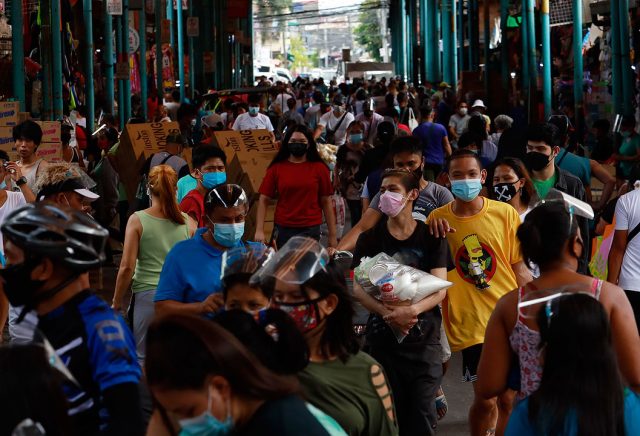
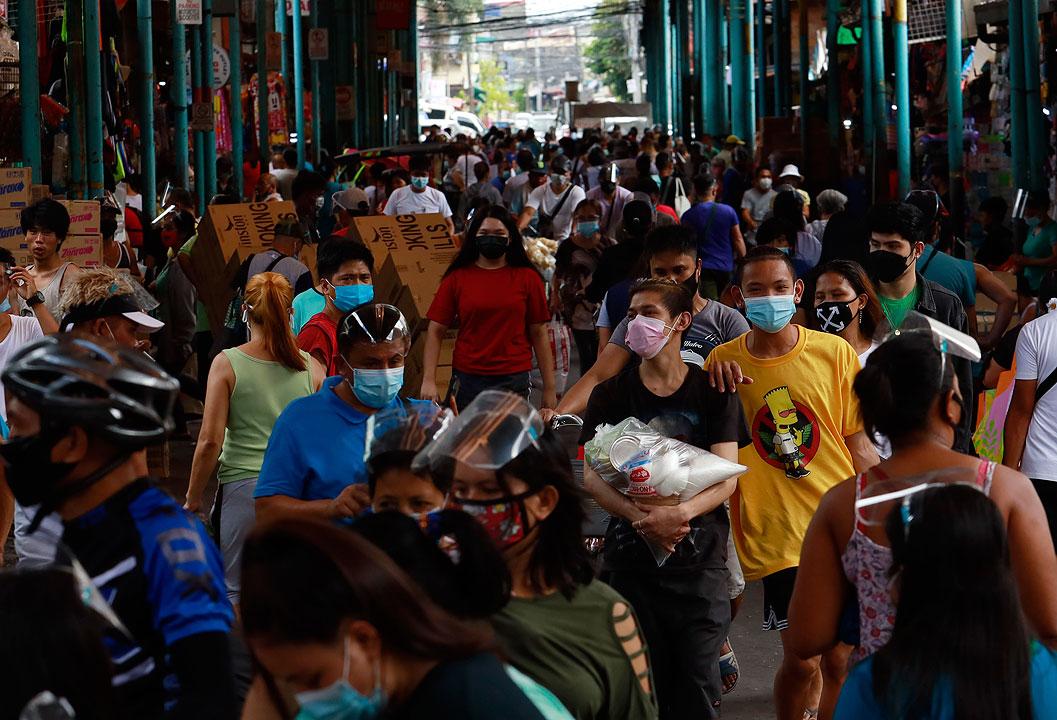
PEOPLE wear masks inside the Marikina Public Market. — PHILIPPINE STAR/ MICHAEL VARCAS

By Kyle Aristophere T. Atienza, Reporter

PHILIPPINE health authorities on Monday said 640 more people have been infected with the highly contagious Delta coronavirus variant, bringing the total to 2,708.

In a statement, the Department of Health (DoH) said 624 patients have recovered, 13 died and three were still battling the virus.

Of the new cases of the virus that was first detected in India, 584 were locals, 52 were returning overseas Filipino workers and four were still being verified, it added.

Of the 584 local cases, 112 had addresses in the National Capital Region, 52 in Cagayan Valley, 49 in Calabarzon and two in the Bangsamoro region.

DoH reported 20,745 coronavirus infections on Monday, bringing the total to more than 2.2 million.

The death toll rose to 35,307 after 163 patients died, while recoveries increased by 22,290 to more than two million, it said in a separate bulletin.

There were 180,293 active cases, 86% of which were mild, 9.4% did not show symptoms, 1.4% were severe, 2.62% were moderate and 0.6% were critical.

DoH said 41 duplicates had been removed from the tally, 30 of which were reclassified as recoveries and one as a death, while 60 recoveries were reclassified as deaths. Five laboratories failed to submit data on Sept. 11.

The agency said 24 more people have been infected with the Alpha coronavirus variant first detected in the United Kingdom, bringing the total to 2,448.

Twenty-eight more Filipinos got infected with the Beta variant from South Africa, bringing the total to 2,725.

DoH also said five more people have been infected with the P.3 variant first detected in the Philippines.

Meanwhile, Philippine General Hospital (PGH) spokesman Jonas D. Del Rosario said the country’s main COVID-19 referral hospital was facing a manpower crisis as coronavirus infections in the country continue to increase.

Health workers at the state-run hospital were getting sick, while many of its volunteer doctors have opted not to renew their contracts.

“A lot of patients are coming in, we’re operating at full capacity,” Mr. del Rosario told the ABS-CBN News. “Our manpower is really stretched. We’re 30 patients above our threshold,” he said in Filipino.

He said the PGH was planning to hire private practitioners to augment its team.

Presidential spokesman Herminio L. Roque, Jr. said 77% of intensive care unit beds and 68% of isolation beds in the Philippines had been used as of Sept. 12. More than 70% of ward beds in the country were occupied, he told a televised news briefing.

He said 78% or ICU beds in Metro Manila had been used, while 65% of isolation beds and 72% of ward beds in the region were occupied.

The country is struggling to vaccinate its entire adult population amid a fresh surge in infections triggered by the Delta variant.

As of Sept. 12, 16.8 million people or 21.77% of the country’s adult population had been fully vaccinated against the coronavirus, Mr. Roque said.

Meanwhile, Interior and Local Government Undersecretary Epimaco V. Densing III said residents affected by localized lockdowns might be given a 12-hour “leeway notice” to prepare. But an area with high COVID-19 (coronavirus disease 2019) infections could be “locked down immediately,” he added.

Mayors could only declare granular lockdowns when these have been recommended by the local health office, he told CNN Philippines.

Meanwhile, Mr. Densing said cash aid would not be given to residents of areas under a granular lockdown. “Unfortunately, we don’t have financial assistance but we have food packs for 14 days,” he said in mixed English and Filipino.

The rules for the pilot testing of localized lockdowns in the capital region were set to be released on Sept. 13.

500,000 face masks delivered before gov’t contract was awarded

BW FILE PHOTO

A LOCAL company that was awarded P8 billion in government contracts for face masks and other medical supplies claims to have delivered half-a-million masks even before it won the deal.

Senators investigating the deal scoffed at the idea at a hearing on Monday, saying officials of Pharmally Pharmaceutical Corp., whose capability they have questioned, were probably lying.

The company delivered 500,000 surgical masks on March 25 last year, the same day it received a request for a quote from the Budget department, Krizel Grace U. Mago, regulatory affairs head at the company, told the Senate blue ribbon committee.

Senator Francis N. Pangilinan doubted that the delivery happened on the same day, noting that Pharmally did not get a notice of award until April 6.

Former Budget Undersecretary Lloyd C. Lao told senators the company had delivered the face masks to prove it had enough capacity.

Pharmally Director Linconn Ong, whom the Senate body had arrested for failing to answer questions directly, said the masks were bought from local supplier Tigerphil Marketing Corp. for P23 apiece. These were delivered to the Budget department’s Procurement Service warehouse in Paco, Manila, he added.

The government paid Pharmally P13.9 million on April 15 last year, more than requested quote for P8 million. “We make good of our obligation to deliver as fast as possible,” Pharmally Chairman and President Huang Tzu Yen told senators.

He also said the company had charged the government P28 per face mask because of the high demand and low supply at that time. He also said the company had never denied that it was small. “We all start from somewhere.”

The Pharmally chairman also denied the company had been favored.

Executive Secretary Salvador C. Medialdea earlier said the blue ribbon committee had summoned witnesses “for further bullying,” adding that many of them have been “criminally condemned.”

“We’re not bullying anyone here, we are just doing our duty,” Senator Richard J. Gordon, Sr., who heads the committee, said at the hearing.

“The Senate will recommend the filing of appropriate charges after we’re done with our investigation at the blue ribbon committee,” Senator Ana Theresia N. Hontiveros-Baraquel said in a statement.

“We are a co-equal branch of government and this investigation is part of our duty under the Constitution,” she said in Filipino. The government, she added, should let the Senate do its job in ensuring that the people’s money was not misused.

Meanwhile, former Budget department inspection chief Jorge L. Mendoza III said procurement inspectors had signed the inspection report for personal protective equipment before these arrived from China. He said this happened twice on his watch.

Budget inspector Mervin Ian D. Tanquintic also said he had signed inspection reports before receiving the orders, adding that this was done for foreign suppliers. Once the items arrived, joint-inspection and accounting were still performed.

Also on Monday the Anti-Money Laundering Council (AMLC) said the Ombudsman should first establish a predicate crime involving Pharmally before the council can probe it for money laundering.

“Although the AMLC may already scrutinize suspicious activities prior to the determination of a predicate crime, investigations on predicate crimes are primarily handled by law enforcement agencies,” AMLC Executive Director Mel Georgie B. Racela said.  Alyssa Nicole O. Tan and LWTN

1987 Constitution framer says Ombudsman not ‘protector of gov’t officials’  

OMBUDSMAN.GOV.PH

ONE of the framers of the 1987 Constitution said on Monday that the Office of the Ombudsman’s role is not to protect government officials from the people amid the current ombudsman’s insistence on a policy of restricted public access to public officials’ declaration of assets.    

“It seems that the present Ombudsman has forgotten that in a democracy, the people are the principals, and the government officials are their agents, not the other way around,” Christian S. Monsod, also a former chair of the Commission on Elections, said in an online forum.  

Ombudsman Samuel R. Martires, who was appointed to the post by President Rodrigo R. Duterte in 2018, issued a circular in Sept. 2020 limiting access to statements of assets, liabilities, and net worth (SALN), which government workers and officials are required to file annually.    

The circular has been used to deny requests for Mr. Duterte’s SALNs.   

Journalist Malou C. Mangahas, former Philippine Center for Investigative Journalism executive director, said the circular is a hindrance to the people’s right to know, adding that Mr. Duterte is the first president in 30 years to not disclose his SALN publicly.   

Former Ombudsman Conchita Carpio-Morales also questioned the circular last year, saying that it is a violation of the constitutional principle that “public office is a public trust.”   

Under the circular, copies of a public official’s SALNs may only be given to the official or their duly authorized representative, a requester based on a court order, and the Office of the Ombudsman’s Field Investigation Office to conduct fact-finding investigation.   

During the House committee on appropriations’ 2022 budget deliberation of his office on Sept. 9, Mr. Martires said he himself was a victim of “what the media can do to destroy a government official” when his 2018 SALN was questioned for gaining P15 million within five months from August to Dec. 2018.  

Former senator Orlando “Orly” S. Mercado, who is also one of the authors of Republic Act 6713 or the Code of Conduct and Ethical Standards for Public Officials and Employees, said during the forum that while he understands Mr. Martires’ personal experience with SALNs, public officials must instead explain the reason for their wealth and not opt to remove “an important piece of armamentation.”    

“If there is nothing to hide, there should be nothing to fear,” Mr. Mercado said in Filipino.   

Republic Act 6713 requires all public officials and employees to file a SALN, and under Section 8, “any statement filed under this Act shall be available to the public for a period of 10 years after receipt of the statement.” — Bianca Angelica D. Añago  

Lawyers’s group opposes Roque’s nomination to UN legal body  

PCOO

A GROUP of lawyers on Monday expressed strong opposition to the nomination of Palace Spokesman Herminio L. Roque, Jr. to the International Law Commission (ILC), saying he has enabled human rights violations in the Philippines.   

Mr. Roque does not possess the qualifications for a seat at the legal body responsible for codifying international rules because he has disregarded the rule of law and used his expertise “to undermine the protections that international law provides under a regime of human rights and the rule of law,” the Free Legal Assistance Group (FLAG) said in a letter to the ILC.   

“While he has degrees in law and has taught Public International Law, he is a political partisan who has actively demonstrated contempt for the rule of law and, with specific relevance to the Commission, has undermined the supremacy of human rights and international law,” FLAG said.  

The 47-year-old group asked the ILC, which was formed by the United Nations General Assembly in 1947, “to peremptorily disregard the nomination of Mr. Roque and remove him from consideration for a seat in the Commission.”  

FLAG attached to its letter “documented pronouncements” of Mr. Roque, in his capacity as spokesman of President Rodrigo R. Duterte, that made him unfit to become part of the ILC, whose membership is reserved to “those persons of recognized competence in both doctrinal and practical aspects of international law.”  

“His public defense of extrajudicial killings, his belittling of the competence and jurisdiction of the International Criminal Court (ICC), and his cavalier disregard of the effects of domestic violations of human rights, among others make him ill-suited for the work of the Commission,” the group said.   

Former ICC Chief Prosecutor Fatou Bensouda on June 14 asked the court’s pre-trial chamber to open a probe into Mr. Duterte’s war on drugs. 

Mr. Roque had said that the Philippines will not cooperate with any probe by the ICC, asserting that it has no jurisdiction over the country after Manila’s withdrawal from the Rome Statute became effective in 2019.  

The ICC, however, has said that the withdrawal would not affect its investigation.  

On Monday, Mr. Roque confirmed being in New York City for the selection process of the ILC, which is composed of 34 members with a five-year term.  

The President’s mouthpiece told a televised news briefing that he will let the states decide if he is worthy to be elected in the international legal body. 

He said his platforms include an accord on equal coronavirus vaccine access and a treaty that will recognize the permanent presence of states despite the effects of global warming. 

Mr. Roque, who was nominated by the Philippine government in June, is among the 11 nominees from the Asia-Pacific region. Only eight of the nominees from the region will be elected. — Kyle Aristophere T. Atienza 

ADVERTISEMENT
ADVERTISEMENT