Home Blog Page 741

Wicked star Jonathan Bailey named ‘sexiest man alive’ by People magazine

PEOPLE.COM
PEOPLE.COM

LOS ANGELES — English actor Jonathan Bailey, who returns to movie theaters this month in the musical film Wicked: For Good, was named this year’s “sexiest man alive” by People magazine on Monday.

The 37-year-old Mr. Bailey said it was a “huge honor” to receive the pop culture accolade previously awarded to stars including Chris Hemsworth and George Clooney.

“Obviously, I’m incredibly flattered. And it’s completely absurd,” Mr. Bailey told People with a laugh. He joked that he had only shared the news with his dog, Benson.

The selection of Mr. Bailey, also known for his role as Lord Anthony in the steamy period drama Bridgerton, was announced on The Tonight Show Starring Jimmy Fallon.

Mr. Bailey played Prince Fiyero in last year’s blockbuster Wicked, a prequel to The Wizard of Oz and will reprise the role in the coming sequel Wicked: For Good. The actor also starred in the dinosaur flick Jurassic World: Rebirth this summer.

The Office actor John Krasinski was named “Sexiest Man Alive” in 2024.

Other actors and singers who have been given the title by People magazine’s editors include Blake Shelton, Adam Levine, Idris Elba, and Channing Tatum. — Reuters

Lazada sees surge in holiday shopping during 11.11 sale

LAZADA

By Justine Irish D. Tabile, Reporter

LAZADA PHILIPPINES expects online spending to surge in the next two months as more Filipinos turn to e-commerce for holiday shopping, bolstered by the platform’s biggest campaign of the year.

“A lot of our sellers get 30-40% of visits for the year just between November and December,” Lazada Philippines Chief Executive Officer Carlos Barrera told reporters on Wednesday. “We expect LazMall brands, especially the big ones, to grow faster than during the 9.9 sale.”

Filipinos spent almost 40% more per order during the September sale compared with last year, Lazada said. Top brands recorded double- to triple-digit growth, while sales of the top 20 LazMall sellers jumped by as much as 110 times, outpacing other Southeast Asian markets.

Mr. Barrera said the Nov. 10-13 sale would feature “the best possible promotions and deals” from global and local partners, driving even higher spending. Discounts include as much as 90% off LazFlash deals, P2,000 worth of vouchers and free shipping.

“It’s definitely the one day of the year when everybody buys the most,” he said. “We expect baskets to go up even more now because of additional promotions and rewards.”

Alvin Ching, Lazada Philippines head of seller operations, said worsening traffic in Metro Manila during the holidays could further boost online sales. “We don’t necessarily make people spend more, but we shift their spending online because it’s more convenient,” he said.

The 11.11 campaign will feature international brands such as Gmarket Korea, MIMANI, emonster aroma and Lazada-exclusive lines from Shiseido Group, Jo Malone, Nike and Veja.

Mr. Ching added that smaller merchants also benefit from the surge in browsing during mega campaigns. “It’s a level playing field as you get access to the entire Philippines as your market,” he said.

Lazada is also investing in artificial intelligence (AI) to enhance user experience and seller productivity. Its AI Lazzie chatbot will help shoppers navigate over 2.3 million products using a SmartStack feature that combines LazRewards and vouchers for the best deals.

“At Lazada, our story is about brand partnerships,” Mr. Ching said. “We are trusted by brands as a partner for success because we invest in them.”

Lazada said 80% of Filipino sellers view AI as a tool to raise efficiency by improving product photos, listings and real-time business insights.

Xiaomi launches REDMI Pad 2 Pro Series tablets

XIAOMI PHILIPPINES

XIAOMI has launched its REDMI Pad 2 Pro Series of tablets in the Philippines, which will be available via the brand’s official Shopee and Lazada stores and all authorized stores nationwide starting this Friday (Nov. 7).

The REDMI Pad 2 Pro 5G variant (8GB RAM + 256GB storage) retails for P19,999 and comes with a free keyboard until Nov. 20, while the REDMI Pad 2 Pro (8GB+256GB) is priced at P17,599.

“This all-new series of tablets caters to those seeking an immersive large-screen entertainment experience, bringing movies and games to life with vivid visuals and smooth performance,” Xiaomi said.

“Built for everyday entertainment, the REDMI Pad 2 Pro Series combines an expansive display, massive battery, immersive sound, and versatile features that adapt effortlessly to everyday use.”

The REDMI Pad 2 Pro Series is powered by the Snapdragon 7s Gen 4 Mobile Platform and has a 12,000mAh battery that supports 33W fast charging as well as 27W wired reverse charging. The tablets also have expandable storage of up to 2TB.

The tablets have a 12.1-inch display with 2.5K resolution and up to 120Hz refresh rate. The screen has Dolby Vision support for more accurate color and lifelike visuals and features DC dimming and triple TÜV Rheinland certifications for Low Blue Light (Hardware Solution), Flicker-Free, and Circadian Friendly viewing to minimize eye strain.

They are equipped with a quad-speaker system with Dolby Atmos and Hi-Res Audio featuring manual volume boost of up to 300%.

The 5G variant comes with a 13-megapixel (MP) rear camera and an 8MP front camera, while the regular model has 8MP rear and front cameras.

The devices also feature integrated Xiaomi interconnectivity powered by Xiaomi HyperOS, supporting functions like Call sync, Shared clipboard, Network sync, Home screen+, and Cross-device cameras.

The REDMI Pad 2 Pro 5G model comes in the colors Graphite Gray and Silver, while the REDMI Pad 2 Pro is available in Graphite Gray, Silver, and Lavender Purple.

Users can also get accessories for their tablet, including the REDMI Smart Pen, the full-sized REDMI Pad 2 Pro Keyboard, and the REDMI Pad 2 Pro Cover.

XIAOMI 11.11 SALE
Meanwhile, Xiaomi Philippines is offering up to 68% off on Xiaomi products and up to P11,000 off on POCO models along with freebies as part of its 11.11 Mega Sale campaign. More details can be found on the brand’s official pages.

“From phones to appliances, Xiaomi’s wide range of products — available on Shopee from Nov. 6 to 15, 2025 and Lazada from Nov. 10 (8 p.m.) to 15, 2025 — makes smart living achievable for you and your family,” the brand said.

Among the products included in the sale are the Xiaomi Pad 7, REDMI 14C, the POCO X7 Pro, and the POCO PAD, as well as wearables like the Xiaomi Smart Band 9 and the REDMI Watch 5 Active.

Some of Xiaomi’s lineup of home appliances are also part of the campaign, including the Smart Air Purifier 4 Lite, the Robot Vacuum S40C, the Xiaomi TV A 2026, the Xiaomi 2K Gaming Monitor G27Qi, and the Xiaomi Curved Gaming Monitor G34WQi. — BVR

Seven-day term deposits fetch lower yields as inflation data bolster easing bets

BANGKO SENTRAL NG PILIPINAS

YIELDS on the Bangko Sentral ng Pilipinas’ (BSP) seven-day term deposits dropped on Wednesday as the offer drew strong demand on slower-than-expected inflation in October, which could bolster the case for further policy easing.

Total bids for the central bank’s seven-day deposits stood at P96.642 billion, above the P80-billion offer and the P74.76 billion in tenders seen for the tenor last week for the P60 billion placed on the auction block. The BSP fully awarded its offering.

Banks asked for rates ranging from 4.5% to 4.8%, wider and lower than the 4.79% to 4.825% band last week. This caused the average rate of the one-week deposits to fall by 3.13 basis points (bps) to 4.776% from 4.8073%.

The BSP did not offer 14-day papers at this week’s term deposit facility (TDF) auction. This was the first time since June 2020 that it only auctioned off the shortest tenor.

Last week, including the two-week deposits, total bids for the facility reached P142.886 billion, above the P130 billion auctioned off. However, the 14-day tenor went undersubscribed at that auction, with bids amounting to only P68.126 billion, below the P70-billion offer.

Meanwhile, the BSP has not auctioned off 28-day term deposits since October 2020 to give way to its weekly offerings of securities with the same tenor.

The TDF and BSP bills are used by the central bank to mop up excess liquidity in the financial system and better guide market rates towards the policy rate.

Earlier this week, the central bank also did not offer the longer two-month tenor at its auction of BSP securities and instead increased the volume of 28-day bills it placed on the auction block.

“The BSP TDF average auction yields were again slightly lower after the slower than expected latest inflation data,” Rizal Commercial Banking Corp. Chief Economist Michael L. Ricafort said in a Viber message.

This would support further rate cuts by the central bank, he said.

Headline inflation was at 1.7% in October, steady from September but easing from 2.3% in the same month last year.

This was a tad below the 1.8% median estimate in a BusinessWorld poll of 17 analysts but was within the central bank’s 1.4-2.2% forecast for the month. It also marked the eighth consecutive month that inflation was lower than the BSP’s 2-4% annual target.

The October print brought the 10-month average to 1.7%, matching the central bank’s forecast for the year.

Last month, the BSP cut benchmark borrowing costs by 25 bps for a fourth straight meeting to bring the policy rate to 4.75%. It has now lowered rates by a total of 175 bps since August 2024.

BSP Governor Eli M. Remolona, Jr. has said that another 25-bp cut is possible at the Monetary Board’s Dec. 11 meeting, adding that they could extend their easing cycle until next year to provide some stimulus amid the expected economic fallout from the corruption scandal involving government infrastructure projects that has affected investor confidence. — K.K. Chan

Delusions of democracy, revisited

PHILIPPINE STAR/EDD GUMBAN

In a column about eight years ago, I argued that the Philippines lived not in a true democracy, but in a nominal one. We continue to see elections and similar democratic rituals on the surface, but elite power plays underneath still determine outcomes.

People do not truly vote for leaders they want; they perpetuate and legitimize the continued rule of a select few from the governing elite. The so-called choice is largely limited to members of political dynasties and recycled career politicians.

Not much has changed since. In Freedom House’s latest Freedom in the World report, we scored 58/100 and were rated “Partly Free.” The Philippines posted 25/40 on political rights and 33/60 on civil liberties, which are far from ideal. At best, we have a stagnant democracy that tilts toward erosion.

Freedom House notes: “The Philippines hosts a vibrant political landscape, and elections are free from overt restrictions. However, established political elites benefit from structural advantages, and problems including highly organized disinformation campaigns and widespread vote buying have undermined fair competition. Corruption is endemic, and anticorruption bodies struggle to uphold their mandates.”

I based my assertions regarding Philippine democracy, back then and now, on Larry Diamond’s four tests: free and fair elections, genuine participation, protection of rights, and the rule of law. Diamond is one of the world’s foremost scholars of democracy studies. For decades, he has examined democratic transitions and breakdowns across continents.

His framework, those four tests, has become a touchstone for measuring not only formal political systems but also the lived quality of democracy. Diamond has warned of a “democratic recession” since the mid-2000s, a global trend that places countries like the Philippines squarely in the struggle between institutional resilience and creeping authoritarianism.

In my view, we continue to fail the Diamond test. And one major reason our democracy is further constrained now is the shift in its medium. Opinion, information, and consent have moved from direct engagement and traditional media to online spaces, where the loudest megaphones can be faked, bought, or outsourced locally or abroad.

Gone are the days of political rallies, podium speeches, live media engagement, and public debates. Today, the battlefield is digital, especially with an estimated 91 million social media “user identities” in a country of about 120 million people.

There have been documented cases of coordinated manipulation in this digital arena by both domestic and foreign actors. Fake accounts now drive a substantial share of posts on political issues, simulating consensus rather than fostering honest debate.

These networks amplify curated narratives and exert significant digital influence during elections. This environment has produced a procedural democracy where the act of voting becomes the end-all and be-all. We obsess over process, not outcome. We focus on the election, not the choices and the result.

Deliberation and choice are shaped upstream by troll farms and micro-targeting by unscrupulous parties. Real politics now happens where the algorithms are. Gone are the days when a candidate’s track record and performance, political discourse, and actual voter engagement mattered.

Our elections still appear credible. Turnout remains relatively high. But the information environment is degraded by the risks and vulnerabilities of online discourse. Opinions are manufactured and presented as consensus long before votes are cast.

This is especially alarming as more digital natives become voters who rely primarily on online sources for information. Fake news remains rampant, and disinformation grows as traditional media loses audience share. Media and the press may “freely” express opinions, but credibility across all platforms is constantly questioned.

Democracy is not only about ballots; it is also about the distribution of voice. In a deeply unequal society, money buys amplification, especially of disinformation. If even half of online discourse around critical events is synthetic, then those who can afford manipulation enjoy a louder voice.

Fixing our democracy begins with cleaning up the information space. Otherwise, we will continue to mistake noise for voice, and spectacle for substance. The challenge now is not only disinformation, but AI-generated deepfakes and dark money in digital political operations.

We must strengthen legal mechanisms to combat disinformation and hold malicious actors accountable. But this raises the dilemma of decriminalizing libel and cyber-libel: How do we combat manipulation without infringing on fundamental freedoms?

Governments justify regulation in the name of public order and national security, but such tools can easily suppress dissent and control narratives. This is why I support decriminalizing libel, and at the same time oppose creating a government body to police “fake news,” identify troll farms, or require registration of social media accounts.

These measures risk government overreach. They can suppress dissent, shape narratives, and normalize censorship. We instead need to review libel laws carefully to strike a balanced approach. And we need to decide how else to penalize purveyors of misinformation that threaten our democracy.

Crucially, we must empower voters to distinguish between disinformation and legitimate discourse. Media literacy is essential. Citizens must learn to verify sources, analyze information, and develop habits of discernment. Critical thinking is now a democratic necessity.

This is easier said than done, but every gain protects our democracy. Government must study this issue carefully, consult stakeholders, and craft solutions that fight and severely penalize disinformation without compromising democratic values.

If we fail to rein in disinformation, we will drift further into a democracy of simulations where noise masquerades as consent, impressions replace convictions, and public opinion is engineered rather than earned. Democracy will be shaped not by citizens, but by platforms, algorithms, operators, and the funding sources behind them.

In this digital era, democracy demands a new vigilance. The threats are subtler than a coup and quieter than martial law. It is no longer about armed men, but about trends; not shutting down media, but drowning it out; not banning speech, but overwhelming truth with the speed and volume of disinformation.

The cure for disinformation cannot be to hand government the power to decide what is true. Instead, we must strengthen civic education, rebuild trust in institutions, support independent media, promote transparency in digital political advertising, and demand accountability from platforms that profit from users while disclaiming responsibility for consequences and outcomes.

The real delusion is believing democracy survives without effort. Democracy is measured not only by who wins elections, but by who shapes the truth that voters see before they vote. Today, the battle for democracy is fought not on election day, but long before it — in the unseen machinery of the mind, influenced and manipulated online.


Marvin Tort is a former managing editor of BusinessWorld, and a former chairman of the Philippine Press Council

matort@yahoo.com

Jon Stewart will remain at the helm of The Daily Show until December 2026

JON STEWART on The Daily Show

PARAMOUNT Skydance said on Monday that comedian Jon Stewart will continue hosting Comedy Central’s The Daily Show every Monday and serve as executive producer for the series until December next year.

The political comedian returned to The Daily Show as executive producer and host in February last year. He stepped down in 2015 and was replaced by comedian Trevor Noah.

Mr. Stewart will continue to host alongside The Daily Show’s news team, including Ronny Chieng, Josh Johnson, and Desi Lydic, who will share hosting from Tuesdays through Thursdays, Paramount said in a statement.

The show, which has won 28 Emmy Awards in total since it started airing in 1996, recorded its highest quarterly rating in four years in the third quarter, according to data from Nielsen.

Mr. Stewart was among the many comedians and celebrities that had rallied to support CBS’ Late Show host Stephen Colbert after the network canceled his show, with Mr. Stewart lashing out at Paramount Global for the decision to end the long-running TV program. — Reuters

PLDT rolls out SmartSafe to replace one-time passwords

REUTERS

PLDT Inc. through its corporate arm PLDT Enterprise has unveiled SmartSafe, a telecommunication-enabled authentication system that aims to phase out one-time passwords (OTP), with government support expected for a nationwide rollout.

SmartSafe was launched alongside partners “who are all united by a shared goal: a digital Philippines built on trust, safety and innovation,” PLDT Senior Vice-President and Enterprise Business head Patricio S. Pineda III said in a statement on Wednesday.

Developed with Smart Communications, Inc., the company’s wireless unit, SmartSafe is the country’s first telco-powered fraud management application programming interface suite globally certified by the GSMA, the worldwide association of mobile network operators.

Mr. Pineda said SmartSafe’s SilentAccess feature replaces SMS-based OTPs by verifying users directly within Smart and PLDT’s secure networks. It is the first in the country to deliver the safest telco-powered authentication solution available today, he said.

“When businesses and their customers feel safe, they have the confidence to grow,” he added.

Information and Communications Technology Secretary Henry Rhoel R. Aguda said the agency would issue an order to support the adoption of the system and direct other telecommunication companies to implement similar security measures.

“Obviously, it will not happen overnight,” he said in the statement. “This is much safer, and within GSMA standards instead of OTP.”

SmartSafe was launched in partnership with the Department of Information and Communications Technology, Bangko Sentral ng Pilipinas, National Privacy Commission and National Telecommunications Commission.

The technology lets users log in or complete transactions without relying on OTPs, reducing risks from phishing and SIM-related fraud. Businesses can integrate the system into their digital platforms to strengthen authentication and streamline customer access.

PLDT said SmartSafe is part of its broader push to reinforce the country’s digital security infrastructure as more transactions move online.

Hastings Holdings, Inc., a unit of the PLDT Beneficial Trust Fund subsidiary MediaQuest Holdings, Inc., holds a majority stake in BusinessWorld through the Philippine Star Group, which it controls. — Ashley Erika O. Jose

Filipino now part of Galaxy AI’s supported languages

SAMSUNG.COM

SAMSUNG Electronics Co., Ltd. last week expanded its Galaxy AI language support to include Filipino.

Support for Filipino was rolled out along with Gujarati. Supported Galaxy AI languages are available for download as language packs from the Settings app of mobile devices.

“Filipino is used daily by an estimated 87 million people, while Gujarati is spoken by an estimated 62.5 million people,” the company said in a statement. “With this new update, Galaxy AI will support a total of 22 languages, now accounting for languages spoken by nearly 74% of the global population/5.9 billion people across the globe. This strengthens Samsung’s ongoing commitment to lowering language barriers and bringing meaningful mobile AI experiences to more people.”

“We are very excited to witness how Galaxy AI is becoming more integrated into the lives of Filipinos — both in creative and productive ways,” Jun Guevara, head of Mobile Experience for Samsung Electronics Philippines, said. “Our goal remains the same: develop meaningful AI technology that truly makes the lives of our users better. And we will be consistently guided by this vision as we continue Samsung’s legacy of innovation here in the Philippines.”

The language support will allow more users to leverage Galaxy AI’s features like Live Translate, which allows for real-time, two-way voice and text translations and Interpreter, which translates in-person conversations through a split-screen view.

Other features include Chat Assist, which fine-tunes messages for any situation by offering suggestions based on tone or intent; Note Assist, which can generate summaries and pre-formatted templates; Transcript Assist, which helps transcribe, summarize and translate voice recordings; and Browsing Assist, which summarizing news articles and webpages for quick access.

“These features were created with deep linguistic understanding and regional insight to ensure Galaxy AI adapts naturally to the ways people communicate. The Filipino and Gujarati languages were developed in close collaboration with Samsung Research centers in Indonesia and India, respectively. Their ongoing work advancing localized language models continues to shape Galaxy AI’s global rollout,” the company said.

Samsung said it is on track to bring Galaxy AI to over 400 million devices by year-end after it reached 200 million devices in 2024. — BVR

Mastercard appoints new PHL country head

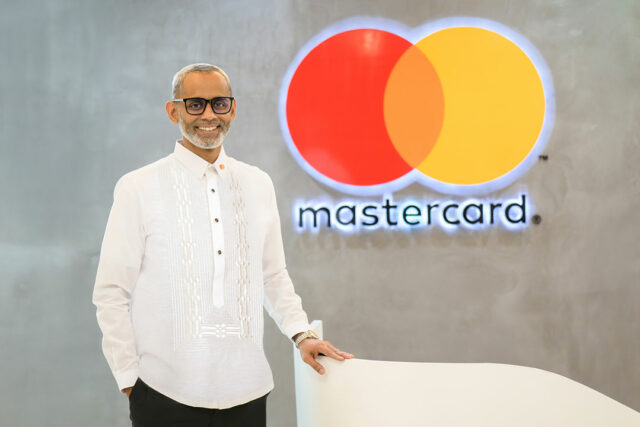
MASTERCARD Philippines Country Manager Jason Crasto — MASTERCARD PHILIPPINES

MASTERCARD has appointed Jason Crasto as its new country manager for the Philippines to lead its business operations.

Mr. Crasto succeeded Simon Calasanz, who held the post since 2021 and until May this year.

He will lead Mastercard’s efforts to support the Philippines’ national digital payments growth and transformation roadmap by working with both the public and private sector to advance smart, secure, and inclusive payments solutions for consumers and businesses, the company said in a statement on Wednesday.

It added that Mr. Crasto’s experience in scaling digital ecosystems across South Asia will help sustain the growth of digital payments in the Philippines. He has over two decades of experience in the payments industry, leading initiatives across consumer, commercial, and digital payments.

He joined Mastercard in 2020 and has managed key client relationships and product portfolios. Before this, he held positions across global payment networks, banks, and loyalty platforms.

He holds a Master’s degree in Finance from Jamnalal Bajaj Institute of Management Studies and a Bachelor of Commerce degree from Narsee Monjee College of Commerce and Economics.

“I am honored to oversee Mastercard’s business in the Philippines and contribute to the country’s digital growth,”Mr. Crasto said. “I look forward to working with our talented and dedicated Mastercard team, as well as our customers and partners to deliver innovative payments solutions that empower Filipinos, and help build a more connected, secure, and inclusive digital future for the Philippines.”

Safdar Khan, division president for Southeast Asia at Mastercard, said they are confident that Mr. Crasto can help spearhead the company’s continued growth in the Philippine market.

“Jason’s leadership and industry expertise will be pivotal as Mastercard deepens its role as a trusted partner in the Philippines’ digital transformation journey. With his extensive payments experience and passion for driving inclusive, innovation-led growth, we are confident that Jason will build on our strong foundations and drive the next chapter of growth for Mastercard in the Philippines.” — A.M.C. Sy

Is ChatGPT the end of good manners?

STOCK PHOTO | Image from Freepik

By Frank Barry

HAVE YOU taken the Bloomberg AI-dentity Quiz? I did, and it pegged me as a “cautious optimist.” That seemed about right — but my sense of optimism was tested last week.

No, I wasn’t reading If Anyone Builds It, Everyone Dies. Nor was I trying to determine whether a chatbot would lie, or get something wrong, or reveal its unethical underside. I was just listening to a colleague give me a tutorial on how to use one.

“Don’t be polite,” he said, as he deleted the word “please” while editing a command he was giving ChatGPT. “Saying ‘please’ just wastes its energy and resources. Be direct.”

Uh-oh, I thought. If people learn to stop using polite language when speaking to a human-like helper, won’t they also be less likely to use polite language when speaking to other people?

Courtesy and manners are habits. Once formed, they become second nature. But if using AI also becomes second nature, as the best technology eventually does, will it weaken the small courtesies that are so essential to human relationships?

After ChatGPT delivered a first draft, my AI tutor ended a long follow-up prompt by writing: “DO BETTER. YOU CAN DO A LOT BETTER.”

Wow, I thought — that’s aggressive. Chatbots are often compared to highly capable interns who need specific guidance, but this felt more like we were dog trainers scolding a puppy or football coaches haranguing a linebacker who missed a tackle.

Imagine writing colleagues all-caps texts or e-mails filled with commands. It may not be an HR violation, but it’s not the path to Manager of the Year, either. Will AI conversations normalize rudeness? I tried to ask about it in the politest way I could.

“Does the Chatbot recognize all caps as expressing heightened emphasis and urgency?”

My tutor was direct.

“Yes — best practice is to yell at it.”

My heart sank. The amount of yelling in public discourse has already reached ghastly levels, and now the most transformative technology of our time is incentivizing it?

A couple of hours later, I met my wife for dinner in Greenwich Village at Arturo’s Coal Oven Pizza, founded in 1957. We sat at the bar and listened to the soft sounds of a jazz trio and the quiet mutterings of a man dining alone. All seemed normal, until I looked up and saw a humanoid robot.

I had not expected to see the future in an historic pizzeria, but there it was — dressed all in gray and moving stiffly but deliberately as it walked out of the restaurant. We had no idea where it came from or what was happening. I should have asked the man with a large camera filming the robot, but he was busy shooting, and I was busy eating a sausage and onion pie.

After watching the robot greet people on the sidewalk, I noticed a text from a friend whose book club produces a literary journal. I had recently helped judge a competition for the publication, where we had been told that one of the stories was written with AI assistance, but not which one. The message confirmed my worst fear: My pick for best story and best writing had been the AI-assisted submission.

Perhaps that’s a reason for optimism — AI can help the creative process — but I found it depressing. So much of history is a celebration of creative genius. What is AI leaving us to celebrate in the arts — robot assistance?

After dinner, we walked two blocks to another venerable Village institution, The Bitter End, a music club that has hosted Bob Dylan, Stevie Wonder, Joni Mitchell, and countless other legendary artists. We were there to see our friend Xavier Cardriche play a set. In between songs, he greeted the crowd in a variety of languages — the club draws an international crowd — and then spoke an assortment of words in different languages that left the audience, myself included, wondering what he’d said.

He explained that he’d spoken the most important words to know (“besides beer and bathroom”) when traveling: “please,” “thank you,” and “excuse me.” They go a long way, he said.

Here was the day’s second tutorial on intelligence — only this time it was real, and born of human experience. The respect conveyed in the simple words he spoke is a small but essential part of how we get along with others — and even, as a democratic society, make music together.

The next morning, as I exited a subway car and headed for the staircase, the woman ahead of me stopped short and reversed direction, almost colliding with me.

“Excuse me,” she said, apologetically.

“Sorry,” I replied, automatically.

Maybe as AI improves, we can teach chatbots and robots to insist on being treated with basic courtesies, rather than teaching people to discard them.

I’m cautiously optimistic.

BLOOMBERG OPINION

Dining In/Out (11/06/25)


Japanese beef at Okura

HOTEL OKURA MANILA at Newport World Resorts is gearing up for Saga: A Wagyu Tasting Journey. Set from Nov. 10 to 12 at Yawaragi Restaurant, the eight-hands dinner celebrates the quality of premium wagyu from Japan’s Saga Prefecture. The collaboration features four chefs: Executive Chef Minoru Takashima of Hotel Nikko Osaka, Japanese Executive Chef Keiichiro Fujino of Hotel Okura Manila, Specialty Sushi Chef Ikuma Sato of Yamazato, and Specialty Teppan Chef Katsuji Kato of Yamazato. Together, they present a tasting journey that highlights the delicate marbling, flavor, and depth that define Saga Wagyu, one of Japan’s finest beef varieties. Priced at P10,418.61 net per person, Saga: A Wagyu Tasting Journey offers limited seating for an intimate dining encounter. For reservations and inquiries, contact 0917-842-9067 or e-mail fb@hotelokuramanila.com.


Nespresso unveils holiday collection

NESPRESSO unveils the Magic in the Making collection for this year’s holiday season. This includes a limited-edition black coffee and two new flavored coffees, alongside the new Barista Mixologist Glasses and a selection of Nespresso favorites. It’s wrapped in vibrant packaging by Kenyan artist Thandiwe Muriu, whose work draws inspiration from the coffee flower. The Festive Collection Espresso for Original and Festive Collection Double Espresso for Vertuo boast an Arabica blend of African coffees from Rwanda, the Democratic Republic of Congo, and Kenya. With an aromatic symphony of cereal and fruity notes, enhanced by delicate woody and caramel undertones, this coffee can be enjoyed on its own or as a Latte Macchiato. The Sweet Almond and Hibiscus flavored coffee captures the flavor of nutty almond, followed by a floral aftertaste of hibiscus. Then there is the Cinnamon and Candied Tamarind flavored coffee with notes of cinnamon spice and the flavor of tamarind. Nespresso’s also released its Advent Calendars, specially designed for exploring new coffees and rediscovering old favorites, available for both Original and Vertuo lovers. Each features a design by Thandiwe Muriu. The brand also introduces the new Barista Mixologist Glasses and adorns its classic Festive Coffee Mug with an embossing of Muriu’s coffee flower-inspired pattern. A complimentary Vertuo mug and Festive tote bag come with every purchase of 12 Vertuo coffee sleeves or 14 Original coffee sleeves. Additionally, there are boxes of chocolate squares in milk, dark, and milk chocolate with salted caramel flavors. Nespresso’s Festive Collection is now available for a limited time online at www.nespresso.ph, via the Nespresso mobile app, and at Nespresso boutiques in Power Plant Mall, Robinsons Magnolia, One Bonifacio High Street, TriNoma, Podium, Mitsukoshi BGC, SM Mall of Asia, and Ayala Center Cebu, and at pop-up stores in Glorietta 3, Greenbelt 5, Alabang Town Center, Greenhills Mall, Shangri-La Plaza, and SM North EDSA.


Merienda at Araneta City’s World Kitchens

WORLD KITCHENS is now offering beloved merienda (afternoon snack time) favorites and a bit more with a new merienda menu. Sticky Sweet serves Mango Sticky Rice (soft, chewy rice with coconut cream and sweet mangoes) and Ube Champorado (enriched with coconut cream and cheese, and paired with gourmet tuyo). For a more leisurely meal, try the Afternoon Tea Set. It’s a three-tiered selection of savories, scones, and sweets: Bacon and Olive Financiers and Cheesy Spinach Tartines, British Scones with Chantilly cream and strawberry compote in the middle, and Carrot Cupcakes, Diamond Cookies, and Chocolate Petit Fours, best enjoyed with Janat tea or a cup of long black coffee. Meanwhile, over at Chef Jessie’s, the Special Halo-Halo is up for grabs, as well as the Pancit Palabok with Pan de Sal Filling. Prana’s Indian-inspired menu offers Afghani Murgh Tikka with Indian Masala Chai bringing together smoky, tender chicken and aromatic tea; the Vegetable Samosa and Chicken Tikka Tandoori Wrap is another choice. Dario Pizza & More serves up crowd favorites such as the Italian Sandwich with Parma ham, mozzarella, and crispy Parmesan cheese, and the Margherita Pizza (tomato, cheese, and basil). Shinshima’s Okonomiyaki, meanwhile, is a savory Japanese pancake that’s light, fluffy, and topped with bonito flakes. Discover the merienda menu at World Kitchens, Level 4, Gateway Mall 2. Learn more about World Kitchens at www.worldkitchens.com.ph.


McDonald’s launches Honey Mustard McSpicy

MCDONALD’S Philippines expands its McSpicy lineup with the launch of the Honey Mustard McSpicy, offering fans a new take on a classic. Instead of the creamy mayo in the original, this limited-time version is finished with a yellow honey mustard dressing, with spices that introduce a very mildly savory, zesty finish. The Honey Mustard McSpicy is a limited-time offering available in all McDonald’s restaurants across the country. Along with the original variant, it is available solo or as a meal with fries and a drink, via dine-in, take-out, drive-through, and delivery.


Nomikashi has first anniversary treat

NOMIKASHI, a Japanese-inspired soda brand has rolled out a buy-two-get-a-free-thermal-bag offer for its first anniversary. Their menu consists of drinks inspired by a trip to a local soda shop in Japan, including 650ml favorites like Berry Lit, Sweet Calamansi, Butter Toffee, Sakura Rose, and Watermelon. When customers buy any two 650ml drinks, they can bring home a thermal bag. This promo is only available for a limited time at Nomikashi SM Novaliches and Robinsons Metro East.


SaladStop!’s Wild Wild Chicken rides again

SALADSTOP’S Wild Wild Chicken bowl makes a comeback as a Daily Bowls by SaladStop! Exclusive. The Wild Wild Chicken bowl brings together grilled chicken, roasted vegetables, and grains, tied together with a creamy, savory sauce. Daily Bowls by SaladStop! is a premium healthy meal subscription platform. Subscribers can choose their favorite salads, wraps, and warm protein bowls — including exclusive creations like Wild Wild Chicken — for three-day or five-day deliveries straight to their doorstep. While Wild Wild Chicken’s limited in-store run ended on Oct. 20 it now lives on, but available only through saladstop.pickup.ph. Subscribers can enjoy it as their chosen Friday exclusive. Good Eats Specialists, Inc. (GESI) is the exclusive franchise holder of SaladStop! in the Philippines. Good Eats is a member of the SSI Group.

SEC warns public vs Easy Agent Operation

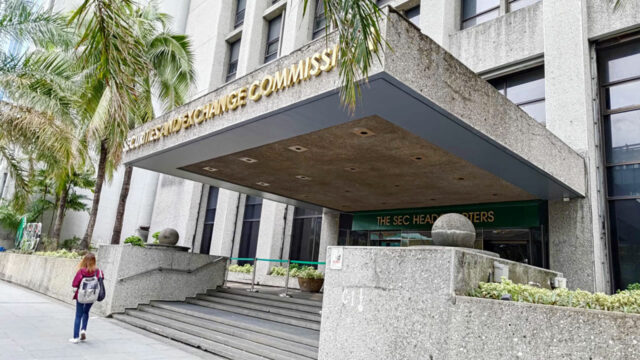
BW FILE PHOTO

THE Securities and Exchange Commission (SEC) has warned the public against Easy Agent Operation/EAO Walmart, which it said has been soliciting investments without registration or a license.

In an advisory issued on Wednesday, the corporate regulator said the group has been offering a fake part-time job and investment scheme disguised as a “tasking and recharging” platform.

The group entices users with promises of high income for minimal effort, claiming they can earn by completing simple online tasks. In reality, the regulator said, users are tricked into depositing money before they can withdraw any earnings and are pressured to “recharge” or invest more funds through third-party payment apps — with no actual returns.

“At first glance, it would seem that Easy Agent Operation/EAO Walmart was actually offering a legitimate part-time job on a work-from-home basis,” the SEC said. “But in reality, there is no part-time job at all.”

An investigation by the commission’s Enforcement and Investor Protection Department found that participants are required to make an initial deposit of at least P500 before they can withdraw, with a 15% withdrawal fee.

The SEC said such arrangements constitute an investment contract, which under the Securities Regulation Code must be registered with and approved by the regulator.

It added that Easy Agent Operation/EAO Walmart is not registered as a corporation or partnership and does not have a license to solicit investments.

BusinessWorld could not find public contact details of the company. — Alexandria Grace C. Magno

ADVERTISEMENT
ADVERTISEMENT