Home Blog Page 7352

PSEi to move sideways ahead of firms’ Q3 results

REUTERS

PHILIPPINE shares are expected to move sideways this week as investors monitor the country’s coronavirus disease 2019 (COVID-19) situation and in anticipation of third quarter (Q3) corporate earnings reports.

The 30-member Philippine Stock Exchange index (PSEi) rose by 30.35 points or 0.42% to close at 7,213.46 on Friday, while the broader all shares index went up by 4.86 points or 0.10% to 4,448.81.

Week on week, the benchmark index climbed 306.60 points from its 6,906.86 finish on Oct. 8.

Rizal Commercial Banking Corp. (RCBC) Chief Economist Michael L. Ricafort said the market’s gains were driven by improved sentiment on the back of lower COVID-19 infections and progress in the country’s vaccination program.

According to the national COVID-19 vaccination dashboard of the Health department, the country has administered nearly 51.99 million vaccine jabs with almost 21.17 million or 22% of the population already fully vaccinated against the disease.

Analysts said the market may move sideways this week as investors continue to monitor the country’s COVID-19 situation and anticipate the release of companies’ third quarter earnings.

“Market sentiment could also be shaped by some leads related to the May 9, 2022 presidential elections,” Mr. Ricafort said in an e-mail, adding that preparations for the national elections would spur “increased government spending, especially infrastructure, as a major pillar to the economic recovery program.”

The “expected increase in COVID-19 vaccine arrivals in the coming weeks or months” as the country aims to inoculate more of the population may also boost market sentiment, he added.

“The brightening economic prospects brought by the alert level downgrade in the National Capital Region (NCR) is seen to keep the positive sentiment in the market,” Japhet Louis O. Tantiangco, senior research and engagement supervisor at Philstocks Financial, Inc., said in a Viber message on Saturday.

Metro Manila will be under Alert Level 3 until end-October amid the decline in COVID-19 cases. The new classification allows for the reopening of movie theaters and amusement parks, as well as eased restrictions for vaccinated individuals.

“If the cases further decline [this] week, then it may strengthen investors’ confidence since it raises the possibility of more easing of restrictions in the country,” Mr. Tantiangco said.

“The elevated global oil prices serve as downside risk, however,” he added. “The benchmark Brent crude is already nearing $85 per barrel. If oil prices remain high, worse, if they rally further, then it is seen to raise inflation worries which could weigh on the local bourse.”

Mr. Tantiangco placed the PSEi’s support at 7,000 to 7,100 and its resistance at 7,300.

Meanwhile, RCBC’s Mr. Ricafort said the immediate support level is at 6,800 to 7,000, while the resistance level is at the 7,400 to 7,500 range. — Keren Concepcion G. Valmonte
Finance dep’t says funding available for UHC

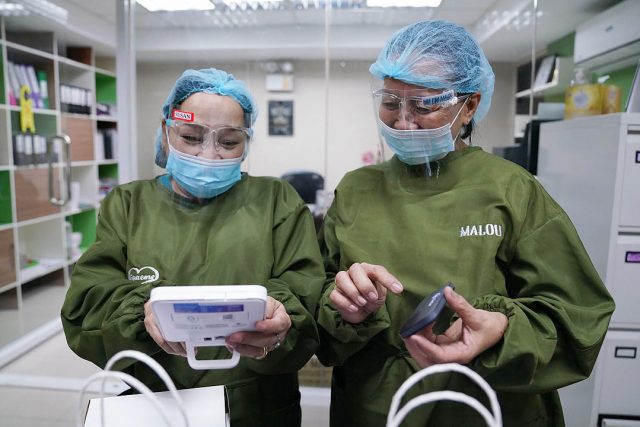
THE DEPARTMENT of Finance said it does not expect problems with the rollout of universal healthcare (UHC) even with funding pressures caused by the pandemic.

Finance Secretary Carlos G. Dominguez III said the UHC will not be compromised by the coronavirus disease 2019 (COVID-19) pandemic.

“For 2022, we proposed an allocation of P80 billion for the premium subsidies for indirect contributors under the UHC law,” he said. The health insurance premiums of indirect contributors such as senior citizens and persons with disabilities are government-subsidized.

Mr. Dominguez also estimated that the government health insurer, known as PhilHealth, had around P164 billion in reserve funds as of June available for the UHC.

Fitch Solutions Country Risk and Industry Research has said the more contagious Delta variant worsened the effects of the pandemic in the Philippines.

It said the slow vaccine rollout and pandemic containment setbacks will delay the goal of achieving universal healthcare because of the diversion of healthcare funds to deal with the emergency.

The bulk of funding for UHC comes from the general appropriations act and tax collections from “sin” products such as tobacco and vaping products.

Excise tax collections from cigarettes rose 31% to P83 billion in the first seven months due to higher tax rates and growing sales after a pandemic-induced slump last year.

PhilHealth was allocated P79.9 billion for 2022 under the national budget approved by the House of Representatives. After it realigned part of the budget to fund COVID-19 booster shots, the House expects to transmit the proposed spending plan to the Senate by Oct. 27. — Jenina P. Ibañez

Senate expects to approve budget by end of November

BW FILE PHOTO

By Alyssa Nicole O. Tan

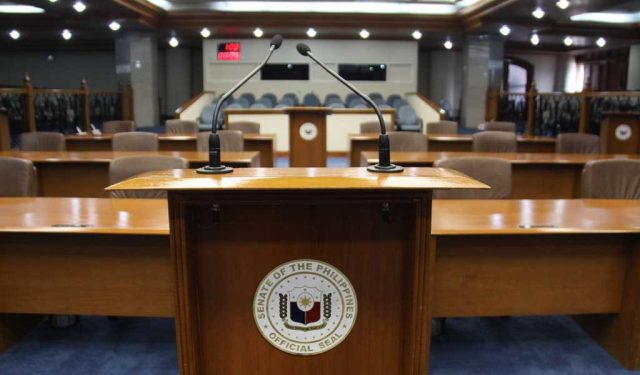
THE SENATE aims to approve its version of the 2022 General Appropriations Act (GAA) by the end of November, the chamber’s President, Senator Vicente C. Sotto III, said.

In a Viber message to BusinessWorld, he said discussions will start on Nov. 6, the goal is to approve the P5.024-trillion budget in the same month, with Dec. 1 seen as the latest possible date to pass the chamber’s budget bill.

The House on Sept. 30 approved with no abstentions its version of the 2022 GAA or House Bill 10153 on third and final reading, which will be transmitted to the Senate on Oct. 27.

Amid budget hearings for individual agencies in the Senate, Senator Juan Edgardo M. Angara, who chairs the chamber’s finance committee, said that the pandemic response will be given the highest priority.

“Funds are very tight this year because as noted by our colleagues during the DBCC (Development Budget Coordination Committee), it seemed like the budget submitted by the DBM (Department of Budget and Management) was not for COVID,” he said in an earlier statement, noting that the proposal did not include funds for contact tracing, booster shots, the testing of minors, and benefits for healthcare workers.

While the Senate will work hard to meet the various requests from the agencies for more funding, the bias will be weighted towards strengthening the pandemic containment effort, Mr. Angara added.

“Self-preservation is the ultimate goal of any individual or society. So, let’s preserve ourselves first and then we can go pursue more lofty goals,” he said.

The budget department has said that the lack of allocations to deal with the coronavirus 2019 (COVID-19) was due to the preparation of the budget proposals before the emergence of the more contagious Delta variant.

Sen. Emmanuel Joel J. Villanueva, vice-chairman of the finance committee, told BusinessWorld via Viber that he will pursue measures to ease joblessness and upgrade worker productivity.

He wanted to ensure that the National Employment Recovery Strategy program “hits its target of generating 1.22 million jobs for our workers.”

“We’re also looking at sufficient funding for programs, such as the Tulong Trabaho Scholarship program, that would help retool and upskill our workers to make them employable,” Mr. Villanueva added.

Sen. Sherwin T. Gatchalian, also a finance vice-chairman, noted plans to provide a 94% budget hike to the education department to enhance its computerization program in 2022.

“However, the education department should ensure that funds are properly used to procure and provide computers for the public schools,” he said in a statement Saturday.

“Looking at the past experience of the department in terms of dispensing the budget on computerization, I’ve noted that it has some issues in terms of obligations and disbursement,” Mr. Gatchalian, who chairs the Senate Committee on Basic Education, Arts and Culture, added, noting the need to pay thorough attention to suppliers after recurrent supplier issues in previous years.

He is also filing a bill that will accelerate the digital transformation of the education sector.

Meanwhile, Sen. Panfilo M. Lacson, also a vice-chairman of the finance committee, earlier this month noted that large portions of the budget were wasted.

According to Mr. Lacson, who is running for president, budget ceilings imposed by the DBCC also often neglect the needs of smaller communities in putting together National Expenditure Program.

“We have observed that for so many years — and I am driven (to address this concern) because year-in, year-out, I like to go over and scrutinize the national budget — a lot of money is being wasted under the General Appropriations Act,” he said in a statement.

He said that he planned to adopt a zero-based budgeting system to give government agencies more flexibility when spending taxpayers’ money.

Zero-based budgeting requires all expenses to be justified for each new fiscal period, similar to the private sector approach to budgeting, he said.

“This is to avoid future incidents of wasting public funds because of unused appropriations, or underspending that could reach to over P400 billion, because most agencies under the executive branch have been operating with a budget ceiling,” he added.

Mr. Lacson said he will encourage more citizens through their barangay officials to participate in their local development councils, all the way to the regional chapters of the DBCC, to propose useful projects that can be included in the national budget.

He hopes this approach will make the process more organized and minimize unauthorized budget insertions, which have delayed the preparation of past budgets.

Power spot prices nearly double during Malampaya outage

BW FILE PHOTO

THE average power spot market price in the first two weeks of the Malampaya project’s maintenance shutdown was P6.29 per kilowatt-hour (/kWh), almost double the September level.

According to the Independent Electricity Market Operator of the Philippines (IEMOP), the average spot market price between Oct. 2 and Oct. 15 was P6.29/kWh.

IEMOP told BusinessWorld over the weekend that the previous month’s average price was P3.30/kWh.

The Malampaya gas field was closed for maintenance beginning Oct. 2, with the shutdown to run until Oct. 22.

Asked to comment on Malampaya’s role in raising spot market prices, IEMOP said via text that the increase was “not entirely” due to the shutdown. “There are also forced outages from other generators during that period.”

IEMOP said some 27 power plants with a combined maximum capacity of over 2,700 megawatts (MW) had unplanned outages starting Oct. 2.

Ten hydro plants went on forced outage during this time, as did six coal and six geothermal facilities.

Between Oct. 2 and 15, the average supply was 13,116 MW and average demand 10,076 MW, resulting in an average supply margin of 3,040 MW.

IEMOP facilitates the trade of power among electric power industry members. — Angelica Y. Yang

GOCC dividends top P53B at end-Sept.

BW FILE PHOTO

DIVIDENDS REMITTED by government-owned and -controlled corporations (GOCCs) to the National Government hit P53.1 billion at the end of September, the Department of Finance said.

The Bangko Sentral ng Pilipinas had remitted P15.9 billion in the nine months to September, followed by the National Transmission Corp. with P8.32 billion.

Finance Assistant Secretary Soledad Emilia F. Cruz said in an Oct. 8 briefing that Philippine Deposit Insurance Corp. remitted P7.1 billion in the nine months, followed by the Philippine Amusement and Gaming Corp. with P6 billion, the Philippine Ports Authority P3.76 billion, and the Bases Conversion and Development Authority P1.72 billion.

The Philippine Reclamation Authority remitted P1.7 billion, while the Subic Bay Metropolitan Authority provided P1.21 billion, PNOC Exploration Corp. P1 billion, and the National Power Corp. P900 million.

Dividends remitted by GOCCs last year rose 127% to P157 billion, net of dividends foregone by the government for GOCCs that needed to retain earnings.

The Finance department has said that the 2020 tally was the highest since Republic Act No. 7656, known as the Dividend Law, was signed in 1993.

The law requires GOCCs to remit at least 50% of their annual net earnings as cash, stock or property dividends to the National Government.

Subsidies extended to GOCCs increased 747% year on year to P42.35 billion in August after support to the Philippine Health Insurance Corp. (PhilHealth) rose. PhilHealth had received P30.61 billion, or more than 70% of the August total. — Jenina P. Ibañez

NGOs say ADB climate financing targets not ambitious enough

PHILSTAR FILE PHOTO

A NETWORK of civil society groups said the Asian Development Bank’s (ADB) updated climate financing target of $100 billion is “un-ambitious,” adding that the eligibility requirements for projects to be funded are vague.

The banks’ new financing target is an upgrade from its previous goal of $80 billion. The new target covers the years 2019 to 2030.

“A commitment of $10 billion per year with ambiguous benchmarking standards can hardly be called ambitious,” NGO Forum on ADB Energy Policy and Campaigns Strategist Tanya Lee Roberts-Davis told BusinessWorld in an e-mail over the weekend.

“Combined with the remaining billions of dollars disbursed to borrowing member countries by the ADB, clearly therefore not classified in their portfolio as ‘green’ or climate-aligned, it can only be concluded that the bank is contributing to undermining rather than upholding a forward-looking approach towards limiting temperature rise to 1.5 Celsius,” she said.

The ADB has yet to disclose the screening criteria for projects eligible for its climate fund, Ms. Davis said.

She added that the bank has “not yet ruled out support for infrastructure associated with coal, oil or gas facilities, waste incinerators and mega-dams.”

Meanwhile, nongovernment organization (NGO) Institute for Climate and Sustainable Cities (ICSC) welcomed the scaling up of climate financing, but noted that the new total is inadequate for addressing climate change in member countries.

“It is not enough… The climate finance needs of the bank’s DMCs (developing member countries) are far greater than $100 billion. For climate finance to be sufficient, it will require blending and leveraging, both of which can be potentially catalyzed by ADB’s commitment,” ICSC’s Deputy Executive Director and Climate Finance Lead Angelo Kairos T. Dela Cruz told BusinessWorld in an e-mail interview last week.

Blended finance uses public or philanthropic capital to spur private sector investment.

In theory, the bank’s decision to ramp up its climate financing will allow member-countries to tap into “bigger, more predictable, and steady financial flows,” according to Mr. Dela Cruz.

ADB Special Advisor for COP26 Warren Evans said the additional $20 billion worth of climate financing will mainly go to helping member-countries improve their climate resilience; accelerate investments in clean power and energy efficiency; and facilitate reforms to help some nations implement their nationally-determined contributions.

“It is not necessarily about having additional financial resources, but more so about finding opportunities to incorporate climate solutions in investments,” he told BusinessWorld in an e-mail through the bank’s communications department.

The bank has said climate mitigation initiatives over the next decade are expected to take up $66 billion of its total climate financing target. Meanwhile, climate adaptation projects will account for the remaining $34 billion.

“As DMCs strengthen their climate ambitions… we see vast opportunities for investments in climate mitigation [and in] providing significant new and additional climate finance,” Mr. Evans said. — Angelica Y. Yang

PHL ranking improves in regulation of trade in strategic goods

OECD

THE PHILIPPINES ranked 49th out of 200 countries in regulating the trade in strategic commodities, according to the 2021-2022 Peddling Peril Index (PPI) conducted by the Institute for Science and International Security, a non-profit.

In a statement Sunday, the Department of Trade Industry (DTI) said the result of the Philippines for 2021 indicates an improvement from the 86th place it achieved the prior year.

The Philippines scored 755 points in 2021, an compared to a tally of 482 in 2020.

“PPI rates 200 nations based on their strategic trade control adoption and implementation, with the goal of assisting countries in strengthening their systems by examining the degree of their implementation and enforcement, as well as tracking their progress over time,” Trade Secretary Ramon M. Lopez said.

According to the DTI, the PPI consists of five major criteria and 105 sub-criteria such as international commitment to preventing strategic commodity trafficking; legislation to regulate and oversee the strategic commodity trade; the capacity to monitor and detect trade in strategic items; the ability to prevent proliferation financing; and effectiveness of enforcement against trafficking in strategic commodities.

For the five major criteria, the DTI said the Philippines was rated 87% in legislation, 71% in adequacy of enforcement, 65% in the ability to monitor and detect trade in strategic items, 58% in international commitment, and 28% in the ability to prevent proliferation financing.

“The Philippines’ strong improvement in the PPI ranking is likely to boost the country’s image as a secure investment location for the manufacture and export of strategic goods,” Trade Undersecretary Ceferino S. Rodolfo said.

The DTI said strategic goods are items that have civilian and military uses, and can be used as materials or parts for weapons of mass destruction (WMD).

Countries have implemented trade control laws to comply with their obligations under various treaties and international agreements to prevent the proliferation of WMD. Philippine regulations include Republic Act 10697, or the Strategic Trade Management Act (STMA).

The law created the National Security Council-Strategic Trade Management Committee to oversee policy on strategic commodities trade, as well as the Strategic Trade Management Office.

“Enterprises engaged in the export, reexport, reassignment, transit, transshipment, and import of strategic goods, as well as related services such as brokering, transporting financing and providing technical assistance, are subject to the regulatory requirements of the STMA,” DTI said.

The Institute for Science and International Security is focused on stopping the spread of nuclear weapons and related technology to more nations and to terrorists. — Revin Mikhael D. Ochave 

Managing workforce wellness

With global instability and the uncertainty pervading our current situation due to the disruption and volatility caused by COVID-19, employees may be struggling with feelings of helplessness, anxiety, and heightened stress. It becomes more important than ever for leaders to provide clarity and guidance, and to be the calm in the storm.

As SGV celebrates well-being month this October, the firm acknowledges the additional challenges and responsibilities in managing mental health concerns in our teams. Though current conditions are far from ideal, we can control how we respond as well as how we connect.

Something that can also provide clarity and perspective despite the uncertainty is purpose, which we can turn to as a source of focus and motivation. In SGV, our purpose to nurture leaders and enable businesses for a better Philippines gives us the assurance and confidence that our work — developing people and sustaining economic growth — will positively and meaningfully redound to the country and community.

Purpose, however, is a collective journey for an organization and one that requires long-term planning and implementation. For organizations who already have a clearly defined purpose, ensuring that it continues to resonate with their people is crucial to sustaining their wellbeing. In terms of concrete, actionable steps in the near-term, the following key considerations can impact how we empathize with colleagues, teams and clients in a purposeful way and help foster a better working environment, remote or otherwise.

RECOGNIZING AND ADDRESSING MENTAL HEALTH ISSUES
The pandemic drives to trigger global anxiety and fear, placing our minds in a constant threatened state while we deal with the unknown nature of the future. It becomes imperative to learn about the mental health continuum and normalize conversations about mental health within the team. Leaders have the responsibility of creating a safe space to discuss emotions and create a supportive workplace, but — and this is important — not to offer diagnosis or counselling. These should be given to mental health professionals to address.

Moreover, providing support does not mean trying to fix the situation — connect by simply listening to their anxiety and fears and expressing empathy for how team members are feeling. Identify triggers for feelings of anxiety, and discuss how these can be reduced or managed. Help identify the kind of support they would need, and connect them to appropriate resources or suggest talking to a doctor or counsellor to help. Recognizing the importance of this, we in SGV have engaged a professional mental health platform to provide ongoing support to all our people.

MANAGING AND SUPPORTING REMOTE TEAMS
Leaders have the role of providing clarity and providing the most important task for the team to focus on, especially now that most teams are working remotely. This can be done by connecting regularly to communicate business priorities and keep on track through huddles that discuss incoming activities.

Keeping connected through conducting regular check-ins can also determine how teams are handling the stress. Leaders must take note of any changes in behavior from their team members and take action to support them. Taking the time to talk with those who may be struggling and understanding their unique situations can make a difference in helping someone feel less alone. Early intervention can also help address issues before they escalate.

In addition, acknowledge and celebrate small and big achievements, and recognize efforts frequently. Committing one activity on the calendar that is non-work related also helps facilitate social connection and balance work and recreation.

MAINTAINING WELLBEING
To provide sustainable support to someone in a team who may be feeling overwhelmed, leaders must first take positive actions to care for their own wellbeing. Aside from connecting regularly and providing a safe space for team members, leaders must familiarize themselves with available wellbeing programs and services aimed at addressing their teams’ physical, emotional and financial wellbeing.

Focusing on relationships through short but frequent check-ins can help employees feel appreciated. Personal gestures such as celebrating birthdays, anniversaries and similar milestones creates a reinforced culture of positivity during these turbulent times, helping us focus on the good no matter how big or small.

CREATING A HEALTHIER REMOTE WORKPLACE
It is already challenging to balance the demands of multiple engagements, and doing so with the wellbeing needs of a team can be even more daunting. Stress related to work is something everyone experiences — leaders and teams alike — and can even be useful by improving alertness and performance in short bursts. However, prolonged work stress can lead to burnout, which affects all aspects of wellbeing: physical, mental, emotional, social and financial health. Prolonged burnout can lead to real implications to the business such as loss of productivity and turnover, even manifesting into serious health consequences.

There are some key principles that leaders can focus on to address the conditions that lead to burnout, and mitigate them to help their team members and themselves. As mentioned previously, it is important for leaders to look after their own wellbeing and promote good practices to their team members. This can be achieved through physical fitness, proper sleep and nutrition as well as finding time to disconnect and valuing contribution over just being busy. Ways to proactively disconnect include spending time on hobbies or creating a shutdown ritual, where employees can adapt their routine of leaving the office in their remote work spaces and even schedule a virtual commute.

At the same time, avoid contributing to team member burnout. Set realistic deadlines and try to keep away from requiring work to be performed excessively outside of reasonable work hours as much as possible. Balance the workload of each team member and ensure these are appropriate and shared when necessary. Be clear regarding expectations and provide sufficient task ownership to avoid micromanaging. Be prepared to lend a hand with the completion of work when deadlines loom and team members feel overwhelmed. While this, of course, is easier said than done given the increasing demands on our people, it is still something that leaders will need to proactively manage.

REFRAMING FOR RESILIENCE
Managing the psychological as well as physical safety of work teams is more important than ever, with uncertainty still prevalent. Though the future is outside of our control, leaders can help their teams reframe their responses and build resilience by encouraging a growth mindset and providing a clear vision of the future beyond the pandemic. By taking to heart the power of purpose to address uncertainty and taking steps to manage our own responses and providing the necessary guidance and resources, we can tackle external challenges in a more positive way.

This article is for general information only and is not a substitute for professional advice where the facts and circumstances warrant. The views and opinions expressed above are those of the author and do not necessarily represent the views of SGV & Co.


Julie Christine O. Mateo is the talent leader and purpose council co-chair of SGV & Co.

DoH reports lowest daily virus tally in 2 months

PHILIPPINE STAR/ MICHAEL VARCAS

THE DEPARTMENT of Health (DoH) reported 6,913 coronavirus infections on Sunday — the lowest daily tally in two-and-a-half months — bringing the total to 2.72 million.

The death toll rose to 40,675 after 95 more patients died, while recoveries increased by 10,237 to 2.6 million, it said in a bulletin.

There were 81,641 active cases, 82% of which were mild, 5.5% did not show symptoms, 3.8% were severe, 7.13% were moderate and 1.6% were critical.

The agency said 54 duplicates had been removed from the tally, 35 of which were reclassified as recoveries, while 31 recoveries were reclassified as deaths. Three laboratories failed to submit data on Oct. 15.

The lowest daily tally before Sunday was on Aug. 3, when health authorities reported 6,879 infections, according to DoH data.

An inter-agency task force last week placed Metro Manila under Alert Level 3 from Oct. 16 to Oct. 30, allowing more nonessential businesses such as cinemas to reopen at reduced capacities.

The downtrend in coronavirus infections in Metro Manila would probably continue, OCTA Research Group fellow Fredegusto P. David said in a Facebook Messenger chat.

“We are still expecting the seven-day average of cases in the country to drop to 5,000 to 6,000 by the end of October and to about 1,000 in the National Capital Region (NCR),” he said.

“A spike in cases may still happen in some local government units in NCR when minimum public health standards are not complied with,” he added.

Mr. David urged DoH to boost its information campaign and continue reminding the public to observe minimum health standards especially in malls and public areas.

The Health department should also increase detection and testing efforts, he added.

A group of doctors on Sunday said it was worried about the relaxed quarantine in Metro Manila because health workers have yet to breathe after a recent surge in infections.

The government might not be able to immediately respond to a sudden increase in infections, Maricar Limpin, president of the Philippine College of Physicians, told ABS-CBN’s TeleRadyo.

Hospitals remained full even as cases have declined, she added.

The Philippines, which scored poorly in a global index that measured the recovery of more than 100 countries from the coronavirus pandemic, is boosting its vaccination drive to reach its target of inoculating at least 50% of its adult population by yearend.

Philippine President Rodrigo R. Duterte last week took responsibility for the shortage of coronavirus vaccines in the country early this year.

The president last month criticized rich countries for hoarding vaccines while poor countries struggled to secure shots for their people.

He described vaccine hoarding as a shockingly “selfish act” that should be condemned.

Earlier this year, Mr. Duterte accused the European Union of holding up vaccine supplies from other countries, citing the economic bloc’s export rule that requires drugmakers to obtain permission first before shipping out coronavirus vaccines.

The tough-talking leader has repeatedly threatened to order the arrest of Filipinos who refuse to get vaccinated against the coronavirus.

The coronavirus has sickened 241.2 million and killed 4.91 million worldwide, according to the Worldometer website, citing various sources including data from the World Health Organization. More than 218 million people have recovered, it said. — K.A.T. Atienza

Robredo risks losing votes for excluding reformists — analysts

VP LENI OFFICIAL ROBREDO FB PAGE

By Kyle Aristophere T. Atienza, Reporter

VICE-PRESIDENT Maria Leonor “Leni” G. Robredo risks losing votes given the lack of senatorial bets in her lineup that favor social reforms, political analysts said at the weekend.

Excluding labor leaders and activists critical of President Rodrigo R. Duterte has hit the image of her coalition as the “only and true opposition,” political science professor Antonio Contreras said in a Facebook Messenger call.

“It took a fatal hit on their image as the only and true opposition,” he said. “It’s contradictory because you always speak up for the marginalized and now you are leaving out candidates from the marginalized and progressive sectors.”

Ms. Robredo, who is running for President as an independent, last week named six more candidates in her senatorial slate, including incumbent senators and former Duterte allies, bringing the total to 11. The 12th spot is reserved for someone who would best represent the poor, she said last week.

Human rights activist and former congressman Neri J. Colmenares and labor leader Jose Sonny G. Matula were among her top choices for the last spot, she added.

At least five of Ms. Robredo’s senatorial bets — former Vice-President Jejomar C. Binay, Senators Juan Miguel F. Zubiri, Richard J. Gordon and Emmanuel Joel J. Villanueva and ex-Senator Francis G. Escudero — were also endorsed by other presidential aspirants.

Senators Gordon, Zubiri and Villanueva were among those who ousted Senator Leila M. de Lima as head of the social justice committee. Ms. De Lima, who is in jail and on trial for drug trafficking charges, is also part of Ms. Robredo’s ticket.

Civic groups have criticized Mr. Gordon, who recently started a word war with Mr. Duterte, for attacking Ms. De Lima in the past as Blue Ribbon committee chairman. He once accused her of profiting from the illegal drug trade inside the national jail when she was still Justice secretary. The Justice department under Ms. De Lima charged Mr. Villanueva in 2015 for alleged misuse of pork barrel funds.

Ms. Robredo’s top ally, ex-Senator Antonio F. Trillanes IV, was one of the key politicians who accused Mr. Binay of corruption over allegedly overpriced infrastructure projects in Makati when he was still its mayor.

“If you can adopt mortal enemies who are considered by many as traditional politicians, then why can’t you immediately adopt someone like Colmenares?” Mr. Contreras asked. “That is really something that will backfire.”

“Politics is addition and anything that she adds to her base is good,” he said. “Even if it is not a huge sector, groups from the political left are very well organized and can launch a national campaign.” Ms. Robredo has been trying to form alliances with established politicians “to bring in their support base in the campaign,” Maria Ela L. Atienza, a political science professor from the University of the Philippines, said in a Viber message.

“This is their strategy because of the lack of strong, big parties in the Philippines and the rampant lack of party loyalty,” she added.

Ms. Robredo could create a grassroots coalition of nontraditional groups and volunteers, while focusing on building a platform supported by various sectors, Ms. Atienza said.

“She can present a more appealing platform, including relevant issues instead of the personal attacks that some of the other presidential candidates are now resorting to,” she said. “This is a challenging task.”

Ms. Robredo, who heads the once ruling Liberal Party, earlier said she would work with different political groups critical of the Duterte government.

Makabayan bloc denies endorsing Manila mayor for president   

THE MAKABAYAN coalition, which holds six party-list seats in the House of Representatives, denied endorsing any presidential candidate for next year’s elections at this point, saying they have yet to make a decision.   

“At this point, we believe that the focus should be on forging the broadest unity among democratic forces against (President Rodrigo R.) Duterte and (presidential candidate Ferdinand “Bongbong” R.) Marcos,” they said in a statement on Saturday evening.  

This comes after former senator Antonio F. Trillanes IV accused the group of pushing for Manila Mayor Francisco “Isko” M. Domagoso to be nominated as opposition coalition 1Sambayan’s presidential candidate.  

1Sambayan endorsed Vice-President Maria Leonor “Leni” G. Robredo before she announced her candidacy for the country’s top post.  

“Makabayan wants Neri (Colmenares) to be included in VP’s (senatorial) slate. But Makabayan has yet to endorse VP. In fact, in 1Sambayan, they did not vote for VP, and were pushing for Isko,” tweeted Mr. Trillanes, who is part of Ms. Robredo’s senatorial slate.  

Makabayan said in another statement on Sunday that they have not yet endorsed Ms. Robredo as there are long-term issues that have to be discussed with her camp.  

“We also need to discuss the reforms that need to be put in place in the next 6 years including land reform, national industrialization, labor contractualization, the peace process, and so on,” they said.  

Ms. Robredo announced her lineup on Friday, which included allies from the Liberal Party along with former political foes such as Senators Emmanuel Joel Villanueva, Richard “Dick” J. Gordon, and former Vice-President Jejomar “Jojo” C. Binay, Sr.    

She said that the 12th spot in her Senate slate would be open to someone “who will best represent the marginalized sectors.” Human rights activist Neri J. Colmenares under Makabayan and labor leader Joe Sonny G. Matula are among her camp’s top choices. 

Makabayan said Friday that they respect Ms. Robredo’s choice on her slate and will remain focused on their goal to uphold the rights of marginalized sectors in next year’s elections.  

In the 2016 presidential elections, the group endorsed Senator Mary Grace Natividad S. Poe-Llamanzares.  

In the 2019 elections, the coalition won six party-list seats, with Bayan Muna getting the maximum of three representatives while Gabriela Women’s Party-list, ACT Teachers, and Kabataan got one each. — Russell Louis C. Ku 

Marawi land dispute body facing almost 800 cases for settlement 

PRESIDENT Rodrigo R. Duterte, center, looks at a miniature model of Marawi at the city’s Rizal Park on Oct. 16, 2021 during a visit for the commemoration of the 4th liberation day anniversary after the 2017 siege. — PCOO

THE PANEL created to help address land contentions in parts of Marawi City that were most devastated by the 2017 siege has received almost 800 cases, which it aims to settle out of court before May 31 next year.  

Minalang Barapantao, project operations manager of the Land Dispute Resolution Committee that was formally convened only in June this year, said these 796 cases mainly involve properties in four barangays within a reclamation area that the government asserts is public land.  

“We have forwarded the complaints to the city mayor’s office through the assessor’s office so that appropriate actions can be taken,” he said in a mix of English and Filipino during the Oct. 14 Alerto Bangsamoro radio program co-hosted by International Alert Philippines.   

The disputes within the so-called Marawi “ground zero” involve multiple party claimants, and between government and private parties.  

He said the goal is to settle the cases outside the judicial system for faster resolution and avoid legal costs.  

“We will try our best to resolve the cases amicably between the two parties. But if they cannot agree, then that will be the time we push it to the court,” said Mr. Barapantao, who is also chief of staff at the Bangsamoro Ministry of Human Settlements and Development.    

In July this year, a lawyer who works as a prosecutor at the Justice department accused the government of land grabbing, citing that their family properties in Marawi’s central area were among some 11,000 designated for the construction of public infrastructure.  

Lawyer Ibrahim M. Mimbalawag said the problem was partly due to lack of consultation and communication by Task Force Bangon Marawi, which is overseeing the war-torn city’s rehabilitation. 

Local extremist groups with Islamic State ties took siege of Marawi on May 23, 2017 after authorities tried to arrest Isnilon Hapilon, leader of the kidnap-for-ransom gang Abu Sayyaf. President Rodrigo R. Duterte said in a forum in September that year that the attempted arrest was also related to illegal drug operations.  

The siege prompted a five-month heavy gun battle between state forces and combined terrorist groups that left central parts of the city in ruins. Mr. Duterte declared the “liberation” of Marawi on Oct. 17. 

During Saturday’s commemoration of the 4th liberation day anniversary, Mr. Duterte commended Task Force Bangon Marawi for its accomplishments on rebuilding public infrastructure and housing sites for displaced residents who will be permanently relocated.   

“Let me take this opportunity to reassure the people of Marawi that the government is doing its best to expedite the completion of rehabilitation projects at the soonest possible time… And we will continue to foster cooperation among concerned stakeholders so that Marawi will be able to build back better and stronger,” he said.  

About 360,000 residents of Marawi and neighboring towns were displaced by the conflict, according to the United Nations Office for the Coordination of Humanitarian Affairs.   

Some of the affected residents have been pushing for the passage of a compensation law, which will indemnify owners who have to rebuild their destroyed homes and other properties.  

The President also said the government is continuously “fighting terrorism, violent extremism, and other lawless elements” to ensure that there will be no repeat of a clash in the scale of Marawi.   

“I pray to God that it will never happen ever, ever again.” — Marifi S. Jara 

ADVERTISEMENT
ADVERTISEMENT