
A family endeavor turns into an enterprise
“CDO Foodsphere, Inc. was initially established in 1975 to help augment the family income of its founder, Corazon D. Ong.
Interview by Patricia Mirasol
Video editing by Jayson Mariñas

Senator Paolo Benigno “Bam” Aquino IV said that the Philippines needs to transition out of age-old mechanisms and systems as the country continues to struggle with its fundamentals.
At the 6th Management Association of the Philippines NextGen Conference, Mr. Aquino said that the country is struggling in many aspects, including infrastructure, mobility, housing, jobs, food, and education.
“For the next generation, we find ourselves in that interesting space where we have to handle the fundamentals and at the same time look towards the future and see all of these opportunities for growth and change,” he said.
As the country addresses corruption issues on flood control projects, he said that using blockchain technology in national transactions could help deter corruption.
In particular, the senator proposed the Citizen Access and Disclosure of Expenditures for National Accountability (CADENA) Act, which will mandate the full disclosure of all government transaction documents.
“We had two hearings, we had a technical working group, we now have three roundtables, and next week I will be sponsoring the CADENA Act,” he said.
“We are getting a lot of support for this bill. Very, very interesting. People are now looking at technology to solve corruption issues,” he added.
Once realized, he said that it will make the Philippines the first country to put its national budget and transactions on the blockchain, online, for everybody to see.
“I am sponsoring this in Nov. 12, and right now with the momentum we are getting from the people and with the momentum we are getting from the government to push for this act, maybe by the first quarter of 2026, this can already be law,” he said. — Justine Irish D. Tabile

SINGAPORE — As the year’s deadliest typhoon sweeps into Vietnam after wreaking havoc in the Philippines earlier this week, scientists warn such extreme events can only become more frequent as global temperatures rise.
Typhoon Kalmaegi killed at least 188 people across the Philippines and caused untold damage to infrastructure and farmland across the archipelago. The storm then destroyed homes and uprooted trees after landing in central Vietnam late on Thursday, killing at least five people.
Kalmaegi’s path of destruction coincides with a meeting of delegates from more than 190 countries in the rainforest city of Belem in Brazil for the latest round of climate talks. Researchers say the failure of world leaders to control greenhouse gas emissions has led to increasingly violent storms.
“The sea surface temperatures in both the western North Pacific and over the South China Sea are both exceptionally warm,” said Ben Clarke, an extreme weather researcher at London’s Grantham Institute on Climate Change and Environment.
“Kalmaegi will be more powerful and wetter because of these elevated temperatures, and this trend in sea surface temperatures is extremely clearly linked to human-caused global warming.”
WARMER WATERS PACK “FUEL” INTO CYCLONES
While it is not straightforward to attribute a single weather event to climate change, scientists say that in principle, warmer sea surface temperatures speed up the evaporation process and pack more “fuel” into tropical cyclones.
“Climate change enhances typhoon intensity primarily by warming ocean surface temperatures and increasing atmospheric moisture content,” said Gianmarco Mengaldo, a researcher at the National University of Singapore.
“Although this does not imply that every typhoon will become stronger, the likelihood of powerful storms exhibiting greater intensity, with heavier precipitation and stronger winds, rises in a warmer climate,” he added.
MORE INTENSE BUT NOT YET MORE FREQUENT
While the data does not indicate that tropical storms are becoming more frequent, the number of intense storms has increased, said Mr. Mengaldo, who co-authored a study on the role of climate change in September’s Typhoon Ragasa.
“The total number of typhoons occurring each year has not shown a clear long-term increase,” he said.
“Yet, the frequency of the most intense events and rapid intensification episodes has risen, likely driven by warmer oceans and greater atmospheric instability associated with climate change.”
Last year, the Philippines was hit by six deadly typhoons in the space of a month, and in a rare occurrence in November, saw four tropical cyclones develop at the same time, suggesting that the storms might now be happening over shorter timeframes.
“Even if total cyclone numbers don’t rise dramatically annually, their seasonal proximity and impact potential could increase,” said Drubajyoti Samanta, a climate scientist at Singapore’s Nanyang Technological University.
“Kalmaegi is a stark reminder of that emerging risk pattern,” he added.
BACK-TO-BACK STORMS CAUSING MORE DAMAGE
While Typhoon Kalmaegi is not technically the most powerful storm to hit Southeast Asia this year, it has added to the accumulated impact of months of extreme weather in the region, said Feng Xiangbo, a tropical storm researcher at Britain’s University of Reading.
“Back-to-back storms can cause more damage than the sum of individual ones,” he said.
“This is because soils are already saturated, rivers are full, and infrastructure is weakened. At this critical time, even a weak storm arriving can act as a tipping point for catastrophic damage.”
Both Mr. Feng and Mr. Mengaldo also warned that more regions could be at risk as storms form in new areas, follow different trajectories and become more intense.
“Our recent studies have shown that coastal regions affected by tropical storms are expanding significantly, due to the growing footprint of storm surges and ocean waves,” said Feng.
“This, together with mean sea level rise, poses a severe threat to low-lying areas, particularly in the Philippines and along Vietnam’s shallow coastal shelves.”— Reuters

The holidays are here, and there is no better time to celebrate your success and reward yourself with the gift of driving your dream car. This November, Mercedes-Benz Philippines invites you to experience the magic of Mercedes-Benz Dream Holidays — a celebration of style, sophistication, and the pure joy of the drive.
Under the festive lights and timeless elegance of the season, Mercedes-Benz presents an opportunity to Drive the Dream with exclusive offers available only this November. It’s an invitation to turn aspirations into reality and make this Christmas truly unforgettable behind the wheel of your dream Mercedes-Benz.
Exclusive offers from now until Nov. 30, 2025
Take this opportunity to choose your dream car and enjoy exceptional offers across select models this holiday season. Mercedes-Benz has a perfect vehicle to match your lifestyle and aspirations for SUV, sedan or van. Visit the Mercedes-Benz Car Roadshow happening this November or visit any showroom in EDSA Greenhills, BGC, Alabang or Cebu.
Link: https://www.mercedes-benz.ph/holiday-dream-days-exclusive-discounts
Car Roadshow in Makati, Ortigas and Quezon City this Holiday season
To bring the experience closer, Mercedes-Benz will be showcasing the vehicles at select lifestyle destinations:
At Rockwell Power Plant Mall, discover the GLE 400e Plug-in Hybrid, the newest addition to the brand’s electrified lineup a powerful blend of efficiency and performance.
Meanwhile, at SM Megamall, visitors can get a closer look at the C-Class alongside the V-Class, designed to bring families together in comfort and style.
Visit any Showroom and Test Drive
Visit the Mercedes-Benz showroom in Greenhills, BGC, Alabang or Cebu, and discover how you can make your dream car truly yours during Mercedes-Benz Dream Days. Everyone is welcome. Inquire about the special offers.
Spotlight is BusinessWorld’s sponsored section that allows advertisers to amplify their brand and connect with BusinessWorld’s audience by publishing their stories on the BusinessWorld Web site. For more information, send an email to online@bworldonline.com.
Join us on Viber at https://bit.ly/3hv6bLA to get more updates and subscribe to BusinessWorld’s titles and get exclusive content through www.bworld-x.com.

By Jay Ann Bonghanoy
Global Dominion continues to strengthen its leadership in the financing sector with P1.212 billion in total loan releases in October 2025, a 14% increase from P1.058 billion in July. This milestone marks one of the company’s strongest monthly performances of the year, driven by rising borrower confidence, strong partner relationships, and disciplined financial management. In its October portfolio, disbursements to SMEs and business owners accounted for 37.10% of the total, while women-owned or women-led SMEs contributed 21.81%, reinforcing Global Dominion’s mission to empower entrepreneurs and promote inclusive economic growth nationwide.
Continuing its upward trajectory, Global Dominion recorded 84.45% of its October releases from new accounts and 15.55% from renewals, totaling 2,880 accounts nationwide. This balanced performance highlights the company’s ability to expand its reach while nurturing long-term relationships built on trust and consistent service delivery. The results underscore strong market demand and sustained client confidence in Global Dominion’s financial solutions.
As of September 2025, Global Dominion maintained steady portfolio expansion alongside consistent interest income growth. With Non-Performing Loans (NPL) at just 1.40% and Non-Performing Assets (NPA) at 2.79%, the company continues to demonstrate disciplined credit management and resilience in asset quality, hallmarks of sustainable growth and sound financial stewardship.
Performance comparisons further reinforce this trajectory. October 2025’s P1.212 billion in releases represents a 19% increase from October 2024’s P1.019 billion. Year-to-date loan releases have grown 23% higher than 2024, with a 24% increase versus the previous month. This consistent performance proves that financial growth and social impact can go hand in hand as Global Dominion continues to empower small business owners and uplift communities across the country. With consecutive billion peso months, strong asset quality, and a diversified loan mix, Global Dominion stands among the most resilient and scalable financing firms in the Philippines.
As 2025 draws to a close, Global Dominion is poised to build on its momentum through responsible growth and innovation, guided by integrity and inclusion. Learn more about its loan products and financial solutions at www.gdfi.com.ph. With Global Dominion, #PwedePala to reach new milestones when you have a #KaPartnerMoSaPagAngat by your side.
Spotlight is BusinessWorld’s sponsored section that allows advertisers to amplify their brand and connect with BusinessWorld’s audience by publishing their stories on the BusinessWorld Web site. For more information, send an email to online@bworldonline.com.
Join us on Viber at https://bit.ly/3hv6bLA to get more updates and subscribe to BusinessWorld’s titles and get exclusive content through www.bworld-x.com.
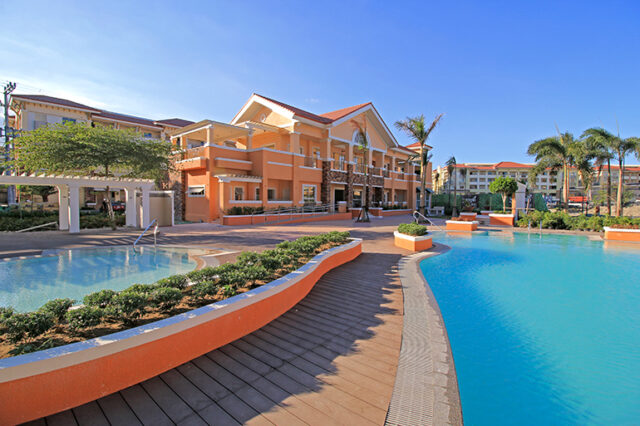
For many Filipinos, owning a home seems like a distant dream — especially with the rising cost of houses, residential lots, and building materials in today’s fast-paced economy. As a result, renting often becomes the go-to temporary solution.
But what starts as a short-term fix often becomes a long-term struggle. Rent prices continue to rise, yet every payment goes nowhere. Why settle for that cycle when you can rent with a purpose?
That’s where trusted developer Filinvest Land steps in. With its Rent it. Own it. Easy. program, the company is breaking the cycle of endless renting and opening up a smarter, more attainable path to homeownership.
FIXED RENT. ZERO INTEREST. EASY MOVE-IN.
With Rent it. Own it. Easy., you can leave the usual burdens of renting behind. No more surprise rent hikes and no wasted payments. The program offers an easy payment scheme of 10 years to pay, 0% interest, and fixed monthly costs.
Bank loan approvals and proof of income documents are not required. You can start paying rent right away and move in within 30 days upon securing your unit. No more waiting around — just straightforward move in.
Each Filinvest Land rent-to-own condo is ready for occupancy and part of a vibrant community complete with refreshing amenities and everyday conveniences — so you can enjoy the lifestyle you deserve from day one.
TURN RENT INTO OWNERSHIP
Unlike traditional renting, every peso you pay to Filinvest Land goes toward ownership. 100% of your monthly rent builds your future as a homeowner — not your landlord’s.
On top of that, you can enjoy up to 20% discount on the total unit price, making the path to homeownership even more attainable.
For over 50 years, Filinvest Land has been helping Filipinos achieve their dream homes — from peaceful subdivisions with house-and-lot packages to dynamic mid-rise and high-rise condo communities. Now, the company takes it further by making rent-to-own homes available in prime locations across Metro Manila and Cebu. Participating projects include resort-inspired Oasis communities, family-friendly mid-rise enclaves, and mixed-use high-rises that blend work, leisure, and home life.
By removing barriers like heavy upfront costs and complicated loan requirements, Filinvest empowers more Filipinos to finally take that big step from renter to owner.
Rent smarter with your future secured. Explore your options today at https://rentit-ownit-easybyfilinvestland.com.
Spotlight is BusinessWorld’s sponsored section that allows advertisers to amplify their brand and connect with BusinessWorld’s audience by publishing their stories on the BusinessWorld Web site. For more information, send an email to online@bworldonline.com.
Join us on Viber at https://bit.ly/3hv6bLA to get more updates and subscribe to BusinessWorld’s titles and get exclusive content through www.bworld-x.com.

The Department of Education (DepEd) on Thursday said it will revitalize DepEd TV in partnership with Knowledge Channel Foundation Inc. (KCFI) and Solar Pictures, Inc., to address learning continuity during calamities.
“The revitalized DepEd TV marks a new phase in the department’s push for inclusive, technology-enabled, and climate-resilient education, ensuring that no learner is left behind,” the department said in a news release.
DepEd TV, a flagship educational broadcast platform, was part of the blended learning initiatives during the COVID-19 pandemic in 2020 and ceased operations in 2022.
The broadcast platform aligns with DepEd’s Alternative Delivery Modes (ADM) and Academic Recovery and Accessible Learning (ARAL) initiatives, which teach students through accessible and non-Internet-based mediums.
Education Secretary Juan Edgardo “Sonny” M. Angara noted that the revival of the broadcast platform is driven by the calamities that made learning continuity difficult.
“We have communities where learners study in temporary shelters and teachers persevere despite losing their classrooms due to earthquakes or typhoons,” he said.
“These are the realities of our new normal. It is difficult, but deeply reassuring to know that partners like you continue to stand with us in keeping education going,” he added.
Data from the Second Congressional Commission on Education (EDCOM II) revealed that more than 20 school days were lost in School Year 2023-2024 due to climate-related events. The suspension has impacted over 11 million learners, or about 42% of public school students.
Under the tripartite Memorandum of Agreement of the three institutions, it aims to advance 21st-century learning delivery, media integration in classrooms, and content-based pedagogy.
KCFI has committed to supplying educational content and materials aligned with DepEd’s curriculum standards, while Solar Pictures will provide the digital terrestrial television channel for DepEd TV programming.
“We remain dedicated to delivering engaging, culturally grounded, and gender-sensitive lessons that make learning stick—supported by data, feedback, and continuous improvement,” KCFI President Elvira “Rina” M. Lopez-Bautista said in the same release.
Solar Pictures President and Chief Executive Officer Wilson Y. Tieng added that the initiative aims to impact millions of Filipino students. “We look forward to this journey together and to witnessing the impact this collaboration.”— Almira Louise S. Martinez
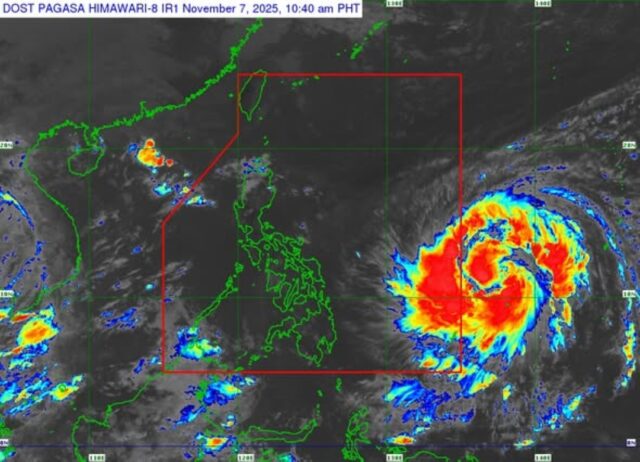
Tropical Cyclone Fung-Wong (international name) has intensified into a severe tropical storm as it continues to approach the Philippine Area of Responsibility (PAR), and may further strengthen into a super typhoon, according to the state weather bureau on Friday.
Fung-Wong, which will be locally named Uwan once it enters PAR, was packing maximum sustained winds of 100 kilometers per hour (kph) and gustiness of up to 125 kph, the Philippine Atmospheric, Geophysical and Astronomical Services Administration (PAGASA) said in its 11:00 a.m. advisory.
It was last located 1,315 kilometers east of Eastern Visayas, moving west-northwestward at 20 kph.
By Friday evening or Saturday morning, Fung-Wong is likely to enter the PAR, PAGASA said. It is also forecast to undergo rapid intensification, potentially reaching typhoon category within 24 hours, and possibly becoming a super typhoon by Saturday evening or Sunday morning.
At its peak intensity, it will likely make its first landfall over the southern portion of Cagayan or the northern portion of Isabela late Sunday evening or early Monday morning.
Fung-Wong is then expected to traverse the mountainous terrain of Northern Luzon and emerge over the West Philippine Sea by Monday morning or afternoon.
Up to Tropical Cyclone Wind Signal (TCWS) No. 5 may be raised in some of the affected areas, PAGASA said. The state weather bureau added that it will begin issuing warning signals by Friday afternoon or evening, likely over portions of Southern Luzon, Eastern Visayas, and Caraga, in preparation for the storm’s effects.
Storm surge warnings may also be issued in affected coastal areas by Saturday, particularly in Northern Luzon and along the eastern coast of Central and Southern Luzon.
PAGASA advised the public to continuously monitor updates on Fung-Wong as it approaches the country.— Edg Adrian A. Eva
HANOI – Coastal areas in Vietnam were assessing the damage from Typhoon Kalmaegi’s destructive winds and heavy rain on Friday, with one death reported by state media, following its deadly passage through the Philippines where it killed at least 188 people.
The storm made landfall in central Vietnam late on Thursday, uprooting trees, damaging homes, and triggering power outages, before weakening as it moved inland. Authorities warned of continuing heavy rainfall of up to 200 millimeters (8 inches) in central provinces from Thanh Hoa to Quang Tri.
As the storm’s death toll climbed in the Philippines, officials there said another 135 people remained missing and 96 had been injured.
In Vietnam, no official casualty figures had been released but state-run Vietnam News Agency reported one fatality in Dak Lak province in a collapsed house. Photos and videos on social media showed ripped-off roofs, flooded homes, and streets littered with fallen trees and debris.
The government said it had mobilized over 268,000 soldiers for search-and-rescue operations and warned of potential floods in low-lying areas, which could affect agriculture in the Central Highlands, Vietnam’s main coffee-growing region.
Kalmaegi is the 13th typhoon to form in the South China Sea this year. Vietnam and the Philippines are highly vulnerable to tropical storms and typhoons due to their locations along the Pacific typhoon belt, regularly experiencing damage and casualties during peak storm seasons.
The Philippines’ civil aviation regulator has placed all area centers and airport operations under heightened alert in preparation for another typhoon that is expected to affect parts of the country this weekend.—Reuters

MANILA — The Philippines’ economic growth slowed sharply in the third quarter, missing market expectations, as a “shocking” corruption scandal linked to government infrastructure projects hammered consumer and investor confidence.
Gross domestic product grew 4.0% in the third quarter from a year earlier, well below the 5.2% forecast in a Reuters poll and significantly weaker than the 5.5% expansion recorded in the previous quarter, the statistics agency said.
The weaker-than-expected performance, combined with subdued inflation, has increased the likelihood of a fifth straight interest rate cut at the central bank’s policy meeting in December.
Economic Planning Secretary Arsenio Balisacan acknowledged that achieving even the lower end of the government’s 5.5% to 6.5% growth target for the year will be difficult.
“The productive capacity that we had wanted to happen was muted by all this corruption,” Balisacan said at a press briefing. “It’s just so shocking to see how extensive it was.”
Authorities are currently investigating allegations of corruption involving infrastructure projects, particularly flawed flood-control facilities, in a scandal that has shaken the graft-weary nation.
The probe has implicated several government officials and lawmakers, raising concerns about the integrity of public spending and further eroding investor sentiment.
Public spending rose 5.8% year-on-year in the third quarter, its slowest pace since the same period in 2024, as stricter validation procedures delayed the release of funds for government projects.
Government spending on infrastructure contracted by 26.2%, the worst in nearly 14 years as stricter measures were enforced to curb misuse of funds.
Household consumption, a key growth driver, grew only 4.1%, its weakest since the first quarter of 2021, as consumers deferred major purchases, particularly of durable goods.
Adding to the slowdown, the country is also grappling with a series of natural disasters, including a super typhoon, which disrupted economic activity and infrastructure in parts of the country during the quarter.
“The third quarter’s performance reminds us of the urgent need to address key challenges and strengthen our foundations for rapid, sustained, and inclusive growth,” Balisacan said.
On a seasonally adjusted basis, GDP expanded 0.4% quarter-on-quarter, below the 0.8% median forecast in a Reuters survey of economists. — Reuters

BELEM — Google has agreed to finance restoration of the Amazon rainforest in its biggest deal yet for carbon removal credits, as Big Tech hunts for high-quality credits to offset emissions tied to energy-hungry data centers.
Google and Brazilian reforestation startup Mombak told Reuters the deal would offset 200,000 metric tons of carbon emissions. That is four times the volume of a pilot offtake agreement in September 2024 with Mombak, Google’s sole provider of forestry carbon credits.
Both companies declined to comment on the value of the deal.
The agreement highlights how Big Tech is looking for ways to soften the climate impacts of its huge investment in power-intensive data centers for AI, driving demand to offset carbon emissions through Brazil’s nascent reforestation industry.
Last year, Alphabet’s Google committed more than $100 million to an array of different carbon removal technologies, from enhanced rock weathering and biochar to direct air capture and a project changing river acidity.
But when it came time to double down, it was hard to beat the efficiency of planting trees.
“The most derisked technology we have to reduce carbon in the atmosphere is photosynthesis,” said Randy Spock, Google’s head of carbon credits and removal, citing the process by which plants use sunlight, water, and carbon dioxide to produce oxygen and glucose.
Brazil, which is hosting the United Nations climate summit known as COP30 in the Amazon city of Belem this month, has touted the talks as the “Forest COP” to promote conservation efforts such as a proposed new fund for tropical forests.
Norway, Indonesia and Brazil have committed $5 billion to the Tropical Forests Forever Facility, officials announced on Thursday.
PUSH FOR CREDIBLE OFFSETS
Much of Google’s greenhouse gas emissions come from the electricity it buys for its data centers and offices. Those so-called market-based scope 2 emissions more than tripled from 2020 to 3.1 million tons of CO2 equivalent last year, according to the company’s latest environmental report.
Google has steered clear of REDD credits, Spock said, which reward developers for preserving parts of the forest that would otherwise be destroyed. That market has been rattled by alleged fraud and ties to illegal loggers in Brazil.
“The reason we quadrupled down on Mombak is they’ve got a very credible approach,” he said.
Mombak, which turns degraded pastureland back into jungle, is benefiting from a “flight to quality,” its co-founder and Chief Executive Officer Gabriel Silva said.
“Buyers were previously buying carbon credits but didn’t know what they were buying. So they got involved in poor-quality, sometimes fraudulent projects,” he said.
To raise the bar for nature-based carbon removal, Google joined forces last year with Meta, Salesforce, McKinsey, and Microsoft, the biggest buyer to date, creating a group of buyers called the Symbiosis Coalition.
The coalition, which said on Thursday it had expanded to include Bain & Company and REI Co-op, has vowed to contract over 20 million tons of nature-based carbon offsets by 2030 that meet its more rigorous scientific standards.
That includes demands for conservative and transparent carbon accounting standards, long-term preservation and benefits for biodiversity and local communities. Of 185 projects reviewed by the coalition, Mombak’s is the first to meet those standards.
Brazil is the country with the most projects seeking the coalition’s endorsement, said Symbiosis Executive Director Julia Strong, adding that she expected more to clear the bar soon.
Still, a scarcity of credits meeting the highest standards – and the deep pockets of those willing to pay for them – have pushed up prices. While REDD credits can retail for under $10 per ton of carbon dioxide offset, Brazil’s new reforestation startups have fetched more than $50 and even $100 per ton.
“Companies are getting more efficient, in terms of producing at lower prices. We are on that path,” said Mr. Silva of Mombak. “But right now there’s way more demand than supply.”— Reuters

US President Donald Trump will host the leaders of five Central Asian nations at the White House on Thursday as the US seeks to gain influence in a region long dominated by Russia and increasingly courted by China.
The talks take place amid intensifying competition for Central Asia’s vast mineral resources. Western nations are seeking to diversify supply chains away from Moscow and Beijing.
In particular, the US is pursuing new partnerships to secure critical minerals, energy, and overland trade routes that circumvent its geopolitical rivals.
Launched in 2015, the so-called C5+1 platform brings together the United States and the five Central Asian states — Kazakhstan, Kyrgyzstan, Tajikistan, Turkmenistan, and Uzbekistan — to advance cooperation on economic, energy and security issues. Their leaders will also attend a dinner with Mr. Trump at the White House on Thursday.
CRITICAL MINERALS MEMORANDUM SIGNED
US and Kazakh representatives signed a memorandum of cooperation on critical minerals, according to the news service of the country’s President Kassym-Jomart Tokayev. It did not elaborate. The White House had no immediate comment on that report.
Among business deals to be announced is an agreement for Boeing to sell up to 37 airplanes to airlines in Kazakhstan, Tajikistan and Uzbekistan combined, according to a government statement. A US company, Cove Capital, will mine tungsten in Kazakhstan with government-backed financing.
Kazakhstan was also set to take a symbolic step of joining the Abraham Accords that have normalized relations between Israel and Muslim-majority nations, according to a senior US official.
Gracelin Baskaran, a director at the Center for Strategic and International Studies, said the administration will pursue government-to-government engagement but also commercial deals that secure US access to vital minerals.
“As China and Russia entrench their control over the region’s mining, processing, and infrastructure systems, Washington is seeking to establish a tangible foothold through targeted strategic projects,” Baskaran said.
NATIONS ARE RICH IN URANIUM, COPPER, GOLD
Rich in minerals and energy, the five nations remain economically tied to Russia, their former Soviet ruler, while neighboring China has expanded its influence through large-scale infrastructure and mining investments.
Together, the countries are home to 84 million people and hold vast deposits of uranium, copper, gold, rare earths and other strategic minerals essential to global efforts to transition to greener forms of energy.
Kazakhstan, the region’s largest economy, is the world’s leading uranium supplier, producing nearly 40% of global output in 2024, while Uzbekistan ranks among the top five.
Together, they account for just over half of the world’s uranium production — a vital resource for US nuclear power, which is a significant source of US electricity. Russia supplies roughly 20% of the US’ imported uranium, making diversification increasingly urgent.
Under Mr. Trump, the US has pursued a multi-pronged strategy to secure critical minerals and reduce reliance on China, which dominates global supply chains for strategic metals including uranium, rare earth elements, copper, and titanium.
China, at times, has leveraged its dominance by restricting exports.— Reuters
