Home Blog Page 7121

Council says pandemic accelerated rise of digital finance
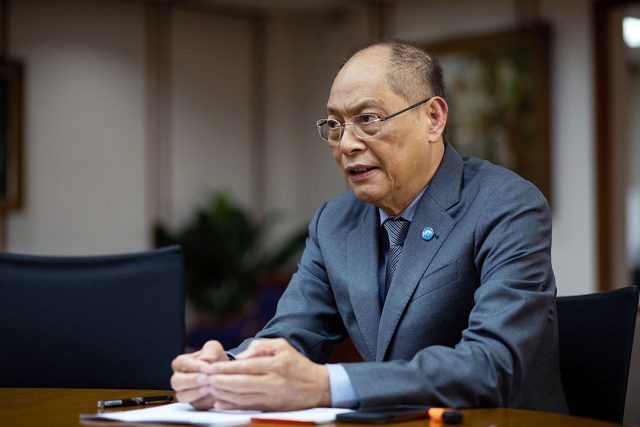
Benjamin E. Diokno, Bangko Sentral ng Pilipinas Governor — BLOOMBERG

THE Financial Stability Coordination Council (FSCC) said one of the positive results of the pandemic is the accelerated development of digital finance. The Council said in a statement Tuesday that it has considered the findings of multilateral agencies and international bodies which concluded that global financial markets were able to avoid a collapse that had been widely feared at the start of the pandemic.

It said the pandemic produced some silver linings, “in particular (the global boom in) the nonbank financial sector… together with the increased use of digital facilities in finance.”

 It also noted that fund raising from the capital markets has exceeded that of the last pre-pandemic year, hitting P103.76 billion in 2020, up 8.9%, according to the Philippine Stock Exchange (PSE).

The PSE has said that it expects fund-raising to hit P200 billion this year, with P161.41 billion already raised as of the end of September. There are still five companies due to conduct public offerings this month, following Medilines Distributors, Inc. which listed Tuesday.

Bangko Sentral ng Pilipinas (BSP) Governor Benjamin E. Diokno, who is also the chairman of FSCC, said the “significant” increase in the issuance of public securities since last year was seen “as market players responded to the strategic intervention of the authorities to free up liquidity and reduce the cost of financing.”

Mr. Diokno called for a more nuanced appreciation of the pandemic’s variable impact by industry.

“The authorities need to recognize how different stakeholders are situated differently, now and into the future, and would thus require differentiated interventions,” Mr. Diokno said.

The FSCC’s yearend meeting also focused on initiatives that could boost the resilience of the nonbank financial sector.

“We regularly assess the risks in the global markets but we are grounded by the risks that may materialize domestically. This is the nature of systemic risks, thinking globally but always acting locally,” Mr. Diokno said.

Regulators assess systemic risk, or the potential for an event at the company level to trigger severe instability or the collapse of an entire industry or economy. Such policy initiatives follow the lessons learned in previous downturns like the Global Financial Crisis and the Asian Financial Crisis.

The FSCC is composed of the BSP, the Department of Finance, the Insurance Commission, the Philippine Deposit Insurance Corp., and the Securities and Exchange Commission. — Luz Wendy T. Noble


Cryptocurrency role seen growing in remittances, gaming

REUTERS

CRYPTOCURRENCY will likely continue gaining traction in the Philippines particularly in remittances, payments, and online games, participants in a BusinessWorld Insights Forum said.

At the “Fintech’s Place in the Growth of Cryptocurrencies” forum, speakers said they expect more people to try crypto, presenting both opportunities and risks.

Melchor T. Plabasan, Technology Risk and Innovation supervision director at the Bangko Sentral ng Pilipinas (BSP), said the main applications he is seeing as a regulator are in investment, remittances and payment.

“I think the increasing adoption of virtual assets pushes us to continuously enhance our regulatory and supervisory authority abilities to appropriately oversee these activities because they may have impact on the stability and integrity of our financial system,” Mr. Plabasan said.

BSP Governor Benjamin E. Diokno said last week that volume of cryptocurrency transactions rose nearly five times to 20 million in June 2021. By value, they rose 71% year on year to P105.93 billion, he added.
Earlier this year, the BSP expanded its regulatory scope to include more types of virtual asset service providers to better manage the risks that come with such services.

“We have also seen a number of remittance companies now using crypto to remit money instead of using the traditional clearing and settlement models. We have also seen institutional investors as well joining the crypto world, which of course, we can somehow attribute to regulatory certainty,” Mr. Plabasan said.

Philippine Digital Asset Exchange (PDAX) Founder and Chief Executive Officer Nichel O. Gaba said growing adoption by financial institutions and supportive regulations are expanding its use.

“We’re now using virtual assets or blockchain technology to power cheaper remittances, provide more people the opportunity to earn, whether it’s through playing a game or trading and investing. But there’s a lot more to come,” Mr. Gaba said.

Swarup Gupta, an industry manager at The Economist Intelligence Unit, said cryptocurrencies hold the potential to generate alternative income via play-to-earn games.

“Several Filipinos have found to be an avenue for earning money. The reason is that you can actually convert these tokens into real world, fiat currency,” Mr. Gupta said.

Mr. Gupta said that virtual assets will be here to stay in many forms.

“It’s a good hedge against inflation and there is a negative reaction to any stringent regulatory action,” he added.

The central bank has reminded the public to limit their dealings to registered virtual asset service providers to minimize their risk. — Luz Wendy T. Noble

PHL seen as top 5 biofuel importer by 2026 as sugar output dwindles

REUTERS

By Marielle C. Lucenio

THE International Energy Agency (IEA) said the Philippines is expected to become a top five importer of biofuels by 2026.

“The Philippines joins the top five import list as a stable ethanol blending requirement, increasing gasoline demand and a historically high import ratio lead to growing imports,” the IEA said in an analysis, specifically referring to bioethanol used in gasoline called E10, referring to a 10% level of fuel supplementation.

In the IEA’s Renewables 2021 report, the agency also forecast wider deployment of renewable energy in electricity, transport and heating to 2026.

“The statement that the Philippines will be one of the top ethanol importers for bioethanol is valid because local sugar cane production is shrinking,” Asian Institute of Petroleum Studies former Managing Director Rafael S. Diaz Jr., told BusinessWorld in a Viber message.

Sugarcane is the source of domestic ethanol and is “shrinking” in output, according to the US Department of Agriculture (USDA). Early this year, the USDA reported that the country’s output for the current crop year beginning in September may only hit 2.14 million metric tons (MT), down from the previous year’s 2.15 million MT.

Asked whether expanding imports would violate the Biofuels law, Mr. Diaz said the law stipulates the use of  “indigenous” sources of ethanol.

The Biofuels Act of 2006, or Republic Act 9367, aims to reduce dependence on imported fuels and bars the import of biofuels.

“However, the need to import due to short supply of indigenous ethanol has been approved by the Department of Energy (DoE). Surely, the import approval is meant to attain the purpose of reducing dependence on the use of fossil gasoline, and produce cleaner air for public health wellness,” Mr. Diaz said.

Federation of Philippine Industries (FPI) Chairman Jesus L. Arranza said he “cannot believe” the Philippines will have to reach that level of dependency on imports when it has its own biofuel and can tap other sources.

The FPI recently proposed to the DoE the usage of palm oil in the fuel mix to help bring down prices.

The DoE said it will be studying the proposal thoroughly given the import prohibition.

“We can come up with our own alternative biofuel and we do not have to reach that stage,” he told BusinessWorld in a phone call.

Mr. Arranza said the study should spur legislators into action on looming biofuel imports is because of the impact of such a measure on transportation to farmers.

Mr. Diaz said the move towards expanding the use of renewable energy will be “more aggressive (due to the importance of reducing) dependence on fossil fuel” in the next few years.

Tuguegarao gets over P311-million DBP loan

COURTESY OF DBP FACEBOOK PAGE

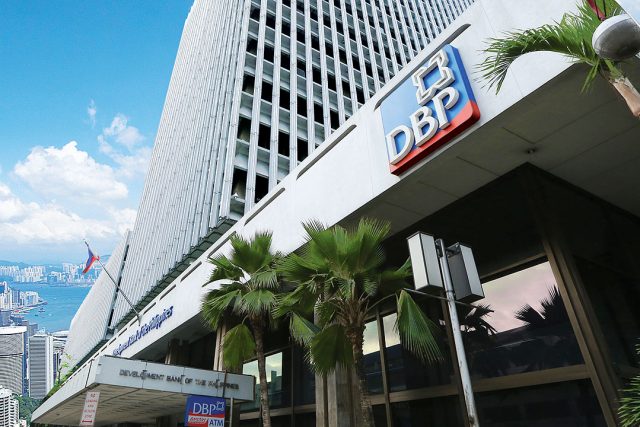
THE Development Bank of the Philippines (DBP) said it approved a P311.8-million loan to Tuguegarao City which will fund infrastructure and farming projects.

DBP President and Chief Executive Officer Emmanuel G. Herbosa said the loan will be used to build a housing project, drainage systems, an evacuation center, and pave roads.

The loan proceeds will also be used to buy farming equipment, he said in a statement Tuesday.

The loan was extended under the Assistance for Economic and Social Development (ASENSO) for LGUs Financing Program – Bayanihan Interest Subsidy Fund.

Under the program, the bank said that the National Government subsidizes half of the 4% interest charged to local government units (LGUs).

Republic Act No. 11494 or the Bayanihan to Recover as One Act (Bayanihan II) allotted P1 billion each to government banks to provide interest subsidies to LGUs that need additional financing for pandemic recovery programs.

“The DBP is confidently making a leap forward to support more inclusive growth initiatives in LGU Tuguegarao City,” Mr. Herbosa said.

“These worthy initiatives will be pursued under a framework of inclusivity — where people are mainstreamed into the growth process both as beneficiaries and contributors.”

The DBP previously extended two-term loans amounting to P120 million in 2017 and P600 million in 2018 to Tuguegarao City. These grants were used for education, public works, and solid waste management projects.

The bank approved P38.28 billion in credit for the economic recovery programs of more than 100 LGUs in the first six months of 2021.

Launched last year, the ASENSO program has helped fund infrastructure, housing, sanitation, telecommunications, and disaster management programs in 51 Luzon LGUs, along with 40 in Mindanao and 19 in the Visayas. — Jenina P. Ibañez

DoF says digital channels promise faster cash aid distribution during calamities

PEOPLE line up to receive financial aid in hard cash at the height of the coronavirus pandemic. — PHILIPPINE STAR/ MICHAEL VARCAS

FINANCE Secretary Carlos G. Dominguez III called on the Labor department to use digital data and payment systems to aid workers more rapidly during crises.

“As we accelerate our recovery, I urge you to intensify your programs to help our workers cope with the pandemic and prepare them for the new labor demands of the digital economy,” he said.

He said the Labor department can build on the small business wage subsidy program run by the DoF, the department said in a statement Tuesday.

“The program is instructive. It shows the potential of building databases and building payout systems in helping us improve our resiliency in the face of calamities — whether these come in the form of pandemics or severe weather events,” Mr. Dominguez said.

“With the completion of the National ID system, we should see the digitalization of government services and private sector transactions advance by leaps and bounds.”

The DoF’s small-business wage subsidy program implemented last year was given P51 billion in funding to assist over 3 million employees unable to work during the lockdowns declared to curb the pandemic.

The Department of Labor and Employment has also rolled out its own cash aid programs for displaced workers. — Jenina P. Ibañez

Mining industry adopts climate change protocol  

BW FILE PHOTO

THE Chamber of Mines of the Philippines (CoMP) adopted a climate change protocol put forward by the Towards Sustainable Mining (TSM) organization, while harmonizing its standards for managing mine tailings with global norms.

“This development was approved by the TSM community of interest (CoI) advisory panel following the recommendation of CoMP’s technical working group (TWG) that was tasked to align TSM with the global industry standard on tailings management,” CoMP said in a statement Tuesday.

The CoMP said TSM is a globally recognized sustainability program established in 2004 by the Mining Association of Canada that guides mining companies in managing key environmental and social risks. The global industry standard was issued in 2020 to operators of tailings facilities, aiding them in achieving zero harm to communities and the environment.

“The adoption of the climate change protocol will not only support the alignment with the standard of CoMP members with tailings facilities. It will also support the alignment of our nickel producers with other environmental, social, and governance standards, such as responsible steel,” CoMP Chairman Gerard H. Brimo said.

The chamber said the adoption of the protocol adds to the list of measurement tools that its members can use to grade their environmental and social responsibility obligations.

CoI panel member Carlos Primo C. David said the protocol is important because of the outsized impact of climate change on tropical island nations such as the Philippines.

“The efforts must remain strong for reforestation efforts and carbon footprint reduction, but the impact of climate change warrants ensuring business continuity and, more importantly, resilience in our communities in the near future,” Mr. David said.

“This climate change protocol and its supporting guide will provide mining companies the required focus to attend to local impacts and, through this, enable them to contribute to the global effort to address climate change,” he added.

Mr. Brimo said the climate change guide is the only mine-related reference that offers procedures for incorporating climate change considerations in the miner; operational decision-making.

Other TSM Protocols include water stewardship, preventing child and forced labor, biodiversity conservation management, health and safety, indigenous peoples and community outreach, and crisis management.

TSM partner countries are Argentina, Australia, Botswana, Brazil, Canada, Colombia, Finland, Norway, the Philippines, and Spain. — Revin Mikhael D. Ochave 

Senate targets final reading approval of bill extending 2021 budget by Monday

SENATE.GOV.PH

THE SENATE plans to pass on third and final reading Monday a proposed law extending the validity of the 2021 national budget to the end of next year, after it passed on second reading Tuesday.

“We will prioritize the approval of the extension of the validity of the 2021 National Budget,” said Majority Leader Juan Miguel F. Zubiri in a Viber message to reporters Tuesday. “Our plan is to approve it … hopefully on Monday for third reading.”

House Bill 10373, which amends Section 62 of the general provisions of Republic Act 11518 or the General Appropriations Act (GAA) of Fiscal Year 2021 was passed on the understanding that such an extension would be the last of its kind.

Mr. Angara, who chairs the Senate Finance committee, said during the Tuesday plenary session that in 2022, the government will attempt a “half-way house between obligation-based and cash-based” budgeting.

“It maintains the features of cash-based budgeting, which would force agencies to obligate the money in the calendar year of the budget,” he said, “while it gives them that leeway of making the disbursements and full payment in the succeeding year.”

Under Section 61 of the general provisions of the proposed P5.024-trillion budget for 2022, which is currently being discussed in bicameral conference committee, the hybrid system will provide two extra years for both obligation and disbursement, removing the need for budget extensions.

“Principally, we are agreeing to the extension because to cast a negative vote would punish our people for the inefficiencies of the bureaucracy,” Minority Leader Franklin M. Drilon during plenary session late Monday, “but we do hope that this is not a yearly occurrence, the failure to disburse it on time, because government spending, if I recall correctly, constitutes 20% of our Gross Domestic Product (GDP).”

“If we do not disburse the appropriated funds on time, we will not be able to achieve GDP growth for the country because the government failed to disburse these funds,” he added.

Mr. Drilon said that the 56% obligation rate of the budget as of the end of September is lower than the 78% achieved last year.

The House approved its version of the bill in late November.

President Rodrigo R. Duterte earlier approved legislation that extended the validity of the 2019 and 2020 national budgets. — Alyssa Nicole O. Tan

Pasay RTC returns conviction against illegal lender

THE Securities and Exchange Commission (SEC) said it obtained its eighth conviction against an illegal lender after a regional trial court (RTC) ruled against executives of X-CEE789 Lending and Trading, Inc.

In a statement Tuesday, the regulator said the Pasay City RTC Branch 118 found X-CEE789 guilty beyond reasonable doubt for violating Section 12 (3)(a) of Republic Act No. 9474 or the Lending Company Regulation Act (LCRA) of 2007.

“The conviction of the incorporators and directors of X-CEE789 represents the eighth conviction the SEC has won under a crackdown initiated in 2017 on illegal lenders, including those engaged in ‘5-6’ schemes and other usurious practices,” the SEC said.

The ruling, dated Jun. 30, covers X-CEE789 executives Merlinda A. Derequito, Mila R. Anonuevo, Haydee S. Alarcon, Maria Collen A. Custodio, Marisa D. Abaquin, Ramona C. Belen, Pinder Kaur Bhopal, Parvesh Kumar, Karan Kumar, Surinder Bhopal, Kamaljit Kaur, and Jaswinder Kaur.

Each of the respondents that established the company as incorporators and served as directors was ordered to pay a fine of P10,000 with costs.

Under Section 12 (3)(a) of the LCRA, officers, employees, or agents of a lending company who knowingly mislead or give false statements in any official application, report, or document face fines of P10,000 to P50,000 and/or imprisonment of six months to 10 years.

The SEC filed a complaint against the respondents after they were found to have falsified documents when incorporating X-CEE789 and while applying for an authority to operate.

X-CEE789 submitted a P1-million certificate of bank deposit supposedly issued by Banco de Oro’s Two Shopping Center branch in Pasay City. The document was needed to prove its compliance with the minimum paid-up capital prescribed by the LCRA during X-CEE789’s registration as a lending company with the SEC in 2017.

However, the SEC found that the bank did not issue the certificate. The commission also denied X-CEE789’s application when it registered as a lending company.

The regulator noted that in the eight cases decided so far, trial courts found 71 individuals guilty beyond reasonable doubt for violating the LCRA. Out of the 71 individuals, 33 are foreigners.

Meanwhile, the SEC’s Corporate Governance and Finance Department (CGFD) has revoked the registration of 2,081 lending companies for their non-compliance with the LCRA.

“To date, the SEC has also canceled the licenses of 35 financing/lending companies due to various violations of applicable rules and regulations. A total of 58 online lending applications have likewise been ordered to cease operations for lack of authority to operate as a lending or financing company,” the commission said. — Keren Concepcion G. Valmonte 

Robust privacy protections urged alongside mandatory SIM registration

STOCK PHOTO | Image by terimakasih0 from Pixabay

A BILL that will require the registration of subscriber-identity-module (SIM) cards needs to ensure that privacy of mobile-phone users is protected, an information technology researcher said Tuesday.

“We need to ensure that the data privacy of subscribers is protected, and we do need to take into consideration that everyone has the right to freedom of expression and flow of information and communication,” said Grace Mirandilla-Santos, an independent ICT policy researcher, during the 10th Arangkada Philippines Forum 2021.

The House of Representatives approved House Bill 5793 or the SIM Card Registration Act on third and final reading Monday.

Users should not have to “expose unnecessarily data that he or she does not want to (expose) just because a law is saying that the person needs to provide personal information,” she added.
Roy Cecil D. Ibay, vice-president of the Philippine Chamber of Telecommunications Operators, said in a statement Monday that the policy will help reduce the practice of phone fraud known as smishing while boosting e-commerce adoption and growth.

Section 8 of the proposed measure states that any information in the SIM card should be treated “as absolutely confidential,” unless access to it has been permitted by the subscriber.

It also states that the waiver of absolute confidentially should not be made a condition for the approval of subscription agreements.

Public telecommunications entities will be required to disclose the full name and address of a subscriber “upon a duly issued subpoena or order of a court upon finding of probable cause, or upon written request from a law enforcement agency in relation to an ongoing investigation.”

Mr. Ibay said the bill should also “ensure safeguards that will not unduly displace prepaid subscribers by giving a sufficient SIM registration period and ensuring that the wide adoption or use of the national ID is already in place.”

John Garrity, chief of party at USAID Better Access and Connectivity Project, said at the forum that the problem of smishing attacks requires a multi-stakeholder approach.

Smishing uses text messages to trick mobile-phone users into visiting malicious websites and reveal personal information.

“The number and nature of attacks that are occurring, I think all of us have been experiencing these smishing attacks on our phones, all of these issues really call for a multi-stakeholder, multi-sectoral approach to building up cybersafe practices among the entire population,” he said. — Arjay L. Balinbin

PHL posts lowest daily COVID tally in 17 months

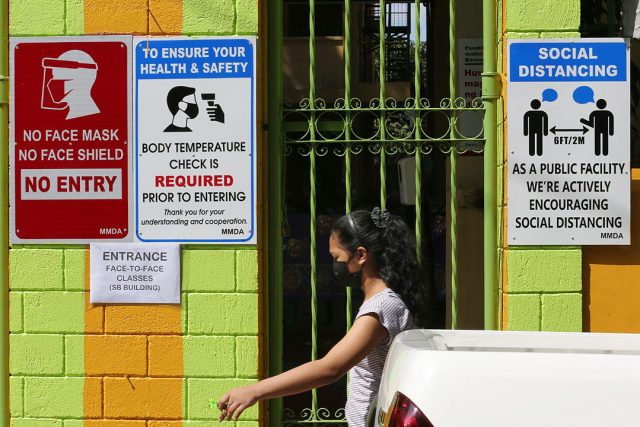
HEALTH protocol reminders are posted at the entrance of a public school building in Quezon City, Metro Manila. — PHILIPPINE STAR/MICHAEL VARCAS

By Kyle Aristophere T. Atienza, Reporter

PHILIPPINE health authorities reported 356 new coronavirus infections on Monday, the lowest daily tally since July 2 last year, bringing the total to 2.84 million.   

The death toll hit 49,591 after 92 more patients died, while recoveries increased by 871 to 2.77 million, it said.

Of the 92 reported deaths, 18% occurred in November, the agency said.

There were 13,026 active cases, 899 of which did not show symptoms, 5,314 were mild, 3,900 were moderate, 2,326 were severe, and 587 were critical.

It said 26% of intensive care units in the Philippines were occupied, while the rate for Metro Manila was 29%.

The Health department said six duplicates were removed from the tally, six of which were reclassified as recoveries, while 87 recoveries were relisted as deaths. 

It added that 159 patients had tested negative and were removed from the tally. Of these, 157 were recoveries.

Two laboratories did not operate on Dec. 5, while six laboratories failed to submit data.

RECOVERY
The Philippines’ ranking in a global index that measured the recovery of more than 100 countries from the coronavirus pandemic has improved, after the Southeast Asian country managed to contain a spike in infections fueled by the highly contagious Delta coronavirus variant. 

The country jumped 46 notches in the latest COVID-19 recovery ranking by Tokyo-based news magazine Nikkei Asia, ranking 57th from 103rd previously.

The Philippines shared the 57th spot with Tajikistan, Norway, and Malaysia.

Nikkei said in a report that the Philippines’ ranking improved due to a “significant increase in its infection management scores.”

But while the country’s infection numbers had dropped from the peak recorded in September, its short-term case fatality rate was over 9%, which is the second-highest in the world, the report said.

The Philippines ranked 121st in September, 106th in August, and 108th in July.

In the latest report, Bahrain topped the list, followed by Kuwait, the United Arab Emirates, Malta, Taiwan, and China.

In the last five spots are Belgium, Aruba and Papua New Guinea, Georgia and Vietnam, Barbados, Burkina Faso, and Laos.

“The latest Nikkei ranking is a clear indication that we have successfully contained the highly transmissible Delta variant,” Cabinet Secretary Karlo Alexei B. Nograles told a televised news briefing.

“We can see the light at the end of the tunnel but the only way that we can get to the end is if we continue to carefully watch our steps,” he added.

PHL’s foreign policy, national security plan lack long-term vision

MALACANANG.GOV.PH

THE PHILIPPINES’ national security management in relation to its foreign policy has been bogged down by political partisanship and the failure of administrations to involve non-government sectors, analysts said in a forum on Tuesday.

“There is this discontinuity of strategy and policies every change of administration, affecting the long-term horizon of strategic planning,” Emmanuel T. Bautista, a retired military general and member of the Foundation for National Interest’s board of trustees, told a virtual forum organized by the University of the Philippines Center for Integrative and Development Studies Strategic Studies Program and the UP Diliman Office of the Chancellor-Task Force Nation-Building.

It “has always been dependent on the leadership style and disposition of the incumbent president.”

Mr. Bautista said a whole-of-nation approach must always be applied to the country’s security, which he said has been “military-centric.”

It must also involve the academe, think-tanks, and sectors immersed in strategic thinking, he said.

“Sometimes we see strategic thinkers being labeled as having political motives or, worse, destabilizers,” said Mr. Bautista, noting that security management is a mix of national power, diplomacy, information, military, and economics.

President Rodrigo R. Duterte has been accused of gambling Philippine territories to appease China, from which he got about P1.2 trillion in investment and loan pledges to boost big-ticket infrastructure projects. But critics said few have materialized.

“The country’s sense of nationalism has moved away from being anti-US on account of our colonial legacy and neocolonial dependence to becoming anti-China in recent years,” said Maria Thaemar Camañag Tana, who teaches political science at the host university.

The country’s foreign policy has not been programmatic, Ms. Tana said, noting that it has always been based on the decisions of a sitting president. “There seems to be a lack of continuity.”

The shift had been particularly apparent from the Aquino administration, which sued Beijing before an international court to assert the Philippines’ claim in the South China Sea, she said.

The previous administration’s foreign policy was “derailed when Duterte, who has a completely different worldview from Aquino, became president in 2016.”

Mr. Duterte led a foreign policy pivot to China and away from the US when he took office in 2016. The US, which is not a claimant, has been competing with China in trade.

Washington and its allies have been asserting freedom of navigation in the South China Sea, which is important for the regional ambitions of Beijing.

Mr. Duterte’s strategy, however, was not widely supported. “Despite the President’s popularity, his pro-China stance has not been well received by the majority of the Filipinos,” said Ms. Tana. “China is still regarded as an oppressor and surveys have consistently shown low regard for China.”

She also said that the media and civil society organizations can help elevate the public discourse on the South China Sea dispute and other regional security issues.

Lara Quimbao-Del Rosario, a former foreign affairs official, said the Philippines had not deterred China’s incursions in its territories at an early stage because it had to deal with other foreign policy issues in the past.

China’s building of structures in a Philippine-claimed reef in the South China Sea as early as 1994 was set aside when the country had to deal with the case of Filipina domestic worker Flor R. Contemplacion, who was convicted by a Singaporean court in 1991 of killing the three-year-old son of her employer.

“The extensive coverage on Contemplacion was too much that it overshadowed what was happening in Panganiban reef or Mischief reef,” Ms. Quimbao-Del Rosario said.

The incident, she said, pushed the Philippines to consider assistance to overseas Filipino workers as a major part of the country’s foreign policy.

“The incident defined the country’s foreign policy in a significant way,” she said. “It became a pillar and it also affected our actions abroad.”

DEMOCRACY SUMMIT
Meanwhile, Mr. Duterte has accepted US President Joseph R. Biden’s invitation for him to attend a democracy summit, which will take place from Dec. 9 to 10.

Mr. Biden has invited “heads of state and government, other government leaders, and voices from the business and non-government sectors” to join America in taking action to strengthen democracy, according to a statement from Mr. Duterte’s office on Tuesday.

Mr. Biden said in the invitation that the Philippines and US will “embark on the work necessary to shape a prosperous and peaceful future built on respect for the rights and aspirations of all people,” according to the Palace. — Kyle Aristophere T. Atienza

Marcos faces new disqualification case 

THE ONLY son and namesake of the late dictator Ferdinand E. Marcos is facing another obstacle to his political ambitions in the 2022 polls after a group of martial law victims from northern Philippines filed a new complaint against his candidacy for president.   

The latest petition, the eighth of its kind, filed against Ferdinand “Bongbong” R. Marcos, Jr. before the elections body argued that his 1995 tax evasion conviction deprived him of his right to vote, making him ineligible to run for public office since electoral candidates must be registered voters.  

“Assuming that the provisions of the Omnibus election code do not apply, respondent is still disqualified to run for or to hold any elective position, much less for the position of Philippine president, for having been actually sentenced to prison correccional and is thereby effectively deprived of his right of suffrage,” read the petition.  

The petitioners were assisted by constitutional framer Christian S. Monsod, Ateneo Human Rights Center executive director Ray Paolo Santiago and Tristan Arnesto.  

Mr. Marcos’ spokesman, Victor Rodriguez, reiterated an earlier position that the petitions filed were “nothing but nuisance cases.”  

“We urge those who are behind these pathetic stunts to please respect the Filipino people and their democratic right to decide for themselves and their collective future,” he said in a statement released on Tuesday.   

Mr. Marcos committed crimes of moral turpitude — a ground for disqualification under the country’s election code — when he failed to file the taxes, read the latest petition, which is similar to earlier lawsuits seeking the disqualification of the former senator, who lost by a hair in the 2016 vice-presidential race.  

The late dictator’s son filed his candidacy papers for president in October, angering activists and victims of his father’s two-decade rule.  

An official of the poll body earlier said the presidential run of Mr. Marcos is the most legally-contested in recent history. — Kyle Aristophere T. Atienza 

ADVERTISEMENT
ADVERTISEMENT