Home Blog Page 7019

Dallas Buyers Club director Jean-Marc Vallée, 58

Jean-Marc Vallée — IMDB.COM

JEAN-MARC VALLÉE, a Canadian best known for directing the Oscar-nominated film Dallas Buyers Club and Emmy-winning HBO series Big Little Lies, died suddenly at his cabin outside Quebec City. He was 58.

Mr. Vallée’s demise was reported on Sunday by entertainment website Deadline and confirmed on Twitter by his representative Bumble Ward.

“Still in shock over the news that Jean-Marc Vallée has died,” Ward said, adding that he was thoughtful and kind “while still being a creative genius.”

Mr. Vallée’s Hollywood breakthrough came with the 2013 AIDS drama Dallas Buyers Club, which won Oscars for actors Matthew McConaughey and Jared Leto.

The movie was based on the true story of homophobic drug addict Ron Woodroof, played by Mr. McConaughey, who smuggles much-needed but unapproved medication into the United States to distribute to other AIDS patients.

Mr. Vallée’s most recent win as a director came from HBO series Big Little Lies starring Reese Witherspoon, Nicole Kidman, Meryl Streep, and Zoë Kravitz. The show won eight Emmy awards in 2017.

He also directed Demolition, a 2015 drama starring Jake Gyllenhaal, about a New York investment banker coming to grips with his wife’s sudden death.

Mr. Vallée had at the time called Demolition his most “rock and roll” film, both for its pulsing soundtrack in a film otherwise punctuated by silence, and its often provocative and offbeat portrayal of grief.

Mr. Vallée, who hailed from Montreal, forayed into the features film industry with his 1995 thriller Black List.

He is survived by two sons. — Reuters

TRAP targets triathlon and duathlon gold sweep

IF schedule permits, the Philippines has a strong chance of sweeping all four gold medals in triathlon and duathlon in the 31st Southeast Asian (SEA) Games slated May 12-23 in Hanoi, Vietnam next year.

Triathlon Association of the Philippines (TRAP) President Tom Carrasco on Tuesday said the Filipino triathletes competing in both events could get the job done assuming there’s enough time separating the staging of both triathlon and duathlon.

“Our initial goal is two golds in triathlon and one gold in duathlon,” Mr. Carrasco told The STAR. “But if we field our best triathletes in the duathlon events, possible two golds in duathlon also.

Defending SEA Games triathlon champions John Leerams “Rambo” Chicano and Kim Mangrobang topped the national duathlon trials in Clark two weeks ago to earn the right to represent the country in both disciplines in Hanoi.

Triathletes took to duathlon after Monica Reyes, a duathlon gold medalist in the 2019 SEA Games in Subic, retired and Joey delos Reyes, a SEA Games silver medal winner, is injured.

But for them to be allowed to see action in both races, the schedule must at least be a full day apart since World Triathlon, the two sports’ international governing body, allows athletes a 24-hour window before a participant could compete in another meet.

“This is achievable if the schedules will favor us. World Triathlon requires a 24-hour gap for athletes to do two events,” said Mr. Carrasco.

The country hauled four of the six mints, including two in the mixed relay team events, staked in the two sports when it hosted the SEA Games two years ago.

In Hanoi, there will only be a total of four — male and female triathlon and male and female duathlon — as the host decided to do away with the team events.

Still, the Filipinos have a chance to replicate their output the last time out assuming if they swept all golds.

And there is hope the scheduling will allow it. — Joey Villar

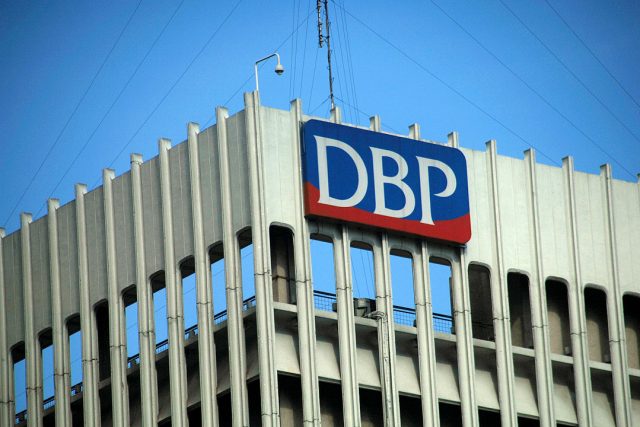
DBP launches loan program for merchant solar farm developers

BW FILE PHOTO

STATE-OWNED Development Bank of the Philippines (DBP) launched a new loan for solar power developers in a bid to support renewable energy investments.

The bank in a press release on Tuesday said its Solar Merchant Power Plan Financing Program will help fund utility-scale solar power developers that plan to sell electricity through the wholesale electricity spot market.

They will be given a tenor of 12 years and a one-year grace period on principal payment.

“DBP is ready to provide financing to viable solar power developers for their capital expenditures such as the construction or expansion of their infrastructure facilities, acquisition of machineries and equipment, among others,” DBP President and Chief Executive Officer Emmanuel G. Herbosa said.

Qualified borrowers may request financing for up to 60% of the project cost for Luzon-based projects.

For projects in Visayas, borrowers can access loans up to 50% of the total project cost.

Completed solar merchant power projects may also qualify for reimbursement within a year after completion.

Mr. Herbosa said the program would contribute to the government’s goal of increasing solar photovoltaic capacity in the country to 15.29 gigawatts by 2030.

“As a bank for the environment, DBP aims to boost investments in the green energy sector and proactively support the national goal for renewable energy to account for 35% of the country’s power generation mix by 2030, as set in the Philippine Energy Plan,” the bank said.

The Finance department and the central bank in October launched a sustainable finance roadmap to address the country’s policy and regulatory gaps in promoting sustainable investments.

It set guiding principles for green policies, sustainable financing, and a pipeline for investments to cut the country’s carbon footprint, Finance Secretary Carlos G. Dominguez III said. — Jenina P. Ibañez

Philex unit to spend P5B for mine project’s social, environmental programs

SILANGAN Mindanao Mining Co. Inc. (SMMCI) on Tuesday said it would spend over P5 billion for community development and environmental protection programs in Surigao del Norte where its copper-gold mine is located.

SMMCI, a subsidiary of the Philex Mining Corp., said in a press release that it pledged to pursue various environmental and social responsibility initiatives in areas surrounding the project, such as the towns of Placer, Tubod, Tagana-an, and Sison.

Aside from these initiatives, Philex Mining said the project is expected to bring investments and create jobs for the province.

“Silangan Project will also generate direct and indirect employment for around 8,000 people, about P86.7 billion in investments and will contribute P42.0 billion in government receipts throughout its 28-year mine life for the development of these areas in Surigao del Norte, among others, home to more than half a million Filipinos,” said Michael T. Toledo, SMMCI chief operating officer and chairman of the Chamber of Mines of the Philippines.

The bulk of the budget will go to education, public infrastructure, and communication, which are part of the requirements to secure an environmental compliance certificate from the Department of Environment and Natural Resources.

SMMCI has reforested 184-hectares of land under its reforestation project, planting close to 400,000 different species of seedlings. It has also planted bamboo along the banks of San Pedro River to control soil erosion.

The copper-gold mine project has an initial development cost of $224 million and will begin construction in 2022. It will be ready for commercial use by late 2024 to early 2025.

On Tuesday, Philex Mining shares rose by 4.59% or 23 centavos to close at P5.24 apiece.

Philex Mining is one of the Philippine units of Hong Kong-based First Pacific, the others being Metro Pacific Investments Corp. and PLDT, Inc.

Hastings Holdings, Inc., a unit of PLDT Beneficial Trust Fund subsidiary MediaQuest Holdings, Inc., has interest in BusinessWorld through the Philippine Star Group, which it controls. — Luisa Maria Jacinta C. Jocson

Have you fallen for the myth of ‘I can’t draw’? Do it anyway — and reap the rewards

KELLY SIKKEMA/UNSPLASH

DRAWING is a powerful tool of communication. It helps build self-understanding and can boost mental health.

But our current focus on productivity, outcomes, and “talent” has us thinking about it the wrong way. Too many believe the myth of “I can’t draw.” when in fact it’s a skill built through practice.

Dedicated practice is hard, however, if you’re constantly asking yourself: “What’s the point of drawing?”

As I argue in a new paper in Closure E-Journal for Comic Studies, we need to reframe our concept of what it means to draw, and why we should do it — especially if you think you can’t.

Devoting a little time to drawing each day may make you happier, more employable and sustainably productive.

I’m a keen doodler who turned a hobby into a PhD and then a career. I’ve taught all ages at universities, in library workshops, and online. In that time, I’ve noticed many people do not recognize their own potential as a visual artist; self-imposed limitations are common.

That’s partly because, over time, drawing as a skill set has been devalued. A 2020 poll ranked artist as the top non-essential job.

But new jobs are emerging all the time for visual thinkers who can translate complex information into easily understood visuals.

Big companies hire comic creators to document corporate meetings visually, so participants can track the flow of ideas in real time. Cartoonists are paid to draft innovative, visual contracts for law firms.

Perhaps you were told as a child to stop doodling and get back to work. While drawing is often quiet and introspective, it’s certainly not a “waste of time.” On the contrary, it has significant mental health benefits and should be cultivated in children and adults alike.

How we feel influences how we draw. Likewise, engaging with drawing affects how we feel; it can help us understand and process our inner world.

Art-making can reduce anxiety, elevate mood, improve quality of life, and promote general creativity. Art therapy has even been linked to reduced symptoms of distress and higher quality of life for cancer patients.

And it can help you enter a “flow state,” where self-consciousness disappears, focus sharpens, work comes easily to you, and mental blockages seem to evaporate.

Cultivating a drawing habit means letting go of biases against drawing and against copying others to learn technique. Resisting the urge to critically compare your work to others’ is also important.

Most children don’t care about what’s considered “essential” to a functioning society. They draw instinctively and freely.

Part of the reason drawing rates are thought to be higher in Japan is their immersion in manga (Japanese comics), a broadly popular and culturally important medium.

Another is an emphasis on diligent practice. Children copy and practice the manga style, providing a critical stepping stone from free scribbling to controlled representation. Copying is not seen as a no-no; it’s integral to building skill.

As researcher and artist Neil Cohn argues, learning to draw is similar to (and as crucial as) learning language, a skill built through exposure and practice:

Yet, unlike language, we consider it normal for people not to learn to draw, and consider those who do to be exceptional […] Without sufficient practice and exposure to an external system, a basic system persists despite arguably impoverished developmental conditions.

So choose an art style you love and copy it. Encourage children to while away hours drawing. Don’t worry about how it turns out. Prioritize the conscious experience of drawing over the result.

With regular practice, you may find yourself occasionally melting into states of “flow,” becoming wholly absorbed. A small, regular pocket of time to temporarily escape the busy world and enter a flow state via drawing may help you in other parts of your life.

Use simple tools that you’re comfortable with, whether it’s a ballpoint pen on post-it notes, pencil on paper, a dirty window, or a foggy mirror.

Times you’d typically be aimlessly scrolling on your phone are prime candidates for a quick sketch. Doodle when you’re on the phone, watching a movie, bored in a waiting room.

Together with mindful doodling, drawing from observation and memory form a holy trinity of sustainable proficiency.

Drawing from life strengthens your understanding of space and form. Copying other styles gives you a shortcut to new “visual libraries.” Drawing from memory merges the free play of doodling with the mental libraries developed through observation, bringing imagined worlds to life.

With time and persistence, you may find yourself producing drawings you’re proud of.

At that point, you can ask yourself: what other self-limiting beliefs are holding me back?


Darren C. Fisher is a Lecturer in Animation, Swinburne University of Technology.

An environment conducive to biopharmaceutical innovation   

A year since the first coronavirus disease 2019 (COVID-19) vaccine was administered, collaboration to share innovation has enabled manufacturing from zero to 11.2 billion doses this year.  

The 2021 supply of COVID-19 vaccines resulted in half of the world’s population being vaccinated within a year. Independent analysis by global health intelligence and analytics firm Airfinity projects that by the end of March 2022, G7 and EU countries will have 1.4 billion surplus vaccines, enabling dose sharing.   

As of Dec. 17, more than 100 million COVID-19 vaccine doses have been administered in the country, with 43 million Filipinos fully vaccinated, accounting for 56% of the government’s target, according to Acting Presidential Spokesman Karlo Alexei B. Nograles. About 60 million were first doses, while at least a million were booster shots, the Department of Health’s vaccination dashboard showed. The government aims to fully inoculate 54 million Filipinos by the end of 2021. Health Undersecretary Maria Rosario S. Vergeire revealed that the country now has an “oversupply” of COVID-19 vaccines, and urged Filipinos to get fully vaccinated, including booster shots.      

“Vaccine manufacturers have delivered on their promise of innovation breakthroughs and have been ramping up manufacturing output to historic levels,” said Thomas B. Cueni, director general, International Federation of Pharmaceutical Manufacturers & Associations. “We’re ready to continue innovating in the light of new variants, and to persevere in our efforts to produce more doses, but we call for greater commitment and urgency to remove the barriers which prevent getting vaccine into people’s arms.”     

The manufacturing scale up of COVID-19 vaccines developed in record time required building new production lines able to consistently produce millions of doses to the highest quality standards, and managing global supply chains for hundreds of components and ingredients. Also equally important are the more than 300 partnerships around the world to increase manufacturing output. Of these deals, 229 include various forms of voluntary collaboration that rely on technology transfer, sharing of know-how about the processes and the technologies used to make the vaccines, as well as training specialist personnel to ensure quality standards.    

Dose-sharing is gaining momentum to reach those who have not yet been vaccinated. COVAX is ramping up fast to ensure doses are distributed equitably around the world. To date, more than 700 million doses have been shipped by COVAX to 144 countries, and nearly 1 billion doses ordered. Through the COVAX facility, as well as bilateral arrangements, the biopharmaceutical industry is calling for focus on reducing the time between arrival of vaccines and vaccinations.   

Rapid and efficient delivery of COVID-19 vaccines require effective and flexible coordination and planning. Prioritization, funding, infrastructure and human resources must be sufficient to deliver vaccines safely. Attention must be given to upscaling cold chain capabilities from airfields to the last mile, and increasing health workforce numbers to deliver the vaccines even in remote areas.    

The IFPMA explained that regulatory approval even before doses reach countries, requires the World Health Organization and national regulatory authorities to work together to ensure that the vaccines are approved at national level, so that doses can be deployed immediately. Addressing vaccine hesitancy also requires further work as there continues to be pockets of people that, after 18 months of safety data and over 8 billion doses administered around the planet, remain hesitant towards COVID-19 vaccines.   

The year 2021 showed the industry’s ability to be agile and respond to new challenges through biopharmaceutical innovation.  Innovation must continue if we were to address challenges in the coming year, including the emergence of any new variants. We are seeing a strong pipeline of innovation even as some companies have failed in their endeavors.  An environment conducive to innovation, and not policies that discourage it, will allow the development of new generations of vaccines and treatments that provide longer lasting and stronger protection. These innovations could also be in forms that are easier to transport, store, and administer. The introduction and entry of such innovations in the country could help save lives, and provide some relief to the healthcare system.


Teodoro B. Padilla is the executive director of Pharmaceutical and Healthcare Association of the Philippines (PHAP), which represents the biopharmaceutical medicines and vaccines industry in the country. Its members are at the forefront of research and development efforts for COVID-19 and other diseases that affect Filipinos.

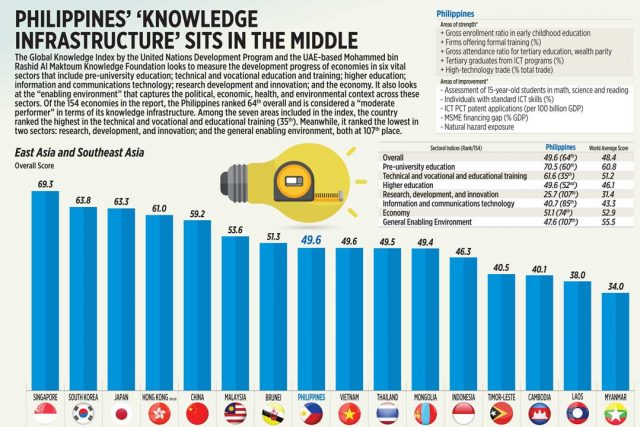
Philippines’ ‘knowledge infrastructure’ sits in the middle

Philippines’ ‘knowledge infrastructure’ sits in the middle

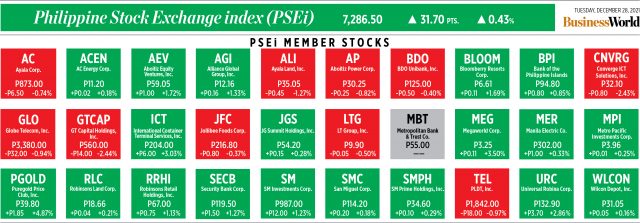
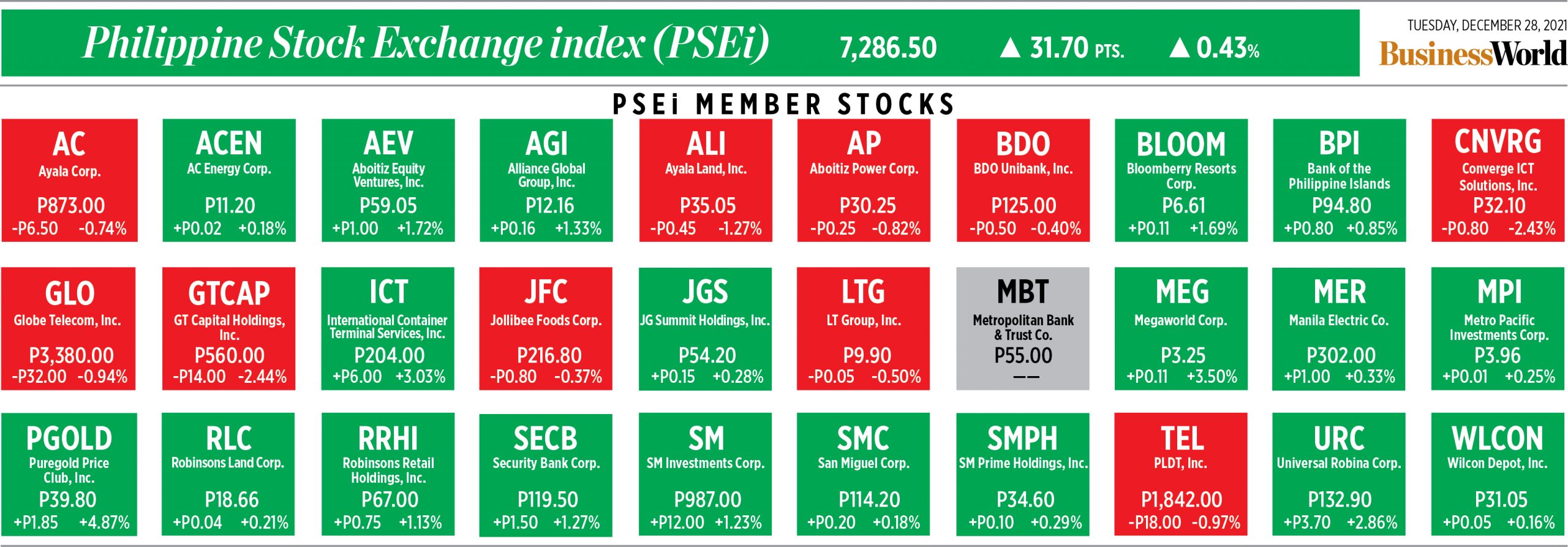
How PSEi member stocks performed — December 28, 2021

Here’s a quick glance at how PSEi stocks fared on Tuesday, December 28, 2021.


Senators considering transfer of PhilHealth control to DoF

PHILSTAR FILE PHOTO

By Alyssa Nicole O. Tan

SENATORS said on Tuesday that they are considering transferring control of the Philippine Health Insurance Corp. (PhilHealth) to the Department of Finance (DoF) in order to better align the government-run health insurer’s practices with those of the financial services industry.

The legislators aired the proposal after an association of private hospitals threatened to call a “PhilHealth holiday,” in which they will refuse to honor PhilHealth coverage from patients seeking treatment.

“I think PhilHealth should be under the DoF instead of the DoH and should be headed by a finance rather than a health expert (and not) someone who has no background and experience in either field,” Senator Panfilo M. Lacson, who is running for President, said in a statement.

PhilHealth deals with health insurance, not health, he said. As such, “we need somebody there who knows how to… manage funds, not a health practitioner.”

“It makes perfect sense for PhilHealth to be headed by one who is also adept in finance,” Senator Mary Grace Natividad S. Poe-Llamanzares said in a Viber message, noting that it is possible to find qualified managers with backgrounds in both public health and finance.

“More than re-arranging the bureaucracy, it might be more beneficial to just appoint the right person for the job. A true public health and finance expert must be at the helm of PhilHealth, not just any bureaucrat with close ties to the appointing authority,” she added.

Senator Juan Edgardo M. Angara, who chairs the Senate Finance committee, also expressed support for the proposal. “The suggestion to have more finance professionals is sound, as well as actuaries and management experts.”

PhilHealth, he added, could have been a “game-changer” because of the Universal Health Care law, but it lacks efficiency and proper management. “Sorry to say but PhilHealth is one of the weak links right now in the country’s health system.”

This year the DoF took over the Philippine Crop Insurance Corp., which was formerly managed by the Department of Agriculture, to bring its costs more in line with financial industry benchmarks, and to expand its coverage to more farmers.

BusinessWorld queried the DoF for comment but it had not replied at the deadline.

At a briefing on Tuesday, PhilHealth said reconciliation talks are now taking place with the Private Hospitals Association of the Philippines, Inc. (PHAPi) in Iloilo to address the latter’s concerns.

PHAPi President Jose Rene De Grano had called for a “PhilHealth holiday” as a protest against unpaid claims, with seven Iloilo hospitals taking the lead in moving to reject PhilHealth coverage.

“We will show our support for these hospitals who are cutting ties (with PhilHealth). We are encouraging our members to not accept PhilHealth (claims) starting Jan. 1 until Jan. 5,” Mr. De Grano said earlier. PHAPi has over 600 members, according to its website.

PhilHealth said it is working to address problems being raised, after having paid more than P155 billion worth of claims during the pandemic.

It added that around P11.64 billion in claims have been paid to partner hospitals through the Debit Credit Payment Method, a scheme that aims to fast-track the reimbursements.

PHAPi, the state insurer said, should reconsider as “eventually, it will be the Filipino people who will suffer the consequences.”

“It is disheartening that some hospitals have to resort to this,” according to Senator Maria Lourdes Nancy S. Binay-Angeles in a Viber message. “It is saddening because the issue with PhilHealth has been raised several times under Senate committee hearings yet until now, there is still no clear solution to this problem.”

“To be honest, the move for a PhilHealth holiday has been long in coming ever since we found out about the anomalies last year,” Ms. Poe said. “We can hardly fault the private hospitals for taking more drastic measures this time around.”

Ms. Binay said that this is a “serious matter” that merits an emergency meeting of the PhilHealth board and all cabinet secretaries — not just the representatives.

“PhilHealth and the DoH should get their act together to prevent more hospitals from disengaging,” she said, as the coronavirus is still ongoing, and the country has to prepare itself for the possible surge of new variants. 

“What is the use of health insurance if you can’t use it? In the end, it is not PhilHealth or the hospitals who will suffer, but the people,” Ms. Binay said.

HMOs post sharp decline in third-quarter profits

PHILIPPINE STAR/ MICHAEL VARCAS

HEALTH MAINTENANCE organization (HMO) profits declined in the third quarter after a surge in claims outweighed revenue growth, according to the Insurance Commission.

The HMO industry posted a 40.87% decline in overall net profit to P4 billion in the third quarter.

“This substantial decrease in the total net income is driven by the 11.95% increase in total expenses notwithstanding the 2.61% increase in total revenues, year on year,” Insurance Commission Dennis B. Funa said in a statement on Tuesday.

Revenue grew to P39.27 billion in the third quarter due to the growth in membership and enrollees’ fees and a surge in administrative services only network access and processing fees.

Healthcare benefit claims hit P23.8 billion in the third quarter, up 23.67%.

Unaudited financial statements of 28 HMOs indicate asset growth of 27.59% year on year to P63.21 billion, “driven by a corresponding growth in the value of the industry’s investment portfolio despite the decrease in cash and cash equivalents,” Mr. Funa said.

Investments in subsidiaries, associates, and joint ventures rose more than 38 times, while investments in property increased more than 15 times.

Equity industry-wide rose 17.24% to P15.22 billion in the third quarter.

Liabilities rose 31.27% to P47.98 billion.

“This was due to the increase in health plan liabilities, administrative services only (ASO) fund, and deferred tax liability,” Mr. Funa said.

The industry’s capital stock increased by 17.21% to P3.22 billion in the third quarter. — Jenina P. Ibañez

Shell makes first payment on import tax due under protest

PILIPINAS SHELL Petroleum Corp. (PSPC) made a first payment to the Bureau of Customs (BoC) of P1.7 billion under protest to cover disputed alkylate import taxes levied against it, the Department of Finance said.

“BoC received P1.7 billion from Shell Phils. Balance due on Jan. 10,” Finance Secretary Carlos G. Dominguez III said in a Viber message to reporters Tuesday.

The BoC had directed the company to make its first payment on the P3.49 billion in allegedly unpaid taxes by Dec. 27.

Earlier this month, PSPC agreed to pay taxes on alkylate imports shipped from 2014 to 2020, doing so under protest pending a court ruling.

Customs Commissioner Rey Leonardo B. Guerrero in a letter to PSPC President Lorelie Q. Osial said the oil company’s accreditation could be suspended if it fails to pay.

He said the potential suspension is not a threat, but a “proper recourse” that can be taken by the bureau after the Supreme Court lifted the temporary restraining order that had restricted the government from collecting the taxes.

“I am certain that the suspension of Pilipinas Shell’s import accreditation with the BoC will be reconsidered if the second installment is not received on the date indicated,” Mr. Dominguez said.

PSPC had agreed to remit the P3.49 billion, under protest, to continue importing fuel. The courts would still have to decide on whether or not alkylate is subject to excise tax, the company said.

Mr. Dominguez has said that the demand for payment “levels the playing field” with other oil companies that pay taxes on their alkylate imports. — Jenina P. Ibañez

Palace assures budget signing before end of 2021

PHILSTAR

A PALACE official said on Tuesday that he expects the proposed P5.024-trillion budget for 2022 to be signed before the end of the year after the original Tuesday target date was not met.

“We assure the public that the budget will be signed. President (Rodrigo R.) Duterte will sign the budget before Dec. 31,” Cabinet Secretary Karlo Alexei B. Nograles said at a televised news conference.

Mr. Nograles said the budget is still being reviewed by the executive department. “So ilang araw na lamang po at matatapos na rin iyong review (The review will be completed in a few days) and the President will immediately sign the budget.”

A day before the expected signing of the spending plan on Dec. 28, Senate President Vicente C. Sotto told reporters that he “received word now of a postponement” with “no reason given.”

Any news of a potential delay could affect the investment climate, according to John Paolo R. Rivera, an economist with the Asian Institute of Management. “It means something is not right and a risk has just emerged.”

“Not signing the budget on time poses the risk of using the 2021 budget in 2022. This is problematic because the needs of 2021 are different from the needs of 2022” Mr. Rivera said in a Viber message. “Investors will be cautious because it may signal how financially constrained 2022 will be.”

“Any delay could weigh on sentiments in local financial markets and could adversely affect economic recovery prospects and investment valuations,” Michael L. Ricafort, chief economist at Rizal Commercial Banking Corp., said in a Viber message.

“The approval of the 2022 national budget would fundamentally improve economic recovery prospects, as made more urgent by the pandemic in view of the need to also have funding available for various COVID programs,” he said.

Mr. Nograles said the government is expected next year to generate about P3.3 trillion in revenue.

The spending plan will also be funded by borrowing, with 77% sourced domestically, he said. “All revenue streams needed to fully implement the budget for 2022 are already programmed.”

The 2022 budget was ratified by the two chambers of Congress just a day before Typhoon Odette made landfall on Dec. 16.

Odette, the strongest storm to hit the Philippines this year, has directly affected 4.24 million people, according to government estimates. — Kyle Aristophere T. Atienza