Home Blog Page 6984

UnionBank says charges filed versus four after fraud incident

BW FILE PHOTO

By Luz Wendy T. Noble, Reporter

UNIONBANK of the Philippines, Inc. has pressed charges against persons involved in a fraud incident where the bank was among financial institutions that received unauthorized fund transfers from accounts of some BDO Unibank, Inc. clients.

“As the next step, we have actually filed cases for these perpetrators that we have identified and we’re working still very closely with all the regulators and BDO to make sure that the issue is closed and the perpetrators are brought to justice,” Albert Raymond C. Cuadrante, senior vice-president and chief marketing officer at UnionBank, said in an online interview on Thursday.

Pressed for details, UnionBank Chief Information Security Officer and Vice-President Jose Paulo G. Rufo said investigations are still ongoing.

UnionBank officials earlier said they had identified six persons of interest involved in the fraudulent transactions.

“The cases filed were for the first four. New set of cases are being prepared for the other two recipients,” Mr. Rufo said in a Viber message.

Earlier this month, individuals claiming to be account holders of BDO posted on social media that their funds were supposedly transferred to the UnionBank account of a certain Mark Nagoyo. UnionBank officials earlier said the name was likely fictitious as they do not have an account holder with that identity.

Mr. Cuadrante also reiterated that UnionBank was “never hacked” in relation to the incident.

“We were just one of the 11 recipient accounts of this fiasco. So, we continue to make sure we fortify our cybersecurity measures and it’s a high priority for us,” Mr. Cuadrante said.

BDO earlier said it had already processed about 700 claims of clients that were affected by the incident.

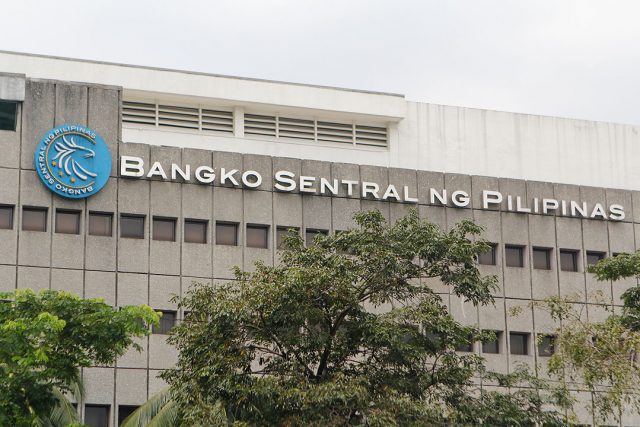
The Bangko Sentral ng Pilipinas has formed a task force dedicated to investigate the incident. Central bank officials said they are checking whether there were gaps in the security measures of the involved financial institutions.

In the third quarter, UnionBank’s net earnings declined by 43% year on year to P2.395 billion from P4.211 billion on the back of lower income streams as well as higher operating expenses and credit provisioning, based on its financial report.

Its nine-month net profit increased by 26% to P10.71 billion from P8.482 billion in the same period of 2020.

On Tuesday, its shares closed at P101.80 each, down by 50 centavos or 0.49% from its previous finish.

AREIT raises P3B from bond issuance 

BW FILE PHOTO

AREIT, Inc. raised P3 billion from its maiden bond issuance, which was also the initial tranche of its P15-billion debt securities program.

The P3-billion 3.0445% fixed-rate bonds due in 2023 were listed at the Philippine Dealing & Exchange Corp. (PDEx) on Tuesday.

During its virtual listing ceremony, PDEx President and Chief Executive Officer Antonino A. Nakpil noted that AREIT was the first real estate investment trust (REIT) firm to hold a bond issuance for public investors.

The bonds were said to be 5.6 times oversubscribed and reached P16.9 billion. AREIT Director, President, and Chief Executive Officer Carol T. Mills said demand came “mostly from retail and institutional investors.”

“[Retail investors] accounted for 58% or roughly P1.75 billion of the total issuance,” said Commissioner Ephyro Luis B. Amatong of the Securities and Exchange Commission.

Net proceeds from the bond issuance will be used to refinance debt and will also partially fund AREIT’s acquisition of a Pasig City mixed-use commercial development, The 30th.

AREIT’s maiden bond offering marked the 23rd listing at the PDEx this year, bringing total new listings to P213.45 billion. Meanwhile, the total level of tradable corporate debt instruments stood at P1.3 trillion, which were issued by 54 firms via 191 securities. — Keren Concepcion G. Valmonte

Step away from the table — why you keep eating when you’re full 

UNSPLASH

By Amanda Salis/The Conversation 

EVER EATEN that last slice of pizza, even though you’ve had enough? Or polished off kids’ leftovers, despite already feeling full? 

To understand what’s happening — and how to fix it — let’s explore your body’s “stop eating signals” (satiety signals). 

THE SCIENCE OF SATIETY SIGNALS
Your body’s satiety signals kick in when your brain senses you’ve consumed enough of the nutrients you need. 

Your brain takes its cue from sources such as: 

  • stretch signals from your gastrointestinal tract (like your stomach and intestines), which indicate the volume of foods and drinks you’ve consumed 
  • “satiety hormones,” such as cholecystokinin (CCK) and peptide YY, which are released into your bloodstream when particular nutrients from your digested food come into contact with certain parts of your gastrointestinal tract nutrients from your digested food, which pass into your bloodstream and can exert satiety effects directly on your brain 
  • leptin, the hormone primarily produced by adipose tissue, which stores excess nutrients from your food as fat. The more fat you have in your adipose tissue, the more leptin your adipose tissue releases into your bloodstream, and the more your brain senses you’ve consumed enough of the necessary nutrients.

EATING IS ABOUT EMOTIONS, TOO
Your brain puts all those sources of information into a “satiety algorithm” and, at a certain point, sends you the signal that it’s time to stop eating. 

This helps explain why, if you aren’t getting enough of the nutrients you need overall, you might feel unsatisfied and keep eating even when you’re full. 

Your body’s satiety signals are easy to ignore — especially when you’re tempted with varied and tasty foods and you feel social expectations to eat. Add an alcoholic drink or two, and it may get even easier to ignore satiety signals. 

Other factors may include your ethics about not wasting food, and habits such as routinely eating dessert after dinner — regardless of how you feel. 

If you’ve ever overeaten while feeling bored, fearful, stressed, lonely, tired or guilty, you’ve discovered that food can improve your mood (at least temporarily). Indeed, some of the hormones and natural brain chemicals involved in satiety signaling have been shown to affect mood. 

If you regularly keep eating when you’re full, it’s worth exploring possible underlying psychological contributors. 

Depression, anxiety and stress have been linked to overeating. 

So has post-traumatic stress disorder (PTSD) — and no, you don’t have to be a war veteran to have PTSD.  

Eating disorders such as binge eating disorder or bulimia nervosa are also linked to overeating. 

Having had adverse experiences in childhood can also play a role in habitual overeating.  

HOW TO STOP EATING WHEN YOU’RE FULL
If you suspect psychological contributors to overeating, know there are scientifically proven treatments that can help. 

For example, depression and anxiety now have well established treatment pathways. PTSD can be treated with proven therapies. Eating disorders can be treated effectively with cognitive behavioral therapy for eating disorders, among other treatments. Your local healthcare professional can help you find treatment options, and some are free. 

Other strategies you may like to consider are listed below: 

  • keep a diary of your satiety signals so you learn to recognize them. Every time you eat, note whether you feel unsatisfied, satisfied or over-satisfied. Aim for “satisfied” every time. If you have an iPhone, you can use Wink by Amanda Salis, the free app I co-designed with Zubeyir Salis (a contributor to this article), based on scientific evidence 
  • when you recognize yourself eating to the point of feeling “over-satisfied,” note what’s happening in your satiety diary (or app). Feeling unworthy? Jealous? Irritated? Tired? Or are you procrastinating about something? Think about what you really need; give yourself more of that instead of food
  • choose a nutrient rich diet with a minimum of ultra-processed foods, and heed cravings for particular healthy foods. This will help deliver the nutrients you need so your satiety signals are activated. Use this free, evidence-based quiz to see if you’re on track for a nutrient rich diet 
  • be the boss of how much food is served to you, so that only the amount you feel you can eat appears on your plate
  • unless you need to eat, put obstacles between yourself and food. Leftovers can be frozen or stored (safely). Move away from the table once your satiety signals have told you it’s time to stop. 

May you always be “satisfied.”  


Amanda Salis is National Health and Medical Research Council senior research fellow in the School of Human Sciences, The University of Western Australia. 

Philippine Swimming, Inc. eyes 2024 Paris Olympics

MORE than medals, the Philippine Swimming, Inc. (PSI) is focused on earning points from the International Swimming Federation (FINA) to qualify its swimmers to the 2024 Paris Olympics.

“In terms of goals, we can’t really specify any particular number of medals as this has never been a goal for us,” said PSI President Lailani Velasco. “Our performance can ultimately be gauged based on the FINA points that our swimmers establish.

“We hope our athletes can continue to achieve higher FINA points as we had the last year,” she added.

Ms. Velasco was referring to Luke Gebbie and Remedy Rule, who both earned enough FINA points to qualify to last August’s Tokyo Olympics. And she is bent on taking the same path.

“This will give us an indicator that we are heading in the right direction as we move closer to the next Olympics in 2024,” said Ms. Velasco.

Of course, the country will also be out to improve on a one-gold, six-silver and nine-bronze performance in the 2019 Southeast Asian (SEA) Games at the New Clark City Aquatics Center in Capas, Tarlac.

“We have a busy calendar for 2022, which includes the 31st SEA Games in Vietnam, the 19th FINA World Championships in Japan, and the 19th Asian Games in China and we hope to send our best athletes to these competitions,” said Ms. Velasco. — Joey Villar

BSP urges lenders to look into climate change risks in light of Typhoon Odette

BW FILE PHOTO

TYPHOON Odette’s impact brings to light the need for financial institutions to include climate change and environmental risks in assessing their financial position in cases of major weather disturbances, according to the Bangko Sentral ng Pilipinas (BSP).

“In a broader sense, the environmental and social risk management framework expects banks to consider environmental and social risk factors in the lending and operational activities,” BSP Governor Benjamin E. Diokno said at an online briefing on Thursday.

Mr. Diokno said that banks should consider whether the location of a borrowers’ collateral or the income source is prone to the impact of climate change or environmental hazards.

Such practices would give the bank a gauge on the potential impact of a possible major weather disruption to both the borrowers and the bank’s financial position.

In October, the BSP through Circular 1128 directed banks to implement procedures that will take into account environmental and social risks in their credit exposures.

Assessment should also include the possible impact of such risk to banks’ operations, the BSP said. This means lenders should gauge their capability to withstand disruptions, resume operations and continue to provide services.

In November, the Department of Finance said climate-related hazards caused damage worth P506.1 billion to the country over the past decade.

Data from the National Disaster Risk Reduction and Management Council as of Monday showed agricultural damage caused by Typhoon Odette reached P5.32 billion. Meanwhile, infrastructure damage is estimated at P16.7 billion.

Reported deaths caused by the typhoon reached 389, while 571,000 were displaced.

Amid the electricity and communication facilities that were ravaged by the typhoon in parts of Visayas and Mindanao, BSP offices continue to provide the currency requirements of the affected regions, Mr. Diokno said.

“The BSP assures the public that there’s adequate supply of currency in areas affected by typhoon,” he said.

As the central bank also guards price stability, Mr. Diokno recommended policies that will ensure supply remains ample to prevent faster price increases.

“The effective implementation of non-monetary interventions to ensure adequate domestic food supply must be sustained to mitigate potential supply-side pressures on inflation,” he said.

Inflation has eased to 4.2% in November from 4.6% in October, although still above the central bank’s 2-4% target. This brought year-to-date inflation to 4.5%.

The BSP expects inflation to reach 4.4% this year before slowing to within target at 3.4% by 2022. — Luz Wendy T. Noble

Bukidnon hydro project secures P2.4-B loan from PNB

MANGIMA Hydro Power Corp. (MHPC) on Tuesday said it had inked a P2.4-billion loan agreement with Philippine National Bank (PNB) for the construction of a 12-megawatt (MW) run-of-river hydroelectric power project in Manolo Fortich, Bukidnon.

“We at Mangima Hydro Power are really passionate about making Bukidnon a sustainable, energy-secure, renewable energy-powered province, and this project is our big step towards that vision,” MHPC President and Chief Executive Juan Miguel F. Zubiri said in a statement.

MHPC Chairman Nicandro G. Linao said the project is a step towards energy independence as the country’s energy mix for decades has depended on fossil fuel.

The project is the fifth power plant development led by Mr. Zubiri. It is projected to have an annual generation of 64.12 gigawatt hours.

The omnibus loan and security agreement was signed on Dec. 6.

MHPC is a joint venture between Sta. Clara International Corp. (SCIC) affiliate Philnew River Power Corp. and Mr. Zubiri’s Green Renewable Holdings Corp. SCIC is the engineering, procurement, and construction contractor of the project.

“Through this joint project, I am confident that we can contribute to Mindanao’s continuing economic growth,” said PNB President Jose Arnulfo A. Veloso, adding that the bank is “one with MHPC in supporting green projects and paving the way for a sustainable tomorrow.”

The project is located in the municipality of Manolo Fortich, along the stretch of Mangima River between the barangays of Tankulan and Darilig. It is expected to be completed in 2024. — Marielle C. Lucenio

Coronavirus briefs

BLOOMBERG

THE following is a summary of some recent studies on coronavirus disease 2019 (COVID-19). They include research that warrants further study to corroborate the findings and that has yet to be certified by peer review.  

DRUGSTORE COVID-19 TESTS PREDICT SHORT-TERM INFECTIOUSNESS
Drugstore rapid COVID-19 tests, less sensitive than gold-standard PCR tests, might yield a negative result in 15 minutes while failing to detect virus particles but those same particles might pose no risk of transmission in the very short term, according to a report posted on Thursday on medRxiv ahead of peer review.  

The researchers first performed these antigen tests on swab samples from 181 individuals with PCR-confirmed SARS-CoV-2 infections. Next, they took the virus from the swabs and tried to grow it in test tubes. When viral loads were below the antigen tests’ level of detection, the virus particles were often incapable of growing.  

People with low viral loads and negative antigen tests may become infectious “a day or two or three days later,” said Dr. James Kirby of Beth Israel Deaconess Medical Center in Boston. “Therefore, to be most effective, antigen tests should be used immediately before an event or contact with those at greater risk from infection.” The swabs must be collected for testing carefully, following the instructions provided with the testing kits, he added. “In other words, you want a really good sampling of the inside of your nose.”  

BREAKTHROUGH COVID-19 OFTEN SEVERE IN CANCER PATIENTS 
Vaccinated people with cancer should not underestimate their risks from breakthrough cases of COVID-19, researchers warn.  

Among 54 cancer patients who became infected despite receiving a two-dose vaccine from Moderna or Pfizer/BioNTech or a single-dose vaccine from Johnson & Johnson — before booster doses were recommended — 65% needed to be hospitalized, 19% ended up in intensive care units, and 13% died, according to data from the international COVID-19 and Cancer Consortium.  

The study did not analyze the vaccines’ efficacy at preventing infections in the first place. But among those who did become infected, COVID-19 was no less severe than it was in a comparison group of 1,656 unvaccinated cancer patients with COVID-19, researchers reported on Friday in Annals of Oncology. The risks were greatest for patients with blood cancers.  

“Many studies … have suggested that patients with cancer don’t create a strong immune response, and this is the first large study that likely shows the consequences of this,” said Dr. Jeremy Warner of Vanderbilt University in Nashville, Tennessee. “Additional doses and boosters are critical, as are continued masking, social distancing, and encouragement of all close contacts of patients with cancer to get vaccinated.” — Reuters

Dallas Buyers Club director Jean-Marc Vallée, 58

Jean-Marc Vallée — IMDB.COM

JEAN-MARC VALLÉE, a Canadian best known for directing the Oscar-nominated film Dallas Buyers Club and Emmy-winning HBO series Big Little Lies, died suddenly at his cabin outside Quebec City. He was 58.

Mr. Vallée’s demise was reported on Sunday by entertainment website Deadline and confirmed on Twitter by his representative Bumble Ward.

“Still in shock over the news that Jean-Marc Vallée has died,” Ward said, adding that he was thoughtful and kind “while still being a creative genius.”

Mr. Vallée’s Hollywood breakthrough came with the 2013 AIDS drama Dallas Buyers Club, which won Oscars for actors Matthew McConaughey and Jared Leto.

The movie was based on the true story of homophobic drug addict Ron Woodroof, played by Mr. McConaughey, who smuggles much-needed but unapproved medication into the United States to distribute to other AIDS patients.

Mr. Vallée’s most recent win as a director came from HBO series Big Little Lies starring Reese Witherspoon, Nicole Kidman, Meryl Streep, and Zoë Kravitz. The show won eight Emmy awards in 2017.

He also directed Demolition, a 2015 drama starring Jake Gyllenhaal, about a New York investment banker coming to grips with his wife’s sudden death.

Mr. Vallée had at the time called Demolition his most “rock and roll” film, both for its pulsing soundtrack in a film otherwise punctuated by silence, and its often provocative and offbeat portrayal of grief.

Mr. Vallée, who hailed from Montreal, forayed into the features film industry with his 1995 thriller Black List.

He is survived by two sons. — Reuters

TRAP targets triathlon and duathlon gold sweep

IF schedule permits, the Philippines has a strong chance of sweeping all four gold medals in triathlon and duathlon in the 31st Southeast Asian (SEA) Games slated May 12-23 in Hanoi, Vietnam next year.

Triathlon Association of the Philippines (TRAP) President Tom Carrasco on Tuesday said the Filipino triathletes competing in both events could get the job done assuming there’s enough time separating the staging of both triathlon and duathlon.

“Our initial goal is two golds in triathlon and one gold in duathlon,” Mr. Carrasco told The STAR. “But if we field our best triathletes in the duathlon events, possible two golds in duathlon also.

Defending SEA Games triathlon champions John Leerams “Rambo” Chicano and Kim Mangrobang topped the national duathlon trials in Clark two weeks ago to earn the right to represent the country in both disciplines in Hanoi.

Triathletes took to duathlon after Monica Reyes, a duathlon gold medalist in the 2019 SEA Games in Subic, retired and Joey delos Reyes, a SEA Games silver medal winner, is injured.

But for them to be allowed to see action in both races, the schedule must at least be a full day apart since World Triathlon, the two sports’ international governing body, allows athletes a 24-hour window before a participant could compete in another meet.

“This is achievable if the schedules will favor us. World Triathlon requires a 24-hour gap for athletes to do two events,” said Mr. Carrasco.

The country hauled four of the six mints, including two in the mixed relay team events, staked in the two sports when it hosted the SEA Games two years ago.

In Hanoi, there will only be a total of four — male and female triathlon and male and female duathlon — as the host decided to do away with the team events.

Still, the Filipinos have a chance to replicate their output the last time out assuming if they swept all golds.

And there is hope the scheduling will allow it. — Joey Villar

DBP launches loan program for merchant solar farm developers

BW FILE PHOTO

STATE-OWNED Development Bank of the Philippines (DBP) launched a new loan for solar power developers in a bid to support renewable energy investments.

The bank in a press release on Tuesday said its Solar Merchant Power Plan Financing Program will help fund utility-scale solar power developers that plan to sell electricity through the wholesale electricity spot market.

They will be given a tenor of 12 years and a one-year grace period on principal payment.

“DBP is ready to provide financing to viable solar power developers for their capital expenditures such as the construction or expansion of their infrastructure facilities, acquisition of machineries and equipment, among others,” DBP President and Chief Executive Officer Emmanuel G. Herbosa said.

Qualified borrowers may request financing for up to 60% of the project cost for Luzon-based projects.

For projects in Visayas, borrowers can access loans up to 50% of the total project cost.

Completed solar merchant power projects may also qualify for reimbursement within a year after completion.

Mr. Herbosa said the program would contribute to the government’s goal of increasing solar photovoltaic capacity in the country to 15.29 gigawatts by 2030.

“As a bank for the environment, DBP aims to boost investments in the green energy sector and proactively support the national goal for renewable energy to account for 35% of the country’s power generation mix by 2030, as set in the Philippine Energy Plan,” the bank said.

The Finance department and the central bank in October launched a sustainable finance roadmap to address the country’s policy and regulatory gaps in promoting sustainable investments.

It set guiding principles for green policies, sustainable financing, and a pipeline for investments to cut the country’s carbon footprint, Finance Secretary Carlos G. Dominguez III said. — Jenina P. Ibañez

Philex unit to spend P5B for mine project’s social, environmental programs

SILANGAN Mindanao Mining Co. Inc. (SMMCI) on Tuesday said it would spend over P5 billion for community development and environmental protection programs in Surigao del Norte where its copper-gold mine is located.

SMMCI, a subsidiary of the Philex Mining Corp., said in a press release that it pledged to pursue various environmental and social responsibility initiatives in areas surrounding the project, such as the towns of Placer, Tubod, Tagana-an, and Sison.

Aside from these initiatives, Philex Mining said the project is expected to bring investments and create jobs for the province.

“Silangan Project will also generate direct and indirect employment for around 8,000 people, about P86.7 billion in investments and will contribute P42.0 billion in government receipts throughout its 28-year mine life for the development of these areas in Surigao del Norte, among others, home to more than half a million Filipinos,” said Michael T. Toledo, SMMCI chief operating officer and chairman of the Chamber of Mines of the Philippines.

The bulk of the budget will go to education, public infrastructure, and communication, which are part of the requirements to secure an environmental compliance certificate from the Department of Environment and Natural Resources.

SMMCI has reforested 184-hectares of land under its reforestation project, planting close to 400,000 different species of seedlings. It has also planted bamboo along the banks of San Pedro River to control soil erosion.

The copper-gold mine project has an initial development cost of $224 million and will begin construction in 2022. It will be ready for commercial use by late 2024 to early 2025.

On Tuesday, Philex Mining shares rose by 4.59% or 23 centavos to close at P5.24 apiece.

Philex Mining is one of the Philippine units of Hong Kong-based First Pacific, the others being Metro Pacific Investments Corp. and PLDT, Inc.

Hastings Holdings, Inc., a unit of PLDT Beneficial Trust Fund subsidiary MediaQuest Holdings, Inc., has interest in BusinessWorld through the Philippine Star Group, which it controls. — Luisa Maria Jacinta C. Jocson

Have you fallen for the myth of ‘I can’t draw’? Do it anyway — and reap the rewards

KELLY SIKKEMA/UNSPLASH

DRAWING is a powerful tool of communication. It helps build self-understanding and can boost mental health.

But our current focus on productivity, outcomes, and “talent” has us thinking about it the wrong way. Too many believe the myth of “I can’t draw.” when in fact it’s a skill built through practice.

Dedicated practice is hard, however, if you’re constantly asking yourself: “What’s the point of drawing?”

As I argue in a new paper in Closure E-Journal for Comic Studies, we need to reframe our concept of what it means to draw, and why we should do it — especially if you think you can’t.

Devoting a little time to drawing each day may make you happier, more employable and sustainably productive.

I’m a keen doodler who turned a hobby into a PhD and then a career. I’ve taught all ages at universities, in library workshops, and online. In that time, I’ve noticed many people do not recognize their own potential as a visual artist; self-imposed limitations are common.

That’s partly because, over time, drawing as a skill set has been devalued. A 2020 poll ranked artist as the top non-essential job.

But new jobs are emerging all the time for visual thinkers who can translate complex information into easily understood visuals.

Big companies hire comic creators to document corporate meetings visually, so participants can track the flow of ideas in real time. Cartoonists are paid to draft innovative, visual contracts for law firms.

Perhaps you were told as a child to stop doodling and get back to work. While drawing is often quiet and introspective, it’s certainly not a “waste of time.” On the contrary, it has significant mental health benefits and should be cultivated in children and adults alike.

How we feel influences how we draw. Likewise, engaging with drawing affects how we feel; it can help us understand and process our inner world.

Art-making can reduce anxiety, elevate mood, improve quality of life, and promote general creativity. Art therapy has even been linked to reduced symptoms of distress and higher quality of life for cancer patients.

And it can help you enter a “flow state,” where self-consciousness disappears, focus sharpens, work comes easily to you, and mental blockages seem to evaporate.

Cultivating a drawing habit means letting go of biases against drawing and against copying others to learn technique. Resisting the urge to critically compare your work to others’ is also important.

Most children don’t care about what’s considered “essential” to a functioning society. They draw instinctively and freely.

Part of the reason drawing rates are thought to be higher in Japan is their immersion in manga (Japanese comics), a broadly popular and culturally important medium.

Another is an emphasis on diligent practice. Children copy and practice the manga style, providing a critical stepping stone from free scribbling to controlled representation. Copying is not seen as a no-no; it’s integral to building skill.

As researcher and artist Neil Cohn argues, learning to draw is similar to (and as crucial as) learning language, a skill built through exposure and practice:

Yet, unlike language, we consider it normal for people not to learn to draw, and consider those who do to be exceptional […] Without sufficient practice and exposure to an external system, a basic system persists despite arguably impoverished developmental conditions.

So choose an art style you love and copy it. Encourage children to while away hours drawing. Don’t worry about how it turns out. Prioritize the conscious experience of drawing over the result.

With regular practice, you may find yourself occasionally melting into states of “flow,” becoming wholly absorbed. A small, regular pocket of time to temporarily escape the busy world and enter a flow state via drawing may help you in other parts of your life.

Use simple tools that you’re comfortable with, whether it’s a ballpoint pen on post-it notes, pencil on paper, a dirty window, or a foggy mirror.

Times you’d typically be aimlessly scrolling on your phone are prime candidates for a quick sketch. Doodle when you’re on the phone, watching a movie, bored in a waiting room.

Together with mindful doodling, drawing from observation and memory form a holy trinity of sustainable proficiency.

Drawing from life strengthens your understanding of space and form. Copying other styles gives you a shortcut to new “visual libraries.” Drawing from memory merges the free play of doodling with the mental libraries developed through observation, bringing imagined worlds to life.

With time and persistence, you may find yourself producing drawings you’re proud of.

At that point, you can ask yourself: what other self-limiting beliefs are holding me back?


Darren C. Fisher is a Lecturer in Animation, Swinburne University of Technology.