Home Blog Page 6983

DoE clears path for RE companies to become eligible for incentives

THE Department of Energy (DoE) said on Thursday that will move to ease the requirements for renewable energy (RE) companies seeking to avail of incentives, including a 10% tax rate, in order to support more sustainable and clean-energy investment.

“We are pleased to issue an amended policy that would address the long-standing concerns of the RE law’s target recipients, including RE developers, fabricators, and manufacturers regarding the law’s incentives,” Energy Secretary Alfonso G. Cusi said in a statement.

He added that the amended department circular which was signed on Dec. 24 covers the implementation of the tax provisions, particularly the automatic availability of the 10% corporate tax rate and zero-rate value-added tax.

The amendments address Sections 13 E and 18 C of the Renewable Energy Act.

According to Section 13 E, acquiring corporations must have taken over, administered, or operated RE energy facilities that have been in commercial operation for more than seven years to qualify for a 10% corporate tax rate.

RE developers can only avail of the incentives after they obtain an endorsement from the DoE, according to Section 18 C of the RE Act.

BusinessWorld asked for a copy of the amended circular, but the DoE had not released it at the deadline time.

The circular also complies with the RE Act, which provides that savings generated in availing of the reduced corporate income tax rate must be effectively passed on to end-users in the form of lower power rates, the DoE said in a statement.

After the amendment of the circular, the DoE then will evaluate its effectiveness through a review of annual reports submitted by the RE Developers. — Marielle C. Lucenio

ARTA to simplify port access with unified logistics pass

WILLIAM WILLIAM-UNSPLASH

THE Anti-Red Tape Authority (ARTA) said it will launch this month the Unified Logistics Pass (ULP) to simplify requirements for companies moving goods from the ports and economic zones.

ARTA said in a statement late Wednesday that the ULP will streamline requirements for a unified quick response (QR) code, which will do away with the various pass-through stickers required by economic zones, ports, and local government units.

“(ULP) will facilitate the unhampered movement of trucks for hire that deliver basic goods and necessities across the country through a unified application form,” ARTA said.

The ULP is designed to ease operations for five priority sectors: telecommunications, food and pharmaceuticals, logistics, housing, and energy.

“The launch of the ULP is in line with ARTA’s flagship National Effort for the Harmonization of Efficiency Measures of Interrelated Agencies program, which aims to reduce the time, cost, and requirements or procedures of government services in five priority sectors by 52% in 52 weeks,” ARTA said.

According to ARTA, signatories to the ULP memorandum of agreement will be the Land Transportation Franchising and Regulatory Board, Land Transportation Office, Department of Trade and Industry, Philippine Economic Zone and Authority, Department of the Interior and Local Government, Department of Information and Communications Technology, Philippine Ports Authority, Department of Science and Technology, the Clark Development Corp., and the Subic Bay Metropolitan Authority.

Other organizations set to sign the agreement are Asian Terminals, Inc., International Container Terminal Services, Inc., Manila Harbor Center Port Services, Inc., Manila North Harbour Port, Inc., University of the Philippines Public Administration Research and Extension Services-Regulatory Reform Support Program for National Development, and DevConnect Philippines, Inc. — Revin Mikhael D. Ochave

Typhoon agriculture damage estimate rises to P11.1B

THE ESTIMATE of agricultural damage caused by Typhoon Odette (international name: Rai) has been raised to P11.1 billion, according to the Department of Agriculture (DA).

The typhoon affected 389,316 farmers and fishermen across 420,465 hectares of agricultural land. The volume of lost production was 252,956 metric tons.

Damage was reported in the Calabarzon (Cavite, Laguna, Batangas, Rizal, Quezon), Mimaropa (Mindoro, Marinduque, Romblon, Palawan), Bicol, Western Visayas, Central Visayas, Eastern Visayas, Zamboanga Peninsula, Northern Mindanao, Davao, Soccsksargen (South Cotabato, Cotabato, Sultan Kudarat, Sarangani, General Santos City) and the Caraga region.

The Bureau of Fisheries and Aquatic Resources said it will provide six 20-foot fiberglass boats and two freezers to fisherfolk beneficiaries and associations affected by the storm in Southern Leyte.

On Dec. 28, the Department of Social Welfare and Development said more than P154 million worth of humanitarian assistance has been provided to affected families in the Visayas and Mindanao.

The DA also said it will provide P314 million worth of rice seed, P129 million worth of corn seed, and P57 million worth of assorted vegetables to affected farmers. — Luisa Maria Jacinta C. Jocson

Duterte signs rice farmer cash assistance bill into law

PHILIPPINE STAR/MICHAEL VARCAS

PRESIDENT Rodrigo R. Duterte has signed into law a bill authorizing direct monetary assistance to rice farmers, who are among the hardest-hit members of the industry as a result of the pandemic.

Republic Act No. 11589 or the Cash Assistance for Filipino Farmers Act will support rice farmers tilling two hectares or less until 2024.

The law noted “the urgency of intervening for our farmers in light of the current state of declining palay prices and the crippling effects of the coronavirus pandemic.”

For the cash to be distributed, the Department of Agriculture will tap any funds exceeding P10 billion collected from rice import tariffs. The first P10 billion collected is reserved for the Rice Competitiveness Enhancement Fund (RCEF).

RCEF is a component of Republic Act No. 11203, or the Rice Tariffication Law.

The House of Representatives approved the bill on Sept. 15. It was later adopted by the Senate on Sept. 21. Mr. Duterte signed it into law on Dec. 10. — Luisa Maria Jacinta C. Jocson

Credit card fraud incidents rise as use of digital channels soars

REUTERS

CREDIT CARD fraud incidents have risen 21% during the pandemic with the more extensive use of digital payment channels, according to the Credit Card Association of the Philippines (CCAP).

As a result, the card industry is calling for stricter rules governing mobile phone subscriber identity module (SIM) registrations to deter fraud. Legislators are currently considering a bill that would regulate SIM card registrations.

The most common incidents involve what the CCAP calls the “virtual account takeover,” in which perpetrators of the fraud take over and gain access to one-time passwords in order to perform valid transactions.

Separately, the CCAP urged telecommunication firms to implement stricter Know-Your-Customer processes for new prepaid and post-paid users. They specifically noted the need for a more rigorous ID verification process when customers request to change mobile numbers when they declare a lost or stolen mobile unit.

“We respectfully request that this be addressed urgently. Perpetration of a successful unauthorized SIM swap will affect both the telcos’ and the banks’ customers, resulting in financial losses, loss of public trust and confidence, and close scrutiny from the regulators,” CCAP Executive Director Alex G. Ilagan said in letters addressed to Globe Telecom, Inc. and Smart Communications, Inc., the National Telecommunications Commission (NTC), and the House of Representatives.

House Bill 5793 and its counterpart Senate Bill 2395, which requires telco to require registration of SIM cards, both passed third and final reading last month.

“To date, there are no existing laws which protect the consumers from this mode of attack from fraudsters. We believe that the passage and implementation of this law will greatly deter (such) activities… as they will now have accountability from the use of… registered SIM cards,” Mr. Ilagan said.

The group also called on the NTC to devise a formal recourse mechanism for consumers who wish to report numbers that have been used for carrying out financial crime.

“This standardized reporting mechanism is absent in today’s environment which leads (victims to be reluctant) to properly report incidents to their respective banks or telecommunication providers,” Mr. Ilagan said.

The central bank has said that the most common types of fraud incidents related to credit cards include unauthorized or disputed transactions that can be traced to the disclosure of personal information and phishing e-mails, as well as breach of personal account information in the use of the OTP by a person falsely representing a bank employee.

“Combating financial crime is a shared responsibility among all concerned industries, as well as the government; thus, we are asking for help in this continuous fight against these progressive fraudsters,” he said. — Luz Wendy T. Noble

SSS members reporting more fraud

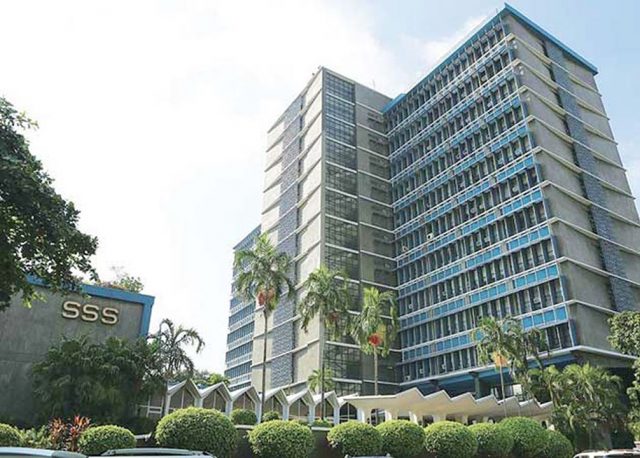
THE Social Security System (SSS) said on Thursday that it has taken note of an increase in fraud incidents being reported by its members.

“We are deeply concerned with the increasing number of fraud victims who are mostly our members,” SSS President and Chief Executive Officer Aurora C. Ignacio said in a statement.

 “That’s why we constantly remind (members) not to patronize these individuals.”

Ms. Ignacio said members should avoid sharing their social security number, My.SSS login credentials and other personal data with people who claim to be SSS employees.

“These will be compromised and used in illegal activities,” she said.

The SSS is also warning the public against joining Facebook groups that offer online transaction help for a fee, noting that the groups are illegal and could be mining personal data.

The SSS said its services are mostly free, charging a fee only for Unified Multi-purpose ID card replacement.

“We also reiterate that SSS shall not be held accountable for any transactions once the member is found to have connived with the fixer,” Ms. Ignacio said.

“This act is considered a violation of (Republic Act) No. 11032 or the Ease of Doing Business and Efficient Government Service Delivery Act of 2018 as well as RA 11199 or the Social Security Act of 2018. Hence, we strongly advise our members to coordinate with legitimate SSS branch personnel only.”

The private-sector pension fund’s mobile application processed over 35 million transactions and queries in the first eight months of last year.

The number of online transactions with the SSS increased while manual transactions declined in 2020 as more members used digital platforms during the lockdowns.

The SSS said it is working with the police in taking down social media accounts and posts connected to fraud.

“Sending your complaints will provide notable information which will help the authorities to track them,” Ms. Ignacio said.

The SSS, along with the Government Service Insurance System, has been ramping up digitalization initiatives to deliver services during the public health crisis, the Finance department said.

“Both institutions have also put in place information technology tools to keep their systems safe from data breaches and other forms of cyberattacks and threats,” the department said on Wednesday. — Jenina P. Ibañez

Agroforestry project worth P18M turned over to Nueva Vizcaya

A P18-MILLION agroforestry support facility was turned over to around 2,600 beneficiaries in Nueva Vizcaya by the Japan International Cooperation Agency (JICA).

Established in cooperation with the Department of Environment and Natural Resources, the facilities are part of the ¥9.24-million Forestland Management Project, which covers 71,300 hectares of forest area in Nueva Vizcaya, and eventually in Iloilo, Ifugao, Quirino, and Nueva Ecija.

The facilities include an irrigation pipeline system, pathways and a hanging bridge, to give residents access to basic services and markets, support reforestation work, and benefit people’s organizations and indigenous communities in the watershed areas, JICA said.

“Aside from protecting the watersheds and ensuring that water supply sources are resilient, the project also aims to support job creation in communities by building their capacity on sustainable forest management and enterprise development,” JICA Chief Representative Eigo Azukizawa said.

“The pandemic and climate change problems are making all of us rethink the way we manage natural resources and ensure that they are sustainable for the enjoyment of future generations,” he added.

JICA also announced a project with the Department of Agriculture to address food security and raise farmer income by improving the supply chain for vegetables.

The Project for Market-Driven Enhancement of Vegetable Value Chain in the Philippines is a five-year initiative to be established in production areas for highland and lowland vegetables.

One of the project’s expected outcomes is a vegetable value chain roadmap to benefit selected regions.

“The pandemic and recently, natural disasters, serve as wake-up calls to look for opportunities to improve food security and the food value chain network,” JICA Senior Representative Ayumu Ohshima said. “We’ve seen how food inaccessibility not only led to hunger in vulnerable groups but also affected the income of farmers whose produce was not able to reach more markets.”

“JICA believes this is a timely cooperation as we map the roles of every stakeholder in the agriculture sector and firm up solutions to tackle food security and identify opportunities to support small-scale farmers,” added Mr. Ohshima.

The program will also involve training of Filipinos based in Japan on farm technology and administration. — Luisa Maria Jacinta C. Jocson

NTC 2021 collections P9.09 billion, exceeding target

THE National Telecommunications Commission (NTC) said on Thursday that it collected P9.09 billion in 2021, exceeding its target by 72.4%.

“Target collection for 2021 was pegged at P5.27 billion. Actual collection, as of Dec. 31, was at P9.09 billion,” the commission said in a statement.

The NTC said it has been beating its targets since 2016.

The NTC is an agency of the Department of Information and Communications Technology. It regulates cable and commercial television operators, broadcast radio stations, telecommunications companies, and commercial and portable radio operators.

The NTC said the agency’s collections will help the government fund its priority projects in infrastructure, agriculture and rural development.

The Philippines’ major telecommunications companies have been pushing for lower spectrum user fees, which are collected annually from public telecommunications entities (PTEs).

PLDT, Inc., its wireless arm Smart Communications, Inc., and Globe Telecom, Inc. have expressed support for the recent approval at the House of Representatives of House Bill 9851, or the “Zero Spectrum User Fee for Telcos Using Wi-Fi Act.”

“This is (expected) to broaden the public’s access to WiFi technology, and eventually lower the cost of telecoms services for the public,” Globe said in a statement in November.

“Currently, spectrum fees imposed on PTEs are becoming unreasonable and excessive,” Roy Cecil D. Ibay, Smart Communications vice-president for regulatory affairs, said in a separate statement.

Globe General Legal Counsel Froilan Vicente M. Castelo said that the company has been actively seeking the lowering of spectrum user fees with the NTC and Congress, “since we believe that telecommunications is now an essential service that should be made more affordable for users.”

Hastings Holdings, Inc., a unit of PLDT Beneficial Trust Fund subsidiary MediaQuest Holdings, Inc., has a majority stake in BusinessWorld through the Philippine Star Group, which it controls. — Arjay L. Balinbin

Philippines posts highest COVID positivity rate

A CATHOLIC showed his vaccine card before entering the National Shrine of Our Mother of Perpetual Help in Baclaran on Jan. 5. — PHILIPPINE STAR/MICHAEL VARCAS

THE PHILIPPINES on Thursday reported its highest positivity rate for the coronavirus at 36.9%, as the highly mutated Omicron variant continued to spread in communities.

The Department of Health (DoH) reported 17,220 infections — the highest in more than three months — bringing the total to 2.89 million. The death toll hit 51, 743 after 81 more patients died, while recoveries increased by 616 to 2.78 million, it said in a bulletin

There were 56,561 active cases, 1,837 of which did not show symptoms, 49,988 were mild, 2,954 were moderate, 1,470 were severe and 312 were critical.

The positivity rate was based on test results of samples from 59,847 people on Jan. 4.

In a separate statement, Health authorities reported 29 more coronavirus infections involving the Omicron variant, bringing the total to 43.

The latest Omicron cases involved 10 returning Filipinos from overseas and 19 residents of Metro Manila, the Department of Health (DoH) said in a statement. Of the 19 local cases, 14 still had the virus, three have recovered and two were still being verified.

DoH said it was verifying the test results of co-passengers of the 10 migrant workers. The new variant cases were detected from 48 samples sequenced on Jan. 2.

It also detected 18 more Delta variant cases, 10 in local residents and eight in returning migrant workers. This brought the total Delta cases to 8,497.

The agency said 99% of coronavirus cases occurred from Dec. 24 to Jan. 6. The top regions with cases in the past two weeks were Metro Manila with 11,563 infections, Calabarzon with 3,165 and Central Luzon with 1,126.

It added that 7% of the reported deaths occurred this month, 7% in December, 10% in November and 23% in October.

DoH said 48 cases had been removed from the tally, with 46 reclassified as recoveries. It added that 66 cases previously tagged as recoveries had been relisted as deaths. Eleven laboratories failed to submit data.

The agency said 31% of intensive care units in the Philippines were occupied, while the rate for Metro Manila was 43%.

The COVID-19 Omicron variant — first detected in South Africa and Botswana in November — has surged globally, spurring fresh lockdowns in many countries.

The US and Europe have been rolling out booster shots as fast as they can after research findings by Pfizer, Inc. and Moderna, Inc. that Omicron weakens the effectiveness of their standard two doses. Booster shots are supposed to increase the level of protection against the variant.

Still, infections in both regions have soared, with the US reporting more than a million daily COVID cases on Jan. 3. The UK and France have recently reported more than 200,000 daily infections.

More people in affected countries have been hospitalized, though deaths have been far below previous peaks.

DoH urged Filipinos particularly the elderly, seriously ill people and children to get vaccinated and get their additional doses immediately.

“Vaccines are still our best defense and proven to be safe, effective, and free,” it said. “Let’s not be agents of transmission and prevent further spread of the virus as more transmission means more mutations.”

People should isolate themselves and get tested at the earliest signs of symptoms, the agency said. “Let us maximize our telemedicine services and keep our hospitals from filling-up.”

People infected with the Omicron variant appear to show milder symptoms, though it appeared to be more contagious than the Delta variant, said Edsel Maurice T. Salvana, a member of the DoH technical advisory group.

The Philippines has fully vaccinated 50.6 million people, while 57.25 million others have received their first dose.

The coronavirus has sickened 298.3 million and killed 5.48 million people globally, according to the Worldometer website, citing various sources including data from the World Health Organization.

Almost 257 million people have recovered, it said.

The US topped the list with 58.81 million infections and 853,612 deaths, followed by India with 35.1 million cases and 482,876 deaths, Brazil with 22.35 million infections and 619,559 deaths and the UK with 13.84 million cases and 149,284 deaths. — Norman P. Aquino and Alyssa Nicole O. Tan


Presidential guards test positive for coronavirus

PCOO

FIFTEEN presidential security guards have caught the coronavirus, their chief said on Thursday, adding that they had not been in close contact with President Rodrigo R. Duterte.

All the guards have been fully vaccinated against the coronavirus and did not show symptoms, Colonel Randolph Cabangbang, who heads the Presidential Security Group (PSG), told reporters. The guards got tested after the holiday break, he added.

“They are not in any way detailed with the President,” the PSG later said in a statement, adding that it adheres “to the highest standards” of protecting the 76-year-old Duterte. “Your PSG assures the public that we are fit and able to protect the President so he can continue his mandate to serve this nation.”

President Duterte, 76, has said he has Barrett’s esophagus and Buerger’s disease. He got his second Sinopharm vaccine dose in July.

At least three Cabinet officials have been under quarantine after being exposed to staff and housemates who had tested positive for the coronavirus.

Health Secretary Francisco T. Duque III, Defense Secretary Delfin N. Lorenzana and vaccine czar Carlito G. Galvez, Jr. did not physically attend a weekly meeting with Mr. Duterte this week.

Mr. Duque, who attended the meeting virtually, said at the meeting aired on Tuesday night he was set to undergo a coronavirus test on Wednesday.

Mr. Lorenzana said four of his housemates had caught the virus, while Mr. Galvez said 15 staff members tested positive.

National police chief Dionardo B. Carlos has also tested positive for the coronavirus. — NPA

Duterte signs bill outlawing child marriage, live-in

PRESIDENT Rodrigo R. Duterte has signed a measure outlawing child marriage.

Under the law, an adult caught arranging child marriage will be fined no less than P40,000 and jailed for as long as 12 years. 

An ascendant, parent, adoptive or stepparent or guardian who perpetrates child marriage will be jailed for 12 years, fined P50,000 and lose their parental authority for life. 

Child marriage involves one or both parties who are younger than 18. The law also criminalizes live-in arrangements between an adult and a child. 

Child marriage is a form of child abuse because it degrades them, according to the law. It also cited the need to abolish “unequal structures and practices that perpetuate discrimination and inequality.” 

“This is a major victory in our campaign to end child marriage in the Philippines,” House Deputy Speaker Bernadette Herrera-Dy, who authored the bill at the House of Representatives, said in a statement. “This law will help protect children, especially young girls, and hopefully change the trajectory of their lives.” 

The time has come for the Philippines to end the “longstanding disturbing practice” of child marriage, she added, calling it “a form of violence against children.” 

To reinforce the measure, the government will create an enabling social environment where children will be provided with information, skills and support networks, quality education and economic support and incentives. 

The government will also try to influence and empower parents and community leaders to discourage and eradicate the practice of child marriage. 

Agencies that will enforce the law must ensure consultations with women, girls and youth organizations, and civil society organizations. 

“This new law is a big step towards ensuring that children’s rights will be upheld and their well-being and future secured,” Ms. Herrera said. — Alyssa Nicole O. Tan

Berjaya Makati Hotel asserts city government closure order has no legal basis

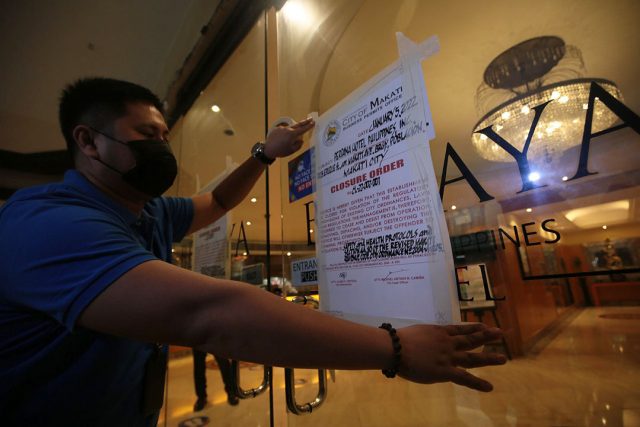
A MEMBER of the Makati Business Permit Licensing Office serves the closure order against Berjaya Makati Hotel on Jan. 6. — PHILIPPINE STAR/ MICHAEL VARCAS

THE MANAGEMENT of Berjaya Makati Hotel said on Thursday that the closure order issued by the Makati City government has no legal basis, and asserted that it was not given due process.

“The order by the Makati City Hall closing down Berjaya Makati Hotel’s operations based on the suspension order issued by the Department of Tourism (DoT) is without legal basis,” it said in a statement.

DoT announced on Wednesday that it has temporarily suspended the accreditation and revoked the multiple-use permit of the hotel after a guest violated quarantine protocol, and later tested positive for coronavirus and infected contacts during the breach.  

A copy of the decision has been served and Berjaya Hotel is given 15 working days to appeal the ruling, DoT said.

“(T)he DoT order is not yet final as the hotel will appeal it within the fifteen-day period it is given. Meanwhile, the suspension is not in effect,” Berjaya Makati Hotel said. 

“Secondly, there is no law that penalizes a hotel for not reporting a guest who jumps quarantine. There is nothing in Republic Act 13322 that is applicable to the hotel. Thirdly, we must be accorded due process and be allowed to explain before any penalty is imposed. We have not been given our day in court by the Makati City Hall,” it added.

The hotel also pointed out that it currently has 18 guests who have tested positive and have yet to be pulled out by the Bureau of Quarantine. Another 80 are in the middle of their quarantine while about 20 weekly guests have been booked and paid.

“Every quarantine hotel, just like ours, serves a strategic purpose especially with the lack of rooms while the virus rampages throughout. To close down a quarantine hotel for no legal reason is to close down a hospital just when it is helping to win the war,” Hotel Makati Berjaya said. 

ADVERTISEMENT
ADVERTISEMENT