Home Blog Page 6938

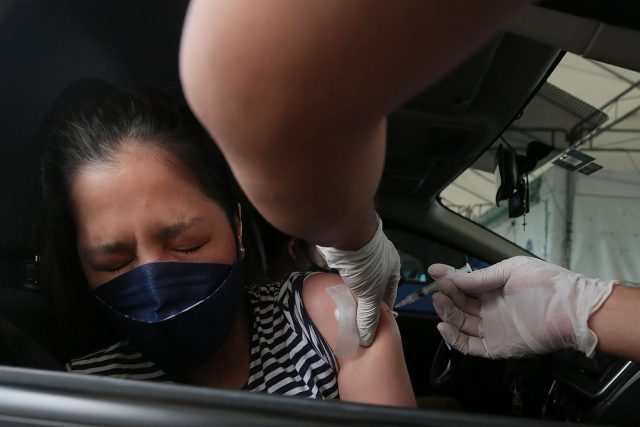
Philippines to vaccinate 77 million by end-March
PHILIPPINE STAR/ MICHAEL VARCAS

By Kyle Aristophere T. Atienza, Reporter

THE PHILIPPINES aims to fully vaccinate 77 million people against the coronavirus by the end of March, according to the presidential palace, as the government tries to boost defenses against more contagious variants.

“We expect 77 million Filipinos to be fully vaccinated by the end of the first quarter given the rate of our vaccine rollout,” Cabinet Secretary Karlo Alexei B. Nograles told a news briefing on Tuesday, citing vaccine czar Carlito G. Galvez, Jr.

About 90 million people will have been fully protected against the coronavirus by end-June, he added.

Mr. Nograles said the government injected an average of 987,045 doses daily on Jan. 10 to 14, with about 2.5 million more people having been fully inoculated.

“While these numbers are very encouraging, moving forward, the government plans to concentrate on regions and areas with more unvaccinated people to ensure that a greater proportion of our population in the provinces are protected from COVID,” he added.

He said the government expects that all registered voters will have been vaccinated against the coronavirus before the May 2022 elections.

“Before April or even May, we want our adult population to be fully vaccinated,” he said. “That way, it would be an additional protection for voters.”

Mr. Nograles said 55.19 million Filipinos have been fully vaccinated against the coronavirus, while 63.8 million people have gotten their first dose. “With our vaccination’s current pace, the Philippines will be able to fully vaccinate 70% of its total population in 53 days.”

The palace official said more than 213.68 million vaccine doses have arrived in the Philippines as of Jan. 13, about 114.3 million of which had been paid for by the government, while 76.83 million were donated by various countries.

The country seeks to vaccinate more people as it struggles to contain a fresh spike in infections fueled by the highly mutated Omicron variant. Mr. Nograles said the country aims to inject at least 72.16 million booster shots by the end of the year.

About 4.7 million Filipinos have received their booster shots, Mr. Galvez said separately in a taped Cabinet meeting aired on Monday night.

“Based on our analysis, this is low because we almost simultaneously launched the vaccination of children,” he said in Filipino. “There are more than eight million children.”

He said the government had given out an average of 267,900 booster shots daily. “We need to double our output to 500,000 doses per day.”

The vaccine chief said the government must boost vaccination rates in Metro Manila and other areas that have fully vaccinated more than 70% of their population. Vaccination sites for booster shots must also be expanded.

He said the government would roll out vaccine boosters in select pharmacies and private clinics in the capital region starting this week.

“This is our way forward to hand over the responsibility of the vaccination from National Government-centered to its complete devolution to the local government units and the private sector in preparation for the future commercialization of the vaccine,” he said.

Meanwhile, the Trade department sees little need for the government to enforce massive lockdowns amid a fresh surge in coronavirus infections.

Trade Secretary Ramon M. Lopez cited the country’s high vaccination rate especially in Metro Manila. Severe and critical cases have also not increased and are unlikely to overwhelm the country’s health system, he told an online news briefing.

“As long as that number does not increase, there is less risk of overwhelming the health system,” he said. “With that, we more or less assure (everybody) that there is less need for a lockdown.” — with Revin Mikhael D. Ochave
DoH chief says COVID cases may be slowing; 28,471 more infected

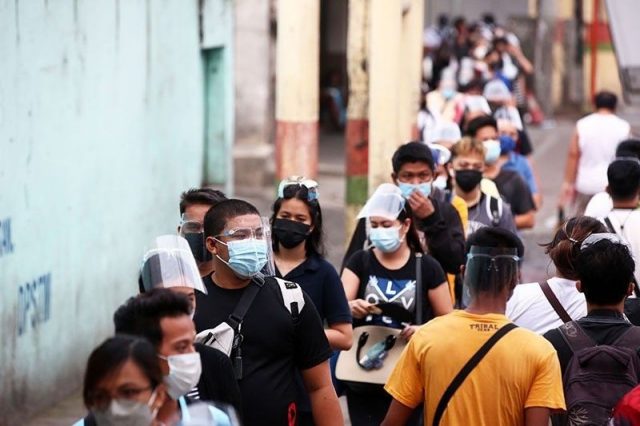
THE PHILIPPINES posted 28,471 coronavirus infections on Tuesday, bringing the total to 3.27 million.

The death toll increased by 34 to 52,962, while recoveries rose by 34,892 to 2.93 million, the Department of Health (DoH) said in a bulletin.

It said 43.4% of 51,738 samples on Jan. 16 tested positive for coronavirus disease 2019 (COVID-19), way above the 5% threshold set by the World Health Organization (WHO).

There were 284,458 active cases, 8,930 of which did not show symptoms, 270,784 were mild, 2,957 were moderate, 1,484 severe and 303 were critical.

DoH said 97% of the latest cases occurred from Jan. 5 to 18. The top regions with new cases in the past two weeks were Metro Manila with 9,887, Calabarzon with 6,671 and Central Luzon with 2,970 infections. It added that 97% of deaths occurred in January.

The agency said 87 duplicates had been removed from the tally, 57 of which were reclassified as recoveries and one was tagged as a death, while four recoveries were relisted as deaths. Five laboratories failed to submit data on Jan. 16.

It said 49% of intensive care unit beds in the country had been used, while the rate for Metro Manila was 53%.

Daily coronavirus infections were decreasing, but the country remains at critical risk from the virus, Health Secretary Francisco T. Duque III said at a taped Cabinet meeting on Monday night.

He said Metro Manila, Ilocos, Cagayan Valley, the Cordillera Administrative Region, Central Luzon and Calabarzon were still under critical risk.

The country had an average 314 cases from Dec. 21 to 27, spiked more than eight times with 2,592 cases from Dec. 28 to Jan. 3 and rose almost eight times with 20,462 cases the following week, Mr. Duque said.

The average daily cases rose by 71% from Jan. 11 to Jan. 17, he said, adding that infections have started to plateau.

“But we still don’t know if cases will spike again or continue plateauing,” he said. “Hopefully, cases will decline.”

Daily infections in the country have reached a record this month amid the spread of the heavily mutated Omicron variant.

Health Undersecretary Maria Rosario Vergeire said coronavirus infections in various regions continued to increase.

“There is an upward trend in COVID-19 cases in other regions. Case increase affects all island groups,” she told an online news briefing on Tuesday.

She also cited a steep increase in hospital admissions in Metro Manila in the past week. “With bed utilization now at 60% and intensive care unit utilization at 58%, it is important to mitigate the risks of Omicron to protect the most vulnerable and the entire system.”

Ms. Vergeire said 90% of samples in the latest genome sequencing had tested positive for the Omicron variant, which had become predominant.

“Overall, the most common lineage is still the Delta variant,” she said. “But at this time period, Omicron is now the predominant variant, most especially in the National Capital Region where most of the Omicron cases have been detected.”

Ms. Vergeire said it was too early to say that coronavirus infections in Metro Manila were decreasing.

The Health department does not look at daily changes in COVID-19 data because it could be influenced by certain variables such as laboratory submissions, she told ABS-CBN TeleRadyo.

“If we look at the data, we can see that there is a slight decrease in transmission. When we started with our Omicron situation, our case doubling time was just two days, but now, it takes four days before cases double,” she said.

She said cases remained high. “This means we still have to take care and continue the interventions we are doing to prevent the cases from increasing.” — Kyle Aristophere T. Atienza

Comelec to finish printing ballots by April, says official

WIKIMEDIA

THE COMMISSION on Elections (Comelec) will start printing ballots for the May elections this week and expects to finish it by April, according to its deputy executive director.

Comelec will print 67.4 million ballots — 65.7 million for local and 1.7 million for overseas voting, Helen C. Aguila-Flores, who is also vice chairperson of the election body’s printing committee, told an online news briefing on Tuesday.

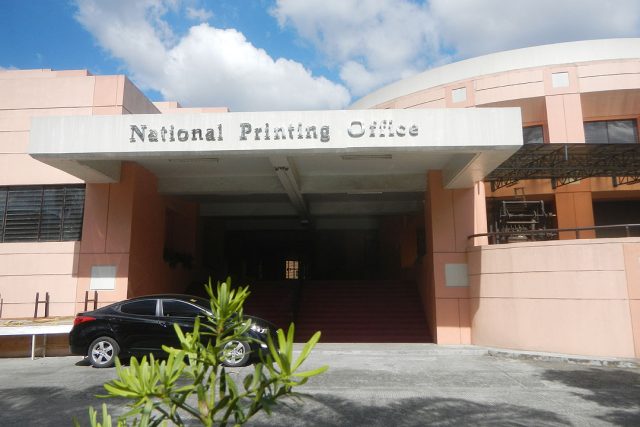
Ballots for the national and local elections would contain 178 party-list, 64 senatorial, nine vice-presidential and 10 presidential candidates, said the official, who gave a virtual walkthrough of the National Printing Office in Quezon City.

Ms. Flores said the ballots are in the final stage of proofreading, adding that printing, which would cost P1.3 billion, would finish between April 12 and 21.

Printing would start on Jan. 20, Comelec spokesman James B. Jimenez separately told the ABS-CBN News Channel.

Ms. Flores said the state-owned printing office houses four printers, three of which would be running and one would be for contingencies.

Under the law, the National Printing Office prints election ballots, accountable forms and other public documents.

The walkthrough is supposed to show the Comelec’s commitment to transparency and accountability during the election season.

The tour was initially planned to be held in person, but had to be done through the Zoom Cloud Meetings app amid a fresh surge in coronavirus infections. — John Victor D. Ordoñez

Senate confident of passing legislation under bicam, treaties despite Congress suspension due to COVID surge

PCOO

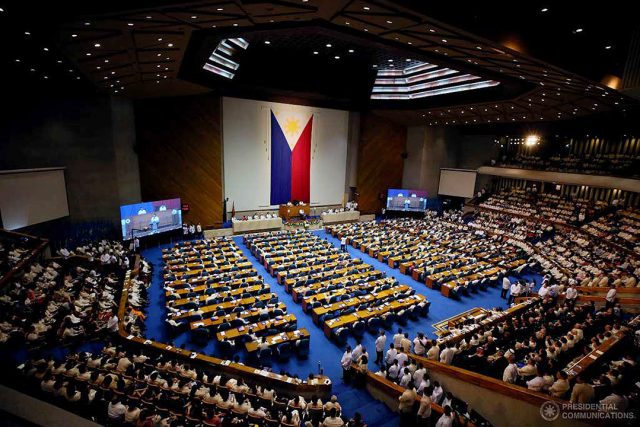
BOTH CHAMBERS of Congress have declared a suspension of plenary sessions this week due to a surge in coronavirus cases among staff and members, but the Senate leader is confident that legislation before the bicameral conference committee and pending international treaties will be passed before the recess for the May elections.

“It’s a blessing in disguise that the bicams are scheduled this week so that when we resume on Monday, hopefully, most if not all bicameral conference committee reports will be ratified by the Senate,” Senate President Vicente C. Sotto III said in a Zoom meeting with reporters on Tuesday. 

Other scheduled committee hearings in both the Senate and House of Representatives will also push through online. 

Congress will take a recess from Feb. 5 to May 22 in line with the May 9 national and local elections. 

Some bills due to be ratified are the consolidated versions of the Public Service Act amendments, SIM Card Registration Act, the National Transportation Safety Board, Teacher Education Excellence Act, Night Shift Differential Pay bill, Judiciary Marshalls Act, and the Expanded Solo Parents Welfare Act. 

On international treaties awaiting ratification, Mr. Sotto said the Regional Comprehensive Economic Partnership, Treaty to Reduce Statelessness, and Arms Trade Treaty have already been sponsored at the plenary.

“There are three treaties pending,” Mr. Sotto said, “so we will have two weeks to do that, but I think by Monday we will be able to ratify these three treaties and if a third reading is necessary, we have enough time to do that.”

The Senate chief also said they are eyeing to rush the passage of a bill mapping out the Philippines’ maritime zones and the proposed law seeking to provide allowances and benefits to all health workers.

The proposed Financial Consumer Protection Act (FCPA), however, will likely be taken up after the elections, he said.

The Senate suspended sessions this week as 88 of its on-site workers reported positive for coronavirus. 

“We want to allow the COVID surge with the Senate to simmer down. Too many positives and in quarantine both with the Secretariat and senator’s staff,” said Mr. Sotto in a Viber message to reporters late Monday.

HOUSE
At the House of Representatives, Speaker Lord Allan Jay Q. Velasco said more than 70 members and employees have contracted the virus since the start of the year and many others are under quarantine or isolation.

The chamber on Monday was able to approve 19 bills on third reading and ratify the bicameral committee report on House Bill 10123 or the Electric Vehicle Industry Development Act. 

Of the 19 approved bills, 10 were national bills including granting more benefits to senior citizens, aid for higher education, rural financial inclusion, and a tax exemption that will help the entertainment industry bounce back from the pandemic’s impact.

Among the proposed measures that need to be finalized by the bicameral committee include the bill on creating a separate facility for high-level offenders, regulating the promotion and usage of vape, amended Contractor’s License Law, and mandatory installation of communal weighing scales in public and private markets. 

“The House will resume session on Jan. 24 and we hope that the COVID-19 (coronavirus disease 2019) situation has already improved by then so we could finish all pending priority measures before we adjourn for the election period,” Mr. Velasco said. — Alyssa Nicole O. Tan and Jaspearl Emerald G. Tan 

Over 130 colleges, universities declare academic break due to coronavirus surge

PHILIPPINE STAR/ MICHAEL VARCAS

MORE THAN 130 universities and colleges have declared an academic break due to the current surge in coronavirus cases, according to the Commission on Higher Education (CHED).

Sixteen of the 134 higher education institutions (HEIs) that declared a health break from Jan. 1 to 13 are located in Metro Manila, while 53 HEIs are in Calabarzon region, CHED Chair Prospero E. De Vera III said at a taped Cabinet meeting on Monday night.

He said that a total of 126 colleges and universities have also expressed “intention to declare an academic break” this month.

Meanwhile, Mr. De Vera said HEIs in Metro Manila have decided to start the implementation of limited face-to-face classes next month. 

“The HEIs were nonetheless reminded to monitor the situation on the ground, to conduct mandatory consultations with teachers and students regarding the opening of limited face-to-face classes,” Cabinet Secretary Karlo Alexei B. Nograles said separately in a regular news conference on Tuesday. 

BASIC EDUCATION
Mr. Nograles said President Rodrigo R. Duterte has also approved the recommendation of the Education department, which governs basic education levels, to expand limited in-person classes in areas under Alert Levels 1 and 2 by next month. 

“The President has no objection to the recommendation.

The Palace official said in-person classes would only be allowed with concurrence of local government units and approval of parents and other concerned parties. 

“It will be the Department of Education and Department of Health combined that will be assessing the expansion of pilot implementation of face-to-face classes,” he said. — Kyle Aristophere T. Atienza

PhilHealth chief says past cases vs employees slowed down payment of hospital claims

PAST CASES filed against Philippine Health Insurance Corp. (PhilHealth) employees in Cebu — involving payment of claims of hospitalized patients who later turned out negative for coronavirus — slowed down the state-owned agency’s payment of claims by other medical institutions, the PhilHealth chief said in a House of Representatives health committee hearing on Tuesday. 

PhilHealth President Dante A. Gierran said they are now hesitant to immediately pay for claims for fear of getting charged. He said confusion over the definition of “probable case” was at the root of the cases. 

Under PhilHealth Circular 2020-009, the agency should not pay for patients who tested negative for coronavirus disease 2019 (COVID-19). 

Several private hospitals have threatened to cut ties with the health insurance agency over delayed payments since last year.

Mr. Gierran said Jaime A. Almora, president of the Private Hospitals Association Philippines, has pointed to the Cebu case as a cause for the slowdown in payments.

Rep. Angelina D.L. Tan, chair of the health committee, asked Mr. Gierran what actions should be taken to address the problem. 

Mr. Gierran said they are currently considering options in consultation with their legal department. 

“We are thinking of something to issue. One is an advisory, another one is a circular amending an earlier circular. Or maybe a payment outright, depending upon the opinion of our legal,” he said in a mix of Filipino and English. 

PhilHealth had previously issued policies concerning health insurance coverage for COVID cases, with different amounts depending on the severity of the patient’s condition. — Jaspearl Emerald G. Tan

Hundreds of VisMin-bound vehicles stranded at Matnog Port due to damaged ramps

MATNOG Port is the jump-off point for cargo and passenger vehicles traveling from Luzon to Visayas and Mindanao, the central and southern parts of the country. — PHILIPPINE COAST GUARD

ALMOST 800 vehicles and about 5,000 people were stranded along the highway leading to the Matnog Port in Sorsogon, located in the southeast of Luzon mainland in northern Philippines, due to damaged ramps for roll-on, roll-off and fastcraft vessels, a transport agency reported late Monday. 

Matnog Port is the jump-off point for cargo and passenger vehicles traveling from Luzon to Visayas and Mindanao, the central and southern parts of the country.

The Land Transportation Authority’s Bicol regional office, acting upon a request of the local police, issued an advisory appealing to freight haulers and travelers “to cancel or reschedule their trips.”

“Currently, two sea vessel ramps are damaged, causing a slowdown in the loading of vehicles. A total of 796 vehicles and more or less 5,000 individuals are presently stranded at the port,” it said in the advisory. 

Achilles Galindes, Philippine Ports Authority manager for Matnog, earlier said the ramps were damaged due to strong waves from abrupt wind changes known as shear line and the northeast monsoon. 

Mr. Galindes, in an interview streamed online by government news agency PIA, said repairs are ongoing. 

The situation is another blow to the shipment of goods and movement of people, which suffered delays in the second half of December after ports in the Visayas were damaged by typhoon Odette, internationally known as Rai. 

Several sea vessels serving the Luzon-Visayas route were also damaged. — MSJ 

Senator files bill for P20-B rehab fund for areas hit by typhoon Odette

DINAGAT ISLANDS PIO

A SENATOR has filed a bill that will provide P20 billion for the rehabilitation of provinces hit by typhoon Odette, internationally known as Rai, in December.

Majority Leader Juan Miguel F. Zubiri filed Senate Bill No. 2487 or the Paglaum Fund of 2022 following a visit to areas affected by Odette, the strongest typhoon in the Philippines last year. 

“It’s a large amount, and I expect we will run into some budgetary concerns, but we’re really hoping the executive finds it to be a fair assessment of what our affected provinces need, given how massive the damage has been,” he said.

The typhoon, which swept through central and southern parts of the country, affected over 500 towns and cities across 38 provinces, based on data from the national disaster management agency. Damage to infrastructure and agriculture are estimated at P17.19 billion and P12.75 billion, respectively.  

Under the bill, the national disaster management council will be tasked to create a Rehabilitation Plan, which serves as basis for the Budget department to identify specific infrastructure projects for reconstruction. 

Senator Richard J. Gordon, meanwhile, filed a separate resolution that seeks to set up loan windows for affected tourism establishments and other entrepreneurs.

“The resolution calls for immediate initiation of the early recovery of all areas affected by Typhoon Odette such as Bohol, Cebu, the Dinagat Islands, and Siargao, to help the micro, small, and medium enterprises (MSMEs), and dislocated businesses and provide support in the form of loans from GOCC (government-owned and controlled corporations) and other banks,” Mr. Gordon said in his privilege speech. — Alyssa Nicole O. Tan

El Nido homes to get solar power system from Acciona-Ayala partnership

PHILSTAR FILE PHOTO

SPANISH Infrastructure firm Acciona, through its foundation acciona.org, has partnered with Ayala Foundation for a project that will provide renewable energy supply to 100 households in El Nido, Palawan. 

“Under this program, more than 100 households in Barangay Sibaltan in El Nido, Palawan, will receive third-generation domestic solar-powered systems that provide more than eight hours of electrical light every day at zero emissions,” the Acciona said in a press release on Tuesday.  

Preliminary onsite work is ongoing to verify the technical and social feasibility of the project, it said. 

Meetings with El Nido’s local government and communities are also underway.

The project, the company said, can help the area have a more sustainable power source, especially after the impact of typhoon Odette, internationally known as Rai, which struck central and southern parts of the Philippines in December. — Marielle C. Lucenio

Another inmate found to have escaped from maximum security facility

A FOURTH inmate has been discovered to have escaped from the national penitentiary, along with three others early Monday morning, and is now the subject of a manhunt by authorities.

Chris Candas Ablas, convicted of robbery with homicide, was identified as missing Tuesday morning and has been tagged as a potential fourth escapee from the maximum security facility of the New Bilibid Prison in Muntinlupa City.

The Bureau of Corrections (BuCor) said it is still confirming if Mr. Ablas was part of Monday morning’s coordinated escape or acted separately from the three.

Two of the inmates were killed in firefights with police and BuCor officers.

Still at large, apart from Ablas, is Drakilou Yosores Falcon.

Senate President Vicente C. Sotto, III, who authored a proposed law that will create a separate facility for heinous crimes convicts, said the incident “bolsters what I have been saying all along” on the need for such a more secure site. 

“We need to separate heinous criminals from the community of persons deprived of liberty,” Mr. Sotto said.

The bill has been passed by both chambers of Congress.

Also on Monday, the National Bureau of Investigation prevented an escape attempt by confessed drug lord Kerwin Espinosa from the same prison compound. 

Senator Leila M. De Lima, a former justice secretary, said in a statement that the recent incident should serve as another “wake-up call” for the government to make reforms and tighten security around the nations’ prison and correctional systems. — John Victor D. Ordoñez and Alyssa Nicole O. Tan

Taiwanese wanted for forgery nabbed in PHL

A TAIWANESE woman facing forgery charges since 2017 in a district court in Taiwan was recently arrested in the Philippines, the immigration bureau reported on Tuesday.

The fugitive forged a financial instrument to defraud a Taiwanese victim of about US$14,000, the Bureau of Immigration (BI) said.

Immigration Chief Jamie H. Morente issued an arrest warrant against the woman upon the request of Taiwanese authorities based in Manila.

A probe by the BI’s fugitive search unit showed that the Taiwanese national had been in the Philippines for more than five years and is an overstaying alien under a tourist visa.

She was caught at a condominium unit in Quezon City.

She is detained at the BI warden facility while awaiting deportation proceedings. — John Victor D. Ordoñez

A strategic plan for the Philippine economy

PCH.VECTOR-FREEPIK

(Part 4)

As we move to the sectoral level in formulating a strategic plan for the Philippine economy, the first and most important step is to have a long-term plan for Philippine agriculture, the Achilles heel of the Philippine economy. Resolving the perennial problem of low productivity and widespread poverty in the agricultural sector will literally hit two birds with one stone. It will lead to higher GDP growth while at the same time reducing poverty incidence. At very low annual growth rates of 1% to 3%, the agricultural sector has been a perennial drag to growth. Considering that as many as three-fourths of the Philippine poor are in the rural areas, increasing the incomes of farmers, farm and forest workers and fisherfolks will directly contribute to the reduction of poverty.

In performing the SWOT analysis for agriculture, we can benefit from the work done by the leading agribusiness think tank of the country, the Center for Food and Agribusiness (CFA) led by Dr. Rolando Dy. In a very succinct document entitled “Agribusiness Towards 2040,” Dr. Dy and the University of Asia and the Pacific (UA&P)-CFA Agribusiness Team presented the following Strengths, Weaknesses, Opportunities and Threats (SWOT) analysis of the Philippine agricultural sector:

Agriculture directly accounts for less than 10% of GDP. If we consider, however, the entire agri-food value chain, agribusiness contributes 35% of GDP and employs 10 million people, about a fourth of the country’s labor force.

As already mentioned, Philippine poverty is predominantly an agricultural phenomenon. The poorest segments of the population are engaged in crops (mainly rice, corn, and coconuts) and fisheries (mainly sustenance fishing). The major weaknesses of this sector are low farm productivity, lack of diversification, and limited value adding. Across many crops, the Philippines is behind its ASEAN peers (especially Thailand, Malaysia, and Vietnam). The exceptions are in Cavendish banana and pineapple, the leading fruit exports. Coconut is grossly under-exploited as the main products are lowest in value, i.e., copra, coconut oil, and desiccated coconut. There is very limited production of the higher-value products like coconut water, coconut milk, coconut sugar, and coconut coir. There is very low productivity in palay (unmilled rice), corn, fisheries and aquaculture. Low productivity stems from various weaknesses from input supply, production, and all the way down to the market. Productivity is likewise adversely affected by the occurrence of pests and diseases (as in the recent African Swine Fever that afflicted the hog industry), weather conditions/climate change (as in the recent very destructive Typhoon Odette), inadequacies of government programs and infrastructure (especially farm to market roads, irrigation systems, and post-harvest facilities), and, most recently, the pandemic.

Diversification is weak with some 80% of the croplands planted to only three crops — coconut, rice, and corn which all produce much below potential if we are to compare them to levels of productivity in their ASEAN peers. It is no surprise then that Philippine agricultural exports are way behind their ASEAN peers. The Philippines is also the only country with a negative trade balance in agri-food trade. Value adding is limited for lack of raw materials supply, limited knowledge on value adding, poor dissemination of value adding technologies, and undeveloped markets, among other weaknesses. As a very obvious opportunity that can be tapped is the large market of China for high value vegetables and fruits that go beyond bananas and pineapples. The greatest concern of China is food security.

What strategic moves have been suggested by Dr. Dy and his team from the CFA? The most obvious ones are those that flow from the weaknesses. They suggest three pillars:

• Increasing yields of many crops through applied modern farming systems that can be learned especially from more successful East Asian neighbors, such as Taiwan, Thailand, Malaysia, and Vietnam. Already a Taiwan-Philippine company called Harbest is successfully transferring advanced technology in the growing of high-value vegetables and fruits to Filipino farmers.

• Diversifying the land use based on market signals. Large tracts of land now devoted to rice and coconut can be shifted to high-value fruits, vegetables, and commercial forests.

  Promoting value adding in the rural areas through agro-processing. Such processing can be done at all scales of business, i.e., micro, small, medium, and large-scale. If raw materials are produced at lower costs, food processing at all these scales of production can compete with imports.

All these strategic moves will produce multiplier effects in raw material supply, processing capacity utilization, and exports, as well as job and income creation.

These three pillars must be anchored on the following programs and operational approaches:

• Developing quality infrastructures that link farm areas to ports;

• Promoting digital transformation, such as giving farmers direct information about prices of their products through their digital devices, thus freeing them from the clutches of middle men.

• Enhancing agricultural credit, such as through fintech that allows unbanked people in the rural areas to have access to credit and other financial services through their smart phones or similar devices;

• Consolidating small holdings to achieve economies of scale. This is especially crucial in the coconut industry where cooperatives or nucleus estates can be effective means of land consolidation to enable commercial farming to result in higher-value products such as coconut water, milk, sugar, and other consumer items greatly valued by such large corporations as Coca-Cola and Pepsi-Cola.

Adopting farmer-driven irrigation systems and mechanization;

• Benchmarking extension services to the small farmers;

• Sustaining support for research and development (R&D) with strong private sector partnership.

The Government should partner with both the academe and the private business sector in R&D work that will result in practical solutions to improving the productivity of agribusiness operations at all levels of the value chain, from farming to post-harvest, storage, cold chain, food processing and retailing.

(To be continued.)


Bernardo M. Villegas has a Ph.D. in Economics from Harvard, is professor emeritus at the University of Asia and the Pacific, and a visiting professor at the IESE Business School in Barcelona, Spain. He was a member of the 1986 Constitutional Commission.

bernardo.villegas@uap.asia

ADVERTISEMENT
ADVERTISEMENT