Home Blog Page 6913

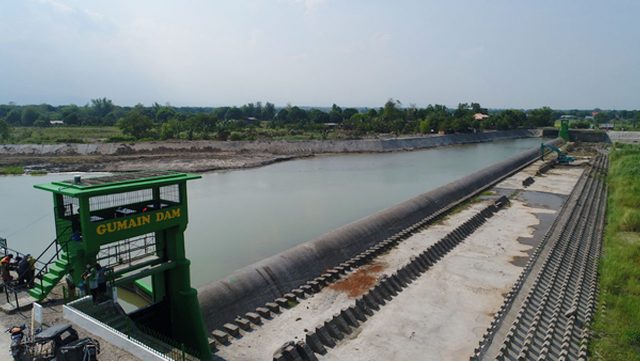
Legislators hopeful of House approval for water dep’t measure 
By Jaspearl Emerald G. Tan

LEGISLATORS expressed hope that the House of Representatives will approve a bill seeking to create a water management department, after the bill hurdled committee-level evaluation.

Trade Union Congress of the Philippines Rep. Raymond Democrito C. Mendoza said House Bill (HB) 9948 or the proposed National Water Act, which is signed will create a Department of Water Resources, is now in a form that has passed scrutiny from four House committees. He said he hopes it will be approved at the next plenary session.

Mr. Mendoza, who co-authored the bill, said the measure has gone through the Government Reorganization, Public Works and Highways, Ways and Means, and Appropriations committees.

“With Committee Report No. 1115, approved by the various Committees, I believe we have achieved the best version of the many bills filed in 2019,” he told BusinessWorld in an e-mail.

“I hope that the efforts will not be in vain and that approval at the plenary is inevitable.”

Magsasaka Party-list Rep. Argel Joseph T. Cabatbat, also a co-author, said in an e-mail, “We are optimistic that the House will line this up as one of the priority bills to be passed before Congress ends.”

He noted that HB 9948 was a combination of 35 separate bills and that it had “garnered massive support from one hundred forty-four House members.”

Another co-author, Parañaque Rep. Joy Myra S. Tambunting, said the measure aims to establish an Integrated Water Resource Management system to govern policymaking and planning at the national level.

Ms. Tambunting added that the bill will address water shortages by encouraging “focused research and development in water treatment, sanitation and distribution.”

The bill’s other objective is to support agriculture.

Mr. Cabatbat said one of the problems in agriculture is lack of irrigation and insufficient water allocations for rural areas.

“Once we establish a lead agency that will secure the water supply, including in agricultural areas, we expect that it can gradually address the mismanagement of water resources for irrigation that will eventually help improve the yield of our crops,” he said.

The Magsasaka representative added that the measure directs the Department of Water Resources to work with the Department of Agriculture to ensure the development of agriculture and reduce long-term pollution in both surface and groundwater.

Under the bill, the two departments are tasked with ensuring the efficient use of water, recycling or reuse, and proper wastewater treatment. It also proposes that the National Irrigation Agency be absorbed by the water department to centralize the decision-making for supplying water to agriculture.

The bill also aims to encourage the participation of the private sector by allowing the Department of Water Resources to enter into contracts and partnerships with domestic and foreign entities that invest in water projects.

“…This Department is allowed to enter into joint venture agreements, public-private partnerships or memorandums of agreement which means the creation of business design and solutions resulting in jobs,” Ms. Tambunting said.

HB 9948 is currently in the sponsorship period. A committee report on the National Water Act was filed on Aug. 9, 2021. The House of Representatives will resume its plenary sessions on Monday.
PHL files instrument of accession to Istanbul Convention

BW FILE PHOTO

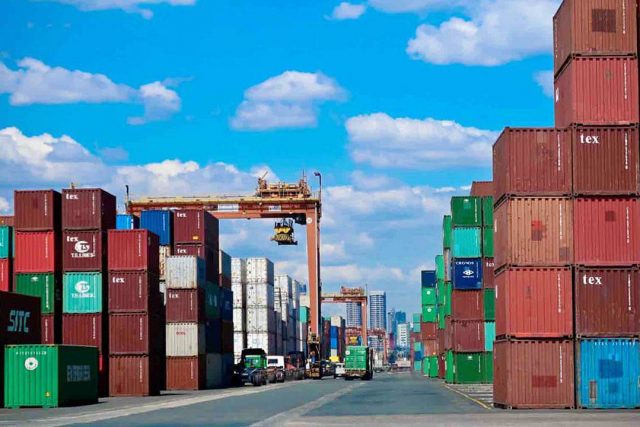
THE PHILIPPINES has deposited its Instrument of Accession to the Istanbul Convention, which will help exporters access foreign markets, the Department of Foreign Affairs said on Sunday.

Philippine Ambassador to Belgium, Luxembourg, and the European Union Eduardo José A. de Vega filed the accession documents to the Istanbul Convention, formally known as the Convention on Temporary Admission, and also known as the ATA Convention, to World Customs Organization (WCO) Secretary General Kunio Mikuriya at the headquarters of the WCO in Brussels.

The convention eases the movement of goods for re-export into a customs territory of a convention signatory, by granting total or partial relief from import duties and taxes, provided that they remain for a specified period and have not undergone processing.

The goods are covered by a single document known as the ATA carnet, secured by an international guarantee system.

The Philippine Chamber of Commerce and Industry President George T. Barcelon told BusinessWorld in a Viber message that it is working with the Bureau of Customs to be accredited on the ATA carnet protocols. “We will actively participate when our papers are in order.”

“This would allow us to expand further hosting of industry, sectoral exposition, etc.,” he said. “Companies will have flexibility in documentation of imports and exports.”

The convention is expected to be beneficial for micro, small and medium enterprises, which aim to export or join international trade shows, fairs, and exhibitions.

The convention, signed by President Rodrigo R. Duterte in July 2020, will take effect on April 17.

Asked about the convention’s expected benefits, Trade Secretary Ramon M. Lopez said: “Yes. We have always supported that as it can help develop more trade activities moving forward. We also supported it when it was deliberated in the Senate. RCEP (the Regional Comprehensive Economic Partnership) has also a provision on the temporary admission of goods that is consistent with the convention.

The Philippines is set to become the 73rd contracting party to the convention. — Alyssa Nicole O. Tan

Paracetamol supply stabilizes in Metro Manila 

INTERAKSYON

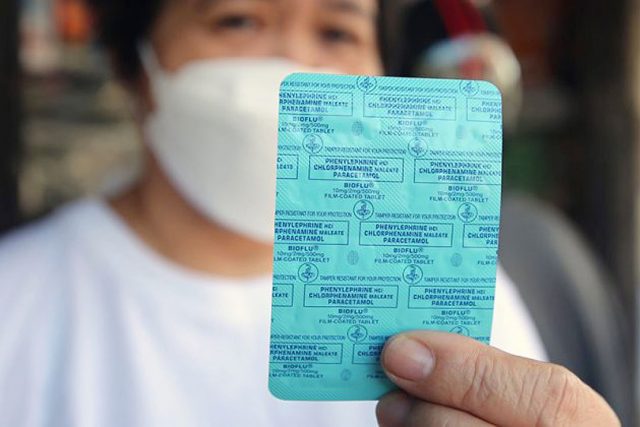
THE SUPPLY of paracetamol in Metro Manila has stabilized following reports of drug store shortages earlier this month, the Department of Trade and Industry (DTI) said.

Trade Secretary Ramon M. Lopez said in a mobile phone message that supply is currently adequate following a run on the over-the-counter drug to rising coronavirus disease 2019 (COVID-19) cases and other flu-like illnesses.

“Purchase limits on paracetamol helped in normalizing the supply and demand situation. Manufacturers were able to catch up in replenishing (retail stocks) as demand wasn’t artificially bloated,” Mr. Lopez said.

In early January, some drugstores in Metro Manila reported they were out of stock of paracetamol and other treatments for flu and fever following the rise in COVID-19 cases.

The DTI and Department of Health issued a joint memorandum circular (JMC) on Jan. 10 that imposed a purchase limit on paracetamol and other medicines.

A purchase cap was also recently implemented by the DTI in Cebu City, where COVID-19 has also surged.

Under the JMC, the limit for paracetamol 500 milligram (mg) tablet purchases is 20 units per individual and 60 per household. Paracetamol 120 mg/5 milliliter (ml), 60 ml in suspension form was capped at five units per individual and 10 per household; and paracetamol 250 mg/5 ml, and 60 ml in suspension form five per individual and 10 per household. — Revin Mikhael D. Ochave 

Indonesia assures PHL on coal supply

REUTERS

THE PHILIPPINES has received assurances on Indonesia’s intention to resume coal exports once Jakarta allocates sufficient quantities for its domestic needs.

In a statement on Sunday, Trade Secretary Ramon M. Lopez said the assurances were delivered by Indonesian Coordinating Minister for Economic Affairs Airlangga Hartarto at a meeting on Jan. 21.

Indonesia imposed a ban on coal exports after its state power utility announced low stockpiles of coal at Indonesian power plants.

Mr. Hartarto also told Mr. Lopez that the Indonesian Ministry of Agriculture welcomes exporters from the Philippines seeking to enter the Indonesian market.

Mr. Lopez added that the Philippine market remains open for Indonesian products, noting that investment is important in accelerating the economic recovery.

The Philippine Chamber of Commerce and Industry (PCCI) has urged the government to diversify the Philippines’ energy sources in the wake of disruption caused by Indonesia’s coal export ban.

PCCI President George T. Barcelon warned that the export ban may have a major impact on power costs and availability since 60% of Philippine power is generated by coal-fired power plants. — Revin Mikhael D. Ochave 

Accelerating the integrity agenda

(Second of two parts)

The EY Global Integrity Report 2022 shows us that 97% of survey respondents — consisting of 4,762 board members, managers and employees from large organizations in a wide spectrum of industries, including financial services, government and public sector, consumer products, manufacturing, life sciences, professional services and others from 54 countries in North and South America the Far East, Western and Eastern Europe, and the Middle East, India and Africa — place a high value on corporate integrity.

However, the report also shows that organizations are struggling to close the gap between reality and rhetoric. As organizations rewrite the processes for digital transformation and recalibrate how and where work is performed, they can seize an opportunity to close the gap between what they say and what they do. Integrity in business is not confined to ticking boxes in compliance and risk management; it is about securing the organization, its reputation, and its assets — all of which drive sustainable, long-term value. 

While the report did not include respondents from the Philippines, we believe that the insights from the report offer much food for thought for local business leaders who place great emphasis on corporate governance and integrity.

The EY Global Integrity Report 2022 provides insights on accelerating the integrity agenda, and in the second part of this article, we discuss how companies can create an optimal environment that encourages integrity, and how the integrity agenda can be innovated and transformed to minimize external threats while protecting value.

CREATING THE OPTIMAL ENVIRONMENT FOR INTEGRITY
The report indicates that integrity standards have dropped in the aftermath of the pandemic, with 42% of board members agreeing that unethical behavior from senior or high performers is tolerated in their organizations and 34% agreeing that it is easy to bypass business rules. At the same time, 18% of board members are willing to mislead external parties such as regulators and auditors. In addition, 15% expressed a willingness to falsify financial records, and 14% said they would offer or accept a bribe.

It becomes even more imperative for employees at all levels to understand that these violations bear consequences, and in being able to report such acts without the fear of negative consequences. The report shares that too often, employees feel that reporting violations won’t trigger change, with 38% of survey respondents saying that the main reason they do not report is the concern that no action would be taken against the violator anyway.

The report also highlights the gap in perceptions of board members (47%) on how easy it is to report violations, compared to the views of employees (25%).

Companies must be able to create an optimal integrity environment where management and employees trust that whistleblowers are protected, and where values are shared across every level of function and seniority. In fact, the extent to which companies can protect whistleblowers in their organization should be a benchmark of their integrity culture.

There must be a high degree of transparency, with a culture that has a zero tolerance of transgression. A progressive integrity agenda extends beyond opportunistic compliance, where people do something simply because it is not illegal under the law; restrictive compliance, where people are prevented by the law from doing something; and the avoidance of litigation, where people do something to avoid being sued.

The pandemic showed us that when the global economy experiences a crisis, many companies depended on the rescue interventions of Government authorities and taxpayers. Companies have the responsibility of managing resources for the common good and acting ethically, as employees, shareholders, consumers and the community at large expect them to do so.

INNOVATING AND TRANSFORMING THE INTEGRITY AGENDA
The accelerated reliance on digital platforms and automation raises important risks, as data systems become increasingly fundamental to the operation of a business. Issues such as data completeness, data quality and AI models that do not perform correctly are no longer only technical problems to be managed by IT colleagues. Data systems that are critical to the business require many stakeholders involved in curating and shaping these systems, addressing any challenges with urgency. This blurring of boundaries is not confined to the digitalization of business operations and transactions, either — it is also increasingly blurred by third parties such as suppliers, vendors and contractors.

The report shares that the overall confidence that third parties abide by relevant regulations and laws is high at 83%. However, while 47% of board members have the highest level of confidence, only 28% of employees believe the same. The report also indicated that different roles tend to have different levels of confidence in the integrity of third-party suppliers (86% of IT departments compared to 71% of legal departments).

The report shows how easily mismatches can develop between the perceptions of the board, their employees and various groups in an organization, increasing the need to close the distance between all the groups and hierarchal layers comprising an organization. By tightening the connections between its parts and functions, an organization can deepen a shared integrity culture. As companies emerge from the pandemic and start looking to fill resource gaps with third party contractors, aligning them to the integrity culture of the company will also be vital.

Organizations that leverage technology to further enable risk mitigation efforts will gain greater visibility into their risk landscape and the effectiveness of their compliance program as a whole. Leaders will need to ensure that technology is an integral part of their compliance strategy to make the most of these advancements, harnessing forensic technology solutions to identify hidden risks and using benchmarking to understand outliers. With technology able to advance the integrity agenda beyond merely checking travel and entertainment expenditure lines, data will be likewise capable of increasing the transparency of all company interactions and transactions.

BUILDING A CULTURE OF INTEGRITY
Focusing on technology-driven and data-centric ways to monitor one’s integrity culture and build the necessary controls, insights and process allows companies to transform their compliance programs, creating long-term value. Increasing volumes of data can be utilized as an opportunity to aid in the combat against fraud, but it should be recognized that systems and processes are not the source of fraud: humans are.

This means that the best compliance frameworks can be breached if a culture of doing the right thing is not established at a fundamental level, making building a strong integrity culture as important as the control environment. The report shows that while the integrity message is reaching people, the appetite for malpractice is growing. Companies must therefore continue communicating and building awareness by educating instead of training, ensuring that everyone understands the “why” of business integrity as much as they do the “what.”

This article is for general information only and is not a substitute for professional advice where the facts and circumstances warrant. The views and opinions expressed above are those of the author and do not necessarily represent the views of SGV & Co. 


Roderick M. Vega is a partner and the Forensic and Integrity Services leader (FIS) of SGV & Co.

Analysts praise Robredo, Lacson TV performance

By Kyle Aristophere T. Atienza, Reporter

ONLY two of four Philippine presidential candidates who spoke on national television at the weekend presented details of their action plan, according to political analysts.

They said Vice-President Maria Leonor “Leni” G. Robredo and Senator Panfilo “Ping” M. Lacson stood out in a GMA Network program where journalist Maria Jessica A. Soho asked the candidates questions.

“Both Vice-President Leni and Senator Lacson showed a more detailed understanding of many issues,” Maria Ela L. Atienza, a political science professor at the University of the Philippines (UP), said in a Viber message on Sunday.

She said Ms. Robredo answered the questions thoroughly and presented a detailed action plan. “However, given the limited time format, she was not given the time to elaborate on the nuances of her responses.”

Ms. Robredo vowed to prioritize job creation, healthcare and education if she becomes president. She also traced problems in the government’s anti-coronavirus pandemic response to leaders who think it’s not urgent.

Ms. Atienza said Mr. Lacson was consistent in his anti-corruption drive “but he needs to elaborate more on his other programs.”

“Leni demonstrated transformative politics, away from the dole-out mentality that we have been used to,” Jean S. Encinas-Franco, who also teaches political science at UP, said in a Facebook Messenger chat. “She sees that Filipinos are part of the solution.”

Mr. Lacson showed extensive knowledge of the bureaucracy and the national budget, “which showed his experience in the executive and legislative branches of the government,” she added.

“Ping mentioned the unused, misused, abused budget we usually have and he said he intends to exercise prudence in financial matters if he becomes president,” she said.

Senator Emmanuel “Manny” D. Pacquiao and Manila Mayor Francisco “Isko” M. Domagoso also participated in the GMA program. Ferdinand “Bongbong” R. Marcos, Jr., the only son and namesake of the late dictator, snubbed it.

His spokesman and lawyer Victor D. Rodriguez on Saturday said the ex-senator skipped the program because Ms. Soho was biased against the Marcos family.

In a statement, GMA Network said the veteran journalist’s questions were tough “because the job of the presidency is tough.”

Ms. Franco said world boxing champion Mr. Pacquiao, who vowed to deter corruption, “came out as sincere, narrating his past transgressions.”

Mr. Domagoso, a former matinee idol, drew from his experiences as Manila mayor and was the most pragmatic, said Zy-za Nadine Suzara, executive director of the Institute for Leadership, Empowerment and Democracy. “But those are not enough to lead an entire country.”

“Among the four presidential aspirants, VP Leni Robredo presented a concrete platform of governance,” she said in a Messenger chat. She had “a comprehensive development agenda in mind from pandemic management, economic recovery and many pressing socioeconomic issues our country faces.”

“All four who appeared for the interview performed creditably well,” said Julio C. Teehankee, a political science professor at De La Salle University.

“Lacson demonstrated wisdom, Moreno experience, Robredo heart and Pacquiao courage,” he said in a Messenger chat.

Among the four, only Mr. Pacquiao opposed proposals seeking to ease foreign ownership limits under the 1987 Constitution.

On the country’s sea dispute with China, the four aspirants agreed to enforce a United Nations-backed arbitral award that invalidated China’s claim to more than 80% of the South China Sea based on a 1940s map.

Ms. Robredo said the country should form a coalition of nations to block China’s militarization of the disputed sea, while Mr. Lacson said a balance of power is needed in the waterway.

Mr. Pacquiao vowed to stand up against China’s aggression and proposed to hold more dialogues with concerned parties, while Mr. Domagoso said he would place soldiers in the area and ensure that Filipino fishermen were allowed to fish.

Among the four candidates, only Ms. Robredo opposed offshore gaming operators in the Philippines that are mostly Chinese companies.

Mr. Lacson and Mr. Domagoso agreed to legalize jueteng, an illegal number game, while Ms. Robredo and Mr. Pacquiao opposed it. The candidates also agreed to ban political dynasties and disclose their net worth and medical records.

All four candidates, who said suspected drug pushers got killed under President Rodrigo R. Duterte’s drug war, favored rejoining the International Criminal Court.

“They have an idea of what they want to achieve but they need more time and platform to articulate how they will operationalize their proposed projects,” said John Paolo R. Rivera, an economist at the Asian Institute of Management.

‘TURNED OFF’
Mr. Rivera said it’s not about the best platform anymore because the candidates have similar government platforms. “It should be about who will execute these promises and platforms and mobilize resources in the most efficient and effective way.”

Meanwhile, the analysts said Mr. Marcos’s absence raises questions about his competence and might affect his popularity.

“Not being there will certainly raise a lot of questions about the absentee’s motives for running, competence as a leader and durability to assume the most difficult job,” said Michael Henry Ll. Yusingco, a research fellow at the Ateneo De Manila University Policy Center. “It is definitely possible for a candidate who uses such a tactic to lose votes.”

“I think many Filipinos will be turned off by a candidate who avoids these kinds of pre-election activities,” he added.

“Marcos feels that he is above scrutiny and he is not accountable to the public and the media,” Ms. Atienza said. “These are indications that he does not believe in non-scripted public discussions, debates and deliberations,” she said.

“The road to the presidency is not a walk in the park,” Ms. Franco said. “You owe it to the nation to explain your agenda by facing head on difficult questions that the media may propose.”

Almost 30,000 COVID cases added to tally; 67 more people die

PHILIPPINE STAR/ MICHAEL VARCAS

THE PHILIPPINES posted 29,828 coronavirus infections on Sunday, bringing the total to 3.42 million.

The death toll increased by 67 to 53,472, while recoveries rose by 36,763 to 3.09 million, the Department of Health (DoH) said in a bulletin.

It said 41.8% of 69,014 samples on Jan. 23 tested positive for COVID-19, way above the 5% threshold set by the World Health Organization (WHO).

There were 273,580 active cases, of which 8,371 did not show symptoms, 260,399 were mild, 3,006 were moderate, 1,496 severe and 308 were critical.

DoH said 98% of the latest cases occurred from Jan. 10 to Jan. 23. The top regions with new cases in the past two weeks were Metro Manila with 5,178, Calabarzon with 4,227 and Central Luzon with 2,787 infections. It added that 73% of deaths occurred in January, 1% in December and 3% in November.

It said 136 duplicates had been removed from the tally, 78 of which were reclassified as recoveries and one was tagged as a death, while 22 recoveries were relisted as deaths. Two laboratories failed to submit data on Jan. 21.

The agency said 51% of intensive care unit beds in the country had been used, while the rate for Metro Manila was 48%.

The virus reproduction number in the National Capital Region fell to 1.2 on Jan. 19 from 2.95 a week earlier, OCTA Research Group fellow Fredegusto P. David said in a report posted on Twitter.

Infections could spread exponentially if the average virus reproduction rate (R0) is greater than 1, according to an article published by University of Oxford’s Centre for Evidence-Based Medicine.

“If R0 is less than 1, the infection will spread only slowly, and it will eventually die out,” it said. “The higher the value of R0, the faster an epidemic will progress.”

On Jan. 22, the capital region posted 6,646 COVID-19 cases. “Comparing the number of new cases with the projections made on Jan. 20, the figure shows that new cases are tracking slightly below projections,” Mr. David said.

“A decreasing case growth rate is good news, but it is too early to celebrate,” said Renzo R. Guinto, a doctor and associate professor of global public health at the St. Luke’s Medical Center College of Medicine.

“We might already be reaching the peak, but looking at the bigger picture, the number of cases is still very high,” he said in a Facebook Messenger chat last week. “We cannot send a premature signal that things are already getting better. We cannot let our guard down.”

Based on past waves, the provinces will follow decreasing cases after the National Capital Region (NCR), he said, adding that the surge in Metro Manila in the past weeks “must already have set the alarm bells” in other regions.

Mr. Guinto said contact tracing, testing, isolation and quarantine should be intensified. “Municipalities must ramp up vaccine rollout to prevent future surges from happening should new variants of concern appear in the coming months.”

He said the government should address the surge, bring it down to pre-holiday levels “while learning the lessons on what went wrong and apply them in anticipation of future waves, which are highly likely due to new variants emerging when vaccine coverage remains low domestically and globally.”

Mr. David said the average daily attack rate in the capital region had fallen to 72 a day for 100,000 people, which is still at very high. “Residents of NCR are advised to continue to practice extreme caution and strictly comply with health protocols in public areas.”

In a separate report, he said the cities of Cebu, Iloilo and Lapu-Lapu posted new highs and were now experiencing a severe outbreak. He said Baguio City and Iloilo City have attack rates of 152.39 and 82.38, respectively. — Kyle Aristophere T. Atienza

Tourism chief wants more push for Davao dive sites as region highlights outdoor destinations

ALFREDO MEDINA VIA DOT DAVAO REGION

THE TOURISM department wants enhanced promotion of Davao’s dive sites as the region’s travel industry strengthens outdoor destinations for its recovery program. 

“Your underwater attractions definitely belong on the country’s roster of acclaimed dive sites,” Tourism Secretary Bernadette Romulo-Puyat said during last week’s virtual gathering for the Davao Region Tourism Industry Report 2021.

Ms. Puyat noted that the Philippines was named in 2021, for the third time in a row, as the world’s leading dive destination by the annual World Travel Awards. 

“This is a big boost for our dive tourism industry,” she said.

Davao Tourism Regional Director Tanya Rabat-Tan, herself a diver, said in a promotional video played during the forum that they have explored new sites in the different provinces during the industry’s hiatus due to coronavirus. 

“Of course, Samal remains our top destination with 14 dive sites, but we have new sites available (such as in Davao Oriental, Davao De Oro, and Davao del Sur),” she said.

“Our sites are very accessible and we have good weather so anyone can easily go diving all year round,” she said. 

Alfred P. Medina, a commissioner of the Philippine Commission on Sports Scuba Diving, said Davao Region is a “very promising dive site” with unique underwater creatures. 

“These dive sites are really a haven for underwater photographers,” he said. 

Ms. Rabat also said during the forum, with the theme Bounce Back Davao: Davao Region Towards Tourism Recovery, that industry players have been undergoing training, planning, and setting up adjustments to operations in compliance with new standards prompted by the pandemic.

“Looking back at 2020, the COVID-19 hit the tourism industry the hardest and comparing it with the developments in the year 2021, the outlook for tourism seems brighter and more optimistic in 2022,” she said. 

Several tourism circuits have been developed across the regions, focusing on beaches and water activities, walking trails, eco-adventures tied with local indigenous communities, farm tourism, and culinary offerings including for the halal market. 

“Sure, the variants of COVID-19 continue to challenge us each day, but it has become an ordeal that we’re now more knowledgeable to confront. Thanks to our more cautious practices, following health protocols as well as to the arrival of vaccines and boosters that kept the industry up and running in the entire year (2021),” she said.

Department of Tourism records show 99.1% of Davao’s tourism workers have been vaccinated.

There are currently 452 accredited tourism establishments in the region. It is composed of the provinces of Davao Oriental, Occidental, del Norte, del Sur, de Oro, and Davao City, which serves as the regional center. — Marifi S. Jara and Maya M. Padillo  

Comelec starts printing ballots for May elections

SCREEN GRAB FROM @JABJIMENEZ

THE COMMISSION on Elections (Comelec) started printing on Sunday the official ballots for the May automated elections, the poll body’s spokesperson said. 

“Printing of official ballots for the 2022 National and Local Elections began at approximately 11:27 AM today, 23 January 2022,” Comelec Spokesman James B. Jimenez said on Twitter.

First to be printed are ballots for the Bangsamoro Autonomous Region in Muslim Mindanao in southern Philippines. 

A total of 2,588,193 ballots will be sent to the region, Mr. Jimenez told reporters in a Viber message.  

Comelec is spending P1.3 billion to print 67.4 million ballots, including 65.7 million for voters nationwide and 1.7 million for overseas voters, according to Comelec Deputy Executive Director Helen C. Aguila-Flores. 

Printing of the manual ballots for overseas voters has been completed.

Ballots for local distribution are expected to be completed by April 21.

The May 9 polls cover national and local government positions including president, vice president, senators, congressional representatives, governors, mayors, vice mayors, and local council members. — John Victor D. Ordoñez 

Davao Oriental chief wants permanent closure of mining firms in river siltation incident

DAVAO ORIENTAL PROVINCIAL GOVT

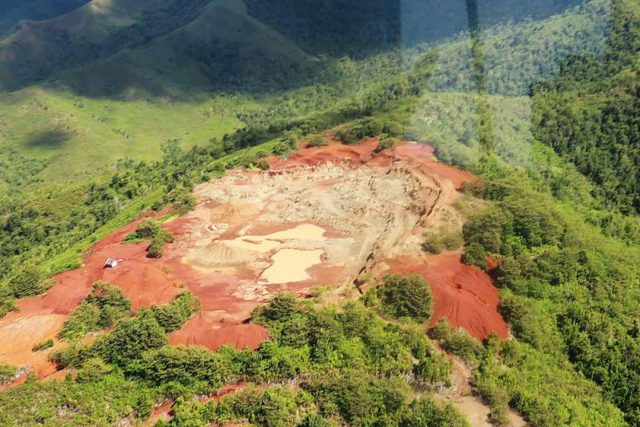
DAVAO ORIENTAL’S governor has asked the Environment department to permanently cancel the permit of the mining operators that caused water pollution in Mapagba and Pintatagan Rivers.

Governor Nelson L. Dayanghirang, in a Jan. 20 letter addressed to Environment Secretary Roy A. Cimatu, “strongly” recommended the cancellation of the mining permit of Riverbend Consolidated Mining Corporation/Arc Nickel Resources, Inc. and the permanent closure of the mining area located in Banaybanay town. 

The recommendation is based on findings by the provincial government’s technical staff.

“The company’s mitigating measures and preparedness to address unforeseen events is not enough. This blatant disregard of the company to its environmental protection and enhancement commitments had caused immeasurable environmental damages, should be given corrective measures,” the governor said in the letter. 

The Department of Environment and Natural Resources’ regional office, along with the Mines and Geosciences Bureau, has an ongoing assessment on possible penalties, operational adjustments as well as the environmental damage of the siltation.

The rivers have turned into an orange color from nickel laterite following heavy downpour on Jan. 13. 

Meanwhile, Davao-based environmental group Interfacing Development Interventions for Sustainability (IDIS) called on the Davao Oriental provincial board to issue a resolution supporting the governor’s recommendation. 

“With the letter of Gov. Dayanghirang addressed to DENR Sec. Roy Cimatu, we see a little ray of hope that the Provincial Government of Davao Oriental is taking the side of environmental justice and its people,” IDIS said in a statement last week.

The joint companies have yet to issue a statement on the incident. Operations have been suspended since Jan. 17 following a cease order from authorities.

The Davao Oriental provincial government has confirmed that the operators have been conducting massive desilting operations at the Mapagba River. They also distributed food packs to affected communities downstream. — Maya M. Padillo 

Arroyo bats for pedestrian, bike-friendly Pampanga urban center

PAMPANGA.GOV.PH

FORMER PRESIDENT Gloria Macapagal-Arroyo, who is running for a congressional seat representing her home province Pampanga in the May elections, will push for an urban development plan that prioritizes pedestrians and cyclists.

The envisioned Pampanga Megalopolis aims to position the province, located about 80 kilometers north of the capital, as the next business hub of the country to help decongest Metro Manila — offering a greener lifestyle in a “walkable” and “bikeable” urban area. 

“Roads should be designed with pedestrians as the top priority. A walkable city is a hallmark of modern cities,” Ms. Arroyo said in a statement on Sunday. 

The project, with urban planner Felino A. Palafox, Jr. tapped as designer, centers around the cities of Angeles, San Fernando, and Mabalacat City, and the surrounding towns of Porac, Lubao, Floridablanca and Guagua.

This “Pampanga Golden Triangle” covers the Clark Freeport Zone, where an international airport is located.

For transportation and mobility, new roads will be constructed such as a circumferential road that will interconnect the three cities and 19 municipalities of the province.

The plan also includes an intermodal mass transport system with 24-hour operations “to bring employees to tourist destinations and agro-industrial places,” she said.  

Among the priority tourism projects that will be developed are the Candaba Wetland and Nature Park, Floridablanca Astroscience Center, and Mt. Arayat Eco-Adventure Park.  

Toll expressways connect Pampanga to the capital as well as to Subic, which hosts a freeport zone and seaport. — Jaspearl Emerald G. Tan 

Power struggles

PCH.VECTOR-FREEPIK

I am pleased to share with readers a brief we posted to GlobalSource Partners (GSP) subscribers on the looming power shortage this summer. GSP (globalsourcepartners.com) is a network of independent analysts in emerging market countries. Christine Tang and I assisted by Shane Sia) are their local partners.

“The country entered 2022 with typhoon-related damage to power facilities that could lead to reserve shortfalls (yellow alerts) in the Luzon and Visayas grids. This came on top of outstanding issues related to the contracting of reserve power and the looming expiry of the supply agreement of the 1,200-megawatt (MW) Ilijan power plant fueled by Malampaya gas. Now two weeks in, power sector players are again in crisis management mode following Indonesia’s coal export ban, with the energy department joining other countries in the region in urging Indonesia to lift the ban.

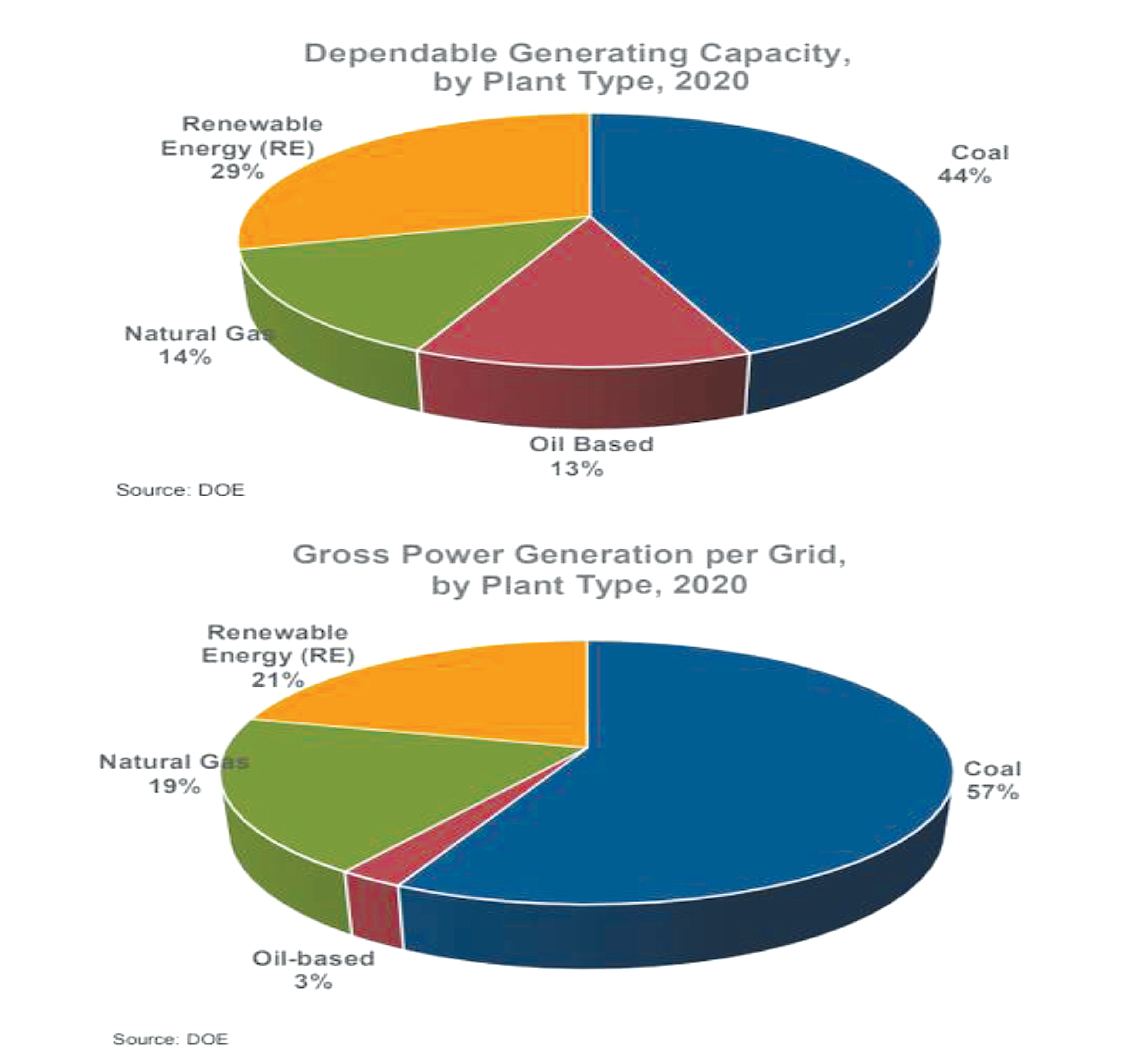
“Indonesia supplies over 95% of the Philippine’s coal imports. Coal-based plants, which comprise 44% of the power sector’s dependable capacity in 2020 and close to 60% of power generation, rely mainly on Indonesian coal. Although Indonesia has started to allow coal shipments to other countries in the region, industry players tell us that the Philippines is not among the priority destination countries. Reports indicate that with some plants scheduled for maintenance shutdown, available coal stocks may still last three weeks to two months, which from an aggregate perspective would tide the country over until the lifting of the export ban at end-January. (See the figures.)

“That however has not stopped understandably concerned power plant operators from planning for contingencies associated with logistical delays through purchases of coal in the spot market. There is after all no assurance at this time that the ban will not be extended nor that their orders will be placed ahead of the queue of countries trying to secure their own supplies; buyers that include heavyweights China and Japan. Although sourcing coal supplies from other countries is always an option, technical experts tell us that the closest alternative, Australian coal, costs more because of the higher quality, and is not even a perfect substitute, i.e., the plants were not designed to run on it.

“There is also the worry that this episode will be a precedent that will be repeated in the future considering all the uncertainties related to global climate change policy.  Hence, the more policy-oriented are also urging government to make good use of strong neighborly ties to formalize an energy cooperation agreement with Indonesia or under the ASEAN framework to bolster Philippine energy security.  As it is, concerns over medium-term energy security are growing with the Malampaya service contract ending in 2024 and estimates suggesting that remaining reserves would last only a few more years thereafter.

“The government has rightly stressed attracting new investments as a necessary condition for the economy’s post-pandemic recovery.  Survey after survey of investment climates reveal the importance of quality infrastructure, including power supply stability, for attracting FDI.

“Yet, this early in the new year, private players, including the transmission company NGCP (National Grid Corporation of the Philippines), the power sector’s system operator, are already again warning of thin supplies in the summer months and calling for demand side management.”  (End of GSP post.)

There are short term demand management measures to mitigate the impact of a possible summer power shortage, such as tapping the backup generation capacity of big firms, voluntary shifting of operations (peak/off peak pricing), interruptible load programs (first employed by Veco [Visayan Electric Company], now Meralco), and in the worst case, rotating brownouts for non-critical areas. 

In addition, firm contracting of ancillary services (to protect us from potential blackouts resulting from a lack of supply because it ensures that ancillary services are allocated from a separate pool of capacity), prioritization by NGCP of critical transmission lines, i.e., Dinginin, Negros-Cebu interconnection upgrading, Viz-Min interconnection, etc. will allow stranded generation to be dispatched.

The medium to long term solutions lie with creating the incentive framework and enforcing the regulations for needed transmission facilities and new power plants to be built. This includes lifting the caps on WESM (Wholesale Electricity Spot Market) pricing and allowing more imbedded generation, bypassing the high voltage transmission lines. Due to the influx of more variable renewable energy into the grid, regulators must revisit generation capacity, the mix of energy technologies, and energy storage requirements to ensure uninterrupted supply of power.

I have written on the subject in two earlier columns (“Red Alert and EPIRA,” June 13, 2021, https://www.bworldonline.com/red-alert-and-epira/ and “It’s not easy being green: balancing energy security and de carbonization in an emerging economy,” Nov. 7, 2021, https://www.bworldonline.com/its-not-easy-being-green-balancing-energy-security-and-decarbonization-for-an-emerging-economy/).

EXCERPTING SOME KEY POINTS: On the regulatory regime (from “Red Alert and EPIRA”):

1.) “Our regulators play an important role in seeing to it that the rules are properly enforced. On this front, I can only describe our regulator’s approach as schizophrenic, where they have tended to over-regulate the competitive part of the industry and under-regulate the regulated part of the industry.

“EPIRA designed the power generation side to be competitive, and allow competition to yield lower prices and higher reliability. There are rules in place, including market power restrictions, to keep any one player from unfairly prejudicing the consumer. Unfortunately, since then, the regulators have churned out regulation after regulation to curb the activities of generators. Each regulation is designed with the consumer in mind, but, as with many regulations and laws, they often carry unintended consequences that distort the behavior and incentives of market participants. When investors do not build new plants or do so slowly because the business environment has been riddled with regulatory uncertainty and risks, end consumers and our entire economy lose.”

2.) “On the other hand, the regulators have fallen short in its responsibility to enforce the rules over NGCP, which has the monopoly over the transmission lines in the country. Our regulators should focus on regulating the regulated business of transmission of power and consider simplifying the rules for gencos to allow the market to work, to de-risk the environment and to attract more long-term private capital.  In order to ensure that we have adequate reserves, the regulators should compel the Systems Operator to contract the full, firm reserve requirement. This can be done within 30 days, as there are genco offers today sitting on the desks at NGCP. This would ensure that we have the spare reserves the next time that the supply of power thins.

“Lastly, we need to fast track the implementation of the transmission line network. A three to four-year year lag creates significant uncertainty and an imbalance in the market. Correcting this will de-risk the investment environment and will encourage the entry of more power capacity into the grid.”

On the managing de-carbonization and the energy transition for the Philippines (from “It’s not easy being green…”):

1.) “A key consideration is intermittency of new solar and wind. Given the current state of technology and cost of battery storage, only fossil fuels can provide the Philippine base load capacity needed to drive industry. Especially required now as we try to recover from this pandemic — we need secure and affordable power to attract investment and quality jobs to lift the quarter of our people who are jobless and in absolute poverty.

2.) “…We are expected to be hard hit by adverse effects of climate change and therefore will need to invest considerably in adapting to what is a global crisis that we alone cannot solve. All of this points to the conclusion that we should bear considerably less of the cost of the transition than other countries. To his credit, Finance Secretary Carlos Dominguez III has recently publicly taken developed countries to task on this matter. Ultimately, we all share a common goal but our responsibilities will vary. Let’s learn from the experiences in the developed world and avoid quick-fix pathways and craft an energy transition with the Filipino people in mind and that the Filipino people can afford.”

3.) “Our power regulators, financial regulators, and other public stewards should be mindful of the tradeoffs and high stakes in climate-related decisions. We all dislike coal and other carbon intensive industries, but we should dislike seeing our people in abject poverty even more.”


Romeo L. Bernardo was finance undersecretary during the Cory Aquino and Fidel Ramos Administrations. He serves as a trustee/director in the Foundation for Economic Freedom, the Management Association of the Philippines, and the FINEX Foundation. He is an independent director in a diversified publicly listed holding company with major investments in power generation (both fossil fuels and renewables) and distribution. The views herein are his.

ADVERTISEMENT
ADVERTISEMENT