Home Blog Page 6815

Treasury bill rates may go up ahead of retail bond offering

BW FILE PHOTO

RATES of Treasury bills (T-bills) could increase this week as the government’s upcoming retail bond offer is expected to reduce liquidity in the market.

The Bureau of the Treasury (BTr) will offer P15 billion in Treasury bills (T-bills) on Monday, or P5 billion each in 91-, 182- and 364-day securities.

The BTr canceled the auctions for seven- and 10-year papers on Feb. 15 and 22 to make way for its sale of five-year retail Treasury bonds (RTBs).

Rizal Commercial Banking Corp. Chief Economist Michael L. Ricafort said the T-bill yields this week will either be steady or slightly higher on expectations of reduced demand as the RTB offering will siphon off some liquidity from the market.

This is also in line with the week-on-week increase in most yields in the secondary market, he said in a Viber message.

“T-bills will likely move higher by 5-10 basis points (bps) for 91-days, and around 5 bps for 182- and 364-day bills,” a trader said in a Viber message.

The BTr will sell at least P30 billion in five-year RTBs this month, its first retail bond offer this year. The offer period for the peso-denominated debt is Feb. 15 to 28. There will also be a swap offer for bonds falling due on March 14 and July 4.

In November, the government raised P360 billion from five-year RTBs with a coupon rate of 4.625%.

Retail bonds are targeted for small investors who want low-risk, higher-yielding savings instruments backed by the government.

Mr. Ricafort said the RTB’s coupon could be at 4.3% to 4.5%, while the trader gave a forecast range of 4.75% to 5%.

Another trader in a Viber message said bets on rate hikes from the US Federal Reserve following high January inflation could also affect yield movement this week.

“We are watchful of US Federal Reserve as some market analysts are floating the possibility of an emergency rate hike, though right now it is not being priced in.”

Fed officials have been providing forward guidance about a possible rate hike by March, and quicker inflation bolsters the case for policy tightening.

The US consumer price index increased 7.5% year on year in January, the quickest in four decades. It was faster than the 7.3% median estimate in a Reuters poll and the 7% in December.

At the secondary market on Friday, the 91- 182- and 364-day T-bills were quoted at 0.7726%, 1.058%, and 1.4553%, respectively, based on the PHP Bloomberg Valuation Reference Rates published on the Philippine Dealing System’s website.

The government made a full award of P15 billion as planned via the T-bills it auctioned off last week as total tenders reached P53.75 billion.

Broken down, the Treasury bureau raised P5 billion as planned via the 91-day securities from P14.73 billion in bids. The three-month debt papers fetched an average rate of 0.71%, up by 1.9 bps from the 0.691% seen the previous week.

The BTr also borrowed P5 billion as planned from the 182-day securities it offered on Monday from P21.46 billion in tenders. The average rate of the six-month T-bills slipped by 0.1 bp to 1.022% from 1.023% previously.

Lastly, the government made a full P5-billion award of the 364-day debt papers as bids reached P17.56 billion. The average yield on the one-year instrument stood at 1.408%, the same rate seen a week earlier.

Before it canceled the remaining two T-bond auctions for February, the BTr had planned to raise P200 billion from the domestic market this month, or P60 billion via T-bills and P140 billion from Treasury bonds.

The government borrows from local and external sources to help fund a budget deficit capped at 7.7% of gross domestic product this year. — Jenina P. Ibañez


Miller crashes out of giant slalom event

FIL-AM alpine skier Asa Miller — REUTERS

FIL-AM alpine skier Asa Miller cracked in the face of the harsh course conditions and crashed out of the men’s giant slalom event of the 2022 Beijing Winter Olympics at the Ice River atop Xiaohaituo Mountain on Sunday.

Coming out of the start line as the 63rd of 89 entries, the 21-year-old Mr. Miller fumbled and fell just under 20 seconds into his first run and sputtered out of the race where he had hopes on finishing in the top 45 that would have been an improvement to his 70th-place finish in Pyeongchang four years back.

Instead, the Oregon native would have to lick his wounds and just focus on redeeming himself with a better effort in the men’s slalom event on Wednesday.

Mr. Miller, just like 33 other competitors who had a DNF (did not finish), succumbed to the difficult conditions posed by the hard, falling snow — not the artificial type that organizers sprayed on the course days ago — the tough track and close to zero visibility in the area.

And these challenges left the event with only 56 of the 89 skiers in the start list.

“It’s certainly a bummer and as the course got skied out,” said Will Gregorak, Mr. Miller’s coach. “It’s not good on the upper pitch. I feel bum for him, but he had an excellent warm up this morning.”

So frustrated with his performance that Mr. Miller rushed back to the Olympic Village with dad Kelly Miller.

“(Mr.) Asa didn’t want to ski just to finish, he wants to ski lay down and run,” said Mr. Gregorak. “The hard part about this hill is that it comes out as you ride and it gets very slick.”

Interestingly, the snow came at the wrong time as it was reported that the snowfall was the first in this Games.

“It’s part of alpine skiing. But he still has the slalom on Wednesday,” said Philippine Olympic Committee President Abraham Tolentino.

Swiss Marco Odermatt recovered from an early mishap and finished in a minute and 2.92 seconds — the best effort of the round.

Austrian Stefan Brennsteiner (1:02.97), French Matthieu Faivre (1:03.01) and 2018 Pyeongchang silver medalist Henrik Kristoffersen of Norway (1:03.05) survived the lap to stay in the medal hunt.

In the race as Southeast Asia’s best performer, Thai Nicola Zanon emerged the best this far by checking in at 44th in 1:17.53 followed by East Timorese Yohan Gonclaves Goutt at 52nd with a 1:21.52.

“I’m still proud of him, he still put out the work. Like I said, he didn’t go out [only] to finish. That’s the nature of the sport, that’s what could happen,” said Mr. Gregorak. “(Mr.) Asa wants to put his head into slalom mode.

“He’ll take today and let the frustration out and then tomorrow we will go back to slalom.” — Joey Villar

Illegal fishing crackdown seen as key to meeting output goals

PHILSTAR

By Luisa Maria Jacinta C. Jocson

THE government must step up with its enforcement efforts against illegal, unreported, and unregulated fishing (IUUF) if it hopes to meet the fisheries output target for the year, an advocate for ethical fishing practices said.

“For illegal fishing alone in the municipal fisheries sector, we are losing around 257,000 to 402,000 metric tons (MT) of fish a year, which amounts to P24 to P37.8 billion,” Pangingisda Natin Gawing Tama (PANAGAT) Network Representative Dennis F. Calvan said in a Viber message.

In a televised briefing on Feb. 10, the Department of Agriculture (DA) said it expects a self-sufficiency rate in fishery resources of 92% this year.

“The 92% fishery resource sufficiency rate is achievable with the proper implementation of Republic Act (RA) No. 10654, which amended the Philippine Fisheries Code of 1998, to combat IUUF,” Mr. Calvan said.

Mr. Calvan also urged the government to monitor commercial fishing vessels involved in illegal fishing.

“The Bureau of Fisheries and Aquatic Resources (BFAR) should assist local government units to protect and manage the 15 kilometer (km) municipal waters zone; ensure the constitutionally guaranteed preferential rights to the 2.3 million registered fisherfolk over the use of coastal resources, protect the critical fishery habitats, which serve as spawning grounds, from damage; and continue implementing the closed fishing season as determined by best scientific evidence,” he added.

For the first quarter, the DA’s fish supply outlook data indicated a self-sufficiency level of 85% due to typhoon damage. In the second quarter, the projection is for a rate of 106% with the opening of fishing season by then.

The DA projects a self-sufficiency rate of 89% for the third quarter and 87% for the fourth quarter.

In a joint statement, fishermen’s associations have urged the government to enforce the rules requiring Vessel Monitoring Systems (VMS) to properly monitor illegal fishing practices.

“Illegal fishing has remained a problem even if we have the law. The intrusion of commercial fishers in municipal waters caused this problem of overfishing. Our fish stocks are continuously decreasing at an alarming rate. This has caused unjust suffering to poor artisanal fisherfolk — that’s why the government has to (live up to) its mandate to protect the coastal communities’ livelihood and the food security of the Filipino people,” Oceana Vice-President Gloria E. Ramos said in a statement.

“We condemn the continued violations committed by commercial fishing vessels and call on enforcement agencies to include non-compliance with vessel monitoring measures in the list of violations (warranting vessel apprehension),” according to the joint statement.

The Malabon City Regional Trial Court (RTC) recently declared Fisheries Administrative Order (FAO) No. 266 unconstitutional. FAO No. 266 requires VMS installation in all commercial fishing vessels under the BFAR’s Integrated Marine Environment Monitoring System.

“Requiring the installation of vessel monitoring measures on commercial fishing vessels (will) strengthen the monitoring, control and surveillance system required by the law to encompass all Philippine-flagged fishing vessels. Agriculture Secretary William D. Dar has vowed to implement vessel monitoring measures. The recent reversal in the position of the Office of the Solicitor General on FAO No. 266 implementation is baffling, to say the least,” Ms. Ramos said.

“We call on the BFAR to push through with the implementation of vessel monitoring measures to intercept illegal commercial fishing in municipal waters,” said Norlan Pagal, President of ANAK KO Fisherfolk Association.

BSP proposes regulatory sandbox framework

BW FILE PHOTO

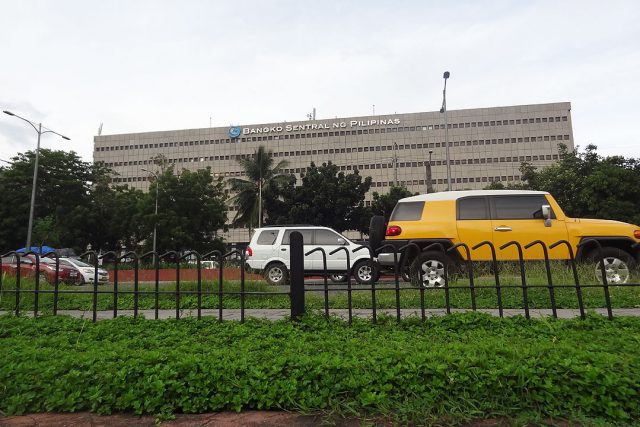
THE CENTRAL BANK is looking to standardize a framework that will allow financial institutions to offer services and products under a controlled and time-bound testing environment.

In a proposed circular, the Bangko Sentral ng Pilipinas (BSP) outlined the requirements for the regulatory sandbox for financial institutions that have a proposed product or solution for the market.

The central bank will accept feedback on the draft circular from stakeholders until Feb. 28.

The regulatory sandbox will have a four-stage process, namely application, evaluation, testing, and exit.

“Testing duration can range from three to 12 months from the pilot go-live date, depending on the complexity of the proposed solution. The participant shall submit to the BSP any proposed adjustments in the duration or changes to the roster of participants and/or services offered,” the BSP said.

In order to be eligible for the regulatory sandbox, a financial solution should use new, emerging or existing technology in an innovative manner. It should also bridge a market gap in the delivery of financial services.

Applicants are expected to provide justification, preferably through market research that will be submitted to the BSP.

The central bank expects applicants to have an initial test plan that includes case scenarios and expected outcome from the project. To monitor the progress of pilot implementation, applicants should determine key performance indicators and should also be prepared for mitigation strategies regarding significant risks.

The regulatory sandbox approval may be revoked by the BSP in certain conditions, including when participants breach protocols related to protection, information security, or anti-money laundering and counter-terrorism standard procedures, when misleading and inaccurate information is given by a participant, or when technical defects are not addressed.

The approval could also be revoked if a participant is undergoing liquidation or becomes a subject for supervisory action that may have an impact on the experiment.

“The BSP also reserves the right to revoke the approval without prior notice if there is an urgent need to protect the financial system, the participant, its consumers, or the general public,” it said.

A Sandbox Oversight Team in the BSP will be in charge of supervision and implementation of these regulations.

“The oversight and management activities shall include, but are not limited to, the implementation of the regulatory sandbox and its guidelines, evaluation of applications, and provision of technical supervision and assistance to the participants,” the BSP said in the draft circular. — L.W.T. Noble

EJ Obiena earns Oregon World Indoor Championship slot

FOR his recent strong showing in the Orlen Cup in Lodz, Poland, Olympian pole-vaulter Ernest John “EJ” Obiena has secured a spot to the World Indoor Championships slated for March 18-20 in Belgrade, Serbia and the World Championships set on July 15-24 in Eugene, Oregon.

The World No. 5 registered his season-best 5.81 meters in reigning supreme in Lodz and securing spots to two of the biggest competitions in the world next to the Olympics.

After the feat, the Asian record-holder and Southeast Asian Games gold medalist attributed it to him overcoming adversity.

“As I observe the best in athletics, a key element of being a true champion is managing adversity,” said Mr. Obiena in his Facebook post. “I have my share of adversity as everyone knows.

“But so does everyone else. The name of the game is to keep showing up and keep trying,” he added.

Mr. Obiena is looking at eclipsing his personal best 5.93m — currently the national and Asian mark — he set in the Golden Roof Challenge in Innsbruck, Austria last year as he competes in more events including the Meeting Hauts-de-France Friday in Lievin, France.

Mr. Obiena is coming off an operation that fixed his torn meniscus and the current spat with the Philippine Athletics Track and Field Association.

But he set all of it aside and showed tremendous poise and focus.

Philippine Olympic Committee President Abraham Tolentino lauded Mr. Obiena for his effort.

“EJ is a true athlete and his performance in Poland is testament to his love, dedication, and passion for his sport despite the issues he’s been going through outside of the playing field. EJ displayed pure focus in winning the gold medal, his first for the season,” said Mr. Tolentino. — Joey Villar

Dole unit starts operating P306-M Lanao del Sur pineapple plant

BANGSAMORO.GOV.PH

DOLE PHILIPPINES, Inc.’s new fresh pineapple packing plant in Lanao del Sur was formally launched last week amid plans to expand surrounding plantations to increase output.

The P306-million facility is operated by Dole Philippines subsidiary Wao Development Corp. (WDC), which registered the project with the Regional Bangsamoro Board of Investments in 2019.

“The WDC pineapple packing plant is capable of operating at a capacity of 2,000,000 boxes of pineapple but our plant was designed for 6,000,000 boxes rated capacity,“ WDC President Francis Babac said in a statement issued on Sunday by the Bangsamoro government.

WDC operates 1,200 hectares of pineapple plantations in Wao, Lanao del Sur, which is adjacent to Dole’s pineapple plantations in Bukidnon.

“We are planning to expand our planted areas for pineapple with additional 1,400 hectares by investing more than P200 million,” Mr. Babac said.

“Hopefully in the BARMM (Bangsamoro Autonomous Region in Musmlim Mindanao) and adjacent areas, to address the gap in our packing plant production,” he added.

Output from the plant will be exported around the Asia Pacific, particularly Japan and South Korea, as well as the Middle East.

Dole Philippines is owned by Japanese trading company Itochu Corp.

Board of Investments Chair Ishak V. Mastura said the regional government is ready “to help WDC find consolidated areas for their new pineapple plantation in the region” and offer fiscal incentives.

The company, one of the biggest employers in the province, has been granted income tax holidays and reduced tariffs for imported capital equipment for the packing plant, which has least 1,200 workers.

“WDC is an ideal foreign investor for BARMM because of the high-value crop and dollar export potential of their product,” Mr. Mastura said. — Marifi S. Jara

Menswear and genderless designers kick off New York Fashion Week

MODELS present creations by A.Potts during Men’s Day at Fashion Week in New York City, New York, US, Feb. 11. — REUTERS/CAITLIN OCHS

NEW YORK —  New York Fashion Week kicked off on Friday with menswear and genderless designers presenting their fall/winter collections at the 17th bi-annual New York Men’s Day.

This season eight emerging brands were paired with heritage brand Perry Ellis America, which is reentering the fashion space with a new focus.

“It’s not different to the roots. It’s just looking back again at what made Perry Ellis great to begin with,” said Perry Ellis designer Thomas Harvey.

Also showing was Council of Fashion Designers of America member Teddy Vonranson, who talked about the challenges of creating a collection during the pandemic.

“I probably echo a lot of makers and designers… our lead times are longer,” said Mr. Vonranson, referring to workers in the factories unable to get to work because of the latest wave of the Omicron variant of the coronavirus.

Brooklyn-based designer Aaron Potts presented his genderless fall/winter 2022 collection for his brand A.Potts, entitled “Skin Folk.”

Mr. Potts said the goal was to create pieces centered on a person’s spirit however they identify, adding that he challenged himself to break down any boundaries within his own creativity.

Designer Tristan Detwiler showcased his new line for his brand STAN by using mature models. His story was based around the “classic gentleman.”

Ohio-based brand William Fredrick presented its second collection at New York Fashion Week, with all looks designed, developed, and manufactured in Cleveland, Ohio.

New York fashion week will run until Feb. 16 with over 150 designers participating. —  Reuters

Yields on government debt climb as US inflation surges

By Ana Olivia A. Tirona, Researcher

YIELDS on government securities (GS)surged last week after investors continued to price in a potentially more aggressive US Federal Reserve hike in March after the world’s largest economy reported a 40-year high inflation rate in January.

GS yields in the secondary market jumped by 14.12 basis points (bps) on average week on week, based on the PHP Bloomberg Valuation (BVAL) Service Reference Rates as of Feb. 11 published on the Philippine Dealing System’s website.

Yields, which move opposite to prices, rose across the board on Friday from their Feb. 4 close except for that on the six-month Treasury bill (T-bill), which dropped by 6.69 bps to 1.058%.

Rates of the short-dated 91- and 364-day T-bills went up by 2.29 bps and 1.59 bps to 0.7726% and 1.4553%, respectively.

At the belly of the curve, yields on the two-, three-, four-, five-, and seven-year Treasury bonds (T-bonds) jumped by 7.38 bps, 10.31 bps, 14.7 bps, 20.36 bps, and 28.47 bps, respectively, to 2.5548%, 3.2623%, 3.9098%, 4.4332%, and 4.9998%.

At the end of the curve, rates of the 10-, 20-, and 25-year papers also climbed by 48.22 bps (to 5.3627%), 14.18 bps (5.2418%) and 14.53 bps (5.2384%), respectively.

“Local GS yields skyrocketed week on week as traders and investors continued to recalibrate expectations on the number and magnitude of US Federal Reserve’s imminent rate hikes as their inflation continues to run hot,” a bond trader said in a Viber message on Friday.

The trader also noted that the reissued 10-year papers last week were fully awarded despite fetching higher yields.

“GS further sold off after the RTB (retail Treasury bond) announcement came out as the issuance may tighten liquidity,” the trader said.

“The upward movement was broadly felt at the belly and tail-end of the curve. However, short-term rates remained subdued as local participants highly expect the Bangko Sentral ng Pilipinas (BSP) to remain accommodative,” a second bond trader said in an e-mail interview.

US inflation rate peaked at 7.5% year on year in January, this was the largest annual increase in 40 years or since February 1982, Reuters reported.

This could further bolster the case for a more aggressive rate hike from the Fed in March.

Meanwhile, last week, the Bureau of the Treasury raised P35 billion as planned through the reissued 10-year papers despite average yield rising to 5.093%, tracking a sell-off in the US bond market. The tenor attracted P51.077 billion in bids.

The Treasury said on Friday it will offer this year’s first RTBs to raise at least P30 billion. The five-year bonds will be sold from Feb. 15 to 28 with a swap offer for notes maturing on March 14 and July 4. The settlement will be on March 4.

Due to the RTB offer, the Treasury canceled its scheduled auctions of seven- and 10-year T-bonds on Feb. 15 and 22.

“For the week ahead, bearish sentiment for local bonds will persist given elevated global yields and as traders gear up for the RTB offering. On that note, yields are expected to move with upward bias for the week,” the first bond trader said.

The second bond trader expects GS yields to move with an upward trend amid potentially strong US producer inflation report and hawkish cues from the January 2022 Fed policy minutes.

“However, the increase in GS yields might be limited as the BSP is broadly expected to remain dovish in its policy meeting this week,” the second bond trader added.

The BSP’s Monetary Board is scheduled to meet on Feb 17. — with Reuters

KonsultaMD integrating into Huawei’s wearables

By Arjay L. Balinbin, Senior Reporter

917VENTURES’ KonsultaMD said it is integrating its telemedicine platform into wearable technology through Huawei as part of its non-face-to-face services.

“KonsultaMD continues to break new ground with its integration into Huawei wearables,” KonsultaMD Chief Executive Officer Cholo A. Tagaysay told BusinessWorld in an e-mail interview.

917Ventures serves as the corporate venture builder of Globe Telecom, Inc.

“KonsultaMD will soon be able to track your steps, calories, workouts, heart rate, oxygen, stress levels, and sleep,” Mr. Tagaysay added.

Data analytics and consulting company GlobalData said wearable technology is a “key driver” in the growth of mobile health.

“With the increasing number of smartphone users worldwide, it is not a surprise to see a rise in the popularity of mobile health apps. When coupled with wearable technology, we can expect to see continued market growth,” Kevin Dang, medical data analyst at GlobalData, said in a statement.

“We can clearly see that the two segments that dominate global wearables revenue are hearables and smartwatches. Hearables have been around quite some time now as their main purpose is for listening to music. Smartwatches, on the other hand, have gained traction in recent years — with their abundance of built-in functions they are very versatile devices,” he added.

GlobalData expects the wearable technology market to grow at a compound annual growth rate of 19% to $64 billion by 2024, a 237% increase since 2019.

“Mobile health is in a very exciting stage of development. Its applications span from mainstream daily usage with wearables to specific use cases in healthcare. The possibilities are endless and the potential for growth is astounding,” Mr. Dang said.

KonsultaMD’s Mr. Tagaysay said that “in the near future,” the company will also launch app developments that involve hospital integration and clinics.

“We will continue to partner with health products and establishments, super apps, tech, insurance, retail and local government units,” he added.

Globe said last week that KonsultaMD is exhibiting “strong growth” with more than 140% revenue growth, reaching over a million members (+168% year on year) across 50,000 retail outlets nationwide.

“To further expand its reach, KonsultaMD is now also partnering with over 60 brands and utilizing social media app TikTok,” it also said.

Gilas women’s team bracing for return to training

WITH the continuous improvement of the pandemic situation in the country, the Gilas Pilipinas women’s team is bracing for a return to its own training camp soon to prepare for the fast-approaching Southeast Asian (SEA) Games.

Coach Pat Aquino said the Samahang Basketbol ng Pilipinas (SBP) already requested for a training clearance from the Philippine Sports Commission with less than three months left in their SEA Games title defense preparation.

“We’re getting ready to go back to training,” Mr. Aquino told The STAR following the SBP’s submission of the formal request letter through executive director Sonny Barrios.

“We’re hoping for the soonest approval so we can start preparing as early as possible,” he added.

Though Gilas is willing to enter another bubble training, Mr. Aquino is hoping for a nod to hold camp under a closed-circuit setup like the other pro and national teams right now.

“…We will be ready for bubble training. We will follow Inter-Agency Task Force (IATF) protocols,” he added, citing the regular Zoom workouts of the Filipina ballers since their last stint.

Gilas last saw action in the 2021 FIBA Women’s Asia Cup last October in Jordan, finishing at seventh place to stay in the prestigious Division A.

In Hanoi this May, the Filipina ballers will be out for a second straight gold medal in both 3×3 and 5-on-5 events after a twin-title in the 2019 edition held here. — John Bryan Ulanday

Bigger land boosts Bicol region’s 2021 palay, corn outputs

PHILSTAR FILE PHOTO

THE Department of Agriculture (DA) said palay production in the Bicol region posted growth of 4.01% growth, while corn output rose 3.81% growth in 2021 amid an increase in the land area planted to the two staple crops, with rice benefiting from greater adoption of hybrid seed.

The region reported palay production of 1.35 million metric tons (MT), a record, while corn output came in at 292,748 MT, according to the Philippine Statistics Authority.

DA Bicol Regional Executive Director Rodel P. Tornilla said palay output was the second record for Bicol since 2011.

He said strong performances were turned in by farmers in areas practicing a clustering strategy, where resources are shared by cultivators pooling their small plots.

Rice and Corn Program Head Earl Vincent P. Vegas said that the increase in yield could be attributed to the expansion of the hectarage planted to hybrid rice.

Camarines Norte posted an increase in palay production of 7.17% to 116,292.63 MT, followed by Camarines Sur, where output grew 5.04% to 683,203 MT. Sorsogon posted output growth of 3.97% to 150,793.40 MT; Albay 3.95% to 224,533 MT; and Masbate 0.50% to 148,754 MT. Output in Catanduanes contracted 13.48% to 23,376 MT.

Output of yellow corn, the variety used for animal feed, was 220,170.50 MT in 2021, while white corn output was 75,577.78 MT.

The area planted to corn increased by 1.82% to 108,929.87 hectares in 2021.

Camarines Sur has the most land planted to corn (47,838 hectares), followed by Masbate (38,722 hectares), Albay (20,699 hectares), and Camarines Norte (1,029). — Luisa Maria Jacinta C. Jocson

Giving shape to time

“MY soul burns ardently to understand this most intricate enigma,” said St. Augustine in his Confessions, making an inquiry about the nature of time. For centuries, philosophers and scientists have struggled to give shape to the nature of time. A smartwatch campaign by tech company Garmin throws its hat into the ring, and its contenders are a dancer, an artist, and a model.

The watch in question is the Garmin Vivomove Sport, with a case of fiber-reinforced polymer and silicone straps. Measuring 40mm, it combines the look of an analog watch with a smartwatch, with several apps designed to track the user’s body in its movement through time (and also to sync with their phone).

The movement of the body through time is essential in its discussion. Eva Hoffman, in her 2009 book Time (under the Big Ideas, Small Books series) condenses the thoughts of philosopher Maurice Merleau-Ponty on time: “Merleau-Ponty stressed that we construct time not through pure perception but through motility and action, through our bodies’ motions in space and through acting within and upon the world.”

Dancer Ella Fortun seems to think so. In a series of videos shot by Garmin in Intramuros, streamed through Facebook on Feb. 8, Ms. Fortun says, “When I imagine what time looks like, I see an elegant and precise dance move.”

“I can imagine myself centerstage with a long, silky skirt. My arm propels forward and in an upward motion, because time for me isn’t linear. It’s circular, and it flows,” she said. “I love contemporary dance because it’s a reflection of how I move with time. The song creeps in, and I move slowly at first, finding my footing.”

“Time just flows by so quickly when I’m onstage. In these ecstatic moments, time dissolves and I feel almost weightless,” she said.

Ms. Fortun tested out the Garmin Vivomove Sport in Cocoa, showing how she taps the screen to see the apps. The apps include a Pulse Ox to check blood oxygen saturation, a fitness tracker, a hydration tracker, a sleep tracker, and even a menstrual cycle and pregnancy tracker. The smartwatch can sync to one’s phone, with meeting alerts, incoming call and messaging alerts, powered with a maximum battery life of five days. “I can use this for work, and for working out,” said the dancer.

Artist Denise Heredia, meanwhile, said, “I think time looks very colorful, like a rainbow. It’s disorganized and organized at the same time.”

“Time to me is colorful because I like to spend it spreading beauty and positivity through my art,” she said. She tested out the model in Ivory, and said, “The overall aesthetic is just perfect for me.”

Model Jessica Yang, currently in the Philippines, said, “Time looks like opportunities: opportunities to create new things and do better.

“In my line of work, time moves swiftly. There are only seconds between outfits and sets; only split seconds between shots and poses to get everything on point,” she said. “There are also moments when time stands still. Like when I’m on the runway. Time is frozen and almost feels like it doesn’t exist.

“I would say time and I have a great relationship. Like my life is intertwined with it, and each moment is magic —  a present.” Testing out her smartwatch in Cool Mint, she said, “The color is amazing. And as a fashion girl, I approve.”

We won’t just leave it at that: we end with the words of St. Augustine, again in Confessions: “So, then, as I was saying, we measure periods of time as they pass. And if anyone asks me, ‘How do you know this?,’ I can answer: ‘I know because we measure.’”

The Garmin Vivomove Sport costs P9,595, and is available on ph.garmin.com, Lazada, Shopee, and Kinetic. — Joseph L. Garcia

ADVERTISEMENT
ADVERTISEMENT