Home Blog Page 6625

Rates of T-bills, bonds seen to rise

BW FILE PHOTO

RATES of government securities are expected to increase this week as Russia’s invasion of Ukraine continues to stoke global inflation pressures.

The Bureau of the Treasury (BTr) will offer P15 billion in Treasury bills (T-bills) on Monday, or P5 billion each in 91-, 182- and 364-day securities.

On Tuesday, it will auction off P35 billion in reissued 10-year Treasury bonds (T-bonds) with a remaining life of nine years and nine months.

A trader said T-bill rates will likely go up by 5 to 10 basis points (bps) from the previous auction, while the 10-year bond’s yield could range from 5.8% to 6%.

“Market participants are still cautious given the forecasted trajectory of US Fed rate hikes and players continue to monitor the ongoing conflict between Russia and Ukraine,” the trader said via Viber.

“Onshore, the Bangko Sentral ng Pilipinas (BSP) said that inflation will likely breach target this year and that it is ready to respond should there be a buildup in inflation pressures.”

Another trader said via Viber that rates of government securities will likely move sideways with an upward bias as inflation pressures remain, especially with another round of local oil price hikes seen on Tuesday.

“Market will also wait for the Bureau of the Treasury’s borrowing schedule for April.”

The US central bank must move “expeditiously” to bring too-high inflation to heel, US Federal Reserve Chair Jerome H. Powell said last week, adding that it could use bigger-than-usual interest rate hikes if needed to do so, Reuters reported.

In particular, he added, “if we conclude that it is appropriate to move more aggressively by raising the federal funds rate by more than 25 bps at a meeting or meetings, we will do so.”

Fed policy makers this month raised interest rates for the first time in three years and signaled ongoing rate hikes ahead. Most of them see the short-term policy rate — pinned for two years near zero — at 1.9% by the end of this year, a pace that could be achieved with quarter-percentage-point increases at each of their next six policy meetings.

Meanwhile, the BSP Monetary Board kept benchmark interest rates at record lows during its meeting on Thursday, but said it could hike soon amid rising inflation risks amid the war between Russia and Ukraine.

The BSP now expects inflation to average 4.3% this year, above the 2-4% target and the previous 3.7% estimate.

At the secondary market on Friday, the 91- 182- and 364-day T-bills were quoted at 1.3212%, 1.5266%, and 1.7378%, respectively, based on the PHP Bloomberg Valuation Reference Rates published on the Philippine Dealing System’s website.

Meanwhile, the 10-year tenor fetched a yield of 5.7193%.

The government partially awarded the T-bills it offered last week as rates continued to rise on expectations of further rate hikes from the US Federal Reserve. The BTr raised just P13.9 billion via the short-term securities, or less than the programmed P15 billion.

Broken down, the Treasury awarded just P4.87 billion in 91-day T-bills versus the P5 billion on offer, even as total bids reached P9.47 billion. The average rate for the three-month T-bill climbed by 23.1 bps to 1.536% from the 1.305% fetched during the previous auction. 

The government also made a partial P4.03-billion award of 364-day papers versus the P5-billion offer even as bids totaled P7.7 billion. The average yield on the one-year paper went up by 5.8 bps to 1.792% from the 1.734% fetched previously.

On the other hand, the BTr borrowed P5 billion as planned via the 182-day T-bills that attracted P8.74 billion in tenders. The tenor fetched an average yield of 1.607%, up by 14.9 bps from the 1.458% seen previously.

Meanwhile, the last time the government offered the 10-year T-bonds to be auctioned off on Tuesday was on Feb. 8. The debt papers were awarded at an average rate of 5.093% at that auction, up by 21.8 bps from the 4.875% quoted when the series was first offered on Jan. 18.

The BTr wants to raise P250 billion from the domestic market this month, or P75 billion via T-bills and P175 billion from T-bonds. However, it has made several rejections and partial awards at its auctions due to rising yields.

The government borrows from local and external sources to help fund a budget deficit capped at 7.7% of gross domestic product this year. — Jenina P. Ibañez


AC Energy rises, wraps up subscription deals

AC ENERGY Corp. was the 12th most actively traded stock last week after completing its subscription agreements with five companies worth more than P3 billion.

A total of P791.52-million worth of 97.90 million shares exchange hands at the local bourse from March 21 to 23, data from the Philippine Stock Exchange showed.

AC Energy shares closed at P8.30 apiece on Friday, up 1.2% from the Ayala-led company’s closing price of P8.20 each on March 18. Year to date, its share price has decreased by 21%.

The recent rise was due to the completion of its subscription agreement with five entities collectively known as the UPC Philippines group to nearly 390 million shares, increasing its stake in the latter’s more than 2,300 megawatts (MW) of renewable energy projects under development.

“The subscription price at the time of the signing last October was subject to market conditions. But since the transaction was finalized in March, share price has fallen to P8.2 per share, which was used as the basis for the share price. This likely reduced any overhang on the share price, which caused the stock to surge,” COL Financial Group, Inc. Research Analyst Adrian Alexander N. Yu said in an e-mail.

In a disclosure on Wednesday, AC Energy finalized five subscriptions from UPC Philippines Partners Ltd. for 19,059,423 shares; Wind City, Inc. for 142,668,634 shares; Estanyol Holdings Ltd. for 153,493,200 shares; Tenggay Holdings Ltd. for 70,525,763 shares; and Alan Kerr, or collectively known as the UPC Philippines group for 4,248,813 shares at P8.2889 apiece.

“Buying out its partner in an Australia-based joint venture will add 2,300 megawatts of renewable energy to its pipeline of new projects, which are all in line with the company’s goal of becoming the biggest listed energy platform in the Southeast Asia region by putting up 5,000 MW of renewable capacity by 2025,” Globalinks Securities and Stocks, Inc. Head of Sales Trading Toby Allan C. Arce said in an e-mail.

The takeover will give AC Energy access to UPC Philippines’ projects consisting of more than 2,300 MW in capacity currently in the works.

On March 14, it said that its subsidiary, AC Renewables International Pte. Ltd., had signed a share purchase agreement to buy the 52% interest held by its partner in a joint venture holding firm for energy and power projects and investments in Australia.

The agreement was forged on March 11 to acquire the interest of UPC Renewables Asia-Pacific Holdings Pte. Ltd. and Anton Rohner in UPC-AC Renewables Australia.

The transaction will cost AC Energy $243.3 million, initial reports showed.

The first tranche of the buyout will be done by end-March this year, while the second tranche will be completed by next year’s first quarter.

AC Energy’s attributable net income rose by 21.6% year on year to P4.27 billion in the nine months to September last year.

“Factoring in the increase in AC Energy’s share in the revenues, its net income is forecast to reach around P8.4 billion in 2022, and quite possibly around P11.5 billion in 2023,” Mr. Arce said.

He said the stock is likely to continue its increase this week, but “may encounter some resistance at P8.35. Should it manage to break through that, the next nearest resistance could be at P8.50.”

“In the longer run, AC Energy could next reach between P9.00 and P9.15. On the other hand, nearest support could be between P7.90 and P7.80. Then further down the line, maybe around P7.60. Long term, probably between P7.25 and P7.20,” Mr. Arce said.

Mr. Yu expects AC Energy’s operating profits to increase by 36% in 2022, driven by the gradual start of its greenfield operations.

“Barring any significant negative news, we may see AC Energy continue to trend higher [this] week with support at P7.8 per share and resistance at P9 per share.” — Lourdes O. Pilar

Five things to watch at the Academy Awards ceremony

OSCARS.ORG

LOS ANGELES — The Academy Awards, Hollywood’s annual red-carpet celebration of the movies, takes place on Sunday (Monday morning in the Philippines. – Ed.). Here are five things to watch during the ceremony.

• Show Shakeup

After record-low TV ratings last year, producers are testing new ways to try and boost viewership. For the first time, hosting duties will be shared by three women: comedians Amy Schumer, Regina Hall, and Wanda Sykes. In another twist, results of a Twitter poll of favorite movie and scene will be revealed. Winners of eight categories including production design and sound will be announced before the live telecast starts. Their speeches will be edited into the broadcast, a move to help wrap up the festivities within three hours.

• Streaming Battle

No streaming service has ever won the film industry’s top prize, the best picture statuette. That is likely to change on Sunday, if awards watchers are correct. Most see a two-way race between online video pioneer Netflix, Inc. and Apple TV+, the streaming service run by the iPhone maker. Netflix’s gothic Western The Power of the Dog landed 12 nominations, more than any other film. But Apple’s CODA, about a deaf family with a hearing daughter who wants to pursue a career in music, gained momentum with wins at the Screen Actors Guild Awards and the Producers Guild Awards.

• Director Face-Off

Jane Campion could become the third woman in the Oscars’ 94-year-history to win best director, for Power of the Dog. She is the only woman to have been nominated in the category twice. Ms. Campion received her first nod for the 1993 film The Piano, but lost out to Steven Spielberg and Schindler’s List. Spielberg is competing again this year with West Side Story. A Campion win would make for back-to-back victories for women, after Nomadland director Chloe Zhao took the trophy last year.

• Moment For Ukraine

While the show’s overall mood is meant to be celebratory, the telecast will acknowledge Russia’s invasion of Ukraine. Producers say they want to offer an escape from the world’s troubles but also feel they need to recognize the turmoil. “You don’t go into a show like this and not be aware of that and not find a way to respectfully acknowledge where we are,” producer Will Packer said.

• Most Unpredictable Race

Any of the five contenders for best actress could win the statuette, awards experts say. Some give the edge to Jessica Chastain for her portrayal of TV evangelist Tammy Faye Bakker. Kristen Stewart, known for playing lovestruck vampire Bella in the Twilight saga, also is in the mix for her portrayal of Princess Diana in Spencer.

The two are competing against Penelope Cruz for Spanish-language film Parallel Mothers, Nicole Kidman’s portrayal of Lucille Ball in Being the Ricardos, and Olivia Colman for The Lost Daughter. The latter three actresses already have an Oscar. —  Reuters

Fisheries biotech center to rise in Muñoz, N. Ecija

CENTRAL LUZON STATE UNIVERSITY FB PAGE

A FISHERIES biotechnology center will be set up in Muñoz, Nueva Ecija on the campus of Central Luzon State University (CLSU), the Department of Agriculture (DA) said.

The DA and CLSU signed a memorandum of agreement to build the facility on a seven-hectare site.

It is expected to provide a “conducive environment for the conduct of fisheries biotechnology research and development and other related activities,” the DA said in a statement over the weekend.

Institutions are typically tapped to house major biotechnology facilities. The Philippine Carabao Center hosts the Livestock Biotechnology Center and Philippine Rice Research Institute hosts the Crops Biotechnology Center.

All three centers aim to provide research opportunities, allowing a collaborative avenue across the entire agriculture sector.

“This (center) will also benefit the university’s students in terms of providing them with training opportunities,” CLSU President Edgar A. Orden added. — Luisa Maria Jacinta C. Jocson

Honda Civic S Turbo CVT Honda Sensing: Road rave with an atypical ‘entry level’ trim

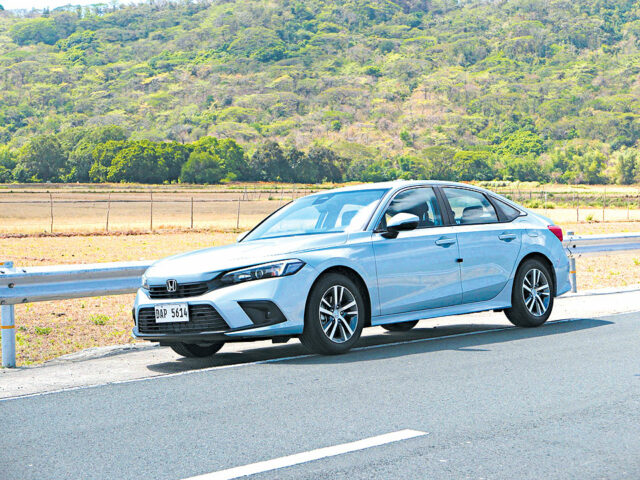
‘S’ could very well mean ‘super,’ as the entry-level Civic gets toys and touches that belie its place on the Civic totem pole. — PHOTO BY KAP MACEDA AGUILA

As the world resets, we’re getting to enjoy the open road again.

WHO DOESN’T love the Civic? There’s always enough of this Honda icon to love and, really, not too much you won’t. Outside of a couple of funky, polarizing styles throughout its 11 generations, the Honda Civic has remained a solid, bankable choice for people with the wherewithal — or that company car loan — to get one.

It’s the quintessential sedan that’s a bullet-proof, reliable, no-overthinking-necessary option that never disappoints.

Honda Cars Philippines, Inc. (HCPI) recently gathered media practitioners to a health-protocols-compliant drive to and from Tagaytay and Batangas aboard the range of 11th-gen Civics. We had our nostrils swabbed bright and early (talk about the “nose normal”) as part of the safety measures, and only vaccinated people were invited. Drivers weren’t allowed to switch cars, and (with some exceptions) only one person was allowed in a specific vehicle. It was, in a way, keeping to one’s bubble, and the Civic is certainly a bubble you’d love to stay in.

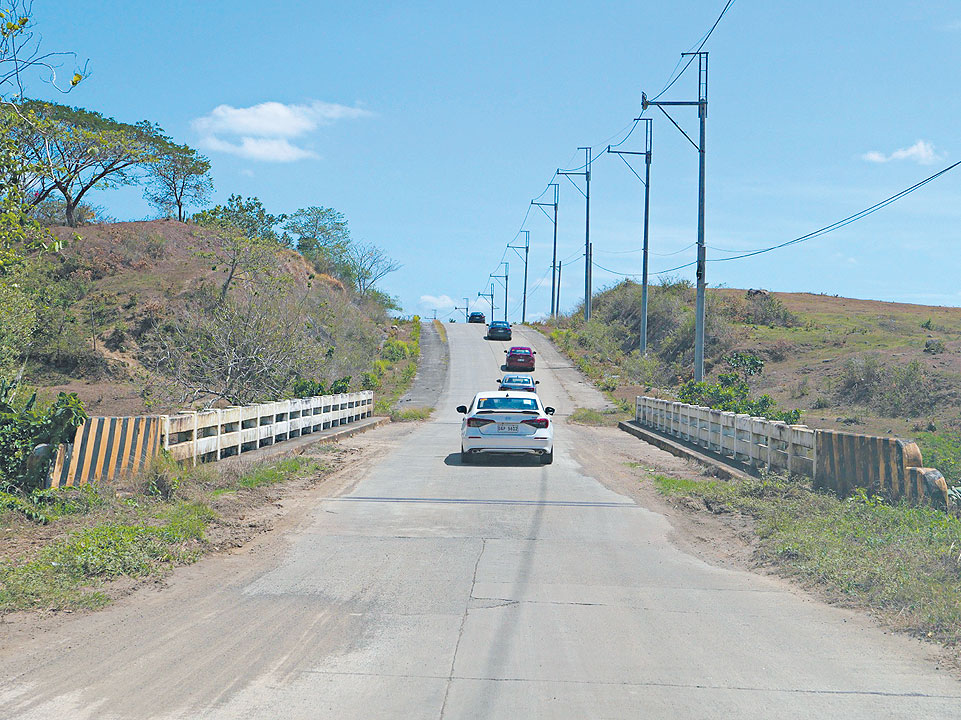
Commencing from a parking lot in BGC, our drive took us through the South Luzon Expressway (SLEx) and the Cavite-Laguna Expressway (CALAx), where we experienced the poise and panache of the Civic. It merely shrugged through the twisties — keeping itself planted on terra firma with nary a sweat on its protruding brow.

The whole lineup gets a common mill — a turbocharged 1.5-liter, four-cylinder DOHC VTEC that blurts out 178ps and 240Nm (37 and 66 more, respectively, versus the previous gen’s 1.8-liter, natural-breathing engine; 5ps and 20Nm more than the 10th-gen 1.5-liter). Alas, for the manual fans, no new Civic here can scratch that itch for control. Rather, Honda goes for convenience instead via a CVT system.

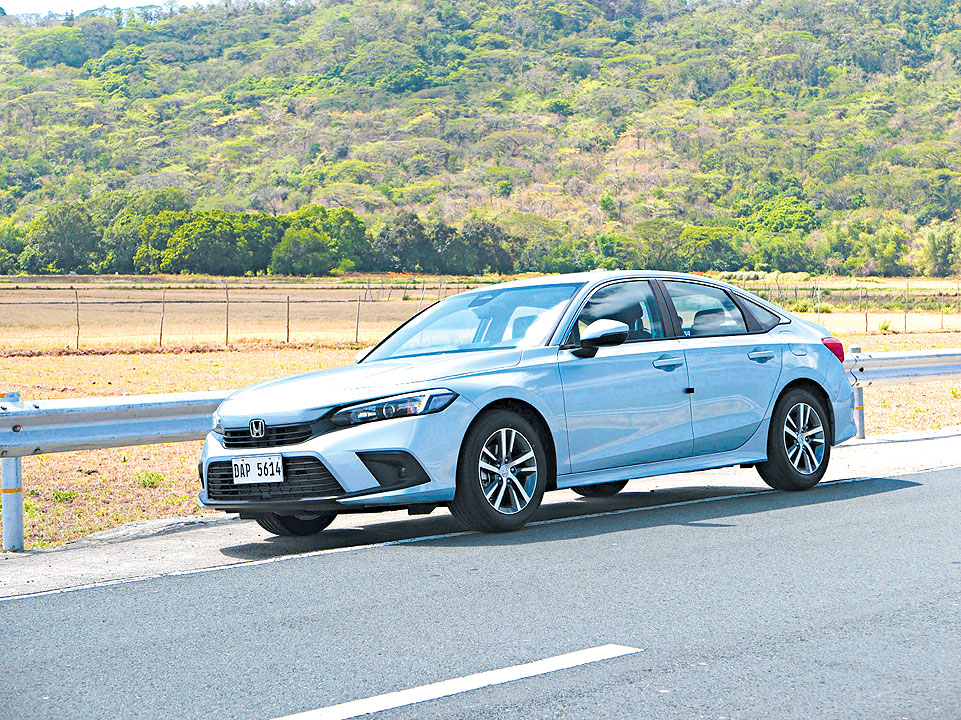
I was assigned to an eye-catching S variant, swathed in Morning Mist Blue Metallic paint (available on the S and V trims). Despite being the most affordable variant (P1.29 million), this Civic doesn’t feel or even look the part. There’s plenty of premium to go around — from the Apple CarPlay- and Android Auto-compatible infotainment system, to an execution that really doesn’t leave you wanting. In fact, you could say that no roster of Civic releases in recent memory has ever been, well, this similar in values. I could say that the differences are not deal-breaking features but merely some refinements here and there. I mean, come on; the S gets a turbo, too.

In no time flat, I was cheering my S variant on. I was the last in the queue, yet my car was never wanting in chutzpah and power on tap to close gaps when I (and the myriad of highway obstacles) allowed it. The S and V trims receive only an Econ and Normal drive mode settings (lacking the RS-exclusive Sport mode), but the “S” in the gearshift is plenty adequate. If I wanted more motivation, I simply shifted to S.

While we were allowed to enjoy and feel the total package of the Civic, this activity was not your garden-variety ride and drive. Instead the main order of the day was to more intimately know the Honda Sensing suite of driver assistive features. To be clear though, Honda Sensing is not meant to supplant the driver’s good sense and habits. Rather, it merely makes it easier for him or her to keep safe. The Civic is not the first Honda to get the suite. It follows the Legend, Pilot, Accord, and CR-V. However, we can now see it trickling down to more affordable vehicles of Honda and, as mentioned, across the entire nameplate variants. Honda Sensing is made possible through “a single monocular camera with a wider field of view… combined with improved software offering better vehicle, motorcycle, bicycle, pedestrian, and road marking recognition.”

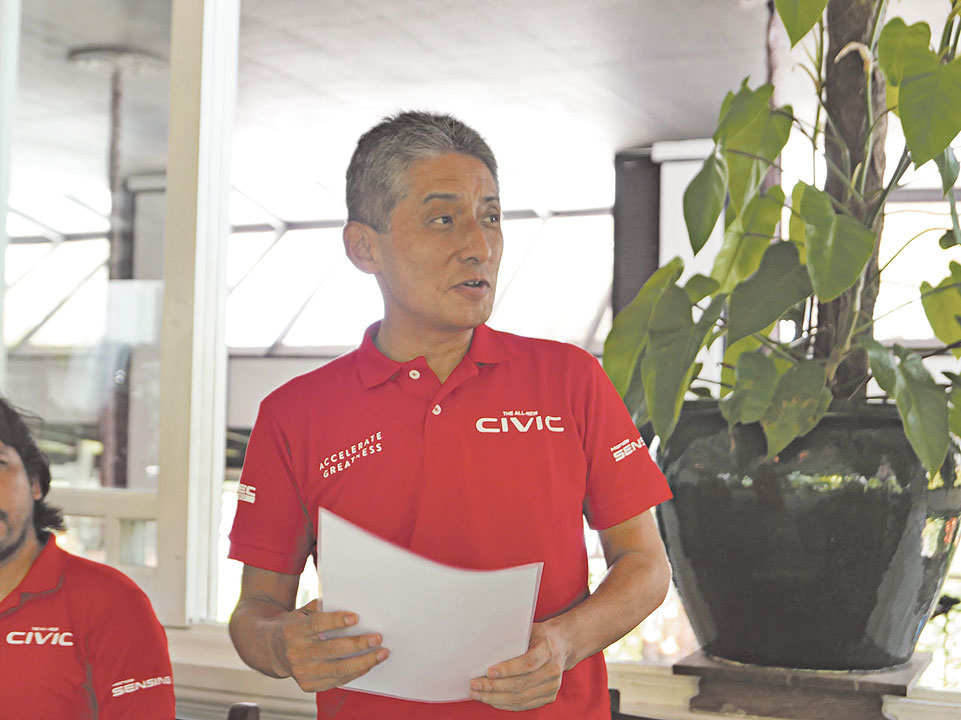
“As we’ve already announced, our long-term global goal is to realize a collision-free society. To realize this, we are extending Honda Sensing technology to all models. Eventually, all variants will have this feature,” underscored HCPI President Masahiko Nakamura exclusively to this writer.

The drive was primarily about HCPI wanting to continue communicating its “Safety for Everyone” vision. In an earlier release, HCPI elucidated its goal “to protect the safety not only of the drivers or riders, but of all vehicle occupants, pedestrians, and everybody on the road. This is why (Honda’s) approach on safety is both from product and educational perspectives.” The idea is to have zero fatalities involving Honda motorcycles and automobiles globally by 2050.

Back to our drive, where appropriate, we tested the Adaptive Cruise Control (ACC) with Low-Speed Follow (LSF), “which aims to make highway drives a more pleasant experience by maintaining the speed based on the car in front.” This is probably the closest you can get to full autonomous driving for now. The Civic brakes and accelerates as needed to keep reasonable (yet adjustable distance) from the vehicle in front. Meanwhile, LSF is the perfect foil for stop-and-go traffic on EDSA — saving you from fatiguing or even cramping your right leg form all the pedal switching and depressing.

I know a lot of us are guilty of switching lanes without using the turn signal. Honda Sensing’s Lane Keeping Assist System (LKAS) helps the driver keep the Civic in a lane by vibrating the steering wheel when it senses a drift to the adjacent lane — and through an icon that appears on the digital instrument display. Guess when the system doesn’t alert you. Yup, when you use the turn signal before you change lanes. Additionally, we also experienced the Road Departure Mitigation System with Lane Departure Warning (RDM with LDW) feature.

The newest tech trick in the Honda Sensing suite is the Lead Car Departure Notification System (LCDN). It alerts the driver of the vehicle when the car in front has moved forward from a standstill — another drowsy-driver foil, if you ask me.

And as a final shell of safety, the Collision Mitigation Braking System (CMBS) “warns and helps the driver avoid a frontal collision or reduce the impact when unavoidable by providing the driver with visual and audible warnings.” Let me tell you, it’s going to shake your senses if you find your mind wandering or when you aren’t paying attention for whatever reason. It can even apply the brakes automatically when necessary. An audible alarm will only stop once the system detects the lack of a collision risk.

But again, Honda Sensing is not meant to replace the driver’s own sensibilities but merely supplement them. If you take your hands of the wheel for more than a spell, the system will warn you about it.

With regard to other features of the Civic, it gets either full LEDs or projector halogens (my S was fitted with halogens, but I don’t think it’s a dealbreaker, either). DRLs are standard across the nameplate trims. Depending on the variant, the Civic is fitted with either seven- or nine-inch touchscreen audio display. Thankfully, Android Auto and Apple CarPlay are standard on both, although the larger screen is reserved for the RS variant, and gets Wireless Apple CarPlay. Your music will find expression on four speakers for the S, eight speakers for the V, and 12 speakers for the RS — which is a Bose sound system, by the way.

The RS also receives more premium touches like dual-zone, automatic climate control, in addition to rear air vents (the latter is available on the V, too). A seven-inch digital display with analog tachometer displays audio and Bluetooth functions, while the larger 10.2-inch full-digital cluster is exclusive on the RS — all supplemented with steering wheel-mounted controls.

In case you’re wondering, the V Turbo CVT Honda Sensing variant is priced at P1.498 million, while the top-of-the-line RS Turbo CVT Honda Sensing costs P1.69 million — P400,000 clear of the S. The available colors are: Morning Mist Blue Metallic (new color, V and S), Meteoroid Grey Metallic (new color, RS, V, and S), Ignite Red Metallic (RS), Platinum White Pearl (RS and V), and Lunar Silver Metallic (RS). If you want the special color (Platinum White Pearl), you must fork over an additional P20,000.

For more information, head on over to www.hondaphil.com and check out the “virtual showroom.” If a physical experience is more your thing, go to the nearest Honda Cars dealership. Don’t overlook checking out the S. It’s not your typical “entry level,” believe me.

IC monitoring PhilHealth, PCIC’s shift to new accounting standard

THE Insurance Commission (IC) is monitoring government-run health and crop insurance agencies as they adopt the Philippine Financial Reporting Standards 4 (PFRS 4) accounting standard, the Department of Finance (DoF) said.

The commission is keeping an eye on both the Philippine Health Insurance Corp. (PhilHealth) and the Philippine Crop Insurance Corp. (PCIC), the DoF said in a press release on Saturday.

“PFRS 4 is the current and interim accounting standard imposed on insurance entities in the Philippines. It is based on the International Financial Reporting Standards,” the DoF said.

The IC submitted initial findings on PhilHealth and PCIC last year, Insurance Commissioner Dennis B. Funa said.

“We will continue to monitor the compliance of PhilHealth and PCIC with the recommendations made after the examination is completed,” Mr. Funa added.

Finance Secretary Carlos G. Dominguez III in December ordered PhilHealth, SSS, and the Government Service Insurance System to estimate their social benefit liabilities in accordance with the PFRS 4.

“Under PFRS 4, when an insurance entity receives money from its clients and enters into a contract with them to provide benefits when certain events occur, it must set aside a reserve to cover its liabilities,” the DoF said.

“Thus, premiums, fees, and contributions that the institutions receive must be reported both as income and liability.”

Mr. Dominguez said social benefit liabilities represent the institutions’ net legal obligation to pay guaranteed amounts of money or benefits to their policyholders. This includes both actual claims and the required reserve for future claims. — J.P. Ibañez

7-Eleven opens new concept store in Pampanga

7-ELEVEN PHILIPPINES FB PAGE

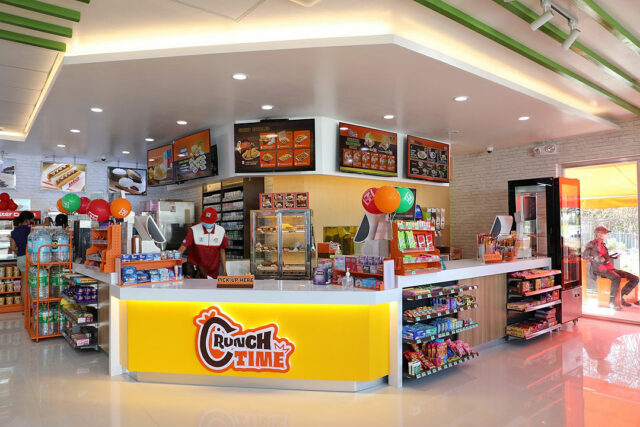
7-ELEVEN Philippines announced that it opened its first “Crunch Time” concept store in Capaya in Angeles, Pampanga last Friday.

“Crunch Time is 7-Eleven’s brand of crunchy fried offerings, primarily known for its generous proportions and perfectly seasoned, quick-served fried chicken,” the convenience store chain said in a media release.

The concept store was created amid the growth of 7-Eleven’s fried chicken brand, which is available in over 1,600 locations nationwide.

“Besides offering the usual essentials like grocery items and an assortment of rice meals, snacks, and beverages, the concept store is also home to a Crunch Time dine-in area, where the staff will prepare 7-Eleven’s unique and proprietary fried favorites on-site,” 7-Eleven said.

It said customers could expect high-quality, freshly cooked crunchy fried chicken, chicken fillet, nuggets, as well as corn dogs, chicken siomai, fries, and fried bread.

“It’s simply the most convenient and accessible way to satisfy your fried chicken and fried food cravings,” it added.

Philippine Seven Corp. acquired from Seven Eleven, Inc. of Dallas, Texas the license to operate 7-Eleven stores in the Philippines in 1982. The company opened its first store in February 1984 in Quezon City.

In 1988, Philippine Seven transferred its area license to operate 7-Eleven stores to its affiliate, Phil-Seven Properties Corp. In 1996, their stockholders approved the merger of both companies.

As of end-September 2021, Philippine Seven was operating 3,019 convenience stores, mainly located in Metro Manila and in major trade areas in Luzon. — Luisa Maria Jacinta C. Jocson

Emperador Brandy now available in UAE’s largest liquor shop

EMPERADOR, Inc. announced that its Emperador Brandy is now sold at The Original Barracuda, the largest liquor shop in the United Arab Emirates (UAE).

“The UAE, particularly Dubai, is one of the biggest markets of Emperador outside the Philippines, consumed both by overseas Filipino workers (OFWs) and Emirati locals. We are always excited to see Filipinos enjoying Emperador even if they are far away from home,” Emperador International President Glenn D. Manlapaz said in a statement.

The liquor shop is at the Barracuda Beach Resort, Al Shebeakah in Umm Al Quwain, which is one of the seven emirates of UAE. It is just less than an hour away from Dubai.

Emperador Brandy variants that are currently being sold at The Original Barracuda include Emperador Light 1L, Emperador Brandy Original 750mL, Emperador Red 750mL, and Emperador Hotshot 750mL.

Apart from brandy, Emperador’s The Bar Gin Lime, Pink and Dry 700mL, and Andy Player Whisky 500mL are also being sold in the store.

Emperador Brandy is the only Filipino liquor product sold in more than 60 countries and territories around the world.

In Singapore, a bottle of Emperador Brandy costs P1,406, while in the United States, it costs around $15.99 or around P800 per bottle, way beyond its standard retail price in the Philippines.

Emperador is a holding company that operates an integrated business of manufacturing, bottling and distributing distilled spirits and other alcoholic beverages.

It owns Fundador, Spain’s oldest and largest brandy and sherry maker, and Whyte & Mackay, the fifth-largest whisky manufacturer globally.

Emperador has a product presence in at least 100 countries across six continents worldwide.

In the third quarter of 2021, its attributable net income fell by 14.4% to P2.18 billion. From January to September, attributable net income was up 23.7% to P7.26 billion.

At the stock exchange on Friday, Emperador shares were up P0.02 or 0.14% to close at P14.62 each. — Luisa Maria Jacinta C. Jocson

Keanu Reeves axed by Chinese video platforms after Tibet concert

Keanu Reeves in Siberia (2018) — IMDB.COM

BEIJING — Chinese streaming platforms including Tencent Video and iQiyi have taken down films and video content starring Canadian actor Keanu Reeves after he participated in a Tibet-related concert organized by a non-profit founded by the Dalai Lama.

Checks by Reuters showed his acclaimed works, the Matrix and John Wick franchises, as well as Speed, were among the films that have been removed. Reuters could not determine when the films were taken down.

The Los Angeles Times, which first reported the content removal on Thursday said at least 19 of his movies were pulled from Tencent Video.

While content related to the Matrix films and some of Mr. Reeves’s other work were still searchable on WeChat, China’s ubiquitous messaging service, searches for his English name and its Chinese translation yielded no results.

iQiyi and Tencent Holdings, the parent company that owns Tencent Video and WeChat, did not immediately respond to requests for comment. A representative for Reeves was not immediately available for comment.

In late January, Mr. Reeves received heavy criticism from Chinese social media users, some of whom called for a boycott of his work in China, after it emerged that he planned to appear in a March 3 concert organized by Tibet House US, a New York-based nonprofit founded at the request of the Dalai Lama, Tibetan Buddhism’s spiritual leader.

Mr. Reeves participated in the concert, which was held virtually due to restrictions aimed at curbing the spread of coronavirus disease 2019 (COVID-19), prompting more criticism online.

Beijing has accused the Dalai Lama, exiled in neighboring India, of fomenting separatism in the Tibet region and instead recognizes the current Panchen Lama, put in place by the Communist Party, as the highest religious figure in Tibet.

China has ruled the remote western region since 1951, after its People’s Liberation Army marched in and took control in what it calls a “peaceful liberation.”

Other high-profile Western figures that have been blocked from Chinese social media and video platforms after making comments criticizing China’s actions in Tibet include former NBA player Enes Kanter who at the time played for the Boston Celtics. — Reuters

Ukraine 2022 spring crop sowing area could be halved

REUTERS

LVIV, Ukraine — Ukraine’s spring crop sowing area may more than halve this year from 2021 levels to some 7 million hectares, its Agriculture Minister Roman Leshchenko said this week, versus 15 million hectares expected before the Russian invasion.

Ukraine is a major global agriculture producer and exporter, and the hostilities may sharply reduce the 2022 harvest and exports in the forthcoming 2022/23 season. Its spring crop sowing forecast covers grains such as barley and corn, as well as other crops such as sugar beet, sunflowers and soybeans.

“The adjusted plan currently stands at 7 million hectares. We have actually corrected (the initial plan) by half. There will be less corn,” Leshchenko told Reuters. “We have large stocks of corn, and how to export it later is a very difficult question.”

He said farmers could sow up to 3.3 million hectares of corn this year versus 5.4 million hectares in 2021.

Leshchenko said the ministry had urged farmers to sow more spring wheat, buckwheat, oats, millet and spring barley. He gave no forecast for the sown area of those specific crops, but said overly dry weather could affect the sowing.

“Today, the issue of food security is at the forefront,” the minister said. Ukraine sowed only 176,000 hectares of spring wheat last year as the country is a traditional grower of winter wheat.

Leshchenko said farmers sowed a total of 6.5 million hectares of winter wheat for the 2022 harvest, but the harvested area could be only around 4 million hectares due to war in many Ukrainian regions.

He declined to forecast the 2022 grain harvest, because “the situation has not fully stabilized,” he said. “The territory of hostilities is constantly moving, and we hope that there will be some changes in the situation in terms of achieving peace, and we will be able to plant at least late crops those areas that are now in the war zone.”

Ukraine harvested a record 84 million tons of grain in 2021 and initially expected to ship abroad 65 million tons of grain, including 25.3 million tons of wheat and 40 million tons of corn.

Ukrainian agriculture consultancy APK-Inform this weekend said the export of wheat would not exceed 18.3 million tons this season and only 200,000 tons of the commodity could be sold from March to June.

Ukraine has already suspended exports of rye, oats, millet, buckwheat, salt, sugar, meat and livestock in the face of the invasion, and introduced licenses for wheat, corn and sunflower oil exports.

Leshchenko said the government was considering lifting the requirement for export licenses for corn and sunoil, as its stocks are sufficient.

President Volodymyr Zelensky told the Italian parliament on Tuesday that Russia’s attack on Ukraine risked causing famine in countries around the world. — Reuters

Cignal, Creamline eye semis entry in Filoil Arena; spectators allowed

Diana Mae ‘Tots’ Carlos (18) of Creamline — PVL

By Joey Villar

CIGNAL HD and Creamline seek outright semifinal entry as they clash with Bali Pure and Chery Tiggo, respectively, on Monday in the Premier Volleyball League Open Conference that has been opened to the public for the first time in three years at the Filoil Flying V Arena in San Juan City.

Both the HD Spikers and Cool Smashers swept their respective groups with the former going 4-0 in Pool A and the latter 3-0 in Pool B to go into the quarterfinals with the crucial twice-to-beat edge.

All eyes though are expected to focus on Cignal HD, which has been playing the game of their lives after they swept what everybody considered as the Group of Death with big wins over serious contenders Choco Mucho, F2 Logistics and Chery Tiggo — the defending titlist.

The HD Spikers will come in as heavy favorites in their 3 p.m. showdown with the Purest Water Defenders, who lost all their three outings in Pool B.

But Cignal HD coach Shaq delos Santos stressed there is no room for complacency in the playoff round.

“We need to triple our efforts and we can’t relax in the quarterfinals. If we can do it in one game, better but we’re expecting it to be tough,” said Mr. Delos Santos, whose charges have already improved on their 10th and last place finish in the Bacarra, Ilocos Norte bubble a year ago.

Creamline likewise will shoot for the jugular and settle an old score with last season’s conqueror Chery Tiggo when they clash at 6 p.m.

The Cool Smashers came a set away from clinching the 2021 crown when they went 2-1 set up in the deciding Game Three but imploded in the final two sets when the Crossovers fought back to snatch the title.

Tots Carlos and Jema Galanza have been doing the heavy lifting mostly for Creamline in the group stages while skipper Alyssa Valdez is groping for form.

Ms. Carlos, in fact, unleashed a 28-point masterpiece while Ms. Galanza erupted for 18 hits in a 25-23, 23-25, 25-19-, 23-25, 15-10 win over Petro Gazz on Wednesday.

Ms. Valdez, meanwhile, struggled but sneaked in 17 points.

Expect Ms. Valdez though to unleash her wrath against a Chery Tiggo team that denied the franchise their fourth crown.

Updated Porsche Macan sports numerous changes

Porsche Philippines Managing Director William Angsiy with the new Porsche Macan — PHOTO FROM PORSCHE PHILIPPINES, KAP MACEDA AGUILA

IT DOESN’T hurt to keep going back to the well when it keeps giving.

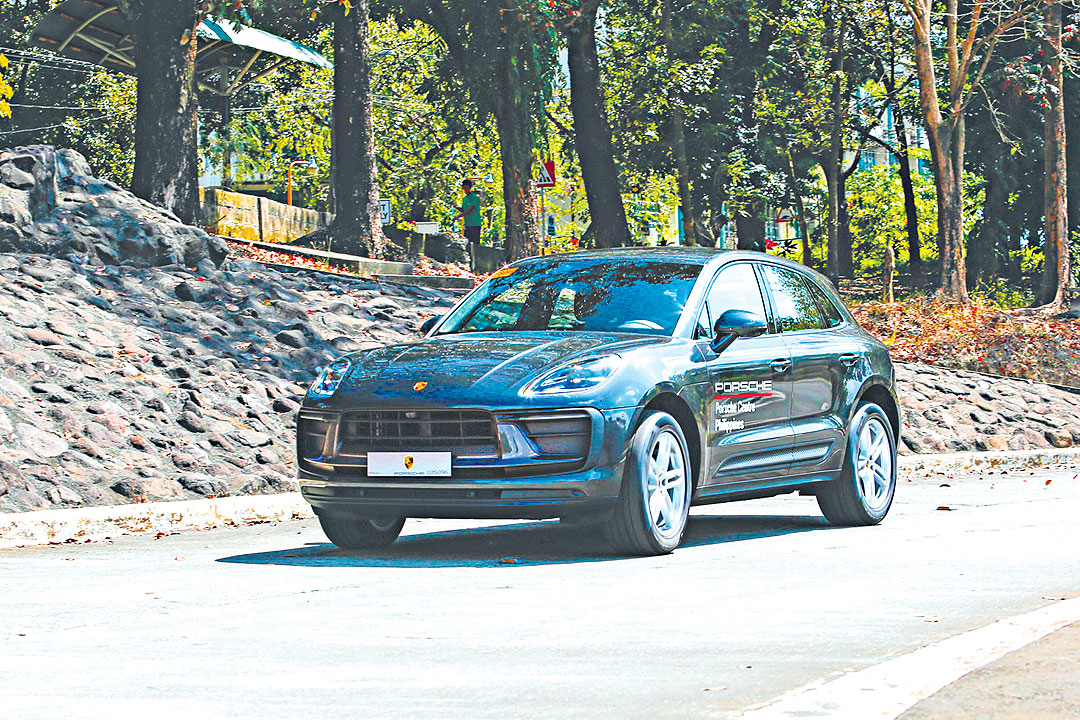
And that’s veritably what Porsche Centre Philippines did last week when it unveiled the updated version of the Macan. The official importer and distributor of the Stuttgart-headquartered automaker refreshes the “ultimate sports car among compact SUVs,” as it pointed to its sustained popularity which propelled the sales of more than 600,000 examples worldwide to date since its debut in 2014. It is also the best-selling Porsche in the country.

At the recent annual press conference of Porsche AG, presided over by Executive Board Chairman Oliver Blume and CFO Lutz Meschke, the company reported the delivery of 301,915 Porsches to customers worldwide in 2021 — the highest ever number in the firm’s history. In 2020, the company moved 272,162 units. Leading the charge was the Macan (88,362), followed by its larger SUV sibling, the Cayenne (83,071). This means the Macan alone accounted for almost 30% of total sales.

In the same presser, Porsche announced that its best-selling nameplate since 2016 is going to get an all-electric version in 2023 (badged as a 2024 model). This EV is expected to share the same platform as the Audi A6 e-tron. While Porsche holds its electrified cards close to its chest, the firm nonetheless intimated that the Macan is projected to surpass the range of its current electrified darling, the Taycan.

While we in the Philippines engage in some wishful thinking and wait for that day to come, there’s plenty of the ICE-powered Macan left to be enjoyed, and designers in Germany have worked hard to evolve the here and now. Still, in an interview with “Velocity,” Porsche Philippines Managing Director William Angsiy confirmed that the new Macan is the last purely ICE-powered iteration before the powertrain gets electrified.

The new Porsche Macan is said to be the best of its kind — perhaps a fitting sendoff before it sheds its taste for fossil fuel. The vehicle gets a recast nose, with an inlay in body color meant to make the vehicle wider giving the sport car even more presence. The front fascia gets a new set of eyes — LED headlights with the Porsche Dynamic Light System (PDLS). According to Porsche, the feature “increases safety when driving and enhances near-field, lateral, and far-field illumination by adjusting the range of the dipped beam according to driving speed. Additionally, the dynamic cornering light function rotates the main headlights toward the inside of a road’s curve based on the driver’s speed and steering angle. Static cornering lights turn on the auxiliary headlights for clearer visibility on tight, turning roads.” Porsche Brand Ambassador Bryan Ellamil showed how the trademark four-point lighting has been reworked into four illuminated “dashes.”

Meanwhile, the Macan’s signature sideblades get a refresh through a three-dimensional surface structure and are finished in Lava Black hue.

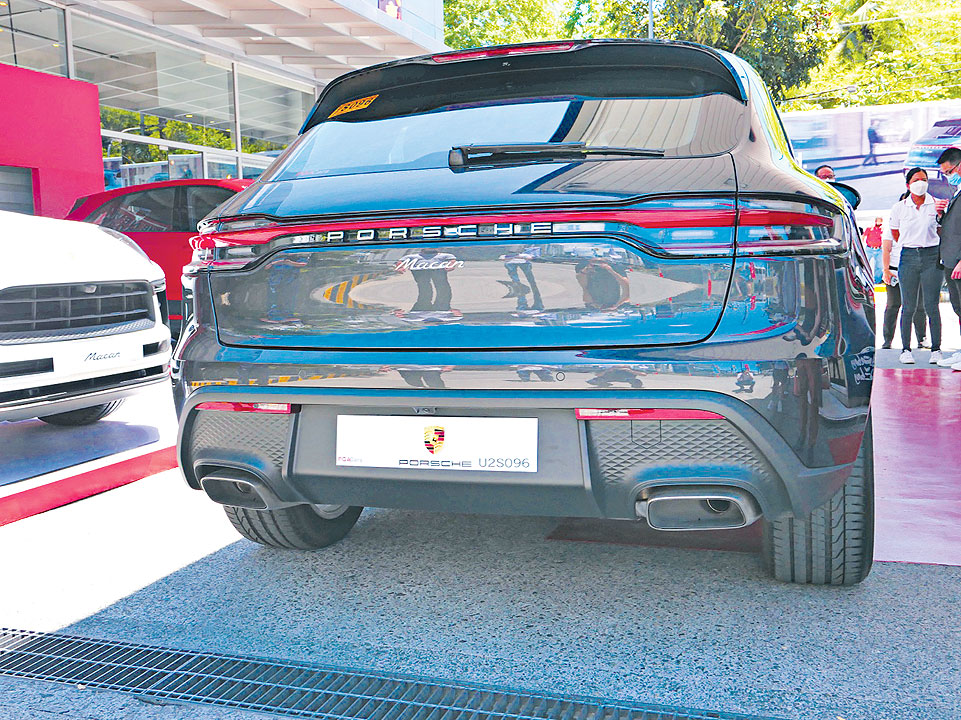
The hind quarters of the new Macan are highlighted by an eye-catching black diffuser that more prominently rises up the rear. A taillight strip with integrated four-point brake lights using LED technology remains as a familiar design element. Standard on the new Macan are SportDesign exterior mirrors with V-shaped bases. It rides on 19-inch wheels, and boasts an additional 3D trim in front and at the rear.

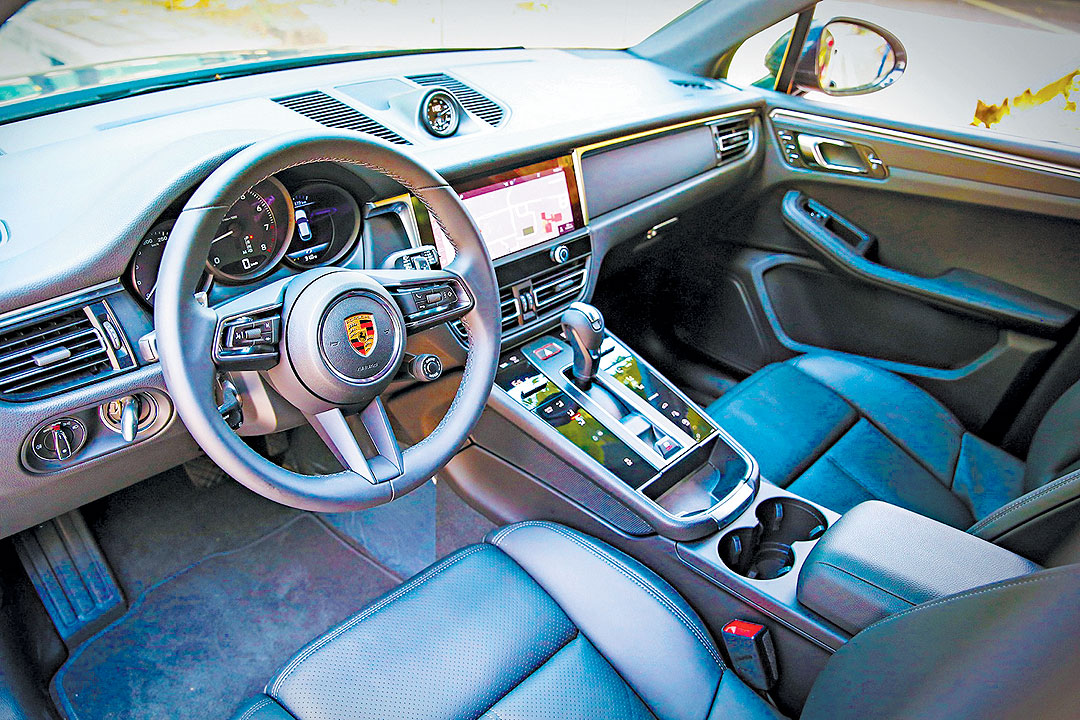
In the cabin, the Macan’s centrally positioned rev counter takes inspiration from the 911. An analog clock, another classic Porsche design element, takes its hallowed place in the center of the dash. The redesigned center console now uses touch controls instead of buttons, and continues to offer many online functions and services as standard. The user can access these functions via the 10.9-inch full-HD touch display of the Porsche Communication Management.

A short-throw gear selector lever sitting at the center of the clearly structured control module underscores sportier intentions, and does the multifunction sports steering wheel with gearshift paddles. “New Comfort seats with electric 14-way adjustment for height, squab and backrest angle, and fore/aft position secure the driver and front passenger in place while offering luxurious accommodation,” added Porsche in a release.

Motivation comes from a “redeveloped” 2.0-liter inline-four turbocharged heart spitting out 265hp from 5,000rpm to 6,000rpm, and 400Nm of torque from as low as 1,800rpm up to 4,500rpm. “The engine not only delivers ample power, but is also fuel-efficient — a high-pressure injection system allows for multiple injections of the tiniest amounts of fuel. The engine’s low weight also means reduced load over the front axle, leading to dynamic advantages,” said the firm. Porsche Traction Management (PTM) active all-wheel drive system features an electronically controlled multi-plate clutch. Traction, agility, performance, and safety are ensured in whatever condition power is distributed between the drive axles. Porsche Stability Management adds to the confidence. Finally, a standard seven-speed Porsche Doppelkupplung (PDK) transmission results in “extremely fast gear changes to take place without these interrupting traction.”

A Sport Chrono Package with Mode switch provides setup changes for its chassis, engine and transmission. The newly designed Mode switch with Sport Response button on the steering wheel can be used to choose among Normal, Sport, Sport Plus, and Individual. A nifty toy for adrenaline junkies is the Launch Control function for maximum acceleration from a standing start, while the Porsche Torque Vectoring Plus (PTV Plus) improves driving dynamics and stability, particularly on bends. Also aiding in sharpening up the vehicle’s steering behavior are the variable distribution of engine torque to the rear wheels, and the electronically controlled rear differential lock.

Porsche Center Philippines reported that its facilities in Greenhills and Bonifacio Global City are “in full compliance with the strict corporate identity guidelines of Dr. Ing.h.c. F. Porsche AG, and offers the newest Porsche sports car models, Porsche Driver’s Selection lifestyle items, parts and after sales service to Filipino enthusiasts.”

For now, there’s but a sole variant of the Macan, but Mr. Angsiy revealed that two more trims are set to arrive by June this year. — Kap Maceda Aguila

ADVERTISEMENT
ADVERTISEMENT