Home Blog Page 642

DHL Summit adds 45 EVs to boost PHL fleet

An artist’s rendering of DHL’s planned logistics hub in Sta. Rosa, Laguna. — COURTESY OF DHL

DHL SUMMIT Solutions, Inc., has added 45 electric vehicles (EV) and prime movers to its fleet, strengthening last-mile delivery operations and advancing sustainability initiatives.

The rollout — 23 EVs and 22 prime movers — supports DHL Group’s global target to electrify about two-thirds of its first- and last-mile fleet by 2030 and achieve net-zero greenhouse gas emissions by 2050.

“Our collaboration reflects JG Summit’s commitment to building a logistics network that is both efficient and environmentally responsible,” Chief Resource Officer Alan Surposa said in a statement on Wednesday. “By investing in EVs and advanced technologies, we are helping shape a cleaner, smarter future for the Philippines.”

DHL Summit is a joint venture between JG Summit Holdings and DHL Supply Chain. Established in 2019, the company provides domestic transportation, logistics, warehousing and distribution services.

The new vehicles not only cut carbon emissions but also allow operations during cargo truck-van hours in major city centers, giving the company a strategic advantage, DHL said.

It is also expanding its digital capabilities through the Connected Control Tower Systems, which centralizes management, automates processes from order to delivery, and optimizes supply chain flows.

“This milestone reflects our strong partnership with JG Summit and our shared ambition to build a cleaner, more efficient transport network for the Philippines,” DHL Supply Chain Southeast Asia CEO Edwin Wong said in the statement. — Ashley Erika O. Jose

PNB starts dual-tenor sustainability bond offering

BW FILE PHOTO

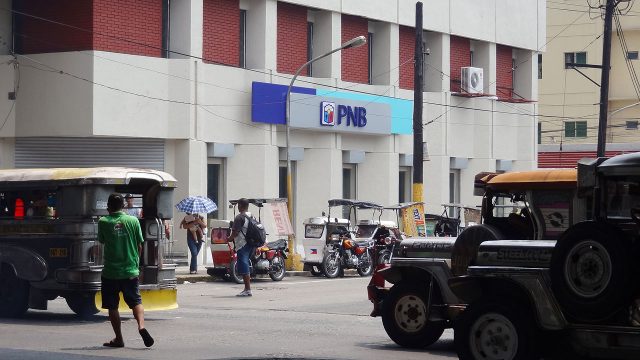
PHILIPPINE National Bank (PNB) on Wednesday began its offering of dual-tranche bonds to raise at least P3 billion to fund sustainable projects.

The bank started the public offer period for its three-year peso fixed-rate Series A ASEAN Sustainability Bonds and five-year peso fixed-rate Series B ASEAN Sustainability Bonds that is set to run until Dec. 2, it said in a disclosure to the stock exchange.

The three-year paper is priced at 5.4877% per annum, while the coupon rate for the five-year bond is 5.7764%.

“PNB will use the net proceeds of the bonds to finance or refinance eligible projects under PNB’s Sustainable Financing Framework consistent with the ASEAN Sustainability Bonds Standards,” it said.

It added that the issue “reflects the bank’s commitment to responsible financing and long-term sustainable growth.”

The notes are being sold at a minimum investment amount of P100,000 each and in multiples of P50,000 thereafter.

This will mark the first issuance under PNB’s P50-billion bond and commercial paper program approved earlier this year.

The bonds are scheduled to be issued, settled, and listed on the Philippine Dealing & Exchange Corp. on Dec. 11.

The bank has tapped its investment banking arm PNB Capital and Investment Corp., ING Bank N.V. Manila Branch, and Standard Chartered Bank as the joint lead arrangers and bookrunners for the transaction.

Meanwhile, PNB, ING Bank, and Standard Chartered are the selling agents for the offering.

PNB saw its net income rise by 25.79% to P6 billion in the third quarter from P4.77 billion, backed by higher revenues. This brought its nine-month profit to P18.51 billion, up by 22.91% from P15.06 billion a year prior.

Its shares closed at P54.15 apiece on Wednesday, down by 80 centavos or 1.46% from the previous day. — A.M.C. Sy

Honored among the world’s best: LANDBANK earns global recognitions for banking excellence and leadership in 2025

LANDBANK has earned seven major distinctions from leading global financial publications in 2025, recognizing its exceptional performance in inclusive finance, institutional banking, investment banking, and the visionary leadership of its President and CEO.

Affirming its leadership in financial inclusion and its stature in the banking industry, the state-run Bank earned a spot on the Forbes World’s Best Banks 2025 list, ranking 5th among nine Philippine banks recognized by the global media company, in partnership with Statista. LANDBANK was also included in the Forbes World’s Best Employers 2025 list, placing 4th in the Philippines and 187th out of 900 organizations worldwide, underscoring its strong workplace culture, employee engagement, and commitment to public service excellence.

LANDBANK was likewise named Best Bank for Diversity and Inclusion and Best Investment Bank for Debt Capital Markets (DCM) at the prestigious Euromoney Awards for Excellence 2025, in recognition of its pivotal role in structuring and facilitating debt financing across various sectors, and its commitment to reaching and serving underserved sectors and communities.

The Asian Banking & Finance (ABF) Awards also cited the Bank for expanding customer access through innovative, customer-centered services, with the Domestic Retail Bank of the Year — Philippines award.

Beyond these institutional distinctions, LANDBANK President and CEO Lynette V. Ortiz received two major leadership recognitions in 2025 — as Best New Banking CEO for 2025 by the Global Banking & Finance (GBF) Awards, citing her transformational leadership and measurable impact in strengthening the Bank’s financial performance and credibility.

Fortune Magazine also recognized PCEO Ortiz as one of Asia’s Most Powerful Women in 2025, ranking 3rd in the Philippines and 72nd on the worldwide list and highlighting her influential leadership in advancing inclusive finance, digital transformation, and public service innovation.

“These recognitions reflect LANDBANK’s intensified focus on inclusive banking, digital transformation, and service excellence. They are a testament to the dedication of all Landbankers nationwide, whose collective efforts empower our clients and communities while advancing the nation’s broader development goals,” said PCEO Ortiz.

Sustaining Support to Nation-Building

LANDBANK continues to deliver on its dual mandate as a development and universal bank by channeling its financial strength toward national growth. This year, LANDBANK declared ₱33.53 billion in cash dividends to the National Government — the highest in its history and among all government-owned and controlled corporations (GOCCs) — on the back of its strong financial performance.

Through its flagship AGRISENSO Plus Lending Program, the Bank strengthens access to affordable and responsive financing for small farmers, fishers, cooperatives, and agribusinesses. The Program features a lowered interest rate of 3% per annum and simplified application processes, allowing borrowers to secure the capital they need to adopt modern farm practices, scale production, and enhance their overall competitiveness.

Complementing its loan support is the ASCEND (Agri-Fishery Support thru Capability Enhancement for Nationwide Development) Program, which provides training in digital financial literacy, sustainable agriculture, and enterprise development, aimed at empowering borrowers to become full-fledged agripreneurs.

Inclusive Banking for Every Filipino

LANDBANK continues to expand its reach through its “phygital” strategy, seamlessly integrating its physical presence with advanced digital channels. This approach ensures a secure and convenient banking experience while serving the underserved and unbanked. The Bank also recently piloted its Person-to-Merchant (P2M) QR payment facility in Negros Occidental, enabling farmers and MSMEs to conduct safe, cashless transactions.

The Bank maintains a nationwide network of 10,582 customer touchpoints, including 609 branches, 60 lending centers, 3,244 automated teller machines (ATMs), 236 cash deposit machines (CDMs), and 1,091 LANDBANKasama partners, ensuring financial access even in the most remote communities. Customers can also transact free of charge at over 3,800 7-Eleven ATMs nationwide through the Bank’s partnership with Pito Axm Platform, Inc. (PAPI).

ABOUT LANDBANK  

LANDBANK is the country’s largest government financial institution promoting financial inclusion, digital transformation, and sustainable national development. Present in all 82 provinces, the Bank remains steadfast in providing accessible and responsive financial solutions to empower Filipinos from countryside to countrywide.


Spotlight is BusinessWorld’s sponsored section that allows advertisers to amplify their brand and connect with BusinessWorld’s audience by publishing their stories on the BusinessWorld Web site. For more information, send an email to online@bworldonline.com.

Join us on Viber at https://bit.ly/3hv6bLA to get more updates and subscribe to BusinessWorld’s titles and get exclusive content through www.bworld-x.com.

The coquette has grown up

Lartizan opens new flagship

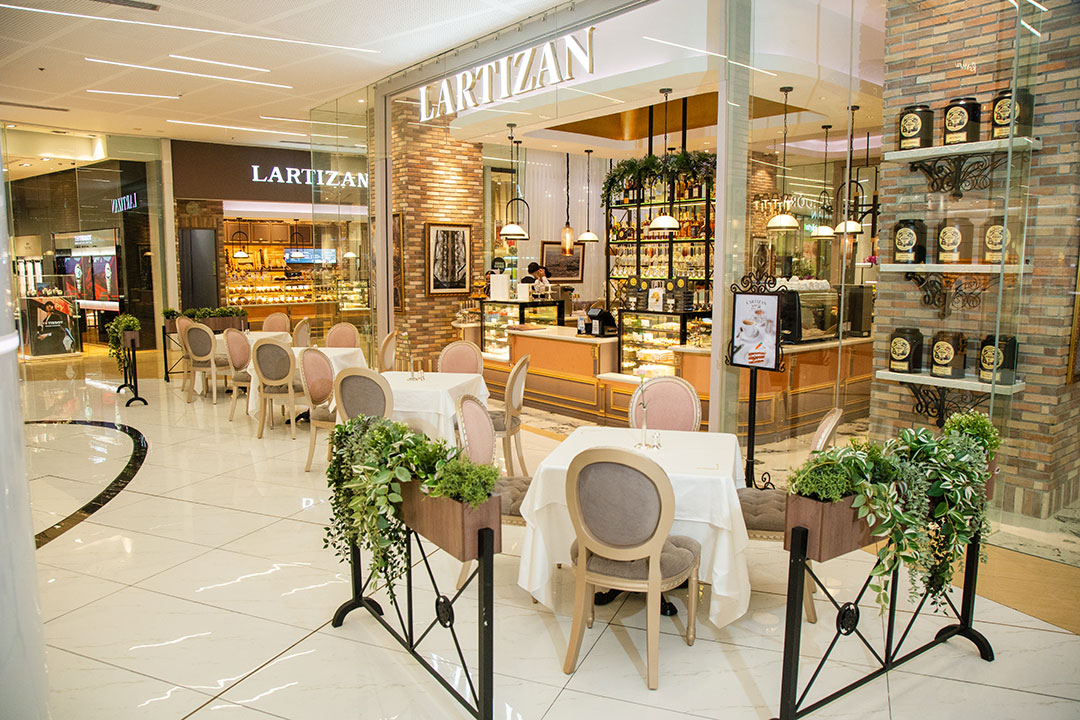
WHEN Lartizan first opened its doors in Bonifacio Global City’s Serendra in 2014, BusinessWorld wrote that it “had an air of a dollhouse that had grown up around the young girl who once played with it.” We said that due to its decidedly feminine decor, what with rose-colored chandeliers and other marks of a look the kids now call “coquette.” Since then, even the dollhouse has grown, with branches in Century City Mall, Ayala Malls The 30th, and boulangeries located in The Marketplace (EDSA Shangri-La, Opus Mall, and Uptown Mall), as well as the Clubhouse Corinthian Hills.

Lartizan was born as the coquettish younger sister of The French Baker, which has been around since the 1980s. During a fete on Nov. 17, Lartizan celebrated its new flagship shop at S Maison, the upscale mall located at the SM Mall of Asia complex.

Showing off an expanded menu past the initial offerings of Mariage frères teas and Lartizan pastries, new items include Fresh Oyster and Truffle Rockefeller, Salmon Mousse, Raclette, and Chicken Liver Pâté with Foie and Apple Compote.

“It’s a culmination of our 36 years of travel, and being in the industry, and how it continues to shape up,” said Jonard Koa, the company’s chief digital officer, and son of The French Baker founder Johnlu Koa, in an interview with BusinessWorld. His photographs of Paris now line the S Maison branch.

While they’re both founded on the same lines, Lartizan takes a bit more time and tradition than the mall-driven crowd of its older sibling. For example, Lartizan’s sourdough takes 36 hours to ferment, while The French Baker’s breads take a fraction of the time. Still, The French Baker, now found all over the country, plays a huge part in supporting Lartizan’s structure: “I think it’s because we started out as a bakery, and it’s just a natural evolution of the brand,” said the younger Mr. Koa.

“It grows from experience,” he said. “Since French Baker has been around for 36 years, we were able to use that experience to elevate Lartizan and really home in our French traditional baking skills.” — JL Garcia

Filipino users leave apps due to AI-powered scams

FREEPIK

FILIPINO CONSUMERS are growing more anxious about artificial intelligence (AI)-driven mobile fraud as holiday spending accelerates, pushing many to delete or avoid apps that fail to show strong security, according to mobile cybersecurity firm Appdome, Inc.

About 74.7% of Philippine users say they have abandoned an app over fraud or security concerns, Appdome said in its Consumer Expectations of Mobile App Security report. Identity theft is the top fear for mobile shoppers, with 43.4% citing it as their biggest risk, while more than a third said they or someone they know had fallen victim to social engineering scams.

“Consumers want proof that their apps can stop fraud before a holiday purchase is made — not after the damage is done,” Appdome Co-creator and Chief Executive Officer Tom Tovar said in a statement.

Banks, retailers, delivery platforms and travel apps face heightened pressure as scammers deploy more sophisticated AI tools, according to the report.

Fraudsters now use deepfake payment approvals, AI-generated voice scams and bot-driven account takeovers to mimic users, hijack sessions and trigger unauthorized transactions, Chief Customer Officer Jamie Bertasi noted.

While 67.2% of Filipino users think AI can improve mobile security, 32.8% view it as a threat. Expectations are rising: 84.1% say apps should be able to stop AI-driven threats such as bots, deepfakes and account takeovers. Yet only 60% are confident apps can actually do so.

Privacy remains a dealbreaker, with 15.2% refusing to use apps lacking clear safeguards. Strong security can also boost commercial outcomes, as 27.6% of users say they’d leave positive reviews for apps that protect them, and almost a quarter would promote them on social media.

Almost half of users — 45.9% — say responsibility for stopping fraud lies squarely with app developers, not device makers or telecommunication carriers.

“Stopping these attacks inside the app is essential to protecting customers and revenue during the busiest shopping seasons of the year,” Appdome said. — Beatriz Marie D. Cruz

GoTyme Bank targets 50% loan growth

GOTYME.COM.PH

GOTYME Bank is aiming to grow its loan book by 50% next year, backed by the continued growth of its customer base.

“What’s been happening is that our revenue and gross profits are growing faster than our customer base now. So, for the next few years, we were forecasting more than 50% growth in the financial metrics but then continue to grow by 3 to 4 million customers a year,” GoTyme Bank President and Chief Executive Officer Nathaniel D. Clarke told reporters on the sidelines of an event on Wednesday.

The bank aims to surpass P50 billion in deposits in 2026 and for revenues to hit $160 million, he added.

As of November, GoTyme Bank’s deposits stood at P40 billion from P25 billion last year, while loans doubled to P6 billion from P3 billion. The bank is also facilitating over 15 million transactions a month.

After reaching 8 million customers as of Wednesday, GoTyme Bank expects to end the year with between 11 and 12 million customers as it averages an additional 250,000-300,000 users per month.

“I think I said when we launched the bank, it’s going to take five years to reach 10 million customers. We’re going to do it in three-and-a-half years. So, we’re very happy with the growth. I think now we’re very much focused on expanding the credit products, the lending products, expanding the investment products, and expanding the remittance offering,” Mr. Clarke said.

For this year, GoTyme Bank forecasts faster growth than next year in terms of customers, deposits, loans, and revenues. Mr. Clarke added that he expects revenues to grow by an annual 70% for this year to $100 million.

“Obviously off a higher base, but in a similar range next year, maybe in the mid to high 50s. So, I think we’re in no way taking the pedal off of the gas.”

Despite new digital banks potentially entering the market next year, Mr. Clarke said GoTyme Bank’s partnership with the Robinsons Retail Group and Go Rewards gives them an edge in terms of customer acquisition and retainment with their kiosks. He added that the digital bank will be deepening these partnerships with the addition of Cebu Pacific.

Following GoTyme Bank’s integration of Google Pay through the launch of Google Wallet, Mr. Clarke said they are making sure the bank will be ready to enable Apple Pay once it launches next year as near-field communication payments are expected to grow as fast as the adoption of QR Ph.

“We were informed by Visa that we’re actually the number one in terms of newly registered and as well as payment value since launch… So, it’s been explosive in terms of uptake, which means we’re very excited for the other xPay, as they call it, Apple Pay, next year,” he added.

GoTyme Bank will also roll out stock investment features in the first quarter of next year in partnership with DragonFi Securities, Inc. following the launch of crypto trading and investments this month.

It is also planning to introduce more credit and investment products such as global stocks and build its remittance offerings following its partnership with Wise earlier this month. It will also complete the rollout of kiosks in SM Stores next year.

GoTyme Bank booked a net loss of P3.44 billion in 2024, widening from the P2.47-billion loss in 2023 amid higher operating expenses, its latest annual report showed.

Gross revenues reached P1.8 billion, while its gross operating income was P1.2 billion.

It is a partnership between the Gokongwei group and Singapore-based Tyme Group and began commercial operations in October 2022 as one of the six digital banks licensed by the Bangko Sentral ng Pilipinas. — Aaron Michael C. Sy

Ice cream only: Magnum braces for life on its own as Unilever spin-off nears

SELECTAPHILIPPINES.COM

GLOUCESTER, England — Unilever’s ice cream business is gearing up for its multi-billion-dollar spin-off next month, ready to tackle challenges from logistics to the rising popularity of weight loss drugs when it goes solo, its supply chain head said.

The Magnum Ice Cream Company’s Dec. 8 listing in Amsterdam will test investor appetite for a sugar-heavy product at a time when GLP-1 weight loss drugs have shaken up consumer trends and US President Donald J. Trump is pushing a “Make America Healthy Again” campaign.

It is positioning itself as an ice cream-focused business and betting on the allure of “indulgent” snacks consumers still crave, including its Magnum ice creams, as well as brands like Solero, Viennetta, and Ben & Jerry’s.

“We are focused on ice cream and ice cream only,” Sandeep Desai, Magnum’s chief supply chain officer, told Reuters ahead of the company unveiling of a £50-million ($66 million) investment at its factory in Gloucester, West England.

“Everyone wakes up thinking, how can I make more ice cream? How can I sell more ice cream? And that gives a very different level of focus.”

MAGNUM TACKLING WEIGHT-LOSS DRUG CHALLENGE
Magnum acknowledges that GLP-1 drugs may affect its business, but is optimistic about long-term demand for its products.

“Whilst GLP-1 is not a factor we can ignore, (ice cream) is still always an indulgent snack,” Mr. Desai said.

Magnum is, however, adding products more focused on hydration and protein, Mr. Desai said. Jamie Farrell, the company’s head of UK and Ireland, pointed to lower-sugar options and smaller portions Magnum has already developed.

“We see it as a challenge,” Mr. Farrell said when asked about the growing prevalence of weight-loss drugs. “Can we create… more new products that move with the times?”

MAGNUM SHRUGS OFF TARIFF IMPACT
The Gloucester plant investment, part of a €350-380 million ($403-438 million) program to revamp the company’s supply chain as it splits from Unilever — will increase capacity in 2027 by 50% from 2023 levels. The factory currently produces 600 million ice creams a year.

The ice cream-only focus increases Magnum’s exposure to cacao bean and sugar price fluctuations but allows it to tailor commodities hedging and risk management strategies to the business, Mr. Desai said.

Magnum has flagged that new trade restrictions could disrupt its supply chain and raise its costs, but Mr. Desai said producing ice creams locally in the United States had largely shielded the company from the impact of US tariffs on imports.

“There was a slight impact… When people were talking hundreds and hundreds of millions… our impact was more in the tens of millions,” Mr. Desai said. — Reuters

Repower earmarks P10.3B for hydropower expansion

EVENING_TAO-FREEPIK

REPOWER Energy Development Corp. is allotting P10.3 billion for the rollout of hydropower projects, it said in a stock exchange disclosure on Wednesday.

The capital expenditure will fund the construction of four hydropower facilities in the coming months, as it accelerates its expansion across Luzon and Mindanao, the renewable energy developer said.

Repower is also advancing its P4-billion run-of-river hydropower plant in Bukidnon, straddling the cities of Valencia and San Fernando, where testing and commissioning have begun.

Once operational, the facility is projected to generate 130 gigawatt-hours annually, sufficient to power more than 54,000 homes. The plant marks Repower’s ninth operating hydropower facility and its first in Mindanao.

Proceeds from the company’s 2023 initial public offering were largely allocated to the Bukidnon project, the company said.

Construction is also under way for the 4.5-megawatt Piapi hydropower project in Quezon province, with commercial operations targeted by the end of 2027.

Repower Energy, a run-of-river hydropower developer and unit of Pure Energy Holdings, plans to expand its footprint through both greenfield projects and acquisition of existing plants.

Shares of Repower closed unchanged at P5.23 apiece. — SJT

House committee approves amendments to bank deposit secrecy law

BW FILE PHOTO

THE HOUSE Banks Committee on Wednesday approved an unnumbered bill that consolidated eight measures seeking to amend the country’s decades-old bank secrecy law without discussion.

This is as it cited parliamentary rules that allow bills already passed in the previous Congress to be automatically cleared at the committee level.

“The bill on the bank secrecy, which is similar to the eight bills we are considering today, was passed on third reading in the previous Congress, which is the 19th Congress,” Manila Representative Irwin C. Tieng, who chairs the House Committee on Banks and Financial Intermediaries, said during a committee hearing on Wednesday.

A similar bill was made a priority measure by the Marcos administration in the 19th Congress. It was approved by the House, but its counterpart measure languished in the Senate’s Banks Committee. Mr. Tieng noted that amending the bank secrecy law is part of the administration’s priority measures for the 20th Congress.

A copy of the bill was not immediately available. The consolidated measure will include House Bill (HB) Nos. 7, 1674, 1786, 1918, 3026, 2196, 4388 and 5152, with HB No. 7 serving as the working draft.

In June, Leyte Rep. Ferdinand Martin G. Romualdez filed HB No. 7 that seeks to amend Republic Act No. 1405 or Law on Secrecy of Bank Deposits. It was the first measure of its kind filed before the House of Representatives under the 20th Congress.

The bill seeks to allow the Bangko Sentral ng Pilipinas (BSP) to look into bank deposits, including those in foreign currency accounts, that are under suspicion of illegal activities. Under the proposal, the BSP will be allowed to examine bank deposits “in specific circumstances.”

These include investigations of closed banks or when its policy-setting Monetary Board finds reasonable ground to believe that “fraud, serious irregularity, or unlawful activity” was committed by officials, employees, or any related parties of entities under the central bank’s supervision.

BSP-supervised institutions are banks, nonbank financial institutions with quasi-banking functions, and other entities that are engaged in financial activities like pawnshops, electronic money issuers, money service business, and trust corporations.

The central bank has been pushing for amendments to the Philippines’ tight bank secrecy laws to boost its oversight of the financial sector by preventing cases of insider abuse, citing cases where bankers themselves borrow from their own banks or hide proceeds of fraudulent activities in their banks, which endanger depositors. — K.K. Chan

Clear signals now, more than ever

AI GENERATED IMAGE PROVIDED BY THE AUTHOR

“Bummer,” I told myself as successive news stories on the widening graft mess further eroding our economic growth prospects and business sentiment, and pushing the country into “high” political risk territory, hogged headlines in recent days.1

I mean, sure: who among us did not expect a controversy of this scale to hit the economy? But I’d prefer more uplifting news to go with my coffee any morning.

As with many of my fellow BusinessWorld readers and audience members (of this publication’s various fora and webinars which have yielded compelling content), I always look for useful takeaways even from dire situations. Was it Britain’s wartime prime minister, Winston Churchill, or Renaissance writer Niccolo Machiavelli who admonished to “never let a good crisis go to waste?”

ABCs
Take the pandemic years that were marked with gnawing uncertainty especially as the COVID-19 virus spread in 2020-2021. One crucial prescription which consultancies like McKinsey & Company, the Boston Consulting Group, and Bain & Co. agreed on was the need to communicate key messages, especially on an organization’s state of affairs and a road map out of the crisis, clearly to employees, customers, and other stakeholders. This tack assures that everyone who matters is on the same page every step of the way.

I’d say this prescription holds true nowadays, wouldn’t you agree?

In his keynote speech kicking off the whole-day BusinessWorld Forecast 2026 forum (a biannual event) at the Grand Hyatt Manila in Taguig City on Nov. 25, SM Investments Corp. Chairman Amando M. Tetangco, Jr., a former central bank governor, said that: “In this environment, investors and consumers look for clarity — clarity of direction, policy consistency, and disciplined execution… Credibility is the foundation of trust, and trust is the foundation of confidence.”2

A couple of reputation management experts interviewed by journalists this past week agreed that while it was good for the Marcos administration to finally train the spotlight on the massive corruption that has been gnawing at the core of governance in this country, it has not always communicated effectively with the public — the government’s primary stakeholder as its boss — as it moves ahead in this issue.

So I dusted off my notes from the start of the pandemic to glean fundamentals of communicating in a crisis, many of them from the big three global consultancies, to see which ones apply to this crisis in governance that we now face.

There were a few emerging basic themes. So, here goes…

THE BUCK STOPS HERE
There should be one clear voice — that of the captain of the ship.

McKinsey had said in June 2020 that, “[d]uring a crisis, employees’ most trusted source of information is often their employer.”3 One can apply that principle to citizens’ relationship with the national government. “For this reason, a leader’s words and actions have a major impact on the well-being of those they manage…”

Ron F. Jabal, founder and president of the Reputation Management Association of the Philippines and chairman of Advocacy Partners Asia who had worked with the Asian Development Bank, the World Bank, and the European Union, among others, (and a former journalist of this publication, if I may add) said in a chat earlier this week that while it is important that President Ferdinand “Bongbong” R. Marcos, Jr. is seen (inspecting sites of irregularly executed projects) and heard more frequently (in press conferences), he should choose more carefully when to do so and what to say.

In the first place, Mr. Jabal said, it would have been better had the President had gone beyond the “Mahiya naman kayo (you ought to be ashamed)” State of the Nation Address (which focused on graft and corruption as an “issue”) by making a separate public pronouncement of a national crisis that included “broad strokes” of a strategy to break the chains of graft and corruption that have been holding us back as a power in Southeast Asia (and any foreign power out to subvert us can be expected to capitalize on this problem).

A “crisis,” he said, goes beyond a mere “incident,” in that the former affects one’s reputation both within and outside the organization, and starts affecting the livelihood/operation of all stakeholders. By that definition, we are clearly in a crisis today.

Doing so would not only strike fear in the hearts of the corrupt, but also mobilize stakeholders and resources better towards one goal. After spelling out that strategy, the national chief executive can get all hands from relevant offices, and the public itself, on deck.

NETWORK OF TEAMS
Not that the President would be alone at the top in this task. Crisis communication is part of bigger business continuity planning that sets up structures for this purpose, Mr. Jabal said. This means a crisis management team led by the President, a crisis command center led by an executive secretary or chief of staff, and a crisis communication team.

Crisis planning is “non-negotiable” even before any such emergency strikes. “Every organization needs a clear, strategic communication plan outlining roles, messages, and channels before a crisis strikes,” according to a discussion on the website of internal communication platform provider Cerkl. “Preparation reduces panic and ensures a faster, more coordinated response.”4

McKinsey noted that “in a fast-changing situation… a small executive group can’t collect information or make decisions quickly enough to respond effectively.”5

“What you need now is a strong network of teams that share a purpose and collaborate efficiently across groups,” it added, likening a crisis to a fast-moving war in which small teams — each one clear about the overall objective — quickly address attacks or other unforeseen situations from unmonitored corners of the battlefield.

If there is a structure, there will be better planning, hence, more order and less “disarray” in messaging, as evidenced by occasional conflicting official narratives/explanations, e.g. did the executive secretary resign or was he unceremoniously replaced? (Not that Malacañang’s press undersecretary can be blamed, since she was clearly kept out of the loop on this matter and said only what she was told to say.)

Hence, each team leader will know his purview and take over from the president. Mr. Jabal asked why it took a president to talk about the issuance of arrest warrants and the launch of a public works transparency portal in the past few days. These announcements of operational details, he said, were better made by the Cabinet secretaries concerned. “You need to ask yourself if an issue necessitates no less than a president’s address.”

WHO ARE IN THE AUDIENCE?
Prioritize stakeholders, especially those who are crucial to the survival and growth of an organization.

The national government can identify who makes up its key audience: not just the general public, but also influential groups like major business chambers, religious establishments, and key non-government and civil society organizations, Mr. Jabal added.

This way, it can better craft messages customized to the nature and interests of these specific groups in pursuit of an ultimate goal. Hence, the need for backchannel efforts to support public pronouncements.

“… [C]rises… present leaders with infinitely complicated challenges and no easy answers,” McKinsey said. “Tough trade-offs abound and, with them, tough decisions about communicating complex issues to diverse audiences.”

COMMUNICATION PRINCIPLES
Communicate clearly, simply and frequently, McKinsey advised, since “[a] crisis limits people’s capacity to absorb information…”

In observing carefully timed engagement with stakeholders, keep messages simple, “to the point, and actionable.” (Use plain language avoiding jargon, use short sentences, and concise updates — meaning messaging is very deliberate, and never, or rarely, be off-the-cuff, as it must be well-planned.)

Communicate promptly and frequently, the consultancy added, noting that “communicators regularly underestimate how frequently messages must be repeated and reinforced.”

And be able to address fast-changing reputational risks, especially that powered by artificial intelligence (AI). The Cerkl piece quoted Julian Payne, Global Chair for Crisis & Risk at US-based public relations and marketing consultancy Edelman, as saying that “[t]he speed at which all forms of information manipulation are now emerging is unprecedented.

“Organizations are facing a new era of AI-driven reputational challenges that are unpredictable, sophisticated and fast. We are seeing their impact in everything from deep fakes to misinformation-driven boycotts and the consequences of being unprepared are severe.”

For political campaign strategist Alan S. German, the President’s clarifications of certain controversies directly implicating him “should have come sooner,”6 while Mr. Jabal cautioned that Mr. Marcos should be more focused in his messaging, avoiding details (which, again, are best left to his department chiefs) and personal issues as much as possible.

Mr. Jabal noted, for example, that Mr. Marcos correctly began answering the question on his sister’s jab about his alleged addiction by saying that his family would rather “not air dirty linen in public.” The problem was when he continued to say that “the lady you see talking on TV is not my sister” — a quote on which journalists naturally pounced.

“The more motherhood statements you make as a president amid a crisis, the better; leave details to your Cabinet secretaries.”

CONTROL THE NARRATIVE
Candor — to the point of owning up to mistakes, if warranted — shows accountability, which in turn restores trust faster than defensiveness, major consultancies have said.

“Choose candor over charisma,” McKinsey counsels. “Trust is never more important than in a crisis. Those who fail to build trust quickly in crises lose their… [stakeholders’] confidence.

“Remember that what you do matters as much as what you say in building trust, and that scrutiny of leaders’ actions is magnified during a crisis.”

Finally, effective crisis communication tailor-fits messages across all channels, including press conferences, social media, media blasts, internal communications, external stakeholder outreach, etc.

This follows from scenario-building/gaming prospective situations, identifying talking points to focus on, practice Q&A sheets, key words to use and to avoid (e.g. “they” risks isolating third parties instead of drawing them in), what to say in answer to an unexpected question, body language, etc.

THERE’S STILL TIME, BUT…
So, as we wait for “big fish” to fry among those who stole our tax money through graft and corruption-tainted infrastructure projects — and for the government to fix the system that allowed them to do so by installing reforms like enactment of a freedom of information law, defining political dynasties to be banned, making election campaign contributions more transparent, further tightening procurement rules, and lifting bank secrecy restrictions, etc. — we hope that the government improves its messaging in order to better secure public support or, at least, understanding.

Because flood control projects are just the tip of the iceberg. You have other issues involving health centers, classrooms, and other infrastructure.

Outside public works, we have been given a glimpse of the magnitude of the problem elsewhere, and it is good that the new Finance chief has cracked down on the Internal Revenue bureau’s field audits which corrupt taxmen have long used to extort from conscientious taxpayers. (Tax policy expert Raymond A. Abrea asked why contractors linked to graft have been able to secure tax certificates easily, in contrast to the experience of habitually compliant taxpayers.)

This administration has two and a half years left before it bows out in mid-2028, so there’s still time to fix this. And such an improvement requires better public communication.

Let’s hope it does not waste time, nor our patience.

1https://tinyurl.com/284hqt78

https://tinyurl.com/233ggomf

https://tinyurl.com/28tlrz4c

2https://tinyurl.com/25yk8ff3

3https://tinyurl.com/2464o9o8

4https://tinyurl.com/2c5phwua

5https://tinyurl.com/2bkg2th4

6https://tinyurl.com/2bkg2th4


Wilfredo G. Reyes was editor-in-chief of BusinessWorld from 2020 through 2023.

Stronger cyber guardrails needed as device-based payments gain ground

JONAS LEUPE-UNSPLASH

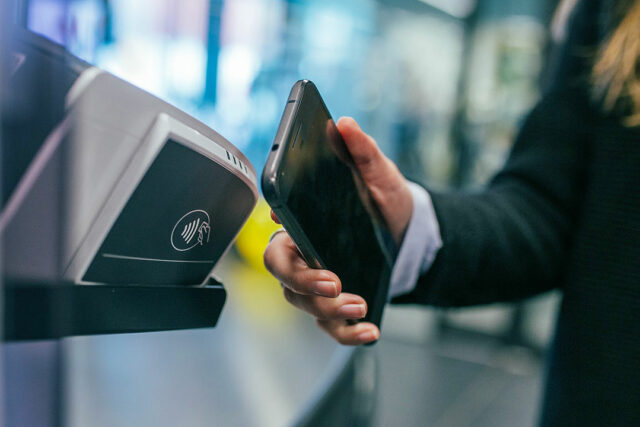
THE ENTRY of Google Pay and Apple Pay into the Philippine market will help boost e-commerce but also heightens the need for stronger guardrails to ensure the integrity of the digital payments system as more people transact online.

Google Pay this month entered the country through the launch of Google Wallet, which allows users to link debit or credit cards to the e-wallet. Apple Pay is expected to be available by next year.

“This would broaden the electronic payments of many Filipinos internationally, not just limited to local e-wallets and digital payments solutions,” Rizal Commercial Banking Corp. Chief Economist Michael L. Ricafort said in a Viber message.

“Thus, this could also lead to some potential loopholes for international fraudsters that would widen their potential reach, thereby necessitating urgent measures to safeguard versus these and further boost cybersecurity and financial literacy,” he said.

Philippine Institute for Development Studies Senior Research Fellow John Paolo R. Rivera said the availability of these transaction channels will boost digital payments and convenience, but also heightens the risk of cyberattacks as scammers could shift from methods like SMS phishing to “more sophisticated tactics like fake app links, spoofed merchant sites, and social-engineering that tricks users into approving payments.”

“Consumers need strong device security, app-based transactions (not links), alerts, and limited-exposure cards or wallets,” he said in a Viber message.

“Regulators should apply the same safeguards required of banks and e-wallets, clear liability rules, fraud monitoring, data protection, and fast takedown of malicious sites so adoption increases trust rather than risk.”

These new payment channels could help the Philippine digital economy grow faster, Oikonomia Advisory and Research, Inc. Economist Reinielle Matt M. Erece said in a Viber message.

“Similar to already existing digital payment channels, the risks are still on verifying whether numbers or recipients are legitimate. Hopefully, the SIM registration and other digital laws can help in reducing the risk of scams and fraud.”

Mr. Rivera added that while current safeguards provide consumers with some protection, wider adoption of device-based payments, especially for high-value transactions, could put these channels at risk of being targeted by fraudsters.

“Existing rules cover KYC (know-your-customer), data protection, and fraud monitoring, but new risks require more granular protections, especially around liability, device security, and cross-platform fraud. What’s needed are clearer rules on who bears losses in unauthorized transactions, stronger requirements for biometric authentication and real-time fraud detection, and faster coordination between banks, telcos, and platforms to shut down phishing sites and fraudulent apps,” he said.

“In short, the framework is solid, but we need tighter enforcement, faster response mechanisms, and updated guidelines so regulation keeps pace with more sophisticated digital fraud.”

The digital economy contributed 8.5% of Philippine gross domestic product in 2024, little changed from 8.6% in 2023 but well below the 2021 peak of 9.2%, which was during the height of the coronavirus pandemic.

The Philippines’ digital economy is set to hit $36 billion in gross merchandise value (GMV) this year, supported by rapid adoption of e-commerce, transport and delivery services, digital finance and artificial intelligence, according to a report by Google, Temasek Holdings and Bain & Co.

The report also projected that the country’s overall digital economy could reach $70 billion to $140 billion in GMV by 2030, slightly lower than last year’s forecast of $80 billion to $150 billion.

The share of online payments in monthly retail transactions in the Philippines stood at 57.4% in terms of volume and 59% in value terms in 2024, Bangko Sentral ng Pilipinas (BSP) data showed. These are up from 52.8% and 55.3%, respectively, in 2023.

The BSP is targeting to achieve a 60% to 70% share of digital payments over total retail payments volume by 2028, in line with the Philippine Development Plan. — A.M.C. Sy

Dining In/Out (11/27/25)


Flavors of the season at NWR

CELEBRATE the holiday season at Casa Buenas at Newport World Resorts (NWR). The restaurant showcases the flavors of the country’s major island groups starting Dec. 2. Set menus offer a culinary journey through Luzon, Visayas, and Mindanao, each crafted for three persons. Every set features an appetizer, soup, a selection of mains, and a dessert. Feast highlights include Kinilaw, Pi Yang Gang Manok, and a modern take on crispy pata kare kare. For reservations and inquiries, contact 0917-878-8312 or 7908-8998. Meanwhile, at Kusina Sea Kitchens at Hilton Manila, there will be a lavish Christmas Eve and Day buffet starring Rosemary-Roasted Prime Rib, Honey-Cured Ham, Salmon Wellington with tartare and red wine sauce, and more. Cap off the night with a Sinagtala dessert spread and raise a toast with free-flowing sparkling wine, soda, beer, and house wine. This is available on Dec. 24 to 25 for lunch and dinner buffet at P3,500 net per person. Early birds enjoy 15% off on confirmed bookings with a 50% deposit on or before Nov. 30. For inquiries and reservations, contact 0917-851-4044 or e-mail MNLPH_FB@hilton.com. Meanwhile, at The Festive Buffet at Sheraton’s S Kitchen, the highlights of the Christmas Eve and Christmas lunch spread are roasted stuffed turkey, ribeye, and leg of ham at the carving station, abundant seafood paluto featuring fresh lobster and more. It’s priced at P3,900 net per person on Christmas Eve dinner from 6 to 10 p.m. and Christmas lunch from noon until 3 p.m. Contact 0917-859-7496 for more details. At Hotel Okura Manila’s Yawaragi, the Christmas Kisetsu Buffet Christmas features Kakiage Tempura wrapped in Prosciutto di Parma with Teriyaki–Balsamic Glaze, assorted fusion nigiri, sushi, and maki, Wagyu carving, and more at P4,600++ per person on Christmas Eve. Christmas Day offerings for lunch or dinner start at P3,500++ per person. Call 02-5318-2888, 0917-842-9067, or e-mail yawaragi.service@hotelokuramanila.com for more information.


Tanduay Flavored Mixes for the holidays

A GIFT idea for adults is the Tanduay Flavored Mixes Bundle. Available until supplies last, each bundle includes 700ml bottles of the Daiquiri and Zesty Storm flavors and a free highball glass. It comes in a paper bag for easy gifting and can be purchased via Shots.ph, Tanduay’s official web store. Tanduay Flavored Mixes Daiquiri offers lemonade flavors with notes of cherry and almond cake, which has 15% ABV. Tanduay Flavored Mixes Zesty Storm, meanwhile, is a mix of rum and flavors of citrus fruits with hints of cucumber and ginger, also at 15% ABV. The Tanduay Flavored Mixes Bundle is now available for P300.


Get Smart, get SMEG

THIS holiday season, Smart Infinity, the premium postpaid brand of Smart Communications, Inc. partners with SMEG Philippines to make the season more rewarding for its members. From Nov. 21 to Feb. 23, existing Smart Infinity members can take part in an exclusive raffle, with a chance to bring home SMEG’s kitchen appliances. Up for grabs are the SMEG FAB 5 Mini Refrigerator and the SMEG Espresso Coffee Machine with Grinder. Members can also win other SMEG items, from blenders and coffee machines to toasters and kettles. To join, members must opt in to the raffle by texting SMEG to 5858. Members may also register via the Smart Infinity website or coordinate directly with their Relationship Manager. A confirmation SMS will be sent, indicating the number of raffle entries earned. Raffle entries are awarded to members who: upgrade their plan (from 3500 to 5000; 5000 to 8000; or 8000 to 9500), add a new line under Plans 5000, 8000, or 9500, or successfully refer a new subscriber to Plans 5000, 8000, or 9500. Each plan corresponds to raffle entries: Plan 5000 earns one entry, Plan 8000 earns two, and Plan 9500 earns three, giving members more chances to win as they move up to bigger plans. Winners will be announced on Feb. 27. For more details, visit https://smart.com.ph/Postpaid/infinity-smeg or contact your Smart Infinity Relationship Manager.


A McDonald’s Grand Reunion

THIS YEAR, McDonald’s Philippines is giving select groups a chance to celebrate the holidays for free. Dubbed the “Grand Reunion at McDo,” this nationwide holiday initiative will transform select McDonald’s Party Rooms into festive spaces for reunions happening simultaneously across the country. Customers are invited to visit McDonald’s Philippines’ Facebook Page and share their story on the Grand Reunion post — why they want to come together, what kept them apart, and what makes their bond worth celebrating. On Dec. 8 from 2-4 p.m., McDonald’s will accommodate groups of up to 10 members, with two groups per party room for a total of 20 guests. Participants will be selected based on how their stories embody the spirit of togetherness during the Christmas season. Participants may choose their preferred McDonald’s branch. Each group will receive boxes of Honey Butter Chicken McDo. A McDonald’s “Happiness Host” will also be there. For more information, visit www.mcdonalds.com.ph, McDo.ph on Meta, @mcdo_ph on Instagram, and @McDo_PH on X.


LA Chicks turns one

LA CHICKS, the chicken spot with Nashville-style heat, is officially turning one. Since opening its flagship store at Festival Mall in Alabang in October 2024, it has expanded to five full-service branches: at Two E-Com at the Mall of Asia Complex in Pasay, Three Central Mall in Makati City, Central Square Mall in Bonifacio Global City, and at NAIA Terminal 3. LA Chicks serves three staples: ultra-crispy signature chicken tenders, the stacked chicken sandwich loaded with fried chicken thigh, slaw, and sauce, and bone-in fried chicken for purists. Flavors come from Naked (zero heat), Mild, Medium, Hot, all the way to Extra Hot. For more information, visit the LA Chicks website or follow @lachicks.hotchicken on Instagram.

ADVERTISEMENT
ADVERTISEMENT