Home Blog Page 6393

A Virgil Abloh-created sneaker exhibit opens in New York

PHOTO FROM LOUIS VUITTON/ HIGHSNOBIETY.COM

NEW YORK — Late fashion designer Virgil Abloh is being honored in a New York exhibition featuring 47 pairs of Louis Vuitton Nike Air Force 1 sneakers he created before his death in November.

Nine shoes on display in the immersive show will be available for purchase in June.

Mr. Abloh was the artistic director of Louis Vuitton’s menswear collection from 2018 until his death from cancer at age 41.

A replica of the turntable set-up Mr. Abloh used as a DJ is featured, along with what organizers call “a magical treehouse symbolic of Virgil’s own childhood dreams.” Quotes from Mr. Abloh, who was also a visual artist, fill the room, with a floor of lights that create atmospheric patterns.

“He was one of a kind,” Elle.com Deputy Editor Claire Stern said. “Not just in his creative skill set, but how he broke down barriers in fashion. Racially, socioeconomically, he let people in.”

Installations of globes around New York City are promoting the free exhibit, which takes place May 21-31 at the Greenpoint Terminal Warehouse in Brooklyn.

“Virgil’s impact on our culture and the fashion world especially was huge,” Ms. Stern said. “I think this will be one of the first of many exhibits honoring him and his legacy, and his impact will be felt for generations to come.”

In July 2021, LVMH Moët Hennessy Louis Vuitton gave Mr. Abloh a mandate to launch new brands and partner with existing ones in sectors beyond fashion. — Reuters

PSE aims for better stock liquidity after ‘investor day’

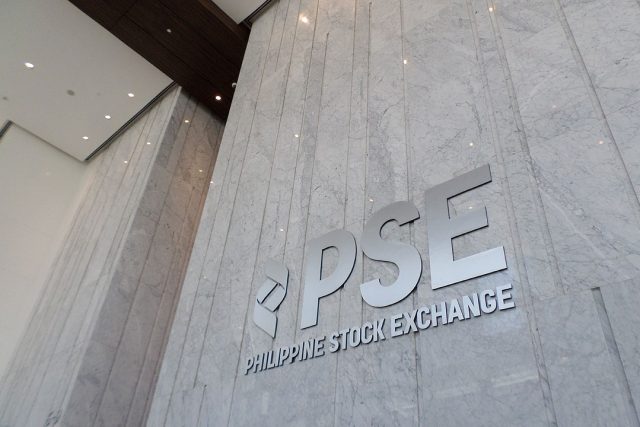
THE Philippine Stock Exchange (PSE) is hoping that its upcoming “investor day” event will improve liquidity among non-PSE index companies should new investors come in and prompt follow-on offerings.

“We are pleased to offer a platform for these non-PSE index and recently listed companies to come together to provide relevant corporate information and developments to the event participants,” PSE President and Chief Executive Ramon S. Monzon said in a statement.

“By communicating their story and their growth plans and strategy, we hope to see improved liquidity among these non-PSEi stocks. Attracting new investors, which will increase demand for its shares, may even prompt these companies to do follow-on offerings in the next year or so,” Mr. Monzon added.

The PSE STAR (Strengthening Access and Reach) investor day event will feature top officials and finance executives from participating publicly listed companies (PLCs) to share their first-quarter financial performance and future business strategies.

“We hope this briefing will help investors and analysts understand the prospects of these companies, which are mostly comprised of second-tier issues and gauge the value of their stocks listed in the PSE,” he added.

The event will run from May 24 to 26 and is co-hosted by Bloomberg L.P. with the Fund Managers Association of the Philippines (FMAP) and Trust Officers Association of the Philippines (TOAP) as event partners.

Companies that will participate in the event include Monde Nissin Corp., Max’s Group, Inc., Century Pacific Food, Inc., The Keeper’s Holdings, Inc., Axelum Resources Corp., Filinvest Land, Inc., RL Commercial REIT, Inc.,  Megawide Construction Corp., Cemex Holdings Philippines, Inc., AllDay Marts, Inc., China Banking Corp., Security Bank Corp., Pilipinas Shell Petroleum Corp., Nickel Asia Corp., and Converge Information and Communications Technology Solutions, Inc.

Bloomberg economists and analysts will also provide their outlook on the economy and the food and beverage, property, construction, services, financials, and mining sectors.

The event will also have virtual booths for each participating PLC that attendees may visit. — Luisa Maria Jacinta C. Jocson

Yields on government debt rise as central bank hikes borrowing costs

YIELDS on government securities (GS) rose across the board last week after the Bangko Sentral ng Pilipinas (BSP) hiked benchmark rates to contain rising inflation.

GS yields, which move opposite to prices, jumped by an average of 17.45 basis points (bps) week on week, based on the PHP Bloomberg Valuation (BVAL) Service Reference Rates as of May 20 published on the Philippine Dealing System’s website.

Debt yields on all benchmark tenors climbed last week. Rates of the short-dated 91-, 182-, and 364-day Treasury bills went up by 8.83 bps, 7.81 bps, and 5 bps to end the week at 1.4627%, 1.7553%, and 2.0119% respectively. 

At the belly of the curve, yields on the two-, three-, four-, five, and seven-year Treasury bonds (T-bonds) rose by 32.7 bps, 27.5 bps, 22.21 bps, 20.2 bps, and 22.05 bps, respectively, to 4.0380%, 4.8096%, 5.4452%, 5.9256%, and 6.3589%.

At the long end, the rates of the 10-, 20-, and 25-year papers climbed by 17.19 bps (to 6.416%), 15.1 bps (6.5354%), and 13.31 bps (6.5342%), respectively.

Trading volume last week thinned to P7.105 billion from P10.705 billion previously.

First Metro Asset Management, Inc. (FAMI) said trading volume remained light last week with an upward bias in yields ahead of the anticipated rate hike from the BSP.

“Overall defensiveness ensues from higher inflation expectations and sustained level of debt supply,” FAMI said in an e-mail.

“BSP moved policy rates higher to reduce demand and rein in inflation. Given the lag effects of monetary policy moves, central banks are challenged to strike a balance between controlling inflation and not dampening growth,” FAMI added.

Security Bank Corp. Chief Investment Officer for Trust and Asset Management Group Noel S. Reyes said in an e-mail: “Market was anticipating higher yields [last] week at the onset given strong GDP (gross domestic product)…that made a move by the BSP during this week’s meeting highly likely in order to contain coming inflation.”

Mr. Reyes said trading last week was mostly end-user driven “as dealers try to remain light ahead of the increased uncertainty on where the yields will be capped.”

As expected by eight out of 17 analysts polled by BusinessWorld, the central bank’s Monetary Board on Thursday started unwinding its pandemic-era support for the economy as it raised benchmark rates by 25 bps to quell rising inflation.

The central bank will also reset its bond-buying into a regular liquidity facility that will ensure the sustainability of its balance sheet.

At last week’s meeting, the BSP revised its inflation forecast this year to 4.6% from 4.3% previously, above the 2-4% target band. The central bank also hiked its 2023 inflation forecast to 3.9% from 3.6%.

“With inflation risks dominating the market, we think that the peso yield curve will join the bear-flattening trend (short-term rates rising faster than long-end) as the central bank poises to hike further and wind down GS purchases,” FAMI said.

For the coming weeks, the trend for a flatter yield curve will remain in focus, tracking US Treasury yields, Mr. Reyes said.

“Note that curve inversion should not be in our picture given our strong GDP expected performance. Stagflation is not in our forecast for the Philippines and the slope of our curve should not be as flat as the US,” he said.

Mr. Reyes added that the market will attempt to move higher after the average rate of the seven-year paper auctioned off last week breached 6%.

The Treasury raised just P20.1 billion out of the programmed P35 billion via the fresh seven-year T-bonds it offered last week despite tenders reaching P46.94 billion as investors asked for higher returns due to expectations of a BSP rate hike.

The tenor was partially awarded at 6.5%, 31.1 bps higher than 6.189% quoted for the seven-year paper at the secondary market prior to the auction. The government capped bids at 6.6%.

“Speculative talk of 7% on the 10-year (bonds) auction abound, but this will just be rejected by the BTr (Bureau of the Treasury), likely,” Mr. Reyes said.

The Treasury is scheduled to offer reissued 10-year debt worth P35 billion on May 24. The paper has a remaining life of nine years and eight months. — A.O.A. Tirona

CTA affirms ruling granting Ayala Corp. partial refund

THE Court of Tax Appeals (CTA) has affirmed a February 2020 decision partially granting a tax credit certificate to Ayala Corp. worth P44.7 million over its excess creditable withholding tax for 2014.

In a 19-page decision on May 18, the CTA full court denied the company’s petition for review to issue a new decision granting a tax credit certificate in the total amount of P62.4 million.

The company argued that it presented sufficient evidence to substantiate the previously disallowed P17.3 million of excess creditable withholding tax for 2014. It added that the revenue chief did not question or raise any objections to the company witness’ testimonies.

The commissioner of internal revenue (CIR) claimed that Ayala Corp.’s evidence was not clear and convincing enough to justify its claim for refund.

The tribunal ruled that Ayala Corp. did not file a motion for reconsideration or a new trial, which voids the CTA en banc’s jurisdiction over the case.

The tax court also junked the CIR petition to deny the company’s claim for a tax credit certificate for the same non-filing.

According to a copy of the ruling written by CTA Associate Justice Maria Belen M. Ringpis-Liban, since Ayala Corp. and the CIR failed to comply with the procedural requirement, “the court en banc cannot validly acquire jurisdiction over their appeals.”

”Accordingly, the assailed amended decision has already attained finality and can no longer be questioned by the parties,” the ruling read. “Undoubtedly, therefore, the assailed amended decision is a ‘new or different’ decision, which was based on the Second Division’s reevaluation of the parties’ allegations and existing evidence that were not considered in the original assailed decision.” 

The tax court said that the court could not rule over the case because it did not attain jurisdiction from the required appeals from the parties.

In a separate dissenting opinion, CTA Associate Justice Roman G. Del Rosario said that mandatory filing of a motion for reconsideration is required only when the amended decision resolves an entirely new issue.

“The assailed amended decision in the present case resolved the very same issue of [the company’s] entitlement to its refund claim,” he said. — John Victor D. Ordoñez

India wheat export ban to raise demand for rice

By Luisa Maria Jacinta C. Jocson, Reporter

India’s ban on wheat exports may cause wheat-dependent countries to shift to rice, with the resulting demand threatening to pressure rice prices upwards, a Department of Agriculture (DA) official said.

“One of the medium-term impacts is if they cannot access wheat, they might switch their demand to rice, and the problem is that if there’s going to be a rush to buy rice, that will lead to increase in demand and increase in prices,” Undersecretary Fermin D. Adriano said in an e-mail.

“Russia and Ukraine combined produce about 30% of all the wheat in the world. Any further tightening of the supply will definitely aggravate (the situation). There are quite a number of countries in the Middle East and sub-Saharan areas that are wheat-eating. A lot of things will worsen because of access, especially in wheat-eating countries,” according to Mr. Adriano, who is the undersecretary for Policy, Planning and Research.

On May 14, India announced that it was banning wheat exports due to the heat waves which have suppressed crop yields, sending domestic prices upwards.

Earlier in the year, India set a preliminary estimate for exports of as much as 12 million tons in 2022-2023.

“The country’s main (wheat import) source was Ukraine, and since the Russian invasion, our country’s biggest source is India,” Feedmix Specialist II, Inc. Vice-President Norberto O. Chingcuanco said in a Viber message.

“The export ban will definitely pressure global wheat prices. The use of wheat is not all replaceable by corn,” he added.

Samahang Industriya ng Agrikultura Executive Director Jayson H. Cainglet said that global wheat prices have increased by 20% due to the Ukraine crisis.

“The impact (of the ban) is already being felt because we haven’t found any alternative suppliers,” he said.

Cooking oils, cereals and meats hit all-time highs as a result of the Ukraine invasion, pointing to key food commodities becoming 30% more expensive year on year, Mr. Cainglet said, citing a report by the United Nations.

“We have been saying this for a long time. We cannot rely on the vagaries of the international market,” he added.

Mr. Adriano also said that the ban will affect the livestock industry, as inferior grades of wheat are primarily used to make animal feed. 

“About three million metric tons (MT) of wheat feed is being produced annually to fill the gap. If wheat feed supply is not enough, we would only be able to access it at a very high rate,” Mr. Adriano said.

“In other words, the animal feeds sector will be badly affected by it, from hogs, poultry, and aquaculture. If the animal inputs rise, it will affect the final output price. That’s the reason why we are saying there’s a looming food crisis in the second half of the year,” he added.

Mr. Cainglet said the way to mitigate the effects of the global crisis is to support local production, subsidize farm inputs and help farmers across the whole production chain.

“All countries will naturally protect their own domestic markets first. It is truly tragic that in the Philippines, we import first and lower tariffs,” he said.

“Up to their final days at the DA, they are still pushing the reduction of tariffs on pork, rice and corn; instead of doubling their efforts in helping local farmers cope with the increasing cost of production,” he added.

Economists said that the struggle to procure wheat heralds possible inflation pressures.

“With India being a major supplier of wheat, a ban on wheat exports would hurt the Philippines, which is already struggling to source the staple after the Ukraine war. The Philippines used to import wheat from Ukraine,” ING Bank N.V. Manila Senior Economist Nicholas Antonio T. Mapa said in an e-mail.

He said that energy shortages will also likely drive up the cost of basic commodities.

“Domestic inflation has moved well past its target and is threatening to surge to multi-year highs as food items related to wheat will edge higher. Meanwhile, substitutes for these food items will also become more pricey as Filipinos seek alternatives. This will crimp consumption and slow overall economic activity. With how constrained supply chains are at the moment, we could very well have to brace for faster inflation,” Mr. Mapa added.

UnionBank of the Philippines, Inc. Chief Economist Ruben Carlo O. Asuncion said Philippine firms might also look elsewhere for wheat supply.

“They can continue to import for their inputs and bear the higher cost that can compress their margins to keep their market share especially at a time when demand is recovering, which I think is what is happening to many producers because of these supply-chain challenges,” he said in an e-mail.


PSC supports 3rd Inter-Secondary Girls Volleyball in Davao City

MANILA — Ten Schools representing three districts of Davao City vie for top honors in the 3rd Philippine Sports Commission (PSC) Inter-Secondary Girls Volleyball competition that will open on Saturday until Sunday at the Davao City National High School courts in Davao City.

The volleyfest is presented by the PSC in coordination with the City Government of Davao through the Sports Development Division – City Mayor’s Office and the Department of Education (DepEd)-Davao.

Teams entered in the competition sanctioned by the Philippine National Volleyball Federation (PNVF) are Davao City National High School, Crossing Bayabas National High School, Calinan National High School, Lower Tamugan National High School, Davao City SPED National High School, Daniel R. Aguinaldo National High School, Baguio National School of Arts and Trades, Talandang National High School, Catalunan Pequeno National High School, A. L. Navarro National High School.

PSC Commissioner Charles Raymond A. Maxey, who oversees the grassroots project, said the competition provides an avenue for secondary girls from public schools to showcase their skills in volleyball.

“After the two years of no face-to-face sports program, we’ve come up again with this volleyball project, our third edition in Davao City,” Mr. Maxey said.

Teams will be grouped into two brackets with five teams per pool. Only the top two teams from each bracket will enter the semis.

The champion team will get P10,000 while the first and second placers will take home P7,000 and P5,000, respectively. The seven non-winning teams will also receive a consolation prize of P2,000.

Mr. Maxey said the competition is part of the grassroots program of PSC that aims to discover future talents in volleyball.

The volleyfest is sponsored by Pocari Sweat.

Chevrolet Makati now open

Chevrolet Makati has a 300-sq.m. showroom. — PHOTO FROM TCCCI

THE COVENANT Car Company, Inc. (TCCCI) recently grew its network of Chevrolet dealerships with the opening of Chevrolet Makati last May 1. Operated by MIG1 Auto Dealership Corp., the facility is expected to serve the central business district and nearby areas.

Makati City is considered as Chevrolet’s flagship location where it has established a strong customer base and network since 2013. Surrounded by a number of business establishments and major residential villages, the central location of this dealership makes it very accessible. Chevrolet expressed confidence that MIG1 Auto Dealership Corp. will be able to grow a strong network for the brand and provide excellent sales and after-sales services to its new and existing clientele.

Said TCCCI President and CEO Albert B. Arcilla, “As we continue to strengthen our dealer network to create dependable and mutually rewarding partnerships, we at TCCCI are pleased to have MIG1 Auto Dealership Corp. carry the Bowtie brand. Chevrolet Philippines shall accord full support to our new dealer partner and pave the way for various opportunities to ensure the success of this venture.”

Present in the opening ceremony were Chevrolet Makati’s dealer principals Chairman Cong. Michael Edgar Aglipay and Vice-Chairman Ginger Rosales-Aglipay. Also in attendance were Makati Mayor Abigail Binay and Makati Second District Rep. Luis Campos, along with various bank partners and media guests.

“We are proud to be the newest addition to the expanding Chevrolet network of dealers. It is an honor to have been given the opportunity to carry this esteemed brand in our new Makati dealership. We are very optimistic and we look forward to contributing to the growth of Chevrolet in the local automotive industry by offering outstanding customer service and expertise, which the brand has been known for,” said Cong. Aglipay.

Chevy Makati has a spacious 300-sq.m. showroom and a 1,000-sq.m. service area with eight work bays to accommodate after-sales and service customers. The facility is located at 2282 Chino Roces Ave., Makati City, with the showroom open from Mondays to Saturdays, 8 a.m. to 7 p.m. Chevy owners can also bring in their vehicles for service from Mondays to Saturdays, 7:30 a.m. to 5:30 p.m. An appointment may be set by contacting (+63) 916-658-4678 for sales, and (+63) 917-462-3303 or (+63) 966-749-1506 for after-sales and service. For real-time updates and exclusive promo offers from Chevrolet Makati, visit the official Facebook page Chevrolet Makati — MIG1.

Obi-Wan hides the Force in new Star Wars TV series, says Ewan McGregor

EWAN McGregor in a scene from the mini-series Obi-Wan Kenobi.

STAR WARS Jedi master Obi-Wan Kenobi is back for a six-part television series and so is Ewan McGregor, who had played him as a young man. Forget the Jedi mind tricks and lightsaber battles, though.

“Obi-Wan’s not doing that anymore. He’s living a normal life. He’s not living the life of a Jedi anymore,” said Mr. McGregor, who is also executive producer of the series, in an interview.

“We can see from the trailer that there are these inquisitors that are doing Vader’s job of tracking down the last Jedi. He wants to destroy every last Jedi,” he said. “They’re looking for him, so you can’t use the Force because he might give himself away.”

It has been 17 years since Mr. McGregor donned the cowl of the Jedi in Star Wars: The Revenge of the Sith, the last of the prequel trilogy.

“They were very difficult to make. The blue screen, green screen nature of them were very difficult to act in and also they weren’t much liked when they came out,” the Scottish actor said.

Few details of the series have been revealed, but they appear to set the stage for the first meeting of Obi-Wan and Darth Vader, the towering dark knight that his former pupil Anakin Skywalker had turned into by the end of the prequels.

Mr. McGregor, 51, is now closer to the age of Alec Guinness when he played Obi-Wan in the original Star Wars trilogy. Hayden Christensen is reprising his role of Anakin Skywalker/Darth Vader.

“Acting with him on set just felt like this last 17 years just didn’t happen, like there was some crazy time warp or something,” Mr. McGregor said. “It was very bizarre.”

Obi-Wan Kenobi begins streaming on Disney+ on May 27. — Reuters

Peso seen to move sideways as hawkish Fed props up dollar

BW FILE PHOTO

THE PESO may move sideways versus the dollar this week following the Philippine central bank’s decision to raise borrowing costs, expectations of more aggressive tightening by the US Federal Reserve to fight inflation, and as the market awaits the incoming administration’s economic plans.

The local unit closed at P52.23 per dollar on Friday, gaining 22 centavos from its P52.45 finish on Thursday, according to data by the Bankers Association of the Philippines.

Week on week, the peso also strengthened by 22 centavos from its P52.45-per-dollar close on May 13.

The peso opened Friday’s session at P52.30 versus the dollar. Its weakest showing was at P52.37, while its intraday best was at P52.11 against the greenback.

Dollars exchanged increased to $1.29 billion on Friday, from $1.11 billion on Thursday.

The peso strengthened versus the dollar on Friday after the central bank raised benchmark interest rates, UnionBank of the Philippines, Inc. Chief Economist Ruben Carlo O. Asuncion said in an e-mail.

The BSP raised benchmark interest rates for the first time since 2018 to tame rising inflation.

The Monetary Board on Thursday increased the key policy rate by 25 basis points (bps) to 2.25%. Interest rates on the overnight deposit and lending facilities were also hiked by 25 bps to 1.75% and 2.75%, respectively.

At the meeting, the central bank upwardly revised its average inflation forecast for 2022 to 4.6% from the previous forecast of 4.3%, exceeding the 2%-4% target band. For 2023, the BSP’s inflation forecast was hiked to 3.9% from 3.6% previously.

The start of the BSP’s tightening cycle came a week after the release of data showing gross domestic product expanded by a better-than-expected 8.3% in the first quarter.

Meanwhile, Rizal Commercial Banking Corp. Chief Economist Michael L. Ricafort said in an e-mail that the market also factored in the gains in the stock market.

The local unit was also stronger after the recent downward correction in the benchmark 10-year US Treasury’s yield, Mr. Ricafort said.

For this week, expectations that the Fed would tighten more aggressively until inflation is brought down could cause the peso to weaken, Mr. Ricafort said, with increased sanctions on Russia and some lockdowns in China seen to slow down global economic recovery.

Mr. Asuncion said the dollar is seen to be supported by the Fed’s hawkish stance as the US central bank is expected to front-load its planned rate increases to fight stubbornly-high inflation, with the minutes of its latest meeting to be released this week seen to give more details on its tightening path.

Mr. Ricafort and Mr. Asuncion said the market is also waiting for the next administration to detail their policy agenda and priorities.

After his landslide presidential election win, Ferdinand “Bongbong” R. Marcos, Jr. now faces soaring inflation and limited revenue to achieve his ambitious infrastructure goals, Bloomberg reported.

Several names and figures have been floated as potential appointees to the new economic team, though no official announcements have been made.

For this week, Mr. Asuncion gave a forecast range of P52.20 to P52.70, while Mr. Ricafort expects the local unit to move within P52.05 to P52.40 per dollar. — K.B. Ta-asan with Bloomberg

World Bank to offer $30B as Ukraine war threatens food security

BONN — The World Bank said it will make $30 billion available to help stem a food security crisis threatened by Russia’s war in Ukraine, which has cut off most grain exports from the two countries.

The total will include $12 billion in new projects and over $18-billion funds from existing food and nutrition-related projects that have been approved but have not yet been disbursed, the bank said.

“Food price increases are having devastating effects on the poorest and most vulnerable,” World Bank Group President David Malpass said in a statement. “To inform and stabilize markets, it is critical that countries make clear statements now of future output increases in response to Russia’s invasion of Ukraine.”

The bank said the new projects are expected to support agriculture, social protection to cushion the effects of higher food prices on the poor, and water and irrigation projects.

The majority of resources going to Africa and the Middle East, Eastern Europe and Central Asia, and South Asia. These areas are among the hardest hit by the impact of the war in Ukraine on grain supplies.

Countries such as Egypt are highly dependent on Ukrainian and Russian wheat and are scrambling for supplies as Russia has blockaded Ukraine’s agricultural exports from Black Sea ports and has imposed domestic export restrictions.

The World Bank’s plans were the largest component of a US Treasury Department report summarizing food security action plans from international financial institutions.

The European Bank for Reconstruction and Development plans to make €500 million available for food security and trade finance for agricultural and food products, out of a €2-billion package for Ukraine and neighboring countries affected by the war, the Treasury report said.

Ukraine would get €200 million and neighboring countries would get €300 million. The International Monetary Fund will provide financing support through its normal channels, which are limited by countries’ shareholdings and whether their debt is deemed sustainable. — Reuters

Caution to prevail as market awaits policy plans

BW FILE PHOTO

STOCKS could move sideways this week as investors wait for the new administration to announce its economic managers and fiscal policy plans and following the Philippine central bank’s first rate hike since 2018.

The benchmark Philippine Stock Exchange index (PSEi) climbed by 86.28 points or 1.29% to close at 6,746.33 on Friday, while the broader all shares index improved by 45.46 points or 1.27% to end the week at 3,613.24.

Week on week, the PSEi gained by 367.16 points from its close of 6,379.17 on May 13.

For this week, analysts said the market could continue to move sideways with a downward bias amid the transition period for the incoming administration.

“We expect the local market to move sideways with a negative bias as investors continue to wait for additional details on the incoming administration’s economic team and fiscal agenda,” RCBC Securities, Inc. Head of Research Erwin Rommel C. Fuentes said in an e-mail.

“In view of the transition phase before the new administration takes office on June 30, the financial markets and general public are still waiting for additional details on the new administration’s Economic Team or cabinet members,” Rizal Commercial Banking Corp. Chief Economist Michael L. Ricafort said in an e-mail.

Mr. Ricafort added that the market is waiting for the new administration’s plans, especially about fiscal policy and debt management as the economy recovers from the impact of the coronavirus pandemic.

After his landslide presidential election win, Ferdinand “Bongbong” R. Marcos, Jr. now faces soaring inflation and limited revenue to achieve his ambitious infrastructure goals, Bloomberg reported.

Several names and figures have been floated as potential appointees to the new economic team, though no official announcements have been made.

What’s certain is the gravity of economic challenges ahead, even in the wake of a better-than-expected first-quarter gross domestic product surprise. While policy makers just weeks ago sounded a more confident tone on reining in price growth, inflation has worsened worldwide, the Philippines included.

To keep the country’s post-COVID economic recovery on track, the incoming Cabinet will need to manage inflation and the current account deficit, among other challenges.

RCBC Securities’ Mr. Fuentes added that trading may be subdued following the central bank’s decision to raise borrowing costs last week, with analysts expecting further increases this year.

The Bangko Sentral ng Pilipinas on Thursday raised benchmark interest rates from record lows, the first hike since 2018, to combat rising inflation.

For the coming week, RCBC’s Mr. Ricafort placed the PSEi’s next immediate support from 6,530 to 6,570 and resistance levels between 6,800 and 6,900. — Luisa Maria Jacinta C. Jocson with Bloomberg

ADVERTISEMENT
ADVERTISEMENT