Home Blog Page 6324

Justice chief OK’s relief of NBI Cyber-crime chief 

NBI FACEBOOK PAGE

THE DEPARTMENT of Justice (DoJ) has approved the relief of the head of the National Bureau of Investigation’s (NBI) Cyber-crime division and other members of the body for their involvement in an allegedly anomalous operation. 

Justice Secretary Menardo I. Guevarra told reporters in a Viber message he had approved the removal of the official from the division, though a formal order had not been issued. He did not say what the operations was about. 

Relieving officials of their duties while under investigation is part of the internal affairs division’s standard operating procedure to prevent undue influence, Mr. Guevarra said. 

“As secretary of Justice, my interest is to maintain professionalism, discipline and ethical conduct among the personnel and operatives of the premier investigating agency in our country,” he said. 

Mr. Guevarra made the decision upon the recommendation of NBI officer-in-charge Eric B. Distor.  

In a separate statement, Mr. Distor said he had ordered a reassessment of NBI’s operational guidelines to check abuse of authority.  

“All operational authority must come from the Office of the Director and must be under the control and supervision of the said office, with assistance from the respective deputy directors,” he said.  

The NBI will also reexamine its guidelines in executing search warrants, intelligence operations and investigations. — John Victor D. Ordoñez 

Unpassed child rights laws now up to 19th Congress   

PHILIPPINE STAR/ BOY SANTOS

AN ALLIANCE of child rights advocacy groups applauded the 18th Philippine Congress for the passage of seven key bills, and at the same time reminded the incoming legislature that several other measures are needed to strengthen child protection in the country.  

As the 18th Congress comes to a close, and a new set of leaders are set to take the helm, we take this opportunity to remind our legislators of the challenges that remain as regards child-focused legislation,said Child Rights Network (CRN) Convenor Romeo Dongeto in a statement on Thursday.  

He cited the Positive and Non-Violent Discipline Bill, which passed Congress but failed to get the approval of President Rodrigo R. Duterte in 2019. The bill seeks to protect children from all forms of physical and mental violence.  

We would continue to push for this legislation, as it is our fervent hope that Filipino children will one day value discipline not out of fear, but of love and respect,he said.  

CRN also recommended the refiling of the Prevention of Adolescent Pregnancy Bill, the Comprehensive and Responsive Civil Registration and Vital Statistics Bill, Magna Carta of Children, the Philippine Commission on Children Bill, and the Bangsamoro Children’s Code.  

We are optimistic that the 19th Congress will be able to move past party lines and act as one and pass the key legislative measures we have identified,he said.  

Six new laws approved under the Duterte administration are: the prohibition of child marriage, improved adoption and alternative child care, increasing the age for determining commission of statutory rape, support for learners with disabilities in line with inclusive education, protection for foundlings, and expanded anti-trafficking rules.   

The seventh bill, which is now up for the Presidents approval, is the proposed Anti-Online Sexual Abuse or Exploitation of Children and Anti Child Sexual Abuse or Exploitation Materials Act, ratified in both houses of Congress last Monday. Alyssa Nicole O. Tan 

Robredo to focus on work outside government 

OVP PHOTO RELEASE

OUTGOING Vice President Maria Leonor LeniG. Robredo would be focusing on her commitment to form and lead a volunteer movement once her six-year term ends on June 30, her spokesman said on Thursday.  

Ms. Robredo is set to hold meetings with various civic organizations and members of the private sector for the continuation of her poverty alleviation platform, which is now aimed to be the largest network of volunteers in the country, her spokesman Ibarra M. Gutierrez III told OneNewsPH.   

Mr. Gutierrez also said returning to government service in whatever capacity is not in the immediate agenda when asked if Ms. Robredo is willing to join the incoming administration of President-elect Ferdinand BongbongR. Marcos, Jr.  

Right now, her focus is clearly finishing her term and starting a new chapter as head of Angat Buhay NGO,he said in mixed Filipino and English.  

The non-government organization named Angat Buhay might include some of the initiatives undertaken by the vice presidents office, including its free tele-medical consultation services, Mr. Gutierrez said.  

Details about the civic movement are still being finalized, he added. Kyle Aristophere T. Atienza 

Sarangani eyed as another Philippine diving hotspot 

SARBAY FB PAGE

SARANGANI Bay in southern Philippines, more known as a central source of the countrys tuna industry, is a diving hotspot that remains largely untapped.  

Those who have had the opportunity to visit the regions dive sites expressed that our diving areas are at par with international diving spots,the Department of Tourisms SOCCSKSARGEN regional office said as it recently launched the Dive Sox program.  

SOCCSKSARGEN covers the provinces of South Cotabato, Cotabato (also referred to by its old name North Cotabato), Sultan Kudarat, Sarangani, and General Santos City.  

The Dive Sox campaign is intended to promote and build up the diving sector in the region, which currently has only one dive center the South Point Divers-Sarangani based at the Lemlunay Resort in Maasin town.   

The dive program, the tourism office said, aims to expand the dive areas to Glan, which launched its own program last year, and to the coastal municipalities of Sultan Kudarat province.”  

The potential diving area in Sultan Kudarat is along the clustered coastal towns of Kalamansig-Lebak-Palimbang, which is being pushed for declaration as a protected area.   

Sarangani Bay is already a declared protected seascape. Its coral resources cover more than 2,293 hectares with about 60 important live hard coral genera, 411 reef species in 46 families, according to the Department of Tourism.   

Marine mammal species such as spinner dolphins, rissos dolphins, and sea cow or dugong are also often sighted in the area.   

During the recent celebration of the SarBay Festivalwhich was put on hold in the past two years due to the coronavirus pandemic seven dugongs swam close to shore of Barangay Gumasa, delighting locals, officials, and visitors.  

“It is quite a coincidence that these marine mammals appeared just in time with our celebration of SarBay Fest 2022! said Sarangani Bay Protected Area Superintendent Joy C. Ologuin.  

Ms. Oloquin stressed that the soft comebackof the festival remained focused on environmental protection and sustainable tourism.  

Among the partyhighlights were beach and underwater clean-up activities, and collection crown of thorns starfish, which prey on coral reefs.  

General Santos City, with its recently upgraded international airport, is the main gateway to the region. MSJ 

PCC opens i-Station in Legazpi City; Cebu and Davao to follow 

THE PHILIPPINE Competition Commission (PCC) has opened a new investigation and collaboration station (i-Station) in Legazpi City as part of its campaign to deliver services faster across the regions.  

The i-Station will serve as temporary workstation for PCC personnel until it opens a permanent regional office, it said in a statement on Thursday.  

The operation of these hubs will not only facilitate the ease of conduct of investigations, but also better coordination with regional government agencies and more effective handling of complaints and queries,the PCC said.  

Located at the National Economic and Development Authority office in Legazpi, it is the second i-Station set up after the Baguio City branch was opened last year.    

Two others are targeted for launch this year, one in Cebu City to serve the Visayas and one in Davao City for Mindanao. Revin Mikhael D. Ochave 

Bus bombing suspect killed, another arrested in pursuit operations 

A SUSPECT in a recent series of bus bombings in southern Philippines, identified as a member of a local terrorist group, was killed by security forces on Wednesday while another was arrested, the military reported.  

The two suspects were members of the Dawlah Islamiyah Maguindanao Group, which clashed with joint police and military troops in the town of Mlang early Monday morning.   

Due to our intensified intelligence gathering, we immediately tracked down those suspects and launched manhunt operations against them,602nd Infantry Brigade commander Jovencio F. Gonzales said in a statement released by the Armed Forces of the Philippines.   

Mr. Gonzales said the said group is suspected to be the perpetrators of the recent bus bombings in the cities of Koronadal and Tacurong as well as previous incidents in Parang, Maguindanao and in Mlang and Aleosan in North Cotabato.  

The slain suspect was identified as Monir Lintukan while his arrested comrade was Randy Saro alias Bobong 

Lt. Col. Rommel Mundala, commanding officer of 90th Infantry Battalion, said  

the DI-Maguindanao Group led by Almoben Camen Sebod alias Polok are also involved in extortion and scam activities. MSJ 

Gatchalian pushes for systematized tutorial sessions to help offset learning loss 

PHILIPPINE STAR/ MIGUEL DE GUZMAN

A REELECTED senator on Thursday called for the implementation of systematized tutorial sessions to help offset the learning loss in the past two years due to pandemic restrictions.  

The program will support struggling learners by covering learning competencies under Language and Mathematics for Grades 1 to 10 and Science for Grades 3 to 10. Literacy and numeracy will also be given focus to build the educational foundation of kindergarten learners.  

As the various sectors continue to rise, we must ensure that the education sector is not left behind,Senator Sherwin T. Gatchalian, who chairs the Senate Basic Education, Arts and Culture Committee, said in Filipino in a statement on Thursday.  

The National Economic and Development Authority has estimated that two years without face-to-face learning would result in P22 trillion in productivity losses.  

The senator noted that the education department’s push for the studentsreturn to physical classes is just the first step to recovery.  

A Senate bill filed in the recently concluded Congress, called Academic Recovery and Accessible Learning Program, sets a P20-billion budget for implementation, including compensation for teachers and para-teachers who will serve as tutors. Alyssa Nicole O. Tan

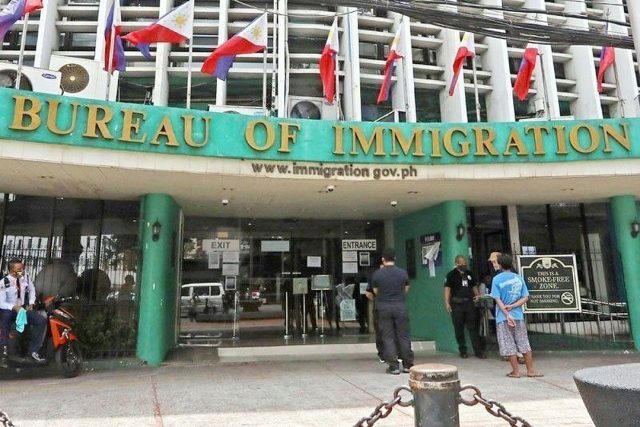
Immigration bureau prepares for return of international students 

PHILSTAR FILE PHOTO

THE BUREAU of Immigration (BI) on Thursday said it is ready for the possible uptick of foreign students arriving in the country, particularly those who are resuming their courses after the disruption due to the coronavirus pandemic.  

“I have instructed our personnel to coordinate with our other stakeholders to ensure the smooth processing of returning foreign students,Immigration Chief Jamie H. Morente said in a statement.  

BI data show over 35,000 international students, mostly in medical courses, were studying in the Philippines before the global pandemic. 

“This would be the Bureau’s share in helping the recovery of the education sector that was also badly hit by the pandemic.”  

BI said it had also contacted educational institutions that plan to accept international applicants for the coming academic year.  

Anthony M. Cabrera, chief of BI’s Student Visa section, said the agency is expecting a rise in student arrivals by the third quarter of the year.  

Many of the foreign students were repatriated after the implementation of lockdown protocols and the closure of international borders.  

As of May 25, the Philippines had admitted more than 500,000 foreign visitors since reopening its borders in February, according to the Department of Tourism (DoT).  

DoT has said that it is also marketing the country as a destination for those who want to learn English. John Victor D. Ordoñez 

Acquire BPO donates over 10,000 vaccines to QC 

BUSINESS process outsourcing firm Acquire BPO has donated over 10,000 doses of coronavirus disease 2019 (COVID-19) vaccines to the Quezon City local government in support of the continuing vaccination campaign.  

Quezon City is home to four of our offices that employ around 1,500 people. Its a great city of almost 3 million people, and we want to give back and continue to help (Mayor Maria Josefina JoyG. Belmonte’s) successful vaccination program,Acquire BPO Chief Executive Officer Scott Stavretis said in a statement on Thursday.   

Acquire BPO is a multinational business outsourcer that has business operations in Australia, the Dominican Republic, the Philippines, and the United States. It employs over 9,000 Filipinos across Metro Manila. Revin Mikhael D. Ochave  

Health agency confirms community spread of monkeypox in England

AN ELECTRON MICROSCOPIC image shows mature, oval-shaped monkeypox virus particles as well as crescents and spherical particles of immature virions, obtained from a clinical human skin sample associated with the 2003 prairie dog outbreak in this undated image obtained by Reuters on May 18, 2022. — CYNTHIA S. GOLDSMITH, RUSSELL REGNERY/CDC/HANDOUT VIA REUTERS

LONDON — Monkeypox appears to be spreading from person to person in England, the UK Health Security Agency (UKHSA) said on Wednesday.

The usually mild viral disease, which is endemic in west and central Africa, is understood to spread through close contact. Until early May, cases rarely cropped up outside Africa and were typically linked to travel to there.

“The current outbreak is the first time that the virus has been passed from person to person in England where travel links to an endemic country have not been identified,” the agency said.

According to the UKHSA, the majority of cases in the United Kingdom — 132 — are in London, while 111 cases are known to be in gay, bisexual, or other men who have sex with men (GBMSM). Only two cases are in women.

Recent foreign travel to a number of different countries in Europe within 21 days of symptom onset has been reported by 34 confirmed cases, or about 18% of the 190 cases of the disease that have been confirmed by the United Kingdom as of May 31.

So far, the UKHSA has identified links to gay bars, saunas and the use of dating apps in Britain and abroad.

“Investigations continue but currently no single factor or exposure that links the cases has been identified,” the agency cautioned.

Monkeypox can affect anyone, but many of the most recent diagnoses are the GBMSM community -— many of whom live in, or have links to London, said Kevin Fenton, London’s regional director for public health.

“As with any new disease outbreak, the risk of stigma and uncertainty is great,” he said.

The UKHSA is working with groups including the British Association of Sexual Health and HIV and the dating App Grindr to communicate with sexual health services and the GBMSM community. It is also encouraging the LGBT Consortium and Pride event organizers to help with messaging in the coming weeks.

Monkeypox typically causes flu-like symptoms and pus-filled skin lesions that usually resolve on their own within weeks, but can kill a small fraction of those infected.

UK health authorities are offering Bavarian Nordic’s vaccine, Imvanex, to contacts of confirmed or suspected cases.

Cases of monkeypox continue to rise outside Africa, mostly in Europe, and scientists are trying to pin down the reasons behind the spread.

On Wednesday, the World Health Organization said it had so far received reports of more than 550 confirmed cases of the viral disease from 30 countries outside of Africa. — Reuters

No more bambinos? Italian companies tackle birth crisis

A woman watches her baby in a park in Milan, Italy, May 4, 2020. — REUTERS/FLAVIO LO SCALZO

CARTIGLIANO — Businesses in the sleepy Italian town of Cartigliano are so worried about its declining birth rate and lack of workers that they have begun paying families’ nursery school fees and childcare costs to spur them to have more babies.

Cartigliano, a town of 3,800 inhabitants and scores of small businesses in the northeastern Veneto region, is not unique. Similar schemes have sprung up around Italy’s industrial north as exasperated firms of all sizes take matters into their own hands to try to arrest an acute demographic crisis.

Italy is far from alone. Its fertility rate of around 1.2 children per woman is among the lowest in the world, but the trend of declining births and ageing populations is common to many advanced countries.

Veneto is known for its multitude of family-run businesses that form the backbone of the country’s industrial fabric.

It is a model that is threatened not only by globalization and cheap competition from Asia, but also by a lack of young people to work in its factories and workshops.

“When I was a girl there were always kids running around here, now hardly any are born and only the old people stay,” says Ilenia Cappeller, indicating a deserted square under the shade of Cartigliano’s imposing bell tower.

Ms. Cappeller, 44, whose eponymous company makes industrial springs, hinges and other precision mechanical instruments, is leading a drive by around 40 of the town’s businesses to raise cash for schemes intended to boost the birth rate.

They call the initiative the Janus Project, named after the two-headed Roman god of gateways, or new beginnings. In Cartigliano’s case, they hope it will mark the transition from a barren present to a more fertile future.

In the 12 months after the scheme was launched in April 2021 they raised 48,000 euros which was spent on five projects funding families, schools and child-care provision. Ms. Cappeller aims to garner another 100,000 euros over the next year.

“We’re very attached to Cartigliano but this is also about self-interest because we can’t find workers anymore,” she says.

‘NO PEOPLE’
The demographic crunch is not just a problem for firms. Economists warn that unless Italy turns the tide its already weak economic growth will decline and it will become impossible to finance adequate welfare and state pensions.

Italy saw just 399,431 births in 2021, the 13th straight annual decline and the fewest since its unification in 1861, according to national statistics bureau ISTAT. The population fell by 253,000 to 59 million. ISTAT warned the country is heading for 5 million fewer inhabitants by 2050.

Even Tesla founder Elon Musk, the world’s richest man, commented last week on the dire outlook. “Italy will have no people if these trends continue,” he tweeted.

One reason often cited for the birth dearth is a lack of job security and affordable child care. Pensions absorb most of Italy’s welfare spending and the majority of new jobs are on temporary contracts that offer no financial stability.

Businesses are co-opting themselves into family policy to try to fill the gaps, and local politicians seem happy to pass them the baton.

“When they came to me saying they wanted to put money into local kindergartens and schools I thought ‘where’s the trick?’,” laughs Cartigliano’s mayor Germano Racchella. “I felt like when someone tells you you’ve just won a car.”

Just 30 km (20 miles) from Cartigliano in the town of Zane, Roberto Brazzale is spearheading a similar initiative called “Welcome Stork” involving around 10 local firms.

“Some offer a bonus to employees who have babies, others fund schools, increase parental leave or offer flexible work-time, so it’s anything that helps with procreation,” he says.

His own dairy company Brazzale SpA, which employs 500 people locally, gives an extra month’s pay to every worker who has a new baby.

It also offers the option of an extra year at home after their statutory maternity or paternity leave expires, on 30% of their normal salary, at a cost to the company of 10,000 euros per person who takes up the offer.

‘WE CAN’T GO ON LIKE THIS’
Speaking passionately about Italy’s risk of “extinction”, Mr. Brazzale says he decided to act when a worker told him nervously, she was pregnant, clearly fearful of his reaction.

“Something just hit me, I thought we can’t go on like this, with women scared to tell their bosses they are having a baby.”

A survey this week by Italy’s business lobby Confindustria showed that in the area around the city of Vicenza, which covers both Cartigliano and Zane, around a fifth of firms offer financial help for their workers who have babies, and a quarter offer flexible working hours.

“Either companies club together to take these kind of measures or they will just die out,” said Filiberto Zovico, the head of economic and business think tank ItalyPost.

The corporate push for babies is not limited to small businesses. Italy’s huge shipbuilder Fincantieri, based in Trieste, last month inaugurated the first of a series of nursery schools it is building and funding in towns where it operates.

Back in Cartigliano, the Janus Project is producing results. The local nursery school already has 34 children enrolled for next year, 10 more than this year, as parents take advantage of the 150 euros per month of financing offered by the companies.

Desiree Zonta, a 31-year-old mother of two boys, says thanks to the scheme she could afford to enroll her second son Gabriele at the school this year, meaning she also now has enough time to look for a part time job.

“I think I will find something, there is plenty of work in Cartigliano,” she says. — Reuters

Macau’s casino losses engulf gambling hub as no quick fix in sight

Visitors take photos in front of a scale replica of Eiffel Tower in Macau, China, Aug. 16, 2016. — REUTERS/BOBBY YIP

HONG KONG  — Plunging casino revenues in Macau, the world’s largest gambling hub, are taking a heavy toll on the wider economy, forcing hundreds of businesses to close down and pushing unemployment to its highest level since 2009.

The former Portuguese colony on Wednesday posted one of its worst monthly gambling revenues since September 2020, a week after Macau’s government warned that rising job losses and financial strains could trigger social conflicts and destabilize the city’s security.

The Chinese special administrative region is the only place in the country where it is legal to gamble in casinos. Heavily reliant on casino taxes, which account for more than 80% of government revenue, Macau has had little success in diversifying its economy.

“We are the most reliant city in the world on tourism. Of course, we didn’t have any other industries to fall back on,” said Glenn McCartney, an associate professor at the University of Macau.

“Given that we didn’t diversify for 20 years. It isn’t going to happen tomorrow. There’s no quick fix.”

Macau’s dependence on gambling has been laid bare since the start of the coronavirus pandemic, with visitation rates in the first quarter dropping more than 80% compared with the same period in 2019 due to COVID-19 travel restrictions.

More than 90% of visitors to Macau typically come from mainland China, which continues to pursue a “zero-COVID” policy.

May gambling revenues dropped 68% year-on-year to 3.3 billion patacas ($400 million), and — while up 25% from April — it remains far off the 26 billion patacas hit in May 2019.

Macau’s six casino operators are facing daily revenue losses and accumulating debt as liquidity continues to dry up.

China’s moves to stem capital outflows and crack down on the opaque junket industry that is tasked with bringing in high-rollers from the mainland have also hampered gambling revenue.

Cost-cutting and mounting economic losses are evident throughout the tiny territory, home to more than 600,000 people, extending to sectors including retail, industrial and commercial services.

The unemployment rate for local residents has risen to 4.5%, according to the latest government figures, up from 1.8% in 2019.

Citing a tough business environment and gloomy outlook for the high-end gaming segment, the Emperor Entertainment Hotel said in April it would close its casino from June 26.

At least seven other casinos are due to stop operations by mid-year, local media reported.

The Macau Economic Association said the local business climate index will remain “poor” for the coming three months.

In an April report, the International Monetary Fund (IMF) warned that it would take several years for Macau’s economy to return to its pre-pandemic level, with the sharp contraction in activity exposing the city’s vulnerability.

Macau’s government has urged casinos, which employ tens of thousands of local people, not to fire workers. Instead, some operators have chosen not to renew contracts, or offered unpaid leave or share bonuses instead of giving full salaries.

Cloee Chan, a labor group activist in Macau, said the lack of gamblers, coupled with the closure of VIP parlors and some casinos, posed a major challenge to the local labor market.

“Many workers in the gaming industry are now either under-represented or fired,” she said. — Reuters