Home Blog Page 629

Marcos taps anger over Philippine elite in corruption fight

Philippines President Ferdinand Marcos Jr. / Photographer: Prakash Singh/Bloomberg

Philippine President Ferdinand Marcos Jr.’s family gained global notoriety four decades ago for the extensive corruption of his late father’s dictatorship. Now, he’s set in motion an anti-graft drive that could boost his popularity and investor sentiment.

A teary-eyed Marcos appeared in a podcast over the weekend, saying he’s very upset about corruption in flood control projects. “I have sleepless nights thinking about this. How did we end up this way?” he said.

It’s a surprising campaign for a politician who has faced questions over his family’s alleged hidden wealth for decades. He started with a warning in his annual speech to Congress in July, then named companies he said benefited from flood mitigation projects such as dikes and river walls.

Now, he has ordered checks on the lifestyles of government officials, personally inspected projects and vowed to go after corrupt officials through a new independent body. He also plans to remove P250.8 billion ($4.4 billion) for flood infrastructure — or a fourth of the public works department’s proposed budget — from next year’s spending plan.

Mr. Marcos is tapping into anti-elite anger in a typhoon-prone nation where infrastructure often fails to hold up, making it even more vulnerable to the impact of climate change. Citizens have vented their angst on social media, slamming public officials, contractors and their relatives with possible links to graft-ridden projects who flaunt lavish lifestyles with Rolls-Royce and Cadillac cars as well as Chanel and Birkin designer bags.

Corruption has been a perennial problem in the region, but even more so in the Philippines, which ranked lower compared to peers in last year’s Transparency International Corruption Perceptions Index.

Street protests themselves have generally been small, and financial markets so far unaffected. But Marcos, whose popularity has waned, will be attuned to the recent violent unrest in neighboring Indonesia over what were seen as excessive perks for lawmakers even as ordinary Indonesians struggle to make ends meet.

Mr. Marcos’ anti-corruption drive is a “populist project” that could both help clean up his family’s name and potentially give him ammunition against his ally-turned-rival, Vice President Sara Duterte, said former presidential political affairs adviser Ronald Llamas.

“He has to see this through towards a logical conclusion, which is to charge and imprison corrupt officials of the public works department, contractors, and even politicians,” Mr. Llamas said.

But Mr. Marcos will also need to show he’s willing to target politicians aligned with him. “Marcos opened Pandora’s box, and there’s no turning back,” he said.

At a hearing at the House of Representatives on Tuesday, a former assistant district engineer at the public works department accused Senators Jinggoy Estrada and Joel Villanueva of receiving kickbacks from flood mitigation projects. Both denied the allegations, with Mr. Estrada describing them as “outright lies,” and Mr. Villanueva saying these are part of a “demolition job” against him.

A day earlier at a Senate investigation, a contractor tagged Mr. Marcos’ allies — including the president’s cousin House Speaker Martin Romualdez — as among the lawmakers allegedly involved in corruption in flood control projects. Mr. Romualdez and other Congress members denied the accusations.

Shortly after, the Senate changed its leadership, with Senator Vicente Sotto III — who was backed by Mr. Marcos in midterm elections in May — becoming the chamber’s new chief. He replaced Senator Francis Escudero, who earlier said that a private contractor donated to his 2022 election campaign, but denied helping the company secure government projects.

The president’s corruption crackdown has led to the resignation of his public works chief. Investigations by local media have also shown that lawmakers, including those aligned with Marcos, have ties to major contractors that bagged flood control projects.

‘POLITICAL THEATRICS’
For Mr. Marcos, who is limited to a single, six-year term that expires in 2028 under the Constitution, the challenge is to turn the public angst into an anti-graft legacy, and to convince investors that he’s serious about plugging leakages in government spending. The president’s trust rating remains under 50% despite recovering from a low of 36%, according to a June survey by pollster Social Weather Stations.

Scoring a win is even more crucial now for Mr. Marcos in the tussle against his vice president.
Duterte fended off the risk of an impeachment trial that would’ve put her possible 2028 presidential bid in jeopardy, and her supporters outperformed in the midterm elections.

There are already warnings though that the anti-corruption drive is causing tensions within Mr. Marcos’ political circles, particularly between his Cabinet and the House. Executive Secretary Lucas Bersamin, the president’s chief administrator, said the Cabinet will not tolerate “any effort to hold the budget process hostage by political theatrics.”

“All our investigations into the anomalies will be futile if the sources of corruption remain unchecked,” Mr. Bersamin said over the weekend. “Hence, we urge the House of Representatives to heed the demand of the people for full accountability: Clean your House first.”

The statement followed a report that House lawmakers were considering tossing the 6.793-trillion peso national expenditure program for 2026 back to the budget department to fix some problematic entries. The move, which was eventually dropped, could’ve delayed the budget approval.

The heightened scrutiny on flood control projects will likely slow disbursements in the short term as agencies tighten approval processes and review ongoing works, Union Bank of the Philippines chief economist Ruben Carlo Asuncion said.

“While this could temporarily temper infrastructure spending, the intent is to restore credibility and ensure funds go to high-impact, shovel-ready projects,” Mr. Asuncion said. He estimates that if disbursements slow by 10% for a quarter, the annualized impact on gross domestic product would be around 0.13 percentage point.

Mr.Marcos’ resolve to pull the plug on corruption could show most visibility in his upcoming appointment of a new ombudsman, who has to be truly independent if he wants his campaign to succeed, according to Michael Henry Yusingco, a research fellow at the Ateneo School of Government. Otherwise, “the president’s outburst against corrupt officials and politicians will eventually be dismissed as simply political bluster,” he said.

“It may give him a temporary boost in the surveys, but this will eventually fizzle out as the people realize that the president is just performing for the peanut gallery,” Mr. Yusingco added. — Bloomberg


Israel attacks Hamas leaders in Qatar, Trump says he’s ‘very unhappy’ about strike

REUTERS

DOHA/DUBAI/WASHINGTON – Israel attempted to kill the political leaders of Hamas with an airstrike on Qatar on Tuesday, escalating its military action in the Middle East with what the US described as a unilateral attack that does not advance American and Israeli interests.

US President Donald Trump said he was “very unhappy about every aspect” of the Israeli strike and would be giving a full statement on the issue on Wednesday.

“I’m not thrilled about it,” Trump said as he arrived at a Washington restaurant. “It’s not a good situation but I will say this: We want the hostages back, but we’re not thrilled about the way it went down today.”

While Israel defended the attacks as being justified, Qatar said Israel was treacherous and engaged in “state terrorism.” Qatari Prime Minister Sheikh Mohammed bin Abdulrahman al-Thani said the airstrikes threatened to derail the peace talks Qatar has been mediating between Hamas and Israel.

Trump said he considered hitting Hamas was a worthy goal, but he felt badly that the attack took place in the Gulf Arab state, which is a major non-NATO ally of Washington and where the Palestinian Islamist group has long had its political base.

The attack drew condemnation from Saudi Arabia, Egypt, the United Arab Emirates and the European Union, and risks derailing Gaza ceasefire talks and Trump’s push to achieve a negotiated end to the nearly two-year-old conflict.

Qatar is a security partner of the United States and host to al-Udeid Air Base, the largest US military facility in the Middle East. It has acted as a mediator alongside Egypt in talks between Israel and Hamas for a ceasefire in Gaza, which appears to be increasingly elusive.

Hamas said five of its members had been killed in the attack, including the son of Hamas’s exiled Gaza chief and top negotiator Khalil al-Hayya. It said Israel had failed in what Hamas called an attempt to assassinate the group’s ceasefire negotiation team.

The Trump administration received warning of the attack from the US military just before it took place, Trump said in a statement on social media earlier. He did not say if it was Israel that notified the US military.

“Unilaterally bombing inside Qatar, a Sovereign Nation and close Ally of the United States, that is working very hard and bravely taking risks with us to broker Peace, does not advance Israel or America’s goals,” Trump wrote. “However, eliminating Hamas, who have profited off the misery of those living in Gaza, is a worthy goal.”

Hamas political bureau member Suhail al-Hindi told Al Jazeera TV the group’s top leadership had survived the Israeli attack. The airstrike followed Israel warning Palestinians to leave Gaza City, an area once home to about a million people, as it tries to destroy what is left of Hamas, which has been decimated by Israel’s military since October 2023.

Trump said he directed his envoy Steve Witkoff to warn Qatar the attack was coming but Qatar contradicted those comments, saying that reports that it got a heads-up before the attack were false and the phone call from a US official came when blasts were already being heard in the Qatari capital, Doha.

“Qatar reserves the right to respond to this blatant attack and will take all necessary measures to respond,” al-Thani told reporters. Israel killed one member of Qatar’s internal security forces in its attack and injured others, Qatar said.

Trump assured the emir of Qatar in a phone call after the attack that “such a thing will not happen again on their soil.”

The US president also spoke with Israeli Prime Minister Benjamin Netanyahu.

Israeli officials told Reuters the strike was aimed at top Hamas leaders including Hayya. Israel is still gathering information on the strike and is yet to determine whether any Hamas officials or leaders were killed, a person briefed on the matter told Reuters.

Two US officials, speaking to Reuters on condition of anonymity, said the US military had been notified by Israel shortly before the strike but there was no coordination with or approval from Washington.

Trump made a high-profile visit to Qatar in May and stayed at a hotel about 2 km (1.24 miles) from Tuesday’s attack site.

ATTACK FOLLOWED JERUSALEM KILLINGS
The airstrike took place shortly after Hamas’ armed wing, the Qassam Brigades, claimed responsibility for a shooting on Monday that killed six people at a bus stop on the outskirts of Jerusalem.

Netanyahu said the attack was “entirely justified” and was ordered after the Jerusalem attack and the deaths of four Israeli soldiers in Gaza.

“The days are over when terror leaders can enjoy immunity of any kind,” Netanyahu said in a televised address. “I won’t allow that kind of immunity to exist.”

The Israeli operation drew strong negative reactions around the world.

The European Union called it a breach of international law and the United Arab Emirates, which normalised relations with Israel under the Abraham Accords in 2020, called it “blatant and cowardly”.

Pope Leo expressed unusually forceful concern about the consequences of Israel’s strike in Qatar.
“The entire situation is very serious,” he said.

United Nations Secretary-General Antonio Guterres condemned the attack and said Qatar had been playing a very positive role in seeking a ceasefire in Gaza and the release of hostages held by Hamas.

Israel has killed several top Hamas leaders since the Palestinian militant group attacked Israel in October 2023, killing 1,200 soldiers and civilians and taking 251 hostage, according to Israeli tallies.

Israel has also bombed Lebanon, Syria, Iran and Yemen in the course of the Gaza conflict.

GAZA CITY BRACES FOR NEW ONSLAUGHT
On Tuesday, Palestinians living in the ruins of Gaza City were showered with Israeli leaflets telling them to flee ahead of Israel’s effort to obliterate the area and wipe out Hamas, causing panic and confusion.

Israel wants to demilitarise the entire Gaza Strip, home to 2.2 million Palestinians before the war. Many countries around the world have warned Israel’s plan would spell catastrophe for Palestinians.

The plan has also provoked concern inside Israel, where public support for the war has wavered.

Israel’s military leadership has warned Netanyahu against expanding the war, according to Israeli officials.

Families of Israeli hostages fear the attack could endanger the captives. Netanyahu says he is acting out of Israel’s interest by moving to finish off Hamas in order to safeguard his country against any more attacks.

Israel has been accused of genocide, including this month by the world’s biggest group of genocide scholars, over its nearly two-year campaign in the Palestinian enclave that has killed more than 64,000 people, according to local authorities. — Reuters

Apple holds down new iPhone prices amid threats of Trump tariffs

An iPhone Air hangs during an Apple's event at the Steve Jobs Theater on its campus in Cupertino, California, US Sept. 9, 2025. REUTERS/Manuel Orbegozo

CUPERTINO, California – Apple on Tuesday introduced an upgraded line of new iPhones, including a slimmer iPhone Air, and held prices steady amid US President Donald Trump’s tariffs that have hurt the company’s profit.

The iPhone Air comes with a high-density battery and a brand new processor, and will be priced starting at $999. Wall Street had been watching to see whether the company would increase the price of iPhones, or seek alternative routes to make up for tariff costs, such as increasing the cost of iPhone versions with more storage.

The model was the star of the company’s annual product launch event, with CEO Tim Cook saying “we’re taking the biggest leap ever for iPhone.” Apple called it the most durable iPhone yet. It will use the A19 Pro, a processor chip that it said it had tweaked for better energy efficiency and performance to match the device’s thinner battery. Rivals including Samsung already sell phones marketed for their extremely thin profile.

The iPhone Air’s price is slotted in between the company’s other models, as analysts had predicted. Apple also launched the iPhone 17 and iPhone 17 Pro, the latest upgrade to its flagship smartphone, as well as a new version of its AirPods Pro wireless headphones and a blood pressure monitor in its latest Apple Watch.

A 256-gigabyte version of the iPhone 17 base model will start at $799, the same as the previous iPhone 16 model with half the storage space. The iPhone 17 Pro will start at $1,099 for a 256-gigabyte model, the same as the previous year’s model with the same storage size, but without the option of a smaller-capacity phone at a lower $999 like the iPhone 16 Pro.

Apple did not raise the price on watch models or the new AirPods Pro 3 either.

The prices were an indication that Apple was ready to swallow the cost of tariffs to ward off competition from Samsung, Alphabet’s Google and domestic rivals in China, even as it has predicted that the levies would cost it more than $1 billion in the current fiscal quarter.

Apple shares were down 1.6% after the company announced pricing of the smartphones.

“They’re leveraging their scale to try to keep prices where they are,” said Tom Mainelli, head of IDC’s Device & Consumer Research Group. “I think Apple, like most tech vendors, are acutely aware, particularly in the US, that tariffs are going to impact consumers’ ability to spend in the second half of this year. So … they’re going to hold a line on prices and try to make it possible for people to upgrade between now and the end of the year at the same price as last year.”

The iPhone Air will go head-to-head against Samsung Electronics’ Galaxy S25 Edge, and analysts told Reuters it could be a stepping stone toward competing with Samsung’s folding phones, which are in their seventh generation. A foldable phone is important for Apple to appeal to customers in China, where consumers like foldables and the company has been losing market share.

“This new device will bring a sense of newness to the iPhone, which has remained the same for too long,” said PP Foresight analyst Paolo Pescatore. He said the “new and much-improved iPhone line-up looks impressive, which puts (Apple) in a strong position to cater for different segments.”

BLOOD PRESSURE MONITOR
The event was light on commentary on how Apple aimed to close the gap with the likes of Google, which has used its latest flagship phones to showcase the capabilities of its Gemini AI models. The company has leaned on a partnership with ChatGPT creator OpenAI to power many AI features on its devices.

Apple sidestepped “the heart of the AI arms race while positioning itself as a longtime innovator on the AI hardware front, with silicon and device-level integration,” said eMarketer analyst Gadjo Sevilla.

Apple said the iPhone Air will also feature a new “N1” chip to handle Wi-Fi communications and new “C1X” modem for cellular data. Chips for those functions in Apple’s premium devices were long supplied by Broadcom and Qualcomm, whose shares were down 2.3% and 1.1%, respectively, late on Tuesday afternoon.

“This is MacBook Pro levels of compute, in an iPhone,” Tim Millet, one of Apple’s chip executives, said during the presentation at the company’s Cupertino, California, headquarters. The iPhone Air will have two cameras and eliminate the physical SIM card slot, freeing up more room for battery capacity.

Apple said the base model iPhone 17 will have a brighter, more scratch-resistant screen. It will also have a better front-facing camera with a differently shaped sensor to make horizontal selfies look better.

The new AirPods Pro 3 will feature live translation of languages. Apple also said that if both people in a conversation are wearing the new AirPods Pro 3, the earbuds will translate conversations in near real time.

The blood pressure monitor feature is pending regulatory approval, Apple said. The watch will not detect every case of high blood pressure but the company said it expects the feature to notify 1 million people and will make it available in 150 countries. — Reuters

SM and DoST lead the future of sustainability

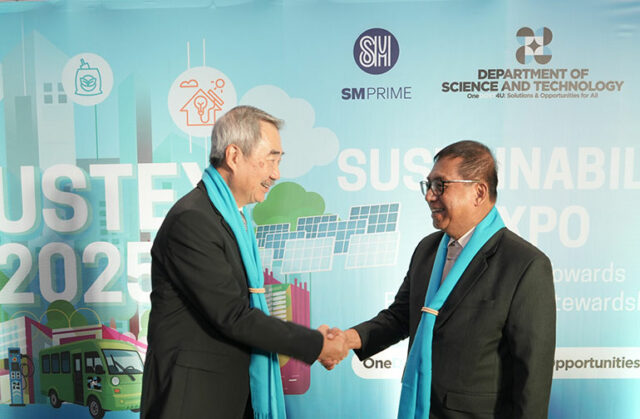
SM Prime Executive Committee Chairman Hans T. Sy and DoST Secretary Renato Solidum seal their commitment to environmental stewardship at the launch of the first-ever SM Sustainability Expo.

Bringing innovation & business through SUSTEX 2025

SM Prime Holdings, Inc., through SM Supermalls, in partnership with the Department of Science and Technology (DoST) and ARISE Private Sector Alliance for Disaster Resilient Societies, officially staged the inaugural SM Sustainability Expo (SUSTEX 2025) at the SMX Convention Center Aura, Taguig.

The two-day event, themed “Innovation for Environmental Stewardship,” brought together over 50 exhibitors, government agency leaders, the private sector, the international community and sustainability advocates to showcase cutting-edge solutions that advance a greener and more resilient future.

Symbolic Opening: “Beat of Sustainability”

SM and DoST leaders strike the Beat of Sustainability and lead the ceremonial Solidrum and angklung performance, symbolizing harmony and collective action at the inaugural Sustainability Expo 2025.

The Expo opened with the ceremonial “Beat of Sustainability,” led by DoST Secretary Renato Solidum and SM Prime Executive Committee Chairman Hans T. Sy, who together struck the Solidrum — a bamboo drum shell developed by the DoST-Forest Products Research and Development Institute (FPRDI).

They were joined by SM Supermalls President Steven Tan, SM Prime Vice-President Jessica Sy-Bell, SM Supermalls Vice-President Engr. Liza Silerio, and other dignitaries, who played the angklung, a UNESCO-recognized bamboo instrument. The performance symbolized harmony and collective action in advancing sustainability.

SUSTEX 2025 visitors engage with the FatHopes Energy booth, learning about innovative solutions for converting used cooking oil into sustainable biofuels.

Leadership Perspectives

In his opening remarks, Hans T. Sy emphasized that sustainability lies at the heart of SM’s business and highlighted the importance of partnerships: “Public-private partnerships such as this show how science and business can unite to address some of the most pressing environmental challenges of our time. We encourage more of this as the private sector can provide support to projects by local scientists.”

Secretary Solidum echoed this view, noting that SUSTEX demonstrates how innovation and science can strengthen national resilience and drive a circular economy, as championed by similar DoST efforts.

Expo visitors explore the DoST-PNRI booth at SUSTEX 2025, discovering innovations in nuclear science and technology for sustainable development.

“Through OneDOST4U: Solutions and Opportunities for All, we ensure that the science, technologies and innovations we develop are not just theories in journals or prototypes in laboratories — they are real solutions, accessible to businesses, communities, and every Filipino. This is also what we mean by Agham na Ramdam — science that is not distant; science that is felt, lived, and experienced by people in their everyday lives,” Mr. Solidum shared.

“My call is simple: enough talk. We’ve had summits, forums, declarations that fill up shelves and inboxes. What we need now is proof. Businesses must set their sights on real, tangible goals — not pretty brochures, not slogans, but numbers you can measure, promises you can check.”

Innovation Marketplace: Over 50 Exhibitors

A panel discussion at the Ignite Stage during SUSTEX 2025 gathers experts to share actionable insights on sustainability and innovation.

SUSTEX 2025 featured more than 50 exhibitors showcasing technologies, initiatives, and products that reflect Filipino ingenuity and global collaboration. Notable exhibits included SM Prime and SM GUUN’s “Waste-Free Future” campaign, which highlighted their joint initiative with Japan’s GUUN Environmental Company on advanced waste management.

ARISE Philippines showcased efforts to advance disaster resilience through private sector collaboration. The DENR’s Loop Forward Program promoted circularity and large-scale waste reduction. The DoST-FPRDI centerpiece featured sustainable Lalang Pandan furniture, essential oils from Philippine plants, and bamboo musical instruments. Meanwhile, the DoST-CHRG presented innovations in electric vehicle technology.

DoST leaders engage in a Fireside Chat at the Ignite Stage during SUSTEX 2025, sharing perspectives on science-led development and collaboration.

A Catalyst for Action

Running from Aug. 29 to 30, the Expo featured interactive sessions, product showcases, and knowledge exchanges. The event reinforced SM’s continuing sustainability roadmap, including its Waste-Free Future campaign and commitment to achieve Net Zero by 2040.

“May this Expo be more than an event. May it be a catalyst for collaboration, a hub for practical solutions, and a reminder that business can be a force for good — when guided by purpose, discipline and partnership,” Mr. Sy concluded.

Celebrating 40 Super Years of Evolving with Every You, SM Supermalls — one of Southeast Asia’s largest mall developers — is continuously evolving to lead the way in sustainable development by integrating green design, energy efficiency, disaster resilience, and environmental stewardship into its 88 malls in the Philippines, all while creating inclusive spaces that enrich communities, support climate action, and ensure a better, more sustainable future for generations of Filipino shoppers.


Spotlight is BusinessWorld’s sponsored section that allows advertisers to amplify their brand and connect with BusinessWorld’s audience by publishing their stories on the BusinessWorld Web site. For more information, send an email to online@bworldonline.com.

Join us on Viber at https://bit.ly/3hv6bLA to get more updates and subscribe to BusinessWorld’s titles and get exclusive content through www.bworld-x.com.

Philippines drops to near bottom in IMD World Talent Ranking 2025

The Philippines ranked 64th out of 69 countries in the IMD World Talent Ranking 2025. — PHILIPPINE STAR/EDD GUMBAN

By Justine Irish D. Tabile, Reporter

THE PHILIPPINES fell to near bottom in an annual global ranking of countries’ ability to attract and retain a skilled workforce, amid a decline in the quality of life, the Institute for Management Development (IMD) World Competitiveness Center said.

In the IMD’s World Talent Ranking (WTR) 2025, the Philippines slipped a spot to 64th out of 69 countries. Last year, it ranked 63rd out of 67 economies.

This was the Philippines’ worst showing in 20 years or since 2005.

Philippines drops in Global Talent Ranking

The Philippines’ talent competitiveness also continued to lag behind Asia-Pacific neighbors. It ranked 13th out of 14 Asia-Pacific countries, better only than Mongolia (69th overall).

Hong Kong (4th) was the highest-ranking economy in the Asia-Pacific. It was followed by Singapore (7th), Taiwan (17th), Australia (19th), Malaysia (25th), New Zealand (33rd), South Korea (37th), China (38th), Japan (40th), Thailand (43rd), Indonesia (53rd), and India (63rd).

The global talent index was again dominated by European economies led by Switzerland (1st overall), Luxembourg (2nd), and Iceland (3rd).

The WTR rankings are based on three factors: “appeal,” or the ability of the economy to attract foreign talent and retain local talent; “investment and development,” which refers to the measurement of resources allotted to develop a homegrown workforce; and “readiness,” or the quality of the skills in a country’s talent pool.

The Philippines saw a decline in all factors, dropping two places to 66th in investment and development. It slipped two spots to 56th in appeal and fell six places to 58th in readiness.

“Generally speaking, the Philippines is a net exporter of talent. And it means that it will always find it difficult to retain the homegrown talent in the country,” Arturo Bris, director of the World Competitiveness Center and professor of finance at IMD, said at a hybrid press briefing on Monday.

“At the same time, interestingly, if you look at our indicators, the Philippines ranks 13th in the availability of skilled labor in the country. So, it seems that executives and leaders in the country do not feel that they don’t find the talent that they would need,” he added.

LOW QUALITY OF LIFE
Mr. Bris noted the country has steadily declined in the rankings over the last few years and lagged in competitiveness mainly due to low quality of life in the Philippines versus its regional peers.

“I think the main driver is a declining quality of life. And again, remember that quality of life encompasses many different factors,” Mr. Bris said.

“The quality of life in the country, especially compared to other neighbors, like Thailand, Singapore, or Indonesia, is lower,” he added.

In particular, he said that the quality of life in the Philippines ranked 60th out of 69 economies. It ranked 49th in exposure to pollution, and 31st in management remuneration.

Philippine Institute for Development Studies Senior Research Fellow John Paolo R. Rivera said that the country’s low ranking in the talent index “reflects chronic underinvestment in education, weak training systems, and poor talent retention.”

“Compared with Asia-Pacific peers like Malaysia or Singapore, we lag behind in both talent readiness and quality of life. To catch up, we must improve public spending on education, build industry-relevant skills, and make our economy more attractive to high-value talent,” he said in a Viber message.

Misiek Piskorski, dean of executive education and professor of digital strategy, analytics, and innovation at IMD, said that much of the Philippines’ success is mainly due to its cheap labor.

While many multinational companies set up back-office operations in the Philippines, this is now under threat due to increasing adoption of artificial intelligence (AI) in the business process outsourcing sector.

“One of the big worries that I have for Manila… is to what extent, again, AI will substitute many of these jobs,” Mr. Piskorski said.

“Will the Philippines be ready with enough workforce and enough skilled workforce to provide the next generation of services? That is my big concern,” he added.

To address these concerns, he said that there is a need for more focused investments.

“To me, the Philippines is always Manila, and the rest of the country is very, very different. And so, we also have to start thinking about what we do in Manila and what we do across other islands that might be far away from Manila and upskill people there to get things going,” he said.

Management Association of the Philippines (MAP) President Alfredo S. Panlilio said the quality of the workforce can be addressed by improving curricula across schools.

“I think an important aspect is how do you fix the curricula of the schools, from public to private, to make it relevant to the demands of the current workforce,” he told reporters on the sidelines of the 23rd MAP International CEO Conference on Tuesday.

“Because although there are a lot of available positions, the companies cannot hire or don’t hire because they can’t find the talent that they’re looking for. So, it’s really about human capital,” he added.

During his stint with the Private Sector Advisory Council, Mr. Panlilio said he recommended focusing more on science, technology, engineering, and mathematics programs.

“Because AI is technology, we have to have the skill sets for our youth to develop those kinds of skills,” he said, adding that it is still uncertain what jobs will be created in the future,” he said.

He said the MAP taps academics to join committees within the organization, especially when doing research and in understanding data.

“So, we’re trying to bridge that, making sure that there’s a link or alignment between the educational system and what the corporates, and even the public sector, need down the road,” he added.

Manufacturing output drops to 5-month low

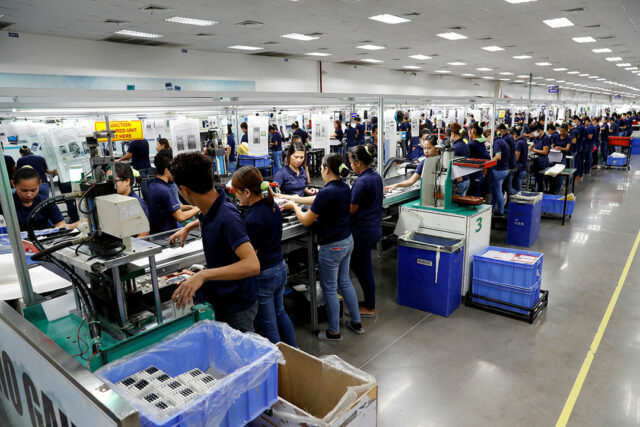
Workers at the assembly line of a factory in Malvar, Batangas in this file photo taken on Aug. 10, 2018. — REUTERS/ERIK DE CASTRO

By Matthew Miguel L. Castillo, Researcher

MANUFACTURING OUTPUT fell to a five-month low in July amid uncertainty over US tariff policies and bad weather, analysts said.

Preliminary results of the Philippine Statistics Authority’s (PSA) latest Monthly Integrated Survey of Selected Industries showed that factory output, as measured by the volume of production index (VoPI), shrank by 1.1% year on year in July.

This was a reversal of the 7% growth a year ago and 1.6% expansion in June.

It was also the lowest in five months since the 1.9% decline in February.

On a monthly basis, July’s output picked up by 3.4%, a reversal from the 4.3% decline in June. Stripping out seasonality factors, it inched up by 2.6%.

In the seven months to July, manufacturing output growth averaged 0.4%, significantly slower than the 2.7% a year ago.

The PSA attributed the contraction in July factory output to the slowdown in production of food (16.5% in July from 22.4% in June); computer, electronic, and optical products (5% from 7.3%); and transportation equipment (9.3% from 13%).

Ten other divisions saw a slowdown, while nine posted annual increments.

PSA data showed the three largest contributors to the year-on-year decline in the VoPI were the faster contraction seen in the divisions of basic metals (-25.4% from -24.9%), coke and refined petroleum products (-15.7% from -15.2%), and chemicals and chemical products (-22.2% from -14.9%).

Nicholas Antonio T. Mapa, chief economist at Metropolitan Bank & Trust Co., said in a Viber message the annual contraction in July may be due to weather disturbances that may have slowed factory activity across sectors.

Data from the Philippine Atmospheric, Geophysical Astronomical Services Administration’s (PAGASA) Climate Impact Assessment for July showed that several weather systems caused excessive rainfall that month.

University of Asia and the Pacific economist Cid L. Terosa said the demand for computer products in July was affected by external headwinds.

“The slowdown in computer products reflected the slowdown and fragile conditions faced by the global electronics and computer industry due to US reciprocal tariffs,” Mr. Terosa said in an e-mail.

US President Donald J. Trump’s seesaw tariff policies caused confusion and market instability since April. The US initially slapped a 17% reciprocal tariff on goods from the Philippines, then raised it to 20%, before eventually setting a 19% tariff rate that was implemented in August.

Sergio R. Ortiz-Luis, Jr., president of Philippine Exporters Confederation, Inc., said the flip-flopping US trade policy dampened overall demand for computer and electronic products.

Separate data from the PSA showed electronic products had the highest share of exported goods by value in July, accounting for 53.5% or $3.92 billion of the $7.34-billion total.

“Weaker demand in major global economies also contributed to the slowdown in electronics and computer production,” Mr. Terosa said.

July’s capacity utilization averaged 77.1%, higher than the 76.6% logged in June and 75.8% a year earlier.

All industry divisions reported capacity utilization rates of more than 60% during the month.

The top three industry divisions with the highest capacity utilization rates were tobacco products (85.1%), other manufacturing and repair and installation of machinery and equipment (83.4%), and leather and related products, including footwear (83%).

For the rest of the year, Mr. Terosa said manufacturing production may get a lift from “improving market conditions, reinvigorated domestic demand, a low inflation environment, and positive business sentiment.”

However, the implementation of higher US tariffs, which began in August, will likely hurt demand for Philippine exports.

Mr. Ortiz-Luis said output may remain sluggish due to weak export demand. “Lower exports mean lower production,” he added.

“Tariff projections may impact demand for Philippine exports and eventually volume of production but so far exports have managed to grow. We expect moderate expansion across sectors possibly on better weather and as the Philippines seeks to find other markets outside the US for exports,” Mr. Mapa said.

Mr. Terosa said the impact of US tariffs on the electronics and semiconductor sectors should be monitored.

“US reciprocal tariffs, however, can disrupt the groundwork for gradual and sustainable recovery in the manufacturing sector… Overall, however, I think the impact of US reciprocal tariffs on manufacturing will be subdued,” he said.

Philippine CEOs push for faster AI adoption

Philippine businesses are ramping up adoption of artificial intelligence. — REUTERS/DADO RUVIC/ILLUSTRATION

By Aubrey Rose A. Inosante, Reporter

TOP EXECUTIVES in the Philippines are pushing for the faster digitalization and artificial intelligence (AI) adoption to stay ahead amid global uncertainties. 

At the 23rd Management Association of the Philippines (MAP) International CEO Conference, executives emphasized that with the rapid developments in technology, companies have to adapt quickly or risk being left behind.

“There will always be more disruptions ahead, including disruptions at an existential level like AI. But disruption is a friend,” Orlando B. Vea, chief executive officer (CEO) and founder of Maya Philippines, said in a speech on Tuesday in Taguig.

“If we live with clarity of purpose and a spirit of innovation, we can turn those disruptions into game-changing opportunities,” Mr. Vea said.

MAP President Alfredo S. Panlilio said there is a need for leaders to anticipate and lead transformation before the rest of the world catches up.

“This is a timely call, as the world continues to evolve at an accelerated pace, and those who can sense, interpret, and act upon emerging signals will be better positioned to lead with confidence and purpose,” Mr. Panlilio said.

A survey conducted by PwC Philippines in partnership with MAP showed that 68% of CEOs have explicitly factored AI into their business plans, while 60% have begun implementing AI initiatives.

Executives said AI is already helping improve productivity, increase revenue and enhance customer engagement.

Over the next year, 82% said they plan to invest in their workforce, 78% in automation, and 63% in advanced technologies.

Health Solutions Corp. President and CEO Alma Rita R. Jimenez said disruption is no longer confined to specific industries, while success depends on how well organizations adapt and innovate.

“We face a world moving at lightning speed, where technology is rewriting the rules of engagement, geopolitics is reshaping the balance of power, and invisible forces are redefining how we work, how we consume and connect,” she said.

PLDT and Smart Senior Vice-President and Head for Enterprise Business Group Patricio “Blums” Pineda III said that during unprecedented disruptions, “you’re either the cannibal or you’re the lunch.”

“Volatility, uncertainty, complexity, ambiguity, market forces, and tech disruption, these are what we live in,” he said, noting that responses still vary by industries, companies, and market situations.

“But digital transformation is a common thread of your response, as you need the full leverage of connectivity, tech, data to grow your businesses, develop relevant products, and build customer delight.”

At the same time, Philstar Media Group and BusinessWorld President and CEO Miguel G. Belmonte warned of challenges posed by AI-generated content and deepfakes that are hampering truth-telling.

“We continue to face greater challenges with the advent of AI-generated content, deep fakes, declining trust in established institutions, and the overwhelming speed at which information is consumed and forgotten,” he said.

Mr. Belmonte said organizations that will thrive are those deeply rooted in their mission and purpose, even as platforms, technologies, and consumer habits may change.

“If the last few decades have taught us anything, whatever industry we are in, technologies may evolve, our customers may change, but core values endure,” he said.

First Gen Corp. President Francis Giles B. Puno said businesses must adapt swiftly to survive. 

“We barely settle in before the ground shifts again, leaving us with no choice but to adapt quickly or risk being left behind,” he said. “Every business, regardless of size or sector, has had to put up with challenging disruptions.” 

Hastings Holdings, Inc., a unit of PLDT Beneficial Trust Fund subsidiary MediaQuest Holdings, Inc., has a majority stake in BusinessWorld through the Philippine Star Group, which it controls.

DEPDev: 52 flagship projects to be completed by 2028

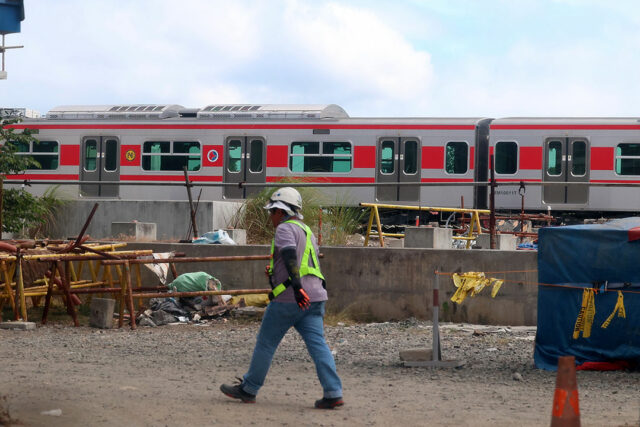
A worker walks past a train coach at the construction site of the Malanday Depot and Station in Valenzuela City. This is part of the North-South Commuter Railway project. — PHILIPPINE STAR/MIGUEL DE GUZMAN

By Katherine K. Chan

AT LEAST 52 infrastructure flagship projects (IFPs) of the government are set for completion by 2028, the Department of Economy, Planning, and Development (DEPDev) said.

At a briefing at the House of Representatives on Tuesday, DEPDev Assistant Secretary Roderick M. Planta said 52 of the 207 total flagship infrastructure projects and programs will be done within President Ferdinand R. Marcos, Jr.’s administration.

“Fifty-two will be completed within the (current) administration, by 2028. There are 60, but eight of those are studies and 52 are the actual projects,” he said.

Of the 52, 23 projects are on schedule, while 29 are delayed by at least two months, the DEPDev said.

Among those with delayed projects are the departments of Agriculture, Information and Communications Technology, Transportation, and Public Works and Highways.

The Local Water Utilities Administration, Metropolitan Waterworks and Sewerage System, National Irrigation Administration, Philippine Statistics Authority, University of the Philippines and Toll Regulatory Board also have delays in implementing some projects.

Data from the DEPDev showed 32 IFPs that are supposed to be completed by 2028 are under the physical connectivity sector, while eight projects involve water resources. Four projects are each under the digital connectivity and health sectors, while three are for agriculture and one for power and energy.

“All department secretaries are asked for their recommendations on what should be added to the new list,” Mr. Planta said in Filipino.

“The same criteria apply — it should be game-changing for the Philippines. In a way, these are big-ticket items in the sense that they have a significant impact on the community,” he added.

Twenty-one of the IFPs, worth around P1 billion in total, are in the National Capital Region, Central Luzon and Calabarzon.

The Economy department said issues with site conditions or availability, contractors and consultants, budget constraints, procurement and legal policies have been hindering the projects’ progress. 

To address these issues, agencies have been implementing measures such as simplifying processes to ease site access and right-of-way acquisition, establishing performance monitoring systems, enhancing procurement planning, and addressing legal issues.

Last year, Mr. Marcos signed Executive Order No. 59 which slashed the number of IFP-licensing agencies to 12-18 from 30 to streamline the process of acquiring permits for IFPs.

The DEPDev also launched an IFP monitoring and reporting system and an IFP dashboard designed to track the progress of each project.

Meanwhile, DEPDev reported that only seven of the 207 IFPs have been completed as of June.

These completed projects are the Samar Pacific Coastal Road, the integrated disaster risk reduction and climate change adaptation measures in low-lying areas of Pampanga Bay, the flood risk improvement and management for Cagayan de Oro River, the Surallah-T’boli-San Jose Road, the third phase of the Arterial Road Bypass (Plaridel Bypass), the Panguil Bay Bridge and the Pasig-Marikina River channel improvement.

In the 2026 National Expenditure Program, P52.08 billion was allocated for the 52 IFPs. This represents 33.14% of the P157.2-billion budget required for the programs. 

The government has set a total of P1.558 trillion for its infrastructure program next year.

Last month, the government said it will prioritize 54 flagship projects next year, including the Bataan-Cavite Interlink Bridge, Laguna Lakeshore Road Network and phase four of the Pasig-Marikina River Channel Improvement Program. 

According to the DEPDev, 140 IFPs are seen to be completed beyond 2028.

COMMUTER RAILWAY
Meanwhile, less than half or 38.87% of the completion target of the North-South Commuter Railway (NSCR) System has been achieved to date, Mr. Planta said. 

“Based on the information provided to us by the DoTr (Department of Transportation), the NSCR (completion progress) is at 38.87% as of the second quarter of 2025,” he said.

This is well behind the 87% initial target set for the project.

“Our (NSCR) project is ongoing. The connection from West Valenzuela to Malolos will be completed by 2027,” Department of Transportation (DoTr) Assistant Secretary Manuel G. Cabochan III added.

Earlier this year, the DoTr said its Japanese partners estimated that the NSCR will be delayed by four years.

Transport Secretary Vivencio “Vince” B. Dizon had said that they aim to make the Manila-Malolos segment of the project operational by end-2026 or early 2027.

The government allocated P124.1 billion in the 2026 budget for railway system development, P76.1 billion of which is for the NSCR.

Imagination peoples the air

THE PAVILION is designed as a communal setting, with modular rattan and bamboo seats amid the 500 Philippine book titles on display, with translucent walls that also double as a canvas for artworks.

The Philippine Guest of Honor Pavilion at the Frankfurt Book Fair presents unique narratives

A DECADE AGO, Anvil Publishing Manager Karina Bolasco sought the support of arts patron Senator Loren Legarda, so that the Philippines could have a bigger presence at Frankfurter Buchmesse, the world’s largest trade fair for books. From her support came a vision of the Philippines as the Guest of Honor at the fair — an initiative which finally bears fruit this year with a 2,000-square-meter pavilion.

Established in the 17th century and revived for the modern era in 1949, the Frankfurt Book Fair is held annually every October in Frankfurt am Main, Germany.

While the Philippines has been involved in the book fair since 1998, this will be its first time participating as Guest of Honor. It also marks the second time a Southeast Asian nation has taken on the role, following Indonesia 10 years ago.

The pavilion, which has the theme “The imagination peoples the air,” will have over 400 Philippine delegates — authors, illustrators, artists, creatives, and publishers. It is curated by Patrick Flores and designed by Stanley Ruiz.

The physical space itself will be a communal setting, with modular rattan and bamboo seats amid the 500 Philippine book titles on display. The translucent walls also double as a canvas for works by artists Gary-Ross Pastrana, Mervin Malonzo, and David Medalla.

“The Pavilion features native craftsmanship to create spaces where old forms find new purpose, and tradition becomes a living canvas for imagination and connection,” Ms. Legarda said at a press conference held on Sept. 4 in Manila.

EXPANSIVE PROGRAM
Aside from the pavilion itself, the Philippines’ Guest of Honor program will span over 100 talks, readings, and performances curated by Ms. Bolasco. These will explore a variety of global issues — human rights, democracy, climate change, geopolitics, children’s literature, religion, race, queer stories, and more.

One example is the discussion “How Do We Write About Climate Change?” led by poet Marjorie Evasco, Maria Paz Luna, and Red Constantino, which will end with a performance of National Artist Ryan Cayabyab’s song “Paraiso” by the Philippine Madrigal Singers and Song Weavers Philippines.

Panels on human rights and democracy include “Framing Stories: Art and Film Resist,” “Philippine Media: Struggles for Freedom,” and “West Philippine Sea: Ecology and Assertion,” among others. Nobel Peace Prize laureate Maria Ressa and trauma journalist Patricia Evangelista will hold talks at the pavilion.

Performers also span traditional and contemporary music: Morobeats (hip hop), violin duo Justin and Janna Texon, Kuwerdas Filipinas (symphonic rondalla), and Akayu (Kalinga music), to name a few.

For expressions of solidarity with Gaza and Ukraine, the program will have “Poetry for Freedom, Justice, and Peace,” a lineup of poetic performances which is set to run twice a day; and “A Solidarity for Hope” which will feature readings by National Artist for Literature Virgilio Almario, Turkish writer and President of PEN International Burhan Sönmez, and Indonesian author Ayu Utami.

On Mr. Almario’s participation, Ms. Legarda said in her speech that “his presence deepens the meaning of our program, affirming how Filipino literature shapes both our memory and our future.”

She added that “Filipino creativity will be felt in music and poetry with each session closing on a note of inspiration from artists and performers who connect our past and present.”

“Our presence will extend far beyond the pavilion,” she said.

BEYOND THE PAVILION
Aside from the Pavilion, there will be the Philippine Stand, a central hub for business and rights negotiations among publishers; and the Asia Stage, a home for hourly talks on issues in the Southeast Asian market like censorship, comics, and generative artificial intelligence.

Across the three venues, there will be 65 talks, workshops, and discussions.

Charisse Tugade, executive director of the National Book Development Board (NBDB), which is one of the coordinators for the program, told BusinessWorld that publishers, authors, and creatives were selected through an open call led by the Guest of Honor committee.

“We reached out to the delegates and discussed with them which books they would like to sell,” Ms. Tugade explained. She added that, as of Sept. 4, there are 52 major, indie, and academic publishers set to join the book fair, seeking business and rights negotiations.

The NBDB will also present various titles translated under its Translation Subsidy Program.

The book fair will run from Oct. 15 to 19. For the full schedule and exhibitions, visit the official website for the Philippines as Guest of Honor at the Frankfurter Buchmesse. — Brontë H. Lacsamana

F. Sionil José heir talks on the potential sale of Solidaridad Bookshop

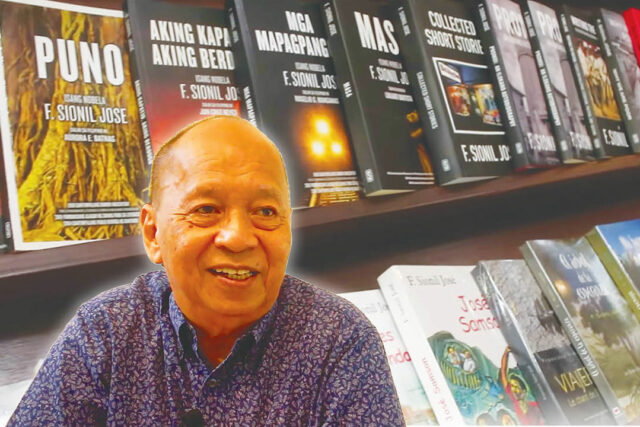
SCREENGRABS FROM BUSINESSWORLDTV YOUTUBE CHANNEL

SOLIDARIDAD BOOKSHOP, a 60-year-old enterprise founded by the late National Artist for Literature F. Sionil José, is in the midst of a potential buyout. Antonio J. José, the second-generation owner, talked to BusinessWorld about the bookshop’s history, the management changes he has adopted, and the lack of a third-generation successor to the business.

The family is in talks with an interested buyer of the bookshop, although everything is still under negotiation, Mr. José said in a Sept. 3 phone call.

The potential next owner, he said, is a good friend of his father’s and plans to continue operating the bookshop.

Solidaridad was established in June 1965 by F. Sionil José and his wife, Teresita J. José, who both dreamed that Filipinos read more often. It was named after La Solidaridad, the bi-weekly Spanish era newspaper published by the Propaganda Movement, which was led by Filipino intellectuals in Europe such as Jose P. Rizal and Marcelo H. del Pilar.

STATE OF THE BUSINESS
The bookshop was not making money when Mr. José took over the reins from his parents about 12 years ago after living overseas.

“When I took over, and when they passed away [both in 2022], there were a lot of headaches,” he said in a Nov. 5, 2024 interview. “That’s how it was.”

“We can pay the bills, but profit-wise? Hardly,” he added. “It’s hard.”

Mr. José introduced a computer system to manage inventory, a task his mother had done manually in the past.

He also maintained a professional relationship with the staff, in contrast with his mother’s personal approach.

“I’m used to the American way of running a business,” he said. “I know you’re married, that you have kids… but I’m not going to go further than that, like know what you do on weekends.”

“If you’re too close to your employees, professionalism starts to go away,” he added.

Although the bookshop does not have a presence on any e-commerce platforms, it has a Facebook page where patrons can inquire and order books online.

The management changes, Mr. José told BusinessWorld, have led to more stable operations.

“My parents ran it like a small business,” he said last November. “What you see downstairs is how it looked like 59 years ago.”

PROMOTING FILIPINIANA
Solidaridad’s unique selling proposition is its “unmatched” Filipiniana section of 2,795 titles, according to Mr. José.

“A lot of people come up for the Filipiniana section… We have foreign titles [too] but we hardly have any bestseller,” he said.

In line with its vision, the bookshop also promotes Filipino literature by hosting events like book launches and meetings by Poets, Playwrights, Essayists, Novelists (PEN), whose Philippine chapter the elder Mr. José founded in 1957.

It likewise does community outreach through book donations to public libraries and schools.

Mr. José was the only sibling who returned to the Philippines to manage Solidaridad and care for his parents. The rest are overseas.

No one in his family — including his nephews, nieces, and daughters — is interested in continuing the business.

“I’m not getting any younger,” he said. “It was a very hard and sad decision for us to sell it.” — Patricia B. Mirasol

Related videos:

1 – https://youtu.be/5aBVsSoopRU?si=PM6uEC5el5GrTAjO

2 – https://youtu.be/Z9IQF_WuMDE?si=p51zMal4dTHrFOGb

3 – https://youtu.be/TNOEvbHW5U4?si=EuLAgegLTzvu9-al

Book launches, talks, workshops, discounts and more at the MIBF

MANILABOOKFAIR.COM

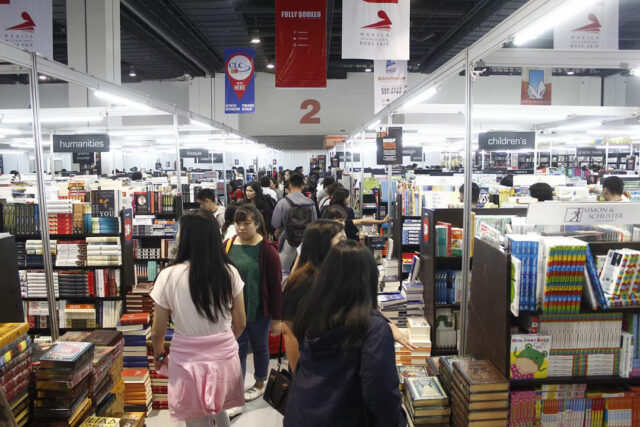
THE 2025 Manila International Book Fair (MIBF) is opening today, Sept. 10, and will run until Sept. 14 at the SMX Convention Center Manila, Pasay City.

The MIBF — which is the longest-running and largest book fair in the Philippines, tracing its roots back to the early 1980s — will have over 200 booths over two floors of the SMX, with both levels featuring a mix of booksellers. The second floor will also have booths filled with pens, crafting supplies, and essential school materials, among others. The major bookstores will have booths, as will a myriad of publishers, from academic to romance, technical to graphic novels.

Organizers are suggesting visitors come early for first dibs on the best deals and limited-stock items, bring sturdy tote bags and even a trolley to carry their purchases, and wear comfortable shoes as they work their way through the booths.

The book fair will host over 50 events for both the business side of publishing and for the consumer side. These range from book signings to product demonstrations, panel discussions with industry experts, art workshops, and even movie premieres. Check publishers’ social media pages for the final schedules of their events. One can also visit www.manilabookfair.com/events.

EVENTS
There will be two major movie launches celebrating influential figures in Philippine history. Today will see the launch of Edjop: The Movie, a film based on the life of student activist Edgar Jopson; and on Sept. 14 there will be a special launch of Quezon, the movie chronicling the life of President Manuel L. Quezon.

Today will also see the start of the Tourism and Hospitality Education Summit. Supported by the Department of Tourism (DoT), it will feature industry leaders discussing the future of tourism and hospitality.

Tomorrow, Sept. 11, the National Book Development Board presents the Ink and Impact Series, which features training sessions for teachers, DepEd scopers, and procurement officials, which includes a look at the latest reading remediation tools.

The various talks, lectures, and fora at the book fair range from “From Bayan to Bookshelf: Nurturing Filipiniana in the School Library,” “Building Your Competitive Edge: The Strategic Value of Microcredentials for HEIs,” “Generative AI in Education: Leveraging AI Tools for Quality and Efficiency,” “Mga Aklat sa Panahon ng Disimpormasyon,” “AI and the Author: Writing in the Age of Technology,” to “How to Write a Book.”

Among the authors who will be holding meet and greets and book signings are actress and Batangas Governor Vilma Santos-Recto, National Artist Ricky Lee, TV personality Atom Araullo, and social media “influencer” Mika Salamanca.

The MIBF will also host the Cardinal Sin Book Awards and the 11th Lampara Prize Awards Ceremony.

The Manila International Book Fair is organized by Primetrade Asia, Inc., with support of the National Book Development Board, the Book Development Association of the Philippines, the Philippine Booksellers Association, Inc., the Asian Catholic Communicators, Inc., the Overseas Publishers Representatives’ Association of the Philippines, and the Philippine Educational Publishers Association.

For more information and updates, visit the Manila International Book Fair website www.manilabookfair.com and follow its official Facebook page www.facebook.com/ManilaBookFair.

Arts & Culture (09/10/25)


Jonathan Ching, Juno Santos at MO_Space

TWO EXHIBITIONS are opening at MO_Space on Sept. 13. One is Jonathan Ching’s The World, in a Moment at the Main Gallery, which presents a world of connectedness through an inward process of reflection and deliberate brushstrokes. The other is Juno Santos’ E is the third day of the week! at Gallery 2, which showcases the intersectionality of music and art, summarized in a compendium of details for complete artists’ facts, titles, playing time, and order, interpreted visually through acrylic markers and paint. These shows run from Sept. 13 to Oct. 12 at MO_Space in Bonifacio High Street, Bonifacio Global City, Taguig.


Rizal’s journey in Frankfurt explored in exhibit

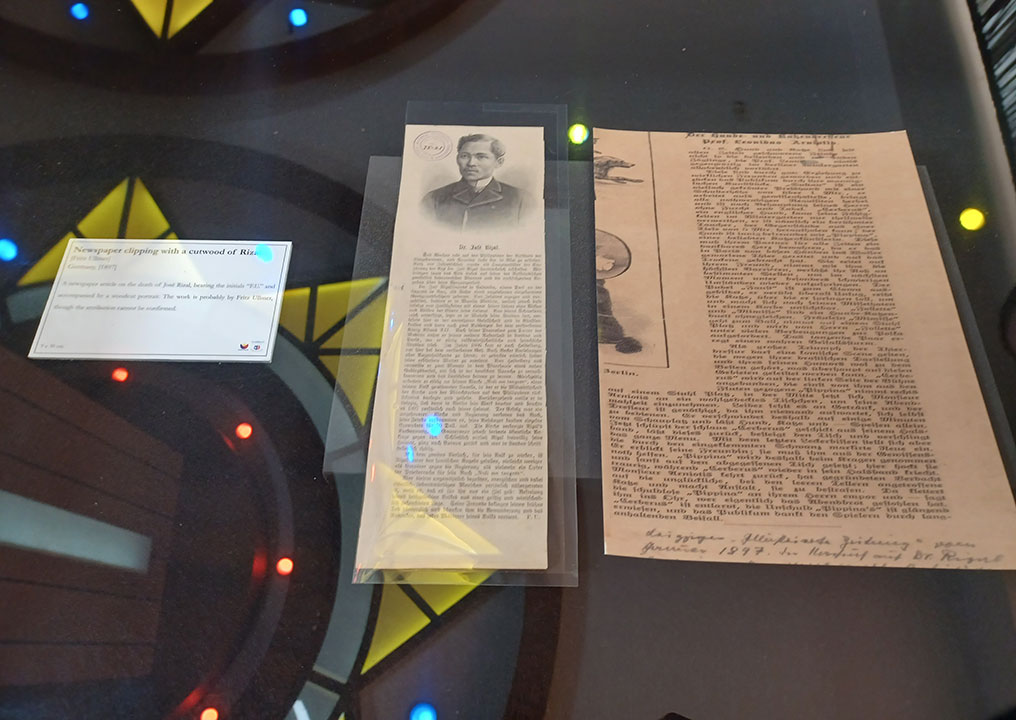
AN EXHIBITION at the National Library of the Philippines titled From Calamba to Frankfurt collates letters, drawings, and a first edition copy of Dr. Jose Rizal’s Noli Me Tangere. They are currently on display at the library’s second floor as part of the send-off of the Philippines’ participation as Guest of Honor to this year’s Frankfurt Book Fair. Curated by Lisa Guerrero-Nakpil, the exhibit details Rizal’s time in Frankfurt and how it affected his work, and relationships with the people who fostered him in the German city. It runs until Oct. 17 at the National Library at T.M. Kalaw St., Luneta, Manila.


Imahica Art Gallery hosts three women artists

THE show Triadico: A Tapestry of Diverse Art is opening on Sept. 20 at the Imahica Art Gallery. In it, three women artists — Jinky Rayo, Millet Sacerdoti, and Butchie Diano-Peña — explore the vibrancy of creativity, collaboration, and diverse perspectives. Their works span watercolor, acrylic, gouache, oil, and mixed media. The exhibition runs from Sept. 20 to Oct. 4 at Imahica Art, 2A Lee Gardens, Lee St., Wack Wack, Mandaluyong City.


Reb Belleza mounts exhibit at Alliance Française de Manille

ALLIANCE Française de Manille will be home to an exhibition this month titled The Reflex and the Seven Astronauts, with works by Reb Belleza. The show is a visual narrative spun from the artist’s ongoing poetic novel of the same title. Curated by minimalist artist Gus Albor, it aims to distill Mr. Belleza’s surreal works in an engaging exhibit. It opens on Sept. 20, 5 p.m., at the AFM Gallery at the Alliance Française de Manille, 209 Nicanor Garcia, II, Makati.


Battle of Manila film to screen at Ayala Museum

A FILM screening and talkback session commemorating the Battle of Manila and the end of World War II will take place at the Ayala Museum near the end of the month. Titled “Lest We Forget: 80 Years Since the Battle of Manila,” the program includes the screening of documentary Children of the War, followed by a talk with director Mike Alcazaren and producer Desiree Benipayo. The documentary follows seven survivors of the Battle of Manila. The event is made possible with the support of Memorare Manila 1945 Foundation and Philwar Foundation. It will be held on Sept. 27, 2 p.m., at the Ayala Museum, Makati Ave., Makati City. Regular tickets are P300, and are available via ayalamuseum.org.